Religious Countries Respond to Israel’s Jerusalem

The media has focused on US President Trump’s threats to withhold funds from countries that condemned the US for recognizing Jerusalem as Israel’s capital and the announcement that it will move its embassy from Tel Aviv to the capital city, as an impetus for some countries to fund in a particular manner. Perhaps it is worth at least discussing – on Christmas Day – the vote on the basis of religion.

There were nine countries that voted against the United Nations General Assembly resolution of condemnation (in other words, supportive of the United States and Israel). They were Christian and Jewish countries:

  • Guatemala: Roman Catholic, Protestant, indigenous Mayan beliefs
  • Honduras: Roman Catholic, Protestant, indigenous Mayan beliefs
  • Israel: Jewish 75.5%, Muslim 16.8%, Christian 2.1%, Druze 1.7%, other 3.9%
  • Marshall Islands: Protestant 54.8%, Assembly of God 25.8%, Roman Catholic 8.4%, Bukot nan Jesus 2.8%, Mormon 2.1%, other Christian 3.6%, other 1%, none 1.5%
  • Micronesia: Roman Catholic 50%, Protestant 47%, other 3%
    Nauru: Nauru Congregational 35.4%, Roman Catholic 33.2%, Nauru Independent Church 10.4%, other 14.1%, none 4.5%, unspecified 2.4%
  • Palau: Roman Catholic 41.6%, Protestant 23.3%, Modekngei 8.8% (indigenous to Palau), Seventh-Day Adventist 5.3%, Jehovah’s Witness 0.9%, Latter-Day Saints 0.6%, other 3.1%, unspecified or none 16.4%
  • Togo: Christian 29%, Muslim 20%, indigenous beliefs 51%
  • United States: Protestant 51.3%, Roman Catholic 23.9%, Mormon 1.7%, other Christian 1.6%, Jewish 1.7%, Buddhist 0.7%, Muslim 0.6%, other or unspecified 2.5%, unaffiliated 12.1%, none 4%

There were also thirty-five countries that abstained from the UN vote.

  • Antigua and Barbuda: Anglican 25.7%, Seventh Day Adventist 12.3%, Pentecostal 10.6%, Moravian 10.5%, Roman Catholic 10.4%, Methodist 7.9%, Baptist 4.9%, Church of God 4.5%, other Christian 5.4%, other 2%, none or unspecified 5.8%
  • Argentina: Roman Catholic 92% (less than 20% practicing), Protestant 2%, Jewish 2%, other 4%
  • Australia: Catholic 26.4%, Anglican 20.5%, other Christian 20.5%, Buddhist 1.9%, Muslim 1.5%, other 1.2%, unspecified 12.7%, none 15.3% (2001 Census)
  • Bahamas:
  • Benin: Christian 42.8% (Catholic 27.1%, Celestial 5%, Methodist 3.2%, other Protestant 2.2%, other 5.3%), Muslim 24.4%, Vodoun 17.3%, other 15.5%
  • Bhutan: Lamaistic Buddhist 75%, Indian- and Nepalese-influenced Hinduism 25%
  • Bosnia and Herzegovina: Muslim 40%, Orthodox 31%, Roman Catholic 15%, other 14%
  • Cameroon: indigenous beliefs 40%, Christian 40%, Muslim 20%
  • Canada: Roman Catholic 42.6%, Protestant 23.3% (including United Church 9.5%, Anglican 6.8%, Baptist 2.4%, Lutheran 2%), other Christian 4.4%, Muslim 1.9%, other and unspecified 11.8%, none 16%
  • Colombia: Roman Catholic 90%, other 10%
  • Croatia: Roman Catholic 87.8%, Orthodox 4.4%, Muslim 1.3%, Protestant 0.3%, others and unknown 6.2%
  • Czech Republic: Roman Catholic 26.8%, Protestant 2.1%, other 3.3%, unspecified 8.8%, unaffiliated 59%
  • Dominican Republic: Roman Catholic 95%, other 5%
  • Equatorial Guinea: nominally Christian and predominantly Roman Catholic, pagan practices
  • Fiji: Christian 64.5% (Methodist 34.6%, Roman Catholic 9.1%, Assembly of God 5.7%, Seventh Day Adventist 3.9%, Anglican 0.8%, other 10.4%), Hindu 27.9%, Muslim 6.3%, Sikh 0.3%
  • Haiti: Roman Catholic 80%, Protestant 16% (Baptist 10%, Pentecostal 4%, Adventist 1%, other 1%), none 1%, other 3%
  • Hungary: Roman Catholic 51.9%, Calvinist 15.9%, Lutheran 3%, Greek Catholic 2.6%, other Christian 1%, other or unspecified 11.1%, unaffiliated 14.5%
  • Jamaica: Protestant 62.5% (Seventh-Day Adventist 10.8%, Pentecostal 9.5%, Other Church of God 8.3%, Baptist 7.2%, New Testament Church of God 6.3%, Church of God in Jamaica 4.8%, Church of God of Prophecy 4.3%, Anglican 3.6%, other Christian 7.7%), Roman Catholic 2.6%, other or unspecified 14.2%, none 20.9%
  • Kiribati: Roman Catholic 55%, Protestant 36%, Mormon 3.1%, Bahai 2.2%, Seventh-Day Adventist 1.9%, other 1.8%
  • Latvia: Lutheran 19.6%, Orthodox 15.3%, other Christian 1%, other 0.4%, unspecified 63.7%
  • Lesotho: Christian 80%, indigenous beliefs 20%
  • Malawi: Christian 79.9%, Muslim 12.8%, other 3%, none 4.3%
  • Mexico: Roman Catholic 76.5%, Protestant 6.3% (Pentecostal 1.4%, Jehovah’s Witnesses 1.1%, other 3.8%), other 0.3%, unspecified 13.8%, none 3.1%
  • Panama: Roman Catholic 85%, Protestant 15%
  • Paraguay: Roman Catholic 89.6%, Protestant 6.2%, other Christian 1.1%, other or unspecified 1.9%, none 1.1%
  • Philippines: Roman Catholic 80.9%, Muslim 5%, Evangelical 2.8%, Iglesiani Kristo 2.3%, Aglipayan 2%, other Christian 4.5%, other 1.8%, unspecified 0.6%, none 0.1%
  • Poland: Roman Catholic 89.8% (about 75% practicing), Eastern Orthodox 1.3%, Protestant 0.3%, other 0.3%, unspecified 8.3%
  • Romania: Eastern Orthodox (including all sub-denominations) 86.8%, Protestant (various denominations including Reformate and Pentecostal) 7.5%, Roman Catholic 4.7%, other (mostly Muslim) and unspecified 0.9%
  • Rwanda: Roman Catholic 56.5%, Protestant 26%, Adventist 11.1%, Muslim 4.6%, indigenous beliefs 0.1%, none 1.7%
  • Solomon Islands: Church of Melanesia 32.8%, Roman Catholic 19%, South Seas Evangelical 17%, Seventh-Day Adventist 11.2%, United Church 10.3%, Christian Fellowship Church 2.4%, other Christian 4.4%, other 2.4%, unspecified 0.3%
  • South Sudan: Christianity 60.5%, traditional African religions 32.9%, Muslim 6.2%
  • Trinidad and Tobago: Roman Catholic 26%, Hindu 22.5%, Anglican 7.8%, Baptist 7.2%, Pentecostal 6.8%, Muslim 5.8%, Seventh Day Adventist 4%, other Christian 5.8%, other 10.8%, unspecified 1.4%, none 1.9%
  • Tuvalu: Church of Tuvalu (Congregationalist) 97%, Seventh-Day Adventist 1.4%, Baha’i 1%, other 0.6%
  • Uganda: Roman Catholic 41.9%, Protestant 42% (Anglican 35.9%, Pentecostal 4.6%, Seventh Day Adventist 1.5%), Muslim 12.1%, other 3.1%, none 0.9%
  • Vanuatu: Presbyterian 31.4%, Anglican 13.4%, Roman Catholic 13.1%, Seventh-Day Adventist 10.8%, other Christian 13.8%, indigenous beliefs 5.6% (including Jon Frum cargo cult), other 9.6%, none 1%, unspecified 1.3% (1999 Census)

The countries that abstained from the vote were all majority Christian countries. A handful of countries had populations with more than 5% Muslims, including Benin, Bosnia and Herzegovina, Cameroon, Malawi, Philippines, South Sudan, Trinidad and Tobago, and Uganda. Only Bosnia and Herzegovina had a Muslim population of over 25%.

Meanwhile, there were 128 countries that voted against the United States and Israel (for the UNGA resolution). Almost all of the 57 member states of the Organization of Islamic Cooperation (OIC) voted against the US, with the exceptions of Benin, Cameroon and Togo. Four of the five countries with OIC Observer status also voted against the US.

Why did Muslim countries vote against the United States and Israel, while Christian countries were much more likely to vote for Jerusalem? Some possibilities:

  • Muslim antisemitism: The Arab and Muslim world is much more antisemitic  (74%) than the Christian world according to various polls by the Anti Defamation League. It found that almost every Palestinian Arab was an anti-Semite, and that antisemitism was much less prevalent in the Americas (19%) and among Christians in western Europe (Muslims were 3-5 times more anti-Semitic). Voting against the Jewish state is basically de rigueur in Islamic societies.
  • Jewish and Christian history in Jerusalem: Muslim nations have been lobbying the United Nations for the past several years that Jews are recent colonialist with no history in the holy land and that the Jewish Temples never existed in Jerusalem. Palestinian Arabs have further inflamed Christian ire by claiming that Jesus was not a Jew but a Palestinian Arab. This is a direct affront to billions of Christians that believe in both the Old and New Testaments.
  • Israel’s Freedom of religion. Christians appreciate the freedom of religion afforded by Israel. They note that the Israeli government helped the Mormons build their church in Jerusalem, allow the Baha’i church to thrive in Haifa, and welcome pilgrims from around the world. They note that the surrounding Arab and Muslim countries have no such freedoms and tolerance. Where Muslim fanatics behead non-believers, and Arab and Muslim governments have laws against converting from Islam, Israel is an island of religious pluralism and freedom.
  • Christians in Jerusalem under Arabs and Jews: Christians note that when the Arabs ruled Jerusalem from 1949 to 1967, the Christian population dropped in half, but has seen a modest growth since Israel reunified the city in 1967. That is quite a comparison to Bethlehem, where the Christian population which stood at roughly 40% in December 1995 when Israel handed control to the Palestinian Authority, is now almost completely gone.
  • Access and Maintenance of Holy Sites: Christian pilgrims wander the streets of Jerusalem, Nazareth and the entirety of Israel every day of the year, and witness Jews and Muslims similarly accessing their holy places. But they remember clearly how Palestinian Arabs ransacked the Jewish holy site of Joseph’s Tomb in Nablus (Shechem) in October 2000 and attempted to convert it into a mosque, and how the Arabs forbade Jews from visiting the Cave of the Jewish Patriarchs in Hebron and the Temple Mount in Jerusalem when they held control from 1949 to 1967.

The situation in Israel is not unique. Christians have witnessed the horror that has befallen minorities like the Yazidis who have been hunted by Islamic jihadists. They see the turmoil and terror in the Islamic countries of Syria and Yemen. And they note the Christian persecution in the world is almost exclusively in Muslim majority countries.


ADL’s map of antisemitism

The Christians appreciate Israel’s control of Jerusalem. Whether it is because of their faith, understanding of history, appreciation of tolerance, desire for the freedom of religious practice, or the availability to live and access holy sites, Christians see holy sites and cities flourish under Israeli sovereignty and control. Unfortunately, the opposite is found in Arab and Muslim countries.

The Muslim nations seek complete authority and control. The notion of Jewish or Christians rights in their holy city of Jerusalem is irrelevant, and undermines the supremacy of Islam.


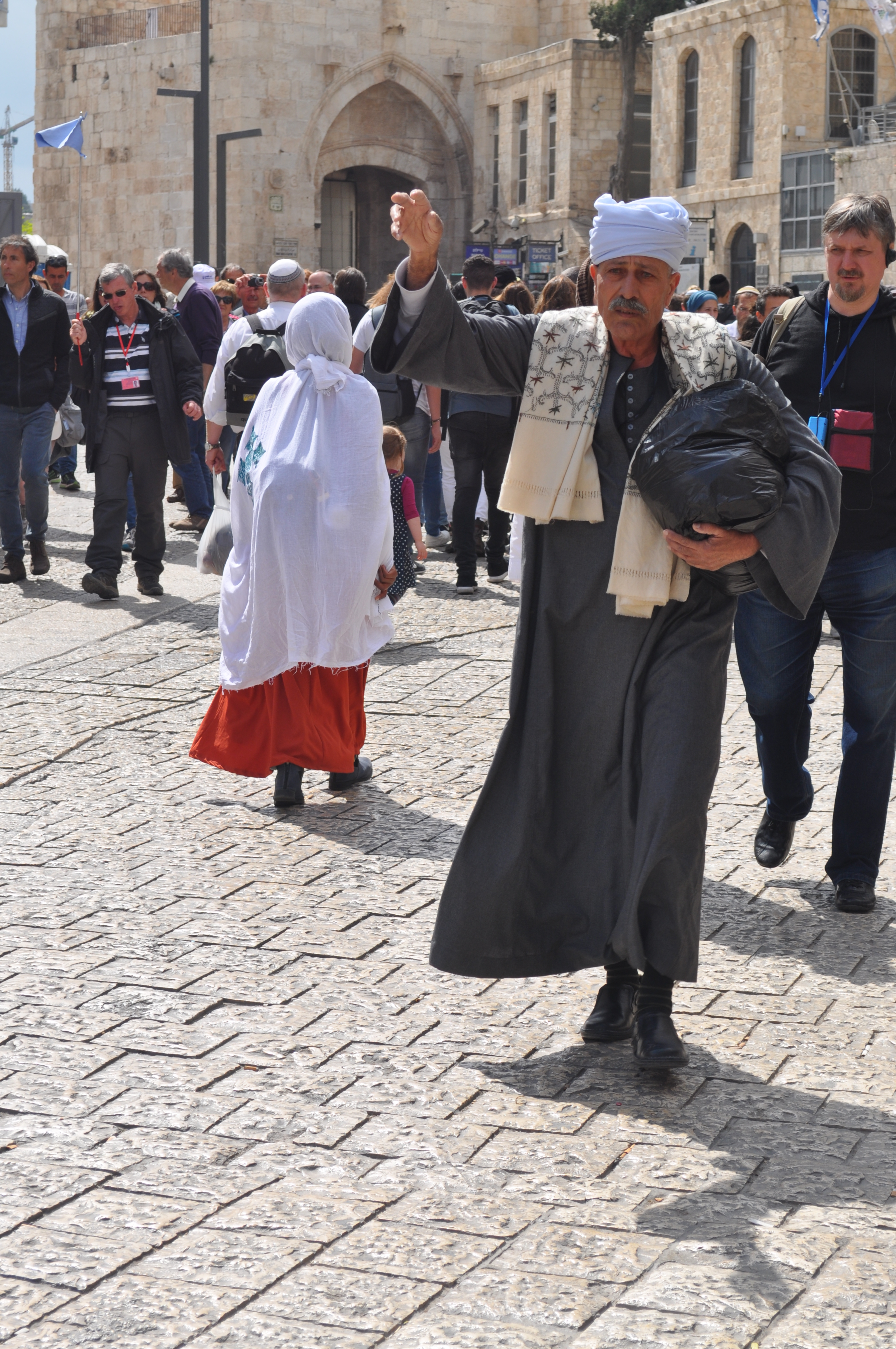
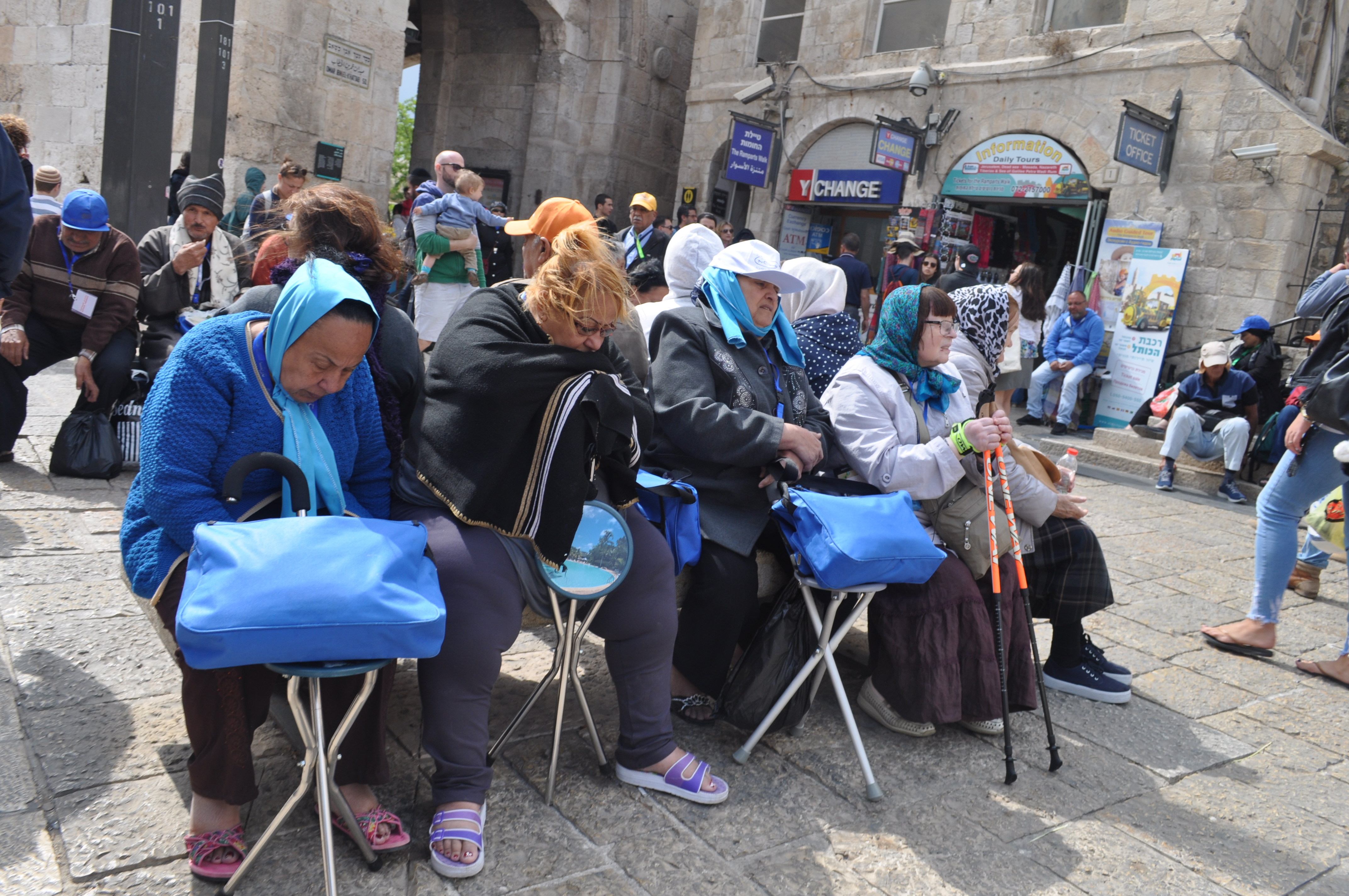
Various Pilgrims in the Old City of Jerusalem
(photos: First.One.Through)

As the world becomes less reliant on oil from the Arab world, one can expect more Christian countries to actively support Israel’s Jerusalem on the world stage.


Related First.One.Through articles:

Christian Persecution in the Middle East, not in Israel

Israel, the Liberal Country of the Middle East

Murderous Governments of the Middle East

Every Picture Tells a Story: No Christians Targeted

The United Nations and Holy Sites in the Holy Land

The Arguments over Jerusalem

First.One.through videos:

BDS Movement and Christian Persecution (Hovhaness)

I hate Israel – Christian Persecution

Subscribe YouTube channel: FirstOneThrough

Join Facebook group: FirstOne Through  Israel Analysis

Iran’s New Favorite Jewish Scholars

It is no secret that Iran despises the Jewish State, with calls to annihilate the “cancer” that is Israel. Iran’s leadership also enjoys provoking the ire of Jews generally, as it puts on exhibitions of Holocaust cartoons. To add to the insults, the Iranian media loves to showcase Jews that bash the Jewish State. It’s a spectacle for the Coliseum.

Press TV is a 24-hour English language news organization of the Islamic Republic of Iran Broadcasting, with headquarters in Tehran. The Iranian news organization’s favorite Jewish group for many stories is the Neturei Karta, an extremist anti-Zionist religious group that can be counted as featured speakers in stories about the Iranian nuclear deal, Palestinian rights and Holocaust revisionist history. What better way to convince people that Jews are evil, colonialist, parasitic liars than having Jews make such statements themselves?

In December 2017, Press TV found a new group of Jewish scholars to feature in its Israel bashing stories. In an article entitled “100 Jewish studies scholars sign petition condemning Trump’s declaration,” Press TV reviewed a petition signed by over 100 Jewish university scholars that denounced US President Trump’s recognition of Jerusalem as the capital of Israel, and his decision to relocate the US embassy to the city. The news site quoted the petition almost in its entirety, it was that rich for the Iranian government.  Below is the scholars’ statement (not the Iranian government’s) with fact-checking inserted after each paragraph.

“We write as Jewish Studies scholars to express our dismay at the Trump administration’s decision to reverse decades of bipartisan U.S. policy by declaring Jerusalem the capital of Israel, and authorizing the relocation of the U.S. embassy from Tel Aviv, outside of a negotiated political framework that ends the legal state of occupation and ensures respect for the rights of all Israelis and Palestinians to Jerusalem.”

  • reverse decades of bipartisan U.S. policy.” The Jerusalem Embassy Act of 1995 was passed with bipartisan Congressional support and specifically made clear that: 1) Jerusalem should be an undivided city; 2) it should be the capital of Israel; and 3) the US should move its embassy to Jerusalem. The Act’s presidential waiver allowing for a deferral every six months only related to moving the embassy to Jerusalem and providing such funding. The recognition of Jerusalem as the united capital of Israel passed with bipartisan support in 1995 – the opposite of what the statement claimed.
  • outside of a negotiated political framework that ends the legal state of occupation” The “political framework “is to arrive at a peaceful resolution to the disputed land by mutual agreement. The statement’s language about occupation and rights makes it appear that 1) there are no rights currently; 2) the entire peace process is just about those issues; and 3) that recognizing Israel’s capital undermines any of those discussions. All false.

“Jerusalem is of immense religious and thus emotional significance to Jews, Muslims, and Christians alike. It is the focus of national aspirations for both Israelis and Palestinians. We hope one day to see a world in which all inhabitants of the land enjoy equal access to the city’s cultural and material resources. Today, unfortunately, that is not the case.”

  • immense religious and thus emotional significance to Jews, Muslims, and Christians alike.One would imagine that Jewish scholars would have a basic understanding that Jews, Muslims and Christians are not “alike” in their attachment to Jerusalem. Only Judaism reveres the city as its holiest location. That Jewish scholars could write such a statement – happily repeated by Israel’s enemies – is outrageous and dangerous.
  • We hope one day to see a world in which all inhabitants of the land enjoy equal access” It has only been under Israel that people have had equal access to Jerusalem. When the Arabs ruled the eastern part of the city from 1949-1967, they evicted and banned all Jews. When Israel reunited the city, it offered Israeli citizenship to any Arab that wanted it – and continues to extend such offer to this day. Quite different that Jordanians that denied citizenship to any Jews in the city. Further, the growth of the Arab population in Jerusalem surpasses the growth of Jews in the city. The “hope” of the scholars is the reality today- under Israeli rule.

“As the Israeli human rights organization B’Tselem* has documented, Palestinian residents of Jerusalem endure systematic inequalities, including an inequitable distribution of the city’s budget and municipal services, routine denial of building permits that are granted to Jewish residents, home demolitions, and legal confiscation of property for Jewish settlement. In addition, Palestinians in the West Bank, unlike Jewish Israelis resident in that territory, require a special permit to visit Jerusalem’s holy sites.”

  • inequitable distribution of the city’s budget and municipal services, routine denial of building permits that are granted to Jewish residents” All Israelis – both Jewish and not Jewish – have their building permits go through the same approval processes. Some permits are approved and some are not. Under-investment in some predominantly Arab neighborhoods of Jerusalem is a function of many factors, and something that the current mayor of Jerusalem Nir Barkat has been trying to address, but he faces constant opposition from the United Nations to make such investments. How do Israel’s critics not feel the least bit of hypocrisy as they both demand that Israel invest in Arab neighborhoods in eastern Jerusalem, while also demanding that Israel abandon eastern Jerusalem altogether?
  • Palestinians in the West Bank, unlike Jewish Israelis resident in that territory, require a special permit to visit Jerusalem’s holy sites.” All citizens of Israel go through the same process of entering Jerusalem. Non-citizens must go through border control to enter anywhere in Israel, whether holy sites in Jerusalem or elsewhere. But they do have access and travel to Jerusalem’s holy sites every day – something that Jews were unable to do when Jordanian and Palestinian Arabs ruled the Old City illegally.

“In this context, a declaration from the United States government that appears to endorse sole Jewish proprietorship over Jerusalem adds insult to ongoing injury and is practically guaranteed to fan the flames of violence. We therefore call on the U.S. government to take immediate steps to deescalate the tensions resulting from the President’s declaration and to clarify Palestinians’ legitimate stake in the future of Jerusalem.

  • sole Jewish proprietorship over Jerusalem”  Are these scholars deliberately trying to be provocative? Israel has sovereignty over Jerusalem. It is a country that has a mix of Jews (75%) and non-Jews (25%), one of the most ethnically diverse countries in the entire Middle East. Israel has allowed the Jordanian Waqf to administer the Jewish Temple Mount since the country reunited the city in 1967. How do the scholars write “sole Jewish propriertorship” for an ethnically diverse country having sovereignty over a city in which it has allowed a Muslim Waqf to administer the Temple Mount, which denies the rights of Jews to pray at the site?
  • Palestinians’ legitimate stake in the future of Jerusalem.” What makes the Palestinian claim on Jerusalem legitimate? Do they have a legitimate claim on Jaffa? On Nazareth? The Israelis and Palestinian Authority will decide between themselves what kind of settlement makes sense. Do these scholars think that the US should not recognize any city in Israel or the State of Israel itself until it recognizes a State of Palestine?

The Iranian government has found new Jewish friends willing to publicly undermine Israel. And for Iran, these Jews have the added value of looking like hippy college professors as opposed to the black hat Neturei Karta rabbis.

Rabbi Jonathan Brumberg-Kraus (left), one of the petition’s signatories, member of Jews for Justice for Palestinians, which supports BDS and the dismantling
of any Jewish privileges in Israel (like a Jewish star on the Israeli flag); and


Terri Ginsberg (right), who currently teaches at the American University of Cairo (she signed the petition as x-Dartmouth) who also blogs for the vi
rulently anti-Israel sites Mondoweiss and Electronic Intifada

Just because the scholars don’t dress in a radical fashion, does not necessarily mean that their actions and statements aren’t extreme.

The petition ends with a request for comments to be sent to jewishstudiesstatement@gmail.com for rabbis that may or may not be on the list accidentally. Perhaps they would be interested in general comments as well.


Related First.One.Through articles:

The Custodianship of a Child and Jerusalem

Arabs in Jerusalem

Today’s Inverted Chanukah: The Holiday of Rights in Jerusalem and Judea and Samaria

The Arguments over Jerusalem

The Battle for Jerusalem

Jerusalem, and a review of the sad state of divided capitals in the world

Is Your Capital Central to Your Country?

Corpus Separatum Ended Forever in 1995

The US Recognizes Israel’s Reality

A Response to Rashid Khalidi’s Distortions on the Balfour Declaration

Liberals’ Biggest Enemies of 2015

Subscribe YouTube channel: FirstOneThrough

Join Facebook group: FirstOne Through  Israel Analysis

Is Your Capital Central to Your Country?

The United Nations Security Council pushed forward a vote that the United States could not recognize Jerusalem as the capital of Israel nor move its embassy there. The vote failed, as the United States exercised its veto power as one of the five permanent members of the UNSC. In response, the UN General Assembly is set to take a non-binding vote about the same issue on December 21, 2017.

It is beyond question that every country has the right to name its own capital, even a country despised by the United Nations like Israel.

What is particularly galling about this effort launched by the leader of Turkey, is that Israel is the only country that considers its capital city to be central to its identity. So much so, that its national anthem is all about Jerusalem.

So it is worth posing a question to the members of the UN Security Council:

  • United States: is your anthem about Washington, D.C.?
  • China: is your anthem about Beijing?
  • Russia: is your anthem about Moscow?
  • France: is your anthem about Paris?
  • United Kingdom: is your anthem about London?
  • Bolivia: is your anthem about Sucre?
  • Egypt: is your anthem about Cairo?
  • Ethiopia: is your anthem about Addis Ababa?
  • Italy: Is your anthem about Rome?
  • Japan: is your anthem about Tokyo?
  • Kazakhstan: is your anthem about Astana?
  • Senegal: is your anthem about Dakar?
  • Sweden: is your anthem about Stockholm?
  • Ukraine: is your anthem about Kiev?
  • Uruguay: is your anthem about Montevideo?

The answer to all of the above is no. Their capital cities are simply where the seats of government resides. For some countries like Egypt and Italy, the capitals have been there for many centuries.

But there is only one country in the entire United Nations, whose capital is so integral to the essence of the nation, that it’s national anthem is completely about its capital.

“As long as in our hearts within

The Jewish soul yearns,

And towards the eastern edges, onward,

An eye gazes towards Zion.

Our hope is not yet lost,

The hope that is two thousand years old,

To be a free nation in our land

The land of Zion: Jerusalem.


#JerusalemIsIsraelsCapital


Related First.One.Through music video:

The anthems of the Middle East (Enya)

The 1967 “Borders” (The Kinks)

Ethiopian Jews come Home (Phillip Phillips)

Judea and Samaria (Foo Fighters)

Subscribe YouTube channel: FirstOneThrough

Join Facebook group: FirstOne Through  Israel Analysis


The United Nations Can Hear the Songs of Gazans, but Cannot See Their Rockets

In the ongoing farce that is the United Nations regarding its treatment of Israel, the UN News Center published a report about the use of force that the Israeli army was using against the people of Gaza. In providing background to the story, the UN wrote:

“Since President Donald Trump’s 6 December statement concerning the status of Jerusalem, protests have been held throughout the occupied West Bank, including East Jerusalem, and in occupied Gaza. The response by the Israeli security forces has resulted in five people being killed, hundreds injured and large-scale arrests of Palestinians, noted OHCHR.

The biggest flashpoint has been in Gaza, where three people have been killed as protesters burned tires, threw stones, sang songs and waved flags along the fence. Israeli security forces have responded with firearms, including live-ammunition, to disperse the protesters.”

This is propaganda at its finest. The Israeli forces “responded with firearms” against people who “sang songs and waved flags.” Why was this put in here? Did it mention that some of the people were drinking water? Maybe someone was talking on their cellphone when the Israelis used “live ammunition to disperse the protesters.” We all know how much the Israelis hate it when people talk on their mobile phones.

The language was meant to underscore that the Gazans are peaceful people that are under siege. The story was crafted to show that the Israelis are monsters.

UN High Commissioner for Human Rights Zeid Ra’ad Al Hussein

Did the story mention the rockets that Palestinian militants launched into Israeli civilian territory a few days before? No.

Did it mention the rockets that were launched just the day before that landed in front of someone’s house? No.

Did the United Nations mention any of the 18 rockets that the Gazans fired into Israel since President Trump’s speech on December 6? Nope.

For the UN, the Palestinian Arabs are engaged in peaceful protests and the Israelis are the aggressive power using unnecessary force. The more passive the Palestinian Arabs and violent the Israelis can be portrayed, the greater the David-versus-Goliath narrative to rally people to the Palestinian cause.

The United Nations are not united in honesty, truth or fairness. Just in wild distortions to be ignored.


Related First.One.Through articles:

The United Nations’ Adoption of Palestinians, Enables It to Only Find Fault With Israel

The United Nations’ Remorse for “Creating” Israel

The United Nations’ Incitement to Violence

The Only Religious Extremists for the United Nations are “Jewish Extremists”

UN Media Centre Ignores Murdered Israelis

UN Press Corps Expunges Israel

The Hollowness of the United Nations’ “All”

The United Nations Applauds Abbas’ Narrative

UNRWA’s Ongoing War against Israel and Jews

The UN Declares that Palestinian Arabs Should Not Show “Restraint”

Reviewing the Rhetoric of Palestinian Arabs and Israelis

Subscribe YouTube channel: FirstOneThrough

Join Facebook group: FirstOne Through  Israel Analysis

Comparing Nikki Haley’s and Samantha Power’s Speeches after UN Votes on Israel

On December 18, 2017, the US Ambassador to the United Nations Nikki Haley gave a strong defense about the US position regarding its veto of a UN Security Council resolution condemning the United States for its recognition of Jerusalem as Israel’s capital and announcing its intention to move its embassy to the city. The remarks following the vote stand in sharp contrast to the speech delivered by her predecessor Samantha Power after the US’s abstention from the UN Security Council vote that labeled Israeli settlements – including those in eastern Jerusalem – as illegal.

U.S. Ambassador to the U.N. Nikki Haley casts the lone ‘no’ vote to veto a U.N. Security Council resolution attempting to annul President Trump’s recognition of Jerusalem as Israel’s capital, in New York on Monday, December 18, 2017.
(UN Photo/Eskinder Debebe)

Not surprisingly, only Haley spoke at length about American sovereignty as it was the United States, not Israel, that was the focus of the December 2017 resolution. However, the overall approaches were radically different:

  • On Israel: Haley was clear that Israel was correct while Power argued that Israel was wrong
  • On Palestinians: Haley reminded the Palestinian Arabs how much support they receive from the USA (she therefore had no interest in being lectured to and also delivered an implied threat) while Power made no mention of US support of Palestinians, only of Israel which it had just undermined
  • On the Security Council: Haley lambasted the council, while Power simply noted the US’s disappointment with the council
  • On the Peace Process: Haley made clear the US’s support for a mutually-agreed to resolution, while Power stated her position over-and-again about her preferred conclusion (two states) and Israel’s actions that she believed hurt such conclusion (settlements harm two states)
  • On the centrality of the US President: Haley made no mention of President Trump while Power mentioned President Obama over-and-again

In short, Nikki Haley took a strong leadership position in defense of the United States sovereignty and Israeli rights and had no reservations of strongly rebuking the United Nations. It was quite a contrast to Samantha Power who couched her criticism of the UN in much softer language while agreeing with its conclusions, and essentially asserted that as a strong backer of Israel’s security, she could undermine Israel’s sovereignty.

Haley stood tall and asserted American and Israeli rights while standing for a mutually-agreed upon peace. Power stood above Israel and rebuked it on the world stage since she did not agree with its actions and approach towards co-existence in the holy land.

A Side-by-Side Comparison

Factor Nikki Haley Samantha Power
Words 1102 2180
Action Veto Abstention
Bi-Partisan Republican administration quoted Democrats Democratic administration quoted Republicans
On the Security Council 1.      “it should be an embarrassment to the remainder of the Security Council”

2.      “When the American people see a group of countries whose total contributions to the Palestinian people is less than one percent of UNRWA’s budget – when they see these countries accuse the United States of being insufficiently committed to peace – the American people lose their patience

3.      “What we witnessed here today in the Security Council is an insult. It won’t be forgotten”

4.      United Nations doing more harm than good

1.      Israel has been treated differently from other nations at the United Nations”

2.      “in 2016 Israel continues to be treated differently from other Member States”

3.      “pressing this Council to break its indefensible silence in response to terrorist attacks on Israelis”

4.      “such unequal treatment not only hurts Israel, it undermines the legitimacy of the United Nations itself”

5.      “The practice of treating Israel differently at the UN matters for votes like this one”

6.      “what steps will you take to stop treating Israel differently?”

7.      what will you do to end the double-standard that undermines the legitimacy of this institution?”

8.      “when a resolution on Israel comes before this Council, members suddenly summon the will to act.”

9.      “this forum too often continues to be biased against Israel

Regarding America 1.      “in defense of American sovereignty and in defense of America’s role in the Middle East peace process”

2.      “The United States’ has a sovereign right to determine where and whether we establish an embassy”

3.      “The United States will not be told by any country where we can put our embassy.”

4.      “the United States was forced to defend its sovereignty

 N/A
The president N/A 1.      the Obama Administration has worked tirelessly to fight for Israel’s right simply to be treated just like any other country”

2.      President Obama and Secretary Kerry have repeatedly warned [Israel]”

3.      President Obama and this administration have shown an unprecedented commitment to Israel’s security”

4.      Obama administration signed a Memorandum of Understanding to provide $38 billion in security assistance to Israel over the next 10 years”

On the Peace Process 1.      “A “peace process” that is damaged by the simple recognition that Jerusalem is the capital of Israel is not a peace process

2.      “The United States has never been more committed to peace in the Middle East”

1.      United States’ deep and long-standing commitment to achieving a comprehensive and lasting peace between the Israelis and Palestinians”
On prejudging negotiations 1.      “great care not to prejudge final status negotiations in any way”

2.      “we support a two-state solution if that’s what the parties agree to

1.      United States’ long-standing position that Israeli settlement activity in territories occupied in 1967 undermines Israel’s security, harms the viability of a negotiated two-state outcome, and erodes prospects for peace and stability in the region”

2.      “reaffirming the long-standing U.S. position on settlements, condemning violence and incitement,”

3.      “we do not believe that outside parties can impose a solution that has not been negotiated by the two parties”

4.      long-standing objective: two states living side-by-side in peace and security”

5.      “One cannot simultaneously champion expanding Israeli settlements and champion a viable two-state solution that would end the conflict”

6.      “the absence of progress toward peace and continued settlement expansion was going to put the two-state solution at risk, and threaten Israel’s stated objective to remain both a Jewish State and a democracy”

7.      None of us can give up on a two-state solution

8.      “it is ultimately up to the parties to choose this path [two states]”

On legality of Israeli action N/A 1.      the Security Council reaffirmed its established consensus that settlements have no legal validity. The United States has been sending the message that the settlements must stop – privately and publicly – for nearly five decades”

2.      the resolution proposed today is justified – or, even more, necessitated – by events on the ground”

3.      “rather than dismantling these and other settler outposts, which are illegal even under Israeli law, now there is new legislation advancing in the Israeli Knesset that would legalize most of the outposts”

On Jerusalem / settlements 1.      “Jerusalem has been the political, cultural, and spiritual homeland of the Jewish people for thousands of years. They have had no other capital city”

2.      Jerusalem is the capital and seat of the modern Israeli government”

3.      “acknowledging a basic truth about the capital city of Israel

1.      The settlement problem has gotten so much worse

2.      continued settlement building seriously undermines Israel’s security.”

On Israeli security  N/A 1.      the United States’ steadfast and unparalleled commitment to the security of Israel,”

2.      “President Obama and this administration have shown an unprecedented commitment to Israel’s security

On the Palestinian Authority 1.      “some have threatened violence on the street, as if violence would somehow improve the prospects of peace”

2.      “What does it gain the Palestinian people for their leaders to throw up roadblocks to negotiations?”

3.      “What does it gain the Palestinian people for some of their leaders to accuse the United States of being hostile to the cause of peace? It gains them nothing, but it risks costing them a great deal

4.      their leaders do them no favors by being more open to abandoning peace negotiations than to doing the hard work of seeing them to completion”

1.      addressed counterproductive actions by the Palestinians such as terrorism and incitement to violence”

2.      “the incitement to violence, the glorification of terrorists, and the growth of violent extremism erodes prospects for peace”

3.      “rather than condemn these attacks, Hamas, other radical factions, and even certain members of Fatah have held up the terrorists as heroes, and used social media to incite others to follow in their murderous footsteps”

4.      “addressed counterproductive actions by Palestinians”

On the Palestinians 1.      “The United States has done more than any other country to assist the Palestinian people. By far. Since 1994, we have given over $5 billion to the Palestinians in bilateral economic assistance, security assistance, and humanitarian assistance”

2.      “Last year, the United States voluntarily funded almost 30 percent of UNRWA’s budget. That’s more than the next two largest donors combined.”

Nikki Haley’s remarks:

Thank you, Mr. President.

I have been the proud Representative of the United States at the United Nations for nearly a year now. This is the first time I have exercised the American right to veto a resolution in the Security Council. The exercise of the veto is not something the United States does often. We have not done it in more than six years. We do it with no joy, but we do it with no reluctance.

The fact that this veto is being done in defense of American sovereignty and in defense of America’s role in the Middle East peace process is not a source of embarrassment for us; it should be an embarrassment to the remainder of the Security Council.

As I pointed out when we discussed this topic 10 days ago, I will once again note the features of the President’s announcement on Jerusalem that are most relevant here. The President took great care not to prejudge final status negotiations in any way, including the specific boundaries of Israeli sovereignty in Jerusalem. That remains a subject to be negotiated only by the parties. That position is fully in line with the previous Security Council resolutions.

The President was also careful to state that we support the status quo regarding Jerusalem’s holy sites, and we support a two-state solution if that’s what the parties agree to. Again, these positions are fully consistent with the previous Security Council resolutions.

It is highly regrettable that some are trying to distort the President’s position to serve their own agendas.

What is troublesome to some people is not that the United States has harmed the peace process – we have, in fact, done no such thing. Rather, what is troublesome to some people is that the United States had the courage and honesty to recognize a fundamental reality. Jerusalem has been the political, cultural, and spiritual homeland of the Jewish people for thousands of years. They have had no other capital city. But the United States’ recognition of the obvious – that Jerusalem is the capital and seat of the modern Israeli government – is too much for some.

First, some have threatened violence on the street, as if violence would somehow improve the prospects of peace.

Now today, buried in diplomatic jargon, some presume to tell America where to put our embassy. The United States’ has a sovereign right to determine where and whether we establish an embassy. I suspect very few Member States would welcome Security Council pronouncements about their sovereign decisions. And I think of some who should fear it.

It’s worth noting that this is not a new American position. Back in 1980, when Jimmy Carter was the American President, the Security Council voted on Resolution 478, which called upon diplomatic missions to relocate from Jerusalem. The United States did not support Resolution 478.

In his remarks, then-Secretary of State Ed Muskie said the following: “The draft resolution before us today is illustrative of a preoccupation which has produced this series of unbalanced and unrealistic texts on Middle East issues.”

Specifically, regarding the provision on diplomatic missions in Jerusalem, Secretary Muskie said this: “In our judgment, this provision is not binding. It is without force. And we reject it as a disruptive attempt to dictate to other nations. It does nothing to promote a resolution of the difficult problems facing Israel and its neighbors. It does nothing to advance the cause of peace.”

That was in 1980. It is equally true today. The United States will not be told by any country where we can put our embassy.

Buried even deeper in the jargon of this resolution is the accusation that the United States is setting back the prospects of peace in the Middle East. That is a scandalous charge. Those who are making it should consider that it only harms the very Palestinian people they claim to speak for. What does it gain the Palestinian people for their leaders to throw up roadblocks to negotiations?

A “peace process” that is damaged by the simple recognition that Jerusalem is the capital of Israel is not a peace process; it is a justification for an endless stalemate. What does it gain the Palestinian people for some of their leaders to accuse the United States of being hostile to the cause of peace? It gains them nothing, but it risks costing them a great deal.

The United States has done more than any other country to assist the Palestinian people. By far. Since 1994, we have given over $5 billion to the Palestinians in bilateral economic assistance, security assistance, and humanitarian assistance.

The United Nations Relief and Works Agency for Palestinian Refugees operates schools and medical facilities throughout the region. It is funded almost entirely by voluntary contributions. Last year, the United States voluntarily funded almost 30 percent of UNRWA’s budget. That’s more than the next two largest donors combined. And it’s vastly more than some of the members of this Council that have considerable financial resources of their own.

I’ll be blunt: When the American people see a group of countries whose total contributions to the Palestinian people is less than one percent of UNRWA’s budget – when they see these countries accuse the United States of being insufficiently committed to peace – the American people lose their patience.

I have been to the Palestinian refugee camps the United States supports with their contributions. I have met with men, women, and children. I have advocated on their behalf. I can tell you that their leaders do them no favors by being more open to abandoning peace negotiations than to doing the hard work of seeing them to completion.

The United States has never been more committed to peace in the Middle East. We were committed to it before the President announced our recognition of Jerusalem as the capital of Israel, and we’re committed to it today.

What we witnessed here today in the Security Council is an insult. It won’t be forgotten. It’s one more example of the United Nations doing more harm than good in addressing the Israeli-Palestinian conflict.

Today, for the simple act of deciding where to put our embassy, the United States was forced to defend its sovereignty. The record will reflect that we did so proudly. Today, for acknowledging a basic truth about the capital city of Israel, we are accused of harming peace. The record will reflect that we reject that outrageous claim.

For these reasons, and with the best interests of both the Israeli and the Palestinian people firmly in mind, the United States votes no on this resolution.

Thank you.


Samantha Power’s remarks:

Thank you, Mr. President.

Let me begin with a quote: “The United States will not support the use of any additional land for the purpose of settlements during the transitional period. Indeed, the immediate adoption of a settlement freeze by Israel, more than any other action, could create the confidence needed for wider participation in these talks. Further settlement activity is in no way necessary for the security of Israel and only diminishes the confidence of the Arabs that a final outcome can be freely and fairly negotiated.”

This was said in 1982 by President Ronald Reagan. He was speaking about a new proposal that he was launching to end the Israeli-Palestinian conflict. While ultimately, of course, President Reagan’s proposal was not realized, his words are still illuminating in at least two respects.

First, because they underscore the United States’ deep and long-standing commitment to achieving a comprehensive and lasting peace between the Israelis and Palestinians. That has been the policy of every administration, Republican and Democrat, since before President Reagan and all the way through to the present day.

Second, because President Reagan’s words highlight the United States’ long-standing position that Israeli settlement activity in territories occupied in 1967 undermines Israel’s security, harms the viability of a negotiated two-state outcome, and erodes prospects for peace and stability in the region. Today, the Security Council reaffirmed its established consensus that settlements have no legal validity. The United States has been sending the message that the settlements must stop – privately and publicly – for nearly five decades, through the administrations of Presidents Lyndon B. Johnson, Richard Nixon, Gerald Ford, Jimmy Carter, Ronald Reagan, George H.W. Bush, Bill Clinton, George W. Bush, and now Barack Obama. Indeed, since 1967, the only president who had not had at least one Israeli-Palestinian-related Security Council resolution pass during his tenure is Barack Obama. So our vote today is fully in line with the bipartisan history of how American Presidents have approached both the issue – and the role of this body.

Given the consistency of this position across U.S. administrations, one would think that it would be a routine vote for the U.S. to allow the passage of a resolution with the elements in this one, reaffirming the long-standing U.S. position on settlements, condemning violence and incitement, and calling for the parties to start taking constructive steps to reverse current trends on the ground. These are familiar, well-articulated components of U.S. policy.

But in reality this vote for us was not straightforward, because of where it is taking place – at the United Nations. For the simple truth is that for as long as Israel has been a member of this institution, Israel has been treated differently from other nations at the United Nations. And not only in decades past – such as in the infamous resolution that the General Assembly adopted in 1975, with the support of the majority of Member States, officially determining that, “Zionism is a form of racism” – but also in 2016, this year. One need only look at the 18 resolutions against Israel adopted during the UN General Assembly in September; or the 12 Israel-specific resolutions adopted this year in the Human Rights Council – more than those focused on Syria, North Korea, Iran, and South Sudan put together – to see that in 2016 Israel continues to be treated differently from other Member States.

Like U.S. administrations before it, the Obama Administration has worked tirelessly to fight for Israel’s right simply to be treated just like any other country – from advocating for Israel to finally be granted membership to a UN regional body, something no other UN Member State had been denied; to fighting to ensure that Israeli NGOs are not denied UN accreditation, simply because they are Israeli, to getting Yom Kippur finally recognized as a UN holiday; to pressing this Council to break its indefensible silence in response to terrorist attacks on Israelis. As the United States has said repeatedly, such unequal treatment not only hurts Israel, it undermines the legitimacy of the United Nations itself.

The practice of treating Israel differently at the UN matters for votes like this one. For even if one believes that the resolution proposed today is justified – or, even more, necessitated – by events on the ground, one cannot completely separate the vote from the venue.

And Member States that say they are for the two-state solution must ask themselves some difficult questions. For those states that are quick to promote resolutions condemning Israel, but refuse to recognize when innocent Israelis are the victims of terrorism – what steps will you take to stop treating Israel differently? For those states that passionately denounce the closures of crossings in Gaza as exacerbating the humanitarian situation, but saying nothing of the resources diverted from helping Gaza’s residents to dig tunnels into Israeli territory so that terrorists can attack Israelis in their homes – what will you do to end the double-standard that undermines the legitimacy of this institution?

Member States should also ask themselves about the double standards when it comes to this Council taking action. Just this morning we came together, as a Council, and we were unable to muster the will to act to stop the flow of weapons going to killers in South Sudan, who are perpetrating mass atrocities that the UN has said could lead to genocide. We couldn’t come together just to stem the flow of arms. Earlier this month, this Council could not muster the will to adopt the simplest of resolutions calling for a seven-day pause in the savage bombardment of innocent civilians, hospitals, and schools in Aleppo. Yet when a resolution on Israel comes before this Council, members suddenly summon the will to act.

It is because this forum too often continues to be biased against Israel; because there are important issues that are not sufficiently addressed in this resolution; and because the United States does not agree with every word in this text, that the United States did not vote in favor of the resolution. But it is because this resolution reflects the facts on the ground – and is consistent with U.S. policy across Republican and Democratic administration throughout the history of the State of Israel – that the United States did not veto it.

The United States has consistently said we would block any resolution that we thought would undermine Israel’s security or seek to impose a resolution to the conflict. We would not have let this resolution pass had it not also addressed counterproductive actions by the Palestinians such as terrorism and incitement to violence, which we’ve repeatedly condemned and repeatedly raised with the Palestinian leadership, and which, of course, must be stopped.

Unlike some on the UN Security Council, we do not believe that outside parties can impose a solution that has not been negotiated by the two parties. Nor can we unilaterally recognize a future Palestinian state. But it is precisely our commitment to Israel’s security that makes the United States believe that we cannot stand in the way of this resolution as we seek to preserve a chance of attaining our long-standing objective: two states living side-by-side in peace and security. Let me briefly explain why.

The settlement problem has gotten so much worse that it is now putting at risk the very viability of that two-state solution. The number of settlers in the roughly 150 authorized Israeli settlements east of the 1967 lines has increased dramatically. Since the 1993 signing of the Oslo Accords – which launched efforts that made a comprehensive and lasting peace possible – the number of settlers has increased by 355,000. The total settler population in the West Bank and East Jerusalem now exceeds 590,000. Nearly 90,000 settlers are living east of the separation barrier that was created by Israel itself. And just since July 2016 – when the Middle East Quartet issued a report highlighting international concern about a systematic process of land seizures, settlement expansions, and legalizations – Israel has advanced plans for more than 2,600 new settlement units. Yet rather than dismantling these and other settler outposts, which are illegal even under Israeli law, now there is new legislation advancing in the Israeli Knesset that would legalize most of the outposts – a factor that propelled the decision by this resolution’s sponsors to bring it before the Council.

The Israeli Prime Minister recently described his government as “more committed to settlements than any in Israel’s history,” and one of his leading coalition partners recently declared that “the era of the two-state solution is over.” At the same time, the Prime Minister has said that he is still committed to pursuing a two-state solution. But these statements are irreconcilable. One cannot simultaneously champion expanding Israeli settlements and champion a viable two-state solution that would end the conflict. One has to make a choice between settlements and separation.

In 2011, the United States vetoed a resolution that focused exclusively on settlements, as if settlements were they only factor harming the prospects of a two-state solution. The circumstances have changed dramatically. Since 2011, settlement growth has only accelerated. Since 2011, multiple efforts to pursue peace through negotiations have failed. And since 2011, President Obama and Secretary Kerry have repeatedly warned – publically and privately – that the absence of progress toward peace and continued settlement expansion was going to put the two-state solution at risk, and threaten Israel’s stated objective to remain both a Jewish State and a democracy. Moreover, unlike in 2011, this resolution condemns violence, terrorism and incitement, which also poses an extremely grave risk to the two-state solution. This resolution reflects trends that will permanently destroy the hope of a two-state solution if they continue on their current course.

The United States has not taken the step of voting in support of this resolution because the resolution is too narrowly focused on settlements, when we all know – or we all should know – that many other factors contribute significantly to the tensions that perpetuate this conflict. Let us be clear: even if every single settlement were to be dismantled tomorrow, peace still would not be attainable without both sides acknowledging uncomfortable truths and making difficult choices. That is an indisputable fact. Yet it is one that is too often overlooked by members of the United Nations and by members of this Council.

For Palestinian leaders, that means recognizing the obvious: that in addition to taking innocent lives – the incitement to violence, the glorification of terrorists, and the growth of violent extremism erodes prospects for peace, as this resolution makes crystal clear. The most recent wave of Palestinian violence has seen terrorists commit hundreds of attacks – including driving cars into crowds of innocent civilians and stabbing mothers in front of their children. Yet rather than condemn these attacks, Hamas, other radical factions, and even certain members of Fatah have held up the terrorists as heroes, and used social media to incite others to follow in their murderous footsteps. And while President Abbas and his party’s leaders have made clear their opposition to violence, terrorism, and extremism, they have too often failed to condemn specific attacks or condemn the praised heaped upon the perpetrators.

Our vote today does not in any way diminish the United States’ steadfast and unparalleled commitment to the security of Israel, the only democracy in the Middle East. We would not have let this resolution pass had it not also addressed counterproductive actions by Palestinians. We have to recognize that Israel faces very serious threats in a very tough neighborhood. Israelis are rightfully concerned about making sure there is not a new terrorist haven next door. President Obama and this administration have shown an unprecedented commitment to Israel’s security because that is what we believe in.

Our commitment to that security has never wavered, and it never will. Even with a financial crisis and budget deficits, we’ve repeatedly increased funding to support Israel’s military. And in September, the Obama administration signed a Memorandum of Understanding to provide $38 billion in security assistance to Israel over the next 10 years – the largest single pledge of military assistance in U.S. history to any country. And as the Israeli Prime Minister himself has noted, our military and intelligence cooperation is unprecedented. We believe, though, that continued settlement building seriously undermines Israel’s security.

Some may cast the U.S. vote as a sign that we have finally given up on a two-state solution. Nothing could be further from the truth. None of us can give up on a two-state solution. We continue to believe that that solution is the only viable path to provide peace and security for the state of Israel, and freedom and dignity for the Palestinian people. And we continue to believe that the parties can still pursue this path, if both sides are honest about the choices, and have the courage to take steps that will be politically difficult. While we can encourage them, it is ultimately up to the parties to choose this path, as it always has been. We sincerely hope that they will begin making these choices before it is too late.

I thank you.


Related First.One.Through articles:

The US Recognizes Israel’s Reality

In Defense of Foundation Principles

Samantha Power Breakthrough: Violence Erodes the Prospects for Peace

Nikki Haley Will Not Equivocate on the Ecosystem of Violence

The Many Lies of Jimmy Carter

Subscribe YouTube channel: FirstOneThrough

Join Facebook group: FirstOne Through  Israel Analysis

The Recognition Catch Up

The United States recognized Jerusalem as the capital of Israel on December 6, 2017 in a move that President Donald Trump said was a “long-overdue step.” Many countries disagreed, and viewed the announcement as premature, claiming that such recognition should be done in conjunction with a broader peace process and mirror whatever the Israelis and Palestinian Authority themselves agree to.

If anything, Trump’s move was very late considering the recognition that had been afforded to the Palestinian Arabs over the previous decade.

Recognition of Palestine

In 1988, the Palestinian Liberation Organization declared its independence. Israel and the western world ignored the declaration of the noted terrorist organization, while fellow Arab and Muslim countries quickly recognized the State of Palestine.

Within a few years of the PLO declaration, the Israelis and Palestinian Arabs signed the Oslo Accords (in 1993 and 1995) which put in motion a peace process, including the creation of a Palestinian Authority (PA). As part of those agreements, both parties agreed that the PA would have limited powers regarding international relations (Article IX), including having no ability to obtain official recognition from other governmental bodies.

In accordance with the DOP, the Council will not have powers and
responsibilities in the sphere of foreign relations, which sphere includes the
establishment abroad of embassies, consulates or other types of foreign missions and posts or permitting their establishment in the West Bank or the Gaza Strip, the
appointment of or admission of diplomatic and consular staff, and the exercise of
diplomatic functions.”

When the leader of the PA, Yasser Arafat (fungus be upon him) failed to deliver on peace and launched a second intifada in September 2000, the peace process ground to a halt. Any movement by world organizations and governments to provide additional recognition on key issues for the Israelis and PA was put on hold.

Yet the Palestinian Authority under Mahmoud Abbas pushed forward with seeking global recognition, even as he lost control of the Gaza Strip in 2007.

Abbas began with Costa Rica (2008) and Venezuela (2009) before making significant headway with the major countries in South America.

In 2010, Abbas got Brazil and Argentina to recognize Palestine, despite commitments in the Oslo Accords that the PA would not take such steps. The Israeli foreign ministry released a statement that  “Recognition of a Palestinian state is a violation of the interim agreement signed by Israel and the Palestinian Authority in 1995, which established that the status of the West Bank and the Gaza Strip will be discussed and solved through negotiations….  All attempts to bypass negotiations and to unilaterally determine issues in dispute will only harm the trust of the sides and their commitment to agreed upon frameworks for negotiations.

No matter.

In 2011, other South American countries recognized Palestine including Chile and Uruguay. UNESCO followed suit and admitted the “State of Palestine.” Shortly thereafter, Iceland became the first country in western Europe to recognize Palestine, with borders based on the 1949 Armistice Lines. By the following year, the United Nations began calling the entity the “State of Palestine” in all official documents.

Remarkably, at the end of the third Hamas war on Israel in 2014, Sweden became the second western European country to recognize Palestine.

Recognition of Jerusalem

While Abbas’s PA actively sought recognition of a state since 2008, Israel was fighting three wars from Gaza and a “stabbing intifada.” Israel was not busy lobbying the world to recognize Jerusalem as its capital, but focused on getting the world to stop the Islamic Republic of Iran from obtaining nuclear weapons while it declared its intention of destroying Israel.

While the Palestinian Authority was playing offense, Israel was playing defense.

At this point in time, with over 20 countries and United Nations entities recognizing Palestine over the past decade despite the explicit statements in the Oslo Accords, isn’t it well past time for countries of the world to recognize the capital of Israel?

Alternatively, if countries are truly concerned with the peace process, they can strip their recognition of Palestine, and leave the Israelis and PA to negotiate their peace, including matters related to borders, settlements and Jerusalem, and ultimately embrace the conclusion of the parties. Impartiality demands one or the other.


Jerusalem from the air, facing north


Related First.One.Through articles:

Both Israel and Jerusalem are Beyond Recognition to Muslim Nations

Recognition of Acquiring Disputed Land in a Defensive War

The US Recognizes Israel’s Reality

The UN’s #Alternative Facts about the 1967 Six Day War

Welcoming the Unpopular Non-President (Abbas) of a Non-Country (Palestine)

What do you Recognize in the Palestinians?

Subscribe YouTube channel: FirstOneThrough

Join Facebook group: FirstOne Through  Israel Analysis

Both Israel and Jerusalem are Beyond Recognition for Muslim Nations

After US President Donald Trump announced that the United States is officially recognizing the fact that Jerusalem is the capital of Israel on December 6, 2017, many Arab and Muslim countries sought to make a declaration.

They doubled-down on putting their heads in the sand.

Turkey pulled together the 57 countries of the Organization of Islamic Countries, the OIC, to condemn the statement of the United States. Turkey’s President Tayyip Erdogan said that Jerusalem was a “red line” for the Muslim world and the OIC would reject any recognition of the eastern half of Jerusalem as the capital of Israel.

Turkish President Erdogan at OIC Summit
(picture: Reuters K. Ozer)

That statement is a bit of a joke, as most of the countries in the OIC don’t even recognize Israel itself.

Even in 2017, almost 70 years after the reestablishment of the Jewish State in the holy land, the presence of Jews still irks too many Muslim nations, including: Afghanistan; Algeria; Bahrain; Bangladesh; Brunei; Chad; Comoros; Djibouti; Indonesia; Iran; Iraq; Kuwait; Lebanon; Libya; Malaysia; Mali; Mauritania; Morocco; Niger; Oman; Pakistan; “Palestine”; Qatar; Saudi Arabia; Somalia; Sudan; Syria; Tunisia; UAE; and Yemen. That’s 30 countries that do not recognize the State of Israel that came together to say that do not recognize its capital.

How is this news?

Here is something that would be ground-breaking for the global purveyors of #AlternativeFacts:

  • It would be news if the anti-Zionist media would ever state this basic fact that these countries are deeply hostile to Israel in any form.
  • It would be news if the media would not refer to “Arab East Jerusalem” in all caps as if it is an actual entity with endemic Arab roots.
  • It would be news for the media to state that “East Jerusalem” only existed for 18 years (1949-1967) in the city’s 4000 year history.
  • It would be news if the media would ever educate readers that Jews have been a majority in Jerusalem since the 1860s.
  • It would be news if the media ever wrote that the Jordanians expelled all of the Jews from eastern Jerusalem and the “West Bank” in 1949
  • It would be news if the media would give proper background that under Arab Muslim rule, Jews were forbidden from even entering the Old City of Jerusalem.
  • It would be news if the media would stop saying that Jerusalem is holy to Muslims, Christians and Jews ALIKE, as if the city isn’t uniquely the holiest city ONLY for Jews
  • It would be news if the media would bother to inform its readers that the man who called together and hosted the summit, Erdogan, is the major sponsor and backer of Hamas, the most anti-Semitic terrorist group that waged three wars against Israel in just the past ten years, and that he is still angry at Israel for recognizing an independent Kurdistan.

A squandered opportunity to show yet another example of the deep hatred that Muslims feel towards Jewish sovereignty in their holy land.

Instead, the media decided to report that a country like Iran, that has called for Israel to be wiped off of the map, is angry about the US recognizing Israel’s capital. Really.

Are you still paying for that paper that tells you nothing?


Related First.One.Through articles:

Arabs in Jerusalem

Nicholas Kristof’s “Arab Land”

The Arguments over Jerusalem

The New York Times Thinks that the Jews from Arab Countries Simply “Immigrated”

The Cancer in the Arab-Israeli Conflict

Subscribe YouTube channel: FirstOneThrough

Join Facebook group: FirstOne Through  Israel Analysis
Corpus Separatum Ended Forever in 1995

“A long habit of not thinking a thing wrong, gives it a superficial appearance
of being right, and raises at first a formidable outcry in defense of custom.
But the tumult soon subsides. Time makes more converts than reason.”

Thomas Paine, Common Sense
January 9, 1776

Some political pretend-to-know-it-all pundits are taking to the airwaves to decry President Donald Trump’s recognition of Jerusalem as Israel’s capital. They have noted that Jerusalem is too sensitive a topic for the United States to endorse without approval from the Palestinian Authority and the Muslim and Arab world. They are incensed that Trump has abandoned common practice of past presidents these last decades.

But they are wrong. The issue of Jerusalem was settled in 1995, and not just by the US Congress, but by the Palestinian Authority itself.

The 1947 Plan

The United Nations wanted to reserve the “Holy Basin” of religious sites of the three monotheistic faiths into a “corpus separatum,” an international zone that would not be part of either a Jewish State (which would have a minority of Arabs) nor of an Arab one (which would have a minority of Jews). This area included greater Jerusalem and greater Bethlehem.

Annex B of UN 1947 Peace Plan showing Corpus Separatum

The Arabs of Palestine and the greater Arab world rejected the plan, while the Jews of Palestine and many countries at the United Nations supported the plan.

It would never go into effect.

1948-1949 Israel’s War of Independence

As soon as Israel declared itself an independent country in May 1948 when the British ended their mandate, armies from five Arab countries invaded Israel. At war’s end, Israel took control of the western part of Jerusalem while Jordan took control of the eastern half of Jerusalem and all of greater Bethlehem and the West Bank.

Corpus separatum divided into
Jordanian area in white and Israeli area in blue
The Jordanians and Israelis would sign an Armistice Agreement in 1949 establishing the contours of non-belligerency, but not peace. That line became known as the “Green Line.” The countries of the world recognized Israel’s borders west of the Green Line, but did not recognize the Jordanian annexation of the West Bank, eastern Jerusalem and Bethlehem.

While the world recognized the expanded borders of Israel beyond that proposed in the 1947 UN Partition Plan, it would not recognize the western half of Jerusalem as Israel’s capital, in the hopes that peace could be established with inclusion of aspects of corpus separatum in a peace agreement.

Things moved in the opposite direction.

The Jordanians expelled all Jews from their section of corpus separatum and forbade the entry of Jews into the Old City. They would offer citizenship to all Arabs who lived in the area, and specifically exclude any Jews from obtaining Jordanian citizenship in 1954.

From 1967 to 1995

In June 1967, the Jordanians (and West Bank Palestinian Arabs since they had taken Jordanian citizenship), attacked Israel again and lost all of the land they had illegally annexed including the eastern portion of corpus separatum. Israel rescinded the ban on Jews living and visiting their holiest city of Jerusalem and tore down the barbed wire that had split the city in two. It also enabled all Arabs who wanted to obtain Israeli citizenship to apply. Thousands of Arabs have done so.

By 1980, Israel had defined new borders for Jerusalem which excluded the southern portion of corpus separatum around Bethlehem, and declared Jerusalem “complete and united, is the capital of Israel.

Some countries moved their embassies to Jerusalem in the wake of the announcement, such as Costa Rica in 1982 and El Salvador in 1984, in the hope of winning political and economic support from Israel. However, both countries moved their embassies to Tel Aviv in 2006, in the hopes of establishing stronger relationships with the Muslim and Arab world.

Oslo II Accords of 1995

The Israelis and Palestinian Arabs reached an agreement to begin a peace process in 1993. Two years later, in September 1995, they signed the Oslo II agreements. Those agreements put the nails in the coffin for the concept of an international body overseeing corpus separatum.

First, the Palestinian Authority recognized that Israel controlled Jerusalem. Any decisions that happened with Jerusalem would be done in conjunction with Israel. This is a far cry from what people see and read today, where everything that Israel does in Jerusalem is described as illegal and subject to condemnation at the United Nations Security Council.

Further, the PA only labeled Jewish towns in Gaza and the West Bank as “settlements.” Jews living in Jerusalem were specifically excluded from being labeled as settlers. Today, acting-President of the PA, Mahmoud Abbas cannot blink his eyes without calling Jews in the Old City as “right-wing settlers” and “colonialists,” even though the last agreement signed by both Israel and the PA clearly stated that they were not settlers.

Most significantly, the PA and Israelis agreed to begin to chop up the corpus separatum. The concept that it would be an international city was dismissed, as the Holy Basin would be divided between the two parties. This began in practice shortly after the Oslo II Accords were signed, as Prime Minister Benjamin Netanyahu handed over control of Bethlehem to the PA in December 1995.

The United States was supportive of these moves. As part of the effort to move the parties along, the US Congress passed the Jerusalem Embassy Act in October 1995. The Act focused just on Jerusalem – half of corpus separatum, as Bethlehem was being transferred by Israel to the Palestinian Arabs – stating “it to be U.S. policy that:

(1) Jerusalem remain an undivided city in which the rights of every ethnic religious group are protected;

(2) Jerusalem be recognized as the capital of the State of Israel; and

(3) the U.S. Embassy in Israel be established in Jerusalem no later than May 31, 1999.”

The Act did allow the US president to waive the move of the embassy every six months, and for over 20 years, US presidents did just that:

“Authorizes the President to suspend for six months (with possible subsequent six-month extensions) the 50 percent limitation on the obligation of funds with respect to the opening of the Embassy if he determines and reports to the Congress that a suspension is necessary to protect the national security interests of the United States.”

That ended in 2017.

The US Recognizes Jerusalem as the Capital of Israel in 2017

On December 6, 2017, US President Donald Trump saidJerusalem is the seat of the modern Israeli government. It is the home of the Israeli Parliament, the Knesset, as well as the Israeli Supreme Court. It is the location of the official residence of the prime minister and the president. It is the headquarters of many government ministries…. we finally acknowledge the obvious. That Jerusalem is Israel’s capital. This is nothing more or less than a recognition of reality.

The reality of Israel’s choice of Jerusalem as its capital had never been in dispute. People questioned US support of that choice. Many key components of that decision were clear:

  • The US and many countries recognized Israel’s sovereignty over western Jerusalem in 1949
  • The Palestinian Authority and Israel recognized Israel’s control of Jerusalem and the PA’s control over Bethlehem in 1995
  • The US Congress declared that “Jerusalem be recognized as the capital of the State of Israel,” in 1995

But legal scholars debated whether Congress had the ability to make such determination, as only the executive branch had constitutional authority to set foreign policy. That question ceased with Trump’s declaration.

“A long habit of not thinking a thing wrong,…”

Despite most of the world recognizing Israel’s sovereignty over western Jerusalem and Palestinian Authority control over Bethlehem, many continued to contort themselves as to why they did not move their embassies to Jerusalem.

  • Countries contend that the 1947 UN Partition Plan with corpus separatum continued to have merit, even though the principle parties had moved past that formula many years ago.
  • Countries defend their refusal to move their embassies to Jerusalem because the Arabs do not recognize any claim of Israel to Jerusalem. But the Palestinian Authority has not officially recognized Israeli sovereignty over western Jerusalem any more than Tel Aviv. Therefore, how can the location of the embassy have more credibility in Tel Aviv than Jerusalem?
  • Countries believe that Jerusalem is matter for the Israelis and Palestinian Authority to determine, but Trump said the exact same while announcing the move of the US embassy to Jerusalem. One does not preclude the other.

A great American patriot, Thomas Paine, pointed out that people have a tendency to be lulled into the belief that a status quo is a proper course of action. They come blinded to the wrong and comfortable with its stench. They will even contrive reasons to rationalize the offense.

Both reason and time have demonstrated that the path to peace does not reside either in minds that deny the truth or hearts that curse the obvious. Israel’s capital is Jerusalem and should be the home of all foreign embassies.


Related First.One.Through articles:

The Arguments over Jerusalem

Recognition of Acquiring Disputed Land in a Defensive War

Real and Imagined Laws of Living in Silwan

The US Recognizes Israel’s Reality

The New York Times Inverts the History of Jerusalem

The Israeli Peace Process versus the Palestinian Divorce Proceedings

A “Viable” Palestinian State

First.One.Through videos:

The Green Line (music by The Kinks)

The Anthem of Israel is JERUSALEM

Subscribe YouTube channel: FirstOneThrough

Join Facebook group: FirstOne Through Israel Analysis
The US Recognizes Israel’s Reality

On December 6, 2017, US President Donald Trump announced that the United States officially recognized the city of Jerusalem as the capital of Israel. Noting that “Jerusalem is the seat of the modern Israeli government. It is the home of the Israeli Parliament, the Knesset, as well as the Israeli Supreme Court. It is the location of the official residence of the prime minister and the president. It is the headquarters of many government ministries…. we finally acknowledge the obvious. That Jerusalem is Israel’s capital. This is nothing more or less than a recognition of reality.

It is indeed a plain reality.

And it is also a reality that pains many Arab and Muslim nations. Therefore, some people and nations that have sympathy for those angry parties have continued to deny reality. They have tried to isolate Israel. To deny the Jewish State the air of normalcy.


President Trump recognizing Jerusalem as the capital of Israel
December 6, 2017

This is not new.

But true leaders through the decades since Israel’s founding distanced themselves from the angry Arab and Muslim mob, and placed reality and decency first.

  • Country (1948): In 1948, US President Harry Truman recognized the State of Israel, even while Arab nations went to war to destroy the nascent country. To this day, many of those angry Arab and Muslim nations still refuse to acknowledge the existence of Israel.
  • Borders (1949): In 1949, at the end of Israel’s War of Independence, the US and many nations recognized Israel’s expanded borders beyond those outlined in the 1947 UN Partition Plan, even when the Arab countries refused to recognize them.
  • Citizenship (1954): In 1954, the world recognized the importance of citizenship by awarding the Nobel Peace Prize to the UN High Commissioner for Refugees in dealing with the millions of refugees from Europe after World War II and the Middle East. Many of those refugees were Jews that survived the Holocaust and others expelled from nearly a dozen Arab countries. Meanwhile, in that same year, the Hashemite Kingdom of Transjordan, that had expelled all of the Jews from eastern Jerusalem and the West Bank, specifically excluded Jews from getting citizenship.
  • Peace (1948, 1967): The world recognized the importance of settling disputes in a peaceful manner through negotiations, as enshrined in UN Charter (1945) Article 2, but Syria, Egypt and Jordan went to war against Israel again in 1967. After the Arabs lost, the entire Arab world implemented the Khartoum resolution: no peace with Israel, no recognition of Israel and no negotiations with Israel.
  • Freedom of Movement (1968 to today): Civilized nations recognize that people should be allowed to travel by airplane freely. Unfortunately, Palestinians upset with Israel, began hijacking planes in 1968 and through the 1970s, including the infamous 1976 Entebbe hijacking. Angry Arab countries continue to deny the basic rights of movement to Israelis, such as the November 2017 ruling that Kuwait Airlines refuses to transport Israelis.
  • Athletes (1972 to today): The world recognizes and appreciates the camaraderie and competition of international sports. However, angry Palestinian Arabs murdered Israeli athletes at the 1972 Summer Olympics. Arab countries today continue to refuse to compete against Israelis, show the Israeli flags or play the Israeli national anthem at competitions.
  • Self-Determination (1975 – 1991): US Ambassador to the United Nations Daniel Patrick Moynihan recognized that Zionism is a natural movement for self-determination like all nations display. However, the Arab and Muslim nations put forward UN Resolution 3379 equating Zionism as a form of racism. It would not be repealed until 1991. Arab leaders continue to call Zionism a form of colonialism.
  • Rights to Holy Places (1949-1967; 1980 / 2000): Israel recognized the importance of freedom of access to the holy places of Jerusalem and enshrined such commitment into law, the exact opposite of how Arabs governed the Temple Mount under Jordanians from 1949-1967 when they denied Jews any access to the Old City of Jerusalem. When Ariel Sharon visited Judaism’s holiest site in 2000, the Palestinian Authority launched a multi-year “Intifada” killing thousands.
  • Terrorism (1997, 2006): The US labeled Hamas and several other Palestinian groups as foreign terrorist organizations, in recognizing their incitement and acts of terror against Israeli civilians. Meanwhile, Palestinians happily support these terrorist organizations, and elected Hamas to 58% of the parliament in 2006.
  • Land Purchases (2010): The US instituted the Fair Housing Act of 1968 which recognized the importance of allowing all people to buy homes without any discrimination. In 2010, the Palestinian Authority affirmed the death penalty for any Arab that sells land to a Jew, quite an inversion of international law of 1922 that “No person shall be excluded from Palestine on the sole ground of his religious belief.
  • Defense (2008, 2012, 2014): The United States recognized that Israel had a right to defend itself against the incoming rockets from Hamas in Gaza. However, the Muslim and Arab world was appalled at Israel’s actions and wanted Hamas to defeat Israel. Allies of the Arabs wanted Israel to be investigated for war crimes.
  • History (2009, 2015-): The United States and some western countries recognize the 3000-year history of Jews in Jerusalem. However, Arab and Muslim nations put forward resolutions at the United Nations which denied the history of Jews in Jerusalem and condemned Israel for “Judaizing” Judaism’s holiest city.
  • Capital (2017): US President Donald Trump recognized that Jerusalem is Israel’s capital, while Arab countries refused to entertain the idea and threatened “days of rage.”

What’s next? Will Arab and Muslim states push forward the notion that today’s Jews have nothing to do with the children of Israel in the Bible? Will they say that Jews are not human beings but “sons of apes and pigs?” Will they advance a notion that the Jewish Temple never existed or that it was not located in Jerusalem? Will they contend that the Tomb of Rachel in Bethlehem is not the Jewish matriarch but a famous Muslim?  That the Holocaust never happened? Maybe they will come up with conspiracy theories that the Israelis planned the terrorist attacks of 9/11 and that the Mossad uses sharks to attack tourists in Sinai.

Should the world recognize reality or Palestinian lies which make Arabs more comfortable? Should world opinion be framed by the Arab view of history, attitudes of decency, and perception of reality?

Many Arab countries like Syria, Lebanon and UAE refuse to recognize Israel to this day. Muslim countries like Indonesia also refuse to recognize Israel. Iran won’t even mention Israel by name.

Should the US refuse to recognize the reality of Israel because of the insane attitudes of Arab and Muslim countries?

Should the US refuse to recognize the reality of Jewish history in Israel because it offends Arab and Muslim sensibilities?

Should Israelis just shrug off the insult of not having its flag and national anthem played during sporting events in Arab countries, because they know the reality of their victory?

Or is it time to stop the insanity of ignoring reality because of the noxious antisemitism pervasive in the Arab and Muslim societies?

President Truman will be forever remembered by Zionists for his willingness to recognize the new country of Israel within minutes of its declaring independence, even as Arab nations attacked Israel with weapons. Ambassador Moynihan’s passionate speech at the United Nations decrying the “Racism is Zionism” resolution while Arab nations pounced on Israel on the international stage, remains a highlight in the dark history of the United Nations.

This week, President Trump joined those leaders and took a stand in the shadow of UN Resolution 2334 denying Israel’s rights in Jerusalem. Reality cannot be held hostage to hatred.


Related First.One.Through articles:

The Invisible Flag in Judo and Jerusalem

The Custodianship of a Child and Jerusalem

Subscribe YouTube channel: FirstOneThrough

Join Facebook group: FirstOne Through  Israel Analysis
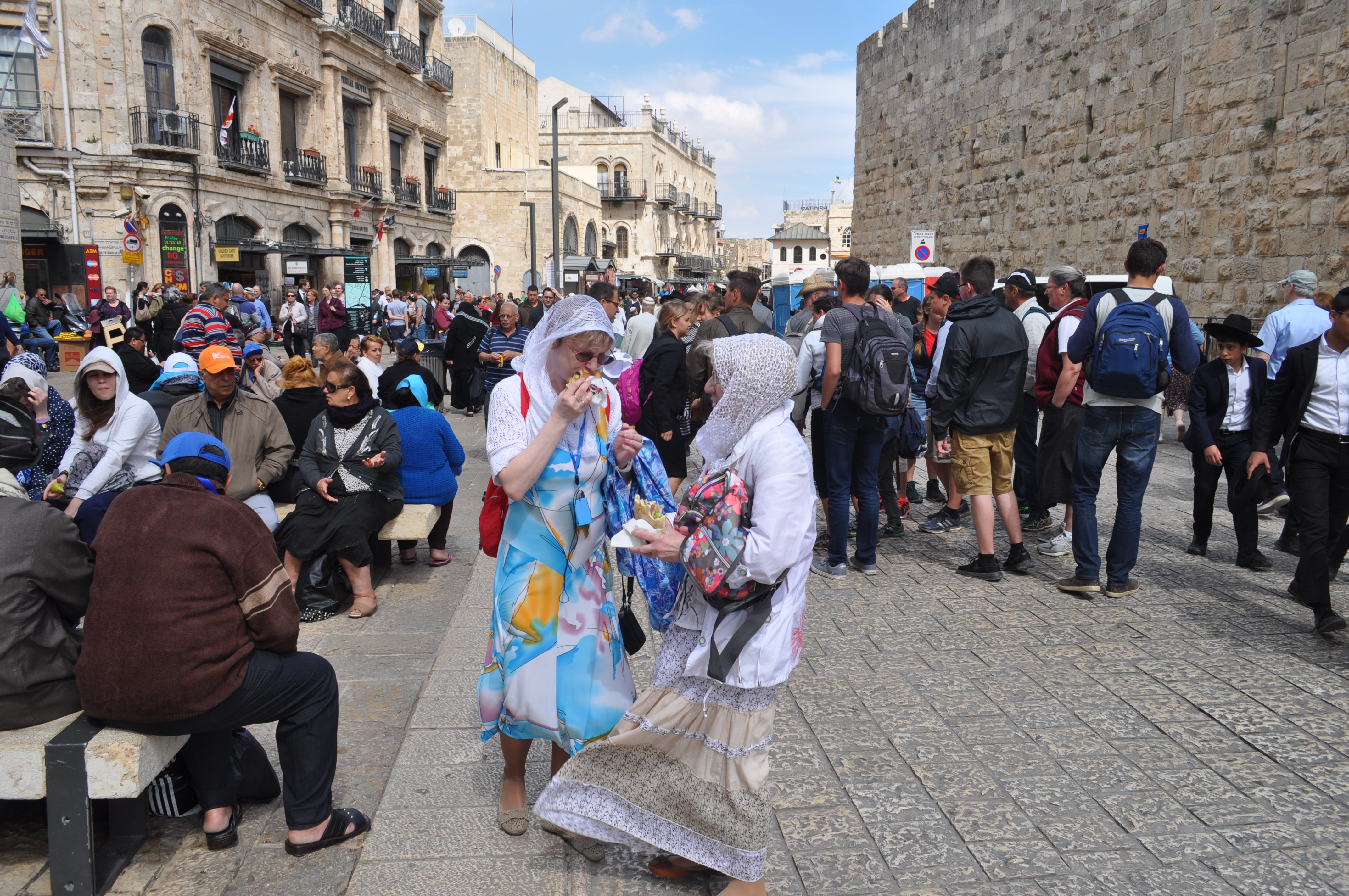


The New York Times Inverts the History of Jerusalem

On December 6, 2017, on the eve of President Donald Trump recognizing that Jerusalem is the capital of Israel, the New York Times decided to give its readers a primer on #FakeHistory.

The article entitled “The Current Conflict in Jerusalem Is Distinctly Modern,” gave a 100-year history that not only omitted important facts, it told a story that was an inversion of truth. Specifically:

  • The NYT led readers to believe that Jerusalem was an Arab city and that Jews recently began to immigrate there, when IN FACT, Jews have been a majority in Jerusalem since the 1860s
  • The NYT led readers to conclude that Jerusalem has never been important to Jews, and that it is just a recent phenomenon of right-wing Zionists, when IN FACT, Jerusalem has been central to Judaism for 3000 years for all Jews
  • The NYT will talk about the “corpus separatum” of the 1947 partition plan, but only refer to Jerusalem, when IN FACT, the Holy Basin referred to Greater Bethlehem and Greater Jerusalem, and Israel gave control of Bethlehem to the Palestinians 20 years ago

Below are some details highlighting the liberal rag’s distortions.

The Myth of Colonial Fingerprints

The lead-in to the article began to orient the reader about distinct 20th century aspects to the current conflict surrounding Jerusalem. It stated:

“the current one is a distinctly 20th century story, with roots in colonialism, nationalism and antisemitism.”

How was the story of Jerusalem remotely one of colonialism? Several international powers broke up the Ottoman Empire after its collapse; was Syria a French colonial enterprise? Read more in “Israel was never a British Colony; Judea and Samaria are not Israeli Colonies.

The article would go on to describe the nationalism of “religious settlers,” but never touch upon the deep antisemitism pervasive in Palestinian culture and actions.

Jewish Majority in Jerusalem for 150 Years

The article repeated long-standing #FakeNews by anti-Zionists that Jews were new-comers to Jerusalem, invading an Arab city:

“The three decades of British rule that followed Allenby’s march on Jerusalem saw an influx of Jewish settlers drawn by the Zionist vision of a Jewish homeland, while the local Arab population adjusted to the reality of the collapsed Ottoman Empire, which had ruled the city since 1517…. For Arabs, he said: ‘There was something of the shock at not being in the Ottoman Empire. There was a reordering of their society. The local Palestinian aristocracy, the big families of Jerusalem, emerged as leaders of the Palestinian national movement, which was suddenly being confronted by Jewish migration. Opposition to that migration fueled several deadly riots by Palestinians…‘”

This is an outrageous lie. The Times would have readers believe that there was an Arab majority in Jerusalem for 400 years. These “local Arabs” watched helplessly as the British allowed these foreigners to take over their city.

There were various demographic studies taken of Jerusalem for the past few centuries. They all agree that Jews have been a majority in the city since at least 1870, with the percentage growing well before the British took over in 1922.

Jerusalem population statistics from the JewishVirtualLibrary, which compiled statistics from a variety of places:

Year
Jews
Arabs/Muslims
Christians/Other
Total
1844
7,120
5,000
3,390
15,510
1876
12,000
7,560
5,470
25,030
1896
28,112
8,560
8,748
45,420
1922
33,971
13,411
4,699
52,081
1931
51,222
19,894
19,335
90,451
1948
100,000
40,000
25,000
165,000
1967
195,700
54,963
12,646
263,309
1987
340,000
121,000
14,000
475,000

From IsraelPalestinian.procon.org which also compiled data from various British censuses.

Year
Jews
Arabs/Muslims
Christians/Other
Total
1910
45,000
12,000
12,900
69,900
1922
34,000
13,500
14,600
62,500
1931
51,000
19,900
19,300
90,500
1946
99,300
33,700
31,400
164,400
1967
196,800
58,100
12,900
267,800
1972
261,100
74,400
11,800
347,300
1983
346,700
112,100
13,900
472,700
1995
486,600
171,700
13,900
672,2000

Jerusalem and Its Environs: Quarters, Neighborhoods, Villages, 1800-1948 by Ruth Kark, Michal Oren-Nordheim detailed the growth of Jews in Jerusalem after the Crimean War.

Year
Jews
Arabs/Muslims
Christians/Other
Total
1866
8,000
4,000
4,000
16,000
1887
28,000
7,560
7,070
42,630
1913
48,400
10,050
16,750
90,500
1931
51,222
19,894
19,335
90,503
1945
97,000
30,630
29,350
157,080

Regardless of the source of information, Jews were clearly the dominant religious group in Jerusalem for as much as 30 years before the first Zionist Congress, and 50 years before the Balfour Declaration. To state that the Jews were interlopers into an Arab city is patently false and a complete inversion of history and fact.

This is part of an ongoing false narrative that the New York Times gives its readers even regarding current events. For a despicable example, read “The New York Times will Keep on Telling You: Jews are not Native to Israel,” in which every Israeli – even those whose parents and grandparents were born in Israel – was described as a foreigner, while every Arab was described as a local.

The 1947 Partition Plan Included Bethlehem

The Times continued to go over history, touching upon the 1947 UN Partition Plan.

“After the war, in 1947, the United Nations approved a partition plan that provided for two states – one Jewish, one Arab – with Jerusalem governed by a ‘special international regime’ owing to its unique status. The Arabs rejected the partition plan,… Jerusalem was divided: The western half became part of the new state of Israel (and its capital under an Israeli law passed in 1950), while the eastern half, including the Old City, was occupied by Jordan.”

The Times will forever refuse to correctly state that the Holy Basin in the partition plan was much larger than just Jerusalem, and included Greater Bethlehem.


The “corpus separatum” of the 1947 UN Partition Plan

Israel handed control of Bethlehem to the Palestinian Authority in December 1995 as part of launching the Oslo Accords with some tangible results. That concession of handing over half of the corpus separatum is never mentioned by the Times.

The Crimes of Jordan

The fact that Jordan’s annexation of the West Bank, the eastern half of Jerusalem and Bethlehem were not sanctioned by the international community is NEVER mentioned, while the world’s opinion about Israel’s taking of the West Bank and eastern Jerusalem is ALWAYS mentioned.

The fact that Jordan evicted all of the Jews from the eastern half of Jerusalem and the West Bank is NEVER mentioned.

The fact that Jordan gave citizenship to all Arabs in the newly acquired territories but specifically excluded Jews is NEVER mentioned.

Because for the Times, the problem is the Jews.

The Lie that Israel Doesn’t Care about Jerusalem

Throughout the article, the Times sought to portray Israeli Jews as ambivalent about Jerusalem as a capital city:

  • It was the for the British that Jerusalem was so important – they are the ones who established Jerusalem as a capital… It was not anyone’s capital since the times of the First and Second Temple.”
  • “Paradoxically, Zionism recoiled from Jerusalem, particularly the Old City,.. first because Jerusalem was regarded as a symbol of the diaspora, and second because the holy sites to Christianity and Islam were seen as complications that would not enable the creation of a Jewish state with Jerusalem as its capital.”
  • Jerusalem was something of a backwater, a regression to a conservative culture that they [early Zionists] were trying to move away from,”
  • “The early Israeli state was hesitant to focus too much on Jerusalem, given pressure from the United Nations and European powers,”
  • “Having accepted the idea of international control of Jerusalem, the early Israeli leadership sought alternatives for a capital, perhaps Herzliya or somewhere in the south,”

Get the message? Israel really was never focused on Jerusalem until the 1967 war, according the Times.

But how does that warped narrative fit into the following facts:

  • Jews moved to Jerusalem both before and after the British Mandate took effect in remarkable numbers, as detailed above
  • The Israeli national anthem, written in 1877, was focused completely on Jerusalem.
  • Israel made Jerusalem its capital shortly after the war of independence concluded, in 1950. It placed all of its governmental buildings there.

All of these facts about the early Zionists also doesn’t include the facts that Jews have always faced Jerusalem when they pray, regardless of where they are in the world. They pray for the return to Jerusalem and the reestablishment of the city to its former glory, several times a day.

How does the Times spew the absurd notion that Jerusalem is a novel idea to Israeli Jews?

Jerusalem is Important to All Jews, Not Jewish Extremists

The Times narrative continued that this once irrelevant city all of the sudden jumped into the minds of religious extremists after the Six Day War in 1967.

  • The turning points in 1967 were two: the great victory, including the fast shift from fears of defeat before the war to euphoria and the feeling that everything was possible, and the emotional impact of occupying the Old City…. Images of Israeli soldiers praying at the Western Wall… became seared into Israel’s national consciousness.”
  • “Jerusalem became the center of a cultlike devotion that had not really existed previously…. This has now been fetishized to an extraordinary degree as hard-line religious nationalism,”
  • “The victory of the right-leaning party Likud in 1977… helped solidify this new emphasis on Jerusalem as integral to Israel’s identity. Religious settlers became more prominent in political life in Israel,”
  • “As part of this shift, Jerusalem’s symbolic importance intensified,”

It is unquestionably true that many religious Jews flocked to Jerusalem. They have been doing so for thousands of years because it is the most holy city in Judaism. They are not “right-leaning” or “religious settlers.” They are people who came to live in their holiest city.

As further evidence of the long-standing importance of Jerusalem to the entire country – even the “secular European socialists” that the article highlighted – was Israel’s adoption of a particular menorah as its national emblem in 1949: the one that was pictured in the Arch of Titus in Rome. That menorah symbolized the ransacking and destruction of the Second Jewish Temple in Jerusalem 2000 years earlier. The deliberate selection of that menorah as the symbol of the Jewish State of Israel was to show that the Jews had returned from the diaspora, to its sacred land and holiest city, Jerusalem.

Today, the entire Jewish people continue to be engaged about Jerusalem. The current controversy surrounding creating a pluralistic place for prayer at the Western Wall is because of the strong interest of Reform and Conservative Jews for Jerusalem. The notion that the city is only important to “cultlike… religious settlers” is absurd.

Jews Belong in Eastern Jerusalem

The Times continued its horrific background by concluding that Jews have no rights to be in the eastern part of the city:

  • “Palestinians say that Jewish settlers have encroached on East Jerusalem,”
  • “‘The entire international community has been in accord that Israeli annexation and settlement of East Jerusalem since 1967 is illegal, and refuses to recognize Jerusalem as Israel’s capital,'”

As the Times never explained to readers that all of the Jews were evicted by the Jordanians in 1949, it made their appearance in the eastern half of the city seem strange and foreign. It is not. Jews returned to parts of their holiest city where they lived for centuries.

The Times also did not give background to the international laws of 1920 (San Remo) and 1922 (Mandate of Palestine), which both clearly and explicitly stated that Jews could live throughout Palestine – including the Old City of Jerusalem – and that no person could be excluded from living anywhere in the land due to religious beliefs.

No matter. The paper chose to quote anti-Zionists. It is surprising that it did not state that Zionism is a form of Racism.

Oh, and for those keeping score that Israel limits Arabs in Jerusalem, look at the statistics above again. Under the British from 1922 to 1948, the number of Jews and Arabs BOTH went up by three times. From 1967 to 1995, the number of Arabs in Jerusalem under Israeli rule tripled again, while the number of Jews only went up by 2.5 times. How does the Times keep giving people the impression that Jews overran the Arabs during British rule (when both groups grew by the same percentage) and that Israel has been forcing out the Arabs from Jerusalem (even though the growth of Arab residents surpasses Jews!)


As the world waited for the United States to recognize the reality that Jerusalem is the capital of Israel, the New York Times fed its readers anti-Zionist red meat. It crafted an article that Jews never much cared for the Arab city of Jerusalem until 50 years ago, and that the only Jews who really care about it now are religious fanatics. The masters of #FakeNews are trying their best to instigate a jihad.


Related First.One.Through articles:

750 Years of Continuous Jewish Jerusalem

The Anger from the Zionist Center

The Palestinian’s Three Denials

The Arguments over Jerusalem

The Custodianship of a Child and Jerusalem

Obama’s “Palestinian Land”

Nicholas Kristof’s “Arab Land”

Arabs in Jerusalem

Music video: The Anthem of Israel is Jerusalem

Subscribe YouTube channel: FirstOneThrough

Join Facebook group: FirstOne Through  Israel Analysis