Chagall’s Ladder and October 8 Jews

Marc Chagall (1887–1985) returned again and again to the image of Jacob’s Ladder throughout his long life. But his 1973 rendering, painted near the end of his days, stands apart. It is visually explosive—layered, dissonant, and urgent.

The moment one sees it, the eye is pulled upward to an orange sun burning at the top center. At that height, the sky should glow with daylight yellows. Instead, the sky is red, a communist-red firmament. And the town below, which should be illuminated by that sun, sits in unnatural midnight blue.

Something is wrong in this world. This is not a window into serenity; it is a scene of foreboding.

That imbalance is profoundly Chagall. Born in the Jewish shtetls of the Russian Empire, he fled early waves of antisemitism. He lived through the destruction of European Jewry and spent his career painting ghost-towns of a shattered civilization. But he also painted the biblical narratives that shaped Jewish imagination. In this canvas, he fuses those worlds—eternal story and fragile reality—into a single warning.

At the center of the darkened town rises a ladder stretching into the sky. Three white angels punctuate the blue shadows, announcing that this is Jacob’s dream. Yet Chagall departs from Genesis: the ladder doesn’t stretch into the heavens and all the angels are not identical. Instead, the ladder is held in place by a blue angel, while a second, yellow angel reaches for it from the red sky above.

This ladder has competing destinations.

The blue angel, painted in the same hues as the town, embodies the pull of entrapment—those who cannot or will not flee their circumstances. In 1973, when Chagall painted this work, Soviet Jews were locked inside a system that barred their departure and suppressed their identity. The blue angel is not hostile; it is immovable. It represents the status quo, the path of staying even as danger grows. It is the sleeping Jacob at the bottom of the painting pondering the outcome of fleeing while laying immobile.

The yellow angel, by contrast, belongs to the daylight that should have filled the sky. It symbolizes clarity and escape. Beneath it, at the bottom-left, a mother and child ride a yellow rooster—Chagall’s emblem of dawn, deliverance, and a new beginning. Above them, nearly hidden in the deep blue, a quiet procession of Jews slips toward a safer horizon.

This is Jacob’s dream retold by a man who watched Jews flee the Russian Empire, flee Europe, flee the infernos of the 20th century. It is a ladder that offers a way out—if one chooses the right direction. It is there on Jacob’s face, the yellow glow of peaceful escape.

The October 8 Jews

Today, a new group is dreaming of climbing Chagall’s ladder: the October 8 Jews.

These are the Jews who woke the day after the October 7 massacre not only to the horror in Israel, but to the celebrations of that horror across Western cities. They heard the chants of “Globalize the intifada!” and “There is only one solution—intifada revolution!” echoing at major universities, boulevards, and civic squares. They watched crowds revel in Jewish fear, justify kidnapping, rape, and murder as righteous “resistance,” and proclaim open season on Jews everywhere.

Suddenly, the Western Jew realized that the ground beneath his feet might no longer be stable.

He now lives between Chagall’s two angels. Does he cling to the familiar town—the blue angel of inertia, habit, and misplaced trust? Or does he follow the rooster, the yellow angel, toward a place where Jewish existence is not conditional, tolerated, or revocable?

In the early 20th century, Jews fled the USSR and Europe for the United States and the Land of Israel. Today the destinations remain, but the calculus has changed. The Jewish state is stronger than ever—and simultaneously the focal point of global vitriol. Safety and danger now sit braided together.

The Ladder Still Stands in the Center of Town

Chagall painted Jacob’s Ladder for those who knew safety can vanish overnight. His warning now belongs to us. On October 6, Jews believed they lived in stable towns; on October 8, they saw the sky had been red for years. The chants weren’t metaphors, the mobs weren’t marginal, and the threats weren’t theoretical. The blue angel of normalcy had held the ladder while danger gathered in plain sight.

So the question becomes stark:

Will Jews try to reclaim trust in places that celebrated their terror—or follow the mother and child on Chagall’s yellow rooster toward the only light that doesn’t depend on someone else’s tolerance?

For a century, Jewish survival has meant movement: away from the USSR, away from Europe, away from every place that insisted Jews stay quiet and endangered. The October 8 Jew must decide whether today is any different.

In Chagall’s vision, only one angel leads to dawn.

The ladder still stands. The choice is ours.

The Prophetic Bird Of The Holy Land

Israel’s national bird is not the mighty eagle or the muscular vulture which many countries select. It is not a predator circling above the desert in effortless dominance. Instead, Israelis chose a small, cinnamon-colored creature with a zebra crown — the hoopoe.

The hoopoe going for a walk in Israel (photo: FirstOneThrough)

The hoopoe is striking without being fearsome, regal without being tyrannical. Its crest rises like a tiny crown, not in arrogance but in alertness. Its quiet confidence is perhaps the most Israeli trait of all.

Ancient Jewish texts and Middle Eastern folklore saw in the hoopoe a messenger of wisdom. King Solomon, in one Midrash, learns from the bird’s insight. In Islamic tradition, it is the hoopoe who spots the Kingdom of Sheba and brings word of distant realms. Small in stature, large in perception — the bird was never the warrior; it was the one who saw.

And in that, too, there is something deeply familiar. Israel has always survived less by size than by awareness, less by brawn than by vigilance. The hoopoe does not conquer terrain; it adapts to it. It finds food in the hardest soil. It endures heat and drought. It survives because it is resourceful, not ruthless.

It is also fiercely protective through a strange biological ingenuity. When predators threaten its nest, the hoopoe emits a foul-smelling secretion that drives them away. It is a defense born of determination: My family will not be harmed.

That combination — gentle but unyielding, peaceful but protective — resonated in the public vote that crowned it Israel’s national bird in 2008. Israelis did not choose a symbol of domination. They chose one of resilience, devotion, and wisdom. They chose a creature that guards life rather than takes it.

Israel didn’t know in 2008, when it voted for the hoopoe, that Hamas would launch war after war with openly genocidal intent. It didn’t know that October skies would fill with rockets, or that invasions, massacres, and kidnappings would carve themselves into the national psyche. But the country understood something deeper — that, like the hoopoe, it would have to adapt to danger, live alert, and protect its family with whatever tools it had.

A small bird in a vast desert landscape.
A small country in a vast expanse of Arab and Muslim nations.

The hoopoe survives not by dominating its predators, but by outsmarting them, outlasting them, and never abandoning its young. Israel, too, has learned to persist in a world that often misreads its vigilance as aggression and its survival instincts as provocation.

The national bird turned out to be prophetic.

Israel may be small, but like the hoopoe, it adapts, endures, and protects its own — even when surrounded, even when threatened, even when the world insists it should fold its wings and pretend it is safe.

The Polite Jihadist

Zahra Billoo of CAIR once warned American Muslims to beware of “polite Zionists.” People who show up at interfaith events, bake challah with their neighbors, and fight for civil rights—but who, she insists, cannot be trusted because they believe Jews have a right to live and pray in their ancestral homeland. That was her definition of danger: Jews who smile, volunteer, and advocate for coexistence, but who also believe Israel has a right to exist. They are your “enemies.”

It was an extraordinary moment of inversion. The Jewish community—disproportionately involved in interfaith coalitions, civil-rights causes, racial-justice marches, refugee aid, and social-service work—was cast as a threat not for what it does, but for what it believes: that Jews, like any people, have the right to be sovereign in their own homeland. Billoo called that racism. And too many institutions nodded politely.

So it is fair to ask: Do Jews have to be wary of “polite jihadists”?

Smiling Zohran Mamdani

We are told by Muslim groups to fear polite Zionists, yet tiptoe around the reality of polite jihadists—individuals who wrap hard supremacist doctrines in soft rhetoric and a smile. People who reject violence in press releases but openly support ideologies that cast non-Muslims as infidels; who promote frameworks in which Jews and Christians may live only as tolerated second-class subjects (dhimmis) under Islamic rule; who embrace the idea that Islam should dominate the world, politically and spiritually; who speak of “justice,” but envision a future in which non-Muslims are either subordinate or erased.

These are not fringe concepts. They are hardwired into the foundational texts and invoked by extremists to justify their worldview. And while many American Muslims reject them entirely, groups like CAIR have repeatedly platformed leaders who traffic in these supremacist ideas—even while presenting themselves as civil-rights organizations.

If believing that Jews should be allowed to pray at their holiest site is “racist,” what is believing that Jews must never pray there at all?
If supporting Jewish sovereignty is “extremism,” what is supporting an ideology that grants Jews survival only as second-class subjects?

America has a long-standing standard for hate groups: organizations that demonize entire populations, promote supremacist ideologies, or justify violence or domination over others. The KKK fell into that category because it portrayed African Americans, Jews, and Catholics as existential threats who must be controlled, excluded, or eliminated.

What, then, do we do with organizations whose leaders insist that Jews who support Israel are untrustworthy; who describe the world in terms of Muslim purity versus Zionist contamination; who excuse jihadist violence as “resistance”; who call Jewish self-determination a racist ideology; who propagate doctrines in which non-Muslims must accept inferiority or die?

Is that not the definition of a hate ideology?

The United States is finally on the cusp of declaring the Muslim Brotherhood a terrorist group. It is long overdue, an action which many Muslim-majority countries have taken.

But what about CAIR?

CAIR is invited into coalitions, corporate trainings, universities, government initiatives, and interfaith events—despite leadership that routinely defames Jews and normalizes Islamist supremacy. If the KKK wrapped itself in the language of “civil rights,” it would still be disqualified. Supremacy does not become acceptable because it quotes scripture or wears a suit.

The polite jihadist is far more dangerous than the polite Zionist—because one seeks coexistence, while the other seeks dominance.

America needs to stop pretending it cannot tell the difference.

The One State Hypocrisy

Zohran Mamdani and his chorus of activists claim that the answer to the Israeli–Palestinian conflict is simple: one state in which everyone has “full and equal rights.” They pound the table with righteous fury, insisting that borders, ethnic divisions, and national identities melt away in a utopian civic democracy.

Fine. Let’s take them at their word.

If you truly believe in a one-state solution, then you must believe that Jews, like Arabs, have the right to live anywhere in that state. Hebron, Shiloh, Beit El, Jerusalem’s Old City, Ramallah, Nablus, everywhere. That’s how equal rights work.
So why do the same people who chant “one state” turn around and scream “illegal settlers!” when Jews live or pray in places those protestors dislike?

They protested outside Park East Synagogue but deny Jews the right to live in Judea and Samaria, the Jewish homeland for 3,000 years. Either everyone gets equal rights everywhere, or you don’t believe in a one-state solution at all.

You can’t have it both ways.

The Temple Mount Test Case

If you want a perfect example of the hypocrisy, look up — literally — to the Temple Mount.

If you support one state where every citizen has equal rights, then you support Jews having the same rights as Muslims to: Visit their holiest site. Pray at their holiest site. Build a synagogue at their holiest site.
That is what equality means.

But the United Nations — which these same activists quote like scripture — demands the “status quo,” a euphemism for banning Jewish prayer on Judaism’s holiest ground. It is the only place on earth where Jews are legally prohibited from praying. The UN defends this discriminatory regime with fervor.
So which is it?
Is it a one-state democracy of full equality, or an international system that criminalizes Jewish religious rights because the Jordanian Waqf insists on it?

You cannot simultaneously denounce Jewish prayer as a provocation and claim to champion “equal rights for all.”

One State Means Equal Rights — For Jews Too

If Zohran Mamdani and his movement were intellectually honest, they would have to say:

  • Jews may live anywhere in the land
  • Jews may pray anywhere in the land
  • Jews may build synagogues anywhere in the land
  • Jews may return to their ancient homes — Hebron, Shiloh, the Old City of Jerusalem

Not one activist chanting for “full equality” will utter those words. Because their version of “one state” is equality for some and erasure for Jews.

Call it what it is.

You can’t claim a one-state solution while denying Jews the very rights you demand for others.

You can’t have it both ways.

A Name That Never Changes

In Parshat Toldot, as the last of the forefathers is birthed and named, we are reminded that Isaac stands out for a quiet but powerful distinction. He is the only one of the forefathers whose name was never changed.

Abram became Abraham.
Jacob became Israel.

But Isaac remains Isaac — Yitzchak — from the moment God speaks his name before he is even conceived. His existence, his identity, and his destiny are declared in advance. Not earned, not negotiated, not revised.

God tells Abraham that Sarah will have a son in her old age (Genesis 17:19), and when he laughs at the impossibility of it, that laughter becomes his name. His very being is rooted in divine certainty: what looks impossible to humans is already written by God. Isaac’s name is fixed because the promise is fixed.

And so it is with the Land of Israel.

Israel is the only nation on earth whose name predates its people’s return, their sovereignty, their wars, their exiles, and their rebirth. The name was carved into Tanach, inscribed into prayer, whispered by exiles across continents, and sustained through millennia when Jews had no army, no state, no power — only a promise. [see more below]

The Romans tried to erase it, renaming Judea as Palestina to sever Jewish memory from Jewish land. Empires rose and fell, borders shifted, conquerors rewrote maps. But the name Israel endured, unchanged — the national parallel to Isaac himself. A people and a land whose identity was not invented but inherited, not imposed but foretold.

Just as Isaac’s name was spoken before his birth, the name “Eretz Yisrael” was spoken long before the modern state emerged. A name older than Rome, older than Islam, older than every foreign flag that temporarily claimed the soil. A name that outlived exile and humiliation, the Crusades and expulsions, pogroms and partitions.

You can conquer a territory.
You can redraw borders.
You can rename provinces.

But you cannot undo a promise.

The modern State of Israel is often framed as a political accident — a product of diplomacy, war, and the ashes of Europe. But its name tells a different truth. Like Isaac, its identity was scripted long before any diplomat voted or any soldier fought. It is not a modern label but an ancient declaration returning to life.

And Isaac’s life – the longest of all of the forefathers at 180 years – was only spent in Eretz Yisrael. While Abraham and Jacob both spent years outside, God told Isaac (Genesis 26:2) to not leave the land, even during famine. His presence, like his name, is fixed forever.
The world can debate policies, borders, governments. But the essence — the name — does not change. Isaac never needed a new one. And neither does Israel.
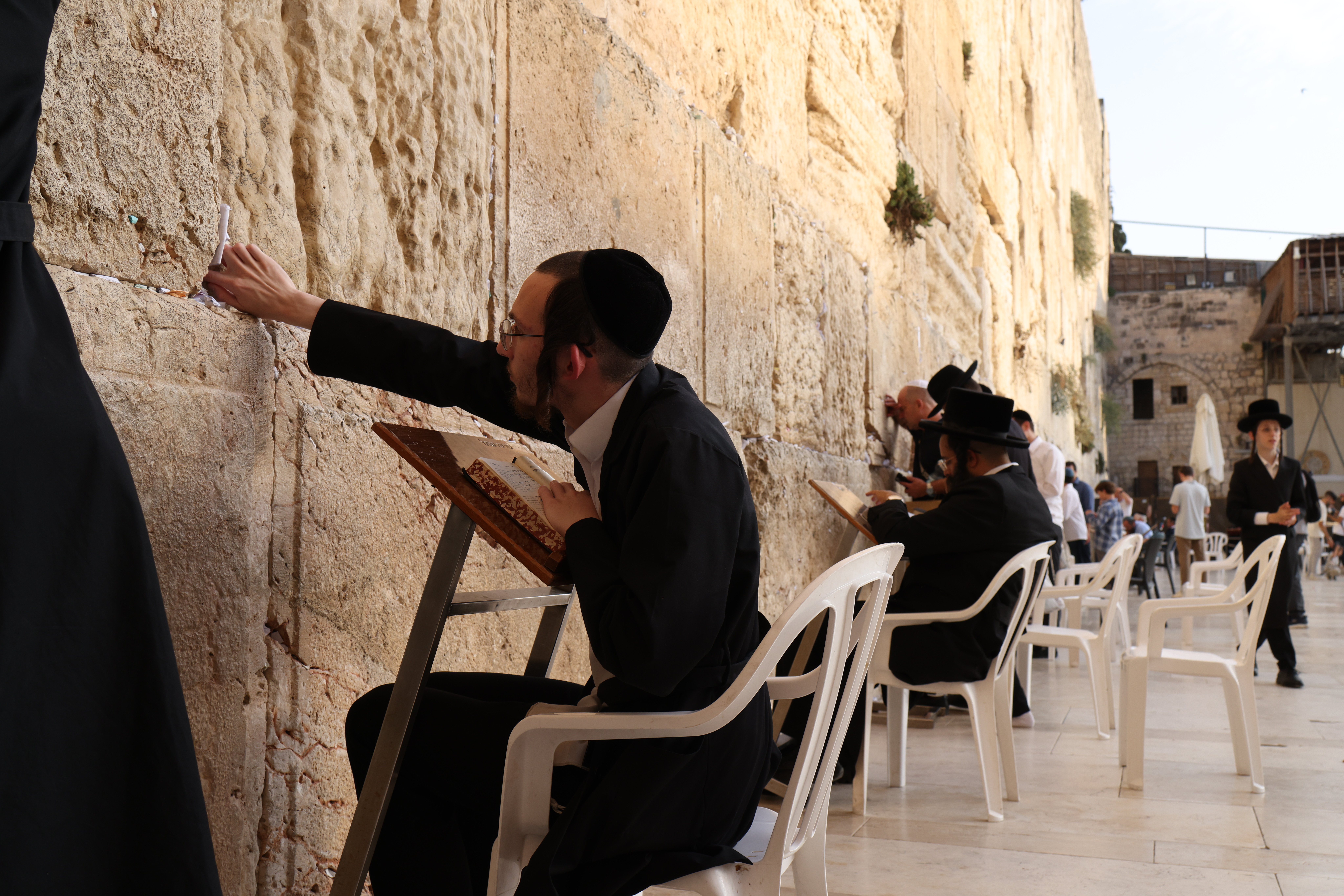
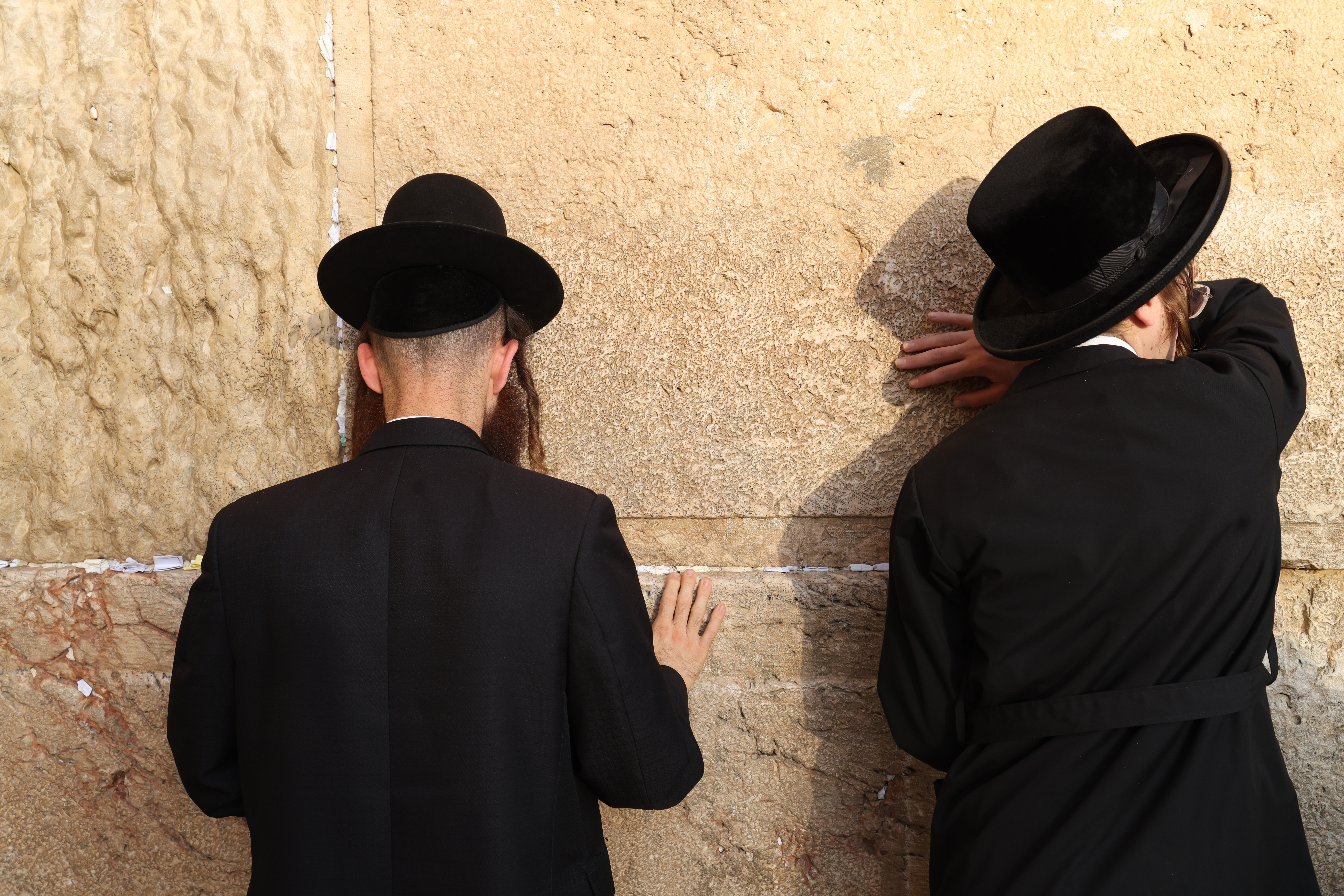
Young boy praying at the Kotel in the Old City of Jerusalem, Israel (photo: First One Through)

Eretz Yisrael, The Land of Israel

Biblical Origins
The phrase Eretz Yisrael (ארץ ישראל) already appears in Tanakh:
Shmuel I 13:19 – “No blacksmith could be found in Eretz Yisrael.”
Melachim II 5:4 – Naaman’s Israelite maid and the cessation of Aramean raids reference Eretz Yisrael.
Yechezkel 40:2; 47:18 – Ezekiel is shown visions “in the Land of Israel.”
Divrei HaYamim I 22:2; II 2:16; 34:7 – Solomon’s labor and Josiah’s reforms occur “throughout Eretz Yisrael.”

These uses establish the term over 2,500 years ago, well before the Roman exile.

Early Rabbinic Usage — Mishnah
The term becomes a formal halakhic category in the Mishnah:
Kelim 1:6 – “Eretz Yisrael is holier than all other lands,” the base level of the Ten Sanctities.

This is 2nd century CE — already treating Eretz Yisrael as a fixed legal reality.

Dead Sea Scroll known as 4QMMT (estimated written in 150BCE) is a halachic letter that refers to “Eretz Yisrael”

Talmudic Centrality
The Talmud Bavli expands the spiritual meaning:
Ketubot 110b – “Whoever dwells in Eretz Yisrael is as one who has a God; outside it, as one who has none.”
• Ketubot 111a – “Whoever lives in Eretz Yisrael dwells without sin.”

These sugyot codify the land’s religious centrality, not just its geography.

Halakhic Midrash — Sifrei
The Sifrei on Devarim states:
• “Dwelling in Eretz Yisrael is equal to all the commandments.”

An early, sweeping valuation of the Land as a spiritual axis.

Rishonim — Medieval Commentators
• Ramban teaches that mitzvot are fully binding only in Eretz Yisrael, and observed in exile merely to preserve them.
• Rambam (Beit HaBechirah 7:12) reiterates the Mishnah: “All of Eretz Yisrael is holier than all other lands.”

By the Middle Ages, the term is fully entrenched across halakhic, theological, and philosophical writing.

Bottom Line

“Eretz Yisrael” is not a modern, Zionist, or political invention. It is a halakhic and theological constant across 2,000+ years.

Two Things To Do Now To Prevent October 7 From the West Bank

For twenty years, Israel relied on a security barrier to prevent the suicide bombings and shootings of the Second Intifada. It worked. While ninety percent of that barrier was not a concrete wall, but a high-tech fence—cameras, sensors, patrol roads, and layered detection system – it still reduced terror attacks from the West Bank by over 90 percent. Israelis and the Stateless Arabs from Palestine (SAPs) rebuilt their lives believing that a fence, not a fortress, was enough.

Then came October 7.

SAPs crashing through the fence between Gaza and Israel on October 7, 2023

Hamas gunmen bulldozed, exploded, and burned their way through what was—on paper—one of the most advanced border fences in the world. They murdered, raped, tortured, and kidnapped civilians in a genocidal assault that shattered the central premise of Israel’s security doctrine: that a fence and technology could stop an army of terrorists long enough for the IDF to respond.

That assumption is gone.

If a similar surprise assault were launched from the West Bank near the country’s major population centers—Tel Aviv, Jerusalem, the coastal cities—the casualties could be catastrophic. Israel is nine miles wide at its narrowest point. One breach is not a tactical event. It is an existential one.

The Barrier Must Change Because the Threat Has Changed

A fence can be cut, rammed, or climbed. A reinforced, multi-layered wall—physical, electronic, aerial, and subterranean—is a different proposition. The lesson of Gaza is not to abandon the idea of separation, but to upgrade it to match the enemy’s capabilities and intentions.

Israel does not have the luxury of guessing whether future attackers will try to slaughter dozens or thousands. The security architecture must assume the worst case—because the worst case already happened.

In Hashmonaim, Israeli backyards are a stone’s through away from the Security Barrier (photo: First One Through)

Disarming Militias Is Not Just for Gaza

The world is focused on disarming Hamas in Gaza. It must also confront a parallel obligation: militant groups in the West Bank cannot remain armed if there is to be any political horizon, for Palestinian Arabs or Israelis.

If Gaza is demilitarized but the West Bank is not, the threat simply shifts geography. The barrier is not a substitute for disarmament. It is a second line of defense, not the first.

Lasting security requires:

1️⃣ Complete disarmament of organized militant groups seeking Israel’s destruction.
2️⃣ Security control capable of preventing re-armament.
3️⃣ A barrier strong enough to make a surprise attack militarily unachievable.

Without those three components, diplomatic talk of a “future Palestinian state” is not a peace process—it is a gamble with tens of thousands of civilian lives.

A wall is not a symbol of failure. It is the price of survival when the alternative is the erasure of towns near the 1949 Armistice Lines with Jordan.

A move towards coexistence between Israelis and Palestinian Arabs cannot be limited to the threat from Gazans but from West Bank Arabs as well. Disarmament of West Bank Arabs and an upgrade of the security fence must happen now as well.

Peace requires trust. Trust requires time. Time requires security that cannot be breached in seven minutes by men with bulldozers and grenades and genocidal jihadi rage.

Until a day comes when coexistence is real—not chanted, not theorized, not negotiated—Israel must ensure that no armed faction can cross its border. The time to implement that plan is now.

Jews More Than Understand

Stateless Arabs from Palestine (SAPs) — in Gaza and the West Bank — often cry out that they cannot go wherever they wish in Israel. They protest that they cannot move to the towns where their grandparents once lived. They label Israel as racist for preventing them from settling there, even though their Muslim Arab cousins live peacefully in those very same towns.

Arab women sitting in the shade in Akko, Israel (photo: First One Through)

They point to United Nations resolutions declaring they have a “right of return.” They frame their displacement as an “ongoing Nakba,” a catastrophe that Israel continues to impose.

I hear their complaint. I hear their anger. I more than understand — I live it.

Because Jews have lived that same nightmare — and worse. The very same United Nations that claims SAPs have a “right of return” decreed that Jews should be banned from living in half of their homeland. It told us we could not live in our own capital, Jerusalem. It told us we could not pray on our own holy mountain. It called it a “status quo” and the world nodded in approval.

And the Stateless Arabs from Palestine have the gall to try to deny Jews that very same right — to live freely in their homeland — while complaining that Jews are denying them theirs. They scream of injustice while vilifying “Yahoods.” The hypocrisy is obscene.

The Palestinian Arabs know it, and rather than confront it through accommodation and compromise, they wage war like Highlander, shouting “there can be only one.” They elected Hamas. They supported the October 7 barbarism. They continue to support Hamas, all in the hope of taking over the entire land from a small country.

Israeli Arabs make up 21% of the Israeli population, while Jews make up 0% of Gaza’s population and about 18% of the land east of the 1949 Armistice Lines (E49AL). The world ignores the Israeli Arabs with full citizenship rights, and obsesses and smears the Jews in the “West Bank” as illegal “settlers.” It seeks to ethnically cleanse that region of Jews while simultaneously claiming Israel has no true sovereignty to determine who to allow into its country to push the Israeli Arab population to 50%. It’s absurd.

Muslim Arabs have global support backed by 2 billion Muslims in their complaint against Israel. The small number of Israeli Jews receive global contempt for seeking the same right to live and travel freely in their homeland.

Israeli Arab women in Jerusalem (photo: First One Through)

Abraham Accords Versus UK and France

Europe is declaring peace while America is building it.

As Britain and France rush to recognize a Palestinian state to pressure Israel, the United States is doing something more durable: expanding the Abraham Accords. With Kazakhstan now actively promoting its joining Muslim-majority nations normalizing ties with Israel, the U.S. is advancing a vision that builds relationships rather than rhetoric.

US President Donald Trump meets with Kazakh President Qasym-Zhomart Toqaev

European leaders say recognition will balance the scales and restart diplomacy. But what exactly are they recognizing? The Palestinians remain divided between an unpopular and corrupt authority in the West Bank and Hamas in Gaza—an antisemitic terrorist group that thrives on conflict and rejects coexistence. There are no elections, no functioning institutions, no borders, and no credible security force. Declaring this fractured reality a “state” doesn’t bring peace any closer. It just flatters the fantasy that paperwork can substitute for progress.

For Palestinians, European gestures feel validating, but validation without change is illusion. No declaration from Paris or London can rebuild Gaza, reform leadership, or disarm Hamas. It’s diplomacy as performance—morally satisfying to distant audiences but meaningless in practice.

The Abraham Accords take a different approach. They focus on cooperation. Each new country that signs—Bahrain, Morocco, the UAE, and now Kazakhstan—proves that Israel can be accepted across the Muslim world without waiting for Hamas’s permission. This shift is reshaping the region. It turns rejection into partnership, slogans into investment, and isolation into integration. Every handshake chips away at the myth that the Middle East must remain hostage to its oldest conflict.

But peace will never advance while Hamas holds power. Hamas doesn’t just oppose Israel; it opposes peace itself. It rejects every agreement, glorifies violence, and sacrifices its own civilians to preserve control. Allowing Hamas to participate in elections or continue ruling Gaza ensures that destruction will repeat everywhere. Disarming Hamas and excluding it from Palestinian politics isn’t an Israeli condition—it’s a Palestinian necessity. Without that step, there can be no state, no sovereignty, and no future.

Alas, Palestinians disagree. In the latest PCPSR October 2025 poll, Hamas remains the most popular political party (60% approval) and Khaled Mashal, the leader of Hamas would trounce Fatah’s Mahmoud Abbas by 63% to 27%. Palestinian Arabs (69%) remain adamant that Hamas not give up its arms. Even after the decimation of Gaza, a majority (53%) still approves the October 7 massacre. And imagine that now, as the ceasefire appears to be bringing the end of the war, a remarkable 39% of Palestinians still think Hamas will win.

The choice is clear. Europe can keep recognizing an idea of Palestine that doesn’t exist and that the Palestinian Arabs are more moderate than they really are, or the U.S. can keep building the conditions for a reformed Palestinian society. The road to peace will not run through European parliaments; it runs through a changed Palestinian worldview, normalization between Israel and Muslim countries, economic growth, and a regional consensus that leaves Hamas behind.

The pathway to peace in the Middle East is the Abraham Accords, not European theater.

The Rape Deniers Celebrating Zohran Mamdani

The cameras panned across the crowd at Zohran Mamdani’s victory celebration — the newly elected mayor of New York City, surrounded by socialist activists, digital influencers, and the self-congratulating left. It was meant to be a night of triumph for the “movement.” But what stood out for those watching was not unity, or even politics. It was who was cheering.

Standing shoulder to shoulder, laughing and hugging, were Jamaal Bowman, Hasan Piker, and Zeteo’s Mehdi Hasan — three men whose names have become synonymous with the moral collapse that followed the Hamas atrocities of October 7.

Zeteo’s Mehdi Hasan at the Mamdani victory party with Hasan Piker and Jamaal Bowman. (start at 52:00)

Bowman, the disgraced former congressman, made his name shouting on New York’s streets that Israeli women were not raped on October 7 — that the accounts of mass sexual violence by Hamas terrorists were fabricated. He wasn’t a lone crank in an internet comment section; he was a member of Congress using his platform to publicly deny the humanity of Jewish victims in the streets of his district.

Hasan Piker, meanwhile, mocked the entire subject on his Twitch stream, telling his millions of followers that he didn’t care if the women on October 7 were raped. That flippant cruelty — that casual dismissal of atrocity — has become a feature, not a bug, of a corrupted culture that cloaks moral degeneracy in “anti-imperialist” rhetoric. His anti-American and anti-Israel rhetoric had become so toxic, that Rep. Ritchie Torres, a Latin-Black gay Congressman, wrote a letter on October 29, 2024 to the CEO of Twitch to have Piker removed.

And then there was Mehdi Hasan, who publicly argued that early reports of “mass rape” on October 7 were overstated and politicized, arguing that the allegations had been “weaponized by supporters of Israel.” At Mamdani’s party, he stood smiling with Bowman and hugging Piker as the pain of Jews was being amplified and normalized.

And celebrated.

The spectacle was a black mirror of a broken city — a city that once prided itself on tolerance and moral clarity now relishing Jewish trauma.

New Yorkers didn’t just elect a socialist. They elected a symbol of moral inversion — a man whose supporters include those who laughed at, ignored, or explained away the rape and murder of innocents.

When the applause dies down and the speeches fade, one question will remain for the city that crowned Mamdani: What kind of people celebrate with rape deniers and those that revel in the pain of the most persecuted minority-minority?

Does Google Recognize Israel?

Google employs roughly 2,000 people in Israel, predominantly in offices in Tel Aviv and Haifa. The technology giant has hired teams in research & development, and purchased several Israeli companies including Waze and Wiz for billions of dollars to establish a large footprint.

And many of the company’s American employees don’t like it.

Hundreds of Google employees held protests about the company’s ties to Israel. Google fired around 50 of them in 2024 over their protests regarding “Project Nimbus,” a $1.2 billion contract signed in 2021 for Google and Amazon to provide the Israeli government with cloud computing and artificial intelligence services.

The disgruntled employees may now be fighting a more subtle fight.

To use Google’s calendar function, one is left with some odd choices to find the time zone in Israel. Rather than showcasing capital and major cities like Jerusalem, Tel Aviv and Haifa – cities where Google has a presence – the company shows time zones for Gaza and Hebron.

It’s both insane and stupid. And a reminder of the subtle Israel and Jewish erasure that is happening by radical technology employees under everyone’s noses.

ACTION ITEM

Complain to Google and have them feature main Israeli cities in their calendars.