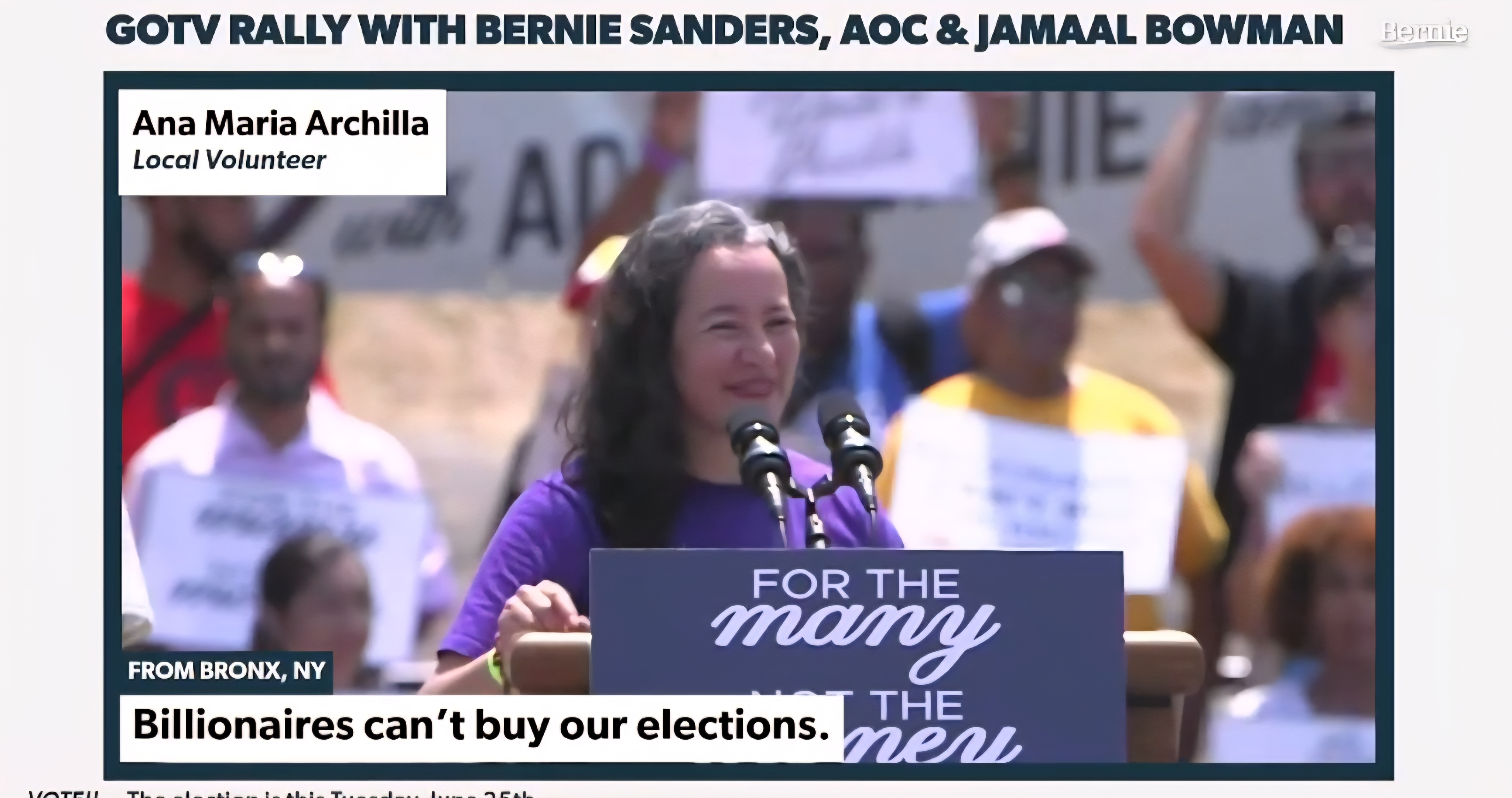
New York City Mayor Zohran Mamdani just appointed Ana Maria Archila of the Working Families Party to lead the Mayor’s Office of International Affairs. She will serve as the city’s chief liaison to the United Nations and the State Department.
She doesn’t care much for Israeli Jews.
In 2018, Archila became a national symbol of “believe survivors” during the confirmation fight over Brett Kavanaugh. She demanded that allegations of sexual violence be treated with complete moral seriousness.
Yet in June 2024, she had no issue championing Rep. Jamaal Bowman who had taken to the streets of his district after the heinous October 7, 2023 Arab massacre of Israelis to yell to a crowd that the story of Hamas raping Jewish women was a lie.
To add toxic fuel to the fire, while dozens of Jewish Israeli women remained captive in the terror tunnels of Gaza by the Palestinian leadership, Archila yelled at the Bowman rally (4:47) that “we end foreign policy that keeps Palestinian people in shambles and Palestine in shackles.” That is not an exaggeration: she came out to a rally to support a rape denier and yelled that the victims of kidnapping were actually the perpetrators.
Now Mayor Zohran Mamdani is elevating Archila into an international-facing role for New York City, the city with the largest Jewish population outside Israel.
In the alt-left political establishment in New York City today, raped Jewish women are not to be believed, their kidnapping is to be mocked, and their tormentors are to be canonized before cheering crowds.
History has a grim rhythm. The most destructive ideas rarely hatch overnight but stew in society. They are excused as rhetoric, theater, or “just politics.” Then—roughly five and a half years later—they explode.
This is not numerology. It is pattern recognition.
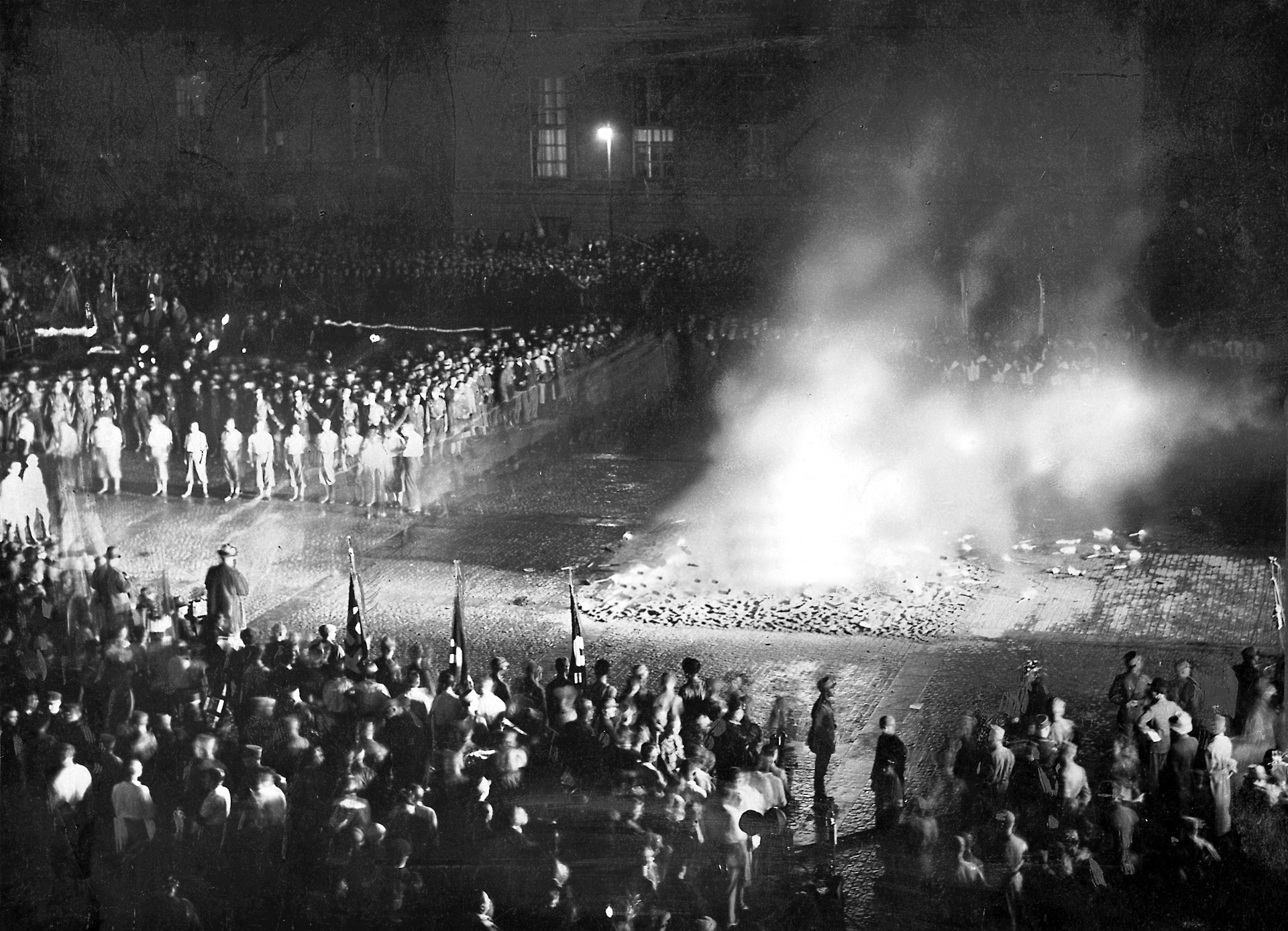
In 1933, Germans burned Jewish books in public squares. It initiated the cultural permission for the destruction of Jews. Five and a half years later, that permission hardened into the machinery of the Final Solution.
Als Höhepunkt einer von Joseph Goebbels initiierten ‘Aktion wider den undeutschen Geist’ werden auf dem Opernplatz in Berlin von Studenten und SA-Einheiten Bücher von Autoren verbrannt, die den Nationalsozialisten mißliebig waren.
In 2018, Gaza launched the so-called “Great March of Return.” It acted as a trial run to invade Israel and slaughter Jews. Five and a half years later, October 7 arrived—mass murder, rape, kidnapping—exactly as promised and practiced.
Ideas announce themselves early. The damage arrives later.
Today, in America, a new idea is being spoken aloud with disturbing ease: personal property is conditional.
Property Is the Load-Bearing Wall
Private property is not a side feature of capitalism; it is the load-bearing wall. Remove it and the structure collapses—investment freezes, contracts become jokes, and capital flees to wherever the rules still mean something.
Yet in recent years, voices across the ideological spectrum have started to say the quiet part out loud.
On the progressive left, figures like Zohran Mamdani and his partners in crime like Cea Weaver have openly argued that housing and land can be seized or overridden by the state in the name of moral urgency. Ownership becomes a social inconvenience. “Use” replaces title. Force replaces consent.
On the populist right, Donald Trump has flirted with the same heresy from a different direction—embracing sweeping government power over land, contracts, and assets when it suits political goals. The rhetoric differs. The result converges.
When the left and right agree that property rights are optional, the center cannot hold.
From Rhetoric to Ruin
Every historical catastrophe begins with intellectual laundering.
Book burning was framed as cleansing culture. The Gaza marches were framed as civil resistance. Property seizure is framed as compassion or patriotism.
Once a society accepts that ownership is contingent on political favor, every asset becomes provisional. Homes, farms, factories, patents—nothing is safe from the next emergency, the next slogan, the next election.
Capital responds rationally. It leaves. Innovation slows. Black markets thrive. Strongmen fill the vacuum. What follows is not equality but scarcity enforced by power. And there will be a scapegoat, and Jews have proven the most convenient.
July 2031 Is Not Far Away
Count forward five and a half years.
Ideas being normalized today will be policy tomorrow. Policies will become enforcement. Enforcement will become precedent. By the summer of 2031, the damage will no longer be theoretical.
This is how capitalism dies—not with tanks in the streets, but with applause for confiscation. This is how world order fractures—not through invasion, but through the voluntary abandonment of the rules that made prosperity possible.
This is how the Global North will collapse-not through open country borders, but the eradication of personal property lines.
The lesson of history is brutally clear: destruction is foretold in dangerous gestures towards property that eventually comes for the persons who own them.
Capitalism disciplines hatred only where it can still touch it. Where contracts exist, behavior can be checked. Where they don’t, mobs rule.
Kanye West (Ye) didn’t begin by attacking Jews. He began by denigrating Black people—calling slavery a “choice,” sneering at collective memory, mocking historical suffering. The reaction was outrage softened by indulgence. He was criticized, contextualized, excused. His Black identity functioned as camouflage. The lesson was clear: you could insult your own people and still be protected.
So Ye escalated. Antisemitism offered a bigger payoff—more visibility, more fear, more leverage. It worked until money intervened.
When Adidas cut him loose, the spell broke. Capitalism finally touched him and apologies followed—not from moral awakening, but because the incentive structure flipped.
This is often cited as proof that “the system works.” It doesn’t—at least not anymore.
Ye performing
Capitalism disciplines behavior only where value is concentrated. Ye had a centralized choke point: Adidas. Today’s antisemitism largely does not. It thrives where contracts don’t exist, boards don’t answer, and outrage itself is the reward.
That vacuum has produced a new Ye-like template: antizionist Jews who denigrate Jews. They celebrate October 7. They call Israelis “Nazis.” They launder moral inversion through identity—and are absolved because of it. Jewishness becomes armor, converting bigotry into “bravery,” hatred into “critique,” massacre into “context.” The uglier the claim, the louder the ovation.
Poorly named “Jewish Voice for Peace” partners with terrorist-supporting group Samidoun
The center of gravity is social media—especially TikTok—where attention replaces contracts, outrage outperforms restraint, and individuals have nothing material to lose. There is no Adidas-scale counterparty. Condemnation becomes fuel. Challenge confirms righteousness.
This is where the political story locks in and takes flight.
For years, the far left has discredited institutions under the banner of “corporate Democrats.” At the Democratic Socialists of America’s 2025 convention, a delegate said it plainly: the movement should organize people “that the corporate Democrats and Republicans have abandoned for dead.” In this frame, institutions aren’t imperfect—they’re illegitimate. Friction isn’t restraint—it’s oppression.
On the ground, the rhetoric sharpens. New York councilmember Alexa Avilés urged activists to “root out ‘corporate Democrats’ backed by AIPAC,” recasting pro-Israel Democrats as bought and disposable. Structural critique becomes moral license. Identity becomes proof. Mobs become “the people.”
DSA’s Alexa Aviles
Far-left media and politicians amplify the message—outlets like The Young Turks and figures such as Jamaal Bowman. They know that institutions impose friction > Friction slows mobs > Mobs hate friction. So the institutions must be delegitimized—and the most extreme voices elevated.
The Young Turks coin a term and come for “Corporate Democrats”
This is sold as empowerment. In reality, it is power to the algorithm. Algorithms reward the loudest, angriest, least accountable claims. In that environment, antisemitism doesn’t just survive; it thrives. Jews are too small a minority to outvote a mob optimized for rage.
The reality is that capitalism was never the moral engine here, but it was sometimes a brake. Contracts could snap shut and money could impose limits. When those limits vanish—when speech floats free of consequence and identity shields cruelty—nothing restrains the mob.
Ye was stopped because capitalism still touched him when he crossed from trashing Blacks to bashing Jews.
The antizionist Jewish influencers celebrating October 7 are not stopped because nothing touches them. In People Capitalism, attention is the asset, outrage is the yield, and antisemitism is rewarded, and boosted on a litter—especially when Jews attack Jews.
Every such system needs a moral absolver.
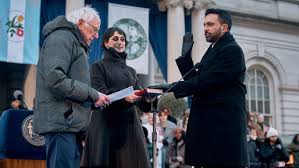
That role is played by Bernie Sanders—the mob’s messiah. He doesn’t organize the mob; he legitimizes it by claiming it isn’t radical, reframing rage as righteousness by declaring institutions corrupt, restraint oppressive, and “corporate Democrats” illegitimate. His function isn’t governance. It’s permission to come for mainstream Democrats and other Jews.
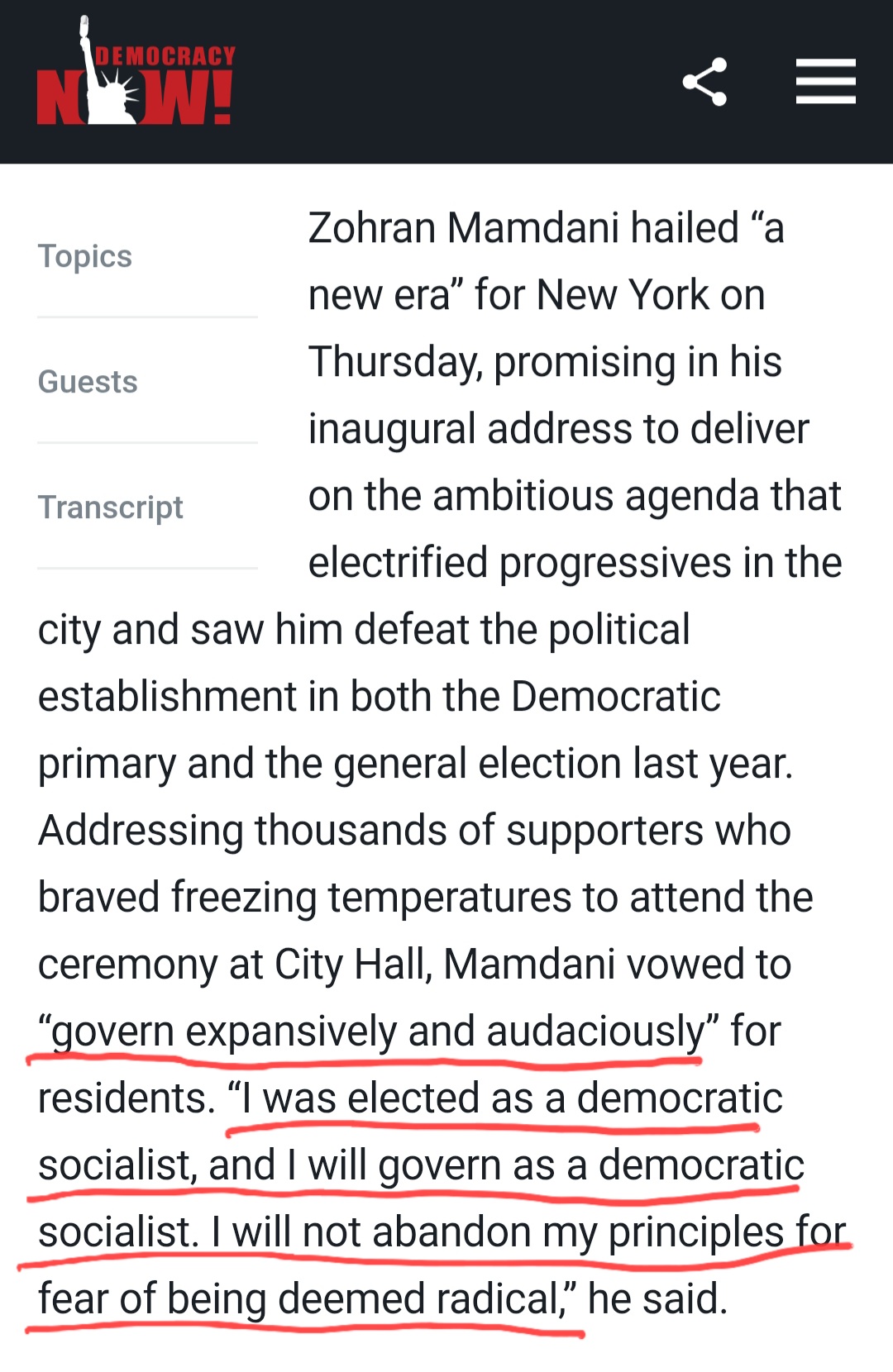
Sen. Bernie Sanders swears in DSA’s Zohran Mamdani as mayor of New York City
This is the final logic of People Capitalism:
markets once imposed limits; crowds impose none.
institutions once punished bigotry; mobs reward it.
Every time antisemitism is called out on the left, the same dodge appears on cue: “It’s just free speech.”
That response is not a defense. It is a red herring.
No one is arguing that anti-Israel speech is illegal. Under American law, almost nothing is. You can shout racist slogans. You can be misogynistic. You can mock religions. You can hold a Draw Muhammad contest outside a mosque. You can call for the destruction of a country. You can deny a people’s history.
All of that is protected speech. That has never been the question.
The question is what that speech is.
And much of what now passes as “anti-Israel discourse” is not political critique at all. It is hate speech, clearly, historically, and deliberately so.
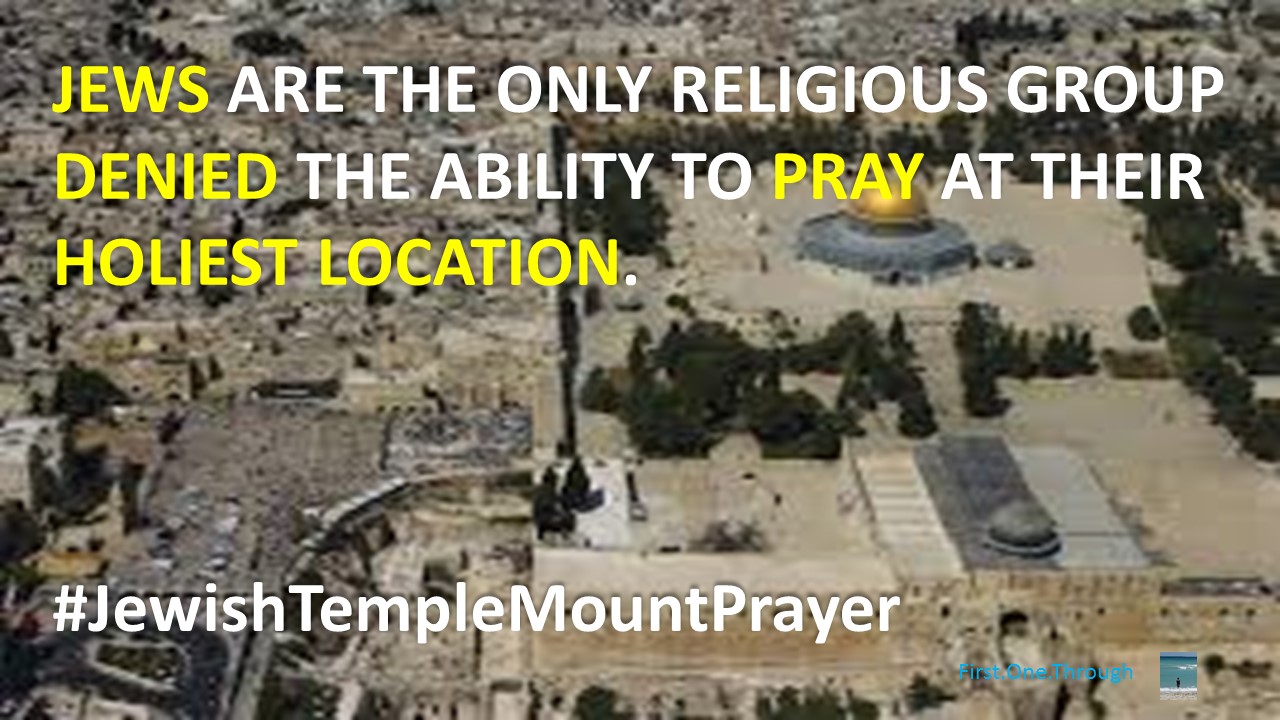
Calling for the destruction of the Jewish State is not foreign policy analysis. Denying Jewish history in the Land of Israel is not academic debate. Declaring that Jews alone have no right to national self-determination is not progressive politics. Passing a law that Jews cannot live somewhere and cannot pray at their holiest location is not a free exchange of ideas.
It is the application of a single moral standard to one people — and only one people — that says: you do not belong anywhere.
It is naked antisemitism.
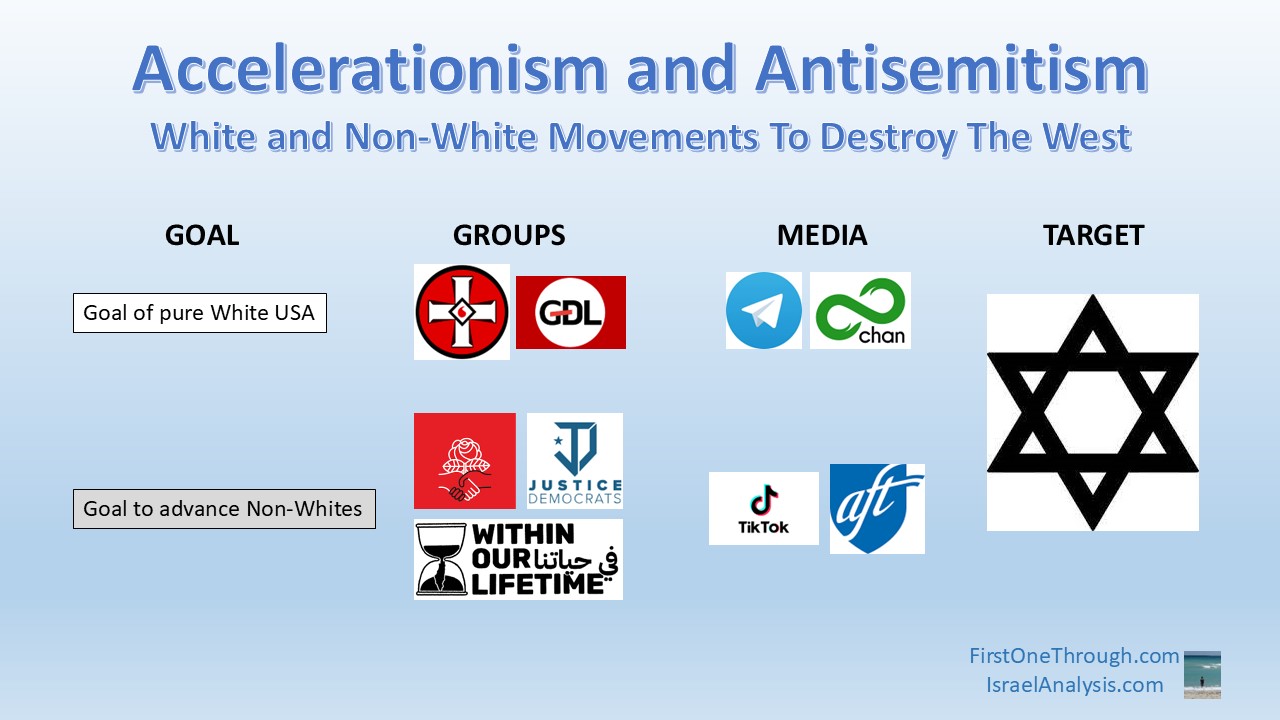
Organizations like Democratic Socialists of America, Students for Justice in Palestine, Within Our Lifetime and Palestine Youth Movement are not tolerating this rhetoric. They are chanting it,platforming it, amplifying it, and treating it as virtuous. They deny Jewish peoplehood, erase Jewish indigeneity, excuse violence against Jewish civilians, and then insist this is nothing more than robust debate.
It is not.
It is hate speech — even if the Constitution protects the right to utter it.
And then there is Zohran Mamdani, who embodies the selective blindness at the heart of this moment. No serious person believes he would tolerate a mass of protesters outside mosques depicting Muhammad as a terrorist, screaming at Muslims as they enter prayer. That would be — correctly — labeled Islamophobia, regardless of whether it was technically legal.
When Jewish institutions are targeted, when synagogues are surrounded, when Jewish national identity is declared illegitimate, the alt-left response suddenly becomes procedural: free speech.
Free speech does not launder bigotry. The First Amendment protects the right to speak; it does not cleanse the moral content of what is said. When people accuse Mamdani and the DSA of promoting Jew-hatred, they are not confused about constitutional law. They are describing the reality of ingrained Jew hatred.
“Most Americans are familiar with the classic Western flavors of anti-Semitism: the Christian, European, white-supremacist and Communist types. But little attention has been paid to the special case of Muslim anti-Semitism. That is a pity because today it is anti-Semitism’s most zealous, most potent and most underestimated form.” – Ayaan Hirsi Ali, July 2019
Invoking free speech is an evasion. A way to avoid responsibility while continuing to normalize ideas that would be instantly condemned if aimed at any other minority.
The tragedy – and fear – is that liberals understand this perfectly well in every other context. They simply refuse to apply it to Jews. Or at least, when uttered by a community of preference, Muslims.
Free speech is not on trial, do not be confused by the misdirection. Antisemitism is, and it is winning.
Zohran Mamdani and his chorus of activists claim that the answer to the Israeli–Palestinian conflict is simple: one state in which everyone has “full and equal rights.” They pound the table with righteous fury, insisting that borders, ethnic divisions, and national identities melt away in a utopian civic democracy.
Fine. Let’s take them at their word.
If you truly believe in a one-state solution, then you must believe that Jews, like Arabs, have the right to live anywhere in that state. Hebron, Shiloh, Beit El, Jerusalem’s Old City, Ramallah, Nablus, everywhere. That’s how equal rights work. So why do the same people who chant “one state” turn around and scream “illegal settlers!” when Jews live or pray in places those protestors dislike?
They protested outside Park East Synagogue but deny Jews the right to live in Judea and Samaria, the Jewish homeland for 3,000 years. Either everyone gets equal rights everywhere, or you don’t believe in a one-state solution at all.
You can’t have it both ways.
The Temple Mount Test Case
If you want a perfect example of the hypocrisy, look up — literally — to the Temple Mount.
If you support one state where every citizen has equal rights, then you support Jews having the same rights as Muslims to: Visit their holiest site. Pray at their holiest site. Build a synagogue at their holiest site. That is what equality means.
But the United Nations — which these same activists quote like scripture — demands the “status quo,” a euphemism for banning Jewish prayer on Judaism’s holiest ground. It is the only place on earth where Jews are legally prohibited from praying. The UN defends this discriminatory regime with fervor.
So which is it? Is it a one-state democracy of full equality, or an international system that criminalizes Jewish religious rights because the Jordanian Waqf insists on it?
You cannot simultaneously denounce Jewish prayer as a provocation and claim to champion “equal rights for all.”
One State Means Equal Rights — For Jews Too
If Zohran Mamdani and his movement were intellectually honest, they would have to say:
Jews may live anywhere in the land
Jews may pray anywhere in the land
Jews may build synagogues anywhere in the land
Jews may return to their ancient homes — Hebron, Shiloh, the Old City of Jerusalem
Not one activist chanting for “full equality” will utter those words. Because their version of “one state” is equality for some and erasure for Jews.
Call it what it is.
You can’t claim a one-state solution while denying Jews the very rights you demand for others.
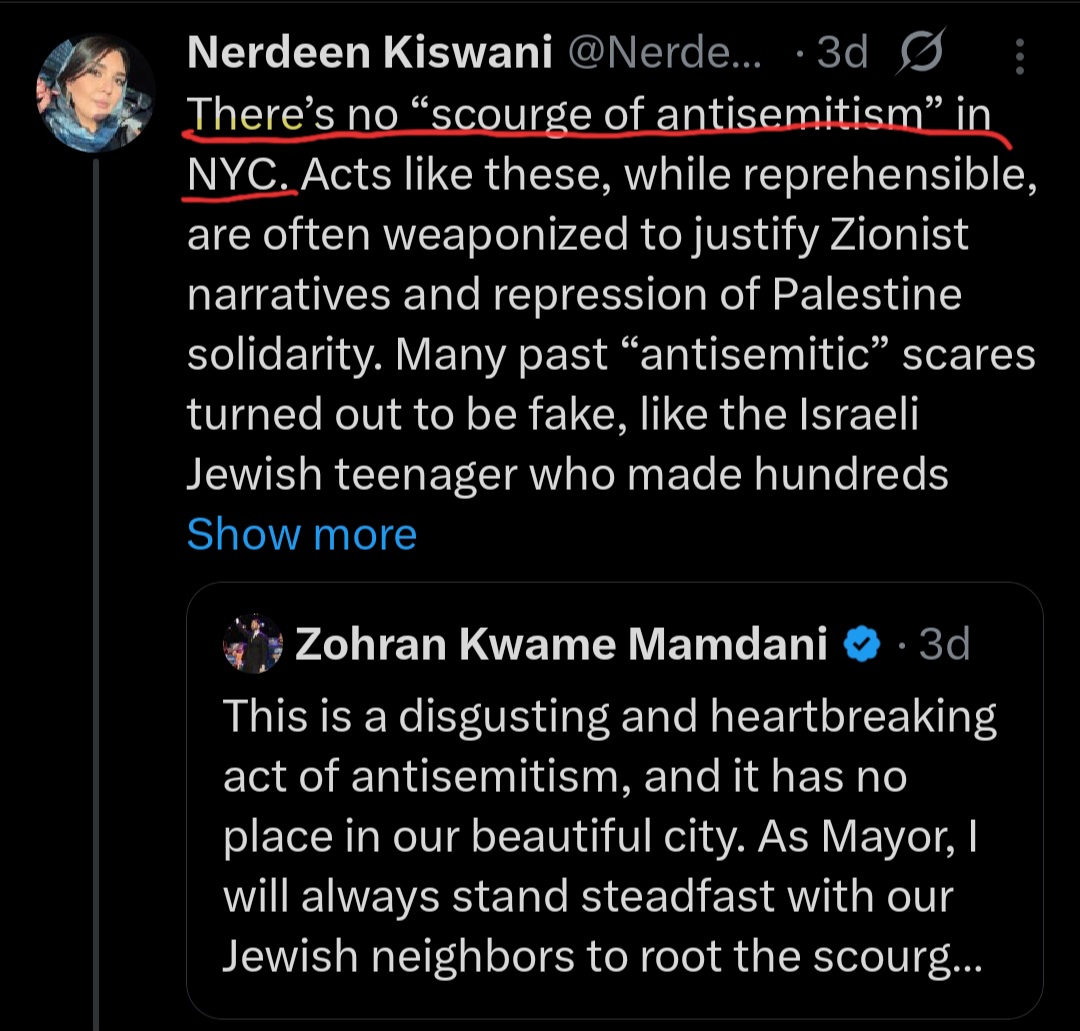
The vile antisemitism of Within Our Lifetime‘s Nerdeen Kiswani and MPower Change‘s Linda Sarsour isn’t accidental or peripheral — it’s the smoke that hides the fire. Their venom serves political purposes: to push Zohran Mamdani further and to make him look like a moderate.
Kiswani, the founder of Within Our Lifetime, just declared that there is “no scourge of antisemitism” in New York, that antisemitism is merely a “political tool.” She dismisses Jewish fear as propaganda, mocking the very notion that attacks on Jews are real or meaningful. It’s malice dressed up as activism.
Sarsour, her ideological twin, has spent years deflecting and justifying Jew-hatred while demanding that “Zionists” be excluded from feminist and progressive spaces. Both women were already disgusting before Mamdani’s rise; their brand of hatred was a known quantity. But now, with a self-proclaimed “anti-Zionist” mayor-elect, their vitriol has a new function.
By shouting louder, by pushing uglier rhetoric, by saying they will hold Mamdani “accountable,” Kiswani and Sarsour pull the Overton window so far into open antisemitism that Mamdani’s own positions — once fringe — could appear reasonable. When he calls for “justice for Palestine” but refuses to condemn chants for the destruction of Israel, he suddenly sounds measured. When he pays lip service to opposing antisemitism while platforming its deniers, he looks balanced.
That’s the trick. The extremists normalize the radical.
Expect them to ratchet it up — louder, uglier, more unapologetic. Every grotesque statement they make gives Mamdani cover to pretend he’s in the middle, that he’s the “responsible” voice between hatred and hysteria. In reality, it’s a choreography: they spew; he sanitizes.
This is how antisemitism gains respectability — not only through mobs on the street which are clearly terrifying sights – but through mayors in city hall who appear “moderate” only because the activists behind them are obscene.
New York should not fall for the illusion. The vile bigotry of Sarsour and Kiswani doesn’t make Mamdani reasonable — it exposes how far the city’s moral compass has tilted. When hatred becomes the baseline, even those who echo it softly begin to sound centrist.
There’s always someone worse. That’s how the worst ideas survive.
During a July 31, 2021 WOL rally in Brooklyn, after fireworks were lit, Kiswani told [01:02:43] the crowd: “I hope that a pop-pop is the last noise that some Zionists hear in their lifetime!”
The cameras panned across the crowd at Zohran Mamdani’s victory celebration — the newly elected mayor of New York City, surrounded by socialist activists, digital influencers, and the self-congratulating left. It was meant to be a night of triumph for the “movement.” But what stood out for those watching was not unity, or even politics. It was who was cheering.
Standing shoulder to shoulder, laughing and hugging, were Jamaal Bowman, Hasan Piker, and Zeteo’s Mehdi Hasan — three men whose names have become synonymous with the moral collapse that followed the Hamas atrocities of October 7.
Zeteo’s Mehdi Hasan at the Mamdani victory party with Hasan Piker and Jamaal Bowman. (start at 52:00)
Bowman, the disgraced former congressman, made his name shouting on New York’s streets that Israeli women were not raped on October 7 — that the accounts of mass sexual violence by Hamas terrorists were fabricated. He wasn’t a lone crank in an internet comment section; he was a member of Congress using his platform to publicly deny the humanity of Jewish victims in the streets of his district.
Hasan Piker, meanwhile, mocked the entire subject on his Twitch stream, telling his millions of followers that he didn’t care if the women on October 7 were raped. That flippant cruelty — that casual dismissal of atrocity — has become a feature, not a bug, of a corrupted culture that cloaks moral degeneracy in “anti-imperialist” rhetoric. His anti-American and anti-Israel rhetoric had become so toxic, that Rep. Ritchie Torres, a Latin-Black gay Congressman, wrote a letter on October 29, 2024 to the CEO of Twitch to have Piker removed.
And then there was Mehdi Hasan, who publicly argued that early reports of “mass rape” on October 7 were overstated and politicized, arguing that the allegations had been “weaponized by supporters of Israel.” At Mamdani’s party, he stood smiling with Bowman and hugging Piker as the pain of Jews was being amplified and normalized.
And celebrated.
The spectacle was a black mirror of a broken city — a city that once prided itself on tolerance and moral clarity now relishing Jewish trauma.
New Yorkers didn’t just elect a socialist. They elected a symbol of moral inversion — a man whose supporters include those who laughed at, ignored, or explained away the rape and murder of innocents.
When the applause dies down and the speeches fade, one question will remain for the city that crowned Mamdani: What kind of people celebrate with rape deniers and those that revel in the pain of the most persecuted minority-minority?
It took New York City barely a decade to move from Michael Bloomberg (mayor 2002-2014) to Zohran Mamdani — from a billionaire moderate who built a global business to an anti-capitalist socialist who’s never built anything.
Mike Bloomberg winning third term as NYC mayor
Bloomberg personified competence, merit, and modernity. He was a technocrat with a work ethic forged in markets — the quintessential New Yorker who believed that numbers mattered, that data and pragmatism could solve problems, and that capitalism, however imperfect, was the engine that kept the city alive.
Mamdani is the inversion of that story. He’s the smiling avatar of grievance politics — a man who’s never signed a paycheck, raised capital, or met a payroll, yet rails against the very system that feeds the city’s workers. He doesn’t want to grow the pie; he wants to break the plate.
So what happened to New York? How did a city that once celebrated builders and innovators — from bankers to artists, from garment manufacturers to tech founders — turn to someone who blames success itself for society’s ills?
Did New Yorkers Change — or Did the World?
Some say it was Donald Trump — the Queens developer turned president — who poisoned the well. For many New Yorkers, capitalism’s swagger became indistinguishable from his brashness. “Moderate” began to sound like “complicit.” Every problem was blamed on “the system,” and every system was condemned as oppressive.
Others blame social media, the great amplifier of outrage. The algorithms rewarded passion over proof, hashtags over homework. The loudest became the leaders, and anger became authenticity. The more you despised the system, the more followers you gained.
Still others point to federal polarization — a country at war with itself. Washington became tribal, and so did New York. To be anti-Republican meant embracing anything that wasn’t Republican, even if it was radical.
The Fall of the Striver Ideal
Bloomberg embodied a uniquely American, and particularly Jewish, story — the son of immigrants who rose by grinding harder, thinking smarter, and building bigger. For generations, that was the city’s moral code: earn it.
Mamdani represents something new — or perhaps something lost. He is not the striver, but the symbol. The story isn’t one of building, but belonging. It’s politics as identity and resentment rather than responsibility and results.
When a city stops admiring those who build and starts rewarding those who only protest, decline is not far behind.
A Mirror, Not a Moment
New York’s journey from Bloomberg to Mamdani isn’t just a change in politics — it’s a cultural inversion. The Jewish billionaire who built an empire has been replaced by a Ugandan Muslim who campaigns against empires. The technocrat gave way to the ideologue. The achiever to the accuser.
The city once responded to horrible radical Islamic terrorism in downtown Manhattan by electing a proven builder to remake the city. Now the city has responded to that vile terrorism in southern Israel by rallying behind a novice who vilified the victims.
It’s tempting to say the city changed. But perhaps it merely revealed what it had become: a place where envy now outshouts excellence, and where tearing down is easier than building up.
Frank Sinatra sang the city’s theme song “New York, New York,” that “if I can make it there, I’ll make it anywhere.” The city was a mark of excellence and competence. To win in New York City was the proving ground to anywhere and everywhere.
Does that now mean that grievance is the current marker of greatness in America? That radicalism and revolutionaries are the vanguard? Anti-capitalist socialism will come for cities around the United States?
The tragedy isn’t only that the city chose Mamdani. It’s that so many think it’s progress.
There are signs on the streets of London that read “LOOK RIGHT.” They are painted boldly on the pavement to protect visitors—especially Americans—who are used to glancing left before stepping into the street. In the U.K., traffic comes from the opposite direction, and those who rely on old instincts can find themselves in sudden danger.
So it is now with American Jews.
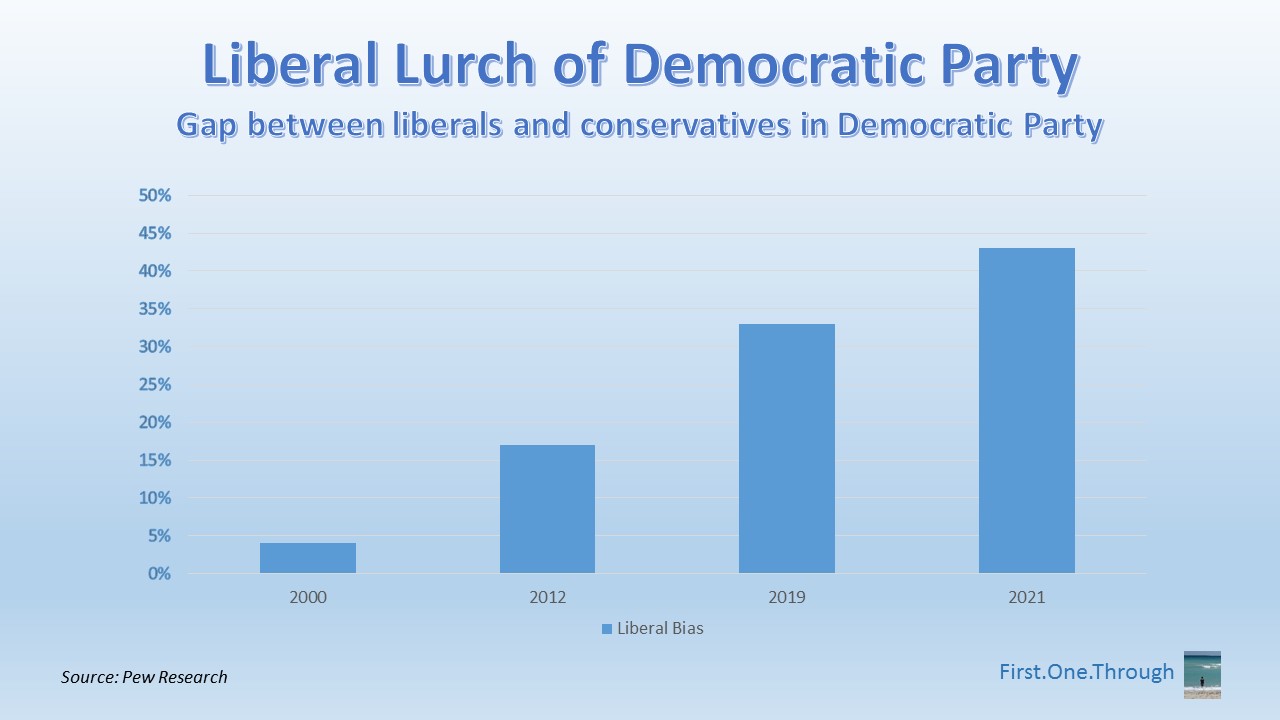
For generations, they have turned instinctively to the Democratic Party—to the left—out of habit, heritage, and a deep belief that liberal ideals best protected minorities. But the political landscape has shifted beneath their feet. The party that once championed freedom, tolerance, and support for Israel has been co-opted by radicals: anti-Israel voices, socialists, and anarchists who now wield growing influence in its ranks.
These are not the Democrats of old. They are activists who view capitalism as oppression, who denounce Israel as colonial, and who see Jews not as a vulnerable minority but as part of a power structure to be dismantled. They are coming for capitalism—and for the Jews who helped build and sustain it.
This election, American Jews must recognize that the public square is not what it used to be. The political traffic now comes from the right direction—but the danger comes from the left.
Jews Must Rise Above America’s Political Polarization
For Jews, the political spectrum no longer runs right or left — it runs above and below the line.
America once resembled a bell curve, a society centered in moderation. But over the last decade, that middle has collapsed into a barbell nation, with weight piling up at the extremes. And history has shown: whenever societies polarize, Jews suffer at both ends.
On the left, antisemitism festers in universities and coastal enclaves, driven by a socialist–jihadi alliance that paints Jews as colonial thieves and privileged elites. On the right, particularly across America’s heartland, antisemitism takes the form of nationalist resentment, depicting Jews as cunning manipulators steering the country toward decay.
The Jewish community now faces hostility from Justice Democrats and the Democratic Socialists on one side, and Christian nationalists and conspiratorial populists on the other. As America sorts itself into partisan tribes, Jews are politically homeless — stranded in what might be called Team White, surrounded by Red and Blue armies locked in mortal combat.
It is a moment that demands clarity: Jews must not follow the crowd, nor celebrate the likes of Zohran Mamdani or Marjorie Taylor Greene simply because they shout loudest. Safety will not be found at the edges.
NYC mayoral front-runner Zohran Mamdani with the extremist group Democratic Socialists of America
Instead, Jews must think on the Y-axis and rise above the line — where decency, truth, and moral courage define political identity, not the toxic binaries of today’s discourse. The task is to build bridges among the decent left, right, and center, and to undermine the machinery of polarization itself.
Be counter-algorithm. Social media algorithms are built on inflaming passions and feeding extremism. Get kids away from social media including banning phones in schools. Encourage people to spend less time on the platforms or to promote moderate posts.
Invest in institutions that elevate, not inflame. Support schools, media, and synagogues that model dialogue over division.
Be models of decency. Civility is countercultural today — make it contagious. Argue without anger, engage without hatred, and remind others that moral clarity does not require moral superiority.
Rebuild community and trust. Host conversations, bridge gaps, and welcome allies who differ politically but share ethical ground. Strength grows in connection, not isolation.
Be proudly above the line. Celebrate being moderate, balanced, and reasonable. The middle is not weakness — it is wisdom earned through restraint.
Expose extremists, even within. Call out the Jewish radicals who justify Hamas and the October 7 pogrom, as well as those who echo conspiratorial nationalism. Moral consistency demands internal accountability.
Teach Jewish ethics loudly. The Torah’s call to pursue justice and peace should echo in civic spaces — as a guide for repairing the world, not tearing it further apart.
A polarized society is a society on edge — brittle, unstable, and eager for scapegoats. Extremists will portray Jews as symbols of what’s wrong, a convenient vessel for resentment. As a minority-minority, Jews become easy targets when the center collapses.
The survival of the Jewish people in America depends not on joining the mobs below the line, but on lifting others above it — where truth, civility, and unity still have a fighting chance.













 First One Through