United Nations Secretary General Antonio Guterres is first and foremost a politician, not a human being. What else can be the reasons behind his ignoring the slaughter of 1,200 people in Israel, burning entire towns, raping women and kidnapping 250 people, other than serving his constituents of the Global South whom he has learned are rabid antisemites?
When a radical socialist-jihadi gunned down two young Israeli diplomats outside a Jewish event in Washington, D.C. in May 2025, Guterres immediately issued a statement condemning the murders. It was something he did not do after the massacre in Israel on October 7, 2023. Or October 8. Or October 9. Or October 10.
But he rose to the occasion in May 2025 after the targeted killing of the Israeli couple by a lunatic yelling “Free, free Palestine,” as if he were surrounded by fantom college campus agitators. Perhaps anticipating blowback from the anti-Israel horde he leads (read serves), Guterres explained this statement “reiterat[ing] his consistent condemnation of attacks against diplomatic officials.”
THIS particular antisemitic murderer should be “brought to justice” because he killed diplomats, a Bozo no-no. In this circumstance, the UN “extends sympathies to the Government of Israel,” because members of the sacred circle of high brow governmental officials were gunned down, not Jews having breakfast with their kids in their kitchens.
The thousands of butchered and injured people in Israel by over 3,000 Gazans in October 2023 were just Jews and therefore deserved no sympathy from the United Nations. Guterres could not offer any words of condemnation or consolation to the Jewish State for such barbarity; he has been so trained by the Global South. His office would not demand that thousands of Gazans “be brought to justice”; they are the UN’s protected wards.
When the head of the United Nations explained to the world that he decided to quickly condemn the murder of two Israelis when he ignored the butchering of 1,200, because of unity among diplomats, he further exposed the profound inhumanity of the cancerous global institution.
On May 23, 2025, France said it is “determined to advance the implementation of the two state solution.” The June conference in New York that it will chair with Saudi Arabia titled “the International Conference for the Peaceful Settlement of the Palestinian Question and the Implementation of the Two-State Solution” is designed to focus on IMPLEMENTATION. France made clear that it expects “Irreversible steps and concrete measures for its implementation” to make the future a reality.
The combined effort of a western country and the dominant force in the Arab world to spearhead the effort, might lead to a balanced consensus that can help the parties forward. To be successful, the team must be realistic about the goals and constraints of both Israel and Palestinian society, and move on a realistic timeframe. Most importantly, it must work on an ENDURING peace that will last, not simply getting to an agreement.
Here are seven constructive steps that could lead to a stable two-state solution:
1. Disarm All Palestinian Militias
Peace starts with law and order. The Palestinian Authority has no monopoly on violence in the territories it claims to govern. Hamas and Islamic Jihad still run Gaza. In the West Bank, terrorist groups like Lion’s Den and the Jenin Brigades run wild with guns and explosives.
France needs to lead an international push to fully disarm all terrorist militias, not just generic phrases of “condemning violence.” All arms must be placed under the control of the Palestinian Authority (PA), or there’s no point in talking about sovereignty. No state — and certainly not Israel — can accept a terror enclave as its neighbor, as has existed in Gaza since 2007.
2. Elections With Rules
The last Palestinian elections were held when Justin Beiber became legally allowed to drink alcohol. Mahmoud Abbas was elected in 2005… for a 4-year term. He’s now on year 20.
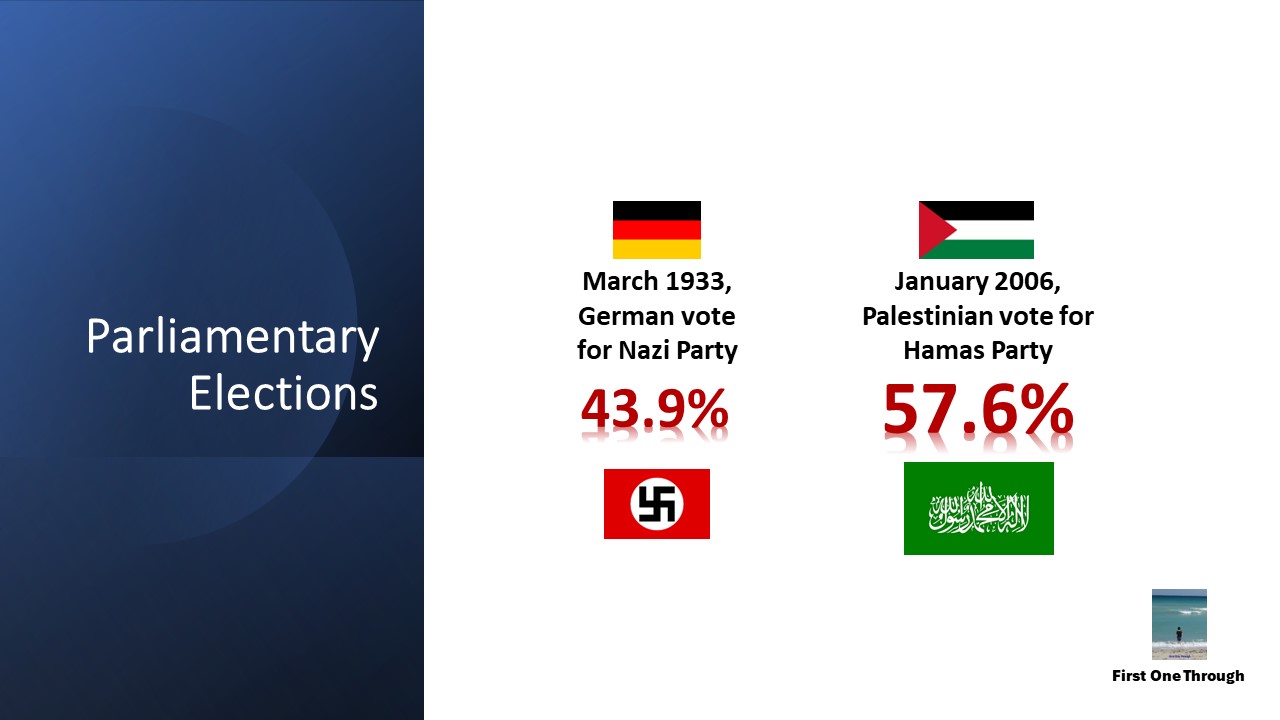
New elections must be held, but not every group gets to play. Hamas — a terrorist organization by U.S., EU, and Israeli designations — should not be allowed to run, just like Nazis weren’t allowed to run in post-war Germany. The party should be outlawed.
France and Saudi Arabia should insist on clear criteria: no party that promotes violence, antisemitism, or the destruction of Israel gets a seat at the table. There is no pathway to an enduring peace if there is an underlying state of war.
3. Reform Education — Stop Teaching Hate
An Enduring Peace isn’t signed on paper; it’s taught in classrooms and instilled in society.
As part of de-Hamasification of Palestinian society, schools — especially and including those run by UNRWA — a complete overhaul of Palestinian education, with international oversight to remove antisemitic and violent content. IMPACT-SE has written about this problem for years, and concrete steps must be taken to allow a future of coexistence.
4. Stop Treating Jews Like Foreigners in Their Homeland
Palestinian schools aren’t the only problem. The United Nations is rank with Jew-hatred and one cannot expect Palestinians to be less anti-Israeli Jews than the global body.
UN Security Council Resolution 2334 outrageously declared that Jews living in eastern Jerusalem and east of the 1949 Armistice Lines with Jordan (E49AL) are somehow illegal — a modern form of antisemitism dressed up in legalese. UNSC 2334 should be renounced and rescinded as part of the steps towards an enduring peace.
France must reject the idea that Jews should be banned from parts of their ancestral homeland. At the same time, to facilitate compromise, a cap on Jewish residents east of the 1949 lines — say 15% of the overall population — could be introduced to avoid major demographic shifts in a future Palestinian state.
5. End the So-Called “Right of Return”
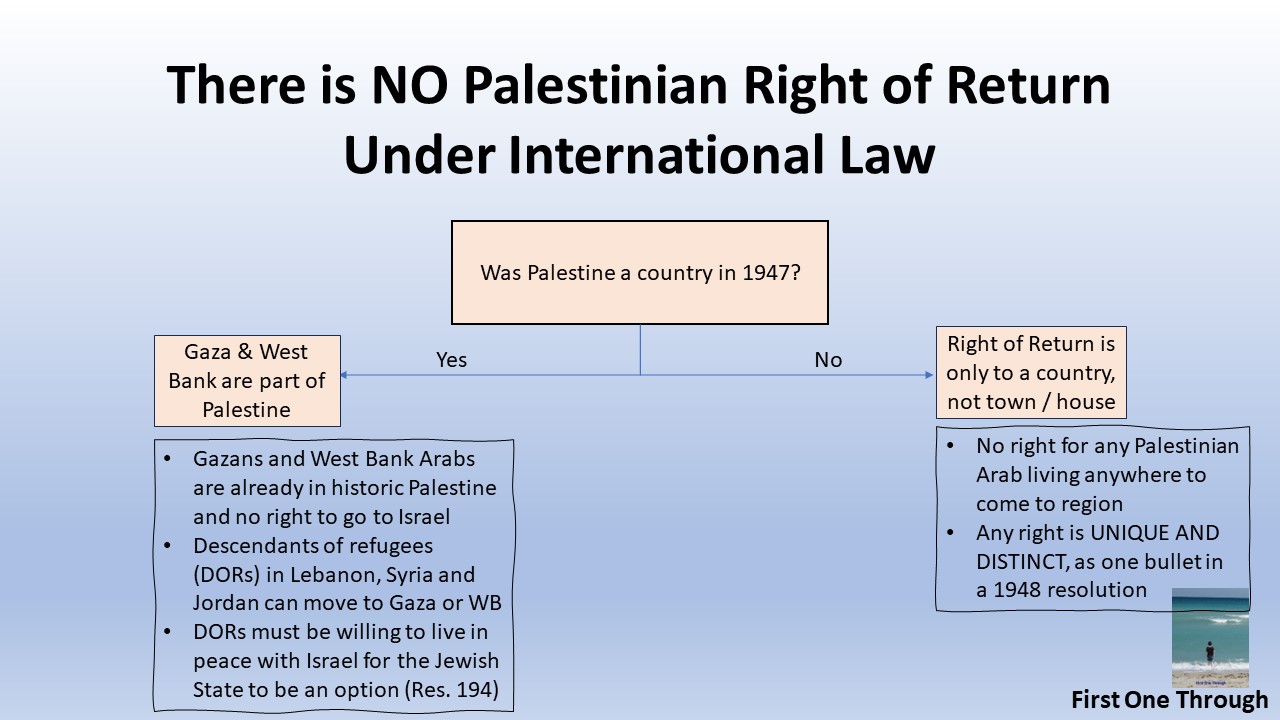
The Palestinian demand that millions of descendants of refugees be allowed into Israel is not about peace — it’s about destroying Israel demographically. It’s a fantasy rooted in grievance, not reality.
France must take the lead in declaring the Palestinian “right of return” over. In its place, a compensation fund should be set up — funded by Israel, Arab countries that started the 1948 war, and international donors. A similar fund should be set up for the descendants of Jews from Arab countries which were expelled in the decades after 1948. Work should begin now to compile a list of the properties which were lost and the related descendants who will collect associated reparations.
6. tighten the border framework, including jerusalem
The Saudi Peace Plan of 2002 suggested that Israel retreat to the 1949 Armistice Lines — a temporary ceasefire line, not a border. That’s not a starting point. That’s a non-starter.
France and its partners should endorse a realistic territorial framework: borders will fall somewhere between the current Israeli security barrier and the 1949 lines, through mutual negotiations. Land swaps are fine — as long as they reflect demographic realities and security needs.
UNRWA, the UN agency that was supposed to help refugees, has become a sprawling, corrupt bureaucracy that perpetuates dependency and fuels incitement. Its existence undermines the Palestinian Authority and entrenches the myth of perpetual refugee status.
France and Saudi Arabia should lead the call for a phased shutdown of UNRWA, starting in Gaza and the West Bank. Services should be handed over to the PA — and resettlement should begin for Palestinians in Lebanon, Syria, and Jordan, with annual caps to avoid regional overload.
UNRWA offices in Jerusalem (photo: First One Through)
Bottom Line
France says it wants permanent changes on the ground. Good. The Middle East has had enough of circular negotiations, terrorism-as-usual, and international hypocrisy.
If France is ready to be honest, clear-eyed, and courageous, it can help move the region toward peace. But if it sticks to the same old script — blaming Israel, indulging Palestinian rejectionism, and hiding behind the UN — then we’ll just keep getting the same instability, bloodshed, and failure.
Peace will not be achieved overnight and “concrete” steps must be phased with reality. France and Germany gradually became allies after World War II with the benefit of the deNazification of Germany. Germany even made peace with the Jewish State over time once it was committed to avoid the hatred of its past. An overhaul of the Palestinian mindset and rejection of radical jihadism and goal of eliminating the Jewish State, under the sheepherding of Saudi Arabia can help map a better course for the region.
France must internalize the needed overhaul of the “deformity in Palestinian culture,” to quote James Zogby, President of the Arab American Institute who spoke to the UN in June 2023. Saudi Arabia must overlay the Abraham Accords on top of its 2002 Peace Plan to refine it to account for the reality of the last several years.
The emphasis of the France-Saudi chaired conference must be on the direction, not on the permanence of “concrete” and “irreversible” steps, to find a less violent and just future for the region.
How many generations should someone be called a “refugee?” Two? Ten? My parents were refugees and I consider myself the son of refugees. But not a refugee. To do so would be a mockery of millions of people fleeing homes to faraway lands where they have no family, infrastructure or knowledge of the local language.
Alas, while every year the world adds and removes refugees from the global tally, there is a permanent exception.
There are roughly 122 million displaced people worldwide (68 million internally displaced, 38 million refugees and millions of others seeking protection), and the United Nations High Commissioner for Refugees (UNHCR) is tasked with helping them. Its mission is clear: assist people fleeing conflict or persecution to either return home when it’s safe, or resettle in a new country where they can rebuild their lives and become citizens. Refugee status, according to UNHCR, is meant to be temporary. A tragic but manageable step toward normalcy.
But for one group of people, the rules were rewritten.
In 1949, the United Nations created a separate agency: the United Nations Relief and Works Agency (UNRWA). Its job was not to help all refugees, but a specific set—Arabs who left or were displaced from what became the State of Israel during the 1948 war.
Unlike the UNHCR, UNRWA never intended to help these refugees resettle or gain citizenship elsewhere. In fact, when Jordan annexed the to be named “West Bank” in 1950 and granted full Jordanian citizenship to the Arabs living there in 1954 (Jews were specifically excluded from Jordanian citizenship) —including the so-called refugees—UNRWA still kept them on its refugee rolls. Why? They were no longer stateless, no longer displaced from their community, and in most cases, were living just miles from where they or their families once resided.
No other refugee population in the world is treated this way.
The Palestinians under UNRWA are not counted based on where they live or whether they’ve rebuilt their lives. They’re counted based on ancestry—any descendant of someone who lived in Mandatory Palestine in 1946 and left during the war is considered a “refugee.” That includes people who are now citizens of Jordan who have never set foot in Israel, and those who live under Palestinian rule in the West Bank and Gaza.
This isn’t about resettlement. It isn’t about a “two-state solution.” It’s about return. Not return to a country they fled—but to homes where their grandparents once lived, in a country that has since fought multiple wars for its survival and established itself as a sovereign nation.
This has locked the Middle East into a perpetual state of conflict. UNRWA doesn’t just preserve the status of Palestinian refugees—it amplifies it, funds it, and builds an international bureaucracy around it. It has denied Israel’s right to control its own immigration, and basic principle of sovereignty.
Worse, the UN’s actions have turned a situation normally considered a humanitarian issue into a real estate dispute. By insisting that people return to a house—not a country, as outlined in international human rights law—the global political body has exceeded its own mandate. This isn’t a question of national self-determination, but one of personal property claims. UNRWA isn’t so much a champion of the creation of a state beside Israel; it champions individual return to specific homes, decades abandoned or destroyed, now occupied by others in a sovereign country.
Meanwhile, the descendants of every other refugee group in the world—from Sudan to Ukraine—are helped by the UN to find a path forward. Only the Palestinians are encouraged to walk backward, into the houses of their grandparents.
UNHCR helps refugees stop being refugees. UNRWA helps them stay that way.
Every year, new wars create new displaced people. But only one group stays on the list year after year, generation after generation.
For Palestinian Arabs, the 1948 war is still being fought. Generations of people haven’t been birthed into refugee status as much as the region is in a 100 years war. While the world may use political terminology of an UNRWA ward who has never been to Israel as a descendant of a “refugee,” Palestinians simply see a permanent property right which will never be forfeited. The UN simply provides cover under the “refugee” monicker.
The world sees Gaza through the lens of curated sympathy – smoke trails from missile strikes, wounded children, crumbled buildings – rendered by the media and United Nations. The headlines scream “siege” and “occupation,” and the images are carefully framed to elicit tears, not questions. For them, Gaza is a tragedy.
But Israelis? They see something very different.
They see a terrorist enclave. A society ruled by Hamas – not just tolerated but elected – with a charter calling for genocide against Jews. They see neighbors who have fired over 30,000 rockets at them since Israel left Gaza in 2005, and who used humanitarian aid to dig terror tunnels and stockpile weapons.
Israelis are haunted by October 7, 2023 – the day when 1,200 of their people were butchered. Burned alive. Shot in their homes. Raped in front of their families. And they remember what came next: polls showing 75% of Gazans supported the massacre. The popularity of other Palestinian Arab terrorist groups skyrocketed as well, including Islamic Jihad, al Aqsa Brigade and al Qassam. This wasn’t some fringe radical cell that commited the vile pogrom – this was public approval for mass murder. It was the fulfillment of their long-standing desire to attack Jewish civilians inside of Israel since 2000.
They also see something deeper: three-quarters of Gazans consider themselves “refugees” living in temporary homes. Not because of displacement from this war but because they believe they’re entitled to homes inside Israel. They don’t see Gaza as their future – they see Tel Aviv.
To the United Nations, Gaza is a moral play where Israel is always cast as the villain. They see Gaza not as a failure of Palestinian leadership, not as a society hijacked by jihad, but as a tragedy authored entirely by Israel. Why? Because Israel won’t allow these “refugees” to move into the homes of Israeli Jews – the very homes where grandparents fled in 1948 after five Arab armies attacked the new Jewish state.
The world has condemned Israel for responding “disproportionately” to the October 7 massacre. The UN saw Israeli counterstrikes as war crimes, not defense. They ignored the slaughter of Israeli children and focused on fuel shortages in Gaza. They accused Israel of starvation, ignoring the trucks of aid Israel itself let in, even while its soldiers were under fire. They paid scant lip service to Israeli hostages kept in tunnels by Hamas, viewing them as collateral to Israel’s ongoing “Nakba”.
The Arab and Muslim world is not fooled but is not helping. They don’t see Gazans as brothers and sisters in need of refuge. They see them as Palestinians – a distinct, useful political weapon. If Gazans were Syrians, they would’ve been taken in by now. But they’re not. They’re left to fester – a long-term tool to weaken and delegitimize the Jewish state.
Even in America, Gaza has become a kind of geopolitical Rorschach test. Leaders like Donald Trump and Jared Kushner see opportunity: beachfront real estate with the potential to be the Singapore of the Middle East. A future riviera. But that future depends on changing a mentality – one that for decades has been more obsessed with destroying Israel than building Gaza.
Because this is the reality: Gaza could have been Dubai. It had the backing of the international community, billions in aid, and a chance to chart its own path. Instead, it chose jihad. It chose hate. It chose martyrdom over medicine, tunnels over technology, indoctrination over innovation.
The world sees rubble. Death. Tragedy. Not on both sides; for Palestinians.
They can’t see the Israeli hostages through their clouded moral lenses. They don’t see the Jewish parents still waiting for their children. They don’t see the decades of restraint Israel exercised before finally saying “enough”. They are caught in an empathy swamp and have mentally baptised Gazans as martyrs instead of genocidal jihadists.
The Global South sees Gaza not just as another flashpoint – but as a pawn in a bigger game. The narrative is not just about “liberation” but “redistribution.” From peace talks to class war. Israel, to them, is just the first domino in toppling the Western-led world order.
Gaza isn’t just a local issue anymore. It’s global. It’s ideological. And for Israelis, the stakes couldn’t be higher.
In this backdrop of viewpoints, an international conference at the U.N. headquarters in New York will take place from June 17 to 20 co-chaired by France and Saudi Arabia. The Global North will join the Global South in trying to find near-term and longer-term solutions to the 100-year Arab-Israeli conflict.
In this Coliseum, the General Assembly serves as the unruly crowd seeking the torture of the Jewish State, while the Security Council acts as caesar empowered with the pen to draft international law. Will the United States protect Israel in such forum on the heels of Trump’s visit to the Gulf? Will Trump seek to trade an unwinding of U.N. Security Council Resolution 2334 to get Israel to agree to short-term and longer term movements towards a permanent divorce between local Jews and Arabs?
Israel was blind to the October 7 attack. Does it see what the world sees in Gaza now and the positions being orchestrated for the June U.N. conference? Will the modern blind Samson bring down the house if it only hears calls for its demise and cannot see a path to live in peace?
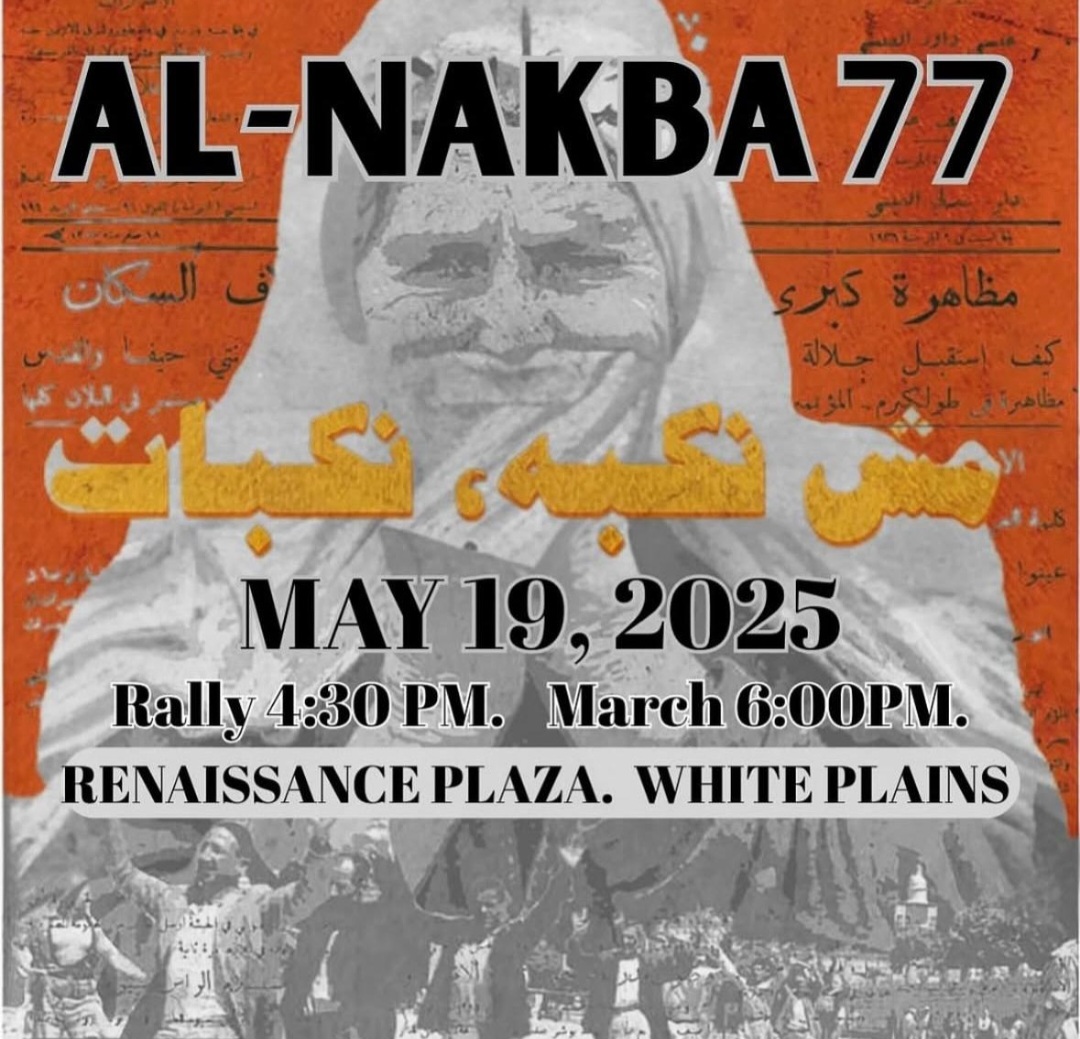
Across Western cities, “Nakba” protests fill the streets in May, marking what Stateless Arabs from Palestine (SAPs) call the “catastrophe” of Israel’s founding. Protesters chant slogans of “liberation,” wave Palestinian flags, and brandish large symbolic keys—representing homes lost in the Arab-Israeli 1948 War, and a longed-for return.
In London, British actor Khalid Abdalla holds a key symbolising the supposed Palestinian “right of return” (photo: Middle East Eye)
To the casual observer, these demonstrations appear to be non-violent expressions of secular nationalism: a displaced people demanding justice and return. The rhetoric is packaged in the language of “anti-colonialism,” a phrase from the Global South marketed at western universities.
The terminology is secular and political but the facts on the ground tell a different story.
The actual war against Israel is not being led by nationalists. It is driven by radical Islamist groups including Hamas and Islamic Jihad. The attack launched on October 7, 2023, was not called the “Nakba Response” or “Operation Liberation.” It was named “Al-Aqsa Flood”—a title soaked in religious meaning, not national aspiration. It invoked Islam’s third-holiest site which sits atop Judaism’s holiest site.
The strategic use of “Nakba” language in western cities is a deliberate effort to mask a religious war in secular terms. It is designed to resonate with Western leftists who are comfortable championing national self-determination but uneasy with theocratic zeal. It reframes an Islamic holy war as a freedom struggle, making it seem modern, rational, and even “progressive.”
But the religious reality will not remain buried forever.
Because just as SAPs speak of return, so do Jews. If Jews are forced to lose their sovereignty, perhaps diluted in a binational state, it will likely not lead to secular coexistence—it may unleash something far older and deeper: the demand for rebuilding the Third Jewish Temple.
Today, the Temple Mount is controlled administratively by the Jordanian Waqf, which bans Jewish prayer. Since the Second Temple was destroyed in 70AD, Jews have dreamed of rebuilding it, and while that has remained marginal in the modern secular Jewish state, it may surge forward in a post-Zionist situation in which Jews are compelled to relinquish so much.
If Israel is converted to a binational state in which everyone has equal rights, Jews would obviously insist on the same rights as Muslims enjoy today, to pray openly by the thousands on the Temple Mount. The demand to rebuild the Jewish Temple could move from the fringe to the center. The so-called “liberation” of Palestine would be matched by calls to liberate the Mount—from Islamic control.
In that light, the pro-Palestinian protest chants of “liberation” are a double-edged sword. They echo with reciprocal cries: not just the return of SAPs to Jaffa but the return of Jews to the Temple Mount. The religious war launched by Gazans wrapped in secular “Nakba” terminology in the west would be laid bare for what it is.
Muslims and Jews hold keys for places that don’t exist in the holy land anymore – for homes and a Temple. Should one side pursue a “right of return” to create a future-past, the mirrored key will do no less.
On Friday, May 14, 1948, Israel declared its independence—one day before the British ended their Palestine Mandate and left the region. The timing wasn’t accidental. Israel’s founding leaders wanted the moment to be marked with reverence, not paperwork, so the declaration was made in advance of the Jewish Sabbath, allowing the entire Jewish people to enter its rebirth with dignity and joy.
The joy wasn’t shared. Within hours, neighboring Arab armies invaded the nascent state, launching a war to crush Jews in the shadow of the European Holocaust. That contempt hasn’t faded. It echoes today in the halls of foreign governments, NGOs, and the mouths of extremist politicians thousands of miles from the region.
To “commemorate” Israel’s 77th birthday, the United Nations hosted a session dedicated not to peace or coexistence—but to “the Inalienable Rights of the Palestinian People.” One speaker after another vilified Israel, slandering its conduct in defending itself in a war it never wanted. Accusations of “racism,” “genocide” and “ethnic cleansing” flowed freely—from China, South Africa, Guyana, and others eager to hijack human rights rhetoric for anti-Israel theater.
Not to be outdone, U.S. Congresswoman Rashida Tlaib (D-MI) introduced a resolution to formally mark Israel’s independence as Nakba Day—”the catastrophe.” The language mirrored the UN’s smear campaign, ignoring context, facts, and Israel’s right to exist as a sovereign nation. The resolution outrageously called on Israel to accept seven million Arab descendants of refugees and internally displaced people—almost all of whom have never set foot in Israel—negating a fundamental right of statehood by erasing Israel’s right to control its own borders. It called for the United States to withhold all diplomatic and military support from Israel as it defends itself in the midst of a multi-front war, to facilitate a genocide of Jews.
As Israel marked its 75th year in 2023, Jewish civilians were massacred by genocidal jihadi Arab terror groups on the Sabbath and Simchat Torah, a holiday celebrating the Jewish Bible. Rockets, kidnappings, and slaughter were launched from Gaza, with terrorists using Palestinians as human shields and Jewish hostages as bargaining chips—while cheering voices thousands of miles away offered rhetorical cover.
Today’s political war against Israel is led by the unholy alliance of far-left ideologues and Islamist extremists. They’ve inherited the mantle of the Arab armies defeated in 1948—and continue their campaign, not for coexistence, but for the erasure of the Jewish homeland. This is a Global Intifada dressed in human rights language but aimed at ethnic cleansing. In 1948, the horde successfully removed all Jews from eastern Jerusalem, the “West Bank” and Gaza. They strive to finish the job.
For them, Jewish sovereignty in the ancestral Jewish homeland remains a “catastrophe,” and Israel’s Independence Day is a day for revolutionaries to perpetuate the war. Not just for the 30 countries which continue to refuse to recognize Israel—but for shrill voices in the U.S. Congress who speak as if the past 77 years never happened.
After Arab armies failed to destroy Israel in 1967, the Arab League produced its “Three No’s“: no peace with Israel; no negotiations with Israel; and no recognition of Israel. It has an underlying three principles which continue to drive Jew haters: Jews have too much; Jews enjoying fundamental human rights is a provocation; and Jewish joy is triggering.
The trifecta of Israel’s Independence Day is too rich for global antisemites to ignore.
Anti-Zionism—the rejection of the legitimacy of a Jewish state in the ancestral homeland of the Jewish people—has existed since the dawn of modern Zionism. However, in 2025 it feels radically different from the 1975 United Nations incarnation. The rhetoric may sound similar, but the ideology, tactics, and alliances behind anti-Zionism have undergone a seismic shift. What once masqueraded as anti-colonial nationalism on the global stage has mutated into global terrorism fused with religious fanaticism. What was once a geopolitical power play of 6.4 billion people from the Global South has transformed into mob lynchings in the streets of Western capitals.
The 1975 Moment: Terrorism Wrapped in Nationalist Language
In 1975, while the United Nations was led by a former Nazi, Kurt Waldheim, the UN General Assembly passed Resolution 3379, equating Zionism with racism—a resolution so grotesque and politically motivated that it was ultimately revoked in 1991 through the efforts of the United States. But that year also saw another dangerous precedent set: UNGA Resolution 3376 which declared that the Palestinian people have an “inalienable right” to statehood AND “to return to their homes and property.” This declaration, unprecedented in international law, granted Palestinian Arabs a right that is not afforded to any other specific ethnic group—no such resolution exists affirming an “inalienable” right to statehood for the Kurds, Tibetans, Basques, or countless others seeking independence, and no refugees anywhere have a right to “return to homes.”
This special treatment of the Palestinian cause, even while terrorism was a central strategy of their campaign, reveals a deep double standard in international institutions. Groups like the Palestine Liberation Organization (PLO), whose operatives hijacked planes and massacred Israeli athletes at the 1972 Munich Olympics, were welcomed at the UN with open arms. Their leaders were treated as statesmen rather than terrorists. The PLO’s largest faction, Fatah, founded by Yasser Arafat, waged a war not just on Israeli soldiers but on civilians worldwide—from airline terminals in Rome and Vienna to school buses and synagogues.
Yet, the PLO and other Palestinian factions successfully cloaked their violence in the language of anti-colonialism. They painted the Jewish State of Israel—a country with deep historical, religious, and legal claims to the land—as a European settler colony, despite the fact that Jews are indigenous to that specific land. In the bipolar Cold War world, the Palestinian cause was adopted by the Soviet bloc (which pretended it never had colonies despite the entire bloc being colonies) as a weapon against the West, and Israel became a convenient scapegoat for third-world grievances.
Today’s Anti-Zionism: From Nationalism to Jihad
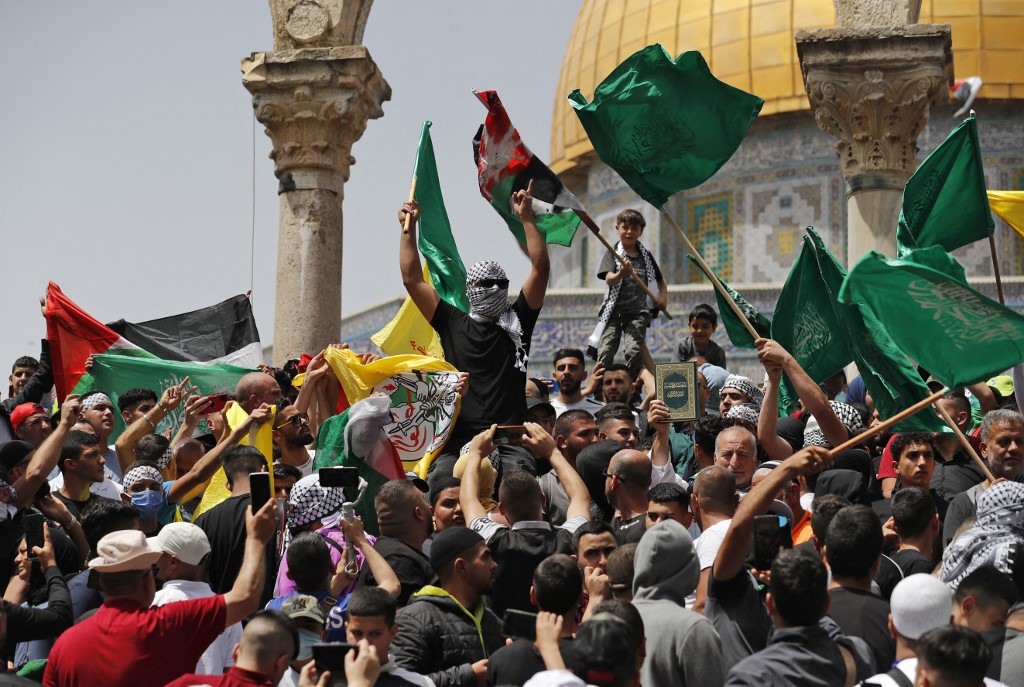
The anti-Zionist movement in 2025 is no longer pretending to be about secular nationalism. Gone are the olive-drab uniforms and revolutionary manifestos of Arafat’s PLO. In their place are the colorful flags of Hamas and Palestinian Islamic Jihad—groups whose founding documents do not mention two states, borders, or peace but rather the annihilation of Israel, vile Jewish conspiracy plots, subjugation of Jews and the imposition of Islamic rule.
Palestinian Arabs wave Palestinian and Islamic terrorist group flags in front of the Dome of the Rock atop the Jewish Temple Mount in Jerusalem, following the last Friday prayers of Ramadan, on April 29, 2022. (Photo by Ahmad GHARABLI / AFP)
This is not political “resistance”—it is Islamic terrorism, pure and simple. Hamas, recognized as a terrorist organization by the US, EU, and much of the democratic world, deliberately targets civilians with rockets, suicide bombings, and, most recently, the atrocities of October 7, 2023. That day saw the cold-blooded murder of over 1,200 Israelis—men, women, children, and the elderly—in a coordinated attack that included rape, torture, and hostage-taking. It was not a liberation struggle but a heinous pogrom.
The shift from secular nationalism to radical Islamism has had profound consequences. Today’s anti-Zionist actors no longer make appeals to human rights, self-determination, or even statehood. Their aim is not a Palestinian state alongside Israel but a caliphate instead of it. Hamas’ charter explicitly rejects any peaceful resolution and defines the conflict in religious, not political, terms.
This ideological transformation aligns Palestinian terrorism with broader jihadist movements including al-Qaeda, ISIS and the Taliban. Their ideological DNA is strikingly similar: the use of violence as a religious duty, hatred of Jews as a theological imperative, and contempt for the liberal values of democracy, pluralism, and gender equality.
The Reverse Flow: From Global South to Global North
In 1975, anti-Zionism was projected from the Global South outward, as newly independent states sought to reshape the international order. Israel was falsely cast as a proxy of colonialism. But today, the direction has reversed. Anti-Zionism now festers not only in Middle Eastern regimes and terror groups, but in the heart of the West including Paris, Berlin, London, and New York City.
Anti-Israel protests in front of Columbia University in New York City
This shift is in part the result of demographic and ideological changes in the aftermath of the Arab Spring. Starting in 2010, the wave of uprisings which once promised liberal reform, instead ushered in chaos, civil war, and Islamist resurgence. Millions fled failed states and collapsing economies, many ending up in Europe and North America. While many migrants seek peace and prosperity in their new homes, a shrill cohort brought the radical ideologies of their home countries—including deep-seated antisemitism and hostility toward Israel.
The result is that anti-Zionist marches in Western cities increasingly showcase imported hatred. Protests ostensibly about Gaza often devolve into anti-Jewish rhetoric, violence, and the open glorification of terrorism. In some cases, demonstrators chant slogans borrowed directly from Hamas propaganda. Far too many on the political left—who once stood for secularism, women’s rights, and LGBTQ+ protections—have aligned themselves with Islamist movements that stand for the exact opposite.
Anti-Israel protestors in front of New York City exhibit about those murdered at the Nova Music Festival in Israel on October 7, 2023
In 1975, college Marxists may have read the United Nations’ “Zionism is racism” resolution as simply a tool used by a group seeking national independence. In 2025, the kaffiyeh-clad protestors are shouting for an “intifada revolution” with the religious zeal of Hamas affinity groups. They have been baptized by the current conflict and converted to winner-take-all jihadists.
All Noisy on the Western Front
Palestinian terrorist groups cannot defeat the Israeli army on their own. To defeat Israel, local Arab leadership relies on two principal supporting actors: Islamist countries and groups on the military front, and stripping Israel’s defensive support from the west.
The Islamists countries of Iran and Turkey (both not Arab) and the jihadi groups of Hezbollah and the Houthis provide weaponry, training and funds to fight Israel militarily. Palestinian Arabs hoped for greater success in killing Jews, but appreciated those waging war on Israel.
Hamas continues to count on jihadists – old and new converts – in western cities to wage its bloody antisemitic war. Members of the Global South now residing in the Global North and their allies are an essential front to end support for the Jewish State. Actively removing defenses may appear to pass legal scrutiny by western laws compared to calling for violence, but the desired antisemitic goal is identical: the demise of half of global Jewry who live in their ancestral homeland.
Conclusion
Anti-Zionism in 2025 feels different than it did in 1975 because it IS different. Then, it was driven by secular radicals speaking the language of national liberation—even as they committed acts of terror. Today, it is led by Islamist extremists who openly seek genocide and global jihad. Then, it was framed as the Global South fighting colonialism. Today, it is the Global South bringing its biases into the heart of the Global North.
The “radical left” always carried the notion of anti-capitalism and anti-imperialism but over the last fifty years, it has adopted new comrades and approaches. As the far-left is loathe to call out the antisemitic, anti-gay, anti-feminist zealot allies – lest they appear insensitive to different cultures – they have absorbed new philosophies. Such is the war of “by any means necessary,” a Jew-hunt which is becoming localized by the socialist-jihadi alliance.
Anti-Israel protestors march in the streets in front of Columbia University
The movie “All Quiet On The Western Front” was about the brutality of trench warfare in World War I, and the impact on soldiers’ mental and physical well-being. People use the phrase as an expression of things outwardly appearing normal and unchanging while huge terrifying tectonic shifts occur beneath the surface.
Whether a secular nationalist bursts into a synagogue shooting worshippers or a jihadi fanatic does so, makes little difference to the Jewish dead. However, progressives’ abandonment of their own fundamental tenets when it comes to Jews – and doing so proudly and publicly – is a five-bell alarm about crumbling democratic norms.
After a few months of not being able to conduct a poll of Arabs in Gaza and the “West Bank,” the Palestinian Center for Policy and Survey Research released its latest findings on May 6, 2025. As summarized by PCPSR, “favorability of the October 7 attack, the belief that Hamas will win the war, and support for Hamas continue to decline, but the overwhelming majority is opposed to Hamas disarmament and does not believe that release of the hostages will bring an end to the war. Nonetheless, about half of Gazans support the anti-Hamas demonstrations and almost half want to leave the Gaza Strip if they could.”
Unpacking the May 2025 findings when the Hamas military is almost wiped out and the surviving members spend their time boobytrapping buildings and stealing food and aid from Gazans, Palestinians:
support the October 7 massacre;
do not want Hamas to disarm;
prefer the Hamas over Fatah
Figure 1 in the poll shows that support for the barbaric attack of October 7 has declined more in Gaza, from 71% in March 2024 to 37%, while support in the West Bank only declined from 71% to 59% over the same time. As of May 2025, half of all Palestinian Arabs still believe that the attack was “correct”, down from three-quarters right after the massacre.
The pollsters speculate that “most of the public continue to believe the attack and the following war have placed the Palestinian issue at the center of global attention. Unlike previous polls, today’s findings show that the majority of the public does not believe Hamas will win the current war. Still, a plurality of the public believes that Hamas will continue to control the Gaza Strip after the war.”
Despite virtually the entire command structure of Hamas being killed, 57% of Palestinian Arabs are satisfied with Hamas’s performance, with 67% believing as much in the West Bank, a much higher figure than the 39% in Gaza. For those who believe that Gazans are reluctant to express negative opinions about Hamas because of threats from the ruling party in Gaza, the high figure from the West Bank where Hamas holds no power tells a different story. Palestinians like Hamas.
Further, “when asked whether it supports or opposes the disarmament of Hamas in the Gaza Strip in order to stop the war on the Gaza Strip, an overwhelming majority (85% in the West Bank and 64% in the Gaza Strip) said it is opposed to that; only 18% support it.” Palestinian Arabs would rather fight until the last bullet, rather than end the war with a surrender.
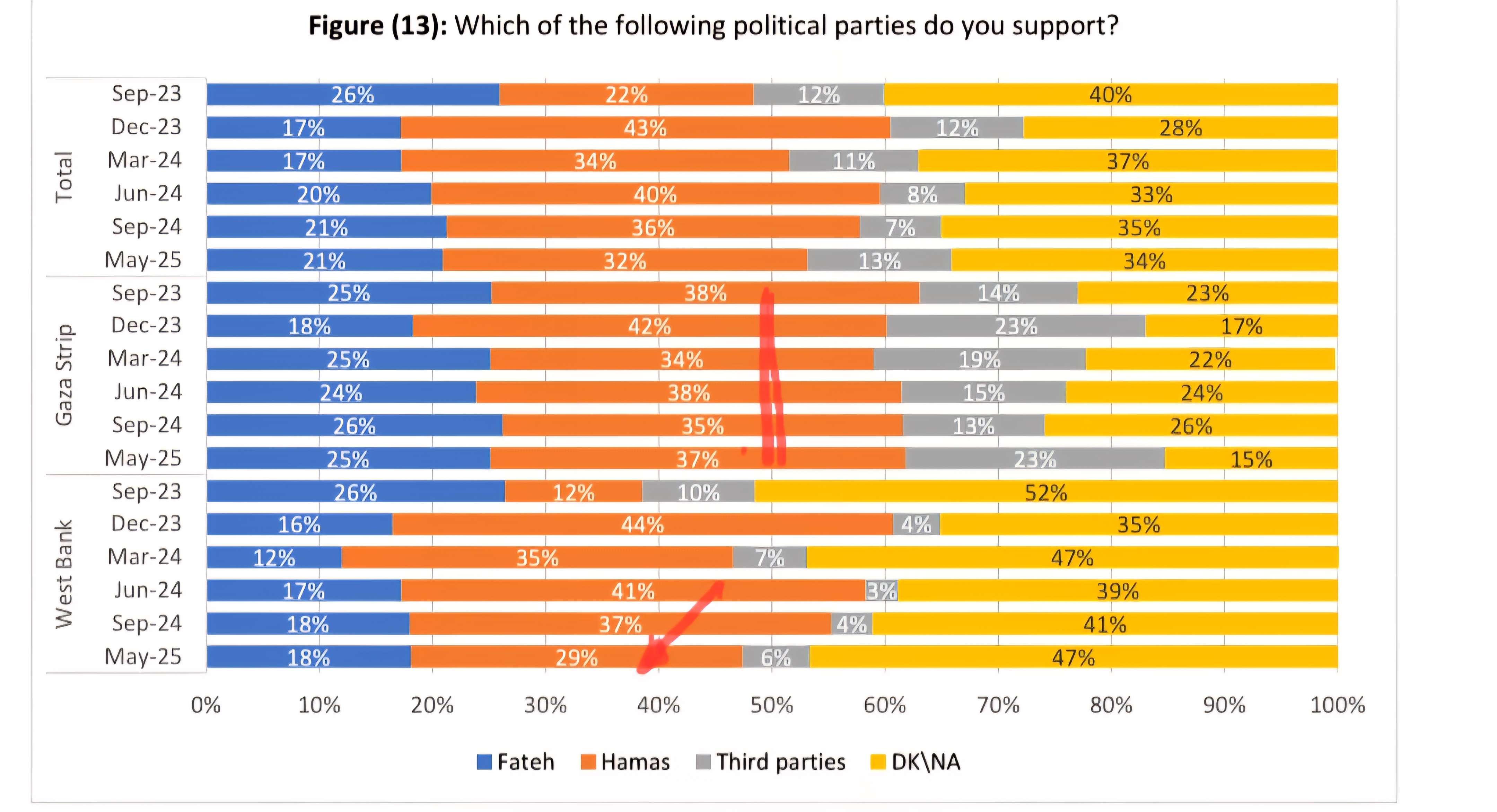
Overall, the opinion of Gazans about Hamas has barely changed from before the war until today. In September 2023, Gazans supported Hamas over Fatah by 38% to 25%, compared to 37% to 25% in May 2025. West Bank Arabs have generally become more supportive of Hamas since 20 months ago, but the favorability has been declining, as shown in Figure 13 of the May poll. Third parties are becoming a bigger factor in Gaza.
Overall, “40% (compared to 43% seven months ago) believe that Hamas is the most deserving of representing and leading the Palestinian people today while 19% (compared to 19% seven months ago) believe that Fatah led by president Abbas is the most deserving,” a two-to-one ratio, despite Hamas leading to the destruction of Gaza and becoming a shell organization.
While Gazan support for two states has remained relatively constant since before the war, West Bank support has increased from 30% in September 2023 to 45% today. Overall, 57% oppose a “two state solution.”
But the Stateless Arabs from Palestine (SAPs) still think the best way to GET Israel to end the “occupation” is via war, albeit now less than half of the population (41%).
Some other notable findings in the poll:
“While the majority says it does not want to leave the Gaza Strip after the war ends, a large minority wants to do that. Similarly, about half of Gazans are willing to apply to Israel to help them emigrate to other countries via Israeli ports and airports”
Among “satisfaction with Arab/regional actors, the highest satisfaction rate went to Houthis in Yemen, as we found in our previous polls, today at 74% (84% in the West Bank and 61% in the Gaza Strip), followed by Qatar (45%), Hezbollah (43%), and Iran (31%).”
“Al Jazeera is the most watched TV station in Palestine”
Vast “majority (87%) said it [Hamas] did not commit such atrocities [on October 7], and only 9% said it did.”
What can account for these statistics? Nazi Germany ultimately surrendered after it was pummeled in the war, so why do the local Arabs still support the war and want Hamas to continue to fight on, much like the Houthis in Yemen where over 250,000 have died over the last decade of war?
An interesting question was added to this poll which may provide a clue. “A majority of 57% (70% in the West Bank and only 38% in the Gaza Strip) believes that the steadfastness of the residents of the Gaza Strip despite heavy human losses and massive destruction is due to their deep belief in God, fate and destiny while 25% (40% in the Gaza Strip and 15% in the West Bank) believe they have no other option, and 15% (22% in the Gaza Strip and 11% in the West Bank) believe it is due to their belief in their Palestinian national identity.” A majority of SAPs are holding on to the war because of religious conviction, not because of nationalist aspirations. It is a belief held more widely OUTSIDE of the Gaza Strip (70% to 15% in the West Bank) where people are not facing the consequences, then inside (38% to 40% in Gaza). It may also be that Gazans know better than West Bank Arabs that they committed vile sexual assaults and brutal torture of children and the elderly.
Such observation may add clarity as to why 9 out of 10 local Arabs do not believe Hamas committed the atrocities of October 7 despite the video and forensic evidence: because they believe that members of Hamas are deeply religious warriors. Perhaps the antidote would therefore be for the U.S. to pressure Qatar’s Al Jazeera to showcase the evidence.
The other takeaway from the poll is that Palestinian Arabs know that they cannot beat Israel militarily on their own. They need other actors joining the fighting (like the Houthis) and “global attention” to apply pressure on the small Jewish State.
While the world bemoans the destruction of Gaza, the local Arabs remain supportive of launching the war and for Hamas. Western empathy for radical jihadism may stop when the victims are no longer Jews, but at that point, it will be too late to stop the scourge.
ACTION ITEMS
Contact the White House to 1) get Qatar’s Al Jazeera to make clear that Hamas committed heinous crimes against humanity on October 7, including raping women and burning children alive; 2) insist that whichever entity assumes control of Gaza (if not Israel) must disarm Hamas; 3) facilitate Gazans leaving the strip to other countries; and 4) condemn the socialist-jihadi alliance attacking Israel and democratic values.
Gideon Askowitz, the 22-year old student at Macaulay Hunter who is President of Jewish Students for America, hosted a podcast on Seven Minute Expert with Shai Davidai and Peter Beinart on April 28, 2025. It was a circus of antics for the casual viewer, and a disturbing vision for those who ventured into the panelists’ views.
Shai Davidai is the Israeli Columbia professor who became famous for flagging the university’s gross failures in protecting Jewish students and faculty on campus after the October 7, 2023 brutal massacre by Gazan jihadists inside Israel. Peter Beinart is a left-wing Jewish journalist who used to be editor of The New Republic and now heads Jewish Currents. The gap between the two people would be insignificant for pro-Hamas viewers, but the pro-Israel audience was ready for a confrontation.
Framing Various “Anti-s”
Askowitz was not able to get through the introductions without Davidai jumping in. Shai objected to Gideon’s characterization of him being a “strong pro-Israel voice” and noted that he is Israeli but not “pro-Israel” in the sense that some might believe him to be “anti-Palestinian Arab.” Davidai’s interruptions would continue throughout the hour-long talk.
Continuing the “anti-” theme, Askowitz decided to start the discussion by asking both panelists why so many people in the Jewish community objected to their views. Bret Stephens, a journalist with The New York Times, recently penned an article in the Winter 2025 edition of Sapir where he sits as Editor-in-Chief, that Beinart’s views had migrated to “far left anti-Zionism” and he would no longer appear on panels with him. Ronn Torossian, a public relations specialist was removed from the World Zionist Congress election slate because of his personal attacks on Davidai.
Davidai declined to speculate about why people object to his stances and shared that he personally debated whether to appear with Beinart on the podcast because he views the format as falsely projecting equivalency of their views of Israel, when Beinart’s views are considered on the extreme fringe of world Jewry.
Beinart strongly disagreed and said that his views may be viewed on the fringe in Israel but that recent polling of Jews in the United States suggested 30% think Israel is committing a genocide in Gaza.
That set off Davidai (8:50) and he was never able to regain his composure. While Davidai was talking about Beinart’s fringe opinion to dissolve Israel as a Jewish State, Beinart moved the conversation to the current war from Gaza. Davidai would not let Beinart continue from his alternative soapbox, and despite Askowitz’s best efforts to allow Beinart to speak, Davidai abruptly left the podcast at 10:00.
Beinart used the open floor to quote a number of polls of American Jews which showed a decent percentage believing Israel was practicing apartheid which undermined any legitimacy of the country.
Davidai had been listening to the livestream and jumped back on at 12:12.
Askowitz tried to unpack Beinart’s “anti-Zionism” as well as American polls to consider where the “fringe” begins. He asked the panelists to weigh in about negative sentiment regarding Israel’s prosecution of the war (perhaps more mainstream) as opposed to ending the Jewish State (a fringe unpopular view). As Beinart started to respond, Davidai flew off the handle again and persistently talked over Beinart, causing Beinart to threaten to leave the podcast.
It was a Zionism catfight, and the only losers were those who cared about Israel.
Reframing “Zionism”
Askowitz got the cats back in a bag by 18:30 but the mudslinging would continue.
Beinart quoted a Canadian poll which asked if people were in favor of Zionism if Zionism meant Jewish supremacy, a bogus definition, which Davidai retorted with a sheet of paper that read “LIE.” While correct, it made Davidai appear foolish.
When Davidai took the mic at 20:30, he made several important points but unfortunately, many people were probably already tuned out because of his theatrics. He correctly pointed out that Beinart’s definition of Zionism was fictitious and inflammatory, and using the views of a cohort of young American Jews to be the baseline of global Jewry opinion distorts reality.
Beinart started to define Zionism again at 23:05 using the term “cultural Zionism” which he framed as seeking a binational state, and that “political Zionism” meant Jewish supremacy over non-Jews, at least since 1948. Askowitz stepped in at 25:20 to use the actual definition of Zionism as the right of Jews to self determination in their ancient homeland. Beinart said that it’s not his definition, which is not just a fringe view but a wildly incorrect one.
Political Islamic Extremism Directed Towards Terrorism Or One State
Askowitz moved the conversation at 26:30 to the nature of Islamism and whether the deeply religious nature of Hamas made peace with Israel impossible. Beinart stated that the Palestinian terrorists of the 1970s were leftists and secular nationalists, not Islamic extremists. He also pointed to the Ra’am Party, an Islamist Israeli political party which joined the Naftali Bennett coalition a few years ago, arguing that the problem is “armed resistance” against civilians (Beinart refuses to use the term terrorism regarding Palestinian Arabs), not political Islam inherently. Beinart continued that armed resistance will go down once all Arabs have a voice in government, which could happen in a one state solution.
Davidai strongly disagreed and pointed to the expulsion of 850,000 Jews from several Arab countries and their status as inferior “dhimmis” before being ethnically cleansed. He saw a one state solution as putting nearly half of world Jewry at existential risk. Further proof was in the current Arabic chants at demonstrations which are not for democracy but the eradication of Jews from the land. He hopes for a two state solution slowly evolving with a deradicalization of local Arabs which might provide a pathway for a new country of Palestine in a generation.
Beinart’s response that Jews living in the “West Bank” / east of the 1949 Armistice Lines (E49AL) made a two state solution impossible, didn’t seem to make any sense, even though Davidai nodded in agreement. If Jews and Arabs can live peacefully in a one state solution as Beinart contends, why couldn’t they live together in an Arab-majority country of Palestine? Does Beinart actually believe that defenseless Jews would get slaughtered, and if so, why won’t he see such threat in his one state proposition?
Antisemitism In the United States
The conversation pivoted to antisemitism at 41:20 when Askowitz shared his group’s involvement in the DETERRENT ACT and the influence of foreign countries (monies and students) at universities and the impact on antisemitism on campuses. While neither Beinart nor Davidai had read the bill, they were in favor of providing transparency of all university funding by countries or companies.
When it came to voiding visas of foreign students, Davidai was against punishing students who only engaged in matters of free speech, however, once engaged in problematic conduct, they should be penalized. Beinart went further and said that people should be allowed to protest and even call for a “genocide or terrorism” as long as they did not physically harm someone (50:35).
Conclusion
The optics of the debate gave Beinart the win even while his content was problematic. Beinart’s definition of Zionism is ridiculous and his ambivalence about the safety and rights of Jews in Israel as well as Jews on American campuses being barred from buildings by people calling for their genocide is chilling.
On video, it appears that a wolf in sheep’s clothing only needs to retain composure.
A terrible attack unfolded in the disputed Kashmir region on April 22, 2025, in which 26 Hindu tourists were killed by radical Muslims. The region is disputed between Hindu-majority India and Muslim-majority Pakistan, where religious tensions and nationalist ones are intertwined.
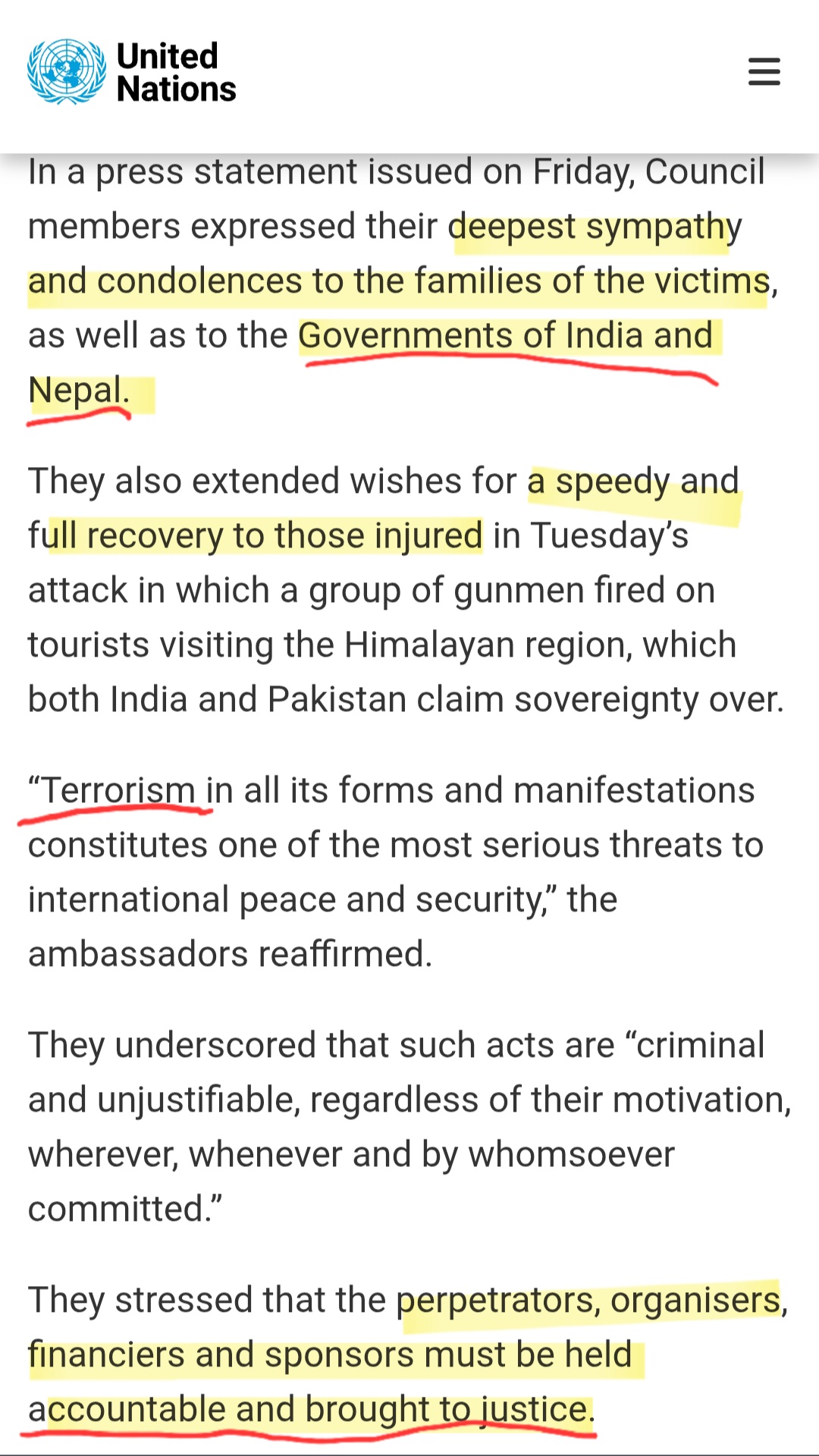
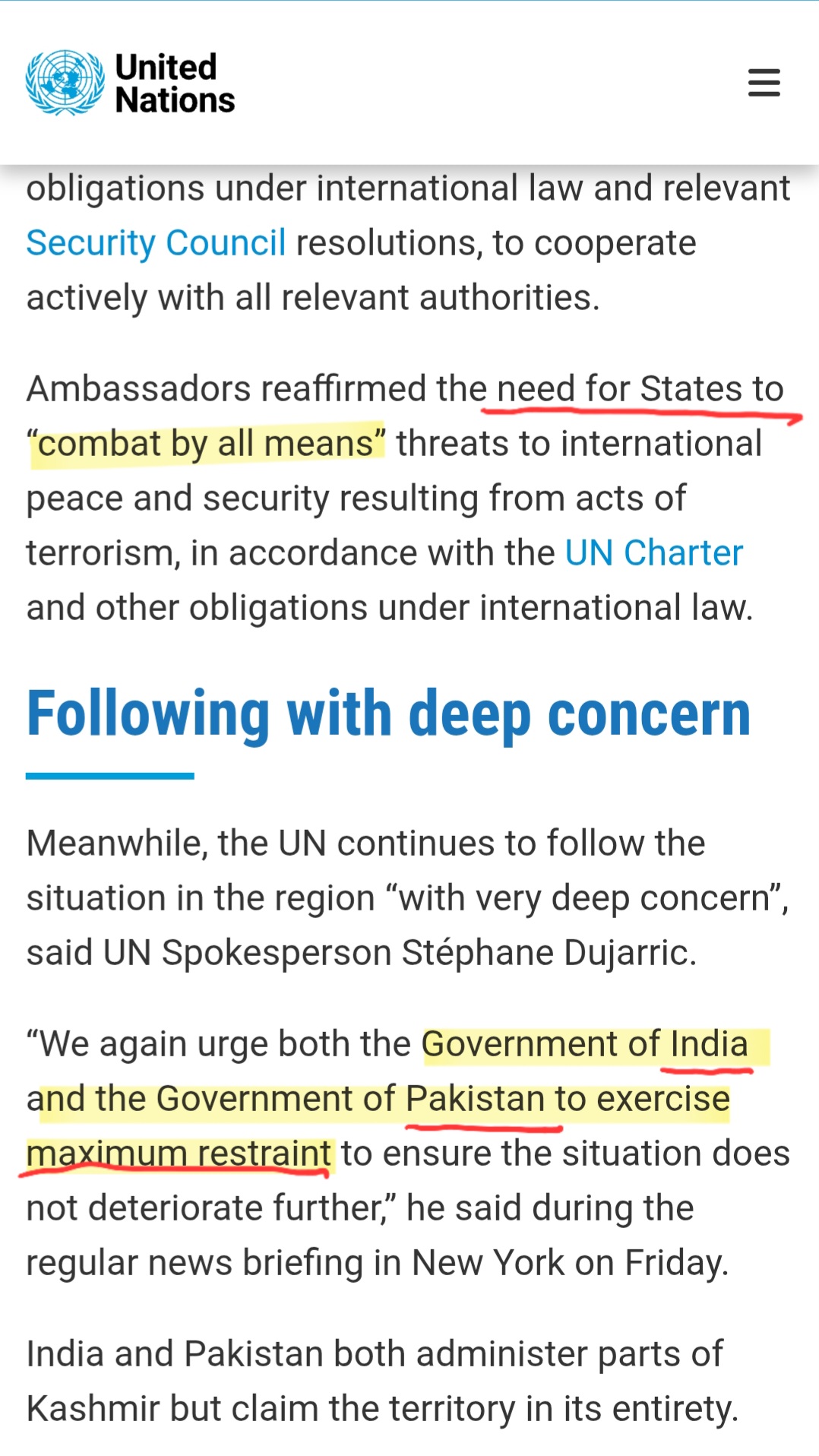
The United Nations Security Council issued its typical condemnation about the attack, even for the highly contested Kashmir region. It called the attack “terrorism” and for the perpetrators and their supporters to “be held accountable and brought to justice.” It urged all countries to “combat [the scourge] by all means” while also expressing condolences to the “Governments of India and Nepal” who suffered in the attack.
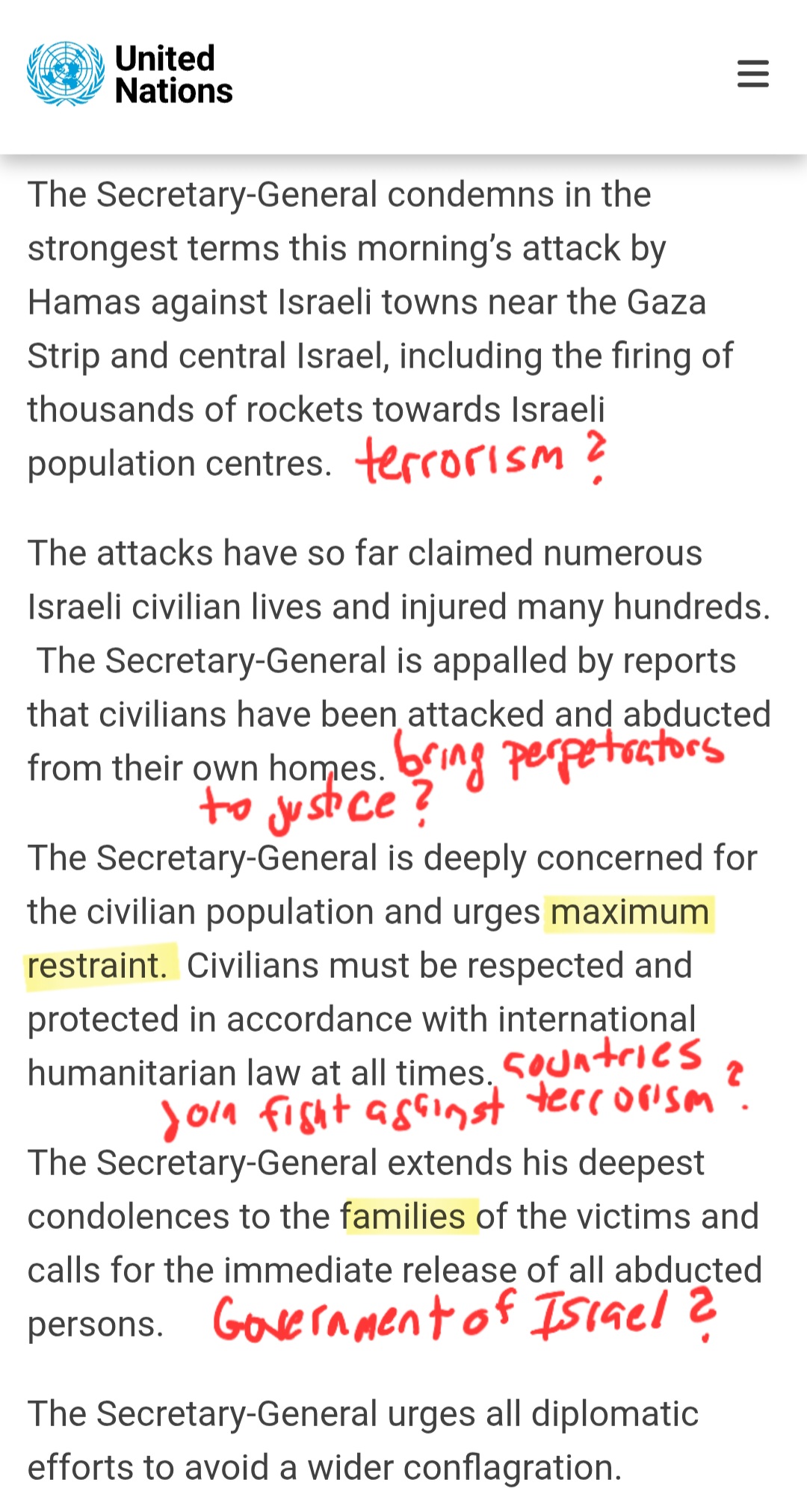
None of those sentiments were shared by UN Secretary General Antonio Guterres on October 7, 2023 when 1,200 people in Israel were killed, 251 abducted and hundreds injured by radical Islamists from Gaza. Guterres didn’t label the attack “terrorism” and call for perpetrators to be held accountable. He didn’t urge countries to join the fight. He didn’t express any condolences for the government of Israel.
UN Secretary General offers tepid response to the worst case of terrorism in decades
The United Nations adopted the Stateless Arabs from Palestine (SAPs) as forever wards and will protect them even when they commit mass atrocities.
It is time for countries of good conscience to withhold all funding and personnel from the global agency until a major revamping takes place. Key items include firing the Secretary General, dismantling UNRWA, the temporary agency uniquely for descendants of displaced SAPs, and removing permanent item 7 about Israel in the UN Human Rights Council.
It is time to financially bankrupt the morally bankrupt and biased United Nations.













 First One Through