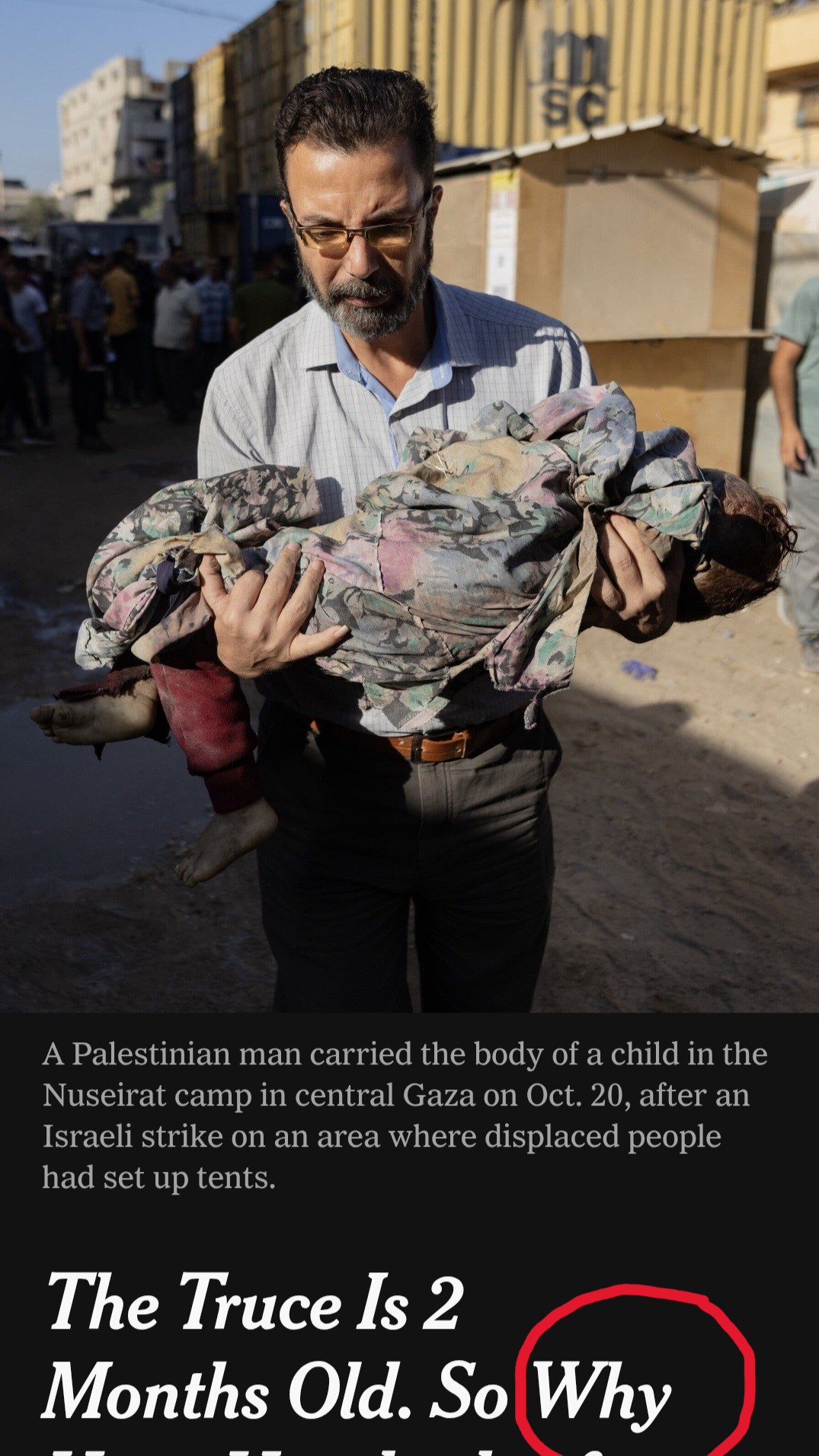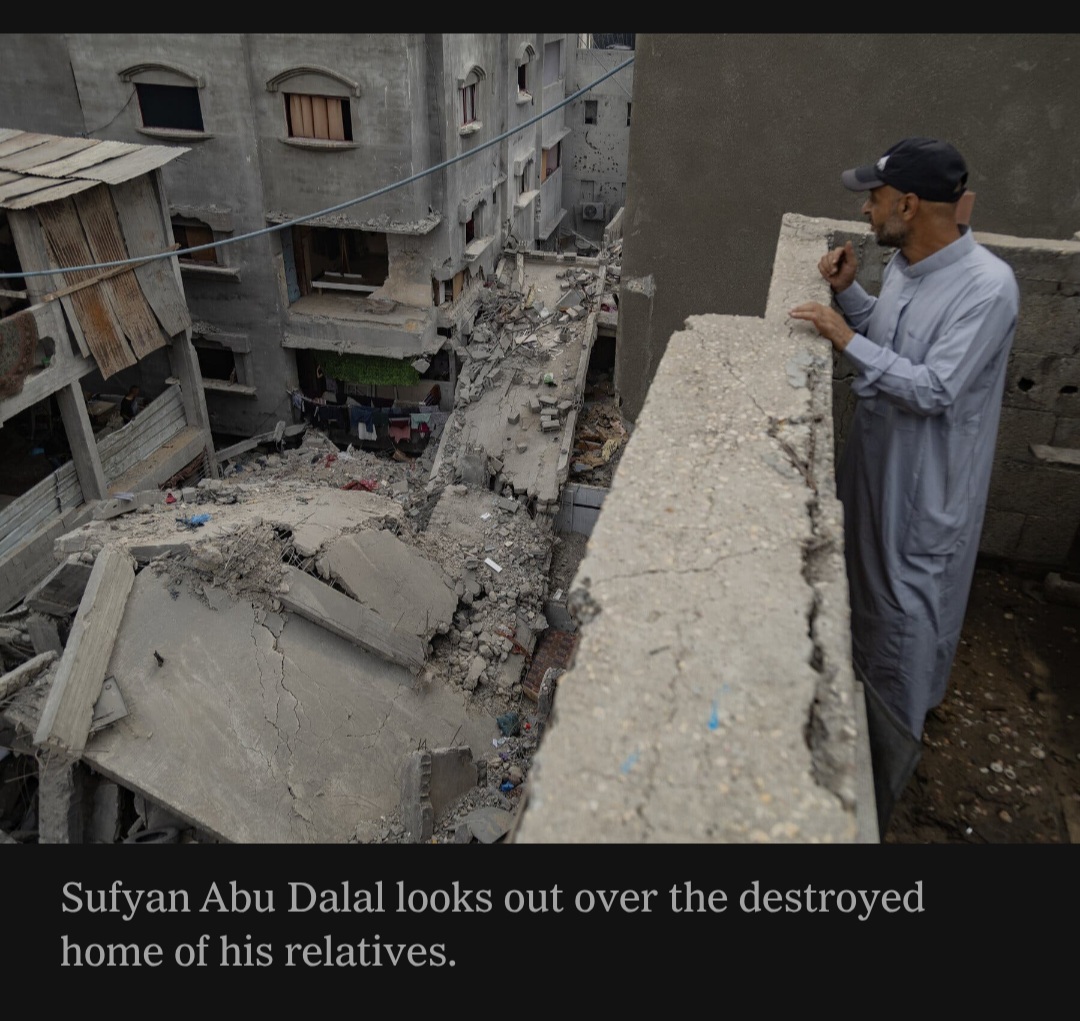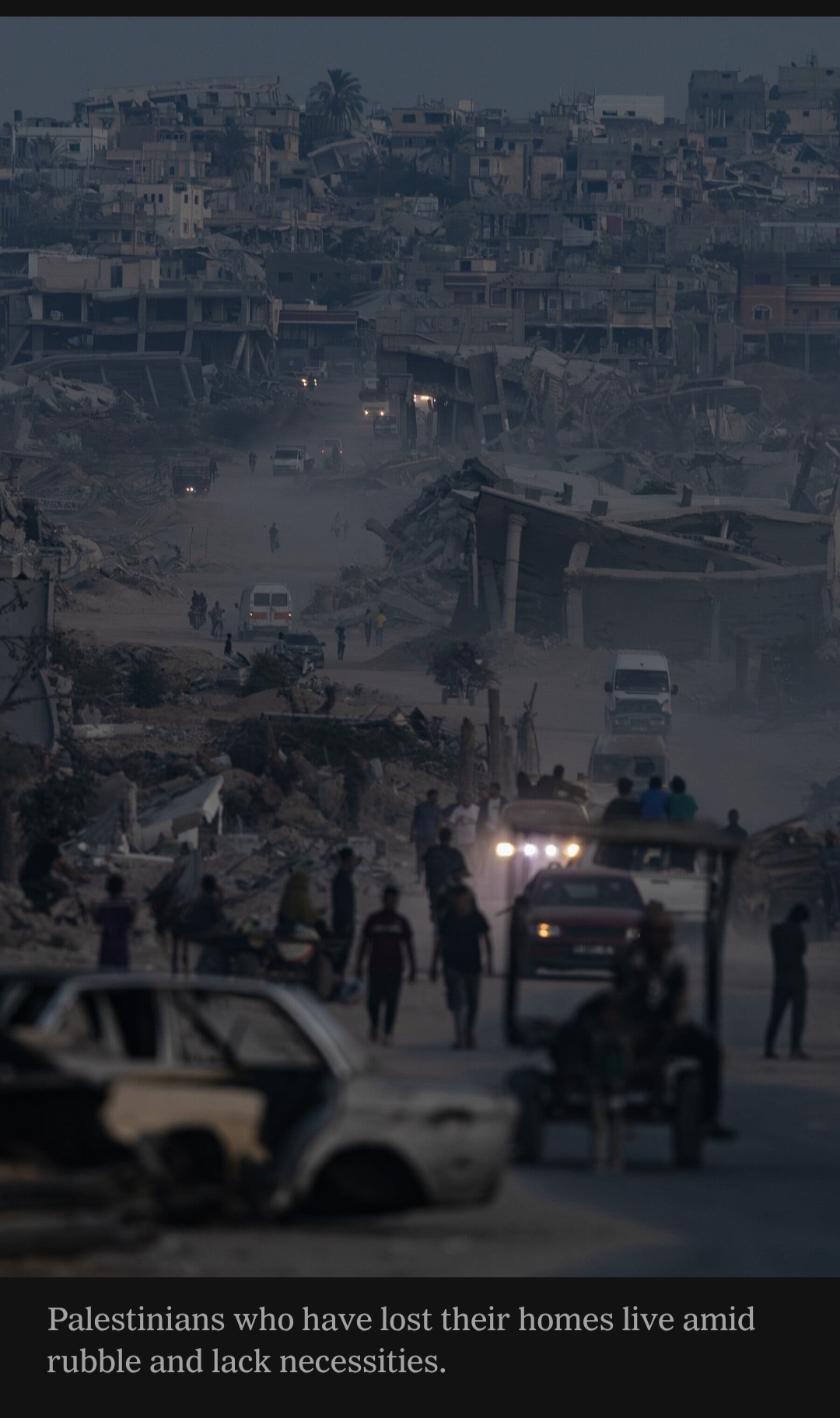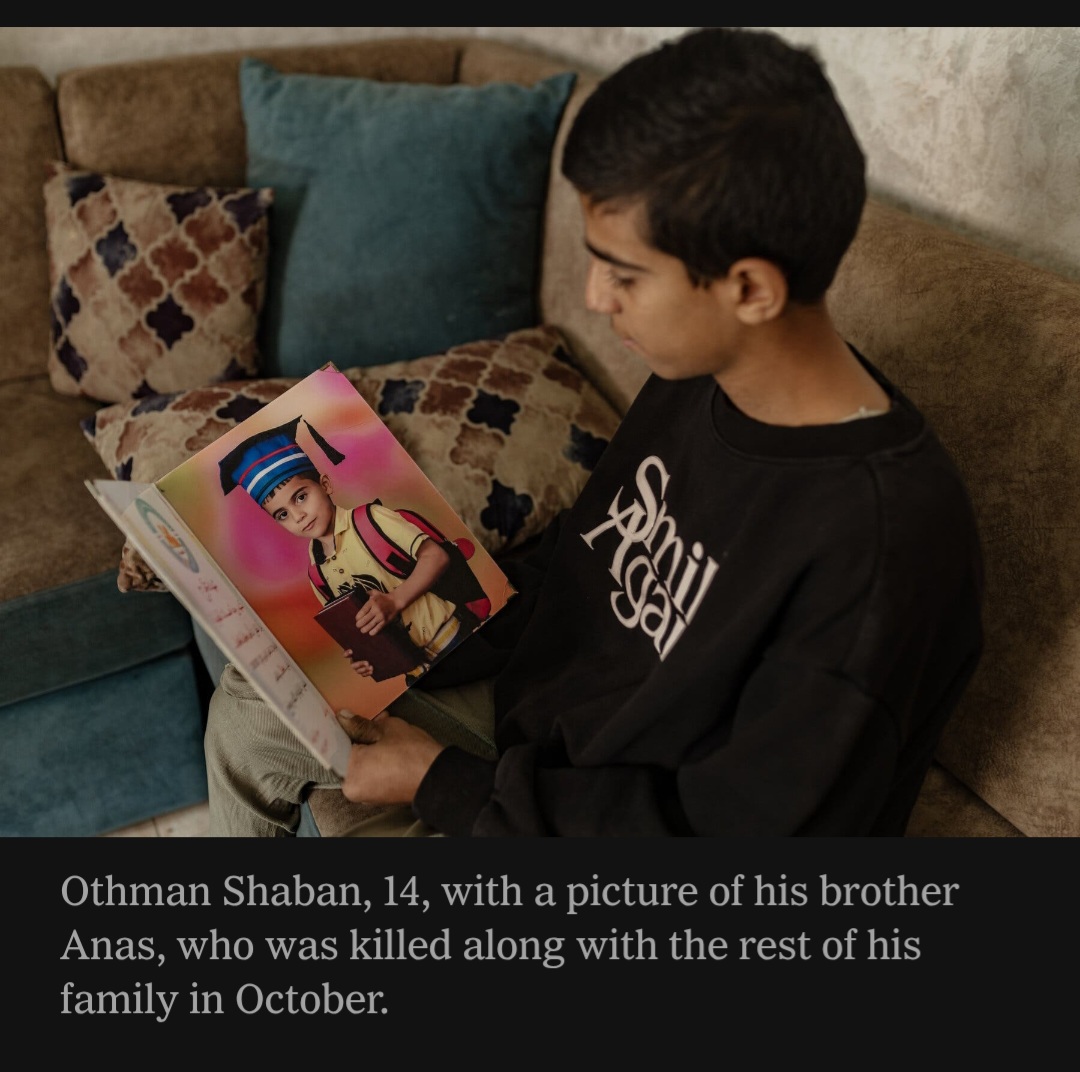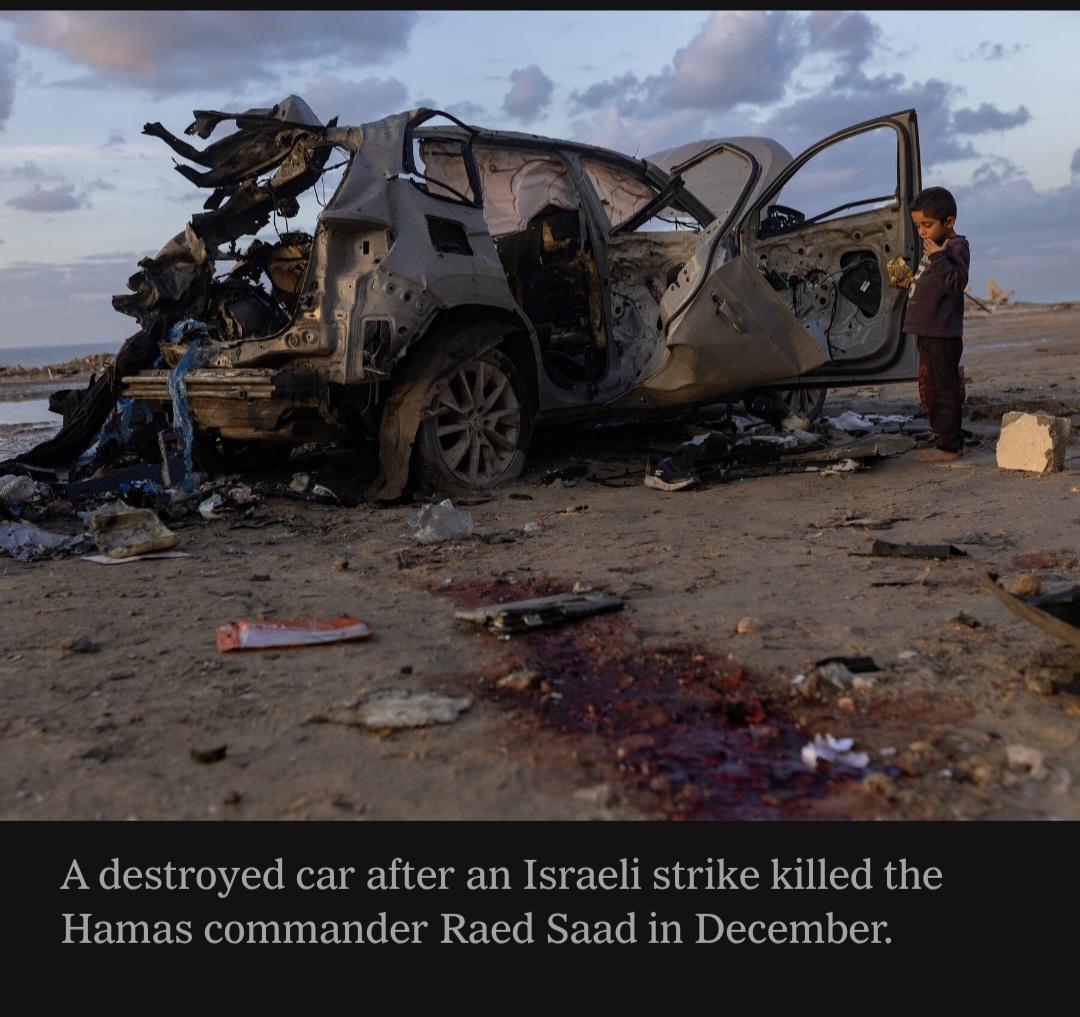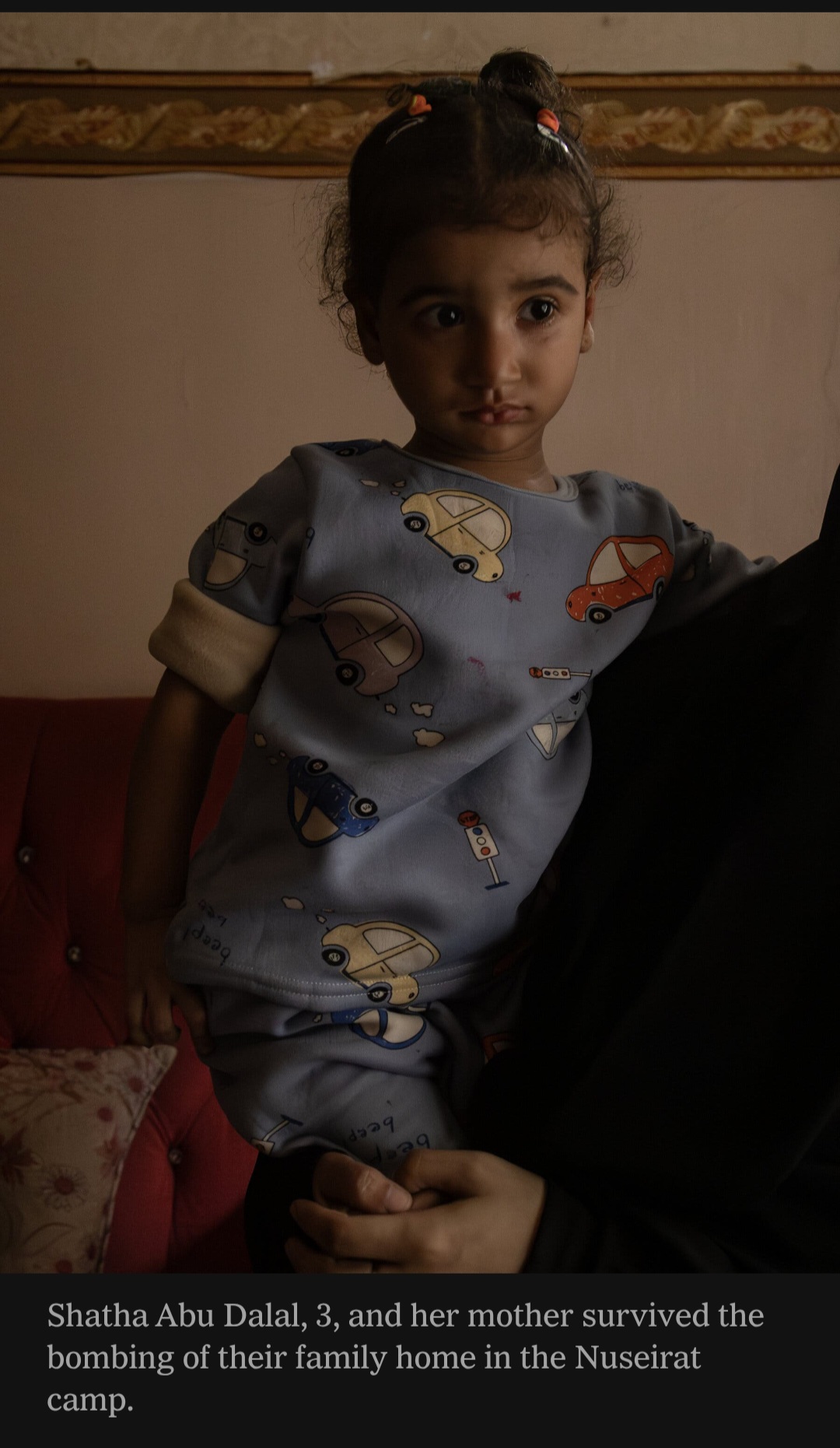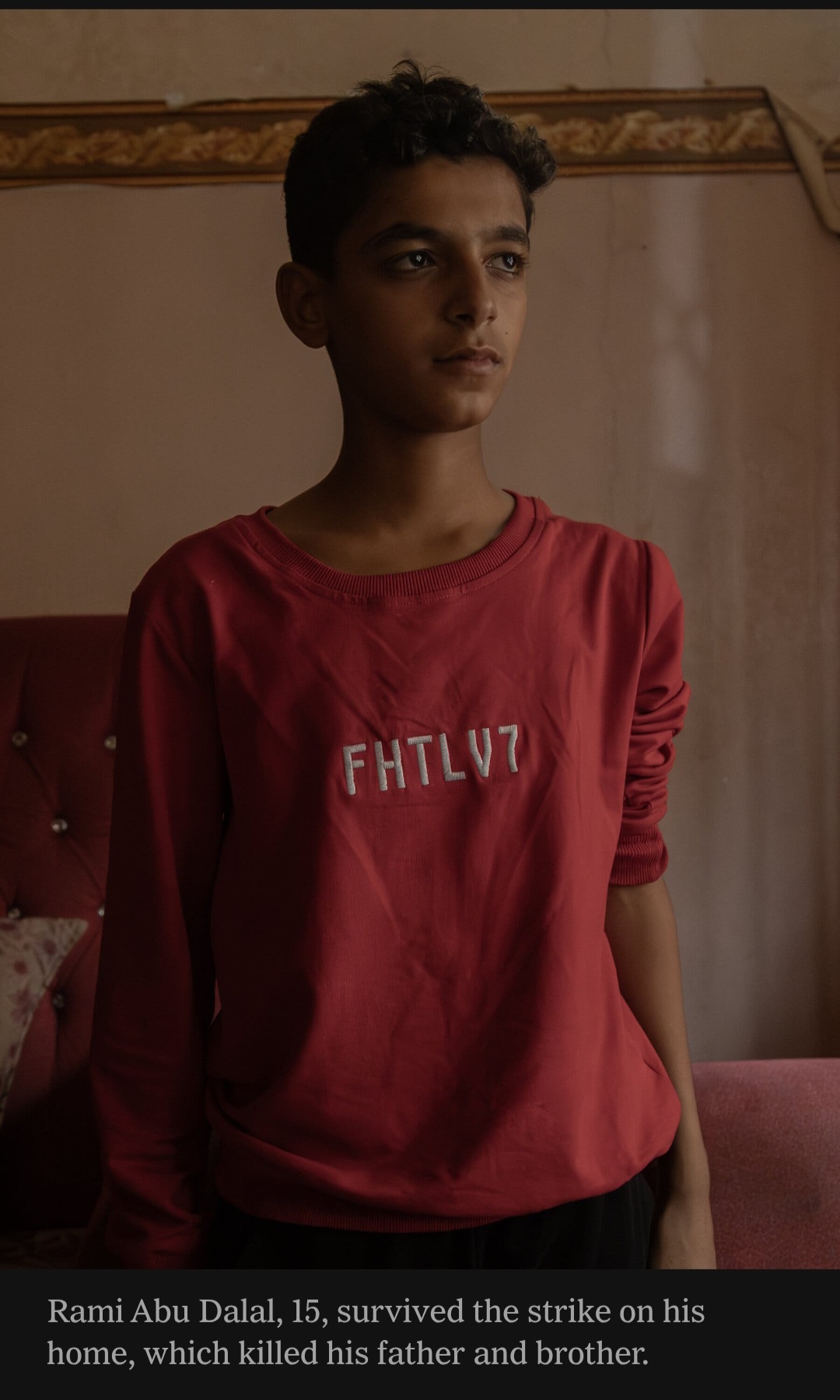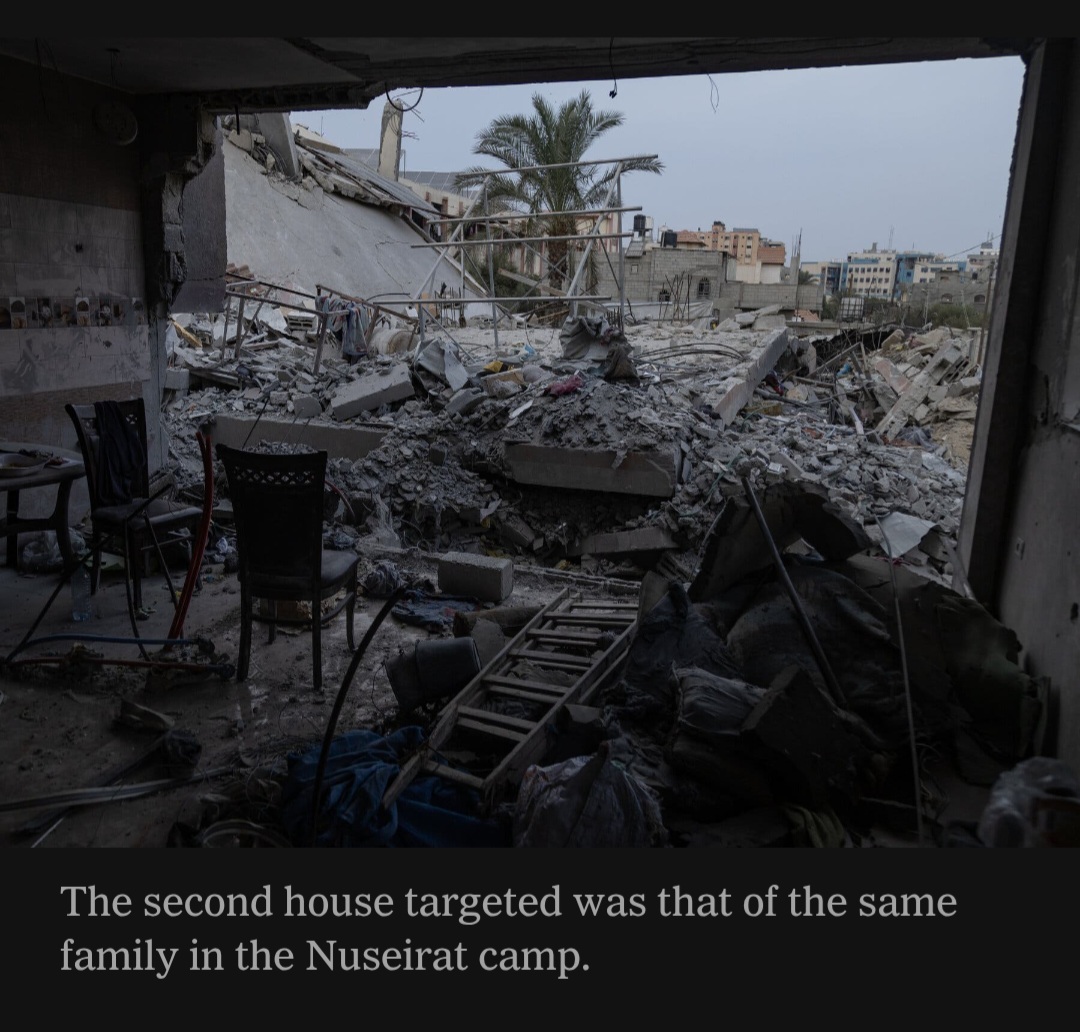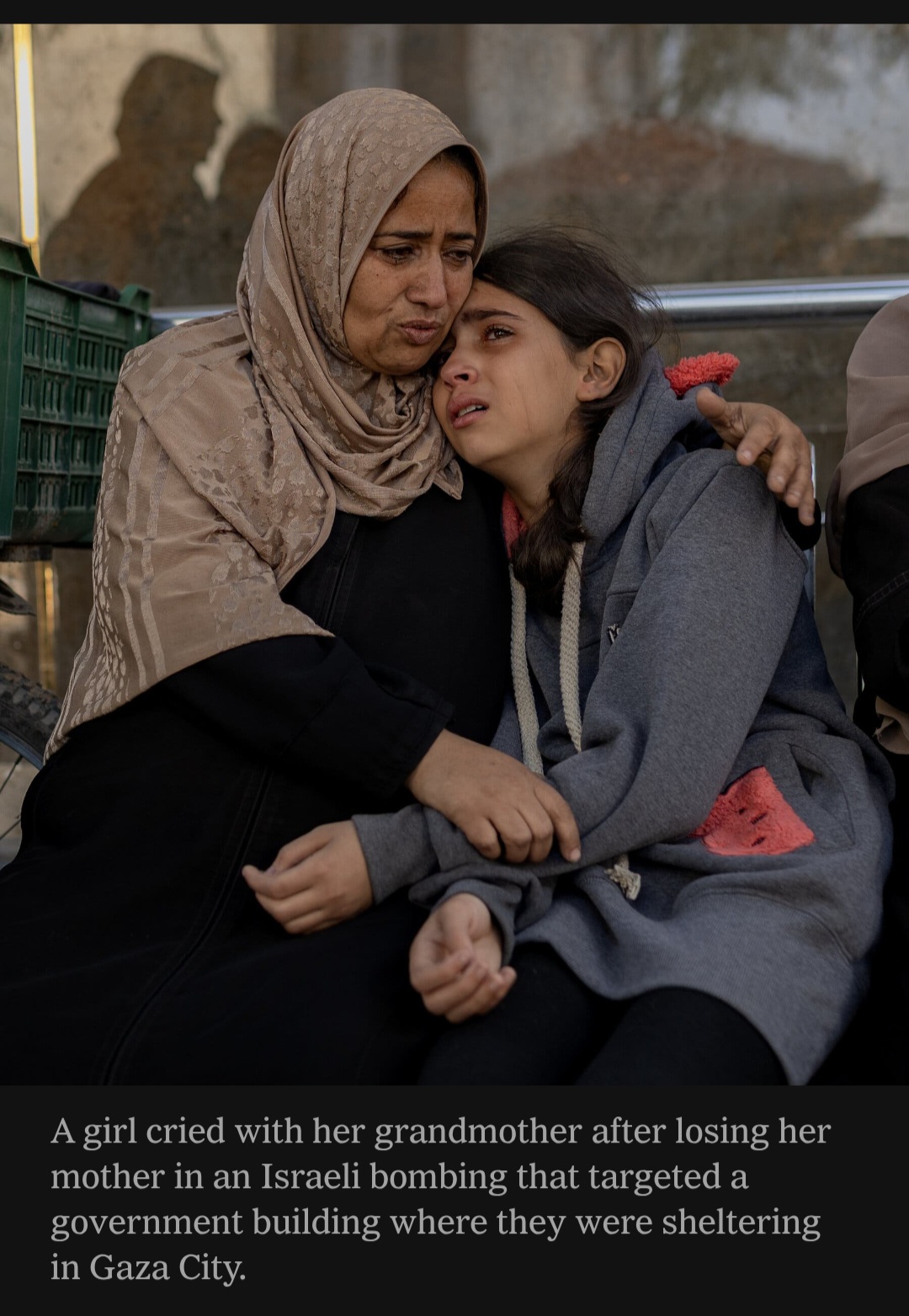
The headline asked why hundreds of Gazans have been killed. The article never answered.
In its December 24 piece, The New York Times assembled an inventory of grief—names, faces, photographs, shattered families—documenting civilian death in Gaza with intimate precision. What it did not assemble was an explanation. The question at the top functioned as decoration; the answer was assumed. Israel hovered everywhere as implication, never as argument.
What the article omitted is not marginal. It is decisive.
It did not say that Hamas still holds an Israeli hostage, in violation of the ceasefire framework. As long as that person remains captive, the war has not ended and the terms of the ceasefire have not been met.
It did not say that Hamas has refused to disarm—flatly, publicly—even though disarmament is a core requirement of the multi-point plan meant to end the fighting. The vast majority of Palestinian Arabs in both Gaza and the West bank agree. This is not procedural quibbling. A movement that keeps its weapons is declaring its intention to keep killing. Leaving that fact out does not clarify the story; it inverts it.
“a core, cross-regional [Gaza and West bank] red line remains: overwhelming opposition to disarming Hamas, complicating any post-war arrangement.” – PCPSR poll of October 28, 2025
It did not say that Hamas continues to state openly that it will pursue the war until the Jewish state is destroyed. These are not coded remarks. They are repeated commitments. When a belligerent announces genocidal intent and retains its arsenal, civilian deaths are not mysterious. They are the predictable outcome of strategy.
“The resistance is capable of continuing, and I am confident that the outcome of this conflict will be the demise of this entity [Israel].” – Senior member of the Palestinian resistance movement Hamas, Osama Hamdan on December 23, 2025
Instead, The Times presented Gaza as a place acted upon—its people rendered passive, its leadership reduced to background noise. The governing reality was blurred, that the popular, armed movement that began the war – with overwhelming local support – insists on continuing it. Palestinian Arabs appeared as if history were happening to them, rather than through institutions that still mobilize society for conflict.
The photographs – eleven in all, a remarkable number for an article, mostly featuring children – did their work. They always do. Images narrow the moral aperture. They locate causality at the edge of the frame. What lies outside—tunnels, refusals, threats, the last hostage—falls away. Repetition turns absence into innocence.
This is not empathy. It is evasion.
Civilian death is tragic and deserves coverage. But tragedy without agency becomes accusation by implication. When Arab suffering is anatomized down to the last tear while their popular elected leadership’s war-making is erased, journalism is no longer news but advocacy.
The Times did not lie. It curated. It acted as the political-terrorist group’s propaganda arm.
Readers are left asking why Israel is still fighting, when the honest question is why Hamas is still waging war—still holding the last hostage, still refusing disarmament, still promising destruction.
Every picture tells a story. This one tells a story about the author.
For twenty years, Israel relied on a security barrier to prevent the suicide bombings and shootings of the Second Intifada. It worked. While ninety percent of that barrier was not a concrete wall, but a high-tech fence—cameras, sensors, patrol roads, and layered detection system – it still reduced terror attacks from the West Bank by over 90 percent. Israelis and the Stateless Arabs from Palestine (SAPs) rebuilt their lives believing that a fence, not a fortress, was enough.
Then came October 7.
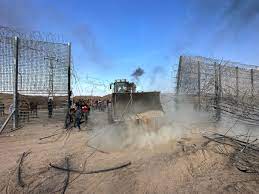
SAPs crashing through the fence between Gaza and Israel on October 7, 2023
Hamas gunmen bulldozed, exploded, and burned their way through what was—on paper—one of the most advanced border fences in the world. They murdered, raped, tortured, and kidnapped civilians in a genocidal assault that shattered the central premise of Israel’s security doctrine: that a fence and technology could stop an army of terrorists long enough for the IDF to respond.
That assumption is gone.
If a similar surprise assault were launched from the West Bank near the country’s major population centers—Tel Aviv, Jerusalem, the coastal cities—the casualties could be catastrophic. Israel is nine miles wide at its narrowest point. One breach is not a tactical event. It is an existential one.
The Barrier Must Change Because the Threat Has Changed
A fence can be cut, rammed, or climbed. A reinforced, multi-layered wall—physical, electronic, aerial, and subterranean—is a different proposition. The lesson of Gaza is not to abandon the idea of separation, but to upgrade it to match the enemy’s capabilities and intentions.
Israel does not have the luxury of guessing whether future attackers will try to slaughter dozens or thousands. The security architecture must assume the worst case—because the worst case already happened.
In Hashmonaim, Israeli backyards are a stone’s through away from the Security Barrier (photo: First One Through)
Disarming Militias Is Not Just for Gaza
The world is focused on disarming Hamas in Gaza. It must also confront a parallel obligation: militant groups in the West Bank cannot remain armed if there is to be any political horizon, for Palestinian Arabs or Israelis.
If Gaza is demilitarized but the West Bank is not, the threat simply shifts geography. The barrier is not a substitute for disarmament. It is a second line of defense, not the first.
Lasting security requires:
1️⃣ Complete disarmament of organized militant groups seeking Israel’s destruction. 2️⃣ Security control capable of preventing re-armament. 3️⃣ A barrier strong enough to make a surprise attack militarily unachievable.
Without those three components, diplomatic talk of a “future Palestinian state” is not a peace process—it is a gamble with tens of thousands of civilian lives.
A wall is not a symbol of failure. It is the price of survival when the alternative is the erasure of towns near the 1949 Armistice Lines with Jordan.
A move towards coexistence between Israelis and Palestinian Arabs cannot be limited to the threat from Gazans but from West Bank Arabs as well. Disarmament of West Bank Arabs and an upgrade of the security fence must happen now as well.
Peace requires trust. Trust requires time. Time requires security that cannot be breached in seven minutes by men with bulldozers and grenades and genocidal jihadi rage.
Until a day comes when coexistence is real—not chanted, not theorized, not negotiated—Israel must ensure that no armed faction can cross its border. The time to implement that plan is now.
The western world keeps repeating the same slogan: Gaza must be demilitarized. Every peace plan, every UN speech, every press conference insists that Hamas cannot continue to rule Gaza with guns in its hands. Billions of dollars for reconstruction are on hold until someone ensures those weapons are taken away.
There is only one problem: Hamas says it will never disarm. Not yesterday, not tomorrow, not for a state, not for the UN, not for Europe, not for the Americans, and certainly not for Israel. Hamas did not slaughter and rape Israelis on October 7 to abandon its quest to vanquish the Jewish State.
So a question hangs over every diplomat and every cabinet meeting from Cairo to Paris, a question no one wants to speak out loud: If Hamas refuses to disarm, who is going to shoot Hamas?
The West calls Hamas a terrorist organization responsible for massacres, rape, torture, kidnapping, and the deliberate targeting of civilians. But to many Palestinians, Hamas is not a rogue gang. It is the leadership they voted for, winning 58% of parliament in the last elections, and polling suggests they would win again today. To disarm Hamas is not to disarm a fringe—it is to confront their popular governmental leaders and legitimate military.
So who will go into Gaza, walk into the war tunnels, into the apartments, into the mosques used for rocket storage, and take those weapons away? Who will drag commanders from basements and seize the launchers hidden under family homes?
Hamas in Gaza war tunnels
Israel? The world says no. Israel may have destroyed Hamas battalions, but the same leaders who demand demilitarization say Israel must not stay in Gaza to enforce it.
The Palestinian Authority? Hamas threw them off rooftops in 2007. The PA’s authority barely extends through parts of the West Bank. They are not disarming anyone in Gaza without outside troops and a graveyard’s worth of casualties.
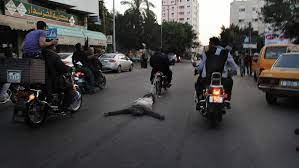
Members of Hamas drag the body of a “collaborator” through the streets of Gaza
Arab and Muslim states? This is the newest fantasy. An “International Security Force” of Egyptian, Jordanian, Saudi, Emirati, Moroccan or other troops is supposed to enter Gaza, secure the borders, keep the peace, and—if necessary—shoot Hamas fighters to take their weapons. Will Egyptian soldiers do that? Jordanians? Saudis? The UAE? And what of Qatar, which housed Hamas leaders in luxury hotels for years? Will Qatar now arrest the men it financed?
The UN? NATO? Peacekeepers do not storm bunkers or raid arms factories. It has never happened in the Middle East, and it will not start in Gaza.
Which leaves one final option, the one everyone pretends not to see: No one will disarm Hamas. The world will congratulate itself on a “post-war framework,” aid will pour in, cement will be shipped, tunnels will be rebuilt, rockets will reappear—and we will repeat this in two years, five years, ten years, with more dead children on both sides.
This is the part no diplomat wants quoted back to them: You cannot demand a demilitarized Gaza, forbid Israel from disarming Hamas, refuse to disarm Hamas yourself, and still pretend you are building peace. Those positions cannot coexist. Either someone will use force against Hamas, or Hamas remains armed, and Gaza remains a terrorist enclave.
Ask the diplomats, ask the presidents and prime ministers, ask the foreign ministers drafting communiqués they will never enforce: Who will shoot Hamas?
Peace is not built on Security Council resolutions. It is built on the willingness to confront those who would destroy it.
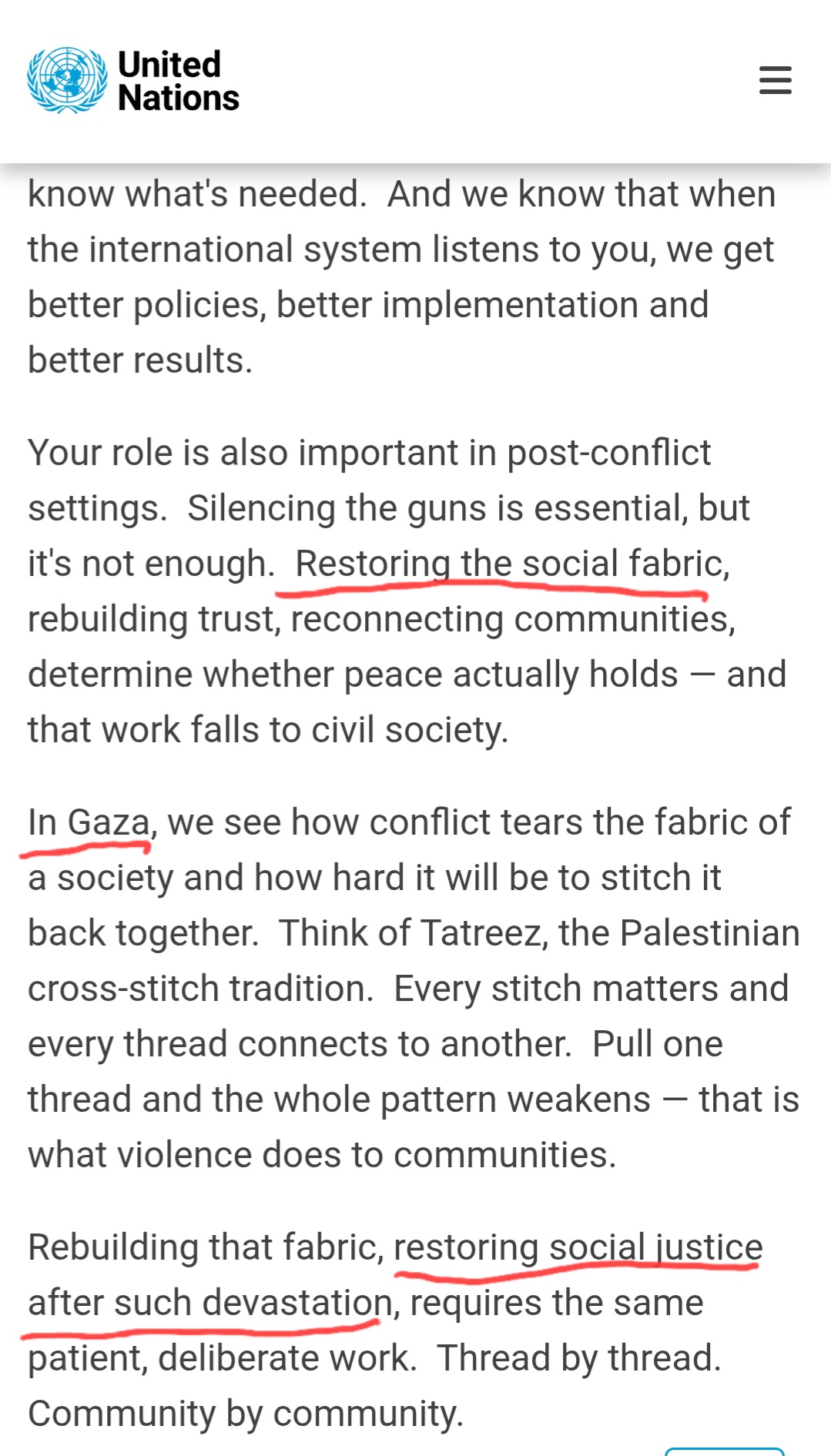
The latest United Nations conference on “social justice” met in Qatar – that same Qatar that supports the antisemitic genocidal terrorists of Hamas and instills their narrative into the United States and the world.
UN Deputy Secretary-General Amina Mohammed pretended to reach for the moral high ground, invoking the Copenhagen Declaration and the Doha Development Agenda as the guiding stars of global fairness. She spoke of social justice, inclusion, development, and the duty to “leave no one behind.” And then, inevitably, she cited Gaza – and only Gaza – not as a lesson in hypocrisy, but as a tragedy of war that, in her telling, derailed those noble promises.
But the fact is that Gaza did not collapse because the UN’s social programs failed to reach it or from war. Gaza was the UN’s social program. For decades, the UN built and funded the schools, administered the food aid, managed the clinics, and drafted the talking points. Generations were raised under their flag of humanitarian idealism. Yet what was taught was not coexistence, tolerance, or equality. It was grievance, entitlement, and the dream of a land without Israel.
If Copenhagen promised inclusion, Gaza delivered indoctrination. If Doha promised shared prosperity, Gaza institutionalized dependency. The UN’s own agencies became the state’s scaffolding—without the accountability of a state or the moral compass of true social justice. There was never any “leaving no one behind”; there was only teaching millions that history owed them everything and responsibility was optional.
The United Nations Deputy Secretary-General mourns Gaza as proof that war has undone the UN’s human-development vision. Alas, Gaza is proof that the vision itself was hollow, or at least deeply corrupted when it came to the Stateless Arabs from Palestine (SAPs). The declarations were printed on fine paper, but the values were never applied where it mattered most. No education for coexistence. No curriculum of compromise. No inclusion for those outside the narrative.
The Copenhagen and Doha declarations were supposed to represent the conscience of human values. In Gaza, they became the cover for a project that replaced human rights with perpetual resentment. That is not social justice. That is social decay, dressed up in UN language and called compassion.
In Lebanon and Syria, senior terror leaders keep disappearing. Israel’s intelligence services have shown that even far from home, their reach is absolute. Hezbollah commanders vanish without warning. Iranian coordinators meet “accidents” in Damascus. Israel’s eyes are everywhere — east of the 1949 Armistice Lines (E49AL / “West Bank”) and far beyond.
Inside Israel and the territories under its vigilance, that network of informants has kept the Stateless Arabs from Palestine (SAPs) from unleashing the kind of barbarism seen under Hamas. The true security barrier is not made of concrete or wire — it is people: HUMINT, human intelligence, the whispers that prevent slaughter.
But Gaza became a black hole the moment Israel withdrew in 2005. Every soldier, every Jew, every Israeli presence was uprooted — and with them went the eyes and ears that had kept the region stable. Hamas seized power through blood, executing its rivals and every suspected collaborator. What followed since 2007 was not liberation but suffocation. Gaza became a fortress of fanaticism, sealed off and armed to the teeth.
Hamas interrogates suspected informants in 2014
The legal Israeli blockade was not enough. While Israel and Egypt controlled the borders, Hamas tunneled beneath them — smuggling Iranian rockets, explosives, and even the raw materials to build new weapons. Gaza transformed from a strip of land into a terrorist enclave. By 2023, it was not just armed — it was indoctrinated, radicalized, and ready for mass murder.
Israel will not make that mistake again.
Among the newly released SAP prisoners, there are almost certainly Israeli plants — men and women turned during interrogations or cultivated long before. They will slip back into Gaza’s shattered neighborhoods, listening, watching, feeding intelligence. Every conversation, every weapons cache, every hint of reorganization could be the thread that prevents the next October 7.
Hamas knows this. Its paranoia will turn inward. Accusations will fly, confessions will be forced, and public executions will become commonplace to the shouts of “Allahu Akhbar.” The group will again devour its own, because it cannot rule without fear.
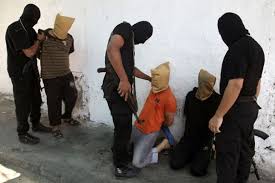
Hamas executes suspected informants in front of crowd of children
Any new ruling authority that replaces Hamas will need to coordinate with Israel. There can be no “independent Gaza” left to rot in secrecy. Deradicalization cannot be trusted to glossy NGOs or “neutral” foreign agencies alone. It must be verified — by intelligence, by informants, by those who know the difference between reform and camouflage.
[As for the Arab propaganda outlets, none of the public executions are discussed on Qatari-owned Al Jazeera. It is busy selling Gaza and Hamas as peace-loving.]
The intelligence war has already begun. The question is not whether Israel has plants among the returnees — it is how many will live long enough to stop Gaza from sinking back into the darkness it dug for itself.
“Why do the nations rage, and the peoples plot in vain?”— Psalm 2:1
Saudi Arabia – the kingdom which Israel hoped would next join the Abraham Accords – sought to pressure Israel into ending its defensive war in Gaza by rallying nations of the Global North to recognize a State of Palestine. It found a partner in France, which successfully pulled the United Kingdom, Canada, and Australia into the orbit of recognition. In September 2025 at the United Nations, the group jointly declared their acknowledgment of a Palestinian state—with caveats—but the symbolism was unmistakable.
Israel did not budge. It viewed the coordinated announcement as an alarming reward for the genocidal Hamas regime that had unleashed war on October 7 two years earlier.
Enter the United States. President Donald Trump had tasked developer and confidant Steve Witkoff to lead a back-channel negotiation with Hamas for the release of Israeli hostages and an end to hostilities. Jared Kushner joined the effort more forcefully in September, unveiling a “20-point plan” aimed at ending the two-year war and reshaping the region’s political future.
To counter the Saudi-French gambit, Trump built his own coalition. The U.S. secured the backing of several Arab and Muslim nations from the Global South—including Qatar, Jordan, the United Arab Emirates, Indonesia, Pakistan, Türkiye, Saudi Arabia, and Egypt —for its peace framework. By October, the administration succeeded in gathering the leaders of 27 countries from across the North and South, including some that had just recognized Palestine, to fly to Egypt to sign what was billed as a ceasefire agreement.
A summit to support ending the more than two-year Israel-Hamas war in Gaza after a breakthrough ceasefire deal, Monday, Oct. 13, 2025, in Sharm El Sheikh, Egypt labeled “Peace 2025”
It was a mirage. Neither of the warring parties—Israel or Hamas—attended. The event was instead diplomatic theater, meant to transform a ceasefire proposal into a movement for regional peace. Trump designed the event to flip the script.
Where Saudi Arabia and France tried to impose the weight of the Global North on Israel, the United States sought to use the combined weight of both hemispheres on Hamas. The former demanded an immediate path to a two-state solution; the latter demanded the end of Hamas rule.
The Moral Gravity
The story of this moment is not only about geopolitics, but about moral gravity. The nations of the world have grown accustomed to weighing Israel’s every move while ignoring the crimes of its enemies. They call for “balance” in a war that began with mass murder, rape, and hostage-taking. They lecture the victim to compromise while the aggressor reloads. The UN Security Council could have easily passed resolutions to push for an end to the war if they had just condemned Hamas, but repeatedly refused to do so.
The weight of nations once meant the defense of justice and the pursuit of peace. Today, it is too often the ballast of perfidy—dragging down the innocent under the pretense of even-handedness.
Israel, standing increasingly alone, may yet prove that the true measure of a nation is not in the number of its allies, but in the steadiness of its conscience. It is fortunate to have President Trump in the White House as it shoulders this weight once again.
The tight bond between Israel and the United States has continued, despite Americans starting to sour on Israel since 2015.
Trust is a curious thing. It can be so natural when it comes in small, unassuming packages. A neighbor offering a hand with the groceries. A stranger holding open a door. The innocent gaze of a child. These gestures, light as feathers, weigh more than they seem because they carry no hidden agenda.
Reading Sarah Tuttle-Singer on trust is like reading poetry. She writes with the hope that trust can bridge divides, that shared humanity can soothe ancient wounds. It’s tempting. It’s comforting. It makes us want to exhale and believe that the world really can turn softer, kinder, lighter.
But trust, in the realm of politics and war, is a word misused. Bus drivers and merchants may indeed know the art of coexistence, but their goodwill cannot stand against the fury of those consumed by hatred. History has shown this cruelly and clearly.
On October 7, Israel’s dreamers were shown what happens when trust meets rage. Peace-loving families along the Gaza envelope, who had spent years helping Gazans reach Israeli hospitals, were burned alive. Young people who came only for music and joy at the Nova festival were hunted, raped, and gunned down. Trust did not save them.
Leaders at war do not have the luxury of extending trust to enemies sworn to their destruction. Their duty is to protect their people, not to tell their adversaries where the defenses are weak or where to buy stronger weapons. In war, misplaced trust is not a virtue—it is a death sentence.
I like dreams. I enjoy Tuttle-Singer’s writings. But her kind of pre–October 7 dreaming feels like a dangerous nostalgia while Hamas still rules Gaza, while Israelis are still captives in tunnels, while so many Palestinian Arabs still celebrate the massacre and fantasize about taking over Israel itself.
Even more, I understand that I might have the luxury of fantasy, but the people in charge of keeping people safe do not.
Dreams belong in the safety of bed, not while driving a highway. Trust has a time and a place. For now, in the waking hours of the Middle East, those in charge with ensuring survival must act with clarity with dollops of charity.
It is better to trust in wartime leaders who are wide awake to reality than to believe in poets dreaming on the frontlines.
As the war from Gaza continues to take its devastating toll on everyone involved, the road to peace remains blocked by a singular, stubborn obstacle: Hamas. The group’s leadership refuses to accept ceasefires not out of strength, but from the conviction that they can endure, rearm, and fight again. The violence will not end as long as Hamas is allowed to believe it has a future.
It is time for the international community – particularly Western democracies – to take an unambiguous stand. Hamas must be permanently banned—not just its military wing, but its entire structure. There can be no meaningful peace, no rebuilding of Gaza, and no credible peaceful future while Hamas continues to hold power and wield influence.
Despite the mounting civilian cost, Hamas has shown no intention of disarming. The group openly positions itself as a perpetual “resistance force” rather than a governing body accountable to and respecting the people of Gaza. Its survival strategy is predicated on suffering—banking on civilian casualties to inflame global opinion while preserving its own arsenal in tunnels and bunkers. This is not governance. This is terrorism dressed in political clothing.
Hamas official boasts of sacrificing his own civilian population to slaughter Jewish civilians, shortly after the October 7, 2023 massacre in Israel (source: MEMRI)
Yet in Europe, the designation of Hamas as a terrorist organization remains inconsistent. Some countries distinguish between its so-called “military” and “political” wings, an artificial and dangerous separation. This division gives cover to operatives, fundraising networks, and propaganda arms that prolong the conflict and contribute to ongoing suffering.
Now, there is growing concern in the United Kingdom, where a legal effort is underway to challenge Hamas’s terrorist designation. This must not be allowed to succeed. On the contrary, the UK should lead Europe in reaffirming that Hamas is a terrorist entity in its entirety. Such a stance must be echoed by Germany, France, the Netherlands, and the rest of the EU. It must happen in Canada and Australia and throughout the Global North.
UK lawyers are fighting to get Hamas removed from the list of terrorist groups
Riverway Law submitted a 106-page filing in the UK which argued that Hamas is a local “resistance movement… which has won the only free and fair election in the occupied Palestinian territories” and it “poses no threat to the UK people.” The submission argued that “the legitimacy of the struggle of the Palestinian people for independence, territorial integrity, national unity and liberation from colonial and alien domination and foreign occupation by all available means, including armed struggle, is moral [and] legitimate.”
Lost in this filing is that the legal definition of terrorism is about targeting civilians for political aims. That is the core mission of Hamas. Its stated purpose and actions on, before and after October 7, 2023 is to attack Jewish civilians inside Israel and around the world.
To wit, in April 2022, Yahya Sinwar, the Hamas leader who would later spearhead the October 2023 massacre in Israel said “Whoever makes the decision to repeat this desecration of the Al-Aqsa Mosque will be making a decision to desecrate thousands of synagogues and Jewish temples all over the world,” explicitly saying that actions done by the Israeli government would be reason to take actions against Jews around the world, including in the UK.
The invective is a grisly echo of the 1988 foundational Hamas Charter which explicitly cites the antisemitic forgery Protocols of the Elder of Zion about the supposed vile nature of Jews everywhere. It claims that Jews conspire to control the world and “Islamic groupings all over the Arab world should… fight with the warmongering Jews (Article 32).” The Hamas charter uses the word “world” twenty-five times. “Globe” is used twice. “Jew” – not “Zionist” – is used twelve times, including stating “Israel, Judaism and Jews challenge Islam and the Moslem people, (Article 28)” targeting Jews everywhere and the religion itself as a permanent offense to 1.9 billion Muslims.
It was with this antisemitic genocidal charter that Palestinians voted Hamas to the majority of parliament in 2006. That this vile party won elections – like the Nazi party in Germany – is not a defense of its legitimacy but a condemnation of the “deformity in Palestinian culture,” to quote James Zogby, President of the Arab American Institute comment at the United Nations Security Council on June 27, 2023.
Banning Hamas is not only a matter of principle, but of practical necessity. No group that openly glorifies violence and opposes basic coexistence can have any legitimate role in governance.
Ghazi Hamad of the Hamas political bureau said in an October 24, 2023 show on LBC TV (Lebanon) that Hamas is prepared to repeat the October 7 “Al-Aqsa Flood” Operation time and again until Israel is annihilated. (source: MEMRI)
A political party that glorifies the death of its own population with public declarations “we are called a nation of martyrs, and we are proud to sacrifice martyrs,” shows no value for the lives of its own civilians, let alone of others. The Global North must lead with moral clarity and urge the Arab League to follow suit.
When people on the streets and campuses in the Global North yell “Free Palestine,” they are doing so under the banner of Hamas in a call to eradicate the only Jewish State and to attack Jews globally. If people want to make the argument that the statement is for coexistence, then fight to end Hamas, argue for a Free Israel and to Create Palestine, and condemn the heinous attacks on Jews happening all over the world.
To end this war, we must end Hamas. Ban them—politically, financially, and globally. Only then can people talk about “the day after,” and the longer future.
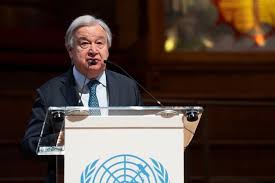
United Nations Secretary General Antonio Guterres is first and foremost a politician, not a human being. What else can be the reasons behind his ignoring the slaughter of 1,200 people in Israel, burning entire towns, raping women and kidnapping 250 people, other than serving his constituents of the Global South whom he has learned are rabid antisemites?
When a radical socialist-jihadi gunned down two young Israeli diplomats outside a Jewish event in Washington, D.C. in May 2025, Guterres immediately issued a statement condemning the murders. It was something he did not do after the massacre in Israel on October 7, 2023. Or October 8. Or October 9. Or October 10.
But he rose to the occasion in May 2025 after the targeted killing of the Israeli couple by a lunatic yelling “Free, free Palestine,” as if he were surrounded by fantom college campus agitators. Perhaps anticipating blowback from the anti-Israel horde he leads (read serves), Guterres explained this statement “reiterat[ing] his consistent condemnation of attacks against diplomatic officials.”
THIS particular antisemitic murderer should be “brought to justice” because he killed diplomats, a Bozo no-no. In this circumstance, the UN “extends sympathies to the Government of Israel,” because members of the sacred circle of high brow governmental officials were gunned down, not Jews having breakfast with their kids in their kitchens.
The thousands of butchered and injured people in Israel by over 3,000 Gazans in October 2023 were just Jews and therefore deserved no sympathy from the United Nations. Guterres could not offer any words of condemnation or consolation to the Jewish State for such barbarity; he has been so trained by the Global South. His office would not demand that thousands of Gazans “be brought to justice”; they are the UN’s protected wards.
When the head of the United Nations explained to the world that he decided to quickly condemn the murder of two Israelis when he ignored the butchering of 1,200, because of unity among diplomats, he further exposed the profound inhumanity of the cancerous global institution.
The world sees Gaza through the lens of curated sympathy – smoke trails from missile strikes, wounded children, crumbled buildings – rendered by the media and United Nations. The headlines scream “siege” and “occupation,” and the images are carefully framed to elicit tears, not questions. For them, Gaza is a tragedy.
But Israelis? They see something very different.
They see a terrorist enclave. A society ruled by Hamas – not just tolerated but elected – with a charter calling for genocide against Jews. They see neighbors who have fired over 30,000 rockets at them since Israel left Gaza in 2005, and who used humanitarian aid to dig terror tunnels and stockpile weapons.
Israelis are haunted by October 7, 2023 – the day when 1,200 of their people were butchered. Burned alive. Shot in their homes. Raped in front of their families. And they remember what came next: polls showing 75% of Gazans supported the massacre. The popularity of other Palestinian Arab terrorist groups skyrocketed as well, including Islamic Jihad, al Aqsa Brigade and al Qassam. This wasn’t some fringe radical cell that commited the vile pogrom – this was public approval for mass murder. It was the fulfillment of their long-standing desire to attack Jewish civilians inside of Israel since 2000.
They also see something deeper: three-quarters of Gazans consider themselves “refugees” living in temporary homes. Not because of displacement from this war but because they believe they’re entitled to homes inside Israel. They don’t see Gaza as their future – they see Tel Aviv.
To the United Nations, Gaza is a moral play where Israel is always cast as the villain. They see Gaza not as a failure of Palestinian leadership, not as a society hijacked by jihad, but as a tragedy authored entirely by Israel. Why? Because Israel won’t allow these “refugees” to move into the homes of Israeli Jews – the very homes where grandparents fled in 1948 after five Arab armies attacked the new Jewish state.
The world has condemned Israel for responding “disproportionately” to the October 7 massacre. The UN saw Israeli counterstrikes as war crimes, not defense. They ignored the slaughter of Israeli children and focused on fuel shortages in Gaza. They accused Israel of starvation, ignoring the trucks of aid Israel itself let in, even while its soldiers were under fire. They paid scant lip service to Israeli hostages kept in tunnels by Hamas, viewing them as collateral to Israel’s ongoing “Nakba”.
The Arab and Muslim world is not fooled but is not helping. They don’t see Gazans as brothers and sisters in need of refuge. They see them as Palestinians – a distinct, useful political weapon. If Gazans were Syrians, they would’ve been taken in by now. But they’re not. They’re left to fester – a long-term tool to weaken and delegitimize the Jewish state.
Even in America, Gaza has become a kind of geopolitical Rorschach test. Leaders like Donald Trump and Jared Kushner see opportunity: beachfront real estate with the potential to be the Singapore of the Middle East. A future riviera. But that future depends on changing a mentality – one that for decades has been more obsessed with destroying Israel than building Gaza.
Because this is the reality: Gaza could have been Dubai. It had the backing of the international community, billions in aid, and a chance to chart its own path. Instead, it chose jihad. It chose hate. It chose martyrdom over medicine, tunnels over technology, indoctrination over innovation.
The world sees rubble. Death. Tragedy. Not on both sides; for Palestinians.
They can’t see the Israeli hostages through their clouded moral lenses. They don’t see the Jewish parents still waiting for their children. They don’t see the decades of restraint Israel exercised before finally saying “enough”. They are caught in an empathy swamp and have mentally baptised Gazans as martyrs instead of genocidal jihadists.
The Global South sees Gaza not just as another flashpoint – but as a pawn in a bigger game. The narrative is not just about “liberation” but “redistribution.” From peace talks to class war. Israel, to them, is just the first domino in toppling the Western-led world order.
Gaza isn’t just a local issue anymore. It’s global. It’s ideological. And for Israelis, the stakes couldn’t be higher.
In this backdrop of viewpoints, an international conference at the U.N. headquarters in New York will take place from June 17 to 20 co-chaired by France and Saudi Arabia. The Global North will join the Global South in trying to find near-term and longer-term solutions to the 100-year Arab-Israeli conflict.
In this Coliseum, the General Assembly serves as the unruly crowd seeking the torture of the Jewish State, while the Security Council acts as caesar empowered with the pen to draft international law. Will the United States protect Israel in such forum on the heels of Trump’s visit to the Gulf? Will Trump seek to trade an unwinding of U.N. Security Council Resolution 2334 to get Israel to agree to short-term and longer term movements towards a permanent divorce between local Jews and Arabs?
Israel was blind to the October 7 attack. Does it see what the world sees in Gaza now and the positions being orchestrated for the June U.N. conference? Will the modern blind Samson bring down the house if it only hears calls for its demise and cannot see a path to live in peace?