Pilgrims or Provocateurs?

A Muslim who visits Mecca is called a Hajji. It is one of the highest honors in Islam, the completion of the Hajj pilgrimage, celebrated by family and community as a sacred accomplishment.

A Catholic who travels to the Vatican is a pilgrim. For centuries, the faithful have journeyed to Rome, walking into St. Peter’s Square with reverence, greeted with blessing and legitimacy.

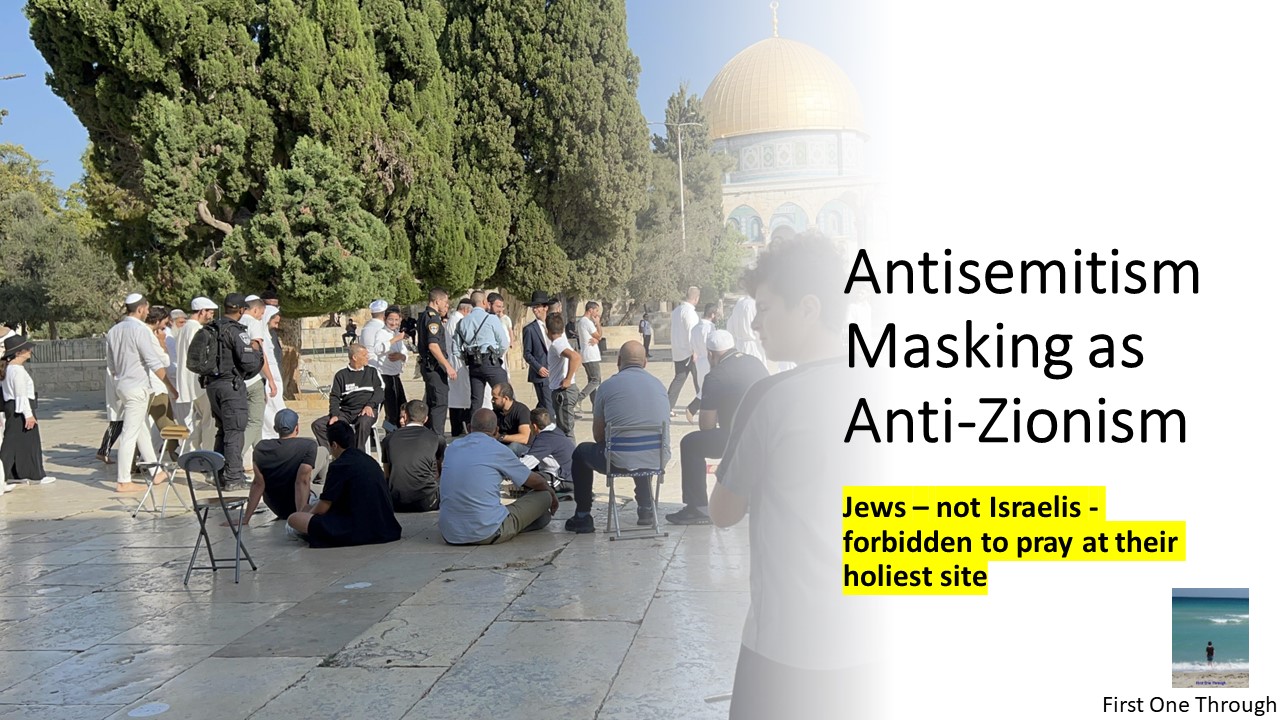
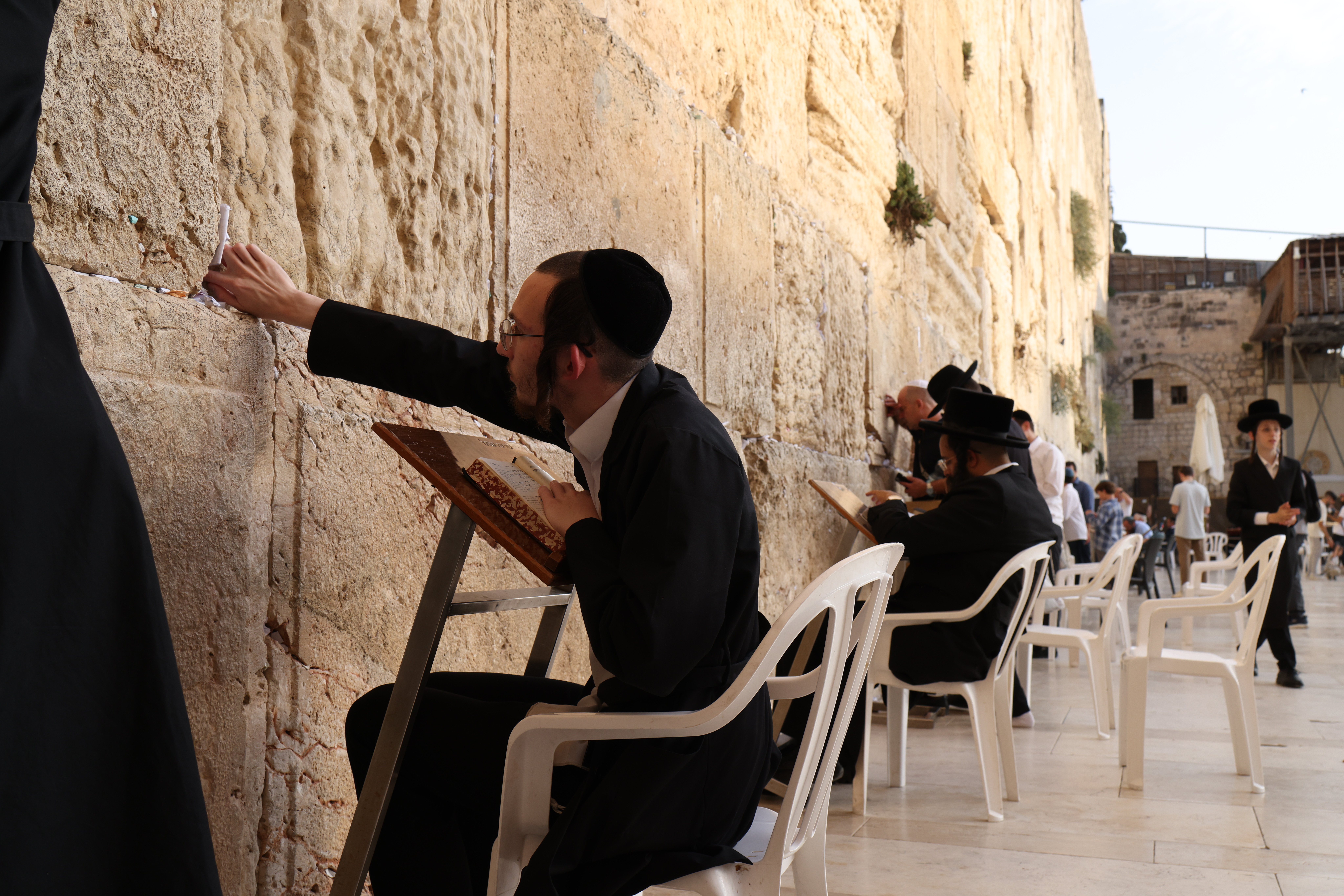
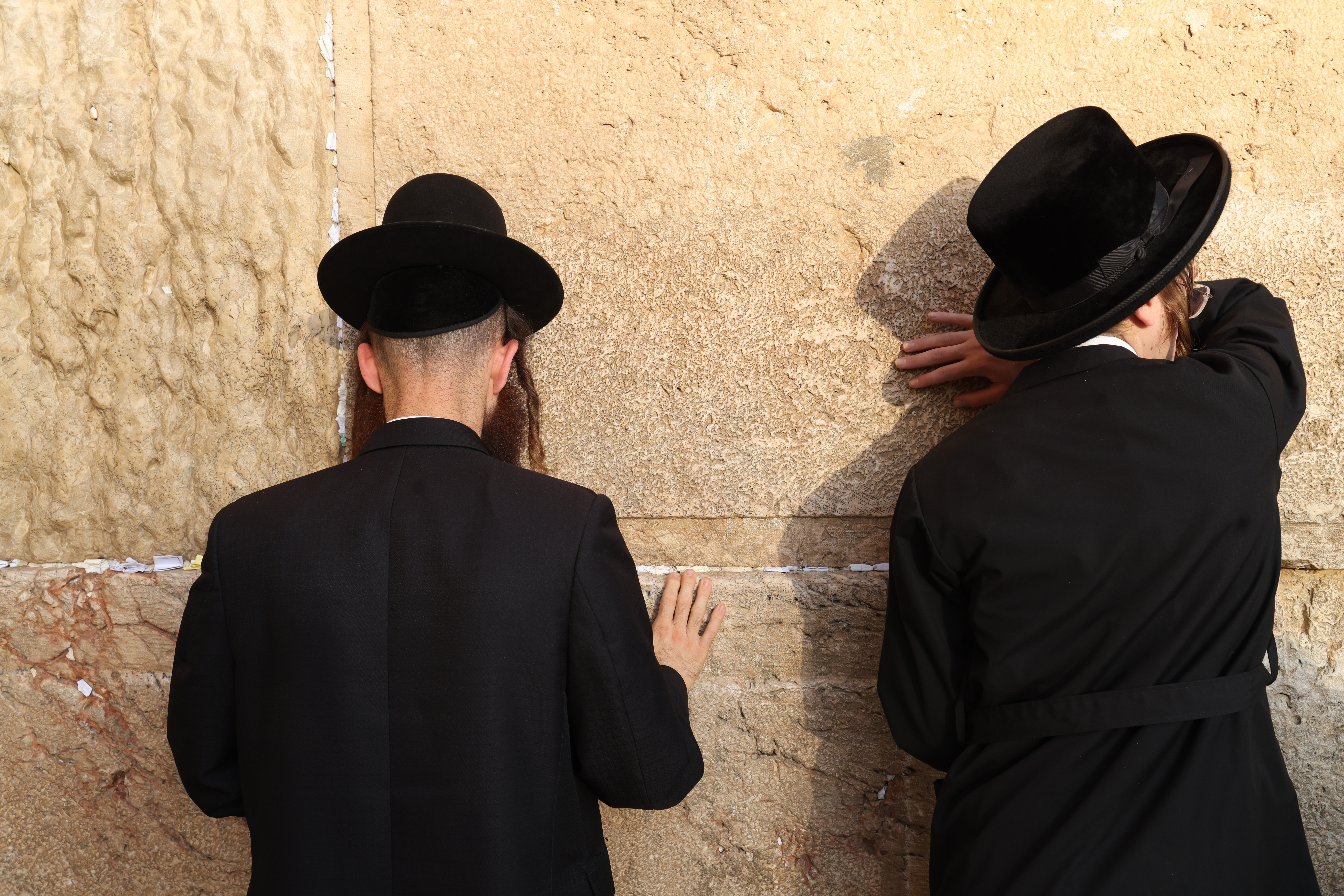
And a Jew who goes to the Temple Mount in Jerusalem — the very place where the First and Second Temples once stood, the holiest site in Judaism? That Jew is branded a provocateur. Not a pilgrim, not a worshiper, not a faithful soul ascending to pray — but an instigator, an agitator, an accused trespasser, a “settler” on their own sacred ground.

The disparity could not be starker. What is celebrated as devotion for others is condemned as incitement for Jews. For Muslims, the Hajj is a right; for Catholics, Vatican pilgrimage is honored; but for Jews, even quiet prayer on the Temple Mount is labeled an offense — by the United Nations, NGOs, and international bodies.

It is not only hypocrisy; it is erasure. To deny Jews the name of pilgrim is to deny Jewish history, Jewish identity, and Jewish legitimacy. It casts the holiest place in Judaism as alien to Jews themselves, a desecration of memory turned into policy.

And why? Because the world has normalized the jihad. It has allowed Islamic Supremacy to dictate permissible behavior, even in the Jewish holy land.

The truth is simple: a Jew ascending the Temple Mount is not incitement. It is the most ancient pilgrimage of them all — the echo of three millennia of devotion, commanded in Torah, rooted in covenant, and carried in every prayer whispered toward Jerusalem, before Islam was even created.

The real provocation is not the Jew who prays on the Temple Mount but a world that dares to tell Jews they don’t belong at the center of their faith.

ACTION ITEM

Come to the United Nations in New York City and demand Jewish rights and freedom of religious assembly in Jerusalem.

George Carlin And Durban’s Infamous Words

The late comedian George Carlin had a famous routine about “the seven words you can’t say on television.” It was funny because everyone knew the words, and everyone knew the absurdity of pretending they didn’t exist. Then came cable television — HBO, Showtime, and the rest — and suddenly those words were everywhere. What once felt taboo became common, even boring.

So it is with the language used against Israel.

In 1991, after intense U.S. diplomatic pressure, the United Nations revoked its infamous “Zionism is racism” resolution. For a moment, it seemed like the libel had been buried. There was hope that the relentless delegitimization campaign against Israel would fade, that the language of hate would finally be retired.

But in 2001, just days before the jihadist terror attacks of September 11, the Durban Conference in South Africa blew the doors wide open again. A coalition of NGOs issued a statement accusing Israel of no fewer than five of the gravest crimes known to humanity:

  • Apartheid
  • Genocide
  • Ethnic cleansing
  • Racism
  • Crimes against humanity

This wasn’t fringe rhetoric. It was delivered under the UN umbrella, with global media present. Durban made it “respectable” to say the unsayable — and to say it loudly.

Since then, those accusations have seeped into mainstream discourse. Palestinian “human rights” groups echo the smears repeatedly. They are repeated on college campuses, in international tribunals, in op-eds from major newspapers, and by activists on social media. What was once a shocking smear has become routine — as casual as an f-bomb on late-night cable TV.

Graffiti that Israel is committing “Genocide” in Venice, August 2025

Durban didn’t just make it acceptable to slander Israel — it made it obligatory for the “serious” activist class. To not accuse Israel of apartheid or genocide – and now especially after Israel’s defensive war against Gaza – is to risk being called naive, a sellout, or worse. The same way edgy comics feel compelled to swear to prove they’re authentic, self-styled “human rights defenders” now compete over who can level the most outrageous accusation against the Jewish state.

The world has gone from debating Israel’s policies to cheering on its demonization. The libels have become cultural wallpaper — so constant that people stop noticing they’re lies. Durban didn’t merely open the floodgates. It built a sewer main, hooked it up to the global conversation, and has been pumping raw hate through it ever since — with the United Nations playing plumber, making sure the pipes never run dry.

The medieval accusation of Jews poisoning wells has been updated: now the “poison” is alleged genocide, apartheid, and crimes against humanity — and once again, the world is drinking it without question.

UN Ignores Palestinian Murderers. Again

Six Jewish civilians were killed simply for being Jews. Surely, a world leader would stand firm, demand justice, and declare solidarity with the victims. Yet UN Secretary-General António Guterres offered only a perfunctory “strong condemnation” via his spokesperson—no mention of justice, no demand for the murderers to be brought to account, no affirmation of solidarity.

Because these murdered Jews were in Israel.

That’s the moral vacuum of the UN.

In Mali, after a terror attack on 17 September 2024, Guterres said he “strongly condemns the terrorist attack,” extended his “sincere condolences” to victims and the government, and—crucially—urged the Malian transitional government “to ensure that those responsible for this despicable attack are held to account.”

Guterres statement after attack in Mali in September 2024

In Pakistan, following a deadly blast, he “strongly condemned the ‘abhorrent’ attack” and offering “solidarity” with the “Government and people of Pakistan in their efforts to address terrorism and violent extremism.

Guterres statement after attack in Pakistan in January 2023

Yet no demand for justice or expression of solidarity with the government and people of Israel. The word “Israel” didn’t even appear in the statement.

Guterres statement after attack in Jerusalem in September 2025

This is standard operating procedure for the UN Secretary General. When Muslims or Christians were killed in houses of worship, Guterres demanded justice while professing solidarity unequivocally. But not for Jews.

Why does Guterres morph into a fierce defender of victims—and demand justice—when the targets are not Israelis, but merely issue a dry statement when Jews are murdered? Perhaps he is waiting to find out if this Palestinian Arab terrorist was also a UN employee?

This is not nuance. It’s deliberate abandonment. A moral inversion because the villains have long ago been beatified, and Guterres has internalized that 2 billion Muslims are his real clients.

The UN has become a place where Jewish lives are treated as collateral, while other victims are granted full moral and political recognition. Guterres’s pattern isn’t subtle—it’s a glaring indictment of the UN’s moral bankruptcy.

Shoftim Inside the Gates vs. Judges Outside The Hague

Parshat Shoftim begins with a straightforward command:

“Judges and officers you shall appoint in all your gates … and they shall judge the people with righteous judgment.” (Devarim 16:18)

Rashi explains that every town needed both judges to rule fairly and officers to enforce those rulings. Justice could not be a distant idea — it had to be rooted locally, available to every community. That is the Torah’s formula for a moral society: equal justice, applied where people live.

Justice Where You Live

The genius of Shoftim is its insistence that justice must be accessible and equal. Not some imperial tribunal deciding cases in faraway capitals, but local courts where every person could seek fairness and truth.

It is inside the gates where justice takes hold. That’s what builds trust, stability, and morality in a society.

The ICJ’s Distant Spectacle

Contrast this with the International Court of Justice in The Hague. It claims universal authority, yet its judgments fall unevenly. Brutal regimes that slaughter their own citizens often escape its scrutiny. But Israel, a country with one of the most independent and activist judiciaries in the world, is hauled before it repeatedly.

This is an inversion of the Bible’s call for justice: a court far removed from the people, applying rules unevenly, more performance than principle.

Israel hauled before ICJ

Israel’s Local Justice vs. International Bias

Inside Israel, anyone can petition the Supreme Court — Arabs, NGOs, critics of the army. Judges regularly check government policy and military decisions. That is exactly what the Torah envisioned: justice dispensed locally, equally, and consistently.

The ICJ, by contrast, applies law selectively and from a distance. It does not strengthen justice; it hollows it out.

Conclusion

The United Nations had the opportunity for courts in its gates — with its agency UNRWA on the ground in Gaza, running schools, hospital and providing loans. It could have confronted Hamas’ crimes. Instead, it chose silence. It abandoned justice, allowed Hamas to fester, and turned Gaza into a terrorist enclave for Israel to face.

Now the same UN condemns Israel in The Hague. A body that ignored justice locally dares to preach it globally.

But the Torah is clear: a land cannot be moral when evil is allowed to sit at its gates. Hamas must be expelled. And the UN — which empowered terror and continues to undermine justice — has no rightful place in the Holy Land either.

UNESCO Protects the Hamas Charter as Endangered Cultural Artifact

A satire.

In a bold step to preserve humanity’s “most fragile treasures,” UNESCO voted to add the Hamas Charter to its list of endangered cultural artifacts. The decision came during the organization’s annual heritage summit, which initially convened to safeguard vanishing African oral traditions, disappearing tribal instruments, and lost languages. But the spotlight quickly shifted after the State of Palestine—recognized as a full UNESCO member—submitted the 1988 Hamas Charter as a candidate for protection.

Delegates debated the proposal with solemn reverence, as though they were discussing ancient scrolls or fragile clay tablets. “This is not merely a document,” intoned one UNESCO official, “it is a vibrant example of humanity’s enduring talent for mixing medieval theology, paranoid conspiracy, and genocidal intent into a single cultural artifact.”

Hamas founder, Sheik Ahmed Yassin, standing before children

Hamas, which currently holds 58% of the Palestinian parliament and continues to govern Gaza with an iron fist wrapped in a prayer shawl, celebrated the recognition. “We thank UNESCO for finally appreciating the poetic quality of our prose,” said one Hamas spokesperson, pointing to passages citing Jews as orchestrators of every global evil, from wars to stock market crashes. “It is art. Dark, sinister art, but art nonetheless.”

The Islamic Republic of Iran, a member of UNESCO with a keen eye for heritage preservation, reportedly helped prepare the submission. Delegates noted the Persian calligraphy used in the cover page of the proposal as “an exquisite touch of cultural diplomacy.”

Critics, however, were less charitable. Human rights groups asked why UNESCO would protect a text calling for the eradication of an entire people while ignoring actual endangered communities being eradicated in real time. UNESCO officials brushed off such concerns. “Our mission is not to judge,” said one diplomat. “If we can safeguard Stonehenge, we can safeguard Stone Age thinking.”

The vote passed overwhelmingly, though with several European countries abstaining in embarrassment. The document will now be digitally preserved and inscribed on UNESCO’s Memory of the World Register, alongside such treasures as the Magna Carta, Beethoven’s Ninth Symphony, and the forgery Protocols of the Elders of Zion.

As the session closed, one delegate mused: “Perhaps one day humanity will look back on this charter the way it looks at medieval torture devices—an artifact of cruelty, once revered, now displayed in a museum of shame.”

For now, however, UNESCO has declared the Hamas Charter an endangered cultural jewel which must be preserved. Its continued existence may be a threat to peace, but, as the organization reminded the world, “heritage must be protected, even when it is heritage of hate.”

The Israel Gaze

In 1975, film theorist Laura Mulvey coined the term “male gaze” to describe how women are portrayed on screen. The camera does not simply show reality — it frames women for a heterosexual male viewer. Women become visual objects, defined by how they serve the viewer’s pleasure, not by their own full humanity.

The concept applies far beyond film. A “gaze” is any dominant perspective that controls how another group is seen. The one doing the looking holds power; the one being looked at is flattened, reduced, and judged. The colonial gaze. The white gaze. The antisemitic gaze. In each, the subject is stripped of complexity and placed in a role that makes sense to the audience, not to themselves.

Israel is caught in such a gaze. Call it the “Israel Gaze.”

In the Israel Gaze, the Jewish state is the object, never the subject. It is to be observed, graded, managed — but rarely allowed to speak or act on its own terms. Its security concerns are minimized; its legitimacy treated as conditional.

Like the male gaze that zooms in on a woman’s body while ignoring the rest of her life, the Israel Gaze focuses on narrow, selective snapshots. Cameras linger on a checkpoint — but not the suicide bombings that created the need for it. They magnify airstrikes — but crop out the rockets that triggered them.

The framing serves the outside viewer, often a Western political elite, who want a morality play: powerful oppressor vs. powerless victim. Israel is assigned the role of aggressor. No matter the reality on the ground, the narrative is cast before the curtain rises.

And just as the male gaze reduces women to archetypes — seductress, mother, damsel — the Israel Gaze flattens Israel into “occupier,” “aggressor,” “settler state.” The country’s remarkable complexity — the ultimate decolonization project, a refuge for a persecuted people, a diverse democracy, a hub of innovation, a nation under constant threat — disappears from view.

This gaze is not neutral. It is a tool of power. In film, it props up patriarchy. In global politics, it reinforces the idea that Israel’s right to exist, defend itself, or define its own future depends on approval from outsiders who claim the right to judge.

Typical UN vote condemning Israel – lopsided

Mulvey noted in her analysis that “her visual presence tends to work against the development of a story line, to freeze the flow of action in moments of erotic contemplation.” So it is in global politics, with the viewer solely transfixed on Israel’s supposed evils that the actual storyline – and path to peace – is lost out of sight.

Both the male gaze and the Israel Gaze deny the subject the dignity of being whole. Both reduce identity to an image crafted for someone else’s satisfaction. And both sustain an imbalance in which the viewer’s comfort matters more than the subject’s survival.

Israel faces two battles at once: the immediate fight for security and the deeper fight to be seen truthfully. Until the gaze changes, the story will never be told honestly — and the verdict will be written before the trial even begins.

The Wrong Pressure

Israeli Prime Minister Benjamin Netanyahu has vowed that Israel will retake Gaza, dismantle Hamas, and free the hostages still held there. In response, the UK and France have rushed to apply diplomatic pressure — not on Hamas, but on Israel — pledging to recognize a Palestinian state in September. This move will only embolden Hamas to fight on, convinced it is winning a historic victory.

The flaw in this strategy is glaring: it’s not Israel that needs pressure — it’s Hamas, and that pressure must come from the Arab world, not just Europe. On July 30, 2025, Arab states took an overdue but welcome step, publicly calling on Hamas to disarm and hand authority over to the Palestinian Authority. This was a first in regional unity against Hamas.

Now Europe must pivot and press Arab states to go further: formally designate Hamas as a terrorist organization. This is not a radical suggestion. Egypt, Saudi Arabia, Bahrain, Jordan, Syria and the UAE already classify the Muslim Brotherhood as a terrorist group (the United States is on the cusp of doing so). Hamas is the Brotherhood’s Palestinian branch — extending the label is logical and overdue.

Such a declaration would signal to Hamas and to Stateless Arabs from Palestine (SAPs) that terrorism against Israel has no future and no backing in the Arab world, and that the region is moving towards normalization. It would also make it easier for the United States to advance pushing the United Nations Security Council to list Hamas alongside al-Qaeda and ISIS as a global pariah. To date, UN officials have described Hamas as a legitimate representative of the Palestinian people, keeping the terrorist group’s hopes alive.

Only then could Netanyahu ease military pressure, creating space for serious negotiations to dismantle Hamas and secure the return of the hostages.

Palestinian Terrorist Groups (July 2021)

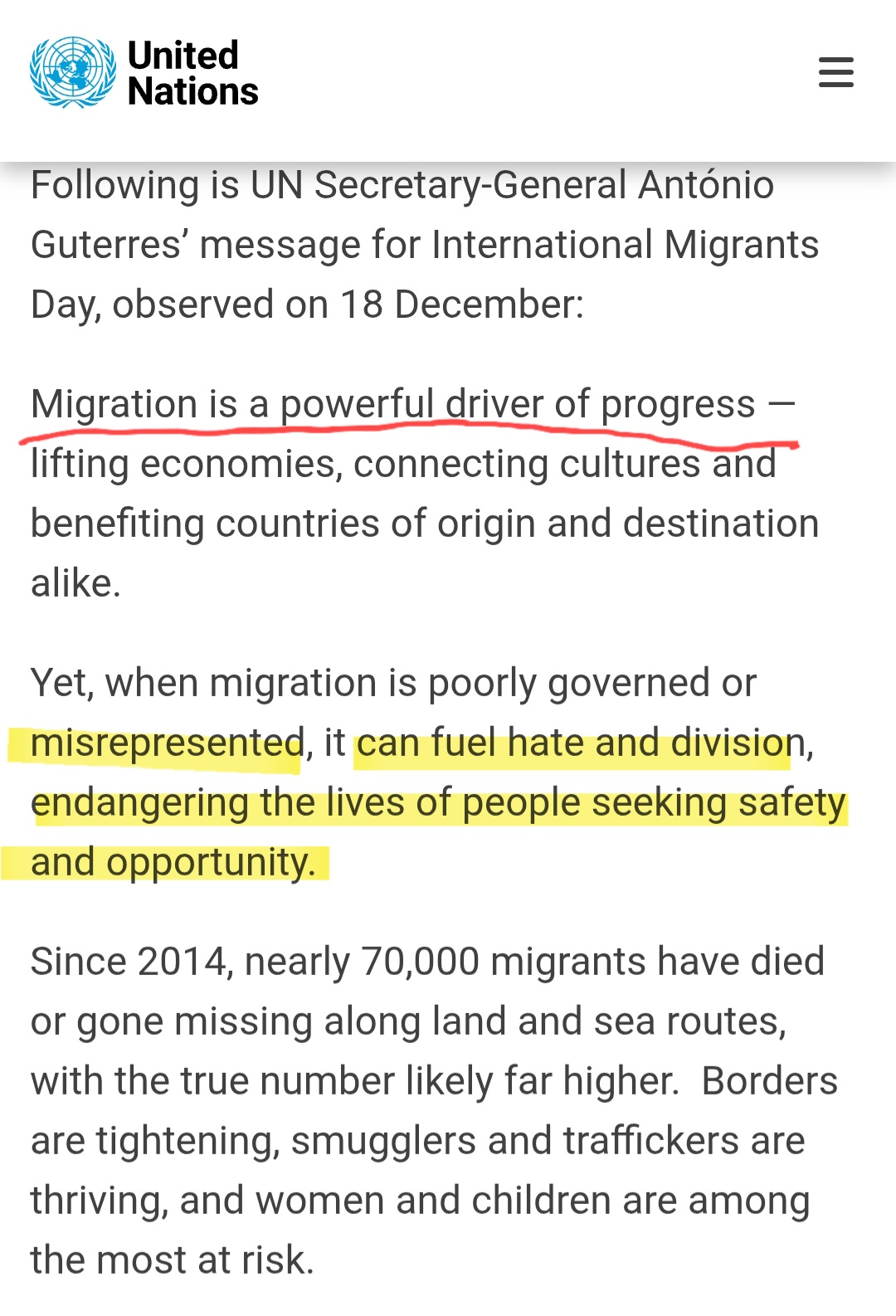
Guterres’ Dangerous Delusions

United Nations Secretary-General António Guterres has once again proven himself to be a reckless ideologue, dangerously detached from reality. In his latest remarks on July 28, 2025 regarding the Israeli-Palestinian conflict, Guterres declared that Palestinians have a “right” to a state. This is not only false, but dangerously misleading at a time when thousands of lives hang in the balance.

No group of people has an entitlement to a state. International law does not guarantee statehood to any specific ethnic or religious population. What people have is the right to self-determination, which can be fulfilled through various frameworks — including autonomy, federation, or integration with existing states. The assumption that this must culminate in Palestinian sovereignty from the river to the sea is not a legal imperative; it is a political preference, and a deadly one at that.

Guterres framed the issue as a false binary: either Palestinians get a state, or they will be condemned to expulsion or second-class status. This is a silly strawman, ignoring the obvious alternatives. Palestinians could become citizens of Jordan or Egypt — both of which administered the West Bank and Gaza, respectively, before 1967. Or they could establish a state in Gaza and in Area A of the West Bank, which is already under Palestinian control under the Oslo Accords. But they have no right to demand Israeli land, nor a capital in Jerusalem.

His reference to “East Jerusalem” as if it were a legitimate, independent entity is equally misleading. “East Jerusalem” was never a recognized capital or separate city — it was a temporary result of Transjordan’s illegal occupation between 1949 and 1967. The 1947 UN Partition Plan, which Arabs rejected with violence, never designated it for an Arab state. There is no legal basis to call Israel’s presence there “occupation.”

The most disturbing part of Guterres’ statement is his call for Hamas to be included in a unity government with fantasy notions of “we must support Palestinian unity around a peaceful, democratic and inclusive vision for statehood.” Let’s be clear: these are the same Hamas terrorists who committed mass rape, torture, and murder on October 7. This is a group with the most antisemitic and genocidal foundational charter ever written. To reward their atrocities with political power is not peacebuilding — it is moral depravity. It is the very definition of appeasement, sanitizing evil and encouraging further violence.

What kind of values is Guterres promoting when he elevates genocidal psychopaths into prospective leaders of a future state? It is not peace. It is not justice. It is not coexistence.

UNSG Antonio Guterres

Time and again, Palestinian leadership — whether Fatah or Hamas — has made its goals clear: no Israel, and no Jews. From school curricula to charters to chants in the streets, the obsession is not with borders, but with obliteration. The Secretary-General’s repeated attempts to whitewash this reality reveal either staggering ignorance or something much more nefarious.

Guterres is not a neutral peacemaker. He is actively endangering Israeli lives by proposing that Israel close its eyes to reality and pretend Hamas is a peace partner. He is fueling conflict under the guise of diplomacy and exposing the rot at the heart of the UN system.

Palestinian “Human Rights” Demands Killing Israelis

The tragic farce of modern human rights discourse reached a grotesque milestone. According to the defenders of Palestinian “human rights,” Israel should not be allowed to defend itself—even when civilians are under direct rocket fire from foes eager to destroy the Jewish State.

Francesca Albanese, the UN’s so-called “Special Rapporteur on Palestine,” brazenly declared that Israel, as an “occupying power,” has no right to self-defense. In Albanese’s warped worldview, a Jew in Israel has no right to life.

Albanese claims that Israel cannot defend itself from Hamas, the popular and dominant Palestinian political party and ruling power in Gaza.

This is policy for many. When the U.S. House of Representatives recently voted to fund Iron Dome, a purely defensive missile shield that intercepts rockets aimed at Israeli civilians, a coalition of radicals opposed it. Reps. Rashida Tlaib, Ilhan Omar, and Marjorie Taylor Greene— antisemitic-bedfellows —voted against the funding.

When Rep. Alexandria Ocasio-Cortez voted for the funding, the backlash from anti-Israel radicals was immediate. Vandals defaced her headquarters. They threatened her life. “How dare she support saving Jewish lives?” was the clear message, sprayed in graffiti.

Alexandria Ocasio-Cortez office vandalized after voting to fund Israel’s missile defense system

At Rutgers University, Noura Erakat, a Palestinian professor decried Iron Dome, essentially arguing that protecting Israeli civilians is an act of war. The Democratic Socialists of America demanded that Israel be isolated while defending itself in a multifront war. And many echoed the ridiculous claim that it is unjust for Israelis to have bomb shelters when Gazans do not—ignoring that Hamas has built hundreds of kilometers of military tunnels, used exclusively to shield terrorists and smuggle weapons, while civilians are left to die on purpose, to feed propaganda.

The global double standard is grotesque: Israel must accept rocket fire, massacres, and kidnappings—and not respond. Not defend. If it does, it is called an aggressor hell-bent on genocide. No country on Earth is asked to withhold defending its citizens.

The latest iteration of perverse Palestinian “human rights” demands that Jews die quietly, with neither fight nor protest. Palestinian “dignity” demands that Arabs stand atop Jewish graves, personal and physical manifestations mirroring the Islamic mosques sitting atop the Jewish Temples. Just as the world believes Jews should be silent at their holiest site, Jews must die quietly in their holy land.

When “human rights” for a particular group demands the sacrifice of another, basic moral math needs to be applied. When the perversion infects United Nations and U.S. government officials calling to strip and bind Jews in the Middle East, the terrifying equation yields a final solution.

Related:

At the UN, Protecting Hamas Trumps Aiding Gazans

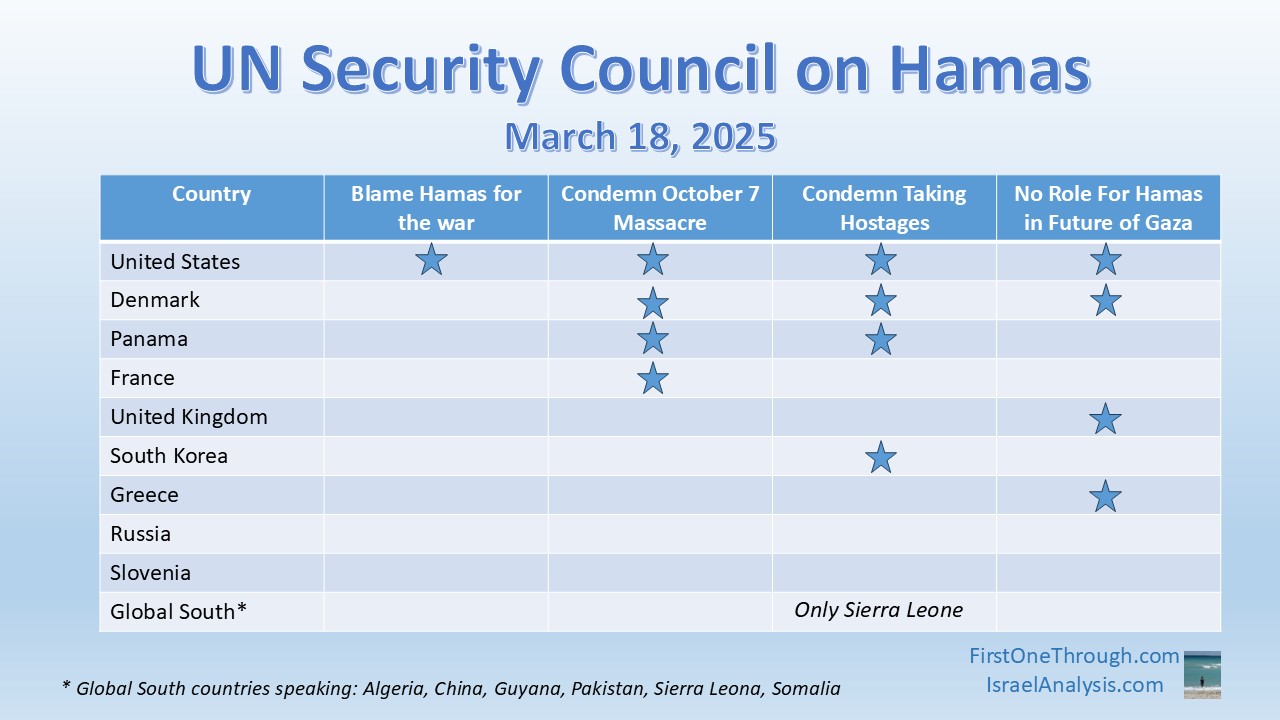
The United Nations Security Council is comprised of five permanent members (P5) and ten elected members (E10) who try to pass resolutions to promote global and regional peace and cooperation. It fails repeatedly regarding the Arab-Israeli conflict as it prioritizes protecting the political-terrorist group Hamas above all else.

On June 4, 2025, E10 put forward a draft resolution which “demand[ed] an immediate, unconditional, and permanent ceasefire in Gaza; the immediate, dignified, and unconditional release of all hostages held by Hamas and other groups; and the immediate and unconditional lifting of all restrictions on the entry of humanitarian aid into the territory.”

The acting US Representative Dorothy Shea vetoed the draft resolution saying “US opposition to this resolution should come as no surprise – it is unacceptable for what it does say, it is unacceptable for what it does not say, and it is unacceptable for the manner in which it has been advanced. The United States has been clear: we would not support any measure that fails to condemn Hamas and does not call for Hamas to disarm and leave Gaza.” She added “We cannot allow the Security Council to award Hamas’ intransigence. Hamas and other terrorists must have no future in Gaza. As Secretary [Marco] Rubio has said: ‘If an ember survives, it will spark again into a fire’.”

Knowing that the United States would use its veto right to reject the resolution, one is left with two conclusions: the rest of the Security Council wanted the US to veto the resolution, or they care more about protecting Hamas than civilians in Gaza.

Perhaps the fourteen UNSC countries want Israel to continue the war but want to placate their pro-Palestinian constituents, appearing to support Gazans while knowing that no relief would happen until Hamas is defeated. Maybe the countries want Israel and the United States to both look isolated – the “little Satan” and “Big Satan” as the Islamic Republic of Iran calls them – hoping to curry favor among the Global South, with 80% of the world’s population.

Either way, the world cannot really believe there is a genocide happening in Gaza, if the path to a ceasefire was simply adding two lines calling for Hamas to surrender.

Related articles:

A Reminder That The UN Security Council Protects Hamas (April 2025)

UNSC Makes Slow Progress In Calling Out Hamas (March 2025)

United Nations Still Will Not Call For Hamas To Face Justice (October 2024)