The Arguments over Jerusalem

Summary: In considering the arguments that Palestinian Arabs and Israeli Jews each make for Jerusalem as their capital, only one party makes a truly compelling case.

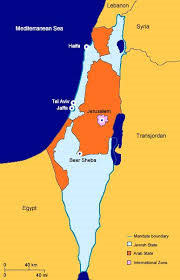
Jerusalem has long been considered the thorniest issue in the Israeli-Palestinians Question. In 1947, when the United Nations put forward a plan to partition the land into two states, it proposed placing Greater Jerusalem and Greater Bethlehem into an international zone called the “Holy Basin.” This Holy Basin would be neither part of Israel nor Palestine, to remove the sensitive region from the conflict.

1947plan jerusalem
UN 1947 Partition Plan for the “Holy Basin”
of Greater Jerusalem and Greater Bethlehem

However, as fate would have it, the partition plan was rejected by the Palestinians who then launched a war to destroy Israel in May 1948, together with armies from Transjordan, Lebanon, Syria, Egypt and Iraq. At war’s end, the Holy Basin was divided with the western half of Greater Jerusalem and Hebrew University falling under Israeli control, and Greater Bethlehem and the eastern half of Jerusalem falling under Arab control (Jordan annexed the area and granted the Palestinian Arabs there citizenship).

The Holy Basin remains an outstanding issue.  In a two-state resolution, the Israelis propose to split the Holy Basin whereby they control all of Greater Jerusalem and the Palestinians would have Greater Bethlehem; the Palestinians seek to have all of Greater Bethlehem AND the eastern half of Jerusalem as its capital, while Israel would only have the western half of Jerusalem. Which side has a better claim?


The Arguments over Jerusalem

THE HOLY BASIN

RELIGION: The sensitivity over the Holy Basin is due to the fact that it holds many holy sites for the three monotheistic religions. A short list includes:

  • The Temple Mount/ The Noble Sanctuary (Jerusalem). Jewish and Muslim
  • Al Aqsa Mosque (Jerusalem). Muslim
  • Dome of the Rock (Jerusalem). Jewish and Muslim
  • The Wailing Wall / Kotel (Jerusalem). Jewish
  • Church of the Holy Sepulchre (Jerusalem). Christian
  • Dormition Abbey (Jerusalem). Christian
  • The Old City (Jerusalem). Jewish
  • Church of the Nativity (Bethlehem). Christian
  • The Tomb of Rachel (Bethlehem). Jewish

There are many other churches, synagogues and mosques in the Holy Basin, however, these sites are considered sacred as various events are believed to have occurred at these locations. For Christians, the churches were built on the various spots where Jesus and Mary are thought to have had significant life events. For Muslims, the Al Aqsa Mosque is considered to be the place where Mohammed ascended to heaven. For Jews, the Temple Mount is not only considered to be the place of two Temples, but also the spot where Abraham brought Isaac for a sacrifice.  Of this entire list, only the Jewish Temple has any archeological evidence supporting the beliefs.

Among the three religions, Jerusalem is considered the holiest spot only for Jews. Muslims consider the Al Aqsa Mosque to be its third holiest spot (after Mecca and Medina), and the Roman Catholic Church considers the Vatican in Rome, Italy to be the holiest location.

Judaism is also unique in considering the entire Old City to be holy. While Christianity and Islam consider certain specific spots to be sacred, only Judaism considers the city as a whole.

Jerusalem: Advantage Israel
Bethlehem: Advantage None

10857261_10153336968548706_7334281522188334026_o
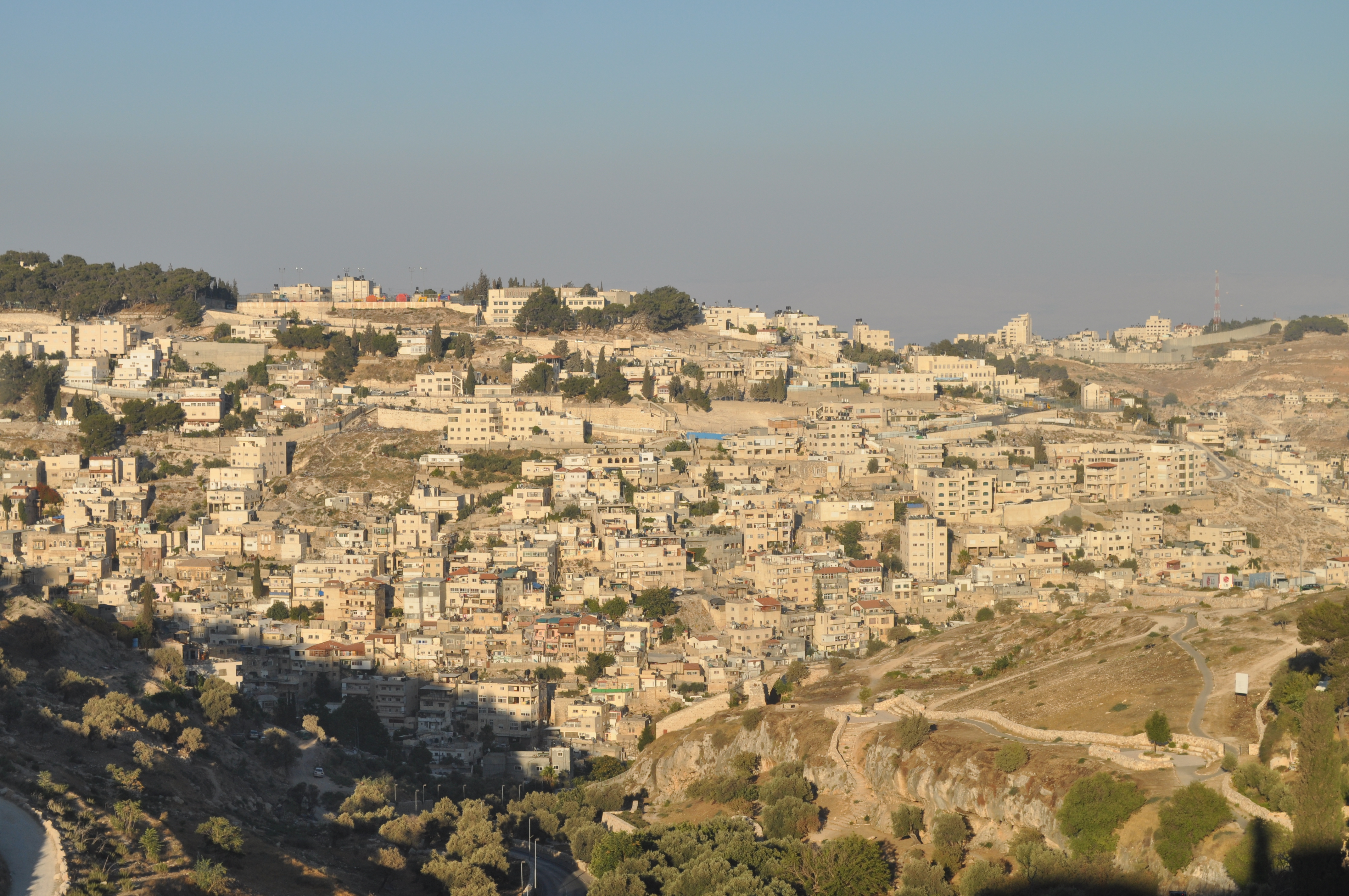
Aerial view of Old City of Jerusalem from the south

ACCESS TO HOLY PLACES: A key concern for the United Nations (UN) is that access is provided to each religion’s holy places. In this regard, the divide between the Palestinian Arabs and Israel is stark.

The Arabs only controlled Bethlehem and the eastern half of Jerusalem from 1949 to 1967, as the cities and entire region were governed by the British and Ottoman Turks (who were NOT Arabs) for hundreds of years before then. During their brief period of control, the Jordanian and Palestinian Arabs evicted all of the Jews from Jerusalem and forbade their reentry, even during religious holidays.

While Israel has controlled all of the Holy Basin since 1967, all religions have had access to all of the holy places. Not only does Israel ensure that people of all religions have access, but the country created laws ensuring their safe keeping and open access, and put their religious organizations in charge of those places – even the Islamic Waqf over the Temple Mount which Jews consider their holiest spot.  This same Islamic Waqf prohibits Jews from praying at their holiest location today.

Further, Israel has allowed other denominations to establish themselves in Jerusalem.  The government of Israel helped the Mormons build their church overlooking the Old City.  This compares to Jordan, which doesn’t even recognize the Baha’i faith today (Israel has a huge Baha’i temple in Haifa).

Advantage Israel

MAINTAINING HOLY PLACES: While access is the primary concern for the UN, maintenance of the holy spaces is important as well. When the Palestinian Arabs controlled areas such as Nablus (Shechem), they almost destroyed the Tomb of Joseph. Archaeological digs occurred on the Temple Mount unsupervised resulting in the destruction of important and sacred sites.

Conversely, Israel has made extensive efforts to maintain all of the religious sites under its control. It performs archeological digs mindful of scientific rigor while balancing religious sensitivities.

Advantage Israel

 DSC03240
The Hurva Synagogue in the Old City was destroyed by the Jordanian Arabs in 1949
(photo: FirstOneThrough)

THE CITIES AND THE PEOPLE

HISTORY: The history of the Jewish people in Jerusalem extends back 3700 years when Abraham offered Isaac as a sacrifice. It became the unified capital of Jews under King David 3000 years ago and site of two temples (954BCE-587BCE and 516BCE-70CE). Jews have always continued to live there and move there over the centuries except when they were banned during the Crusades (early 1200s) and under Arab rule (1949-1967).

Arab history in Jerusalem is more recent than for Jews. Arabs came to the region and city of Jerusalem as part of the Muslim invasion in the seventh century, roughly 2300 years after Jews.

Advantage Israel

CAPITAL: Only one people ever made and considered Jerusalem to be its capital: the Jews. Whether in ancient times or modern, Jerusalem is the capital of the Jewish people.

When Muslims ruled the region and controlled Jerusalem, they never made Jerusalem the capital. Whether under the initial Arab invasion of the seventh century, under the Mamelukes or the Ottoman Turks, or even under Jordanian Arab rule 1949-1967, Jerusalem was never the central seat of government.

Jerusalem: Advantage Israel
Bethlehem: None

CENTRALITY: There is only one country in the UN that has a national anthem that is completely about its capital: Israel.

“As long as in the heart within a Jewish soul still yearns And onward, towards the ends of the east, an eye still gazes towards Zion.

Our hope is not lost, the hope of two thousand years, To be a free people in our land, the land of Zion and Jerusalem.”

Jerusalem: Advantage Israel
Bethlehem: None

 IMG_3691
Beta Israel, Jews from Ethiopia, return to Jerusalem
(photo: FirstOneThrough)

THE PEOPLE

In considering the future of the residents of the Holy Basin, it is important to consider how the people have been treated.

CITIZENSHIP: When Israel declared statehood in 1948, it granted citizenship to 160,000 non-Jews. When it took control of the entire Holy Basin in 1967, it offered citizenship to those who requested it.

This was in stark contrast to the Jordanian and Palestinian Arabs who evicted the Jews in 1949. Today, Palestinian leadership has insisted on a new Palestinian state devoid of Jews, which is why the Palestinian Authority objects so strongly to Jews buying homes in Jerusalem.

Advantage Israel

POPULATION GROWTH: Population growth can be used as a proxy for the freedom for Arabs and Jews in the Holy Basin under the different administrations.

From 1949 to 1967, the Jewish population under Jordanian and Palestinian Arab control went from zero to zero. The Jews were evicted from eastern Jerusalem and were not allowed to return. However, the Jewish population in the western part of Jerusalem nearly doubled (+98%). Over the same time period, the Arab population under both Israeli (the Israelis gave Arabs citizenship in their half of Jerusalem) and Jordanian control grew by 72%. Jewish growth outpaced Arab growth, even though Jews were only able to live in half of the city.

After reunification of the city in 1967 until 2005, the population trends changed. Jewish growth throughout the city grew by 196%, while Arab growth grew by 315%. Overall, the city grew at a compounded growth rate of 3.1% compared to the divided city which only grew at 2.4%.

  • Under Arab control, Jews were expunged from the area; but under Israeli control, Arab growth rate surpassed Jews’. Arabs performed ethnic cleansing while Jews encouraged diversity.
  • Under a constrained Jewish situation from 1946-1967 while there was no access to eastern Jerusalem, Jewish growth outpaced an unconstrained Arab dynamic. Jewish demand to live in Jerusalem outpaced Arab interest.
  • Under Israeli sovereignty, the city grew faster than under Arab control.

Under Israel, the city did better, the Arabs did better and the Jews did better.

Advantage Israel

POPULATION: Jews have been the dominant religious group in Jerusalem since the 1860s. Even at the start of World War I, when Jews accounted for only 8% of Palestine, they accounted for 64% of the population of Jerusalem.

Today, Jews continue to be a majority of Jerusalem, despite the Arab growth accelerating in Jerusalem under Israeli control (up to 3.8% CAGR from 2.6%). Jews account for roughly 69% of the city’s population overall, and 39% in the eastern part of the city.  The eastern part contains some of the largest Jewish neighborhoods (Pisgat Ze’ev) and is home to Hebrew University (established in 1925).

Advantage Israel

DSC_1067
View from Hebrew University
(photo: FirstOneThrough)

LONG TERM VIABILITY

Any final agreement between the Israelis and Palestinian Arabs must not simply focus on being fair, but be sustainable.

SECURITY: No capital city sits on the border of another country. To have the seat of government sit adjacent to a foreign country risks the viability of the state. In the case of Israel, the situation is even more sensitive than for other countries:

  • The countries adjacent to Israel have repeatedly attacked it
  • Those same countries continue to challenge the basic right of Israel to even exist
  • The main political party (Hamas) of the proposed country has a charter repeatedly calling for Israel’s complete destruction
  • Jerusalem sits on hills, making it even more vulnerable if the city would be divided, but significantly safer, if all of the hills and access roads remained within Israel

Jerusalem: Advantage Israel
Bethlehem: None

HISTORY OF DIVIDED CITIES: Fewer than 1/1000th of 1% of cities and towns in the world are divided. Those handful of towns that are split between two countries are typically very small and have a natural geological separator like a river dividing the city.  None of those factors apply to Jerusalem.

Divided capitals are even more rare, and history shows that they are unsustainable.  Recent examples include: Beirut, Lebanon; Berlin, Germany; Jerusalem and Nicosia, Cyprus.

Beirut and Berlin were divided by war for a few decades, and both have been reunified in peace.  Nicosia has continued to be split along with the rest of Cyprus, and ongoing peace talks since 1974 have attempted to reunite the city – not divide it.

Advantage Israel

OFFENSIVE-DEFENSIVE PARTIES: In the San Remo Resolution of 1920, the League of Nations (precursor to the UN) recognized the right of Jews to return to their homeland in the holy land. However, the Palestinian Arabs launched major riots against the Jews, most notably in 1929 and 1936-9 which made the British start to move Jews out of their homes in certain cities (such as Hebron).

When the UN developed various proposals over the years 1937-1947 to divide the land, the Israeli Jews said yes while the Arabs consistently said no. The Arab position was to control all of the land including Jerusalem with no land for Jewish control.

As part of their efforts, the Arabs launched a war to destroy all of Israel in 1948, and then again in 1967. The Arabs lost both wars, and the incremental land Israel acquired in each of those wars were from defensive actions.

In total, Israel’s land was acquired initially from the world’s recognition of the historic rights of Jews to the holy land, together with defensive wars.

Conversely, all of the Arab land was acquired through fighting the UN mandate and launching wars.

In regard to the Holy Basin specifically, both Israel and the Jordanian and Palestinian Arabs took sections of the city during the Arab war against Israel in 1948-9, that the UN had proposed to keep under international control. As such, the UN did not recognize either country’s seizure of parts of the city. When Israel took the eastern half of Jerusalem along with Bethlehem in 1967, the UN continued to withhold recognition.

Countries around the world did not recognize Israel’s western Jerusalem in 1949 nor the capture of eastern Jerusalem in 1967, so they have never moved their embassies to the city. Their refusal to recognize Jerusalem as Israel’s capital (or Jordan’s) is from 1949, NOT because of Israel’s reunification of the city in 1967.

Advantage Neither
Slight preference for Israel due to defensive nature of acquisitions

CONCLUSION

By almost every measure, Israel should maintain control of all of Jerusalem as well as additional territory to the east to control the hills and access roads to the capital.  The Palestinians could have control of half of the Holy Basin – Bethlehem – which was handed to Palestinian Authority control in 1996 by Israeli Prime Minister Benjamin Netanyahu.

There is one last reason which underscores the complete logic of Israel maintaining complete sovereignty of all of Jerusalem: it is the heart of the home of the Jewish people.  While there are 57 Islamic countries and dozens of Arab countries, there is only one Jewish State, and it has always had one capital: Jerusalem.

 IMG_1263
The Israeli flag at the Kotel
(photo: FirstOneThrough)

 Text from first half of Israel’s Basic Law declaring Jerusalem as it’s capital:

1. Jerusalem, complete and united, is the capital of Israel.
2. Jerusalem is the seat of the President of the State, the Knesset, the Government and the Supreme Court.
3. The Holy Places shall be protected from desecration and any other violation and from anything likely to violate the freedom of access of the members of the different religions to the places sacred to them or their feelings towards those places.

Related First One Through articles:

The United Nations and Holy Sites in the Holy Land

The Waqf and the Temple Mount

The anthem of Israel is JERUSALEM

A Review of Divided Capitals

“East Jerusalem” – the 0.5% Molehill

Israel: Security in a Small Country

A “Viable” Palestinian State

Israel, the Liberal Country of the Middle East

The “Unclean” Jew in the Crosshairs

Summary: Antisemites calling Jews “unclean” is their first step towards calling for purifying them from the world. How should the world respond?

There have been a number of political leaders who have called Jews “unclean”:

  • Adolf Hitler’s Mein Kampf (1925): “The moral and physical cleanliness of this race [Jews] was a point in itself. It was externally apparent that these were not water-loving people, and unfortunately one could frequently tell that even with eyes closed. Later the smell of these caftan wearers often made me ill. Added to this were their dirty clothes and their none too heroic appearance. 
  • Hamas Charter (1988):The basic structure of the Islamic Resistance Movement consists of Moslems who have given their allegiance to Allah whom they truly worship, – “I have created the jinn and humans only for the purpose of worshipping” – who know their duty towards themselves, their families and country. In all that, they fear Allah and raise the banner of Jihad in the face of the oppressors, so that they would rid the land and the people [Jews] of their uncleanliness, vileness and evils.”
  • Iran’s Supreme Leader Ayatollah Ali Khamenei (2013):Israeli regime, this sinister, unclean rabid dog of the region
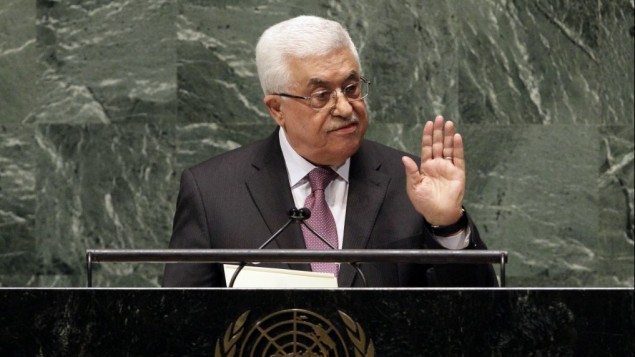
  • Acting Palestinian Authority President Mahmoud Abbas (2014): “Keep the settlers and the extremists away from Al-Aqsa and our holy places. We will not allow our holy places to be contaminated.

iran-khamenei-adl-israel-rabid-dog

It did not take long for these leaders and parties to move from their initial anti-Semitic positions, to calls to eradicate the Jews:

  • Hitler’s Nazi party gradually stripped Jews of their citizenship in the early and mid-1930’s once the gained power, pushed them into ghettoes and work camps by late 1930’s and began their annihilation by the early 1940’s.
  • Hamas called for the murder of Jews and destruction of Israel in the very same 1988 charter: “rid the land and the people [Jews]“, “there is a Jew behind me, come and kill him” and “Israel, Judaism and Jews challenge Islam and the Moslem people.”  The Palestinian people voted for Hamas into 58% of the Parliament in 2006.
  • Iran’s leader was quite clear in 2014: “This barbaric, wolflike & infanticidal regime of which spares no crime has no cure but to be annihilated
  • The Fatah party of the Palestinians was led by Yasser Arafat who said: “We will not bend or fail until the blood of every last Jew from the youngest child to the oldest elder is spilt to redeem our land!”” His successor, Mahmoud Abbas declared In a final resolution, we would not see the presence of a single Israeli – civilian or soldier – on our lands.

One can call Abbas a “moderate” in comparison to those around him in that he has not openly called for killing Israelis (he prefers the indirect method of honoring and celebrating those that do kill Israelis).

President Obama commented about ISIS (2014) that “the world must never cease in seeking to defeat their evil ideology.” Such evil ideology is the open platform in the Iranian and Palestinian leadership.

As Obama is actively engaged in dialogue and negotiations with both of those parties, does he think

  • that the Iranian and Palestinian platforms are not “evil ideologies
  • that they are exceptions that do not need to be defeated, or
  • his process of negotiation and placating them is a method of “defeating” them?

Related FirstOneThrough articles:

The Palestinians War Against the Jews

Palestinian anti-Semitism surpasses Nazi Germany

Before recognizing a Palestinian State, Recognize what the Palestinians are saying

Cause and Effect: Making Gaza

Summary: The media frequently touches on the suffering that takes place in Gaza. Yet, the depth of their coverage of Arab misery never approaches any level of analysis on the root cause for the Israeli-Arab conflict.


The Atlantic published an article on May 2, 2015 called “Gaza is Hell” (all in quotes) which described the miserable living conditions of Arabs living in Gaza. The 2000-word article covered the area and quoted the residents, but never scratched the surface of the underlying cause of the residents’ misery.

atlanticmay2
The Atlantic magazine,
May 2015

The problem in the coverage was in five key areas, long ignored by the media and politicians.

  1. Hamas isn’t “resisting” Israel. It wants to destroy Israel.
  2. Palestinian Arabs never ruled Gaza until 2005.
  3. Israel’s wars with Gaza have all been defensive.
  4. There are no “refugees” in Gaza.
  5. Much of the Gazan misery is self-inflicted.

The Atlantic article did not fall victim to a sixth category, which is actually a subset of lie #5: Hamas is the democratically-elected choice of Palestinian Arabs.

 HAMAS’S MISSION

Hamas’ mission is very clear for any literate individual: the complete destruction of Israel. It lays out its goal repeatedly in its 1988 Charter, the most antisemitic charter of any governing body in the world, including the Nazi party when it took power in 1933.

For those who cannot read (former US President Jimmy Carter?) there are dozens of recent videos from Hamas officials which call for the murder of Jews and destruction of Israel.

Yet, The Atlantic echoes soft lies in its piece stating that “Hamas’s rhetoric is all about resistance,” and “Hamas advocates militant resistance to Israel.” Nope. Resistance means opposing a force. Hamas is the force that seeks jihad and the total destruction of Israel. Any statement that says that Hamas is a resistance movement, inherently makes the argument that the basic existence of the State of Israel is an active force against Palestinians.

GAZA’S FIRST INDEPENDENCE and
ISRAEL’S DEFENSIVE WARS

The mutant siblings of lie #1 that Gazans are “resisting” Israel, are lie #2, that Palestinians have always been self-governing in a country of their own, and lie #3, that Gazans just want to live in peace alongside Israel but Israel continues to attack it.

Alice Su, the author of The Atlantic article is based in Jordan, a country that is over 50% Palestinian Arab. That country, like Gaza, was part of the 1922 British Mandate from the League of Nations. Before the British ruled Gaza, the Ottoman Turks were in charge, and after the British came the Egyptians. None of these rulers made it into Su’s description which starts a historical background of Gaza in 1967: “Gaza, which was under Israeli occupation from 1967 until 2005”. With some additional background, it would have been clear to any reader that Gaza was never ruled by local Arabs (the Ottomans were Muslims but not Arabs), and it has only been since Israel left the territory in 2005 that Gazans have ruled over themselves.

Additionally, the various wars that Israel fought against the Arabs including 1948 and 1967 were defensive wars against several Arab countries (including the Arabs in Gaza). The more recent wars from Gaza were also defensive, in response to Hamas’s rocket attacks, terror tunnels and abduction and murder of Israeli teenagers. Yet Su stated that “Israel has also launched three military operations in Gaza since the Hamas takeover,” which suggested that Israel was the aggressor, which it was not.

Arab amnesia repeats itself today, as Su writes about a Gazan: “They keep asking him why the Israelis bombed them. “I tell them, ‘Naseeb. This is our fate,’”  The Gazan assumed a completely passive stance in the conflict and Su did not educate the reader about: the abduction and murder of three Israeli teenagers; the rockets fired from Gaza into Israel; and the terror tunnels Hamas dug into Israel to kidnap Israelis.

It was only eight paragraphs later that Su brought up the tunnels: “Israel has restricted imports of key building materials like cement and steel, out of concern that they’ll be used to build tunnels and facilitate terrorist activity.”  Such concern looks out-of-place without any history regarding the Hamas tunnels which were used for terrorist activities.  The Israeli ground invasion into Gaza in 2014 was specifically to destroy those tunnels.

To underscore the point of misdirecting the reader, consider the title of the Atlantic article.  It comes from a resident of Gaza. ““Gaza is hell,” 20-year-old Ahmad told me in Shejaiya, one of the worst-hit neighborhoods in Gaza City.”

Shejaiya was the neighborhood with the greatest number of terror tunnels, many coming straight from people’s homes. That is why the Israelis concentrated its efforts on the neighborhood in a defensive action.

Why did The Atlantic run an article with a headline quote from a man who was part of the terrorist infrastructure?  Why did it deliberately mislead readers into thinking these people were merely passive homeowners who were bombed indiscriminately by Israel?

REFUGEES IN THEIR HOME

Su’s article describes refugees and refugee camps in Gaza. Now that Gaza is not occupied by Israel, Egypt, the British or anyone else, these people cannot be considered “refugees” since these “Palestinian Arabs” are living in “Palestine” run by themselves.

The refugee myth has continued to compound itself as this misnomer is incorrect on additional levels.  Refugee status cannot be handed down like inheritance through the generations.  Refugees can only be from a country, not a house or region.

At the most generous, these people can be considered descendants of “internally displaced” people from the region of Palestine which was occupied for centuries until 2005. Yet Su used the term refugee several times:

“a refugee camp initially built to shelter 9,000 out of the 750,000 Palestinians who became refugees when Israel was established in 1948. More than half a century later, the camp hosts more than 21,000 refugees,”

The description above elegantly covers many soft lies: the ones mentioned above, and that Arabs became refugees when they actively launched a war to destroy Israel; they were not passive “when Israel was established in 1948.

SELF-INFLICTED MISERY

Su did get several things right, such as “Gaza remains in ruins.” But why?

Su pointed out that “Hamas, the Islamic militant group that governs Gaza… since the organization defeated the PLO-affiliated Fatah party in Palestinian elections in 2006.” Hamas was chosen by the Palestinians in 2006 and polls continue to show Palestinians favoring Hamas should elections ever be held again. The various quotes of Arabs on the street in Su’s article affirm that view: “Another college student said she’d lost faith in politics, but would vote for Hamas if an election were held now.”

Yet Su would have you believe that Gazans are simply passive victims in the situation. That position is encapsulated in her article: “Those who survived last summer’s war are trapped in 360 square kilometers of trauma and contradiction, choking on war and blockade, disillusioned with the Palestinian leadership and disempowered by the aid communityThey sit without jobs, relief, or means of rebuilding, waiting for things to change.” Untrue.

  • The Palestinians voted for Hamas, well aware of its charter and calls to destroy Israel. The fact that Palestinians are “disillusioned” with their leadership is only because Hamas hasn’t been successful in their genocidal mission.
  • The phrase “disempowered by the aid community” is strange but Su’s meaning becomes clear when she later writes that foreign aid is slow in coming “because donors are put off by the political deadlock between Palestinian parties.”  A Lie. The aid is being held up until there are guarantees that Hamas will not have access to the funds as it is a terrorist organization.

The catalyst for war is Hamas.

  • If Gazans would turn away from Hamas, there would be no blockade.
  • If Gazans did not allow Hamas to build terror tunnels in their houses, the neighborhood would not get demolished.
  • If Hamas were disbanded and outlawed, foreign aid would flow into Gaza for rebuilding.
  • If Hamas would not attack Israel, there would be peace.

The simple cause-and-effect of the situation in Gaza is about the people’s support of a genocidal anti-Semitic regime.  But writing about such reality would make it harder to sympathize with the picture laid before readers in The Atlantic.

Scarier still, is the support for the insidious paring: Hamas with a nuclear Iran. That is what keeps the hopes of Gazans alive under the shade of complicit countries and malevolent media.


Related FirstOneThrough article:

The Death of Civilians; the Three Shades of Sorrow

Actions and Adjectives: Cluster Bombs

Summary: When it comes to reporting on the death of civilians, it is interesting to review how and when some media outlets choose to simply report facts, rather than delve into critical reporting. Here is a comparison of the New York Times discussion of cluster bombs being used by Syria and the Kingdom of Saudi Arabia (KSA). Remarkably, the party that is lambasted the most in the articles is Israel.

 Actions and Adjectives

The “Actions and Adjectives” series discusses the media’s use of language. Oftentimes, the press chooses to be fairly clinical in describing a situation, while at other times, it chooses to direct (or redirect) the conversation in a particular fashion.

For an example, an article can have different ways of describing a car crash:

  1. “Three people died in a car crash,” is purely factual.
  2. “Three people were killed in a car crash when a teenager crashed his car into oncoming traffic,” provides more color about the incident, giving an account of how the crash happened.
  3. “Three innocent people were killed when an irate teenager plowed his car into oncoming traffic after the teen had a big fight with his girlfriend,” takes the article to an entirely different place.

While all of the sentences are factual, the third description does two significant things:

  • It gets the reader to be more engaged- “innocent people were killed” by an “irate teenager,” phraseology gets the reader more excited and angry.
  • Further, the conversation moves the reader away from the victims, towards the driver. The reader is intentionally led towards possible motivation and background which caused the incident. Most likely, a more detailed description of the driver and his relationship would follow in the article. Should the balance of the article focus on teenage relationships, the headline would unlikely be about the car crash; the accident was there solely as a tool to delve into the main focus, which in this example, is the potential danger and ramifications of teenage love.

With that general overview about word choice and focus, consider the New York Times description of the use cluster bombs by Syria and Saudi Arabia.

Cluster Bombs Used by Saudi Arabia

On May 3, 2015, the New York Times published a piece entitled “Saudi-led Group Said to Use Cluster Bombs in Yemen“. The 14 -paragraph article showed up at the bottom of page 10 and discussed a report by the Human Rights Watch (HRW) which concluded that Saudi Arabia used cluster bombs on at least two occasions. No casualty figures were supplied.

Saudi Arabia cluster bombs

The article made clear that “cluster munitions, which are banned by much of the world, though not by the United States, Saudi Arabia or Yemen,… pose a long-term danger to civilians because of the unexploded bomblets they leave behind.” The article included a single condemnation of KSA for its use of the weapons: “Saudi Arabia has come under growing international criticism for the high civilian death toll during its aerial campaign, which has been carried out over more than five weeks alongside a coalition of Arab states and with intelligence and logistical support from the United States. More than 1,000 people have been killed in fighting since late March, when Saudis said their military was intervening to roll back gains by the Houthis, a Shiite rebel group that had captured large parts of Yemen and forced the president, supported by Saudi Arabia, into exile.

These sentences may look unremarkable on their own, but consider what was actually written and the direction of the article as a whole:

  • It was clear that the parties that engaged in the use of the cluster bombs had not signed onto the treaty barring their usage
  • The “unexploded bomblets” were left behind by the cluster bombs, not by the Saudis which were a step removed
  • KSA was portrayed in a negative manner only a single time in the article: “growing international criticism
  • The aerial campaign was described as having wide support from a “coalition” which included “support from the United States”
  • A rationale was given for the KSA military attack- to “roll back” a “rebel group

The article stayed roughly true to the HRW report. This was in very stark comparison to an article in the New York Times published on August 28, 2014 called “Heavy Use of Banned Cluster Bombs Reported in Syria”

Cluster Bombs Used by Syria

In September, FirstOneThrough wrote a detailed analysis of the August 2014 article which outlined how the story about Syria’s use of cluster bombs ended up becoming harsh a critique of Israel. Below is some added comparisons to this week’s NYT article.

The 2014 article had a single negative comment for Syria’s use of cluster bombs, attributed to a HRW lawyer: “This year’s use of cluster munitions shows that while these weapons have been banned by most countries of the world, some actors still flout international opinion and standards,” Mary Wareham, the advocacy director of Human Rights Watch’s arms division,” in a statement that did not specifically mention Syria.

However, the Times did heap condemnation many times upon Israel, even though it was presumably not the focus of the article.  The author, Rick Gladstone, redirected the timely article about Syria towards Israel’s use of the cluster bombs eight years earlier.

 “Israel-Lebanon conflict that triggered global outrage and contributed to the establishment of the ban convention. Israel’s military was widely criticized at home and abroad for its heavy cluster-bomb use in Lebanon,”

Gladstone’s 16-paragraph article mentioned Israel in six of the paragraphs. In almost each case, Israel was lambasted.

  • In the 2015 article, KSA had “growing international criticism” while in 2014, Israel had “global outrage” and was “widely criticized” and many other uses of such critical language for Israel, including “insane and monstrous”  and “completely immoral.” Syria was not condemned by name.
  • In 2015, KSA fought against “the Houthis, a Shiite rebel group,”  However, in the 2014 article, Hezbollah, a Shiite army that is considered a terrorist group by the United States, was mentioned only once while “Israel-Lebanon” was used repeatedly.
  • The 2015 article articulated the reason KSA waged its aerial campaign; the 2014 article did not describe Hezbollah’s firing rockets into Israel and blowing up military vehicles which initiated the war.


As evidenced in this week’s KSA article on cluster bombs, the Times can write an article about the current news when it desires. It has also shown that it is deft at inflaming passion and redirecting an article towards Israel, as it did in August 27, 2014.  Why did the New York Times report on cluster bombs in such a different manner?

In August 2014, Israel and Hamas had just ended a bloody war in which the New York Times covered Israel as an evil, murderous aggressor against civilians.  The story of cluster bombs in Syria served as an excuse to continue to portray Israel as indifferent to the lives of civilians in a war.  The choice of critical adjectives and adverbs such as “insane,”  “monstrous” and “immoral” for Israel were meant as permanent monikers.

Other questions arise when reviewing the two cluster bomb -articles:

  • Why does the New York Times goes out of its way to portray Saudi Arabia as an ally of the United States that receives “support” but does not do the same for Israel?
  • Why was the United States’ usage of cluster bombs in 2009 buried at the bottom of the 2015 article, and the thousands that the US dropped in Vietnam mentioned in passing in the 2014 article?

Articles do not just convey facts. They tell a story that the editors want you to follow and believe. What do you believe?


Related First One Through articles:

Every Picture Tells a Story- Whitewashing the World (except Israel) 

New York Times Talking Turkey


International-Domestic Abuse: Obama and Netanyahu

Summary: The relationship between Israel and the United States is not one between peers. While the United States is a super-power that protects Israel in many ways, Obama’s use of its dominant position has led to an abusive relationship based on control.


In an ideal relationship, parties treat each other with mutual respect and care. Close and special relationships, such as marriage, are especially intimate due to their exclusive nature. When such a relationship turns, and one party chooses to assert control over the other, that physical or psychological trauma is referred to as “domestic abuse.”

DOMESTIC ABUSE

Domestic abuse is a phenomenon that has a long sad history. It typically happens when a husband/boyfriend uses his power (money or physical size) to intimidate and harm his partner. As described in a blog:

Domestic violence and abuse are used for one purpose and one purpose only: to gain and maintain total control over you. An abuser doesn’t “play fair.” Abusers use fear, guilt, shame, and intimidation to wear you down and keep you under his or her thumb. Your abuser may also threaten you, hurt you, or hurt those around you.”

The aspect of control through intimidation is a key component of domestic abuse. One party is effectively threatened to comply with the wishes of the dominant party. The independent will is crushed with the threats of or actual violence (active or passive) or from withholding a needed or cherished item. The abused partner has nowhere to turn, as it is reliant on the abuser.

The dynamic can be seen between countries as well. The historic special relationship between the United States and Israel, has devolved into such an abusive relationship.

Intimacy

The bond between the US and Israel is unique in many respects.

The relationship is not just one of shared values, but Israel relies on the US in several key areas:

  • Trade: The US is Israel’s largest export partner (over 2.5x number two UK)
  • Military edge: The US gives Israel $3 billion of military aid each year
  • Protection at the UN: The US protects Israel at the United Nations Security Council, often as the sole vote to protect the country from condemnation

The three aspects of Israel’s heavy reliance on the United States have come under pressure over the last few years: the BDS movement (boycott, divestment and sanctions) has attempted to hurt trade; a nuclear Iran would create an imbalance for Israel’s security; and the protective US shield at the United Nations is being threatened.

obama scorn bibi

OBAMA-NETANYAHU
INTERNATIONAL-DOMESTIC ABUSE

A natural relationship built on shared values, now more closely resembles an abuser-victim dynamic, as Obama increasingly asserted his powerful influence over Israel:

  • In 2010, Obama gave Netanyahu a series of demands to get the Israel-Palestinian talks moving including freezing settlements. Obama walked out of the meeting and left Netanyahu to stew. Israeli newspapers described the shame and weakness of Netanyahu. Netanyahu complied with Obama’s demand.
  • In 2011, French President Nicolas Sarkozy and Obama had an exchange where they called Netanyahu “a liar” and terrible person with whom to deal.
  • In 2012, the Obama administration removed all of the supporting clauses for Israeli positions from the Democratic platform that had been there for years (Hamas is a terrorist state; Palestinian “refugees” would be relocated to Palestine, not Israel; future borders would not follow the 1949 Armistice Lines; Jerusalem is the united capital of Israel).
  • In 2013, while Iran threatened to destroy Israel, Obama entered into negotiations with the Iranians, preventing Israel from taking any actions against Iran’s nuclear program.
  • In 2013, Obama declined the invitation to address the Israeli Knesset. Instead he addressed a group of students at the same time stating his desire to speak to the Israeli people, as if the democratically elected parliament was not representative of Israelis. Consider the depth of the insult to Israel, as Obama spoke to the Egyptian parliament (in 2009) as representatives of Egypt.
  • In 2013 the Obama administration demanded Israel release Palestinian terrorists convicted of murder. Nothing was asked from the Palestinians. Netanyahu complied.
  • In 2014, when Israeli three teenagers were killed, Obama asked Israel to act with “restraint.” However, when two American journalists were killed by ISIS, Obama went to war.
  • In 2014, members of the Obama administration chose to disparage Netanyahu, calling him a “chickensh*t
  • In 2015, Obama snubbed Netanyahu at his address to a joint session of Congress, and got 58 Democratic members of Congress to walk out as well.
  • In 2015, Obama is enabling Iran to become a nuclear state. Iran has repeatedly threatened to destroy Israel, and Obama has refused to sell Israel the required defensive weaponry such as bunker busters.
  • Most recently, Obama has threatened to withhold his United Nations vote to protect Israel.

The last two actions taken by Obama are particularly frightening to Israel’s Netanyahu.

Nuclear Iran: Enabling Iran to obtain nuclear weapons is a direct existential threat to Israel. Iran has threatened to destroy Israel and has a long history of supporting terrorist groups that attack Israel (Hezbollah and Hamas) with weapons and financing. With the government of Iran obtaining nuclear weapons, the country becomes an existential threat, its proxy armies become an enormous threat, and the ability for Israel to attack Iran is significantly weakened.

Further, Iran becoming a nuclear state would create an arms race in the region, as other enemies of Israel like Saudi Arabia will also seek to obtain nuclear weapons.

Withholding UN vote: The United States has used its vote on the United Nations Security Council to protect Israel from a wide range of actions including premature Palestinian statehood and harsh economic sanctions.  If Obama follows through with this threat to move away from Israel, Israel would come under tremendous financial and security pressure.

CONGRESS TO ISRAEL’S RESCUE

Congress has taken note of the terrible trend in Obama’s actions and has taken steps to protect Israel.

netanyahu-graham
Senator Lindsay Graham with Israeli PM Netanyahu

In April 2015, the Senate passed a bill making it difficult for any company to do business with a company or country that supported BDS of Israel.

Republican Speaker of the House, John Boehner invited Netanyahu to address Congress about the Iran nuclear negotiations. That speech launched the momentum for a role for Congress in the Iranian nuclear program negotiations.

It is difficult for Congress to take direct actions against the president’s policies at the United Nations, as he controls the vote. However, Congress controls funding of the United Nations as well as the Palestinian Authority. Senator Lindsay Graham has stated his intention to use the power of the purse to prevent unilateral UN actions against Israel. “Any effort by the French, the Jordanians or anyone to avoid direct negotiations between the Israelis and the Palestinians over the peace process, anyone who tries to take this [resolution] to the U.N. Security Council, there will be a violent backlash by the Congress that could include suspending funding to the United Nations,” Graham said.

All three issues on which Israel relies on the United States are under threat by Obama, and only the US Congress is attempting to ameliorate the situation.


If Israel’s neighbors did not threaten to destroy the country both directly and indirectly, perhaps Israel would not feel alarmed.

If Israel were not surrounded by an Arab winter inferno, perhaps its fears would not be so immediate.

If Israel had many allies in the world, perhaps the abusive relationship between Obama and Netanyahu would not be as upsetting and painful.

However, the realities are different.  As such, Netanyahu has turned to Congress to become Israel’s domestic violence hotline .  What a sad state of affairs.


Related First One Through articles:

Israel is a Small Country

Israel cannot afford to be smug about its security

Obama not concerned about timeliness of Israel’s security

Every Picture Tells a Story- Whitewashing the World (except Israel)

Summary: The New York Times continued to minimize pictures of attacks on civilians and assassinations around the world by burying small pictures deep inside its paper. The precious front page ink was only reserved for portrayals of Israel as the aggressor.


The Every Picture Tells a Story series reviewed media’s deliberate use of pictures to tell a story to its readers. It is a story that conveyed Israel committing gross atrocities, uniquely in the world:

  • Every Picture Tells a Story, Don’t it?” reviewed the New York Times’ use (and lack) of pictures of the three murdered Israeli teenagers in the summer of 2014 on the front page of its newspaper, while showing the Arab family whose son was killed.
  • Every Picture Tells a Story, the Bibi Monster reviewed how the NYT showed a large color picture of a Palestinian Arab teenager injured by Israeli police on its front page, while small pictures of mass murders in Kenya, Uganda and Yemen were found inside the paper. Further, pictures of Israeli PM Netanyahu repeatedly showed up next to pictures of injured Arabs, while no member of the Palestinian Authority or Hamas ever made it to the front pages during the entire Operation Protective Edge.
  • The New York Times Buried Pictures analyzed the puzzling lack of exposure of the Hamas terror tunnels from Gaza into Israel, which were the primary reasons for the Israeli ground offensive into Gaza.
  • The New York Times 2014 Picture of the Year wrapped up these observations, noting that the New York Times used large color photographs on its cover page of injured Palestinian Arabs repeatedly – on July 11, 14, 17, 21, 22, 24 and 29 – while continuing to hide pictures of Palestinian Arab aggression, and attacks in conflicts around the world.

THE WORLD

The Times continued preference for ignoring mass killings and assassinations in the world continued into 2015.

During a week of April 2015, world governments and terrorists killed hundreds of people. Not one incident merited a front page picture in the Times:

These articles were found buried in the paper. The associated pictures were relatively small and several were in black and white. No picture showed the victims injured or hurt.

This is not a new phenomenon. The Times often minimizes attacks that occur in the MENA (Middle East/ North Africa) region.  The exception to the rule, is if Israel is the attacker.

ISRAEL

Natan Sharansky, a famous Jewish refusenik who was jailed in Russia for trying to move to Israel, developed a three part “3D test” to determine anti-Semitism: Double standards; Demonization; and Delegitimization. Many liberals disagree with this approach and feel that double standards do not convey anti-Semitism. The liberal argument is that Israel should not be held to the same standards as Yemen, Iran, Iraq, Kenya, Saudi Arabia and the many countries in the Middle East, let alone terrorist groups like ISIS and al-Shabab. As Israel is a modern progressive country, the standards should be more akin to the USA or Western Europe. But that argument falls flat in general, and in particular, regarding the New York Times coverage of Israel.

DOUBLE STANDARDS

First, the situations are not remotely comparable. The US and Western Europe do not sit in the middle of the Middle East, surrounded by a combination of: war; terrorist groups operating freely; countries and entities that threaten to destroy their countries; and constant attacks on its citizens. It is easy to be judgmental while lunching in Luxembourg. However, Israel is forced to fight and defend itself repeatedly because of the volatile neighborhood and hostile attitude of its neighbors.

Second, the New York Times uses a double standard for the US and its allies. The paper does not treat the war effort of the US and Europe which have opted to fight battles thousands of miles from their borders, in the same manner as Israel fighting to defend itself. The NYT never posted a picture of President Obama next to the victims of a drone strike (which the president actually authorized) as it does with PM Netanyahu (for general military actions). It does not show pictures of civilians killed by US troops. It minimizes the pictures of terrorists killed by the US and its allies, using small black and white photos in the middle of the newspaper, rather than large color photographs on the front page as it does for Israel.

DEMONIZATION

Third, the NYT and many liberals do not only use double standards, but demonize and delegitimize Israel as well. The unique focus on how Israel defends itself is one thing (double standards). Uniquely showing pictures of injured Palestinian Arab victims alongside pictures of Israeli leaders and weaponry is demonization.

Simply compare the natural human reaction of looking at a small headshot picture of an al Qaeda leader (accompanied by an article that the United States killed the person), to a collage of pictures of injured and killed Palestinian civilians alongside pictures of Israeli military personnel and another of the Israeli Prime Minister. A person would likely skip the article buried in the paper that only has a head shot. But the large color collage of pictures on the front page delivers a biased story that is impossible to ignore: that the Israeli government is responsible for sending its army to kill civilians.

Further, consider opening the pages of paper and seeing a smoke trail coming from Gaza (the closest the Times came to showing Hamas militants firing weapons). The accompanying article refers to the people in Gaza providing a “counterpunch,” making the group appear as the victims instead of the party that initiated the fight.

20140718_103800

Imagine if the Times had shown pictures of the missiles Israel used to “tap” the roof of targeted homes to let the occupants know that a real explosive was coming so they could flee. Imagine the Times showed pictures of the thousands of leaflets that Israel dropped on certain neighborhoods urging residents to leave an upcoming battle zone.  Imagine pictures of Arabs holding cellphones far from the military action, because they received calls from Israel to move to safety.

You would need to imagine such images, because the Times does not print them.

DELIGITIMIZATION

The defensive nature of Israel’s war against Hamas was delegitimzed by the Times because the paper did show pictures of Hamas leaders, nor its tunnels and weaponry. Without the clear imagery of the three slain Israeli teenagers and Hamas terror tunnels which were the causes for the war, the reader was left with an impression that it was a war of choice for Israel.  Cover page pictures of injured Palestinians were coupled with articles under the headline “Confrontation in Gaza” as opposed to “War FROM Gaza,” left the reader with the incorrect conclusion that Israel as the big belligerent party.

The Times 2014 war coverage failed on all parts of the “3D Test” for anti-Semitism.


Now, in 2015, the Times photo editor has taken time off since Israel is not at war.

Attacks around the world continue to be buried inside the paper. Without images of Israel as the aggressor, more neutral and natural images cover the paper, such as shipwrecks in the Mediterranean, earthquakes and volcanoes.


The New York Times tried to defend its coverage of Israel as balanced. By going through the effort of explaining itself, it has at least realized that the accusation of double standards for Israel is indeed anti-Semitism, which is a better than many liberal pundits. It stil

It is time that everyone join the effort of pointing out to the Times its 3D failures, rather than just a handful of outlets like CAMERA, Honest Reporting, StandWithUs and FirstOneThrough.

Finding Mr. Right-Wing

Summary: US President Obama seemed fixed on select comments from Israeli Prime Minister Benjamin Netanyahu, in an effort to portray the Israeli leader as a right-wing extremist who is a regional threat to peace. Not the Iranians who seek nuclear weapons. Not the Palestinians who support Jihad.


Many articles have been published about US President Obama’s bizarre focus on select statements from Israeli Prime Minister Benjamin “Bibi” Netanyahu in the heat of elections. Articles point out the hypocrisy of Obama who himself made many statements during his elections from which he later back-tracked. Obama is also duplicitous in ignoring Iran’s chants of “Death to America” in the middle of nuclear negotiations.

How and why are some statements glossed over while Obama gives others great attention?

Obama is using Netanyahu as the straw man for the Iranian nuclear talks and the Israeli-Palestinian conflict. Obama has orchestrated a narrative where Netanyahu is the belligerent, right-wing, war-mongering leader, and not the Iranians or Palestinians.

IRANIAN NUCLEAR WEAPONS

  • The Concern: A right-wing, global sponsor of terrorism which has publicly and repeatedly declared its desire to destroy the United States and Israel is being allowed to develop nuclear weapons under Obama’s negotiations
  • The Israeli Position: Don’t threaten to destroy us; don’t have arms to carry out your threat; we will protect ourselves, as needed. We will make peace with you, if possible, on terms that do not undermine our security or viability.
  • The Obama position: Israel is a right-wing, war-chanting, racist country that doesn’t believe in a negotiated solution. The Iranians are-who-they-are and this is the best we can expect from them, and the best deal that can be achieved at this time.

Obama has said throughout his presidency that Iran should not get nuclear weapons and that he will make sure that they cannot get such weapons of mass destruction (WMDs). However, he has softened his tone and position significantly and acquiesced that Iran will be able to keep various plants and operations to make such weaponry. He believes that Iran has already advanced too far in its knowledge and infrastructure. Further, he thinks the rest of the P5+1 parties in the negotiations will not go along with a sanctions to enforce a better deal. Therefore, he capitulates to the Iranians as Brett Stephens of the Wall Street Journal wrote.

But why trash Netanyahu?

The Israeli Prime Minister believes the contemplated deal is a fiasco and has made his opinion known. He made clear that the deal assures the Iranians protection from attack while it continues to advance its nuclear research and development. The contemplated deal is not a nuclear deal, but simply a basis for the US to establish a new relationship with Iran and China. This same Iran, that threatens to destroy the US and Israel while it hangs gays in the streets. The same China, that executed three times the number of people as the rest of the world combined in 2014.

Netanyahu’s chant that “the emperor has no clothes” makes it hard for Obama to sell the failure. Obama has no response to tough questions about the nature of the deal, or about the nature of Iran itself. As such, he has enlisted his party hacks to skewer Netanyahu to draw attention away from the failure to keep his promises about Iran.

Obama and liberal loyalists have attempted to paint Israel as the right-wing fanatical country, not Iran. They portray Netanyahu as a hard-liner, not Iranian President Hassan Rouhani who is described as a moderate trying to fight his own Iranian “hard-liners. Netanyahu is described as a “racist“, while Rouhani is described as a “relative moderate“.

These characterizations are both an inversion of the truth and a red herring. But it serves to rally Obama’s liberal base in selling the Iranian non-nuclear deal: a right-wing fanatic (to them it has become Israel) is attacking a liberal country (magically, this has become Iran). Obama’s media minions mystically transformed the threat of the terrorist state of Iran being granted WMDs under Obama, to the right-wing rogue state of Israel attempting to block the moderate Iranians establishing ties with America. The deal’s numerous failures are ignored and the focus is diverted onto Netanyahu.

ISRAEL-PALESTINIAN CONFLICT

  • The Concern: The most anti-Semitic people in the world that has repeatedly gone to war to destroy Israel, continue to seek its destruction. A straw man without the people’s support nor power to enforce a peace deal, is labeled as a “moderate” for only seeking an end to the conflict on terms that undermine Israel’s peace and viability.
  • The Israeli Position: Don’t threaten to destroy us; don’t have arms to carry out your threat; we will protect ourselves, as needed. We will make peace with you, if possible, on terms that do not undermine our security or viability
  • The Obama position: Israel is a right-wing, war-chanting, racist country that doesn’t believe in negotiations. The Palestinians are-who-they-are and Israel cannot wait forever for the Palestinians to become moderate.

Obama made a specific calculation to build bridges to the Muslim world which he felt were damaged under President George W Bush. He began his presidency with an international trip to Egypt where he gave his famous “New Beginning” speech to the parliament in Cairo. (He did not use the opportunity of being in the region to visit Israel). Indeed, when he finally came to Israel in 2013, he snubbed Netanyahu’s invitation to address the Israeli parliament and instead used that time to speak to select Israeli students that support his weltanschauung.

When it came to America’s involvement in Israeli-Palestinian peace negotiations, Obama dictated various terms and conditions upon Netanyahu which had never been instituted in any of the various peace talks between the parties. It included a ten month freeze on constructing new homes east of the Green Line (EGL) and releasing dozens of convicted Palestinian terrorists. Netanyahu did both. These actions were on top of his handing control of EGL cities like Hebron to the Palestinians.

So why trash Netanyahu?

The Obama administration has not been able to extract a single concession from the Palestinians. They pushed to join the ICC against US wishes. The sought membership in UN agencies against US wishes. And they have spent the last several years continuing on a path that undermines any chance for peace with the Jewish State:

  • Inciting violence against Israel
  • Repeated wars against Israel
  • Insisting on a “right of return” for people who are not refugees, but “SAPs” (Stateless Arabs from Palestine) who are children and grandchildren of Arabs who sought the destruction of Israel
  • Never agreeing to recognize Israel as a Jewish State
  • Declaring a new Palestinian state must be free of Jews
  • Stating that no peace deal would happen without the eastern half of Jerusalem as a capital

Obama concluded that the Palestinians are forever stubborn and he has minimal influence over their actions.  He therefore feels he must exert greater pressure on Israel.

That left Obama in the uncomfortable position of pressuring its ally which has the strong support of the American people over an antisemitic people that preach Israel’s destruction. He concluded that the best way to convince the American people was to invert reality and portray the Palestinians as desperate moderates who only seek peace, and the Israelis as belligerent racist occupiers.  His left-wing megaphones were happy to pick up the line.

The New York Times has called the Palestinians “desperate” and full of “discontent” about their situation. They are constantly labeled victims (consider the coverage of “The War in Gaza” as opposed to “The War FROM Gaza“). The injured Palestinians in the 2014 conflict were covered on the front page of the Times for many days (consider that no pictures of the three murdered Israeli teenagers or victims of Saudi attacks in Yemen, US drone attacks, Boko Haram, al-Shabab and others have ever appeared on the front page).

Conversely, Netanyahu is portrayed as being racist and opposing peace.  His election night get-out-the-vote comment about Arabs was described as racist, even though he had an Arab on the Likud ticket. His comment about the unlikelihood of a two state peace deal in light of the Palestinian positions and Arab Spring were painted as anti-peace by the Obama administration, even though Netanyahu has repeatedly stated his support and has taken actions towards a two-state solution.

Obama’s team attacks Netanyahu in an effort to extract greater concessions from Israel, because of its failure to extract anything from the Palestinians. It attempts to force a peace treaty that offers no peace for Israel. It is an attempt to further US relationship with the Arab world.


Netanyahu has become the convenient scapegoat for Obama’s failure to negotiate with Islamic Iran and the Palestinian Arabs. In the case of Iran, Netanyahu is a diversion from the terrible deal. He is a straw man that the only alternative to his bad deal is a call for war rather than a better deal.  In regard to the Palestinians, Obama is attempting to portray the straw man Abbas as a real moderate negotiating partner by disparaging Netanyahu. Netanyahu’s refusal to engage in a bad/false treaty is portrayed by Obama as anti-peace.


Six years ago, US citizens hoped Obama’s outreach to the Arab and Islamic world would create an opportunity to advance global peace.  Instead, Obama continues to undermine global peace to foster a better relationship with the Arab and Islamic world.


Sources:

Obama on Abbas March 2014: https://www.whitehouse.gov/the-press-office/2014/03/17/remarks-president-obama-and-president-abbas-palestinian-authority?v=1362363401000%3F

Related First One Through articles:

Germany 1933, Gaza 2014

Recent Abbas comment on the Holocaust https://firstonethrough.wordpress.com/2014/05/19/frightening-new-york-times-42714-article-on-mahmoud-abbas-shifts-on-holocaust/


Israel: Security in a Small Country

Israeli Prime Minister Benjamin Netanyahu described Israel as “a small country, one of the smallest”. That is true, but only part of the story. As Bibi added “Israel is strong, but it’s much more vulnerable [than the US].

Bibi Boehner
Netanyahu addressing US Congress,
March 2015

Size: Israel is about 20,000 square kilometers, using the 1949 Armistice Lines, or 22,000 including the eastern part of Jerusalem and the Golan Heights. It puts it on par with El Salvador, ranking 153rd in terms of land size.

Shape: Israel is very narrow along a significant stretch of its commercial center – only 15km across. Indeed, the slender, jagged shape of the country yields over 1,000km of borders. The ratio of land size to borders ranks Israel as the 15th smallest country in the world.

Neighbors: Most of the very small countries have very few neighbors. The smallest countries and territories, the Vatican, Monaco, San Marino, Liechtenstein, St. Martin, Andorra, Gibraltar and St. Maarten only border one or two countries. However, Israel has SIX neighbors: Lebanon; Syria; Jordan; “West Bank”; Egypt; and Gaza. By way of comparison, most countries with six neighbors are much larger (such as Argentina, which is over 130 times as large). Just beyond Israel’s borders, Turkey and Qatar openly support the Jihadist Hamas party in Gaza.

Status: Israel is unique in having a hostile relationship with most of its neighbors. All six of the surrounding countries are part of the Arab world and have launched wars against Israel at various times since the founding of Israel in 1948. Gaza (run by Hamas) openly calls for Israel’s destruction. Syria (and its puppet state Lebanon) have been in an ongoing state of war with Israel for years. Both countries are supported by Iran which has also called for Israel’s destruction and is on the verge of obtaining nuclear weapons. Syria itself was also building a nuclear facility before being stopped by Israel.

Other small countries with six bordering countries, like Oman, have not been repeatedly attacked by its neighbors.

Capital city: Israel is unique in having its capital questioned by the global community. While much of the world recognizes the western part of Jerusalem as Israel’s capital, countries have not moved their embassies to the city. No countries recognize Israel’s annexation of the eastern part of Jerusalem.

Israel is also unique (except Nicosia, Cyprus which is also a contested capital city), in having its capital sit on the border of another territory. Compare the small countries of Belize and El Salvador, whose capital cities are 50km and 80km, respectively, from the closest neighboring countries. By way of comparison, the entire width of the land between the Jordan River and the Mediterranean Sea is only 75km.

Israel is small and narrow, surrounded by countries that have repeatedly gone to war against the country and have threatened its existence. Its capital city is besieged by the global community that doesn’t recognize it, wants to divide it and place it on an international border, which all countries in the world avoid for security reasons.  Such a vulnerable country needs particular protections.

Security in a Vulnerable Landscape

For a country like Israel to have security and remain a viable country, a number of items would need to be established, if a Palestinian state were to be created:

  • No military for such Palestinian state, only local police
  • Israel would maintain full control of air space for its air force
  • Israel controls the borders
  • No division of the capital Jerusalem, and Israel further annexes land to the east of the city through to Ma’ale Adumim
  • Israel annexes land to the security barrier, which has helped maintain security over the past decade
  • Very limited land given from Israel to Palestine (the 1949 armistice Lines were arbitrary so there is no reason to maintain a quid pro quo in swapping land) as the Israeli landscape and topography are already too vulnerable
  • Hamas must be expelled from the Palestinian government and banned as a political party
  • Palestinian Authority must assume control of Gaza and EGL (East of the Green Line)
  • No negotiations with Syria on the Golan Heights for at least a decade after a Palestinian state is created. No negotiations if Iran obtains a nuclear weapon and/or continues to threaten Israel

While Israel has built an incredible democracy and thriving economy in the midst of a turbulent region, the size, shape and neighborhood require ongoing safeguards.


Related First One Through articles:

A Viable Palestinian State

Israel cannot solely rely on treaties – witness Ukraine in 2015

Obama’s cavalier approach to Israel’s security 

Obama does not consider Israel’s security to be time sensitive

Liberals and conservatives on Iran’s WMDs

A “Viable” Palestinian State

Summary: Pundits parrot Palestinian propaganda and state that Jews living in homes on the west bank of the Jordan River (WBJR) threaten the viability of a Palestinian state, Jodi Roduren of the Times being the latest. As Shakespeare wrote “The lady doth protest too much, methinks.”

 20150313_130018
New York Times cover story on “Settlements”

The New York Times’ Jodi Rudoren once again took to the front pages of the paper to decry the building of Jewish homes in lands the Palestinians want for a future state. In the March 12 cover story she wrote: “Steady growth of settlements across the occupied West Bank and East Jerusalem, which most world leaders consider violations of international law, complicates both the creation of a viable Palestine and the challenge of someday uprooting Israelis, who are now raising a second and third generation in contested areas.” The thousand-plus word article detailed the size of various towns and the number of Jews living there, but never once discussed how the presence of Jews “complicates the creation of a viable Palestine.” Thomas Friedman echoed the sentiment on March 18, 2015 op-ed piece where he wrote “some 350,000 settlers are now living in the West Bank, makes it hard to see how a viable two-state solution is possible anymore.“ Let me spell out what they suggested.

PEOPLE

Palestinians are not simply seeking the establishment of a new country where they can be self-governing; they seek a country devoid of Jews. It is as though the presence of Jews triggers some sort of terrible anaphylactic shock to the Palestinian people.

In 2013, acting Palestinian President Mahmoud Abbas declared that “we would not see the presence of a single Israeli – civilian or soldier – on our lands.” For some reason, Abbas abhors the presence of Jews. This would appear to be the rationale for the media thinking that Jews risk the viability of a Palestinian state.

Ignoring for the moment the glaring anti-Semitic nature of the Abbas’s desire, consider the number of Jews that could potentially live in a new state of Palestine.

Small Percentage: Jews account for roughly 40% of the population in the eastern part of Jerusalem; about 13% of the remainder of the west bank of the Jordan River (WBJR), and 0% of Gaza. Ignoring the eastern part of Jerusalem which Israel annexed, Jews account for 8% of the population in the territories. If a portion of the Palestinian population living around the world (estimated at 7 million people) moved to a new state of Palestine – say 2 million of them – the total percentage of Jews would drop to 5%. If land swaps with Israel would move blocks of towns with Jews to Israel, the percentage would drop into the very low single digits.

Is this truly a sticking point for Abbas? Does he need a country to be completely Judenfrei like Nazi Germany? Would a Jewish population of 2-3% make a state non-viable?

Maybe he should look at Israel, which seems to do fine with non-Jewish citizens, which account for 25% of the country’s population. Umm al-Fahm in Israel is a city of nearly 50,000, almost all of whom are Israeli Arabs. Nazareth, with a population of about 66,000 is also completely Arab. Haifa, one of Israel’s largest cities, has a 24% Arab population. The Arab presence doesn’t offend Israelis and doesn’t impact the “viability” of Israel, and they account for 10 times as large a group as Jews would in a new country of Palestine.

“Uprooting Israelis”: Roduren wrote that it will be difficult to move hundreds of thousands of Jewish Israelis from their homes. She is right: such a massive expulsion would dwarf the evictions of Israelis from the Sinai in 1982 and Gaza in 2005. The situation here is also completely different.

When Israel took Sinai from Egypt in the 1967 war, it was new territory. It was never part of the holy land to Jews and was not part of the 1922 Palestine Mandate which established a Jewish homeland in Palestine. The 4500 Israelis that lived in the Sinai who were evicted by the Israeli government as part of a peace treaty were new transplants to the region.

When Israel evacuated the 21 settlements in Gaza in 2005, it was much harder. Gaza was part of Palestine and is featured in the bible. However, it was never home to many Jews at any point in its history.

The WBJR (plus additional area) is known as Judea and Samaria. It has ALWAYS been part of the Jewish history and Jews have always lived throughout the area, except for brief periods of time when they were evicted and banned (such as when Jordanian and Palestinian Arabs controlled the area from 1949-67). The area was an integral part of the 1922 British Mandate of Palestine which established a Jewish homeland. When Israel legally counter-attacked the Jordanians in 1967, it removed the racist ban of Jews in the land that the Jordanians put in place, after they evicted all of the Jews counter to the Fourth Geneva Convention. In 1967, Israel allowed Jews to return to live in lands they had always lived in.

The “complication” of “someday uprooting” hundreds of thousands of Israelis living in WBJR is not about the sheer size of the numbers. These residents belong there and should never be evicted or forced to leave at all.

Counter to Palestinian Law: In 2002, Palestinians drafted a framework of laws called the Basic Law. It, theoretically, guarantees the freedom of religion:

  • Article 18: Freedom of belief and the performance of religious rituals are guaranteed, provided that they do not violate public order or public morals.It is interesting (telling?), that the Palestinians would guarantee the freedom of religion, as long as there are no Jews living in the land.

LAND

Other media sources claim that the threat to a viable Palestinian state is not because of the presence of Jews, but because of the remaining configuration of the land.

For example, the Guardian wrote about the potential development of a parcel of land known as “E1”, standing for “East of Jerusalem”, which Israel plans to develop to bridge the eastern part of the Jerusalem municipality with the large city of Maale Adumim. The Guardian wrote Despite its prosaic name, E1 has the potential to kill off hopes for a viable Palestinian state with East Jerusalem as its capital, according to opponents of Israeli development on the 12 sq km site east of Jerusalem…. It would also almost bisect the West Bank, making a contiguous Palestinian state almost impossible.”

While the annexation of E1 would likely cut off “East Jerusalem” as a capital of a future Palestinian State, it does nothing to harm the viability of a new country. Making such comments is simply echoing the Palestinian government’s alarmist position “we cannot build a viable state with a country that is disintegrating into small pieces.

The “bisection of the West Bank” that the article claims refers to the distance from Maale Adumim to the Jordan River which would be only 15 kilometers. This would be the narrowest spot of WBJR. It would happen at only a single spot in the middle of the Judean Desert before widening by many miles.

Israel’s narrowest spot is that same 15 kilometers across, except it stays narrow for several miles. Further, that narrow stretch runs along Israel’s main population and commercial center near Tel Aviv. This compares to the WBJR which is mostly unpopulated desert land.

15miles wide
Narrowest point map,
from Honest Reporting

Is a single narrow stretch of land so catastrophic that Palestine would not be viable? Should that be true, Abbas must believe that much of the spine of the country which sits in the hills of eastern “West Bank” should be annexed by Israel to make sure it becomes viable, just as Bayit Yehudi’s Naftali Bennett suggests.


In short, if Abbas feels that the issue of a “viable” state is because a handful of Jews cannot live in Palestine, then by definition, the “Right of Return” of millions of Arabs to Israel cannot be permitted or it would destroy Israel. Similarly, if the threat of viability stems from “bisecting” the land, then Israel would need to annex the entire middle of the country.

There are many paths to a viable country which include building an economy and ensuring security. Neither of those are accomplished by banning Jews from living in the land.  It is well past time for Abbas to continue to make such racist claims; it is disgraceful that western media continues to blindly repeat it.


Related First One Through articles:

Abbas’s racism: https://firstonethrough.wordpress.com/2014/10/27/abbas-knows-racism/

The Legal Settlements: https://firstonethrough.wordpress.com/2014/12/11/the-legal-israeli-settlements/

West Bank/ Judea and Samaria: https://firstonethrough.wordpress.com/2014/12/08/names-and-narrative-the-green-line-west-bank-judea-and-samaria/

Palestinian xenophobia:https://www.youtube.com/watch?v=eQS1XVQR-Xc

The New York Times Major anti-Netanyahu Propaganda Piece

Summary: The New York Times once again showed its bias against Jews living on the west bank of the Jordan River by painting opinion as international law. It posted a large non news-article during the week of Israeli elections in an attempt to discredit Israeli Prime Minister Netanyahu.

On March 12, 2015, the New York Times ran a cover page story called “As Israeli Settlements take Root, So do Complications” and on its online version it was titled “Netanyahu and the Settlements”. The article repeatedly referred to something called the “Geneva Initiative” as if the initiative carried any backing or legal authority. In actuality, the 2003 initiative is most akin to a present day Facebook Group.

20150313_130018
New York Times large cover story on the “Settlements”

The Times wrote “Two-thirds of new construction over the last two years, the Peace Now report shows, was on the Palestinian side of a line drawn by the Geneva Initiative, an international working group that produced a model agreement in 2003…
Efrat, with nearly 10,000 residents, is to Israelis the capital of the Etzion block. Palestinians, though, do not accept it as part of the block at all,
because it is on the eastern side of Route 60 — their side of the Geneva Initiative map. Annexing it would be far more complicated.”

By reading such statements, one would think that Israel is deliberately building homes on the “Palestinian side” of a road, contrary to existing laws and/or agreements. Palestinians are comfortable with Jews living on one side of Route 60, but not on the other.  That is specifically what the NYT intends the reader to conclude by writing such an article. It is completely untrue.

The Geneva Initiative was launched by a handful of people- both Israelis and Palestinians. The civilians met during 2003 and drafted a guideline of how a two state-solution could emerge. None of the people participating were elected or appointed by any governmental body. Their initiative was not endorsed by any government. Neither Israelis nor Palestinians consider this old private working paper at all.

“the 2003 Geneva Initiative is most akin
to a present day Facebook Group”

Meanwhile ACTUAL laws and agreements were deliberately omitted from the NYT article. They include the 1922 British Mandate of Palestine which was signed by the League of Nations, the precursor to the United Nations. The Mandate stated:

  • Article 6: The Administration of Palestine, while ensuring that the rights and position of other sections of the population are not prejudiced, shall facilitate Jewish immigration under suitable conditions and shall encourage, in co-operation with the Jewish agency referred to in Article 4, close settlement by Jews on the land, including State lands and waste lands not required for public purposes.
  • Article 15: The Mandatory shall see that complete freedom of conscience and the free exercise of all forms of worship, subject only to the maintenance of public order and morals, are ensured to all. No discrimination of any kind shall be made between the inhabitants of Palestine on the ground of race, religion or language. No person shall be excluded from Palestine on the sole ground of his religious belief.

As described above, international law enabled Jews to live everywhere in Palestine. Such freedom of movement and the ability to buy land was also the case under the Ottoman Turks. This is history and law – not the opinion of a handful of private citizens.

The west bank of the Jordan River was an integral part of the 1922 British Mandate of Palestine.  It was annexed by the Jordanians in 1950, after Jordan attacked Israel in the 1948-9 war (such Jordan annexation was with approval of the Palestinians but never considered by the United Nations). The Jordanians illegally evicted all of the Jews from the area, including the eastern part of Jerusalem, counter to the Fourth Geneva Convention.

After Jordan (and the Palestinians who were Jordanian citizens) attacked Israel again in 1967, Israel was obligated to launch a counter-attack per The Hague Regulations which state:

  • Article 40: Any serious violation of the armistice by one of the parties gives the other party the right of denouncing it, and even, in cases of urgency, of recommencing hostilities immediately.

Jordan was therefore legally attacked by Israel.  The Jordanians officially gave up all claim to the land in 1988.

None of these international laws, agreements or actions on the part of governments are mentioned in this large cover story by the New York Times. Instead, the Times chose to paint a picture that Israel is not abiding to laws to make it appear as the belligerent party. It does this with the aid of a private working paper from 12 years ago.

20150313_130046
Double page story by the NYT, continued from March 12 2015 cover 

There was nothing new in the story which begs the questions:

  • Why give the article such prominence by placing it on the cover with a large color picture, and continue with a full two-page spread in the inside pages complete with pictures, maps and drawings?
  • Why use an old private Initiative to make an argument about the location of settlements instead of history and law?
  • Why post the article now?

The New York Times posted the piece as they want to see Israeli Prime Minister Netanyahu defeated in upcoming Israeli elections.  The Israeli elections will take place later in the week, on March 17, 2015.  The New York Times, which has a long history of attacking the Israeli Prime Minister, put this non-news story on the front page the week before Israeli elections to make it appear that Israeli Prime Minister Benjamin Netanyahu was acting outside of the law.

The Times has once again shown it is not a credible source of news and chooses to air its biased opinions throughout the newspaper.  It has also shown that it seeks to influence the outcome of foreign elections with large distortions.  An interesting piece of hypocrisy, as the day before, on March 11, the NYT posted an op-ed from Thomas Freidman arguing about Sheldon Adelson’s attempts to influence elections in the United States with major contributions to Republican candidates, as well as claiming Adelson’s Israel Hayom newspaper is a biased mouthpiece for Netanyahu in Israel.

Is the Times posting the opinion of Barack Obama or George Soros?


First One Through articles:

Legal settlements: https://firstonethrough.wordpress.com/2014/12/11/the-legal-israeli-settlements/

NYT’s Nicholas Kristof’s “Arab Land”  https://firstonethrough.wordpress.com/2015/02/27/nicholas-kristofs-arab-land/

NYT ignores Jihadists in Israel: https://firstonethrough.wordpress.com/2015/01/26/radical-jihadists-in-europe-and-dislocated-and-alienated-palestinians-in-Israel/

NYT minimizing Netanyahu’s election success: https://firstonethrough.wordpress.com/2014/08/11/new-york-times-talking-turkey/

NYT only using “West Bank” instead of “Judea and Samaria” https://firstonethrough.wordpress.com/2014/12/08/names-and-narrative-the-green-line-west-bank-judea-and-samaria/