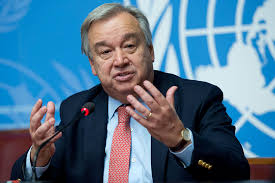
The former Secretary General of the United Nations Ban Ki Moon had a terrible history regarding his treatment of Israel. He vilified the country and absolved Palestinian Arab terrorists repeatedly. Unfortunately the new UNSG Antonio Guterres is following in those footsteps.
Guterres issued a statement about the horrific murders shortly afterwards:
“The Secretary-General strongly condemns this evening’s stabbing attack by a Palestinian perpetrator, which resulted in the death of three members of an Israeli family in the Halamish settlement in the occupied West Bank.
He conveys his condolences to the bereaved and wishes a speedy recovery to those injured.
The Secretary-General again calls on all to refrain from any actions or words that could further escalate an already volatile situation.”
While it was nice to hear that the leader of the United Nations “strongly condemns” murder, the words ring hollow when compared to recent statements by the same man regarding the killing of civilians elsewhere.
On July 24 Guterres issued a statement regarding the killing of civilians in Afghanistan stating “the deliberate targeting of civilians constitutes a grave violation of human rights and international humanitarian law and may constitute a war crime.” An important sentiment not issued for Israeli civilians.
His July 24 statement regarding attacks in Pakistan said he “strongly condemns the terrorist attack in Lahore, Pakistan, today and calls for those responsible to be brought to justice. The Secretary-General extends his condolences to the families of the victims and wishes full recovery to those injured. He supports the efforts of the Government of Pakistan to fight terrorism and violent extremism with full respect for international human rights norms and obligations.” He was clear in his support of the government and that the terrorists should be brought to justice.
In July 25 on a statement about attacks against civilians in Nigeria, he issued a statement “These terrorist acts are targeting people who had already fled their homes as a result of Boko Haram violence. The Secretary-General extends his condolences to the people and Government of Nigeria for the loss of life. He wishes a quick recovery to those injured and calls for those responsible for this heinous act to be swiftly brought to justice. He reiterates the United Nations support to the Government of Nigeria in its fight against terrorism and violent extremism in full observance of international humanitarian, human rights and refugee law.” Other important statement not issued regarding Israel.
The difference in treatment of Israeli victims to other countries is outrageous.
Why was the Palestinian attacker only called a “perpetrator” and not a “terrorist” by the UNSG as he did regarding Pakistan and Nigeria?
Why did the deliberate targeting of civilians in Afghanistan get a call about “war crimes,” while the Palestinian murderer and support by Palestinian elected leaders was greeted with silence?
Why did the UNSG call for terrorists in Nigeria and Pakistan to be “brought to justice,” but he made no comment regarding justice for Israel?
Why did the UNSG say that he supported the governments of Nigeria and Pakistan in their fight against “terrorism and violent extremism,” but asked Israel to refrain from action which “could further escalate an already volatile situation?”
The new UN Secretary General has seemingly become part of the evil machinery that cannot see the Israeli-Arab conflict from a position of clarity and fairness. It bodes badly for prospects for peace.
J Street has long opposed Israel’s control and administration of lands that it won in the defensive war against Jordan in 1967.
In 2011 it urged the Obama Administration to craft language with the United Nations that condemned Jewish “settlements” east of the Green Line (EGL/ the West Bank) – including in Jerusalem.
In 2014 it urged the United States to declare that Jewish settlements were “illegal under international law.“
In 2016, J Street declared victory upon the UN Security Council’s passing of Resolution 2334 with the Obama Administrations help. J Street would take out a full page advertisement in the New York Times on January 5, 2017 thanking Obama for this action.
Did J Street mind that this same United Nations did not care much for the rights of Jews to pray at their holiest spot? Seemingly, not at all.
In October 2016, UNESCO approved a resolution condemning Israel for a wide range of violations in Jerusalem. One of these rebukes addressed the Israeli government’s attempt to create a place for pluralistic prayer along the Kotel.
“19. Deprecates the continuing Israeli unilateral measures and decisionsregarding the Ascent to the Mughrabi Gate, including the latest works conducted at the Mughrabi Gate entrance in February 2015, the instalment of an umbrella at that entrance as well as the enforced creation of a new Jewish prayer platform south of the Mughrabi Ascent in Al-Buraq Plaza “Western Wall Plaza”, and the removal of the Islamic remains at the site, and reaffirms that no Israeli unilateral measures, shall be taken in conformity with its status and obligations under the 1954 Hague Convention for the Protection of Cultural Property in the Event of Armed Conflict;”
The “new Jewish prayer platform” was being advanced by the Israeli government in collaboration with the non-Orthodox Jewish denominations to create a space for worship in an egalitarian fashion. As with all activities by Israel in Jerusalem – even the installment of an umbrella! (above) – the United Nations condemned Israel.
J Street was nonplussed.
The leader of J Street, Jeremy Ben Ami
In its statement addressing the October 2016 UNESCO resolution, J Street never mentioned the United Nations attack on the advancement of non-Orthodox prayer at the Kotel. Instead J Street argued for the United States to restore funding for UNESCO which has been withheld after the organization admitted “the State of Palestine” as a member.
J Street would eventually tackle the issue, with a statement in June 2017condemning the Israeli government on the decision to suspend the creation of an expanded Jewish prayer platform for egalitarian prayer. J Street attacked “Ultra-Orthodox parties” for being behind the Israeli government’s move. It then urged its loyal liberal backers to distance themselves from the current Israeli government:
“The current [Israeli] government, dominated by the far-right of Israeli politics, has made clear that it is out of step with many of the core values, beliefs and interests of the vast majority of American Jews.”
J Street had moved from lobbying the far-left US Obama Administration to lobbying Americans to condemn the Israeli government.
J Street’s positions often seem at odds with itself. It aggressively pushed the US to label Israeli actions east of the Green Line as “illegal,” but then condemned the Israeli government for not taking actions at the Kotel in the Old City of Jerusalem, where it claimed that the Israeli government has no legal rights at all.
Does J Street believe that the Israeli government has authority to create a place for non-Orthodox prayer at the Kotel or not? If the government has no legal rights, then why condemn it? If J Street was so comfortable in stripping Israel’s authority at Judaism’s holiest site and giving it to the United Nations, then why not condemn the United Nations assault on pluralistic prayer?
J Street is a far-left fringe group that does not represent most Americans or most American Jews, yet it lobbied successfully to push the US Administration to adopt a damaging resolution on the world stage with far-reaching implications – for ISRAEL. At the same time, J Street attacked the “far-right” in Israel for lobbying successfully for actions – in ISRAEL. Which is more outrageous? A fringe group of Americans damaging Israel on the world stage, or a fringe group of Israelis lobbying for actions in their own country?
How does one label bathrooms for 30+ gender identities?
Bathrooms
For thousands of years, the world operated on the premise that there were only two genders: male and female. Then the 21st century came along.
As a matter of modesty, various societies separated the two genders in various matters such as education, and most frequently, for private matters such as using the bathroom or locker room.
Bathrooms typically used language to denote the appropriate room for people to enter, such as “Men,” “Boys” or “Gentlemen” for males and “Women,” “Girls” or “Ladies” for females. Some decades ago, to address language barriers, many places began adding linear stick figures for men, and a stick figure which seemingly had a skirt or dress for women.
Liberal societies soon challenged those stereotypes. Is a woman defined by wearing a skirt while many females wear pants? Does a man stop being a man if he dons a dress? The liberal advance pushed for more general symbols to replace the stick figures. Circles were used to represent women and triangles were rolled out to denote men’s rooms. Why these shapes? It is unclear. But the migration to circles and triangles has been taking over.
The question now remains of what to do with the newly minted dozens of gender types that municipalities have started to recognize.
International Federation of Red Cross and
Red Crescent Societies (IFRC)
For almost 60 years, the IFRC refused to admit the Israeli emergency group, the Red Magen David to its ranks because Israel insisted on using the Jewish Star of David instead of a Christian cross or Islamic crescent as its logo. It took several years of United States pressure – including withholding dues – for the IFRC to admit Israel in 2006.
But the IFRC still refused to allow Israel to use its Star of David.
Muslim countries originally offered the excuse of barring Israel’s entry because they objected to Israel’s control of land it captured in the 1967 Six Day War (they could not remember why they objected to admitting the organization in the many decades that preceded the war). Christian countries objected to including the Jewish Star as there were many other religious countries (such as Buddhist Thailand) which would create a confusing string of logos.
A compromise was reached in 2006 in which all countries that did not want to use the cross or crescent could opt to use a crystal / diamond.
Perhaps that will become the official symbol of all non-dominant actors such as non-males and non-females in bathrooms: a diamond which conveys the mass of minorities, the “Others.”
If and when the world adopts the bucket diamond category, will the world similarly be dismissive and persecute the diamonds outside of the dominant genders, the same way that the world attacks the only Jewish State?
There are times when a Democracy recalls its seminal moments and rises to its defense. The US Ambassador to the United Nations Nikki Haley did just that in elegant fashion. Will other leaders do so as well?
Human Rights as Foundation of the USA
In 1776, the United States of America declared its independence from Great Britain. The US’s foundation principle laid out the argument that God gave people basic human rights and the primary role of government was to protect them. If the government could not do so, it no longer served its basic function and thereby lost its legitimacy and reason to exist.
“We hold these truths to be self-evident, that all men are created equal, that they are endowed by their Creator with certain unalienable Rights, that among these are Life, Liberty and the pursuit of Happiness. — That to secure these rights, Governments are instituted among Men, deriving their just powers from the consent of the governed, — That whenever any Form of Government becomes destructive of these ends, it is the Right of the People to alter or to abolish it, and to institute new Government, laying its foundation on such principles and organizing its powers in such form, as to them shall seem most likely to effect their Safety and Happiness.”
“My country has a unique beginning, founded on human rights, holding self-evident the truth that all men are created equal with rights to life, liberty, and the pursuit of happiness. Of course America did not invent these rights – God did. Simply by our birth, human beings are endowed by our Creator with certain inalienable rights. These rights belong to all of us. They are not the gift of any government. They cannot legitimately be taken away by any government.
The American idea is that government exists to serve the people, not the other way around. Government should secure our rights, not violate them.”
Haley went on to admonish the global agency for neglecting its basic purpose of defending human rights by simply politicizing human rights:
“The Human Rights Council has been given a great responsibility. It has been charged with using the moral power of universal human rights to be the world’s advocate for the most vulnerable among us. Judged by this basic standard, the Human Rights Council has failed.
In case after case, it has been a forum for politics, hypocrisy, and evasion – not the forum for conscience that its founders envisioned. It has become a place for political manipulation, rather than the promotion of universal values. Those who cannot defend themselves turn to this Council for hope but are too often disappointed by inaction.
Once again, the world’s foremost human rights body has tarnished the cause of human rights. The United Nations must now act to reclaim the legitimacy of universal human dignity….This is a cause that is bigger than any one organization. If the Human Rights Council is going to be an organization we entrust to protect and promote human rights, it must change. If it fails to change, then we must pursue the advancement of human rights outside of the Council….In the end, no speech and no structural reforms will save the members of the Human Rights Council from themselves. If they continue to put politics ahead of human rights, they will continue to damage the cause that they supposedly serve.”
Not everyone in the United States believes in God, but almost everyone still believes that people have a basic right to liberty and a pursuit of happiness. Some liberals – like former president Barack Obama – may mock fellow citizens that “cling to God and guns,” but they will still promote expanding the protection of liberties aggressively. On the other end of the political spectrum, conservative Americans may believe that ever-expanding government regulations impede personal liberties. All of these groups debate the tactics of defending human rights, but each believes in the foundation principle of the country of life, liberty and the pursuit of happiness as the ultimate goal.
Holy Land as Foundation of Israel
Judaism is a unique religion in that it has a tie to a specific piece of land.
Laid out clearly and repeatedly throughout the Old Testament, God first promises the land of Canaan to Abraham, Isaac, Jacob and their descendant in Genesis, and then to the Children of Israel on their return from Egypt in the other four books of the Bible. The later prophets add a third chapter of the promise of the land: that Jews will return home to the land of Israel from their period of exile.
International law did not focus on God’s gift of the land of Israel for the Jewish people, but it recognized Jewish history and the rights of Jews to their homeland in 1920 and 1922. It would take until 1948 for the Jewish State to be reborn, in just a portion of their homeland. Similar to the 1920 San Remo agreement and the 1922 Mandate of Palestine, Israel laid out its foundation principle in 1948 as based on history, not religion, in the Israeli declaration of independence:
“The Land of Israel was the birthplace of the Jewish people. Here their spiritual, religious and political identity was shaped. Here they first attained to statehood, created cultural values of national and universal significance and gave to the world the eternal Book of Books.
After being forcibly exiled from their land, the people kept faith with it throughout their Dispersion and never ceased to pray and hope for their return to it and for the restoration in it of their political freedom.
Impelled by this historic and traditional attachment, Jews strove in every successive generation to re-establish themselves in their ancient homeland. In recent decades they returned in their masses. Pioneers, defiant returnees, and defenders, they made deserts bloom, revived the Hebrew language, built villages and towns, and created a thriving community controlling its own economy and culture, loving peace but knowing how to defend itself, bringing the blessings of progress to all the country’s inhabitants, and aspiring towards independent nationhood.
In the year 5657 (1897), at the summons of the spiritual father of the Jewish State, Theodore Herzl, the First Zionist Congress convened and proclaimed the right of the Jewish people to national rebirth in its own country.
This right was recognized in the Balfour Declaration of the 2nd November, 1917, and re-affirmed in the Mandate of the League of Nations which, in particular, gave international sanction to the historic connection between the Jewish people and Eretz-Israel and to the right of the Jewish people to rebuild its National Home.”
These days, the United Nations has sought to undermine Israel’s foundation principle that it clearly understood a hundred years ago.
It is not too dissimilar to Haley’s complaints about the pathetic actions at the United Nations. However, a stark difference is that all Americans know and defend America’s foundation principle, but many members of the Israeli government and population do not defend Israel’s foundation principle.
Consider that the Arab Joint List is the third largest political party in Israel’s 20th Knesset. One its members, Hanin Zoabi, has stated: “we threaten the Jewishness of the state. It’s true, but it’s not my problem, this is the problem of the racist definition of the state (of Israel) as a Jewish state… I do not represent the State of Israel nor do I speak for the State of Israel, but rather in the name of a struggle that performs the exact opposite of the role of the Israeli Knesset, according to its vision.”
Another Arab MK in the Joint List, Masud Ganaim, has denied basic Jewish history, that the Jewish Temples existed on the Temple Mount in Jerusalem, stating “historically, religiously, it is a Muslim site, period. The State of Israel knows that Jews and Israel have no legitimacy to the site, except for their legitimacy as an occupier — a legitimacy (won) by force.”
Many left-wing radical Jews welcome this negation of Israel’s foundation principle and Jewish history.
Left-wing extremists then continue to advance the cause of BDS – boycotting Israel – to the cheers of other members of the Joint List like Ayman Odeh. The circle of #FakeNews and hatred reinforces itself.
Nikki Haley is fully aware of the foundation principles of the United States and is not shy about taking her passion to the global stage. She knows that she has the support of Americans of all political leanings.
However, the situation in Israel is peculiarly dysfunctional. There are many Jews and members of the Israeli government that have politicized their emotions. In their desire to assist beleaguered Palestinian Arabs, they have attacked the fundamental underpinnings of Israel, that by right of history, Jews have an inalienable right to live as independent sovereign people throughout their homeland.
When Jews and many members of the Israeli government undermine the foundation principle of the Jewish State, how can it expect fair treatment on the global stage?
The poisonous venom of denying Jewish history and rights must end, as it corrodes the foundation of the state. It must be given no air. Starting at the Israeli government itself.
It is right and commendable that Israeli Prime Minister Benjamin Netanyahu takes the floor of the United Nations to proudly review Jewish history in the Jewish homeland. It is time for him to do more in Israel itself.
Father’s Day in the US is a nice holiday. While it is a chance for children to express their appreciation for their fathers, in the end, the greatest gift is the joy and pride of seeing a child’s accomplishments.
With that in mind, consider the comments of some Palestinian Arabs about their children who murder Israelis.
The father of Baha Alyan who killed three Israelis who were riding a public bus in October 2015 said on Palestinian Authority TV “I’m proud of what he did.”
The father of Murad Bader Abdullah Adais,16, who stabbed Dafna Meir to death while she was at home in January 2016, said “I am proud of him.“
In Israel, many fathers use Father’s Day to remember their children that were victims of Palestinian Arab terrorism. That is true in the United States as well.
The daughter of Senator Robert Kennedy spoke about her father’s assassination on June 5, 1968, a year after the Six Day War. Kathleen Kennedy Townsend spoke to Israeli news about her father’s support for Israel as being the motivation of Palestinian terrorist Sirhan Sirhan killing him.
“He [RFK] wrote about the courage of the Israelis and how they were determined to build a new country, and that they would build this country, and that they had seen such horror in Europe, and that they would build a country of courage, of democracy, of values, and that he realized when he saw the Israelis that the United States had a special relationship with this country and needed to make sure that that relationship stayed firm. And as you know in 1968 he was fighting for the 50 jets that would be given to the Israeli army and he was killed because of his support.”
On this Father’s Day, do not only consider why you are proud of your father and/or your children. Ponder the Palestinian pride of the slaughter of Jews.
On June 5, 2017, the United Nations Secretary General Antonio Guterres made a statement about the 1967 Six Day War. His opinion piece laid out a distinct narrative, or in common parlance, #AlternativeFacts. Below is a review of his actual remarks with a First.One.Through review of the same facts.
UN Secretary General Antonio Guterres
UN Secretary General, UNSG: “Today marks 50 years since the start of the 1967 Arab-Israeli war, which resulted in Israel’s occupation of the West Bank, East Jerusalem, Gaza and the Syrian Golan and the displacement of hundreds of thousands of Palestinians and Syrians.”
First.One.Through, FOT: “Today marks 50 years since a miracle thwarted Arab countries’ stated goal of annihilating the only Jewish State and millions of Jews.”
UNSG: “This occupation has imposed a heavy humanitarian and development burden on the Palestinian people. Among them are generation after generation of Palestinians who have been compelled to grow-up and live in ever more crowded refugee camps, many in abject poverty, and with little or no prospect of a better life for their children.”
FOT:“Israel has built an amazing thriving democracy among its Jewish and non-Jewish populations since its brush with annihilation in 1967. Regrettably, the UN has continued to make the Arab population in Gaza and elsewhere its wards, pretending that descendants of internally displaced people have any rights as refugees. Worse, the SAPs continue to deny the basic history and rights of Jews to live in their holy land, offering little hope for living together in peace.“
UNSG: “The occupation has shaped the lives of both Palestinians and Israelis. It has fuelled recurring cycles of violence and retribution. Its perpetuation is sending an unmistakable message to generations of Palestinians that their dream of statehood is destined to remain just that, a dream; and to Israelis that their desire for peace, security and regional recognition remains unattainable.”
FOT:“The denial of Jewish history, rights and dignity, and the Palestinian Authority leadership’s incitement to violence have continued a poisonous venom that has permeated the local Arab population since 1920. Until the Palestinian Arabs recognize the Jewish State’s rights in the land, the desire of both people for peace and security is just a dream. Recognition of the Jewish homeland is a means, not an ends to peace and security for all parties.”
UNSG: “Ending the occupation that began in 1967 and achieving a negotiated two-state outcome is the only way to lay the foundations for enduring peace that meets Israeli security needs and Palestinian aspirations for statehood and sovereignty. It is the only way to achieve the inalienable rights of the Palestinian people.”
FOT: “The path of the Palestinian Arabs’ quest for legitimacy on the world stage is disappointing. Since Israel gave the local Arabs in Gaza the first taste of sovereignty by leaving the coastal strip in 2005, the local Arab population has squandered every opportunity. They elected a terrorist group, Hamas, to a majority of parliament. They spent most of their global aid building attack tunnels into Israel rather than developing their economy. They launched three wars against Israel, in 2008, 2012 and 2014. Their actions make this global body question the basic logic of statehood and sovereignty for the local Arabs, rather than having portions of the disputed land be incorporated into Egypt, Jordan and Israel.“
UNSG: “Now is not the time to give up on this goal. Continued settlement construction and expansion; violence and incitement; and the illicit arms build-up and militant activity in Gaza risk creating a one-state reality that is incompatible with realizing the legitimate national and historic aspirations of both peoples. Now is the time to return to direct negotiations to resolve all final status issues on the basis of relevant UN resolutions, agreements and international law. Now is the time to end the conflict by establishing an independent Palestinian state, living side by side in peace and security with the State of Israel. ”
FOT: “Based on past actions, it is time to reconsider the peace process between Israel and the Palestinian Authority – which hasn’t held elections in years and cannot control its own people and territory – and to bring in Egypt and Jordan into the process now. Those two countries have made peace with Israel, and those two countries had administered the two areas in question.“
UNSG:“Resolving the Israeli-Palestinian conflict will remove a driver of violent extremism and terrorism in the Middle East and open the doors to cooperation, security, prosperity and human rights for all.”
FOT: “The turmoil in the Middle East including in: Syria; Iraq; Yemen; Sudan; and Libya have finally put an end to the argument that the Israeli-Palestinian conflict is the driver of violent extremism. It proves conclusively that radical Islamic ideology and the goal for a pure Muslim caliphate drives terrorism. Combatting radical Islamic teachings will stop terrorism in Israel and the world, and help bring peace everywhere.”
UNSG: “In 1947, on the basis of UN General Assembly Resolution 181, the world recognized the two-state solution and called for the emergence of “independent Arab and Jewish states”. On 14 May 1948, the State of Israel was born. Almost seven decades later, the world still awaits the birth of an independent Palestinian state. The Secretary-General reiterates his offer to work with all relevant stakeholders to support a genuine peace process.”
FOT: “In 1947, the Arab world flatly rejected UNGA Resolution 181 and made clear that it rejected an independent Jewish State anywhere in the region. When Israel declared statehood, the Arab countries fought a war to destroy the Jewish State completely. In 1967, the Arabs again threatened to annihilate every Jew in the land. Even today, the Arabs state that they want a Jew-free state, have laws that call for the capital punishment for any Arab selling land to a Jew and refuse to recognize Israel as the Jewish State. The Secretary-General reiterates that human rights, decency and dignity demand that Arabs recognize the Jewish State and Jewish rights, and thereby put the region on a pathway to long-term peace and prosperity.”
The world has been long educated by Palestinian Arabs about the “Nakba”, the “disaster.” It was during 1948-9 when the newly established country of Israel withstood the onslaught of five Arab armies to not only survive, but to accumulate additional territory. All of that land was considered by the Arabs to be “Arab Land,” and Israel’s victory was not only an affront to their sensibilities as the rightful owners of the land, but was exacerbated by the fact that Israel did not allow the Arabs that left the region during the war – which they themselves had started – to return to their houses.
The Palestinian Nakba of 1948-9 was the founding of a Jewish State that the Arabs considered without merit, and the status of 711,000 Arabs who lost their homes to such foreign transplant. Adding insult to their situation was Egypt taking over Gaza without giving the local population citizenship. The Arabs on the west bank of the Jordan River at least got Jordanian citizenship.
In solidarity with their Arab brothers, over the following years the Arab countries from the MENA region evicted 1 million Jews from their midst, performing an ethnic cleansing of Jews for thousands of miles. Many of those Jews moved to Israel, to become citizens alongside the 160,000 Arabs who were already granted Israeli citizenship.
Israeli flags over Latrun Tank Museum, scene of important battles in the Israeli War of Independence
(photo: First.One.Through)
The Palestinian Nakba would repeat in 1967.
Once again the surrounding Arab armies poised to destroy the Jewish State.
“The problem before the Arab countries is not whether the port of Eilat should be blockaded or how to blockade it – but how totally to exterminate the state of Israel for all time.” – President Gamal Abdel-Nasser of Egypt, May 25, 1967
“The Syrian army, with its finger on the trigger, is united. I believe that the time has come to begin a battle of annihilation.” – Syrian Defense Minister Hafez Al-Assad (later President)
“Those [Israelis] who survive will remain in Palestine. I estimate that none of them will survive.” – PLO Chairman Ahmed Shukhairy
However, once again Israel would defeat those that were ready to annihilate them. Once again the Israelis would take over more land. And once again the local Arab population would cry out to the world that they were the victims, and ask the world to isolate the Jewish State.
Nakba #2 left more of the local Arab population under Israeli authority. The Arabs in Gaza, Sinai, “West Bank”, and even the Golan Heights were no longer under Arab control or authoritarian rule. They were now subject to a democracy; and a Jewish one at that.
The Arabs claim that Nakba #1 had its roots in the western powers of Britain, France, Italy and Japan carving up the Ottoman Empire to fit their global ambitions. Those democracies chopped up “Arab land” (note that the Ottomans are not Arab) into fiefdoms and added an alien Jewish democracy squarely into the middle of it. To this day, Palestinian leadership asks Britain for an apology for the actions of 100 years ago, and Iranian leadership declares that the region needs to “cut out the cancer of Israel.”
Nakba #2 of June 1967 continued to spread the foreign democracy into the Middle East, but only in part. Israel only annexed the eastern part of Jerusalem and gave everyone – Jews and non-Jews – in the area full rights. However, Israel declined to annex the other regions in the hope of trading portions of the land for peace. In 1979 it traded Sinai (which was never part of the Palestine Mandate) with Egypt for peace. It abandoned Gaza for war. And it negotiates with the Palestinian Authority about the future of the land east of the Green Line (EGL).
The short windows of Israeli control failed to instill long-term democratic values into the areas. Sinai is just another part of Egypt that is quickly removing the removing its Christian minority. Gaza is run by the terrorist group Hamas that is backed by the local radical Islamist population. And Area A of the West Bank where the Palestinian Authority has control, is managed by a corrupt regime that refuses to hold elections.
The newborn democracy survived an Arab onslaught in 1948, and the fledgling democracy would not be annihilated by the forces of hate and intolerance in 1967. While countries like the Islamic Republic of Iran still threaten to destroy the region’s only democracy, others have since given up on the pledge. Still, regrettably, Israel’s lessons of tolerance and democracy seem to be a hard tradition to instill in its neighbors.
For the Palestinians, the Nakba is that the foreign democracy still exists in their midst. For the western world, the disaster is that the Arabs in the region still cannot tolerate democracy.
There is a myth that has spread into every corner of the world that Jews are foreign transplants in the holy land, even in their holiest city of Jerusalem.
The lie has become so pervasive, that even people that believe that Jews lived in Jerusalem since King David took the city as a capital in 1000BCE, still imagine that virtually no Jews lived in the city from the time Romans destroyed the Second Temple in 70CE until modern Zionism.
But Jews have had a continuous presence in Jerusalem since 1267. For 750 years.
From 70CE Until 1267
After the Romans destroyed the Second Temple, Jews became scattered throughout the holy land. Many moved to Yavne and points north of Jerusalem, while others left the land completely. But Jews continued to live in and around Jerusalem, and made three attempts to rebuild the Temple:
During the Bar Kochba Revolt (132-135), Jews believed that they would be able to evict the Romans and build a Third Temple. They failed in their attempt, and it was at that time that the Romans evicted the Jews from Jerusalem and renamed the city Aelia Capitolina.
On July 19, 362, a new Roman emperor Julian (the Apostate) had a softer approach to the Jews and announced “I shall endeavor with the utmost zeal to set up the Temple of the Most High God.” The Jews hired craftsmen and began the process of rebuilding the Temple, but the materials were destroyed in an earthquake on May 27, 363. When Julian came to the city on June 26, a Christian soldier killed him.
On May 21, 614, a Persian king named Khusrau (who was Zoroastrian) and his general Shahrbarz (the Royal Boar) came to Jerusalem to put down a Christian revolt. After he defeated them in three days, he deported 37,000 Christians to Persia and gave the city to the Jews. However, within three years, the Royal Boar concluded that the Christians were a more valuable ally and returned the city to the Christians.
The Arabs then came to the Holy Land and Jerusalem in 638, and the Muslim invasion ultimately led to battles with Christians from Europe. The Crusades ran from 1099 to 1250, with the Muslims generally allowing Jews to live in Jerusalem, while the Christians killed all non-Christians and banned them from the city while they ruled.
750 Years of Jews in Jerusalem
After the Ramban (1194-1270) won a religious disputation in Spain, he was forced to flee and went to the Holy Land. When he arrived in Jerusalem in 1267 he found only two Jews in the city out of a total of 2000 people (0.1% of the total Jerusalem population in 1267). He set up a synagogue there, which became the center of the Jewish Quarter.
Over the Mamluk period (1250 – 1517) there were reports of Jews ascending to the Temple Mount to pray, according to Rabbi Menachem Meiri (1249-1316) and Rabbi David ben Solomon Ibn Zimra, (known as the Radbaz, 1479–1573). In general, the city became more Islamic and run down. In 1405, the city had only grown to 6000 residents, of which 200 were Jewish (3% Jewish in 1405).
In 1553 Suleiman I came to Jerusalem and decided to fix up the city, including rebuilding the city walls that surround the Old City today. With his investment, the city grew to 16,000 people of which 2000 were Jews (12.5% Jewish in 1553). Not surprisingly, most were Sephardi Jews who had escaped the Spanish and Portuguese expulsions of 1492 and 1497, respectively.
Ashkenazi Jews from Europe and Russia tried to establish their presence as well. In 1694 the first Hurva synagogue was built in the Jewish Quarter, only to be burned down in 1720 when debts went unpaid.
When Napolean came to the holy land in 1799, he issued a “Proclamation to the Jews”:
“…the unique nation of Jews who have been deprived of the land of your fathers by thousands of years of lust for conquest and tyranny, Arise then with gladness, ye exiled, and take unto yourselves Israel’s patrimony. The young army has made Jerusalem my headquarters and will within a few days transfer to Damascus so you can remain there [in Jerusalem] as ruler.”
Napolean failed and the city fell into disrepair again by the 1820s.
Things changed significantly in the 1830s and 1840s, as blood libels came to Damascus, and Druze riots and earthquakes shook Tsfat and Tiberias bringing more Jews to Jerusalem. The Ottoman rulers allowed non-Muslim communities to renovate houses of worship, and four synagogues in the Jewish Quarter –Sephardic and Ashkenaz – were in service. Wealthy and influential British patrons began to focus on Jerusalem, including Moses Motefiore and Benjamin Disraeli, and tourists began to flow into the city – an estimated 10,000 per year in the 1850s – prompting the opening of the first hotels in the city. Montefiore financed the rebuilding of the Hurva Synagogue (opened 1856, only to be destroyed by the Jordanians in 1949).
At this point, the first permanent settlements outside of the Old City walls of Jerusalem popped up in the 1860s. With the opening of the Suez Canal in 1869, trade emerged in earnest throughout the region, as the British invested further to connect Britain to its colony in India. The Jaffa-Jerusalem road (to the Jaffa Gate of the Old City) was paved leading to the faster growth of neighborhoods such as Nahalat Shiva (1869) and Me’a She’arim (1874). In 1869, the estimated population of the city was 18,000, of which 9,000 were Jews (50% Jewish in 1869). Said differently, over 300 years of Muslim Ottoman rule from 1550s to 1860s, the Muslim population in Jerusalem declined from 14,000 to 9,000 (-36%) while the Jewish population of Jerusalem grew from 2,000 to 9,000 (+350%).
Jerusalem has had a Jewish majority continuously since 1869.
Modern Zionism
Theodore Herzl (1860-1904) is considered the founder of modern Zionism. He penned “The Jewish State” in 1896 and convened the First Zionist Congress in 1897. His efforts helped propel the reestablishment of the Jewish homeland in the Jewish holy land. It also helped advance the First Aliyah (1882-1903) of Jews from Russia.
But these events all came years after Jews were already an established majority in Jerusalem.
The city of Jerusalem became divided for the first time in its 4000 year history in 1948, when Arab armies invaded the nascent State of Israel. In 1950, the Jordanians annexed the western bank of the Jordan River all of the way through the Old City of Jerusalem, in a move that was not recognized by almost every country in the world (exceptions being Jordan itself, the United Kingdom and Pakistan). The Jordanian Arabs expelled all of the Jews from the lands they seized and awarded citizenship to everyone, while specifically excluding Jews. Jordan passed a land law that made it a capital offense for any Arab to sell land to a Jew (a law that the Palestinian Authority continues to keep in place).
However in June 1967, despite repeated warnings from Israel to not initiate hostilities, the Jordanians attacked Israel and lost all of the land they illegally annexed, including the eastern half of Jerusalem. Israel reunited the city and annexed it officially on July 30, 1980. The Jordanians finally gave up any claim to the “West Bank” in July 1988.
The acting-President of the Palestinian Authority, Mahmoud Abbas stated that Israel is trying to “Judaize” Jerusalem, but Jerusalem has been majority Jewish for almost 150 years, has had a continuous Jewish presence for 750 years, and been the holiest city for Jews for 3000 years – even before the creation of Christianity or Islam. The Arabs’ illegal activities and anti-Semitic laws that removed Jews from the eastern part of Jerusalem for 19 years never had any legal validity, nor the power to erase history.
I went to see the new play Osloat Lincoln Center in New York City. It is always a fun New York moment when people in the news – in this case Joe Lieberman who just withdrew from a potential job at the FBI – are in line with you to enjoy the many great activities that the vibrant city has to offer.
The show was quite good. It relayed the behind-the-scenes activities that brought the Oslo Accords of 1993 into being. It tried to be balanced to the narratives of both Israelis and Palestinian Arabs, while not getting into a debate about particular issues. The emphasis was much more on the process, than the merits of either sides’ arguments.
The balance made me recall one of the statements that came out of the Oslo accords:
“REAFFIRMING their determination to put an end to decades of confrontation and to live in peaceful coexistence, mutual dignity and security, while recognizing their mutual legitimate and political rights;”
It is a concept that has lost meaning regarding Israel today.
Security
Over the eight years of the previous presidential administration, Barack Obama repeatedly boasted about his bona fides regarding Israel because he had “Israel’s back” when it came to matters of security. He helped fund the Iron Dome defense shield. He shared a lot of intelligence about security threats. He signed a new $38 billion military aid package.
He could withhold critical US support for Israel at the United Nations Security Council
Obama felt that he could solely focus on Palestinian Arab dignity and Israeli security. In doing so, he abused the Jewish State and has helped lead to a twisted “progressive” approach to Israel which denies Israel its dignity today.
Dignity
Much of the reason that Israelis have warmly embraced the new US President Donald Trump is that they believe that he will not only focus on Israeli security, but on its dignity as well.
Donald Trump at the Western Wall
May 22, 2017
Trump was the first sitting US president to ever visit the Wailing Wall in Jerusalem, a sacred site for Jews. And when he spoke to a crowd at the Israel Museum, he spoke of “dignity” four times:
“Today, gathered with friends, I call upon all people — Jews, Christians, Muslims, and every faith, every tribe, every creed — to draw inspiration from this ancient city, to set aside our sectarian differences, to overcome oppression and hatred, and to give all children the freedom and hope and dignity written into our souls.”
“There are those who present a false choice. They say that we must choose between supporting Israel and supporting Arab and Muslim nations in the region. That is completely wrong. All decent people want to live in peace, and all humanity is threatened by the evils of terrorism. Diverse nations can unite around the goal of protecting innocent life, upholding human dignity, and promoting peace and stability in the region.”
“But even as we strengthen our partnership in practice, let us always remember our highest ideals. Let us never forget that the bond between our two nations is woven together in the hearts of our people, and their love of freedom, hope, and dignity for every man and every woman. Let us dream of a future where Jewish, Muslim, and Christian children can grow up together and live together in trust, harmony, tolerance, and respect.”
“Today, in Jerusalem, we pray and we hope that children around the world will be able to live without fear, to dream without limits, and to prosper without violence. I ask this land of promise to join me to fight our common enemies, to pursue our shared values, and to protect the dignity of every child of God.”
The Jewish State demands more than security. It demands dignity that has been denied it around the world.
At the United Nations under Ban Ki Moon, where the nations of the world stood silent while Iran threatened to wipe Israel off the map and lambasted the Jewish State more than every country in the world combined.
In Europe, where the BDS (boycott, divestment and sanction) movement has taken hold, even though no other country with a territorial dispute is subject to such actions.
In the US “progressive” camp today, where “activists” like Linda Sarsour can be lauded by Democratic senators and given honors at universities, even after she extolled terrorists that killed innocent Jews and berated feminist Zionists.
It is time for both Israel and Jews to demand their dignity again. Especially on the 50th anniversary of the defeat of the Arab nations that sought to annihilate every Jew in its small homeland.
Aside from the terrible negotiation tactics utilized by Obama and his Secretary of State John Kerry in foreign affairs, he ignored a basic decency: the dignity of Israel and the Jewish people. It is time to bring it back to the fore.
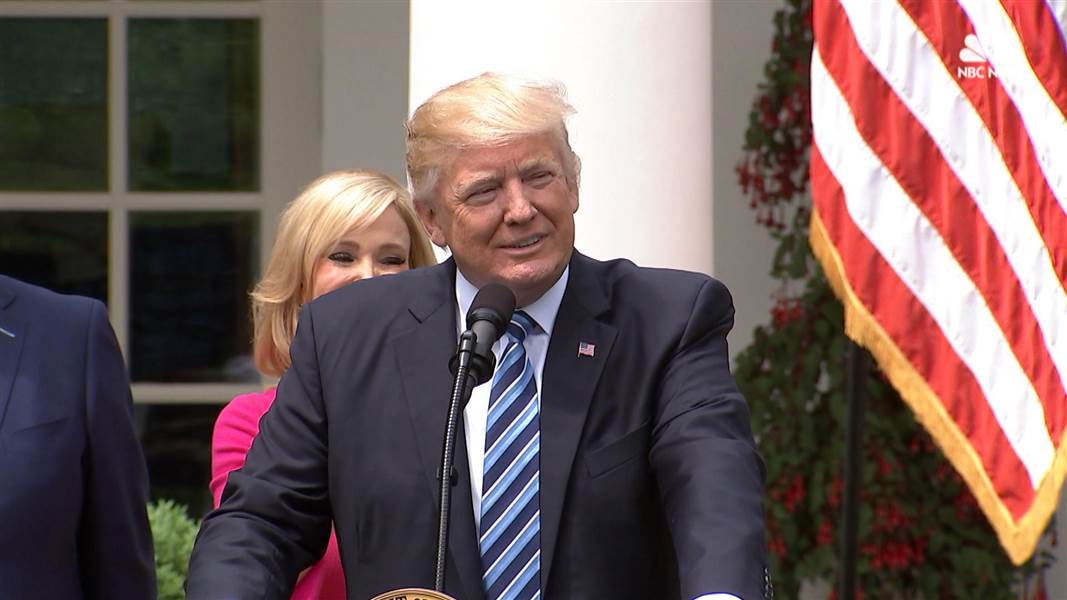
On May 4, 2017, US President Donald Trump announced that he will visit the Middle East. He said “The purpose of this meeting is to bring together all the different countries and all the different religions in the fight against intolerance and to defeat radicalism.” The destinations on the trip included the Kingdom of Saudi Arabia (KSA), Israel and the Vatican. The GOALS of the visit were to fight against intolerance and radicalism.
President Trump announcing intention to visit the Middle East May 4, 2017
Can Trump “bring together” the countries and religions in such an effort?
Kingdom of Saudi Arabia
KSA is just one of 50 Muslim-majority countries, so Trump could have visited any of the fifty to make a point of connecting with Islam.
But KSA has a number of key attributes that the other Islamic countries do not have:
It holds the two holiest sites for Islam, Mecca and Medina
It is a US ally, compared to several Muslim countries that are not
KSA has received billions of dollars in US military equipment and is engaged in joint strikes against targets in war zones like Yemen
Trump will not get to visit Mecca or Medina, the central places holy to Muslims because KSA forbids non-Muslims from visiting the Islamic holy sites. However, his meeting with the custodian of the holy sites – the KSA royal family – will make clear that the trip is not simply a visit to any Muslim country, but one that is willing to fight alongside America.
Is KSA a repressive regime? No question. It’s human rights record is appalling and many Trump critics think it outrageous to give the royal family such honor. But Trump made clear in his remarks:
“Our task is not to dictate to others how to live, but to build a coalition of friends and partners who share the goal of fighting terrorism, and bringing safety, opportunity and stability to the war-ravaged Middle East.”
Trump’s focus is narrow: the war on terror. However, KSA is actually a supporter of Wahabism and radical Islam. It happens to be a foe of Iran which earned its designation of a sponsor of terrorism well before it got involved in regional wars in Syria and Yemen, wars in which KSA is opposing Iran.
In visiting KSA, Trump will be visiting a country that is both a custodian of religious holy sites and a military partner. He will not get to visit religious sites nor showcase religious tolerance.
The Vatican
There are dozens of countries with a majority of Christians that Trump could have visited. And the Vatican isn’t even a country according to the UN.
But Catholicism is the largest of the Christian denominations, and the Pope is unique in being a central figure of a church. No other single individual has a command over such a flock.
While the Pope has no army to engage in a military battle against violent extremism, his message of tolerance is one that Trump seeks to connect with and spread throughout the world.
Israel
There is only one Jewish majority state, which makes the choice of Israel apparently simple in rounding out the Trump tour of the monotheistic faiths. In the other two countries with a significant Jewish populations – the United States and France – the Jews make up just a small percentage of the overall population, 2.1% and 0.8%, respectively.
For many decades, Israel has been America’s closest ally in the entire Middle East. It is the only true democracy in the region and Americans and Israelis share many of the same values. Israel has also been an important ally for the US in the ongoing War on Terror.
But there are large differences between Israel and the other stops on Trump’s trip:
Israel is the only country in Trump’s Mideast tour to tamper radicalism, that suffers from ongoing terrorism
Israel is the only country that had the (former) United Nations Secretary General stand up and state that he supports a terrorist regime (Hamas) and their inclusion in a Palestinian Authority government
The Jewish State is the only country where the world doesn’t recognize its holiest location and where the Muslim Waqf forbids Jewish prayer.
Israel promotes religious tolerance but receives none. It does this while confronting ongoing terrorism.
Trump will visit the holiest site in Judaism accesible to Jewish prayer today – the western wall of the Jewish Temple Mount. But he will do so WITHOUT Israeli Prime Minister Benjamin Netanyahu, as the US is not comfortable stating that the Jewish state is the custodian of the religion’s holiest site.
It is an interesting backdrop on which to draw further comparisons.
The War on Religious Radicals and
the Promotion of Religious Tolerance
As Trump navigates the Middle East, he will attempt to promote two messages: of religious tolerance and of the battle to stamp out religious violence.
Religious Tolerance:
Saudi Arabia is 100% Muslim and the Vatican is 100% Christian. Only in Israel is there a mix of religions (75% Jewish and 25% non-Jewish)
Saudi Arabia restricts access to its holy sites only to Muslims. The Vatican welcomes all religions to the city. In Jerusalem, the Islamic Waqf which is overseen by Jordan, prohibits Jews from praying at its holiest site, the Temple Mount.
Saudi Arabia restricts bringing religious artifacts like a cross or Jewish bible into the country. The Vatican and Israel have no such restrictions.
The list goes on. Trump’s visit to Saudi Arabia clearly has nothing to do with rewarding it for promoting religious tolerance. Perhaps that is an aspiration. Israel is the prime example of religious tolerance to be emulated in the Middle East
War on Radicalism:
In the attacks of 9/11/01, fifteen of the 19 terrorists were from KSA. Saudi Arabia continues to fund a radical form of Islam in schools around the world. For its part, the Catholic Church tries to convert people to Catholicism, but not by force and it does not promote violence. Israel and the Jewish State do not attempt to convert anyone in any manner and is not engaged in terrorist activities around the world.
Saudi Arabia does not fight radical Islam; it fights Iran and the Islamic State as discrete entities in an ongoing war between Sunni and Shia Islam. The Vatican has no army to participate in any war. For its part, Israel is actively fighting terrorism in its homeland, principally against an enemy that is rabidly anti-Semitic that wants to rid the region of Jews.
In short, only in Israel will Trump find both a partner in promoting religious tolerance and a partner in combatting violent religious extremism. Only in Israel will Trump see a people that faces terrorism on a daily basis.
Together:
Trump stated that he sought to bring parties “together.” With the exception of Egypt and Jordan, the rest of the Arab countries have refused to recognize the legitmacy of the State of Israel. Perhaps Trump hopes that this initiative to eradicate radical jihadists will change that dynamic. It would appear to be wishful thinking: The Saudi royal family has funded the families of Palestinian terrorists for years.
These are important points for Trump to address during his Mideast visit. A key victory in advancing both agendas of combatting religious violence and promoting religious tolerance would be to get the Palestinian Authority to finally rip up the anti-Semitic law which calls for the death sentence for any Arab that sells land to a Jew. Nothing demonstrates the vileness of intolerance and radicalism as much as the Palestinian Land Law.




 First One Through