The Plagues Were for Egypt. The Sea Was for the Jews.

The Exodus is often told as a single story of liberation, but Parshat B’shalach insists on a sharper distinction. The plagues and the splitting of the sea were aimed at different audiences, and they served different purposes. Confusing them obscures the Torah’s deepest lesson about real freedom.

The plagues were for Egypt. They dismantled Pharaoh’s authority, exposed the limits of imperial power, and forced the expulsion of a people the system refused to release voluntarily. Their purpose was external and coercive. Egypt had to be broken in order to let go.

But expulsion is not freedom. Being pushed out does not mean having moved on.

That is what the splitting of the sea achieved.

The splitting of the sea was for the Jews. At that moment, the message shifted inward. The people needed to see that the world they had left could no longer be reentered. When the waters closed, the route back to slavery closed with them. The drowning of the Egyptians was not vengeance; it was finality. History sealed behind them.

This distinction explains why the Exodus alone was incomplete. Egypt released the Jews, but the Jews had not yet released Egypt. As long as return remained imaginable, fear and discomfort could always make bondage sound reasonable again. Freedom cannot take root while the past remains accessible.

Only after that closure does the Song at the Sea emerge. The song is not merely celebration; it is internalization. A people sings when it understands that a threshold has been crossed and that what lies behind is no longer an option. Memory, at that moment, stabilizes rather than seduces. The song teaches that freedom requires acceptance of permanence.

That lesson extends beyond the biblical moment. Systems and institutions can serve as tools of liberation in one era and become obstacles to maturity in another. They remain attractive precisely because they feel moral, familiar, and legitimizing long after their original purpose has passed.

The United Nations increasingly functions as a structure that keeps the road backwards open. Born from catastrophe, it was meant to prevent a return to unconstrained power and mass violence. Over time, however, it has become a place where history is managed rather than concluded.

Consider the 1947 Partition Plan which would create a Jewish State and an Arab State in the region of Palestine. It was the logical vision of the moment and Jews accepted it and built a state. The Arabs rejected it for decades and to this date, many still believe that an Arab state will be the only reality in the region. They see a past as achievable, a Muslim-majority holy land.

Worse, the United Nations itself tells Arabs that descendants of people who lived in what is now Israel will get to move back to towns and homes. The UN continues to pass laws and resolutions to this effect, making the past the direction of time, not a future of two states living in coexistence.

The splitting of the sea teaches that freedom demands the courage to let certain paths disappear. Growth requires recognizing when a framework has completed its historical role and must be left behind. Without that willingness, societies drift endlessly between liberation and dependence, mistaking motion for progress.

The plagues ended Egypt’s control while the sea ended the possibility of return. That is the difference between being released and being free. Today, the United Nations is preventing the Israelis and the Stateless Arabs from Palestine (SAPs) from transitioning to the other side of the sea, moving on to freedom for all.

Every generation must choose which comforting and destructive structures it is finally prepared to leave in the past. Today, the United Nations may be the choice before us.

The United Nations Elevates A Jihadi Antisemite as a Paragon of Peace

On the day after Holocaust Remembrance Day—after solemn vows of “Never Again”—the Secretary-General of the United Nations chose to praise a cleric who has spent years demonizing Jews and denying their right to exist in their holiest city under the framework of an “International Day of Human Fraternity.

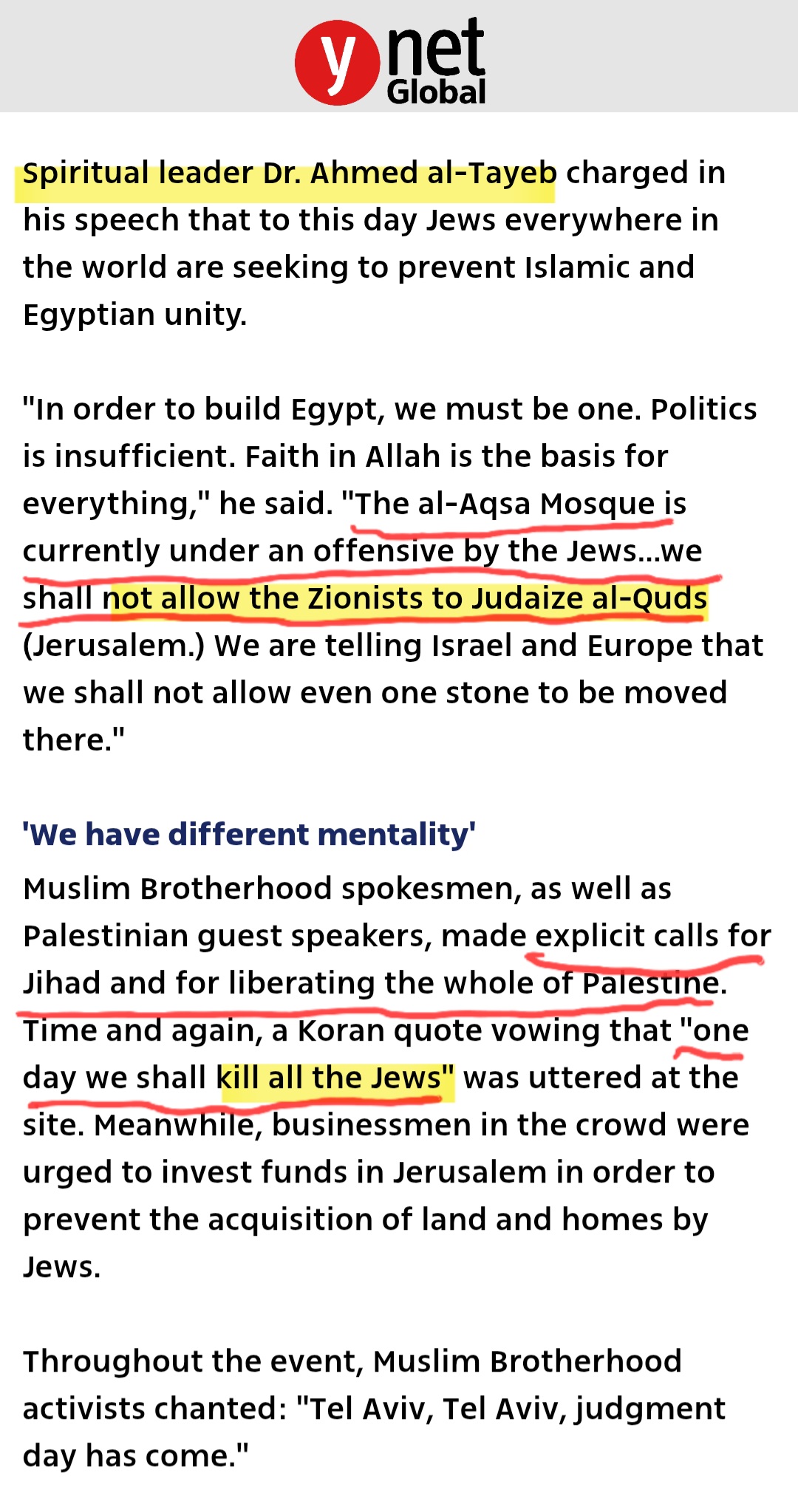
António Guterres elevated “His Eminence the Grand Imam of Al-Azhar Sheikh Ahmed El-Tayeb” as a global partner for peace, despite a record steeped in antisemitic incitement. Under el-Tayeb’s authority, Jews are framed as conspirators, Jewish prayer is cast as desecration, and Jewish presence in Jerusalem is portrayed as a civilizational crime. At events tied to his influence, chants calling for the killing of Jews and the eradication of Jewish sovereignty are tolerated and normalized.

Comments by al-Tayeb in November 2011

This is the peace the UN now celebrates.

“both Judaism and the Hebrew language have nothing to do with Jerusalem and Palestine.” – official statement of Al-Azhar

The ideology behind it is familiar. It rests on an Islamic superiority complex that treats Jewish sovereignty as illegitimate, Jewish history as fraudulent, and Jewish worship as contamination. In this worldview, Islam may rule Jerusalem absolutely; Jews may exist only conditionally and quietly—preferably elsewhere. Jewish presence in their ancestral capital becomes an offense demanding correction.

“”Do not think that we will ever give up on Jerusalem. We cannot abandon our rights there as a Muslim people. Allah will not enable you to erect a single stone on this land as long as Jihad persists.”” – official statement of Al-Azhar

El-Tayeb has given voice to this logic. Crowds gathered under his prestige repeat it. The demand is explicit: Jerusalem must be purged of Jewish claims, Jewish history, and Jewish life.

“In their attempt to judaize Jerusalem, the Zionists, in reliance on brutal Western imperialist powers, are risking the future of the Jews themselves by overstepping the limits of the Muslim Nation whose population is about a quarter of humanity, and who are able, one day soon, to restore their usurped rights by force.”

When the UN Secretary-General praises this man as a moral authority, he aligns with that demand. The language used by the UN confirms it. The profound antisemitism is ignored. Calls to violence dissolve into “grievance.” Incitement becomes “cultural difference.” Jewish presence is reframed as provocation.

This is how the United Nations defines peace: Jewish invalidation, submission, removal.

Guterres speaks of “a world based on equal rights for all and compassion” while elevating a cleric who denies Jews equality in the one place central to their faith and history. That contradiction is structural and vicious.

A jihadi antisemite is rebranded as a peacemaker, with ethnic cleansing repackaged as protection of holy sites.

And so, holocaust remembrance evaporates overnight.

History will read this moment clearly. When antisemitism returned cloaked in religious authority and liberation rhetoric, the United Nations offered applause, legitimacy, and a podium.

Who Gets Context: Ilhan Omar, Josh Shapiro, and the Media’s Double Standard

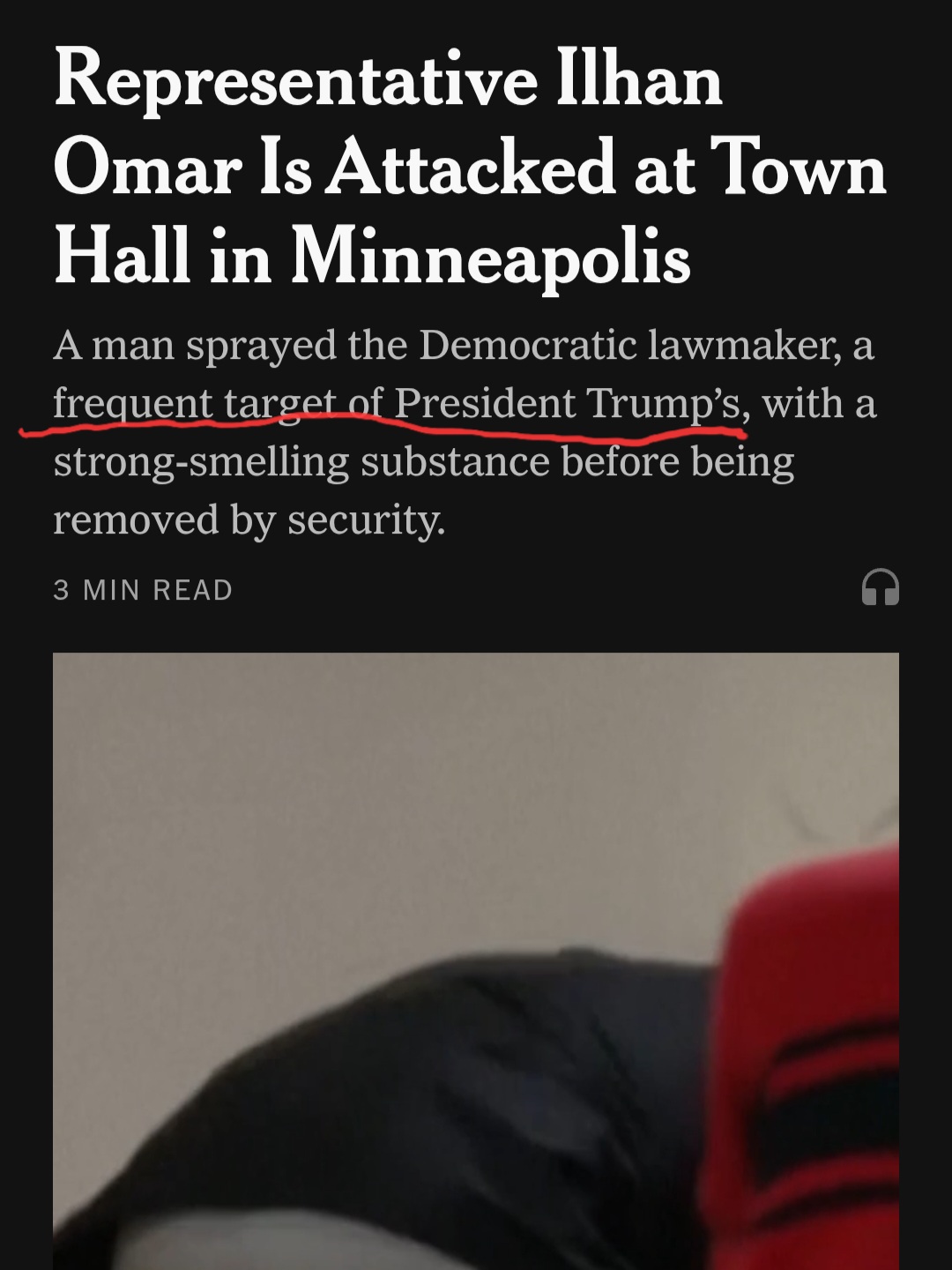
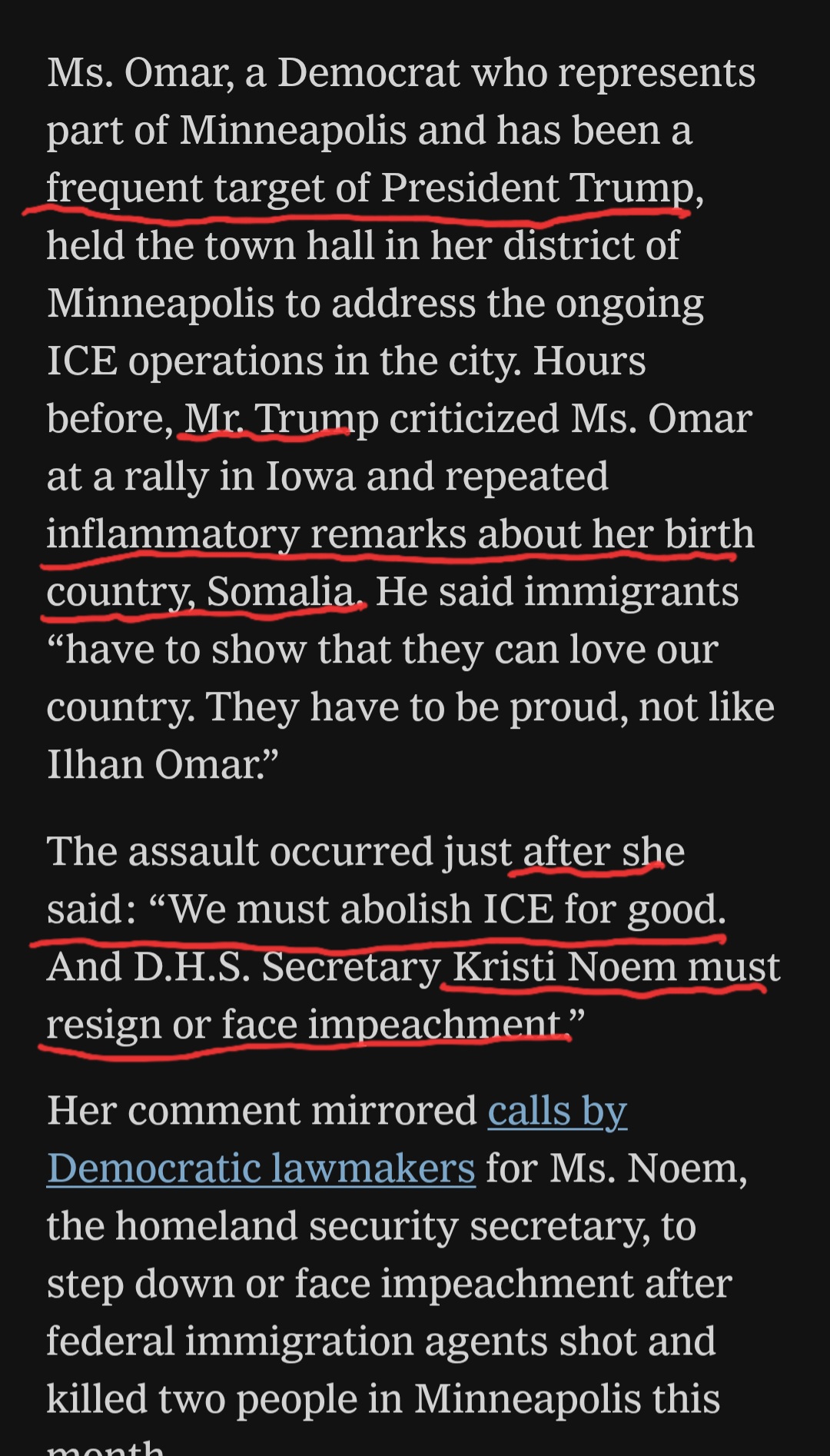
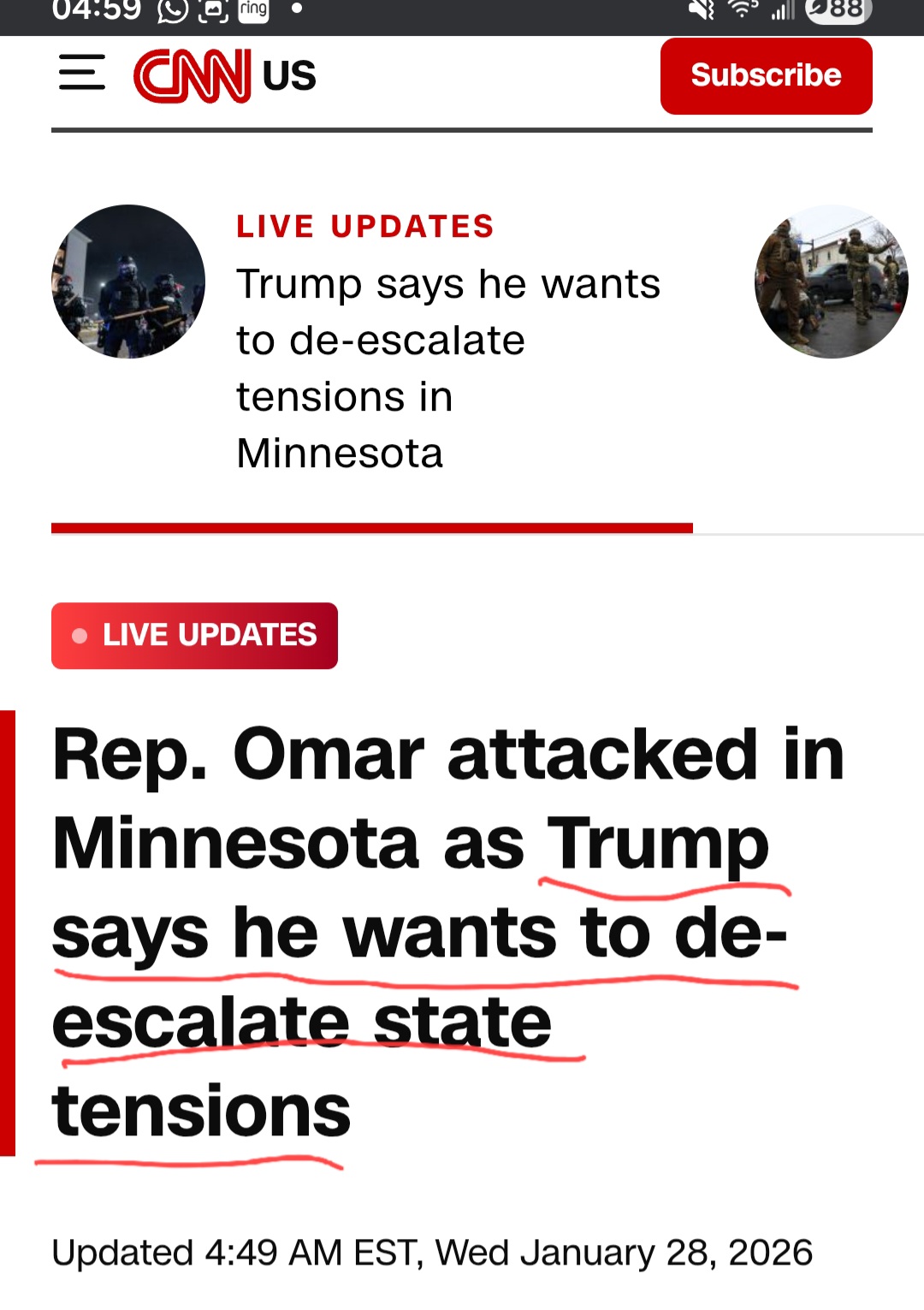
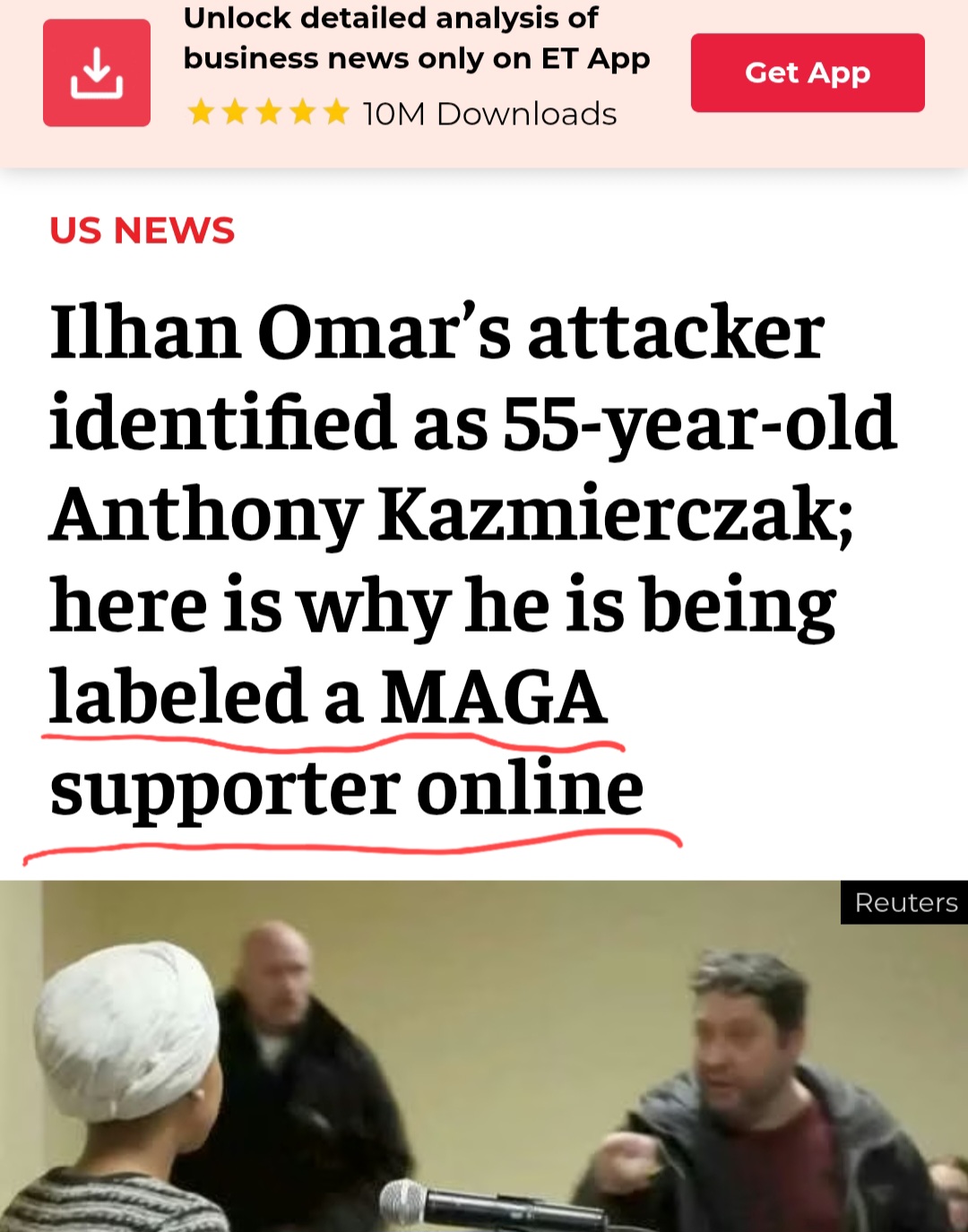
When Rep. Ilhan Omar was squirted with a liquid by an assailant, the story was not the act itself. The story was the atmosphere. Readers were immediately given Minnesota ICE protests, Trump’s rhetoric, the temperature of MAGA politics, and speculative motive pathways pointing firmly rightward. Political attribution preceded investigative certainty. Context did the work and assigned blame.

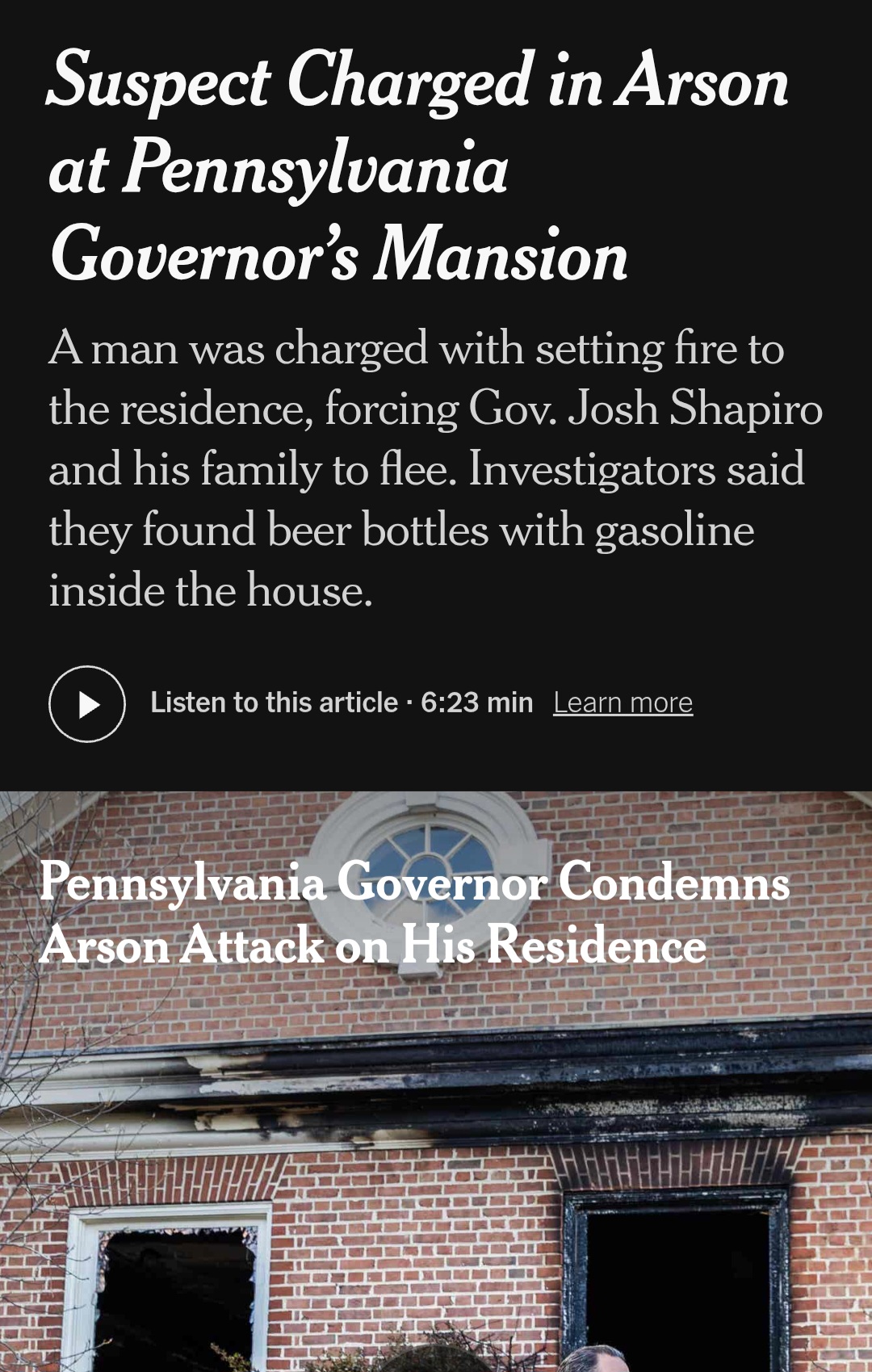
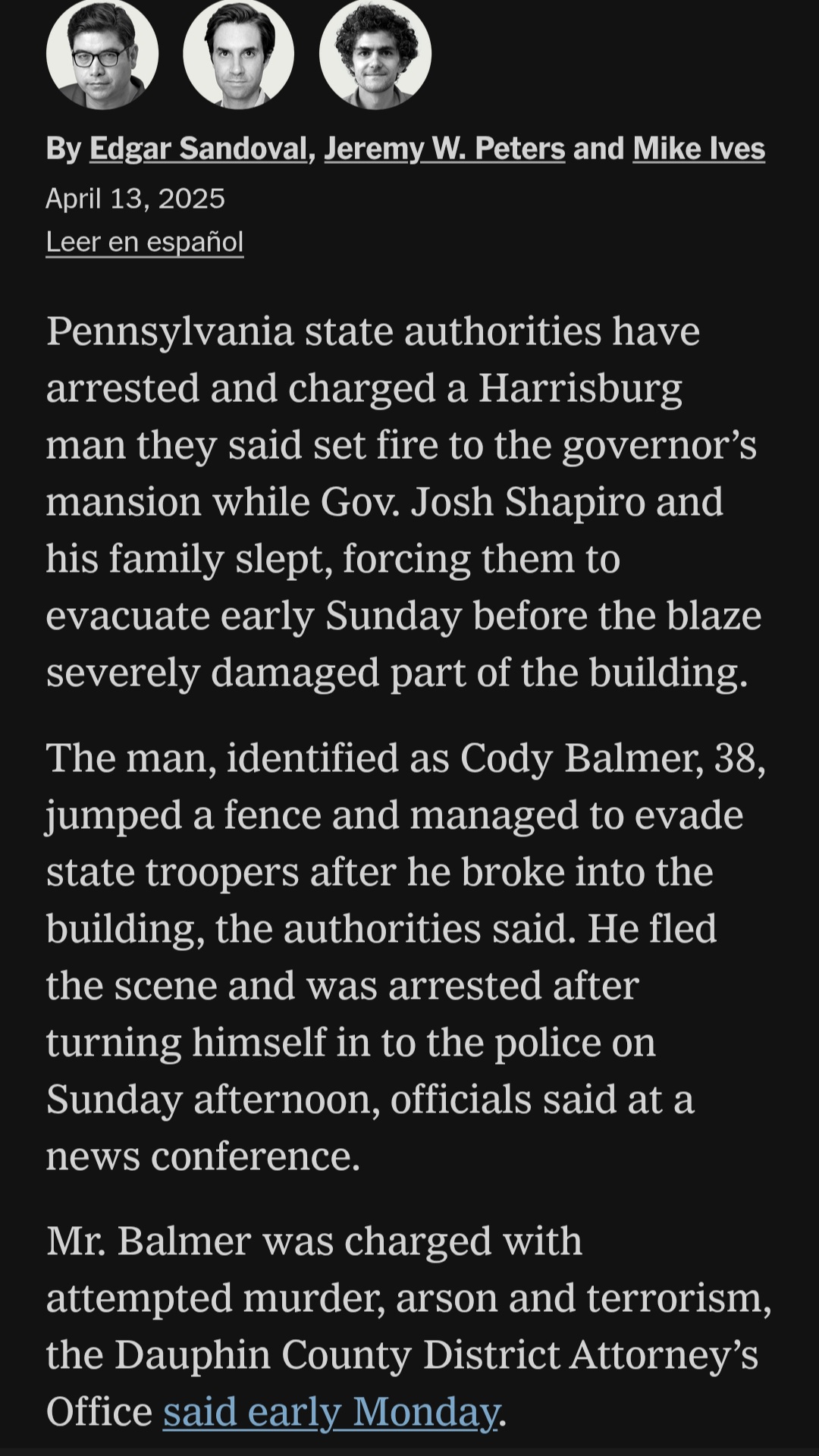
Yet when Pennsylvania Governor Josh Shapiro’s home was attacked by arson in April, context vanished.

There was no mention of the documented surge in antisemitic incidents. No reference to months of anti-Israel rhetoric saturating elite politics. No discussion of the “No Genocide Josh” campaign. No acknowledgment that the attack occurred during Passover—a fact ordinarily noted when violence intersects with religious or communal significance, but here omitted entirely. No exploration of whether sustained accusations of genocide, ethnic-cleansing chants, or the casual demonization of Jews in power might have contributed to a permissive climate. Investigative caution preceded any discussion of political backdrop.

This was not restraint. It was a choice.

The same media institutions that insist “words have consequences” suddenly treat words as irrelevant when the victim is Jewish and the potential inciters sit on the progressive side of the aisle. Context, once treated as morally essential, becomes editorially radioactive.

The pattern is no longer subtle. When violence – staining a shirt – touches a left-wing Muslim lawmaker, identity and ideology are framed as explanatory forces. When violence – arson and attempted murder of an entire family – touches a Jewish, pro-Israel official, identity is scrubbed clean and politics are declared off-limits. One story expands outward into meaning. The other … nothing.

The issue is not what motivated the attacker. The issue is why certain motivations are never even permitted to be discussed.

To contextualize the attack on Shapiro would require acknowledging uncomfortable truths: that anti-Israel rhetoric frequently curdles into antisemitism; that political incitement is not confined to one end of the spectrum; that portraying Jews as uniquely malevolent actors has consequences beyond protest slogans and campus chants. Easier, then, to say nothing.

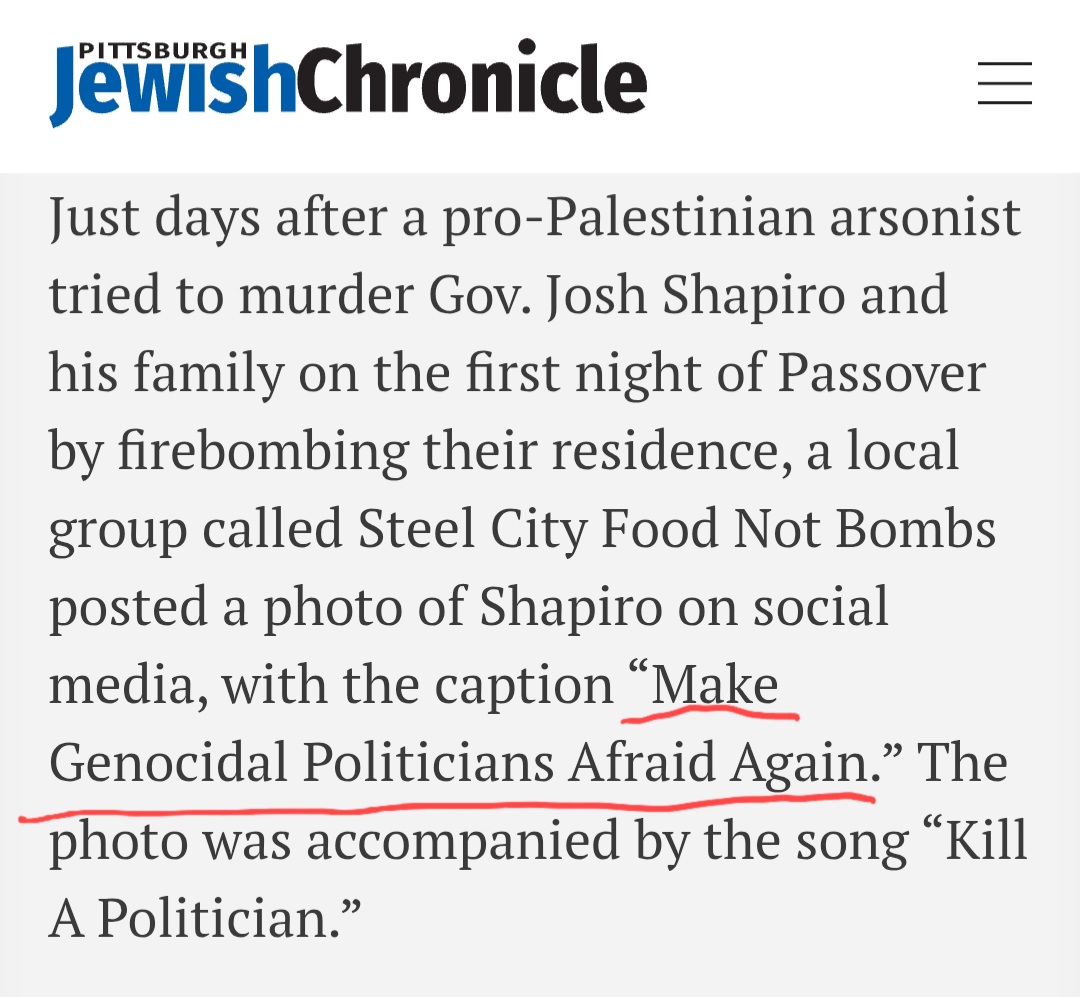
The Pittsburgh Jewish Chronicle had no issue clearly identifying the “Pro-Palestinian arsonist” and the support for targeting the Jewish governor, something liberal media scrubbed clean. The Steel City Food Not Bombs group is associated with the Socialist Rifle Association which seeks “to combat the toxic, right-wing, and exclusionary firearm culture in place today.”

But silence is not passive. It is editorial.

For Ilhan Omar, context was everything.
For Josh Shapiro, context was invisible.

If context is essential when violence can be plausibly traced to the right, it must be highlighted when violence engulfs Jews as well. Anything else is antisemitic choreography.

Guterres Informs That Holocaust Remembrance Is About the UN, Not Jews

On Holocaust Remembrance Day, António Guterres reached for the safest symbol available: Nuremberg. He spoke of universal lessons, multilateralism, and the dangers of unchecked hatred. It sounded solemn, but it was evasive. By invoking Nuremberg instead of Eichmann, the UN spun a story in which institutions matter more than victims, and legality matters more than justice.

That choice is not accidental. It is institutional self-protection.

Why the UN Prefers Nuremberg

The International Military Tribunal flatters multilateral ideals. It universalizes guilt, diffuses responsibility, and allows the UN to present itself as the heir to postwar justice. It avoids a harder truth: the world did not finish the job. Genocide went unnamed. Jewish extermination was evidence, not the charge. Many perpetrators melted back into ordinary life.

The Nuremberg trials were necessary but insufficient. And on Holocaust Remembrance Day, sufficiency is the point.

“I have always understood the clear link between the horrors of the Holocaust and the spirit of multilateralism, justice and rights that founded our organization. Just over 80 years ago, the Nuremberg trials began. These trials represented the beginning of a new era in international criminal law; an era 78 which individuals, including the most powerful, are held accountable. Today, more than ever, we need to reclaim that spirit.” – UN Secretary General Antonio Guterres on Holocaust Remembrance Day

Eichmann Is the Missing Sentence—And the Turning Hinge

The trial of Adolf Eichmann in Jerusalem did what Nuremberg did not. It named genocide as genocide. It put survivor testimony at the center. It replaced bureaucratic fog with individual culpability. Eichmann was not tried as a generic war criminal; he was judged as an architect of the annihilation of Jews.

Adolf Eichmann on trial in Jerusalem, many years after the Nuremberg trials

As Hannah Arendt observed, the case exposed how extermination was operationalized by ordinary men. And it exposed a global failure: Eichmann lived freely for years after the war. Many like him were never tried at all.

That is why Eichmann is not an “example” to be mentioned in passing. He is the pivot of postwar justice—the moment when the Holocaust was finally understood, named, and judged as what it was.

Universalism That Erases the Crime

Guterres’s language collapses the Holocaust into a general warning about hatred. of course hatred matters. But flattening the crime turns extermination into general prejudice and genocide into an abstraction. The Holocaust was not simply bigotry run amok; it was a state-organized project to destroy a people everywhere it could reach them.

“let us together pledge to stand against antisemitism and all forms of hatred — and against bigotry, racism and discrimination anywhere and everywhere.” – UN Secretary General Antonio Guterres on Holocaust Remembrance Day

Universalism should follow truth—not replace it. When remembrance avoids naming genocide plainly, “Never Again” becomes a slogan that comforts institutions rather than indicts them.

The Uncomfortable Lesson the UN Avoids

The defining act of Holocaust justice did not come from the UN system. It came from a Jewish state acting unilaterally. Without Israel, Eichmann would have died untried, his crimes dissolved into postwar amnesia. That is not a political claim; it is a historical conclusion.

The UN prefers Nuremberg because Eichmann exposes its limits. Nuremberg affirms process; Eichmann exposes failure. One reviews general war crimes while the other points the finger squarely at demonic antisemitism. One is safe to cite as the other forces accountability.

Holocaust Remembrance Day is not a seminar on international law. It is a reckoning with a singular crime and a singular abandonment. The Jewish state does not exist to teach the world lessons, but we see plainly that the world failed to protect Jews—and then failed to prosecute their murderers. And it fails to recognize the clear difference to this day – on the very day designated to remember.

The Line That Cannot Be Dodged

Remembrance without judgment is theater. On Holocaust Remembrance Day, the honest citation is not Nuremberg’s promise but Eichmann’s dock. One symbolizes aspiration. The other delivered judgment.

If the UN wants this day to mean more than ritual, it must say the truth it avoids: the Holocaust was finally understood, named, and judged because Jews had a state willing to act when the world would not. That is not a complication of remembrance. It is its core.

No Human Is Illegal—Until It’s a Jew

The modern left claims to speak in absolutes. Borders are immoral. Enforcement is cruelty. Language itself must be purified so that no human is illegal. That creed is recited with missionary confidence—until the subject becomes Jews in the Middle East. Then the absolutes vanish. The language hardens. Expulsion becomes justice.

When Alexandria Ocasio-Cortez says “no human being is illegal,” she isn’t hedging. When Ilhan Omar insists “undocumented does not mean illegal,” the point is categorical. When Julián Castro calls the word illegal dehumanizing, the doctrine is clear: presence confers legitimacy.

“This bill prohibits any executive agency from using the term alien to refer to an individual who is not a U.S. citizen or national, or illegal alien to refer to such an individual who is unlawfully present in the United States or lacks lawful immigration status. This prohibition does not apply when quoting certain texts.” – H.R.457 — 117th Congress (2021-2022) submitted by Joaquin Castro (D-TX) with 13 Democratic co-sponsors

And then Jews cross the only line that matters.

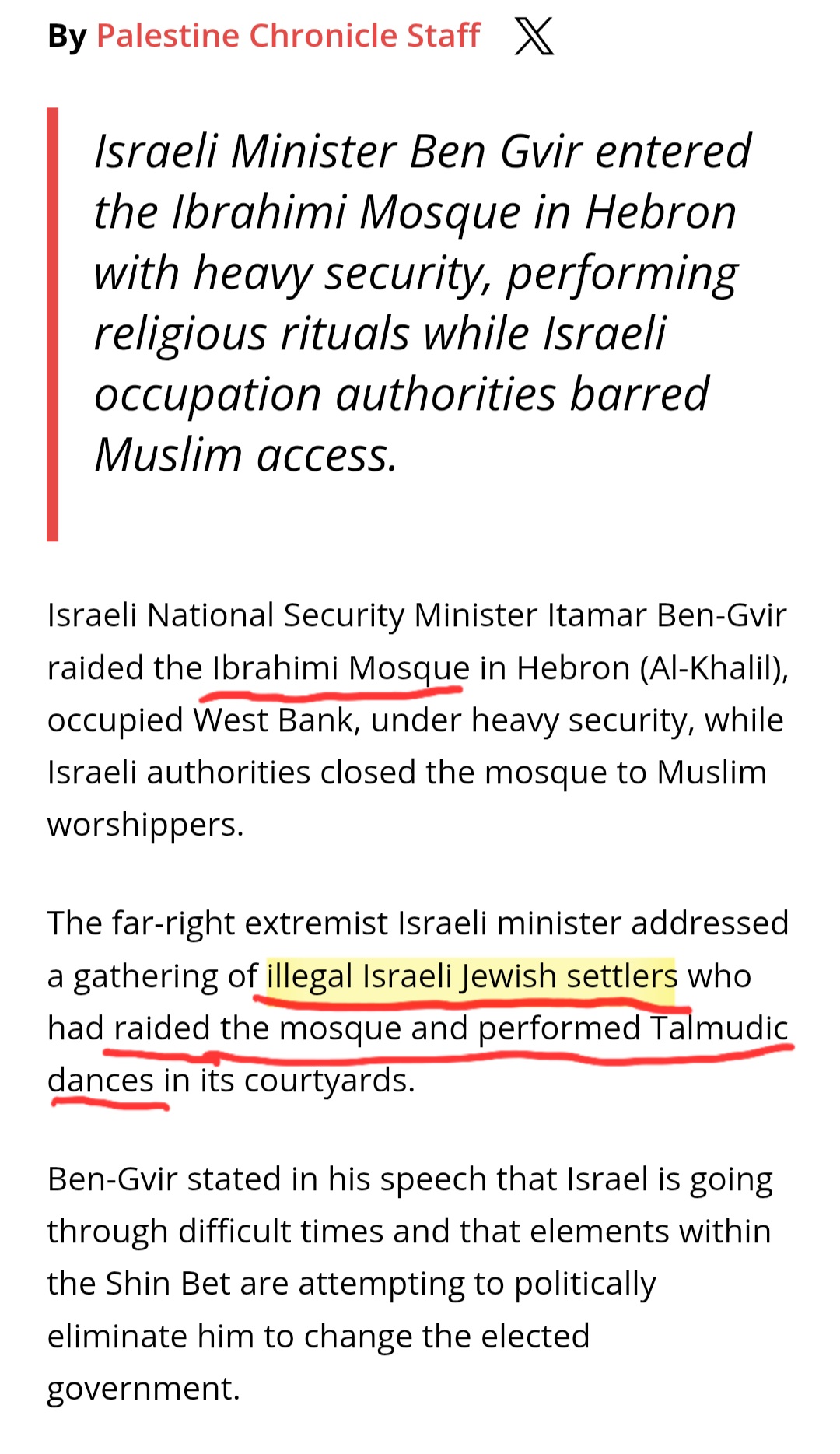
Beyond the 1949 armistice lines—lines drawn to stop a war, never to define a state—the same mouths reverse themselves. Jews become “illegal settlers.” Homes become “violations.” Removal becomes moral necessity. The word that supposedly dehumanizes migrants is suddenly deployed eagerly against Jews. The same politicians who recoil at deportation rhetoric now demand the dismantling of Jewish communities that have existed for decades.

The contrast is not accidental. Rashida Tlaib brands Jewish towns “illegal” and calls for their removal. Bernie Sanders repeats the charge as if the label itself settles every moral question. Even Omar—who rejects illegality as a concept at home—embraces it fully when applied to Jews. Same actors. Same vocabulary. Opposite rules.

This is where anti-Zionism sheds its disguise. A politics that claims to defend Black and Brown people from delegitimization turns around and singles out Jews—alone—for collective criminalization. When a political doctrine singles out Jews—alone—for criminalization and expulsion, it stops being anti-Zionism and becomes antisemitism, full stop. If a principle applies to everyone except Jews, it isn’t principle. It’s prejudice.

The United Nations provides the laundering. Resolutions passed by automatic anti-Israel majorities are treated as moral verdicts rather than political artifacts. When the Barack Obama administration chose not to veto Security Council Resolution 2334, it handed activists a legal-sounding alibi. The appeal is obvious: demand expulsions while pretending your hands are clean. Outsource conscience. Invoke “international law.” Move on.

“any decisions and actions which purport to have altered the character, status or demographic composition [added Jews] of the Holy City of Jerusalem have no legal effect, are null and void and must be rescinded in compliance with relevant resolutions of the Security Council” – UN General Assembly

The hypocrisy spills into the street. Protestors harass synagogues and Jewish institutions, targeting Jews for contemplating life in Israel. That behavior would be condemned instantly if aimed at any other minority. Instead, it’s excused as activism—supposed to make people uncomfortable, as Cori Bush once put it. When the discomfort belongs to Jews, the moral bar drops through the floor.

Strip away the slogans and the pattern is unmistakable: hierarchy. Some groups are granted innocence without agency. Jews exercising sovereignty are denied legitimacy regardless of history, law, or fact. The left that insists words can wound has no trouble criminalizing Jewish existence.

If no human is illegal, Jews aren’t illegal.
If deportation is immoral, ethnic cleansing is immoral.
If harassment is violence, it applies outside synagogues too.

Yet the antisemitic anti-Israel crowd miss the entire point and attempt to reframe the story. Palestine Chronicle wrote that “Israel has come home to roost in Minnesota. The people of Minneapolis and St. Paul have become the Palestinians of Minnesota,” misdirecting people that Arabs are targeted by Israel, when in fact it is Jews being targeted for being “illegal” by the UN and the Muslim world.

The rules change only for Jews. That isn’t progressivism. It’s selective morality—rigged, tribal, and exposed.

When Antisemitism Was Killing Jews, Left-Wing Jews in Congress Backpedaled

Antisemitism came bursting onto the American scene these last years. Jews were murdered. Synagogues were attacked. Jewish students were stalked, doxxed, and targeted by name. Schools and workplaces became hostile terrain.

And at that moment—when antisemitism crossed unmistakably from speech into violence—Jewish New York Congressman Jerry Nadler responded with the Antisemitism Response and Prevention Act.

ARPA was framed as action. In reality, it was an exercise in evasion. While Jews were being assaulted and killed, Nadler urged Congress to study, track, and administratively manage antisemitism—while carefully avoiding the standards already designed to confront it.

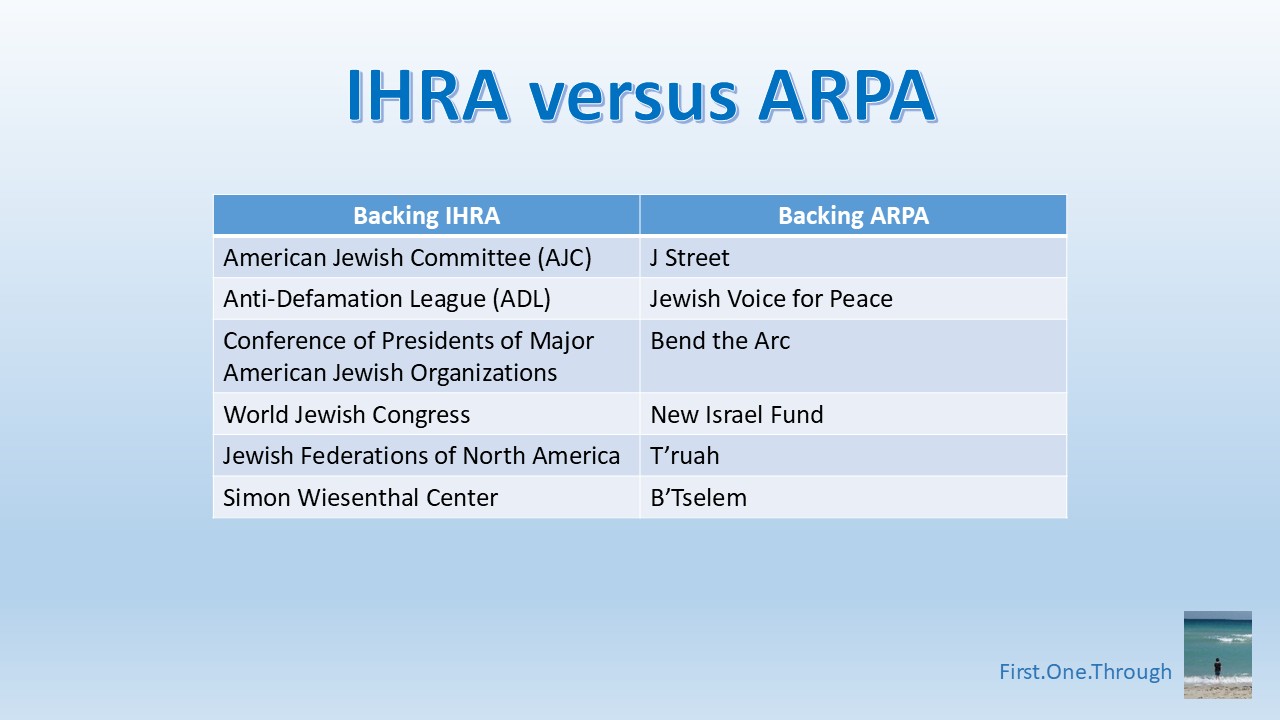
The United States already had a playbook, the International Holocaust Remembrance Alliance (IHRA) working definition, adopted precisely because it reflects how antisemitism functions in the modern world. IHRA recognizes what recent victims already knew: antisemitism today often arrives wrapped in ideological language—through demonization of Israel, denial of Jewish self-determination, and collective punishment of Jews for the actions of the Jewish state.

That clarity made IHRA inconvenient to some. It required institutions to draw lines. ARPA was drafted to move in the opposite direction.

“this bill [H.Res 1449 to use IHRA definition of antisemitism] threatens to chill constitutionally protected speech.” – Rep. Jerry Nadler (D-NY)

Instead of reinforcing enforcement under existing civil-rights law and a recognized definition, ARPA handed discretion to federal agencies. Antisemitism would be assessed holistically. Guidance would follow. Coordination would improve. Standards would remain flexible.

But flexibility is a luxury for bystanders, not for targets.

“the IHRA definition is plainly unconstitutionally vague.” – Rep. Jamie Raskin (D-MD)

Mainstream Jewish organizations understood the consequence immediately. Ambiguity does not restrain institutions that already fail to act. Universities that tolerated harassment would gain new procedural defenses. Administrators could claim compliance while Jewish students were chased from quads and classrooms. The more antisemitism intensified, the slower the response would become.

That is why opposition to ARPA came from the center of Jewish communal life, groups like Jewish Federations and the AJC. Their message was blunt and grounded in reality: Jews were being attacked under existing law. The failure was enforcement, not definition. Weakening standards while violence increased was not caution—it was retreat.

Support for ARPA came largely from groups more concerned with preserving far-left wing ideological space around anti-Israel activism than with confronting antisemitism as it actually manifested. In their calculus, the risk of over-enforcement mattered more than the fact that Jews were being targeted, assaulted, and killed. The alt-left preferred to cast their lot with CAIR in falsely labeling the IHRA definition as a gag order.

Congress eventually pivoted—toward strengthening Title VI enforcement and reaffirming IHRA—quietly conceding the obvious. When antisemitism turns violent, clarity protects lives. Process protects institutions.

“I share the concerns of groups like Jewish Voice for Peace, Bend the Arc, B’Tselem, Amnesty International, and the ACLU that the IHRA definition of antisemitism will be used to stifle dissent and chill free speech, especially Palestinian human rights advocacy. The resolution also does not recognize that the fight against antisemitism is connected to our fight against Islamophobia, racism, white nationalism, and all other forms of hate.” – Rep. Rashida Tlaib (D-MI)

ARPA will stand as a reminder of a grim truth: at a moment when antisemitism demanded resolve, left-wing Jews chose ambiguity and cozying to antisemites, rather than defense.

The Kotel Plaza Is an Open-Air Prison

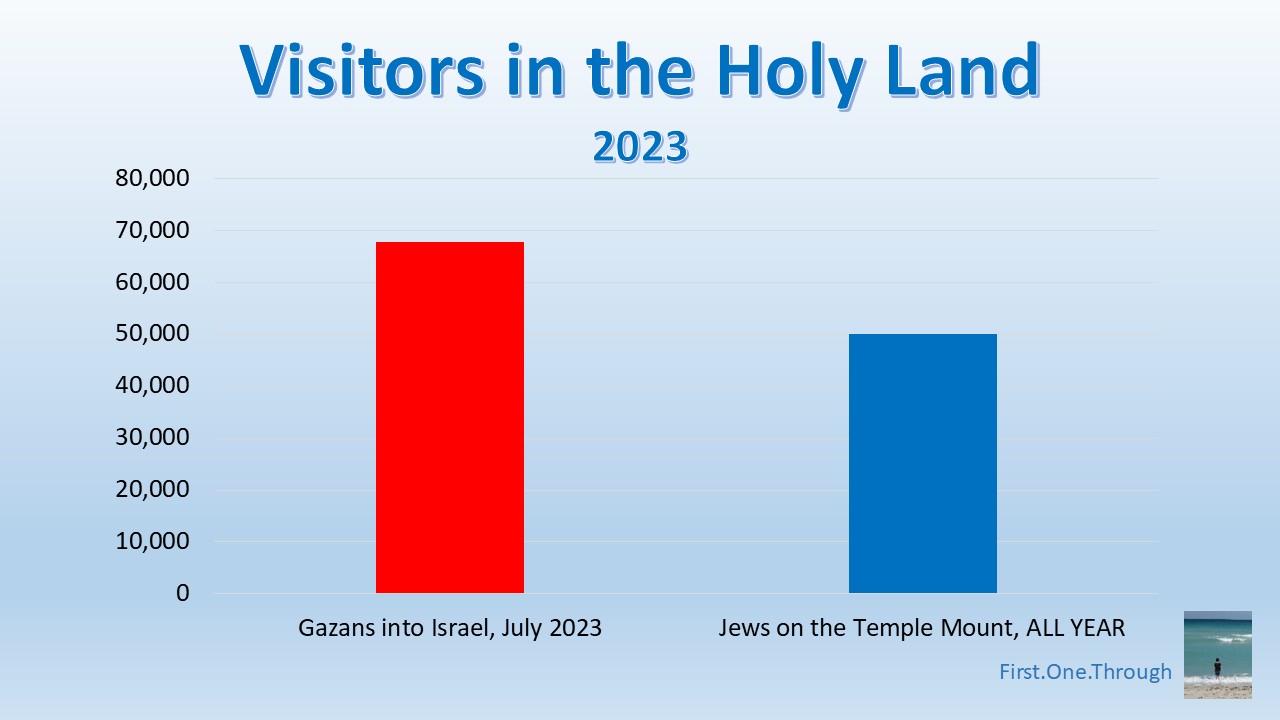
In July 2023 alone, 67,769 Gazans were allowed to exit Gaza through Israeli crossings according to the United Nations. In the entire year of 2023, only 50,098 Jews were allowed onto the Temple Mount — Judaism’s holiest site — in Jerusalem, the capital of the Jewish state according to Beyadenu a Jewish rights advocacy group.

One month versus one year.
A border crossing versus a holy site in a nation’s capital.
The comparison is damning.

The Jewish state allowed more Gazans to cross its border in one month before the Gaza leadership launched a war, than it allowed Jews to step foot on their holiest site over an entire year.

That is not security policy. That is civilizational self-sabotage.

Every country controls its borders. That is normal. What is not normal is a nation blocking its own people from their central religious site in their own capital city.

Jews face time windows, group limits, police escorts, and de-facto prayer bans to walk on ground their ancestors sanctified 3,000 years ago. The result is obvious: Jewish presence is suppressed by design.

Fifty thousand Jews in a year is not demand.
It is managed scarcity.

Thousands of Jews congregate in the Kotel plaza on Passover, unable to ascend onto the Jewish Temple Mount

The Western Wall Plaza is sold as Jewish religious freedom. It isn’t. It is a containment zone — a consolation prize engineered to keep Jews away from the mountain that actually matters.

This is why the Gaza comparison cuts so deep.

Israeli policy makers allowed in more Gazans into Israel, during a blockade, knowing that the area is led by an antisemitic genocidal jihadist group sworn to destroy the Jewish State, than for Jews just seeking a basic human right of prayer.

A sovereign nation that polices Jewish prayer more aggressively than cross-border traffic has lost the plot. A capital that cages its own sacred history is not free.

Until Jews can walk onto the Temple Mount without escorts, quotas, and humiliation, the Kotel Plaza remains exactly what it is: an open-air prison with good lighting and a propaganda budget.

The End of Capitalism, Summer 2031

History has a grim rhythm. The most destructive ideas rarely hatch overnight but stew in society. They are excused as rhetoric, theater, or “just politics.” Then—roughly five and a half years later—they explode.

This is not numerology. It is pattern recognition.

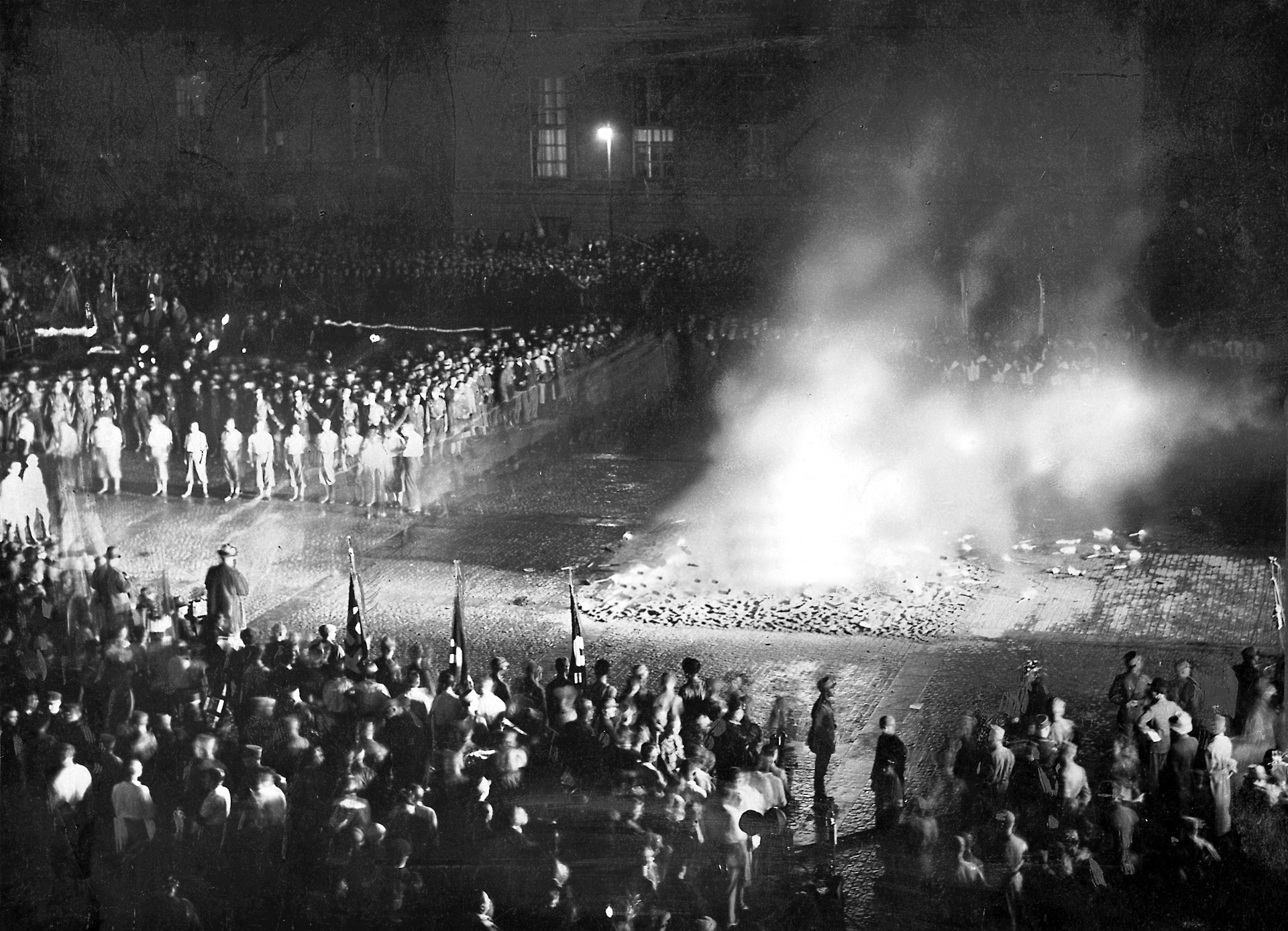
In 1933, Germans burned Jewish books in public squares. It initiated the cultural permission for the destruction of Jews. Five and a half years later, that permission hardened into the machinery of the Final Solution.

Als Höhepunkt einer von Joseph Goebbels initiierten ‘Aktion wider den undeutschen Geist’ werden auf dem Opernplatz in Berlin von Studenten und SA-Einheiten Bücher von Autoren verbrannt, die den Nationalsozialisten mißliebig waren.

In 2018, Gaza launched the so-called “Great March of Return.” It acted as a trial run to invade Israel and slaughter Jews. Five and a half years later, October 7 arrived—mass murder, rape, kidnapping—exactly as promised and practiced.

Ideas announce themselves early. The damage arrives later.

Today, in America, a new idea is being spoken aloud with disturbing ease: personal property is conditional.

Property Is the Load-Bearing Wall

Private property is not a side feature of capitalism; it is the load-bearing wall. Remove it and the structure collapses—investment freezes, contracts become jokes, and capital flees to wherever the rules still mean something.

Yet in recent years, voices across the ideological spectrum have started to say the quiet part out loud.

On the progressive left, figures like Zohran Mamdani and his partners in crime like Cea Weaver have openly argued that housing and land can be seized or overridden by the state in the name of moral urgency. Ownership becomes a social inconvenience. “Use” replaces title. Force replaces consent.

On the populist right, Donald Trump has flirted with the same heresy from a different direction—embracing sweeping government power over land, contracts, and assets when it suits political goals. The rhetoric differs. The result converges.

When the left and right agree that property rights are optional, the center cannot hold.

From Rhetoric to Ruin

Every historical catastrophe begins with intellectual laundering.

Book burning was framed as cleansing culture.
The Gaza marches were framed as civil resistance.
Property seizure is framed as compassion or patriotism.

Once a society accepts that ownership is contingent on political favor, every asset becomes provisional. Homes, farms, factories, patents—nothing is safe from the next emergency, the next slogan, the next election.

Capital responds rationally. It leaves. Innovation slows. Black markets thrive. Strongmen fill the vacuum. What follows is not equality but scarcity enforced by power. And there will be a scapegoat, and Jews have proven the most convenient.

July 2031 Is Not Far Away

Count forward five and a half years.

Ideas being normalized today will be policy tomorrow. Policies will become enforcement. Enforcement will become precedent. By the summer of 2031, the damage will no longer be theoretical.

This is how capitalism dies—not with tanks in the streets, but with applause for confiscation. This is how world order fractures—not through invasion, but through the voluntary abandonment of the rules that made prosperity possible.

This is how the Global North will collapse-not through open country borders, but the eradication of personal property lines.

The lesson of history is brutally clear: destruction is foretold in dangerous gestures towards property that eventually comes for the persons who own them.

The Blood Libel Was Always About Denying Jewish Freedom

The blood libel begins with how the Book of Exodus is misremembered. Exodus is a story of Jewish liberation, yet antisemites preserve it as a story of punishment. That inversion is not confusion but tradition. Every generation dresses the libel in new language, while the structure never changes.

The plagues were directed at dismantling Egyptian authority with precision. The opening strike hit the Nile—Egypt’s god, economy, and source of life—and exposed a crime already committed there. Egypt had drowned Israelite infants in that river to erase a future it feared. The first plague named that bloodshed and stripped Egypt of moral order.

What followed was escalation with restraint. Egypt lost land, productivity, and cosmic claims. Darkness collapsed Pharaoh’s divine authority. What remained was the empire’s final refuge: the belief that continuity would return, that tomorrow would repair what today exposed.

The final plague took it. The death of the firstborn judged a state that had already made children expendable. It revoked Egypt’s claim on the future. Regimes that destroy children forfeit moral legitimacy. Measure followed measure.

The Israelites did not celebrate death. They marked their doors, stayed inside, and departed at dawn. Their defining act was escape from bloodlust, not indulgence in it. Freedom—not punishment—was the center of the story.

Antisemitism begins by erasing that fact.

Across centuries, Jews were remembered not as a people who fled violence but as a people who embodied it. Divine judgment on a tyrannical state was detached from context and reassigned as a permanent Jewish trait. Victims became perpetrators. Liberation became threat. From this inversion, the blood libel followed naturally, and not surprisingly, during Jewish celebrations of Passover when they left Egypt.

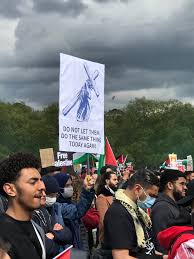
Anti-Israel protestors frame Jews as Christ killers and invert reality stating Jesus was a Palestinian instead of a Jew

The charge did more than justify violence; it recoded Jews as a permanent danger. If society believes Jews possess bloodlust, then Jews must be watched, monitored, restricted, and scrutinized. They become an unwanted risk. Suspicion overwhelms citizenship. Surveillance replaces equality. In this logic, it is only a matter of time before Jews are assumed to act—and preemptive punishment becomes rationalized as self-defense.

This is how the libel works. It marks Jews forever as dangerous rather than as people who long for freedom. It recasts victims as villains and turns survival itself into evidence of guilt. The blood libel means that Jews are never trusted as equals, and never accepted as free.

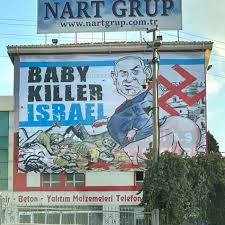
That inheritance governs today’s rhetoric. Calling Jews “baby killers” is not a factual claim; it is the inherited reflex of a culture that never accepted Jewish freedom. The accusation is identity-based, not evidence-based. It exists to keep Jews outside the circle of legitimate humanity and to deny the moral standing of Jewish self-defense before it is even asserted.

Turkey fans the blood libel in Hamas’s latest war to destroy Israel

This mindset survives because it is passed down, laundered through new vocabulary, and presented as moral concern. But it is the same lie. It refuses to see Jews as a people who escaped societies that murdered their children and insists instead on seeing Jews as the source of murder itself.

The story that antisemitism started when Pharoah forgot Joseph and became worried about the growing number and power of Jews was the fear of a monarch. Antisemitism was instilled in the masses when the Exodus story was flipped that Jews had a bloodlust and didn’t deserve equality. Every society that accepted the libel eventually convinced itself that Jewish freedom was intolerable—and acted accordingly.

The Myth of Pocketbooks

The United Nations has chosen the wrong enemy.

António Guterres wants the world to believe that peace can be engineered with a spreadsheet — that inequality is the disease, redistribution the cure, and justice a matter of financial rearrangement. In his January 15 address, he warned that concentrated wealth corrupts institutions and that most low-development countries are in conflict. The implication is unmistakable: balance the books and peace will follow.

“The top 1 per cent holds 43 per cent of global financial assets.  And last year alone, the richest 500 individuals added $2.2 trillion to their fortunes.

Increasingly, we see a world where the ultra-wealthiest and the companies they control are calling the shots like never before — wielding outsized influence over economies, information, and even the rules that govern us all.

When a handful of individuals can bend global narratives, sway elections, or dictate the terms of public debate, we are not just facing inequality — we are facing the corruption of institutions and our shared values.” – UNSG Antonio Guterres

But choosing the wrong enemy guarantees the wrong war.

Because evil is not an accounting problem.

The UN’s failure begins in its diagnosis. It treats terrorism as a social pathology when it is, in fact, an ideological one.

Terrorism is not born in empty wallets. It is born in minds captured by belief.

Two decades of research have demolished the claim that poverty causes terror. Terrorists are rarely the poorest of the poor. They are often educated, middle-class, and technically trained — the engineers of jihad, the lawyers of holy war. The suicide bomber is seldom starving. He is convinced.

If poverty produced terrorism, the poorest societies would be its factories. They are not. Many desperately poor states remain largely untouched by global jihad, while terror movements arise from politically radicalized societies with functioning middle classes and ideological incubators.

What correlates with terrorism is not poverty, but ideas combined with power: religious absolutism, revolutionary nationalism, grievance cultures, and failed identity — not failed GDP.

This is not an academic distinction. It is the fault line between clarity and catastrophe.

If money could defeat jihad, Gaza would be the proof. It is not — it is the refutation.

Gaza has received billions in international aid. What emerged was not prosperity, but the most elaborate terrorist war machine ever embedded in a civilian population: tunnels beneath hospitals, command bunkers under schools, rockets from playgrounds, children trained for martyrdom.

This was not a failure of funding. It was the success of ideology. And the UN instigates that very ideology claiming that Israel should have no sovereign control of who enters its country, and specifically that almost every Arab living in Gaza will move into Israel with UN support.

“We are totally committed in the cause of peace in Gaza, Ukraine, Sudan and far beyond.” – UNSG Antonio Guterres

Hamas did not build tunnels because Gazans were poor. Hamas built tunnels because its charter demands Israel’s destruction, because martyrdom is sacred, because jihad is identity. Money did not create this worldview — it merely financed its execution.

You can flood a society with aid, but if its governing ideology is annihilationist, all you finance is a more capable war machine.

Once the UN misdiagnoses ideology as economics, the next failure becomes inevitable.

For decades, it has constructed and sustained a grievance system around the Stateless Arabs from Palestine (SAPs) that functions symbiotically with jihadist aims. Through its agencies and resolutions, it has promised millions of SAPs who have never lived in Israel that they will one day “return” en masse into Israel — effectively proposing Israel’s demographic erasure through mass population transfer via international decree.

No state can survive if an external body claims authority over who may enter it and redefine its citizenship from the outside. Yet the UN has made this assault on sovereignty a central plank of its Palestine policy — while calling it “humanitarian.”

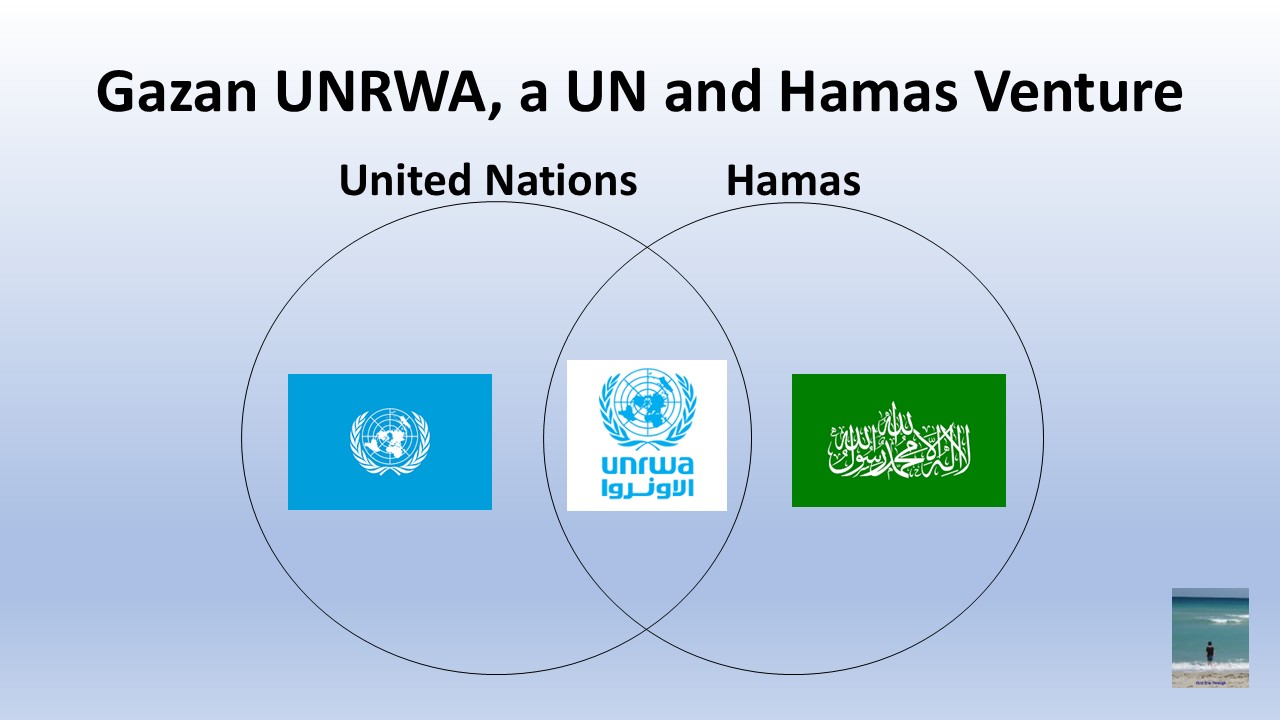
Through UNRWA’s unique multigenerational refugee status, displacement becomes inherited identity rather than a temporary humanitarian condition. Grievance becomes doctrine. Statelessness becomes culture. A territorial dispute becomes a perpetual weapon.

And then the UN asks for more money to sustain it.

Why does the UN persist in this inversion?

Because it refuses to judge belief systems.

It will not confront jihad as an ideology.
It will not describe Islamic terrorism as such.
It will not wade into cultural or civilizational dynamics because it sees itself as a neutral global body.

But neutrality toward ideology does not produce peace. It produces permission.

And because the UN will not fight belief systems, it substitutes economics.

It reframes terror as inequality.
It reframes jihad as deprivation.
It reframes mass murder as misallocated capital.

In doing so, it becomes part of a broader machinery seeking to shift wealth and power from the Global North to the Global South — not merely for development, but as moral rebalancing, regardless of whether this addresses the real drivers of violence.

Redistribution becomes its ritual response whenever violence erupts.

Which means: more authority, more money, more relevance for the UN.

This is not accidental. It is institutional self-preservation dressed as virtue.

So the world is invited to believe the problem is billionaires rather than beheaders. That terror is born from inequality rather than indoctrination. That peace will come from redistribution rather than defeating enemies.

Evil is not a pocketbook problem.
It is an ideology.

And no amount of redistribution will make a death cult lay down its weapons.