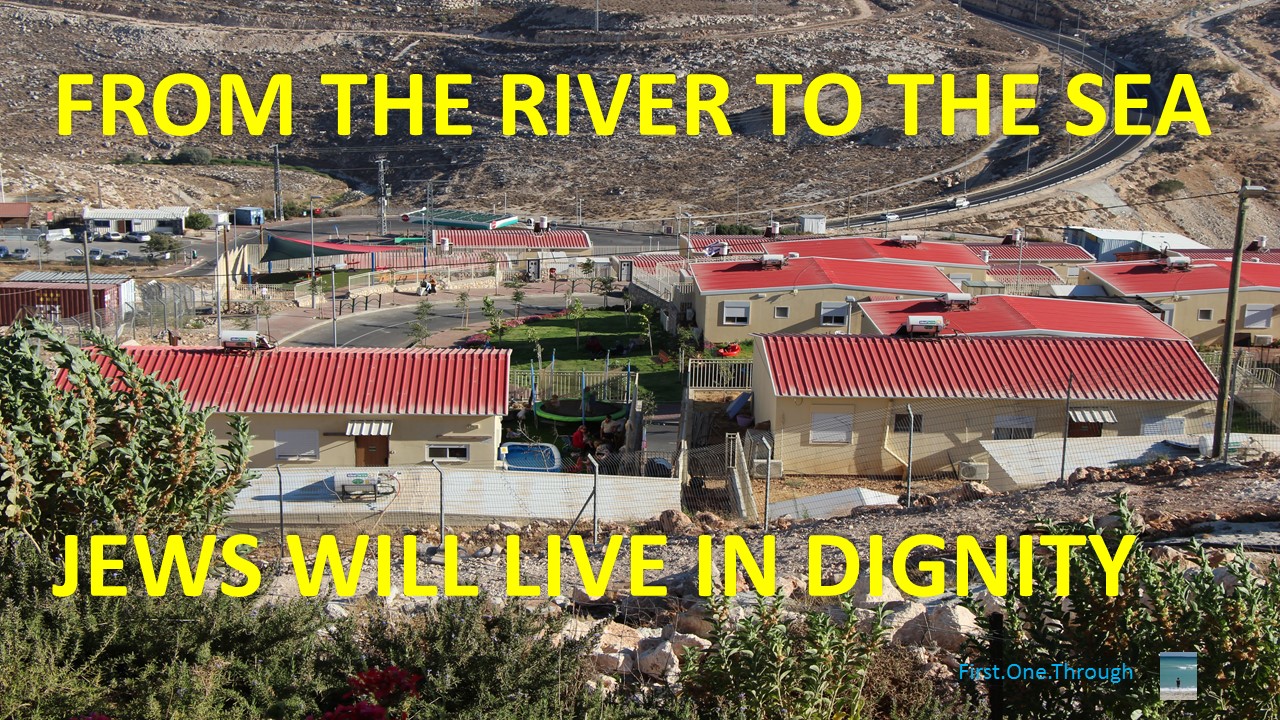
Covering Racism

There are certain types of hatred that stand apart as evil. Without any basis or rationale, some people choose to hate others simply for who they are as inferior and despicable human beings.

The Media’s Treatment of White Men,
including Richard Spencer

In the current heated political environment, the mainstream media has written extensively about the “alt-right,” the white male prejudice. It continues to highlight the system of “patriarchy” of older white men, based on a primitive notion of “cling[ing] to guns or religion or antipathy to people who aren’t like them or anti-immigrant sentiment or anti-trade sentiment as a way to explain their frustrations,” as Barack Obama stated in 2008. Obama’s fellow Democratic leader Nancy Pelosi commented similarly in 2016 that “white — non-college-educated white males have voted Republican… because of guns, because of gays, and because of God, the three G’s, God being the woman’s right to choose.

The media gave significant coverage to such white narrow-mindedness, focusing on a particular person, Richard Spencer.

In articles and editorials from late 2016 until now, The New York Times reported on “White Nationalist Richard Spencer“”s speaking engagements and protest marches. The pieces quoted the Southern Poverty Law Center (SPLC), which tracks hate groups, about Spencer’s background as “a well-known leader of the so-called alt-right, a far-right fringe movement that embraces white nationalism.


P
icture of fights breaking out at Richard Spencer talk at Michigan State University on March 5, 2018, as shown on HuffPo

These are stories to be covered, and the media used much ink to tell the stories.

But the media would remain mum – completely silent – on the racism from the black and Muslim communities.

The Media’s Treatment of Black and Muslim Men,
including Louis Farrakhan

Various agencies produce reports of hate crimes and opinions around the world. The FBI produces a report on hate crime statistics in the United States every year. The media’s coverage was a pathetic analysis that opted to echo its narrative that white men are racists and blacks and Muslims are victims.

As reviewed in “The NY Times Discolors Hate Crimes,” the paper chose a header for its reporting “U.S. Hate Crimes Surge 6%, Fueled by Attacks on Muslims” in 2016, even though attacks on Jews dwarfed the number of attacks on Muslims. An analysis of the statistics would have shown the likelihood of white people committing a hate crime dropped in half between 2001 and 2015, and that black people were much more likely to commit a hate crime than white people.

The reporting would be skewed again in 2017, as detailed in “Black People are Homophobic,” which showed how black people are statistically much more likely to commit anti-Semitic and anti-LGBT crimes than white people. But the media would not write about it.

When the Anti-Defamation League (ADL) produced a survey of anti-Semitism around the world in 2015, which clearly demonstrated that Muslims were two to five times more likely to hate Jews than Christians living in the same country, the media also remained silent.

So it was not a surprise when the noted black Muslim leader Louis Farrakhan delivered a vile anti-Semitic speech on February 25, 2018, that the NY Times would not mention it. His comment that “White folks are going down. And Satan is going down. And Farrakhan, by God’s grace, has pulled the cover off of that Satanic Jew and I’m here to say your time is up, your world is through,” would not reach The New York Times’ readers. The SPLC review of the Minister of Hate detailing the hatred of his Nation of Islam group, including “While Jews remain the primary target of Farrakhan’s vitriol, he is also well known for bashing gay men and lesbians, Catholics and, of course, the white devils, whom he calls “potential humans … [who] haven’t evolved yet.”,” would remain hidden.

Nation of Islam leader Louis Farrakhan said the “Jews were responsible for all of this filth and degenerate behavior that Hollywood is putting out.” (AP Photo/Carlos Osorio)

Racism and anti-Semitism are noxious and terrible, and should be covered by the media. When the mainstream media only highlights racism and anti-Semitism when it is promoted by white men but fails to cover it when it comes from blacks and Muslims, which is much more prevalent, it is worse than #AlternativeFacts. It is racism itself.


Related First.One.Through articles:

Fact Check Your Assumptions on American Racism

New York Times Finds Racism When it Wants

Your Father’s Anti-Semitism

Abbas Knows Racism

Where’s the March Against Anti-Semitism?

If a Black Muslim Cop Kills a White Woman, Does it Make a Sound?

Subscribe YouTube channel: FirstOneThrough

Join Facebook group: FirstOne Through  Israel Analysis

Nikki Haley Channels Robert Aumann at the UN Security Council

On February 20, 2018, US Ambassador to the United Nations Nikki Haley addressed the UN Security Council about the situation in the Middle East. Her remarks showed negotiating skills that were woefully absent during the eight years of ineptitude under the Obama administration. It was as stark as if Haley had been advised by masters of negotiation rather than community organizers. And I am not referring to President Donald Trump, author of “Art of the Deal” compared to Barack Obama. I write of Robert Aumann.


2005 Nobel Prize winner in economics, Robert J. Aumann

Aumann on the Middle East Conflict

Noted Israeli Robert J. Aumann won the Nobel Prize in economics in 2005 for his lifetime of remarkable work in “game theory,” also known as interactive decision theory. Aumann studied how people make decisions under different scenarios, such as encounters between strangers compared to negotiations between parties that will deal with each other many times in the future. According to Aumann, in a situation in which parties will only encounter each other a single time, there is pressure to make a deal and maximize gains. If the two parties know that they will be encountering each other for a long time, then the dynamics of the negotiations are completely different.

On December 8, 2005, as Aumann was accepting his Nobel prize, he said the following about war and peace (32:40):

“You must not be too eager for immediate results. The present, the now, must not be too important for you. If you want peace now, you may well never get peace. But if you have time, if you can wait, that changes the whole picture. Then, you may get peace now. If you don’t want it, you may get it. It is one of those paradoxical upside-down insights of game theory, and indeed, in much of science…. Wanting peace now may prevent peace now. Wanting peace now may prevent you from ever getting it, not now and not in the future. But if you can wait, maybe you can get it now.”

Aumann added that the dynamic in negotiations needed to be coupled with the concept of punishment; that the actions of the two participating players would be met with responses not just from the counter-party, but outside forces (like the rule of law). However, if the intensity of the punishment was too great, the parties could conceivably view a long-term situation as a one-shot deal. Balanced pressure is the key for parties to avoid taking absolute positions and make compromises.

Aumann’s comments were both general in nature and directly related to the Middle East conflict. He made that perfectly clear in an article he wrote for aish.com about The Blackmailer Paradox, which is worth reading in full. Here is an excerpt:

“The political relationship between Israel and Arab countries is also conducted according to the principles of this paradox. The Arabs present rigid and unreasonable opening positions at every negotiation. They convey confidence and assurance in their demands, and make certain to make absolutely clear to Israel that they will never give up on any of these requirements.

Absent an alternative, Israel is forced to yield to blackmail due to the perception that it will leave the negotiating room with nothing if it is inflexible. The most prominent example of this is the negotiations with the Syrians that have been conducted already for a number of years under various auspices. The Syrians made certain to clarify in advance that they will never yield even an inch of the Golan Heights.

The Israeli side, which so desperately seek a peace agreement with Syria, accept Syria’s position, and today, in the public discourse in Israel, it is clear that the starting point for future negotiations with Syria must include a full withdrawal from the Golan Heights, despite the critical strategic importance of the Golan Heights to ensure clear boundaries that protect Israel.”

Aumann goes on to argue that for peace to be achieved, Israel must make three basic changes to its position: 1) a willingness to renounce agreements; 2) a consideration of repeated games; and 3) faith in its positions. Conviction coupled with seriousness and the understanding that the parties will continue to deal with each other is the pathway to an enduring solution.

Obama on the Middle East Conflict

The United Nations has a long history of abusing the State of Israel. President Obama joined that global abuse as the US took many steps to distance itself from the Jewish State as well. But Obama took no such actions against the Palestinian Authority.

Free of any external pressure, the Palestinian Authority took the messages of Aumann to heart and held fast to the three tenants above. They were given a wide berth and global absolution for their crimes against humanity and their failures to advance the peace process. Without even subtle external pressure, the intransigence set in and the PA scuttled any peace talks.

Meanwhile, Israel collapsed under Obama on all three points. It was compelled to publicly state its support for a two state solution which may-or-may-not be the best outcome for an enduring peace. It was repeatedly pushed for “good will gestures” that showed that Israel would take immediate action and would not walk away from the table. And far-left wing organizations such as J Street and the New Israel Fund actively undermined the faith and conviction that Jews have a basic human right to live in homes that they legally purchase.

The peace process was left in shambles.

The Trump Administration on the Middle East Conflict

The Trump administration has taken a decidedly different tack on the Middle East conflict. It has removed the heavy hand pressuring Israel and has begun to apply some pressure on the Palestinian Authority, including withholding some direct and indirect funds.

At the UN Security Council, Haley also sought to set the stage for a lasting peace, by reminding the parties that this is not a one-shot deal, and that America is willing to wait for the parties to be serious about peace negotiations.

“I sit here today offering the outstretched hand of the United States to the Palestinian people in the cause of peace. We are fully prepared to look to a future of prosperity and co-existence. We welcome you as the leader of the Palestinian people here today.

But I will decline the advice I was recently given by your top negotiator, Saeb Erekat. I will not shut up. Rather, I will respectfully speak some hard truths.

The Palestinian leadership has a choice to make between two different paths. There is the path of absolutist demands, hateful rhetoric, and incitement to violence. That path has led, and will continue to lead, to nothing but hardship for the Palestinian people.

Or, there is the path of negotiation and compromise. History has shown that path to be successful for Egypt and Jordan, including the transfer of territory. That path remains open to the Palestinian leadership, if only it is courageous enough to take it…

Putting forward old talking points and entrenched and undeveloped concepts achieves nothing. That approach has been tried many times, and has always failed. After so many decades, we welcome new thinking.

As I mentioned in this meeting last month, the United States stands ready to work with the Palestinian leadership.

Our negotiators are sitting right behind me, ready to talk. But we will not chase after you. The choice, Mr. President, is yours.”


Nikki Haley with Jared Kushner and Jason Greenblatt at the United Nations
February 20, 2018

Haley understood that the pathway to an enduring peace lies with balanced pressure coupled with the ability to take a patient long-term approach, just as Robert Aumann’s lifetime of research demonstrated.

Hopefully, the new tactics will yield success.


Related First.One.Through articles:

Enduring Peace versus Peace Now

John Kerry: The Declaration and Observations of a Failure

Failures of the Obama Doctrine and the Obama Rationale

Failing Negotiation 101: The United States

Failing Negotiation 102: Europe

Subscribe YouTube channel: FirstOneThrough

Join Facebook group: FirstOne Through Israel Analysis

Hamas Thanks Israel Bashers Who Post and Blog

On January 21, 2018, a Hamas journalist wrote that it was time to take advantage of the sympathy that has been building for the “resistance” against the existence of Israel from online pro-Palestinian “activists,” by beginning to attack Israel in new ways and locations, including abroad.

‘Imad Al-‘Afana (photo: alresalah.ps)
As reported by MEMRI, Imad Al-‘Afana, a journalist and former secretary general of Hamas’s faction in the Palestinian Legislative Council (PLC), wrote that attacks from the West Bank and the Gaza border against Israel had become ineffective, and it was time to launch a new wave of attacks:

“The resistance must take advantage of the public climate that is supportive of it and of the Palestinian rights… [to head] in new directions, in addition to the non-violent demonstrations and the [soliciting of] sympathy in the virtual realm [i.e., on the Internet], and this in order to convey powerful messages that will halt the efforts of various elements in the region to [promote] normalization and recognition of Israel. We must deliver painful blows to the enemy’s vulnerable underbelly, that is, target its interests, its investments, its diaspora and its representations around the world.

Here was a member of Hamas appreciating the efforts of groups and individuals that advanced the boycott, divestment and sanctions (BDS) movement against Israel, as well as others who called on their governments to halt the normalization and recognition of Israel around the world. The terrorist argued that the softening of support for Israel would make it easier to attack Israel’s “vulnerable underbelly,… its investments, its diaspora and its representations around the world.

  • Jewish Voice for Peace and Code Pink, you will be held responsible for terrorism against Israelis in the United States.
  • The UK Labour Party and Oxfam, you will bear partial responsibility for terrorism in the United Kingdom against Israelis.
  • Norge Palestinakomitee (The Palestine Committee of Norway) and Palestinagrupperna i Sverige (PGS-Palestine Solidarity Association of Sweden), you will be held liable for terrorism against Israelis in Scandinavia

Hamas has long been labeled a terrorist group by the United States, Israel and many other countries. Its 1988 Charter is one of the most anti-Semitic political documents ever drafted, on par with Nazi Germany.

And a spokesperson for this anti-Semitic terrorist group has publicly thanked the online anti-Zionist propagandists for preparing their countries for the next wave of terrorism targeting Israelis and Jews.

The Noble Peace Prize winner Elie Wiesel noted the importance of words for both good and evil, warning and encouraging people of the world to be careful and deliberate with their voices and opinions. Terrorists have now noted and reminded us of the same.


Related First.One.Through articles:

The UN is Watering the Seeds of Anti-Jewish Hate Speech for Future Massacres

The Three Camps of Ethnic Cleansing in the BDS Movement

J Street: Going Bigger and Bolder than BDS

Extreme and Mainstream. Germany 1933; West Bank & Gaza Today

The Palestinians aren’t “Resorting to Violence”; They are Murdering and Waging War

Abbas’ European Audience for His Rantings

The War Preferred

Names and Narrative: Genocide / Intifada

Palestinians of Today and the Holocaust

What do you Recognize in the Palestinians?

Subscribe YouTube channel: FirstOneThrough

Join Facebook group: FirstOne Through Israel Analysis

Removing the Next Issue – The Return of 20,000 Palestinian Arabs

When US President Donald Trump announced that the United States was recognizing the reality of Jerusalem as the capital of Israel, many people argued that the move was much more than it was: the anti-Israel camp stated that it gave Israel something for nothing, while the pro-Israel camp celebrated the end of Jerusalem as a negotiating point in the Arab-Israel conflict.

Both points of view were incorrect.


US President Donald Trump recognizing Jerusalem as the capital of Israel
December 6, 2017

The US decision was a simple matter of realizing the reality that Jerusalem has held all of the key government functions of the State of Israel since its founding. The Trump administration clarified that its decision to relocate the US embassy to Jerusalem did nothing to preordain the borders or status of Jerusalem in a mutually-agreed upon peace between the Israelis and the Palestinian Authority.

But maybe it is time to take some actions that take a critical issue off of the table, namely the “Right of Return” of Palestinian “refugees.”

On December 11, 1948, the United Nations General Assembly passed Resolution 194 which included a clause which Palestinian Arabs hold as a sacred truth in Article 11:

“Resolves that the refugees wishing to return to their homes and live at peace with their neighbours should be permitted to do so at the earliest practicable date, and that compensation should be paid for the property of those choosing not to return and for loss of or damage to property which, under principles of international law or in equity, should be made good by the Governments or authorities responsible;

“Instructs the Conciliation Commission to facilitate the repatriation, resettlement and economic and social rehabilitation of the refugees and the payment of compensation, and to maintain close relations with the Director of the United Nations Relief for Palestine Refugees and, through him, with the appropriate organs and agencies of the United Nations;”

As of this time, there are fewer than 30,000 refugees related to UNGA resolution 194 that remain alive, nearly 70 years after the resolution’s passing. UNRWA, the UN agency tasked with providing services to the 1948 refugees (and later on, their descendants) was established one year later, on December 8, 1949. That UN agency ultimately created a completely unique distorted definition of a “refugee” to allow UNRWA to survive past its mandate and grow to accommodate the descendants of refugees.

But the bizarre abuse of the English language for UNRWA did nothing to alter the actual meaning of UN Resolution 194.

As a matter of moving the peace process forward, Israel should coordinate with the United Nations to assess which of the 1948 Palestinian Arab refugees seek to return to cities in Israel and live in peace with their Israeli neighbors, and which ones would prefer to receive compensation. As Israel does so, it need not ask anything of the Palestinian Authority in return.

Concluding one of the key agenda items of the Arab-Israeli conflict, the UN can hasten the dismantling of UNRWA and fold its functions into the global refugee agency, the UNHRC. The schools and hospitals of UNRWA would be transferred initially to UNHRC and then to the Palestinian Authority.  The refugee “camps” run by UNRWA would be dissolved into regular local neighborhoods.

The Trump administration has begun to take actions against the Palestinian Authority, including withholding funds to UNRWA. Israeli actions on the “right of return” can begin the process of ending the funding – and the UN agency – completely.


Related First.One.Through articles:

Help Refugees: Shut the UNRWA, Fund the UNHCR

UNRWA Is Not Just Making “Refugees,” It Creates Palestinians

UNRWA’s Munchausen Disease

UNRWA’s Ongoing War against Israel and Jews

Stabbing the Palestinian “Right of Return”

Losing Rights

How the US and UN can Restart Relations with Israel

Delivery of the Fictional Palestinian Keys

Time to Dissolve Key Principles of the “Inalienable Rights of Palestinians”

UN Summit for Refugees and Migrants September 2016

Subscribe YouTube channel: FirstOneThrough

Join Facebook group: FirstOne Through Israel Analysis
UNRWA Is Not Just Making “Refugees,” It’s Creating Palestinians

It has been often reviewed how the United Nations has manufactured Palestinian Arab “refugees.” The fabrication done at the United Nations Relief and Works Agency for Palestinian Refugees in the Near East (UNRWA) has been via:

  • calling someone a “refugee” when they left a home or town, rather than a country which is the actual definition of a refugee;
  • allowing the descendants of those Palestinian Arab “refugees” to claim such status, even though no such status is conferred to other refugees;
  • Telling those refugees that they will return to homes that grandparents left decades ago, even when such homes no longer exist and not a goal of relief agencies;
  • Still calling such people “refugees,” even when they live in the same country that they claim to be refugees of, in the case of Palestinian Arabs living in Gaza and the West Bank

However, the NUMBER of Palestinian Arabs has not been reviewed, and particularly, how UNRWA has increased the number of Palestinian Arabs through its actions.

Fertility Rates in Undeveloped Areas

The UN has completed studies that show how more developed countries witness a much lower rate of birth and older population compared to less developed countries.

Development Stage:         Advanced           Less              Least
Annual rate of
population change                0.3%                1.4%              2.4%

Population age 0-14               16%                28%                40%

Maternal Mortality                0.01%            0.24%             0.44%

Undeveloped countries like Yemen and Sudan have very high birth rates, averaging over 4 children per mother. They similarly have a high maternal and infant mortality rates, as the level of healthcare in those countries is quite poor.

Not so for the healthcare of Palestinian Arabs, thanks to UNRWA.

UNRWA deploys billions of dollars every year to give the Palestinian Arabs the best healthcare in almost the entire world. As a result, despite the high birth rates in the Gaza Strip and West Bank, the mortality rates are a fraction witnessed throughout the region.

fertility vs mortality

Most of the mothers in the Middle East average between 1.5 and 3.0 children. Societies in Turkey, United Arab Emirates, Iran and Qatar average just below two children per mother according to the World Health Organization. The incidents of children under five years old dying was low in those countries, at roughly 1.0 to 1.5%. On the other end of the spectrum were countries under severe distress, including Sudan and Yemen. These countries with over four children on average per mother saw an expected rate of death for children under five years old of 6.0%, five times the rate of the more stable and advanced regions.

But the Palestinian Arabs are an anomaly. While Palestinian mothers average 4.1 children, according to the WHO, the probability of the children dying was the same as experienced in advanced Turkey or Saudi Arabia, at under 1.5%. Applying 2014 data of 121,330 Palestinian Arab births in Gaza and the West Bank, would suggest that 1,808 of these children will die before age 5, but the theoretical number without UNRWA intervention would be closer to that 6.0% percentage of Sudan and Yemen, or 7,280 deaths. That means that because of UNRWA, there will be 5,472 more Palestinian Arab children alive from the class of 2014.

Further adding the 0.2% improved rate of maternal mortality represents approximately 240 mothers each year that do not pass away due to UNRWA’s efforts. In total, considering that UNRWA has been operating for close to 70 years through multiple generations, the number of incremental Palestinian Arabs living in Gaza and the West Bank because of UNRWA is close to 1 million.

Future Action: Jobs versus Contraception

The United Nations created a document together with the Palestinian Authority called “Palestine 2030 – Demographic Change” which told an interesting narrative and plan for the Palestinian demographic boom.

The opening lines of the report bemoaned the slow rate of the population growth: “Palestine’s demographic transition particularly its fertility component, continues to lag behind that of many Asia countries, including Arab countries… Fertility, which was extremely high in the 1970s has been cut in half.” A shocking statement compared to the statistics listed above.

The report continued to discuss the connection between fertility rates and education and income. “Very universal marriage, early marriage, and a low contraceptive rate, especially for modern methods of contraception (used by 44%), are the main proximate determinants of the present level of fertility. Household wealth also plays a role. But it is mainly education, particularly female education that determines the fertility rate.

The report estimates that the Palestinian Arab population in Gaza and the West Bank will grow from 4.7 million in 2015, to 6.9 million in 2030 and 9.5 million in 2050. The doubling of the Palestinian population between 2015 and 2050 compares to a global growth rate of just 36%. The high Palestinian rate of growth is only anticipated in the large poor African countries like Chad, Uganda and Tanzania. Consider further that the number of “refugees” in the GS/WB areas is forecast to grow from roughly 2 million today to 3 million in 2030 and 4.5 million in 2050 (+125% for refugees and +85% for non-refugees). UNRWA clearly impacts the population growth, with estimates of “creating” an additional 800,000 Palestinian Arabs by 2050.

Those are staggering figures for a small territory.

And yet the report claims that the solution to the population boom is not population control, but more jobs and education for women.

If the United Nations is on the front lines of health services in the Palestinian territories, why is the use of contraception only at 44%, when it stands at 64% in the rest of the world where women have to obtain, purchase and manage their health on their own? Why isn’t UNRWA doing more education about family planning and making more contraceptives available?  It is estimated that 7.0% and 5.0% of Palestinians use the pill and condoms, respectively. Shouldn’t the rate be double or triple, more in line with Lebanon (15.1% pill) and Turkey (15.9% condoms)? Overall contraceptive use should be targeted at 75%, in line with the Islamic Republic of Iran at 76.6%.

The UN General Assembly made a global goal of comprehensive family planning in its 2030 Agenda for Sustainable Development in which it set out “universal access to sexual and reproductive health-care services, including for family planning, information and education, and the integration of reproductive health into national strategies and programmes.” With thousands of feet on the ground in Gaza and the West Bank, the UN is in prime position to take an aggressive stance.

Palestinian Arabs have extremely high fertility rates similar to third world countries but receive first-class healthcare from the United Nations. In doing so, UNRWA has helped the Palestinian Arab population balloon by an incremental one million people, or 25%. Will the UN advance its own global family planning goals for Palestinian Arabs, or does it prefer to create a demographic army to confront Israel?


Related First.One.Through articles:

Help Refugees: Shut the UNRWA, Fund the UNHCR

UNRWA’s Ongoing War against Israel and Jews

How the US and UN can Restart Relations with Israel

Delivery of the Fictional Palestinian Keys

Time to Dissolve Key Principles of the “Inalienable Rights of Palestinians”

An Inconvenient Truth: Population Statistics in Israel/Palestine

Mad World of Palestinian Quality of Life Statistics

Arabs in Jerusalem

Subscribe YouTube channel: FirstOneThrough

Join Facebook group: FirstOne Through Israel Analysis


The Middle East with American Leaders that Back Friends and Punish Enemies

On February 2, 2011, US President Obama gave the Middle East a clear unambiguous message: the United States will no longer back its allies.

Arab countries had hoped that the only US ally that Obama was going to abuse was Israel, as witnessed by the callous and abusive treatment of Israeli Prime Minister Benjamin Netanyahu for the first two years of Obama’s presidency.

However, on that February day, Obama pulled the carpet out from Hosni Mubarak, the long-time ruler of Egypt and loyal US ally.

“We’ve borne witness to the beginning of a new chapter in the history of a great country and a long-time partner of the United States,… [the transition] must be meaningful, it must be peaceful and it must begin now.

Obama made clear that the future was in the hands of the people of Egypt, not its leader and long-time US partner Mubarak.

The rest of the Arab world was appalled by Obama’s actions. The leaders of American ally Saudi Arabia felt that Obama had no clue how things worked in the Middle East. You backed allies, not enemies.

In Syria, the regime of Bashar al-Assad bombarded his own people with missiles and chemical weapons, but Obama set down fake “red lines” without ramifications.

Enemies got a pass in the brutalization of its people. Friends were scorned, thrown out of office and arrested.

Seven years later, on January 30, 2018, the Trump Administration’s ambassador to the United Nations Nikki Haley made clear this administration’s break with Obama’s foreign policy after Donald Trump’s State of the Union address:

“For the first time in a long time, our friends know that they can count on the United States to have their backs, and our enemies know that we will no longer give them passes when they threaten American interests.”

It is still early too tell if the Middle East will be better suited under the model of protecting one’s allies. But it is all too apparent that enabling one’s enemies as under Obama, was a catastrophic failure.


Related First.One.Through articles:

Remembering the Terrible First Obama-Netanyahu Meeting

John Kerry: The Declaration and Observations of a Failure

Failures of the Obama Doctrine and the Obama Rationale

Obama’s Friendly Pass to Turkey’s Erdogan

Obama and the Saudis

Israel & the United States Repel the Force of the World

Trump’s Take on Obama’s “Evil Ideology”

Barack Obama and Hillary Clinton’s Foreign Policy on Israel is like the United Nations

Nikki Haley Will Not Equivocate on the Ecosystem of Violence

Comparing Nikki Haley’s and Samantha Power’s Speeches after UN Votes on Israel

Subscribe YouTube channel: FirstOneThrough

Join Facebook group: FirstOne Through Israel Analysis

How Many Polacks Does it Take to Deny the Holocaust?

A satire.

The Polish government wanted to mark the occasion of the International Holocaust Remembrance Day in January 2018. After all, it was in Poland that loss of Jewish life was the greatest of any country in the world. The new popular right-wing party in charge, the Poland Law and Justice Party (PiSS), decided to put forward a multi-prong approach, similar to its retreat from Germany in 1939.

PiSS established several committees, including one to address the Polish educational system, one for the press and another for tourism. PiSS tasked each group with finding a new approach to commemorate the horrors that took place in the country during World War II.

The educational team hatched a novel idea that all students should be taught that the Polish people in Word War II were the only victims of Nazi atrocities and that no Poles participated in the rounding up and killing of Jews. It advised that the term “Polish Death Camps” should become illegal, and that the country should demand that all concentration camps be solely associated with Nazi Germany.

The PiSS parliament enthusiastically passed the proposal. It made the usage of the phrase punishable by up to three years in prison. The educational team was elated and quickly went to work.

A team of 400 people went into the libraries and book stores across the country and began to scour the contents for any mention of the phrase “Polish Death Camps.” Armed with white-out and scissors, the team seized upon the work like a German Shepherd on a fraulein in heat. They shouted “Arbeit Macht Frei” as they attempted to complete the cleanse by Labor Day on May 1.

The press team waited until parliament approved the Complicity Removal Proclamation, “CRaP,” as it was known within the halls of PiSS, to announce its contribution to Holocaust Remembrance Day. In addition to promoting the efforts put in place by the educational committee, the Holocaust press team developed a mascot for the public radio and TV broadcasters that was consistent with Poland’s new clean history: a bottle of white out capped with a crown.

The crowned white out bottle will be featured on all future government propaganda. “We originally wanted something that would recall the placards at our rallies ‘For a White and European Brotherhood,‘” said Jaroslaw Rasistowski, the Minister of Loud PiSS. “But thought that it would be too aggressive now that we’re in power. So we opted for a nail polish bottle as a play on the word ‘Polish.’ However, when the CRaP passed, we decided to modify the design into a white-out bottle. It really conveys everything we’re about.

The tourism committee is still convening. The current rumored plans are for the Polish government to assume greater control of the former Nazi concentration camps and put in place a few changes to “enhance” the sites for tourists:

  • Pokemon Go will be introduced to the camps with new characters sporting Nazi swastikas
  • Virtual reality goggles will be distributed to visitors and feature virtual straight white Christians in striped pajamas walking around the camp grounds
  • A new Carmelite convent will open at the Auschwitz Concentration Camp and feature free communion and lunch for all visitors

All in all, the PiSS government estimates that the new initiatives will employ a total of 3,000 Polaks, a tribute to the estimated 3 million Jewish citizens of Poland that were killed in the Holocaust.

The Polish efforts were extensive. And many countries and organizations have taken notice.

Just last night, the US Olympic Committee demanded that any story that mentions the infamous doctor Larry Nassar who abused the USA Women’s Team gymnasts for years, may no longer say that he worked for the “USA Olympic team,” as it considers that the Olympic Committee was itself a victim of the attacks too.


Related First.One.Through articles:

Charlie Hebdo Will No Longer Sell Magazines to 20 Islamic Terrorist Groups

Michael Bloomberg Talks to America about Marrying a Prostitute

Netanyahu’s Doctoral Thesis on the Nakba

Palestinian Job Fair for Peace

The Joys of Iranian Pistachios and Caviar

Liar, Liar! Hillary’s Pant Suit’s on Fire!

Subscribe YouTube channel: FirstOneThrough

Join Facebook group: FirstOne Through Israel Analysis

The Hebron Narratives: Is it the Presence of Jews or the Israeli Military

The divide in the narrative of the pro-Israel and pro-Palestinian communities can be summarized in one city, and it’s not Jerusalem. It’s Hebron.

The Jewish Narrative

Jews look at the city of Hebron as the essence of their rights in the holy land. More than God’s promise of the land of Israel to the children of Abraham, Isaac and Jacob (including Genesis 13:15-17), Hebron represents the very first real estate transaction recorded in the Bible. In Genesis 23:12-20, Abraham purchased a cave to bury his wife Sarah. That purchase crystallized the promise of God in the action of man.

The founding fathers and mothers of Judaism are almost all buried in Hebron in the Tomb of the Jewish Patriarchs: Abraham, Isaac, Jacob, Sarah, Rebecca and Leah, making it the second holiest location for Jews. Their presence motivated Jews thousands of years ago to establish a large presence in the city and factored into King David’s decision to begin his rule there for the first seven years of his reign (Samuel II 2:1-11).

Cave of the Jewish Patriarchs in Hebron
with building atop attributed to King Herod
Hebron’s long Jewish history and religious shrine kept Jews living and visiting the city. In the 19th and early 20th centuries, the Jews in Hebron had only a small community with a synagogue and school. But in 1929, Arab rioters killed 67 people when a false rumor was spread that the Jews were set to destroy the Al Aqsa Mosque in Jerusalem. The British, who were administering the Palestine Mandate at the time, concluded that there was no way to protect the Jews in the city and evacuated every Jew. It marked the true beginning of the modern war of Jews and Arabs living together in the Holy Land. No Jew would return to the city until after the 1967 defensive Six Day War, when the Jordanians lost the land that they had illegally siezed in 1949.

When the Jews returned to Hebron, they eliminated the centuries-old ban (established 1266) that the Muslims had placed on Jews entering the Cave of the Jewish Patriarchs. They reestablished a small neighborhood in the city where they could live safely, protected by the Israeli army so that they would not be slaughtered again as they were in 1929.

As opposed to the Muslims (including Ottomans) and Arabs (Jordanians) who banned Jews from the holy site and city, respectively, the Israelis made accommodations for sharing the space. They partitioned the Cave so that both Muslims and Jews could pray at the site and sectioned a small part of the city where Jews could safely live.

The Israelis enforced coexistence with the Arabs and Muslims that had offered them no or limited ground for centuries.

The Arab Perspective

Arabs view themselves as the native population of Palestine. Their ancestors came to the region en masse in the 6th and 7th century as they spread Islam through the Middle East and North Africa. Their position as the dominant people in the Holy Land was secured at the end of the Crusades in the 13th century.

Over the next 700 years, various Muslim and Arab people would descend on the region, whether Egyptians, Syrians or Ottomans. The common religion made the nature of the sovereign less relevant to the Muslim Arabs. People from places that would later become Iraq, Jordan, Kuwait and Saudi Arabia would come and go to Palestine and to Hebron. The fluidity of backgrounds in a world that had not been so fixed with nationality as today was natural; Palestine was after all the gateway to Egypt and Africa from Europe and Asia for trade.

Hebron’s Muslims mostly tolerated (by 18th century norms but not today’s) the small Jewish community. It didn’t give them rights to visit or pray at Islamic holy shrines like the Ibrahimi Mosque, as they called the Cave of the Jewish Patriarchs, but they didn’t have them banned from the city or region.

That changed at the end of World War I and the end of the Ottoman Empire, as the world powers decided to establish a Jewish homeland in Palestine through the 1917 Balfour Declaration and the subsequent elaboration of Jewish rights in the 1920 San Remo Agreement and the 1922 Mandate of Palestine. The Muslim Arabs who had seen a spike in Jewish emigration to Palestine over the prior hundred years now had a new fear and concern: the global powers were taking the sovereignty of Palestine away from Muslims and handing it to the Jews. And this, without the consultation or endorsement of the local Muslim Arabs.

The small minority of Jews was no longer a curiosity to be tolerated, but a group that was poised to assume control to be defeated.

When rumors came in 1929 about the Jewish attack on the third most holy site of Islam in Jerusalem, it was easily believed. The British had assumed their mandate just five years earlier and the Jews started to arrive in Palestine by the thousands. It was natural for the Palestinian Arabs to assume that the Jews were readying a takeover of their holy locations in Jerusalem and Hebron. The war was on.

When the Jews came back to Hebron in 1967, they didn’t just return as civilians, but with an army. They set a model for sharing the Ibrahmi Mosque that the Arabs tolerate, but in a format that Muslims fear that Israelis will try to replicate at the Al Aqsa Mosque Compound in Jerusalem.

It has now been decades that the Arabs of Hebron live under Israeli occupation, a reminder of their defeat in 1967 and of how their land and culture had been taken away from them. Every Israeli soldier that they see is there to inspect and check and validate their presence. But the Arab residents wonder why they need these Jewish interlopers to validate Arab presence in Hebron. They have been there for centuries.

The Conflicting Narratives

Whether one views one or both of these narratives as valid, the dichotomy of the root of the problem is very different. The Jews believe they have a natural right to live in the city as their ancestors had for thousands of years. The Israeli military is there to ensure the peace.

Yet for the Palestinian Arabs, the Israeli military is the core of the problem. They do not want to live under Jewish rule, neither as citizens of a Jewish State nor by an occupying army.

The Jews contend that the British action in 1929 did as much damage as the Palestinian Arab murderers. In the face of a heinous massacre of Jews, the response of the British Administrators was not to punish the Arabs and protect the Jews, but to ban the Jews from the city. That action taught the Arabs that violence pays. The terrorist group Hamas continued to make the point, having made Israel abandon Gaza in 2005.

The Palestinian Arabs make no apologies for any of their statements or actions: this is Arab land and home to Islamic shrines. The Israelis may say they are promoting coexistence, but they are doing so on stolen land. How noble is it to steal someone’s home and then offer to share it?!

Israelis view the Arab attitude as deeply problematic: their arguments are not localized to Hebron, but are the same throughout the land. The Palestinian Arabs reject the basic presence of a Jewish State in the land in any configuration. Why abandon Hebron, when the sentiment is the same for Haifa?

While moderate Arabs may indeed hold that view, they are willing to accept the de facto existence of millions of Jews within the 1967 borders. They realize that the Jews are not going anywhere any time soon.

So what makes a Hebron narrative different than a Haifa narrative or a Jerusalem narrative or a Jericho narrative? How and why is it unique in depicting the problems that people have in talking about the Israeli-Arab conflict?

Why Hebron?

Most of the world has accepted the reality and legitimacy of Israel and its borders within the 1949 Armistice Lines (the 1967 borders). Cities like Haifa, Tel Aviv and Nazareth are only contentious among the most rabidly anti-Zionist zealots who shout “From the river to the sea, Palestine will be free.” The narrative that questions Haifa is one to be easily and readily dismissed as coming from the lunatic fringe.

Jerusalem is considered the most contentious topic for a variety of reasons ranging from the holiness ascribed to the city, its designation as a capital by the competing parties, and the fact that both populations – Jews and Arabs – live in the city in great numbers. Reasonable people can have completely different viewpoints on the best path forward.

And then there is Hebron. Compared to other major West Bank cities like Jericho, Nablus or Jenin, it is a city with a handful of Jews (as opposed to none), and home to a venerated site for Jews on par with Medina for Muslims, while most other cities have much more minor Jewish holy sites. As such, it is divided between areas under Palestinian Authority and Israeli control.

Modern division of Hebron into area under PA and Israeli control
The ongoing and persistent presence of Jews in Hebron has made it a flashpoint for an all-or-none possession of control and access for nearly 90 years. It was in Hebron that the world bodies took the first steps in modern times to evict all of the Jews, presumably for their own good. The 1929 action was an abrogation of the Mandate that the British were handed that “No discrimination of any kind shall be made between the inhabitants of Palestine on the ground of race, religion or language. No person shall be excluded from Palestine on the sole ground of his religious belief,” (Article 15).

Within a decade, the British would follow up their action with the 1937 Peel Commission and the 1939 White Paper, actions which would bar Jews from living in most of Palestine and prevent hundreds of thousands of Jews from moving to Palestine.

Hebron set the stage that coexistence was impossible; parallel existence was required.

But the counter-argument stands in reality in the State of Israel. In Israel, Arabs have full rights and account for over 20% of the population. Israel granted every non-Jew Israeli citizenship when it declared statehood in 1948, and offers any Arab in Jerusalem citizenship, if they so desire.

In EGL, east of the Green Line/ the West Bank, the desire for co-existence is seemingly non-existent. The Palestinian Authority has laws calling for the death sentence for any Arab that sells land to a Jew. The leader of the Palestinian Authority pledged that a future Palestinian state will not see the presence of a single Israeli (read Jew). Some Palestinian Universities even ban Jews from stepping foot on campus.

So today, most Israelis that live in EGL/West Bank are in towns that almost exclusively Jewish. The exception is Hebron, where just 700 Jews live among 250,000 Arabs. (Another 6,000 Jews live in adjoining Kiryat Arba).

It is Hebron that is the current test for coexistence for the Arab community. Can they accept and welcome the Jews in their midst? Could Israel withdraw its protective force from the small Jewish community of Hebron and not see them slaughtered?

Some Muslims that claim to be moderates say that Jews lived in Arab countries for centuries before the establishment of Israel. Will they defend and protect the Jews of Hebron and Kiryat Arba, or is the existence of Israel next door still too much of an insult for them to endure, and therefore cannot coexist with Jewish neighbors?

The narratives of Jew and Arab in the Holy Land and the pathway to either coexistence or divorce is encapsulated in the city of Hebron.


Related First.One.Through articles:

The Israeli Peace Process versus the Palestinian Divorce Proceedings

Squeezing Zionism

The UN’s Disinterest in Jewish Rights at Jewish Holy Places

It is Time to Insert “Jewish” into the Names of the Holy Sites

The Long History of Dictating Where Jews Can Live Continues

The Palestinian’s Three Denials

The Cancer in the Arab-Israeli Conflict

Joint Prayer: The Cave of the Patriarchs and the Temple Mount

Dignity for Israel: Jewish Prayer on the Temple Mount

The United Nations and Holy Sites in the Holy Land

Subscribe YouTube channel: FirstOneThrough

Join Facebook group: FirstOne Through Israel Analysis

NY Times Hides Abbas’s Violence and Pence’s Truth

The New York Times blatant bias towards the Palestinian narrative was in stark display in articles reviewing the speeches given by the acting-President of the Palestinian Authority Mahmoud Abbas to a large audience of politicians in Ramallah on January 14, 2018, and of the one given by US Vice President Mike Pence to the Israeli Parliament on January 22, 2018.

Hiding Palestinian Violence

The Times article appeared on the top of page A8 accompanied by a color picture of Abbas. The article relayed Abbas’s speech with supporting commentary throughout the article. Only at the very end of the piece, did the Times offer any competing viewpoints.

During its supporting description of Abbas’s speech, the Times deliberately chose to portray Abbas as a man of peace and hope.

NYT: “Indeed, Mr. Abbas, who reaffirmed his commitment to non-violence and stopping terrorism, seemed to hold out hope of a return to negotiations – but with someone other than the United States leading the way.”

What did Abbas actually say during his remarks to his Arab audience?

Abbas:We always and forever adhere to negotiations as the path to reach a political settlement with Israel. We don’t want war. We will not call for a military war with Israel. Whoever has [weapons] – go ahead and do it. I say this out in the open. If you have weapons, go ahead. I’m with you, and I will help you. Anyone who has weapons can go ahead. I don’t have weapons. I want the peaceful political path to reach a settlement.

Not only did the Times chose to negate the remarks in which Abbas supported those who used terrorism, the paper opted to not give any clarification about why the United States has been accusing Abbas for supporting terrorism:

Abbas:The Americans are always telling us that we must stop paying salaries to the families of the martyrs and the prisoners. We categorically reject this demand. Under no circumstances will we allow the families of the martyrs, the wounded, and the prisoners to be harmed. These are our children, our families. We are proud of them, and we will pay them before we pay the living.”

Why didn’t the paper use the Abbas statement to comment that Congress had voted on the Taylor Force Act to demand that the PA stop paying terrorist to kill Jews? Because if it did so, it would be shining a light on the despicable Palestinian action promoting murder?

In regards to reconciling with a terrorist group, the Times would add no color that the US designates Hamas as a terrorist group. It merely stated that “reunification” was a chance to bring the two physical Palestinian territories together, but it made no mention of incorporating the anti-Semitic terrorist group into a governing role in the Palestinian Authority:

NYT:Addressing hundreds of P.L.O. members, Mr. Abbas urged the Council to emphasize unification talks aimed at bringing Hamas, the Islamic militant group that rules the Gaza Strip, into the Palestinian fold. ‘A state without Gaza is not possible,’ he said. ‘A state in Gaza is not possible.’

Instead, the Times talked of Abbas as a man of hope, a man who continued to push for a two-state solution and peaceful coexistence with Israel:

NYT:Mr. Abbas, 82, stopped well short of embracing an alternative to a two-state solution, the project around which he has built his career. The number of Israelis and Palestinians who hold out hope that such a solution can be achieved is dwindling, but Mr. Abbas said nothing about abandoning it.

“He also shied away from urging the kind of provocative acts, like ending the Palestinian Authority’s security cooperation with Israel or disbanding the authority itself, that could raise the costs of occupation for Israel and shake officials in Jerusalem and Washington.

The Times did not clarify why so many people have become disillusioned with a peace based on a two-state solution, such as an intifada running from 2000 to 2005, and wars raging from Gaza in 2008, 2012 and 2014 killing thousands, even after Israel withdrew all civilians and military forces from Gaza in 2005.

When the Times opted to mention the vile screed of Abbas that the Jews have nothing to do with Israel, it did so at the very end of the article, with an introduction that let people dismiss the content, and with a conclusion that allowed the statement to stand.

NYT:Testing his audience’s attention, Mr. Abbas also gave a lengthy history lecture reaching back to the 17th century, saying that Oliver Cromwell had first proposed shipping European Jews to the Holy Land, before tracing the beginning of Zionism to what he called the 19th-century journalist and activist Theodor Herzl’s efforts to ‘wipe out Palestinians from Palestine.’

“’This is a colonial enterprise that has nothing to do with Jewishness,’ Mr. Abbas said. ‘The Jews were used as a tool under the concept of the promised land – call it whatever you want. Everything has been made up.’

“Neither Prime Minister Benjamin Netanyahu nor Trump administration officials offered any immediate response.”

Did the Times attack this fake history? No. Did it call out Abbas’ rewriting of the entire Old Testament? No. Did it mention that Abbas also claimed that the Arab countries didn’t really evict a million Jews? No. Did it recount Abbas’s doctoral thesis on Holocaust denial? No. Did it mention that the United Nations has similarly been denying Jewish connection to Jerusalem? No.

The sloppy New York Times journalism gave a pass to Abbas’s #FakeHistory, and allowed its readership to question the very legitimacy of the Jewish State, just as the Palestinian narrative demands.


Hiding Pence’s Truth

On January 23, 2018 the Times covered the speech that Vice President Mike Pence delivered to the Israeli Knesset. The article would feature no picture of Pence standing in Israel’s capital of Jerusalem.

To begin, the Times did not begin to quote Pence until paragraph 9, compared to paragraph 2 in the Abbas story. The Times needed to lay the groundwork of how upset the Palestinians were to frame the article:

NYT: “Palestinians claim Jerusalem as their capital or believe it should be divided, with East Jerusalem becoming the capital of a Palestinian state.”

No Times clarification that Palestine is not yet a state.

NYT: “The international consensus, previously supported by the United States, has been that the city’s status can be determined only through negotiations between Israelis and Palestinians.”

The Times deliberately misled its readers that that the Trump administration had said the same.

NYT:Arab lawmakers rose to their feet at the start of Mr. Pence’s speech in the Israeli Parliament and held up signs reading ‘Jerusalem is the capital of Palestine.’ Ushers pulled down the signs and escorted them out of the room, to the applause of others in the hall.

The phrasing did not make clear that the standing ovation by the members of Knesset was in favor of expelling the Arabs and drowning out their protest.

NYT:Mr. Trump has also threatened to shutter an office of the Palestine Liberation Organization in Washington and cut American donations to the United Nations agency that provides services for Palestinian refugees.

Once again there was no detail that Trump was taking these moves because the Palestinians support terror and refuse to come to the negotiating table.

NYT:That approach has been welcomed by many Israelis, while rankling with Palestinians, whose political and religious leaders have refused to meet Mr. Pence.

The Times took its time to set up the article that everything that Pence had to say was objectionable and unwelcome. It did nothing of the sort to introduce the Abbas speech.

Throughout the Pence article, in paragraph after paragraph, the Times countered every statement with a Palestinian narrative, a complete reversal of the Abbas article a week earlier when a counter-opinion of the Israeli perspective was only given at the very end of the article, and then, only muted.

NYT:We stand with Israel because we believe in right over wrong, in good over evil and in liberty over tyranny,” Mr. Pence said.

“Mr. Pence, an evangelical Christian, dotted his address with biblical references and spoke of the Jewish connection to Jerusalem in historical and religious terms.

Correction: Pence’s initial remarks had to do with the broad connection between the United States and Israel, one of “shared values.” He spoke of George Washington, John Adams and Abraham Lincoln who supported the great contributions of Jews to America and the world, and their rights to live in the Holy Land.

Did the Times write that Abbas is an Arab Muslim when he belittled the Bible? Nope. But it decided to highlight Pence’s religion. It was a setup for the ‘messianic extremist’ comment by Saeb Erekat to come later in the article.

NYT:He scarcely mentioned the Palestinians and did not refer to their history in the Holy Land, nor to their territorial claims.”

Did the Times write about the 3700-year history of the Jews in Jerusalem during the Abbas speech write-up? About the Jewish Temples? That Jews have been a majority in Jerusalem since the 1860s? No, why would it? The Times is part of the Palestinian propaganda machine.

NYT:The Palestinian president, Mahmoud Abbas, will not meet Mr. Pence. He has called Mr. Trump’s Jerusalem declaration ‘a slap in the face.’

“Saeb Erekat, the chief negotiator for the Palestinians, said that Mr. Pence’s ‘messianic discourse’ was ‘a gift to the extremists.’

“‘His message to the rest of the world is clear: violate international law & resolutions and the US will reward you,’ he said, according to his office’s Twitter account.”

Quite some airtime for the Palestinian point of view.

In the final paragraph, the Times opted to slam Pence yet again in another distortion of facts:

NYT:Mr. Pence canceled his last planned trip to the Holy Land before Christmas after Christian Arab leaders declined to meet with him.

No, Pence delayed his last trip to secure a vote on the GOP tax bill.


The Times gave a podium to a man that negated the history and rights of Jews in Israel and who supports terrorists both in language and money, printing 304 words of Abbas’s speech. It did not challenge a single word of his screed. Meanwhile, the paper took great pains to negate and belittle the US Vice President’s remarks, printing a mere 45 words of Pence’s speech.

Additional editions of #AllThePalestinianProgandaFitToPrint


Related First.One.Through articles:

Abbas’ European Audience for His Rantings

The New York Times Inverts the History of Jerusalem

The Arguments over Jerusalem

750 Years of Continuous Jewish Jerusalem

The Custodianship of a Child and Jerusalem

Palestinians agree that Israel rules all of Jerusalem, but the World Treats the City as Divided

What do you Recognize in the Palestinians?

The Palestinians aren’t “Resorting to Violence”; They are Murdering and Waging War

Subscribe YouTube channel: FirstOneThrough

Join Facebook group: FirstOne Through  Israel Analysis


Israel & the United States Repel the Force of the World

“It is not in numbers, but in unity, that our great strength lies; yet our present numbers are sufficient to repel the force of all the world.”

Thomas Paine, Common Sense
January 9, 1776

On January 9, 1776, exactly 242 years ago, the great American Patriot Thomas Paine published the first edition of his pamphlet “Common Sense.” In it he advanced the arguments why the colonies needed to break free from England, and argued for a new political system based on democracy and equality, quite dissimilar to England’s monarchy and class-based hierarchy. While he acknowledged that the colonies were outnumbered and outgunned, he declared that the unity of the American colonies in spirit and purpose would withstand the battles to come.

Those sentiments are being borne out again, this time, between the United States of America and Israel.

On December 6, 2017, US President Trump acknowledged the reality that Jerusalem is the capital city of the State of Israel. It was a move that was welcomed by the government of Israel, but not by much of the world.

Shortly thereafter, the United Nations Security Council voted to denounce USA’s decision in a vote of 14-to-1, with only the US voting against the measure. That single vote by a permanent member of the UNSG was enough to block the resolution.

The Arab states moved to have a similar vote at the UN General Assembly. The lopsided vote came in at 128 countries voting to condemn the American recognition, 9 votes supporting the USA and 35 countries abstaining. The overwhelming vote was non-binding and the US continued to take measures that were completely within its rights and jurisdiction .

Not seven weeks after the US declaration of the Jerusalem Acknowledgment, US Vice President came to Israel, to visit its capital city of Jerusalem and address its parliament, the Knesset. He loudly and clearly proclaimed the unity between the US and Israel:

US Vice President Mike Pence addressing the Knesset
(photo: January 22, 2018)

“Thanks to the [US] President’s leadership, the alliance between our two countries has never been stronger, and the friendship between our peoples has never been deeper. And I am here to convey a simple message from the heart of the American people: America stands with Israel.

We stand with Israel because your cause is our cause, your values are our values, and your fight is our fight.

We stand with Israel because we believe in right over wrong, in good over evil, and in liberty over tyranny.”

Pence made clear that the US stands with Israel in both the positive and negative; in the passive and the aggressive.

The US stands with Israel in the mundane. In a democratic way of life. In commerce and trade. In acknowledging truth and fact.

And the US also stands with Israel against the forces of hatred, racism and antisemitism. Against evil ideologies and terror. Against distortions and fake history.

Pence reiterated those comments, as he absorbed the history of the Jews and the history of America:

In the story of the Jews, we’ve always seen the story of America. It is the story of an exodus, a journey from persecution to freedom, a story that shows the power of faith and the promise of hope….

“And your story inspired my forebears to create what our 16th President called a “new birth of freedom.” And down through the generations, the American people became fierce advocates of the Jewish people’s aspiration to return to the land of your forefathers to claim your own new birth of freedom in your beloved homeland.”

Pence addressed the lies spewed from the mouth of the acting-President of the Palestinian Authority and the UNESCO that the Jews have nothing to do with the land of Israel:
“The Jewish people held fast to a promise through all the ages, written so long ago, that “even if you have been banished to the most distant land under the heavens,” from there He would gather and bring you back to the land which your fathers possessed….“The Jewish people’s unbreakable bond to this sacred city [of Jerusalem] reaches back more than 3,000 years. It was here, in Jerusalem, on Mount Moriah, that Abraham offered his son, Isaac, and was credited with righteousness for his faith in God.

“It was here, in Jerusalem, that King David consecrated the capital of the Kingdom of Israel. And since its rebirth, the modern State of Israel has called this city the seat of its government.

“Jerusalem is Israel’s capital. And, as such, President Trump has directed the State Department to immediately begin preparations to move the United States Embassy from Tel Aviv to Jerusalem. In the weeks ahead, our administration will advance its plan to open the United States Embassy in Jerusalem, and that United States Embassy will open before the end of next year.”

Pence further spoke of a revolution in the Arab world, where some countries are breaking with past hatreds and establishing ties with Israel:
“Over the past two days, I’ve traveled to Egypt and Jordan, two nations with whom Israel has long enjoyed the fruits of peace. I spoke with America’s great friends, President Al Sisi of Egypt, and King Abdullah of Jordan, about the courage of their predecessors who forged an end to conflict with Israel in their time.And those two leaders prove every day that trust and confidence can be a reality among the great nations who call these ancient lands home.

In my time with those leaders, and with your Prime Minister, we discussed the remarkable transformation that is taking place across the Middle East today, and the need to forge a new era of cooperation in our day and age.

The winds of change can already be witnessed across the Middle East. Longstanding enemies are becoming partners. Old foes are finding new ground for cooperation. And the descendants of Isaac and Ishmael are coming together in common cause as never before.

Last year, in Saudi Arabia, President Trump addressed an unprecedented gathering of leaders from more than 50 nations at the Arab Islamic American Summit. He challenged the people of this region to work ever closer together, to recognize shared opportunities and to confront shared challenges. And the President urged all who call the Middle East their home to, in his words, “meet history’s great test — [and] conquer extremism and vanquish the forces of terrorism together.”

And Pence spoke about the common threat posed by radical Islamic terrorism and the evil of the Islamic republic of Iran:
“Radical Islamic terrorism knows no borders — targeting America, Israel, nations across the Middle East, and the wider world. It respects no creed — stealing the lives of Jews, Christians, and especially Muslims. And radical Islamic terrorism understands no reality other than brute force.Together with our allies, we will continue to bring the full force of our might to drive radical Islamic terrorism from the face of the Earth.”
Just over 242 years since Paine’s call for unity to launch a new nation, the US administration declared its affinity for Israel, in maintaining and advancing the Jewish State, just 70 years after it was reestablished:
“How unlikely was Israel’s birth; how more unlikely has been her survival. And how confounding, and against the odds, has been her thriving. You have turned the desert into a garden, scarcity into plenty, sickness into health, and you turned hope into a future.Israel is like a tree that has grown deep roots in the soil of your forefathers, yet as it grows, it reaches ever closer to the heavens. And today and every day, the Jewish State of Israel, and all the Jewish people, bear witness to God’s faithfulness, as well as your own.

It was the faith of the Jewish people that gathered the scattered fragments of a people and made them whole again; that took the language of the Bible and the landscape of the Psalms and made them live again. And it was faith that rebuilt the ruins of Jerusalem and made them strong again.

The miracle of Israel is an inspiration to the world. And the United States of America is proud to stand with Israel and her people, as allies and cherished friends.”

The US is proud of Israel and Israel is proud of the US. That unity is a strength for both countries and will hopefully continue to “repel the force of the world” for many years to come.


Related First.One.Through articles:

In Defense of Foundation Principles

Israel’s Peers and Neighbors

Comparing Nikki Haley’s and Samantha Power’s Speeches after UN Votes on Israel

Israel’s Colonial Neighbors from Arabia

Both Israel and Jerusalem are Beyond Recognition for Muslim Nations

The New York Times Inverts the History of Jerusalem

The Invisible Flag in Judo and Jerusalem

First.One.Through videos:

US and Israel are there for each other (music by Michael Jackson)

God is a Zionist (music by Joan Osborne)

Subscribe YouTube channel: FirstOneThrough

Join Facebook group: FirstOne Through Israel Analysis