It is Time to Insert “Jewish” into the Names of the Holy Sites

Every religion knows its holy sites.  And the world typically appreciates those facts as well.

Muslims do not call mosques “Islamic Mosques” because to do so would be redundant.  The Vatican does not refer to the “Catholic” St. Peter’s Basilica, because everyone knows that it is a Catholic holy site.

Not only would clearly identifying the sites be redundant, it would be superfluous since those religions have complete control over the sites. No other religion is marching on Mecca to claim the Kaaba Stone, or the Vatican to claim a cross.

But Jews in Israel do not have such luxuries.

The Jewish Temple Mount

The United Nations has a long and inglorious history of trashing Israel.  It has not simply rebuked the country for military matters, but for religious ones as well.  As detailed in “The United Nations and Holy Sites in the Holy Land,” for years the UN has undermined various Jewish holy sites, including: the Temple Mount; Tomb of the Patriarchs; Tomb of Rachel; Joseph’s Tomb; and even the Hurva Synagogue.

In September 2015, the UN Security Council advanced an effort to completely distance Judaism from its holiest spot: The Temple Mount.  As described in “The UN’s Disinterest in Jewish Rights at Jewish Holy Places,” the UNSC followed the recommendation of acting-President of the Palestinian Authority Mahmoud Abbas in several respects: solely using the Islamic name for the Temple Mount; only voicing concern for Muslim worshippers, not Jewish ones; mentioning the special role of Jordan at the site, but not Israel; and ignoring the calls of incitement to terrorism by Abbas.

A year later, UNESCO followed the lead.

On October 13, 2016, UNESCO approved a draft resolution which removed any mention of the Jewish names for its holiest site. Throughout the resolution, the UN only used Islamic names for the site, and ignored all of the points mentioned above.

This resolution was put forth to undermine Judaism’s ties to the Temple Mount, and Israel’s sovereignty over Jerusalem.  The move by UNESCO was an effort to give the Jordanian Waqf full control of the Jewish Temple Mount, and to ultimately hand the Old City of Jerusalem to become a capital of a future state of Palestine.

10383720_10153336970463706_7100356438545362102_o
The Temple Mount, with thousands of Jews in front of the Western Wall

The Cave of the Jewish Patriarchs

The Cave of the Patriarchs in Hebron is the burial site of almost all of the founding fathers and mothers of Judaism, including: Abraham; Isaac; Jacob; Sarah; Rebecca; and Leah.  Abraham was also the father of Ishmael, whose descendants are Arabs (most of whom are Muslims), so the site is revered by Arabs as well.

But the tomb is clearly the location of the JEWISH Patriarchs and Matriarchs.

For centuries the Ottoman Muslims forbade Jews from entering the Jewish holy site, and it was only after Israel took control of the city in 1967, did Jews again pray at their holy site.  Israel also permitted Muslims to continue to pray there, just as it did at the Temple Mount in Jerusalem.

Abbas has voiced his displeasure with the Jews in Hebron and wants them all expelled.


As the world seeks to expel Jews from their holy land and now seeks to deny the basic history of Jews at their holiest sites, it is time for Israel to clearly label the fabric that is Judaism.  All maps, all signs, all press releases, and every piece of material regarding the holy sites should henceforth always include “Jewish” in the names.

Regrettably, Jews do not have the luxury of not being redundant and superfluous.


Related First.One.Through articles:

The Countries that Acknowledge the Jewish Temple May Surprise You

Squeezing Zionism

Visitor Rights on the Temple Mount

The Waqf and the Temple Mount

Joint Prayer: The Cave of the Patriarchs and the Temple Mount

Tolerance at the Temple Mount

Subscribe YouTube channel: FirstOneThrough

Join Facebook group: FirstOne Through  Israel Analysis

The Countries that Acknowledge the Jewish Temple May Surprise You

The United Nations has been a hotbed of anti-Israel sentiment for decades. Whether the issue was war, terrorism, blockades, the security barrier, peace talks, settlements, refugees, etc., the vast majority of countries have been very vocal and very critical of Israel.

The UN also has a long history of ignoring Jewish rights to their sacred sites, as described in “The United Nations and Holy Sites in the Holy Land.” The various countries in the UN had a chance to add their own voices to that history.

In the fall of 2015, Palestinian Arabs claimed that Jews were going to overrun the Al Aqsa mosque on the Temple Mount in Jerusalem, and proceeded to kill and attempted to kill dozens of Israelis. Those events made the countries at the UN focus on discussing the Temple Mount itself. Their comments  on October 22, 2015 were interesting.

DSC_0087
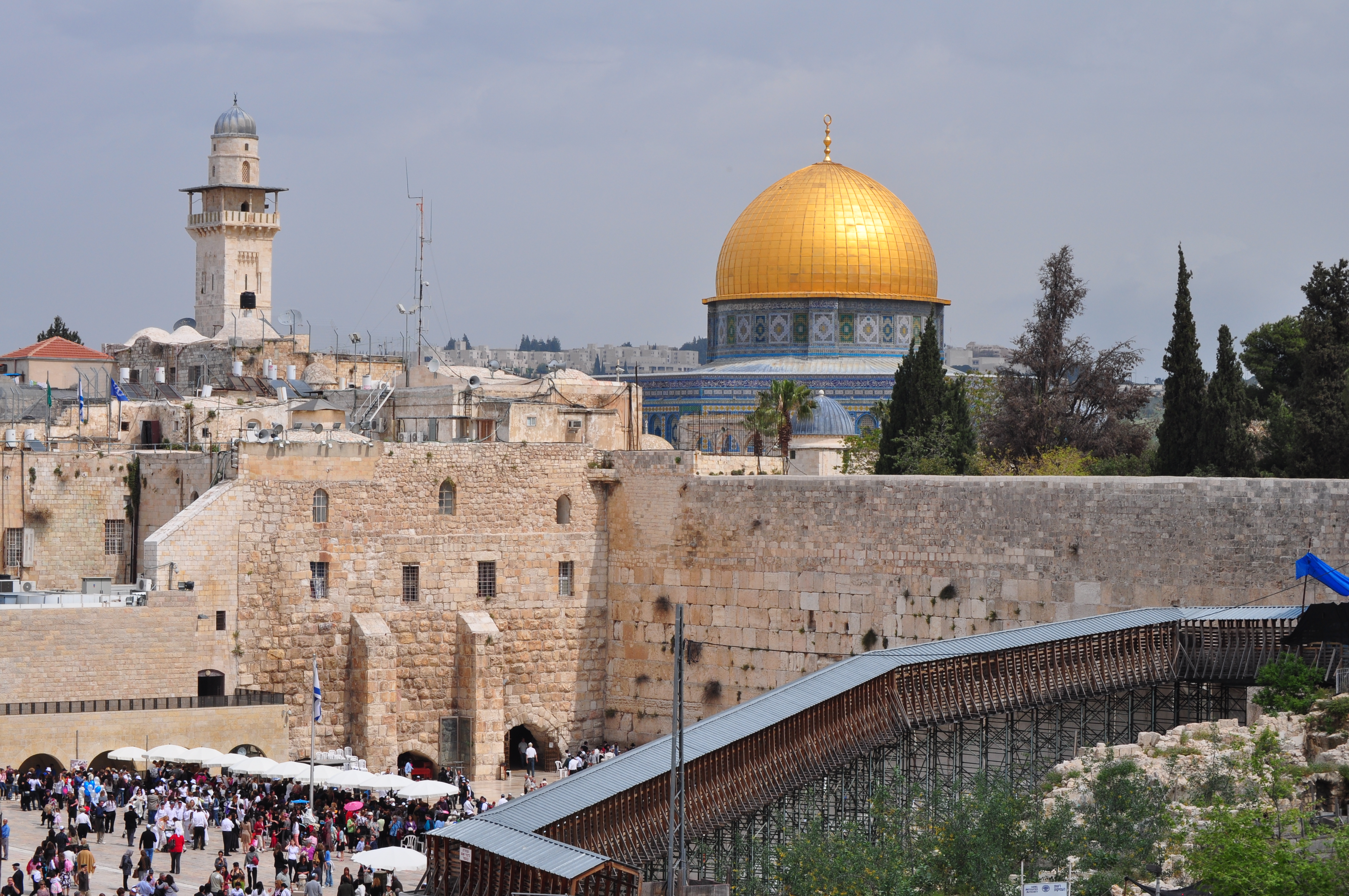
The Dome of the Rock on the Temple Mount above the Kotel,
location of the First and Second Jewish Temples

(photo: FirstOneThrough)

A Muslim Holy Site

Not surprisingly, the Muslim countries referred to the Temple Mount as an exclusively Islamic holy spot.

  • State of Palestine” called the location the “Haram al Sharif,” the Muslim name for the Temple Mount.
  • Angola discussed the “Al Aqsa Mosque,” which is Islam’s third holiest spot, located on the southern tip of the Temple Mount
  • Qatar mentioned the “Holy Shrine

Some countries went further, and stressed that the Temple Mount compound was important only to Muslims.

  • Maldives stated Haram al-Sharif must be restored.  Israel must stop altering the Islamic and Arabic character of the city
  • Egypt noted that the “Holy Shrine was extremely important to more than one billion Muslims worldwide,” and said nothing about Jews
  • Iran called the site “Haram Al-Sharif, and called for respect for the rights of Muslim worshippers to pray at that site in peace.

Others were more extreme in their calls against Israel:

  • Saudi Arabia said that “Israel had failed to protect Islamic holy sites, demolished the gates of Haram al-Sharif and turned it into a prayer place for Jews.  Israeli extremists had set fire to the Cave of the Patriarchs in Hebron
  • Kuwait described “attacks on Al-Aqsa mosque were an unprecedented assault against the inalienable religious rights of Muslims all over the world.   The OIC reiterated the historic and present Hashemite custodianship of the Islamic and Christian holy sites in Jerusalem, including Haram Al-Sharif/Al-Aqsa Mosque.”
  • Morocco was alarmed at the situation of “Islamic holy sites. Jerusalem was the very essence of the Palestinian question and there could be no peace without clarifying the status of Al-Quds as capital of a Palestinian State.  Any harm brought against the Al-Aqsa mosque would heighten tensions.”

The surprise in the singular call of the Islamic character of the site, was that a single western country also only mentioned the Arabic and Muslim name for the site: the United Kingdom.

Just Holy Sites

Some countries avoided the controversy, like Spain, Chad, Nigeria, Norway, Korea and France, just referring to generic “holy sites.” Such language was impartial and neutral. That was perhaps logical in a tense and violent environment.

The Holy See mentioned that the location was sacred to “Judaism, Christianity and Islam.” An ACTIVELY balanced approach, which pulled all of the monotheistic religions to Jerusalem.

Turkey’s approach was a mix. Like the Holy See, it noted that “Jerusalem, a city sacred to Islam, Judaism and Christianity, should be treated with the utmost respect.” But then went on to attack Israel’s practices at the site saying that Israel was “targeting holy sites and all other provocative activities undermining the status and sanctity of Haram al-Sharif must immediately stop.  The Jordanian role as custodian of the holy sites in Jerusalem was crucial for the preservation of Haram al-Sharif as an Islamic sanctuary.”  It would appear that Turkey was willing to acknowledge the centrality of Jerusalem to Jews, just not the Temple Mount.

Most countries like: New Zealand; Venezuela; China; Chile; the United States; Russia; Sweden; Lebanon; Malaysia; Guatemala; Brazil; Japan; India; Bangladesh; Costa Rica; Kazakhstan; Iceland; Botswana; Sri Lanka; Bahrain; Cuba; and Pakistan did not mention the holy site itself.

Yes, that many countries weighed in about the situation in Israel.

Three Countries Recognize Judaism at the Temple Mount

In the long list of world condemnation, there was a silver lining, and it came from the unlikeliest of countries. Three countries besides Israel, referred to the platform as the Temple Mount, recognizing the history of Jews at the location and the sanctity of the spot in Judaism.

  • Lithuania, a country not known for being a strong Israeli ally, said that the “Haram al-Sharif/Temple Mount was a sacred place for both Muslims and Jews.”
  • Ukraine mentioned the Al Aqsa mosque, but then also said “It was important for both parties to find the courage to respect holy places in accordance with the principles specified in the fundamental international documents, particularly those of the United Nations Educational, Scientific and Cultural Organization (UNESCO), and the agreements that regulated the status of the Temple Mount complex.”
  • Zimbabwe also said that “Access to the Temple Mount and other holy sites must be preserved under the status quo arrangements.”

These are not remarkable statements by these three countries on their face. But to consider that dozens of countries – including Israel’s allies – would not recognize the centrality of the Temple Mount to Judaism, does make their statements noteworthy.

Ukraine has a long history of anti-Semitism, but it was among the few countries that referred to the site by its historic Jewish name.  The three countries did go on to chastise Israel for actions on the Temple Mount, but at least they had the decency to not ignore Jews and Judaism also.

Six months later, in April 2016 in Paris, UNESCO itself weighed in that there was no Jewish connection to the Temple Mount when it drafted 40 points of rebuke against Israel, that only referred to the Jerusalem site by Islamic and Arabic names 19 times.  This was very deliberate, as seen when UNESCO went through the courtesy of referring to the common names of other Jewish holy sites in discussing “The two Palestinian sites of Al-Ḥaram Al Ibrāhīmī/Tomb of the Patriarchs in AlKhalīl/Hebron and the Bilāl Ibn Rabāḥ Mosque/Rachel’s Tomb in Bethlehem.”


Decades ago, several countries would not acknowledge the Jewish State, and many Arab countries to this day still refer to Israel as the “Zionist Entity.”  Much of the world is still so backwards, that it cannot even recognize the history of the Jewish people and the holiest spot for Judaism.

Send a note to the governments of Lithuania (misija.jt@urm.lt), Ukraine (uno_us@mfa.gov.ua) and Zimbabwe (zimbabwe@un.int) and let them know that their statements, while seemingly insignificant, meant a lot to a small nation with a little country in the middle of a hostile neighborhood and United Nations.

Consider sending a note to your home country and the UK (fax 212 745 9316)  as well, relaying your disappointment.  You are welcome to attach this article.


Related First.One.Through articles:

Tolerance at the Temple Mount

Names and Narrative: CNN’s Temple Mount/ Al Aqsa Complex Inversion

Active and Reactive Provocations: Charlie Hebdo and the Temple Mount

Visitor Rights on the Temple Mount

The Arguments over Jerusalem

Subscribe YouTube channel: https://www.youtube.com/user/FirstOneThrough

Join Facebook group: Israel Analysis

Active and Reactive Provocations: Charlie Hebdo and the Temple Mount

Leaders of the Western World came to the defense of the French satirical magazine Charlie Hebdo in early 2015, after radical Islamists gunned down the staff in their offices. Those leaders stood in solidarity with the French in the name of freedom of speech. Yet those same leaders have not rallied to the side of Israel while Islamic radicals murder and attempt to murder Israelis for an even more basic principle.

empty-street-in-Jerusalem-during-Yom-Kippur
Empty Street in Jerusalem

Active Provocation

An act of active provocation is one in which the action itself is specifically designed to provoke and upset an individual or group. The person taking the action does not have any benefit from the activity, other than the enjoyment of upsetting someone.

For example, when Pamela Geller held a “Draw Mohammed” contest in Texas in May 2015, the event was designed to upset Muslims. The action of portraying the Islamic prophet in physical form is considered highly insulting to many Muslims, and several people came to the event with the goal of killing participants for the sacrilegious act.

While people came out in defense of Geller for exercising her right of free speech, few would argue that Geller had any personal benefit from her actions other than getting satisfaction in hurting the feelings of Muslims.

Reactive Provocation

Reactive provocation is significantly different from active provocation. Such activity has personal benefit and there is no intention of malice. For example, a person may eat a turkey sandwich which they truly enjoy, even though another person may be a vegetarian and find the action upsetting.

Everyone has sensitivities. How far could a society extend itself to ban certain “normal” activities because some people may be offended by the actions?

Would a government ban gay people from holding hands in public if it upsets the values of some religious people? Would it ban all meat because it upsets vegetarians?  It would be impossible to navigate such a world in which anyone could object and block any action.

America was founded on the principle of the “pursuit of happiness” and has defended such right in cases of active provocation such as Pamela Geller in the US and Charlie Hebdo abroad. How could it do less for situations of reactive provocations?

Western Values versus Personal Interest

Various western societies offer a wide spectrum of freedoms including, speech, assembly and religion meant to cover elements of “life, liberty and the pursuit of happiness.” Western culture is designed to offer space for different people to live and interact, even if various belief systems are in conflict. The expectation is for tolerance of different and possibly offending views.

The raison d’etre of Charlie Hebdo is to offend. It’s cartoons are examples of active provocation whereby people deliberately upset others. While the comedic value of some of the pieces could be debated, the principle of freedom of speech is core to western society and fiercely protected. While writing a magazine is not a common activity, free speech is a daily activity of everyone, so the leaders of western countries stood together to defend active provocation and all forms of free speech.

hebdo march
World Leaders come out in solidarity with France
January 2015

In Israel, people also attempt to live with ordinary freedoms.  Like other democracies, they include freedom of speech, press, religion and assembly. But such freedoms sometimes offend radical Muslims.

The Temple Mount has maintained established visiting hours for Jews and non-Jews alike for any decades.  People of all faiths visit the site.  They do so as a natural act of visiting an incredible tourist site or because of religious conviction.  They do not visit as a pretext of causing offense to anyone.  If there are some Islamic extremists who are upset that Jews visit, that is a reaction based on that person’s anti-Semitic biases, an example of reactive provocation.

Muslims have become more worried about Jewish visitation to the Temple Mount which they consider holy as well.  The number of Jews visiting the Temple Mount doubled over the past five years to about 11,000 in 2014.  It is still a paltry sum compared to the estimated 4 million Muslims who come to the site each year. However, fears of the growing Jewish presence has made Muslims begin to attack Jews throughout Israel.

So why is the western world so cavalier about the carnage in Israel from Islamic radicals, while shaken to its core for the Hebdo killings? Is freedom of religion and access a lesser democratic value than speech?  Is France considered more western than Israel? Perhaps some believe that to be true.

It is also a fact that Europe and America do not have shrines holy to Islam, so the situation of the al Aqsa mosque is really a narrow problem for Israel to handle.  Western ambivalence may not be so much a function of values as it is proximity.

How embarrassing that the narrow scope of the champions of democracy shows that they are less interested with values than personal interests.  The world should loudly condemn Islamic terrorism and support freedoms which are enshrined in Israeli law and democratic ideals.


Related First One Through articles:

My Terrorism

I’m Offended, You’re Dead

Selective Speech

Visitor Rights on the Temple Mount

Subscribe YouTube channel: FirstOneThrough

Join Facebook group: FirstOne Through  Israel Analysis

New York Times: “Throw the Jew Down the Well”

Sacha Baron Cohen, a comedian from the United Kingdom, developed some fascinating characters as part of his comedic routine. One of them was Borat, a tall, awkward man who hailed from Kazakhstan.

borat
Sacha Baron Cohen as Borat

Cohen used Borat as a tool on unsuspecting Americans to elicit responses which may be funny or frightful in his movie, “Borat: Cultural Learnings of America for Make Benefit Glorious Nation of Kazakhstan.” Cohen counter-balanced Borat’s large 6’3″ frame with a friendly, simple and naïve demeanor, such that ordinary people responded to him in a more open manner than they would have for another large adult male stranger. Once within their sphere of hospitality, he engaged people in various outrageous actions.  Cohen captured those bizarre interactions for the public to witness.

Borat was introduced as a foreigner, unfamiliar with the social norms of the USA. As people interacted with him, they quickly saw evidence of his primitive, racist, homophobic, misogynistic and anti-Semitic side. For example, when he attended a dinner party in the South, his lack of etiquette was so extreme he did not know how to use the bathroom.  As the American hosts viewed themselves as extremely enlightened, they excused his outrageous behavior.  The comedy of Baron Cohen/Borat was specifically about revealing people in such awkward and “dark” moments.

Throw the Jew down the Well

Another scene from the movie placed Borat in a cowboy bar in Tucson, Arizona. Borat was invited to sing a song from his home country to the crowd. The audience of men and women were at first unsure of this foreigner in a cowboy hat, as he started his song “In my Country there is a Problem.” It was clear from the first verse that Borat could not really sing, play the guitar or rhyme. But the crowd wanted to be hospitable and welcomed this stranger who was trying to fit in.

By the second verse, the song became rabidly anti-Semitic. Jews were blamed for taking everyone’s money and causing problems in his country. Imagery of Jews being wild animals with claws, gnashing teeth and horns were sung aloud, and the crowd joined in louder with each verse. The women – much more than the men – loudly clapped and sung along to the anti-Semitic verses with free abandon. One would imagine a scene from the Hofbrahaus in Munich 1920 more than Tucson 2006.

Sacha Baron Cohen is himself a Jew who is likely not an anti-Semite nor a racist nor a homophobe.  He used the Borat character to force people to confront their own biases in unconventional ways. His use of a big fish-out-of-water persona made people want to embrace this gentle giant. The American-way of hospitality placed people in a situation where they were closely engaged with little room to maneuver. They were left with a choice of either being astonished and sickened (as were the southerners at the dinner party) or engaged, as were the anti-Semites in the Tucson cowboy bar.  However, the Southerners took the effort to correct Borat, while the cowboys embraced his foul behavior and language.

The New York Times embrace of the Primitive

The New York Times has long looked on the Arab world with sympathetic eyes. Whether in advocacy for Arabs in urging the Obama administration to welcome thousands of Arab refugees, and pushing for building of a mosque at ground zero, or in ignoring Arab crimes through the use of double standards for people from a “primitive” culture, the NYT embraced the Arab world.

Like Borat, Arabs are from a different culture and unfamiliar with America’s progressive ways.  As enlightened people, the writers for the Times have sought to engage and embrace these people. For example, Saudi Arabia is rarely called out as one of the most repressive regime in the world which decapitates minors in the streets; it is just an American ally.

No where is the treatment more apparent than in the warmth shown to the acting President of the Palestinian Authority, Mahmoud Abbas.  The soft-faced nearly 80 year old man is repeatedly described as a “moderate,” who seeks “non-violent” means to achieve “independence” for Palestinian Arabs. In the Times desire to see Abbas succeed, they turned deaf to his various statements and actions:

  • Abbas’s inability to govern the Palestinian Authority territories is never blamed on his ineffectual leadership.
  • The Times rarely mentions that Abbas is so unpopular among Palestinians that he would have lost any election since 2007 according to every poll (if he ever had the ability to have an election).
  • Abbas’s phd paper on Holocaust denial is almost never discussed.  When it is, the Times makes an effort to say that he now respects the history of the Holocaust, even though he explicitly said the opposite
  • When polls show that the Palestinians are the most anti-Semitic people on the planet, the Times just brushed over the fact as “not particularly surprising
  • The Hamas Charter call for the destruction of Israel and death of Jews is rarely mentioned, and Hamas is almost never labeled a terrorist group
  • Palestinians engaged in the most honor killings per capita is ignored and blame assigned to Israel
  • Abbas’s calls to “defend al Aqsa by all means possible” is never described as an incitement to violence

The Times opted to not take a constructive approach like the Southern lady who taught Borat how to use the bathroom. It never sought to educate its readers about the misstatements and outright lies of the Palestinian Arabs. Instead, the Times just ignored that Abbas or the Palestinians were incompetent or said and did anything wrong.

However, on October 8, 2015, the Times decided to move past being deaf and joined the Palestinians’ anti-Semitic chants.

Throw the Jew from the Temple Mount

In an article entitled “Historical Certainty Proves Elusive at Jerusalem’s Holiest Place” Rick Gladstone wrote that there is little evidence that Jewish Temples existed on the Temple Mount.

20151009_065901New York Times article Refuting the Existence of the Jewish Temples
October 8, 2015

As if echoing the Palestinian Arab and Jordanian Arab narrative that Jews have no history in Israel or Jerusalem, that they are trying to “Judaize” the city and “falsify history,” the Times wrote a piece that completely misrepresented archaeological findings.  Indeed, the only religion that has archaeological proof of being on the Temple Mount is Judaism (there are no structures to show where Jesus walked or Mohammed’s night journey).

The Times’ echoed the calls of anti-Semites who seek to deny Jews of their history and basic rights.  The Times effectively moved from the back of the Tucson cowboy bar to the front row singing and clapping along with Abbas:

Throw the Jew from the Temple Mount
so my country can be free!
You must grab him by his horns
and we will have a big party!”

Now that the Times has more openly embraced its anti-Semitic Borat persona, perhaps we will soon see articles that Jews are really from Khazar and have no connection to the bible at all.


Related First.One.Through articles:

Visitor Rights on the Temple Mount

Educating the New York Times: Hamas is the Muslim Brotherhood

New York Times Finds Racism When it Wants

The New York Times wants the military to defeat terrorists (but not Hamas)

Every Picture Tells a Story- Whitewashing the World (except Israel)

Subscribe YouTube channel: FirstOneThrough

Join Facebook group: FirstOne Through  Israel Analysis

Visitor Rights on the Temple Mount

The cries coming from the acting-President of the Palestinian Authority and his rival political party, the terrorist group Hamas, to “defend al-Aqsa” stem from their claim that they are concerned that Jews are coming to destroy and/or defile the al Aqsa mosque, the third holiest site in Islam. To generate such fear, one would imagine that Jews are coming to the Temple Mount (on which al Aqsa sits on the southeastern most tip) illegally, and are bringing with them weapons and shouting threats against the mosque.

All of those assumptions would be completely false.

temple mt visit

To placate the outrageous claims from the PA, Hamas and the king of Jordan, on October 7, 2015, Israeli Prime Minister Benjamin Netanyahu announced a ban on Israeli members of Knesset from visiting the Temple Mount.

Here is a review of the completely legal, internationally approved and natural rights associated with Jews visiting the Temple Mount and today’s sad reality that none of it seems to matter.

Visiting Hours

Facts: The Temple Mount has regular visiting hours for people of all faiths. As mentioned by the popular tourist guidebook, Frommers:

There is no charge to enter the Temple Mount compound. You must not, however, wear shorts or immodest dress in the compound. (If your outfit is too revealing, guards may be willing to provide you with long cotton wraps, or they may ask you to return another time with more modest clothing.) Visitors are allowed on the Temple Mount
by permission of the Islamic religious authorities, and are asked
to obey instructions given by the guards.

There is an admission fee of NIS 38 ($9.50/£4.75) to go inside the two mosques and the Islamic Museum. If the buildings are again open to foreign visitors, I highly recommend that you invest in the combined admission ticket, which may be purchased from a stone kiosk between Al Aqsa and the Dome of the Rock. If visiting hours
are lengthened, you may usually remain on the Temple Mount, but cannot enter
the Dome of the Rock or the Al Aqsa Mosque during the midday prayers.”

The World Travel Guide site lists the specific visiting hours and ways of accessing the Mount:

Only one of the 10 gates to the complex, Al-Mughradi Gate, allows entry for non-worshippers. This is located to the right of the Western Wall and is accessed from
the Western Wall Plaza.

Opening Times: Closed during all prayer times (variable); otherwise Sun-Thurs 0730-1130 and 1330-1430 (summer); Sun-Thurs 0730-1030 and 1330-1430 (winter); Sun-Thurs 0730-1030 (during Ramadan); closed to non-Muslims Fri and Muslim holidays. During periods of tension, the site may be closed.

Admission Fees: No (for Temple Mount; charge for Dome of the Rock, Al Aqsa Mosque and Islamic Museum combined ticket).

Disabled Access: No

Unesco: Yes“

Reality today: Despite the publicized openness of the site, visiting this holy site and famous tourist location can be anything but pleasant. Hamas pays for Murabitun, Islamic extremists who shout and taunt Jewish visitors on the Temple Mount. Arabs have also hurled rocks at non-Muslim visitors.

Due to the various attacks, Israeli police escorts typically accompany non-Muslim visitors. The military has also occasionally restricted access to the Temple Mount for Muslims under 50 years old due to security concerns.

International Treaty

Facts: In 1994, Israel and Jordan signed a Peace Treaty. In that treaty was language that specifically gave special recognition of Jordan’s historic role at the Temple Mount site, while also cementing Israel’s responsibility for security.

The 1994 treaty discussed the Temple Mount, because Jordan had secured custodian rights to the site.  Jordan attacked Israel and illegally seized the entire Old City of Jerusalem (and Judea and Samaria) in 1948 and thereupon occupied the Old City. The Jordanians then expelled all of the Jews from the city and granted Jordanian citizenship to the Palestinians in the city. When Jordan attacked Israel again in 1967, it lost the Old City, but Israel allowed the Islamic Waqf controlled by Jordan to continue to administer the Temple Mount.

The Jordan-Israel treaty clearly gave rights to all people to visit holy sites in Jerusalem.  Article 9.1: Each Party will provide freedom of access to places of religious and historical significance.

And Article 9.3: “The Parties will act together to promote interfaith relations among the three monotheistic religions, with the aim of working towards religious understanding, moral commitment, freedom of religious worship, and tolerance and peace.”

Reality today: The kingdom of Jordan signed a treaty with Israel that assured the “freedom of access to places of religious and historical significance,” and to “promote interfaith relations… with the aim of working towards religious understanding.”  The words in that agreement seem empty today as the Jordanian king claims the Temple Mount only has an “Arab character,” as he threatens to destroy the relationship with Israel because Jews are visiting the Temple Mount.

Israeli Law

Facts: When Israel reunified the city of Jerusalem in 1967, the Israeli Prime Minister Levi Eshkol handed administrative control of the Temple Mount back to Jordan, the country that had just attacked his country for the second time in 20 years. He then enshrined “The Protection of Holy Places” law that all people would have access to the holy sites in Jerusalem.

” 1. The Holy Places shall be protected from desecration and any other violation and from anything likely to violate the freedom of access of the members of the different religions to the places sacred to them or their feelings with regard to those places.

  1. Whosoever desecrates or otherwise violates a Holy Place shall be liable to imprisonment for a term of seven years.

  2. Whosoever does anything likely to violate the freedom of access of the members of the different religions to the places sacred to them or their feelings with regard to those places shall be liable to imprisonment for a term of five years.”

The 1967 Israeli Law was complemented by the 1994 Jordanian-Israeli Treaty which not only promised Israeli support for universal access to the holy sites, but Jordan’s support as well.

Reality today: However, the current Prime Minister of Israel Benjamin Netanyahu is trampling on Jewish rights of access and “feelings with regard to those places” as he bans their visitation rights even though they bring no weapons and threaten no one.

United Nations on Access

Facts: The United Nations often claims that it is concerned with providing access to people of all faiths to their holy sites and that it would prefer to see a “universal” approach to sites that are holy to many religions.  For example, UNESCO on March 19, 2010 published a piece about Palestinian rights to the Cave of the Patriarchs in Hebron and the Tomb of Rachel in Bethlehem, among the holiest sites in Judaism.  UNESCO wrote:

  • that Israel was “endangering Palestinian cultural heritage and denying Palestinians their cultural patrimony, as well as denying development and access to heritage sites and historic places of worship.”
  • Israel has publicly begun to use these sacred and universal sites to provoke unnecessary religious conflict by promoting control and access on the exclusive basis of one faith while denying the rights and views of other faiths.”

By these statement, it would appear that the UN is very concerned:

  • that people of all faiths be allowed access its holy places;
  • that such holy places not be under the exclusive control of a single faith; and
  • that people should not be cut-off from their “cultural patrimony.”

A person would naturally assume from these UN comments about Hebron and Bethlehem, that the UN must strongly endorse Jewish rights of access to their holiest site in the world, and it must strongly condemn any group or country that sought to deny Jews those rights.

Reality today: But this is the United Nations that specializes in inversion when it comes to Israel. Secretary General Ban Ki-Moon described the basic Jewish desire and action of accessing its Temple Mount as a “provocation.”


Access is Not a Provocation

As detailed above, people of all faiths visiting the Temple Mount is legal by Israeli law, enshrined in an international treaty with Jordan, and follows a blueprint for co-existence as stated by the United Nations. Indeed, visiting hours exist for everyone.

For Jews, visiting their holiest spot in the world is a natural desire. They seek to do so in peace and quiet.  They do not seek to instigate a fight with anyone on the Mount.  Even Rabbi Yehuda Glick who was shot by Palestinian Arabs for advocating for Jewish prayer rights on the Temple Mount, did not seek to harm al Aqsa Mosque in any way.

No Temple = No Rights

If Jewish access to their holy sites is guaranteed and no one urged harming the site in any way, on what basis have Palestinian Arabs and Jordanians sought to deny Jews those basic rights of access?

The Palestinian Arabs have put forth a narrative that the Jewish Temple never existed on the Temple Mount. Their rationale is that if the Temple never existed there, Jews can claim no special visitation rights.

Consider that in addition to Mahmoud Abbas never mentioning Judaism in any of his speeches at the United Nations, there have been these quotes:

  • Mahmoud Abbas: “The leaders of Israel are making a grave mistake by thinking that history can move backward and that they could impose facts on the ground by dividing the Aksa Mosque in time and space, as they did with the Ibrahimi Mosque [Cave of the Patriarchs] in Hebron.
  • The Islamic Waqf on the discovery of ancient Jewish artifacts near the Temple Mount: “an attempt to support Israeli claims about Jewish rights in the holy city and to impose Israeli sovereignty on the occupied holy compound through the use of fake evidence….An immediate Arab and Muslim campaign is needed to stop the Israeli attempts to Judaise the holy city of Jerusalem,”
  • Israeli Arab MK Masoud Ganaim said the Temple never existed. “The site has always been holy to Islam, never to any other religion.”
  • Hamas’ Khaled Mashaal on the opening of the Hurva synagogue in the Old City: “It is part of a project to destroy the al-Aqsa Mosque” and replace it with Israel’s so-called “Solomon’s Temple.” It is a “falsification of history and Jerusalem’s religious and historic monuments.

Never mind that even Atheists have rights of access.

Never mind that denying a core belief of Judaism spits in the face of a treaty that sought to promote interfaith relationships.

The argument itself is nonsensical by the Arabs’ own beliefs.  The Christian story of Jesus is specifically placed at Jerusalem’s Jewish Temple. How can Abbas or Jordanian king Abdullah claim special rights over the Church of the Holy Sepulchre, if they deny the story of Jesus in Jerusalem?

The Insanity of Today

Regardless, logic and rights fall flat in the face of Islamic fundamentalism: The UN condemns Israel for managing security, for which it has responsibility. It attacks Israel for the “provocation” of enabling Jews to have access to its holy sites. And the United States urges Israel to maintain the status quo, even though Netanyahu has stated over-and-again that he has and will.

So to appeal to the crazies, Netanyahu is banning members of the Knesset from access to Judaism’s holiest site.

It would appear that the left-wing radicals and racists are slowly winning the battle against human decency.


Related FirstOne Through articles:

The Waqf and the Temple Mount

Tolerance at the Temple Mount

The United Nations and Holy Sites in the Holy Land

The UN’s Disinterest in Jewish Rights at Jewish Holy Places

Jordan’s Deceit and Hunger for Control of Jerusalem

Extremist” or “Courageous”

Subscribe YouTube channel: FirstOneThrough

Join Facebook group: FirstOne Through  Israel Analysis

Jordan’s Deceit and Hunger for Control of Jerusalem

Jordan’s King Abdullah gave a flowery speech to the United Nations General Assembly in September 2015. To the casual listener, his words sounded progressive in his call for “loving our neighbour, showing respect to those different from us,” and to “amplify the voice of moderation,” especially from a region so caught up in violent Islamic extremism.

abdullah jordan
Jordanian King Abdullah addressed the 70th session of the United Nations
General Assembly on September 28, 2015. (Photo: Richard Drew/AP)

To a listener who was more familiar with Jordan’s history in the region, some of the king’s comments appeared as a welcome change from the actions of his late father. Others could question whether Abdullah harkens to his own voice. Consider Abdullah’s call:

let us recognise deceit. When we examine the motives of these outlaws, the khawarej – and indeed, the motives of extremists on all sides – we find hunger for power and control: of people, of money, of land. They use religion as a mask. Is there a worse crime than twisting God’s word to promote your own interests?”

“nothing can be more important and can have more impact in framing this respect and coexistence than Jerusalem. The Hashemite Custodianship of Jerusalem’s Islamic and Christian Holy Sites is a sacred duty, and we join Muslims and Christians everywhere in rejecting threats to the Holy Places
and the Arab character of this Holy City.”

When it comes to “respect and coexistence in Jerusalem,” let’s remind the Jordanian king of some plain facts:

  1. Jordan attacked Israel in 1948, together with four Arab armies in an attempt to completely destroy the new Jewish State, and then Jordan illegally seized the eastern half of Jerusalem.
  2. Jordan evicted all Jews from the Old City of Jerusalem and Judea and Samaria in 1949, counter to the Fourth Geneva Convention.
  3. Jordan explicitly denied Jews citizenship when it granted Arabs in its conquered territory citizenship in 1954.
  4. Jordan barred any Jews from even visiting their holy sites when they controlled Jerusalem from 1949-1967.
  5. Jordan attacked Israel again in 1967 and lost the area it had illegally annexed.
  6. Jordan condemned the 2010 rebuilding of a prominent synagogue in Jerusalem that Jordan itself had destroyed in 1949.

Despite Jordan’s complete lack of religious tolerance for Jews and hostility towards Israel, Israel has always sought to maintain religious freedom and coexistence in the holy city:

  1. Israel granted the Jordanian Islamic Waqf custodian rights to the Temple Mount when it reunified Jerusalem in 1967.
  2. Israel enshrined the religious protections of all religions in its laws and safeguarded access to holy sites for all religions.
  3. Israel reiterated the special role that Jordan plays on the Temple Mount in the Israel-Jordan Peace Treaty in 1994.
  4. Today, Israeli Prime Minister Netanyahu repeatedly reiterates that Israel will maintain the “status quo” of the Jordanian Waqf’s anti-Semitic edict of barring Jewish prayer at the Temple Mount.

When the Jordanian king spoke of “rejecting threats to the Holy Places and the Arab character of this Holy City [Jerusalem]” in a speech that was theoretically about tolerance, did he once mention Judaism? Did he make a passing reference to the Jerusalem being the holiest city to only one religion – Judaism? Did he mention that Jerusalem has had a Jewish majority since the 1860s? A passing comment about the Jewish Temples or Western Wall? Or did he define the holy city as solely having an “Arab character”?

In his choice of the phrase “threats to the Holy Places,” was Abdullah suggesting that Jews should no longer be permitted to visit the Temple Mount, or that Israeli police should be prevented from protecting Jewish visitors from Arab harassment and stone throwers, even though the Jordanian peace treaty with Israel specifically gave Jews and Israel both of those rights?

To Abdullah’s comment of gathering “Muslims and Christians everywhere,” was he suggesting gathering 2 billion people against Israel on a trumped up non-existent threat to Islamic holy places? Was Abdullah calling for a global jihad in “twisting” facts to create a religious battle to promote a greater role for himself? Was that his idea of “amplify[ing] the voice of moderation”?

It is Abdullah that must “recognize his own deceit” and “hunger for power and control” of Judaism’s holiest spot in the capital of Israel. His opening line taken from the Jewish bible of “love thy neighbor as thyself” and “showing respect to those different” was a red herring in his call to cast himself as a loving moderate while calling for a global jihad against Israel on a non-existent cause.

The “progressive” voices attacking Jews and the Jewish State are becoming more numerous and growing louder.  Beware of the velvet tongue as much as the iron fist.


Related First One Through articles:

The Arguments over Jerusalem

The Waqf and the Temple Mount

The UN’s Disinterest in Jewish Rights at Jewish Holy Places

The United Nations “Provocation”

Nicholas Kristof’s “Arab Land”

Subscribe YouTube channel: FirstOneThrough

Join Facebook group: FirstOne Through  Israel Analysis

The UN’s Disinterest in Jewish Rights at Jewish Holy Places

On September 17, 2015, acting-President of the Palestinian Authority Mahmoud Abbas called out to Arabs who were fighting against Jews visiting the Temple Mount, the holiest place for Judaism, on Rosh Hashanah, one of the holiest days in the Jewish calendar:

We bless you, we bless the Murabitin (those who carry out religious war for land declared to be Islamic), we bless every drop of blood that has been spilled for Jerusalem, which is clean and pure blood, blood spilled for Allah.  Allah willing, every martyr will reach paradise, and everyone wounded will be rewarded by Allah.

The Al Aqsa is ours, the Church of the Holy Sepulchre is ours, and they have no right to defile them with their filthy feet.  We will not allow them to, and we will do everything in our power to protect Jerusalem.”

abbas video
Acting PA President Abbas called for Arabs to defend Jerusalem
September 17, 2015

These Arabs that Abbas was referring to, had brought stones to protest Jews visiting the Temple Mount and the ban on religious extremist who taunted and prevented Jews from visiting their holy sites.

The United Nations Response

The UN Security Council (UNSC) issued the following statement about the situation:

The members of the Security Council expressed their grave concern regarding escalating tensions in Jerusalem, especially surrounding the Haram al-Sharif compound, including recent clashes in and around the site.

The members of the Security Council called for the exercise of restraint, refraining from provocative actions and rhetoric and upholding unchanged the historic status quo at the Haram al-Sharif — in word and in practice.  The members of the Security Council called for full respect for international law, including international human rights law and international humanitarian law, as may be applicable in Jerusalem.

The members of the Security Council urged all sides to work cooperatively together to lower tensions and discourage violence at holy sites in Jerusalem.

The members of the Security Council appealed for the restoration of calm and called for full respect for the sanctity of the Haram al-Sharif, noting the importance of the special role of Jordan, as confirmed in the 1994 peace treaty between Jordan and Israel, and encouraged increased coordination between Israel and Jordan’s Awqaf department.  The members of the Security Council underscored that Muslim worshippers at the Haram al-Sharif must be allowed to worship in peace, free from violence, threats and provocations.  The members of the Security Council further underscored that visitors and worshippers must demonstrate restraint and respect for the sanctity of the area and for maintaining the historic status quo at the holy sites.  The members of the Security Council urged that the status quo of the Haram al-Sharif should be maintained and visitors should be without fear of violence or intimidation.

The members of the Security Council called for the immediate cessation of violence and for all appropriate steps to be taken to ensure that violence ceases, that provocative actions are avoided and that the situation returns to normality in a way which promotes the prospects for Middle East peace between the Israelis and the Palestinians.”

The response is outrageous and emblematic of Israel’s treatment at the United Nations:

  1. “Haram al-Sharif”, not Temple Mount.  The UNSC claims that it cares about the sanctity of the “holy sites in Jerusalem”, but it does not even mention the name of the platform, built 2000 years ago to ease access to Jews at the Temple. The platform is the “Temple Mount”- not mentioned once – while the Muslim name for the location is mentioned four times.
  2. Ignoring Arab incitement and Israel’s calls for peace. As noted above, PA’s Abbas called for Arabs to fight for Al Aqsa, while Israeli Prime Minister Benjamin Netanyahu called for maintained the status quo of banning Jewish prayer on the Mount. Yet no specific UNSC rebuke of Abbas’s rhetoric was made in their call for calm, nor appreciation for Netanyahu’s call for calm.
  3. Special role of Jordan” mentioned, but what of the role of Israel? The 1994 Peace Treaty between Israel and Jordan called for the Jordanian Waqf to be the trustee of the Temple Mount, but security remained with Israel.  Why did the UNSC deliberately omit that Israel is in control of the security of the site and was deploying troops to stop Muslim extremists from attacking visiting Jews?
  4. “Muslim worshippers”, but not Jews. In case any of the language was not clear, the UNSC is solely concerned with Muslims on the Temple Mount. The constant attack on Jewish visitors gets no mention at all, even after mentioning the Jordanian-Israel 1994 Peace Treaty which specifically states that “Each party (Jordan and Israel) will provide freedom of access to places of religious and historical significance.

The UNSC voice of concern for: only Muslims and not Jews; using the Islamic name for the holy site, not Jewish; and referring to Jordan’s role at the site and not Israel’s, was clearly and specifically meant as a rebuke and warning to Israel and Jews. The most powerful global body told Israel on the Jewish New Year: do not mess with this Islamic site. Judaism is foreign. Jews are intruders.

Jews may protest that: the Temple Mount is its holiest site; that international law and treaties state that Jews have complete access to the site; and that Israel controls security on the site. Those facts are irrelevant to the UNSC.

The inversion of history past and present; provocation and reaction; rights and absence of rights has always been rife at the United Nations when it comes to Israel.  These days, as the world watches extremist Islam rampage throughout the Middle East, the UN will seemingly further prioritize placating Iran, Syria, Saudi Arabia and other Islamic extremists over the fundamental rights of Jews in Israel.

One can expect to see much more in the coming weeks when the UN circus comes to town.


Related First One Through articles:

The United Nations “Provocation”

The United Nations and Holy Sites in the Holy Land

Names and Narrative: CNN’s Temple Mount/ Al Aqsa Complex Inversion

The Waqf and the Temple Mount

Joint Prayer: The Cave of the Patriarchs and the Temple Mount

The Arguments over Jerusalem

Subscribe YouTube channel: FirstOneThrough

Join Facebook group: FirstOne Through  Israel Analysis
The US State Department’s Selective Preference of “Status Quos”

On September 14, 2015, State Department Spokesperson John Kirby gave a daily press briefing in which he said: “The United States is deeply concerned by the recent violence and escalating tensions surrounding the Haram Al-Sharif/Temple Mount. We strongly condemn all acts of violence. It is absolutely critical that all sides exercise restraint, refrain from provocative actions and rhetoric, and preserve unchanged the historic status quo on the Haram Al-Sharif/Temple Mount in word and in practice.”

The comment came after a clash between Arab rock throwers and Israeli police on Rosh Hashanah, the Jewish New Year, as Arabs sought to prevent Jews from visiting the site.

Kirby
State Department Spokesperson John Kirby

State Department Status Quo it Favors

The “status quo” that the State Department presumably sought to maintain was the ban on Jewish prayer on the entire 35 acre Temple Mount platform, the Jews’ holiest place on earth.  That ban was put in place by Muslims in the middle of the 16th century, and Israel has allowed the Islamic Waqf to maintain the ban, even after it captured the Old City from Jordan and reunified the city in 1967.

State Department Status Quo it Seeks to Change

Later in this same briefing, Kirby responded to a question as to whether the Oslo Agreement between the Israelis and Palestinians should be scrapped since no Palestinian state was on the horizon: “Secretary Kerry is committed to pursuing a two-state solution, and I think you’re going to see him continue to do that throughout his tenure here at the department. I don’t think anybody’s – certainly not here – willing to give up on that ultimate goal.”

Kerry is “committed” to changing current reality and creating an Arab-led sovereign state in the holy land for the first time in history.

What makes one status quo worth keeping while the other is not? Does the State Department only endorse a status quo which Muslims desire (banning Jews from the Temple Mount) even though it is clearly anti-Semitic? Is it less a matter of favoring Muslim demands over American integrity and principle, but rather a function of seeking the support of 57 Arab countries versus a single Jewish State?

A more proper – and consistent – response would have been that Israel and the Jordanians and Palestinian Arabs will determine any changes to the status of Jerusalem and the holy sites as part of a final peace agreement. Those changes to the status quo will include matters of sovereignty and rights of access and prayer.


Related First One Through articles:

Joint Prayer: The Cave of the Patriarchs and the Temple Mount

The United Nations and Holy Sites in the Holy Land

The Battle for Jerusalem

A “Viable” Palestinian State

Subscribe YouTube channel: FirstOneThrough

Join Facebook group: FirstOne Through  Israel Analysis


Names and Narrative: CNN’s Temple Mount/ Al Aqsa Complex Inversion

temple mount protest
(Muslim and Israeli police confront each other at The Temple Mount,
September 13, 2015. Source: AFP Photo/Ahmad Gharabli)

On September 13, 2015, CNN reported on a confrontation between “Arab youths and Israeli police” in the Old City of Jerusalem using language that inverted the facts. The news discussed:

  • Palestinian protestors,” but of what? Jews visiting the Temple Mount which they had every legal and moral right to do? Perhaps they were protesting new Israeli laws meant to keep Muslim groups from attacking Jewish visitors to the Temple Mount. The report made it appear that the “protestors” were just seeking a right to pray.
  • The “Al Aqsa Complex” that CNN mentioned gives an Islamic name to the entire 35 acre compound, even though the Al Aqsa Mosque is located on just the southern tip of the platform. This entire platform was built for the Second Jewish Temple and is therefore historically known as the Temple Mount. Using an Islamic name as the official name and only stating that “Jews… call it the Temple Mount” divorces history, reality and Jews from the site. It is more accurate to use the default name “The Temple Mount” to the entire location and state that ‘Muslims call it the Al Aqsa Complex”.
  • “…Is one of the holiest sites in the world for Muslims” The mosque itself is the third holiest site, not the entire Temple Mount platform. The story does not clarify that Jews had no interest in visiting the mosque itself, but the other parts of the platform.
  • Stating that “the clashes ended when Muslim worshippers were allowed in the complex for prayers” makes the entire event seem like all the Arab protestors sought was a right to pray (which they had already completed doing), as oppose to stopping Jews from visiting the Temple Mount on their Jewish New Year. This was another inversion of the narrative.
  • CNN’s report that “Jordan, which is in charge of the complex” is incomplete. Jordan’s Islamic Waqf has religious oversight of the Temple Mount, but it is Israel that is in charge of security on the Mount. Article 9 of the 1994 Jordan-Israel Peace Treaty clearly states that “Each party will provide freedom of access to places of religious and historical significance.” That is why the Israeli police legally deployed personnel to prevent Arab rock-throwers from attacking visiting Jews on the Mount.

Overall, CNN failed to report that Israel was legally trying to protect Jews visiting the Temple Mount, their holiest spot on one of their holiest days of the year. Instead they painted a picture of Israeli police blocking Arab youths from praying at the Al Aqsa Complex, one of their holiest places.

DSC00357
Al Aqsa Mosque at the very southern tip of the Temple Mount Platform
(Source: First One Through)


Related First One Through articles:

The Waqf and the Temple Mount

The Cave of the Patriarchs and the Temple Mount

The Arguments over Jerusalem

Tolerance at the Temple Mount

“Extremist” or “Courageous”

Names and Narrative: The West Bank / Judea and Samaria

Nicholas Kristof’s “Arab Land”

Subscribe YouTube channel: FirstOneThrough

Join Facebook group: FirstOne Through  Israel Analysis

Losing the Temples, Knowledge and Caring

In modern times, the “Western Wall” or the Kotel has become the center of Jewish prayers.  As it has done so, it has replaced the Temple and Temple Mount in the minds of many Jews, so much so, that people have forgotten and misrepresent what the Kotel actually is or have stopped caring at all.

IMG_2052
Young and Old pray at the Kotel

Non-Orthodox Jews “Don’t Care”

The Jewish Week, a popular weekly newspaper for Jews in the metropolitan New York City area, published a piece called “Mourning the Temples’ Losses” on July 24, 2015. The article was written about the holiday of Tisha b’Av, the ninth day of the Hebrew month of Av, which is when tradition states that each of the two Jewish Temples were destroyed.  The article claims that the holiday has become only meaningful to Orthodox Jews, and for “secular Jews, ‘Tisha b’Av seems a vestigial organ,’ writes Don Futterman, program director in Israel for the Moriah Fund, wrote in Haaretz [a left-wing Israeli paper].” 

The secular anti-Orthodox newspaper quoted a left-wing charity in Israel which describes itself as “Promoting Civil Rights, Social Justice and Democracy in Israel and “Protecting and advancing human rights” which it feels it can achieve by funding movies questioning Israel such as “Breaking the Silence” and the anti-Israel 972 magazine.  These are indeed the views of many secular and liberal Israelis who feel that Judaism has evolved from Temple service to prayer, and from prayer to “social justice”. Together with such evolution was an abandonment of historic places and forms of worship to a modern emphasis only on people.  Those “vestigial organs” are there as part of history, but serve no function (and can and should be removed if they prove dangerous to the body as a whole).

Orthodox Jews “Don’t Know”

The Jewish Week continued that “for many Orthodox Israelis, the center of their Tisha b’Av observance is the plaza of the Western Wall, the last remnant of the Second Temple.” The statement repeats an often repeated falsehood about the nature of the Western Wall. The Temples were completely destroyed and no walls of the Temples stand today. Aish.com, which claims to be “the leading Jewish content website” posts on its website that “The Western Wall is a surviving remnant of the Temple Mount in Jerusalem,”  .

The Kotel is the western wall of the TEMPLE MOUNT, not of the Temple.  The Temple Mount was built by King Herod between 19BCE and 63CE to extend the size of the platform southward to both enable more people and traffic flow to the Second Temple. As the Temple was built atop a hill, extending the platform at the same height as the Temple required “filling in” the slopes of the hill.  The Kotel is the western wall of that supporting structure.

The Kotel gained significance in Judaism (say compared to the southern Temple Mount wall which is similarly a retaining wall), around the year 1550.  Prior to that year, many Jews visited and prayed on the Temple Mount itself including Rabbi Menachem Meiri (1249-1316) and Rabbi David ben Shlomo Ibn Zimra, (known as the Radbaz, 1479–1573), the Chief Rabbi of Jerusalem.  However, around 1550, while Ottoman leader Suleiman I made various structural improvements to the city of Jerusalem, he set aside the Western Wall area as a designated area for the Jews to pray.

After the 1967 Six Day War, Israel reunited Jerusalem including the Old City, the Temple Mount and the Kotel. After 18 years of being banned from the city by the Jordanians (1949-67), Israelis celebrated their return to the Old City.  To maintain calm after the war with the Muslim world, Israel handed administrative control of the Temple Mount to the Islamic Waqf. Israel then demolished the Mughrabi Quarter which abutted the Kotel to create the Western Wall Plaza that many know today. This plaza enables thousands of Jews to visit the Kotel at one time.

DSC_0087
The Kotel with the Dome of the Rock,
location of the Jewish Temples

Tisha b’Av

Every year the Jews mark a day on the calendar to remember the destruction of the Temples. Over time, the Tisha b’Av holiday incorporated other tragic events such as the expulsion of 200,000 Jews from Spain in 1492.  Perhaps today Jews should also mourn a newer tragedy in their history: their apathy and ignorance.


Related First.One.Through articles:

The United Nations and Holy Sites in the Holy Land

Joint Prayer: The Cave of the Patriarchs and the Temple Mount

Tolerance at the Temple Mount

The Waqf and the Temple Mount

Subscribe YouTube channel: FirstOneThrough

Join Facebook group: FirstOne Through  Israel Analysis