
A school in Jerusalem’s Shuafat refugee camp is reopening. The building is the same but UNRWA is no longer running it.
The school is now affiliated with Israel’s Ministry of Education and the Jerusalem Municipality. Jerusalem Deputy Mayor Aryeh King posted video of UNRWA signs being removed as the school prepared to open.
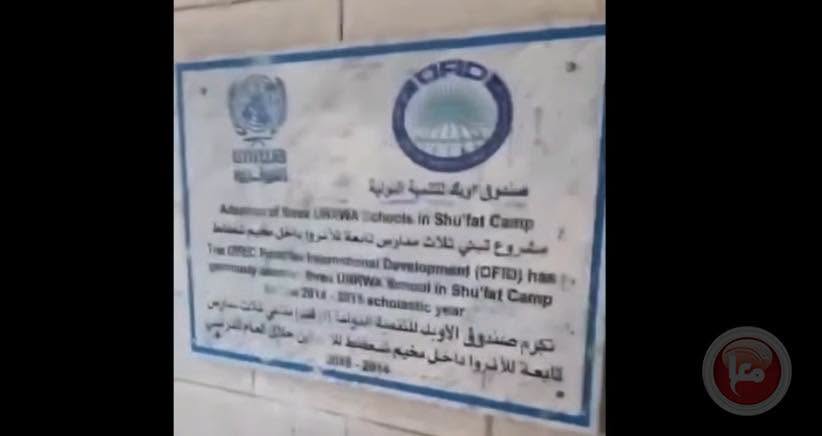
The change ends an educational arrangement dating back more than sixty years.
UNRWA established the Shuafat refugee camp in 1965, when Jordan controlled “East Jerusalem.” UNRWA’s educational policy, dating to 1952, has been to use the curriculum of the “host countries,” allowing refugee children to take local examinations and continue into local schools and universities.
So UNRWA worked with Jordan at that time.
There was nothing internationally settled about Jordan’s sovereignty over Jerusalem. Jordan seized eastern Jerusalem in 1948 and annexed the West Bank – including East Jerusalem in 1950. Even Britain, one of only two countries (along with Pakistan) which recognized Jordan’s illegal annexation of the West Bank, specifically withheld recognition of Jordanian sovereignty over Jerusalem. It only recognized Jordan’s de facto authority there.
Yet Jordan administered East Jerusalem, so UNRWA worked with Jordan there.
Then came 1967.
Israel captured East Jerusalem and became the government actually administering Shuafat, much like Jordan had previously. But UNRWA did not treat Israel the same way as the de facto administrating authority.
The Jordanian curriculum continued for years. After the Palestinian Authority was established, UNRWA increasingly coordinated its West Bank education program with it and ultimately used the Palestinian Authority curriculum.
That is difficult to square with the simple explanation that UNRWA follows the curriculum of its host country. The Palestinian Authority did not govern Jerusalem; Israel did. Yet UNRWA chose the PA curriculum for schools there.
The contrast is particularly striking today. Israel has nine foreign embassies located in Jerusalem, with Nauru announced as the tenth. Jordan never enjoyed anything approaching that level of international recognition of its rule over Jerusalem. Yet UNRWA had been willing to work with the authority actually administering the city when that authority was Jordan.
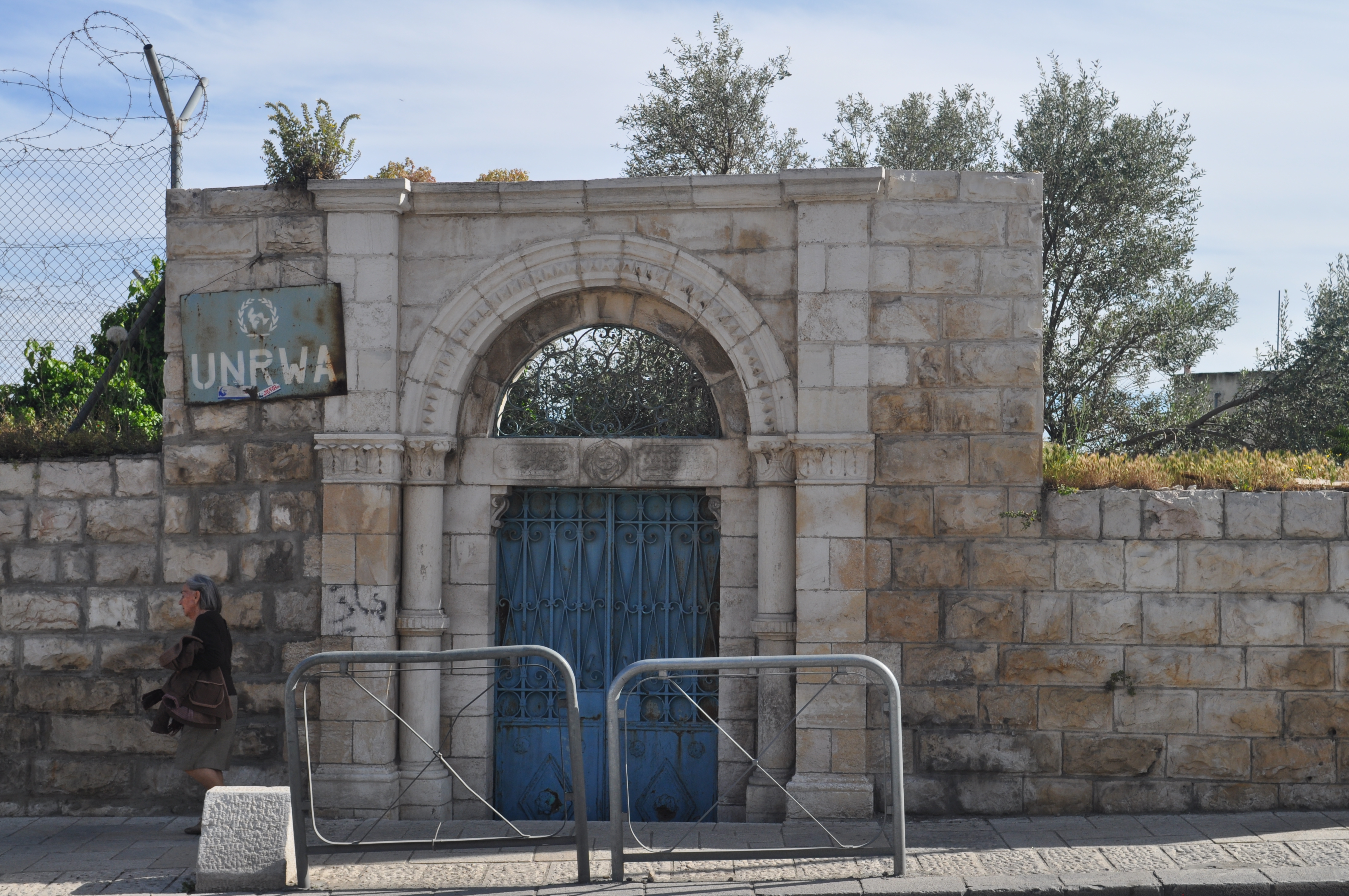
But the problem at Shuafat went beyond which government UNRWA chose to recognize educationally. It was what children at this particular school were saying they learned.
UNRWA says its curriculum framework must reflect UN principles of neutrality, human rights, tolerance, equality and non-discrimination.
Footage recorded at an UNRWA school in Shuafat in 2022 and published by Ynet in 2024 showed something very different.
Students said that stabbing and running over Jews brought Palestinians honor. One said he was prepared to carry out a suicide attack. Another said they were taught that Jews were terrorists. Another said they were taught that Jews were deceitful and evil and that he would stab and run them over.
The videos offer a horrifying vision of what is taught at UN schools.
Israel eventually acted.
In May 2025, Israeli authorities closed six UNRWA schools in eastern Jerusalem, including three in Shuafat. UNRWA protested that hundreds of Palestinian children were being deprived of education. Israel said alternative schooling would be provided through the Jerusalem education system.
Now that alternative is becoming tangible.
A former UNRWA school in Shuafat is reopening under the Israeli Ministry of Education and Jerusalem Municipality.
The choice was never between UNRWA and no education. What can change is the system educating them and the content of that education.
The UNRWA sign coming down in the Shuafat school is symbolic. What the children learn when they walk back through those doors will determine whether the real change happened inside.


