First Comes the Word “Enemy”

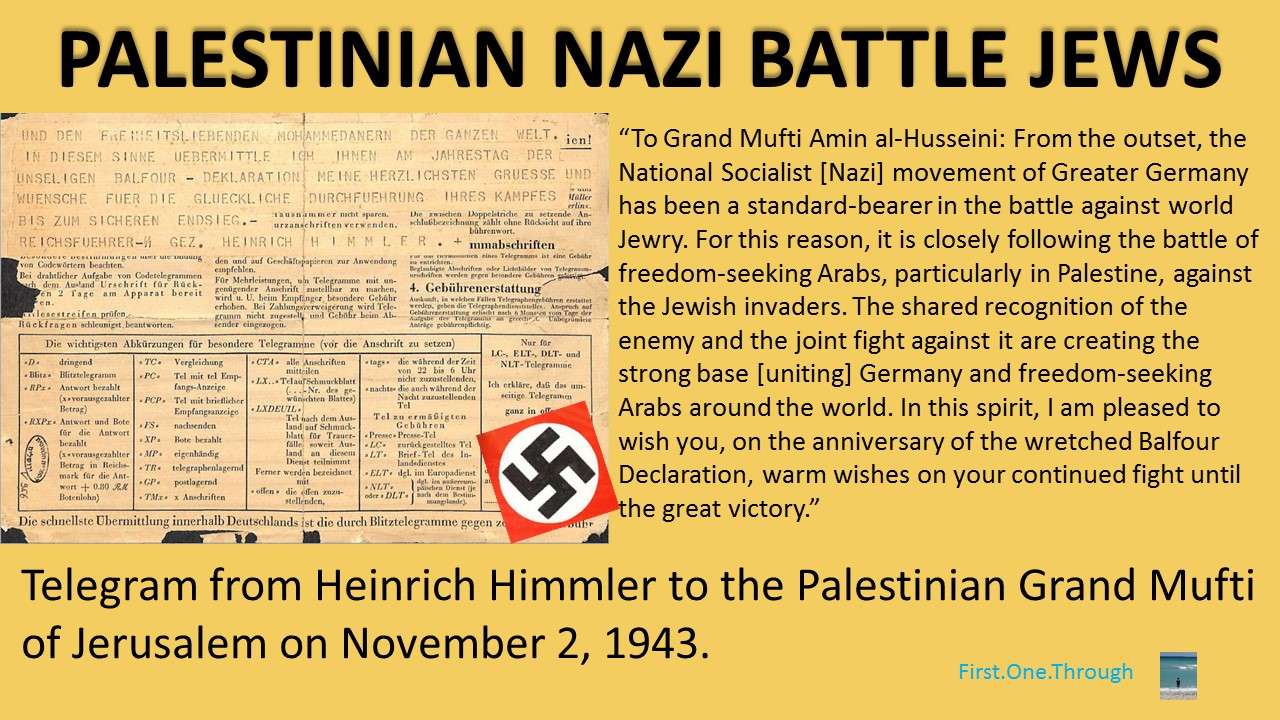
In November 1943, Heinrich Himmler sent a telegram to Haj Amin al-Husseini on the anniversary of the Balfour Declaration.

He wrote of a “shared recognition of the enemy” and “the joint fight against it.”

“The enemy” meant world Jewry.

That phrasing did real work. It turned a people into a threat. Once Jews were cast as a civilizational danger – “Jewish invaders” – their removal became a duty. Vocabulary cleared the ground and policy followed. Then came the machinery.

This is how collective persecution begins: define a group as the problem.

Eighty years later, the same grammar keeps resurfacing.

In Doha, Francesca Albanese, the United Nations Special Rapporteur on the occupied Palestinian territories, used the phrase “common enemy” to describe Israel. The target was the world’s only Jewish state. The effect was to cast Jewish sovereignty itself as something humanity must oppose.

That language strips legitimacy and treats existence as offense. It moves from argument to exclusion with the implied goal of eradication.

The pattern appears in American activism as well. Speaking at a conference hosted by American Muslims for PalestineZahra Billoo of the Council on American-Islamic Relations urged audiences to “oppose the polite Zionists too,” grouping mainstream Jewish institutions — synagogues, federations, Hillel chapters, civil-rights groups — into the camp of adversaries, “they are your enemies.”

The construction never changes.

Nazi Himmler: Jews are the common enemy.
CAIR Billoo: Zionists are the enemy.
UN Albanese: Israel is the common enemy.

Different decades. Different accents. Identical structure.

Demonization targets identity. Once identity becomes the indictment, anything feels justified and the line between debate and dehumanization disappears.

After World War II, the human-rights system was built to prevent precisely this logic — the idea that an entire people could be pushed outside the moral community. Yet the vocabulary has returned, polished and respectable, spoken from podiums that claim the language of justice.

When the Nazis called Jews “the enemy,” the world should have drawn the line right there. No conferences. No nuance. No excuses. Anyone who speaks that way disqualifies themselves.

That same rule applies now.

Human-rights officials who talk like antisemitic propagandists should lose their mandates. Activists who label Jews the enemy lose the claim to civil-rights leadership positions. Institutions that tolerate this language lose credibility.

The mob put a yellow Jewish Star on Jews 80 years ago and told everyone that they are the enemy. The mob is labelling Jews as Zionists today and doing the same. We shouldn’t pause to take action, if “never again” means anything.

The Only Place Jewish Murder In a Synagogue Isn’t Antisemitism

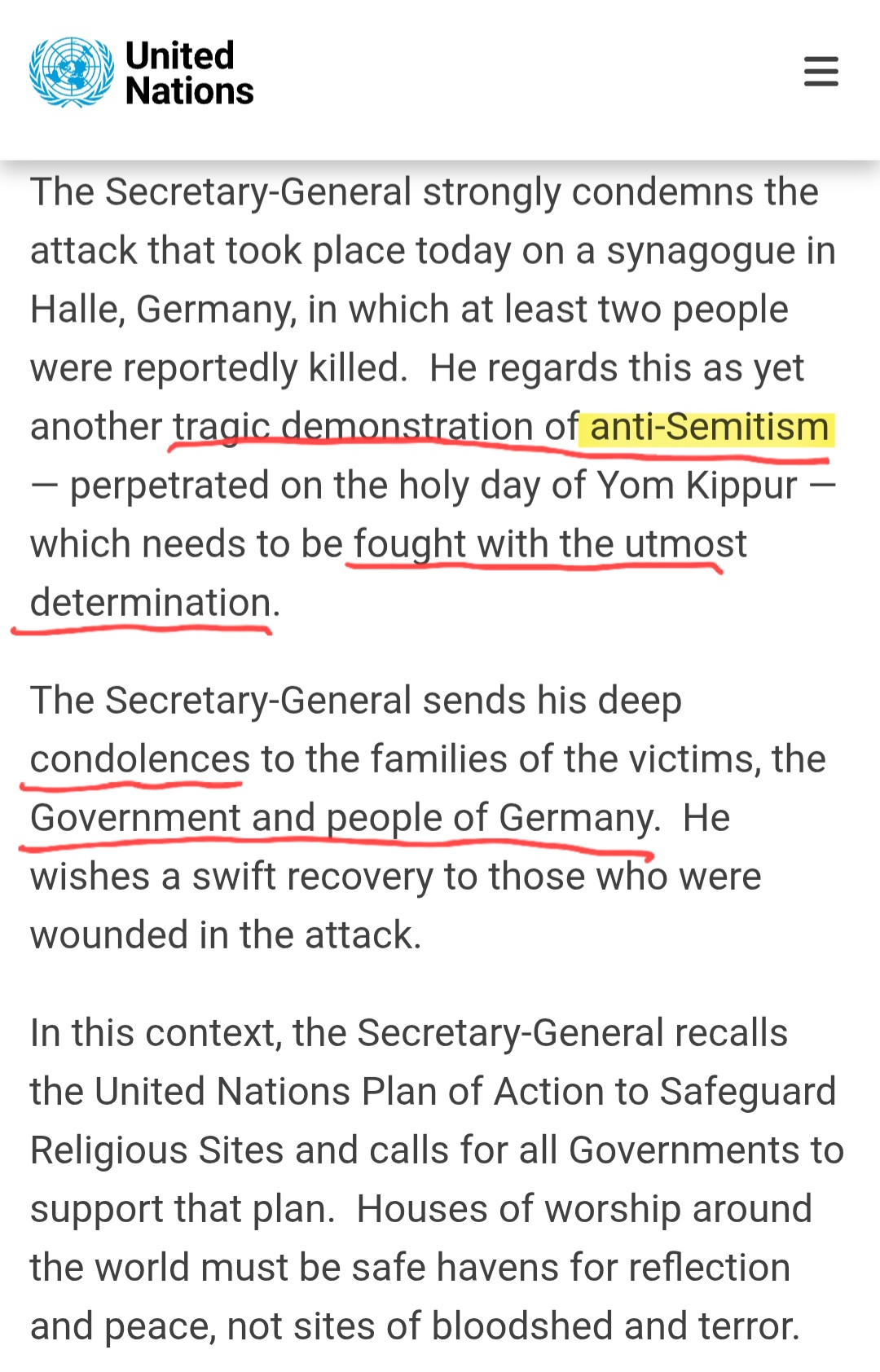
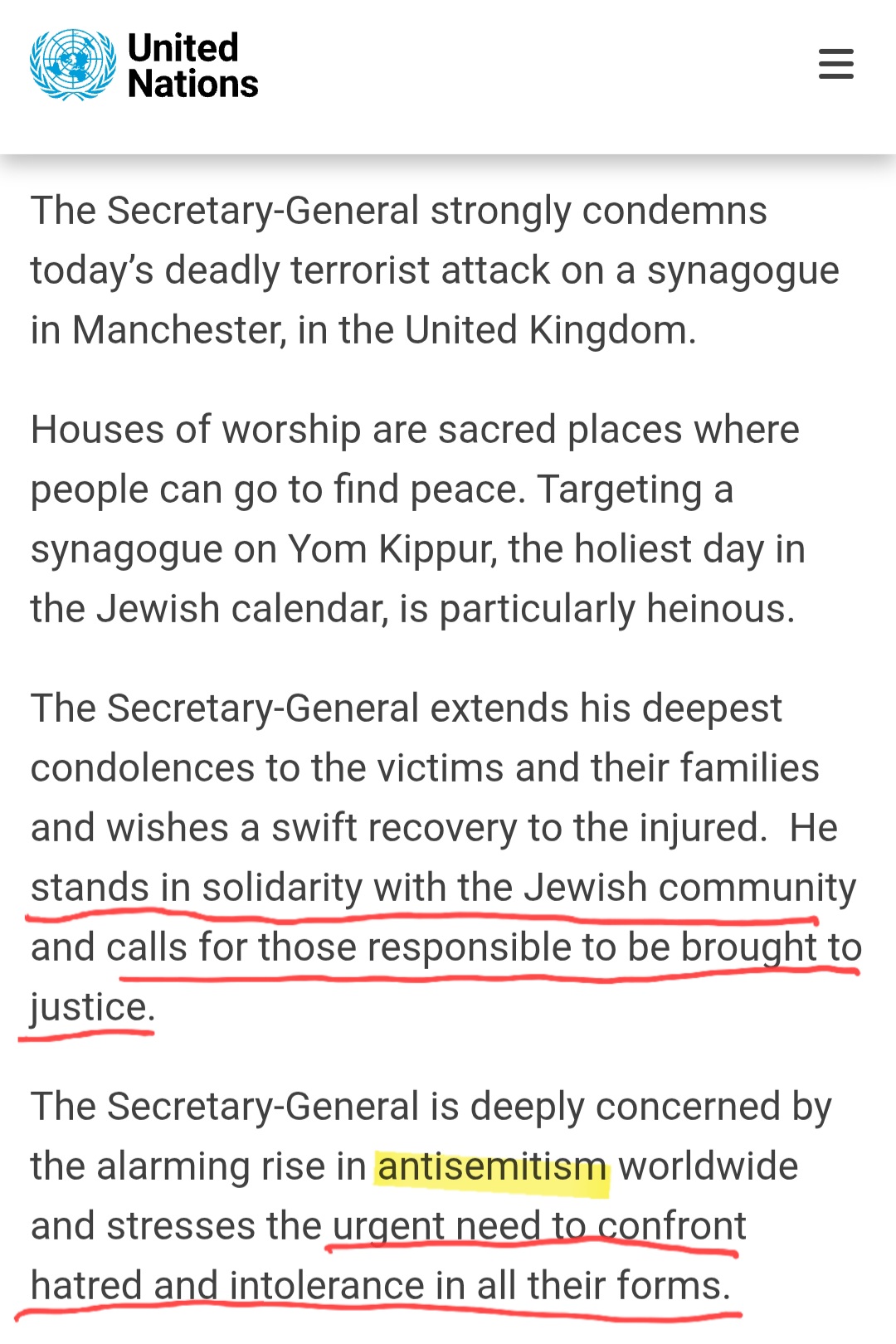
When Jews are murdered in synagogues in Europe, the United Nations speaks plainly. The attacks are labeled antisemitic. The violence is called terrorism. Solidarity with the Jewish community is explicit, and justice is demanded.

UN Secretary-General calls killing of Jews in Germany “demonstration of antisemitism” in 2019
UN Secretary-General calls killing of Jews in United Kingdom in 2025 “antisemitism” and “stresses the urgent need to confront hatred and intolerance in all their forms.”

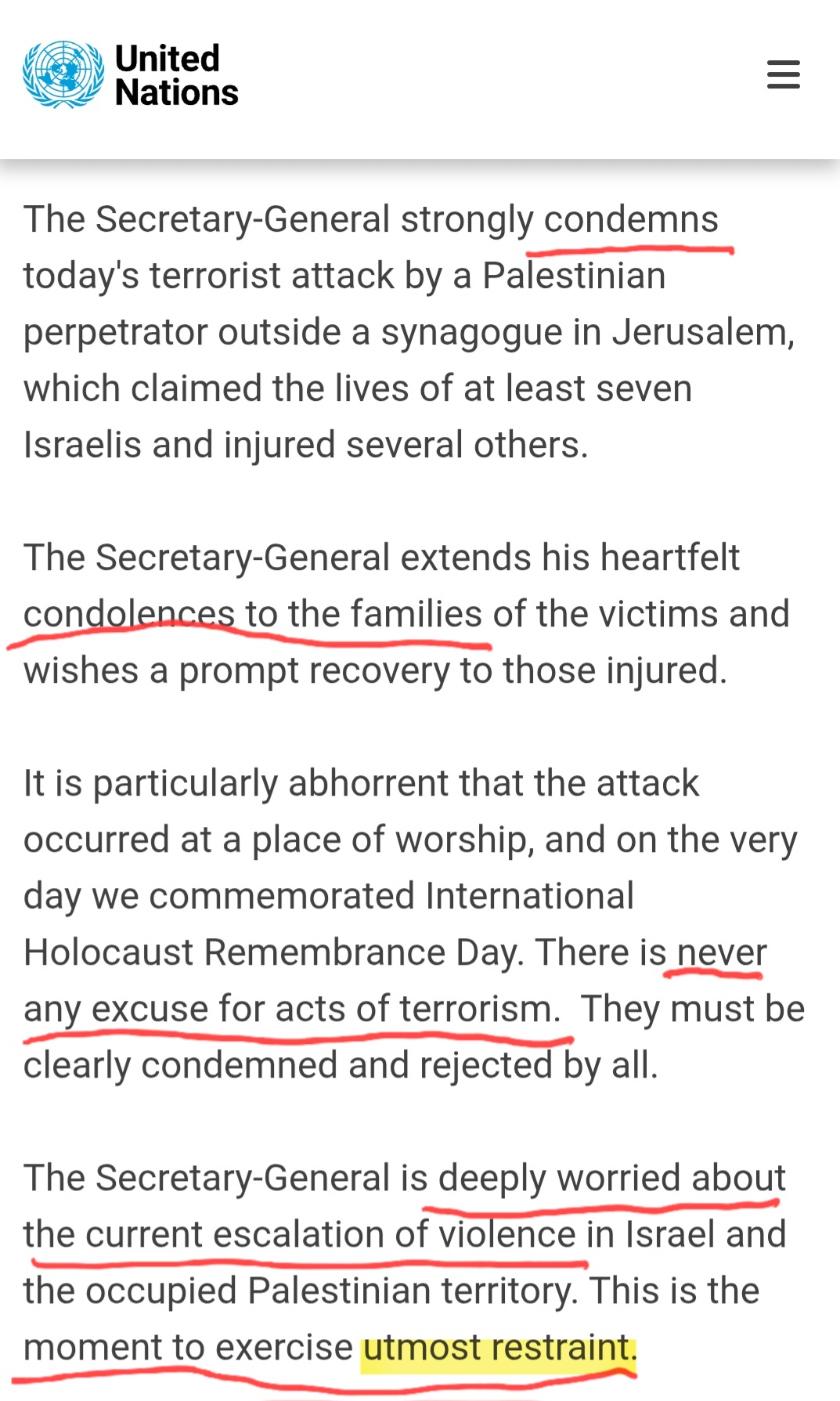
When Jews are murdered in synagogues in Jerusalem, that clarity vanishes.

The same act—killing Jews at prayer—suddenly requires “context.” Terrorism is softened into “violence.” Antisemitism dissolves into “tensions.” Victims are anonymized, motives left unexplored, ideology carefully avoided. Language that flows easily in Europe locks up entirely in Israel’s capital.

UN Secretary-General never calls killing of Jews in Jerusalem rooted in “antisemitism.”

This is not rhetorical drift. It is doctrine.

The UN has formally adopted the Palestinian demand that Jews should not live in Jerusalem. Through measures such as UN Security Council Resolution 2334, it asserts that Jews may not alter the city’s “demographic composition.” That position freezes Jerusalem at a moment immediately following the Jordanian army’s ethnic cleansing of all Jews from the eastern half of the city between 1948 and 1967. Jewish expulsion is accepted as a legitimate baseline. Jewish return is treated as a violation of international law.

This is not neutrality. It is the institutionalization of an antisemitic premise: that Jews, uniquely among peoples, have no right to live in their holiest city.

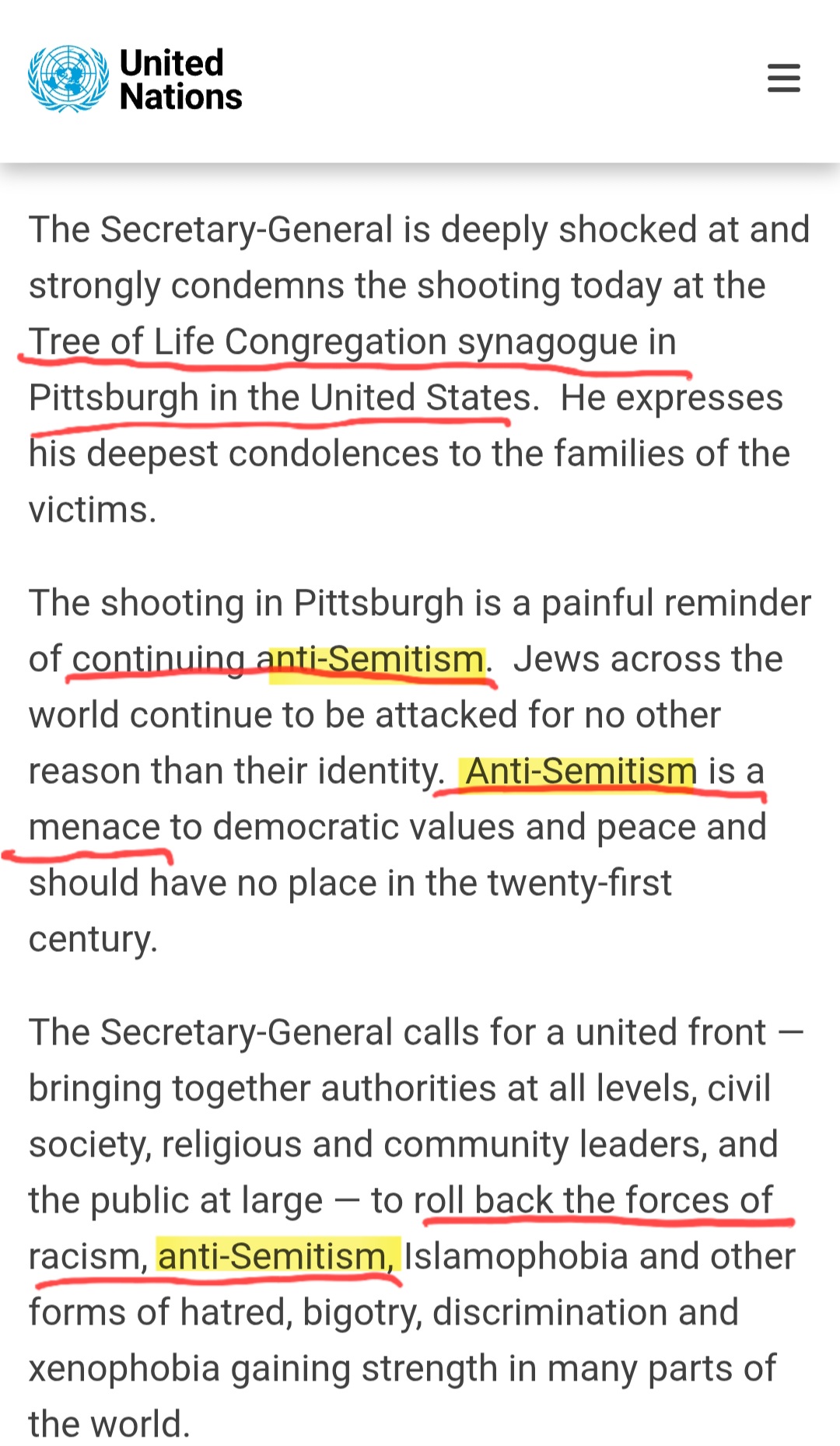
UN Secretary-General calls killing of Jews in United States “antisemitism” THREE TIMES.

Once that premise is accepted, Jewish life in Jerusalem becomes conditional. Jewish neighborhoods are labeled illegal. Jewish prayer is framed as provocation. Jewish presence itself is cast as destabilizing. Violence against Jews no longer reads as antisemitism but as political reaction to an allegedly illegitimate reality.

Under those conditions, motive cannot be named. Calling synagogue murders in Jerusalem “antisemitic terrorism” would require acknowledging that Jews are being targeted for who they are, in a city where the UN has already ruled they should not be. It would expose the connection between UN doctrine and the moral evasions that follow.

So the motive is omitted.

Aftermath of Jews slaughtered in synagogue

The UN does not merely tolerate the idea of Jews being removed from Jerusalem; it has encoded it. The language is bureaucratic—demographics, international law, peace—but the result is stark: a city where Jewish existence is treated as unlawful, and Jewish murder as a political complication.

The contrast with the rest of the world makes the pattern undeniable. The UN knows exactly how to speak about antisemitism. That moral vocabulary disappears only in Judaism’s holiest city, in the Jewish State’s capital, because the United Nations has endorsed the antisemitic wishes of radical jihadists.

Call Out Antisemitism. Period.

New York Governor Kathy Hochul delivered her State of the State address on January 13, 2026. In her prepared remarks, she condemned antisemitism and Islamophobia in the same breath, as if they were parallel crises in New York. They are not.

“In 2026, we’ll take new steps to protect our houses of worship against the rising tide of Antisemitism and Islamophobia.” – NY Gov. Kathy Hochul

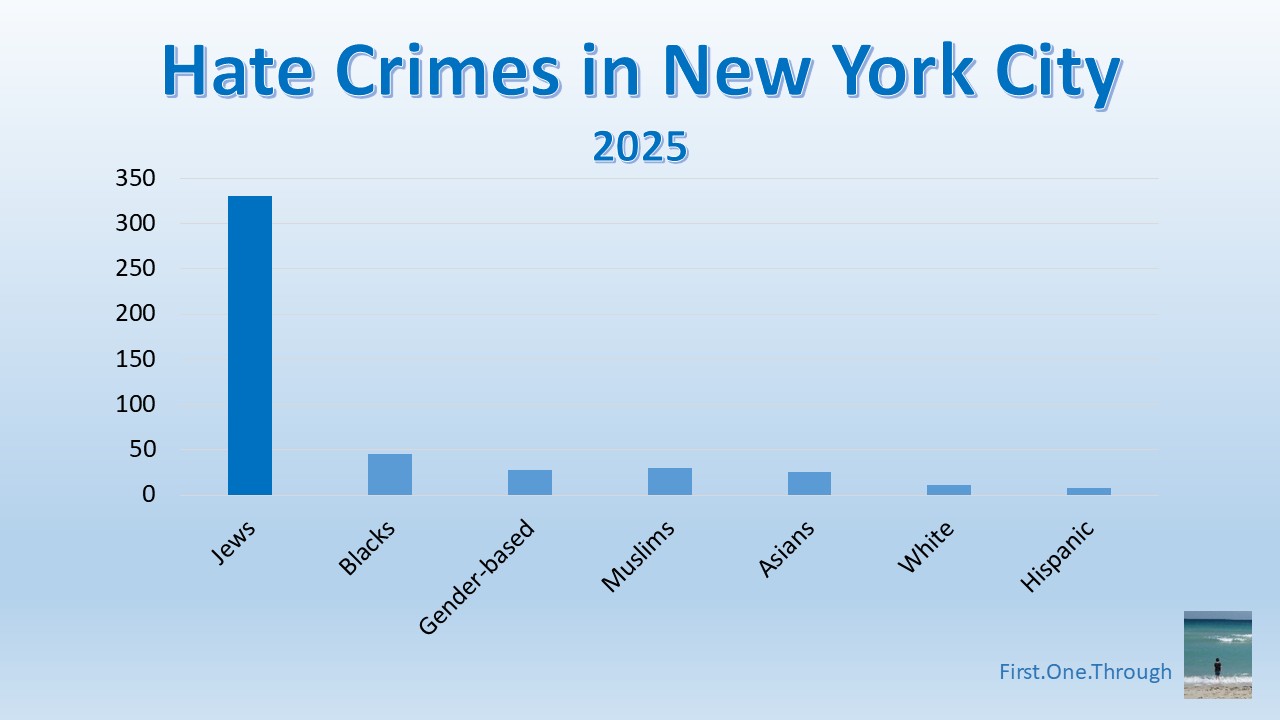
In 2025, antisemitic attacks in New York City were over ten times more frequent than attacks against Muslims. That is not a nuance. It is the entire story. When one form of hatred overwhelms all others by orders of magnitude, collapsing them into a single moral gesture is not fairness—it is evasion.

Worse, “Islamophobia” is now routinely invoked as a political shield, not a measured diagnosis. It is wheeled out whenever radical Islamic antisemitism becomes too obvious to ignore, functioning as a way to halt scrutiny. Name the attackers. Name the ideology. Name the chants. The response is immediate: Islamophobia.

Today’s antisemitism is not abstract, historical, or evenly distributed across society. It is being driven openly and energetically by Islamist movements and their Western enablers, celebrated in the streets and sanitized as “anti-Zionism.”

Leadership requires prioritization. Data requires honesty. And moral clarity requires the courage to say that when Jews are being attacked ten times more than anyone else, they do not need their suffering balanced away.

False symmetry is not inclusion.
It is worse than cowardice.
It is vulgar absolution.

Free Speech Is Not on Trial. Antisemitism Is.

Every time antisemitism is called out on the left, the same dodge appears on cue:
“It’s just free speech.”

That response is not a defense. It is a red herring.

No one is arguing that anti-Israel speech is illegal. Under American law, almost nothing is. You can shout racist slogans. You can be misogynistic. You can mock religions. You can hold a Draw Muhammad contest outside a mosque. You can call for the destruction of a country. You can deny a people’s history.

All of that is protected speech. That has never been the question.

The question is what that speech is.

And much of what now passes as “anti-Israel discourse” is not political critique at all. It is hate speech, clearly, historically, and deliberately so.

Calling for the destruction of the Jewish State is not foreign policy analysis.
Denying Jewish history in the Land of Israel is not academic debate.
Declaring that Jews alone have no right to national self-determination is not progressive politics.
Passing a law that Jews cannot live somewhere and cannot pray at their holiest location is not a free exchange of ideas.

It is the application of a single moral standard to one people — and only one people — that says: you do not belong anywhere.

It is naked antisemitism.

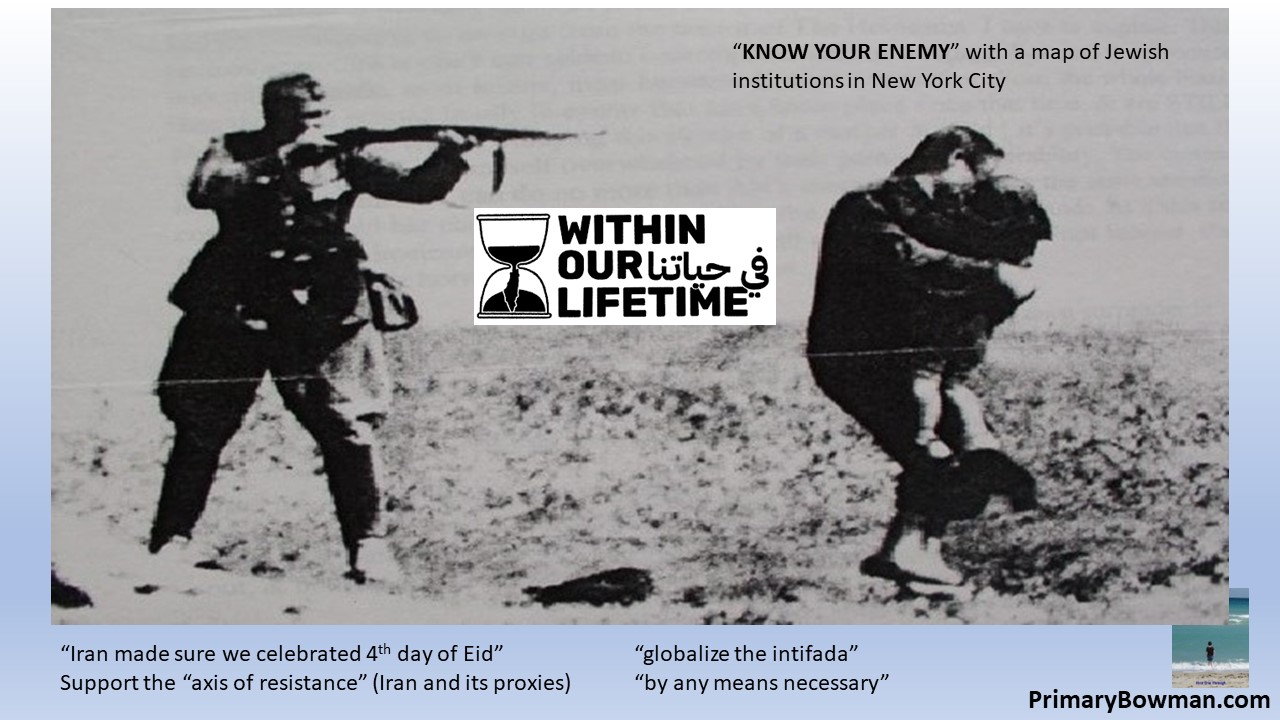
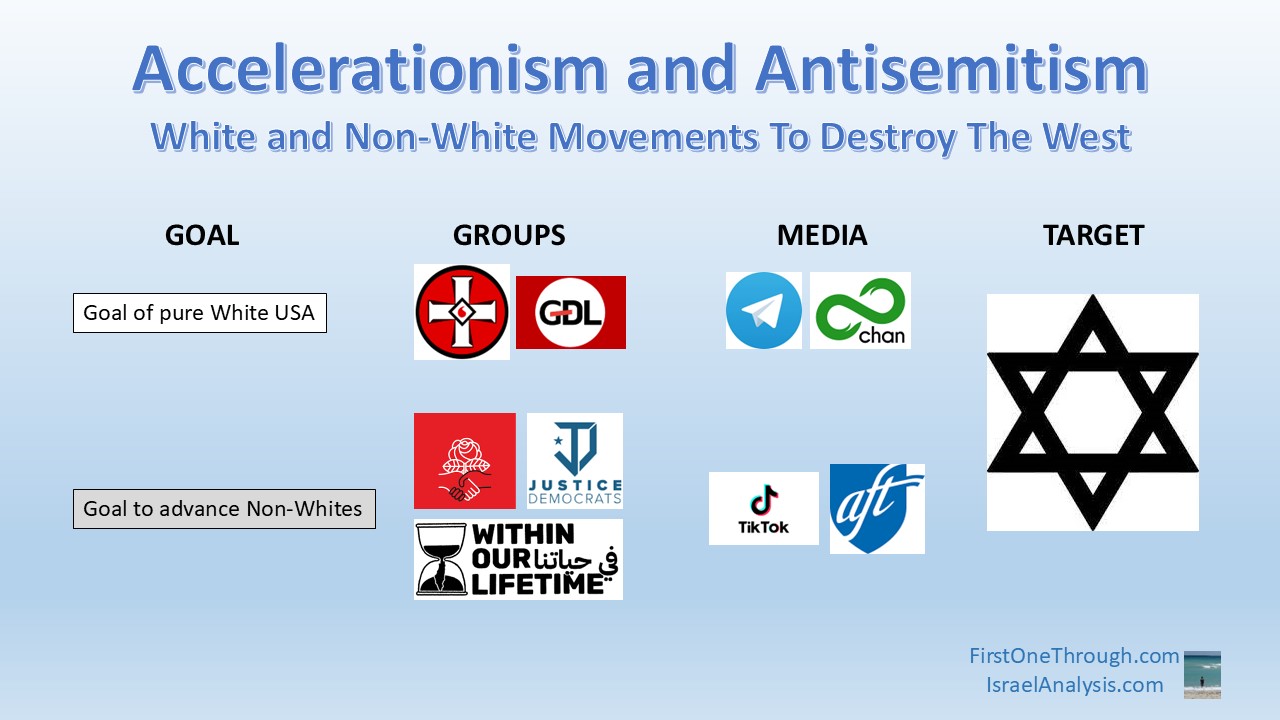
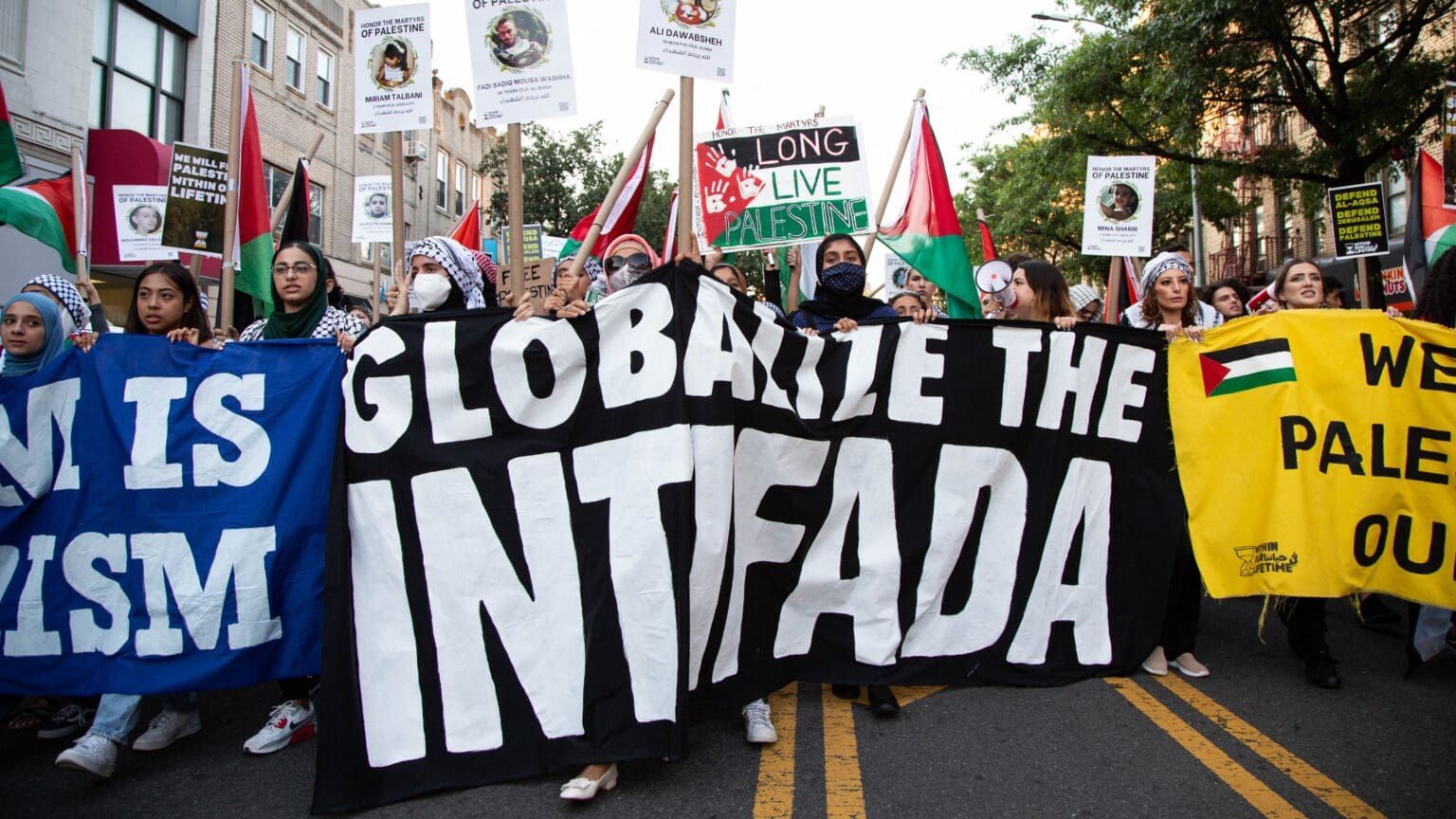
Organizations like Democratic Socialists of America, Students for Justice in Palestine, Within Our Lifetime and Palestine Youth Movement are not tolerating this rhetoric. They are chanting it, platforming it, amplifying it, and treating it as virtuous. They deny Jewish peoplehood, erase Jewish indigeneity, excuse violence against Jewish civilians, and then insist this is nothing more than robust debate.

It is not.

It is hate speech — even if the Constitution protects the right to utter it.

And then there is Zohran Mamdani, who embodies the selective blindness at the heart of this moment. No serious person believes he would tolerate a mass of protesters outside mosques depicting Muhammad as a terrorist, screaming at Muslims as they enter prayer. That would be — correctly — labeled Islamophobia, regardless of whether it was technically legal.

Yet Mamdani casually removed buffer zones around entrances to synagogues, insuring his excited comrades can yell epithets at Jews.

When Jewish institutions are targeted, when synagogues are surrounded, when Jewish national identity is declared illegitimate, the alt-left response suddenly becomes procedural: free speech.

Free speech does not launder bigotry. The First Amendment protects the right to speak; it does not cleanse the moral content of what is said. When people accuse Mamdani and the DSA of promoting Jew-hatred, they are not confused about constitutional law. They are describing the reality of ingrained Jew hatred.

“Most Americans are familiar with the classic Western flavors of anti-Semitism: the Christian, European, white-supremacist and Communist types. But little attention has been paid to the special case of Muslim anti-Semitism. That is a pity because today it is anti-Semitism’s most zealous, most potent and most underestimated form.” – Ayaan Hirsi Ali, July 2019

Invoking free speech is an evasion. A way to avoid responsibility while continuing to normalize ideas that would be instantly condemned if aimed at any other minority.

The tragedy – and fear – is that liberals understand this perfectly well in every other context. They simply refuse to apply it to Jews. Or at least, when uttered by a community of preference, Muslims.

Free speech is not on trial, do not be confused by the misdirection. Antisemitism is, and it is winning.

Hamas and ISIS

The headlines are the same. Another plot uncovered. Another attacker radicalized online. Another manifesto stitched together from familiar phrases about vengeance, purity, and divine obligation.

Was it ISIS-inspired?
Was it Hamas-aligned?

In practice, the distinction is collapsing.

From Manchester to Sydney and across Europe and North America, security services increasingly encounter the same ideological core animating different actors. Antisemitism framed as righteousness. Violence framed as duty. Death framed as meaning. The slogans vary, the flags change, but the belief system underneath remains remarkably consistent.

ISIS flag on the car of murderers in Sydney, Australia

These movements are not converging by accident. They are aligned by doctrine. They are the banners of jihad.

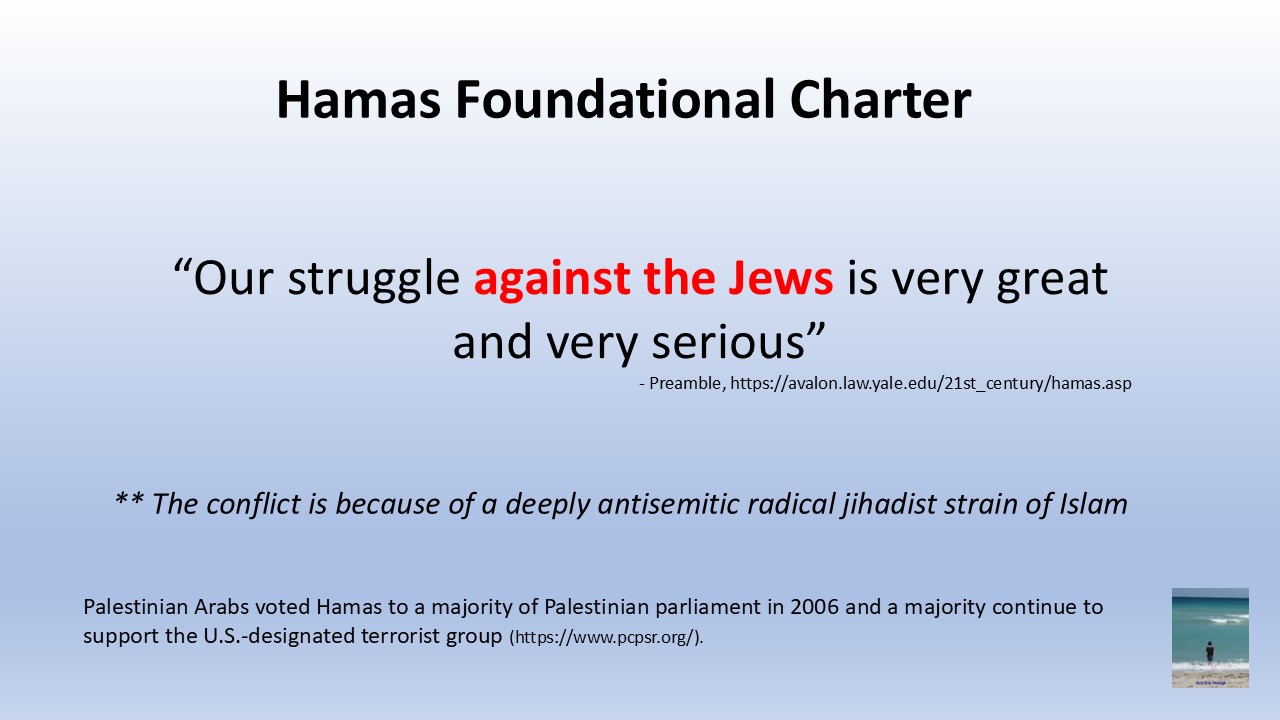
When stripped of geography, branding, and media strategy, Hamas and the Islamic State reveal the same worldview: a sanctified war against Jews, against pluralism, and against life itself.

They are branches of the same antisemitic death cult.

God Alone Rules

Both movements begin with a totalizing claim: sovereignty belongs exclusively to God. Political authority, democratic choice, civil law—all are illegitimate intrusions into divine rule. Religion is not guidance; it is command.

This theology leaves no room for coexistence. Difference becomes defiance. Dissent becomes apostasy. Submission is the only acceptable outcome.

Violence as Obedience

Violence is not an unfortunate consequence of struggle. It is the struggle. Jihad is framed as obligation, killing as faithfulness, death as fulfillment.

This is why attacks around the world feel interchangeable. Civilian targets are central because civilians matter symbolically. Children are drawn into the story because innocence amplifies impact. Suicide becomes virtue because it collapses the distance between belief and action.

When ideology outranks life, mass killing is not excess. It is alignment.

Jews as a Theological Obstacle

The conflict is often described in political or territorial terms, but the animating hostility is theological. Jews are cast as an enduring enemy embedded in sacred narrative, not as a community with whom disagreement might be resolved.

That framing explains the permanence of the war. Agreements become pauses. Ceasefires mere tactics. The goal is not compromise but eradication.

Scripture, once weaponized, does not negotiate.

Death as Currency

In societies shaped by this ideology, death is elevated and life is instrumentalized. Martyrdom replaces mourning. Sacrifice replaces survival. Civilian neighborhoods are folded deliberately into military design.

Homes, schools, mosques, hospitals become launchpads and shields. Suffering is curated for export. Images of devastation are not collateral damage; they are strategic output.

What the outside world experiences as tragedy, the ideology treats as leverage.

Power Without Freedom

The end state is always the same. Total control enforced by fear and sanctified by religion. No speech outside doctrine. No faith outside orthodoxy. No dignity outside obedience.

ISIS ruled this way openly. Hamas learned to cloak the same destination in the language of resistance and grievance. The structure beneath remains unchanged.

The Lesson Already Learned

When ISIS surged across Iraq and Syria, the West recognized the threat clearly. It did not argue for partial containment. It did not imagine ideological evolution. It organized, committed resources, and dismantled the movement.

And it succeeded. For a while.

Israel has carried that same burden. By Israel’s own assessments, roughly 95 percent of Hamas’s fighting capacity—its leadership, battalions, tunnels, and command infrastructure—has been destroyed.

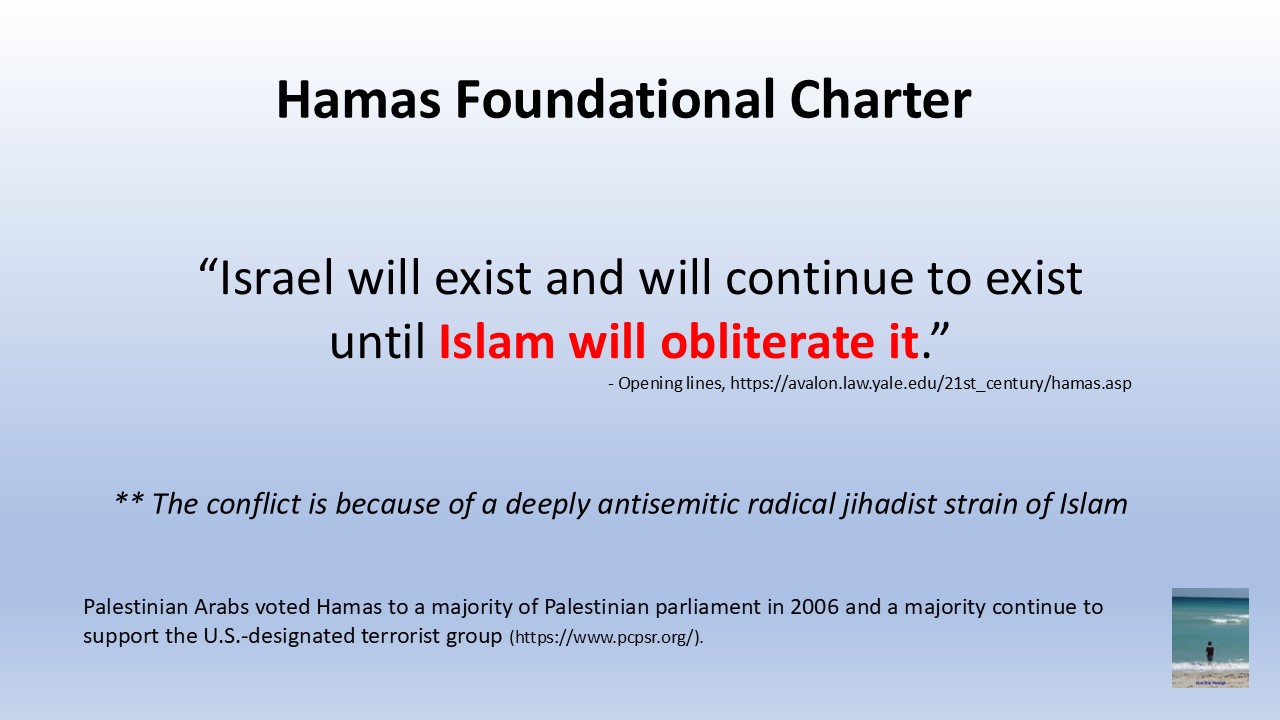
Stopping here would not stabilize anything. Allowing the group to maintain its weapons – the way the majority of the Stateless Arabs from Palestine (SAPs) want – would preserve the conditions for revival. Ideologies built on sanctified violence do not soften when wounded. They metastasize.

The remaining fragments are not a political movement in transition. They are an ideology waiting to rearm, re-export, and re-infect—far beyond Gaza.

Yet the world is rearming and financing ISIS and Hamas. It is allowing the jihadi groups to gain strength.

The world once understood this when ISIS was the name on the banner. The jihadist doctrine of Hamas is the same and has not changed. Only the branding has.

Hamas leadership promises to continue war against Israel forever

ISIS in Africa in Somalia, recruiting from around the world

You Can’t Launder Murder

In October 2002, in a case before the Supreme Court, Justice Antonin Scalia did something characteristically disarming. In the middle of a commercial case—a dispute about representations, intent, and liability—he reached for an example so blunt that no one in the courtroom could miss the point.

“let’s assume that there is a Federal statute that makes discrimination because of, or failure to hire someone, or let’s say, let’s say killing someone solely because of his race a crime, a separate crime. And someone, let’s assume he kills someone who is Jewish, and he said, well, I didn’t kill him solely because he was Jewish; I killed him because I disagree with the policies of Israel. Does that get him out of the statute?” – Supreme Court Judge Antonin Scalia on October 8, 2002

The question was not theatrical. It was instructional.

Scalia was making a narrow, lawyerly point about intent laundering—the habit of rebranding a harmful act with a more palatable explanation after the fact. In commercial law, courts reject that move every day. You cannot sell a defective product and escape responsibility by calling the defect innovation. You cannot mislead customers and then claim a higher purpose. Labels don’t change outcomes; explanations don’t erase harm.

He chose that example because everyone understood it immediately. Not because it was exotic, but because it was familiar. People do, in fact, come for Jews with reasons. They always have. The reasons change; the target does not. That is why the hypothetical worked even in a commercial case. It required no ideological scaffolding, no speech doctrine, no moral hedging. The room got it.

Scalia wasn’t talking about protest or expression. He was reminding the Court that post-hoc justification does not transform reality. A Jew selected as a Jew remains a Jew, regardless of the banner the attacker waves. You cannot launder murder through geopolitics any more than you can launder fraud through branding.

What makes the moment unsettling two decades later is not that Scalia saw this clearly in 2002. It’s that today, society now pretends not to.

Today, the very maneuver Scalia identified is routinely indulged. Violence against Jews is reframed as politics. Targeting Jews is explained as resistance. The word “Israel” is treated as a solvent capable of dissolving antisemitism on contact. The act is dissected until the victim disappears into the explanation.

Scalia understood that this maneuver was not new. In the Middle Ages, it was radical preachers who performed the laundering. On Easter, from pulpits across Europe, Jews were accused of killing Christ, poisoning wells, murdering Christian babies. The charge was always moral, never personal. The violence that followed—pogroms, expulsions, massacres—was framed not as hatred, but as righteous response. The excuse sanctified the act. The victim was still Jewish.

“The crimes you are committing in Palestine by desecrating the sanctity of the holy sites – foremost among them the blessed Al-Aqsa Mosque – you should expect reactions, not only from the Muslims, but rather from the entire world.” – Palestinian Authority Chairman Mahmoud Abbas’ Advisor on Religious Affairs and Islamic Relations Mahmoud Al-Habbash on December 15, 2025 about the massacre of Jews in Sydney, Australia

The vocabulary has changed. The mechanism has not.

Today the laundering is done in different robes—through left-wing media narratives, academic language, teacher-union resolutions, and activist slogans. The Jewish state is branded unholy, colonial, imperial. Zionism is recast as original sin. Once that premise is accepted, Jews everywhere become legitimate stand-ins—symbols of something larger, targets by proxy. “Globalize the intifada” is not poetry. It is a call that travels, and it always knows where to land.

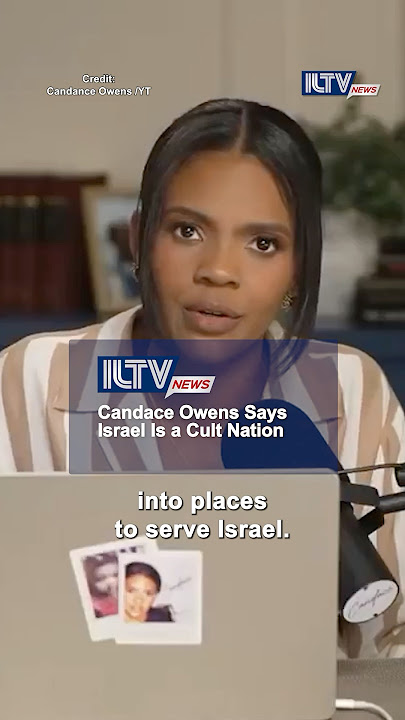
The laundering does not stop on the left. Figures like Candace Owens have vilified Jews across time itself—casting them as architects of the slave trade two centuries ago, as hidden hands behind modern social decay, as a people uniquely responsible for nearly every ill that can be stitched into a narrative. The effect is not historical inquiry; it is moral conditioning. When Jews are blamed for everything, they become appropriate targets for anything. The excuse differs. The permission is the same.

This is why Scalia’s example mattered—and why he chose it so plainly. He knew that people come for Jews with reasons. He knew those reasons are never the point. And he assumed, reasonably at the time, that everyone else could still see the difference between explanation and absolution.

Decades later, that clarity is treated as controversial. Motives are said to cleanse acts. Ideology is said to transform targets. Murder is said to become discourse if the language is fashionable enough.

You can change the sermon.
You can update the slogans.
You can trade Easter blood libels for postcolonial theory.

But you cannot launder murder.

What Chants Are Antisemitic?

In Britain, a jury recently decided that the so‑called Khaybar chant is not antisemitic. The chant invokes Khaybar, a seventh‑century battle in which Jewish communities were slaughtered by the armies of Muhammad. The actual chant in Arabic, “Khaybar, Khaybar Ya Yahud, Jaish Mohammed Sauf Ya’ud” means “Watch Out Jews, Remember Khaybar, the Army of Mohammed is returning”. Its meaning is not subtle. It is a threat dressed up as history: remember what happened to the Jews then—remember what can happen again.

If that chant is deemed legally innocuous, what else must now be tolerated?

Would crowds chanting, “Jews, remember the ovens—the Nazis are coming,” be waved through as historical commentary about the Holocaust? What about “We love October 7—it will happen again, in your neighborhood,” explicitly celebrating the mass murder of Jews in Israel and promising its repetition elsewhere? These are not metaphors. They are incitement through remembrance, violence recalled as promise.

The problem is not that the law is incapable of recognizing hate. It plainly can. Careers are ended for misgendering. A single racial slur can bring swift institutional punishment. Speech codes are enforced with zeal—except, it seems, when the targets are Jews.

When courts insist on laundering openly antisemitic chants into something more refined and dignified—while other forms of bigotry are policed to the syllable—Jews are stripped of basic protections. Uniquely so. They are told to absorb the abuse, to endure the menace, to treat threats as culture and calls to murder as mere politics.

Law enforcement, under this logic, will intervene only—perhaps—after Jewish blood is spilled. Until then, Jews are instructed to tolerate the intolerable.

The divergence between the United States and the United Kingdom is often overstated. America claims the shield of the First Amendment; Britain claims the precision of hate‑speech law. In practice, both systems now converge on the same result: maximal latitude for antisemitic intimidation, coupled with maximal scrutiny of everyone else.

In the U.S., threats are dismissed as protected speech until they metastasize into action. In the U.K., chants that openly celebrate or foreshadow Jewish slaughter are judicially sanitized as cultural or historical expression. Different doctrines, identical outcomes.

San Francisco Hillel torched and vandalized in December 2025

This is not neutrality. It is a re‑creation of an old status under a modern name: Jews may live here, but only on sufferance; they may speak, but only quietly; they may appeal to the law, but not expect its protection.

If Western societies imagine that this posture will buy peace—by indulging jihadist rhetoric while disciplining polite speech—they are deluding themselves. A legal order that cannot name antisemitism, that cannot distinguish remembrance from menace, has already corroded from within.

History’s lesson is not subtle. The moment a society teaches Jews to absorb threats, it has decided that Jewish safety is optional. And when the law makes that decision, it is only a matter of time before others learn the same lesson.

Western Zealots for ISIS and Palestine

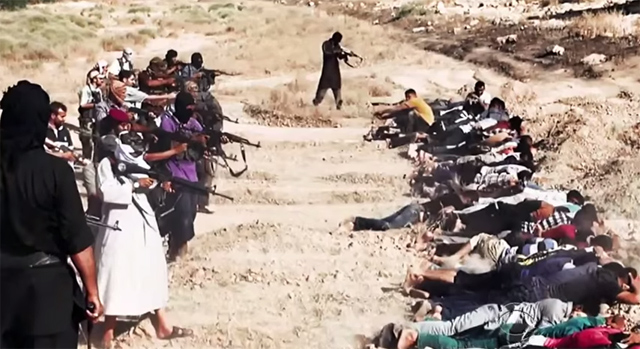
A decade ago, hundreds of Westerners streamed out of London, Birmingham, Manchester, Minneapolis, and Columbus to join the Islamic State. They weren’t merely curious spectators of a dark movement; they were converts to a brutal faith of fire. They thrilled at ISIS videos of men burned alive in cages, heads severed on sand, and ancient cities razed under the banner of the Caliphate. Entire families—women and children included—picked up and moved to Syria and Iraq to participate in the dream of a world purged of infidels. Many never returned.

Islamic radicals of ISIS slaughtering people

Today they don’t need to leave home.

The same ideological impulse that carried them to Raqqa now drives attacks on local Jews down the street—in schools, synagogues, coffee shops, and commuter trains. Radical jihadism has simply switched labels: from “ISIS” to “Palestine,” from “Caliphate” to “Resistance,” from overt barbarism to the socially-acceptable pose of “solidarity.” The mission is unchanged. Only the hashtags are new.

And while Western governments once scrambled to stop teenagers from boarding flights to Turkey, today they barely raise an eyebrow as mobs chant for Jewish death on college campuses and in city plazas. Police departments treat the threat as “protected speech” until someone lights the match or pulls the trigger. Surveillance of Jews hems closer, but nothing stops the expanding radical ranks of those who have found a new, easier battlefield: Western cities themselves.

The goal remains constant—burn down the old society and replace it with the black-green flag of radical Islam. In the Middle East, ISIS tried to seize territory. In the West, its ideological descendants aim to seize the streets, the discourse, and the public square.

The West fought—haltingly—to slow ISIS’s spread in Iraq and Syria. But it is utterly unprepared to confront the same doctrine as it metastasizes in Africa, online, and now in its own neighborhoods. European governments write reports; American politicians hold hearings; academics write tortured essays parsing the “legitimate grievances” of those calling for slaughter.

Only one country behaves as if the threat is real. Israel fights it directly, understanding the battle as existential rather than theoretical. Israelis have seen what happens when radical jihadists gather strength: they massacre civilians, rape women, burn communities, and boast about it online.

But the West still imagines that it can appease the ideology, contain it, or reinterpret it as a civil-rights movement. In certain cities, it is preparing to forfeit its Jews first—sacrificing them to buy temporary calm—while missing the larger reality that the same forces aiming at Jews today aim at the entire Western democratic structure tomorrow.

Societies do not collapse in a single moment. They erode from below, from the foundations. And those foundations—rule of law, minority protection, civic trust, freedom of worship, the very idea of objective truth—are already cracking as the zealots find new targets and new excuses.

The West destroyed the physical caliphate. It never touched the ideological one, the one which drew warriors from its own streets.

Now the jihad is local.

The One State Hypocrisy

Zohran Mamdani and his chorus of activists claim that the answer to the Israeli–Palestinian conflict is simple: one state in which everyone has “full and equal rights.” They pound the table with righteous fury, insisting that borders, ethnic divisions, and national identities melt away in a utopian civic democracy.

Fine. Let’s take them at their word.

If you truly believe in a one-state solution, then you must believe that Jews, like Arabs, have the right to live anywhere in that state. Hebron, Shiloh, Beit El, Jerusalem’s Old City, Ramallah, Nablus, everywhere. That’s how equal rights work.
So why do the same people who chant “one state” turn around and scream “illegal settlers!” when Jews live or pray in places those protestors dislike?

They protested outside Park East Synagogue but deny Jews the right to live in Judea and Samaria, the Jewish homeland for 3,000 years. Either everyone gets equal rights everywhere, or you don’t believe in a one-state solution at all.

You can’t have it both ways.

The Temple Mount Test Case

If you want a perfect example of the hypocrisy, look up — literally — to the Temple Mount.

If you support one state where every citizen has equal rights, then you support Jews having the same rights as Muslims to: Visit their holiest site. Pray at their holiest site. Build a synagogue at their holiest site.
That is what equality means.

But the United Nations — which these same activists quote like scripture — demands the “status quo,” a euphemism for banning Jewish prayer on Judaism’s holiest ground. It is the only place on earth where Jews are legally prohibited from praying. The UN defends this discriminatory regime with fervor.

So which is it?
Is it a one-state democracy of full equality, or an international system that criminalizes Jewish religious rights because the Jordanian Waqf insists on it?

You cannot simultaneously denounce Jewish prayer as a provocation and claim to champion “equal rights for all.”

One State Means Equal Rights — For Jews Too

If Zohran Mamdani and his movement were intellectually honest, they would have to say:

  • Jews may live anywhere in the land
  • Jews may pray anywhere in the land
  • Jews may build synagogues anywhere in the land
  • Jews may return to their ancient homes — Hebron, Shiloh, the Old City of Jerusalem

Not one activist chanting for “full equality” will utter those words. Because their version of “one state” is equality for some and erasure for Jews.

Call it what it is.

You can’t claim a one-state solution while denying Jews the very rights you demand for others.

You can’t have it both ways.

The Extremes Modify The Abhorrent

There’s always someone worse.

The vile antisemitism of Within Our Lifetime‘s Nerdeen Kiswani and MPower Change‘s Linda Sarsour isn’t accidental or peripheral — it’s the smoke that hides the fire. Their venom serves political purposes: to push Zohran Mamdani further and to make him look like a moderate.

Kiswani, the founder of Within Our Lifetime, just declared that there is “no scourge of antisemitism” in New York, that antisemitism is merely a “political tool.” She dismisses Jewish fear as propaganda, mocking the very notion that attacks on Jews are real or meaningful.  It’s malice dressed up as activism.

Sarsour, her ideological twin, has spent years deflecting and justifying Jew-hatred while demanding that “Zionists” be excluded from feminist and progressive spaces. Both women were already disgusting before Mamdani’s rise; their brand of hatred was a known quantity.  But now, with a self-proclaimed “anti-Zionist” mayor-elect, their vitriol has a new function.

By shouting louder, by pushing uglier rhetoric, by saying they will hold Mamdani “accountable,” Kiswani and Sarsour pull the Overton window so far into open antisemitism that Mamdani’s own positions — once fringe — could appear reasonable. When he calls for “justice for Palestine” but refuses to condemn chants for the destruction of Israel, he suddenly sounds measured. When he pays lip service to opposing antisemitism while platforming its deniers, he looks balanced.

That’s the trick. The extremists normalize the radical.

Expect them to ratchet it up — louder, uglier, more unapologetic. Every grotesque statement they make gives Mamdani cover to pretend he’s in the middle, that he’s the “responsible” voice between hatred and hysteria. In reality, it’s a choreography: they spew; he sanitizes.

This is how antisemitism gains respectability — not only through mobs on the street which are clearly terrifying sights – but through mayors in city hall who appear “moderate” only because the activists behind them are obscene.

New York should not fall for the illusion. The vile bigotry of Sarsour and Kiswani doesn’t make Mamdani reasonable — it exposes how far the city’s moral compass has tilted. When hatred becomes the baseline, even those who echo it softly begin to sound centrist.

There’s always someone worse. That’s how the worst ideas survive.

During a July 31, 2021 WOL rally in Brooklyn, after fireworks were lit, Kiswani told [01:02:43] the crowd: “I hope that a pop-pop is the last noise that some Zionists hear in their lifetime!”