Passings

To arrive in Israel is never just a landing. For millennia, Jews faced this land in hope and longing, turning toward Jerusalem even when the path was blocked by oceans, armies, or fate itself. Countless generations passed on without ever setting foot on the stones their ancestors walked.

The architects of Ben Gurion Airport understood this ache.

Between the terminal and passport control, travelers move through parallel glass corridors — one for those entering the land, one for those departing. You can watch them the entire way: people going home, people leaving home. From above, the scene resembles Jacob’s Ladder, angels ascending and descending, a ceaseless movement connecting heaven and earth. Biblical commentators taught that the angels Jacob saw were the guardians of the Land of Israel — one set departing when he left, and a new set arriving to accompany him in the diaspora. So too here: those making aliyah rising in spirit; those heading abroad descending from holiness for a time, yet still tethered by an invisible thread.

In the last two years, this modern ladder of the Land of Israel took on a painful weight. Along the railing, as every arriving passenger stepped into the corridor, 251 photos lined the wall — the faces of each hostage seized by Hamas on October 7. Every person entering the land confronted them. No one could step onto the soil of the Jewish homeland without understanding the national wound, the unfinished promise that Israel would bring every soul – living and dead – home.

Photos of the hostages hung from railings meeting every person arriving in Israel at Ben Gurion Airport in 2024 (photo: First One Through)

On my most recent trip, the first picture I met was that of Dror Or. I did not pass. I lingered. For two years, his body was held in Gaza — a grotesque bargaining chip in a war the captors refused to end. Israel kept searching, praying, fighting, refusing to abandon its dead. A week after my arrival, his body was finally returned to his family and to the state. When I walked back through the airport corridor to depart, his photo was gone. His picture had been removed, but his passing — and his dignity — stayed with me.

In Israel, passings are never casual. In this small land, every encounter feels like a reunion: bumping into someone you have not seen in years; meeting friends to celebrate a simcha; honoring the memory of someone who has passed on; meeting a stranger and then talking intimately for twenty minutes. Moments here are not ordinary. The land itself seems to insist that they matter.

To pass by someone, to pass through a hallway, to pass from life — in the Jewish homeland, is not trivial. This is a country stitched together by arrivals and departures, by longing and fulfillment, by angels ascending and descending in steady and deliberate devotion.

The Age of Rocks and the Arrogance of History

To walk the land of Israel is to feel stitched into the fabric of time. Every trail from Beersheva to the Galilee whispers of footsteps that appear in the Bible—not legends, but people who actually lived, planted, quarreled, dreamed, and prayed on this soil. The stones beneath one’s feet carry the gravity of memory. They seem fused to the foundation of the earth itself, like the Even haShtiyah—the legendary rock at the center of the Temple Mount from which creation is said to have sprung.

Rocks in Judean Hills

But that connection is not geological. It is human.

The rocks of Eilat, the oldest in the region, date to around 800 million years. They feel unimaginably ancient to us—far older than Abraham’s tents, King David’s psalms, or the Hasmonean rebellions that command our sense of deep history. Yet even those craggy cliffs and mineral seams are infants compared to the rocks of Canada. In the Canadian Shield lie formations over 4 billion years old—some of the earliest surviving pieces of Earth’s crust. Five times older. A geologic eternity older.

And yet no one reveres those rocks. No pilgrim circles them. No faith assigns them cosmic origin stories. They are “pretty,” not primordial. They are scenery, not scripture.

Why?

Because we measure age in lifetimes. We crown the stones of the Holy Land as ancient not because they are old, but because we are old here—because human meaning saturated this place for millennia. The rocks become vessels for our significance.

It is, in a sense, a subtle arrogance: the centering of human experience as the measure of the world. We treat Earth’s deep past as a backdrop to our stories rather than a reality that dwarfs them. We act as if history begins with us, as if time itself depends on our noticing it.

When we walk these trails—past the ruins of synagogues, the outlines of Israelite cities, the remnants of Crusader walls—we feel connected because these places speak to human time. They anchor us. They dignify us. But the rocks beneath those ruins hum a different message: we are temporary here. Our religions, nations, languages, and conflicts occupy a blink of the planet’s eye.

A dose of humility would serve us well. To appreciate the holiness of our stories without mistaking them for the age of the world.

We walk ancient paths, and the ground reminds us we are all newcomers.

Where the Eagles Still Land

At Sinai, God tells the Israelites: “I carried you on eagles’ wings and brought you to Me” (Exodus 19:4). It is the Torah’s softest reassurance — that when the world turns crushingly heavy, something stronger will lift the Jewish people before they disappear beneath its weight.

Every generation reads the verse and wonders how such a thing could ever happen again.

The Yemenite Wings

In 1949–50, it did.

Yemenite Jews — who had kept Hebrew alive for centuries through chants in dim courtyards — found themselves suddenly gathered into airplanes they had never seen before. Operation Kanfei Nesharim lifted nearly 50,000 people from danger to home, a moment so surreal that many believed prophecy had slipped back into the world.

They came to Tel Aviv’s Kerem HaTeimanim, where the streets still hold their memory: Rechov Kanfei Nesharim, Rechov HaAliyah HaTeimanit, and alleys named after the poets and dreamers who carried Yemen’s Jewish soul through generations of exile. The neighborhood became a landing place for people who had lived so close to the dust of history that being lifted into the sky felt like God reaching down again.

A New Kind of Arrival

Today those same streets are welcoming new immigrants — Jewish artists from Paris, Berlin, Amsterdam, and London. They are not fleeing famine or forced conversion. They leave behind apartments, galleries, and studios, places where they once felt at home but now feel the room shifting beneath their feet.

They speak quietly of exhibitions canceled with careful wording, of colleagues who grow uncomfortable when they identify openly as Jews, of a cultural world that prides itself on openness yet signals, in subtle ways, that Jewish presence complicates the picture.

Or they just concluded it was time to move on.

Their departure is not dramatic. No riots, no decrees. Just a slow tightening — a sense that Europe’s warm lights are dimming for them. And so they come here, carrying sketchbooks, guitars, half-finished manuscripts, their beautiful voices, and the hope that Israel will give them what their former homes no longer can: the ability to be fully themselves.

They settle into Kerem HaTeimanim because it feels familiar: small homes, open doors, neighbors who still greet each other, a neighborhood built by people who also crossed deserts — literal or emotional — to find peace.

Actress and singer from London makes a new home in the “Yemenite Vineyard” section of Tel Aviv (photo: First One Through)

The Meeting of Journeys

In these narrow lanes, two different exoduses breathe the same air. Children run past synagogues founded by Yemenite families and new galleries opened by European artists. Hebrew floats from balconies in melodies that sound ancient and brand new at once.

The Yemenite grandparents who arrived barefoot on metal wings once prayed simply to reach Zion. The young European immigrants arriving today pray to belong — to a people, to a place, to their own identity without contortion.

Here, on Kanfei Nesharim Street, the verse from Sinai feels alive again. Not as a metaphor of miraculous rescue, but as a quiet truth: every Jew who finds their way home is carried by something — hope, fear, memory, longing — that lifts them just high enough to begin again.

In this little corner of Tel Aviv, you can almost feel the wings settling gently on the houses, as if history itself decided to rest for a moment before taking flight again.

Over three thousand years ago, God took the Jews of Egypt out from slavery and established the Jewish people. Nearly eighty years ago, just after the reestablishment of the Jewish State, the government of Israel rescued the Jews of Yemen from persecution and brought them to the holy land. Today, Jews from the West come on their own to the Jewish Promised Land.

We marvel at the notion of being taken to safety on “eagles’ wings.” Perhaps we should also marvel at the place to which we arrived.

What Is A Moon In Jerusalem?

People assume the moon is a universal constant. A simple shared celestial orb rising and falling across planet Earth.

At first glance, that seems right. The phases of the moon follow the same cycle for everyone. The waxing crescent in New York is the waxing crescent in Nairobi. The full moon bathing Buenos Aires is the same one brightening Beijing.

But the details betray the simplicity.

Because of Earth’s curvature and tilt, the angle of the moon changes depending on where you stand. In the northern hemisphere, the crescent opens to one side; in the southern hemisphere, it opens to the other. Near the equator, the crescent often lies on its back like a cup collecting light. The horizon line shifts the moon’s ascent and descent, making the same moon feel subtly unfamiliar across latitudes.

Phases of the moon in northern and southern hemispheres

So while the moon itself is constant, the human experience of it is not. Geography shapes perception.

Which brings us to a particular location: Jerusalem.

Why did ancient Jewish sages insist that the new month—the very heartbeat of the Jewish calendar—could only be declared there? Why could only witnesses standing in that one city testify that they had seen the first thin sliver of the new moon? It wasn’t because Jerusalem had the sharpest skies or the best astronomical vantage point. Other regions had clearer air, lower humidity, more favorable horizons.

The choice was not scientific. It was cultural.

The sages understood that if the Jewish calendar were anchored anywhere else—in Babylonia, in Alexandria, in Rome—it would become a local calendar. A diaspora calendar, and reflection of exile. Time would belong to the places where Jews merely lived, not the place where they belonged.

And so they declared: the Jewish month begins only where Jewish destiny begins.
In Jerusalem.

The moon in Jerusalem is not visually unique. It does not shine brighter, hang lower, or reveal a different pattern of craters. What is different is what it carries.

Elsewhere, the moon is a mechanism of light in the night. In Jerusalem, it is a messenger and message.

In the city, it rises over stones worn by millennia, over a city that has been destroyed and rebuilt and prayed toward more times than any other on earth. Outside of Jerusalem, generations of Jews looked to that moon to mark the days of their wandering. Prisoners in Soviet cells whispered its phases in the dark. Families in medieval Europe and North Africa opened their windows each month hoping for a sliver that someone in Jerusalem might already have seen.

For them, the new moon was a signal: Somewhere, in the city we lost, time is still ours.

The moon is the same everywhere, but meaning is not. For Jews, the appearance of the moon in Jerusalem was the moment when wanderers and exiles, merchants and mystics, shepherds and scholars all re-entered the same story, no matter how far they lived from its setting, regardless of their own particular vision of the moon.

The world sees a reflection of the sun’s light in the moon. Jews see a reflection of their unique common heritage, and permanent tie to Jerusalem.

Chagall’s Ladder and October 8 Jews

Marc Chagall (1887–1985) returned again and again to the image of Jacob’s Ladder throughout his long life. But his 1973 rendering, painted near the end of his days, stands apart. It is visually explosive—layered, dissonant, and urgent.

The moment one sees it, the eye is pulled upward to an orange sun burning at the top center. At that height, the sky should glow with daylight yellows. Instead, the sky is red, a communist-red firmament. And the town below, which should be illuminated by that sun, sits in unnatural midnight blue.

Something is wrong in this world. This is not a window into serenity; it is a scene of foreboding.

That imbalance is profoundly Chagall. Born in the Jewish shtetls of the Russian Empire, he fled early waves of antisemitism. He lived through the destruction of European Jewry and spent his career painting ghost-towns of a shattered civilization. But he also painted the biblical narratives that shaped Jewish imagination. In this canvas, he fuses those worlds—eternal story and fragile reality—into a single warning.

At the center of the darkened town rises a ladder stretching into the sky. Three white angels punctuate the blue shadows, announcing that this is Jacob’s dream. Yet Chagall departs from Genesis: the ladder doesn’t stretch into the heavens and all the angels are not identical. Instead, the ladder is held in place by a blue angel, while a second, yellow angel reaches for it from the red sky above.

This ladder has competing destinations.

The blue angel, painted in the same hues as the town, embodies the pull of entrapment—those who cannot or will not flee their circumstances. In 1973, when Chagall painted this work, Soviet Jews were locked inside a system that barred their departure and suppressed their identity. The blue angel is not hostile; it is immovable. It represents the status quo, the path of staying even as danger grows. It is the sleeping Jacob at the bottom of the painting pondering the outcome of fleeing while laying immobile.

The yellow angel, by contrast, belongs to the daylight that should have filled the sky. It symbolizes clarity and escape. Beneath it, at the bottom-left, a mother and child ride a yellow rooster—Chagall’s emblem of dawn, deliverance, and a new beginning. Above them, nearly hidden in the deep blue, a quiet procession of Jews slips toward a safer horizon.

This is Jacob’s dream retold by a man who watched Jews flee the Russian Empire, flee Europe, flee the infernos of the 20th century. It is a ladder that offers a way out—if one chooses the right direction. It is there on Jacob’s face, the yellow glow of peaceful escape.

The October 8 Jews

Today, a new group is dreaming of climbing Chagall’s ladder: the October 8 Jews.

These are the Jews who woke the day after the October 7 massacre not only to the horror in Israel, but to the celebrations of that horror across Western cities. They heard the chants of “Globalize the intifada!” and “There is only one solution—intifada revolution!” echoing at major universities, boulevards, and civic squares. They watched crowds revel in Jewish fear, justify kidnapping, rape, and murder as righteous “resistance,” and proclaim open season on Jews everywhere.

Suddenly, the Western Jew realized that the ground beneath his feet might no longer be stable.

He now lives between Chagall’s two angels. Does he cling to the familiar town—the blue angel of inertia, habit, and misplaced trust? Or does he follow the rooster, the yellow angel, toward a place where Jewish existence is not conditional, tolerated, or revocable?

In the early 20th century, Jews fled the USSR and Europe for the United States and the Land of Israel. Today the destinations remain, but the calculus has changed. The Jewish state is stronger than ever—and simultaneously the focal point of global vitriol. Safety and danger now sit braided together.

The Ladder Still Stands in the Center of Town

Chagall painted Jacob’s Ladder for those who knew safety can vanish overnight. His warning now belongs to us. On October 6, Jews believed they lived in stable towns; on October 8, they saw the sky had been red for years. The chants weren’t metaphors, the mobs weren’t marginal, and the threats weren’t theoretical. The blue angel of normalcy had held the ladder while danger gathered in plain sight.

So the question becomes stark:

Will Jews try to reclaim trust in places that celebrated their terror—or follow the mother and child on Chagall’s yellow rooster toward the only light that doesn’t depend on someone else’s tolerance?

For a century, Jewish survival has meant movement: away from the USSR, away from Europe, away from every place that insisted Jews stay quiet and endangered. The October 8 Jew must decide whether today is any different.

In Chagall’s vision, only one angel leads to dawn.

The ladder still stands. The choice is ours.

Intent and Action: Jacob, Cain, and the Burning Question of Worthy Offerings

From the earliest chapters of the Hebrew Bible, we encounter a recurring theme: human beings trying to reach God through offerings. Noah offers thanks after the flood (Genesis 8:20–21). Abraham builds altars wherever he senses God’s presence (Genesis 12:7–8, 13:18). And in the first tragic sibling story, Cain and Abel each bring a gift to God—hoping to be seen, heard, loved (Genesis 4:3–5).

The Torah gives us the parameters of worthiness: a true offering rises.

Abel’s gift from the firstlings of his flock is accepted—traditionally understood as being consumed in heavenly fire (Genesis 4:4). It ascends upward like smoke from a perfectly tended sacrifice. Cain’s offering—of lesser quality—remains inert. No ascent. No connection. It is not merely ignored; it is a theological dead end, carrying the terror that one’s prayers may not only go unanswered, but may reflect back one’s own internal inadequacy.

That anxiety, that existential dread, echoes generations later across the Parshas of  Toldot and VaYeytze.

Isaac’s Consuming Blessing

Jacob, urged by his mother, disguises himself as Esau in an elaborate plan to secure Isaac’s blessing (Genesis 27:6–29). Isaac eats the carefully prepared meal and, in a moment echoing the sacrificial imagery of Cain and Abel, pours out a blessing so full that when Esau arrives moments later, Isaac declares he has nothing left (Genesis 27:33–36). It was an all-consuming offering. Nothing remains.

Esau’s reaction mirrors Cain’s ancient rage. Spurned, overshadowed, convinced the divine pipeline has bypassed him, Esau vows murder (Genesis 27:41). The pattern repeats: the rejected one turns violent against the brother whose offering has “risen.”

Jacob’s Panic: A Blessing Built on Lies?

And so Jacob flees at his mother’s urging – that same person who had directed him deceive his father. Jacob runs both from Esau’s wrath and from the unbearable question gnawing at his soul (Genesis 27:42–45).

Was his mother’s plan a failure?
Did he truly deserve his father’s blessing?
Was it legitimate if it was obtained through deception?
Was he the new Abel—accepted and uplifted—or Cain, offering something that looked fine on the outside but was internally rotten?

Jacob had already exploited Esau’s hunger to purchase the birthright (Genesis 25:29–34), then deceived his own blind father to secure the blessing (Genesis 27:15–23). He must have wondered whether the blessings he secured, built on trickery, would end like an unburnt sacrifice—never rising, never accepted, destined to collapse under their own falsehood. Perhaps this moment was not a perfect echo of the sacrifices to God by Cain, but marked by the intentions and actions between people, with the uncertainties and fragility such interactions forever carry.

Was Isaac’s blessing a dead letter?

The Ladder: When Heaven Answers the Question

Then comes the dream at Bethel.

A ladder planted on earth, its top reaching into the heavens, with angels ascending and descending (Genesis 28:12). A strange image on its face. Many divine characters at a single time and place, moving in remarkable choreography.

The angels rising—those are the offerings, the intentions, the gifts Jacob has made, confused and imperfect though they may be. They ascend like the smoke of Abel’s sacrifice. And the very same angels descend—carrying blessing back down. Not new angels. The same ones. The same act, the same intention, returning in kind.

This is the divine reply Jacob so desperately needed:
Your offering was accepted. Your intent was seen. Your blessing stands.

Marc Chagall’s Jacob’s Ladder (1973)

Jacob Wakes with Calm

Jacob awakens transformed: relieved, inspired, grounded (Genesis 28:16–17). He WAS afraid. No longer. He understands the dream not as a prophecy of future events but as confirmation that his past actions—flawed in execution but upright in intention—had been received as a worthy offering.

So Jacob does what his ancestors always did in moments of divine clarity: he offers something back to God, establishing that site as sacred and vowing a vow of service and eternal charity (Genesis 28:18–22).

The Lesson: Intent Rises

The Torah’s message from Cain to Jacob is not that action is irrelevant. Far from it. But action without intention is inert—like Cain’s cold, unrisen offering. Intention, even wrapped in human imperfection, can ascend and draw God’s response.

Jacob’s ladder teaches that what rises from the heart returns as blessing. The smoke goes up; the angels come down. The offering is accepted; the blessing is confirmed.

Intent and action. Purity and performance.
That is the spiritual physics the Torah reveals—first in a field with two brothers, and then on a lonely night with a frightened man who finally learns he is worthy.

The Prophetic Bird Of The Holy Land

Israel’s national bird is not the mighty eagle or the muscular vulture which many countries select. It is not a predator circling above the desert in effortless dominance. Instead, Israelis chose a small, cinnamon-colored creature with a zebra crown — the hoopoe.

The hoopoe going for a walk in Israel (photo: FirstOneThrough)

The hoopoe is striking without being fearsome, regal without being tyrannical. Its crest rises like a tiny crown, not in arrogance but in alertness. Its quiet confidence is perhaps the most Israeli trait of all.

Ancient Jewish texts and Middle Eastern folklore saw in the hoopoe a messenger of wisdom. King Solomon, in one Midrash, learns from the bird’s insight. In Islamic tradition, it is the hoopoe who spots the Kingdom of Sheba and brings word of distant realms. Small in stature, large in perception — the bird was never the warrior; it was the one who saw.

And in that, too, there is something deeply familiar. Israel has always survived less by size than by awareness, less by brawn than by vigilance. The hoopoe does not conquer terrain; it adapts to it. It finds food in the hardest soil. It endures heat and drought. It survives because it is resourceful, not ruthless.

It is also fiercely protective through a strange biological ingenuity. When predators threaten its nest, the hoopoe emits a foul-smelling secretion that drives them away. It is a defense born of determination: My family will not be harmed.

That combination — gentle but unyielding, peaceful but protective — resonated in the public vote that crowned it Israel’s national bird in 2008. Israelis did not choose a symbol of domination. They chose one of resilience, devotion, and wisdom. They chose a creature that guards life rather than takes it.

Israel didn’t know in 2008, when it voted for the hoopoe, that Hamas would launch war after war with openly genocidal intent. It didn’t know that October skies would fill with rockets, or that invasions, massacres, and kidnappings would carve themselves into the national psyche. But the country understood something deeper — that, like the hoopoe, it would have to adapt to danger, live alert, and protect its family with whatever tools it had.

A small bird in a vast desert landscape.
A small country in a vast expanse of Arab and Muslim nations.

The hoopoe survives not by dominating its predators, but by outsmarting them, outlasting them, and never abandoning its young. Israel, too, has learned to persist in a world that often misreads its vigilance as aggression and its survival instincts as provocation.

The national bird turned out to be prophetic.

Israel may be small, but like the hoopoe, it adapts, endures, and protects its own — even when surrounded, even when threatened, even when the world insists it should fold its wings and pretend it is safe.

The Darkest Dawn, and the End of “The Right of Return”

There is an old saying that “it’s always darkest before the dawn.” It captures the turning point where exhaustion and despair crest just before clarity breaks through. It sounds sour but is actually optimistic in seeing that the darkness will soon yield to daylight.

The phrase fits perfectly for the century-long conflict surrounding the Stateless Arabs from Palestine (SAPs)—because the world has lingered in the darkness for generations, terrified to say out loud what every policymaker knows: there is no “right of return” to Israel. There never was. And acknowledging that truth is the dawn the region desperately needs.

Old City of Jerusalem (photo: FirstOneThrough)

For decades, diplomats, presidents, secretaries-general, and foreign ministers have spoken in hushed tones, pretending that the millions of Arab descendants of the 1948 refugees might somehow “return” to houses where grandparents lived in a sovereign Jewish state. No one believed it. But fear of political backlash from the Muslim world kept the fiction alive. UN resolutions were drafted with linguistic acrobatics; peace conferences avoided the topic like a contagion; European chancelleries adopted the convenient illusion that avoiding the subject was the same as solving it.

The result was darkness—deep, suffocating darkness. A generation raised on false hope. UNRWA built an education system anchored in grievance. Politicians in Ramallah and Gaza used the fantasy as a perpetual cudgel against compromise. The Arab League made it non-negotiable, ensuring negotiations never truly began.

Every time the world inched toward clarity, it recoiled. And the darkness thickened.

But dawn comes precisely when the night feels endless. Today, after the horrors of October 7, after the open celebration of massacres on Western streets, after the exposure of UNRWA’s radicalization pipelines, and the decimation of Gaza, the world is finally approaching that moment. Governments are beginning to say the once-unsayable: a two-state solution is incompatible with a mass influx of millions of SAPs into Israel. You cannot demand a Jewish state and simultaneously demand its demographic erasure. You cannot promote coexistence while promoting a “return” to towns long integrated into modern Israel.

The math, the politics, the security, the basic logic—none of it ever supported the claim. The world simply refused to admit it.

Now the truth is no longer optional. The dawn is forming whether the diplomats like it or not.

Sunrise at the Kotel (photo: FirstOneThrough)

For the first time, Western leaders are linking a future Palestinian state to the clear, final abandonment of the so-called right of return. Israel has always said this. Quietly, so have every serious negotiator from Washington, Brussels, and Cairo. Even Arab states normalizing relations with Israel recognize that “return” is code for endless war, not peace.

When the world finally articulates the truth clearly—that Palestinian refugees and their descendants will build their future in a Palestinian state, not in Israel—that is the moment when peace becomes possible. It is the moment the darkness begins to lift, replaced by a realistic horizon instead of a hallucinatory demand.

The tragedy is that it took so long in time and lives: waves of terrorism, regional wars, Western riots, and the revelation of UN complicity to get here. But the proverb holds: it is always darkest before the dawn. And now, the sunlight is unavoidable.

The world must finally say it out loud:
There is no right of return into Israel. The dawn of a real two-state solution begins with accepting that truth.

Sunrise at the Citadel of David (photo: FirstOneThrough)

The Polite Jihadist

Zahra Billoo of CAIR once warned American Muslims to beware of “polite Zionists.” People who show up at interfaith events, bake challah with their neighbors, and fight for civil rights—but who, she insists, cannot be trusted because they believe Jews have a right to live and pray in their ancestral homeland. That was her definition of danger: Jews who smile, volunteer, and advocate for coexistence, but who also believe Israel has a right to exist. They are your “enemies.”

It was an extraordinary moment of inversion. The Jewish community—disproportionately involved in interfaith coalitions, civil-rights causes, racial-justice marches, refugee aid, and social-service work—was cast as a threat not for what it does, but for what it believes: that Jews, like any people, have the right to be sovereign in their own homeland. Billoo called that racism. And too many institutions nodded politely.

So it is fair to ask: Do Jews have to be wary of “polite jihadists”?

Smiling Zohran Mamdani

We are told by Muslim groups to fear polite Zionists, yet tiptoe around the reality of polite jihadists—individuals who wrap hard supremacist doctrines in soft rhetoric and a smile. People who reject violence in press releases but openly support ideologies that cast non-Muslims as infidels; who promote frameworks in which Jews and Christians may live only as tolerated second-class subjects (dhimmis) under Islamic rule; who embrace the idea that Islam should dominate the world, politically and spiritually; who speak of “justice,” but envision a future in which non-Muslims are either subordinate or erased.

These are not fringe concepts. They are hardwired into the foundational texts and invoked by extremists to justify their worldview. And while many American Muslims reject them entirely, groups like CAIR have repeatedly platformed leaders who traffic in these supremacist ideas—even while presenting themselves as civil-rights organizations.

If believing that Jews should be allowed to pray at their holiest site is “racist,” what is believing that Jews must never pray there at all?
If supporting Jewish sovereignty is “extremism,” what is supporting an ideology that grants Jews survival only as second-class subjects?

America has a long-standing standard for hate groups: organizations that demonize entire populations, promote supremacist ideologies, or justify violence or domination over others. The KKK fell into that category because it portrayed African Americans, Jews, and Catholics as existential threats who must be controlled, excluded, or eliminated.

What, then, do we do with organizations whose leaders insist that Jews who support Israel are untrustworthy; who describe the world in terms of Muslim purity versus Zionist contamination; who excuse jihadist violence as “resistance”; who call Jewish self-determination a racist ideology; who propagate doctrines in which non-Muslims must accept inferiority or die?

Is that not the definition of a hate ideology?

The United States is finally on the cusp of declaring the Muslim Brotherhood a terrorist group. It is long overdue, an action which many Muslim-majority countries have taken.

But what about CAIR?

CAIR is invited into coalitions, corporate trainings, universities, government initiatives, and interfaith events—despite leadership that routinely defames Jews and normalizes Islamist supremacy. If the KKK wrapped itself in the language of “civil rights,” it would still be disqualified. Supremacy does not become acceptable because it quotes scripture or wears a suit.

The polite jihadist is far more dangerous than the polite Zionist—because one seeks coexistence, while the other seeks dominance.

America needs to stop pretending it cannot tell the difference.

Western Zealots for ISIS and Palestine

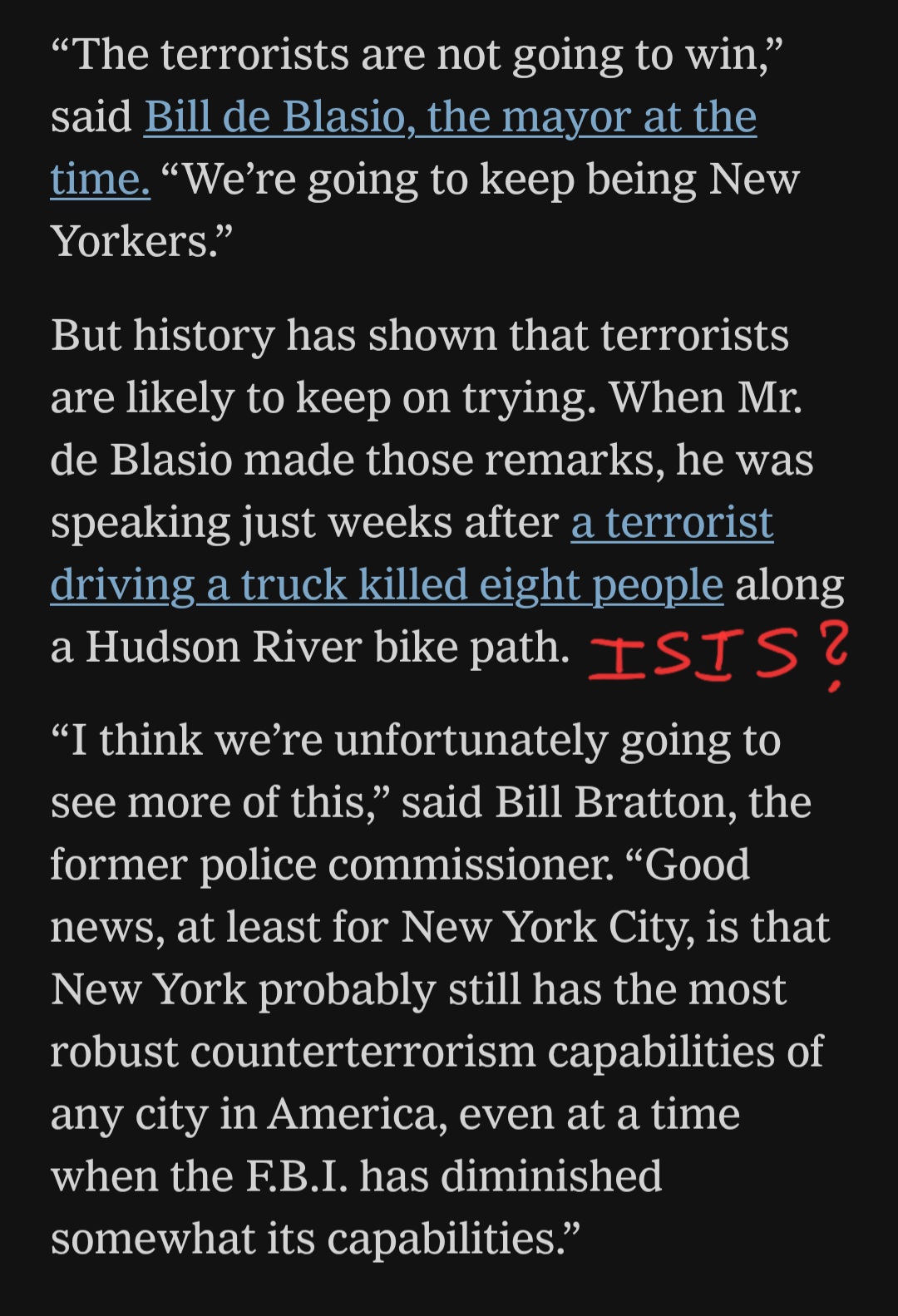
A decade ago, hundreds of Westerners streamed out of London, Birmingham, Manchester, Minneapolis, and Columbus to join the Islamic State. They weren’t merely curious spectators of a dark movement; they were converts to a brutal faith of fire. They thrilled at ISIS videos of men burned alive in cages, heads severed on sand, and ancient cities razed under the banner of the Caliphate. Entire families—women and children included—picked up and moved to Syria and Iraq to participate in the dream of a world purged of infidels. Many never returned.

Islamic radicals of ISIS slaughtering people

Today they don’t need to leave home.

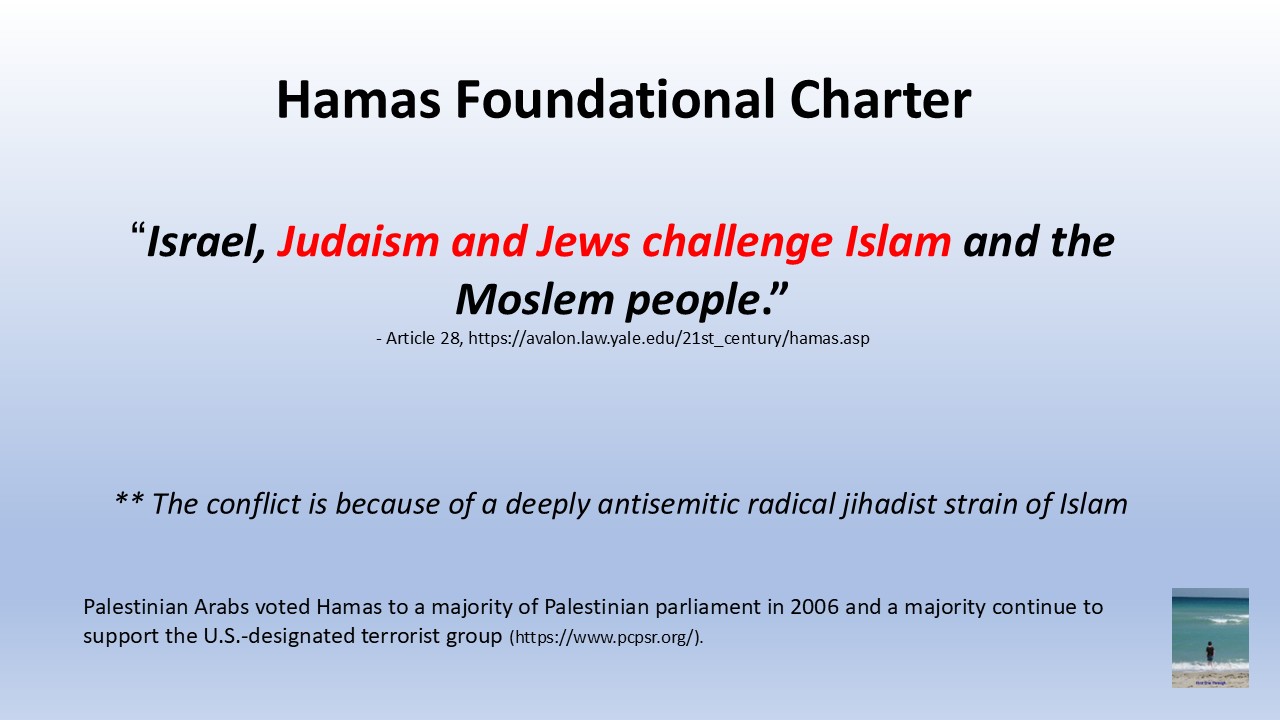
The same ideological impulse that carried them to Raqqa now drives attacks on local Jews down the street—in schools, synagogues, coffee shops, and commuter trains. Radical jihadism has simply switched labels: from “ISIS” to “Palestine,” from “Caliphate” to “Resistance,” from overt barbarism to the socially-acceptable pose of “solidarity.” The mission is unchanged. Only the hashtags are new.

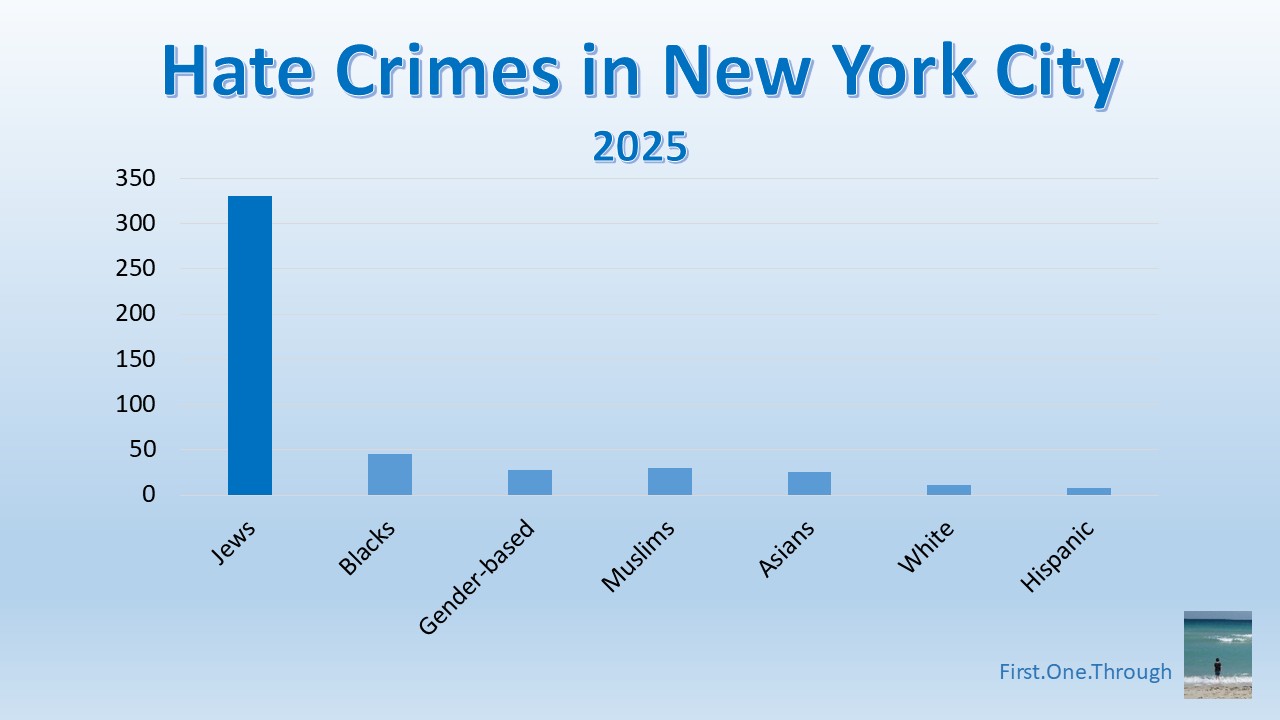
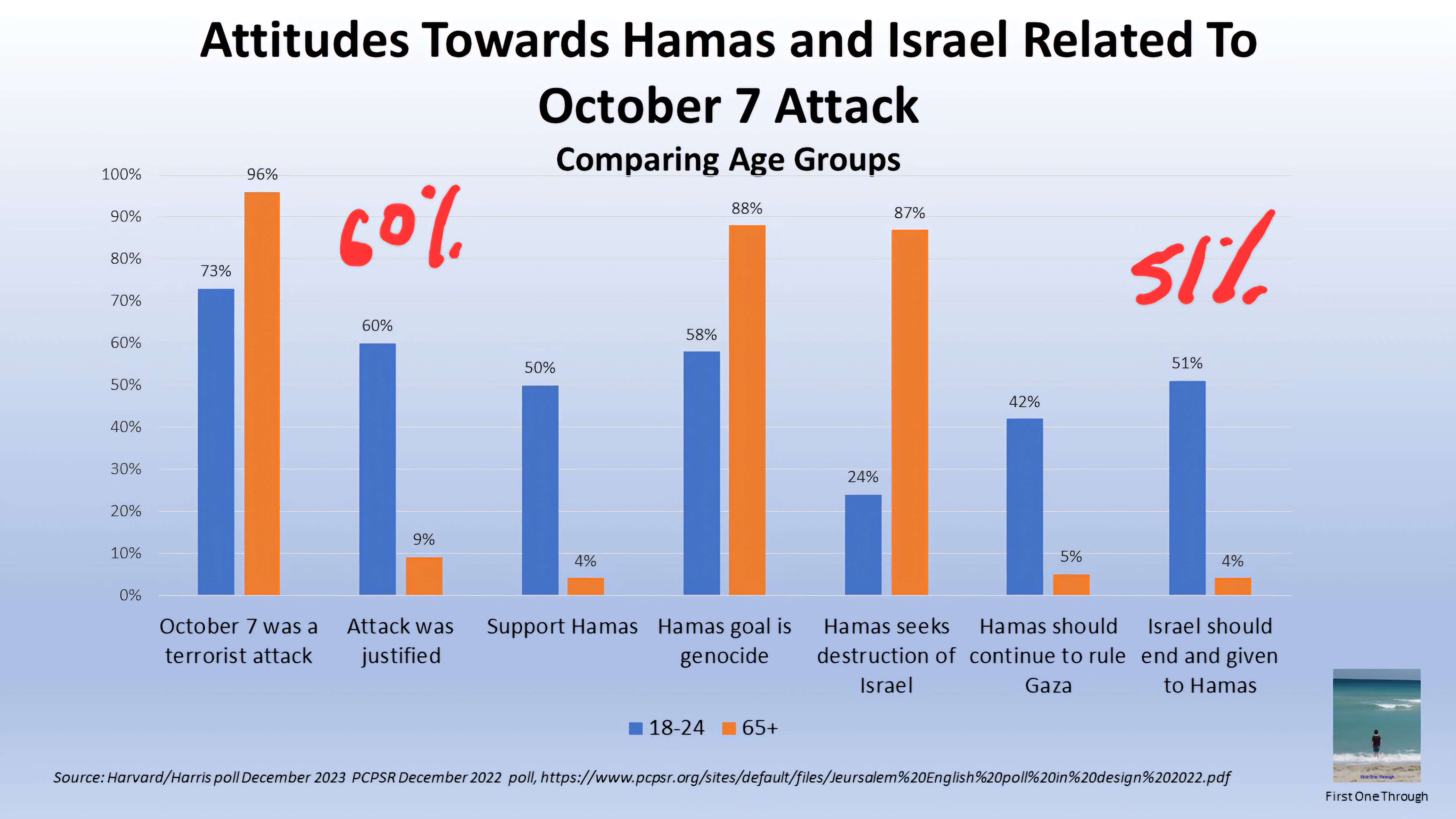
And while Western governments once scrambled to stop teenagers from boarding flights to Turkey, today they barely raise an eyebrow as mobs chant for Jewish death on college campuses and in city plazas. Police departments treat the threat as “protected speech” until someone lights the match or pulls the trigger. Surveillance of Jews hems closer, but nothing stops the expanding radical ranks of those who have found a new, easier battlefield: Western cities themselves.

The goal remains constant—burn down the old society and replace it with the black-green flag of radical Islam. In the Middle East, ISIS tried to seize territory. In the West, its ideological descendants aim to seize the streets, the discourse, and the public square.

The West fought—haltingly—to slow ISIS’s spread in Iraq and Syria. But it is utterly unprepared to confront the same doctrine as it metastasizes in Africa, online, and now in its own neighborhoods. European governments write reports; American politicians hold hearings; academics write tortured essays parsing the “legitimate grievances” of those calling for slaughter.

Only one country behaves as if the threat is real. Israel fights it directly, understanding the battle as existential rather than theoretical. Israelis have seen what happens when radical jihadists gather strength: they massacre civilians, rape women, burn communities, and boast about it online.

But the West still imagines that it can appease the ideology, contain it, or reinterpret it as a civil-rights movement. In certain cities, it is preparing to forfeit its Jews first—sacrificing them to buy temporary calm—while missing the larger reality that the same forces aiming at Jews today aim at the entire Western democratic structure tomorrow.

Societies do not collapse in a single moment. They erode from below, from the foundations. And those foundations—rule of law, minority protection, civic trust, freedom of worship, the very idea of objective truth—are already cracking as the zealots find new targets and new excuses.

The West destroyed the physical caliphate. It never touched the ideological one, the one which drew warriors from its own streets.

Now the jihad is local.