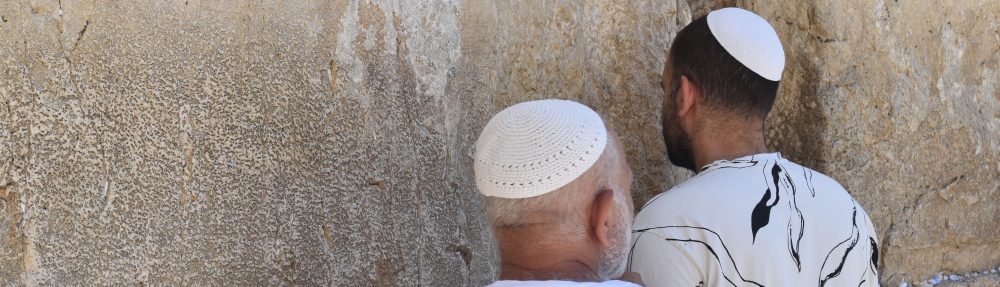
The Hebron Narratives: Is it the Presence of Jews or the Israeli Military

The divide in the narrative of the pro-Israel and pro-Palestinian communities can be summarized in one city, and it’s not Jerusalem. It’s Hebron.

The Jewish Narrative

Jews look at the city of Hebron as the essence of their rights in the holy land. More than God’s promise of the land of Israel to the children of Abraham, Isaac and Jacob (including Genesis 13:15-17), Hebron represents the very first real estate transaction recorded in the Bible. In Genesis 23:12-20, Abraham purchased a cave to bury his wife Sarah. That purchase crystallized the promise of God in the action of man.

The founding fathers and mothers of Judaism are almost all buried in Hebron in the Tomb of the Jewish Patriarchs: Abraham, Isaac, Jacob, Sarah, Rebecca and Leah, making it the second holiest location for Jews. Their presence motivated Jews thousands of years ago to establish a large presence in the city and factored into King David’s decision to begin his rule there for the first seven years of his reign (Samuel II 2:1-11).
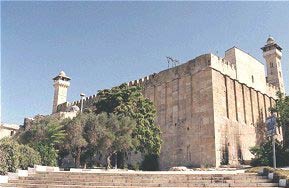
Cave of the Jewish Patriarchs in Hebron
with building atop attributed to King Herod
Hebron’s long Jewish history and religious shrine kept Jews living and visiting the city. In the 19th and early 20th centuries, the Jews in Hebron had only a small community with a synagogue and school. But in 1929, Arab rioters killed 67 people when a false rumor was spread that the Jews were set to destroy the Al Aqsa Mosque in Jerusalem. The British, who were administering the Palestine Mandate at the time, concluded that there was no way to protect the Jews in the city and evacuated every Jew. It marked the true beginning of the modern war of Jews and Arabs living together in the Holy Land. No Jew would return to the city until after the 1967 defensive Six Day War, when the Jordanians lost the land that they had illegally siezed in 1949.

When the Jews returned to Hebron, they eliminated the centuries-old ban (established 1266) that the Muslims had placed on Jews entering the Cave of the Jewish Patriarchs. They reestablished a small neighborhood in the city where they could live safely, protected by the Israeli army so that they would not be slaughtered again as they were in 1929.

As opposed to the Muslims (including Ottomans) and Arabs (Jordanians) who banned Jews from the holy site and city, respectively, the Israelis made accommodations for sharing the space. They partitioned the Cave so that both Muslims and Jews could pray at the site and sectioned a small part of the city where Jews could safely live.

The Israelis enforced coexistence with the Arabs and Muslims that had offered them no or limited ground for centuries.

The Arab Perspective

Arabs view themselves as the native population of Palestine. Their ancestors came to the region en masse in the 6th and 7th century as they spread Islam through the Middle East and North Africa. Their position as the dominant people in the Holy Land was secured at the end of the Crusades in the 13th century.

Over the next 700 years, various Muslim and Arab people would descend on the region, whether Egyptians, Syrians or Ottomans. The common religion made the nature of the sovereign less relevant to the Muslim Arabs. People from places that would later become Iraq, Jordan, Kuwait and Saudi Arabia would come and go to Palestine and to Hebron. The fluidity of backgrounds in a world that had not been so fixed with nationality as today was natural; Palestine was after all the gateway to Egypt and Africa from Europe and Asia for trade.

Hebron’s Muslims mostly tolerated (by 18th century norms but not today’s) the small Jewish community. It didn’t give them rights to visit or pray at Islamic holy shrines like the Ibrahimi Mosque, as they called the Cave of the Jewish Patriarchs, but they didn’t have them banned from the city or region.

That changed at the end of World War I and the end of the Ottoman Empire, as the world powers decided to establish a Jewish homeland in Palestine through the 1917 Balfour Declaration and the subsequent elaboration of Jewish rights in the 1920 San Remo Agreement and the 1922 Mandate of Palestine. The Muslim Arabs who had seen a spike in Jewish emigration to Palestine over the prior hundred years now had a new fear and concern: the global powers were taking the sovereignty of Palestine away from Muslims and handing it to the Jews. And this, without the consultation or endorsement of the local Muslim Arabs.

The small minority of Jews was no longer a curiosity to be tolerated, but a group that was poised to assume control to be defeated.

When rumors came in 1929 about the Jewish attack on the third most holy site of Islam in Jerusalem, it was easily believed. The British had assumed their mandate just five years earlier and the Jews started to arrive in Palestine by the thousands. It was natural for the Palestinian Arabs to assume that the Jews were readying a takeover of their holy locations in Jerusalem and Hebron. The war was on.

When the Jews came back to Hebron in 1967, they didn’t just return as civilians, but with an army. They set a model for sharing the Ibrahmi Mosque that the Arabs tolerate, but in a format that Muslims fear that Israelis will try to replicate at the Al Aqsa Mosque Compound in Jerusalem.

It has now been decades that the Arabs of Hebron live under Israeli occupation, a reminder of their defeat in 1967 and of how their land and culture had been taken away from them. Every Israeli soldier that they see is there to inspect and check and validate their presence. But the Arab residents wonder why they need these Jewish interlopers to validate Arab presence in Hebron. They have been there for centuries.

The Conflicting Narratives

Whether one views one or both of these narratives as valid, the dichotomy of the root of the problem is very different. The Jews believe they have a natural right to live in the city as their ancestors had for thousands of years. The Israeli military is there to ensure the peace.

Yet for the Palestinian Arabs, the Israeli military is the core of the problem. They do not want to live under Jewish rule, neither as citizens of a Jewish State nor by an occupying army.

The Jews contend that the British action in 1929 did as much damage as the Palestinian Arab murderers. In the face of a heinous massacre of Jews, the response of the British Administrators was not to punish the Arabs and protect the Jews, but to ban the Jews from the city. That action taught the Arabs that violence pays. The terrorist group Hamas continued to make the point, having made Israel abandon Gaza in 2005.

The Palestinian Arabs make no apologies for any of their statements or actions: this is Arab land and home to Islamic shrines. The Israelis may say they are promoting coexistence, but they are doing so on stolen land. How noble is it to steal someone’s home and then offer to share it?!

Israelis view the Arab attitude as deeply problematic: their arguments are not localized to Hebron, but are the same throughout the land. The Palestinian Arabs reject the basic presence of a Jewish State in the land in any configuration. Why abandon Hebron, when the sentiment is the same for Haifa?

While moderate Arabs may indeed hold that view, they are willing to accept the de facto existence of millions of Jews within the 1967 borders. They realize that the Jews are not going anywhere any time soon.

So what makes a Hebron narrative different than a Haifa narrative or a Jerusalem narrative or a Jericho narrative? How and why is it unique in depicting the problems that people have in talking about the Israeli-Arab conflict?

Why Hebron?

Most of the world has accepted the reality and legitimacy of Israel and its borders within the 1949 Armistice Lines (the 1967 borders). Cities like Haifa, Tel Aviv and Nazareth are only contentious among the most rabidly anti-Zionist zealots who shout “From the river to the sea, Palestine will be free.” The narrative that questions Haifa is one to be easily and readily dismissed as coming from the lunatic fringe.

Jerusalem is considered the most contentious topic for a variety of reasons ranging from the holiness ascribed to the city, its designation as a capital by the competing parties, and the fact that both populations – Jews and Arabs – live in the city in great numbers. Reasonable people can have completely different viewpoints on the best path forward.

And then there is Hebron. Compared to other major West Bank cities like Jericho, Nablus or Jenin, it is a city with a handful of Jews (as opposed to none), and home to a venerated site for Jews on par with Medina for Muslims, while most other cities have much more minor Jewish holy sites. As such, it is divided between areas under Palestinian Authority and Israeli control.
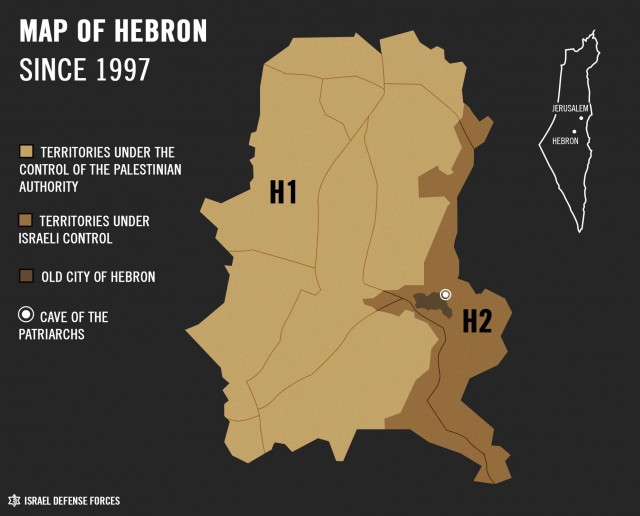
Modern division of Hebron into area under PA and Israeli control
The ongoing and persistent presence of Jews in Hebron has made it a flashpoint for an all-or-none possession of control and access for nearly 90 years. It was in Hebron that the world bodies took the first steps in modern times to evict all of the Jews, presumably for their own good. The 1929 action was an abrogation of the Mandate that the British were handed that “No discrimination of any kind shall be made between the inhabitants of Palestine on the ground of race, religion or language. No person shall be excluded from Palestine on the sole ground of his religious belief,” (Article 15).

Within a decade, the British would follow up their action with the 1937 Peel Commission and the 1939 White Paper, actions which would bar Jews from living in most of Palestine and prevent hundreds of thousands of Jews from moving to Palestine.

Hebron set the stage that coexistence was impossible; parallel existence was required.

But the counter-argument stands in reality in the State of Israel. In Israel, Arabs have full rights and account for over 20% of the population. Israel granted every non-Jew Israeli citizenship when it declared statehood in 1948, and offers any Arab in Jerusalem citizenship, if they so desire.

In EGL, east of the Green Line/ the West Bank, the desire for co-existence is seemingly non-existent. The Palestinian Authority has laws calling for the death sentence for any Arab that sells land to a Jew. The leader of the Palestinian Authority pledged that a future Palestinian state will not see the presence of a single Israeli (read Jew). Some Palestinian Universities even ban Jews from stepping foot on campus.

So today, most Israelis that live in EGL/West Bank are in towns that almost exclusively Jewish. The exception is Hebron, where just 700 Jews live among 250,000 Arabs. (Another 6,000 Jews live in adjoining Kiryat Arba).

It is Hebron that is the current test for coexistence for the Arab community. Can they accept and welcome the Jews in their midst? Could Israel withdraw its protective force from the small Jewish community of Hebron and not see them slaughtered?

Some Muslims that claim to be moderates say that Jews lived in Arab countries for centuries before the establishment of Israel. Will they defend and protect the Jews of Hebron and Kiryat Arba, or is the existence of Israel next door still too much of an insult for them to endure, and therefore cannot coexist with Jewish neighbors?

The narratives of Jew and Arab in the Holy Land and the pathway to either coexistence or divorce is encapsulated in the city of Hebron.


Related First.One.Through articles:

The Israeli Peace Process versus the Palestinian Divorce Proceedings

Squeezing Zionism

The UN’s Disinterest in Jewish Rights at Jewish Holy Places

It is Time to Insert “Jewish” into the Names of the Holy Sites

The Long History of Dictating Where Jews Can Live Continues

The Palestinian’s Three Denials

The Cancer in the Arab-Israeli Conflict

Joint Prayer: The Cave of the Patriarchs and the Temple Mount

Dignity for Israel: Jewish Prayer on the Temple Mount

The United Nations and Holy Sites in the Holy Land

Subscribe YouTube channel: FirstOneThrough

Join Facebook group: FirstOne Through Israel Analysis

NY Times Hides Abbas’s Violence and Pence’s Truth

The New York Times blatant bias towards the Palestinian narrative was in stark display in articles reviewing the speeches given by the acting-President of the Palestinian Authority Mahmoud Abbas to a large audience of politicians in Ramallah on January 14, 2018, and of the one given by US Vice President Mike Pence to the Israeli Parliament on January 22, 2018.

Hiding Palestinian Violence

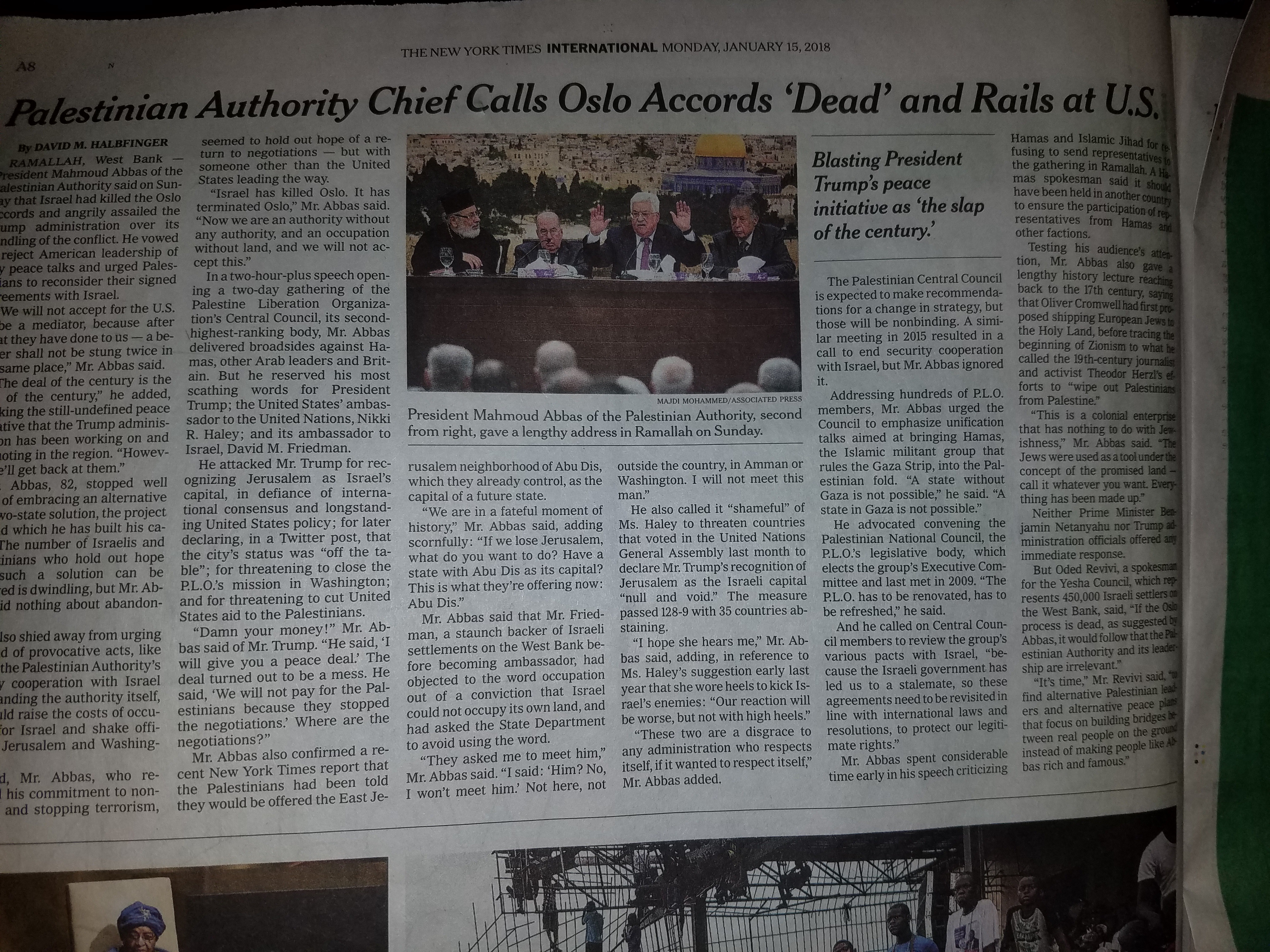
The Times article appeared on the top of page A8 accompanied by a color picture of Abbas. The article relayed Abbas’s speech with supporting commentary throughout the article. Only at the very end of the piece, did the Times offer any competing viewpoints.

During its supporting description of Abbas’s speech, the Times deliberately chose to portray Abbas as a man of peace and hope.

NYT: “Indeed, Mr. Abbas, who reaffirmed his commitment to non-violence and stopping terrorism, seemed to hold out hope of a return to negotiations – but with someone other than the United States leading the way.”

What did Abbas actually say during his remarks to his Arab audience?

Abbas:We always and forever adhere to negotiations as the path to reach a political settlement with Israel. We don’t want war. We will not call for a military war with Israel. Whoever has [weapons] – go ahead and do it. I say this out in the open. If you have weapons, go ahead. I’m with you, and I will help you. Anyone who has weapons can go ahead. I don’t have weapons. I want the peaceful political path to reach a settlement.

Not only did the Times chose to negate the remarks in which Abbas supported those who used terrorism, the paper opted to not give any clarification about why the United States has been accusing Abbas for supporting terrorism:

Abbas:The Americans are always telling us that we must stop paying salaries to the families of the martyrs and the prisoners. We categorically reject this demand. Under no circumstances will we allow the families of the martyrs, the wounded, and the prisoners to be harmed. These are our children, our families. We are proud of them, and we will pay them before we pay the living.”

Why didn’t the paper use the Abbas statement to comment that Congress had voted on the Taylor Force Act to demand that the PA stop paying terrorist to kill Jews? Because if it did so, it would be shining a light on the despicable Palestinian action promoting murder?

In regards to reconciling with a terrorist group, the Times would add no color that the US designates Hamas as a terrorist group. It merely stated that “reunification” was a chance to bring the two physical Palestinian territories together, but it made no mention of incorporating the anti-Semitic terrorist group into a governing role in the Palestinian Authority:

NYT:Addressing hundreds of P.L.O. members, Mr. Abbas urged the Council to emphasize unification talks aimed at bringing Hamas, the Islamic militant group that rules the Gaza Strip, into the Palestinian fold. ‘A state without Gaza is not possible,’ he said. ‘A state in Gaza is not possible.’

Instead, the Times talked of Abbas as a man of hope, a man who continued to push for a two-state solution and peaceful coexistence with Israel:

NYT:Mr. Abbas, 82, stopped well short of embracing an alternative to a two-state solution, the project around which he has built his career. The number of Israelis and Palestinians who hold out hope that such a solution can be achieved is dwindling, but Mr. Abbas said nothing about abandoning it.

“He also shied away from urging the kind of provocative acts, like ending the Palestinian Authority’s security cooperation with Israel or disbanding the authority itself, that could raise the costs of occupation for Israel and shake officials in Jerusalem and Washington.

The Times did not clarify why so many people have become disillusioned with a peace based on a two-state solution, such as an intifada running from 2000 to 2005, and wars raging from Gaza in 2008, 2012 and 2014 killing thousands, even after Israel withdrew all civilians and military forces from Gaza in 2005.

When the Times opted to mention the vile screed of Abbas that the Jews have nothing to do with Israel, it did so at the very end of the article, with an introduction that let people dismiss the content, and with a conclusion that allowed the statement to stand.

NYT:Testing his audience’s attention, Mr. Abbas also gave a lengthy history lecture reaching back to the 17th century, saying that Oliver Cromwell had first proposed shipping European Jews to the Holy Land, before tracing the beginning of Zionism to what he called the 19th-century journalist and activist Theodor Herzl’s efforts to ‘wipe out Palestinians from Palestine.’

“’This is a colonial enterprise that has nothing to do with Jewishness,’ Mr. Abbas said. ‘The Jews were used as a tool under the concept of the promised land – call it whatever you want. Everything has been made up.’

“Neither Prime Minister Benjamin Netanyahu nor Trump administration officials offered any immediate response.”

Did the Times attack this fake history? No. Did it call out Abbas’ rewriting of the entire Old Testament? No. Did it mention that Abbas also claimed that the Arab countries didn’t really evict a million Jews? No. Did it recount Abbas’s doctoral thesis on Holocaust denial? No. Did it mention that the United Nations has similarly been denying Jewish connection to Jerusalem? No.

The sloppy New York Times journalism gave a pass to Abbas’s #FakeHistory, and allowed its readership to question the very legitimacy of the Jewish State, just as the Palestinian narrative demands.


Hiding Pence’s Truth

On January 23, 2018 the Times covered the speech that Vice President Mike Pence delivered to the Israeli Knesset. The article would feature no picture of Pence standing in Israel’s capital of Jerusalem.

To begin, the Times did not begin to quote Pence until paragraph 9, compared to paragraph 2 in the Abbas story. The Times needed to lay the groundwork of how upset the Palestinians were to frame the article:

NYT: “Palestinians claim Jerusalem as their capital or believe it should be divided, with East Jerusalem becoming the capital of a Palestinian state.”

No Times clarification that Palestine is not yet a state.

NYT: “The international consensus, previously supported by the United States, has been that the city’s status can be determined only through negotiations between Israelis and Palestinians.”

The Times deliberately misled its readers that that the Trump administration had said the same.

NYT:Arab lawmakers rose to their feet at the start of Mr. Pence’s speech in the Israeli Parliament and held up signs reading ‘Jerusalem is the capital of Palestine.’ Ushers pulled down the signs and escorted them out of the room, to the applause of others in the hall.

The phrasing did not make clear that the standing ovation by the members of Knesset was in favor of expelling the Arabs and drowning out their protest.

NYT:Mr. Trump has also threatened to shutter an office of the Palestine Liberation Organization in Washington and cut American donations to the United Nations agency that provides services for Palestinian refugees.

Once again there was no detail that Trump was taking these moves because the Palestinians support terror and refuse to come to the negotiating table.

NYT:That approach has been welcomed by many Israelis, while rankling with Palestinians, whose political and religious leaders have refused to meet Mr. Pence.

The Times took its time to set up the article that everything that Pence had to say was objectionable and unwelcome. It did nothing of the sort to introduce the Abbas speech.

Throughout the Pence article, in paragraph after paragraph, the Times countered every statement with a Palestinian narrative, a complete reversal of the Abbas article a week earlier when a counter-opinion of the Israeli perspective was only given at the very end of the article, and then, only muted.

NYT:We stand with Israel because we believe in right over wrong, in good over evil and in liberty over tyranny,” Mr. Pence said.

“Mr. Pence, an evangelical Christian, dotted his address with biblical references and spoke of the Jewish connection to Jerusalem in historical and religious terms.

Correction: Pence’s initial remarks had to do with the broad connection between the United States and Israel, one of “shared values.” He spoke of George Washington, John Adams and Abraham Lincoln who supported the great contributions of Jews to America and the world, and their rights to live in the Holy Land.

Did the Times write that Abbas is an Arab Muslim when he belittled the Bible? Nope. But it decided to highlight Pence’s religion. It was a setup for the ‘messianic extremist’ comment by Saeb Erekat to come later in the article.

NYT:He scarcely mentioned the Palestinians and did not refer to their history in the Holy Land, nor to their territorial claims.”

Did the Times write about the 3700-year history of the Jews in Jerusalem during the Abbas speech write-up? About the Jewish Temples? That Jews have been a majority in Jerusalem since the 1860s? No, why would it? The Times is part of the Palestinian propaganda machine.

NYT:The Palestinian president, Mahmoud Abbas, will not meet Mr. Pence. He has called Mr. Trump’s Jerusalem declaration ‘a slap in the face.’

“Saeb Erekat, the chief negotiator for the Palestinians, said that Mr. Pence’s ‘messianic discourse’ was ‘a gift to the extremists.’

“‘His message to the rest of the world is clear: violate international law & resolutions and the US will reward you,’ he said, according to his office’s Twitter account.”

Quite some airtime for the Palestinian point of view.

In the final paragraph, the Times opted to slam Pence yet again in another distortion of facts:

NYT:Mr. Pence canceled his last planned trip to the Holy Land before Christmas after Christian Arab leaders declined to meet with him.

No, Pence delayed his last trip to secure a vote on the GOP tax bill.


The Times gave a podium to a man that negated the history and rights of Jews in Israel and who supports terrorists both in language and money, printing 304 words of Abbas’s speech. It did not challenge a single word of his screed. Meanwhile, the paper took great pains to negate and belittle the US Vice President’s remarks, printing a mere 45 words of Pence’s speech.

Additional editions of #AllThePalestinianProgandaFitToPrint


Related First.One.Through articles:

Abbas’ European Audience for His Rantings

The New York Times Inverts the History of Jerusalem

The Arguments over Jerusalem

750 Years of Continuous Jewish Jerusalem

The Custodianship of a Child and Jerusalem

Palestinians agree that Israel rules all of Jerusalem, but the World Treats the City as Divided

What do you Recognize in the Palestinians?

The Palestinians aren’t “Resorting to Violence”; They are Murdering and Waging War

Subscribe YouTube channel: FirstOneThrough

Join Facebook group: FirstOne Through  Israel Analysis


Israel’s Colonial Neighbors from Arabia

“Nothing in all the world is more dangerous than sincere ignorance and conscientious stupidity.”

Martin Luther King, Jr.

(1929-1968)

While the weekend celebration of Martin Luther King, Jr. was going on in the United States of America in 2018, acting-President of the Palestinian Authority Mahmoud Abbas continued to make a fool of himself in Ramallah.

In addition to layering on multiple insults of the US President Donald Trump, its Ambassador to the United Nations Nikki Haley and its Ambassador to Israel David Friedman, Abbas went on a tirade of fake history. He claimed that “Israel is a colonial project that has nothing to do with the Jews.” But it is precisely Jewish, both according to Jews and according to the Arab countries in the region that expelled close to 1 million Jews that were living in their countries in the decades following the establishment of Israel. If Israel has nothing to do with Jews, why did the Arabs expel all of their Jews at the foundation of Israel?

Abbas’s stupidity would continue. He claimed that Palestinian Arabs have been living in the holy land for the past 6000 years – for thousands of years even before the birth of Abraham. That’s pretty impressive for a group that didn’t arrive in the land of Israel until about 1400 years ago, even by the admission of Arabs themselves.

Yes, it is the Arabs that colonized the area, not the Jews.

The Jewish people came to the land of Canaan roughly 3700 years ago. They established their kingdoms and capitals there and have always maintained a presence in the land until this day.

At the founding of Islam in Saudi Arabia in the 7th century, the early Muslims looked to spread their religion throughout the world. They embarked from the Arabian peninsula and invaded and colonized many lands, including the Jewish holy land. This colonization project was so successful, that people do not even pause to think that the term “Arab” is rooted in the Arabian peninsula.

The Palestinians fully acknowledge that they are but a part of the colonial Arab project, as stated in their own 2003 Palestinian Basic Law:

Palestine is part of the Arab homeland. The state of Palestine abides by the Charter of the League of Arab States. The Palestinian people are part of the Arab and Islamic nations. Arab unity is a goal. The Palestinian people work on behalf of its realization.”

The Arab world views “Palestine” as simply one of the over 50 countries that comprise its Arab “homeland.” A homeland that was created thousands of years AFTER the Jews had been living in their Jewish holy land.

Abbas has denied Jewish history and presence in their native land. He has denied core elements of Judaism, including the location of the Jewish temples on the Jewish Temple Mount in Jerusalem. He has claimed that Zionists conspired to kill Jews in the Holocaust.

During Martin Luther King Day, it is a marvel to watch such “conscientious stupidity,” spew out of the mouth of someone that is venerated by the United Nations. But as MLK said many decades ago, the embrace of such venomous words are “dangerous,” and cannot simply be laughed away. This is not a debate between narratives, but the vile diatribe of a madman that must be condemned by every decent world leader.


Related First.One.Through articles:

A Native American, An African American and a Hispanic American walk into Israel…

Israel: Security in a Small Country

Nicholas Kristof’s “Arab Land”

Obama’s “Palestinian Land”

Israel was never a British Colony; Judea and Samaria are not Israeli Colonies

Heritage, Property and Sovereignty in the Holy Land

The Cancer in the Arab-Israeli Conflict

Subscribe YouTube channel: FirstOneThrough

Join Facebook group: FirstOne Through  Israel Analysis

The Highbrow Anti-Semite

It is sometimes comfortable to delude oneself into thinking that all antisemites are simply stupid, ignorant oafs. The kind of primitive idiots that take glory in terrorist acts of blowing up pizza stores, stabbing teenagers and shooting Jews on the highway.

Regrettably, antisemitism comes in all varieties. Many are indeed uneducated fools, but some are highly educated lawyers who speak on the global stage.

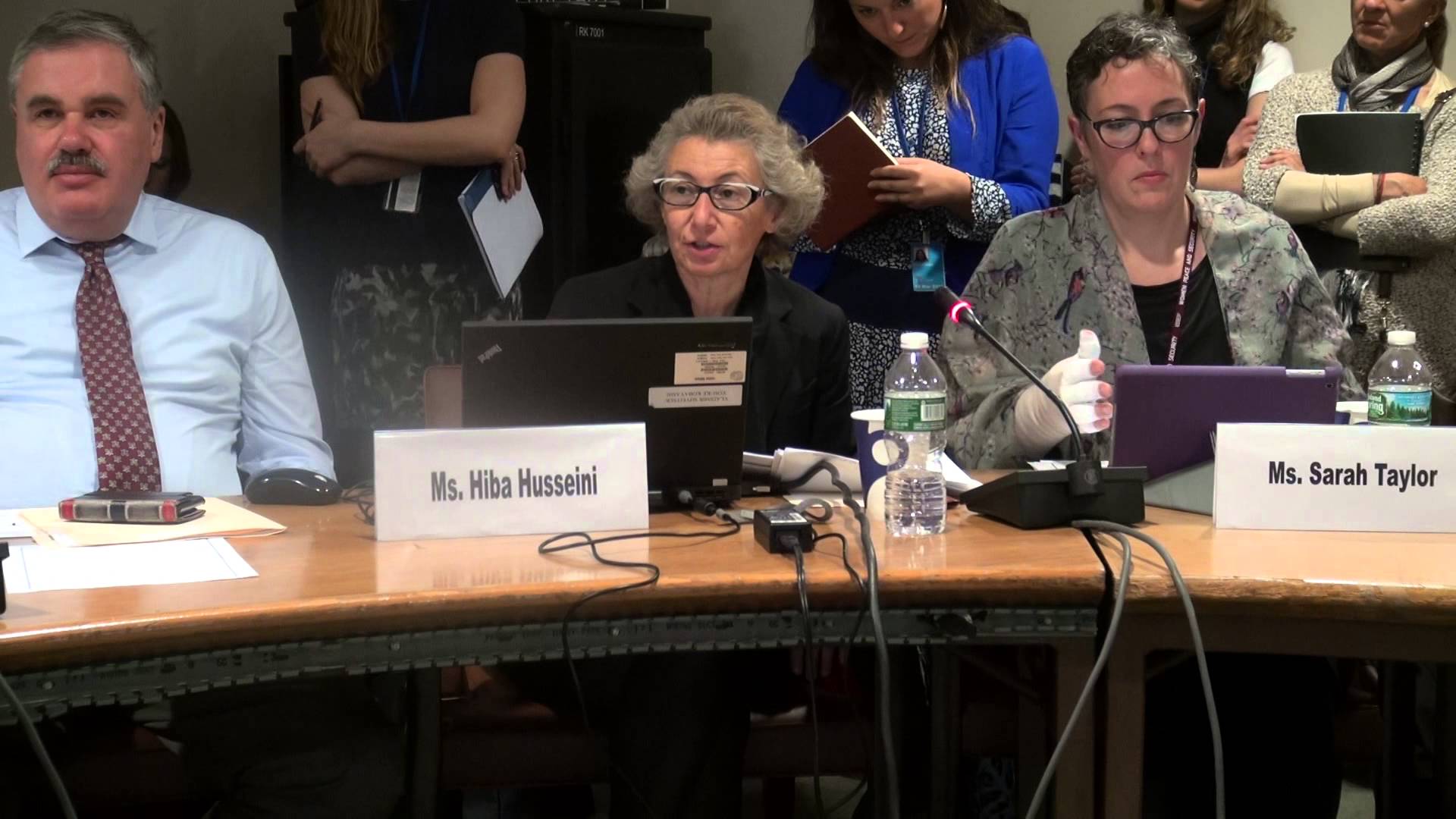
Consider the lawyer, Hiba Husseini. Her bio is most impressive. She holds a JD from Georgetown University, a master’s degree in political science from the George Washington University, a master’s degree in finance from the University of Sorbonne, and a bachelor’s degree in political science from the University of Tennessee. She sits on various boards and currently chairs the Legal Committee to Final Status Negotiations between the Palestinians and Israelis.

With such a pedigree and role, her opinions are sought out. They have clout and influence a wide range of people.

And that is part of the problem.

A review of Husseini’s work on a plenary session at the United Nations in 2016 where she was part of a conference to discuss new approaches to dealing with the Israeli-Palestinian conflict, reveals a disturbing stench of Jew-hatred. In her commentary, Husseini made the following observation:

“Ms. HUSSEINI, noting that Israel had presented conflict-related issues as political ones to be dealt with at a bilateral level, said international law should become the basis of negotiations.  The Zionist idea to dominate the area from the Nile to the Euphrates was well known, but Israel realized that the two-State solution would not take it in that direction.”

Remarkable. This was not the vile antisemitic hatred of Hamas which quoted the Protocols of the Elders of Zion in its 1988 charter. This was not lifted from the acting-President of the Palestinian Authority Mahmoud Abbas’s doctoral thesis on Holocaust denial which he wrote many years ago.

This was a current comment from a US-educated lawyer at the United Nations, proclaiming that the Jewish State seeks to assume control of the broad Middle East, including Egypt, Lebanon, Syria, Jordan and Iraq. With such a mindset – and declaration at a global body – how could anyone possibly trust the Israelis to arrive at peace in the narrow strip of land between the Jordan River and the Mediterranean Sea, if their aspirations are to dominate every country in the region?


Hiba Husseini speaking at United Nations, 2016

Is there a modicum of truth to Husseini’s accusations? None, or more accurately, the opposite is true. International law in 1920 and 1922 specifically stated that the entirety of the Mandate of Palestine, which today consists of Gaza, Israel, the West Bank and Jordan, could not exclude any person on the basis of his religion. But that is precisely what Jordan did in 1949 when it evicted all Jews from the West Bank and subsequently excluded any Jews from gaining citizenship in 1954. It is also exactly what the Palestinian Authority and the United Nations seek in the West Bank and Gaza – lands they argue should be Jew-free.

Israelis do not seek “to dominate the area from the Nile to the Euphrates,” but to be able to LIVE throughout the region as well as have sovereignty in a viable amount of the land between the Mediterranean and Jordan River. The Arab narrative is not just an inversion of Israel’s desires, but it washes the crimes of ethnic cleansing and antisemitism from Arab hands.

People have come to expect the antisemitism from Palestinian Arabs, as the 2015 Anti-Defamation League poll confirmed that almost every single Palestinians is an anti-Semite. But people must continue to monitor the evil spittle that comes from the mouths of educated anti-Semites, that infuse their lies into mainstream society.


Related First.One.Through articles:

What do you Recognize in the Palestinians?

The Original Nakba: The Division of “TransJordan”

A “Viable” Palestinian State

Israel was never a British Colony; Judea and Samaria are not Israeli Colonies

Paying to Murder Jews: From Iraq, Saudi Arabia and Iran to the Palestinian Authority

New York Times’ Tales of Israeli Messianic War-Mongering

Subscribe YouTube channel: FirstOneThrough

Join Facebook group: FirstOne Through  Israel Analysis


The War Preferred

Summary: When a country prefers to use military force over financial pressure, what does that tell you about the party’s temperament and goals?

USA’s Financial Pressure First

Over the past decades, the United States of America has made efforts to contain the nuclear ambitions of rogue states like the Islamic Republic of Iran and North Korea. The USA viewed those state sponsors of terrorism as too dangerous to be the guardians of weapons of mass destruction. But in each case, the USA used economic means of combating Iran and North Korea as a preferred course to launching into a military war.

These were not unique situations.

The US has engaged in economic warfare several times. In situations like Cuba, the US never opted to attack the country militarily. However, in other situations like Libya, the US imposed economic warfare initially in February 2011, before deciding to use its military force some weeks later.

For the United States, the preferred course of engagement was to use economic means of achieving it’s aims, whether it was for a country to reverse course on a nuclear program, or to stop a war. The USA wanted to save lives – both of its own soldiers as well as in the country it attacked – so it delayed the use of force as long as possible.

Arabs’ Attack First

The Arabs in the Middle East have used the exact opposite approach.

When Israel announced its new state in 1948, five Arab countries invaded with an enormous military. Death was not only a means to an end but a goal: the destruction of the Jewish State.

In 1973, on the holiest day of the Jewish calendar, Arab armies attacked Israel again. The Israeli army eventually repelled the invading forces of Egypt, Syria and Iraq, after incurring significant loss of life. In response to their loss, the Arab countries imposed an oil embargo on those countries that assisted Israel militarily during the battle. As summarized by the US State Department:

“During the 1973 Arab-Israeli War, Arab members of the Organization of Petroleum Exporting Countries (OPEC) imposed an embargo against the United States in retaliation for the U.S. decision to re-supply the Israeli military and to gain leverage in the post-war peace negotiations. Arab OPEC members also extended the embargo to other countries that supported Israel including the Netherlands, Portugal, and South Africa. The embargo both banned petroleum exports to the targeted nations and introduced cuts in oil production.”

The Arab countries were not concerned about the loss of life and rushed into battle to both destroy Israel having lost wars and land to Israel in 1948, 1956 and 1967. The Egyptian President Anwar Sadat said the following as it launched its attack on Israel on October 6, 1973:

“We have always felt the sympathy of the world but we would prefer the respect of the world to sympathy without respect.”

By 1973, the Arab goals’ had expanded to not only destroying Israel, but establishing a modicum of honor. As he conceded the war to the Israelis, Sadat said:

“We have been fighting Israel for the fifteenth day running. Israel fought us on its own in the first four days and its real position was exposed on the Egyptian and Syrian fronts; it [Israel] lost by its own admission, 800 tanks and more than 200 aircraft on both fronts. For the last 10 days, however, I have been fighting the United States on the Egyptian front, armed as she is with the most sophisticated weapons in her possession. I simply cannot fight the United States or bear the historical responsibility for having our armed forces destroyed once again.”

In launching the war, Egypt made clear that its honor was at stake, and in calling for a ceasefire, it opted to claim victory over Israel, but capitulation to the US. As the Arab state could not beat the United States militarily, it pivoted to an economic war, the Oil Embargo.

Palestinians’ Also Attack First

Like the other Arab countries, the Palestinian Arabs have opted to fight militarily as a first effort. However, lacking a standing army, the Palestinian Arabs have used terrorism against Israeli civilians and army alike.

After the formation of the Palestinian Authority in 1995 as a result of the Oslo Accords, Palestinians attacked Israelis throughout the 1990s. When the head of the PA, Yasser Arafat (fungus be upon him) failed to deliver a peace in September 2000, the PA launched a Second Intifada which claimed the lives of thousands of additional civilians. The end of the Intifada was brought about with the help of Israel’s establishing a security barrier which stemmed the flow of Palestinian terrorists into Israel, which propelled the Palestinians into a new war. The launch of the boycott, divestment and sanction (BDS) effort in 2005 was designed to economically strangle Israel.

A Palestinian demonstrator raises a knife, during clashes with Israeli police, in Shuafat refugee camp in Jerusalem, Friday, Oct. 9, 2015. (AP Photo/Mahmoud Illean)

The Palestinian Arabs – like the Arabs of the neighboring states – opted to use military force to try to destroy Israel. Only upon the failure of such efforts, did they switch to economic warfare.

  • Goals: The US took action to prevent the tremendous loss of life (rogue states with nuclear weapons), while the Arab goal was to kill and destroy.
  • Tactics. The US pursued economic pressure first to prevent the loss of life, whereas the Arab states immediately went to war.

The consistency of the goals and tactics of the United States and Arab world is a fabric of their world view: the US has a goal of preserving peace, so uses military force as a last resort. The Arab states have a goal of destroying Israel, so attack it first and only resort to a BDS campaign once they conclude that they cannot win militarily.


Related First.One.Through articles:

Israel and Wars

The Palestinians aren’t “Resorting to Violence”; They are Murdering and Waging War

Paying to Murder Jews: From Iraq, Saudi Arabia and Iran to the Palestinian Authority

What do you Recognize in the Palestinians?

I’m Offended, You’re Dead

Subscribe YouTube channel: FirstOneThrough

Join Facebook group: FirstOne Through  Israel Analysis
Time to Dissolve Key Principles of the “Inalienable Rights of Palestinians”

During the Palestinian hijacking heydays of the 1970’s, the United Nations passed an infamous resolution equating Zionism as a form of racism. While particularly odious during the years until its repeal in 1991, the underlying anti-Zionism has remained a plague at the global forum. Part of the disease lies in timeless antisemitism, while part is a fault of the flawed approach to settling the “Question of Palestine” that the UN endorsed and has continued to exacerbate.

On November 22, 1974 the UN General Assembly passed A/RES/3236 (XXIX). That resolution became the baseline of the “inalienable rights of the Palestinian people” that expanded and evolved until the present day. The text is distorted at its core, with declarations without equivalents nor precedent. The rights enumerated are gross exaggerations that cannot – and should not – ever be met.

While the resolution had a kernel of truth, it was overwhelmed with fatal flaws:

“no just solution to the problem of Palestine has yet been achieved and recognizing that the problem of Palestine continues to endanger international peace and security,”

If the Middle East has taught the world anything since the resolution was passed in 1974, it is that the Arab and Muslim nations do not need the “question of Palestine” to endanger the global community. Whether it was a war between Iran and Iraq or Iraq and Kuwait, civil wars in Lebanon, Syria, Yemen or Libya, or the terrorism in Niger, Chad, Egypt and Ethiopia, the Arab violence is seeded from and breeds its own hatreds.

“the Palestinian people is entitled to self-determination in accordance with the Charter of the United Nations”

This is probably the only true statement in the resolution of which anyone concerned with peace in the Middle East would like to see achieved. The Stateless Arabs from Palestine (SAPs) should have citizenship somewhere. When this resolution was drafted, they had Jordanian citizenship, which was given to them in 1954 but repealed by Jordan in 1988. The Israelis also offered the Palestinian Arabs in Jerusalem citizenship, but only a few thousand Arabs have taken it. A broader solution should be found.

“Expressing its grave concern that the Palestinian people has been prevented from enjoying its inalienable rights, in particular its right to self-determination,”

As noted above, the Palestinian Arabs in the West Bank had Jordanian citizenship and Israel offered Jerusalem Arabs citizenship, but it must be noted that the Arabs in Gaza were not afforded Egyptian citizenship. Was this resolution language only related to Gazans? Did it also cover the Arabs in the West Bank, since Yasser Arafat (fungus be upon him) failed to overthrow the Jordanian monarchy in 1970?

“1. Reaffirms the inalienable rights of the Palestinian people in Palestine, including:
(a) The right to self-determination without external interference;”

What does the phrase “without external interference” mean? That they will not be a puppet state like Lebanon is to Syria? That they won’t become a terrorist group like Hezbollah with the backing of Iran? That Palestinian Arabs are entitled to have a full-standing army that could attack Israel? When Turkey and Qatar backed Hamas in Gaza, was that considered “external interference?”

“(b) The right to national independence and sovereignty;”

This is a key fatal flaw of the 1974 resolution, which has regrettably been elaborated upon over the decades: There is no such inalienable right to independence and sovereignty. For anyone.

The Universal Declaration of Human Rights established in 1948 enumerated dozens of rights that every human on the planet must have. Article 15 of the UDHR stated that “everyone has a right to a nationality.” That is it. A nationality, not a new specialized new one. Are the Kurds getting a unique UN resolution for their “independence and sovereignty?” Is Tibet? What about Western Sahara? The SAPs should have a nationality, but they have absolutely no inalienable right to national independence and sovereignty.

“2. Reaffirms also the inalienable right of the Palestinians to return to their homes and property from which they have been displaced and uprooted, and calls for their return;”

There is no basis in the rights of mankind to afford the grandchildren and great-grandchildren of people who left homes many decades ago to return to such homes. Especially homes that no longer exist.

Article 13 of the UDHR stated that “everyone has a right to leave any country, including his own, and return to his country.” A COUNTRY. Not a town. Not a house. Only to the country of which they were a citizen. The grandparents of today’s SAPs were not Israeli citizens when they left, and the SAPs today most certainly are not Israelis.

If this is a real issue, are the 1 million Jews that were displaced from Muslim Arab countries getting the right to return to their homes and to recover all of their property? Not only did the Jews leave homes and property, but they actually left A COUNTRY. I have yet to see any UN General Assembly resolution drafted asking for such “inalienable right” for the Jews from Arab lands. Maybe Yemen is working on a draft resolution now.

“3. Emphasizes that full respect for and the realization of these inalienable rights of the Palestinian people are indispensable for the solution of the question of Palestine;

The question of Palestine revolves around giving the SAPs citizenship – either in a new country of Palestine or Israel or Jordan or somewhere. Returning to homes and property is neither a right nor part of “the solution.”

“6. Appeals to all States and international organizations to extend their support to the Palestinian people in its struggle to restore its rights, in accordance with the Charter;”

This UN resolution called for the countries of the world to “support the Palestinian people in its struggle.” Such a statement is not just a flawed call for rights that do not exist as detailed above, but a call to take sides in the conflict. It declared that “all States” should work against Israel. How could the UN possibly imagine that Israel would ever take any UNGA resolution seriously, after declaring openly that it is a biased party in the dispute?


Palestinian flag at the United Nations in New York


The Israelis and Palestinian Authority were last able to reach mutual agreements when they signed the Oslo Accords in 1993 and 1995. Those agreements NEVER mentioned a “two state solution” anywhere. They also do not mention any rights to “homes and property,” just the generic issue of “refugees.” And the accords do not ask the world to advocate on behalf of fake “inalienable rights.”

On December 17, 1991, the UNGA finally rescinded the Zionsim is racism resolution after intensive lobbying and threats by the United States under President George Bush. At that time, US Deputy Secretary of State Lawrence Eagleburger said that rescinding the resolution improved the “reputation for fairness and impartiality” of the UN. It arguably helped create the environment for the Oslo Accords.

It is similarly time to rescind UNGA Resolution 3236 and to put the parties on a course for an enduring peace that is actually achievable, with a fair and responsible United Nations as a facilitator as oppose to a perpetual hindrance.


Related First.One.Through articles:

The United Nations’ Adoption of Palestinians, Enables It to Only Find Fault With Israel

The United Nations’ Remorse for “Creating” Israel

Losing Rights

Ban Ki Moon Defecates on the Universal Declaration of Human Rights

The UN’s Disinterest in Jewish Rights at Jewish Holy Places

Delivery of the Fictional Palestinian Keys

A “Viable” Palestinian State

The UN’s #Alternative Facts about the 1967 Six Day War

Subscribe YouTube channel: FirstOneThrough

Join Facebook group: FirstOne Through  Israel Analysis

Iran’s New Favorite Jewish Scholars

It is no secret that Iran despises the Jewish State, with calls to annihilate the “cancer” that is Israel. Iran’s leadership also enjoys provoking the ire of Jews generally, as it puts on exhibitions of Holocaust cartoons. To add to the insults, the Iranian media loves to showcase Jews that bash the Jewish State. It’s a spectacle for the Coliseum.

Press TV is a 24-hour English language news organization of the Islamic Republic of Iran Broadcasting, with headquarters in Tehran. The Iranian news organization’s favorite Jewish group for many stories is the Neturei Karta, an extremist anti-Zionist religious group that can be counted as featured speakers in stories about the Iranian nuclear deal, Palestinian rights and Holocaust revisionist history. What better way to convince people that Jews are evil, colonialist, parasitic liars than having Jews make such statements themselves?

In December 2017, Press TV found a new group of Jewish scholars to feature in its Israel bashing stories. In an article entitled “100 Jewish studies scholars sign petition condemning Trump’s declaration,” Press TV reviewed a petition signed by over 100 Jewish university scholars that denounced US President Trump’s recognition of Jerusalem as the capital of Israel, and his decision to relocate the US embassy to the city. The news site quoted the petition almost in its entirety, it was that rich for the Iranian government.  Below is the scholars’ statement (not the Iranian government’s) with fact-checking inserted after each paragraph.

“We write as Jewish Studies scholars to express our dismay at the Trump administration’s decision to reverse decades of bipartisan U.S. policy by declaring Jerusalem the capital of Israel, and authorizing the relocation of the U.S. embassy from Tel Aviv, outside of a negotiated political framework that ends the legal state of occupation and ensures respect for the rights of all Israelis and Palestinians to Jerusalem.”

  • reverse decades of bipartisan U.S. policy.” The Jerusalem Embassy Act of 1995 was passed with bipartisan Congressional support and specifically made clear that: 1) Jerusalem should be an undivided city; 2) it should be the capital of Israel; and 3) the US should move its embassy to Jerusalem. The Act’s presidential waiver allowing for a deferral every six months only related to moving the embassy to Jerusalem and providing such funding. The recognition of Jerusalem as the united capital of Israel passed with bipartisan support in 1995 – the opposite of what the statement claimed.
  • outside of a negotiated political framework that ends the legal state of occupation” The “political framework “is to arrive at a peaceful resolution to the disputed land by mutual agreement. The statement’s language about occupation and rights makes it appear that 1) there are no rights currently; 2) the entire peace process is just about those issues; and 3) that recognizing Israel’s capital undermines any of those discussions. All false.

“Jerusalem is of immense religious and thus emotional significance to Jews, Muslims, and Christians alike. It is the focus of national aspirations for both Israelis and Palestinians. We hope one day to see a world in which all inhabitants of the land enjoy equal access to the city’s cultural and material resources. Today, unfortunately, that is not the case.”

  • immense religious and thus emotional significance to Jews, Muslims, and Christians alike.One would imagine that Jewish scholars would have a basic understanding that Jews, Muslims and Christians are not “alike” in their attachment to Jerusalem. Only Judaism reveres the city as its holiest location. That Jewish scholars could write such a statement – happily repeated by Israel’s enemies – is outrageous and dangerous.
  • We hope one day to see a world in which all inhabitants of the land enjoy equal access” It has only been under Israel that people have had equal access to Jerusalem. When the Arabs ruled the eastern part of the city from 1949-1967, they evicted and banned all Jews. When Israel reunited the city, it offered Israeli citizenship to any Arab that wanted it – and continues to extend such offer to this day. Quite different that Jordanians that denied citizenship to any Jews in the city. Further, the growth of the Arab population in Jerusalem surpasses the growth of Jews in the city. The “hope” of the scholars is the reality today- under Israeli rule.

“As the Israeli human rights organization B’Tselem* has documented, Palestinian residents of Jerusalem endure systematic inequalities, including an inequitable distribution of the city’s budget and municipal services, routine denial of building permits that are granted to Jewish residents, home demolitions, and legal confiscation of property for Jewish settlement. In addition, Palestinians in the West Bank, unlike Jewish Israelis resident in that territory, require a special permit to visit Jerusalem’s holy sites.”

  • inequitable distribution of the city’s budget and municipal services, routine denial of building permits that are granted to Jewish residents” All Israelis – both Jewish and not Jewish – have their building permits go through the same approval processes. Some permits are approved and some are not. Under-investment in some predominantly Arab neighborhoods of Jerusalem is a function of many factors, and something that the current mayor of Jerusalem Nir Barkat has been trying to address, but he faces constant opposition from the United Nations to make such investments. How do Israel’s critics not feel the least bit of hypocrisy as they both demand that Israel invest in Arab neighborhoods in eastern Jerusalem, while also demanding that Israel abandon eastern Jerusalem altogether?
  • Palestinians in the West Bank, unlike Jewish Israelis resident in that territory, require a special permit to visit Jerusalem’s holy sites.” All citizens of Israel go through the same process of entering Jerusalem. Non-citizens must go through border control to enter anywhere in Israel, whether holy sites in Jerusalem or elsewhere. But they do have access and travel to Jerusalem’s holy sites every day – something that Jews were unable to do when Jordanian and Palestinian Arabs ruled the Old City illegally.

“In this context, a declaration from the United States government that appears to endorse sole Jewish proprietorship over Jerusalem adds insult to ongoing injury and is practically guaranteed to fan the flames of violence. We therefore call on the U.S. government to take immediate steps to deescalate the tensions resulting from the President’s declaration and to clarify Palestinians’ legitimate stake in the future of Jerusalem.

  • sole Jewish proprietorship over Jerusalem”  Are these scholars deliberately trying to be provocative? Israel has sovereignty over Jerusalem. It is a country that has a mix of Jews (75%) and non-Jews (25%), one of the most ethnically diverse countries in the entire Middle East. Israel has allowed the Jordanian Waqf to administer the Jewish Temple Mount since the country reunited the city in 1967. How do the scholars write “sole Jewish propriertorship” for an ethnically diverse country having sovereignty over a city in which it has allowed a Muslim Waqf to administer the Temple Mount, which denies the rights of Jews to pray at the site?
  • Palestinians’ legitimate stake in the future of Jerusalem.” What makes the Palestinian claim on Jerusalem legitimate? Do they have a legitimate claim on Jaffa? On Nazareth? The Israelis and Palestinian Authority will decide between themselves what kind of settlement makes sense. Do these scholars think that the US should not recognize any city in Israel or the State of Israel itself until it recognizes a State of Palestine?

The Iranian government has found new Jewish friends willing to publicly undermine Israel. And for Iran, these Jews have the added value of looking like hippy college professors as opposed to the black hat Neturei Karta rabbis.

Rabbi Jonathan Brumberg-Kraus (left), one of the petition’s signatories, member of Jews for Justice for Palestinians, which supports BDS and the dismantling
of any Jewish privileges in Israel (like a Jewish star on the Israeli flag); and


Terri Ginsberg (right), who currently teaches at the American University of Cairo (she signed the petition as x-Dartmouth) who also blogs for the vi
rulently anti-Israel sites Mondoweiss and Electronic Intifada

Just because the scholars don’t dress in a radical fashion, does not necessarily mean that their actions and statements aren’t extreme.

The petition ends with a request for comments to be sent to jewishstudiesstatement@gmail.com for rabbis that may or may not be on the list accidentally. Perhaps they would be interested in general comments as well.


Related First.One.Through articles:

The Custodianship of a Child and Jerusalem

Arabs in Jerusalem

Today’s Inverted Chanukah: The Holiday of Rights in Jerusalem and Judea and Samaria

The Arguments over Jerusalem

The Battle for Jerusalem

Jerusalem, and a review of the sad state of divided capitals in the world

Is Your Capital Central to Your Country?

Corpus Separatum Ended Forever in 1995

The US Recognizes Israel’s Reality

A Response to Rashid Khalidi’s Distortions on the Balfour Declaration

Liberals’ Biggest Enemies of 2015

Subscribe YouTube channel: FirstOneThrough

Join Facebook group: FirstOne Through  Israel Analysis

The US Recognizes Israel’s Reality

On December 6, 2017, US President Donald Trump announced that the United States officially recognized the city of Jerusalem as the capital of Israel. Noting that “Jerusalem is the seat of the modern Israeli government. It is the home of the Israeli Parliament, the Knesset, as well as the Israeli Supreme Court. It is the location of the official residence of the prime minister and the president. It is the headquarters of many government ministries…. we finally acknowledge the obvious. That Jerusalem is Israel’s capital. This is nothing more or less than a recognition of reality.

It is indeed a plain reality.

And it is also a reality that pains many Arab and Muslim nations. Therefore, some people and nations that have sympathy for those angry parties have continued to deny reality. They have tried to isolate Israel. To deny the Jewish State the air of normalcy.


President Trump recognizing Jerusalem as the capital of Israel
December 6, 2017

This is not new.

But true leaders through the decades since Israel’s founding distanced themselves from the angry Arab and Muslim mob, and placed reality and decency first.

  • Country (1948): In 1948, US President Harry Truman recognized the State of Israel, even while Arab nations went to war to destroy the nascent country. To this day, many of those angry Arab and Muslim nations still refuse to acknowledge the existence of Israel.
  • Borders (1949): In 1949, at the end of Israel’s War of Independence, the US and many nations recognized Israel’s expanded borders beyond those outlined in the 1947 UN Partition Plan, even when the Arab countries refused to recognize them.
  • Citizenship (1954): In 1954, the world recognized the importance of citizenship by awarding the Nobel Peace Prize to the UN High Commissioner for Refugees in dealing with the millions of refugees from Europe after World War II and the Middle East. Many of those refugees were Jews that survived the Holocaust and others expelled from nearly a dozen Arab countries. Meanwhile, in that same year, the Hashemite Kingdom of Transjordan, that had expelled all of the Jews from eastern Jerusalem and the West Bank, specifically excluded Jews from getting citizenship.
  • Peace (1948, 1967): The world recognized the importance of settling disputes in a peaceful manner through negotiations, as enshrined in UN Charter (1945) Article 2, but Syria, Egypt and Jordan went to war against Israel again in 1967. After the Arabs lost, the entire Arab world implemented the Khartoum resolution: no peace with Israel, no recognition of Israel and no negotiations with Israel.
  • Freedom of Movement (1968 to today): Civilized nations recognize that people should be allowed to travel by airplane freely. Unfortunately, Palestinians upset with Israel, began hijacking planes in 1968 and through the 1970s, including the infamous 1976 Entebbe hijacking. Angry Arab countries continue to deny the basic rights of movement to Israelis, such as the November 2017 ruling that Kuwait Airlines refuses to transport Israelis.
  • Athletes (1972 to today): The world recognizes and appreciates the camaraderie and competition of international sports. However, angry Palestinian Arabs murdered Israeli athletes at the 1972 Summer Olympics. Arab countries today continue to refuse to compete against Israelis, show the Israeli flags or play the Israeli national anthem at competitions.
  • Self-Determination (1975 – 1991): US Ambassador to the United Nations Daniel Patrick Moynihan recognized that Zionism is a natural movement for self-determination like all nations display. However, the Arab and Muslim nations put forward UN Resolution 3379 equating Zionism as a form of racism. It would not be repealed until 1991. Arab leaders continue to call Zionism a form of colonialism.
  • Rights to Holy Places (1949-1967; 1980 / 2000): Israel recognized the importance of freedom of access to the holy places of Jerusalem and enshrined such commitment into law, the exact opposite of how Arabs governed the Temple Mount under Jordanians from 1949-1967 when they denied Jews any access to the Old City of Jerusalem. When Ariel Sharon visited Judaism’s holiest site in 2000, the Palestinian Authority launched a multi-year “Intifada” killing thousands.
  • Terrorism (1997, 2006): The US labeled Hamas and several other Palestinian groups as foreign terrorist organizations, in recognizing their incitement and acts of terror against Israeli civilians. Meanwhile, Palestinians happily support these terrorist organizations, and elected Hamas to 58% of the parliament in 2006.
  • Land Purchases (2010): The US instituted the Fair Housing Act of 1968 which recognized the importance of allowing all people to buy homes without any discrimination. In 2010, the Palestinian Authority affirmed the death penalty for any Arab that sells land to a Jew, quite an inversion of international law of 1922 that “No person shall be excluded from Palestine on the sole ground of his religious belief.
  • Defense (2008, 2012, 2014): The United States recognized that Israel had a right to defend itself against the incoming rockets from Hamas in Gaza. However, the Muslim and Arab world was appalled at Israel’s actions and wanted Hamas to defeat Israel. Allies of the Arabs wanted Israel to be investigated for war crimes.
  • History (2009, 2015-): The United States and some western countries recognize the 3000-year history of Jews in Jerusalem. However, Arab and Muslim nations put forward resolutions at the United Nations which denied the history of Jews in Jerusalem and condemned Israel for “Judaizing” Judaism’s holiest city.
  • Capital (2017): US President Donald Trump recognized that Jerusalem is Israel’s capital, while Arab countries refused to entertain the idea and threatened “days of rage.”

What’s next? Will Arab and Muslim states push forward the notion that today’s Jews have nothing to do with the children of Israel in the Bible? Will they say that Jews are not human beings but “sons of apes and pigs?” Will they advance a notion that the Jewish Temple never existed or that it was not located in Jerusalem? Will they contend that the Tomb of Rachel in Bethlehem is not the Jewish matriarch but a famous Muslim?  That the Holocaust never happened? Maybe they will come up with conspiracy theories that the Israelis planned the terrorist attacks of 9/11 and that the Mossad uses sharks to attack tourists in Sinai.

Should the world recognize reality or Palestinian lies which make Arabs more comfortable? Should world opinion be framed by the Arab view of history, attitudes of decency, and perception of reality?

Many Arab countries like Syria, Lebanon and UAE refuse to recognize Israel to this day. Muslim countries like Indonesia also refuse to recognize Israel. Iran won’t even mention Israel by name.

Should the US refuse to recognize the reality of Israel because of the insane attitudes of Arab and Muslim countries?

Should the US refuse to recognize the reality of Jewish history in Israel because it offends Arab and Muslim sensibilities?

Should Israelis just shrug off the insult of not having its flag and national anthem played during sporting events in Arab countries, because they know the reality of their victory?

Or is it time to stop the insanity of ignoring reality because of the noxious antisemitism pervasive in the Arab and Muslim societies?

President Truman will be forever remembered by Zionists for his willingness to recognize the new country of Israel within minutes of its declaring independence, even as Arab nations attacked Israel with weapons. Ambassador Moynihan’s passionate speech at the United Nations decrying the “Racism is Zionism” resolution while Arab nations pounced on Israel on the international stage, remains a highlight in the dark history of the United Nations.

This week, President Trump joined those leaders and took a stand in the shadow of UN Resolution 2334 denying Israel’s rights in Jerusalem. Reality cannot be held hostage to hatred.


Related First.One.Through articles:

The Invisible Flag in Judo and Jerusalem

The Custodianship of a Child and Jerusalem

Subscribe YouTube channel: FirstOneThrough

Join Facebook group: FirstOne Through  Israel Analysis


Would You Rather Have Sovereignty or Control

The “Would you rather…” game has been played by young children, adults and seniors around the world. People in the game have a question poised between two seemingly comparable good or bad choices and must decide which is more appealing. The games can be funny or revealing about how people think. Examples include:

  • Would you rather be locked in a steam room for an hour or a walk-in refrigerator for 20 minutes?
  • Would you rather have to brush your teeth with peanut butter or wash your hair with prune juice?
  • Would you rather know the day you are going to die or the cause?
  • Would you rather give up your mobile phone for a day or drinking anything for two days?

The game can reveal something about an individual’s fears, preferences and priorities.

In February 2017, a group from the University of North Carolina, Florida State University and University of Queensland published a study in which they asked the study participants a series of “Would you rather…” questions to test how they valued their reputations. The study was entitled “Death Before Dishonor,” and produced interesting findings as to the lengths that people would go through (theoretically) to avoid being branded as a bad person. (A sample question was would you rather die immediately or live to 90 but be known as a pedophile?) The study concluded that people treated their reputations very seriously – to the point of death or dismemberment – or at least wanted the test-takers to believe that they were not terrible people.

Professional negotiators dabble with such “would you rather” tactics in particularly difficult negotiations, posing questions to the two parties which might reveal where they stand on seemingly intractable situations.

Consider the thorniest question in the long-running Arab-Israeli conflict: the Temple Mount in Jerusalem.

How would the Israelis and Palestinian Authority each respond to the question: Would you rather have sovereignty over the Temple Mount/ Noble Sanctuary or have control over it?

One scenario would have the Temple Mount be under complete Israeli sovereignty, but the Palestinian Authority would have administrative control over the 35 acre compound. For example, the PA could decide to restrict access to the compound only to Muslims, but an Israeli flag would be flying over the Dome of the Rock.

The other scenario would have the Temple Mount be part of a new country of Palestine. However, Israel would administer the site, and could open the platform to daily Jewish prayer services.

Each party would need to decide the critical rationale as to why it wants the site. Is it about religion (which would argue to have administrative control), or about national pride (which would argue for sovereignty).

If each party arrives at the same answer for the Temple Mount, an extra level of complexity would be added: the two sides would have to live with the opposite conclusion for the Cave of the Patriarchs in Hebron. So if the Temple Mount became part of Palestine, and the Jews had complete administrative control over the site, the Cave of the Patriarchs would therefore be part of Israel, but under Palestinian administration.

The two parties might still come to the same conclusions so the impasse remains. But even though the situation is unresolved, there is better clarity as to the motivations of the parties, which could, in turn, bring additional strategies to resolve the situation.

Something to consider on the 70th anniversary of the United Nations Partition Plan.


Related First.One.Through articles:

Joint Prayer: The Cave of the Patriarchs and the Temple Mount

Dignity for Israel: Jewish Prayer on the Temple Mount

The UN’s Disinterest in Jewish Rights at Jewish Holy Places

The US State Department’s Selective Preference of “Status Quos”

Subscribe YouTube channel: FirstOneThrough

Join Facebook group: FirstOne Through  Israel Analysis
Failing to Mention the British White Paper of 1939 when Discussing Refugees

In article after article and Op-Ed after Op-Ed, writers have expressed their dismay about the United States ban on refugees fleeing from Muslim countries. Many of those articles described the US turning away the S.S. St. Louis, a boat full of Jews from Europe during World War II, sending the ship back to Europe where the Jews would be killed in the Holocaust, arguing that America closing its borders today would have similar ramifications for Muslim refugees.  Some journalists went so far to claim that Anne Frank is a Syrian girl today.

Many people called such comparisons outlandish, and a minimization of the atrocity and uniqueness of the Holocaust. They would point out that there are over 100 times more Muslims than Jews, and 50 Muslim-majority countries today while there were zero Jewish countries in World War II, so the Muslim refugees’ options for sanctuary countries today are not remotely comparable to the plight of Jews in the 1930s and 1940s.

Curiously, while journalists attempted to connect the Holocaust of the Jews in Europe to the plight of Muslim refugees from the Middle East today by referencing the S.S. St. Louis or Anne Frank, they declined to ever mention the British White Paper of 1939 when discussing the “Muslim ban.” The pundits wouldn’t even discuss the White Paper when reviewing the 100th anniversary of the Balfour Declaration.

On November 9, 1938, as Kristallnacht was shattering the lives of Jews in Europe, the British would call upon the leaders of the Arabs in Palestine to assess how to quell the riots they had been waging against the Jews for the prior two years. The result of the multi-week consultations was the British White Paper of 1939.

As the flames of the Holocaust began to incinerate the Jews of Europe, the British White Paper undermined the basic principle laid out in international law to facilitate the immigration of Jews to Palestine. The document set a five-year cap of only 75,000 Jews to be admitted to Palestine, at a time when the Jews of Europe were desperately fleeing the Nazi regime. The British-Arab edict likely contributed to over 100,000 Jews perishing in the Holocaust.

Not just a single Jewish girl like Anne Frank.

Not the nearly 1,000 Jews who were returned on a ship to Nazi Europe to perish in concentration camps.

Over 100,000 Jews, who died because of the British White Paper of 1939.


Arab riots of 1936 fighting Jewish immigration

(source: American-Israeli Cooperative Enterprise)

Yet the discussions about refugees fleeing for their lives from the carnage in the Middle East today never mention the cap on admitting Jewish refugees into Palestine during the Holocaust. Why?

Could it be because of the lectures from progressive professors and politicians that the narrow strip of land between the Mediterranean Sea and the Jordan River is “Arab land” and “Palestinian land,” so the Jews don’t really belong there at all? Has the Palestinian propaganda machine so cloaked itself in the the mantle of victimhood, that people cannot fathom the reality that the Palestinian Arabs were complicit in turning away desperate Jewish refugees fleeing the Holocaust?

November 9 has long been remembered as a Day of Infamy, when the slaughter of Jews began in Europe at the hands of the Nazis. It is time to also mark it as the day that the British and Palestinian Arabs helped seal the fate of thousands of those innocent Jews.


Related First.One.Through articles:

The Holocaust and the Nakba

Extreme and Mainstream. Germany 1933; West Bank & Gaza Today

Austria’s View of Kristallnacht

Palestinians of Today and the Holocaust

Stopping the Purveyors of Hateful Propaganda

Mahmoud Abbas’s Particular Anti-Zionist Holocaust Denial

If you Only Loved Refugees as Much as you Hate Donald Trump

Subscribe YouTube channel: FirstOneThrough

Join Facebook group: FirstOne Through  Israel Analysis