Active and Reactive Provocations: Charlie Hebdo and the Temple Mount

Leaders of the Western World came to the defense of the French satirical magazine Charlie Hebdo in early 2015, after radical Islamists gunned down the staff in their offices. Those leaders stood in solidarity with the French in the name of freedom of speech. Yet those same leaders have not rallied to the side of Israel while Islamic radicals murder and attempt to murder Israelis for an even more basic principle.

empty-street-in-Jerusalem-during-Yom-Kippur
Empty Street in Jerusalem

Active Provocation

An act of active provocation is one in which the action itself is specifically designed to provoke and upset an individual or group. The person taking the action does not have any benefit from the activity, other than the enjoyment of upsetting someone.

For example, when Pamela Geller held a “Draw Mohammed” contest in Texas in May 2015, the event was designed to upset Muslims. The action of portraying the Islamic prophet in physical form is considered highly insulting to many Muslims, and several people came to the event with the goal of killing participants for the sacrilegious act.

While people came out in defense of Geller for exercising her right of free speech, few would argue that Geller had any personal benefit from her actions other than getting satisfaction in hurting the feelings of Muslims.

Reactive Provocation

Reactive provocation is significantly different from active provocation. Such activity has personal benefit and there is no intention of malice. For example, a person may eat a turkey sandwich which they truly enjoy, even though another person may be a vegetarian and find the action upsetting.

Everyone has sensitivities. How far could a society extend itself to ban certain “normal” activities because some people may be offended by the actions?

Would a government ban gay people from holding hands in public if it upsets the values of some religious people? Would it ban all meat because it upsets vegetarians?  It would be impossible to navigate such a world in which anyone could object and block any action.

America was founded on the principle of the “pursuit of happiness” and has defended such right in cases of active provocation such as Pamela Geller in the US and Charlie Hebdo abroad. How could it do less for situations of reactive provocations?

Western Values versus Personal Interest

Various western societies offer a wide spectrum of freedoms including, speech, assembly and religion meant to cover elements of “life, liberty and the pursuit of happiness.” Western culture is designed to offer space for different people to live and interact, even if various belief systems are in conflict. The expectation is for tolerance of different and possibly offending views.

The raison d’etre of Charlie Hebdo is to offend. It’s cartoons are examples of active provocation whereby people deliberately upset others. While the comedic value of some of the pieces could be debated, the principle of freedom of speech is core to western society and fiercely protected. While writing a magazine is not a common activity, free speech is a daily activity of everyone, so the leaders of western countries stood together to defend active provocation and all forms of free speech.

hebdo march
World Leaders come out in solidarity with France
January 2015

In Israel, people also attempt to live with ordinary freedoms.  Like other democracies, they include freedom of speech, press, religion and assembly. But such freedoms sometimes offend radical Muslims.

The Temple Mount has maintained established visiting hours for Jews and non-Jews alike for any decades.  People of all faiths visit the site.  They do so as a natural act of visiting an incredible tourist site or because of religious conviction.  They do not visit as a pretext of causing offense to anyone.  If there are some Islamic extremists who are upset that Jews visit, that is a reaction based on that person’s anti-Semitic biases, an example of reactive provocation.

Muslims have become more worried about Jewish visitation to the Temple Mount which they consider holy as well.  The number of Jews visiting the Temple Mount doubled over the past five years to about 11,000 in 2014.  It is still a paltry sum compared to the estimated 4 million Muslims who come to the site each year. However, fears of the growing Jewish presence has made Muslims begin to attack Jews throughout Israel.

So why is the western world so cavalier about the carnage in Israel from Islamic radicals, while shaken to its core for the Hebdo killings? Is freedom of religion and access a lesser democratic value than speech?  Is France considered more western than Israel? Perhaps some believe that to be true.

It is also a fact that Europe and America do not have shrines holy to Islam, so the situation of the al Aqsa mosque is really a narrow problem for Israel to handle.  Western ambivalence may not be so much a function of values as it is proximity.

How embarrassing that the narrow scope of the champions of democracy shows that they are less interested with values than personal interests.  The world should loudly condemn Islamic terrorism and support freedoms which are enshrined in Israeli law and democratic ideals.


Related First One Through articles:

My Terrorism

I’m Offended, You’re Dead

Selective Speech

Visitor Rights on the Temple Mount

Subscribe YouTube channel: FirstOneThrough

Join Facebook group: FirstOne Through  Israel Analysis

Congress should Vote on the Deal, not on the Disappointment nor on the President

The long saga of global bodies negotiating over Iran’s nuclear program ended a significant phase on July 14, 2015, when the parties concluded a Joint Comprehensive Plan of Action (JCPOA) in Vienna, Austria. The negotiation has now entered the “approval” phase by various bodies including the US Congress. The initial reviews and comments of the JCPOA have been heated and ugly.

The Disappointment

On August 7, 2015, David Brooks of the New York Times wrote an op-ed piece entitled “3 U.S. Defeats: Vietnam, Iraq and Now Iran”. Brooks enumerated the various points that make many Americans angry about the terms of the JCPOA, specifically, the failure to realize the stated goals set out by the Obama administration:

  • Prevent Iran from becoming a nuclear power
  • Dismantle the nuclear infrastructure
  • Remove their ability to enrich uranium
  • Close the Fordow Heavy water reactor enrichment facility
  • Force Iran to disclose all past nuclear activities
  • Anywhere, anytime inspections
  • No sanctions relief until all of the above have been accomplished

Brooks concluded that none of Obama’s stated objectives were realized. He referred to the agreement as a “partial surrender” to Iran that came about because of the poor tactics of team Obama.

However, that is not the question before Congress. If Congress were to vote on whether the JCPOA produced a disappointing result, the vote would be nearly unanimous (with the exception of a few Obama puppets).  But Congress is not being asked to opine if this was the best deal that could have been achieved, but whether the deal is good enough.

The President

On August 10, 2015, former New York City Mayor Michael Bloomberg spoke out against the president’s tactics in aggressively trying to sell the JCPOA. In “White House Should Leave Politics Out of Iran Deal,” Bloomberg admonished Obama for name-calling opponents of the deal war-mongers and for threatening payback against any politician who dared to vote against the deal. For his part, Bloomberg concluded that the JCPOA was extremely marginal at best, and that Obama’s forceful defense of the deal was “grossly overstating” his case.

The “especially disappointing” behavior by the White House was politics at its worst, particularly when so much is on the line, according to Bloomberg. Politicians should not vote on this significant agreement based on politics or party loyalty; they must vote based on the deal’s merits.

The Deal

On August 7, 2015, New York Senator Charles Schumer detailed his rationale for not supporting the JCPOA. He analyzed the deal based on three criteria:

  • Preventing Iran from obtaining nuclear weapons over the next ten years
  • The position of Iran’s nuclear capabilities at the sunset of the deal
  • The cost of the agreement in terms of giving Iran sanctions relief

In terms of the negotiating team’s primary mission of preventing Iran from getting nuclear weapons, Schumer stated that there “are serious weaknesses in the agreement,” including the lack of anytime-anywhere inspections and that the US would need approval of a majority of China, Russia and the Europeans to enforce inspections. Overall, he thought the deal’s terms were not compelling.

On the second point, Schumer was even more negative and stated “we will be worse off with this agreement than without it.

Regarding the non-nuclear components of the deal, Schumer was extremely clear in opposing the enablement of a state-sponsor of terrorism to obtain billions in funds and access to ballistic missiles: “When it comes to the non-nuclear aspects of the deal, I think there is a strong case that we are better off without an agreement than with one.”

Senator Schumer analyzed and articulated his assessment of the deal. He avoided voting based on the deal’s disappointment, and based on his president’s rhetoric.

Schumer
NY Senator Charles Schumer
(photo: Getty images)

Vote Ramifications

President Obama has stated that the only alternative to this deal is war. Secretary of State John Kerry stated that there is no “better deal” out there nor is there an opportunity to renegotiate this one.

Yet, those claims are far from clear. Based on behavior of both Obama and Kerry, it would be easy to conclude that these are just their opinions dressed as facts as they attempt to forcefully push through the JCPOA.

There is no clear answer as to the impact of the US voting down the JCPOA.  While procedurally, it is understood that Obama outmaneuvered Congress in only needing one-third instead of a two-thirds vote to secure his deal, what happens if Congress does manage to have the votes?  Obama claims that Iran gets the best of all worlds and gets sanctions relief from the rest of the world while it moves forward with a nuclear program.  That is hard to imagine. That inherently implies that the rest of the world doesn’t care if Iran has nuclear weapons and it is only the USA that is applying the pressure.  If Obama really believes that, then a negative US vote is an opportunity to renegotiate.

Conclusions

Disappointment: The JCPOA is clearly a disappointing result, especially considering the many years that tough sanctions were imposed on Iran as well as the severely depressed recent price of oil applied intense pressure on the regime that will be hard to ever replicate. Together with significant American troops next door in Afghanistan, the P5+1 had tremendous leverage to force complete capitulation by Iran.

The President: Obama is overselling his weak deal as a “strong deal” (in his words) and is bullying his fellow Democrats into submission. If the deal is as strong as he claims, it should be able to stand on its own merits.

The Deal: The deal by itself seems borderline at best. Perhaps it is better than nothing- but only if it costs nothing. The significant sanctions relief and various deal terms make the marginal deal appear unacceptable.

Ramifications: Congress must vote on the deal based on its merits and not based on the disappointing terms nor Obama’s threats. But it must also better understand the ramifications of rejecting the deal.  Kerry’s losing face is not a reason to alter one’s vote on something so important.

Congress and the American people must understand the actual ramifications of turning down the JCPOA without the aggressive salesmanship of the White House.


Related FirstOneThrough articles:

The Obama Administration Lays Foundation of Blame at Israel for a Potential War with Iran

Obama’s White Lie on his Red Line

The Gap between Fairness and Safety: WMDs in Iraq and Iran

The New Nuclear Normal

Some Global Supporters of the P5+1 Iran Deal

Obama’s bright white lie on his red line.

US President Obama gave a speech about the broad support the Iranian deal enjoys: “because this is such a strong deal, every nation in the world that has commented publicly, with the exception of the Israeli government, has expressed support. The United Nations Security Council has unanimously supported it. The majority of arms control and nonproliferation experts support it. Over 100 former ambassadors who served under Republican and Democratic presidents support it.

There are others that strongly support the deal too that Obama failed to highlight:

  • Syria’s president Basher al-Assad, the man who has waged a war with this own people that has killed over 220,000 people thus far told the Iranian leader: “In the name of the Syrian people, I congratulate you and the people of Iran on this historic achievement.
  • Hezbollah, the terrorist group in Lebanon was impressed that Iran now had “global recognition as a member of the nuclear club.
  • David Duke, the former member of Congress and head of the KKK was happy that the Iranian deal would likely keep Israel from attacking Iran

assad_iran_083013_1385159834190

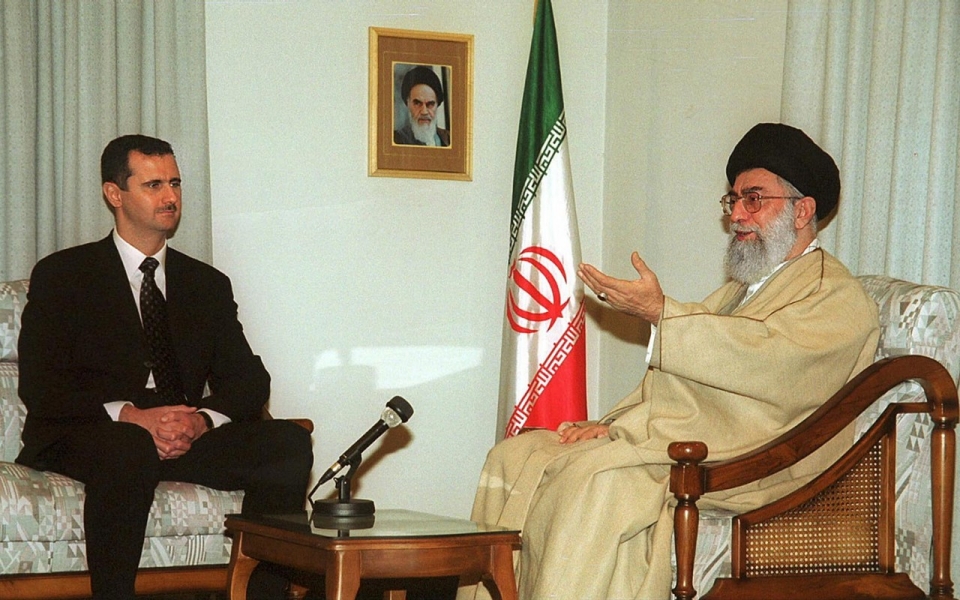
Iran’s supreme leader Ayatollah Ali Khamenei meets Syrian President Bashar al-Assad in Tehran 25 January 2001.(photo: Atta Kenare/AFP/Getty Images)


As part of this agreement, Iran will get funds in the range between Obama’s estimate of $56 billion to as much as $150 billion.  Not surprisingly. this makes the various terrorist entities that are financed by Iran quite happy including (parenthetical is the year when placed on the US State Department list of foreign terrorist organizations):

These Iranian-backed terrorist groups are responsible for the deaths of thousands of civilians and continue to destabilize the Middle East and beyond..

In Obama’s attempt to sell the Iranian deal, he cited many allies that endorsed the deal while specifically avoiding mention of America’s enemies that also support it.  How does one account for the fact that both US allies and foes celebrate the deal? Is the deal actually beneficial to all of the parties, or do some countries simply not understand the deal’s details?

  • The Western world gets to curtail Iran’s nuclear program and avoids a war in the near-term
  • Iran gets to avoid a war, keep its nuclear infrastructure intact, global legitimacy, does not have to change its behavior regarding backing terrorism, and gets tens of billions of dollars in cash
  • Iran’s allies get access to funds and arms from Iran in the near and medium-term, and potentially a nuclear-armed Iranian-sponsor in the not-too-distant future

Obama deliberately does not discuss the many enemies of the United States that support the P5+1 deal and their long list of reasons for doing so. Instead, he makes comments that it is only the Iranian hardliners (and Republicans and Israel) who oppose the agreement. By doing so, he attempts to conceal the enormous benefits granted to Iran (and its proxies) in the agreement. It is pure marketing and a bright white lie over his old red lines.

do not enter
A bright White Lie over a Red Line
(Do Not Enter)


The party Obama highlighted as not being happy with the deal is Israel. A few reasons:

  • Iran will be allowed to continue to call for Israel’s annihilation
  • Iran will have billions of dollars that will not be constrained in any manner from funding terrorist groups that target Israel
  • Iran will get access to a range of ballistic missiles in as little of five years
  • Within 10-15 years, Iran will be a threshold nuclear state
  • The structure of the deal provides Iran opportunity to break the terms and develop nuclear weapons within ten years

In other words, there is a little something (or a lot) for everyone in the deal, with the exception of Israel.


Related FirstOneThrough articles:

The Obama Administration Lays Foundation of Blame at Israel for a Potential War with Iran

The Gap between Fairness and Safety: WMDs in Iraq and Iran

O’bama, Where Art Thou?

Netanyahu’s View of Obama: Trust and Consequences

For Obama, Israeli security is not so time-sensitive

Missing Netanyahu’s Speech: Those not Listening and Those Not Speaking

UN Comments on the Murder of Innocents: Itamar and Duma

The Middle East is unfortunately no stranger to attacks on innocent people. In July 2015, an arson attack on the home of Palestinian Arabs in the town of Duma killed an 18-month old baby. Just 15 miles away, in the town of Itamar, two Palestinian Arabs stabbed to death five members of a Jewish family in their beds in March 2011.

The taking of innocent lives is a terrible thing. It is also sad to watch completely different reactions from world bodies to the two events. Here is the UN news release of the 2011 deliberate murders of five Israeli Jews and the news release of July 2015 on the arson attack that claimed one Palestinian Arab. A short comparison:

Deliberate Murder of 5 Israeli Jews Arson Attack which Claimed Life of 1 Palestinian Arab
Words in article 220 422
Attack called “terrorism” None Three times
Blame placed Not placed on Arabs or Muslims Placed on “Jewish extremists
Other Attacks Mentioned No mention of repeated attacks by Palestinians on Israelis Discussed “repeated acts of settler violence
Comment on leadership Welcomes the strong condemnation… by President Abbas No welcome of condemnation by Netanyahu. Blamed Netanyahu for variety of items including demolishing Palestinian homes and settlement policy.
Cause for Attack Not discussed Blamed on “Israel’s illegal settlement policy

#JewishLivesMatter

The continued disproportionate attacks by the United Nations on only one party in the Israeli-Palestinian conflict will marginalize the UN as a factor in arriving at a long-term solution in the region.

Ban Ki Moon
UN Secretary-General Ban Ki-Moon
(photo: AP/Gary Cameron)


Sources:

Text of UN March 2011: “12 March 2011 – Secretary-General Ban Ki-moon and the United Nations diplomatic partners in the search for peace in the Middle East today condemned the shocking murder of an Israeli family of five, including three children, in a West Bank settlement overnight and called for the prosecution of the perpetrators of the crime.

Mr. Ban also urged all concerned to act with restraint.

The diplomatic Quartet of the UN, European Union, Russia and United States, which seeks a two-State solution to the Israeli-Palestinian conflict, condemned the killings “in the strongest possible terms.”

“The Quartet offers their condolences to the loved ones of the victims and to the Israeli people. Attacks on any civilians are completely unacceptable in any circumstance,” the Quartet said in a statement.

“The Quartet calls on those responsible to be brought to justice and welcomes the strong condemnation of this attack by [Palestinian] President [Mahmoud] Abbas and the Palestinian leadership.”

It stressed the need to expedite efforts to achieve Israeli-Palestinian and comprehensive Arab-Israeli peace.

Media reports said the killings occurred in the settlement of Itamar, near the city of near Nablus. The victims were reportedly stabbed to death by an intruder who broke into their home.

The Israeli army radio said the killer had spared two other children, and that the murder was discovered by another one when she came home.”

Text of UN July 2015: “31 July 2015 – United Nations Secretary-General Ban Ki-moon and the UN special envoy on the Middle East have strongly condemned today’s arson attack in the West Bank that killed a Palestinian child and left the child’s parents severely injured.

The Secretary-General strongly condemns today’s murder of a Palestinian child in the West Bank and calls for the perpetrators of this terrorist act to be promptly brought to justice,” reads a statement issued by his spokesperson in New York.

Continued failures to effectively address impunity for repeated acts of settler violence have led to another horrific incident involving the death of an innocent life, adds the statement. “This must end.”

The absence of a political process and Israel’s illegal settlement policy, as well as the harsh and unnecessary practice of demolishing Palestinian houses, have given rise to violent extremism on both sides, the statement continues.

“This [situation] presents a further threat to the legitimate aspirations of the Palestinian people for statehood, as well as to the security of the people of Israel. The Secretary-General urges both sides to take bold steps to return to the path of peace.”

Mr. Ban reiterates his call on all parties to ensure that tensions do not escalate further, leading to more loss of life, the statement concludes.

Earlier today, the United Nations special envoy on the Middle East today expressed his outrage over what he called a “heinous murder” and a “terrorist crime.”

“I am outraged by today’s vicious arson attack by suspected Jewish extremists in the Occupied West Bank village of Duma, near Nablus, which killed Palestinian toddler Ali, critically injured his mother and father, and injured his four-year old sibling,” the Special Coordinator for the Middle East Peace Process, Nickolay Mladenov, said.

Joining in the “strong condemnations” issued by Israeli and Palestinian Governments and political leaders, the Special Coordinator also called for a “full and prompt investigation” to bring the perpetrators to justice.

“This heinous murder was carried out for a political objective. We must not permit such acts to allow hate and violence to bring more personal tragedies and to bury any prospect of peace. This reinforces the need for an immediate resolution of the conflict and an end to the occupation.”

Later today, the Security Council issued a statement to the press, condemning “in the strongest terms” the “vicious terrorist attack,” and underlining the need to bring the perpetrators of this “deplorable act” to justice.

Council members encouraged all sides to work to lower tension, reject violence, avoid all provocations, and seek a path toward peace.”


Related FirstOneThrough articles:

The United Nations Audit of Israel

Double Standards: Assassinations

Every Picture Tells a Story: The Invisible Murdered Israelis

The Legal Israeli Settlements

The Death of Civilians; the Three Shades of Sorrow

Eyal Gilad Naftali Klinghoffer. The new Blood Libel.

Cause and Effect: Making Gaza

Subscribe YouTube channel: FirstOneThrough

Join Facebook group: FirstOne Through  Israel Analysis

John Kerry’s Hypocrisy: “Can You Deliver?”

Listening to US Secretary of State John Kerry try to explain and defend the P5+1 Iranian nuclear deal to various audiences is a spectacle to behold, regardless of one’s position on the best course of action.  One of the people who might want to watch the sessions and learn something from John Kerry is John Kerry.

Kerry CFR
John Kerry speaking at the Council of Foreign Relations
July 2015

Secretary Kerry argued at the Council for Foreign Relations (CFR) that Congress must support the deal or it would undermine his ability to negotiate any treaty with any government in the future. At 29:55 of the CFR talk, Kerry said: “Other people in the world are going to sit there and say ‘hey, let’s negotiate with the United States, they have 535 Secretaries of State. I mean, please! I would be embarrassed to try to go out… I mean, what am I going to say to people after this as Secretary of State? ‘Come negotiate with us?’ ‘Can you deliver?’ Please!

Kerry made the point that when two parties sit down to negotiate, it is critical for the sides to know that the negotiating parties are both authorized to negotiate and have the ability to fulfill their sides of the deal. If no such authority or ability exists, the discussions are an irrelevant waste of time.

Despite Kerry being quite clear about his logic, he has nevertheless insisted that Israeli Prime Minister Benjamin Netanyahu sit down and negotiate with Acting-President of the Palestinian Authority Mahmoud Abbas, even though it is clearly understood that Abbas can deliver nothing.

  • No Mandate: Abbas’s four-year term as president ran out in 2009. No presidential elections have been held since then.
  • No Authority: Abbas’s Fatah party lost legislative elections in 2006, winning only 33% of the parliament. No legislative elections have been held since then.
  • No Support: Abbas lags in every Palestinian poll held since 2006.
  • No Control: Abbas has no control of Gaza since his Fatah party was kicked out in 2007.
  • No Track Record: Abbas has shown zero credibility in being able to strike compromises to govern his own people, let alone deliver compromises with Israel.

Despite the glaringly obvious impotence of Abbas, the Obama administration continued to pressure Israel to negotiate with this straw man.

The Obama administration publicly acknowledged that the Palestinian Authority has absolutely no ability to deliver peace a few years ago. During the Gaza war on Israel in 2012, then US Secretary of State Hillary Clinton tried to broker a cease-fire. She made a dozen calls to various world leaders to halt the war- but not ONCE called the Abbas and the Palestinian Authority.

Compounding the inherent flaws in Abbas and the Palestinian Authority is Abbas’s insistence on bringing terms of any deal with Israel to a referendum. Abbas stated that he cannot decide on the “Right of Return” for all Palestinians, but that each of the 5 million Palestinian Arab “refugees” must make a decision for themselves. Hey Kerry- 535 “second-guessers” looks pretty good compared to 5 million! In terms of the rest of the components of a final agreement, Abbas stated that he “would go to a referendum everywhere because the agreement represents Palestinians everywhere.”  That’s impressive – he seeks the approval of 11 million “Palestinian” Arabs from all around the world!


Kerry’s comments regarding Iran are both on- and off-the-mark.  Iran and all of the parties in the negotiations know that the United States is a democracy and the political process must run its course.  Once the American people’s representatives in Congress make a decision, the government will deliver on its commitments.

However, Abbas – a complete straw man if ever there was one – with no authority or control whatsoever, openly states that millions of individuals will ultimately not only decide the fate of an Israeli-PA deal overall, but even on certain components on an individual basis.


Kerry fully appreciates that before negotiators start a process that they want to know the answer to the fundamental question: “Can you deliver“? However, he doesn’t care when he forces Israel to do exactly that with Abbas and the Palestinian Authority.


Related FirstOneThrough video and articles:

Abbas demands R-E-S-P-E-C-T

The Disappointing 4+6 Abbas Anniversary

Palestinian “Refugees” or “SAPs”?

Subscribe YouTube channel: FirstOneThrough

Join Facebook group: FirstOne Through  Israel Analysis

The Fault in Our Tent: The Limit of Acceptable Speech

 Some passionate and eloquent liberals have bemoaned the state of inclusiveness among Jews today. Leon Wieseltier, editor of the New Republic, penned an angry piece “J Street’s Rejection Is a Scandal” about the exclusion in 2014 of J Street from the Conference of Presidents of Major American Jewish Organizations. Angry voices are again being heard about J Street due to their position in favor of the Iranian nuclear deal promoted by the Obama administration. Is Wieseltier correct in that we only seek to hear our own voices and that “the orthodoxies and the bubbles and the closed loops and the echo chambers are everywhere?” Is there a “red line” that J Street and others have crossed and therefore deserve to be excluded from the broad tent of acceptable conversation?

Individual Hate Speech

Many countries have laws that ban hate speech. Sometimes the exact language is clearly spelled out about what cannot be said publicly and sometimes it is more general in nature.

For example, several European countries, including Germany, have laws that prohibit Holocaust denial. Those countries took such steps not simply because such expressions offend Jews, but because of the continent’s failure to step in and protect Jews which led to their slaughter. Silence became complicity which must never be allowed to happen again.

For its part, the United Nations Human Rights Council adopted Resolution 16/18 whose goal is “Combating Intolerance, Negative Stereotyping and Stigmatization of, and Discrimination, Incitement to Violence and Violence Against, Persons Based on Religion or Belief.” The resolution was drafted principally at the behest of Islamic countries who were worried about the spread of “Islamophobia.”

The various laws against hate speech all seek to curtail an incitement to violence and harm. The banned speech relates to a specific group of people (ie. Muslims) and not a concept (for example, a religion like Islam).  While a person can legally say disparaging remarks about a concept (“Communism is evil”), one risks breaking the law by attacking a group of people (“All Communists should be beaten up”).

Banned Groups

Hate Speech laws are typically drafted against individuals. However, laws are also drafted against groups that incite violence.  Israel banned two political parties, Kach and Kahane Chai in 1994 as they were defined as terrorist organizations.  The groups’ ideology was based on the teachings of Rabbi Meir Kahane who called for expelling Arabs from Israel, thereby running afoul of the premise of calling for negative actions against people.  Israel has also banned some Arab parties from running in elections which supported terrorism.

BDS, Hamas and Iran

Liberals and J Street supporters feel that BDS (Boycott, Divestment and Sanctions), Hamas and the Iranian nuclear deal should be rightly within civil discourse.  However, do these topics and groups support violence against people, or are they just broad discussions about policies and ideas?

BDS: Reasonable people can arrive at different conclusions about Jewish settlements in Judea and Samaria. Some feel that all the settlements are completely legal as called for in international law in 1922, while others feel that Jews living east of the Green Line is against international law as recently stated by the UN Secretary General. Those competing viewpoints would fall within legal and acceptable conversation, both in public society and in an open-minded pro-Israel community.

However, inciting hatred against settlers is inciting violence.  Calling on the economic strangulation of Jews who legally purchased homes and businesses is akin to hate speech.  As such, new laws are being passed which specifically outlaw supporting BDS.

Hamas: Hamas is a rabidly anti-Semitic organization that calls for the complete destruction of Israel. It has fired well over 10,000 rockets into Israel, killed thousands of people in hundreds of attacks. Since completely taking over Gaza in 2007, Hamas has engaged in three wars against Israel.

Supporting Hamas in any way is supporting terror.  It should be banned completely in public society and in the pro-Israel tent.

Iranian nuclear deal: The Iranian nuclear agreement took various turns over the past several years. As Iran openly calls for the destruction of Israel, any group supporting Iran or helping Iran obtain weaponry would be supporting violence against Israel.

While the Iranian deal may arguably slow down Iran’s pathway to nuclear weapons, it certainly gives Iran tremendous financing and weaponry.  As such, 78% of Israelis oppose the Iran deal in its current format.

J Street Views

J Street has taken provocative stances on these three issues.

  • On BDS, the group technically states that it opposes the BDS movement, while it supports efforts that do call for BDS, particularly of communities east of the Green Line.
  • On Hamas, the group’s own website states that “Hamas is a political movement with an important and significant base of support within Palestinian society… and we support efforts by third parties to achieve reconciliation [between Fatah and Hamas which Israel opposes] and a unity government.”  One could similarly say that the Nazi party was a political party.
  • On Iran, the group launched a major campaign to support the deal, in direct opposition to pro-Israel groups such as AIPAC and the government of Israel itself. J Street was even against Iranian sanctions in 2009.

20150724_072448
 Full page J Street Advertisement supporting Iran Deal
New York Times July 25, 2015

On these issues which directly harm Israelis and the state of Israel, J Street has sided against the stated desires of the government of Israel.  Each time, they have taken stances which closely align with Israel’s enemies which seek to harm the country and its citizens.

Further, and most alarmingly, J Street has urged the Obama administration to vote against Israel at the United Nations Security Council, which is the sole voice of support in many instances. That action was so reprehensible, that even devout liberal politician Gary Ackerman (D-NY) said I’ve come to the conclusion that J-Street is not an organization with which I wish to be associated….America really does need a smart, credible, politically active organization that is as aggressively pro-peace as it is pro-Israel. Unfortunately, J-Street ain’t it.

Erekat
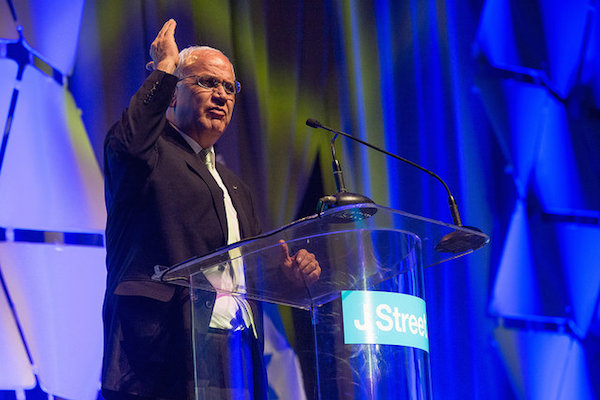
PLO negotiator Saeb Erekat at J Street Conference
March 2015 (photo: J Street)

A Related View from Tisha b’Av

The Talmud relates a story about the reason the Second Temple in Jerusalem was destroyed:

In Gittin 56ab the Talmud tells the story of zealots who wanted to fight the Romans as they got ready to attack Jerusalem. These zealots burned decades worth of food that had been stored in Jerusalem in order to force the residents of the city to confront the Romans.

These zealots undoubtedly considered themselves pro-Jewish. They thought that by destroying all safeguards and alternative options, they could force the rest of the Jewish people to adopt their position in the battle against Rome.

J Street, like the zealots 2000 years ago, view themselves as pro-Israel. While some parts of the Arab and Muslim world (f/k/a Romans) may seek to attack and destroy Israel, J Street views their approach to the conflict as the only logical course of action.  As such, they have engaged in co-opting the US government to take positions against those sought by the government of Israel.  Like the zealots who burned all of Jerusalem’s food supplies (now known as US support), they feel that Israel stripped of all of the territories won in 1967, without a Gaza blockade, and with a nuclear pact in place with Iran will secure Israel’s future. J Street is pursuing global and US pressure to make that happen, rather than seeking to convince the Israeli government.

JStreet-Map
Bookmark designed for J Street Conference
(Photo: Lisa Goldman)

 In the minds of many, the J Street positions have made them the a modern-looking version of Neturei Karta, the anti-Zionist Chasidic sect, similar to the clean-shaven Jewish outreach people who market a more modern version of Chabad outreach.


Debating the merits of different approaches for how Israel deals with hostile neighbors is within constructive debate.  Consistently arguing in favor of Israel’s enemies that seek to destroy the country and kill its people is akin to inciting violence.

Review the statements and positions of J Street here and consider whether such voices deserve to be heard in your community.


Related First One Through articles:

New York Times Confusion on Free Speech

Selective Speech

A Disservice to Jewish Community

Subscribe YouTube channel: FirstOneThrough

Join Facebook group: FirstOne Through  Israel Analysis

Has the “Left-Wing” Joined the UN in Protecting Iran and the Palestinians from a “Right-Wing” Israel?

The left-wing Israeli newspaper Haaretz published an article in May 2015 questioning Israel’s nervousness over a possible deal regarding Iranian nuclear weapons. It pointed out that another Muslim country, Pakistan, already possessed nuclear weapons and Israel did not object.  However, the paper noted that “though Pakistan is the first Muslim state with a nuclear weapons program, it does not call for Israel’s destruction or sponsor terror attacks against Israel. A nuclear Iran, by contrast, would receive cover to step up its hegemonic ambitions in the region and intensify its support for terrorism against the Jewish state.”  A significant difference.

The parameters of the final Iran deal made many people question whether Iran would be able to advance a nuclear weapons program immediately, as the verification program ultimately was very far from the “anywhere, anytime” stated goal that would have better ensured Iranian compliance.  The plan left wide open the possibility that Iran could “break-out” with nuclear weapons in a decade.

Putting aside the question of if-and-when Iran obtains nuclear weapons for a moment, the following deal points are clear:

Unlike the core issue of Iran potentially having nuclear weapons, these dangerous deal points are not in question.

Ramifications – More Money and Weapons

The US State Department considers Iran a state-sponsor of terrorism.  Specifically, it stated: “Iran has historically provided weapons, training, and funding to Hamas and other Palestinian terrorist groups, including the Palestine Islamic Jihad (PIJ) and the Popular Front for the Liberation of Palestine-General Command (PFLP-GC), although Hamas’s ties to Tehran have been strained due to the Syrian civil war.  Since the end of the 2006 Israeli-Hizballah conflict, Iran has also assisted in rearming Hizballah, in direct violation of UNSCR 1701.  Iran has provided hundreds of millions of dollars in support of Hizballah in Lebanon and has trained thousands of its fighters at camps in Iran.  These trained fighters often use these skills in support of the Assad regime in Syria.”

With the execution of this Iranian deal, $150 billion will flow to Iran, some of which, the Obama administration noted, will most likely go towards terrorism.  The deal will also provide a fresh flow of missiles to Iran and likely to Iranian friends on the borders of Israel.

Iran Hamas
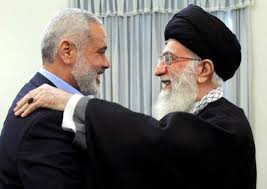
Hamas leader Haniyeh and Iranian spiritual head Khamenei

Ramifications – Tighter Border Controls

While Israel’s main fear is a nuclear-armed Iran, the flow of money and missiles to Hamas and other terrorists on Israeli borders are also significant concerns.  The likely Israeli actions to counter these threats will be:

  • Tighter Gaza blockade
  • Permanent security positions along the Jordan Valley
  • Fewer permits with longer delays in allowing Palestinian Arabs to travel to Israel and between territories

The significantly enhanced threats on Israel’s borders – even before factoring in a nuclear Iran – will force Israel to take additional security measures which will harm daily life for ordinary Israelis and Palestinian Arabs.

World Preemptive Action – Stop Israeli Defenses

The global powers voted to approve the Iranian deal and lift the sanctions against Iran, knowing of Israel’s security concerns.  The world has now begun to take additional steps to prevent Israel from protecting itself:

As Israel prepares to protect its citizens from the immediate threats from the Iranian nuclear deal that the United Nations approved, the world prepares to challenge those very defenses that Israel needs to implement, such as the land and sea border controls..

 What is the Goal of all the Negotiations?

These actions beg questions that contradicts the narrative used in the west:

      • was the real goal of the Iranian nuclear deal to protect Iran from a nuclear Israel? The deal includes language that the P5+1 group will “protect against, and respond to nuclear security threats, including sabotage [against the Iranian nuclear program].” Seriously?
      • Has Obama deliberately handed over authority and control of the region to Iran, as he has no desire to put US troops back into the Middle East?

Is the world now taking steps to protect Palestinian Arabs from their perception of a Mr. Right Wing Benjamin Netanyahu of Israel?

The Obama narrative is that the world is safer with the Iranian deal.  In actuality, is the world safer, or is Iran safer? 

President Obama faces an American public that is more wary of Iran and sympathetic to Israel than much of the world, so he is spinning the deal in verbiage that is more accepting to Americans.  Thus far, Americans are buying the pitch, even while they strongly question whether it will work.

Who’s goals are these anyway?

  • The Arab and Muslim world celebrated the advancement of its goals to destroy the west and Israel.  They did not attempt to hide their mission.
  • The left-wing American parties, papers and groups like J-Street have endorsed the Iranian deal, and are pushing Israel to further dismantle its defenses. They are either lying to themselves or the American people about their goals. Perhaps both.

As Jeffrey Goldberg wrote in the Atlantic, “The Iran deal represents one of those rare issues that has unified Israelis of most political parties[including] the left, center, and right.”  In the United States, it has only unified the left-wing with the Iranian dream.


Related First One Through articles:

The New Endorsed Parameters of Peaceful Nuclear Power

The Gap between Fairness and Safety: WMDs in Iraq and Iran

Hidden Reactor, Silent Reaction

Netanyahu’s View of Obama: Trust and Consequences

UN’s Confusion on the Legality of Israel’s Blockade of Gaza

A “Viable” Palestinian State

Flip-Flopping on the Felling of Terrorist Groups’ Founders

The New York Times reported on July 3, 2015 that “Tunisia’s most wanted jihadist” was killed in an American airstrike. The New York Times coverage stood in sharp contrast to the coverage that the paper used in covering Israel’s killing of a top jihadist in 2004.

DSC_0015
New York Times July 3, 2015 page A6

Headline: The headline from the story in 2015 was “Jihadist From Tunisia Died in Strike in Libya, U.S. Official Says” which clearly labeled the target as a “jihadist”. The way he died was framed in the passive “died” and was attributed to a “U.S. Official” speaking about the incident. This was in sharp contrast to the NYT article “Leader of Hamas killed in Airstrike by Israeli Missile” which did not suggest that the target was a militant but a “leader.” The man was “killed” in an active way, rather than simply stating that he “died”, and the method of the assassination was clearly attributed to Israeli action, rather than news reported by “US Officials.”

Opening paragraphs: A comparison of the opening paragraphs of each article shows the pattern of the Times coaxing its readers to celebrate the assassination of bad jihadists, but questioning the tactics of Israelis.

TUNIS — Tunisia’s most wanted jihadist, who masterminded a campaign of assassinations and terrorist attacks, including one against the United States Embassy in Tunis, was killed in an American airstrike in Libya in mid-June that had targeted another Al Qaeda leader, a senior United States official said on Thursday.

The jihadist, Seifallah Ben Hassine, also known as Abu Ayadh, was one of Osama bin Laden’s top lieutenants and the leader of the outlawed group Ansar al-Shariah in Tunisia. He had been based in Libya since 2013, according to reports, and ran training camps and a network of militant cells across the region.”

The article clearly spelled out that Ben Hassine was a very bad man from the very start of the article. He was the “most wanted jihadists” who led “assassination and terrorist attacks” including against American interests. If the US took out a man who launched many attacks including against Americans, it would make sense that such person got what he deserved. Heck, the article threw in two references to “Al Qaeda” and “Osama bin Laden” to convince the reader that this was a really, really bad guy.

Let’s compare the article about the targeted killing of the founder of Hamas by Israel in 2004:

JERUSALEM, Monday, March 22 Sheik Ahmed Yassin, the spiritual leader and founder of the militant Palestinian group Hamas, was killed early Monday by an Israeli missile that struck him as he left a mosque in Gaza City, his family and Hamas officials said. They said at least two bodyguards had been killed with him.

Sheik Yassin, a symbol to Palestinians of resistance to Israel and to Israelis of Palestinian terrorism, was by far the most significant Palestinian militant killed by Israel in more than three years of conflict.

The article led with the Sheik’s name. He was referred to as the “spiritual leader” who was killed while he “left a mosque.” His demise was reported by “his family.” Overall, he was regarded as much more of a religious human being than the “most wanted terrorist” in the article the attacker against the U.S.

The Times continued that the Sheik was “a symbol to Palestinians of resistance.” This phrase did many things: 1) using the term “symbol” made him appear as an uninvolved player; 2) “resistance” gave credence to a Palestinian narrative. No such equivalence was given to Tunisia’s most wanted terrorist.

While the Times stated that Yassin was the “founder of the militant Palestinian group Hamas”, it did not go on to state that the organization was considered a terrorist group by the US, EU, Israel and many other countries. Yet it did state that the Tunisian terrorist was “the leader of the outlawed group Ansar al-Shariah.”

Don’t worry. The contrasts get worse.

The NY Times then went on to praise the murder of the Tunisian terrorist:

“His death, if confirmed, would be an important victory for Tunisia in its struggle to contain a persistent insurgency in its western border region and a growing threat to its urban centers. Just last Friday, 38 people, most of them British, were massacred at a beach resort in the town of Sousse. In March, 21 people were killed when militants attacked the national museum.

The government has attributed many of the attacks to sleeper cells established by Mr. Ben Hassine when he founded Ansar al-Shariah after Tunisia’s revolution in 2011.”

The Times gave its readers the conclusion of the operation: it was “an important victory”. The people of Tunisia were struggling against a “persistent… and growing threat.” What about Israel?

“Black smoke curled over Gaza City as Palestinians began burning tires in the streets and demonstrators chanted for revenge. Mosque loudspeakers blared a message across Gaza of mourning for Sheik Yassin in the name of Hamas and another militant group, Al Aksa Martyrs Brigades.”

The Times reported that the assassination was not a step forward but a step backward. The killing of the founder of a terrorist movement in Tunisia was a step towards stability while the killing of founder of the Palestinian terrorist group was just a move to escalate a cycle of violence.

The Times emphasized the point by reporting on the recent attacks in Tunisia on tourists at a beach resort and a national museum (anyone in the world could have been one of those tourists, which elicits global sympathy). The Times failed to report on the multi-year Second Intifada which started in September 2000 in which Palestinians killed thousands of Israeli civilians. Just before the Israeli strike, Hamas took credit for two bombings at the Port of Ashdod which killed 10 people. No mention of the incident until much later in the article.


I leave the rest of the two articles for you to read. You will note that one article describes a military attack against a man with a long history of terrorist activities. The other article describes a Palestinian community in grief over the death of a “quadriplegic” without any mention of the hundreds of attacks and thousands of civilians murdered by Hamas.

It is not a coincidence that the article about Tunisia on July 3rd was next to another with a headline “Egypt fights back in Northern Sinai after Deadly Assault by Militants.”  The Times has taken to reporting that much of the world responds to militants while Israel attacks civilians and “spiritual leaders”.  The world’s responses will lead to victory and peace, while Israeli actions escalate violence.

Pretty amazing conclusions

  • from a country that has been waging wars for fourteen years, killing hundreds of thousands of people,
  • about a country that sits in the middle of region that is embroiled in civil wars and terrorist attacks that have also killed hundreds of thousands of people,
  • that is fighting against a group that has declared loudly and proudly its intentions of destroying its state

Related FirstOneThrough articles:

Double Standards: Assassinations

CNN’s Embrace of Hamas

The New York Times wants the military to defeat terrorists (but not Hamas)

Strange difference of opinion on Boko Haram and Hamas in New York Times

Differentiating Hamas

Why the Media Ignores Jihadists in Israel

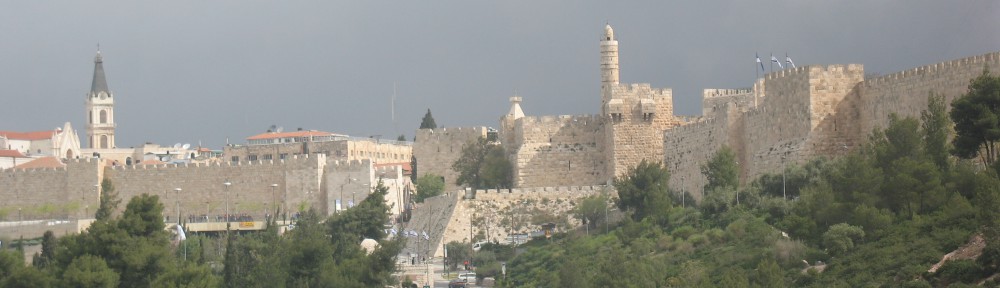
Palestinians agree that Israel rules all of Jerusalem, but the World Treats the City as Divided

The Palestinian Arabs and Israelis last managed to negotiate an agreement in September 1995. That agreement, Oslo II, was intended to be an interim agreement after which a permanent resolution was to be reached in five years. However, five years later in September 2000, Palestinian leader Yasser Arafat walked away from the Israeli peace proposal and launched multi-year riots which claimed thousands of lives.

The terms of Oslo II still live on, decades later.

Oslo II signing
Rabin and Arafat sign maps prior to the Oslo II signing ceremony at the White House, as US president Bill Clinton, Egypt’s Hosni Mubarak and Jordan’s King Hussein look on, September 28, 1995 (photo credit: GPO)

Goals of Oslo II

Oslo II was meant to set in place an interim Palestinian Authority which would become the basis of a Palestinian political structure. Oslo II had NO calls for an independent Palestinian state, but stated the goal of the negotiations was to lead to a permanent settlement based on Security Council Resolutions 242 and 338.

  • Security Council Resolution 338 was declared after Egypt attacked Israel in the Yom Kippur War. The goal was to stop hostilities and commence peace negotiations.  The thrust of SC 338 was to implement SC 242 to establish “a just and durable peace
  • Security Council 242 was drafted after the Six Day War in 1967. In that war, Israel preemptively attacked Egypt and Syria that were readying an attack on Israel, and Israel defended itself from an attack from Jordan.

Without delving into the nuances of SC 242 here, the thrust of the resolution was to have Israeli armed forces pull back from some territories which it won in the 1967 War and that all states respect “the sovereignty, territorial integrity and political independence of every State in the area… free from threats or acts of force.” It also proposed “a just settlement of the refugee problem.

Oslo II built on these UN Security Council goals with an interim roadmap. It began with Israel’s handing over certain territories to the Palestinian Authority (Gaza and Jericho) as well as other major Palestinian cities.

Status of Jerusalem in Oslo II

Jerusalem is mentioned eight times in the Oslo II Accords. In every instance, the entire city is referenced, not just the eastern half that Israel acquired from the Jordanians and Palestinian Arabs in 1967.

The first six times “Jerusalem” appeared in the Oslo II agreement relate to future Palestinian elections in which Palestinian Arabs located in Jerusalem would be able to participate. The remaining two times specifically state that Jerusalem is a point for final status negotiations:

  • ARTICLE XVII Jurisdiction
    1. In accordance with the DOP, the jurisdiction of the Council will cover West Bank and Gaza Strip territory as a single territorial unit, except for:
    2. issues that will be negotiated in the permanent status negotiations: Jerusalem, settlements, specified military locations, Palestinian refugees, borders, foreign relations and Israelis;
  • ARTICLE XXXI Final Clauses
    5. Permanent status negotiations will commence as soon as possible, but not later than May 4, 1996, between the Parties. It is understood that these negotiations shall cover remaining issues, including: Jerusalem, refugees, settlements, security arrangements, borders, relations and cooperation with other neighbors, and other issues of common interest.

According to the agreements executed by the Palestinians and Israelis:

  • Jerusalem is not part of the West Bank, as it is broken out separately
  • Jerusalem is not a “settlement”, as the agreement stated later that “settlements” are entities in the West Bank and Gaza – “For the purpose of this Agreement, “the Settlements” means, in the West Bank the settlements in Area C; and in the Gaza Strip – the Gush Katif and Erez settlement areas, as well as the other settlements in the Gaza Strip, as shown on attached map No. 2
  • Israel controls Jerusalem“Israel shall continue to exercise powers and responsibilities not so transferred”

There is therefore no basis for any of the United Nations, the EU or the Unites States to claim that Jerusalem is a settlement and that Jews should have any restrictions from living anywhere in the city.  Should there be any modifications to the Israeli rule of the city, it will be made by mutual consent in permanent status negotiations.

Yet, the world ignores the Oslo II foundation document of a peace agreement.

United Nations Ignores Oslo II on Jerusalem

UN Secretary-General Ban Ki-Moon made an address on the “International Day of Solidarity with the Palestinian People” in 2013:

On Jerusalem’s Jewish “settlements”:All settlement activity in the West Bank and East Jerusalem must cease.  Measures that prejudge final status issues are not to be recognized.
Announcements of thousands of new housing units cannot be reconciled with the goal of a two-state solution and risk the collapse of negotiations”

These statements ignore Oslo II in many respects: it broke apart “East Jerusalem” as a distinct entity; it claimed that Jews living in “East Jerusalem” were in “settlements”; it called for a two-state solution (while not in Oslo II, both the Israelis and Palestinians later agreed to such plan); it suggested that Jews living in “East Jerusalem” hurt a two-state solution.

On Palestinian homes in “East Jerusalem”: “Of particular concern are developments in East Jerusalem, where this year alone, some 100 [Arab] structures have been demolished, displacing 300 people.  Hundreds more Palestinians are at risk because their homes were built without Israeli-issued building permits”

The UN leader voiced concern with more Jews moving into eastern Jerusalem and not enough Arabs being accommodated there.

On the Permanent Status Negotiations of Jerusalem: “Jerusalem is to emerge from negotiations as the capital of two States, with arrangements for the holy sites acceptable to all”

Ban Ki-Moon voiced a conclusion not made in Oslo II and “prejudged” an outcome that Jerusalem must be divided, even though Israel already divided the UN’s “Holy Basin” when it gave Bethlehem to the Palestinian Authority 20 years earlier.  Amazing commentary from someone who is concerned with “prejudging final status issues.”

European Union Ignores Oslo II on Jerusalem

The EU has taken positions adopted by the Palestinian Authority which are outside of the agreements reached by Israel and the PA in Oslo II:

On Jerusalem’s Jewish “settlements”: “EU considers that settlement building anywhere in the occupied Palestinian Territory, including East Jerusalem, is illegal under international law, constitutes an obstacle to peace and threatens to make a two-state solution impossible.”

On Palestinians in “East Jerusalem”: “The EU supports [Arab] institution building work in East Jerusalem, notably in the areas of health, education and the judiciary.” 

On the Permanent Status Negotiations of Jerusalem: “the EU has repeatedly confirmed its deep concern about accelerated settlement expansion in the West Bank including East Jerusalem. This expansion prejudges the outcome of final status negotiations and threatens the viability of an agreed two-state solution”
“The EU considers that the peace negotiations should include the resolution of all issues surrounding the status of Jerusalem as the future capital of two states. The EU will not recognise any changes to the pre-1967 borders including with regard to Jerusalem, other than those agreed by the parties.”

Like the United Nations, the EU ignored the mutual recognition of both Palestinians Arabs and Israel that only Israel administers all of Jerusalem, and any modification to such arrangement must be made by mutual agreement. Oslo II made no suggestion that the holy city be divided.

The United States Ignores Oslo II on Jerusalem

On Jerusalem’s Jewish “settlements”: Jen Psaki, Spokesperson for the US Department of State said on October 27, 2014: “we continue to make our position absolutely clear that we view settlement activity as illegitimate and unequivocally oppose unilateral steps that prejudge the future of Jerusalem. Israel’s leaders have said they would support a pathway to a two-state solution, but moving forward with this type of action would be incompatible with the pursuit of peace”

On the Palestinian Authority in Jerusalem: While the US does not recognize Jerusalem as the capital of Israel or any country (and therefor does not maintain on embassy in Jerusalem), it has nevertheless decided to establish an office for Palestinians in Jerusalem.  The United States Security Coordinator for Israel and the Palestinian Authority (USSC) sounds like it services both Israel and the PA, but its mission is to serve and assist the PA in meeting its security needs. “The USSC directs all facets of U.S. security sector assistance to the Palestinian Authority and synchronizes international supporting efforts…The USSC assists the Palestinian Authority to transform and professionalize its security sector.

The US decided to place such office to assist the PA in Jerusalem, rather than Bethlehem or Jericho. The address is home of the Consul General of the US in Jerusalem which serves US citizens from Jerusalem, the West Bank and Gaza.

On the Permanent Status Negotiations of Jerusalem:  Back in 2009, White House Press Secretary Robert Gibbs made a point that recognized that Jerusalem is a matter for final status negotiations, but said he was opposed to construction in “East Jerusalem”. “The United States opposes new Israeli construction in East Jerusalem. The status of Jerusalem is a permanent status issue that must be resolved by the parties through negotiations and supported by the international community. Neither party should engage in efforts or take actions that could unilaterally pre-empt, or appear to pre-empt, negotiations. Rather, both parties should return to negotiations without preconditions as soon as possible. The United States recognizes that Jerusalem is a deeply important issue for Israelis and Palestinians, and for Jews, Muslims, and Christians. We believe that through good faith negotiations the parties can mutually agree on an outcome that realizes the aspirations of both parties for Jerusalem, and safeguards its status for people around the world.”


There have been very few agreements between the Palestinian Arabs and Israelis throughout history.  When the parties last mutually agreed to move forward with a peace process, they agreed that all of Jerusalem was controlled by Israel.  The agreement had no caveats about what Israel could or could not do anywhere in the city. It made no suggestion that the city was or would be divided.

Despite that reality, a new perception has taken hold in world bodies that Israel should prohibit Jews from living in parts of their capital and holiest city.  It is being repeated more frequently and with greater force: at one point, world bodies opposed Israel building new neighborhoods in the eastern part of Jerusalem; now they decry Jews moving into existing homes that  they legally purchased privately.

How can Israel expect to negotiate a final status agreement if the world rejects the agreements Israel makes with Palestinian Arabs as it did with Oslo II? How can Israel enter negotiations when the world advances a prejudged outcome to such negotiations to which Israel never agreed?


Related First One Through articles:

The Arguments over Jerusalem

Real and Imagined Laws of Living in Silwan

Nicholas Kristof’s “Arab Land”

Obama supports Anti-Semitic Palestinian Agenda of Jew-Free State

The Israeli Peace Process versus the Palestinian Divorce Proceedings

A “Viable” Palestinian State
A Simple Question for Hillary Clinton on Israel

In June 2015, Hillary Clinton claimed to have been a strong ally for Israel. Without getting into the history of her tenure as Secretary of State, (when she could claim she was following the orders of US President Barack Obama), here is a simple question for Hillary on her presedential run: will she reintroduce the pro-Israel Democratic platform that was present in 2008, but abolished under Obama in 2012?

Hillary rally
Hillary Clinton speaks at her first campaign rally in New York City
June 13th, 2015. Photograph: Andrew Harrer/Bloomberg

Specifically, will she reintroduce the pre-Obama Democratic platform that called for:

  • The isolation of Hamas until it renounced terrorism. As declared in the 2008 Democratic platform: “The United States and its Quartet partners should continue to isolate Hamas until it renounces terrorism, recognizes Israel’s right to exist, and abides by past agreements.”
  • The settlement of the descendants of Palestinian refugees in a new Palestinian State, not Israel.The creation of a Palestinian state through final status negotiations, together with an international compensation mechanism, should resolve the issue of Palestinian refugees by allowing them to settle there, rather than in Israel.”
  • Dismissing the concept that borders should be based on the 1949 Armistice Lines.All understand that it is unrealistic to expect the outcome of final status negotiations to be a full and complete return to the armistice lines of 1949.”
  • Recognized Jerusalem as the capital of Israel.Jerusalem is and will remain the capital of Israel.” The party removed the statement, and then reinstated it after a bitter fight on the convention floor.

Obama made his pivot away from Israel very clear in his 2012 presidential run.  What are Hillary Clinton’s intentions?


Related First.One.Through articles:

International-Domestic Abuse: Obama and Netanyahu