Prayer of The Common Man, From Ancient Egypt to Modern Israel

In general, the world knows little about the desires and prayers of the common man who lived a few thousand years ago. While archeologists piece together how people lived, the prayers and thoughts of only the most powerful leaders and religious figures have been captured in ancient bas reliefs and religious texts.

There are exceptions. Roughly 3,000 years ago, a group of artisans who decorated the tombs of the kings of Egypt prepared their own modest burial chambers about a kilometer away from the Valley of the Kings in Luxor, in Deir el-Medina.

Sennedjem, the owner of what became known as “tomb 19”, was ensconced for three millennia with his wife, children and grandchildren in that tomb until it was discovered at the end of the 19th century. Unlike the government officials who featured artwork related to their government functions in their tombs, Sennedjem and the other artisans of Deir el-Medina had painted scenes of their family and idealized world.

Sennedjem’s tomb walls and arched ceiling were completely covered in ornate paintings which reflected scenes from the Book of the Dead. The yellow background paint gave the walls the feel of papyrus, the ancient Egyptian paper, and allowed the strong colors of the painted subjects to stand out.

The western wall of the tomb painting included two jackals which guarded the road to eternity along with Sennedjem and his wife, Iyneferty, and several gods. The southern wall featured a banquet with the parents and children of Sennedjem and Iyneferty, while the northern wall showed the mummification process together with text from the Book of the Dead, and an appeal to the god Osiris that the deceased, who led a good life, should be granted passage to paradise.

The eastern wall is the last wall to be “read” in the tomb. On top, two baboons surround the falcon-headed god Horus with a sun and protective cobra over his head, depicting the god of the rising sun. It is meant to convey a prayer for a successful journey to paradise and the beginning of a peaceful eternal life.

Below the tympanum are five rows which highlight that view of paradise.

The East Wall of the tomb of Sennedjem, Deir el-Medina, Egypt

The top register, read from left to right, includes the couple kneeling before five Egyptian gods followed by one of the couple’s sons facing them in a bark (boat) who escorts them to paradise. Another son is seen opening the mouth of the mummified Sennedjem, an important action to help the body survive and enjoy food and drink in the afterlife.

The following four registers show scenes of paradise. First they arrive in the Field of A’aru, the Field of Reeds. Egyptians believed that it is there that all of one’s possessions and family which were lost are returned (think of the death scene in the movie Gladiator). In this after-world, harvesting is as easy as pulling the grains from the ground or using animals to work the land. Blue water envelopes the entire scene (much like the Nile and canals during life), feeding plants, fields and trees. The bottom row features poppies and mandrakes, showcasing plants used in making drugs for sleep and aphrodisiac for love-making (see Genesis 30:14).

Paradise in ancient Egypt was an idealized version of life on Earth, focused on physical pleasures together with one’s spouse.

Shalom of Safed

Shalom Moskovitz (1896-1980) was commonly known as Shalom of Safed. He was an artisan for most of his life, including in watch-making and silver, and took up painting at the age of 55. He mostly painted scenes which were important and close to his heart such as the events of Jewish history, the Bible and the Talmud.

Shalom’s painting “Pray for the Peace of Jerusalem,” is a classic example. Like the Egyptian painting described above, Shalom used a muted old paper-like yellowish background for a story with multiple scenes. The registers were not neatly aligned in rows, and show a number of locations from around Jerusalem and Bethlehem. The borders showcase grains and fruit trees, bringing to mind the sheva mi’nim, the seven species native to Israel: wheat, barley, grapes, figs, pomegranates, olives and dates.

“Pray for the Peace of Jerusalem” by Shalom of Safed

Shalom replaced the semi-circular Egyptian tympanum which had been used because of the arched ceiling of the burial tomb (and later copied by churches in Europe above their portals) with a few of the notable monuments in Jerusalem’s skyline: the Tomb of Absalom, the Mosque of Omar (Dome of the Rock) and Tower of David. Further down are two gates of the Old City of Jerusalem with the Kotel, the Western Wall in between. To the left is Rachel’s Tomb in Bethlehem. Other churches, mosques, homes and fields give the painting a calm feeling.

The painting highlights diversity in sharp contrast to the Egyptian tomb which focused on the deceased couple. The people in the painting are assembled in two groups with one in the lower left ascending a hill (and holiness metaphorically) passing graves and the tomb of the Jewish matriarch, Rachel, and the second group to the right praying at the Kotel. All of the men are wearing different hats showing their different backgrounds, but stand together in their prayers. Similarly, the Jewish, Muslim and Christian sites are shown coexisting in harmony. They dwarf the people as opposed to the Egyptian tomb in which the people dominate the scenes.

The people of ancient Egypt worshiped idols and their art showcased those many gods to whom they prayed for an afterlife of physical enjoyment. The Jews of modern Israel pray to an invisible God, and their art reveals an inconsequential physical man before dominant religious monuments with prayers for abstract harmony.


Related First One Through articles:

Delivery of the Fictional Palestinian Keys

The Last Sounds of “Son of Saul”

Shtisel, The Poem Without an End, Continues

The Descendants of Noah

The Journeys of Abraham and Ownership of the Holy Land

Chanukah and Fighting on Sabbath

Your Father’s Anti-Semitism

Taking the Active Steps Towards Salvation

The Beautiful and Bad Images in Barcelona

The Loss of Reality from the Distant Lights

Subscribe YouTube channel: FirstOneThrough

Join Facebook group: Israel Analysis and FirstOneThrough

Shtisel, The Poem Without an End, Continues

“Inside the brand-new museum
there’s an old synagogue.
Inside the synagogue
is me.
Inside me
my heart.
Inside my heart
a museum.
Inside the museum
a synagogue,
inside it
me,
inside me
my heart,
inside my heart
a museum…”

Poem Without an End
Yehuda Amichai (1924 – 2000)

So ends Shtisel‘s season 2 in 2015. An Ultra Orthodox Jewish artist is seemingly caught between two worlds: a world which dominates his family and community, and the passions which drive him beyond the realms of that world.

It is a classic formula used by authors and poets for generations, the story of forbidden love. While typically written about two secular people pulled together against a repelling backdrop, Shtisel is written about a religious Jew pursuing a banned profession.

The protagonist, Akiva Shtisel, lives in a secluded world in which tradition calls for men to learn Jewish texts and to be married with children. But Akiva cannot fit neatly in that prescribed paradigm. He not only has difficulties in his relationships but is pulled by his talents to pursue his love of art. He gets encouraged by the secular world to pursue his artistic gifts, making his already awkward pursuit of a spouse yet more complicated.

In the season finale, we find Akiva walking in a modern museum past his own exhibition to find the comfort of an exhibit of a reconstructed old synagogue. He sits in the more familiar environment where he is surprised to be joined by a love interest. Akiva’s loves are now all contained within one another like nested Russian dolls but the viewer recognizes that the perfect setting does not obviate the conflict.

Unlike a family member who allowed tradition and established roots with a wife to pull him back into the Ultra Orthodox world and forgo his love for singing, Akiva is unmarried and involved with a woman who might entertain Akiva’s life in two worlds. That situation is not one of nested dolls but a life of dynamic movement with a troubling feedback loop like an M.C. Escher drawing.

The show was enormously popular, well beyond Israel where it was filmed. Jews and non-Jews in various countries admired the universal message of dueling loves in which passion and commitment are set against each other. The cast was featured in various events around the world over the past few years in which the actors considered why the show had such broad appeal. They negated the notion that viewers wanted a peak into the life of Hassidim and described the universally understood personal/family/community tensions that exist in all cultures.

Shtisel program held at Temple Emanu-El in New York City, June 11, 2019

Shtisel, the short-lived popular show with the perfect poetic ending was called back by its fans for a third season. The competing forces of attraction of the show’s actors demanded as much from its viewers.


Related First One Through articles:

The Last Sounds of “Son of Saul”

The Right Stuff, Then and Now

The Beautiful and Bad Images in Barcelona

The Last of the Mo’Kichels

The Shrapnel of Intent

Subscribe YouTube channel: FirstOneThrough

Join Facebook group: Israel Analysis and FirstOneThrough

Brooklyn Chanukah Donut Crawl 2020

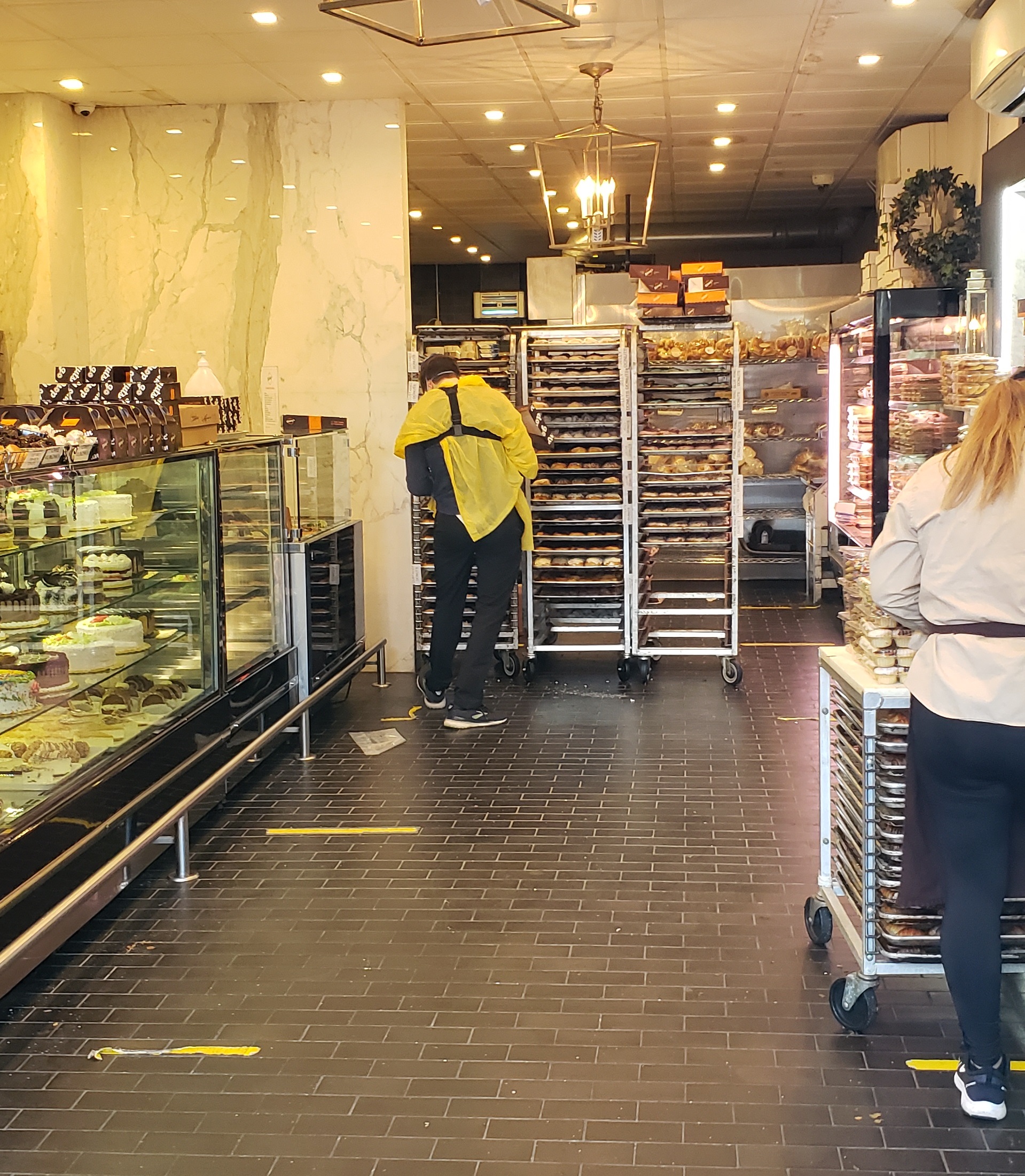
With the pandemic in its second full swing, the annual pilgrimage to try the great donuts and sufganiyot (filled donuts) in Brooklyn was not without controversy. Some people refused to join the outing due to fear so we decided to take a different approach:

  • only two people would make the trek- a parent and a teenager;
  • we would go in the early morning before the crowds;
  • only the teenager would enter the store in full hazmat attire;
  • all donuts would be brought back to base for consumption and ratings

The approach allowed for a wide sampling of bakeries, principally focused on Borough Park and Flatbush. The bakeries are listed in order of our route in case people want to replicate the tour:

  • Taam Eden Bakery, 4603 13th Ave
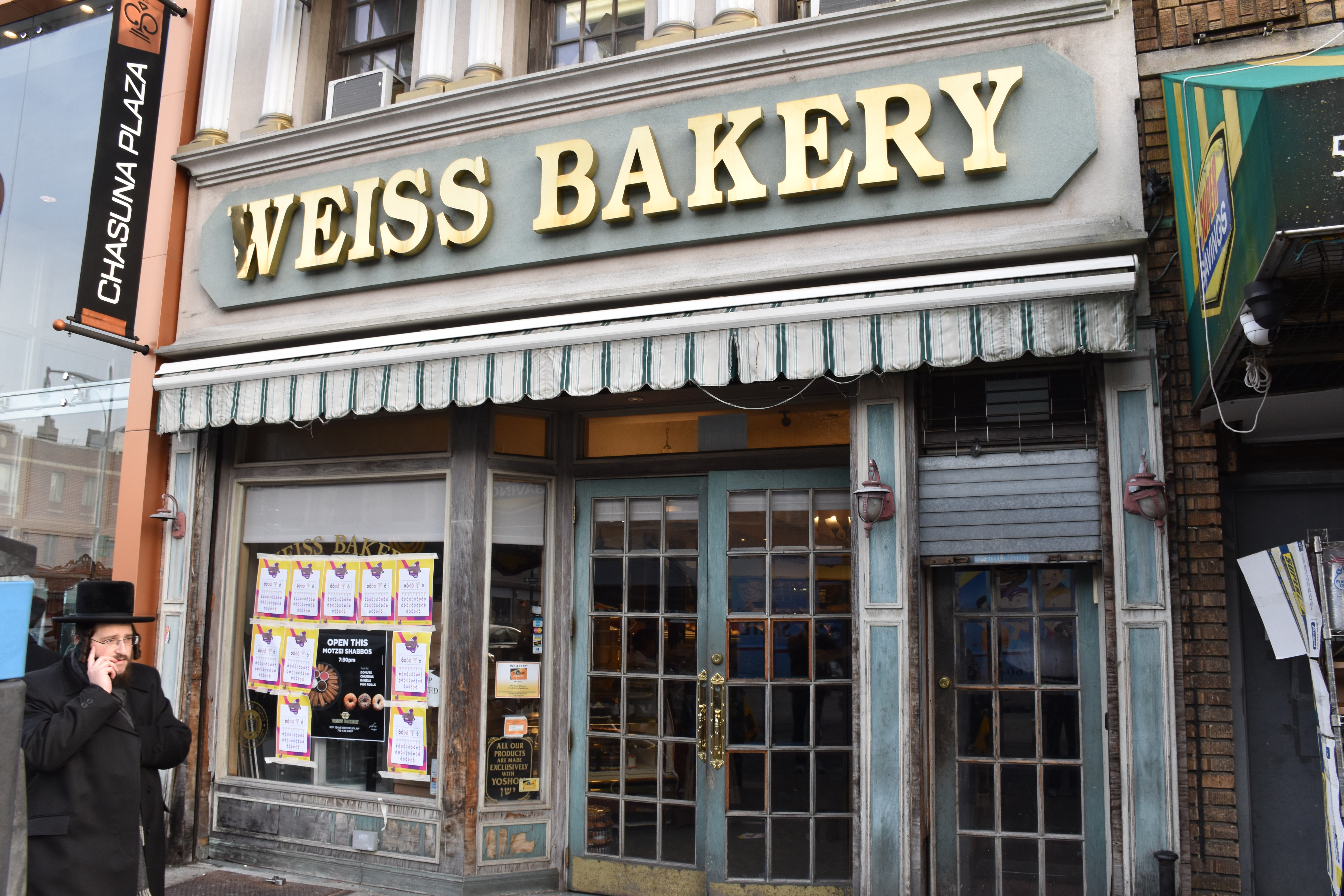
  • Weiss Kosher Bakery, 5011 13th Ave
  • Sesame – Boro Park, 5024 13th Ave
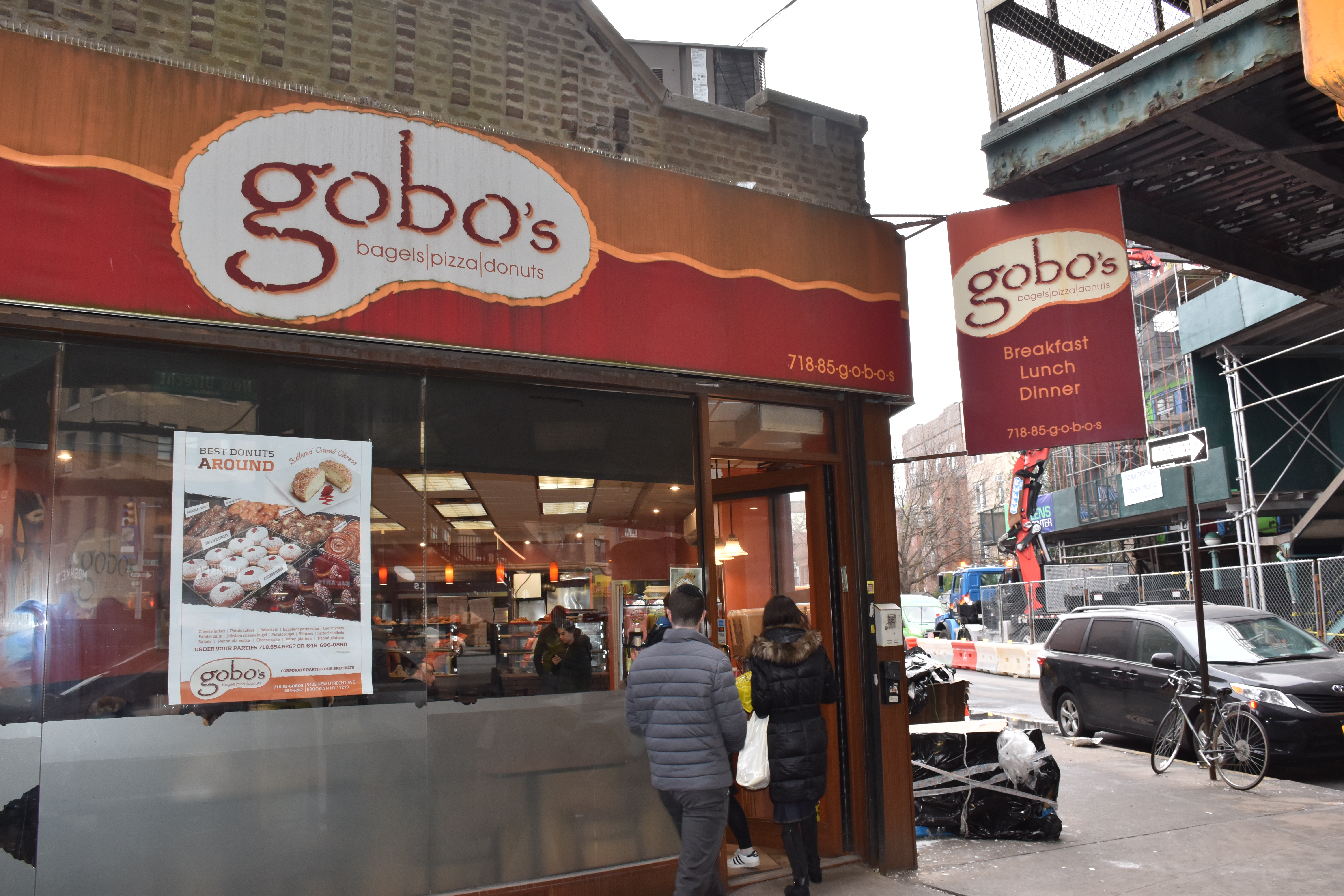
  • Gobo’s Cafe, 5421 New Utrecht Ave
  • Shloimy’s Bake Shoppe, 4712 16th Ave
  • Brooklyn Artisan Bakehouse, 1371 Coney Island Ave
  • Isaac’s Bake Shop, 1419 Avenue J
  • Ostrovitsky Bakery, 1124 Avenue J
  • Presser’s Kosher Bagels and Bakery, 1720 Ave. M
  • Patis Bakery, 1716 Ave. M
  • Schreiber’s Homestyle Bakery, 3008 Ave. M

Yes, that’s eleven bakeries. We’re that committed (in a bad mental health way).

We didn’t actually buy sufganiyot at the eleven stores. Gobo’s, the number one bakery of 2019, was closed both times we drove by, as was Brooklyn Artisan Bakehouse. Patis Bakery still had not received their shipment from New Jersey when we arrived around 10:00am. That still left eight bakeries to review for Chanukah. If one includes the free donut we got from Rachel Berger, the Kosher Dinner Lady (top score on presentation for the cookies and cream), we more than hit our calorie quota.

Taam Eden

In 2019, we got to Taam Eden last and the scores suffered due to our being well-sated and more than a tad over-sugared. We decided to start with that bakery in 2020 and hoped for a fresh assortment of interesting flavors. While they did have many unique flavors like Pina Colada, they weren’t always that good and the sugared toppings fell right off at first bite. Overall, they were also pretty flat and not puffy.

Taam Eden donuts. Blue flags denote dairy

Weiss Kosher Bakery

Weiss is an all around favorite bakery in our family. Yoely was nice enough to give us a free donut too. Unfortunately, the shelves were pretty bare when we arrived at 8:40am, so we missed out on their amazing chocolate horns. The chocolate sufganiyot were good but a bit too sweet. The custard was nice, especially for a pareve one.

Thanks Yoely!

Sesame

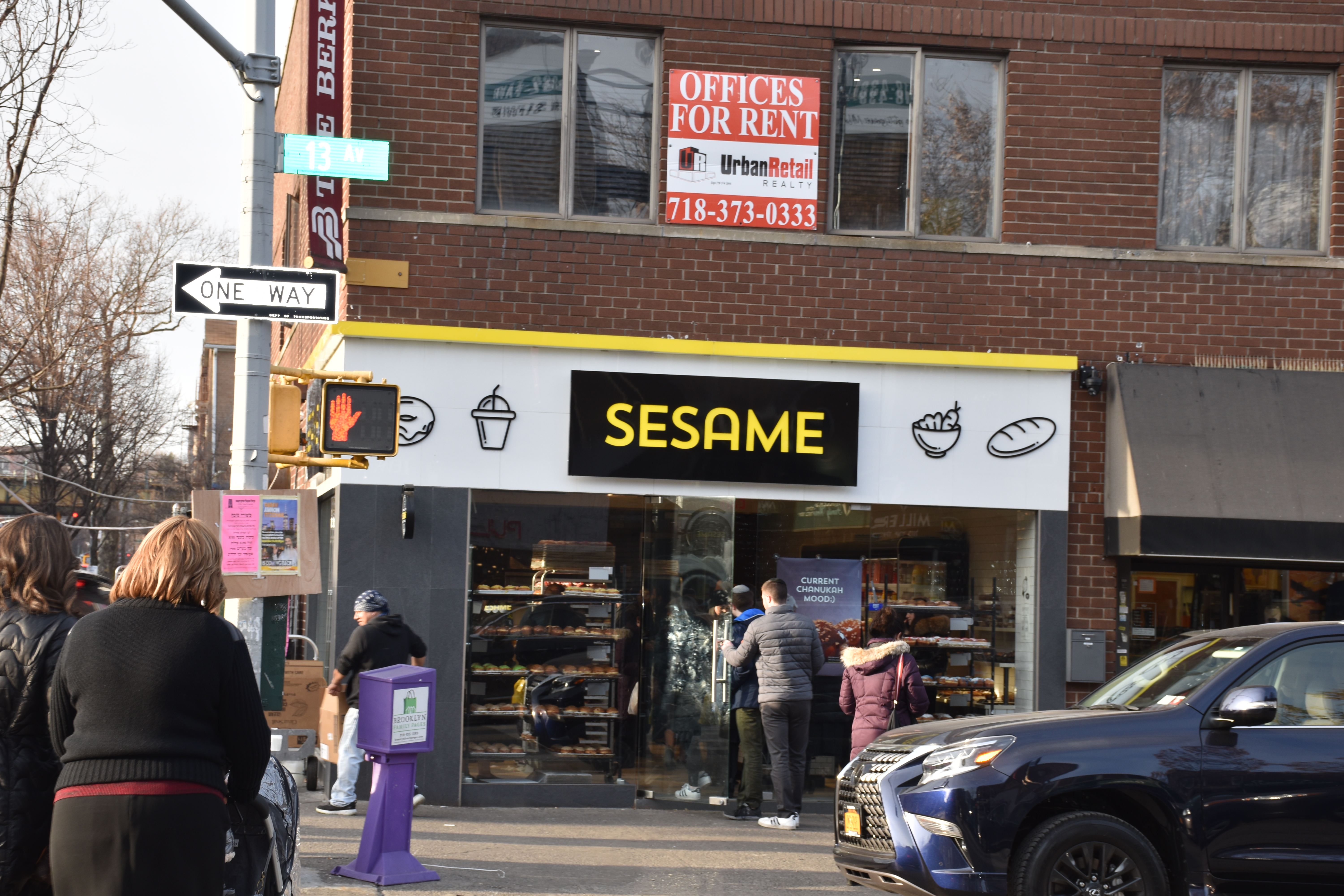
Sesame redoes the entire bakery just for Chanukah, and for good reason. The donuts are amazing. Full of rich flavor which is not too sweet with dough which has nice texture and flavor. I cannot believe how good the pistachio ones are. BTW, no masks in sight.

Shloimy’s Bake Shop

My teenage son was impressed by what he saw in Shloimy’s and came back with lots of choices. The taste varied. The salted caramel was simply not good while the cheese was very tasty and went perfectly with the texture and flavor of the dough.

A hazmat boy in a heimeshe bakery

Isaac’s Bake Shop

Isaac’s had the benefit of being the only bakery we visited where everything was fresh. We gobbled two onion bagels without any spread as we left the store – delicious. The sufganiyot we ate at home were non-complicated and tasty.

Ostrovitsky Bakery

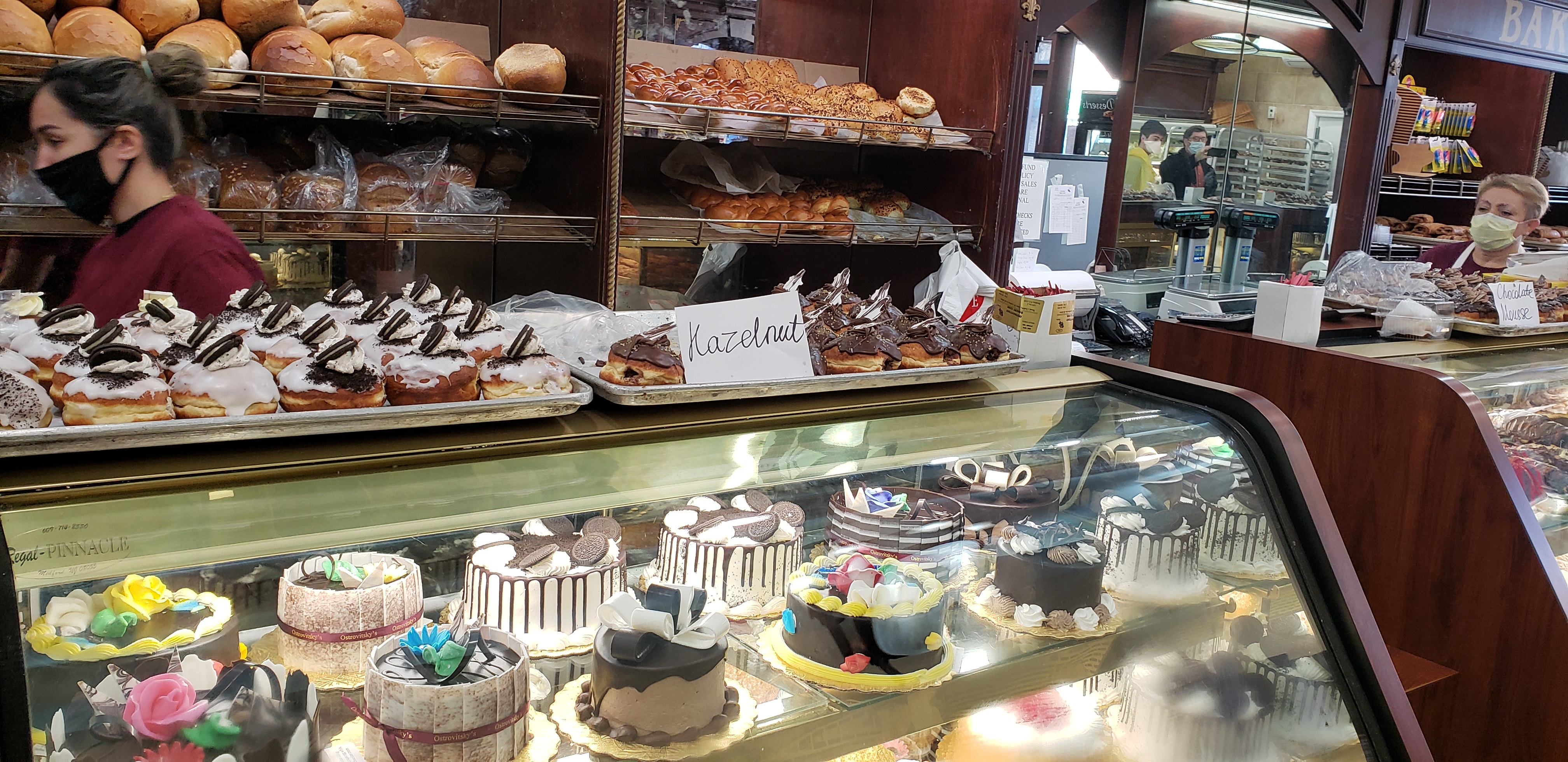
If you want something a bit more ornate and shall I say… Hungarian? – try Ostrovitsky. The chocolate rosemarie are tops in the pareve category with great flavor. The chocolate mousse is very light – perhaps a bit too much relative to the texture of the dough. The Napolean flavor was also quite good.

Presser’s

Presser’s has a lot more appetizing in the store than donuts. We picked up a couple anyway which were pretty good.

Schreiber’s Homestyle

We always visit Schreiber’s to bring home a box of excellent lace cookies; hauling donuts is a plus. Skip the sufganiyot in the boxes in the front of the store and go to the back to select your own. This year we decided to try the dairy donuts – which run about $5 – quite a bit more than the pareve ones at around $2. There’s a reason. The dairy cheese and strawberry are remarkable. A must have.


Overall, none of the sufganiyot (other than Isaac’s) were fresh when we arrived. It felt like we were getting 6am baking at 9am. Sufganiyot don’t age well so we decided to try the other Sesame Bakery location in Flatbush to see if we could try one straight out of the oven. Unfortunately, it was packed at 11am and none of the baked goods were oven-fresh. We grabbed two and hit the road back home.

Below is a rating of the various spots. I would again put Sesame in the top category along with Schreiber’s dairy sufganiyot. Ostrovitsky’s got mixed reviews but I liked them.

We actually have a GoPro video of each store location. Subscribe to the blog and send a note and we’ll let you experience the shopping!


Related First One Through articles:

Chanukah Donuts: Brooklyn 2019

Brooklyn’s Holiday Donuts

The Last of the Mo’Kichels

Subscribe YouTube channel: FirstOneThrough

Join Facebook group: Israel Analysis and FirstOneThrough

Purim 2020, Jewish Haikus

While the format of a traditional haiku is seventeen syllables in a 5/7/5 format, for this Purim, I have decided to use the Jewish chai’ku which has 18 syllables in an escalating 5/6/7 format, with some license.


I don my costume
The latest from Disney.
Rabbi’s grandson wears the same.

Her name Hadassah
Later called Queen Esther
First of Her Name, Breaker of Chains.

We all hear “Haman”
The groggers fall silent
My stomach growls, loudly.

The good guys triumph!
How unusual. Ah,
Not written in Israel.

Megillah two times
Yet Chanukah has none!
Al Ha’nissim inequality.

Diaspora Purim
Large meal and much drinking
Why only a single day?

Mishloah Manot
Only need two items
But don’t want label “cheap friend.”

Stale Hamantashen
Clearly weak store-bought fare
I rummage to find homemade.

Yes, I like muhn
A single day a year
A sweeter poppy bagel.

Two weeks trapped inside
Called for “Calm” Purim shpiel.
What day is Purim Sheni?


Related First One Through articles:

Purim 2019, The Progressive Megillah

Purim 5776/ 2016 Poem

Related First One Through video:

Subscribe YouTube channel: FirstOneThrough

Join Facebook group: Israel Analysis and FirstOneThrough

Chanukah Donuts: Brooklyn 2019

The annual Chanukah pilgrimage in search of great donuts went to Brooklyn again this year. Due to the horrible tragedy that struck the Satmar community in Jersey City, NJ a few weeks ago, the first leg of the trip was in Williamsburg where the Satmar community has a large presence. We set out to try the donuts of seven different bakeries of which two were standouts. Later we headed to Boro Park where we sampled four bakeries which were all very good.

Williamsburg

Oneg Bakery, 188 Lee Avenue

The best donuts of Williamsburg were at Oneg Heimishe Bakery.

The store is small and the selection of donuts is limited but that says nothing about the quality of the food. The caramel and custard filled donuts were outstanding. They were overflowing with delicious centers which were very tasty and not too sweet. The dough was light and the icing was very good. An overall rating of an 8. Considering that the donuts only cost $2.00, lower than many others, if felt like a 9.

Oneg also was the only bakery we visited that carried “frittle,” essentially small and light pieces of fried dough with sugar which are made only on Chaunkah. They were quite good. May I add that the babka from Oneg is among the very best in New York.

Black and White Bakery, 520 Park Ave

The Black and White Kosher Bakery is not that close to the other bakeries but worth the trip. There is a mix of dairy and pareve donuts, plain and fancy, with prices ranging from $1.75 to close to $5.

The donuts were heavily filled with the taste of the fillings getting a range of reviews from amazing to just OK. The dough was very good, perhaps not as good as Oneg due to the freshness of when we arrived (jelly donuts decline in value as rapidly as a BMW). Overall an 8.

Traditional Kosher Bakery, 123 Lee Ave.

A very simple store with a simple name. It serves a number of non-baked items as well as some other baked goods including a cinnamon stick (OK) and a nut/craisin/cinnamon loaf which was terrific. The plain jelly donut had a very tasty raspberry jam but the dough was tough, heavy and thick. Overall, a 6.

Steinberg’s 701 Bedford Ave.

Steinberg’s exterior has no signage whatsoever. The store is clean and decent size with a pretty good selection of donuts. Some of the jelly donuts were assembled in sandwich-format rather than center infused.

The donuts had a very nice amount of filling, but unfortunately, not that tasty. The icing fell apart and onto the floor on first bite and the dough was not that fluffy. Overall rating of 5.5.

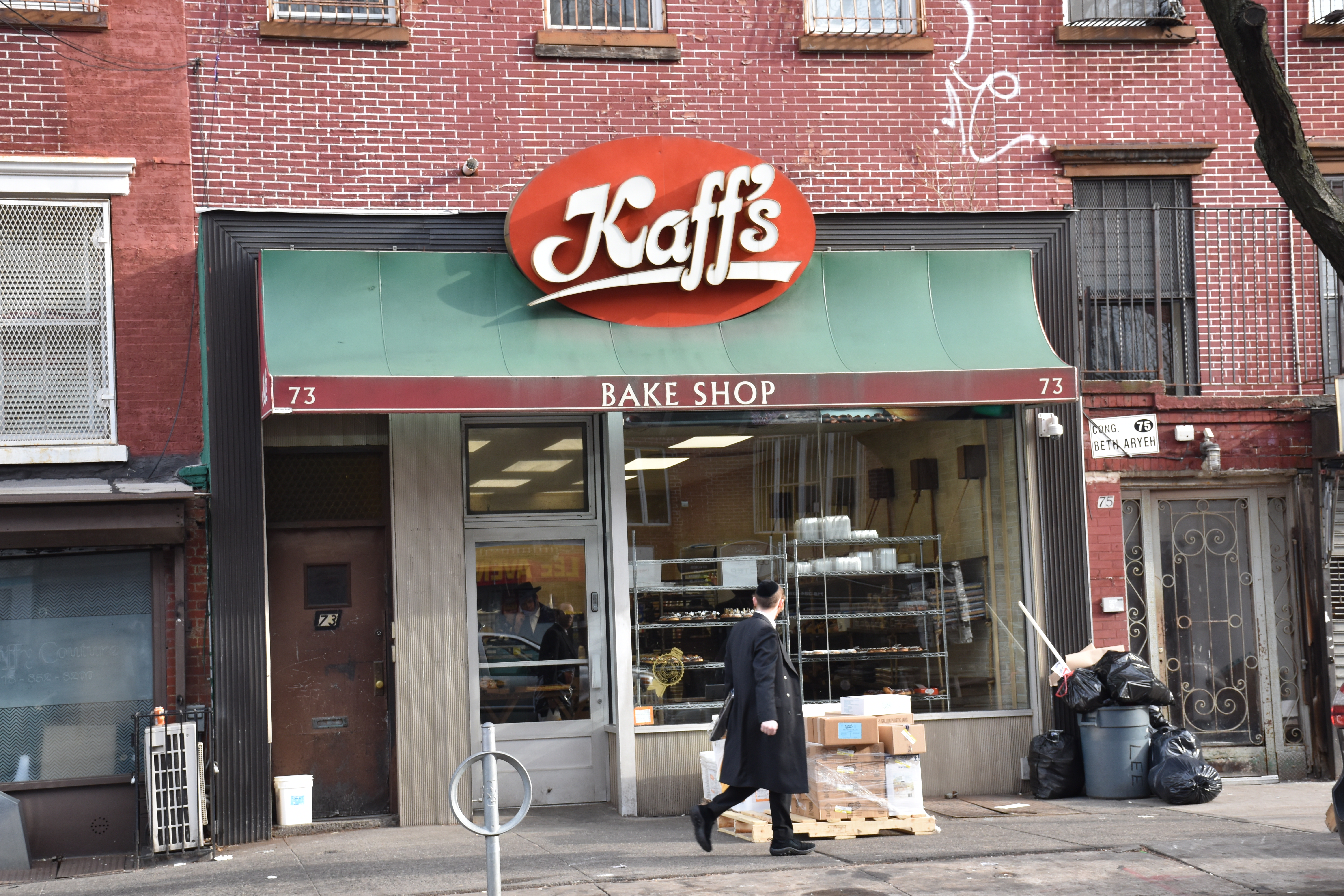
Kaff’s, 73 Lee Ave.

Kaff’s was one of the largest bakeries we visited in Williamsburg and they had a nice selection including two fancy choices with elaborate toppings. Regrettably, the dough was too heavy and the filling, while plentiful, was not on par with the presentation. Overall score of a 5.

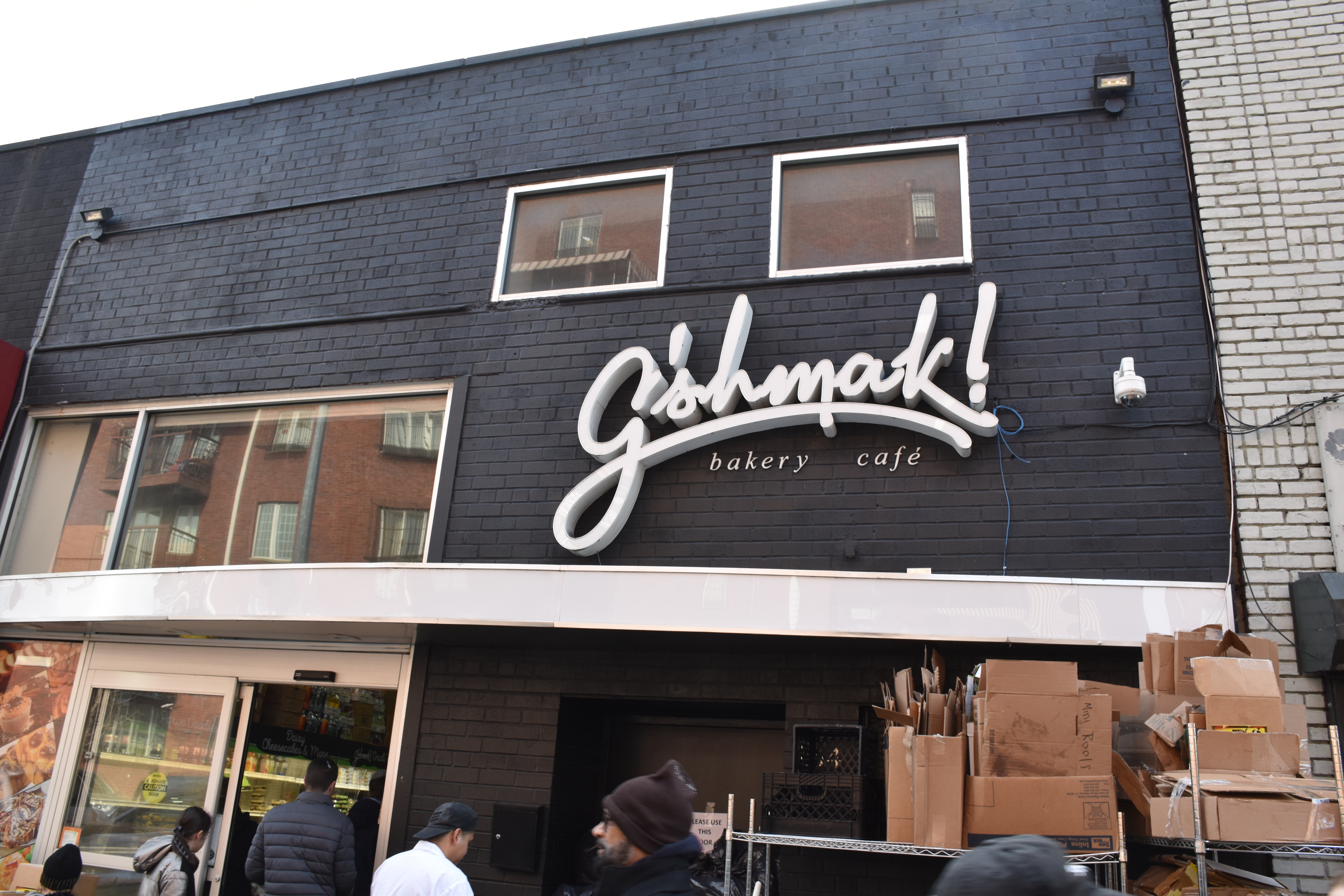
G’shmak 164 Wallabout Ave.

G’Shmak was a real disappointment. While thrilled to have a halavah donut which had great flavor, everything else was lacking: The donuts had very little filling and the dough was very heavy. Huge piles of garbage near the entrance did not add to the experience. Overall rating 3.

Sanders 159 Lee Ave.

We stopped into this nice store – twice. Each time we were told that donuts were about to be ready, and each time kept waiting. On the second visit, the person at the store said that he had three small donuts in the back which he could give us, and after five minutes he confessed he had none and that we should return yet again. Nope. Gets a 0. The gluten-free cookies were also not great.

Boro Park

Boro Park bakeries had a much better consistency of high quality donuts than Williamsburg. I would recommend any of the four we visited. Here they are in rank order:

Gobo’s, 1524 New Utrecht Ave.

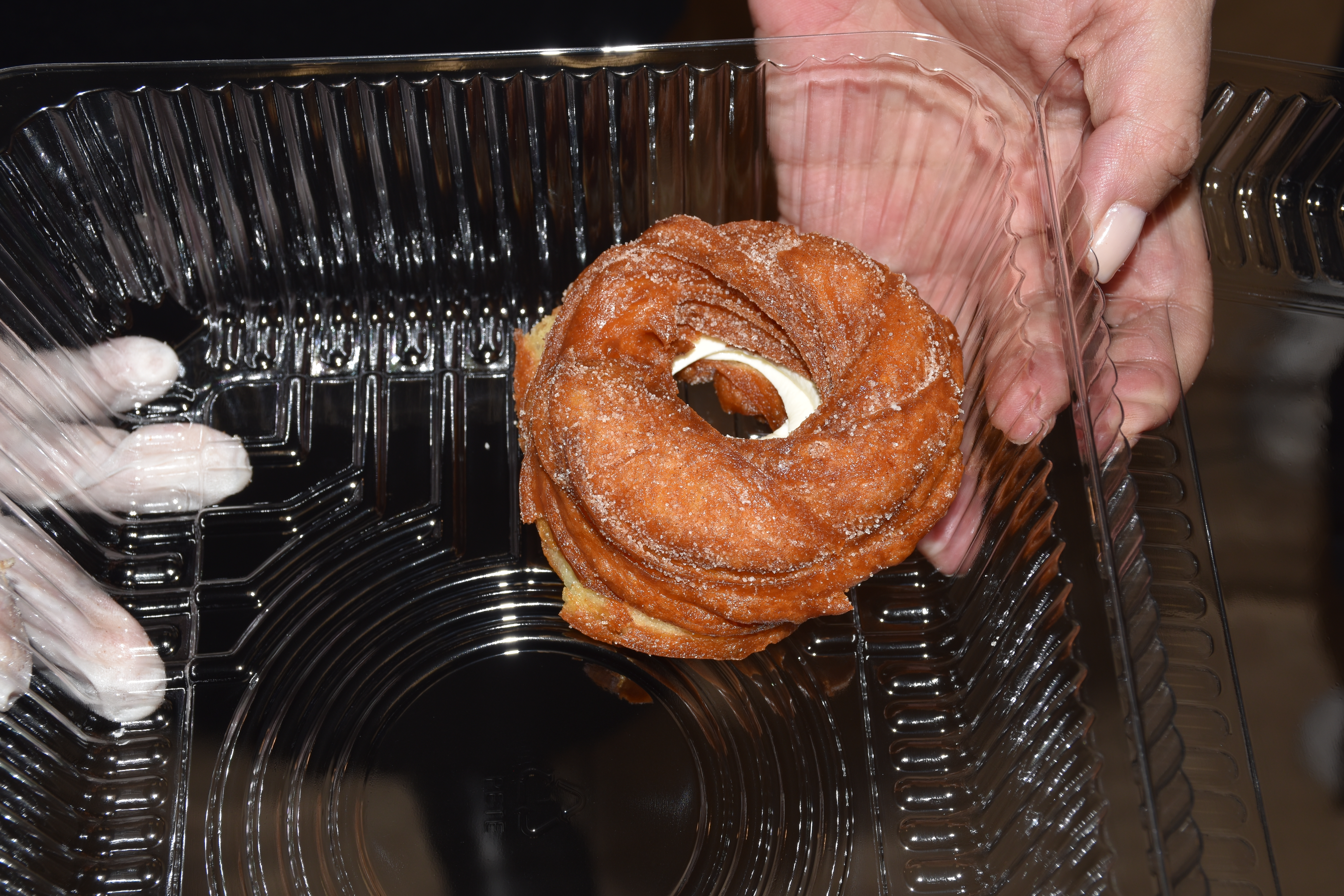
Gobo’s is a new addition to the Boro Park donut crawl and it did not disappoint. They have a different kind of jelly donut which is based on a churro, a cinnamon fried dessert. It was magnificent, with a slightly crunchy exterior, light and flaky dough, with a light creamy inside. An incredible treat and different than every other donut on the crawl.

The more traditional donuts were also very good with excellent dough, heavily filled. Toppings and icings remained on the donut. Overall rating of a 9.0.

Sesame, 5024 13th Ave

We typically go to the Sesame in Flatbush, but decided to try the location in Boro Park due to the proximity of our other stops. The bakery was a knock-out, just like the Flatbush location.

There are dozens of flavors to choose from, including unusual ones like pistachio. The donuts score at the top of the charts in every category: delicious and plentiful fillings, light and tasty dough, flavorful icing that is not overly sweet that stays atop the donut. An incredible treat, whatever flavor one tries. Scores a 9.0.

Taam Eden, 4603 13th Ave.

Ta’am Eden has long been a subtle favorite, a great counter-balance to Sesame. Both have fantastic dough and tasty fillings, but Ta’am seems to not want to overwhelm. The donuts seem smaller than Sesame and the filling doesn’t ooze out all over the place. But such amazing flavor, with new options like Passion Fruit and Pina Colada (seems like you can get some vitamins in donuts these days). The toppings were perfect in that they were very flavorful and remained in place. Overall an 8.5.

Weiss Bakery, 5011 13th Ave.

Weiss is simply an all-around great bakery. Compared to the other stores like Sesame which basically only serve donuts on Chanukah, Weiss adds donuts to its delicious repertoire, but doesn’t try to redefine its store.

The donut fillings are full and very tasty as were the toppings. The dough was not on par with Ta’am Eden or Sesame, and therefore got an overall score of 7.5. However, the store was handing out donuts to children who participated in a Boro Park scavenger hunt, worth an extra point for being a great member of the community!


Here is a chart summarizing the ratings for the 2019 Donut Crawl. Feel free to share the article and peruse and share the other articles on First.One.Through which focus on Jews, Judaism and Israel.

Happy Chanukah!


Related First.One.Through articles:

Brooklyn’s Holiday Donuts

The Last of the Mo’Kichels

A Sofer at the Kotel

Ruth, The Completed Jew

Subscribe YouTube channel: FirstOneThrough

Join Facebook group: FirstOne Through Israel Analysis

The Tikkun Olam Brigade and the Taped Banana

The fancy Art Basel art fair in Miami sold a remarkable item for $120,000 in December 2019: an actual ripe banana duct taped to a wall.


“Comedian” by Italian artist Maurizio Cattelan

The “work of art” called “Comedian” was produced by a famous Italian artist. The Perrotin gallery which featured the work stated that the work “offers insight [into] how we assign worth and what kind of objects we value.

For the thinking individual, the insight is clear: in modern times, we defer to “experts” who put significant money behind ideas, regardless how patently foolish. The fact that an artist represented by an art dealer would feature a work at a large art fair and have someone pay a tremendous sum to purchase the work, seals the deal that this must be serious art. Any individual who would observe the stupidity of the scene would be mocked rather than the other way around as the experts and market have spoken.

Perhaps when this concept was broached by Marcel Duchamp one hundred years ago, the notion of challenging our idea of “art” was novel and thought-provoking. But we’ve already done that. Does this work cover any new ground?

Is this work “Comedian” a joke on society which doesn’t get the opportunity to either ponder or laugh at the exhibition as it cannot fathom stripping the experts of their anointed titles? Is it the masochism we must endure to belong to the elite club? “I want to be in this community of the sophisticated, so will nod as a dutiful supplicant. Yes, we can see that art can take different forms. Yes, we can see that people value items differently. Yes, everything can be art, everything can be beautiful, everything can be valuable. Shame on me for being judgmental to view art as art and beauty as beauty. I hope that I didn’t say any of that aloud as thinking in such manner would exclude me from the very club I wish to join.”

OR… perhaps it’s the exact opposite: the experts are telling us – begging us – to no longer believe them. The masses will spend money as pleases them; the art dealers will feed the masses as they need to make a living too. And the artist, well he’s in on the joke. He named the artwork “Comedian” because he knows that people slipping on a banana peel is low brow humor, just as the work is a cheap poke at the art world and all of us that want to be a part of it.

Either way, pondering art and value is two sides of the same auction paddle. It’s a discussion that the art world has already rehashed for one hundred years.

No. This work is new for the post-2015 world, in which social media reigns. The goal is no longer art, it is popularity. Something that can be liked, shared and retweeted is the essence of value.

Society no longer values beauty or talent or experience. It wants the joke. A quick hit of something to laugh at, to share.

Consider that the United States voted a complete political novice to the presidency in 2016. Americans decided that they had too many politicians named Bush and Clinton already. Out with experience and in with the brash entertainer. Society reached a point that the number of Twitter followers is a better proxy for what the country craves, more than policy. Kim Kardashian for VP in 2020.

The “Comedian” was neither art nor beautiful nor “inherently” worth $120,000; it was simply Tweet-worthy. The artist and the purchaser got value from the work because the masses shared the picture and story repeatedly. As such, the answer to Perrotin gallery’s proposition had a range of answers: the value ascribed to items in a capitalistic society is based on the one outlier who pays the highest price, but also factors the wide attention of the public.

In the search for popularity, experts abdicate their leadership roles. They are now mere “influencers” who peddle their brands and platforms.

The echo chamber becomes a perfectly designed loop where the tastes of the masses is endorsed by their “experts” which in turn make the masses feel wonderful. The platforms become elevated by these same Twits who Tweet, encouraging more of the same.

Why actually lead and educate, when the re-tweets come so fast and furious?

Tikkun Olam

The situation of experts abdicating their positions based on knowledge and experience is not confined to the art world. Today’s religious leadership is being led by the masses as well.

Religious leaders do not talk about religion, a subject in which they are theoretically theological experts. Instead, they focus on politics, as that is what their congregants (read audience) really want to hear.

Consider the Union of Reform Judaism which had its biennial in December 2019. A main focus of the multi-day affair was to discuss reparations for American slavery. The rabbi leading the charge did not quote Leviticus nor the Talmud nor any rabbinic sages like Rashi or Rambam. He quoted Ta-Nehisi Coates, a Black atheist, to make his point.

There is a wide swath of American Jews who relate to Judaism only through the prism of peoplehood and not through the orientation of reading of the bible. As many non-Orthodox streams of Judaism do not believe in God, they view the bible as merely a divinely-inspired text written with the patriarchal philosophy of thousands of years ago. They have therefore comfortably shifted their prayer books and devotion to modern liberal artists like Joni Mitchell and Bob Dylan. Their values begin with political figures and opinions such as from Michelle Obama’s book, and then consider Judaism. Religion is redefined in their political image.

Like the provocateurs in the art world who questioned what makes art “art,” Reform Judaism of 100 years ago asked people to consider what makes Judaism “Judaism”?

Both questions have matured over one hundred-plus years, and like the art world, Judaism has its own “Comedian” for the world of social media and popularity: it’s called “Tikkun Olam.”

The leaders of the Reform movement are marketing Tikkun Olam, or repairing the world, to the rowdy receptive audience of liberals – Jews and non-Jews alike. These potential pew-sitters are highly engaged in politics – particularly since Donald Trump entered politics in 2015 – so they meet their congregants there on the political battlefield. The reformed rabbis know what the progressive crowd cherishes – “Social Justice” – and the clergy repeats back to the parishioners their own political credo with the blessing that it’s kosher. It’s an inversion of the old teacher-student model, where the teacher no longer educates the ill-informed student about Judaism, rather the teacher must learn and incorporate the students’ passions and find an anchor in the bible. Such is the activity of a movement trying to stop its rapidly declining numbers.


Both Value (as in art) and Values (from religion) as currently determined by the bold fringe and loud masses of a post-2015 politically-charged and social media-connected world are seemingly disconnected from historic teachings and knowledge.

Traditionalists are aghast and will have none of it, while the progressives welcome the change as they seize the day from the prior generation.

Traditionalists see the taped banana as an object of interest but not art, just as Tikkun Olam is an appealing notion but not Judaism. Being neither art nor religion does not mean they have no value, but are not characteristic.

Liberals see things in reverse, where value defines everything. For them, Tikkun Olam is the essence of Judaism; a taped banana is bold art.

Both the non-Orthodox progressive leaders and the Orthodox traditional leaders will give their targeted audience their want, so they can manage the chaos of a charged and changing world. But the traditionalists will be leading with the knowledge of experts over thousands of years, while the modernists will be leading with values of the masses at the moment.


Related First.One.Through articles:

Rick Jacobs’ Particular Reform Judaism

The Reform Movement’s Rick Jacobs Has no Understanding of Tolerance

J Street is Only Considered “Pro-Israel” in Progressive Circles

Beyond Judaism’s IPO

On Heretics and Slanderers

Fake Definitions: Pluralism and Progressive / Liberalism

The Non-Orthodox Jewish Denominations Fight Israel

An Orthodox Rabbi at the Capitol

Obama’s “Values” Red Herring

Subscribe YouTube channel: FirstOneThrough

Join Facebook group: FirstOne Through Israel Analysis

Is Columbia University Promoting Violence Against Israel and Jews?

Columbia University has claimed to be a champion of free speech. It was in that spirit that it invited the noted anti-Semite Malaysian Prime Minster Mahathir Mohamad to speak on campus in September 2019. Mohamad has called Jews “hook-nosed,” said they “rule the world by proxy” and questioned the number of Jews killed in the Holocaust. He has even said he is “glad to be labeled anti-Semitic.”

That same week, seemingly to make the Jewish students on campus feel particularly unwelcome, one of Columbia’s professors, Lis Harris, released her book “In Jerusalem.” The student-run Columbia Spectator magazine reviewed the book in its Winter 2019-20 edition.

The review was shocking in seemingly endorsing the author’s contentions that Israel is an oppressor of Palestinians without adding any facts or context.

The article is set up to inform the reader that the book will have a natural “pro-Israel” tenor, as the author Lis Harris “grew up in a secular Jewish family in the United States fully alert, she says, ‘to the wrongs done to the beleaguered Jews across the ocean,’ but with little sense of the ‘wrongs done to the Palestinian people.’” Ah, if someone with a pro-Israel bias can see how terrible Israel is, it certainly must be true. The birth of a woke anti-Zionist is a cause for a progressive party.

Facts in the review and/or the book were seemingly few in the offering.

We are told that the book tries to look at the conflict through the lens of two families, a Jewish one living in “West Jerusalem” and a Palestinian one “living across the border wall in East Jerusalem.” This is fiction. There is no “border wall” between “West Jerusalem” and “East Jerusalem.” In 1967, Israel tore down the fence that divided the Jerusalem after Jordan illegally attacked Israel, and reunited the holy city. There is no West Jerusalem and East Jerusalem, and the fence which had existed from 1949 to 1967 was explicitly declared to NOT be a border by Israel and Jordan in their Armistice agreement. The “security barrier” which Israel began to erect in 2002 to stop the terrorism of Palestinian Arabs from the West Bank is to the east of unified Jerusalem.

Perhaps the facts make the author’s shuttle diplomacy seem less daring, but it’s a sad intro for a writer “who spent more than ten years gathering research and interviews for the book.” The book established zero credibility from the outset.

The review then moves from the gross inaccuracies to ignoring Jewish history and blessing Arab terrorists.

We are informed that the stories in the book are told by “accomplished women” and intelligent and respected family members who “want peace and a fair solution to the conflict.” The Jewish woman’s aunt escaped Nazi Germany who found asylum in Mandatory Palestine “as a refuge from violence.” There is no mention that Mandatory Palestine was designed to REESTABLISH the Jewish homeland years before Nazis came to power. Jews were not dumped into Mandatory Palestine in a reaction to the Holocaust; the land of Israel has been the Jewish homeland for 3,700 years. Modern Zionism pushed for Jewish sovereignty in that land decades before the State of Israel came into being. That’s why Jerusalem has had a Jewish majority since the 1860’s, all facts not covered in the review and presumably not in the book.

This Jewish aunt “is juxtaposed with the experience of Niveen’s [the Arab’s] aunt. At twenty-one, Rasema Odeh was accused of terrorism, illegally tortured, and served ten years at the Ramla prison… Rasmea’s story is shocking, but the chapter devoted to it is one of the book’s best.” The review made it sound like Odeh was a poor victim, unjustly “accused of terrorism.” It neglected to state that she was convicted of terrorism in which she placed a bomb at a supermarket killing two civilians (her accomplices openly admitted such on Palestinian TV). It failed to state that Odeh lied about the events in getting a visa into the United States in 1994 and was stripped of her citizenship in 2017 and deported. It failed to note that many countries – including Germany in 2019 – banned her from speaking in public and denied her a visa as she calls violence against Israel. The mayor of Berlin said about Odeh that “anti-Israeli and anti-Semitic resentments, wrapped up in liberation rhetoric, have no business here. I am glad that we have found a way to stop this propaganda.

This “juxtaposition” of a Holocaust survivor finding refuge at the expense of Palestinian Arabs seems to take a page out of the book of pathological liar U.S. Representative Rashida Tlaib (D-MI) who claimed she found comfort that her ancestors created a safe haven for Jews when they actually did everything they could to kill the Jews and/or keep them out of Palestine. It is called Seeing the Holocaust Through Nakba Eyes, which turns the Jews from victims to oppressors, and the Palestinians from participants in the Holocaust to victims themselves.

The article continues with more inanity such as “Harris is clear-sighted and firm in her own view that the Israeli government is more oppressor than victim. She does not condemn the Palestinian people fighting to live in their occupied home of East Jerusalem (but neither will she excuse the violence of Hamas).”  No commentary that the Arab population in the eastern part of Jerusalem has grown FOUR TIMES since 1967, a rate that surpasses the population growth of Arabs in any neighboring country. It also neglects to mention that Palestinian Arabs in Jerusalem have the option of becoming Israeli citizens and thousands have opted to do so. Palestinians aren’t “fighting to live;” they are fighting to evict the Jews and destroy the Jewish State.

The Spectator adds that “Harris was able to comment on President Trump’s rash recognition of Jerusalem as the capital of Israel.” Rash? Was President Truman’s recognition of Israel in 1948 also rash? The snide comment didn’t even attempt to hide the reviewer’s bias.

In summation, the review states that “through the people she comes to know in Israel and Palestine, Lis Harris sees hope, and this brave new book ultimately helps us see it too.” Palestine? The United States recognizes no such country. And to the extent that it recognizes “Palestinian Territories,” those are limited to Gaza and Areas A and B, and certainly not “in Jerusalem.”


Columbia University has chapters of anti-Israel hate groups like Students for Justice in Palestine and Jewish Voice for Peace as student-run groups on campus. Their voices seem to have penetrated not only the student-run paper and magazine but the University itself which includes a faculty with anti-Israel authors and promoters of boycotts of Israel, and enabled the invitation of proud anti-Semites like the Prime Minister of Malaysia onto its campus. Beyond the student agitators, maybe the university’s anti-Israel platform was purchased by foreign donors like Saudi Arabia who pumped more than $193 million into Columbia between 2011 and 2017.

In October 2019, a report entitled “A Hotbed for Hate” produced by the Alumni for Campus Fairness listed over 100 anti-Jewish incidents at Columbia and Barnard since the 2016/7 academic year. In addition to the on-campus activities like a swastika painted on a Jewish professor’s office, the report listed numerous faculty members who deny the history of Jews as well as peddle forms of Holocaust denial.

At the very moment when antisemitism is on the rise, the murder of Jews is becoming commonplace and the demonization of Israel is accepted, it is a travesty that New York City’s only Ivy League school gives credibility, honor and an open mic to such vile sentiments.


Related First.One.through articles:

Arabs in Jerusalem

The Jews of Jerusalem In Situ

Ending Apartheid in Jerusalem

The War Against Israel and Jewish Civilians

Students for Justice in Palestine’s Dick Pics

A Response to Rashid Khalidi’s Distortions on the Balfour Declaration

The New York Times All Out Assault on Jewish Jerusalem

The Remarkable Tel Jerusalem

Both Israel and Jerusalem are Beyond Recognition for Muslim Nations

750 Years of Continuous Jewish Jerusalem

Today’s Inverted Chanukah: The Holiday of Rights in Jerusalem and Judea and Samaria

The Arguments over Jerusalem

“East Jerusalem” – the 0.5% Molehill

Jerusalem, and a review of the sad state of divided capitals in the world

When You Understand Israel’s May 1948 Borders, You Understand There is No “Occupation”

First.One.Through videos:

The Green Line (music by The Kinks)

Judea and Samaria (music by Foo Fighters)

The Anthem of Israel is JERUSALEM

Subscribe YouTube channel: FirstOneThrough

Join Facebook group: FirstOne Through Israel Analysis

Bernie Sanders is Less Sophisticated Than Forrest Gump

The King of the Democratic Socialists, Senator Bernie Sanders, continues to show off his stupid ideas. His latest – capping pay of private companies.

The current salvo is part of Sanders’ “Stop Walmart Act” in which he wants to limit CEO’s pay to 150 times that of a typical employee. Somehow, raising the quality of life for poorest Americans is not sufficient via increases to the minimum wage and work conditions. Sanders is intent on putting the breaks on income inequality by limiting what the top brass earn. So if the average employee made $50,000 per year at a company, the CEO pay would be capped at $7.5 million.

Think about applying the logic to the movie business.

Tom Hanks earned roughly $60 million for his work in Forrest Gump. Taking his pay and dividing by 150 would mean that the average worker for that movie – including hair and makeup, lighting, sound editor, key grip (whatever that means) – would earn $400,000. Needless to say, the average worker on the movie made nowhere near that total. If the average person made $75,000, should Hanks have his pay capped at $11.25 million?

In baseball, Mike Trout earns $33.25 million a year playing for the Angels. The ecosystem in baseball is vast and includes groundskeepers, umpires, gate and parking attendants, people in concessions and advertising and marketing. Does the average person who works in Major league Baseball make $221,667? If they don’t, then Sanders believes that Tout shouldn’t make as much as he does. His perception of fairness trumps the value of his contribution as determined by the free markets.

People can readily appreciate the performances of actors and athletes, and pay money to see them perform. But the management talents of corporate executives is not easy to comprehend or see. A bad CEO could cost a company billions of dollars and thousands of jobs. Their work is not simply to amuse people for a few hours, but has dramatic impact on shareholders, employees and customers.

But for new era of American Socialists, income inequality is inherently evil. As freshman member of Congress Alexandria Ocasio-Cortez saida system that allows billionaires to exist… is wrong” and “immoral.


Rep. Alexandria Ocasio-Cortez and Sen. Bernie Sanders

The start of this thinking in the Democratic Party can be traced to 2012, when President Barack Obama made the remark “if you’ve got a business, you didn’t build that.” While there is a kernel of truth to his broader commentary that most businesses are built with many employees and an ecosystem which enables wealth creation, the current alt-left version of that thinking is that ALL people who have a hand in wealth creation inherently deserve a good portion of that wealth. In the example above, Sanders does not only think that a grounds-keeper at a stadium should get a large raise when the baseball players get huge paydays, but Mike Trout’s Little League coach when he was ten years old should also be entitled to some of Trout’s salary.

Senator Elizabeth Warren (D-MA) is another presidential hopeful from the left-wing who is hyper-focused on income inequality. She has proposed forcing large companies to have almost half of the boards of directors be representatives of the employees. Such efforts are meant to curtail the efficiencies and cost-savings which companies like Amazon utilize to pass cost-savings onto consumers, and instead ensure more employees are hired and make more money relative to shareholders and management. The goal is for unskilled labor to get shielded in a world of automation while trimming Jeff Bezos’s wealth; a double win for progressives. For the people who maximized efficiencies and created new companies, not so much.

Big progressive government is trying to launch the biggest takeover ever – of the entirety of the American business community. It promises to be heavy-handed, very intrusive and punitive as it devalues the contribution of those who innovate and lead.

Bernie Sanders proudly adopted one of the mottoes of Forrest Gump, that “mama said there’s only so much fortune a man really needs… and the rest is just for showing off,” as he pushes to pass laws preventing highly skilled people from making “too much” money. In truth, the Democratic Socialist motto is “stupid is as stupid does.


Related First.One.Through articles:

Progressives are Stripping the Equity of Our Lives

Fake Definitions: Pluralism and Progressive / Liberalism

Purim 2019, The Progressive Megillah

Bernie Sanders is the Worst U.S. Presidential Candidate for Israel Ever

An Open Letter to Non-Anti-Semitic Sanders Supporters

Please Don’t Vote for a Democratic Socialist

This July 4, I am Leaving the Democratic Party that Left Me Long Ago

Subscribe YouTube channel: FirstOneThrough

Join Facebook group: FirstOne Through Israel Analysis and FirstOneThrough

Purim 2019, The Progressive Megillah

Roughly 2,500 years ago where the patriarchy reigned,
Jewish history was made in a failed coup, bloodstained.

Far from the destroyed Temple, in the Persian vicinity
A ruffian named Haman was imbued with toxic masculinity.

He used his privileged status to easily befriend the king,
And set in motion a plan to set the palace right wing.

Haman targeted the snowflakes and anything intersectional
And demanded that every Jew position themselves genuflectional.

Yet the Jew Mordechai would not bow or quake
And later mansplained to his niece Esther the actions to take.

But Esther was already woke to Haman’s weaponized speech
And with Mordechai hatched a plan to have Haman impeached.

She asked the Jews in the kingdom to start fasting in the morning
In the first biblical example of a community trigger warning.

She burst into the king’s party, uninvited and quite disheveled
‘Attempted mass murder!’ through clenched teeth, at Haman she leveled.

The microaggression forced the king to seek a safe space in the garden.
When he returned to see Haman toppled on Esther, Haman lost his chance for a pardon.

Haman screamed in anguish in a curse filled with misogyny
And soon hanged from a tree with all ten of his male progeny.

The tables had turned and the streets were turned red
As the Jews attacked their enemies with 75,000 dead.

The Jews were not vanquished on Purim, aligned with the elites
Capped with handing money to the poor and giving each other treats.

Today’s alt-left progressives might find this ending bittersweet
And reject the story’s conclusion or find religion obsolete.

But antisemitism’s continuing roar from the extreme right and the left
Shouldn’t leave our whole community with a wide sickening cleft.

Hand your blue friends some red treats, and the conservative something blue.
Be joyous and celebrate wholeheartedly with each and every Jew.

The Last of the Mo’Kichels

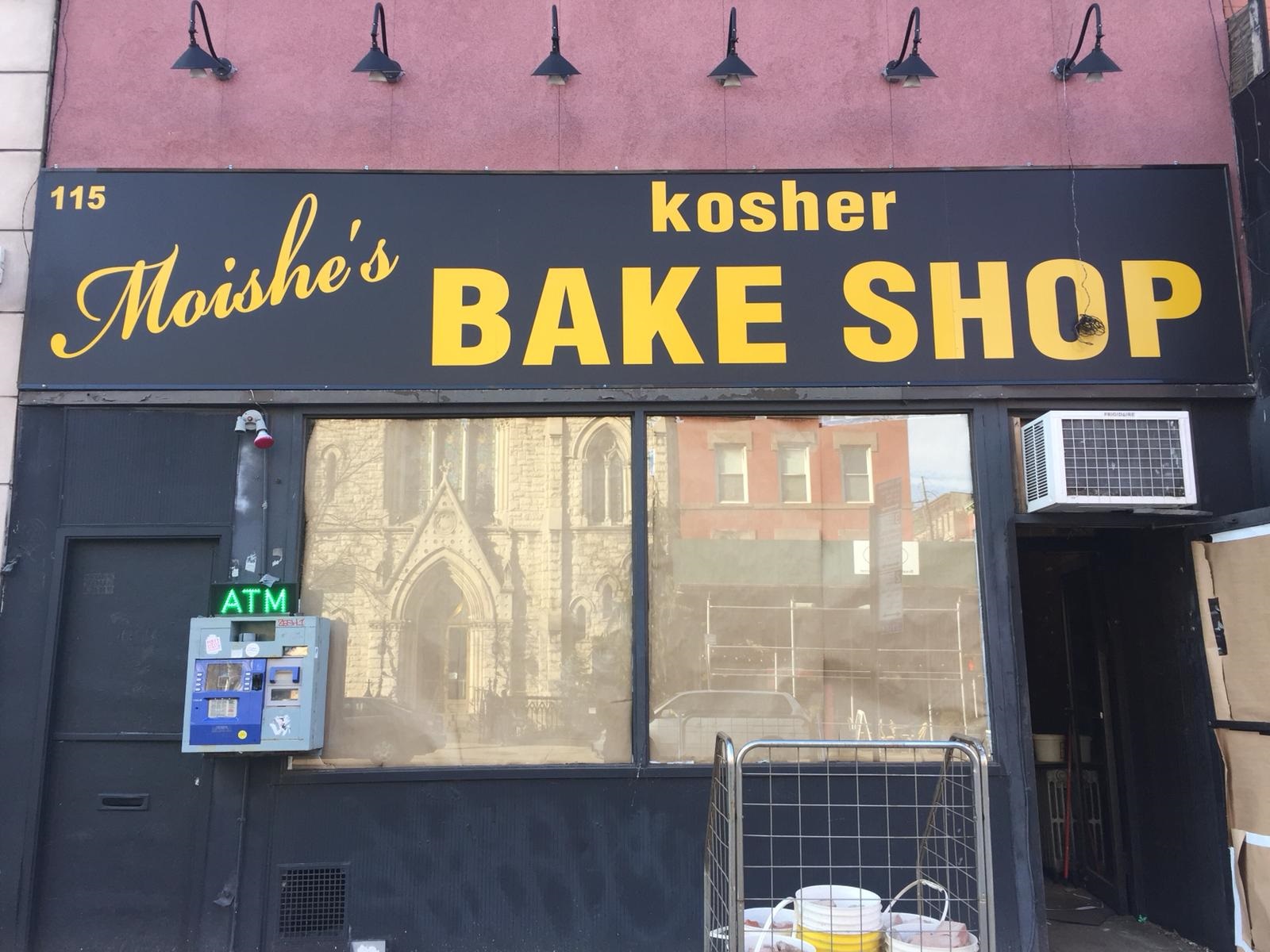
Moishe’s Kosher Bake Shop has closed.


Moishe’s Kosher Bake Shop

The wonderful kosher bakery on 115 East Second Avenue off of 7th Street had been an institution for decades. Seemingly from the era of the nearby Yiddish Theater and Second Avenue Deli (in its original location), the 42-year old bakery continued to produce it’s famous baked goods in the same old-world style until closing it’s doors at the end of February 2019.

The inside of the bakery always maintained its same appearance. There was no digital signage, no sign offering wifi and no credit cards accepted. The yellow paper and doilies that lined the shelves were seemingly of the same count as they were 75 years ago.

But beyond the appearance was the food. The enormous hamantaschen always filled the front glass windows. The classic “bowtie” twisted kichel as well as those with a hint of chocolate were straight towards the back of the store, piled high. Moishe’s special version of the large round kichel with just the right amount of crunch and bite, and the perfect sprinkling of sugar on top made them easy to inhale. The other items like the cheese strudel (plain, cherry and blueberry) were also amazing, while many of the chocolate items were tasty, though not exemplary.

But it was the superb large round kichels which Moishe’s perfected that will leave the largest hole in New York’s history of great kosher eateries. It is sad to think that I have consumed the last of the Mo’kichels.

Related First.One.Through article:
Brooklyn’s Holiday Donuts