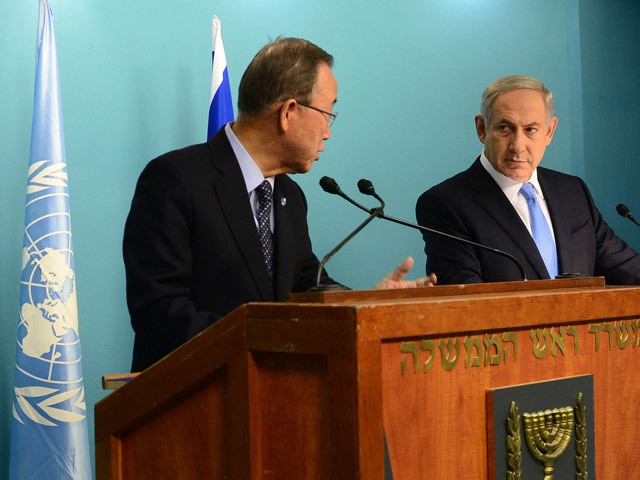
Every Picture Tells a Story, the Bibi Monster

The “Every Picture” series highlights the power of photographs in the media and reviews the impact of size, color and placement of pictures along with their captions. The first installment reviewed how the New York Times painted a picture of Arab grief and suffering while portraying Israelis in a more aggressive and less sympathetic manner in a series of articles from June 30 to July 3 about the murder of three Israeli teens and a Palestinian teenager. If that article had a subtitle, it could have been “Palestinians trump Israelis”. You might think this second article in the series could be entitled: “Palestinians trump the World”, but the reality is much more subtle.

On July 7, 2014 the New York Times posted, on the top of its front page, a large color photograph of a Palestinian youth who was injured during riots against Israeli police. The bruised teenager was deemed to be a bigger story than victims of mass murders in other countries on a particularly violent day in Africa and the Middle East:

20140707_082918

On page A4, the paper posted a large black and white photograph and article about  20 people who had their throats slashed in Kenya;


On page A7, the NYT posted a black and white photograph of soldiers and militiamen in Uganda where 50 people were killed in a battle between security forces and a tribal militia;

On the bottom of that same page, a short article (with no associated picture) described how 35 to 40 people were killed in Yemen in a fight between “Shiite rebels and tribesmen associated with the government.”

20140707_08293720140707_08294820140707_083002
Pictures of mass murders buried in the NYT pages

While over 100 people were slaughtered in the region, the Times thought that a bruised youth was more significant than any and all of those atrocities. Could that have been because the teenager was a Palestinian Arab? That wouldn’t be logical as the Yemenis are Arab too. Could it be because the injured boy was a Muslim? That also would not make sense since al-Shabab is the Islamist terror group in Kenya that has been killing dozens of people every week, and both parties in the slaughter in Yemen are Muslim.

The difference in the dynamic of these stories lies in the counter-party – Israel – as evidenced by the other pictures in the news story. In a small picture on the (extreme right) side of the cover page, and then again in a color photograph on page A5, are close up pictures of Israeli Prime Minister Benjamin “Bibi” Netanyahu. Netanyahu is possibly the only world leader who is more despised by the NYT editorial board than former US President George W. Bush. The Times often uses pictures of Netanyahu alongside stories of Israeli aggression. It does this uniquely and consistently for Bibi.

By means of comparison, imagine an article about US drones killing civilians in Afghanistan, and then a picture alongside of it of US President Barack Obama. It doesn’t happen in the NYT or liberal media outlets. You probably wouldn’t even see a picture of injured people or mourning mothers in US papers. That is because they do not want to sketch a killer in Obama’s image.

As examples, here are two NYT articles that are critical of US policy of drone attacks – but include no pictures (let alone two!) of Obama. These are attacks that Obama ordered, (compared to a general situation in Israel which Netanyahu was not directly involved). Needless to say, the articles that simply report on the use of drones have no pictures of the US Commander-in-Chief.

http://www.nytimes.com/2013/10/22/world/asia/civilian-deaths-in-drone-strikes-cited-in-report.html?pagewanted=all&_r=0

http://www.nytimes.com/2014/06/26/world/use-of-drones-for-killings-risks-a-war-without-end-panel-concludes-in-report.html

In another article that is completely about Obama’s war on terrorism, the picture puts Obama so far in the background you would think he was accidentally caught in the photo.

http://www.nytimes.com/2012/05/29/world/obamas-leadership-in-war-on-al-qaeda.html?pagewanted=all

However, the New York Times and various liberal publications like to paint Bibi and Israel as attackers. They use his image alongside articles which describe attacks and counter-attacks. He has been made into a caricature of war; a cartoon of a blood libel.

Every picture tells a story. It is time to ask what the artist had in mind.

The Subtle Discoloration of History: Shuafat

Reader’s often assume that the more reputable news organization do research and perform fact-checks before posting articles. However, they do not often consider the word choices or juxtapositions of those facts relayed in a story. The truths and half-truths can combine to distort reality. This becomes exacerbated when quotes from biased witnesses are included in the article.

Witness the July 6, 2014 New York Times article on page 8 describing the terrible abduction and murder of an Arab teenager as a case in point. The second paragraph of the story: “…Mohammed was at the recreation center named for his respected, expansive Palestinian family in the ancient section of the East Jerusalem neighborhood of Shuafat.” I will avoid commenting on the “respected” background of the Abu Khdeir family who “started farming [in Israel] 250 years ago” as I do not know them (and why should I doubt Jodi Rudoren?). Consider the proximity in one sentence of the words “Palestinian”, “ancient”, “East Jerusalem” and “Shuafat”. A reader could naturally conclude that Palestinian Arabs have long been living in the ancient Palestinian city of East Jerusalem. A quote from a member of the family in the article adds that “All Shuafat is in danger, all the settlers are around us. It’s like a monster – they want to eat us.” could lead a reader to conclude that Jews are recent “settlers” to the area and harass Arabs.

All of those conclusions would be false.

Shuafat is indeed thought to be an ancient site. Archeological excavations reveal Roman encampments and Jewish homes and mikvahs from 2000 years ago. However, neither Shuafat, nor the rest of Israel, have ancient Arab finds as Arabs did not come to the region en masse until the Muslim invasion in the 7th century.

Shuafat remained a small village until 1967 when Jordan (together with Palestinian Arabs who were granted Jordanian citizenship) attacked Israel in the Six Day War. Israel took control of the “West Bank” and extended the boundaries of Jerusalem to include Shuafat and other villages around the city. In 1980, Israel declared all of Jerusalem to be its united capital.

For parties that do not recognize Israel’s annexation of the eastern part of Jerusalem, it would logically extend that those same people would not recognize Israel’s extension of Jerusalem’s boundaries. Shuafat is either a neighborhood in Jerusalem, Israel (if one accepts Israel’s position) OR it is a village in the West Bank (if one doesn’t).

Regarding the comment of “[Jewish] settlers”- there are many more new Muslims that moved to Jerusalem than there are new Jewish residents. Since 1967, when Israel reunified the city, until 2012, the Jewish population grew by 2.6 times while the Arab population grew by 4.4 times. This huge difference comes despite the higher (4.3) birth rate for Jewish women in Jerusalem than for Arab women (3.6).

Lastly, Shuafat and “East Jerusalem” are integral parts of Jerusalem. Just below 40% of the eastern part of Jerusalem which was annexed in 1967 is Jewish. Arabs and Jews work and live together in the city (compared to some Israeli cities like Umm al-Fahm that are 99% Arab). Shuafat sits just south of the second largest neighborhood in Jerusalem, Pisgat Ze’ev (pop. 37,000). The new Jerusalem light rail line includes two stops in Shuafat, one of the only neighborhoods with two stops.

A fact-checked sentence should have read:

“…in the ancient Jewish section of the predominantly Arab East Jerusalem neighborhood of Shuafat in Jerusalem…”.

Just saying…

“East Jerusalem” – the 0.5% Molehill

The Middle East is not short on drama. Things in the region are magnified by perfect faith and distorted by perceived foresight. The people in the land are The People of The Land. Their collective perspective has long ago been blurred by reading texts about ethereal matters too closely.

To wit, Arabs have stated a quest for a new country with a capital city they call “East Jerusalem”. The small matter that seems to escape them is that it doesn’t exist.

Jerusalem was founded 4000 years ago. In the city’s turbulent history, it reached religious heights and was vanquished many times. Still, in all but 19 of those 4000 years, it remained a single united city.

In 1947, the United Nations considered expanding the borders of the city and put forth a plan to create a “Holy Basin” which was to include Greater Jerusalem and Greater Bethlehem. The proposed entity would have housed the significant religious sites of the three monotheistic religions and been under international control. The Arabs rejected the proposal and five Arab armies attacked the new State of Israel in 1948 with the stated objective of destroying the country completely.

At the end of that war, the Jordanians seized and unilaterally annexed the eastern part of the Jerusalem and renamed it “East Jerusalem”. The joyful Jordanians gave the Palestinian Arabs Jordanian citizenship, but evicted all Jews from their “East Jerusalem”.

So the spiritual center of Judaism was stolen by the Jordanians. From 1949 to 1967, (0.5% of the city’s existence), the Jordanians banned Jews from the eastern part of Jerusalem.

In 1967, the Jordanians (which included Arabs from Palestine who were granted Jordanian citizenship) attacked Israel again, and lost the eastern half of the city. Israel dismantled the barbed wire that split the city and reunited Jerusalem. “East Jerusalem” existed no more.

In 1995, in an effort to establish peace in the region, Israel handed control of Bethlehem to the Palestinian Authority, thereby giving half of the “Holy Basin” to the Arabs.  The “Holy Basin” sat divided, but not Jerusalem.

Remarkably, despite the short dark blip in history 46 years ago, and current control of Bethlehem, the Arabs contend that East Jerusalem still exists and always existed. Should it surprise anyone that when it comes to Jerusalem, people would try to turn a 0.5% molehill into owning the Temple Mount?

The history of united + divided Jerusalem

The history of united + divided Jerusalem

Every Picture Tells a Story, Don’t It?

The media – whether print or digital – are experts at what they do. They know what articles make people react. They know what motivates people to buy their newspapers and watch their news programs. They know how to drive tweets and retweets.

I therefore observe and review how they craft their craft; how they shape the stories they sell.

Photographs – even in papers that art the printed word – are the most engaging. They are no longer limited to tiny and grainy black & whites of decades ago; they are now displayed in vivid colors that convey a story and an emotion. The choice of which pictures to present, as well as the how and where, essentially prioritizes the news for the reader. For example, a color photograph on the top of the front page with an associated article in the far right column is the most news-worthy story of the day. If a photograph is small and in black & white in the back of the paper, alongside advertisements and other news stories, it would transmit the passing interest in the event.

With such understanding, I reviewed the New York Times coverage of the kidnapping and killing of three Israeli teenagers, and the killing of Arab children in the subsequent days.


On June 30, the NYT ran a cover story on the bottom of the page, including two color photographs, about two mothers of victims – one Arab woman from the West Bank and another Jewish woman. The caption stated that the Arab woman’s son was “killed by Israeli soldiers” (one would need to read the article to learn that he was pelting the soldiers with rocks and bricks). The caption added that the Jewish woman’s son was “missing”. The article continued on page A9, with black and white pictures of equal size showing each woman together with friends praying. The captions again repeated that the Arab boy “was killed by Israeli soldiers”, and that the Jewish boy “was abducted” with other boys.

On July 1, the NYT ran a cover story that the Israeli teens were found dead. The story ran on the left hand (secondary) column of the front page and had no picture. The paper did, however, include several color photographs in the middle of the paper, on page A8, of a prayer vigil, pictures of the three boys, and army jeeps near the discovery site of the boys. The caption reads that their bodies “were found”.

On July 2, the NYT did not have any cover stories about the killings of the Israeli boys. On page A4, it posted some black and white photographs of friends mourning at the gravesite of one of the murdered teenagers. The caption read that the boys were “found dead”. The associated article ran from page A4 and continued on page A20.

On July 3, the NYT posted a large color photograph on the top of the page of Arab women mourning and an associated right-hand column about the killing of an Arab boy (the trifecta – large color photo on top of page 1 and associated right-hand article). The caption said her “son Mohammed was found dead” included a quote from the mother of the dead boy “We don’t feel safe”. The cover article continued on page A8 with three additional color photographs of: Palestinian men clashing with Israeli police; Israeli police searching the crime scene; and the dead boy. The captions state that there was a “kidnapping and killing of a Palestinian teenager”.

Over these four days, if one were to just get news from pictures and their captions, what would a reader take away?

From the captions, it would appear that everything that happened to the three Jewish teenagers was passive. The boys were “missing” and their bodies “were found”. There was no mention of kidnapping or killing, nor any attribution of who was the aggressor.

Contrast that to the captions of the Arab boys who were “killed by Israeli soldiers” and another that stated there was a “kidnapping and killing of a Palestinian teenager”. The aggression described against the Arab victims was underscored by the cover article quote from an Arab woman that “We don’t feel safe”. Pictures and captions showed Israeli soldiers and police, but shared no sentiment of the Jewish women.

Further, the large color pictures on the top of the page with the Arab women mourning was the only time that the NYT gave the stories in the region prominence. The only time we saw a cover picture (on the bottom of page) related to the Jewish victims was when one of the mothers appeared alongside a grieving Arab woman in a story meant to convey balance in grief. In fact, the underlying message was not balance: the pictures and captions made clear that the Arab woman was a victim of Israeli aggression trying to find missing teens, while the Jewish woman still had hope that her “missing” son (not kidnapped) would reappear.

What does the NYT positioning of greater emphasis on Arab suffering convey to a reader? How do the pictures of Israeli soldiers in armored vehicles and border police with machine guns compare with Palestinians throwing rocks? Were the pictures and captions deliberately shaping a larger story than the immediate events?

Were people more likely to buy the paper or talk about it with friends? Does the Times believe that more readers sympathize with Arabs than Israelis? Does the NYT editorial board believe that Israelis are the aggressors and Palestinians the victims, even when this entire episode began with the abduction and murder of three Jewish teenagers on their way home from school?

June 30. cover June 30. A9 July 1. cover July 1. A8 July 2. cover July 2. A4 July 3. cover July 3. A8What do you think?

The USA, a Country of Immigrants

The United States has always been a country of immigrants. During the late 1800s through the market crash of 1929, ten percent of the country moved to the country every decade. After the Great Depression, immigration slowed to a trickle. It has grown to about 3.5% of the population per decade today.

Consider that the US grants more citizenship each decade than the entire populations of most countries.

The main changes to the immigrant population have been the source countries (now Asia and Latin America rather than Europe and Russia) and the greater number of illegal immigrants that are also coming to the US. Over 80% of today’s illegal immigrants come from Mexico and Latin America.

In Israel, Who’s New? Everybody.

Many items in the Middle East are subject to positioning and posturing.   People point to paragraphs in the papers and argue whether the piece has an Israeli or Palestinian perspective. Rarely does the news provide analysis or education for its readers. Instead, it rehashes the political leanings of its editorial board and applies it to the story of the day. How often does a reader put down a paper and say: “Who knew?”
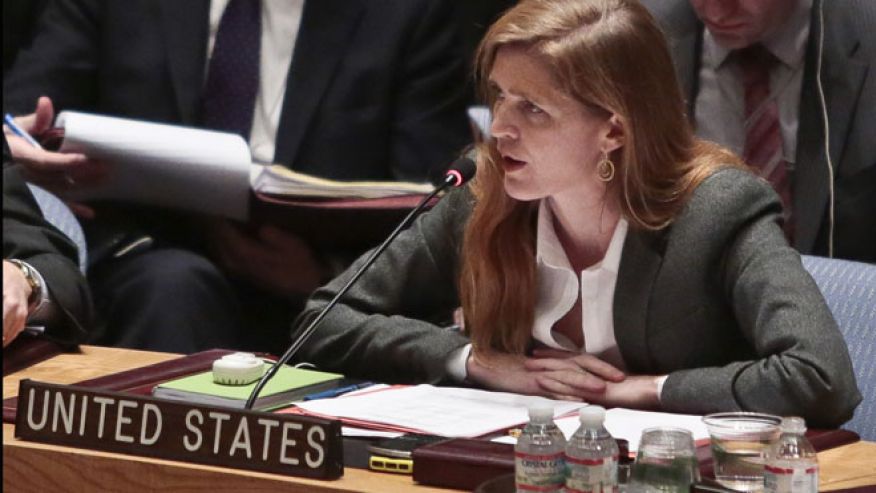
Here is a review of “Who’s New” and the misrepresentation of the facts in the media. Note that statistics, while often easily distorted, can still say a lot. In an area like the Middle East, it is amazing that they are rarely discussed.

A common narrative (which has merit) is that Jews came to Israel en masse after the English took control of the entire region of Palestine (which includes today’s Jordan). That statement, however, is incomplete.

  1. Jews have always lived in Palestine
  2. Jews moved to Palestine in great numbers under the Ottomans
  3. Muslims did not move to Palestine under the Ottomans

In 1800, there were approximately 7,000 Jews in the region of Palestine. It is not a big number, and they accounted for about 3% of the population at that time.

Between 1800 and 1890, the population of Jews jumped to 57,000, then accounting for 8% of the population. Their numbers continued to grow under the Ottomans, with an estimated 94,000 Jews in 1914, or 14% of the population.

The population of Muslims and Christians during these time intervals barely moved. The Muslim population grew 113% over those 114 years, or a compounded annual growth rate (CAGR) of 0.7%. That is roughly the rate of natural growth (births minus deaths) which suggests that NO Muslims moved to Palestine for 114 years of Ottoman rule.

The Christian population grew at twice the rate of Muslims – 218% (vs. 113% for Muslims). To say that all of those Christians were Arabs would be surprising as one would expect the growth rate of both groups of Arabs to be roughly the same.

The Jewish growth in the region over the last 114 years of Ottoman rule was 1,243% – many multiples of Muslims and Christians. It clearly did not take the Balfour declaration in 1917 to get Jews to move to Palestine. They were historically (pre-1914) the only group who did move there.

4.  Arabs moved to Palestine in greater numbers than Jews during the British Mandate

Say that again?

While the common Arab narrative is that Jews came to Palestine under the British to do a “land grab”, and all of the Arabs were living in Palestine for centuries, the statistics do not support the claim.

For Jews, the Third Aliyah (1919-1923) brought about 40,000 Jews and the Fourth Aliyah (1924-1928) another 80,000 Jews to Palestine. About 15,000 Jews left Palestine due to the economic hardship at that time, meaning a total of about 105,000 Jews immigrated over the decade. The Fifth Aliyah was the most dramatic (1929-1939), bringing about 250,000 Jews. The Arab riots of 1936-9 basically shut down Jewish immigration to 75,000 people, so in total there were about 420,000 Jews who moved to Israel under the British.

The Arab narrative completely ignores the mass immigration of Arabs that happened under the British. From 1914 to 1949 (after the Israel War of Independence), the Muslim population grew to 1.18 million. That means that after over a century of 0.7% growth (and even lower 0.6% annual growth in 1890-1914), the Muslim population jumped to 2.3% annual growth. Put another way, the Muslim population was 540,000 people larger in 1949 than one would have assumed using all historical norms. So while the Arabs may point to the roughly 420,000 Jews who migrated from Europe, Russia and Yemen, they deliberately ignore the half of a million Muslims who moved from Egypt, Iraq and around the Middle East to Palestine under the British.

So who was new to Israel/Palestine? Who moved there under the British Mandate? Everybody. About 540,000 Muslims, 60,000 Christians and 420,000 Jews.

Which is all fine and good. But it is a lie to state that all Palestinian Arabs lived in their homes for centuries and Jews were “colonialists” brought by the British. There were more Muslims that moved to Palestine between 1914 and 1949 than Jews.

Consider further that the figures above net out over 300,000 Arabs that left Israel during the 1948 War to Lebanon, Syria and Jordan, which would suggest that Muslim immigration was twice that of Jewish immigration under the British.


Who knew?

Hope versus Hate. The Anthems of Different Peoples.

In the two and one-half weeks since three Israeli teenagers were kidnapped, the government of Israel dispatched hundreds in search parties to find the boys, called “Operation Brothers’ Keeper.” The citizens of the country, and Jews and civilized people around the world, hoped and prayed for the boys’ safe return. The reactions were emblematic of Israel’s culture: to actively pursue – by physical and metaphysical means – a better future. A future that includes life and peace for its entire people.

The reaction from Israel’s Arab neighbors was also emblematic of their culture. Hamas spokesman Khaled Mashaal said “If it turns out the kidnapping really happened, I welcome it.” The mother of one of the men accused of the kidnapping, Amer Abu Aysha, said that “If he truly did it – I’ll be proud of him till my final day.”

Those sentiments of hatred can be found throughout the Arab and Muslim Middle East in their national anthems. Country after country have songs calling for death, vendetta and martyrdom, as seen in the video below. These are not army marching songs, but the values that are instilled in the people every day before soccer matches and graduations. Here is a small sample:

We all sacrifice for you, we supply you with our blood” – UAE

Our martyrs’ souls are formidable guardians” – Syria

We will drink from death” – Iraq

Palestine is my vendetta and the land of withstanding” – Palestinian Authority

A life of dignity and a death of glory” – Tunisia

We never betray the call for sacrifice, death” – Sudan

On our dead we build glory” – Algeria

May God take my life” – Turkey

We are your sacrifices” – Libya

Remember through my joy, each martyr” – Yemen

The Kurdish youth are ever-ready And always prepared to sacrifice their lives To sacrifice their lives, to sacrifice their lives” – Kurdistan

These aspirations stand in sharp contrast to the national anthem of the Jewish State of Israel, a democracy in the middle of the Middle East.  Israel’s anthem is called “Hatikva”, which means “The Hope”.

Our hope of 2000 years is not lost. To be a free people in our land- the land of Zion and Jerusalem.”

Double Standards: Assassinations

The United States Court of Appeals for the Second Circuit released a long-secret memo in which the Obama administration laid out its legal reasoning for launching a drone attack on an American citizen overseas. The legal arguments for a targeted killing of an American citizen are greater than for a non-American, since the US citizen is entitled to due process in the court system, whereas a non-American is afforded fewer protections under the law.

The main justification presented in the memo revolved around the targeted person’s “continued and imminent threat of violence or death” to US persons. This justification received little debate in the press, congress or world opinion. All of the debates only revolved around the rights of due process for a US citizen.

The lack of debate would lead one to naturally conclude that everyone agrees with the rationale: that a government is responsible for protecting citizens that are threatened.

However, world opinion does not believe that such rationale is a universal responsibility. World bodies selectively believe that one government has neither the right nor the responsibility to protect its citizens. That government is Israel.

Consider the world reaction to the targeted killing of leading terrorists. The world celebrated the 2011 US assassination of Osama bin Laden, but almost uniformly (Australia was an exception) condemned Israel for the 2004 killing of Sheik Ahmed Yassin, the founder of Hamas.

Sheik Yassin had committed 100 attacks which killed hundreds of people in Israel. He had just completed a terrorist attack in Ashdod and was actively planning new attacks when he was killed. Osama bin Laden had committed a few attacks which killed thousands, and had not committed any recent attacks when he was killed by US special forces.

Below is a sampling of contrasting reactions from world leaders to the two events.

Now consider why Israel often ignores world opinion.

United Nations:

UN Secretary-General Kofi Annan: “I condemn the targeted assassination of Ahmed Yassin. Such actions are not only contrary to international law but they do not help the search for a peaceful solution.

UN Secretary-General Ban Ki-moon hailed Osama bin Laden’s death as a key turning point in the struggle against terrorism.

EU:

EU foreign policy chief Javier Solana, described the assassination as “very, very bad news. The policy of the European Union has been consistently condemnation of extra-judicial killing.”

EU foreign policy chief Catherine Ashton said: “I would like to congratulate the U.S., pay tribute to its determination and efficiency in reducing the threat posed by terrorists and underline the close cooperation between the EU and U.S. in the fight against terrorism.”

Vatican:

The Holy See unites with the international community in deploring this act of violence that cannot be justified in any state of law. Lasting peace cannot come from a show of force.”

Vatican spokesman Fr. Federico Lombardi said that while Christians “do not rejoice” over a death, bin Laden’s death serves to remind them of “each person’s responsibility before God and men” and “bin Laden must answer to God for having killed an innumerable number of people and exploiting religion”.

UK:

British Foreign Secretary Jack Straw said: “Israel is not entitled to go in for this kind of unlawful killing and we condemn it. It is unacceptable, it is unjustified and it is very unlikely to achieve its objectives.”

Prime Minister David Cameron said that bin Laden’s death would “bring great relief” around the world. “I congratulate President Obama and those responsible for carrying out this operation.”

France:

French President Jacques Chirac “unreservedly condemned” Israel’s assassination of Hamas terror leader Yassin. French Foreign Ministry spokesman Herve Ladsous also said: “France condemns the action taken against Sheikh Yassin, just as it has always condemned the principle of any extra-judicial execution as contrary to international law.”

French Foreign Minister Alain Juppé said on that bin Laden’s death is a “victory for all democracies fighting the abominable scourge of terrorism. France, the United States and European states work closely together to fight terrorism, so I’m overjoyed at the news.”

French President Nicolas Sarkozy said bin Laden’s death was a result of a “remarkable U.S. commando” operation. “For his victims, justice has been done. Today, in France, we think of them and their families.”

Germany:

German Foreign Minister Joschka Fischer: “The German government is deeply concerned about the development [killing of Sheik Yassin].”

German Chancellor Angela Merkel: “Last night, the forces of peace were able to report a success [killing of bin Laden].”

Norway:

Norwegian Foreign Minister Jan Petersen: “This act will contribute to increased tensions in the area and will make it more difficult to implement an Israeli withdrawal from Gaza.”

Norwegian Foreign Minister Jonas Gahr Støre called the death of bin Laden “a break-through in the fight against terror”.

Denmark:

Foreign Minister Per Stig Moeller said “Terror and violence is not the way ahead.”

Danish Prime Minister Lars Løkke Rasmussen said, “I congratulate President Obama and the American people with the success in finishing the era of bin Laden’s unscrupulous and inhumane violence and destruction

Japan:

Japan’s Chief Cabinet Secretary Yasuo Fukuda said Israel’s actions were “thoughtless and reckless, and cannot be justified.”

Japan’s Foreign Minister Takeaki Matsumoto said today that the country welcomed the death of Osama bin Laden as “significant progress of counter-terrorism measures. I pay respect to the US officials concerned.”

 USA:

United States Representative to the United Nations John Negroponte stated that the USA was “deeply troubled by this action by the Government of Israel

Secretary of State Hillary Clinton said “There is no better rebuke to al Qaeda and its heinous ideology. The fight continues and we will never waiver.”

Brazil:

The Brazilian government said it “deplored the murder of Sheik Ahmed Yassin.”

Brazilian Foreign Minister Antonio Patriota said the death of Al Qaeda’s leader Osama bin Laden is “important and positive”.

Malaysia:

Malaysia strongly condemned the assassination of Sheikh Ahmed Yassin: saying the action was a manifestation of terrorism.

Malaysian Home Minister Hishammuddin Hussein said he hopes that the death of bin Laden would help bring universal peace and harmony.

Mexico:

LUIS ALFONSO DE ALBA GÓNGORA said his country regretted the actions taken by the Israeli army which had resulted in the loss of Sheikh Yassin. Mexico believed these actions broke down the necessary political conditions needed to put an end to escalating violence and to ensure peace in the region. It recognized the right to the self-determination of the Palestinian people, urged the international community to apply the Road Map, and urged the parties not to take unilateral decisions that placed obstacles in front of the road to peace. Societies had the right to live in peace. The protection of the rule of law and respect for human rights was essential to eradicate these acts. The Security Council must take a stance against international terrorism and the international community must continue together to endow the United Nations to guarantee that human rights and fundamental freedoms must be recognized fully

Mexico Ministry of Foreign Relation: The Government of Mexico reiterates its deep conviction that terrorism is a criminal activity that must be fought decisively by the international community because it represents a serious threat to global peace and stability and causes many innocent lives to be lost. That’s why the Government of Mexico recognizes the efforts carried out by the Government of the United States to fight against and capture Osama Bin Laden, the leader of the Al Qaeda terrorist organization. These efforts have resulted in his defeat and death during an operation by U.S. armed forces in Pakistan. This is an act of great significance in the efforts to rid the world of the scourge of terrorism which threatens peace and international security, in particular the one practiced by one of the most cruel and bloody terrorist organizations which has acted against the civilian population and which has caused the loss of many innocent lives, including Mexican citizens in the attacks of September 11th, 2001.

India:

HARDEEP SING. PURI said the killing of Sheikh Yassin had further inflamed passions in the Middle East, and there was concern that it would fuel the cycle of violence and counter-violence in the region, causing a set-back to the efforts to resume the peace process. There could be no military solution to the Middle East problem. States of course had the right to defend themselves, but they also had the responsibility to uphold international law. The people of Palestine deserved the full support of the international community to enable them to realize their national aspirations. There could, of course, be no justification whatsoever for any acts of terror. The international community had to be relentless in fighting the war to eradicate this scourge; no ends could be justified by use of the means of terrorism.

Indian prime minister Manmohan Singh: “I welcome it as a significant step forward and hope that it will deal a decisive blow to Al Qaeda and other terrorist groups. The international community and Pakistan in particular must work comprehensively to end the activities of all such groups who threaten civilized behavior and kill innocent men, women and children.”

Australia:

CAROLINE MILLER said Australia had consistently supported Israel’s right to defend itself from terrorism. Hamas was a terrorist organization proscribed under the Australian law. It had used suicide bombers to target and murder many innocent Israelis. Australia urged calm and called on both sides to exercise maximum restraint. Violence would not settle the Middle East dispute.
Australian Prime Minister Julia Gillard congratulated the United States on the operation and said she acknowledges the role of Pakistan in the fight against terror.  “Our fight against terrorism does not end with bin Laden’s death. We must remain vigilant against the threat posed by al Qaeda and the groups it has inspired,” she said.

New Zealand:

JILLIAN DEMPSTER said the use of extra-judicial killings by a State was particularly abhorrent. Assassinations such as the extra-judicial killing of Hamas spiritual leader Sheikh Yassin clearly violated the norms of international human rights law. Not only that, but they did not achieve their stated goal, were counter-productive to peace efforts in the Middle East, and would likely only produce further violence.

New Zealand Prime Minister John Key stated that “the world is a safer place without Osama bin Laden”, but “bin Laden’s death may not mean an end to terrorism    

South Africa:

DUDU KHOSA said that her country condemned the assassination of Sheikh Ahmad Yassin, founder and spiritual leader of Hamas. Such extra-judicial killings constituted a contravention of international law and relevant United Nations conventions, and only strengthened those not committed to achieving peace in the Middle East. Such acts could only lead to retaliation and counter-retaliation, further eroding any progress being made in the implementation of the Road Map.

South Africa Department of International Relations and Cooperation reaffirmed South Africa’s support for stemming “the demon of terrorism in all its manifestations

Russia:

VLADIMIR PARSHIKOV said the Russian Federation supported the proposal to hold the special sitting since it was concerned about the worsening situation in the Middle East in general. The recent acts committed by Israel were a serious threat to the Road Map to peace and these acts of violence would nullify every effort taken by the Quartet. Both parties must show restraint and a high level of responsibility to commit themselves to peace. The Russian Federation would also vote in favour of the proposed draft resolution of the Security Council condemning all acts of terrorism including those committed recently by Israel.

Russia’s Foreign Ministry published a statement on its website calling bin Laden’s death a “landmark point… The elimination of Osama bin Laden, a notorious figure and the number one terrorist, is a landmark point in fighting international terrorism. This is an extraordinary event for the entire anti-terror coalition which will have a lasting practical meaning in terms of decapitation of the criminal organization,” the statement said. “It will become an important symbol since it took place on the eve of the 10th anniversary of the September 11, 2001 terror attacks in the U.S. As part of the anti-terror coalition, we sympathize with the Americans, and appreciate the fact that the Russian authorities were informed about the news (of bin Laden’s elimination) ahead of the official announcement of U.S.President Barack Obama.”

China:

SHA ZUKANG said the act of assassination by Israel was strongly condemned in the belief that the practice of targeted liquidation was not conducive to the settlement of the Middle East issue, rather, it would trigger more conflicts and bloodshed and further destabilize the region.

Chinese spokesman: We have noted the announcement and believe this is a major event and a positive development in the international struggle against terrorism.

Sri Lanka:

SARALA M. FERNADO said extra judicial killings were in contravention to international law and should be condemned in no uncertain terms by peace-loving countries. Terrorism brought immense pain to innocent civilians, broke social systems, generated hatred and darkened the future of the generations to be born. For a peaceful resolution to the Middle East conflict, all parties should exercise restraint and refrain from any form of violence, as these only contributed to diminish hopes for a lasting peace.

External Affairs Minister G.L. Peiris congratulated the US and said: “the killing of the terrorist leader [bin Laden] by US forces sends a warning to other terror groups as well.” Cabinet Minister de Silva added: the assassination “sheds a lot of light on how a ruthless terrorist group should be crushed.”

Turkey:

Prime Minister Recep Erdogan called the killing of Yassin “a terrorist act” and said that “the assassination was not humane.”

President Abdualla Gul declared that the killing of bin Laden was a message for terrorst organizations all around the world.

Saudi Arabia:

ABDULWAHAB ABDULSALAM ATTAR said that Israel had no use for the resolutions adopted by this august Commission, nor for the Geneva Conventions. The assassination of Sheikh Yassin was a crime. Israel also tortured detainees and prisoners in contravention of international law. The international community was urged to put an end to such crimes, including that committed against Sheikh Yassin. This criminal act must be deplored in this forum. Otherwise, the Commission risked losing its credibility. Full solidarity with the sufferings of the Palestinian people must also be expressed.

Statement on Saudi Press Agency: “An official source has expressed the hope of the Kingdom of Saudi Arabia that the extermination of the terrorist head of Al Qaeda is a step towards the reinforcing of the international efforts to combat terror and breaking up its cells. And the extinguishing of the misleading school of thought it rests on.

Yemen:

MANAF AL-SALAHI said his country condemned the escalating Israeli policies which had taken a dangerous turn with the assassination of last week which was a clear violation of international norms and laws. This act may bring the region into spiralling violence. The peace process as a whole had reached a stalemate and it would be difficult for the peace process to be revived unless the international community pursued the road to peace in a strict way.

Embassy of Yemen in the U.S. released a statement welcoming “the elimination of Usama Bin Ladin, the founding father of the Al-Qaeda’s terrorist network. The successful operation, spearheaded by U.S. forces, marks a monumental milestone in the ongoing global war against terrorism.”

Iran:

MOHAMMAD REZA ALBORZI said the international community had once again been witness to yet another act of brutality and barbarism and extra-judicial targeted assassination by Israel. The relentless massacre of Palestinians and targeted assassinations were strongly condemned, as these acts were clear instances of State terrorism, which further revealed the violent face of the Israeli Government before the international community. That these atrocities were perpetrated at the very time when the Commission was in session clearly manifested Israeli continued defiance of this body and was an appalling affront to the Commission’s credibility. It was high time that the Commission considered some sort of preventative mechanism to bring an end once and for all to the continued Israeli aggression against the Palestinian people.

Iran Foreign Ministry:  The Islamic Republic of Iran hopes that the death of Osama bin Laden will put an end to war and the killing of innocent people and restore peace to their region, according to the Islamic Republic News Agency. The IRNA website reports Foreign Ministry spokesman Ramin Mehmanparast said, “The Islamic Republic of Iran believes that foreign countries now have no excuse for military buildup in the region to fight terrorism.”

 Jordan:

SHEHAB A. MADI said the assassination of Sheikh Yassin was a crime that would only lead to further escalation, violence and instability in the region. It was another crime against the Palestinian people and a clear violation of all norms and international conventions. The policy of assassination which led only to more escalation and violence was totally rejected.

Jordan said the killing of al-Qaeda leader Osama bin Laden is likely to end unjust campaigns in the West against Islam.

Morocco:

OMAR HILALE said his country strongly condemned the assassination of Sheikh Ahmad Yasssin and other civilians by Israel. This would have dangerous consequences that would destabilize further the region. Morocco rejected violence and everyone should return to the negotiating table. It was the responsibility of the international community to condemn Israeli acts.

Communications Minister Khalid Naciri said that “the entire world suffered from bin Laden and the organization he created“.


In total, 31 countries voted in favor of a UN Commission on Human Rights resolution “Which Condemns Continuing Grave Violations Of Human Rights in Territory, Including Tragic Assassination of Sheikh Yassin”: Argentina, Armenia, Bahrain, Bhutan, Brazil, Burkina Faso, Chile, China, Congo, Cuba, Egypt, Eritrea, Ethiopia, India, Indonesia, Mauritania, Mexico, Nepal, Nigeria, Pakistan, Paraguay, Qatar, Russian Federation, Saudi Arabia, South Africa, Sri Lanka, Sudan, Swaziland, Togo, Uganda, and Zimbabwe.

Despite condemning Israel for killing an active terrorist, these countries extolled the US doing the same thing:

Argentina President Cristina Fernández de Kirchner said “Bin Laden’s activities are repudiated by all people and nations who truly believe in the dignity of the human condition, and we stand in support of all his victims.”

Chile President Sebastián Piñera said he was “glad that the whole world learned that, though late, justice arrives, and that crimes committed against innocent people around the world will not go unpunished.”

Ansyaad Mbai, the head of Indonesia’s counter-terrorist agency, said that bin Laden’s death “would bring positive impact” and that “it would reduce movements organized by radical groups since their main figure had died.”

Ethiopian Communication Department said “The Ethiopian Government salutes all parties involved in this operation, particularly the US anti-terrorist operatives, for hunting and destroying this unrepentant leader of an international terrorist organization.”

Eyal Gilad Naftali Klinghoffer. The new Blood Libel.

A troublesome series of reports in major “liberal” media outfits like the New York Times and BBC have shown a pattern of “blame the victim” uniquely when it comes to Jews and Israel.

Consider the BBC’s Nicky Campbell’s coverage of the kidnapping of three Israeli teenagers, Eyal Yifrach, Gilad Shaer and Naftali Frankel, in Judea & Samaria arguing that “Palestinians would say perhaps these people were in the West Bank illegally.” He then continued to discuss Arabs in Israeli jails to “give [the kidnapping] some perspective” as if the comments provided any justifications for the kidnapping of teenagers trying to get home from school. (I suppose Nicky would support Iraqis kidnapping his daughters because of the UK involvement in the Iraqi war.)

The New York Times followed on June 16 when it posed several questions regarding “the cavalier practice of hitchhiking” in the West Bank. Was the NYT suggesting that these boys were responsible for their own kidnapping?

The hitchhiking abduction coverage was not unique. The New York Times ran an editorial on 6/19/14 bemoaning that the New York Metropolitan Opera, “bowing to the wishes of Leon Klinghoffer’s daughters and other Jewish critics,” decided to not globally telecast an opera about the murder of a 69-year old American Jew by Palestinian terrorists. The Times thought that “the opera gives voice to all sides” as if the rationale of the murder of an elderly American confined to a wheelchair was worthy of serious consideration. The general manager of the Met, Peter Gelb, said that the composer “John Adams said that in composing ‘The Death of Klinghoffer’ he tried to understand the hijackers and their motivations, and to look for humanity in the terrorists.” Gelb and the Times have called the opera “a masterpiece”. I am considering the right term for the Met and the Times.

Somehow, these outlets believe that Jews bare at least partial responsibility for the crimes committed against them: Jews are not victims; they are vehicles to voice displeasure of the state of the Palestinian Arabs.

To illustrate and contrast the vileness of this targeting of Jews and Israel by these media outlets, consider the coverage of other crimes during this same time period.

The New York Times covered the sexual assaults of women in Egypt during the celebrations for new President Abdul Fattah al Sisi with appropriate disgust. It ran articles, editorials and op-eds that condemned the attacks. The Times did not run articles questioning why the women were out late among so many men. The paper did not suggest that the women were dressed inappropriately. It did not post articles by Egyptian clerics who describe the value of modesty for women and the inappropriateness of their being out among men. Because if the paper had done so, it would have served to validate the disgraceful attack and place blame on the victim.

Similarly when a young man, Elliot Rodger, went on a shooting rampage in California because he felt rejected by girls in his school, the papers did not post opinions that girls should be nicer to young men and consider their feelings. As is clearly obvious, doing so would be an insult to all of the innocent victims of the rampage.

The daughters of Leon Klinghoffer, Lisa and Ilsa, put it best in their letter to the editor of the New York Times on June 21: “Our 69 year-old father was singled out and killed by Palestinian terrorists on his wedding anniversary cruise in 1985 solely because he was Jewish. His memory is trivialized in an opera that rationalizes terrorism and tries to find moral equivalence between murderers and the murdered. Imagine if Mr. Adams had written an opera about the terrorists who carried out the 9/11 attacks, and sought to balance their worldview with that of those who perished in the twin towers. The outcry would be immediate and overwhelming. But ‘Klinghoffer’ is justified as ‘a work of art’ and an opportunity to ‘debate’ the Israeli-Palestinian conflict. This is an outrage.”

The media’s blind spot for Jewish victims in its visual field have left Jews in the dark ages of history once again. The “progressives” are developing a new Blood Libel, in which every Jew has a hand soaked in the misfortune of Arabs. They have turned the State of Israel into a new blood matzah, conceived and living in sin.  During the Dark Ages, Jews were accused of taking missing Christian children.  At present, the progressive press blames Jews for their own missing and felled Jews – sacrifices that must be made to uphold the evil Jewish State.

Can anything right the “left”? If the Royal Ballet were to perform “The Untimely Fall of Lee Rigby” with beautiful arias about the sorrowful tale of Michael Adebolajo and Michael Adebowale, the two people who were sentenced to life in prison for Rigby’s murder, would the press react? Would the British press cheer the “work of art” and celebrate the “humanity in the terrorists” who hacked a soldier to death on the streets of England to avenge the killing of Muslims by British forces? The Klinghoffer daughters believe the “outcry would be immediate and overwhelming,” from the press and public. While I agree, I fear that it would not cause progressives to rethink their attitude towards Jews. The new Blood Libel has caught hold.


Related FirstOneThrough articles:

The Death of Civilians; the Three Shades of Sorrow

UN Comments on the Murder of Innocents: Itamar and Duma

Israel lends a hand. Will it be offered one as well?

In May, Israel joined the US, Canada, France and England in providing support to Nigeria in its efforts to find the over 200 teenaged girls abducted by Boko Haram. “Israel expresses deep shock at the crime against the girls,” Netanyahu told the Nigerian president, “We are ready to help in finding the girls and fighting the cruel terrorism inflicted on you.”

Israel has a long history of providing aid to countries in trouble – even those where it does not have diplomatic relations, as seen in the video below.

It will be interesting to see if the world exerts pressure on, and withholds aid to the new Palestinian government, in light of the recent abduction of three Israeli teenagers. However, when one considers that only five of the 193 UN countries are helping Nigeria, one should temper expectations.

https://www.youtube.com/watch?v=mau1uaIGLo8