The UN’s Disinterest in Jewish Rights at Jewish Holy Places

On September 17, 2015, acting-President of the Palestinian Authority Mahmoud Abbas called out to Arabs who were fighting against Jews visiting the Temple Mount, the holiest place for Judaism, on Rosh Hashanah, one of the holiest days in the Jewish calendar:

We bless you, we bless the Murabitin (those who carry out religious war for land declared to be Islamic), we bless every drop of blood that has been spilled for Jerusalem, which is clean and pure blood, blood spilled for Allah.  Allah willing, every martyr will reach paradise, and everyone wounded will be rewarded by Allah.

The Al Aqsa is ours, the Church of the Holy Sepulchre is ours, and they have no right to defile them with their filthy feet.  We will not allow them to, and we will do everything in our power to protect Jerusalem.”

abbas video
Acting PA President Abbas called for Arabs to defend Jerusalem
September 17, 2015

These Arabs that Abbas was referring to, had brought stones to protest Jews visiting the Temple Mount and the ban on religious extremist who taunted and prevented Jews from visiting their holy sites.

The United Nations Response

The UN Security Council (UNSC) issued the following statement about the situation:

The members of the Security Council expressed their grave concern regarding escalating tensions in Jerusalem, especially surrounding the Haram al-Sharif compound, including recent clashes in and around the site.

The members of the Security Council called for the exercise of restraint, refraining from provocative actions and rhetoric and upholding unchanged the historic status quo at the Haram al-Sharif — in word and in practice.  The members of the Security Council called for full respect for international law, including international human rights law and international humanitarian law, as may be applicable in Jerusalem.

The members of the Security Council urged all sides to work cooperatively together to lower tensions and discourage violence at holy sites in Jerusalem.

The members of the Security Council appealed for the restoration of calm and called for full respect for the sanctity of the Haram al-Sharif, noting the importance of the special role of Jordan, as confirmed in the 1994 peace treaty between Jordan and Israel, and encouraged increased coordination between Israel and Jordan’s Awqaf department.  The members of the Security Council underscored that Muslim worshippers at the Haram al-Sharif must be allowed to worship in peace, free from violence, threats and provocations.  The members of the Security Council further underscored that visitors and worshippers must demonstrate restraint and respect for the sanctity of the area and for maintaining the historic status quo at the holy sites.  The members of the Security Council urged that the status quo of the Haram al-Sharif should be maintained and visitors should be without fear of violence or intimidation.

The members of the Security Council called for the immediate cessation of violence and for all appropriate steps to be taken to ensure that violence ceases, that provocative actions are avoided and that the situation returns to normality in a way which promotes the prospects for Middle East peace between the Israelis and the Palestinians.”

The response is outrageous and emblematic of Israel’s treatment at the United Nations:

  1. “Haram al-Sharif”, not Temple Mount.  The UNSC claims that it cares about the sanctity of the “holy sites in Jerusalem”, but it does not even mention the name of the platform, built 2000 years ago to ease access to Jews at the Temple. The platform is the “Temple Mount”- not mentioned once – while the Muslim name for the location is mentioned four times.
  2. Ignoring Arab incitement and Israel’s calls for peace. As noted above, PA’s Abbas called for Arabs to fight for Al Aqsa, while Israeli Prime Minister Benjamin Netanyahu called for maintained the status quo of banning Jewish prayer on the Mount. Yet no specific UNSC rebuke of Abbas’s rhetoric was made in their call for calm, nor appreciation for Netanyahu’s call for calm.
  3. Special role of Jordan” mentioned, but what of the role of Israel? The 1994 Peace Treaty between Israel and Jordan called for the Jordanian Waqf to be the trustee of the Temple Mount, but security remained with Israel.  Why did the UNSC deliberately omit that Israel is in control of the security of the site and was deploying troops to stop Muslim extremists from attacking visiting Jews?
  4. “Muslim worshippers”, but not Jews. In case any of the language was not clear, the UNSC is solely concerned with Muslims on the Temple Mount. The constant attack on Jewish visitors gets no mention at all, even after mentioning the Jordanian-Israel 1994 Peace Treaty which specifically states that “Each party (Jordan and Israel) will provide freedom of access to places of religious and historical significance.

The UNSC voice of concern for: only Muslims and not Jews; using the Islamic name for the holy site, not Jewish; and referring to Jordan’s role at the site and not Israel’s, was clearly and specifically meant as a rebuke and warning to Israel and Jews. The most powerful global body told Israel on the Jewish New Year: do not mess with this Islamic site. Judaism is foreign. Jews are intruders.

Jews may protest that: the Temple Mount is its holiest site; that international law and treaties state that Jews have complete access to the site; and that Israel controls security on the site. Those facts are irrelevant to the UNSC.

The inversion of history past and present; provocation and reaction; rights and absence of rights has always been rife at the United Nations when it comes to Israel.  These days, as the world watches extremist Islam rampage throughout the Middle East, the UN will seemingly further prioritize placating Iran, Syria, Saudi Arabia and other Islamic extremists over the fundamental rights of Jews in Israel.

One can expect to see much more in the coming weeks when the UN circus comes to town.


Related First One Through articles:

The United Nations “Provocation”

The United Nations and Holy Sites in the Holy Land

Names and Narrative: CNN’s Temple Mount/ Al Aqsa Complex Inversion

The Waqf and the Temple Mount

Joint Prayer: The Cave of the Patriarchs and the Temple Mount

The Arguments over Jerusalem

Subscribe YouTube channel: FirstOneThrough

Join Facebook group: FirstOne Through  Israel Analysis

UN Comments on the Murder of Innocents: Itamar and Duma

The Middle East is unfortunately no stranger to attacks on innocent people. In July 2015, an arson attack on the home of Palestinian Arabs in the town of Duma killed an 18-month old baby. Just 15 miles away, in the town of Itamar, two Palestinian Arabs stabbed to death five members of a Jewish family in their beds in March 2011.

The taking of innocent lives is a terrible thing. It is also sad to watch completely different reactions from world bodies to the two events. Here is the UN news release of the 2011 deliberate murders of five Israeli Jews and the news release of July 2015 on the arson attack that claimed one Palestinian Arab. A short comparison:

Deliberate Murder of 5 Israeli Jews Arson Attack which Claimed Life of 1 Palestinian Arab
Words in article 220 422
Attack called “terrorism” None Three times
Blame placed Not placed on Arabs or Muslims Placed on “Jewish extremists
Other Attacks Mentioned No mention of repeated attacks by Palestinians on Israelis Discussed “repeated acts of settler violence
Comment on leadership Welcomes the strong condemnation… by President Abbas No welcome of condemnation by Netanyahu. Blamed Netanyahu for variety of items including demolishing Palestinian homes and settlement policy.
Cause for Attack Not discussed Blamed on “Israel’s illegal settlement policy

#JewishLivesMatter

The continued disproportionate attacks by the United Nations on only one party in the Israeli-Palestinian conflict will marginalize the UN as a factor in arriving at a long-term solution in the region.

Ban Ki Moon
UN Secretary-General Ban Ki-Moon
(photo: AP/Gary Cameron)


Sources:

Text of UN March 2011: “12 March 2011 – Secretary-General Ban Ki-moon and the United Nations diplomatic partners in the search for peace in the Middle East today condemned the shocking murder of an Israeli family of five, including three children, in a West Bank settlement overnight and called for the prosecution of the perpetrators of the crime.

Mr. Ban also urged all concerned to act with restraint.

The diplomatic Quartet of the UN, European Union, Russia and United States, which seeks a two-State solution to the Israeli-Palestinian conflict, condemned the killings “in the strongest possible terms.”

“The Quartet offers their condolences to the loved ones of the victims and to the Israeli people. Attacks on any civilians are completely unacceptable in any circumstance,” the Quartet said in a statement.

“The Quartet calls on those responsible to be brought to justice and welcomes the strong condemnation of this attack by [Palestinian] President [Mahmoud] Abbas and the Palestinian leadership.”

It stressed the need to expedite efforts to achieve Israeli-Palestinian and comprehensive Arab-Israeli peace.

Media reports said the killings occurred in the settlement of Itamar, near the city of near Nablus. The victims were reportedly stabbed to death by an intruder who broke into their home.

The Israeli army radio said the killer had spared two other children, and that the murder was discovered by another one when she came home.”

Text of UN July 2015: “31 July 2015 – United Nations Secretary-General Ban Ki-moon and the UN special envoy on the Middle East have strongly condemned today’s arson attack in the West Bank that killed a Palestinian child and left the child’s parents severely injured.

The Secretary-General strongly condemns today’s murder of a Palestinian child in the West Bank and calls for the perpetrators of this terrorist act to be promptly brought to justice,” reads a statement issued by his spokesperson in New York.

Continued failures to effectively address impunity for repeated acts of settler violence have led to another horrific incident involving the death of an innocent life, adds the statement. “This must end.”

The absence of a political process and Israel’s illegal settlement policy, as well as the harsh and unnecessary practice of demolishing Palestinian houses, have given rise to violent extremism on both sides, the statement continues.

“This [situation] presents a further threat to the legitimate aspirations of the Palestinian people for statehood, as well as to the security of the people of Israel. The Secretary-General urges both sides to take bold steps to return to the path of peace.”

Mr. Ban reiterates his call on all parties to ensure that tensions do not escalate further, leading to more loss of life, the statement concludes.

Earlier today, the United Nations special envoy on the Middle East today expressed his outrage over what he called a “heinous murder” and a “terrorist crime.”

“I am outraged by today’s vicious arson attack by suspected Jewish extremists in the Occupied West Bank village of Duma, near Nablus, which killed Palestinian toddler Ali, critically injured his mother and father, and injured his four-year old sibling,” the Special Coordinator for the Middle East Peace Process, Nickolay Mladenov, said.

Joining in the “strong condemnations” issued by Israeli and Palestinian Governments and political leaders, the Special Coordinator also called for a “full and prompt investigation” to bring the perpetrators to justice.

“This heinous murder was carried out for a political objective. We must not permit such acts to allow hate and violence to bring more personal tragedies and to bury any prospect of peace. This reinforces the need for an immediate resolution of the conflict and an end to the occupation.”

Later today, the Security Council issued a statement to the press, condemning “in the strongest terms” the “vicious terrorist attack,” and underlining the need to bring the perpetrators of this “deplorable act” to justice.

Council members encouraged all sides to work to lower tension, reject violence, avoid all provocations, and seek a path toward peace.”


Related FirstOneThrough articles:

The United Nations Audit of Israel

Double Standards: Assassinations

Every Picture Tells a Story: The Invisible Murdered Israelis

The Legal Israeli Settlements

The Death of Civilians; the Three Shades of Sorrow

Eyal Gilad Naftali Klinghoffer. The new Blood Libel.

Cause and Effect: Making Gaza

Subscribe YouTube channel: FirstOneThrough

Join Facebook group: FirstOne Through  Israel Analysis

Has the “Left-Wing” Joined the UN in Protecting Iran and the Palestinians from a “Right-Wing” Israel?

The left-wing Israeli newspaper Haaretz published an article in May 2015 questioning Israel’s nervousness over a possible deal regarding Iranian nuclear weapons. It pointed out that another Muslim country, Pakistan, already possessed nuclear weapons and Israel did not object.  However, the paper noted that “though Pakistan is the first Muslim state with a nuclear weapons program, it does not call for Israel’s destruction or sponsor terror attacks against Israel. A nuclear Iran, by contrast, would receive cover to step up its hegemonic ambitions in the region and intensify its support for terrorism against the Jewish state.”  A significant difference.

The parameters of the final Iran deal made many people question whether Iran would be able to advance a nuclear weapons program immediately, as the verification program ultimately was very far from the “anywhere, anytime” stated goal that would have better ensured Iranian compliance.  The plan left wide open the possibility that Iran could “break-out” with nuclear weapons in a decade.

Putting aside the question of if-and-when Iran obtains nuclear weapons for a moment, the following deal points are clear:

Unlike the core issue of Iran potentially having nuclear weapons, these dangerous deal points are not in question.

Ramifications – More Money and Weapons

The US State Department considers Iran a state-sponsor of terrorism.  Specifically, it stated: “Iran has historically provided weapons, training, and funding to Hamas and other Palestinian terrorist groups, including the Palestine Islamic Jihad (PIJ) and the Popular Front for the Liberation of Palestine-General Command (PFLP-GC), although Hamas’s ties to Tehran have been strained due to the Syrian civil war.  Since the end of the 2006 Israeli-Hizballah conflict, Iran has also assisted in rearming Hizballah, in direct violation of UNSCR 1701.  Iran has provided hundreds of millions of dollars in support of Hizballah in Lebanon and has trained thousands of its fighters at camps in Iran.  These trained fighters often use these skills in support of the Assad regime in Syria.”

With the execution of this Iranian deal, $150 billion will flow to Iran, some of which, the Obama administration noted, will most likely go towards terrorism.  The deal will also provide a fresh flow of missiles to Iran and likely to Iranian friends on the borders of Israel.

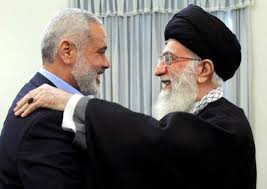
Iran Hamas
Hamas leader Haniyeh and Iranian spiritual head Khamenei

Ramifications – Tighter Border Controls

While Israel’s main fear is a nuclear-armed Iran, the flow of money and missiles to Hamas and other terrorists on Israeli borders are also significant concerns.  The likely Israeli actions to counter these threats will be:

  • Tighter Gaza blockade
  • Permanent security positions along the Jordan Valley
  • Fewer permits with longer delays in allowing Palestinian Arabs to travel to Israel and between territories

The significantly enhanced threats on Israel’s borders – even before factoring in a nuclear Iran – will force Israel to take additional security measures which will harm daily life for ordinary Israelis and Palestinian Arabs.

World Preemptive Action – Stop Israeli Defenses

The global powers voted to approve the Iranian deal and lift the sanctions against Iran, knowing of Israel’s security concerns.  The world has now begun to take additional steps to prevent Israel from protecting itself:

As Israel prepares to protect its citizens from the immediate threats from the Iranian nuclear deal that the United Nations approved, the world prepares to challenge those very defenses that Israel needs to implement, such as the land and sea border controls..

 What is the Goal of all the Negotiations?

These actions beg questions that contradicts the narrative used in the west:

      • was the real goal of the Iranian nuclear deal to protect Iran from a nuclear Israel? The deal includes language that the P5+1 group will “protect against, and respond to nuclear security threats, including sabotage [against the Iranian nuclear program].” Seriously?
      • Has Obama deliberately handed over authority and control of the region to Iran, as he has no desire to put US troops back into the Middle East?

Is the world now taking steps to protect Palestinian Arabs from their perception of a Mr. Right Wing Benjamin Netanyahu of Israel?

The Obama narrative is that the world is safer with the Iranian deal.  In actuality, is the world safer, or is Iran safer? 

President Obama faces an American public that is more wary of Iran and sympathetic to Israel than much of the world, so he is spinning the deal in verbiage that is more accepting to Americans.  Thus far, Americans are buying the pitch, even while they strongly question whether it will work.

Who’s goals are these anyway?

  • The Arab and Muslim world celebrated the advancement of its goals to destroy the west and Israel.  They did not attempt to hide their mission.
  • The left-wing American parties, papers and groups like J-Street have endorsed the Iranian deal, and are pushing Israel to further dismantle its defenses. They are either lying to themselves or the American people about their goals. Perhaps both.

As Jeffrey Goldberg wrote in the Atlantic, “The Iran deal represents one of those rare issues that has unified Israelis of most political parties[including] the left, center, and right.”  In the United States, it has only unified the left-wing with the Iranian dream.


Related First One Through articles:

The New Endorsed Parameters of Peaceful Nuclear Power

The Gap between Fairness and Safety: WMDs in Iraq and Iran

Hidden Reactor, Silent Reaction

Netanyahu’s View of Obama: Trust and Consequences

UN’s Confusion on the Legality of Israel’s Blockade of Gaza

A “Viable” Palestinian State

UN’s Confusion on the Legality of Israel’s Blockade of Gaza

In June 2015, the United Nations issued a report highly critical of Israel’s handling of its war against Palestinian attacks. Throughout the report, the committee suggested that the Israeli blockade of Gaza was a major cause for suffering of Palestinians, rather than a result of Palestinian actions, and helped precipitate the war.

Member of the Commission of Inquiry on the 2014 Gaza conflict Doudou Diene (L) gestures next to Chairperson of the Commission Mary McGowan Davis during a press conference to present their report on June 22, 2015 at the United Nations Office in Geneva. Both Israel and Palestinian militants may have committed war crimes during last year's Gaza war, a widely anticipated United Nations report said on June 22, decrying "unprecedented" devastation and human suffering.   AFP PHOTO / FABRICE COFFRINI

Member of the Commission of Inquiry on the 2014 Gaza conflict Doudou Diene (L) gestures next to Chairperson of the Commission Mary McGowan Davis during a press conference to present their report on June 22, 2015 at the United Nations Office in Geneva.  AFP PHOTO / FABRICE COFFRINI

2015 UN Assertion that
Blockade was Cause for Conflict

In the section of the report that reviewed the background to the 2014 conflict, the report stated that “In the preceding months, there were few, if any, political prospects for reaching a solution to the conflict that would achieve peace and security for Palestinians and Israelis and realize the right to self-determination of the Palestinian people. The blockade of Gaza by Israel, fully implemented since 2007 and described by the Secretary-General as “a continuing collective penalty against the population in Gaza” (A/HRC/28/45, para. 70), was strangling the economy in Gaza and imposed severe restrictions on the rights of the Palestinians.” By way of correction and education to the reader, the naval blockade of Gaza only began in January 2009 (not 2007). The land blockade of Gaza began in 2007 after Hamas routed Fatah from Gaza and took complete control of the region.

It is important and significant to point out that this 2015 report suggested that there were “few POLITICAL PROSPECTS for reaching a solution” and that the “blockade of Gaza.. was strangling the economy” and “imposed severe restrictions” on Palestinians. This directly implied that the Palestinians were seeking a political solution and rightfully frustrated with a blockade that was imposed on them (presumably for no reason).  Therefore, since a political solution was not available, they were forced to pursue a military response.

That is outrageous on many levels.

  1. Hamas has stated clearly in its charter and in addresses by its leaders that it seeks the complete destruction of Israel and that it will never enter peace negotiations. (A fact that was never mentioned in the UN report)
  2. Hamas clearly stated that it would not pursue any “peaceful solutions and international conferences” as seen in its charter, below.
  3. Hamas’s takeover of Gaza in 2007 is never mentioned in the UN report.

Hamas Charter Article 13: “Initiatives, and so-called peaceful solutions and international conferences, are in contradiction to the principles of the Islamic Resistance Movement…. These conferences are only ways of setting the infidels in the land of the Moslems as arbitraters… There is no solution for the Palestinian question except through Jihad. Initiatives, proposals and international conferences are all a waste of time and vain endeavors.

The UN report inverted reality and ignored that the blockade of Gaza was in response to Hamas’s taking over of Gaza and firing thousands of missiles at Israeli civilians.

 2015 UN Report
Call to Remove the Blockade

The UN report concluded with several suggestions which clearly placed the blame for the conflict on Israel’s actions: “The commission calls upon the Government of Israel… to address structural issues that fuel the conflict and have a negative impact on a wide range of human rights, including the right to self-determination; in particular, to lift, immediately and unconditionally, the blockade on Gaza.

This conclusion and suggestion are in stark contrast to the September 2011 UN “Palmer Commission Report” which clearly spoke of the legal nature of Israel’s blockade of Gaza and spoke to the harm and evil intent of Hamas which necessitated the blockade.


2011 UN Report
on LEGAL NATURE of Blockade of Gaza

To start, the Palmer Report correctly identified the different blockades of Gaza and the reason for them: “the tightening of border controls between Gaza and Israel came about after the take-over of Hamas in Gaza in June 2007.  On the other hand, the naval blockade was imposed more than a year later, in January 2009.”

The report continued that “the naval blockade as a distinct legal measure was imposed primarily to enable a legally sound basis for Israel to exert control over ships attempting to reach Gaza with weapons and related goods.  This was in reaction to certain incidents when vessels had reached Gaza via sea.”

The report then continued in greater detail on the “structural issues that fuel the conflict” with specific history (as opposed to simply echoing the Palestinian narrative as it did in the 2015 report): “Israel has faced and continues to face a real threat to its security from militant groups in Gaza.  Rockets, missiles and mortar bombs have been launched from Gaza towards Israel since 2001.  More than 5,000 were fired between 2005 and January 2009, when the naval blockade was imposed.  Hundreds of thousands of Israeli civilians live in the range of these attacks.  As their effectiveness has increased some rockets are now capable of reaching Tel Aviv. Since 2001 such attacks have caused more than 25 deaths and hundreds of injuries.  The enormity of the psychological toll on the affected population cannot be underestimated.  In addition, there have been substantial material losses.  The purpose of these acts of violence, which have been repeatedly condemned by the international community, has been to do damage to the population of Israel.  It seems obvious enough that stopping these violent acts was a necessary step for Israel to take in order to protect its people and to defend itself.

In regard for using a naval blockade to prevent the assault from Gaza on Israel, the report stated “The Israeli report to the Panel makes it clear that the naval blockade as a measure of the use of force was adopted for the purpose of defending its territory and population, and the Panel accepts that was the case.  It was designed as one way to prevent weapons reaching Gaza by sea and to prevent such attacks to be launched from the sea.  Indeed there have been various incidents in which ships carrying weapons were intercepted by the Israeli authorities on their way to Gaza.”

In sharp contrast to the 2015 report which cited the UN Secretary General’s comment that the blockade was a “collective penalty against the population in Gaza“, the 2011 Palmer Report concluded that “Although a blockade by definition imposes a restriction on all maritime traffic, given the relatively small size of the blockade zone and the practical difficulties associated with other methods of monitoring vessels (such as by search and visit), the Panel is not persuaded that the naval blockade was a disproportionate measure for Israel to have taken in response to the threat it faced.

The report concluded with clarity: “Israel was entitled to take reasonable steps to prevent the influx of weapons into Gaza.  With that objective, Israel established a series of restrictions on vessels entering the waters of Gaza.  These measures culminated in the declaration of the naval blockade on 3 January 2009… There is nothing before the Panel that would suggest that Israel did not maintain an effective and impartial blockade….  it is evident that Israel had a military objective.  The stated primary objective of the naval blockade was for security.  It was to prevent weapons, ammunition, military supplies and people from entering Gaza and to stop Hamas operatives sailing away from Gaza with vessels filled with explosives… It is also noteworthy that the earliest maritime interception operations to prevent weapons smuggling to Gaza predated the 2007 take-over of Hamas in Gaza.  The actual naval blockade was imposed more than one year after that event. These factors alone indicate it was not imposed to punish its citizens for the election of Hamas….  As this report has already indicated, we are satisfied that the naval blockade was based on the need to preserve Israel’s security.  Stopping the importation of rockets and other weapons to Gaza by sea helps alleviate Israel’s situation as it finds itself the target of countless attacks, which at the time of writing have once again become more extensive and intensive…  We have reached the view that the naval blockade was proportionate in the circumstances… The Panel therefore concludes that Israel’s naval blockade was legal… Israel faces a real threat to its security from militant groups in Gaza.  The naval blockade was imposed as a legitimate security measure in order to prevent weapons from entering Gaza by sea and its implementation complied with the requirements of international law.

Quite a different narrative and conclusion than the UN wrote up in 2015.


Related FirstOneThrough article:

Cause and Effect: Making Gaza

Gaza Blockade versus Cuban Blockade

The Disproportionate Defenses of Israel and the Palestinian Authority

The United Nations Human Rights Council (UNHRC) produced a report in the spring of 2015 about the war between Israel and the Palestinians in the summer of 2014. The UNHRC continued with a debate in June 2015 in which several “delegations strongly condemned Israel’s excessive and disproportionate military aggression against the Palestinians” including from: Egypt; Tunisia; Maldives; Iraq; South Africa; Indonesia; Ireland and Cuba.

This analysis does not directly review “disproportionate force” but disproportionate defense employed by the two sides.

Obligation to Defend

The foremost responsibility of any governmental leadership is to protect its population. Such defense can be implemented in a variety of ways: a police force or army to maintain order; infrastructure to ensure safety; and intelligence which can guide the appropriate use of manpower and equipment. The United Nations has been developing a framework for “The Responsibility to Protect” over the past several years.

In the conflict between Israel and the Palestinian Authority, only one side proactively protects its citizens, while the other side uses reactive defenses. One side assumes responsibility via using its own resources and capabilities, while the other side relies completely on outside agents.

ISRAEL – ACTIVE DEFENSE

Protecting Against Incoming Missiles and Armaments

Bunkers and Bomb Shelters: Israel is unique in the Middle East in establishing a policy of bomb shelters throughout the country. In response to being surrounded to hostile neighbors that have attacked and shelled its people and lands since its inception, houses, schools, hotels, hospitals and even playgrounds are built with bomb shelters.

The Palestinians have not built shelters. Instead, they used their cement to build tunnels with which to attack Israel.

Israel_-_shelter_by_kate_simmons

Playground shelter in Israel
(photo: Kate Simmons)
Iron Dome. Israel developed a new missile defense system called the Iron Dome, and continues to build new air defense systems to protect the country from incoming missiles.

The Palestinians have neither developed nor imported defensive systems. They have only imported offensive weaponry.

irondome

Israeli developed “Iron Dome” Defense System
Blockade of Gaza. Israel imposed a naval blockade around Gaza after the terrorist group Hamas, which is sworn to the destruction of Israel, seized the land. The blockade has successfully kept out many missiles and other arms from reaching Hamas and ultimately causing death and destruction in Israel.

Protection Against Killers

Security Barrier. In September 2000, the Palestinians began multi-year riots which killed over a thousand Israelis through hundreds of attacks. In response, the Israeli government began to construct a security barrier in 2002 to keep out terrorists who mostly emanated from cities in Judea and Samaria/ east of the Green Line (EGL).

The Palestinians have not built any security barriers from the Israelis. There have been no suicide bombers going from Israel into Gaza or EGL blowing up civilians.

IMG_1805

Stretch of Security Barrier along highway
(photo: FirstOneThrough)

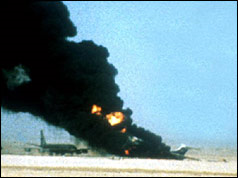
Airport Security. Well before the world became attuned to airport security after the attacks on the United States on 9/11/01, Israel established an extensive airport security system. The screening of passengers, x-rays of baggage and other methods were in response to a series of airplane hijackings in the 1970s (a method of terrorism created by the Palestinian Arabs).

The Palestinians do not have an airport and therefore no such security concerns.

plane blowup 1970

Palestinians blow up plane, 1970

Protection Against Lethal Plans

Intelligence. Israelis utilize a wide variety of information sources to uncover plans to attack its country. Whether through a network of Israeli spies, Palestinian informants, money tracking, wiretapping and other means, the Israelis gather information and make assessments on potential Palestinian Arab attacks. It is then able to take preventative action before such attacks occur.

PALESTINIAN AUTHORITY AND HAMAS – REACTIVE DEFENSE

Relying on Israeli Sensitivities and Sensibilities

Civilians. As detailed above, the Palestinian Authority and Hamas have not instituted proactive tangible means of defending its people. One of the ways it attempts to defend the population is by making it nearly impossible to distinguish between fighters and civilians.

  • The fighters do not typically wear uniforms and can therefore not be distinguished from civilians
  • Men, women and children are all enlisted in the war against Israel
  • Militants fire at Israel from mosques, schools and civilian neighborhoods

Palestinian Arabs hope that Israel will not indiscriminately fire upon everyone. By forcing Israel to take time and extra precautions to target the right attackers, it slows down Israeli defenses during battles.

humanshieldsgaza

Destroying its Own Infrastructure. Hamas built an extensive offensive network of tunnels into Israel which originated in many private homes. By relying on Israelis sensitivities to minimize destruction in civilian neighborhoods, Hamas was able to protect many tunnel openings.

Further, Hamas and other Palestinian Arab groups often booby-trapped homes from which they attacked Israel. While the Palestinian Arabs destroyed their own infrastructure, they slowed down and killed many Israelis who looked to root out the attackers.

Relying on Global Bodies like the United Nations

United Nations. One of the principal methods that the Palestinian Authority uses to defend its population is through global bodies AFTER a war. The United Nations includes 57 Islamic countries (in the OIC) and 22 Arab countries (in the Arab League) which align themselves with the Palestinian Arab cause. Many of those countries do not even recognize the State of Israel. They were instrumental in passing the “Zionism is Racism” resolution in 1975 and creating several committees devoted only to Palestinian causes.

The Palestinians turn to the UN to highlight the damage that Israel inflicts on its intentionally defenseless population. It uses deliberate attacks on Israel to provoke premeditated casualties to show the world.

This same UN has not condemned the Palestinian Authority for not properly defending its population. Instead, it recommended the incredulous idea that Israel must give the Arabs the defensive systems like Iron Dome that it developed.

The latest forum that the Palestinian Authority has pursued is the International Criminal Court, the ICC. While it is evident that the Palestinians Arabs definitely committed war crimes in the 2014 War against Israel, it would still sue Israel in the hopes that such action will hurt Israel, further its cause and protect the Palestinian Arabs.


As detailed above the two sides in the Israel-Palestinian Authority conflict have disproportionate defenses.

  • The Israelis use several proactive approaches; the Palestinians use reactive methods
  • The Israelis rely upon ingenuity and preparedness; the Palestinians rely on Israeli sensitivities and global sympathy
  • The Israelis principally depend on themselves; the Palestinians depend on the world

A discussion of “disproportionate force” cannot be made in a vacuum without discussing “disproportionate defenses”. The global community cannot continue to reward the acts of a leadership that deliberately deals in its own premeditated casualties.


Related FirstOneThrough articles:

Israel: Security in a Small Country

The United Nations and Holy Sites in the Holy Land

The International Criminal Court for Palestinians and Israelis

The United Nations Audit of Israel

Palestinians agree that Israel rules all of Jerusalem, but the World Treats the City as Divided

The Palestinian Arabs and Israelis last managed to negotiate an agreement in September 1995. That agreement, Oslo II, was intended to be an interim agreement after which a permanent resolution was to be reached in five years. However, five years later in September 2000, Palestinian leader Yasser Arafat walked away from the Israeli peace proposal and launched multi-year riots which claimed thousands of lives.

The terms of Oslo II still live on, decades later.

Oslo II signing
Rabin and Arafat sign maps prior to the Oslo II signing ceremony at the White House, as US president Bill Clinton, Egypt’s Hosni Mubarak and Jordan’s King Hussein look on, September 28, 1995 (photo credit: GPO)

Goals of Oslo II

Oslo II was meant to set in place an interim Palestinian Authority which would become the basis of a Palestinian political structure. Oslo II had NO calls for an independent Palestinian state, but stated the goal of the negotiations was to lead to a permanent settlement based on Security Council Resolutions 242 and 338.

  • Security Council Resolution 338 was declared after Egypt attacked Israel in the Yom Kippur War. The goal was to stop hostilities and commence peace negotiations.  The thrust of SC 338 was to implement SC 242 to establish “a just and durable peace
  • Security Council 242 was drafted after the Six Day War in 1967. In that war, Israel preemptively attacked Egypt and Syria that were readying an attack on Israel, and Israel defended itself from an attack from Jordan.

Without delving into the nuances of SC 242 here, the thrust of the resolution was to have Israeli armed forces pull back from some territories which it won in the 1967 War and that all states respect “the sovereignty, territorial integrity and political independence of every State in the area… free from threats or acts of force.” It also proposed “a just settlement of the refugee problem.

Oslo II built on these UN Security Council goals with an interim roadmap. It began with Israel’s handing over certain territories to the Palestinian Authority (Gaza and Jericho) as well as other major Palestinian cities.

Status of Jerusalem in Oslo II

Jerusalem is mentioned eight times in the Oslo II Accords. In every instance, the entire city is referenced, not just the eastern half that Israel acquired from the Jordanians and Palestinian Arabs in 1967.

The first six times “Jerusalem” appeared in the Oslo II agreement relate to future Palestinian elections in which Palestinian Arabs located in Jerusalem would be able to participate. The remaining two times specifically state that Jerusalem is a point for final status negotiations:

  • ARTICLE XVII Jurisdiction
    1. In accordance with the DOP, the jurisdiction of the Council will cover West Bank and Gaza Strip territory as a single territorial unit, except for:
    2. issues that will be negotiated in the permanent status negotiations: Jerusalem, settlements, specified military locations, Palestinian refugees, borders, foreign relations and Israelis;
  • ARTICLE XXXI Final Clauses
    5. Permanent status negotiations will commence as soon as possible, but not later than May 4, 1996, between the Parties. It is understood that these negotiations shall cover remaining issues, including: Jerusalem, refugees, settlements, security arrangements, borders, relations and cooperation with other neighbors, and other issues of common interest.

According to the agreements executed by the Palestinians and Israelis:

  • Jerusalem is not part of the West Bank, as it is broken out separately
  • Jerusalem is not a “settlement”, as the agreement stated later that “settlements” are entities in the West Bank and Gaza – “For the purpose of this Agreement, “the Settlements” means, in the West Bank the settlements in Area C; and in the Gaza Strip – the Gush Katif and Erez settlement areas, as well as the other settlements in the Gaza Strip, as shown on attached map No. 2
  • Israel controls Jerusalem“Israel shall continue to exercise powers and responsibilities not so transferred”

There is therefore no basis for any of the United Nations, the EU or the Unites States to claim that Jerusalem is a settlement and that Jews should have any restrictions from living anywhere in the city.  Should there be any modifications to the Israeli rule of the city, it will be made by mutual consent in permanent status negotiations.

Yet, the world ignores the Oslo II foundation document of a peace agreement.

United Nations Ignores Oslo II on Jerusalem

UN Secretary-General Ban Ki-Moon made an address on the “International Day of Solidarity with the Palestinian People” in 2013:

On Jerusalem’s Jewish “settlements”:All settlement activity in the West Bank and East Jerusalem must cease.  Measures that prejudge final status issues are not to be recognized.
Announcements of thousands of new housing units cannot be reconciled with the goal of a two-state solution and risk the collapse of negotiations”

These statements ignore Oslo II in many respects: it broke apart “East Jerusalem” as a distinct entity; it claimed that Jews living in “East Jerusalem” were in “settlements”; it called for a two-state solution (while not in Oslo II, both the Israelis and Palestinians later agreed to such plan); it suggested that Jews living in “East Jerusalem” hurt a two-state solution.

On Palestinian homes in “East Jerusalem”: “Of particular concern are developments in East Jerusalem, where this year alone, some 100 [Arab] structures have been demolished, displacing 300 people.  Hundreds more Palestinians are at risk because their homes were built without Israeli-issued building permits”

The UN leader voiced concern with more Jews moving into eastern Jerusalem and not enough Arabs being accommodated there.

On the Permanent Status Negotiations of Jerusalem: “Jerusalem is to emerge from negotiations as the capital of two States, with arrangements for the holy sites acceptable to all”

Ban Ki-Moon voiced a conclusion not made in Oslo II and “prejudged” an outcome that Jerusalem must be divided, even though Israel already divided the UN’s “Holy Basin” when it gave Bethlehem to the Palestinian Authority 20 years earlier.  Amazing commentary from someone who is concerned with “prejudging final status issues.”

European Union Ignores Oslo II on Jerusalem

The EU has taken positions adopted by the Palestinian Authority which are outside of the agreements reached by Israel and the PA in Oslo II:

On Jerusalem’s Jewish “settlements”: “EU considers that settlement building anywhere in the occupied Palestinian Territory, including East Jerusalem, is illegal under international law, constitutes an obstacle to peace and threatens to make a two-state solution impossible.”

On Palestinians in “East Jerusalem”: “The EU supports [Arab] institution building work in East Jerusalem, notably in the areas of health, education and the judiciary.” 

On the Permanent Status Negotiations of Jerusalem: “the EU has repeatedly confirmed its deep concern about accelerated settlement expansion in the West Bank including East Jerusalem. This expansion prejudges the outcome of final status negotiations and threatens the viability of an agreed two-state solution”
“The EU considers that the peace negotiations should include the resolution of all issues surrounding the status of Jerusalem as the future capital of two states. The EU will not recognise any changes to the pre-1967 borders including with regard to Jerusalem, other than those agreed by the parties.”

Like the United Nations, the EU ignored the mutual recognition of both Palestinians Arabs and Israel that only Israel administers all of Jerusalem, and any modification to such arrangement must be made by mutual agreement. Oslo II made no suggestion that the holy city be divided.

The United States Ignores Oslo II on Jerusalem

On Jerusalem’s Jewish “settlements”: Jen Psaki, Spokesperson for the US Department of State said on October 27, 2014: “we continue to make our position absolutely clear that we view settlement activity as illegitimate and unequivocally oppose unilateral steps that prejudge the future of Jerusalem. Israel’s leaders have said they would support a pathway to a two-state solution, but moving forward with this type of action would be incompatible with the pursuit of peace”

On the Palestinian Authority in Jerusalem: While the US does not recognize Jerusalem as the capital of Israel or any country (and therefor does not maintain on embassy in Jerusalem), it has nevertheless decided to establish an office for Palestinians in Jerusalem.  The United States Security Coordinator for Israel and the Palestinian Authority (USSC) sounds like it services both Israel and the PA, but its mission is to serve and assist the PA in meeting its security needs. “The USSC directs all facets of U.S. security sector assistance to the Palestinian Authority and synchronizes international supporting efforts…The USSC assists the Palestinian Authority to transform and professionalize its security sector.

The US decided to place such office to assist the PA in Jerusalem, rather than Bethlehem or Jericho. The address is home of the Consul General of the US in Jerusalem which serves US citizens from Jerusalem, the West Bank and Gaza.

On the Permanent Status Negotiations of Jerusalem:  Back in 2009, White House Press Secretary Robert Gibbs made a point that recognized that Jerusalem is a matter for final status negotiations, but said he was opposed to construction in “East Jerusalem”. “The United States opposes new Israeli construction in East Jerusalem. The status of Jerusalem is a permanent status issue that must be resolved by the parties through negotiations and supported by the international community. Neither party should engage in efforts or take actions that could unilaterally pre-empt, or appear to pre-empt, negotiations. Rather, both parties should return to negotiations without preconditions as soon as possible. The United States recognizes that Jerusalem is a deeply important issue for Israelis and Palestinians, and for Jews, Muslims, and Christians. We believe that through good faith negotiations the parties can mutually agree on an outcome that realizes the aspirations of both parties for Jerusalem, and safeguards its status for people around the world.”


There have been very few agreements between the Palestinian Arabs and Israelis throughout history.  When the parties last mutually agreed to move forward with a peace process, they agreed that all of Jerusalem was controlled by Israel.  The agreement had no caveats about what Israel could or could not do anywhere in the city. It made no suggestion that the city was or would be divided.

Despite that reality, a new perception has taken hold in world bodies that Israel should prohibit Jews from living in parts of their capital and holiest city.  It is being repeated more frequently and with greater force: at one point, world bodies opposed Israel building new neighborhoods in the eastern part of Jerusalem; now they decry Jews moving into existing homes that  they legally purchased privately.

How can Israel expect to negotiate a final status agreement if the world rejects the agreements Israel makes with Palestinian Arabs as it did with Oslo II? How can Israel enter negotiations when the world advances a prejudged outcome to such negotiations to which Israel never agreed?


Related First One Through articles:

The Arguments over Jerusalem

Real and Imagined Laws of Living in Silwan

Nicholas Kristof’s “Arab Land”

Obama supports Anti-Semitic Palestinian Agenda of Jew-Free State

The Israeli Peace Process versus the Palestinian Divorce Proceedings

A “Viable” Palestinian State

What do you Recognize in the Palestinians?

Summary: In their eagerness to give Palestinian Arabs self-determination, Europeans have begun to symbolically recognize Palestine as a country.  However, the Europeans have failed to recognize that Palestinian actions are against the law and vision for peace.

During the months of October and November 2014, a number of European countries took symbolic steps to recognize Palestine as a distinct independent country. What do they really recognize and how does it fit with their world vision and laws?

 Holocaust Denial

Holocaust denial and its trivialization is part of the Palestinian culture, starting with its acting president, Mahmoud Abbas.

  • Abbas spent several years writing his doctorate research on Holocaust denial; that phd paper is taught at the Palestinian Authority.
  • In April 2014, Abbas continued his pattern of belittling the Holocaust by stating that the Palestinians can appreciate the Holocaust because they suffer from similar “ethnic discrimination and racism” from Israel.
  • In September 2014 Abbas said Israel was engaged in a “war of genocide” against the Palestinians,
  • The major political party for the Palestinians, Hamas, which runs Gaza, prohibits the teaching of Holocaust studies in its schools, even though it is a standard part of the UNRWA school program.

This denial of the Holocaust is considered illegal in many European countries including: Austria; Belgium; Bosnia and Herzegovina; Czech Republic; France; Germany; Hungary; Israel; Liechtenstein; Lithuania; Luxembourg; Netherlands; Poland; Portugal; Romania; Spain; and Switzerland.

abbas holocaust book
Mahmoud Abbas’ Holocaust Denial book, available on Palestinian Authority website

 Anti-Semitism

The Palestinians are the most anti-Semitic group on the planet.

  • A poll published by the Anti Defamation League in April 2014 found that almost every single Palestinian Arab- 93% – harbor anti-Semitic views.
  • The Hamas charter is the most anti-Semitic and racist charter on earth. It reads like a combination of Hitler’s Mein Kamf, The Protocols of the Elders of Zion and a Jihadist Manifesto. It openly calls for the killing of all Jews and the destruction of the Jewish State.
  • The Palestinians support Hamas with this charter, electing them to 58% of the parliament in 2006 and backing the party in every poll since that time.
  • Palestinian leadership and clergy often call Jews names (like “sons of pigs and apes”) on state run television.
  • Palestinian law prohibits Jews from stepping onto college campuses in the West Bank.
  • Palestinian law and Abbas have made it a crime to sell land to Jews.
  • Abbas has stated he will not permit a single Israeli to live in a new state of Palestine.

The United Nations ran its first ever discussion about the growing problem of anti-Semitism in January 2015. Several countries have laws specifically banning anti-Semitism (beyond general laws against hate speech) including: Austria; France; Mexico; Romania; Spain; Sweden and Switzerland.

Pal nazi2
Palestinians Hoist Nazi Swastika

 Terrorism

Attacking Israeli civilians has been a fundamental charge of the Palestinians.

Many countries label Hamas a terrorist organization including: the US; Canada; Australia; Israel; Japan; the United Kingdom; Egypt and Jordan. The European Union also categorized Hamas as a terrorist organization until December 2014, when it decided to reconsider the designation. The United Nations has also created task forces to deal with terrorism that are intended to cut off all support.

dalal_popular_inauguration
Square named after Murderer


To summarize the state of the Palestinians in 2015: it is run by a Holocaust denier who has suspended elections while he instigates violence; the ruling party in parliament is more openly anti-Semitic and genocidal than the Nazis when they were elected in 1933, and has called for the complete destruction of a member state of the United Nations; and the populace is the most anti-Semitic in the world.

It is one thing to wish for a group of people to have self-determination. But does such a hateful, violent jihadist group which seeks the destruction of a member state of the United Nations deserve recognition?

If Europe and the world truly care about Holocaust denial, anti-Semitism and terrorism as current laws declare, they must confront the reality of the current state of Palestinian Arabs and demand fundamental changes before it can be given any recognition on the world stage.


Sources:

Abbas Holocaust denial paper: http://www.israelnationalnews.com/News/News.aspx/143752#.VMuN-ps5BTw

Holocaust denial criminal offense: http://en.wikipedia.org/wiki/Laws_against_Holocaust_denial

Abbas calling a “genocide” by Israel: http://www.aljazeera.com/news/americas/2014/09/abbas-israel-waging-war-genocide-gaza-201492616952287680.html

Palestinian law banning the sale of land to Jews:

http://www.jpost.com/Middle-East/PA-affirms-death-penalty-for-land-sales-to-Israelis

Left-wing article on left-wing journalist barred from Bir Zeit University: http://jfjfp.com/?p=65375

Birzeit University bans Jews: http://www.timesofisrael.com/haaretz-writer-booted-from-palestinian-school-because-shes-israeli/

Calling Jews “sons of pigs and apes” https://www.youtube.com/watch?v=sHhG1IyfqXg#t=13

Hamas charter: http://avalon.law.yale.edu/20th_century/hamas.asp

Palestinian poll September 2014: http://www.pcpsr.org/en/node/496

  • If presidential elections, Hamas would win and Abbas would place third in a three-person race
  • 81% Hamas’s “way of resisting occupation”

Palestinian terrorists attack Jews all over world: http://www.thejewishweek.com/news/israel-news/timeline-attacks-synagogues

United Nations task force on terrorism: http://www.un.org/en/terrorism/

ADL anti-Semitism report: http://global100.adl.org/public/ADL-Global-100-Executive-Summary.pdf

Laws against anti-Semitism: http://www.antisemitism.org.il/eng/Legislation%20Against%20Antisemitism%20and%20Denial%20of%20the%20Holocaust

UN discussion on anti-Semitism: http://hosted2.ap.org/ORBEN/*/Article_2015-01-22-UN–United%20Nations-Combatting%20Anti-Semitism/id-358f417966bc4fb5abfc89d95535fc39#.VMhQASyVnEY

EU reverses on Hamas terrorist label: http://www.nytimes.com/2014/12/18/world/europe/hamas-palestinian-statehood-vote-european-parliament.html?_r=0

Related First One Through articles:

Europe punishing Israel instead of Palestinians to advance peace process: https://firstonethrough.wordpress.com/2014/10/15/european-narrative-over-facts/

Failure of Europe in the peace process: https://firstonethrough.wordpress.com/2015/01/02/failing-negotiation-102-europe/

Abbas knows Racism: https://firstonethrough.wordpress.com/2014/10/27/abbas-knows-racism/

Palestinians are not “resorting” to violence: https://firstonethrough.wordpress.com/2014/11/19/the-palestinians-arent-resorting-to-violence-they-are-murdering-and-waging-war/

Abbas shift on the Holocaust: https://firstonethrough.wordpress.com/2014/05/19/frightening-new-york-times-42714-article-on-mahmoud-abbas-shifts-on-holocaust/

Hamas is more extreme than the Nazis: https://firstonethrough.wordpress.com/2014/10/25/extreme-and-mainstream-germany-1933-west-bank-gaza-2014/

Music video on Hamas (music by CSNY):

http://www.youtube.com/watch?v=kF2fcaSPB6M

Apostasy

In response to the mass and gross atrocities committed by Nazi Germany in World War II, the world sought to enshrine a list of basic human rights which were due to every person on the planet. In December 1948,  the United Nations passed those laws as the Universal Declaration of Human Rights, UDHR.

Today, many members of the United Nations continue to routinely trample on those rights.

For example, Article 18 of the UDHR provides for the freedom of religion and worship:

  • “Everyone has the right to freedom of thought, conscience and religion; this right includes freedom to change his religion or belief, and freedom, either alone or in community with others and in public or private, to manifest his religion or belief in teaching, practice, worship and observance.”

The action of changing one’s religion is called “apostasy”. Not only is it considered a crime in many countries, several Islamic countries consider it a capital offense according to their established law:

  • Afghanistan
  • Brunei
  • Mauritania
  • Qatar
  • Saudi Arabia
  • Sudan
  • United Arab Emirates
  • Yemen

Mariam Yahia Ibrahim Ishag
Mariam Yahia Ibrahim Ishag sentenced to death by hanging in Sudan for apostasy,
May 2014

Not all Islamic countries call for killing apostates, but many still criminalize the act of leaving Islam by punishing the apostate with civil penalties including negating the person’s inheritance and nullifying their marriage.

In some countries, specifically: Mauritania; Saudi Arabia; Jordan; and Yemen, individuals can be charged with apostasy for simple matters of writing something negative or controversial about Islam, even a post on social media.

Here is a summary of some countries laws regarding apostasy.

  • Afghanistan: Apostasy is considered a serious offense and persons so charged may “possibly face death by stoning, deprivation of all property and possessions, and/or the invalidation of their marriages.
  • Brunei: A Muslim who declares himself non-Muslim is punishable with death, or with imprisonment for a term not exceeding thirty years and corporal punishment, depending on the type of evidence.
  • Egypt: There have been cases where people have been placed in jail or marriages nullified due to apostasy.
  • Iran: While Iranian law does not provide for the death penalty for apostasy, the courts can hand down that punishment, and have done so in previous years, based on their interpretation of Sharia’a law and fatwas.
  • Jordan: While there is no express statutory prohibition on apostasy, conversion trials are heard by Islamic courts and may be instituted by any member of the community. According to Islamic law, there are consequences when Muslims adopt religions other than Islam.  For instance, if someone is convicted of apostasy, the Islamic courts adjudicating matters of personal status have the power to void the person’s marriage and deny his/her right to inherit from a spouse and from Muslim relatives.
  • Kuwait: According to Law 51 of 1984 on Personal Status, which is based on Islamic Sharia law, Under Article 18, the marriage of a non-Muslim man to a Muslim woman is considered annulled. Article 145 of the aforementioned law applies such legal and religious principle to Muslim husbands that might adopt other religions than Islam during the marital relationship. Moreover, under article 294 of this law, an apostate is not able to inherent from his Muslim relatives or marital spouse.
  • Mauritania: Apostasy is punished under article 306 of the Mauritanian Criminal Code.  This article provides that “any Muslim guilty of the crime of apostasy” is to be given the opportunity to repent within three days.  If the accused does not repent within that period, he/she is to be sentenced to death, and all of his/her property shall be confiscated by the government.

Mohamed Cheikh Ould Mohamed
Mohamed Cheikh Ould Mohamed sentenced to death for article about Islam,
December 2014

  • Morocco: In April 2013, the Supreme Council of Religious Scholars issued a religious decree (fatwa) that Moroccan Muslims who leave Islam must be sentenced to death.
  • Pakistan: There is no specific statutory law that criminalizes apostasy in Pakistan.  In 2007, a bill to impose the death penalty for apostasy for males and life imprisonment for females was proposed in Parliament but failed to pass.
  • Qatar: While apostasy is one of the offenses subject to the death penalty, Qatar has not imposed any penalty for this offense since its independence in 1971.
  • Saudi Arabia:  Islamic law imposes the death penalty on apostates based on statements attributed to the Prophet Mohammed.
  • Sudan: Article 126 of the Sudanese Penal Code, on apostasy, provides that any Muslim who declares publicly that he/she has adopted any religion other than Islam commits the crime of apostasy and is punishable with the death penalty.
  • Tunisia: Has begun to institute new laws to protect people from Sharia law regarding apostasy. Article 6 of the Tunisian Constitution of 2014 protects its citizens by preventing any attacks against them based on accusations of apostasy.
  • UAE: Article 66 states that among the “original punishments” under the law are the punishments of hudud crimes, including by imposing the death penalty.  However, there have been no known prosecutions or legal punishments for apostasy in court.
  • Yemen: The crime of apostasy may be subject to the death penalty by virtue of Article 12 of the Yemen Penal Code of 1994, as amended by Law 24 of 2006, which identifies crimes, including apostasy, that are punished according to the provisions of Islamic Sharia.  Furthermore, Article 259 provides that individuals committing the act of apostasy may be punished with the death penalty.

KSA apostasy
Man in Saudi Arabia to be beheaded for ripping up Quran,
February 2015

These laws are often not considered radical by the country’s citizens.  Many Muslims in the world specifically support the death penalty for apostasy.  The countries with the highest percentage calling for the murder of converts:

  • Egypt 88%
  • Jordan 82%
  • Afghanistan 79%
  • Palestinians 66%
  • Pakistan 62%
  • Malaysia 62%

Have you ever seen a censure in the United Nations against any of these countries for trampling a basic human right?


Sources:

Country apostasy review: http://www.loc.gov/law/help/apostasy/index.php

Pregnant Sudanese woman gets death sentence for apostasy: http://www.aljazeera.com/news/middleeast/2014/05/sudan-woman-given-death-penalty-apostasy-20145159264775754.html

Vast majority of Muslims support death penalty for apostasy: http://www.washingtonpost.com/blogs/worldviews/wp/2013/05/01/64-percent-of-muslims-in-egypt-and-pakistan-support-the-death-penalty-for-leaving-islam/

Related First One Through article:

Blasphemy: https://firstonethrough.wordpress.com/2015/01/12/blasphemy-or-terrorism/

US Working with Countries with terrible human rights records: https://firstonethrough.wordpress.com/2014/11/14/dancing-with-the-asteroids/

Palestinians are “Desperate” for…

On January 1, 2015, the New York Times editorial page led with a piece titled “The Palestinians Desperation Move.” The opinion piece advanced the case that acting Palestinian Authority President Mahmoud Abbas must be frustrated in his mission to create a new Palestinian State.

…Creating a State?

Desperate people take what they can. They view their options as limited and prospects as weak. They seize any opportunities to advance their main goal, whatever that might be.

Witness early Zionists agreeing to any size and configuration of a Jewish state, despite their dream for a larger state based on the British Mandate of Palestine in 1922. They voted “yes” to a United Nations partition in 1947. They voted “yes” to greater Jerusalem and greater Bethlehem being international cities.

The Arabs, on the other hand, consistently voted “no” at every juncture.

These are not activities of a people that is “desperate” for a state. These are not actions of leaders who are willing to make compromises to establish a country and move their people forward.


… Maximizing a Jew-free State and/or Destroying the current Jewish State

Palestinian actions have consistently had three main areas of focus:

  1. Creating a new state free of any Jews
  2. Maximize the size of the new Palestinian state: either the entirety of Israel+West Bank+Gaza or using the 1949 Armistice Lines
  3. If there remains a state of Israel, it should be small and not Jewish


A Jew-free Palestinian state: Palestinians have sought to recreate the conditions of the Arab-controlled regions that expelled and barred the Jews from 1949 to 1967. The Palestinian leadership has continually called for preventing any “settlements”, meaning barring any Jewish people from living anywhere in Gaza, the West Bank and the eastern part of Jerusalem that was controlled by Jordan from 1949-1967. Various Palestinian efforts towards peace talks have demanded a pre-condition of Jewish settlement freezes before any peace talks could begin.  They have lobbied the United Nations to condemn any and all settlements as illegal (even though Jews always lived in the lands before the illegal Jordanian takeover in 1949).

Palestinian law has repeatedly cemented the position of a Jew-free state. In 1973, it passed legislation that made the sale of any land or home to an Israeli to be a capital offense. The Palestinian Authority announced in 1997 that it would seek the death penalty for anyone selling land to a Jew or Israeli.

Abbas has repeatedly voiced his vision of a Jew-free Palestine, stating that he would not allow the presence of a single Israeli- civilian or soldier – in a new Palestine.

Abbas and other members of the Palestinian Authority have also called on the world to engage in a BDS- Boycott, Divestment and Sanction – of any Israeli company that has a presence in the territories they hope will become a Palestinian state. Their aggressive efforts in advancing BDS further underscores their desire to not only prevent any Jews living in a future state, but even establishing businesses there as well.

Even the Universities on the West Bank have laws that prohibit Jews from stepping foot onto campuses.

In short, Palestinian law and leadership calls for banning Jews from visiting, working, buying land or living in the territories it wants for a future state.

Those are the official positions of the “moderate” acting-president of the Palestinian Authority and the existing Palestinian laws. However, the majority of the Palestinian people are in favor of Hamas and would elect someone from Hamas as president according to every poll over the past few years. The Palestinian public elected Hamas to 58% of the Palestinian parliament in their last election in January 2006. Hamas’s charter and its leaders call for the outright killing of Jews and have specifically identified the Jewish nature of Israel as the root cause of the conflict: In face of the Jews’ usurpation of Palestine, it is compulsory that the banner of Jihad be raised…”


Maximize the size of the Palestinian state. It is not surprising that the Palestinians want to maximize the size of a future state; Israel wants to maximize what it can achieve in negotiations too. However, as detailed here, the working parameters for the Palestinians are to achieve “maximums” and certainly not reflective of a group that is “desperate” and willing to compromise.

Hamas calls for a single Arab Palestine to cover Gaza, the West Bank and all of Israel. They have never backed down or waivered from their 1988 charter in any statement from any leader since that time.

Abbas’ Fatah party has stated that it will “compromise” for a Palestine that follows the “1967 borders.” It states this, despite the fact the 1967 “borders” were not borders but Armistice Lines established in 1949 with Egypt and Jordan. Both of those armistice agreements specifically stated that those lines were not intended to be borders. After repeated invasions and wars by the Palestinians and its Arab allies, Israel has made clear that it will not accept those 1949 Armistice lines as final borders.

“Moderate” Palestinians argue that United Nations Resolution 242 stated that Israel should remove its armed forces from territory acquired during the 1967 war. While the Israelis point out that the language specifically does not state that it must leave “all” of the territory, Abbas is demanding such complete withdrawal; a “maximum” position within the two-state framework.


No recognition of the Jewish State. For much of Israel’s existence, the Arab world refused to recognize Israel in any matter at all and viewed Israel’s entire existence as illegitimate. The Arab world underscored the point with the famous three “no’s” in 1967 including refusing to recognize the basic existence of Israel.

In 1975, Yasser Arafat and the PLO effectively lobbied the United Nations to label the national aspirations of Jews to be a form of racial discrimination. Specifically, Resolution 3379 adopted by the General Assembly referred to the “the racist regime in occupied Palestine” and determined “that zionism is a form of racism and racial discrimination.” Such efforts have nothing to do with establishing a new country and everything to do with delegitimizing the rights and claims of Jews to their own state.

Today, Palestinian leadership continues on the same path of delegitimizing Israel.  Palestinian leadership makes a point of denying Jewish history in the Holy land. Whether addressing the United Nations General Assembly or speaking to reporters, acting Palestinian president Mahmoud Abbas denies any connection between Jews and their history in the land. In 2014, Abbas stated that “they [Israel] imagine that by brute force they can invent a history, establish claims and erase solid religious and historical facts.

Abbas has made very clear that he will never recognize the Jewishness of the state of Israel:

  • I’ll never recognize Israel as a Jewish state.” (2014);
  • We shall never agree to recognize the Jewish state.” (2013);
  • “I will never recognize the Jewishness of the state, or a “Jewish state.” (2011)

Underscoring these points is the insistence of a “Right of return” for descendants of pseudo-refugees to the state of Israel. He believes that the 4.6 million SAPs (Stateless Arabs from Palestine) should be entitled to move into Israel as opposed to a new Palestinian state. The entire point of partitioning the land for two peoples and creating a new Palestinian state is to create a home for these Arabs. What is the point of sending the grandchildren of Arabs who left homes in 1948 to a country they despise (Israel) when they are just creating the country they dreamed of (Palestine)?


For almost a century, the Palestinians have tried various paths to achieve their goals: broad regional wars;  local wars; intifadas; riots; peace talks and lobbying the United Nations.  But what are they hoping to achieve?

If the primary goal of the Palestinian people was a state, would they care if a small number of Jews lived there? Would they so strongly object to recognizing Israel as a Jewish State? Would they insist on an all-or-nothing strategy of getting everything in negotiations?

Are Palestinians truly desperate for a state or are they desperate to deny any rights and legitimacy of Jews to live in the land?

20150102_084725


Sources:

1936 riots: http://www.jewishvirtuallibrary.org/jsource/History/riots36.html

1947 Partition plan: http://www.jewishvirtuallibrary.org/jsource/History/partition_plan.html

1948-9 Israel war of Independence: http://www.jewishvirtuallibrary.org/jsource/History/1948_War.html

1967 Six Day War: http://www.washingtonpost.com/wp-dyn/content/article/2007/05/17/AR2007051701976.html

Khartoum declaration: http://www.sixdaywar.org/content/khartoum.asp

Arafat ends 2000 Clinton-Barack initiative: http://www.theguardian.com/world/2001/jan/03/israel2

Hamas wins 2006 elections: http://www.washingtonpost.com/wp-dyn/content/article/2006/01/26/AR2006012600372.html

No response to Olmert plan: http://www.haaretz.com/news/olmert-abbas-never-responded-to-my-peace-offer-1.263328

Netanyahu 10-month settlement freeze to re-start talks: http://www.nytimes.com/2009/11/26/world/middleeast/26israel.html

No Abbas engagement for nine months: http://www.foxnews.com/opinion/2010/10/13/kenneth-bandler-israel-palestine-peace-mahmoud-abbas-united-states-plo-arab/

Maximum of Olmert is short of Minimum for Abbas: http://www.israelnationalnews.com/News/News.aspx/175910#.VKl5bJs5CUl

Various quotes of Arab intents for Israel: http://www.paulbogdanor.com/israel/quotes.html

Palestinian law banning the sale of land to Jews: http://www.jpost.com/Middle-East/PA-affirms-death-penalty-for-land-sales-to-Israelis

Left-wing article on left-wing journalist barred from Bir Zeit University: http://jfjfp.com/?p=65375

UN resolution 242: http://www.jewishvirtuallibrary.org/jsource/UN/meaning_of_242.html

UN Zionism is Racism: http://unispal.un.org/UNISPAL.NSF/0/761C1063530766A7052566A2005B74D1


Related FirstOneThrough articles:

Laws of Living in Silwan: https://firstonethrough.wordpress.com/2014/10/20/real-and-imagined-laws-of-living-in-silwan/

Abbas knows Racism: https://firstonethrough.wordpress.com/2014/10/27/abbas-knows-racism/

Palestinians are not “resorting” to violence: https://firstonethrough.wordpress.com/2014/11/19/the-palestinians-arent-resorting-to-violence-they-are-murdering-and-waging-war/

The Green Line: https://firstonethrough.wordpress.com/2014/12/09/the-green-line/

Palestinian “refugees” or “SAPs”: https://firstonethrough.wordpress.com/2014/08/08/palestinian-refugees-or-saps/

Palestinian Xenophobia music video (Mr. Rogers): https://firstonethrough.wordpress.com/2014/11/11/wont-you-be-my-neighbor/


Mad World of Palestinian Quality of Life Statistics

The United Nations had another productive year in 2014, condemning Israel 20 times compared to the rest of the world 4 times in total. This was on the heels of 2013 when it condemned Israel 21 times and the rest of the world only four times in total.

One would imagine that the quality of life of Arabs in Gaza and the West Bank was the worst on the planet by a far margin. Not only does the UN censure Israel multiples of the rest of the world, but it has put into place permanent structures to protect the Palestinians:

  • The only people to get a designated committee in the General Assembly, Committee on the Exercise of the Inalienable Rights of the Palestinian People
  • The only people with a special Ad Hoc committee, Ad Hoc Committee of the General Assembly for the Announcement of Voluntary Contributions to the United Nations Relief and Works Agency for Palestine Refugees in the Near East.
  • The only people with a designated Special Committee, Special Committee to Investigate Israeli Practices Affecting the Human Rights of the Palestinian People and Other Arabs of the Occupied Territories.

These unique committees and agencies further managed to create new definitions to advance the Palestinian cause such as a redefinition of “refugee” only for Arabs pre-1948, to mean people who left a land instead of a country.  They compound the absurdity by enabling these “refugees” and their children, grandchildren and additional generations to obtain benefits courtesy of the world.

With all of the unique concerns of the world for the Arabs from the West Bank and Gaza, it is amazing how well these Arabs are doing compared to the other countries in the world by various measures. Here are some rankings and statistics from the CIA World Fact book comparing 229 countries and territories:

  • Population Growth rate: Gaza (#13) and the West Bank (52) have among the highest population growth rates in the world. Compare them to Jordan (#4), Yemen (20), Turkey (108) and Tunisia (126)
  • Birth rate: Gaza (#35) and West Bank (67) are much higher than many Arab and Muslim countries: Yemen (#39), Jordan (53), Tunisia (112) and Turkey (114)
  • Death rate: Palestinians have the lowest death rates in the world Gaza (#220) and West Bank (#215). Jordan ranks 212, Tunisia 167, Turkey 162 and Yemen 153.
  • Net Migration: Compared to the world and the volatile Middle East, West Bank (#84) and Gaza (#108) are fairly stable, compared to Jordan (5), Yemen (37), Turkey (71) and Tunisia (161).
  • Life expectancy at birth: West Bank (#91) and Gaza (#109) have higher life expectancies than Jordan (#117), Turkey (124) and Yemen (175) and about the same as Tunisia (92).
  • Infant Mortality: Palestinian Arabs have much lower infant mortality rates with Gaza (#105) and West Bank (#117) much lower than Yemen (38), Tunisia (78), Turkey (84) and Jordan (104).
  • Unemployment: the Arabs in West Bank (#169) and Gaza (170) have high unemployment for people aged 15-24, as it has one of the highest percentages of its population under 20 years old, like Yemen. Turkey ranks #101, Jordan 133, Tunisia 151 and Yemen ranks 188.
  • Literacy rate: Gaza (96.4%) and the West Bank (95.6%) compare very favorably to other countries including Jordan (93.4%), Tunisia (88.3%) and Yemen (63.9%), while lower than Turkey (98.8%).

How do the 100+ countries who fair much worse than Gaza and West Bank feel about the unique attention that the Palestinians get? Countries like Tunisia and Yemen probably don’t mind, if the attention comes at the expense of Israel.


The First One Through political music video with music by Tears for Fears:

https://www.youtube.com/watch?v=I943cOvrvm4


Sources:

CIA Fact Book: https://www.cia.gov/library/publications/the-world-factbook/rankorder/2002rank.html

Literacy rates: http://en.wikipedia.org/wiki/List_of_countries_by_literacy_rate

UN condemns Israel 20 times in 2014: http://blog.unwatch.org/index.php/2014/12/17/2014-at-the-un-20-resolutions-against-israel-3-on-rest-of-the-world/

United Nations committees: http://www.un.org/en/ga/about/subsidiary/committees.shtml