The UN is Watering the Seeds of Anti-Jewish Hate Speech for Future Massacres

One of the key warning signs of genocide is the spread of hate speech in public discourse and the media…. And every day, the seeds of future massacres and genocides are being planted.

The only way to prevent genocide and other egregious violations of human rights is to acknowledge shared responsibility and commit to shared action to protect those at risk.

It is essential that Governments, the judiciary and civil society stand firm against hate speech and those who incite division and violence.”

UN Secretary General (UNSC) Ban Ki Moon April 11, 2016

Ban Ki Moon
UNSC Ban Ki Moon

The powerful words of the current UN Secretary General clearly denounced hate speech and recognized their role in sowing massacres and genocides.

However, the UNSG never reflects on his own theory when he considers the Palestinian Arabs and their attacks on Jews and Israel. Consider:

  • The Hamas party is the most anti-Semitic ruling governmental entity in the world that specifically calls for killing Jews and destroying Israel, yet the UNSC called for Hamas to be integrated into the Fatah party in a reconciliation government.
  • The acting Prime Minister of the Palestinian Authority and head of the Fatah party Mahmoud Abbas continually denies Jewish history in the Holy Land and calls for a Jew-free state, but the UN endorses these efforts, including a UNESCO resolution denying any Jewish history on the Temple Mount and the UNSC backing Abbas’s Jew-free state.
  • The Palestinian Authority routinely celebrates murderers of Jews by naming schools, squares, streets and tournaments after them. The UNSC absolves their words and actions by stating that Palestinians are simply “resorting to violence“, because a peaceful solution has not yielded the results they seek.
  • Mahmoud Abbas, who wrote his doctoral thesis on a theory that Israel actively supported the Holocaust, routinely uses Nazi Germany imagery about Israel, but the UN remains silent.

The world must unite against Hamas and state clearly that the United Nations is wrong about including Hamas in a unity government.

The world must categorically reject the notion that Jews should be barred from living in any country, and recall the words of Article 15 of the 1922 British Mandate Article which specifically stated that “no person shall be excluded from Palestine on the sole ground of his religious belief.

Countries should consider their own laws which ban Holocaust denial as a form of hate speech, while they stand and applaud Abbas at the United Nations.

Countries should withhold financial aid to the Palestinian Authority, every time they promote another murderer onto the walls of their institutions.


Israel’s Mission to the United Nations will host 1500 students and organizations on May 31, 2016 to combat the toxic narrative around Israel which is part of the BDS (Boycott, Divestment and Sanctions) of Israel initiative, as part of Israel’s “Ambassadors Against BDS“.  It is an effort that is unfortunately needed because of the United Nations endorsement of Palestinian Arab hate speech.

If only Ban Ki Moon would listen to his own words that “It is essential that Governments, the judiciary and civil society stand firm against hate speech and those who incite division and violence.”


Related First.One.Through articles:

The Palestinians aren’t “Resorting to Violence”; They are Murdering and Waging War

Names and Narrative: Genocide / Intifada

What do you Recognize in the Palestinians?

The United Nations’ Adoption of Palestinians, Enables It to Only Find Fault With Israel

UN Breakthrough? “Hamas continues to directly threaten the security of Israel”

UNRWA’s Ongoing War against Israel and Jews

Subscribe YouTube channel: FirstOneThrough

Join Facebook group: FirstOne Through  Israel Analysis

Netanyahu’s Doctoral Thesis on the Nakba

A Satire

In honor of the International Holocaust Remembrance Day on January 27, Israeli Prime Minister Benjamin Netanyahu made a declaration that the “Nakba was a terrible tragedy for the Palestinian Arabs.” The New York Times, BBC and various media outlets proclaimed in their headlines that Netanyahu had turned a corner from some of his prior comments belittling the “Nakba,” the term that Arabs use to describe their “disaster” when Arabs left their homes and were unable to return after the Arab-Israeli War of 1948-9.

Netanyahu continued about the Nakba that “Israelis understand the pain of being expelled from their homes. Jews were ethnically cleansed from their holiest city, Jerusalem, by Jordanian Arabs. Jews were evicted from their second holiest city, Hebron, after Arabs massacred them in 1929. And the Jewish people were evicted from their ancient homeland in Judea and Samaria, and barred from re-entry, by the Jordanians in 1949. Is there a people on the planet that understands the pain of losing their homes more than the Jewish people Jews have been targeted for death and eviction by Arabs for a century.

When Netanyahu was asked to comment not only about evictions, but about being banned from returning to their properties, Netanyahu reviewed how Palestinian Arabs effectively convinced the British to block Jewish immigration to Palestine at the beginning of the Holocaust in 1939, causing hundreds of thousands of Jewish men, women and children in Europe to perish. “We Jews understand being excluded very well.

netanyahu-holocaust
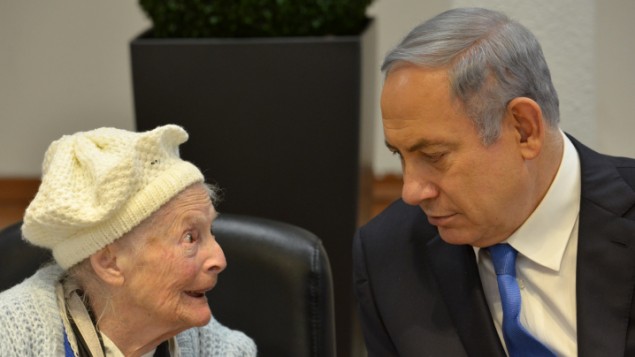
Prime Minister Benjamin Netanyahu meets with Holocaust survivors ahead of International Holocaust Remembrance Day. January 26, 2016 (Kobi Gideon/GPO/Flash90)

The comments acknowledging the Nakba were a sharp reversal from Netanyahu’s doctoral study in which he detailed many questions surrounding both the numbers and source of the Nakba. His study concluded that the Arabs in Palestine conspired with the major global parties to funnel billions of dollars in perpetuity to Palestinian Arabs via the United Nations.

Netanyahu’s thesis reviewed the many secret meetings between Arab leaders and the French, British, Americans and Russians that would set the Arabs as the aggrieved party by the UN.   The Arab plan pushed the UN to endorse the partition plan of 1947, which the Palestinians would then publicly reject. The UN would then create a unique stand-alone agency, UNRWA, designed to exist forever, as a means of transferring billions of dollars to Palestinian Arabs.

As part of the Arab plan, the United Nations inflated the number of Arab refugees from the 1948 war to 711,000 from the actual 100,000 figure. By inflating the number of refugees, the UN was able to funnel even greater sums of money to Palestinians.

The Arab plan had the further benefit of giving the entire Arab world a scapegoat for their corrupt regimes.

As it turned out, the joint Arab- global powers’ plan worked almost perfectly, aside from a few unexpected results.  The UN did not realize that the Arab leadership would ultimately double-cross the UN and steal most of the funds promised to the Palestinian people; and the corrupt financial structure ultimately made Palestinian Arab leadership completely incapable of governing.

The NY Times and BBC did not review the contents of Netanyahu’s doctoral thesis in their articles. However, the Times did have a lead editorial noting Netanyahu as “a man of empathy, and a true moderate who is Abbas’s best chance for a peace partner.

Abbas did not provide any statement.


Related First.One.Through article:

The NY Times on Abbas’s Change of heart about the Holocaust: Frightening New York Times 4/27/14 article on “Mahmoud Abbas Shifts on Holocaust”

The Holocaust and the Nakba

Other Satires:

Silwan Circulars, Christmas 2014

Palestinian Job Fair for Peace

Subscribe YouTube channel: FirstOneThrough

Join Facebook group: FirstOne Through  Israel Analysis

“Peace” According to Palestinian “Moderates”

Liberals, including the left-wing paper The New York Times, often suggest that there are many leading Palestinian Arab and Israeli Arab moderates who genuinely want peace with Israel. US Secretary of State John Kerry warned Jews and Israelis about failing to fully engage “the moderate Palestinian leadership,” which could lead to “extremism.

Over the past six weeks, one has to wonder what kind of “peace” these “moderates” have in mind.

Mahmoud Abbas

On October 28, 2015, the acting-President of the Palestinian Authority addressed the United Nations Human Rights Council in Geneva, Switzerland. In his prepared remarks he said that Israeli occupation of Palestine has been in place since Israel’s founding in 1948. He viewed all of Israel as illegitimate, and Palestinian land.

Abbas is a proud Holocaust denier as well as denier of Jewish history in the holy land. His anti-Semitic call for a Jew-free country has been endorsed by the Obama administration, and his basic refusal to recognize Israel as the Jewish State make the goal of achieving peace with this straw man a laughable fantasy.

Ayman Odeh

The NY Times was very quick to promote the prospects for Israeli-Arab peace as one of the leaders of the Joint Arab List, Ayman Odeh, was coming to New York to address groups of Jews.  On December 10, the Times ran an article “Arab-Israeli Parliament Member sees Prospect for Peace,” which described a hopeful Ayman Odeh’s thoughts about peace because “many parts of the Jewish population were able for the first time to hear us.”  Somehow, the deafness on the part of Arabs to recognize the Jewish State doesn’t seem to bother him.

IMG_3659
New York Times article on December 10, 2015

On December 10, Ayman’s vision of Israel was brought to the open (except for readers of the NY Times since it opted not to print the follow-up story).

Ayman was due to speak to the Conference of Presidents of Major American Jewish Organizations.  However, when Ayman noticed that the meeting was taking place on the same floor in the building as the Jewish Agency (a group that facilitates Jews moving to Israel) and other Zionist organizations, he refused to go up the elevator.  He insisted that the meeting location be moved so he would not have to be on the same floor as “organizations whose work displaces Arab citizens.  The organization’s leader, Malcolm Hoenlein refused to change the meeting location and the meeting was cancelled.

Saeb Erekat

On December 13, 2015, perennial spokesperson for the Palestinians, Saeb Erekat came to speak at a conference run by the left-wing Israeli newspaper Haaretz and left-wing foundation, the New Israel Fund. Before taking the stage, he demanded that the Israeli flag be removed from the room.  The event organizers quickly complied.

“Moderates” seek a new State of Palestine,
not Peace with Israel

Many progressives have opened up various venues for engagement with Arabs to move a peace process forward.  As part of those efforts, they have chosen to label various Arab leaders as “moderates” and partners for peace.

However, these Arab “moderates” repeatedly make clear – in public, and in front of them – that they view the Jewish State of Israel as illegitimate.  The only rightful rights in the holy land belong to Arabs; if Jews are to remain in the land, it will only be subject to Arab review and approval.

Consider what these “moderates” say in private to their own constituents.

For Palestinian Arabs, there is one goal in the “peace process” and it is not peace with the Jewish State, but the establishment of a new State of Palestine.  The only difference between Arab moderates and extremists, is that extremists want to remove Israel in its entirety immediately, while moderates want to start with a Palestine in half of the holy land, before they assume complete control of the land.

John Kerry, Haaretz, the New York Times and other liberals loudly proclaim that the Palestinian Arab leadership are moderates who seek peace with Israel, but refuse to describe and detail all of the Arab comments and actions which clearly spell out their permanent hostility towards the Jewish State.

The fact that these “moderates” do not represent the general Palestinian public is yet all the more frightening, as 67% of Palestinian support the “stabbing intifada” according to the latest Palestinian poll.

The New York Times may highlight Ayman Odeh’s call that peace is possible since the “Jewish population can hear us.” But the world has news sources and blogs like First.One.Through that are read broadly around the world, that listen to more than just the sound-bites that dreamy liberals promote.

Peace partners are still not present.


Related First.One.Through articles:

The Israeli Peace Process versus the Palestinian Divorce Proceedings

The Narrative that Prevents Peace in the Arab-Israeli Conflict

Israel was never a British Colony; Judea and Samaria are not Israeli Colonies

What do you Recognize in the Palestinians?

Subscribe YouTube channel: FirstOneThrough

Join Facebook group: FirstOne Through  Israel Analysis

The United Nations’ Remorse for “Creating” Israel

Some political analysts have suggested that Europeans tend to be more negative in their attitudes towards Israel than Americans, due to the former’s rejection of their colonialist past. The retreating by the British, French, Dutch, Portuguese and Belgians from the colonies that they had established hundred-plus years prior in India, Algeria, Tunisia, Congo, Morocco and other countries, was part of a repositioning of the world back to local sovereignty. The colonialist era has been cast in a racist light and rejected by today’s more “pluralistic” societies.

Palestinians have taken note of the change in attitudes, and have adopted new vocabulary to instigate the Europeans against Israel whereby the charges of “colonialist” has accompanied the accusation of being racist.

From “Zionism is Racism”
to “Colonial Occupier”

In the 1970s, the head of the Palestinian Liberation Organization, Yasser Arafat, led the world on a venomous attack against “Zionism.” In 1975, Arafat succeeded in getting the United Nations to pass Resolution 3379 condemning “Zionism is Racism.” Somehow, the world became convinced that the national aspirations of Jews to be self-governing was uniquely racist compared to every other nationalistic aspirations.

It took sixteen years for the United Nations to erase the charge, but the venom remained in the UN bloodstream.

At the UN, the “Question of Palestine” ceased to be a territorial dispute, and became an ethical question for the United Nations: should the global body have created and voted for the Jewish State?  Did it do so, solely because of the guilt from the Holocaust?

The current acting-President of the Palestinian Authority, Mahmoud Abbas, stokes that question to the mini-inferno that sits in the United Nations today. He constantly uses the term “colonial” to describe the emergence of Israeli “settlements,” and characterizes Israel as a recent foreign transplant on Arab soil. For some of his listeners, the malicious appearance of Israeli Jews began in the “West Bank” in 1967. For others, the Jewish colony overran the entirety of Palestine when the United Nations voted to partition the land into a Jewish State and Arab State in 1947.

UN-Palestinians-Statu_Horo-1-635x357
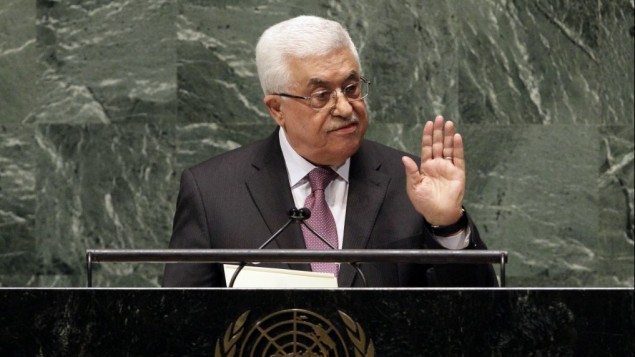
Acting President of the Palestinian Authority, Mahmoud Abbas
Addressing the United Nations, November 29, 2012
(photo: Richard Drew/AP)

As Abbas said in his address to the UN on November 29, 2012: “Israeli occupation is becoming synonymous with an apartheid system of colonial occupation, which institutionalizes the plague of racism and entrenches hatred and incitement.”

The Palestinian’s pivot was subtle but significant.  Self-determination (like Zionism) in itself was not a crime.  Indeed, the Palestinian Arabs seek the same right for themselves.  However, the Israelis’ “colonial occupation” was unique and the root cause of the problem.  It was not necessarily the Jews’ goal of self-determination, but the act of colonialization that created “racism” and “incitement.”

Somehow, the Europeans and a growing number of countries, have embraced these narratives, particularly that Israel in its entirety was a UN mistake.

International Remorse for Partitioning Palestine
November 29, not June 4

The clarity of the global adoption of these positions can be found in the annual commemoration of the day of the partition vote on November 29, 1947.

In 1977, while the “Zionism is Racism” edict was still fresh, the United Nations passed another resolution to annually commemorate the UN Partition vote, as the “International Day of Solidarity with the Palestinian People.”

The decision to partition Palestine was approved by Jews and rejected by Arabs in 1947, yet the UN specifically chose that date to stand in “solidarity with the Palestinian People.”  On its face, it would seem like a cruel decision to create a holiday for a people on the very day that those people despised.

However, taken together with the “Zionism is Racism” resolution of 1975, the picture becomes more clear: the UN believed that the decision to partition the land was a mistake.  The global body concluded that the Palestinians were correct in the assertion that the UN created a racist, anti-Arab entity in Palestine.  The Palestinians were correct to reject the partition plan in 1947.  The fault belonged to the United Nations, not the Palestinians, right at creation.

The United Nations did not choose June 4 or June 10 as the date to stand together with Palestinians.  Those dates in 1967 were the beginning and end of the Six Day War when the Jordanians (together with Palestinians who were then citizens of Jordan) launched an attack on Israel and consequently lost the “West Bank” which they had illegally annexed.  If the root cause of the plight of Palestinians was “Israeli settlements” in the West Bank, then those dates would have been more appropriate to anchor the anniversary.

But the United Nations wanted to mark its own poor decision.  While the Palestinians rejected partition in 1947 and launched wars in 1948 and again in 1967, those bad decisions and actions were not deemed relevant.  The UN chose to tell the Palestinians that it was not their fault.  Their situation stemmed from decisions that the UN itself made.

Today, while the UN may no longer outwardly state that “Zionism is Racism,” the global body has adopted Abbas’s narrative that the UN planted a colonialist flag in Palestine.  The Europeans and liberal press now echo Abbas and the Iranian Supreme Leader Ali Khamenei who claim that Israel is a foreign and dangerous entity that was unnaturally inserted into the Middle East, and that the Arabs are the sole indigenous people and the land itself is inherently “Arab.”


It is well passed time for Israel to actively combat this claim of colonialization, the way activists overturned the “Zionism is Racism” UN edict in 1991.  It is time to clearly educate the world that RE-ESTABLISHING the Jewish State and not banning where Jews can and cannot live is neither colonialist nor racist, but the essence of freedom and justice.


Related First.One.Through articles and video:

Israel was never a British Colony; Judea and Samaria are not Israeli Colonies

The United Nations Applauds Abbas’ Narrative

The Holocaust and the Nakba

The Legal Israeli Settlements

UNRWA’s Ongoing War against Israel and Jews

Nicholas Kristof’s “Arab Land”

Video: I hate Israel – Zionism

Subscribe YouTube channel: FirstOneThrough

Join Facebook group: FirstOne Through  Israel Analysis

The Current Intifada against Everyone

The shootings, stabbings and car attacks in Israel in the fall of 2015 have led several media pundits and politicians to wonder whether the beginning of the Third Intifada has begun. This Palestinian intifada is against their own leaders as much as it is against Israel, and to miss that point is to miss the core issues and solutions before the parties.

Har Nof
Murder in Synagogue in Har Nof neighborhood of Jerusalem
November 2014 (photo: Israel Government Press Office)

First Intifada against Israel (1987-1993)

The First Intifada, which began in 1987, was launched by Palestinian Arabs who were angry about the lack of movement towards a creating a Palestinian state. The multi-year attacks killed thousands of people, and not just in Palestinians-versus-Israelis attacks. An estimated 1,000 Arabs who were suspected of collaborating with Israel were also killed by fellow Palestinian Arabs.

The First Intifada continued until the Oslo Accords of 1993 which started a timetable for a negotiated agreement between the parties. It was the first time that the Government of Israel and the Palestinian Liberation Organization (PLO) formally recognized each other. Counter to popular belief, the agreement did NOT call for the creation of a Palestinian state, but was crafted to transition Palestinians to self-rule (for example, a solution like American Indian reservations would have met the stipulations in the Oslo Accords) to commence within five years.

Transition (1993-2000).  Between 1993 and 2000, the leadership of Israel and Palestinian Arabs attempted to arrive at a peace treaty and settle all key issues including matters of boundaries, security and the status of the “right of return” of Palestinian refugees and their descendants. During this time there were still hundreds of attacks against Israelis with almost 100 Israelis killed. While the world may have considered the First Intifada to have concluded with Oslo, for Israelis, the murder and mayhem never stopped.

Second Intifada (September 2000-September 2014)
“No Compromise Intifada”

The Second Intifada broke out in September 2000 when it became clear that the Palestinians were not going to get everything that they demanded: a new country based on land that was controlled by Egypt and Jordan which was taken by Israel in 1967; the eastern half of Jerusalem as their capital; and a right of return to Israel for all Palestinian Arab refugees and their descendants.

Intifada 2A: Arafat’s War (2000-2005). Angry at the terms that he negotiated with Israeli Prime Minister Ehud Barak with the assistance of US President Bill Clinton, Yasser Arafat (1929-2004) launched a multi-year war against Israelis. Bombs blew up buses and pizza parlors. Arabs shot at cars and schools. Thousands of Israelis – most of them civilians – were murdered by Palestinians, and thousands of Palestinian Arabs were killed in efforts to put down the intifada.

Transition (November 2004-2008). The first wave of the Second Intifada ended when several notable things occurred:

  • Yasser Arafat (fungus be upon him) died in November 2004.
  • Israel largely completed a security barrier to stop Palestinian Arab attackers from entering Israel from the west bank of the Jordan River.
  • Israel withdrew from the Gaza Strip (2005).
  • Palestinian Arabs held presidential elections, voting for Fatah’s Mahmoud Abbas in 2005.
  • In 2006, Palestinians held Parliamentary elections and voted for Hamas, a more radical party that called for Israel’s destruction that is considered a terrorist organization by many countries including the US and Israel.
  • In 2007, Fatah and Hamas fought bitter battles against each other and Hamas evicted Fatah from Gaza and seized authority there.
  • With the Hamas takeover over Gaza, Israel put in place a naval blockade (and later a land blockade) to stop weapons from flowing to Hamas.

Intifada 2B: The Divided Intifada (2008-2014). By 2007, the Palestinian Arabs were deeply divided with Hamas controlling Gaza, and Fatah ruling in the West Bank. Each party had different stated goals and approaches to their conflict with Israel.

Hamas’s Violent War of Destruction: Hamas did not want a two-state solution and sought the complete destruction of Israel through armed conflict. Fighting from a defined region in Gaza and using missiles (as opposed to street attacks) the Hamas fight appeared more akin to a war. Indeed, the press referred to the 2008, 2012 and 2014 battles as distinct wars between Gaza/ Hamas (not Palestinians generally) and Israel. Israel referred to its defensive operations as Operation Cast Lead; Operation Pillar of Defense, and Operation Protective Edge, respectively. These three “wars” were a continuation of Hamas’s fight to destroy Israel, described clearly in its 1988 Hamas Charter.

Abbas’s Political War of Demands: In the West Bank, Mahmoud Abbas and the world courted each other. Abbas kept the Palestinian Arab masses out of Hamas’s massive attacks against Israelis and thereby portrayed himself as a moderate. In turn, many countries assured Abbas that he would achieve all of his demands that fell short in the 2000 peace talks, through diplomatic means. US President Obama made Abbas comfortable that Israel’s biggest ally (the US) would pressure Israel into conceding to all Palestinian demands: Obama pushed for a settlement freeze in 2009; in 2011 he said that borders would “be based on the 1967 lines with mutually agreed swaps,”; he stripped all Israel-leaning positions from the 2012 Democratic platform, including that there would not be a “right of return” of Palestinian refugees to Israel; he even said that Jews moving into existing homes they legally purchased in the eastern part of Jerusalem was a “provocation” in 2014.

The world similarly gave Abbas encouragement. They admitted Palestine to UNESCO in 2011, and many countries began to recognize Palestine as a country, even though it had yet to negotiate borders and security with Israel. Abbas’s moves in the political sphere to secure all of his demands were seemingly gaining traction.

Palestinians Intifada against Everyone
(October 2014- )

The “Third Intifada” began at the end of Operation Protective Edge with a few events. It resembled prior intifadas because the attacks were between Palestinian Arabs and Israeli Jews in the streets, but the nature of the intifada was quite different than the ones in the past. Whereas the first intifada was Palestinians-versus-Israel and the second intifada was Palestinian leadership-versus-Israel, the third intifada is Palestinians-against-everyone.

The start of the Intifada against Everyone: Acting-President of the Palestinian Authority Mahmoud Abbas kept the West Bank Arabs out of the Gaza/ Hamas War of Destruction based on the promise that the Palestinians would be able to achieve their goals that they failed to achieve in 2000 through diplomacy. However, the Palestinians had only won empty victories of recognition at UNESCO and were no further along in achieving a state. In the fall of 2014, several matters came to boil:

  • Anger at the destruction in Gaza. Over 2000 Palestinians were killed in the summer of 2014 and the attacks against Israel yielded nothing.
  • Anger at not being part of the Fight. The West Bank mainly stayed out of the fight, even though many people supported Hamas’s war against Israel.
  • Anger at Jewish advocacy on the Temple Mount. In October 2014, Rabbi Yehuda Glick continued to advocate for the right of Jews to pray at their holiest location. Radical Islamists shot Glick several times, though he survived the attack. The assailants were killed and Abbas praised them as “martyrs.”
  • Anger at being banned from the Temple Mount. In response to the attempted assassination of Glick, Israel closed the Temple Mount to all visitors. This further enraged Arabs both at being banned from their third holiest site, and the stark realization that Israel had control of the Temple Mount.
  • Anger at not moving forward on Statehood. For all of Abbas’s promises that the world would force Israel to accede to all Palestinian demands, the year 2014 which was hailed as the “International Year of Solidarity with the Palestinian People” was going to end with nothing. Abbas could not even get Netanyahu to release all of the prisoners that they had expected to be released.
  • Anger at Palestinian leadership. Both Fatah and Hamas failed to deliver positive results for Palestinians. They were viewed as corrupt by the vast majority of Palestinians, and the two parties could not even reconcile to coordinate a cohesive single ruling authority. Both Palestinian leaderships were failures by every measure, but no new elections were on the horizon even though the Palestinian Arabs hadn’t voted since 2006.
  • Anger at Arab States. Egypt changed leadership to General Abdel Fattah el-Sisi in 2013, but it was in 2014 that Egypt began to shut down the border between Gaza and Egypt, crippling the Gaza economy (and arms flow). Foreign supporters like Qatar which pledged money to rebuild Gaza were unable to do so because of legal hurdles.
  • Anger at the United States. While US President Obama and Secretary of State were effective in pushing Israel, the limits became apparent when they could not get Israel to release the fourth batch of prisoners in 2014. How could the US then force Israel to move forward with all of its greater demands?
  • Anger at themselves. The world took to the streets during the summer of 2014, largely condemning Israel for the war from Gaza. Yet the EGL Arabs (Arabs living east of the Green Line) were relatively quiet. They watched global protests while they didn’t protest. They witnessed fellow Palestinian Arabs fighting and dying in Gaza while they didn’t fight.
  • Anger at the world. For all of the waiting and promises from the US and the world to pressure Israel to deliver Palestinian demands, it became clear that such a path would not yield everything the Palestinians sought. Palestinians realized that the world would not impose their demands on Israel.

The Start of Attacks: While Hamas was behind the abduction and murder of three Israeli teens in Judea in June 2014, the “lone wolf” EGL Palestinians began to attack Israeli civilians in the streets and synagogues in October.

  • Car attacks rammed people in Jerusalem (October 2014)
  • Mahmoud Abbas called for Palestinians to defend Al Aqsa (October)
  • An attempted assassination of Yehuda Glick (October)
  • Car attacks and stabbings in Gush Etzion (November)
  • Arabs hacked Jewish worshippers to death in a synagogue in the Jerusalem neighborhood of Har Nof (November)
  • Various other attacks and calls for a “car intifada

The Anger-at-Everyone Intifada was underway.

Yet to understand the spike in the current wave of attacks in the fall of 2015, requires an appreciation that the end of the Palestinian Authority is at hand.

The 2015 Collapse of the Palestinian Authority and Oslo.  As described above, Abbas has remained unpopular since 2006.  He remains a puppet in the eleventh year of a four-year term.  He is old – 80 as of March.  And the old, ineffective, unpopular Abbas is only part of the story.  The Palestinian Authority is collapsing.

1.Impending PA Bankruptcy.  The PA was never particularly well-funded.  The PA suffered from several serious flaws even before the current crisis: large scale corruption and theft by PA leadership, and a reliance on Israel to collect and submit taxes on the PA’s behalf. In 2015, new problems emerged:

  • In February 2015, the PA lost a court case in the United States filed by Shurat HaDin on behalf of Americans killed in the Second Intifada.  The court awarded the victims of terrorism $655.5 million.  The verdict would likely have spelled the end of the PA so US Secretary of State John Kerry came to the PA rescue in August and had the PA post only a $10 million bond while the case is appealed.  The case will be heard March 2016, and the PA will likely lose and declare bankruptcy.
  • In June 2014, in the wake of a possible reconciliation government between Fatah and Hamas, the US Congress threatened to withhold funding of the PA since Hamas is a designated terrorist organization.  Obama voted to overrule Congress. The 2014 Gaza War started soon thereafter so the Palestinian reconciliation government has been slow to take form. But the impact of the US cutting funding lingers of the PA.

2. Hamas Funding. While the PA sits on the brink of bankruptcy and Hamas sits without funds or infrastructure, a game-changing event happened in July 2015.  The world powers agreed to allow Iran to run a curtailed nuclear program in exchange for releasing up to $150 billion.  There were no constraints to how Iran could use the money and it has made no secret of its desire to erase Israel from the map.  Iran has had a long-term relationship with Hizbullah in Lebanon, and the release of these funds could provide a huge windfall for Hamas, particularly if the world softens the Israeli blockade on Gaza.

3. Goodbye Obama. Good night Ban Ki-Moon.  The best chance Abbas had for imposing the 2000 Palestinian demands on Israel were through the United Nations and the United States.  Both US President Barack Obama and United Nations Secretary-General Ban Ki-Moon were strong advocates for the Palestinian cause.  Each one consistently berated Israel and tried to force it to accept Palestinian terms.  However, while their rhetoric was powerful, the heavy-handed approach to Israel did not yield the Palestinians promise.  Ban Ki-Moon’s term at the UN expires December 2016 and Barack Obama’s term expires January 2017.  It is hard to imagine that a new US president or SG of the UN will be as anti-Israel as the parties Abbas had working for him.

So Abbas took the podium at the United Nations in September 2015 and essentially announced that the Oslo Accords were dead.  He knew that he was done and the Palestinians were done with him.  He could not imagine that a PA facing bankruptcy while Hamas gained Iranian funds would keep his straw-man position propped up any longer. He left open the possibility that the lame ducks Obama and Ki-Moon might save him, but he knew his game was basically over.

The Rise of Intifada-against-Everyone. The Palestinians celebrate the end of the PA.  In addition to its corruption, they viewed the Authority as a tool of the Israeli government to suppress violence.  The EGL Arabs sat out the Divided Intifada because of the PA, and there was no honor in that. With the closing of the PA, it could pick up its part of the Divided Intifada, and perhaps do it with money and weapons from Iran.

In time, it may even have a nuclear-powered sponsor to enforce its demands.

For now, the Palestinians arm themselves with encouragement on social media like Facebook and Twitter.  They share videos of how to stab and attack Israelis and selections from videos of Israelis attacking Arabs. They come to the streets armed with knives, rocks and Molotov cocktails all around Israel and Judea and Samaria, looking for Jews to attack.

While the anger is at everyone, for now the attacks are limited to Jews.  As the Palestinian Authority truly collapses and the Iran deal either collapses or is implemented, the attacks will likely expand to other groups in other locations.

The Solution


The Temple Mount / Al Aqsa. World focus is now on security at the Temple Mount.  Indeed the rights of Jews on the Mount was seen by many as the excuse for starting the second intifada so parties are eager to calm the situation there. A narrow focus on Jewish rights and access is a small part of the bigger picture.

Ending Incitement. World leaders have urged parties to refrain from incitement, even while they barely berate Mahmoud Abbas’s calls for jihad.  While such calls for calm are appropriate, they also confuse the source of the anger. Palestinians have doubled their use of daily social media over the past 18 months according to polls. They do not wait for Abbas or Ma’an to tell them what is news or how to kill.

Compromise. The core issue can only be addressed when the global community states very clearly that the Palestinians must compromise.  They will not get everything they hope for nor will they even get everything within each core issue that they seek.

Obama thought that the old ways of supporting Israeli positions did not yield peace so he threw out that method and ran his presidency on being a bully to Israel.  But an Israel that feels threatened and insecure – despite Obama’s security cooperation – will not be in a position to conclude a deal with Palestinian Arabs.

The even bigger obstacle than the Obama administration has been the United Nations which has taken to every Palestinian position and encouraged them to believe that there is no need to compromise on their aspirations. That is a fatal flaw.

The UN must state clearly that the path to two states does not rely on negotiations but on compromise. A new Palestinian state will not come to being on “1967 borders.” All of East Jerusalem will not be the capital of such state. A total of 5 million refugees and their descendants will not move to Israel. The UN must stop encouraging these fantasies.

The first and easiest step to move towards a final resolution between the parties is to unravel the refugee mess that the United Nations promotes. The UN should make clear:

  • While the UN will continue to provide services to 5 million refugees and their descendants in the near-term, the only people that could be entitled to go to Israel under a “right of return” as defined in UN Resolution 194 are actual refugees. It will be up to Israel to allow any additional people enter the country.
  • Any refugee re-entering Israel must abide by the language of Resolution 194 which states that that they are willing to “live at peace“, and follow Israel’s guidelines for affirming such which may include acknowledging that Israel is a Jewish State.

If the UN and US really care about avoiding a third intifada and resolving the Israel-Palestinian Arab conflict, it must move past the smaller issues of focusing on incitement to the bigger picture of publicly stating that Arabs must compromise on their stated demands to resolve the conflict.  To date, Obama and Ki-Moon have encouraged the same unrealistic Palestinian expectations, and with it, the anger of the Palestinians for not delivering on an unrealistic goal.

The second intifada was against Israel for not meeting Palestinians demands, and the third intifada against everyone is about the world’s failure to enforce those demands. It is time for an honest conversation – publicly – about those very demands, to avoid more bloodshed and to end the conflict.


Related First.One.Through articles:

A “Viable” Palestinian State

Failing Negotiation 102: Europe

Subscribe YouTube channel: FirstOneThrough

Join Facebook group: FirstOne Through  Israel Analysis


An Inconvenient Truth: Palestinian Polls

There were a growing number of violent attacks by Palestinians against Israelis in October 2015.  Various politicians such as the US Secretary of State John Kerry blamed the root cause as Palestinian frustration about ongoing Jewish “settlements” east of the Green Line.  Acting President of the Palestinian Authority Mahmoud Abbas pointed the finger at defending Al Aqsa Mosque in Jerusalem from Israelis changing the status quo.  United Nations Secretary-General Ban Ki-Moon considered that it was due to Palestinians frustration about the failed peace talks and lack of progress towards creating a Palestinian state.

Why all of the guessing for identifying the root cause when the Palestinians poll themselves every three months?

The Palestinian Center for Policy and Survey Research conducts a poll every quarter on a range of issues.  It breaks the analysis between Palestinian Arabs living in the West Bank/ east of the Green Line and the Gaza Strip.  A review of the poll numbers gives a much better sense of Palestinian Arabs sentiments about their situation than biased and bogus statements from Kerry, Abbas and Ban Ki-Moon.

A Growing Majority of Palestinians Support Attacking Israeli Civilians

The poll figures do show a growing support of attacking innocent Israeli civilians.  In December 2013, the percentage of Arabs supporting unprovoked attacks was 34% and 58% in the West Bank and Gaza, respectively.  Those figures jumped to 48% and 68% for WB and Gaza in September 2014 and then to 50% and 70% in September 2015.  Overall, a clear majority of 57.2% of Palestinians were in favor of terrorism as of September 2015, up from 42.9% in December 2013.

Terrifying numbers about terrorism in both the absolute percentage and in the terrible trendline of support.

No heightened Palestinian fear regarding Annexing the West Bank and Changing the Status Quo on the Temple Mount. Palestinians are ALWAYS afraid.

Despite Kerry’s assertion that Palestinians are increasingly fearful of Israelis living east of the Green Line and Abbas’s statement about Israel changing the status quo on the Temple Mount, the statements are untrue.

kerry harvard
John Kerry at Harvard attacking Israeli settlements
(photo: Brian Snyder/Reuters)

Settlements: Palestinians have always been afraid of Israeli intentions regarding annexing land. In December 2013, 85.3% and 80.5% of Arabs in the West Bank and Gaza, respectively, believed that Israel would annex the entire region.  Those figures dropped after the 2014 Gaza War to 81.2% and 75.3% in September 2014, before rising again to 88.5% and 78% one year later.

In every quarter over the past two years, between 80% and 90% Palestinian Arabs in the West Bank thought Israel was intending to annex both the West Bank and Gaza.  The range was 70% to 82.5% for Palestinians living in Gaza.  Presumably the Arabs in Gaza did not have as great a fear as the Arabs in the West Bank since they clearly saw that Israel left Gaza in 2005.  The question remained why the fear factor numbers remain so consistently high, even in Gaza.  In any event, there was no correlation between the increased Arab desire to kill Jews and their fear of Israelis annexing territory.

Al Aqsa: The poll numbers show similar results for the Temple Mount/ Al Aqsa.  In March 2014, the PCPSR asked whether people were concerned that Israel would change the status quo on the Temple Mount.  Almost everyone – 93% – believed Israel intended to make changes to access and prayer rights.

In December 2014, 66.2% of West Bank Arabs, and 38.8% of Gazans thought that Israel intended to completely destroy the Al Aqsa mosque.  In the most recent September 2015 poll, those figures dropped to 60% and 33.4% for the West Bank and Gaza, respectively.  Again, there was no correlation between the uptick in violence due to Palestinian fears, despite the October 2015 protestations of John Kerry and Mahmoud Abbas.

The UN Fantasy of Palestinian Support for a Two State Solution
and Negotiated Process

Despite the United Nations repeated comments that the key to peace lies in a two state solution, it has never been a particularly popular dream of the Palestinians. In March 2014, a slim majority of 51.2% of Palestinians supported the idea. In the last poll of September 2015, 47.9% of Palestinians were in favor of two states.

Further, throughout 2015 a majority of Palestinians favored an armed struggle with Israel more than negotiations.  In December 2014, Arabs broke down as 41.9%, 25.6% and 28.3% in favor of using either violence, negotiations and non-violent protests, respectively. In September 2015, the polls showed little movement, with a breakdown of 41.6%, 29.2% and 24.2%.

The Palestinian polls show that the two state solution has never been a very popular idea, and those that favor it believe it can best be accomplished through violence. The recent uptick in actual violence actually accompanied a move from a preference for negotiations, counter to expectations.

Safety and Social Media

The poll numbers do show some trends that correlate to the spike in what Wall Street Journal’s Brett Stephens referred to as a Palestinian “blood lust.”

Safety: In December 2013, a majority of Arabs east of the Green Line (54.4%) and in Gaza (61.7%) felt safe.  That changed dramatically after the 2014 Gaza war.  Between June 2014 and December 2014 the sense of safety in the West Bank dropped from 51% to 38.3%, and in Gaza from 63.9% to 46.1%.  The numbers continued to stay low over 2015, with a perceived safety growing from 38.3% to 48.7% in September 2015 in the West Bank, and dropping further in Gaza from 46.1% to 39.5%.  Those are very dramatic declines from two years earlier.

Social Media: Palestinians, particularly those in the West Bank, have been getting their news from social media in much greater numbers.  In the West Bank, Arabs that use Facebook and Twitter jumped from 14.7% (June 2014) to 19% (December 2014) to 26.4% (September 2015). The numbers in Gaza over that time period went from 21.3% to 21.6% to 24.1%.  These are significant changes, particularly in the West Bank.

The survey does not cover what kind of items people are watching and sharing on social media.  According to some news reports, videos of Israeli forces shooting Palestinians and “how to” videos showing ways to stab Jews, have gone viral.

The Palestinian Authority

The Palestinian Authority has always been viewed as corrupt by Palestinians according to polls.  Anywhere from 78% to 84% of West Bank Arabs that live under the PA consider the government corrupt according to every poll.  In Gaza, the percentage is lower, from 72% to 82%, but the overall sentiment is the same.

However, what has not stayed the same is the confidence in Abbas.  While coming in dead last in a theoretical three-person presidential election each quarter, his support has plummeted in the West Bank, while it has grown in Gaza.  In the WB: 32.1% (12/13); 28.5% (6/14); 26.7% (12/14); 21.5% (9/15). In Gaza: 17.2% (12/13); 27.1% (6/14); 20.8% (12/14); and 27.4% (9/15).  By September 2015, 62.9% of West Bank Arabs and 67.4% of Gazans wanted Abbas to resign.

Conclusion

Principal players in the Israeli-Palestinian conflict are using stale and incorrect information to describe the current violence, and as such, are focused on irrelevant solutions.  The settlements and the Temple Mount are not reasons for violent attacks.  A negotiated two state solution was never popular, despite the many efforts of those who strongly advocate for it.  Like the corruption of the Palestinian Authority, these things are constant white noise that don’t suddenly motivate people to murder.

Today’s violence is erupting due to concerns over safety, and fueled by the credibility and incitement of Palestinians on new media.

Abbas announced the beginning of his retreat from the Oslo Accords and managing security in the West Bank. The West Bank Arabs now feel more threatened and communicate directly with each other over social media about attacks and injuries.  The raw videos of families and friends being injured make them feel more unsafe and angry.  They, in turn, make videos for their friends to attack Israelis and reject Palestinian leadership, which fuels the security fears on all sides.

World and regional leaders are rehashing old misconceptions about a pathway towards peace and security in the region.  They should look at what Palestinians are actually saying: they are ambivalent about of a negotiated two state solution. They do not believe or trust their own leadership any more than the intentions of the Israelis.

With such understanding, it is time to rethink always propping up Abbas, ignoring Hamas and condemning the Israelis. It is time to stop obsessing about the settlements and Temple Mount and focus on security and communications.

The inconvenient truth is that Palestinians don’t like and don’t trust any of today’s leaders, and those same leaders refuse to listen to what the Palestinians are telling them.  It is hard to imagine peace and security emerging from such a dynamic.

Subscribe YouTube channel: FirstOneThrough

Join Facebook group: FirstOne Through  Israel Analysis

Palestinians of Today and the Holocaust

The New York Times berated Israeli Prime Minister Benjamin Netanyahu for tying Palestinians to the Holocaust in its editorial pages on October 23, 2015 “Mr. Netanyahu’s Holocaust Blunder.”  It is interesting for the Times to be so angry about this remark while failing to note certain current truths about the Palestinians and the Holocaust:

  • Acting-President of the Palestinian Authority Mahmoud Abbas wrote his doctoral paper on Holocaust denial
  • Abbas’s April 2014 disturbing comments trivializing the Holocaust when he said that Palestinians understand genocide because they suffer “ethnic discrimination and racism” from Israelis was celebrated by the NY Times
  • Regular NY Times contributor Roger Cohen suggested a pathway to peace between Israelis and Palestinians was that “Jews should study the Nakba. Arabs should study the Holocaust” trivializing the torture and killing of millions of innocent people with a conflict about land.
  • Abbas repeatedly said that Israel is engaged in “a war of genocide” against Palestinians, in a deeply insulting distortion of both the conflict and the Holocaust.
  • Palestinian leaders forbid Holocaust education in UNRWA schools in Gaza, counter to the United Nations wishes and curricula.
  • The list goes on

The Palestinians are the most anti-Semitic people in the world, with almost every person (93%) holding negative feelings about Jews according to a May 2014 poll.  By almost every measure, the Palestinians today are more extreme than Germans were in 1933, whether in passing laws that forbid Jews entry onto Palestinian college campuses; laws that prevent land sales to Jews; or the stated desire to have a country free of any Jews.  Shouldn’t that be the main focus of the Times?  Why does it perpetually give a pass to the vile anti-Semitism and trivialization of the Holocaust by the Palestinians, but immediately attack of Netanyahu?

The Times stated that Netanyahu attempted “to distort history in order to draw a straight line between Mr. Husseini’s Nazi views and the current Palestinian leadership.”  Netanyahu didn’t need to do that. Palestinians do that themselves.

Pal nazi2Pal naziFatah nazimufi Jlem Nazi
Palestinians with Nazis yesterday. Palestinians acting like Nazis today.


Related First One Through articles:

Abbas Knows Racism

What do you Recognize in the Palestinians?

Extreme and Mainstream. Germany 1933; West Bank & Gaza Today

Subscribe YouTube channel: FirstOneThrough

Join Facebook group: FirstOne Through  Israel Analysis

Framing the Israeli-Palestinian Arab Conflict: WSJ and NY Times

The portrayals of the Israeli-Palestinian Arab conflict in the two main New York newspapers could not be more different.  Snapshots of the two papers on October 17, 2015 and the editorials from the prior days frame the conflicting attitudes.

In Pictures

On October 17, 2015, each paper posted a picture of an attack that occurred in Hebron. The Wall Street Journal captured the Palestinian who posed as a journalist stabbing an Israeli soldier.  The New York Times showed a picture of two Israeli soldiers standing over the dead Palestinian.

IMG_3554
Wall Street Journal front page picture of Israeli soldier attacked by Palestinian
October 17, 2015

IMG_3549
New York Times front page picture of armed Israeli soldiers standing over dead Palestinian October 17, 2015

The Wall Street Journal covered this story – and many of the stories over October 2015 when Palestinians attacked Israelis – as Palestinians as the aggressors and Israelis as defending themselves.  However, The New York Times almost uniformly showed all Palestinians as victims and Israelis as the armed aggressors.

In Editorials

New York Times: On October 15, the Times ran an editorial entitled “The Cycle of Violence in Israel.” The title and the opinion piece described a country that is in a never-ending cycle of “attacks and reprisals“, blaming neither party as being aggressor or instigating the violence.  The attacks were referred to as Palestinian “uprisings,” and the Times pointed the finger at a few parties:

  • “Yasir Arafat, could speak for all Palestinians” back in 1993 so there was a better prospect for peace according to the Times behind a unifying leader.  It neglected to state that the same Arafat walked away from a serious peace offer and then launched the Second Intifada in 2000, killing thousands.
  • The Times correctly stated that “Mahmoud Abbas is bitter and unpopular” which makes it difficult for him to lead and deliver peace negotiations. The paper failed to point out that Abbas has constantly incited violence against Israelis and never put forth any public comments on his willingness to compromise on his demands to create peace.
  • “Netanyahu has demonstrated little interest in a two-state solution” according to the Times, even though he is the only person that specifically has demonstrated a desire for peace: handing over half of the “Holy Basin”, Bethlehem, in 1996; a ten month settlement freeze in 2010; releasing dozens of terrorists; and repeatedly stating his willingness to engage in direct peace talks anytime, anywhere.

The New York Times described the only solution to ending the cycle of violence as “creating an independent Palestinian state alongside an Israel whose right to exist is fully acknowledged by all Palestinians.”  Note that the Times language specifically does not mention any Israeli demands of “security” and recognition as a “Jewish State.”  According to the Times, the only thing creating violence is the lack of a Palestinian state.

Wall Street Journal: On October 16, 2015, the WSJ had an editorial calledThe Knives of Jerusalem.The Journal’s attitude about the violence and approach could not be more different than the New York Times:

  • The WSJ called the Palestinian Arab attacks “terrorism” five times, a term never used by the Times (nor by the Obama Administration for that matter)
  • “[A] deep-seated culture of hate” among Palestinian Arab society was at the core of the attacks
  • Blame is specifically placed on Palestinian leaders including Abbas spreading “rumors” and “lies” about Israel to incite the Arabs.

The WSJ noted that Israel will need “to ride out another storm of terror.”  Peace will ultimately come when Palestinians realize that the Jews are not going to leave: “The sooner they [Israelis] impress on Palestinians that they will never bow to knives or bend to terror, the sooner the stabbings will end.”


The Times placed the principal blame for the attacks on Israeli “occupation” and therefore the solution is a peace agreement / a separation accord. Their pictures and articles repeatedly use images of Palestinians as victims and Israelis as militant occupiers.

The WSJ placed the blame on Palestinian Arabs who have denied the right of Jews to live in the holy land as self-governing people since the League of Nations gave Jews that legal right in 1922.  Peace will only come when Palestinian Arabs give up the fight and accept that the Jews are never going to leave. Their articles are more likely to show Israel as at the frontlines in the battle against Islamic radicals, similar to much of the western world.

The pictures and articles of the two papers have been consistent in their coverage of the conflict, and the weekend of October 17, 2015 brought the contrast into clear focus.


Related First One Through articles

Every Picture Tells A Story: Only Palestinians are Victims

Why the Media Ignores Jihadists in Israel

The Israeli Peace Process versus the Palestinian Divorce Proceedings

Every Picture Tells a Story: Versions of Reality

Subscribe YouTube channel: FirstOneThrough

Join Facebook group: FirstOne Through  Israel Analysis
Every Picture Tells a Story: Versions of Reality

The New York Times published an article on October 16, 2015 entitled “Conflicting Accounts of Jerusalem Strife Surround Wounded Boy“.  The article described a 13-year old Palestinian boy who stabbed a 13-year old Israeli boy who was riding a bicycle.  The acting-President of the Palestinian Authority Mahmoud Abbas claimed that the innocent Palestinian was executed by Israelis, while in fact he was recuperating at an Israeli hospital.

Normal logic would suggest that the pictures that accompany the article have something to do with the story.  Indeed, the Times did post a small black-and-white photograph of the 13-year old Palestinian recuperating in a hospital bed.  However, the Times decided to post a much larger photograph on top of that picture – of Israelis with machine guns standing over Palestinian Arab women.

IMG_3546
Times leading with a picture of armed Israelis standing over Arab women in a story about a 13-year old Palestinian terrorist being described as “executed” by Mahmoud Abbas

Why didn’t the Times also post a picture of the wounded Israeli boy? Why didn’t it have a picture of Abbas declaring the boy “executed”?  Or Israeli Prime Minister Benjamin Netanyahu pointing out the lies and incitement of Abbas? Because for this “progressive” newspaper, the real story about Arabs attacking innocent Israelis is about Israelis fighting Palestinians, not the other way around.

The Times wrote a piece about “conflicting versions of reality” between Israelis and Palestinians. The reality of the Times constant portrayal of Israelis “occupying” Palestinian victims is another disturbing story in the “conflicting” (read “false”) narratives that fan the flames in the region.


Related First One Through articles:

Every Picture Tells A Story: Only Palestinians are Victims

Every Picture Tells a Story: The Invisible Murdered Israelis

Subscribe YouTube channel: FirstOneThrough

Join Facebook group: FirstOne Through  Israel Analysis

John Kerry’s Hypocrisy: “Can You Deliver?”

Listening to US Secretary of State John Kerry try to explain and defend the P5+1 Iranian nuclear deal to various audiences is a spectacle to behold, regardless of one’s position on the best course of action.  One of the people who might want to watch the sessions and learn something from John Kerry is John Kerry.

Kerry CFR
John Kerry speaking at the Council of Foreign Relations
July 2015

Secretary Kerry argued at the Council for Foreign Relations (CFR) that Congress must support the deal or it would undermine his ability to negotiate any treaty with any government in the future. At 29:55 of the CFR talk, Kerry said: “Other people in the world are going to sit there and say ‘hey, let’s negotiate with the United States, they have 535 Secretaries of State. I mean, please! I would be embarrassed to try to go out… I mean, what am I going to say to people after this as Secretary of State? ‘Come negotiate with us?’ ‘Can you deliver?’ Please!

Kerry made the point that when two parties sit down to negotiate, it is critical for the sides to know that the negotiating parties are both authorized to negotiate and have the ability to fulfill their sides of the deal. If no such authority or ability exists, the discussions are an irrelevant waste of time.

Despite Kerry being quite clear about his logic, he has nevertheless insisted that Israeli Prime Minister Benjamin Netanyahu sit down and negotiate with Acting-President of the Palestinian Authority Mahmoud Abbas, even though it is clearly understood that Abbas can deliver nothing.

  • No Mandate: Abbas’s four-year term as president ran out in 2009. No presidential elections have been held since then.
  • No Authority: Abbas’s Fatah party lost legislative elections in 2006, winning only 33% of the parliament. No legislative elections have been held since then.
  • No Support: Abbas lags in every Palestinian poll held since 2006.
  • No Control: Abbas has no control of Gaza since his Fatah party was kicked out in 2007.
  • No Track Record: Abbas has shown zero credibility in being able to strike compromises to govern his own people, let alone deliver compromises with Israel.

Despite the glaringly obvious impotence of Abbas, the Obama administration continued to pressure Israel to negotiate with this straw man.

The Obama administration publicly acknowledged that the Palestinian Authority has absolutely no ability to deliver peace a few years ago. During the Gaza war on Israel in 2012, then US Secretary of State Hillary Clinton tried to broker a cease-fire. She made a dozen calls to various world leaders to halt the war- but not ONCE called the Abbas and the Palestinian Authority.

Compounding the inherent flaws in Abbas and the Palestinian Authority is Abbas’s insistence on bringing terms of any deal with Israel to a referendum. Abbas stated that he cannot decide on the “Right of Return” for all Palestinians, but that each of the 5 million Palestinian Arab “refugees” must make a decision for themselves. Hey Kerry- 535 “second-guessers” looks pretty good compared to 5 million! In terms of the rest of the components of a final agreement, Abbas stated that he “would go to a referendum everywhere because the agreement represents Palestinians everywhere.”  That’s impressive – he seeks the approval of 11 million “Palestinian” Arabs from all around the world!


Kerry’s comments regarding Iran are both on- and off-the-mark.  Iran and all of the parties in the negotiations know that the United States is a democracy and the political process must run its course.  Once the American people’s representatives in Congress make a decision, the government will deliver on its commitments.

However, Abbas – a complete straw man if ever there was one – with no authority or control whatsoever, openly states that millions of individuals will ultimately not only decide the fate of an Israeli-PA deal overall, but even on certain components on an individual basis.


Kerry fully appreciates that before negotiators start a process that they want to know the answer to the fundamental question: “Can you deliver“? However, he doesn’t care when he forces Israel to do exactly that with Abbas and the Palestinian Authority.


Related FirstOneThrough video and articles:

Abbas demands R-E-S-P-E-C-T

The Disappointing 4+6 Abbas Anniversary

Palestinian “Refugees” or “SAPs”?

Subscribe YouTube channel: FirstOneThrough

Join Facebook group: FirstOne Through  Israel Analysis