
In 1942, as Nazi Germany was systematically murdering Europe’s Jews, C. S. Lewis published The Screwtape Letters. Four years later, with the horrors of the Holocaust exposed, George Orwell published Politics and the English Language.
Both men had witnessed the rise of totalitarianism and the extraordinary power of evil. Years of propaganda, normalized antisemitism and progressively discriminatory laws had helped prepare the ground for the unthinkable.
Both recognized a powerful weapon in that transformation: language.
Lewis imagined a senior demon, Screwtape, instructing his nephew on how to corrupt an ordinary man. His advice was simple: “Jargon, not argument, is your best ally.”
Argument invited people to consider whether something was true. Jargon supplied conclusions without requiring evidence, allowing people to accept ideas without examining them.
Orwell understood the other side of the process. Political language, he wrote, could be used “to make lies sound truthful and murder respectable.” He took this further: “If thought corrupts language, language can also corrupt thought.”
Orwell understood how language could disguise evil. Lewis understood how jargon could stop people from looking beneath the disguise. Together, they described how people could gradually surrender independent judgment without realizing it.
Consider how the vocabulary surrounding Jews and Israel has evolved.
Jews, historically portrayed as secretly wealthy and powerful, are again described through their supposed influence and financial clout. Zionists become a sinister political force rather than supporters of Jewish national self-determination. Israelis become settler-colonists, their very presence treated as an offense. Violence against them becomes resistance, while intifada is presented as merely shaking off oppression, obscuring its history of suicide bombings and terrorist attacks.
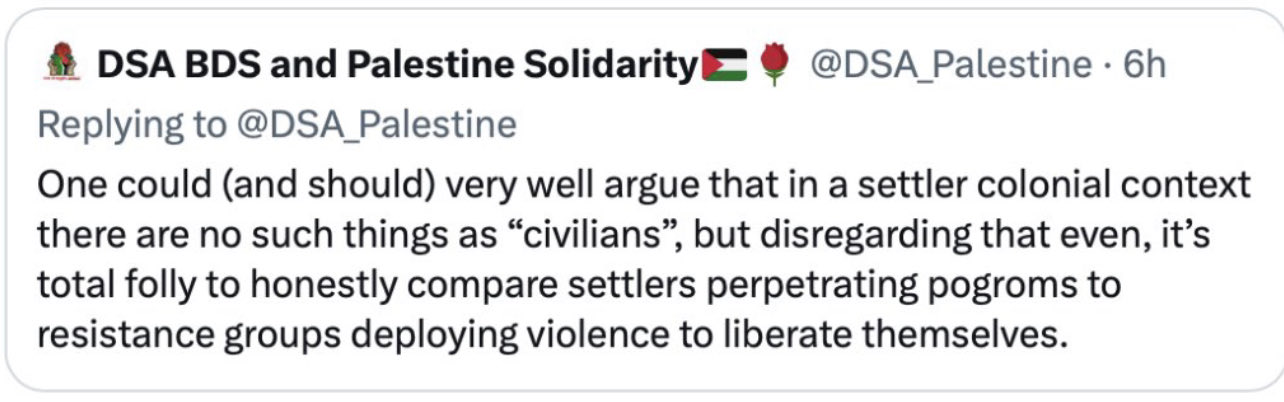
Each expression changes the moral framework. Jews become manipulators. Israelis become intruders. Their attackers become freedom fighters.
Universities gave these interpretations intellectual standing through theories of settler-colonialism, oppression and decolonization. The United Nations lent political authority to similar narratives, declaring Zionism a form of racism in 1975, a resolution it revoked in 1991. Academic discussions, international resolutions and media coverage reinforced one another, lending repeated characterizations the appearance of established truth.
The language appeared in ordinary journalism as well.
In 2021, The New York Times described a “powerful Orthodox Jewish community.” In 2022, its coverage of congressional redistricting again emphasized Jewish “power,” clout and influence. Both stories revived an old association between Jews, money and political control without explicitly arguing that Jews controlled anything.

The same technique could reshape perceptions of violence.
In May 2019, the Times described a Palestinian Arab sniper attack that wounded two Israelis as “a violent but localized expression of Palestinian impatience with Israel’s failure to alleviate dire humanitarian conditions in Gaza.” A terrorist attack was transformed into an expression of impatience, while Israel’s supposed failure to address humanitarian conditions became the explanation for violence directed against Israelis. Absolution via inversion.
As I wrote at the time: “So sublime, you swallowed it whole and didn’t choke on it.” The justification was embedded in the sentence without ever needing to be argued.
By October 7, 2023, the vocabulary was firmly established.
When Hamas terrorists invaded Israel, murdered civilians, committed sexual violence and took hostages into Gaza, some activists and commentators immediately reached for the familiar language of “resistance,” “liberation” and “decolonization.” This was the lexicon of the Ivy League: rape could be rationalized as resistance; murder could be understood as liberation; and the victims could be recast as colonizers.
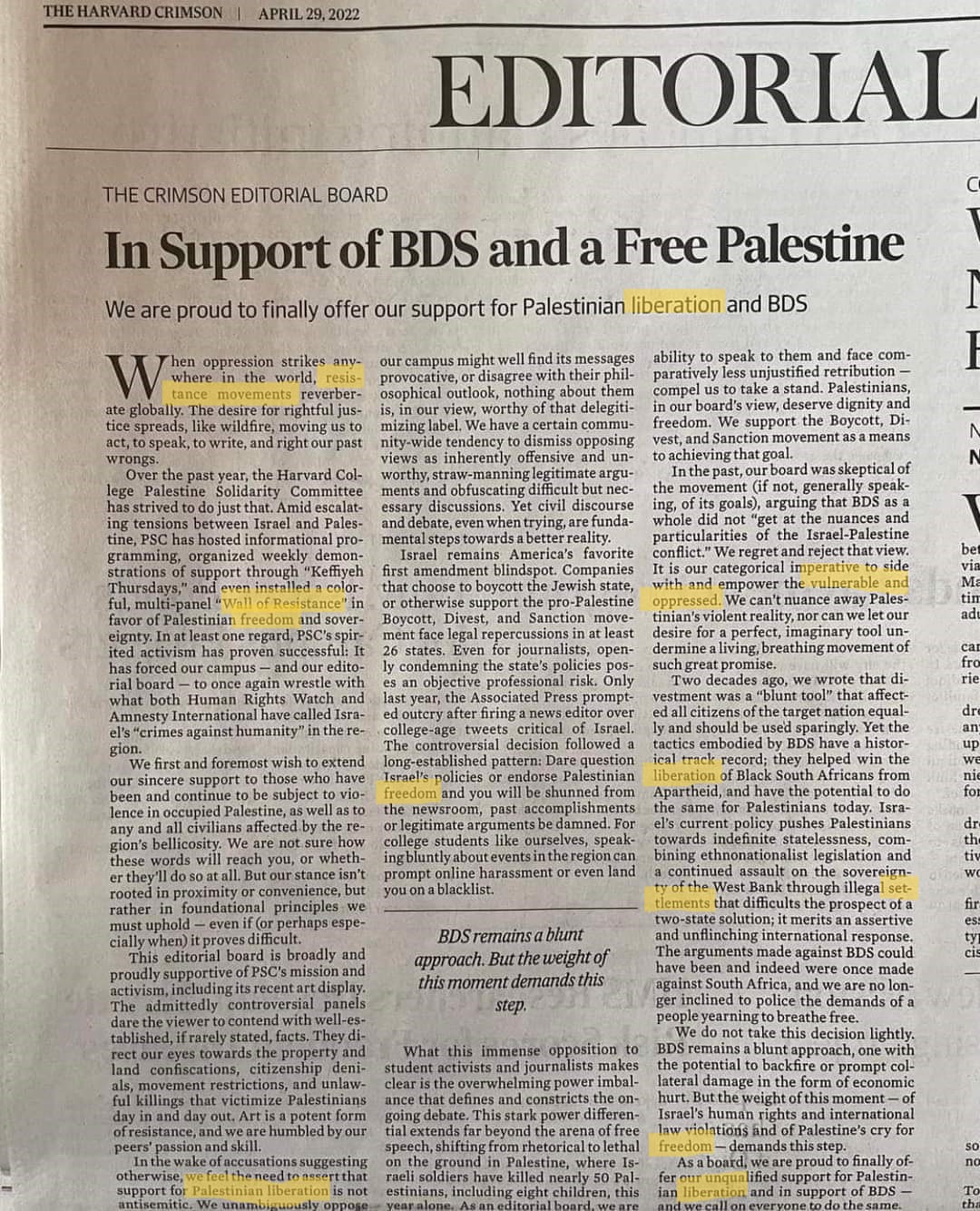
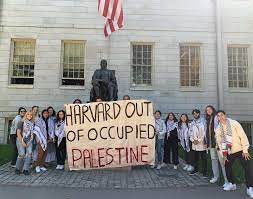
The atrocities should have challenged the assumptions. Instead, the lexicon already had declared the victim and oppressor.
What Lewis and Orwell understood was that the most powerful narrative is not the one that wins an argument. It is the one that makes the argument unnecessary.
Related:
“An anti-Semitic Tinge” (July 2014)


