The Gates of the Temple Mount

Jerusalem is a city of gates. Stone thresholds worn smooth by centuries of feet. Arches that promise passage, and others that deny it.

Nowhere is this more literal—and more symbolic—than at the gates to the Temple Mount.

There are many gates along its walls. Some are sealed, some are ceremonial, and some are active. But in practice, Muslims ascend and descend freely through multiple entrances, while non-Muslims are funneled through a single ramp, tightly controlled, time-limited, and revocable at will.

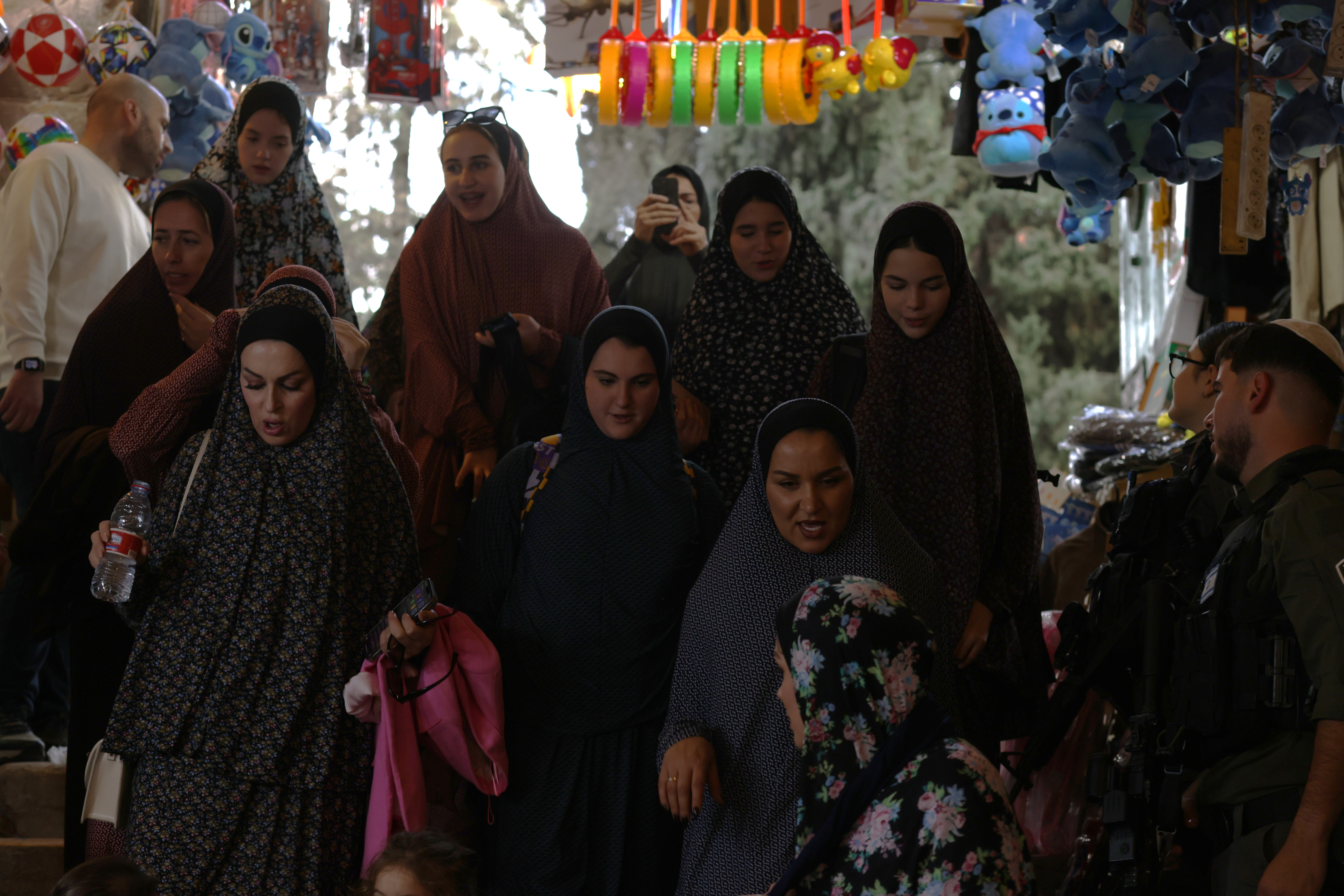
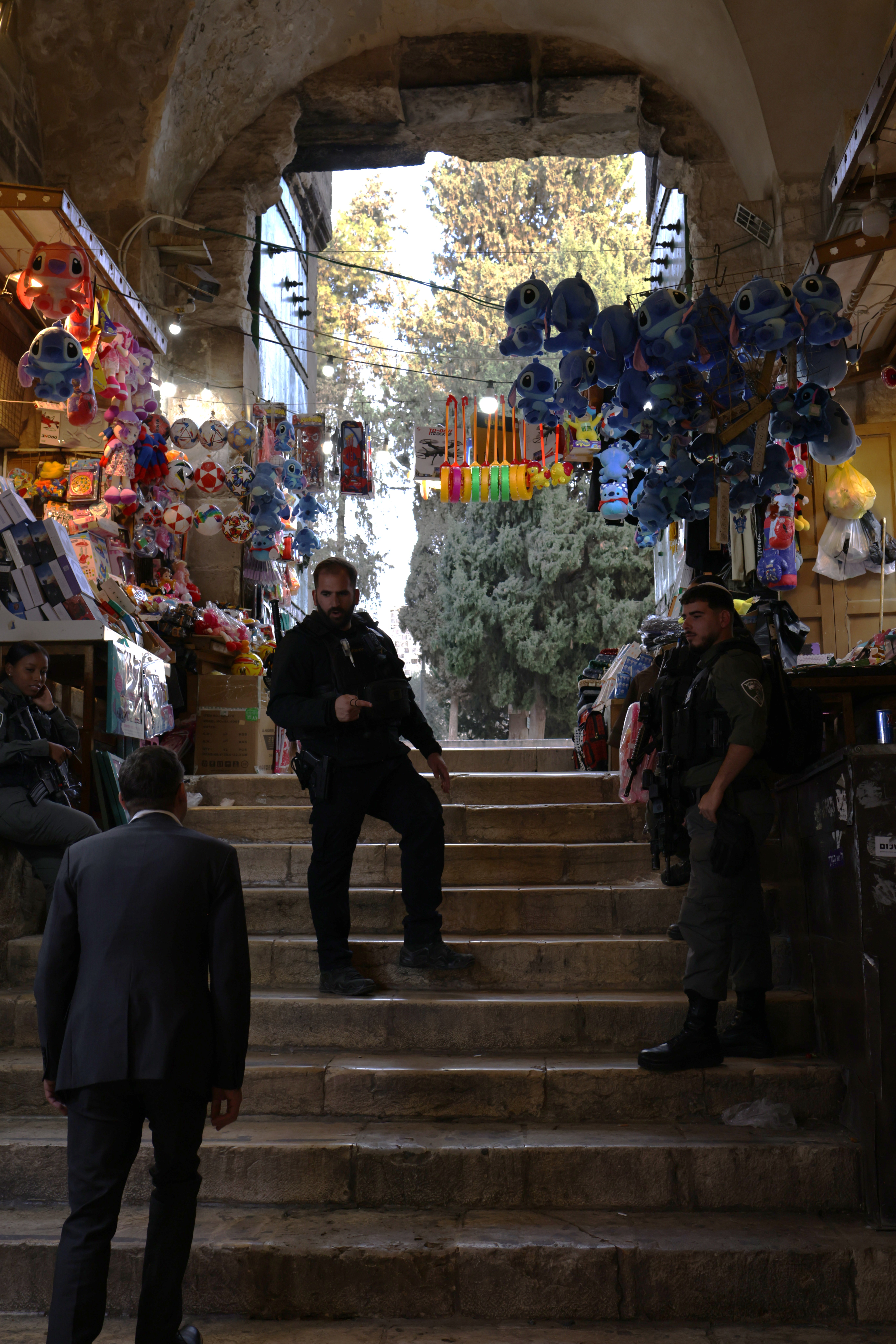
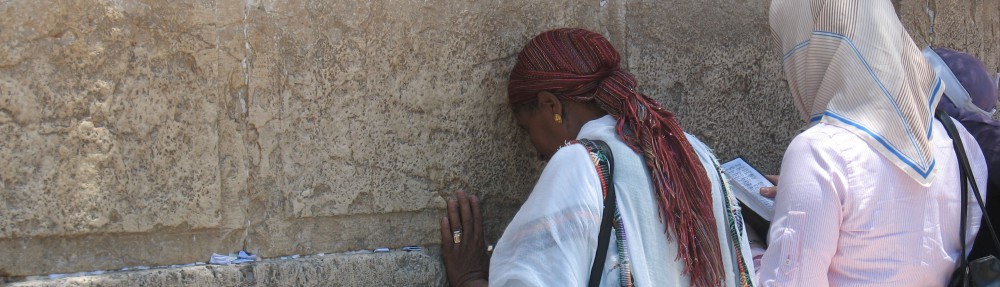
Group of Muslim women come down from the Jewish Temple Mount at the Cotton Merchants’ Gate (photo: First One Through)

This is not accidental. It is policy.

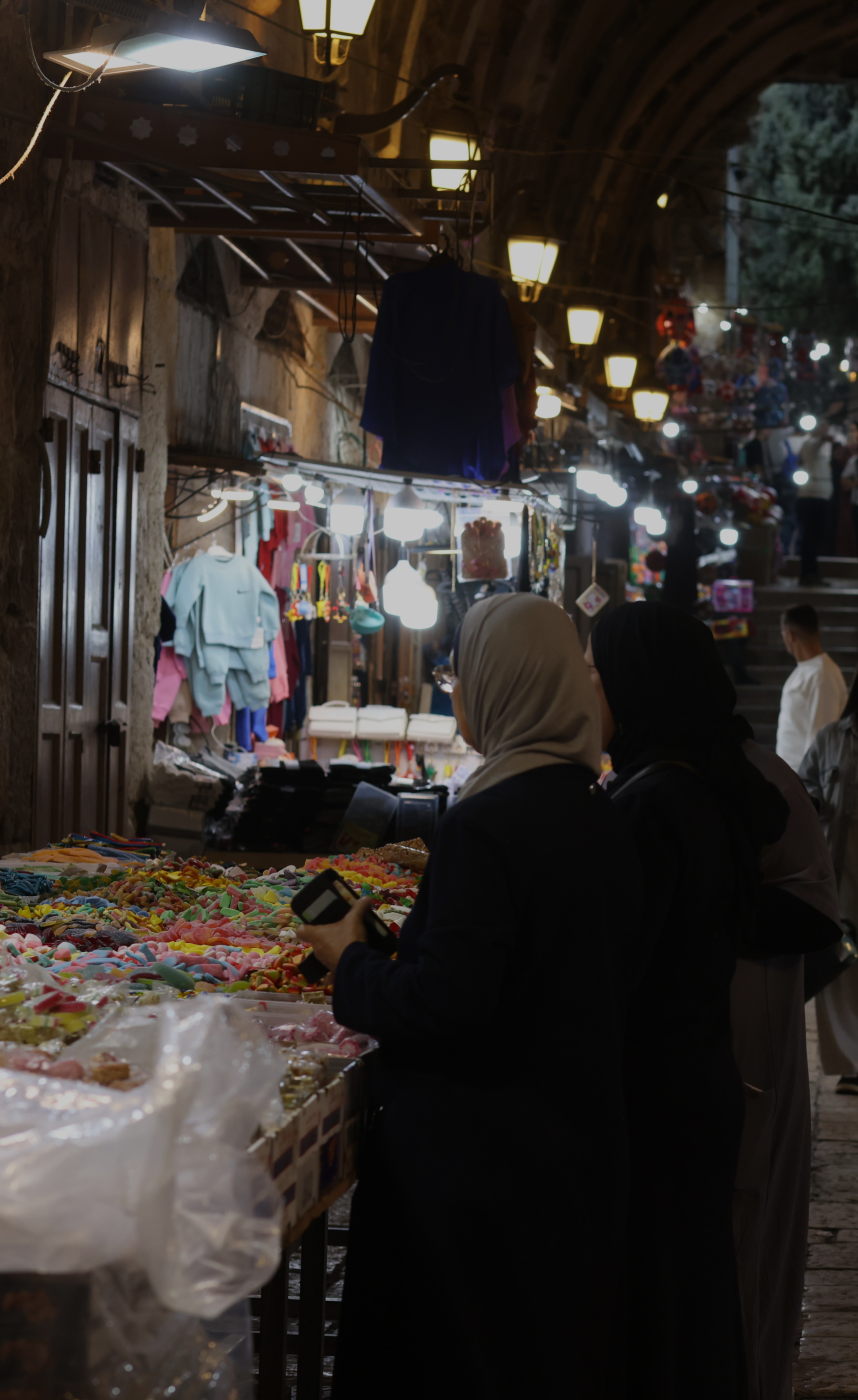
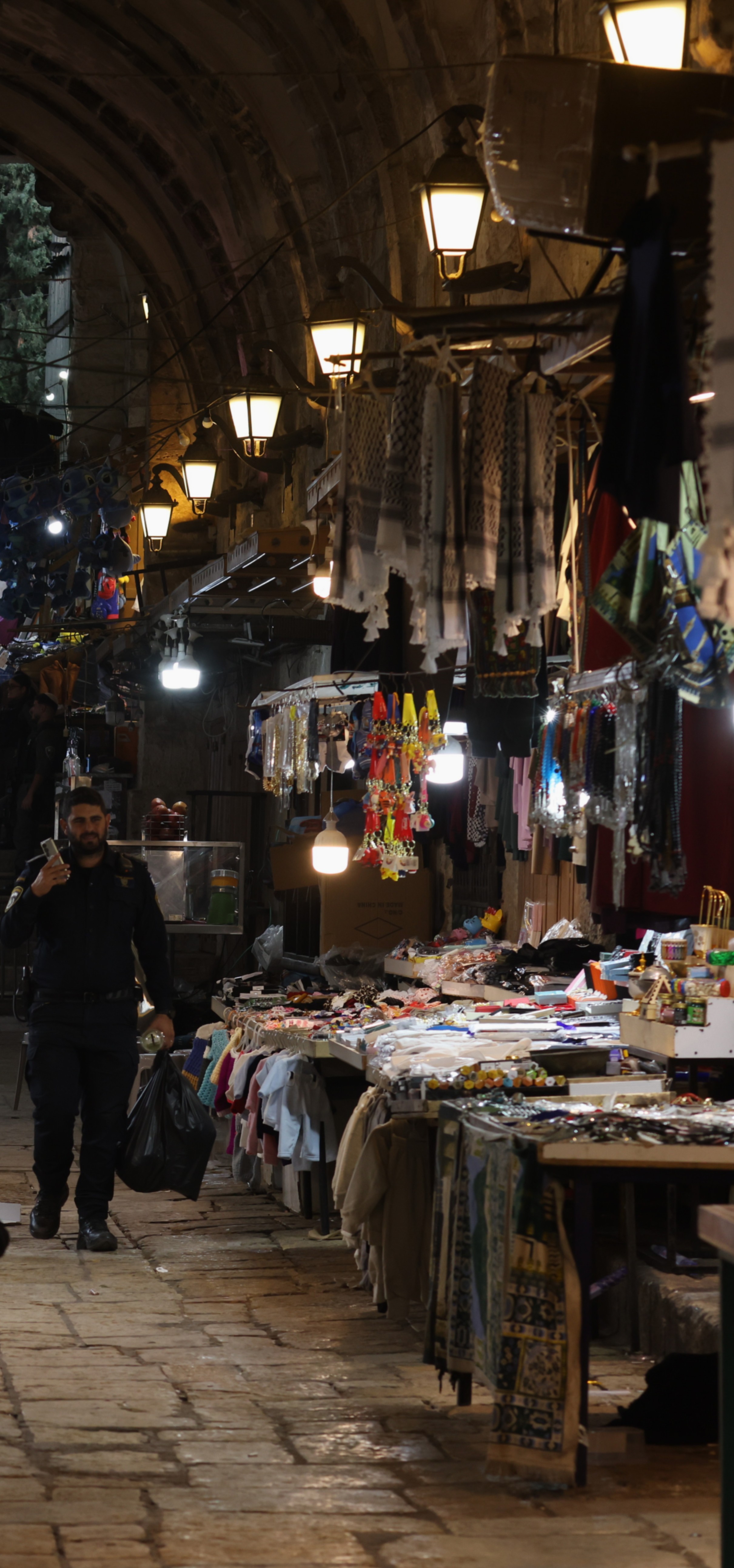
Muslims enter through gates embedded naturally in the Old City’s fabric—the Cotton Merchants’ Gate among them. There, the walls are alive. Candy shops spill color onto the stones. Children’s clothing hangs in soft defiance of gravity. The scent of sweets mixes with dust and history. Life flows in and out, up and down, as it has for generations.

Jews, by contrast, are stopped.

They are turned away from nearly every gate. Not questioned. Not debated. Simply blocked.

Despite the Temple Mount being the holiest site in Judaism, Jews are told—by police, by signs, by precedent—that they may not enter as worshippers.

A solitary Jew is blocked from ascending the steps to the Jewish Temple Mount, the holiest location in Judaism, because he is a Jew. (photo: First One Through)

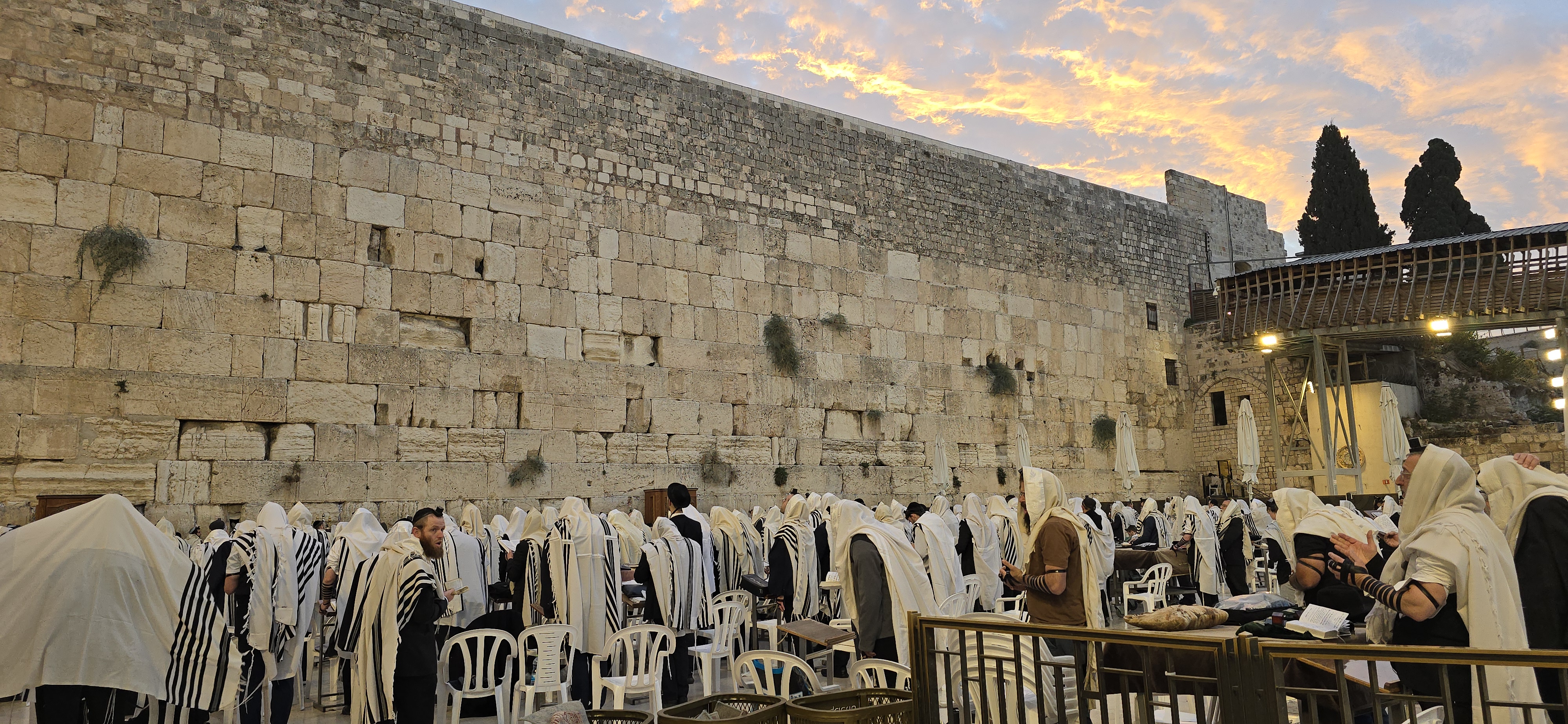
They are redirected instead to a single entrance ramp, detached from the Old City’s living arteries. The ramp rises from the edge of the Western Wall plaza, a vast open expanse that functions less like a neighborhood and more like a giant stone parking lot. From there, Jews may ascend only during narrow windows, under escort, forbidden to pray, forbidden to whisper, forbidden even to move their lips in devotion.

Jews are limited to prayer at the Western Wall, a supporting wall to the Temple Mount. The ramp to the Mughrabi Gate (top right) is the only gate of the ten operating gates where Jews can pass onto the Temple Mount, in limited numbers, at limited times. (photo: First One Through)

Jews are told to make do.

Make do with praying to a retaining wall of the Temple Mount.
Make do with history filtered through permission.
Make do with holiness at a distance.

This arrangement is often called the “status quo,” as if it were ancient, neutral, or inevitable. It is none of those things. It is modern. It is enforced. And it rests on a single premise: Islamic supremacy over the site requires Jewish silence at Judaism’s holiest place.

Muslims may ascend and descend at will. Jews may only look up.

The irony is almost unbearable. Judaism sanctified this mountain long before Islam existed. The Temples stood here before the Qur’an was written, before the Dome of the Rock was imagined, before the word “status quo” could be used to freeze injustice in place.

And yet today, Jewish presence itself is treated as a provocation.

Not violence. Not disruption. Presence.

The gates tell the story more honestly than any diplomatic statement ever could. Gates that welcome. Gates that redirect. Gates that close.

It’s a caste system familiar to Black Americans. “For Whites Only” is now “For Muslims Only” for 90% of the gates to the Temple Mount. “Negro Entrance” read “Non-Muslim Entrance” is plastered atop a ramp in the far corner of the Temple Mount. While racial Jim Crow laws ended in the U.S. decades ago, Jews remain subject to open religious discrimination at their holiest location. At the insistence of the United Nations.

In Jerusalem, everyone speaks of coexistence. But coexistence cannot survive when one faith ascends freely and another is barred from its own summit.

Iranian Axis Also Hates Baha’is

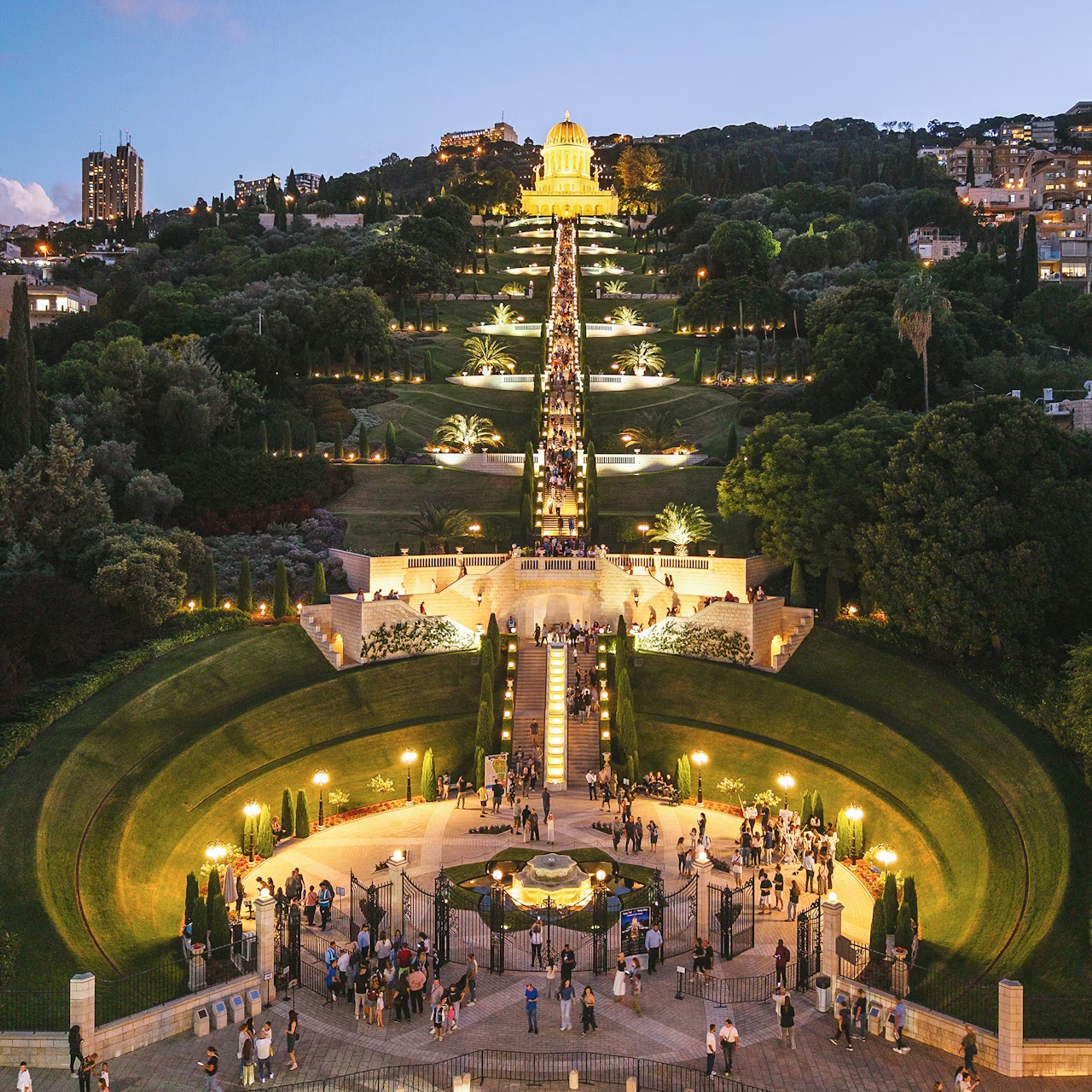
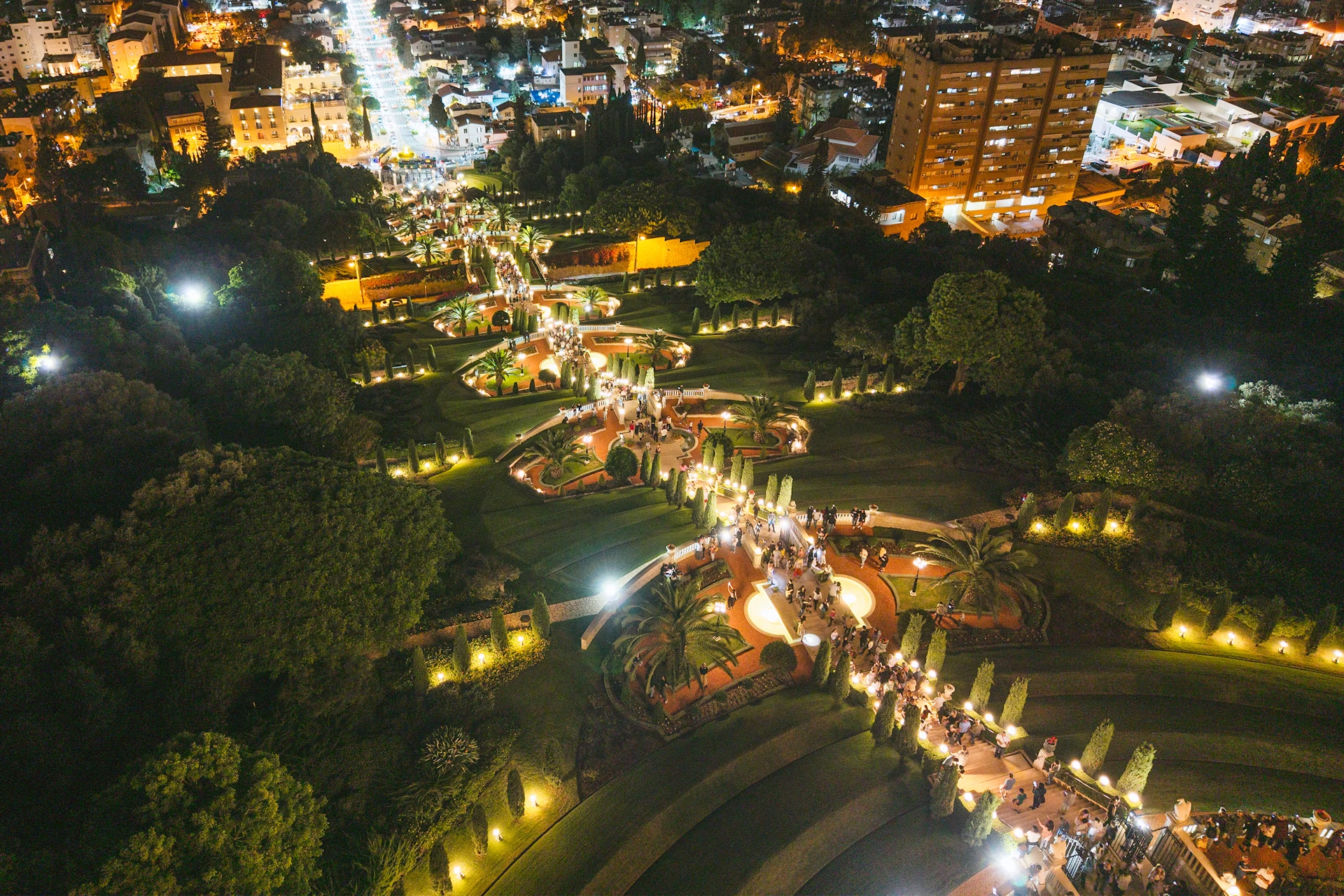
In October 2025, the Baháʼí Gardens in Haifa Israel shimmered under evening lights as thousands strolled the terraces surrounding the golden Shrine of the Báb. The event, “Terraces by Night,” invited everyone — Israelis, tourists, diplomats, Muslims, Christians, Jews — to share in quiet wonder. It was a celebration of beauty and peace, the essence of a faith that teaches the unity of mankind.

“The Bahá’í Gardens and the Shrine located in them are a religious and cultural asset of the highest order for Haifa and the State of Israel, and their spectacular beauty is an extraordinary global phenomenon. The connection between the city of Haifa and the Bahá’í Faith and the gardens is a unique bond of brotherhood and connection, because Haifa is a symbol of shared life.”

– Haifa Mayor Yona Yahav


That same faith is banned or persecuted across much of the Middle East. In Iran, where the Baháʼí Faith began, believers are barred from universities, their cemeteries desecrated, their homes seized. In Yemen, the Houthi regime has deported Baháʼís and outlawed their assemblies. In Qatar, a country that funds global propaganda about human rights, Baháʼís have been detained and denied employment. The list goes on: Christians face church burnings in Iraq and Egypt; Yazidis were enslaved by ISIS; Jews are long gone from the Arab world that once housed thriving communities.

The pattern is unmistakable — a region where religion is invoked constantly, yet religious freedom barely exists. Theocratic and authoritarian regimes claim divine legitimacy while erasing those who believe differently. Hatred of Jews may be the most visible strain, but the intolerance runs deeper: a rejection of pluralism itself.

Against that backdrop, Israel stands as an anomaly. The Baháʼí World Centre — the faith’s spiritual heart — sits on Mount Carmel, Haifa, Israel by choice, not exile. Baháʼís are forbidden by their own laws to proselytize in Israel, yet they flourish there. Muslims pray in mosques, Christians ring church bells, Druze maintain their shrines. It is imperfect coexistence, but coexistence nonetheless — a rare reality in a region where diversity elsewhere draws death sentences. Israel is the only country in the world where the religious majority does not make up the majority of annual tourists (Christians make up more than 50% of tourists to Israel each year).

Various pilgrims file in through the Jaffa Gate in the Old City of Jerusalem in April 2017 (photo: First One Through)

Even the United Nations, which rarely misses a chance to criticize Israel, cannot ignore this hypocrisy. In December 2024, it condemned Iran stating the “dramatic rise in persecution against Baha’i women is an alarming escalation.” Yet it has remained silent on Qatar, whose wealth buys global silence — from universities, media, and even diplomats who recite the language of tolerance while pocketing the proceeds of repression.

The Baháʼí Faith preaches that humanity is one family. In Haifa, that message is literal — thousands of visitors walking through open gates, cared for by volunteers of every background. It’s a vision of what the Middle East could be if faith were not used as a weapon.

The Baháʼís open their gardens in Israel while their co-religionists suffer in silence around the Muslim Middle East. They celebrate while others cower. And they do it in the one nation in the region where the doors of worship remain open for those willing to coexist peacefully.

Over 13,000 people experienced the illuminated terraces leading to the Shrine of the Báb, in October 2025’s “Terraces by Night” in Haifa, Israel

Related:

Christians Love the Jewish State (March 2021)

Jihadi Coexistence

The defenders of Hamas are out. In spite of the horrible massacre of innocent civilians, extremists are blind with hatred and doubling down rather than abandon their comrades. Intersectionality dogma obliges adherents to coalesce when times are dark, and the stickiness of evil can feel empowering.

Many of the backers of the Palestinian terrorists are not Islamic extremists but “progressives” who have convinced themselves that Jews have no history or rights in the holy land and are “colonial settlers” who must be fought. They blame the victim – Israel – for their own deaths. They manufacture new realities on the fly, combining jihadi antisemitic propaganda with twisted progressive values.

Consider the goal of coexistence.

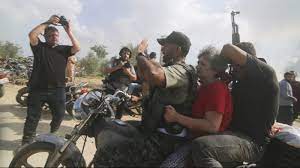
If Hamas truly hated Jews, it would kill every Jew it encountered and not bring so many children, women, men and elderly back to Gaza. Jewish hostages in Gaza are proof that Jihadists favor coexistence, at least a particular kind.

Hamas’ foundational charter Article six specifically mentions the goal of coexistence:

“The Islamic Resistance Movement is a distinguished Palestinian movement, whose allegiance is to Allah, and whose way of life is Islam. It strives to raise the banner of Allah over every inch of Palestine, for under the wing of Islam followers of all religions can coexist in security and safety where their lives, possessions and rights are concerned. In the absence of Islam, strife will be rife, oppression spreads, evil prevails and schisms and wars will break out.”

The goal of Hamas and its supporters is not a two state solution but one state ruled under shariah law where non-Muslims can live as second class citizens as dhimmis, paying a special jizya tax for having the privilege to live “under the wing of Islam.” It’s called Jihadi Coexistence, and is actively being marketed – and showcased – by radical socialists and Islamists.

Related articles:

Biden To Push Coexistence Agenda To Palestinian Arabs Not Interested

US Embassy In Israel Only Invites Muslims To US To Study

The DSA Is Systematically Coming For Zionist Jews

Palestinians Utterly Fail Two Tests: Oslo Accords And Gaza Disengagement

Excerpt of Hamas Charter to Share with Your Elected Officials

The Left-Wing’s Two State Solution: 1.5 States for Arabs, 0.5 for Jews

Majority of Palestinians Believe Israel Will Soon Cease to Exist

Eyal Gilad Naftali Klinghoffer. The new Blood Libel.

Palestinian Inversion Of Facts Based On Refusal To Coexist

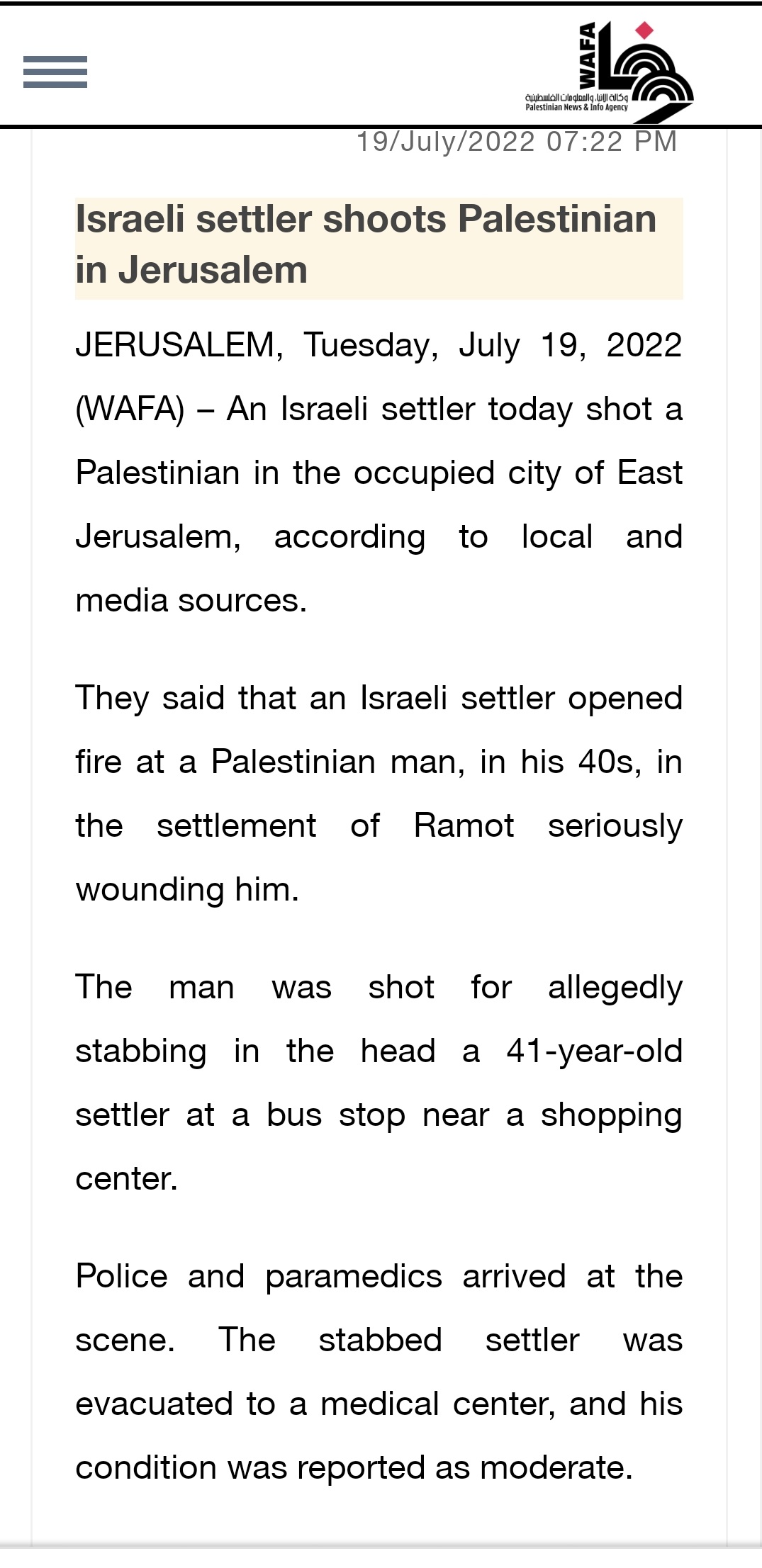
The too familiar routine of a Palestinian Arab viciously attacking a Jewish civilian unfolded again. An Arab repeatedly stabbed a Jewish civilian, and then another Jewish civilian witnessed the crime and shot the terrorist.

The sequence is straightforward. The perpetrator and victim are clear.

But only if you see the actions through the lens of coexistence, as most Israelis and the western world perceive.

For Palestinian Arabs and their sympathizers, Jews have no right to even be next to the Arab. The basic presence of Jews was the offense, and therefore the Arab is the actual victim twice over – first having to live with Jews, and then to be shot by those same “settlers.”

Palestinian media covered the event with the header “Israeli settler shoots Palestinian in Jerusalem,” making the incident appear as an unprovoked Israeli attack on Arabs, absolution via inversion.

The Jerusalem Post headline was the opposite: “Jerusalem stabbing attack: 41-year-old in moderate condition.” The audience readily understood that the terrorist was an Arab who attacked a Jewish civilian.

The Jerusalem Post article continued with “Hamas spokesman Hazem Qassem said the stabbing was ‘a natural response to the occupation’s crimes against our Islamic and Christian sanctities in the city of Jerusalem. This act of resistance confirms once again the failure of all attempts to stop the escalation of the act of resistance in the occupied West Bank and the city of Jerusalem,’ he said.

While Israelis attempt to live lives of coexistence, Palestinian Arabs believe that Jews have no history or rights to live in the land, especially in Jerusalem. The Arab street, political parties and media openly support violence to “resist” the presence of Jews.

The nature of the conflict is clear: an Israeli vision of coexistence compared to an Arab vision of a Jew-free land.

Related articles:

Abbas Declares All of Israel is a “Painful Settlement”

Palestinians Want Their Young Girls To Become Terrorists

Review of Media Headlines on Palestinian Arab Terror Spree

Hamas’s Willing Executioners

Excerpt of Hamas Charter to Share with Your Elected Officials