Whether by Wisdom or Strength, One North Star

Joseph and the Maccabees stand at opposite ends of Jewish history, yet they are oriented toward the same destination.

Joseph saved lives through wisdom. He read the moment correctly, understood power as it existed, and worked within it with discipline and restraint. His brilliance was not only in interpreting Pharaoh’s dreams but in translating vision into policy. Grain was stored since hunger was anticipated. Life survived because Joseph learned how to operate inside a dominant civilization without surrendering his inner compass.

The Maccabees faced a different landscape. Jewish practice itself was under assault, the Temple desecrated, identity mocked and criminalized. In that moment, preservation required action of a different kind. Physical courage and sacrifice to restore the possibility of Jewish continuity. Their strength reopened a future that had been closing.

Both paths flow from the same conviction: Jewish life must continue.

That shared conviction matters more than the method used to defend it. Jewish tradition does not freeze history into a single playbook. It records multiple responses to pressure, exile, and threat, each shaped by its circumstances, each measured by whether it protects life and meaning.

This tension feels immediate today. Jews in Western societies sense the ground shifting beneath them. Institutions once assumed to be neutral now tolerate or excuse intimidation. Public expressions of Jewish identity invite scrutiny, hostility, or worse. Families quietly debate whether to double down on civic engagement, legal advocacy, and cultural participation, or whether to seek physical concentration, communal withdrawal, and in some cases departure altogether.

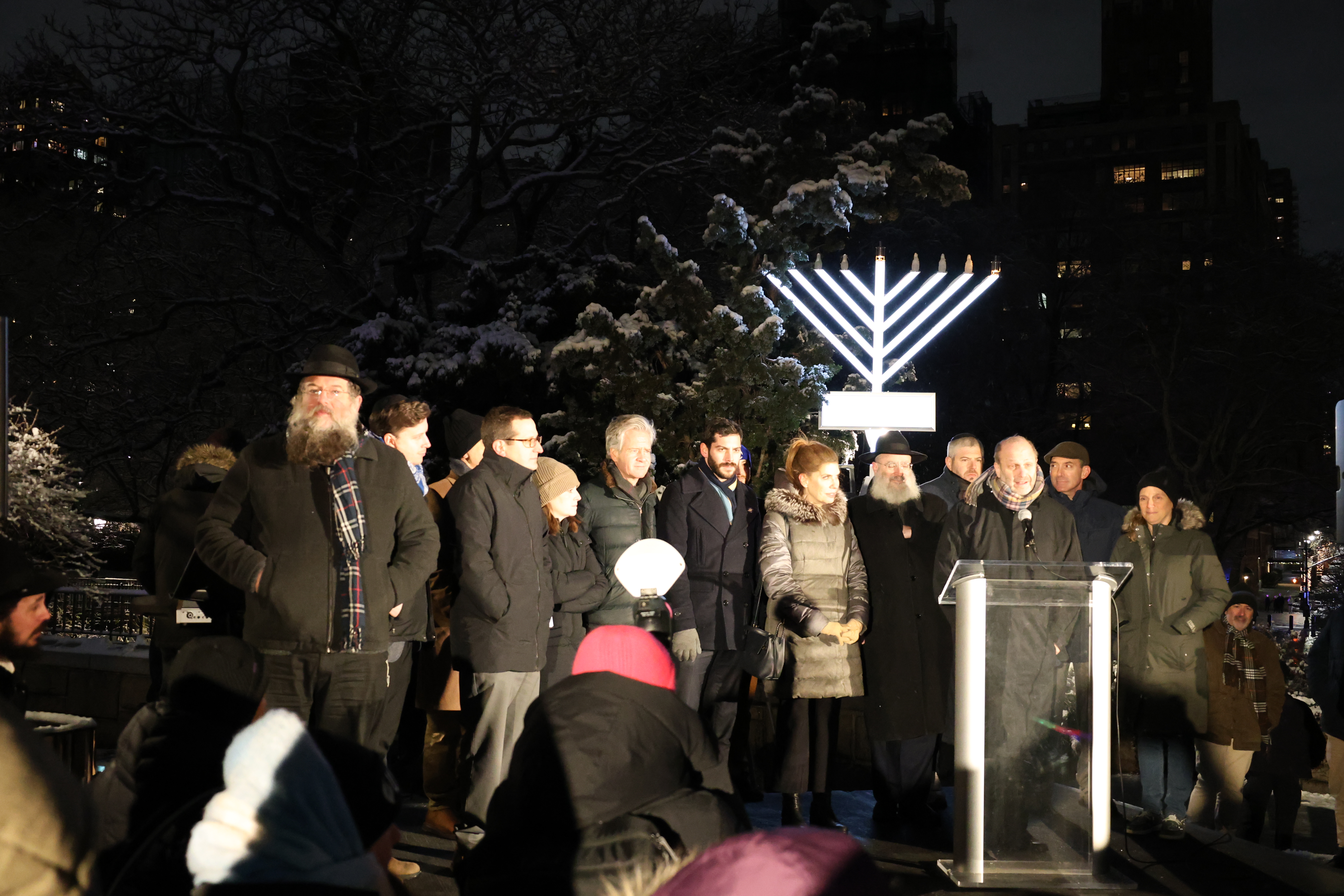
Jews gather at candle lighting ceremony in Carl Schurz Park in New York City, hours after the mass murder of Jews in Sydney Australia (photo: First One Through)

Both instincts draw from deep Jewish memory.

Some respond like Joseph, believing that wisdom, professionalism, and moral clarity can still carve out space within complex societies. Others hear the echo of the Maccabees and sense that when identity becomes negotiable, consolidation and self-defense are no longer optional.

The danger is not that Jews choose different strategies. The danger is losing sight of the common north star and turning strategy into accusation.

Chanukah, read alongside Parshat Miketz, offers a sobering reminder. Joseph’s Egypt eventually transforms from refuge into bondage. The Maccabees’ victory secures a moment of light, not a permanent settlement. Jewish history does not promise stability; it demands attentiveness. Survival in the long-term cannot happen without survival in the present.

Each generation inherits the same responsibility: to read its moment honestly, to choose its tools carefully, and to ensure that the flame continues—whether through wisdom, through strength, or through the careful discipline of knowing when to shift from one to the other.

Chabad Caught In a Thicket

There are Jews who keep their heads down. And then there is Chabad.

From Bondi Beach to Mumbai, from Barcelona to American college campuses, Chabad does the opposite of what fear would counsel. It does not retreat inward. It goes outward—publicly, cheerfully, stubbornly—lighting candles, setting tables, opening doors.

And for that, it bleeds.

In Australia, Chabad helped organize a large public Chanukah gathering near Bondi Beach—sun, music, children, light. A Jewish holiday celebrated exactly as it was meant to be: openly, without apology. Antisemites came – because, as they say of bank robbers robbing banks – that’s where the Jews are. Violence came to eradicate the joy.

In India, Chabad paid an even heavier price. During the 2008 Mumbai attacks, terrorists deliberately sought out the Chabad House. This was not collateral damage in a geopolitical struggle between India and Pakistan. It was targeted slaughter. The rabbi and his wife were tortured and murdered because they were Jews—and because they were visible Jews, serving other Jews. The attackers bypassed many targets to reach them. They knew exactly who they were looking for.

This pattern repeats itself with chilling consistency. Chabad emissaries—shluchim—are not anonymous. They live openly as Jews in places where Jews are few, where governments barely register their presence, let alone prioritize their safety. Some countries have only dozens of Jews. Some have none at all, except for Chabad.

And still Chabad goes.

On Friday nights in Barcelona, Jewish life gathers around Chabad tables. Tourists, locals, students—many unaffiliated, many unsure—find Judaism not as a political identity or an abstract cause, but as food, song, wine, warmth. As Shabbat.

On university campuses across North America, Chabad events now regularly outshine Hillel. This is not accidental. Where Hillel has often drifted toward “wokeness,” flattening Judaism into a vague social-justice aesthetic, Chabad offers something older and sturdier: tradition without embarrassment. Commandments without footnotes. Jewish joy without ideological permission slips.

That, too, draws attention. And danger.

Chabad rabbis and their families know they wear a mark, and not metaphorically. They live without anonymity. They publish their addresses. They welcome strangers. They light menorahs in public squares at a moment in history when public Jewishness has been recast as a provocation.
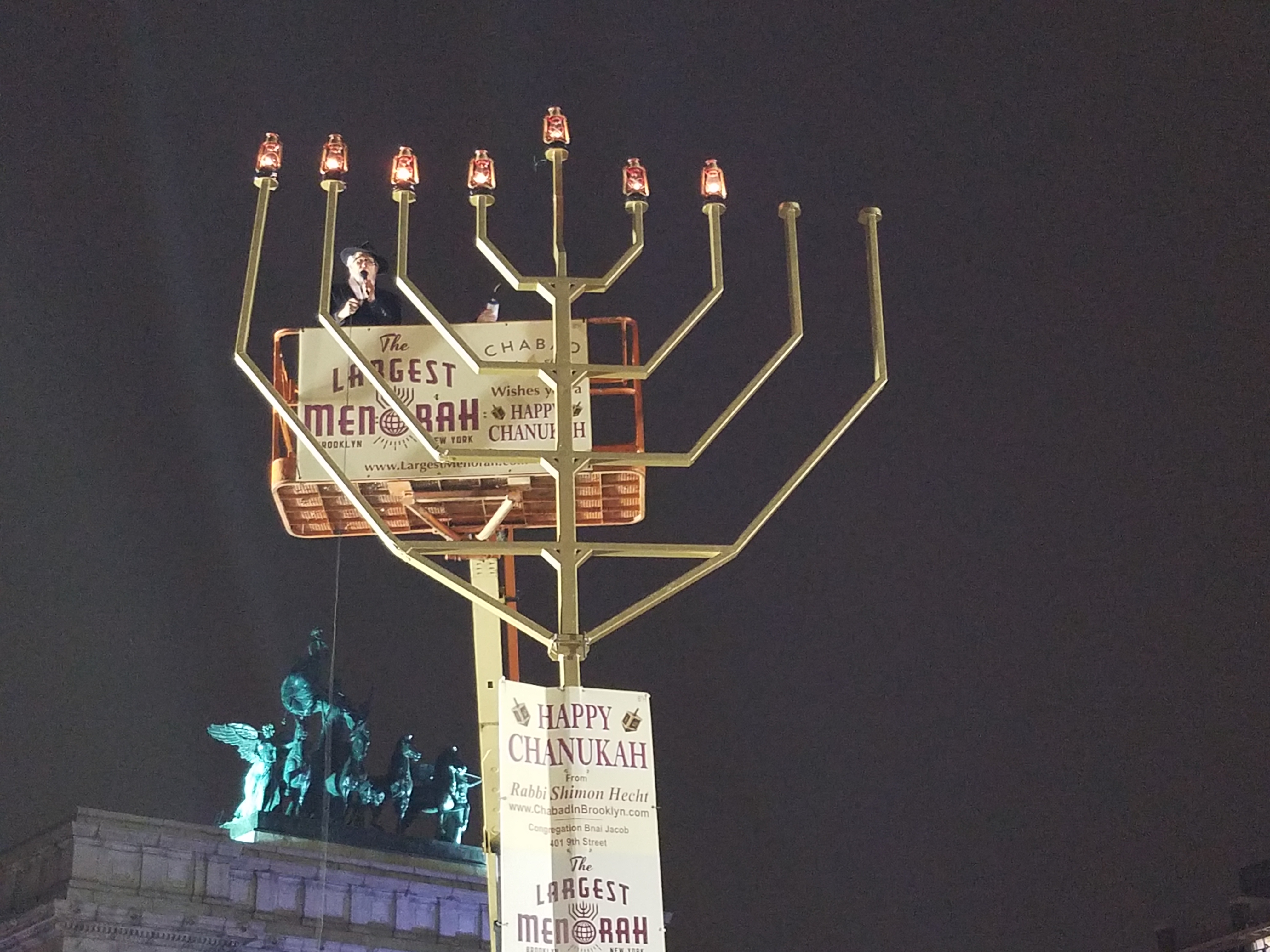
Chabad lighting “the largest menorah” on the sixth night of Chanukah in Brooklyn’s Grand Army Plaza in 2017 (photo: First One Through)

Chanukah, of all holidays, insists on this. It is not meant to be hidden. The lights are placed in windows, at doorways, facing the street. Pirsumei nisa—publicizing the miracle—is the law. Chabad takes it seriously, even when the risk feels immediate.

In a world where Jew-hatred has resurged with startling comfort, Chabad has become something else as well: exposed in the spotlight.

There is an old biblical image for this.

When Abraham is told to sacrifice Isaac, the knife is raised but the sacrifice is halted. Instead, a ram appears, caught in a thicket by its horns. The ram is offered in Isaac’s place.

Chabad, today, feels like that ram.

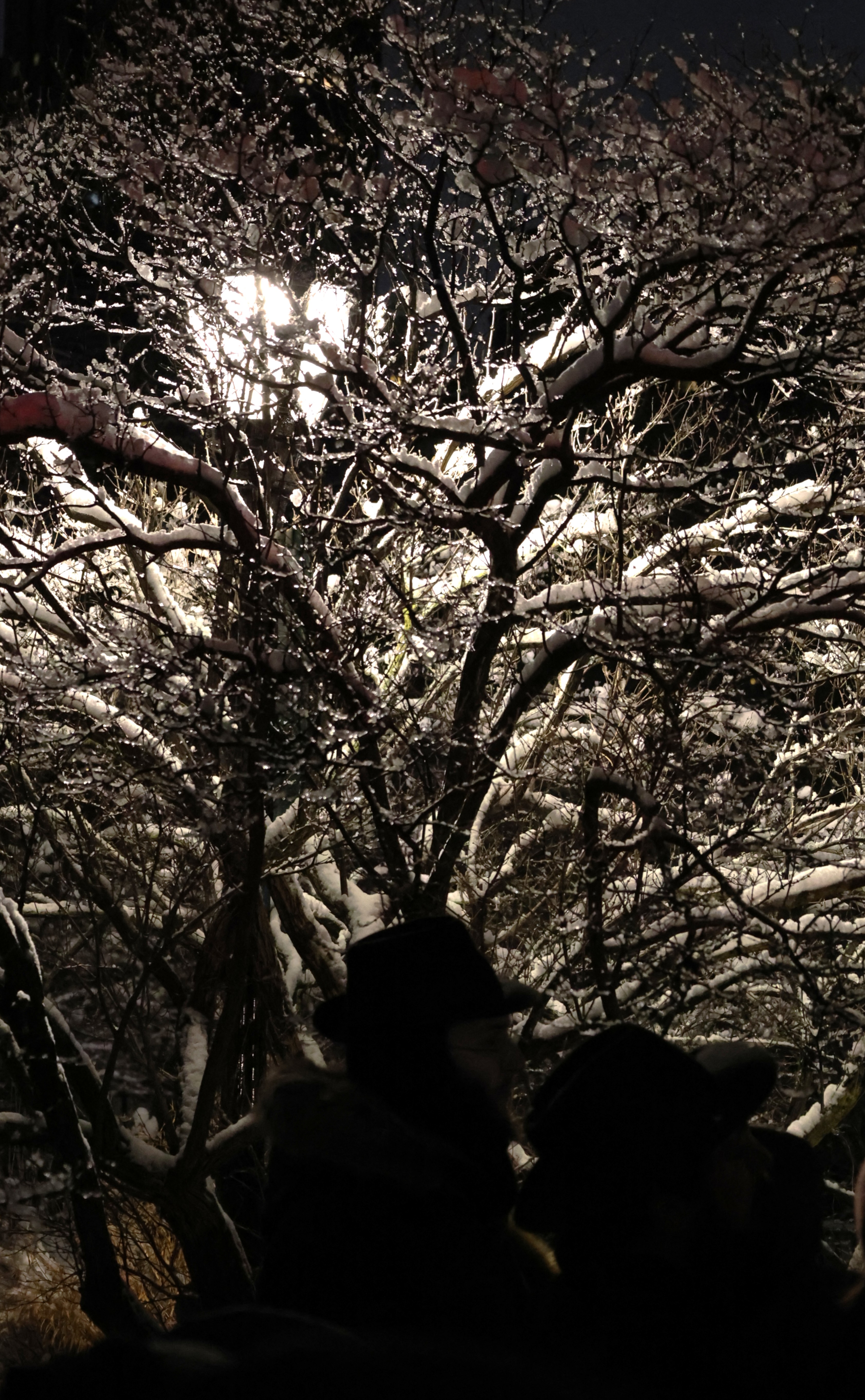
Silhouette of two Chabad men at a Chankah lighting ceremony on the Upper East Side of Manhattan, shortly after the massacre of Jews in Bondi Beach, Australia in December 2025. Just a few hundred feet away sits Gracie Mansion, soon-to-be home of New York City’s new mayor, Zohran Mamdani, who refuses to repudiate the phrase “Globalize the Intifada,” a call to kill diaspora Jews. (photo: First One Through)

Not because Chabad seeks martyrdom—it emphatically does not. It absorbs the blows meant for Jewish visibility itself. It becomes the target because it brings together Jews to celebrate Judaism with gladness – the ultimate point of inflammation for antisemites.

The world often says it wants Jews to be “normal.” Chabad refuses that bargain. It insists on being Jewish instead—fully, visibly, joyfully—even when the cost is high.

Chabad is not actually caught in a thicket; it takes its position openly. But antisemites hear a calling that is not divine but grotesque when they see joyful Jews, and are willing to sacrifice themselves and their sons – like the murderers of Bondi Beach – to feed the poisoned passion.

Stop With the Hanukkah Miracle and Declare the Hanukkah MESSAGE

The Book of the Maccabees lays out that the war against the Jews did not start with violence but with policy. The Syrian-Greeks initiated the battle by denying Jews their right to religious practice. Jewish life was made illegal through decrees and prohibitions, through the quiet insistence that Jews no longer have standing in their own holiest spaces.

The Temple Mount was seized. Jewish worship was banned. Foreign rites were imposed in its place. The text is precise and unsparing:

“And forbid burnt offerings, and sacrifice, and drink offerings, in the temple; and that they should profane the sabbaths and festival days…. They set up the abomination of desolation upon the altar, and built idol altars throughout the cities of Juda on every side.”
1 Maccabees 1:45
, 1 Maccabees 1:54

When the Maccabees returned to Jerusalem, the devastation they witnessed was total. The enemies of the Jews intended humiliation. A holy place was turned into a ruin so complete that nature itself began to reclaim it.

“They saw the sanctuary desolate, the altar profaned, and the gates burned. In the courts shrubs had grown up as in a forest.”
1 Maccabees 4:38

Judas and his brothers refuse to accept erasure as permanent and took action:

“Then Judas and his brothers said: ‘Behold, our enemies are crushed. Let us go up to cleanse the sanctuary and dedicate it…. They tore down the altar and stored the stones in a suitable place on the temple hill until a prophet should come to tell what to do with them.”
— 1 Maccabees 4:36, 44–46
“They purified the sanctuary and made another altar of sacrifice… and offered burnt offerings according to the law….They celebrated the dedication of the altar for eight days, and offered burnt offerings with gladness.
— 1 Maccabees 4:48–56

And then memory was mandated.

“Judas and his brethren with the whole congregation of Israel ordained, that the days of the dedication of the altar should be kept in their season from year to year by the space of eight days, from the five and twentieth day of the month Casleu, with mirth and gladness.”
1 Maccabees 4:59

Why legislate remembrance? Why must it be done with joy?

Because danger does not end with victory nor complacency. The danger is forgetting how erasure begins—how denial of access precedes denial of life. Enemies rarely announce extermination at the start. They begin by declaring Jews illegitimate, unworthy of presence, unfit to practice their own traditions.

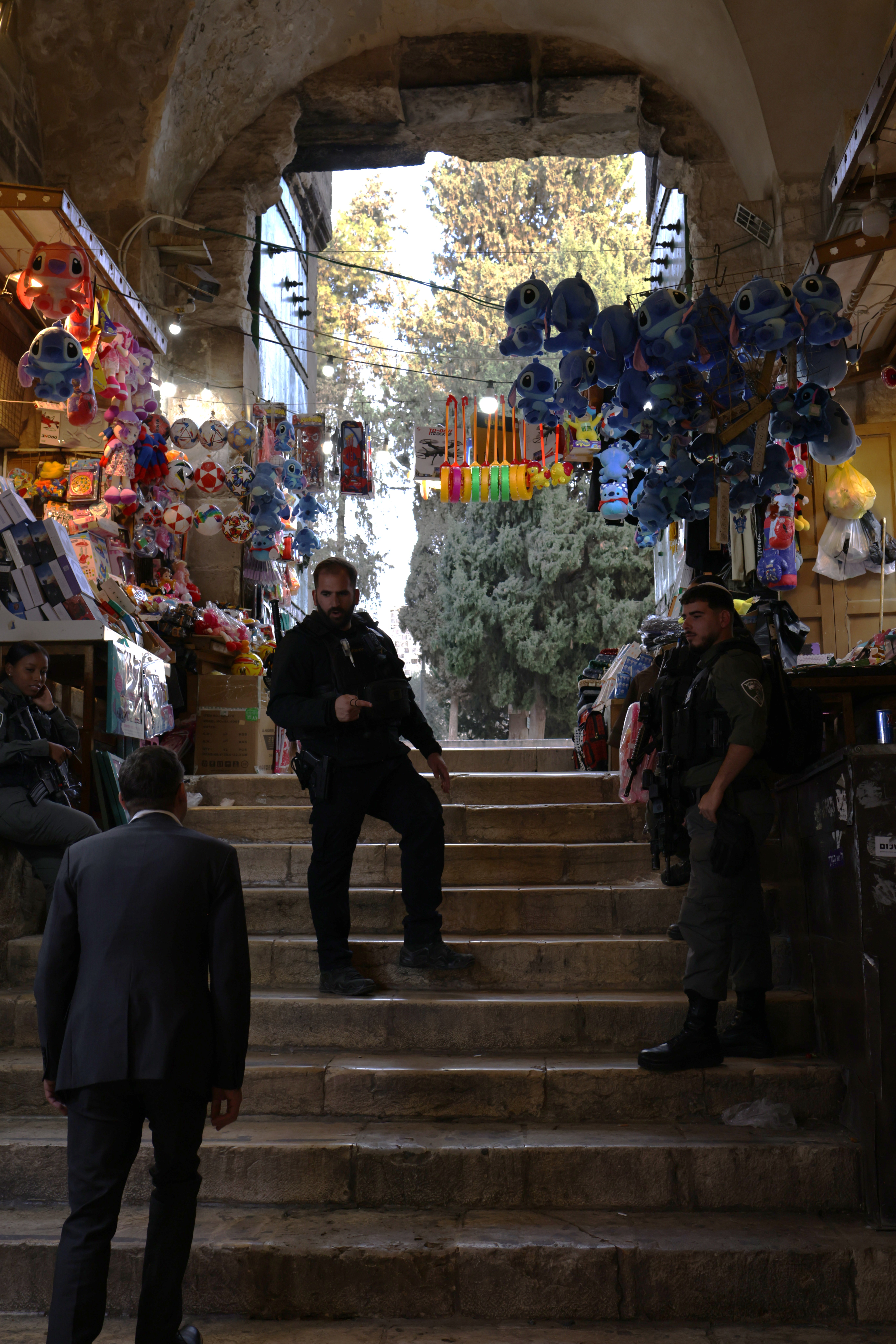
Guard blocks entry of a Jewish man onto the Jewish Temple Mount at the Cotton Merchant’s Gate, because he is a Jew, in November 2025. (Photo: First One Through)

The Maccabees understood something timeless: when Jews accept exclusion as normal, the battle has already been lost. When they are told to make do with less than basic human rights demand, they can never really have a full heart.

Hanukkah is the refusal to let others define Jewish legitimacy. It is the insistence that Jewish rights—to worship, to gather, to exist openly—are not privileges granted by empires or overseers, but as the opening lines of America’s Declaration of Independence state, “endowed by their Creator.”

So it was in their days. So it is in ours.

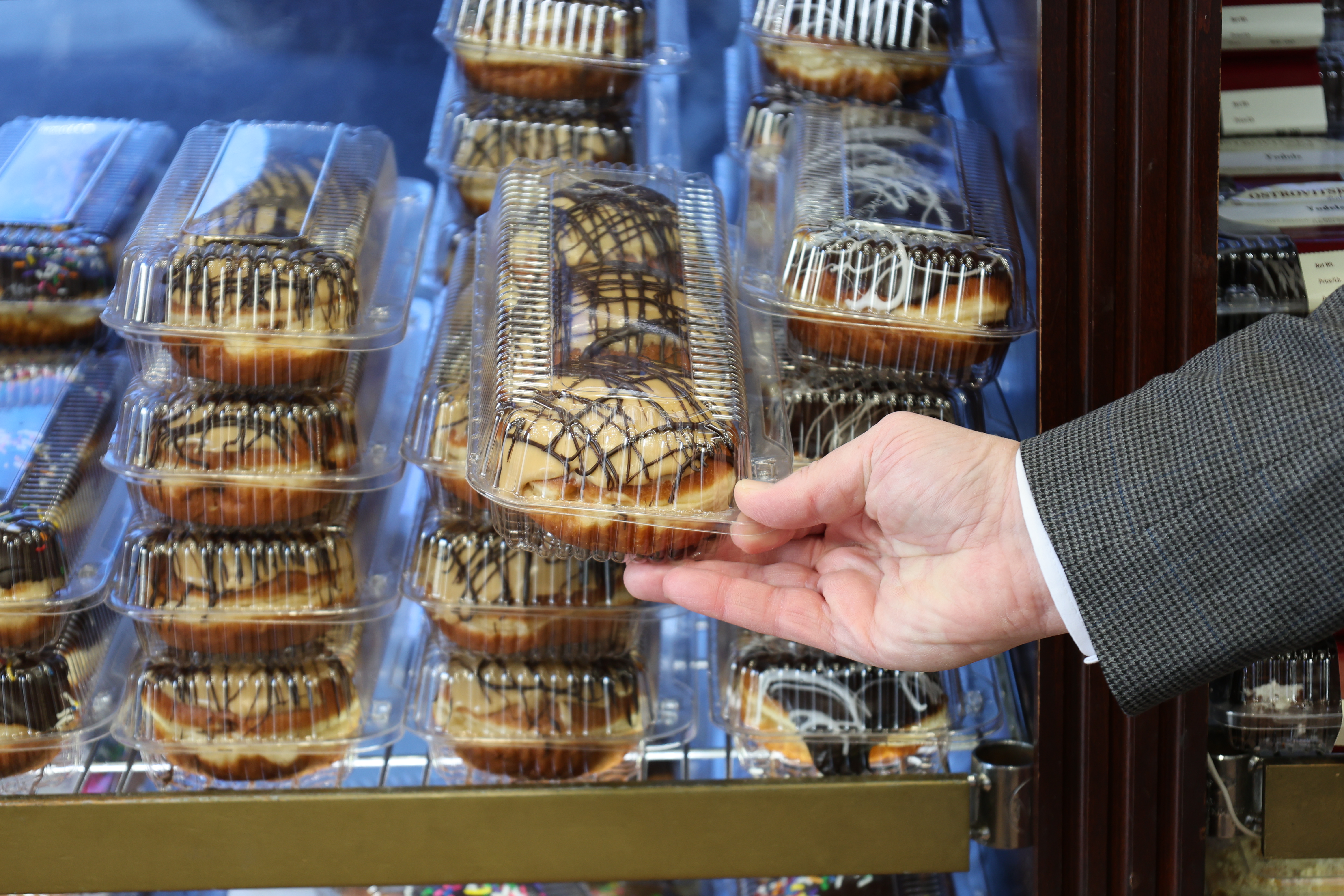
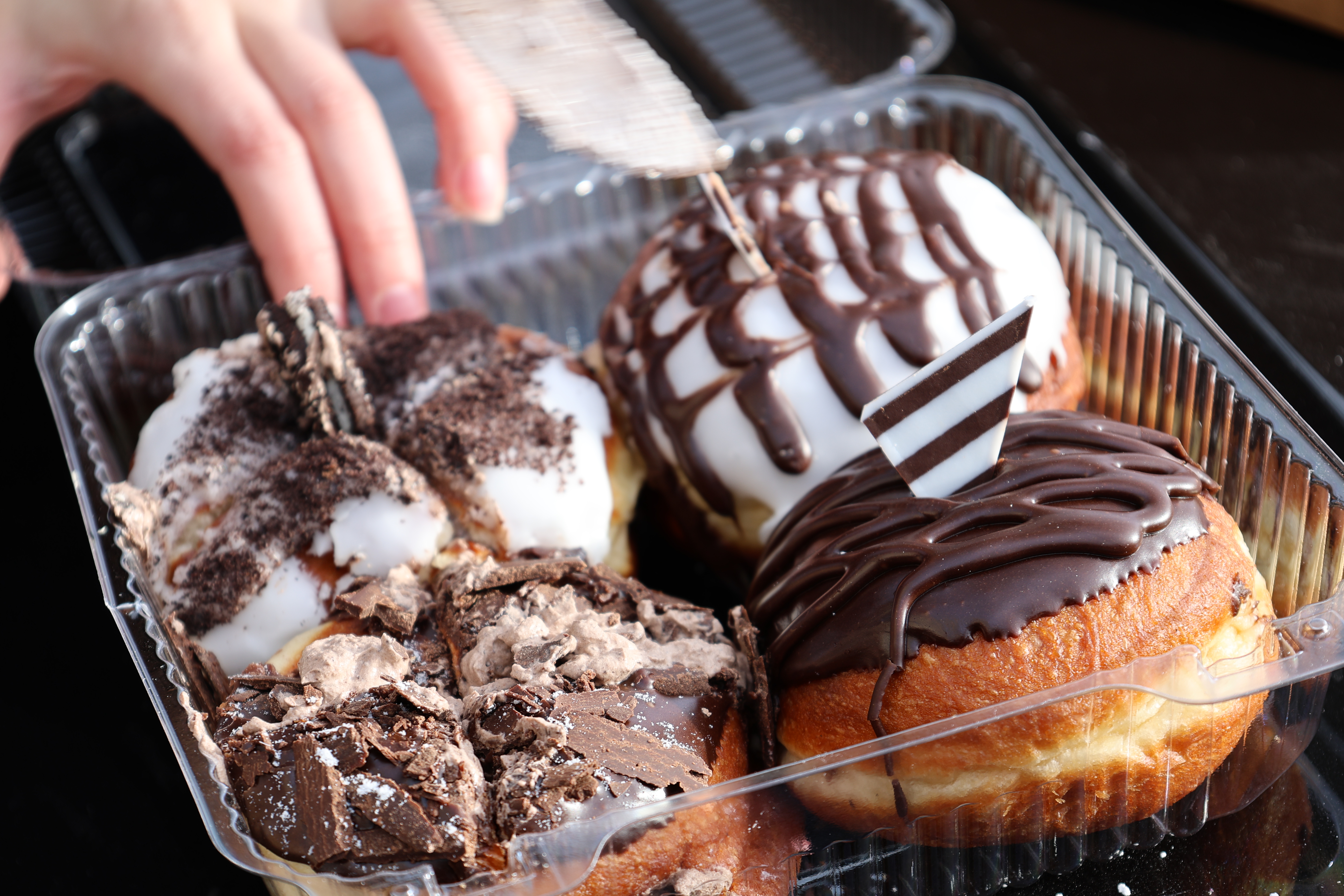
Brooklyn Chanukah Donut Crawl 2024

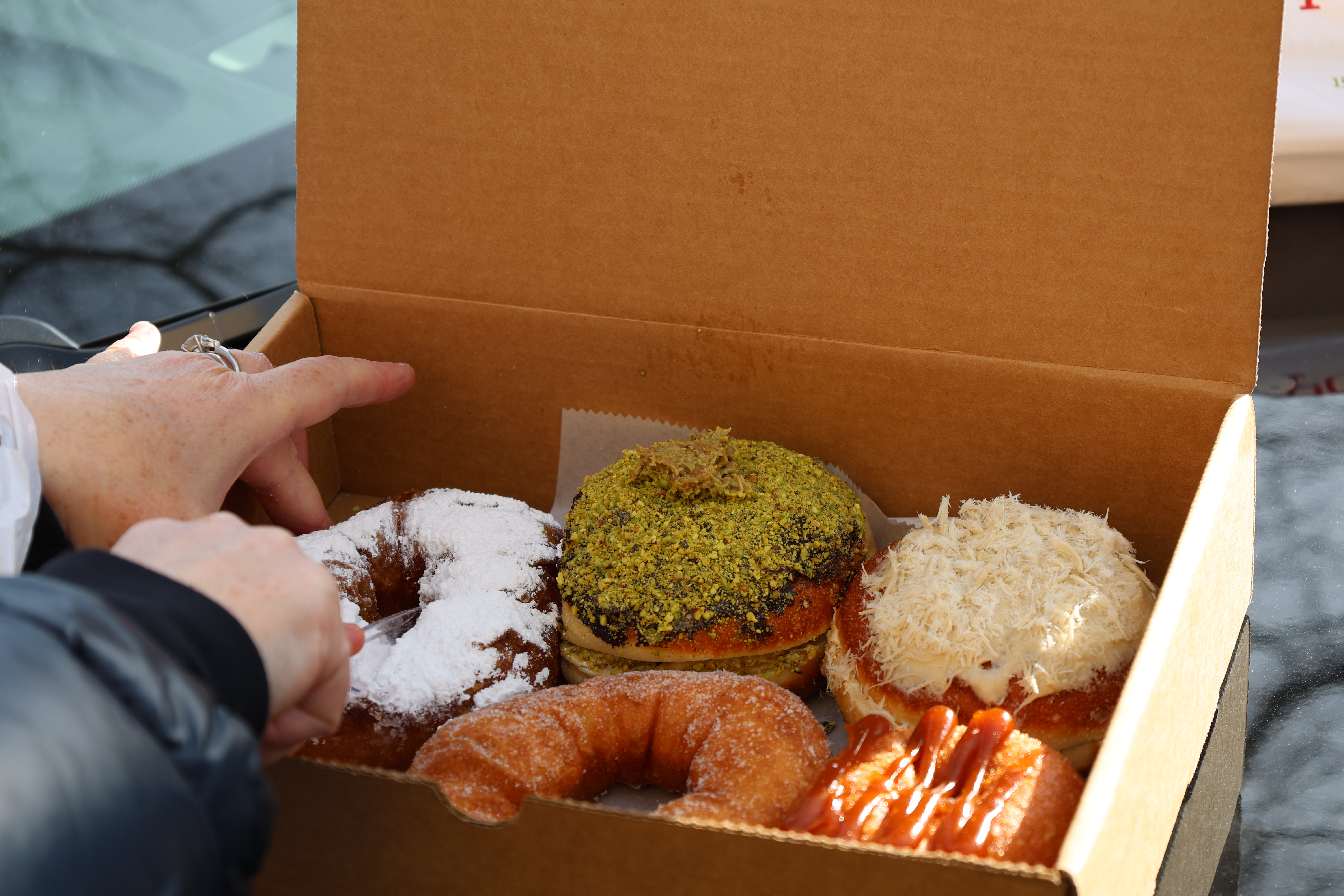
​Our crew brought out a minivan for the Brooklyn Chanukah Donut Crawl for 2024, as we added two new people to the crawl. Going on Christmas day meant some of the bakeries had lighter staffs, and going later in the day meant some stores had run out and donuts were not at their peak freshness.
We added several new destinations based on people’s Instagram posts. Let me share that some of the IG posts may be paid advertisements (this blog takes no money or ads- please just get friends to subscribe on topics covering Jews, Judaism and Israel) since some were quite weak and overpriced. We also added a nice new bakery based on conversations with people we met at the stores. The list for 2024 is (in the order we visited them):

  • Oneg Bakery, 188 Lee Ave, Brooklyn, NY 11211 [Williamsburg]
  • Almah Cafe, 87 Utica Ave, Brooklyn, NY 11213 [Crown Heights]
  • Ricotta Coffee, 513 Albany Ave, Brooklyn, NY 11203 [Crown Heights]
  • Schreiber’s Homestyle Bakery, 3008 Avenue M, Brooklyn, NY 11210 [Flatbush]
  • Pita Sababa, 540 Kings Hwy, Brooklyn, NY 11223 [Flatbush]
  • Maison Valero, 501 Avenue M, Brooklyn, NY 11230 [Flatbush]
  • Sesame – Flatbush, 1540 Coney Island Ave, Brooklyn, NY 11230 [Flatbush]
  • Taste of Israel, 1322 Avenue M, Brooklyn, NY 11230 [Flatbush]
  • Ostrovitsky Bakery, 1124 Avenue J, Brooklyn, NY 11230 [Flatbush]

For those familiar with Brooklyn, you will note that these are a bit scattered, but there is a method to the madness that you will see in the descriptions below.

Oneg Bakery

We’ve skipped Oneg over the last couple of years since Williamsburg bakeries do not, in general, stand out. Oneg is the exception. It is famous for its babkas which are among the very best in NYC. You should pick one up (do not get overwhelmed by the size which looks prepared for a synagogue kiddush; they will cut it in sections. Note that they freeze very well.) You can order from Goldbelly if you do not want to visit in person.

Oneg is small “Old World” bakery and has a small staff during Christmas. Here, a worker prepares dough for their apple strudel

There is not a large selection of donuts at the small store, and they didn’t have frittle when we visited as they were short-staffed on Christmas. Some of our tasting crew thought the plain jelly donut was “fantastic!” and others really enjoyed the Boston cream.

Oneg’s jelly, custard, caramel and sprinkle donuts

Almah Cafe

Almah is a new addition to the donut crawl, being flagged on Instagram. We decided to taste some of their other baked goods like the olive and mushroom focaccias, which were great. It’s a small and fantastic place to visit for brunch. However, I would NOT suggest going for the sufganiyot. They are small, very expensive at $7 each, and not that tasty. We tried two, including strawberry cheesecake. There was little filling and the flavor is so subtle to be virtually non-existent.

Ricotta Coffee

Ricotta Coffee is a pretty new establishment that doesn’t even have signage on the doors. The small place was packed with people eating lunch which looked very fresh. Unfortunately, we did not know that you have to order in advance, so please do so at (347) 365-5177, the day before you plan on picking up donuts. We were very fortunate to meet a Chabad rabbi and his wife that we know who very generously gave us their order of three donuts, as they lived nearby and were able to pick up another order the next day. So nice!!

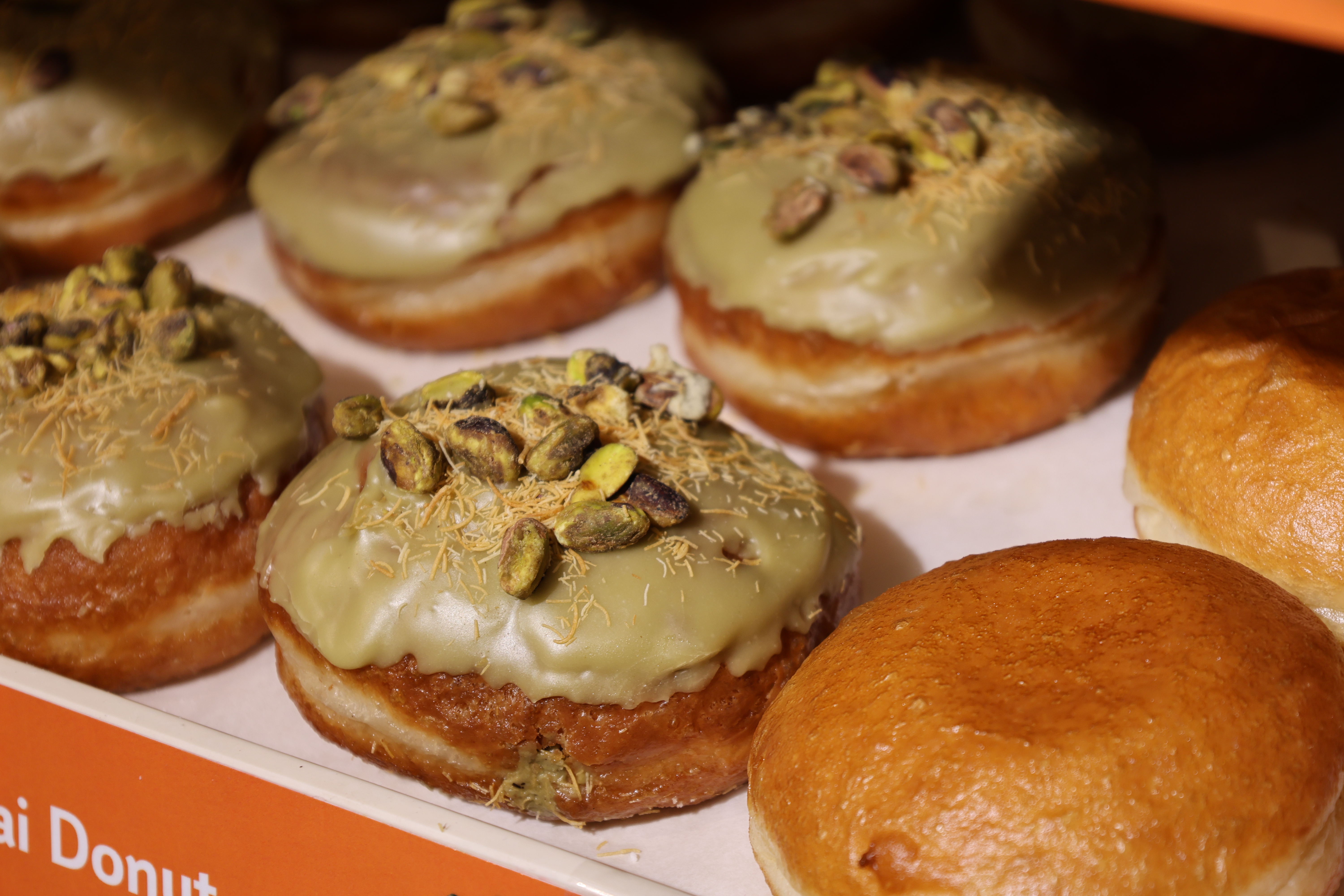
We found the raspberry donut to be okay and the pistachio to be interesting- it is much saltier (like salted pistachios you might normally eat) with bits of pistachios in the filling. It’s a much more crunchy, saltier version than Sesame which is creamier and sweeter.

Schreiber’s Homestyle Bakery

We visit Schreiber’s each year to get their lace cookies, which they do to perfection (I know that it’s a simple cookie but we love places that perfect things).

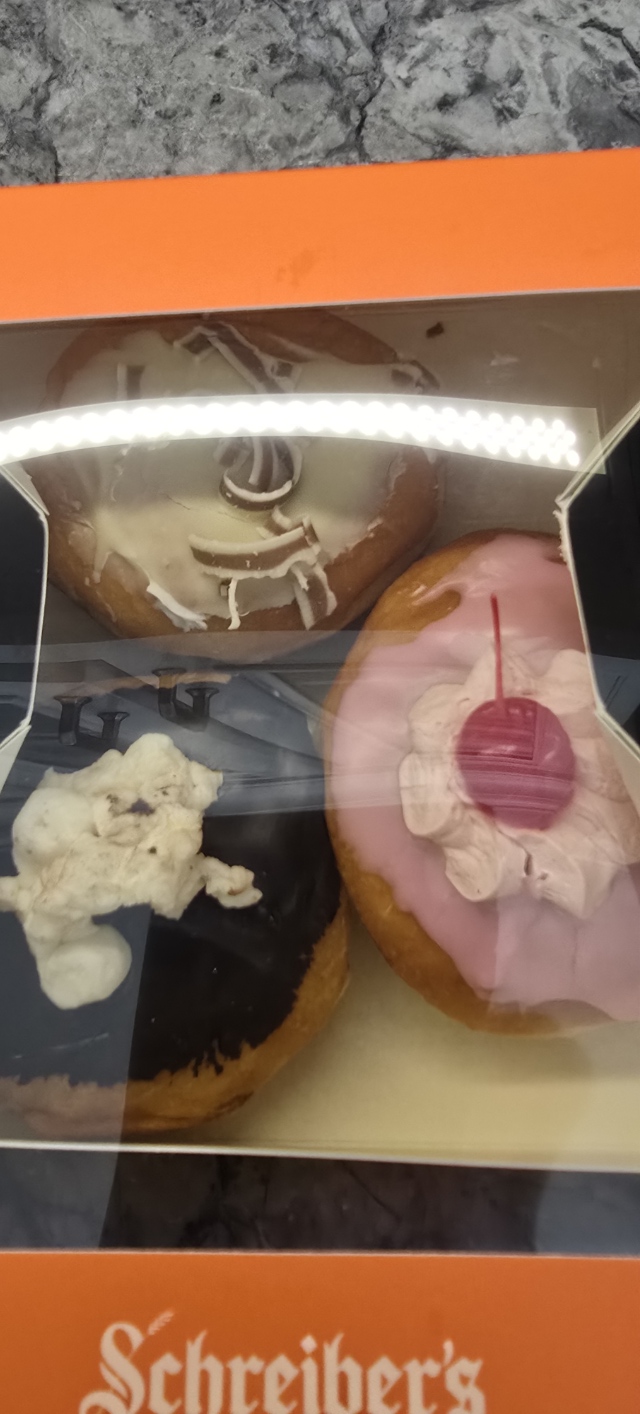
The sufganiyot were all in the back and they have simple jellies for about $2, and fancy ones for $5. They have a nice selection of packaged donuts for quick takeaway or you can select the ones you want. We bought one pretzel and one graham cracker donut. Both were good, not too sweet.

At this point, we had our first sugar rush. We broke for sushi at Sushi Meshuga, 1637 E 17th Street. The sushi was fine, and helped cleanse our palates for the second half of the donut crawl.

Pita Sababa

As a non-Brooklynite, (and non-Sefaradi) I did not know Pita Sababa, a large Moroccan bakery. I heard about the bakery from a woman on line at Almah who told me she absolutely loved the bakery. It seems so do many others!

The bakery was totally sold out when we visited. Tal, who runs the store, told me he thought he’d sell 10,000 donuts on Christmas! He expects to sell closer to 5-7,000 on the other days of Chanukah. One needs to order in advance on the website. We decided to try a sfenj which is a Moroccan donut. It’s basically just fried dough, somewhat like a churro. It was straight out of the oven, warm and delicious.

You can also pre-order at sabababakery.com or with the QR code below. There are just a few flavors, including chocolate ($48/dozen), custard ($42/dozen) and jelly ($42/dozen). They also sell mini donuts in smaller sizes.

Maison Valero

Some of the smaller bakeries only cook in the morning (as opposed to larger one’s like Sesame and Pita Sababa which bake all day). As such, one needs to come early to get donuts at the smaller shops, and this store was closed by the time we arrived in the afternoon.

Sesame

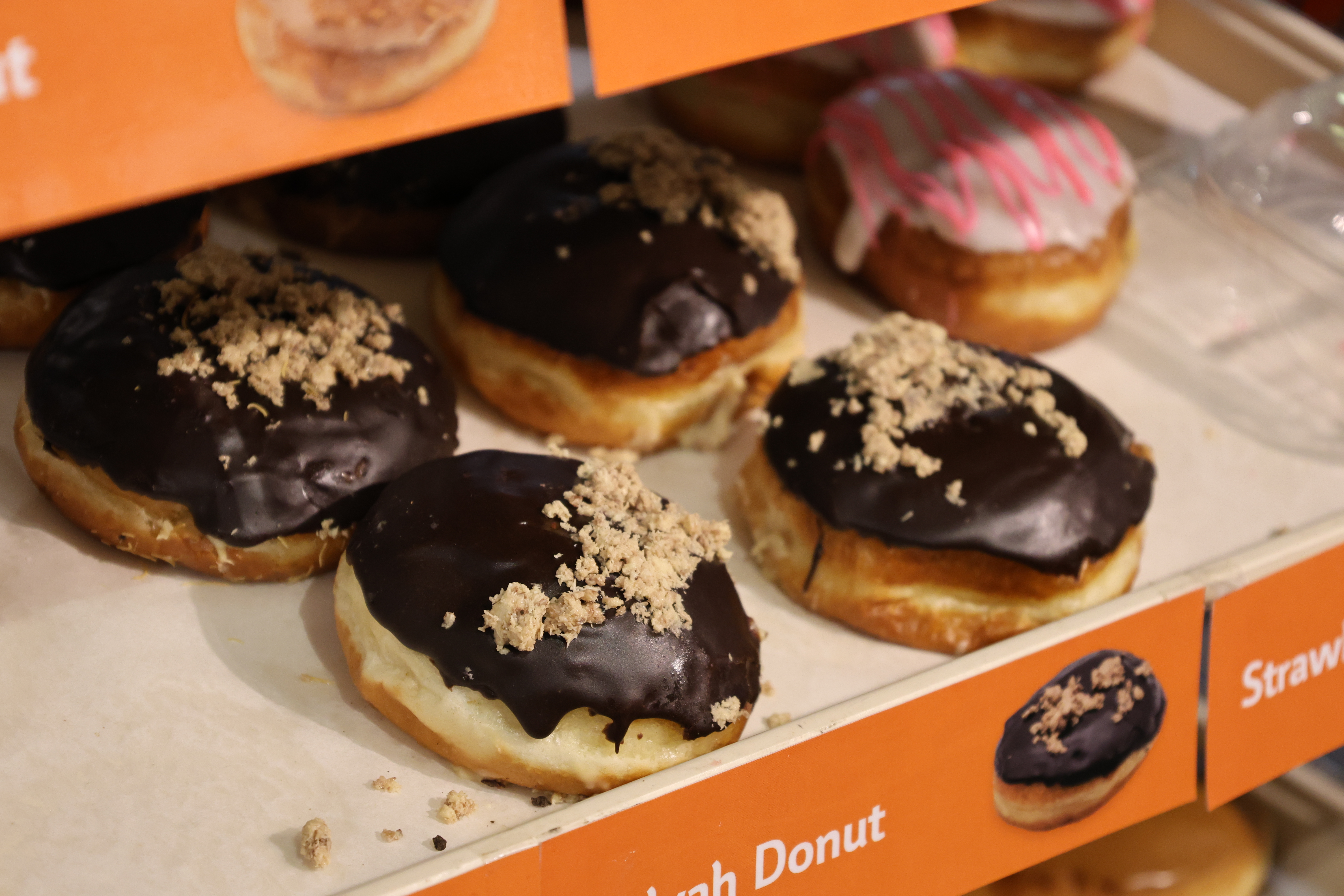
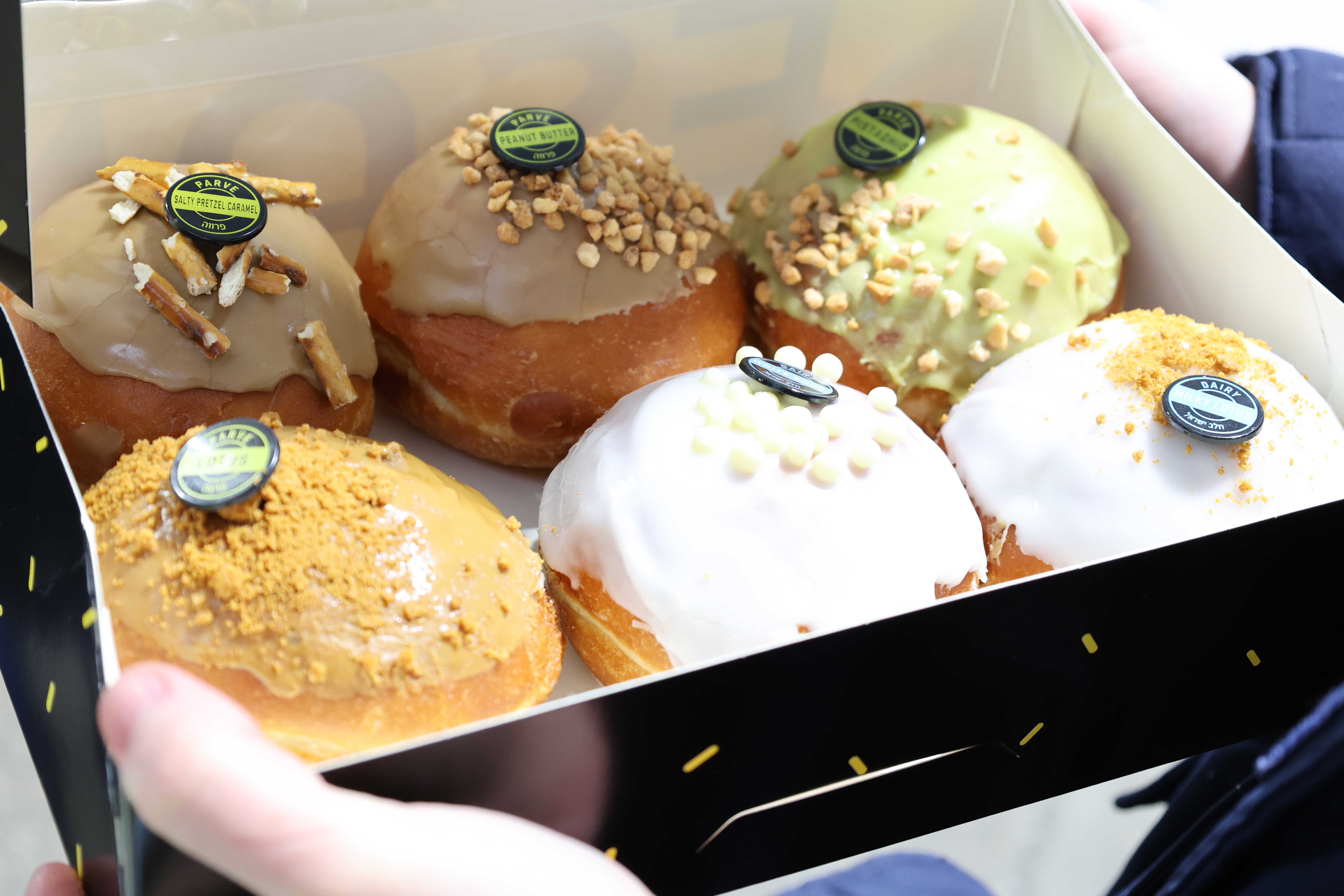
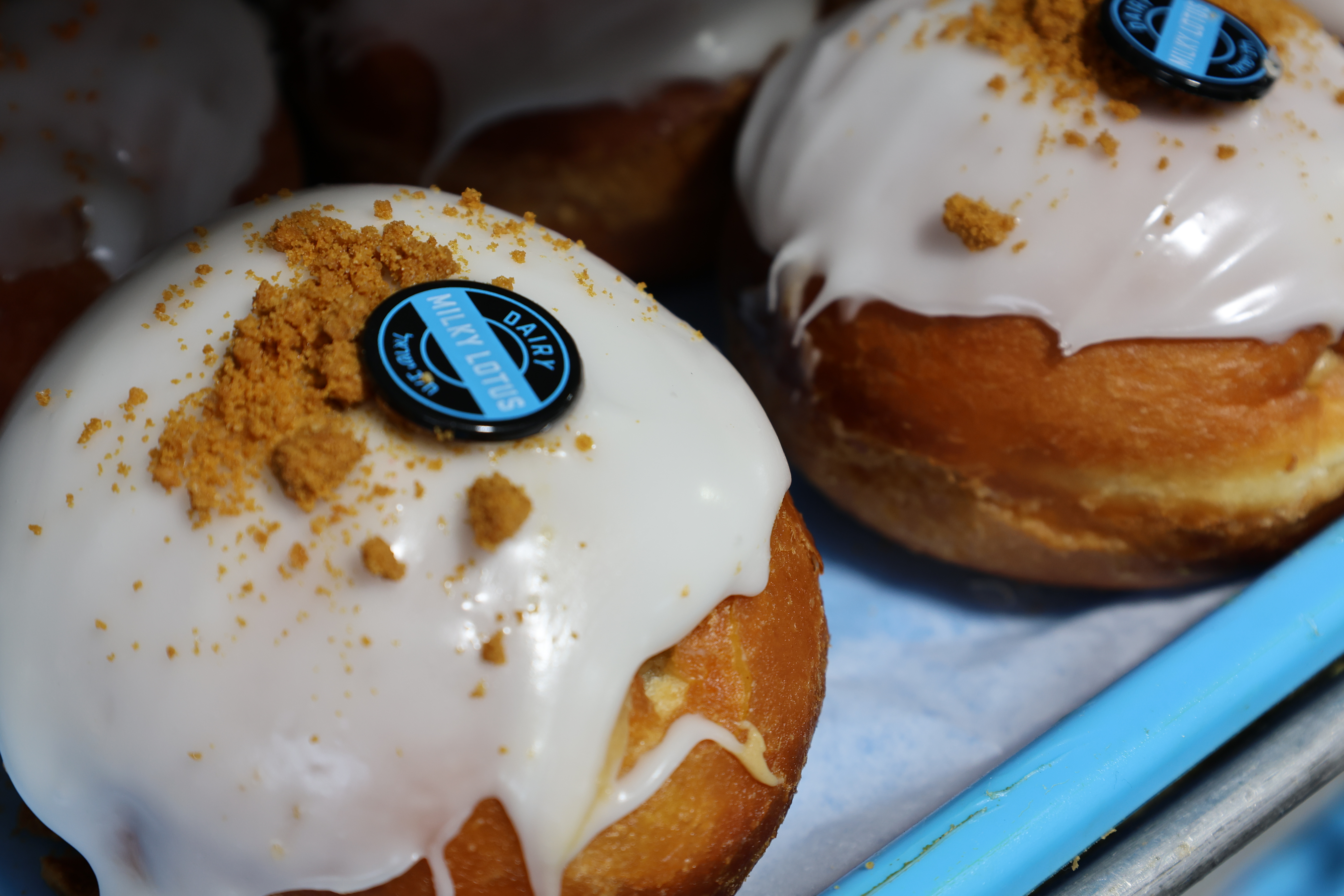
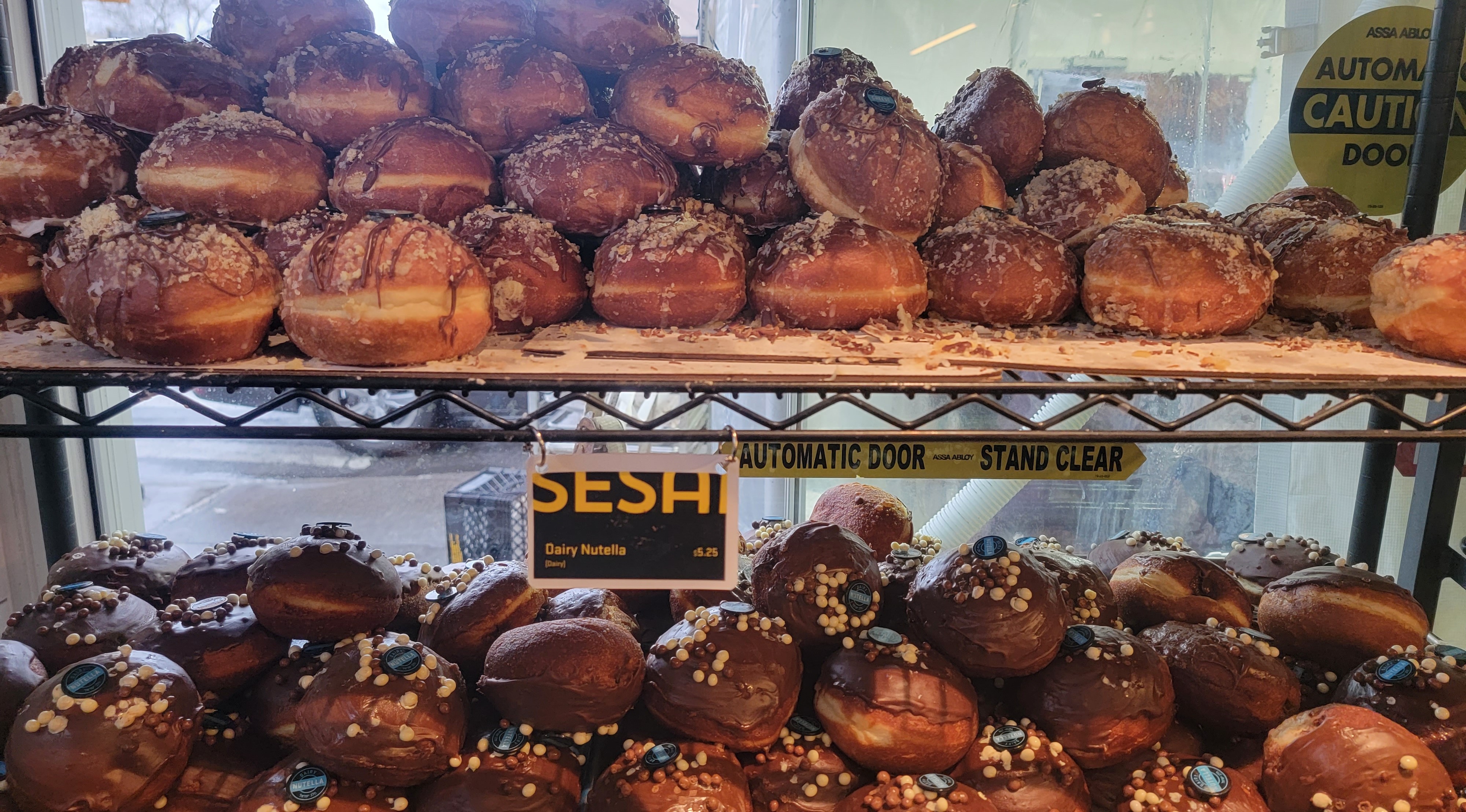
Sesame has a well-earned reputation for excellent donuts so the few bakery locations are packed. Because they bake all day, people stand around and clamor over the next flavors to emerge from the ovens, shouting “lotus!” and “white chocolate!” Pareve flavors include Oreo, Halvah, Lotus, Pistachio, Peanut Butter, Lemon and classic jelly. Dairy varieties include White Chocolate, Nutella, Caramel and Cheese. All of the fancy sufganiyot were about $5.25.

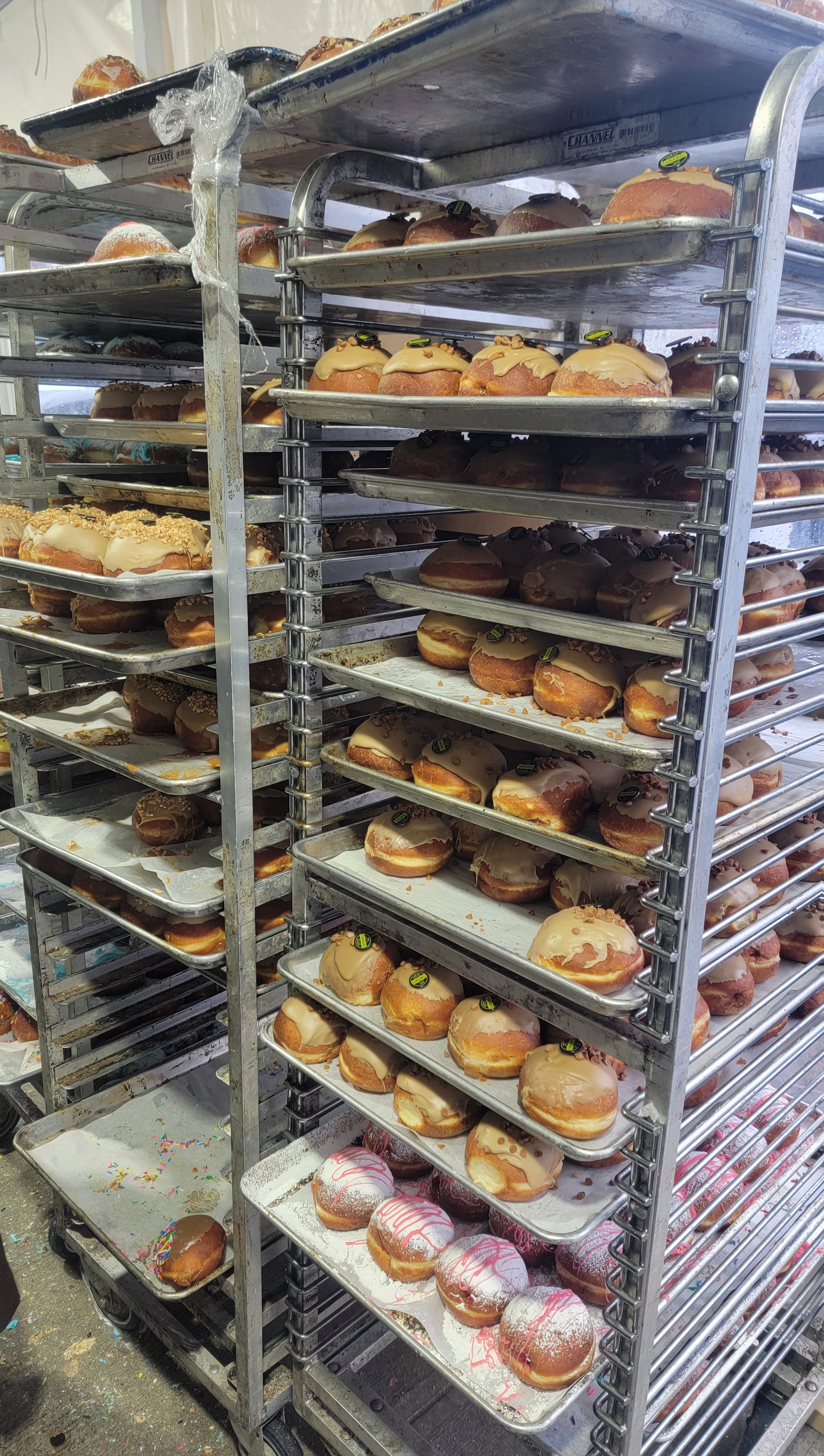
Crowd standing outside of Sesame bakery in Flatbush waiting to fill in boxes of donuts with the next great flavor to emerge from the kitchen next door to the retail store

Note that these sufganiyot and large and have very rich flavor. We suggest cutting them in quarters so you can try from their wide variety. All are excellent. We ordered a dozen and brought them to friends for dinner.

If you are not planning on eating them for a while and not so particular of the flavors you get, consider picking up packaged Sesame donuts at stores like Sprinkles. We met people at the Oneg bakery who had done just that.

Inside Oneg bakery, people show the Sesame sufganiyot they purchased at Sprinkles. Many people like to sample baked goods from several bakeries

Taste of Israel

Taste of Israel is small general store, but you can order sufganiyot in advance at (347) 554-8133. They have eight varieties ranging in price from $4 to $6, and all are very good. We bought another dozen here to bring to people.

Ostrovitsky’s Bakery

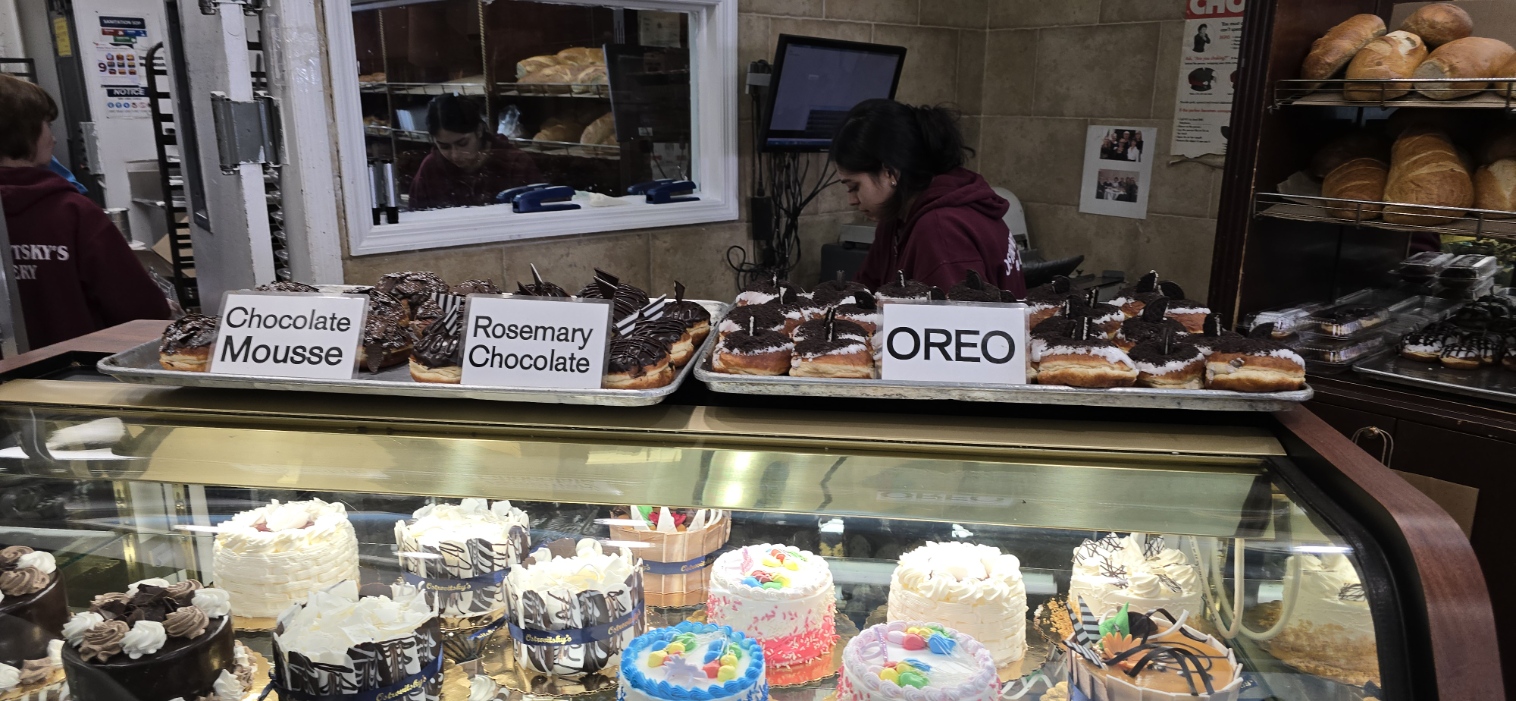
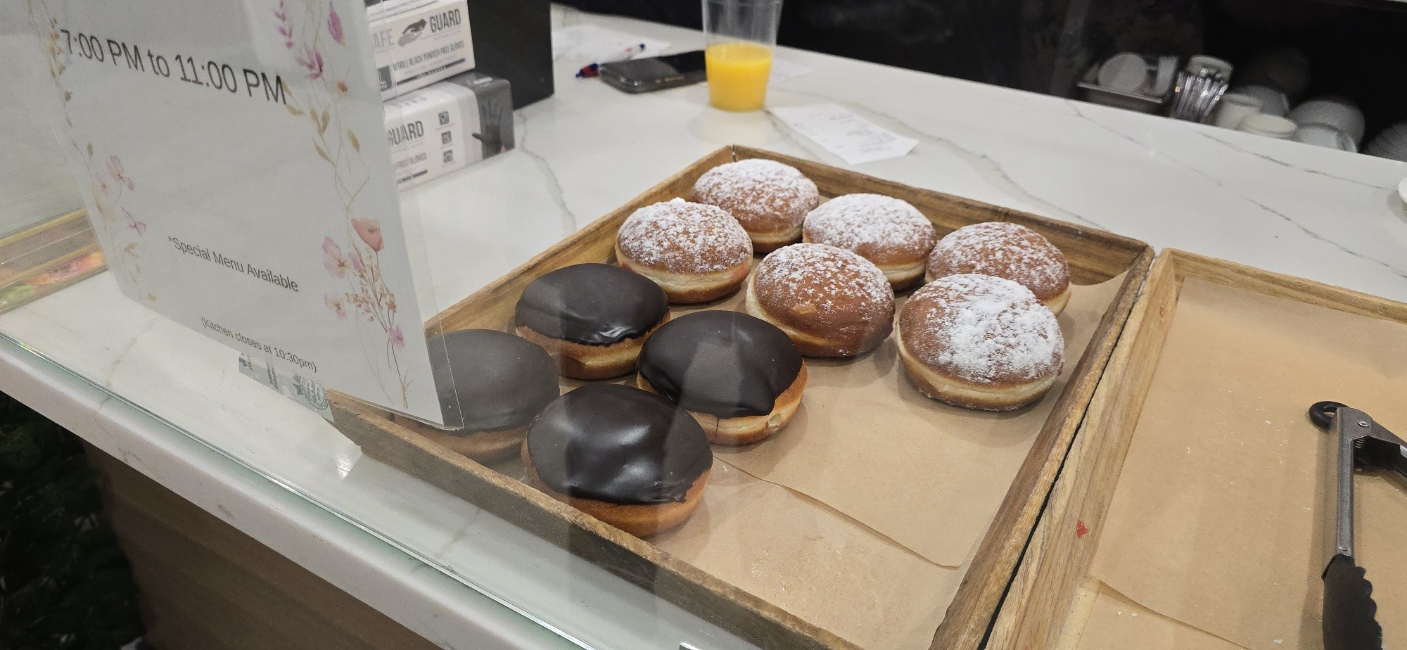
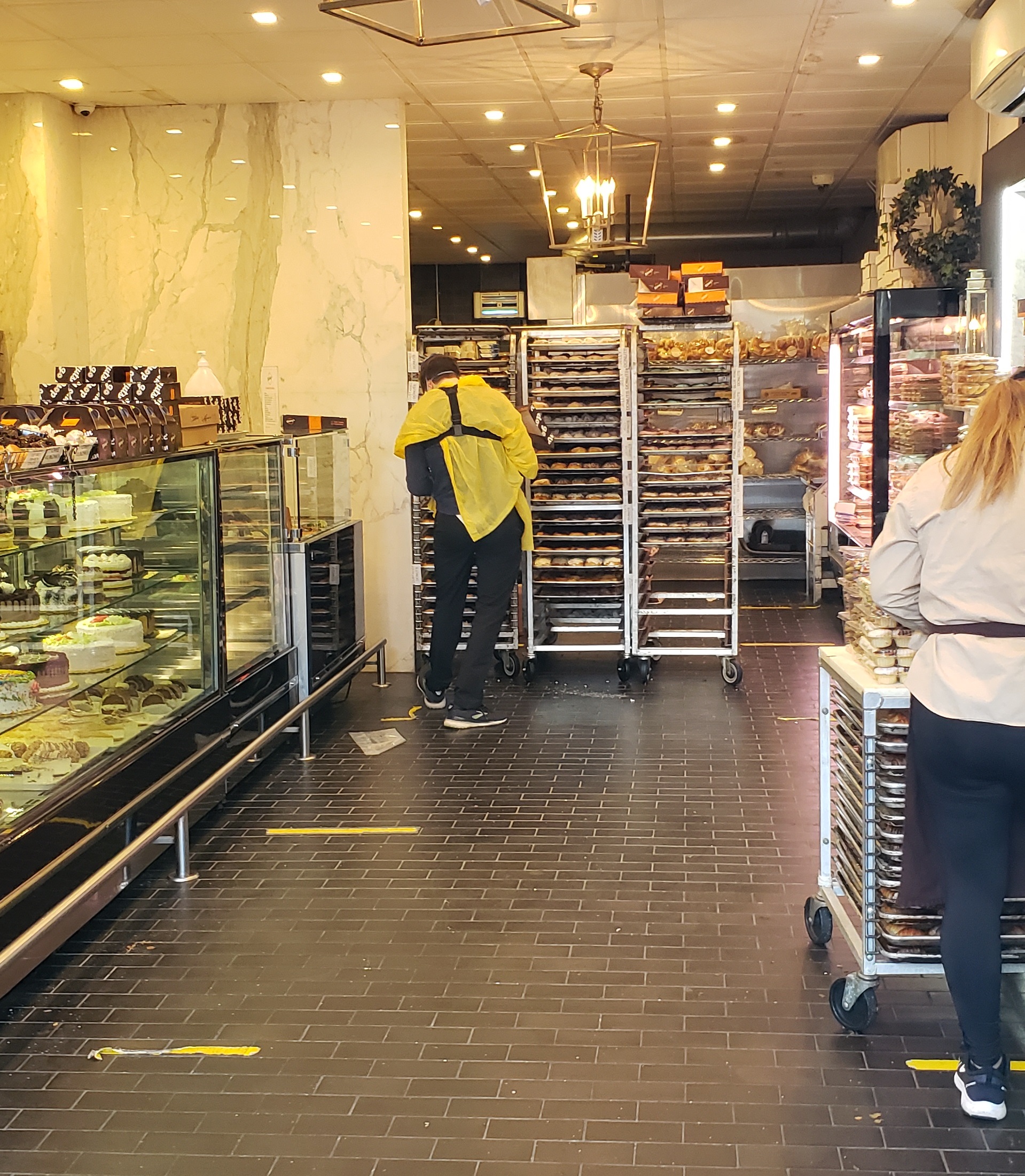
Ostrovitsky’s was cleared out of their fancy sufganiyot (Rosemarie, Chocolate Mousse…) when we arrived around 4pm. We tried a custard donut which was just okay. Dough gets heavy as the day goes on which weakens the experience.

Summary

If one budgets $2-$4 for a donut, look for simple jelly donuts or custard which are usually quite good at most locations (including Pomegranate). The more expensive varieties run $5-$6 each. There is absolutely no reason to spend $7 for a small donut at Almah.

Sufganiyot are much, much better fresh. If one is planning to eat them at the time of purchase, go early to the smaller bakeries which only bake in the morning. The larger locations like Sesame and Pita Sababa can be visited at any time and recommended if one is planning on having them at dinner.

Some places require ordering at least a day in advance, including Pita Sababa, Ricotta Coffee and Taste of Israel. It is very unlikely that you will be able to get any if not ordered early. However, I imagine that it will get easier on the last few nights of the holiday.

Lastly, talk to people! We discovered Sababa from talking to a woman in line and got gifted donuts at Ricotta from speaking to a Chabad rabbi. People are out enjoying the holiday and you should view the bakery hop as an experience to enjoy with everyone, and not just picking up donuts because pictures looked pretty on Instagram.

BONUS: Latkes (Pomegranate and Essen Deli)

We sampled latkes from Pomegranate (across from Sesame-Flatbush) and Essen Deli (not far from there, next to Ostrovitsky’s). Pomegranate had a few flavors like potato, sweet potato and zucchini which were flat and wide. Essen had potato which were very crunch and thick. The Essen latkes were a bit saltier and people preferred them to Pomegranate’s which candidly, did not look as appetizing when placed side by side.

Wishing you and your families a very wonderful Chanukah!

At The Story Of Chanukah, There Was No Temple Mount…

The story of Chanukah happened in 164 BCE. The Seleucid king Antiochus IV Epiphanes had defiled the Second Jewish Temple in Jerusalem and enacted several laws against Judaism, including banning circumcision, celebrating Shabbat and Jewish holidays, forcing Jews to eat pork, and making it a capital offense to have a torah scroll. The Jews of the holy land revolted against the Syrian-Greek king and got rid of all the anti-Judaism decrees and rededicated the Temple.

This was a war of pagans against the Jewish religion, before Herod built the expanded Temple Mount plaza and before Christianity.

Over the following centuries, King Herod (72 BCE – 4 BCE) built the expanded Temple Mount and Jesus was crucified in Jerusalem by the Romans. Jewish revolts against the Romans in 66CE-70CE and 132-135CE led to the destruction of Jerusalem and expulsion of Jews from the area, renaming the city to “Aelia Capitolina” and the region to “Palestina.”

This was a war of pagans against Jews and Christians, before the birth of Mohammed and creation of Islam.

Mohammed’s quest to bring Islam from the Arabian Peninsula to the world brought a Muslim invasion into the Jewish holy land in the 7th and 8th centuries. Muslims built their third holiest site on top of Herod’s Temple Mount, the Al Aqsa Mosque. Christians and Muslims waged several wars over the holy land between 1095 and 1291.

Those battles between Christian crusaders and Muslims, were over the Jewish holy land and Judaism’s holiest location.

In 1948, Muslim Arab armies invaded and tried to destroy the newly declared State of Israel. The Jordanian army ethnically cleansed all of the Jews on the western bank of the Jordan River all the way through the Old City of Jerusalem. In 1954, it granted citizenship to all Arabs, as long as they were not Jewish.

This was a war of Arab Muslims countries against the physical presence of Jews in the Jewish holy land.

From the Chanukah story to the creation of Israel in 1948, many groups laid siege to Jerusalem, often attacking Jews through anti-religious actions, or lumped in with other religious groups. Since 1948, the war has been about the physical presence of Jews in Jerusalem, a place where Jews have been the majority since the 1860s.

At the story of Chanukah, there was no Temple Mount, no Christianity and no Islam. It was a battle of pagans against a small local tribe’s religion, who lived at the intersection of Africa, Asia, and Europe.

Chanukah marks the beginning of Jews in the holy land being attacked for their religion. The successful battles proved to be short-lived, as most Jews were forced into the diaspora over the following centuries, until the recent past. Celebrating the holiday today amidst a multi-front defensive war and global antisemitic chants that Jews are “European settler colonialists” is a chance to reassert Eight Attestations On Jerusalem:

  1. Jews have an Inalienable right to pray on the Jewish Temple Mount
  2. Banning Jews from living and praying in their holiest city is blatant anti-Semitism, as is denying Jewish history
  3. There is no “Judaizing” Jerusalem, as Jews have been the majority in Jerusalem since the 1860s, and have devoted themselves to the city since 1000BCE
  4. The security of Israel demands that its capital sit well within its borders
  5. Divided capitals are a function of war, not peace. The place known as “East Jerusalem” only existed for a few years, 1949-1967
  6. No part of Jerusalem was ever contemplated to be part of Palestine. Not only is “East Jerusalem” not an actual city, but there is no basis to call it “Occupied Palestinian Territory”
  7. Jerusalem Arabs have been and are continued to be offered Israeli citizenship
  8. There is no ethnic cleansing of Arabs. The Arab population in Jerusalem has grown faster than Jews since Israel reunited city

On Chanukah, diaspora Jews should pay particular attention to the direction of their prayer, the Jewish Temple Mount in Jerusalem, Israel, as Jews have done for thousands of years.

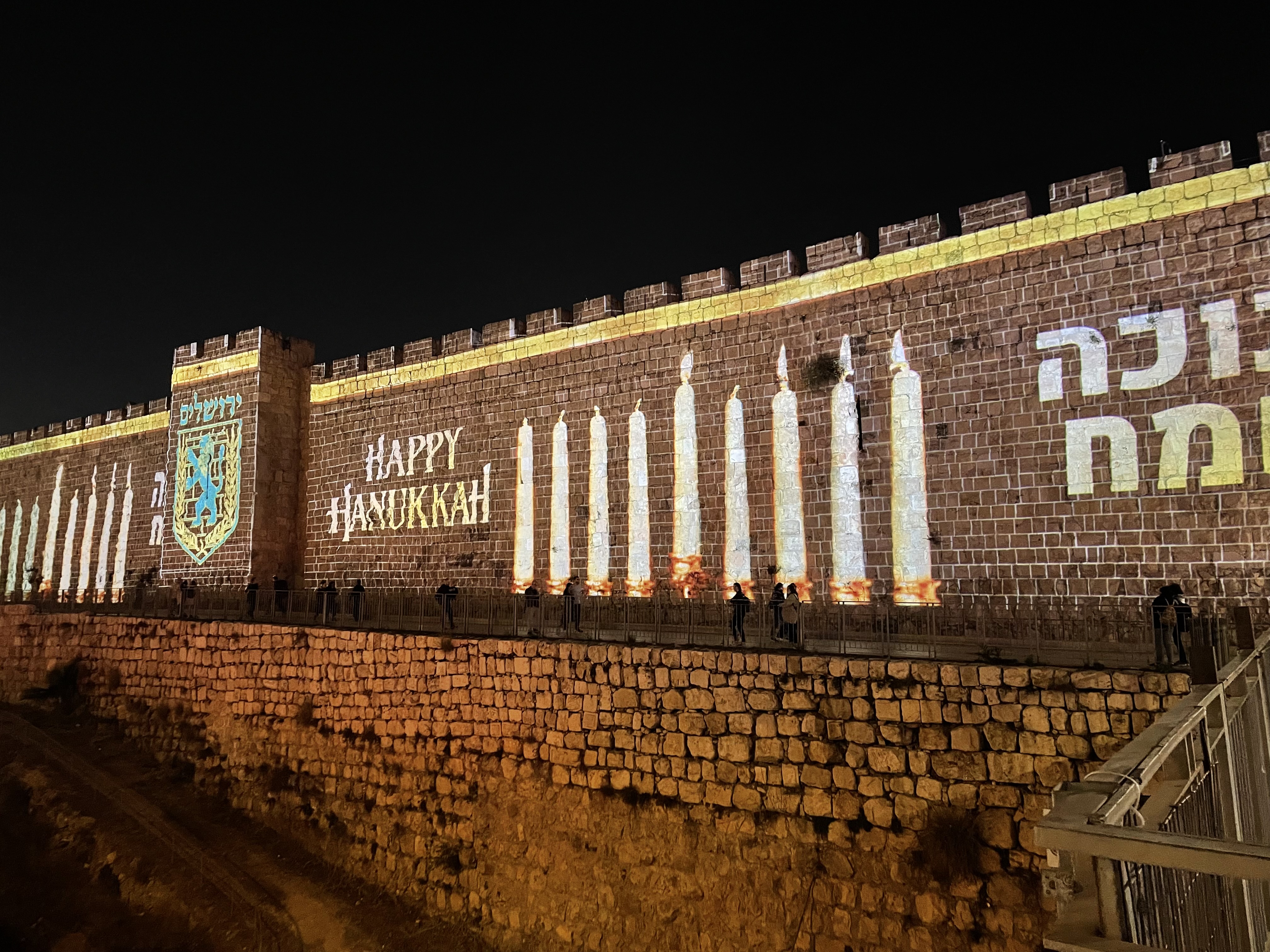
Happy Chanukah signs on the walls of Jerusalem, 2021

Related articles:

It’s Jerusalem Stupid. Duping The Christian World To Join The Jihad Against The Jews (November 2024)

The UN Talks About Jews Building In Jerusalem On Chanukah (December 2022)

For Chanukah, Arab League Shines Light On Why It Should Be Condemned (November 2021)

The Jews of Jerusalem In Situ (April 2019)

Today’s Inverted Chanukah: The Holiday of Rights in Jerusalem and Judea and Samaria (December 2015)

Brooklyn Chanukah Donut Crawl 2023

The riders of the sugar storm went to Brooklyn again this year, focused on Flatbush. We started at Schreiber’s which is usually at the end of the trip, because we picked up an important taster who had just flown in from Israel into JFK Airport after ten days of volunteering after the horrible October 7 massacre. We hoped the sugar would alleviate the jet lag and stress.

All of the bakeries we tried were good, as this was our fifth year going to Brooklyn, and have eliminated those bakeries which did not score at least a “6” in the overall ranking in the past. We were sugared out after five locations, so did not make it to some favorites like Ostrovitsky’s.

Schreiber’s Homestyle Bakery, 3008 Avenue M

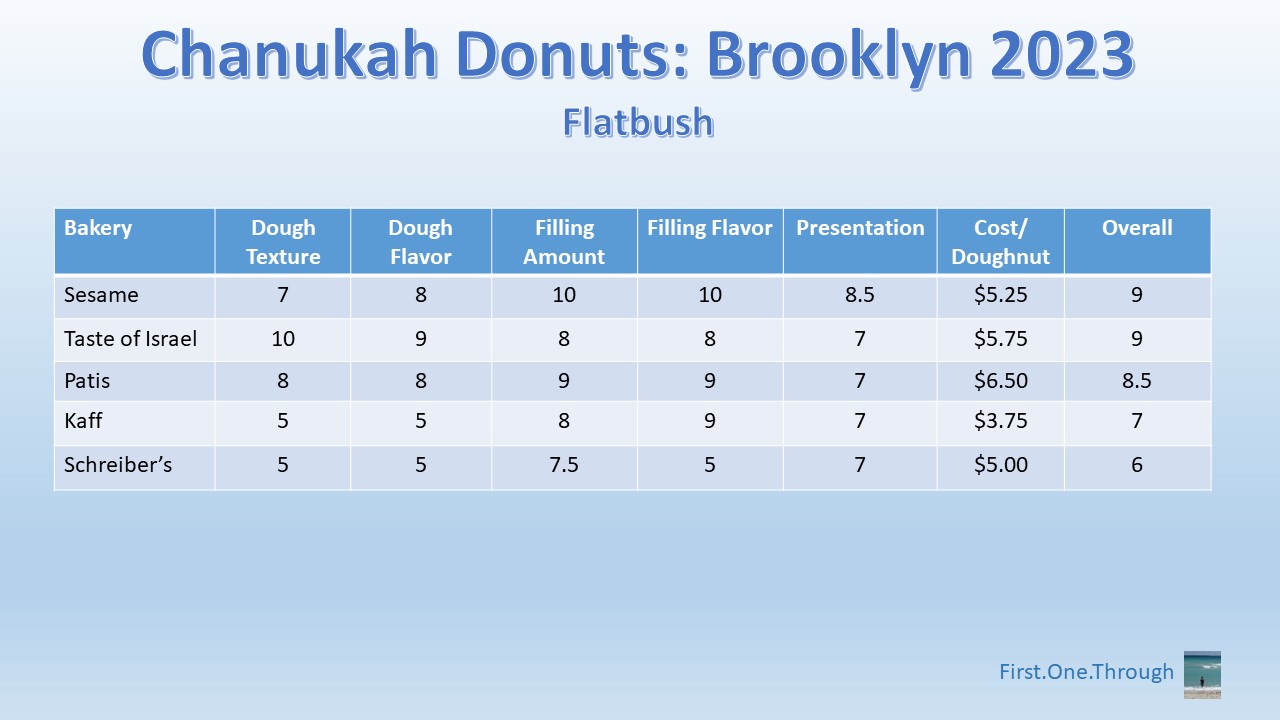
Per tradition, we immediately picked up Schreiber’s lace cookies which are amazing. We grabbed dairy cheese sufganiyot from the back of the store to bring to a niece who said they were amazing. We sampled the pareve selection which were just mediocre. The pistachio one only had pistachios on the outside but no pistachio flavor inside. The dough was too heavy without a lot of flavor. Overall a 6.

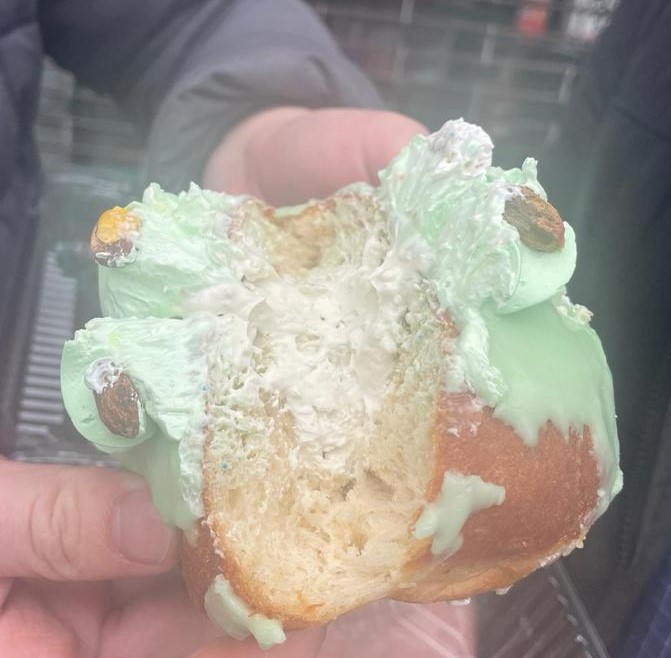
Pistachio donut from Schreiber’s

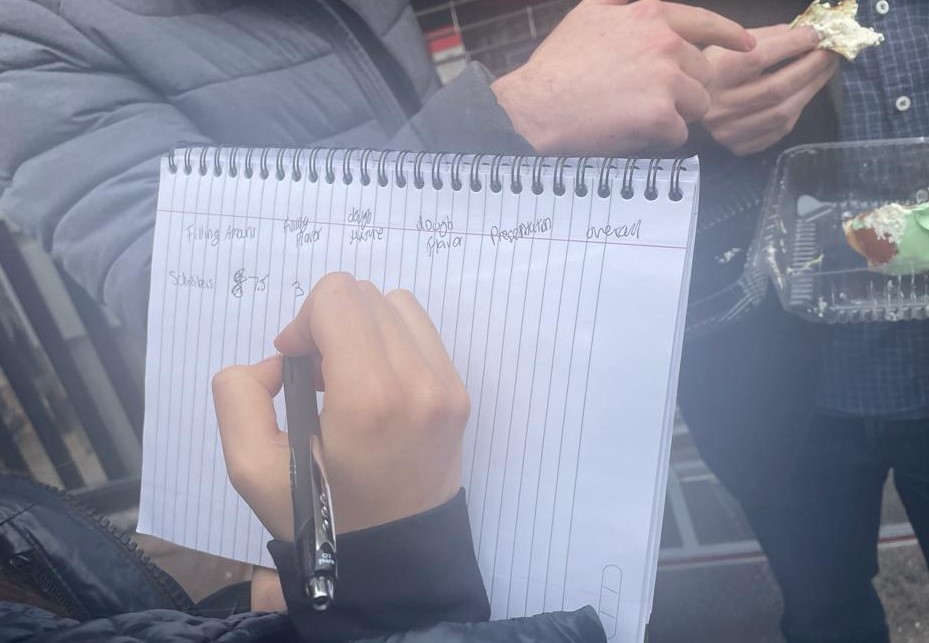
As we debated our scores outside of the bakery (note the filling flavor started as a ‘3’ and settled on a ‘5’ after everyone’s input), a local came over and asked our thoughts on the top bakeries in the neighborhood. It seems that other people are also doing the crawl.

Schreiber’s bakery kicked off the scoring for Hanukkah 2023

Kaff Bakery 1906 Avenue M

Kaff was a new addition to the crawl. We were impressed that several sefaradi people were picking up jelly donuts, as their bakeries do not have a tradition of making the holiday treats. Each one said that Kaff was a favorite but we were disappointed. While the lotus donut was packed with filling, it was not smooth and creamy, and was overly sweet (for me). Fellow travelers loved them which gave a more balanced overall score of ‘7’.

Kaff Bakery had a nice selection of donuts

Presser’s Kosher Bagels and Bakery, 1720 Ave. M

Presser’s donuts candidly did not look at all appetizing and we didn’t purchase any. Instead we tried the chocolate horn which had tasty chocolate but the dough was not as flaky as Weiss’s bakery.

Patis Bakery, 1716 Ave. M

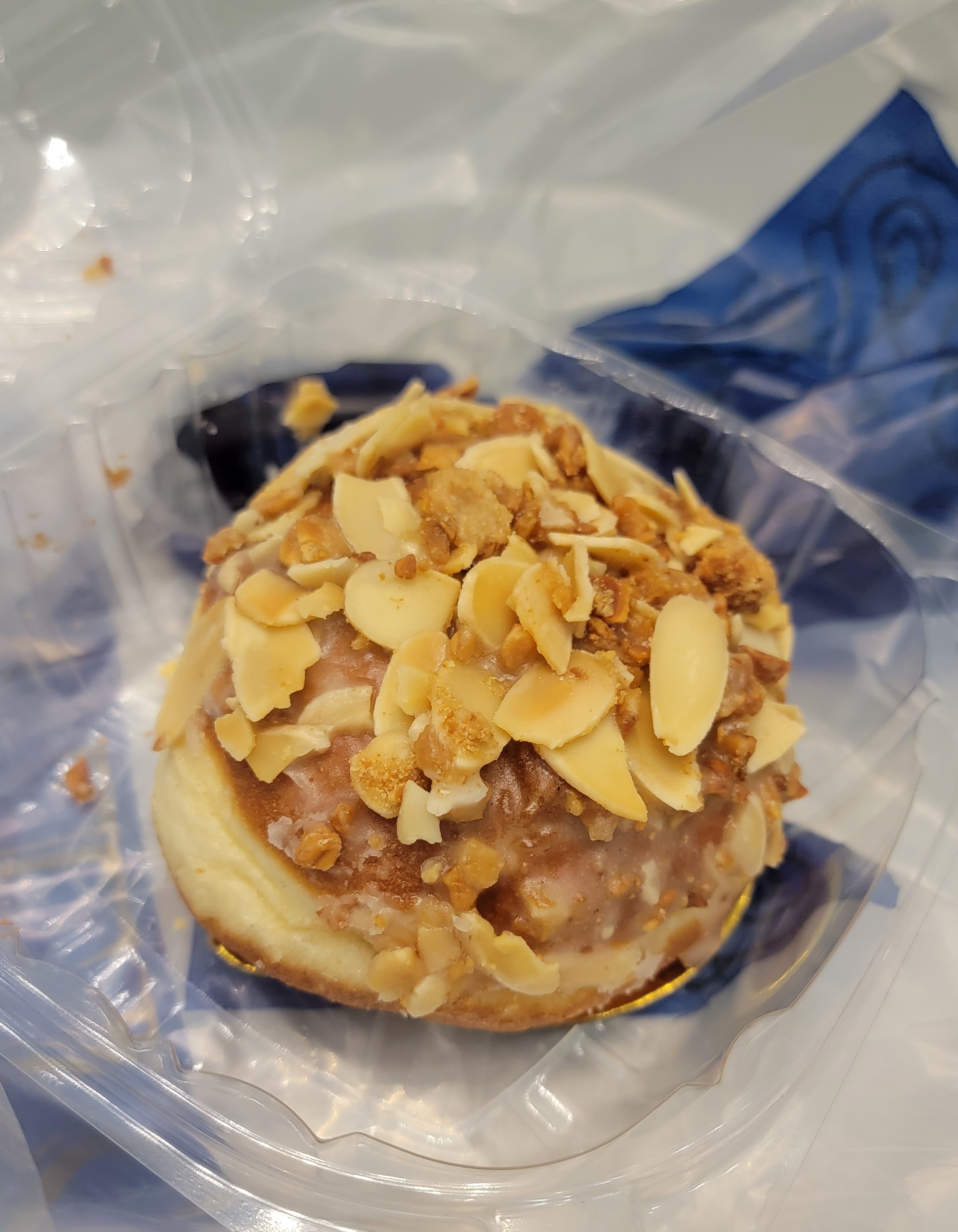
Patis was almost completely sold out by the time we arrived around 11:00am. They had one variety – almond hazelnut – which was fantastic. Very buttery soft dough, good hazelnut filling and tasty toasted almonds on top. An ‘8.5’.

Almond hazelnut donut from Patis, Hanukkah 2023

Taste of Israel, 1322 Avenue M

Taste of Israel requires a pre-order some days in advance at (347) 554-8133. We highly recommend it. It was a new addition to the crawl and tied for top marks with Sesame. The dough is actually better than Sesame in terms of fluffiness and flavor, which is not always easy because it needs to contain the heavy filling. TOI mastered it. While the presentation is not as pretty as some of the other bakeries, the overall taste was terrific even when we ate them later at night. We went for Oreo and Halva; they also have lotus, caramel, custard, jelly and rosemary. A ‘9’.

Taste of Israel donuts ranked highest for dough, and also good flavor

Sesame – Flatbush, 1540 Coney Island Ave

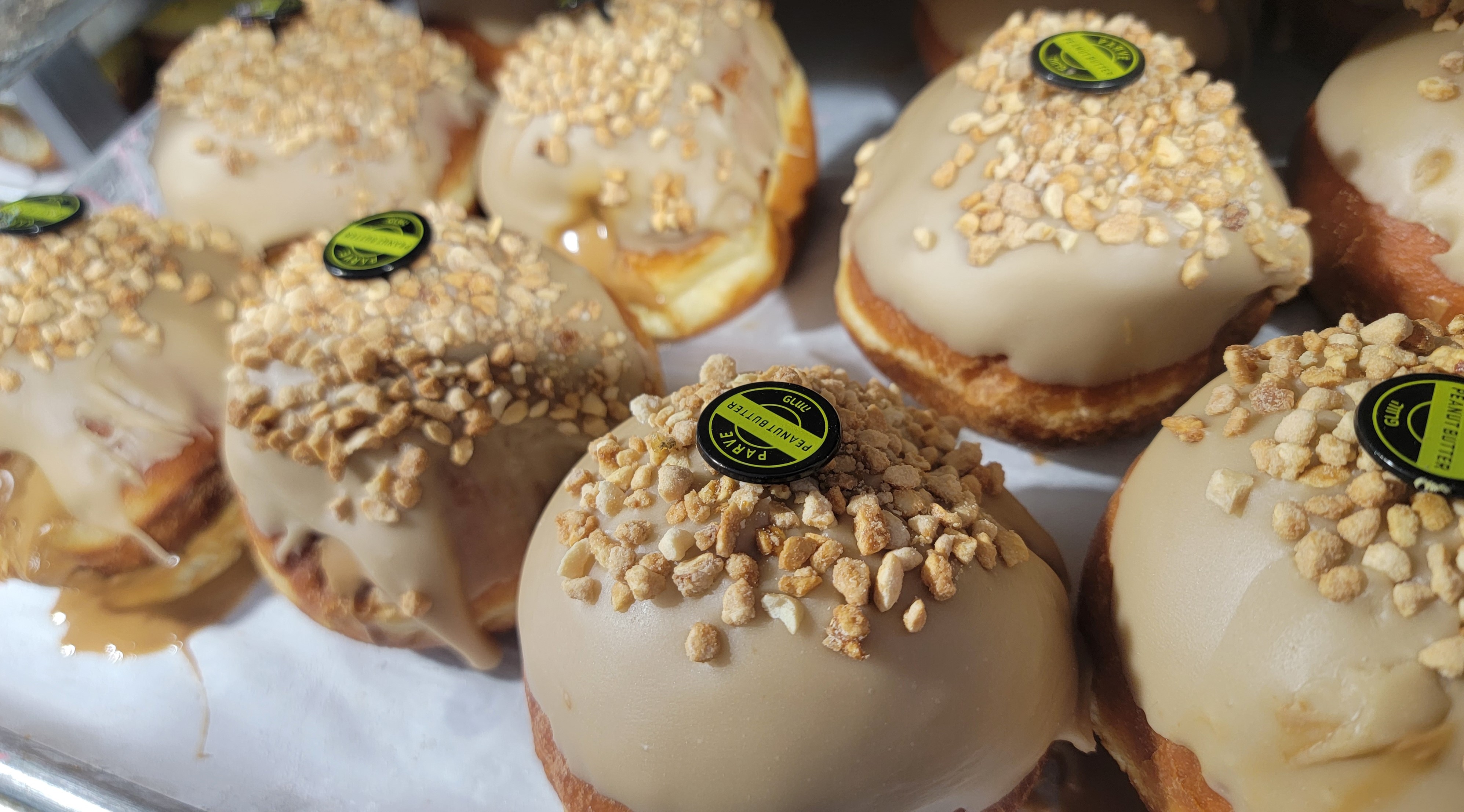
Sesame did not disappoint. Unfortunately, the store has developed a reputation for excellence so is a bit packed but perhaps that’s sharing the joy of the holiday. We heard that the dairy varieties (marked with blue labels) were out of this world but mostly purchased pareve to bring to people for dinner. The pareve (marked with green labels) peanut butter was outstanding – a 10. White chocolate, which I do not usually like was very tasty. Pistachio, as always, was terrific as was the lemon. Sesame puts flavor into the fondant on top of the donut for a doubly amazing experience. We bought dozens to bring back to share with people. A solid ‘9’.

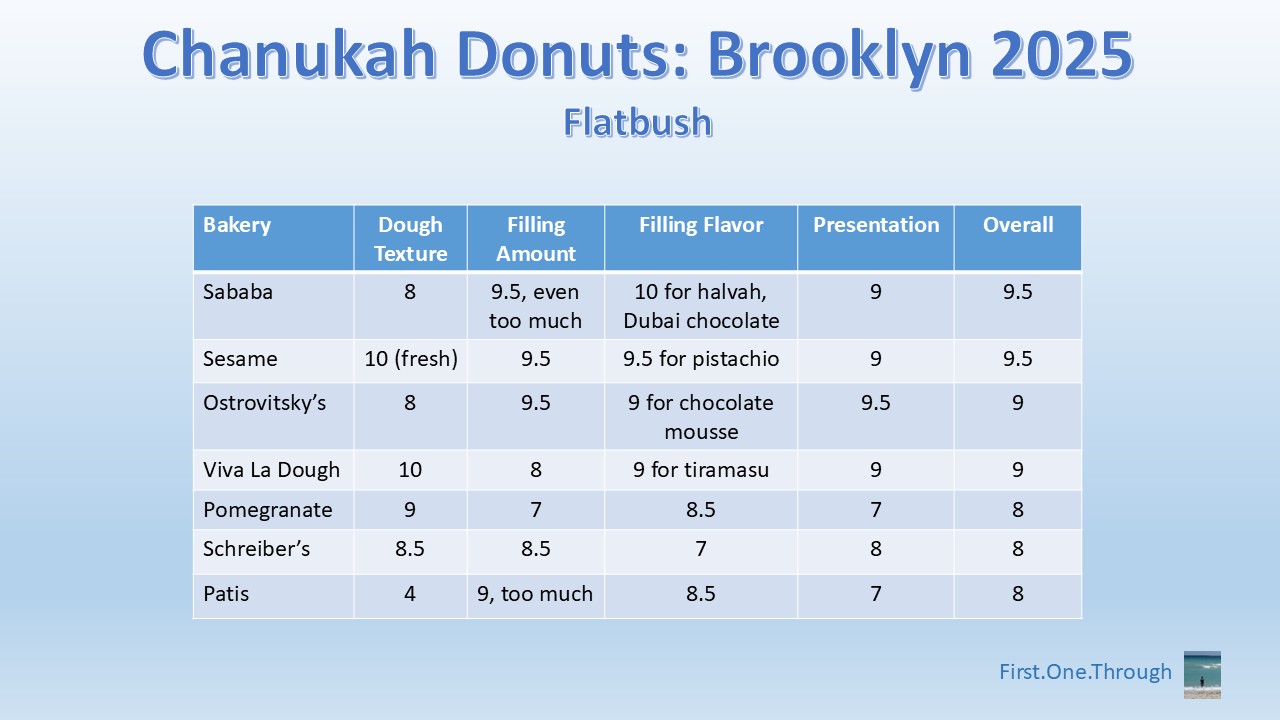
Below is the overall scorecard for each bakery. We hope you enjoy them and Happy Chanuka!

Related articles:

Brooklyn Chanukah Donut Crawl 2022

Jerusalem Donut Crawl 2021

Brooklyn Chanukah Donut Crawl 2020

Chanukah Donuts: Brooklyn 2019

Brooklyn’s Holiday Donuts

French Riviera Crawl

The Last of the Mo’Kichels

Brooklyn Chanukah Donut Crawl 2022

The annual Chanukah tradition of tasting sufganiyut (filled donuts) at local bakeries returned us to Brooklyn this year. We decided to focus on Flatbush and Williamsburg, and skipped the usual run in Boro Park. Below are the bakeries we went to in order, in case anyone would like to replicate the tour.

Ostrovitsky’s, 1124 Avenue J

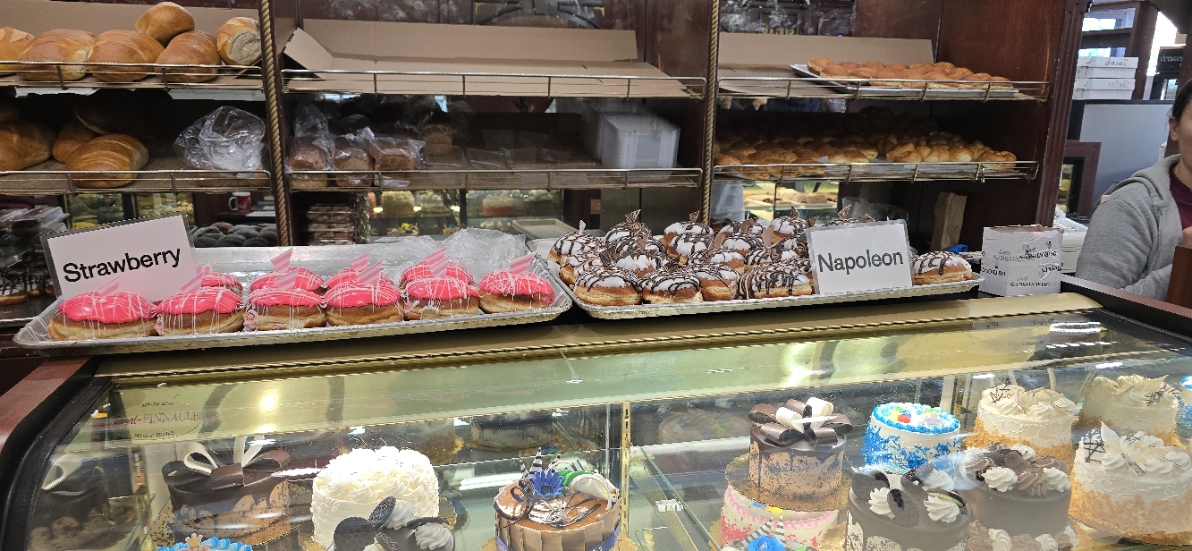
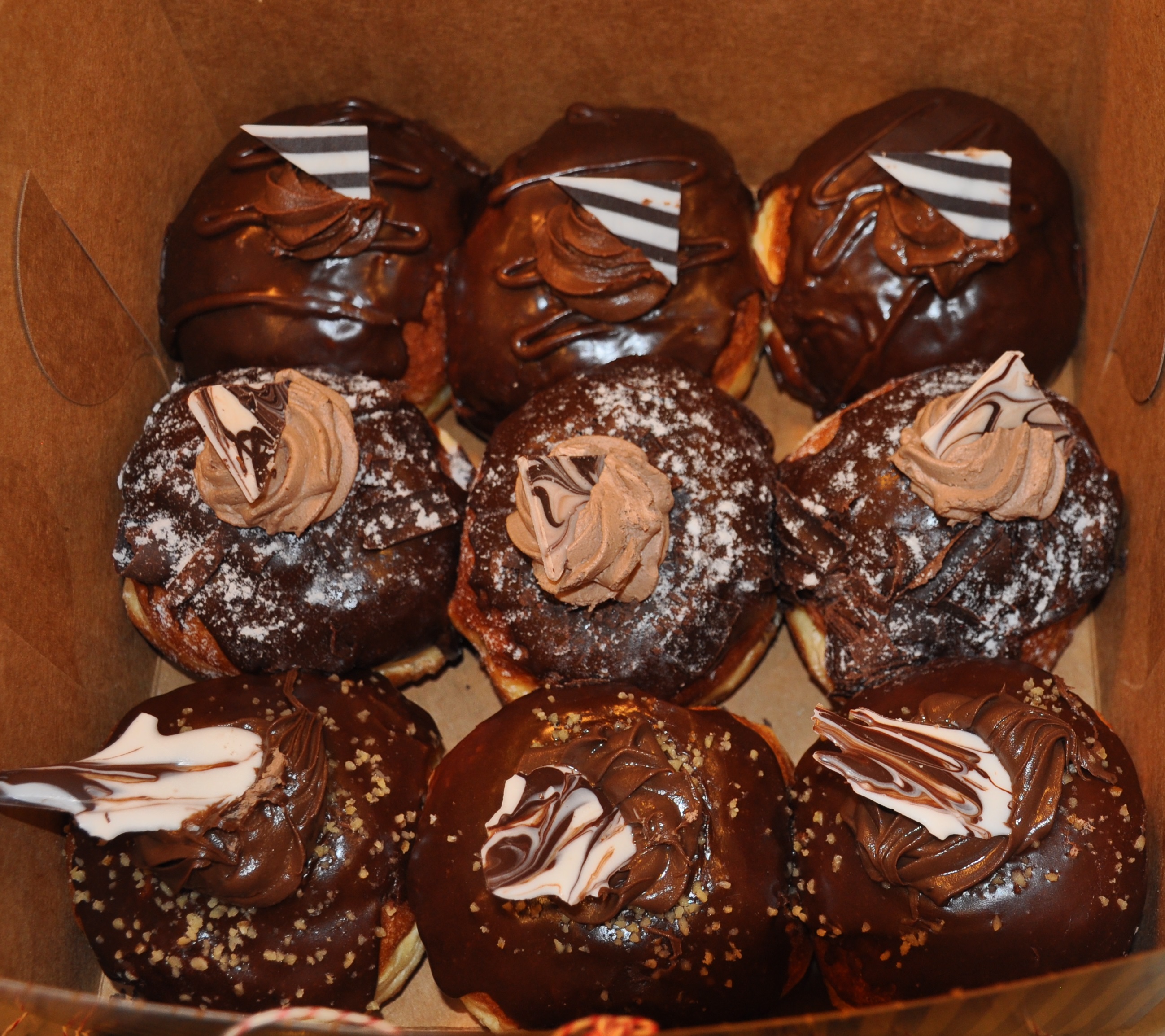
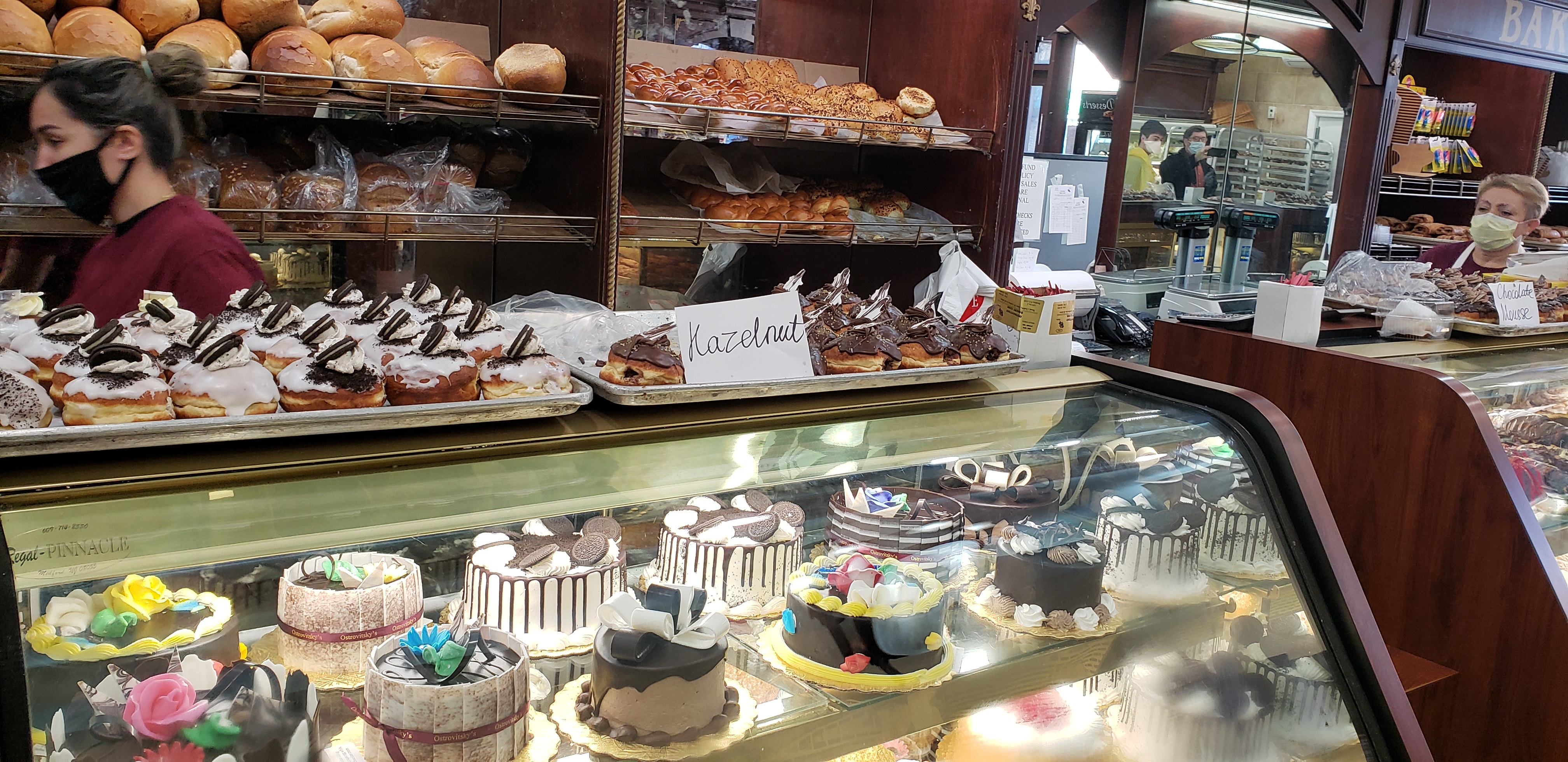
Our first stop was Ostrovitsky’s which scored well in prior visits. Unfortunately, the selection this year was beautiful but not good. The flavors looked great – Hazelnut, Napolean, Lotus, Oreo, Chocolate Mousse and Rosemary – but the dough tasted like it was a few days old. The filling flavor was still good but the amount of filling was very different depending on which donut we sampled (yes, we taste everything).

Pomegranate Supermarket, 1507 Coney Island Ave

We made an exception for the strictly bakery locations for Pomegranate, because of the store’s great reputation. There were basic flavors to try – jelly, chocolate, custard and caramel – and the jelly was really great. Dough was light and tasty and just the right amount of jelly and flavor. The $4.00 each for non-fancy seemed steep, but they were good.

Sesame, 1540 Coney Island Ave.

Sesame was packed as usual with a line to get in the store (and Chanukah didn’t even start until that evening!) The bakery always has a great assortment of flavors and they are usually terrific. This year, we found the dough and filling excellent once again, however a bit sweeter than past years. We are biased towards flavor over sugar, and this year, there was a complete lack of subtlety. Pistachio is always a favorite but now it comes complete with a sugar rush. We tried hazelnut and peanut this year too, and picked up a couple dozen for people in our neighborhood who crave them.

Taste of Israel, 1322 Avenue M

We heard good things about TOI but were then told that they only took pre-orders. We may stop by again next Sunday.

Schreiber’s Homestyle Bakery, 3008 Avenue M

Schreiber’s simply has the best lace cookies so we go every year. While not a complicated dessert, they have a great crispiness in a single layer and a generous dipping of excellent chocolate. Make sure to pick some up along with the sufganiyut.

The majority in the store are pareve. They have pre-boxed assortments and we picked up a few to bring to a dinner party (see below). The dairy ones which we ate on the spot had amazing dough – very light and tasty. Please go to the back to pick these up. The strawberry had the perfect amount of filling and also a really nice light flavor. The cheese was a little too light on flavor.

We took a short break to watch the World Cup finals and got to see the end of the second period of extra time and the shootout with Argentina beating France. I’m not sure how many families watched the end of the amazing 2022 game in a hair salon in the middle of a Chanukah donut crawl, but to those who did – wasn’t it great?

Oneg Bakery, 188 Lee Avenue

We drove to Williamsburg which is a hike I do not recommend. If you are going to the neighborhood anyway, that’s fine but not together with Flatbush which can be 45 minutes away.

Oneg is rightfully famous for its heavy babka, among the best in the world. They are huge at $45 for a half and $90 for a whole. We actually get the large and cut it into three, as they freeze well.

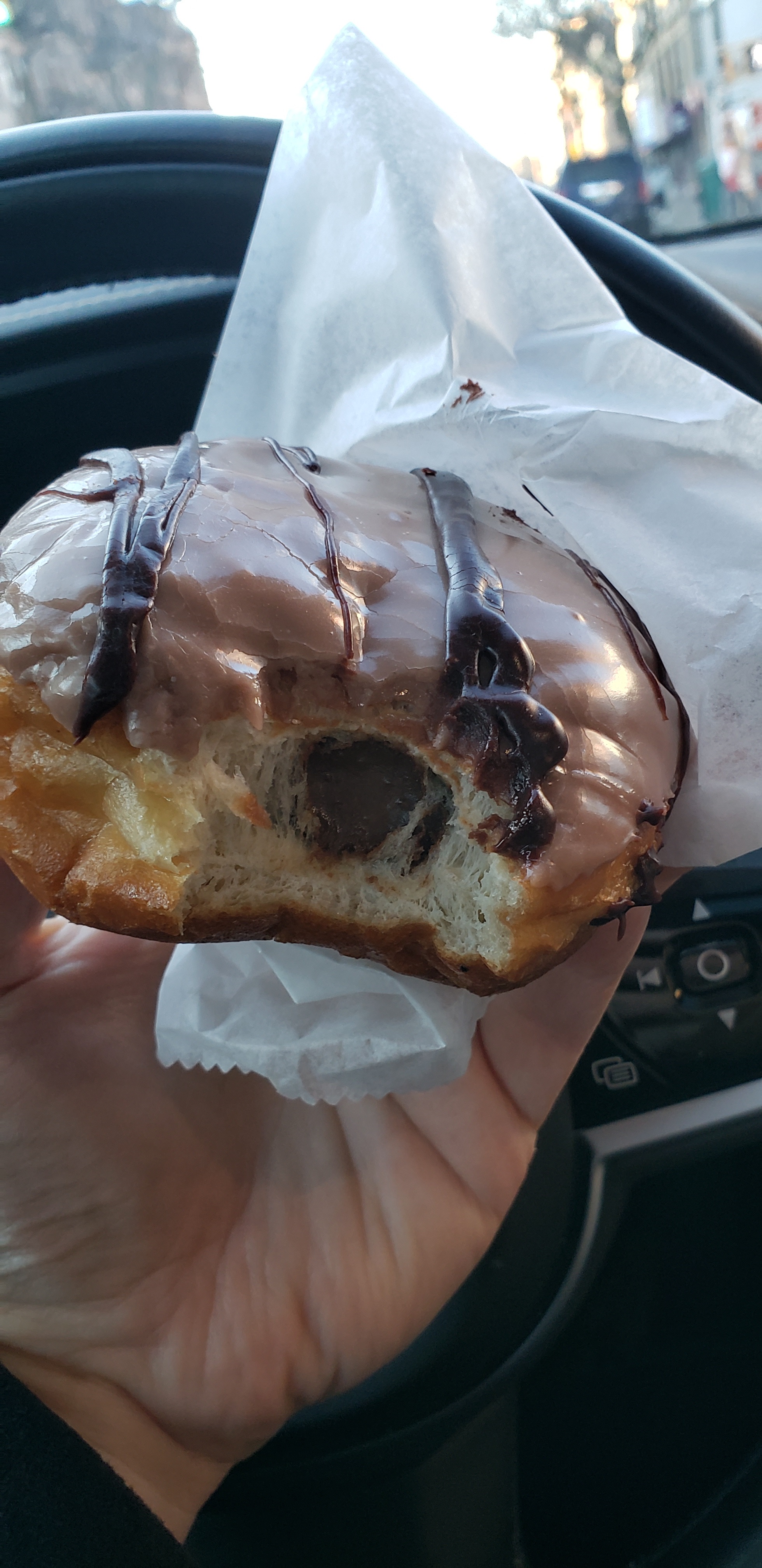
The store is very small and old school. The donuts aren’t fancy but the classic jelly was excellent, maybe only slightly behind Pomegranate’s in terms of flavor and consistency of filling.

Black and White Bakery, 520 Park Ave

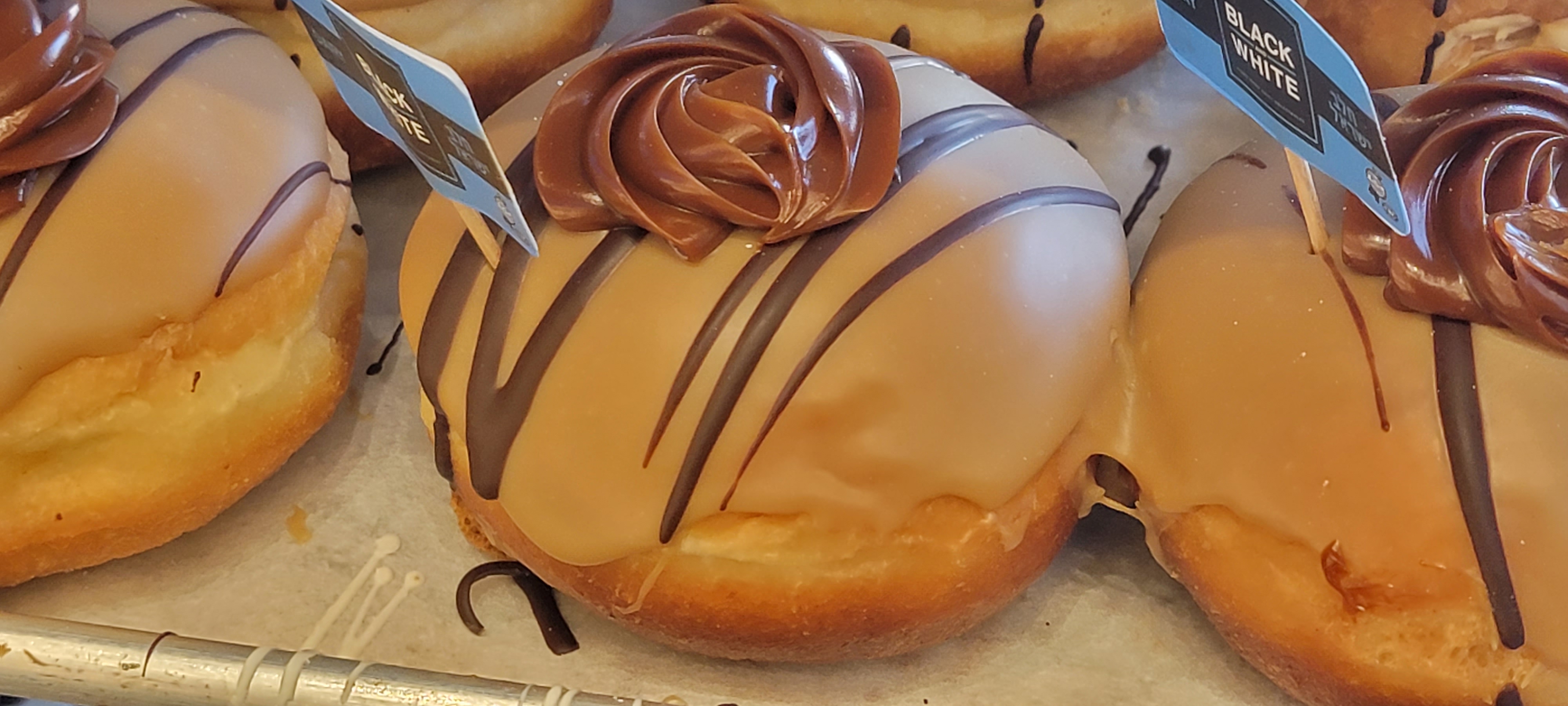
B&W was a real disappointment. We had a good experience there in the past, and the chocolate horn was indeed very good. However, the donuts are too expensive ($6.50), almost all dairy, and lacking a variety of taste. Every donut seemed to have the same cheese filling, just with a different topping. While the toppings were attractive, they lacked in flavor. On the plus side, you can daven mincha at the Yeshivat Viznitz around the corner with over 100 Satmar students.

Below is the ranking for this year’s donut crawl. If you visit, please tell them about the review on the blog First One Through. As Chanukah covers two weekends this year, we are likely to make a second run next weekend, possibly visiting Boro Park and Crown Heights bakeries.

Related articles:

Jerusalem Donut Crawl 2021

Brooklyn Chanukah Donut Crawl 2020

Chanukah Donuts: Brooklyn 2019

Brooklyn’s Holiday Donuts

The Last of the Mo’Kichels

Chanukah And The Puppets Of Power

Watching Chankah celebrations at the White House and rabbis talking about the holiday on talk shows is an uncomfortable annual ritual. On one hand, I appreciate the elected leader of the country and mass media recognizing a Jewish holiday so publicly with good intentions. On the other, I cringe as invited guests try to cozy up to people in power and influence, often contorting the truth of the holiday.

For one, the desire to make Chanukah appear universal is patently false. Comments from some rabbis-with-microphones that it is a holiday that we pray for “light to defeat darkness” and a time for “all of us to rededicate ourselves to our partners and communities,” is such airy fare to be rendered a blank Hallmark card. This holiday marks when Jews defeated the Selucid Greeks (from Syria) and expunged their pagan ways from the Jewish Temple in Jerusalem and throughout the Jewish holy land.

As another matter, the rush of Jewish “leaders” to these scenes in order to score girl scout badges to burnish their bona fides is most troubling. I would be most appreciative had these rabbis taken the opportunity to stand as proud Jews and plainly declare the actual reason for the holiday. But to watch them minimize the particularism of the holiday so they can selfishly obtain influence from parties in power is part of how the Selucid Greeks defiled the Jewish holy land.

Rabbi Talve speaking at a Chanukah lighting discussing a range of liberal values she shared with President Obama such as immigrant rights, nuclear waste, transphobia and a host of other issues, which have nothing to do with Chanukah, December 9, 2015

The Selucid Greeks and Egyptians were the major powers in the Middle East 2,200 years ago. Israel acted as a buffer region between the two powers, and often fell under the authority of one or the other.

The Selucid King Antiochus III (241BCE-187BCE) expanded his kingdom into Asia and took control of Israel from the Egyptians. Generally, he treated the Jews well and they continued their autonomy and Temple worship in Jerusalem.  When he died, his son Antiochus IV became king, who sought to unify the various parts of the expanded Selucid kingdom via a common religion and culture. He removed the Jewish High Priest Yochanan from the Temple in Jerusalem and installed Yochanan’s brother Jason who was willing to permit more Hellenistic and pagan worship, including building a gymnasium in Jerusalem.

The craze for Hellenism and the adoption of foreign customs reached such a pitch, through the outrageous wickedness of Jason, the renegade and would-be high priest, that the priests no longer cared about the service of the altar. Disdaining the temple and neglecting the sacrifices, they hastened, at the signal for the games, to take part in the unlawful exercises at the arena. What their ancestors had regarded as honors they despised; what the Greeks esteemed as glory they prized highly. For this reason they found themselves in serious trouble: the very people whose manner of life they emulated, and whom they desired to imitate in everything, became their enemies and oppressors.” (2 Maccabees 4:13-16)

Jason was later replaced by Menelaus who promised even more pagan rituals, while Antiochus IV came to the holy land and began to ban important parts of Judaism such as circumcision and observing the Sabbath. “Menelaus, thanks to the greed of those in power, remained in office, where he grew in wickedness, scheming greatly against his fellow citizens…. the king dared to enter the holiest temple in the world; Menelaus, that traitor both to the laws and to his country, served as guide. He laid his impure hands on the sacred vessels and swept up with profane hands the votive offerings made by other kings for the advancement, the glory, and the honor of the place.” (2 Maccabees 4:50; 5:15-16)

The defilement of Jewish laws and ransacking of Israel was aided and abetted by Jewish leaders who sought to gain positions of power from leaders 2,200 years ago. To celebrate Chanukah today, we should not only light candles to mark the rededication of the Jewish Temple those many years ago, but vocally demand Jewish leaders who refuse to sell out Judaism and the Jewish State for self-aggrandizement.

Related articles:

Today’s Inverted Chanukah: The Holiday of Rights in Jerusalem and Judea and Samaria

The March of Silent Feet

J Street Signals “Open Warfare” On Jewish And Pro-Israel Communities, Urging The United States To Take Action AGAINST Israel

Rabbis as Political Leaders

Brooklyn Chanukah Donut Crawl 2020

With the pandemic in its second full swing, the annual pilgrimage to try the great donuts and sufganiyot (filled donuts) in Brooklyn was not without controversy. Some people refused to join the outing due to fear so we decided to take a different approach:

  • only two people would make the trek- a parent and a teenager;
  • we would go in the early morning before the crowds;
  • only the teenager would enter the store in full hazmat attire;
  • all donuts would be brought back to base for consumption and ratings

The approach allowed for a wide sampling of bakeries, principally focused on Borough Park and Flatbush. The bakeries are listed in order of our route in case people want to replicate the tour:

  • Taam Eden Bakery, 4603 13th Ave
  • Weiss Kosher Bakery, 5011 13th Ave
  • Sesame – Boro Park, 5024 13th Ave
  • Gobo’s Cafe, 5421 New Utrecht Ave
  • Shloimy’s Bake Shoppe, 4712 16th Ave
  • Brooklyn Artisan Bakehouse, 1371 Coney Island Ave
  • Isaac’s Bake Shop, 1419 Avenue J
  • Ostrovitsky Bakery, 1124 Avenue J
  • Presser’s Kosher Bagels and Bakery, 1720 Ave. M
  • Patis Bakery, 1716 Ave. M
  • Schreiber’s Homestyle Bakery, 3008 Ave. M

Yes, that’s eleven bakeries. We’re that committed (in a bad mental health way).

We didn’t actually buy sufganiyot at the eleven stores. Gobo’s, the number one bakery of 2019, was closed both times we drove by, as was Brooklyn Artisan Bakehouse. Patis Bakery still had not received their shipment from New Jersey when we arrived around 10:00am. That still left eight bakeries to review for Chanukah. If one includes the free donut we got from Rachel Berger, the Kosher Dinner Lady (top score on presentation for the cookies and cream), we more than hit our calorie quota.

Taam Eden

In 2019, we got to Taam Eden last and the scores suffered due to our being well-sated and more than a tad over-sugared. We decided to start with that bakery in 2020 and hoped for a fresh assortment of interesting flavors. While they did have many unique flavors like Pina Colada, they weren’t always that good and the sugared toppings fell right off at first bite. Overall, they were also pretty flat and not puffy.

Taam Eden donuts. Blue flags denote dairy

Weiss Kosher Bakery

Weiss is an all around favorite bakery in our family. Yoely was nice enough to give us a free donut too. Unfortunately, the shelves were pretty bare when we arrived at 8:40am, so we missed out on their amazing chocolate horns. The chocolate sufganiyot were good but a bit too sweet. The custard was nice, especially for a pareve one.

Thanks Yoely!

Sesame

Sesame redoes the entire bakery just for Chanukah, and for good reason. The donuts are amazing. Full of rich flavor which is not too sweet with dough which has nice texture and flavor. I cannot believe how good the pistachio ones are. BTW, no masks in sight.

Shloimy’s Bake Shop

My teenage son was impressed by what he saw in Shloimy’s and came back with lots of choices. The taste varied. The salted caramel was simply not good while the cheese was very tasty and went perfectly with the texture and flavor of the dough.

A hazmat boy in a heimeshe bakery

Isaac’s Bake Shop

Isaac’s had the benefit of being the only bakery we visited where everything was fresh. We gobbled two onion bagels without any spread as we left the store – delicious. The sufganiyot we ate at home were non-complicated and tasty.

Ostrovitsky Bakery

If you want something a bit more ornate and shall I say… Hungarian? – try Ostrovitsky. The chocolate rosemarie are tops in the pareve category with great flavor. The chocolate mousse is very light – perhaps a bit too much relative to the texture of the dough. The Napolean flavor was also quite good.

Presser’s

Presser’s has a lot more appetizing in the store than donuts. We picked up a couple anyway which were pretty good.

Schreiber’s Homestyle

We always visit Schreiber’s to bring home a box of excellent lace cookies; hauling donuts is a plus. Skip the sufganiyot in the boxes in the front of the store and go to the back to select your own. This year we decided to try the dairy donuts – which run about $5 – quite a bit more than the pareve ones at around $2. There’s a reason. The dairy cheese and strawberry are remarkable. A must have.


Overall, none of the sufganiyot (other than Isaac’s) were fresh when we arrived. It felt like we were getting 6am baking at 9am. Sufganiyot don’t age well so we decided to try the other Sesame Bakery location in Flatbush to see if we could try one straight out of the oven. Unfortunately, it was packed at 11am and none of the baked goods were oven-fresh. We grabbed two and hit the road back home.

Below is a rating of the various spots. I would again put Sesame in the top category along with Schreiber’s dairy sufganiyot. Ostrovitsky’s got mixed reviews but I liked them.

We actually have a GoPro video of each store location. Subscribe to the blog and send a note and we’ll let you experience the shopping!


Related First One Through articles:

Chanukah Donuts: Brooklyn 2019

Brooklyn’s Holiday Donuts

The Last of the Mo’Kichels

Subscribe YouTube channel: FirstOneThrough

Join Facebook group: Israel Analysis and FirstOneThrough

Chanukah Donuts: Brooklyn 2019

The annual Chanukah pilgrimage in search of great donuts went to Brooklyn again this year. Due to the horrible tragedy that struck the Satmar community in Jersey City, NJ a few weeks ago, the first leg of the trip was in Williamsburg where the Satmar community has a large presence. We set out to try the donuts of seven different bakeries of which two were standouts. Later we headed to Boro Park where we sampled four bakeries which were all very good.

Williamsburg

Oneg Bakery, 188 Lee Avenue

The best donuts of Williamsburg were at Oneg Heimishe Bakery.

The store is small and the selection of donuts is limited but that says nothing about the quality of the food. The caramel and custard filled donuts were outstanding. They were overflowing with delicious centers which were very tasty and not too sweet. The dough was light and the icing was very good. An overall rating of an 8. Considering that the donuts only cost $2.00, lower than many others, if felt like a 9.

Oneg also was the only bakery we visited that carried “frittle,” essentially small and light pieces of fried dough with sugar which are made only on Chaunkah. They were quite good. May I add that the babka from Oneg is among the very best in New York.

Black and White Bakery, 520 Park Ave

The Black and White Kosher Bakery is not that close to the other bakeries but worth the trip. There is a mix of dairy and pareve donuts, plain and fancy, with prices ranging from $1.75 to close to $5.

The donuts were heavily filled with the taste of the fillings getting a range of reviews from amazing to just OK. The dough was very good, perhaps not as good as Oneg due to the freshness of when we arrived (jelly donuts decline in value as rapidly as a BMW). Overall an 8.

Traditional Kosher Bakery, 123 Lee Ave.

A very simple store with a simple name. It serves a number of non-baked items as well as some other baked goods including a cinnamon stick (OK) and a nut/craisin/cinnamon loaf which was terrific. The plain jelly donut had a very tasty raspberry jam but the dough was tough, heavy and thick. Overall, a 6.

Steinberg’s 701 Bedford Ave.

Steinberg’s exterior has no signage whatsoever. The store is clean and decent size with a pretty good selection of donuts. Some of the jelly donuts were assembled in sandwich-format rather than center infused.

The donuts had a very nice amount of filling, but unfortunately, not that tasty. The icing fell apart and onto the floor on first bite and the dough was not that fluffy. Overall rating of 5.5.

Kaff’s, 73 Lee Ave.

Kaff’s was one of the largest bakeries we visited in Williamsburg and they had a nice selection including two fancy choices with elaborate toppings. Regrettably, the dough was too heavy and the filling, while plentiful, was not on par with the presentation. Overall score of a 5.

G’shmak 164 Wallabout Ave.

G’Shmak was a real disappointment. While thrilled to have a halavah donut which had great flavor, everything else was lacking: The donuts had very little filling and the dough was very heavy. Huge piles of garbage near the entrance did not add to the experience. Overall rating 3.

Sanders 159 Lee Ave.

We stopped into this nice store – twice. Each time we were told that donuts were about to be ready, and each time kept waiting. On the second visit, the person at the store said that he had three small donuts in the back which he could give us, and after five minutes he confessed he had none and that we should return yet again. Nope. Gets a 0. The gluten-free cookies were also not great.

Boro Park

Boro Park bakeries had a much better consistency of high quality donuts than Williamsburg. I would recommend any of the four we visited. Here they are in rank order:

Gobo’s, 1524 New Utrecht Ave.

Gobo’s is a new addition to the Boro Park donut crawl and it did not disappoint. They have a different kind of jelly donut which is based on a churro, a cinnamon fried dessert. It was magnificent, with a slightly crunchy exterior, light and flaky dough, with a light creamy inside. An incredible treat and different than every other donut on the crawl.

The more traditional donuts were also very good with excellent dough, heavily filled. Toppings and icings remained on the donut. Overall rating of a 9.0.

Sesame, 5024 13th Ave

We typically go to the Sesame in Flatbush, but decided to try the location in Boro Park due to the proximity of our other stops. The bakery was a knock-out, just like the Flatbush location.

There are dozens of flavors to choose from, including unusual ones like pistachio. The donuts score at the top of the charts in every category: delicious and plentiful fillings, light and tasty dough, flavorful icing that is not overly sweet that stays atop the donut. An incredible treat, whatever flavor one tries. Scores a 9.0.

Taam Eden, 4603 13th Ave.

Ta’am Eden has long been a subtle favorite, a great counter-balance to Sesame. Both have fantastic dough and tasty fillings, but Ta’am seems to not want to overwhelm. The donuts seem smaller than Sesame and the filling doesn’t ooze out all over the place. But such amazing flavor, with new options like Passion Fruit and Pina Colada (seems like you can get some vitamins in donuts these days). The toppings were perfect in that they were very flavorful and remained in place. Overall an 8.5.

Weiss Bakery, 5011 13th Ave.

Weiss is simply an all-around great bakery. Compared to the other stores like Sesame which basically only serve donuts on Chanukah, Weiss adds donuts to its delicious repertoire, but doesn’t try to redefine its store.

The donut fillings are full and very tasty as were the toppings. The dough was not on par with Ta’am Eden or Sesame, and therefore got an overall score of 7.5. However, the store was handing out donuts to children who participated in a Boro Park scavenger hunt, worth an extra point for being a great member of the community!


Here is a chart summarizing the ratings for the 2019 Donut Crawl. Feel free to share the article and peruse and share the other articles on First.One.Through which focus on Jews, Judaism and Israel.

Happy Chanukah!


Related First.One.Through articles:

Brooklyn’s Holiday Donuts

The Last of the Mo’Kichels

A Sofer at the Kotel

Ruth, The Completed Jew

Subscribe YouTube channel: FirstOneThrough

Join Facebook group: FirstOne Through Israel Analysis