The Death of Civilians; the Three Shades of Sorrow

Every life is precious.

For many people, every life form is considered sacred, whether human or animal. In the United States alone there are an estimated 7 million people who restrict their diets to fruits and vegetables.

The vast majority of people around the world are not vegetarians. Still, there are limits to what they would consider eating. Domestic animals like dogs and cats are considered taboo in many cultures, and almost all 7 billion people on the planet avoid cannibalism. Even to those that do not consider eating meat to be immoral, there are limits.

The concept of the preciousness of life and limits of behavior extends beyond eating habits. Most of Europe has abolished the use of capital punishment.   The European Union considers the death penalty to be “cruel and inhuman”, even for heinous crimes.

However, 40+ countries still use capital punishment for a variety of offenses.  Each society decides the limits of acceptable and extreme behavior.  Even among countries that use capital punishment, the nature of the crime makes people assess the level of innocence of the person, the objection to the use of the death penalty, and sympathy for the accused. People may feel more upset when they hear about a homosexual who harmed no one, being stoned to death (in Mauritania, for example), than a mass murderer being executed (in the USA). There is a perceived range of innocence and guilt, and therefore associated gradations of grief.

This is true even among civilians who are killed during wartime. Some innocents are viewed as more “pure” than others and their unfortunate demise warrants more despair. Below are three categories of civilians from most to least innocent: Innocents; Targets; and Enablers.

  1. The Innocent
    A. Bystanders:
    In battles, passers-by may be attacked and killed without cause. These people have no part in the conflict and may not even be aware that one was taking place. An example would be the passengers on the Malaysia Airlines flight 17 that was shot over the border of Ukraine and Russia in July 2014. The 298 bystanders were killed without reason- the people had no role in the war. One can imagine that even the people that carried out the attack did it by mistake and regretted the action.B. Children: Children are innocent by definition: they lack knowledge and ability; they have no control of their situation; they neither vote nor fight. Still, almost every war has witnessed children killed. In the War between Gaza and Israel in the summer of 2014, hundreds of children were killed as the fighting took place in heavily populated areas.

    C. Slaughtered Citizens:
    Citizens of a country have every reason, right and expectation that their own government protects them. That protection is the primary basis for any government to exist. When a government reverses that course and turns its protective weaponry inwards to target its own population, it is a slaughter of innocents. Consider the millions of German Jews in the 1930s and 1940s who had every right to expect their government to protect them. When the Nazis specifically targeted these citizens, the Jews were left completely helpless. It was not a civil war of a division seeking independence; it was a slaughter of the defenseless by its own army.

2. The Targets

D. Initial Civilian Targets: Some civilians are attacked because of the actions of their government. The people going to work on September 11, 2001 in the USA were not military targets and were not part of the government. The attackers specifically targeted their places of work – America’s financial and military centers – as they were unhappy with America’s influence and presence in the Muslim world. The nearly 3,000 civilians were just going to work and had no role in, or understanding of the unhappiness of the attackers.

E. Civilians Targeted after Military Attack: The victims in Hiroshima and Nagaski were living in Japan when the US dropped an atomic bomb on them during the end of World War II in 1945. The Japanese initiated the war by attacking US military targets in Pearl Harbor four years earlier. As the war dragged on, the US concluded that it would end the war faster by obliterating entire cities which included both people involved in the war and uninvolved civilians who were part of the aggressor force. World reaction to the attack has been mixed, whether the action saved more lives by ending the war faster.

F. Civilians Targeted after Civilian Attack: The allies in WWII launched a bombing campaign on the German city of Dresden in February 1945. The Dresden attack was a reaction to the German-initiated war and attack on Great Britain. The further argument given to destroying the entire city was that it was an important center for the German war effort. An estimated 25,000 people were killed in the British and US bombing campaign.

  1. The Enablers
    G.  Backers of War Policy: Civilians are defined as people who are not part of the armed forces. However, there are people who are technically not part of the armed forces but are directly involved in advancing a war. For example, Palestinians voted overwhelmingly for Hamas and its war campaign against Israel in 2006. Hamas has fought constantly against Israel and Israel has responded with three operations: in 2008 (Operation Cast Lead); 2012 (Operation Pillar of Defense); and 2014 (Operation Protective Edge). Many civilians (both those that voted for the war policy and those that didn’t) were killed in those wars.

The loss of any life is sad, but it is human nature to react to the particular circumstance of each death. In an extreme example, an 8-year old killed while riding a bicycle brings more sympathy than a convicted murderer getting the death penalty. As detailed in the article above, it is not surprising that even in the finer shades of gray among civilians killed during war, that people feel more horror for the victims of Malaysia Airlines flight 17, than for Palestinians who voted for war.


Sources:

http://costsofwar.org/article/civilians-killed-and-wounded

http://en.wikipedia.org/wiki/Bombing_of_Dresden_in_World_War_II

EU human rights: http://eeas.europa.eu/human_rights/adp/index_en.htm

Death penalties worldwide: http://en.wikipedia.org/wiki/Use_of_capital_punishment_by_country#Capital_punishment_in_the_world_.28by_country_not_by_population.29

Hamas victory: http://www.washingtonpost.com/wp-dyn/content/article/2006/01/26/AR2006012600372.html

Death sentence for homosexuality: https://www.youtube.com/watch?v=2aXPECeOilA

3shades

Save the Children

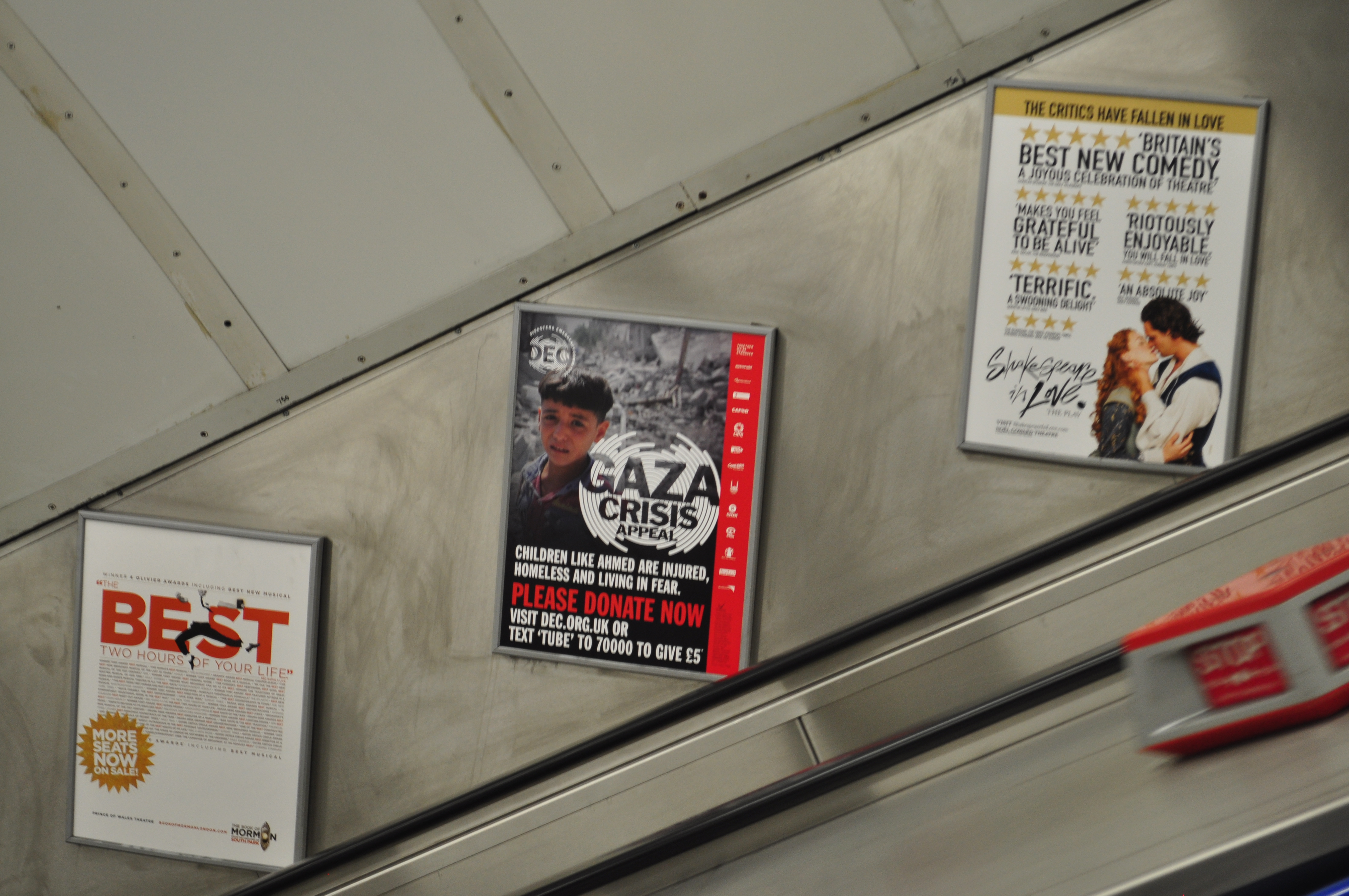
I first came upon the “Save the Children” organization when I saw that they sponsored an appeal to raise money for Gaza in a poster in the London Underground. The name of the group sounded so innocent and well-meaning. Who is more innocent than a child? Who could possibly be against helping children? Can helping children ever be considered a biased agenda?

DSC_0418
Save the Children sponsored poster on Gaza,
London August 2014

Some days later, I came across a retail thrift store bearing the STC name in Bath, England. Posters in the store window contained two new appeals to help rebuild Gaza and to stop the “Israeli” War in Gaza. There was no appeal or comment to stop the Palestinian war against Israel. I decided to look into the group on their own website.

The President & CEO of STC, Carolyn Miles, posted a blog called “Gaza’s Miracle Tomatoes” on July 8, a day after Israel launched Operation Protective Edge to stop the bombardment of Palestinian missiles into Israel. It was her first ever (and currently only) post about Israel or Gaza.

In the column she describes the “bleak landscape” and “dusty barren patches” of Gaza. The scene contained “donkeys pulling carts filled with rubble and surrounded by men and boys along harsh, rocky earth”.

The blog continued that 20 minutes away from the bleak picture along the border with Israel, a “miracle” appeared from nowhere: “a lush green field …a simple greenhouse …row after row of beautiful tomatoes … the result of a recently-concluded project by Save the Children and other partners and funded by USAID.” This oasis painted by Miles intentionally gave a reader the specific impression that STC helped create a miracle from nothing in the terrible Gaza landscape. It contained three significant lies of omission:

  1. Gaza had a flourishing greenhouse business built by the Israelis for years. The Israelis cultivated 1,125 acres and built hundreds of greenhouses in Gaza while there in the 1990s up until they left in 2005. The business generated roughly $75 million of revenue.
  2. Jewish donors bought and donated the greenhouses to the Palestinians.  World Bank president James Wolfensohn, Mort Zuckerman and several others paid the Israelis $14 million for two-thirds of the greenhouse equipment to donate them to the Palestinians (some Israelis opted to not take the payment and take their equipment with them to re-start businesses back in Israel).
  3. The Palestinians looted and destroyed the greenhouses. Soon after the expulsion of Jews from Gaza, Palestinian looters stripped the greenhouses of the irrigation pumps, computer monitors and greenhouse sheeting, leaving over one-fourth of the greenhouses bare.  The businesses withered.

The STC piece continued: “we drove through the streets of Gaza and heard from residents about the impact of border crossing restrictions on children there—the rising rates of malnutrition and resulting stunting, the lack of basic medicines and care when children became sick, and the severe circumstances disabled children were in.” The article had now moved past being the miracle machine and placed blame for the situation on Israel (for border crossing restrictions), and continued with outright lies:

  1. The children of Gaza have better health statistics than almost all Arabs in the Middle East. According to the United Nations, UNICEF and UNRWA, Palestinians in Gaza have the highest immunization rates and longest life expectancy of surrounding Arab and Muslim countries (including: Turkey; Jordan; Egypt and Iran). They have the highest literacy rate.However, the facts don’t add to the Save the Children’s non-miracle.

Save The Children claims it does not choose sides, it just chooses children, but is that factual? Is the characterization that the children of Gaza suffer because of the actions of Israel – as opposed to the actions of their parents – really not taking sides? Is a minute and one-half video featured on the STC site that only shows bombings in Gaza (and nothing in Israel), not choosing sides? Has STC helped fund a single bomb shelter just a few miles away, in the targeted playgrounds of Israel?

A bigger question for Save the Children – and the world – is how do you protect children from their own parents?


Sources:

Save the Children president blog on Gaza: http://loggingcarolynmiles.savethechildren.org/?_ga=1.229256220.1625656554.1409305814

STC YouTube video on Israel-Gaza: https://www.youtube.com/watch?v=ISvA-rmhv4A

Jews donating the greenhouses to Palestinians: http://www.nytimes.com/2005/08/18/nyregion/18donate.html?adxnnl=1&adxnnlx=1409478973-DrXHog3bg5xC5HsRaqHwTg

Palestinians ransacking the greenhouses in 2005: http://www.haaretz.com/news/palestinian-militants-ransack-former-gush-katif-greenhouses-1.179788

http://www.csmonitor.com/2005/1025/p04s01-wome.html

FirstOneThrough on England’s Gaza Obsession: https://firstonethrough.wordpress.com/2014/08/29/no-disappearing-in-the-land-of-blind/

UNICEF immunization: http://www.childinfo.org/files/immunization_summary_en.pdf

CIA life expectancy at birth: https://www.cia.gov/library/publications/the-world-factbook/rankorder/2102rank.html

New York Times Talking Turkey

Sometimes a contrast in coverage helps boldface the biases.

20140811_074503

The New York Times (for some reason) wrote quite glowingly of Prime Minister Erdogan of Turkey during presidential elections in August 2014. Some of the choice language on August 9 before the election included:

  •  “hoping to secure a legacy greater than that of the revered founder of modern Turkey”;
  • “broken down secular taboos”;
  • “economic policies have improved the lives of many”;
  • “long been a strategic ally of the United States”;
  • “In 2011, President Obama developed a close personal relationship with Mr. Erdogan, seeing Turkey as a model to emulate for countries upended by revolution’”

After the elections, on August 11 the Times continued to use positive expressions: “thousands massed…and erupted in applause” to Erdogan’s victory, while caveating later in the article that there were some concerns among the country’s “liberals” about an “authoritarian” streak in Erdogan.

In both articles, the New York Times neglected to remind readers of a few policies of Erdogan over the prior year that gave Turkish citizens pause about Erdogan:

But if the New York Times likes you, certain facts will fade to the background.

Consider the surprisingly low-turnout for this first-time Turkish presidential election: only 74% came out to vote compared to 87% in 2011 general elections. The NYT said that few people showed up to vote “presumably because many had assumed Erdogan would win”. Erdogan squeaked out a win with 52% of the vote compared to the second place winner at 38% – only 37% higher. However, the NYT said “the election felt like a coronation”.


By way of comparison, look at the way the Times covered the election of Israeli Prime Minister Benjamin Netanyahu in January 2013.  The Times did not include any of the commentary used for Turkey about Israel: being a strong US ally; the strong economy of Israel; the island of stability in the sea of chaos of the Middle East.  Instead, the headline read: “Tepid Vote for Netanyahu in Israel Is Seen as Rebuke”. In that “tepid vote”, Israelis came out in numbers greater than ever before – 67% voted for the cabinet, compared to the 2009 election turnout of 65% and of 63% in the 2003 election.  Not only was the vote not “tepid”, but Netanyahu’s Likud party won the vast majority with 31 seats compared to the second place winner, Yesh Atid, with 19 votes – a margin of 63% (almost twice Erdogan’s clearance).

But the Times despises Netanyahu. The article had remarkable quotes for the victorious Prime Minister:

  • “weakened Prime Minister Benjamin Netanyahu”;
  • “the outcome was a humbling rebuke”;
  • “Mr. Netanyahu posted a panicky message on Facebook”;
  • “The results were a blow to the prime minister, whose aggressive push to expand Jewish settlements in East Jerusalem and the West Bank has led to international condemnation and strained relations with Washington.”

This last quote is a particularly embarrassing and revealing lie.  Jodi Roduren (who wrote the piece from the fantasy of her head instead of based on facts) sought to lay out a scenario where the Israeli public disagreed with the “aggressive push to expand Jewish settlements”.  In the real world, both the number two party, Yesh Atid (19 seats) and the number four party, Jewish Home (11 seats), were in favor of a united Jerusalem and continuing to build homes for Jews in Judea & Samaria.  The Jewish Home party campaigned on the basis of annexing Judea & Samaria.  The Times’ favorite parties, the left-wing parties of Hatnua and Meretz came in almost last place with 6 seats each.  (If you’re counting at home, that’s 61 seats versus 12 seats for the parties that want to keep united Jerusalem- a margin so large and bold you would think Roduren’s handlers could have managed to edit her “news” article).


The Times ignored reality in both situations. In Turkey, it failed to report on Erdogan’s strong right-ward shift into deep Islamic camp and painted him as more of a moderate. His modest win as blown out of proportion.

For Israel, Netanyahu’s strong win was considered poor. The country’s support of his policies about the rights for Jews to live all parts of Judea and Samaria were not just dismissed, but painted in a way that was completely opposite of the facts.

I sometimes think of the Times the way I think about turkey:  it tastes quite good but it puts a person to sleep.  Oh, and of course, it is one of the dumbest animals on the planet.


Sources:

Turkey, most journalist jailed 2012 and 2013: http://cpj.org/reports/2013/12/second-worst-year-on-record-for-jailed-journalists.php

Erdogan banned twitter May 2013: http://www.washingtonpost.com/news/morning-mix/wp/2014/03/21/turkey-bans-twitter-and-twitter-explodes/

Erdogan blocked Youtube: http://www.cnn.com/2014/03/27/world/europe/turkey-youtube-blocked/

Turkey ban kissing in public; late sale alcohol: http://www.bbc.com/news/world-europe-22780773

Netanyahu headline “Tepid Vote for Netanyahu in Israel Is Seen as Rebuke”: http://www.nytimes.com/2013/01/23/world/middleeast/israel-votes-in-election-likely-to-retain-netanyahu.html?pagewanted=all&_r=0

Lapid, Yesh Atid: Jerusalem not for negotiation http://www.jpost.com/Diplomacy-and-Politics/Lapid-Jerusalem-is-not-up-for-negotiation-because-the-city-will-never-be-divided-330680


“Please Sir, May I have Some More?”

As the 2014 Operation Protective Edge (hopefully) draws to a close, one can expect the same histrionics that have become well-known and well-worn to emanate from the Arab world. The video below of Queen Rania of Jordan, is of her appeal to the United Nations five years ago, which can serve as the outline for the Arab textbook on UNRWA. In summation, we are pathetic and we want to ask the world for money again.

(As further background/amusement, Queen Rania of JORDAN was born in KUWAIT and considers herself Palestinian, when convenient).

“Life half-lived” – Palestinian Quality of Life. The Arabs will bemoan their treatment by Israel and ignore their treatment by their Arab brethren.

Palestinians in Lebanon and Syria are denied citizenship by their host countries. They are denied the ability to own property and obtain white color jobs. The Jordanians gave Palestinians citizenship in 1954, only to revoke it in 1988. Egypt has totally shut down Hamas which runs Gaza, as it is a part of the banned Muslim Brotherhood.

The reason why Palestinians have a bad quality of life (beyond the discrimination from their Arab “brothers”) is because of UNRWA. UNRWA has given millions of second and third generation Arabs a life “half-lived” because of a promise that they will get to go to a house that no longer exists, in a country that their grandparents sought to destroy at its infancy. The Arabs in Israel have twice the life of Palestinians in Arab countries.

Regardless, all protests about quality of life will be directed at Israel, and not at UNRWA, Lebanon, Syria or Egypt.

“Hours wasted at checkpoints” – Border control. The Palestinians will complain about the restrictions of movement out of Gaza and the West Bank. The fact that those territories have amassed over 10,000 rockets, have a charter calling for the death of Jews and destruction of Israel, have fired over 10,000 rockets at Israeli towns over the past 13 years, and killed hundreds of Israeli civilians does not seem to factor into their concern about Israel’s need for border controls.

Regardless, Arab nations will press Israel to alleviate travel restrictions.

“UNRWA has delivered sanctuary.” – Charge of War Crimes. The vast majority of UNRWA employees are Palestinians. These employees were caught not only storing missiles in their schools, but handing them over to Hamas to launch against Israel. Those same members of Hamas launched missiles in and around the UNRWA schools.  UNRWA teachers have been caught building rockets for Hamas.

Regardless, the histrionics of Israel firing at the missile launching sites will continue.

“Reconstruction”. – Appeal for Money to Gaza. The historic blame for the limited re-building homes and schools in Gaza was laid squarely on Israel’s restriction on allowing building materials into Gaza. As Operation Protective Edge made clear, the fault was not the lack of cement in Gaza, but which projects the Palestinians sought to develop. Hamas used the materials to build terror tunnels instead of schools and roads above ground.

Regardless, the Arabs will argue for the ease of more materials into Gaza without oversight.

“School provides a comforting routine.” The schools in Gaza may fly an UNRWA flag, but the curricula are determined by the ruling authority – Hamas. The Hamas education is complete with demonization of Jews and Holocaust denial.

Regardless, Palestinians will demand a rebuilding of schools under the Hamas watch.

“Hell on Earth”. Queen Rania described Gaza as “Hell on Earth” for many years. She used this statement even though people in Gaza had: longer life expectancy; better immunization rates and higher literacy rates than Jordanians.

“If we let UNRWA collapse… we risk destabilizing the entire region.” Queen Rania should hand back her prophesy credentials. The Arab and Muslim world is in total chaos in Syria, Iraq, Libya, Nigeria and other places, with no connection to Israel or UNRWA. UNRWA itself is a destabilizing force to the Israeli-Palestinian peace process, in its current configuration.

Regardless, the Arabs will shout that the organization should not be overhauled.

“All of us depend on UNRWA.” The appeal that the world needs UNRWA will continue even though it is blatantly false. It is a cheap attempt to get the world to continue to fund salaries for 30,000 Palestinians.

The amazing hypocrisy, is that the Arab world funds only 10% of the UNRWA budget, while they are the ones who claim it is necessary.

Regardless, Palestinians will once again have their hands out asking the world for more money.


Source:

“First of its kind” missile discovery: http://www.theguardian.com/world/2014/jul/17/unrwa-investigating-20-rockets-empty-gaza-school-palestinian

“Second time” http://www.unrwa.org/newsroom/press-releases/unrwa-condemns-placement-rockets-second-time-one-its-schools

Third time a trend? http://www.timesofisrael.com/rockets-found-in-unrwa-school-for-third-time/

“Vast Majority” of UNRWA employees are Palestinians: http://www.unrwa.org/userfiles/20100118153142.pdf

UNRWA teacher and terrorist: http://www.globaljihad.net/view_news.asp?id=409

Frontpage article on UNRWA: http://www.frontpagemag.com/2014/dgreenfield/defund-the-unrwa/

Protesting the Victor, not the Victims

Brett Stephens of the Wall Street Journal wrote an editorial on August 5, 2014 about the seeming hypocrisy of parts of the world protesting against Israel in the current Israel-Hamas war but barely making a peep about wars in Pakistan, Iraq, Nigeria, Libya, etc. He doubted the sincerity of people’s stated concern about Arab victims, and considered the protestors motivation of racism, since they only show up when the counter-party is Israel.

As posted in FirstOneThrough on July 21, wars involving Israel account for a very small portion of all Muslim deaths in wars. Muslim-Muslim wars account for 90% of fatalities.

That should not come as a surprise. Most wars are between neighboring countries or are civil wars. (The United States is the exception which seems to only go to war with countries that are not neighbors). As most Muslim countries neighbor other Muslim countries, it would stand to reason that most Muslim wars and fatalities would be at the hands of other Muslim countries.

However, the expected number of fatalities in wars involving Israel is out-of-proportion. Israel’s neighbors account for 7% of the world’s Muslim population (117 million people), but the fatalities account for only 1% of the deaths in wars.

The reason that so few deaths happen in wars with Israel has a lot to do with the length of the wars.

Israel’s wars tend to be much shorter than wars between Muslim countries. The Iran-Iraq war went on for 8 years. The civil war in Angola- 27 years; Somalia- 15 years; and the wars of Sudan (which included Christians) went on for 17 and 22 years. Those Muslim wars killed millions of people. Compare that to the 6-Day War of 1967, and the Israeli wars in 2006, 2008 and 2012 which were 34, 22 and 7 days long, respectively. Those four wars plus the current 2014 war killed 20,000 people combined.

The Israeli wars were short – when they were winning/won. The longest Israeli wars had heavy casualties. The 1948 Israeli War of Independence against five invading armies lasted 300 days, when Israel fought for its very existence. The First Lebanon War lasted three years and did not have a clear victor. Each of those wars had as many fatalities as the five short wars combined. Those battles where Israel was the decisive victor were typically under one month and consequently, the death tolls much smaller.

These facts lead to some interesting questions about the protests:

  • Were the wars short because Israel achieved its near-term security objectives and did not factor in global protests?
  • Did the protests help shorten the war?

More specifically to the question raised by Brett Stephens about the motivation of the protestors during these short battles with Israel:

  • Were the protestors actually concerned that Israel would wipe the opponents off the map, as their Muslim adversaries would certainly have done if they were the winner?
  • Would they protest a quick end to the wars if Israel were losing?

The answers to those questions would demonstrate that the motivation has little to do with victims, and everything to do with the victor. As the Arabs lost the wars, the protests masked their hatred for Israel as a call for the victims. If the Arabs had been winning, the protests would have been chants of support for the Muslim armies, and the “victims” would have been hailed as “martyrs” for the cause.

These anti-Israel protests occur in places with significant Muslim immigrants. If they protest a Muslim-Muslim war in their new host countries, it could lead to local street battles between Sunnis and Shiites, essentially importing their religious war to Europe. However, protesting against a common adversary in Israel is not only easier, but serves as a way of uniting Muslims that are in the middle of a large global war with themselves.


Sources:

Brett Stephens, Palestine and Double Standards: http://online.wsj.com/articles/bret-stephens-palestine-and-double-standards-1407194971?mod=trending_now_8

FirstOneThrough, Israel and Wars: https://firstonethrough.wordpress.com/2014/07/21/israel-and-wars/


[xxxx..]an Zionists Stand with Israel

[Fill in your country], and stand with Israel


People around the world have been upset about the fighting in Israel and have reacted in a variety of ways.

  • Many communities around the world focused on sending packages to soldiers in Gaza. Items ranged from letters, pizzas, underwear and socks.
  •  Some communities held fund-raisers, such as selling challah in support of Leket, the Israeli food bank, and the Friends of the IDF.
  •  Many people flew to Israel and volunteered to help disabled people who have difficulty getting to bomb shelters amid the constant attacks from Hamas. Others went to staging areas near Gaza to help set up food stations. Many went to funerals for people they never met.

While the global media has often repeated that the Operation Protective Edge has been fought during the Muslim holiday of Ramadan, they have neglected to discuss that the timing is also the Jewish period of mourning – the Three Weeks – that culminates on August 5th with the 9th of Av.

The Three Weeks is a period when many tragedies happened to the Jewish people throughout history. The common belief is that the various tragedies – especially the destruction of the Temples in Jerusalem – happened because Jews did not treat each other with respect nor did they care for each other.

In 2014, the tremendous support within Israel for the Israeli government, and the global Jewish communities’ constructive responses to the attacks from Gaza may lead one to believe that these three weeks may lead to the building of the Third Temple.


Source:

http://jpupdates.com/2014/07/30/survey-israelis-overwhelmingly-support-idf-gaza-attack/


The End of Together

Over July 24-6, 2014, a chapter of religious pluralism ended in the city of Mosul, Iraq and its sister city across the Tigris, the ancient city of Ninveh. The Islamic militants of ISIS forced out all of the Christians, and blew up the Tombs of Seth (son of Adam and Eve) and of the Prophet Jonah.

Jonah

Jonah was the last prophet considered holy to each of the monotheistic religions. His story was unusual in several respects which enabled him to capture the imagination and dreams of Christians, Muslims and Jews.

Thousands of years ago, Judaism was the only monotheistic religion. The people in the Middle East practiced a variety of religions and worshiped many gods. The non-Jews were not particularly interested in the Hebrew Bible, and the Bible – seemingly – did not address them. The prophets in the Old Testament almost universally addressed the Jews: the children of Abraham, Isaac and Jacob.

That held true until Jonah. Jonah was given an unusual task by God: leave the land of Israel and go to a far away land because the people there did not behave properly:

“Arise, go to Nineveh, that great city, and proclaim against it;
for their wickedness is come up before Me.”

The story of what comes next is famous. Jonah fled from God and boarded a ship that was tossed in a storm. The sailors reluctantly threw Jonah overboard to appease his angry God whereupon Jonah was swallowed by a big fish. After three days, the fish vomited him onto land to fulfill his task of admonishing the people of Ninveh. The people of Ninveh – including the king- took Jonah’s words to heart, repented, and all was forgiven.

The story of Jonah has many messages. The Jewish rabbis consider them so important that the only time the story is read in synagogue is on the holiest day of the year, Yom Kippur. The lessons of Jonah include that:

  • Repentance through prayer and action can save a great city (Ninveh) and a lone individual (Jonah in the fish);
  • It is not sufficient for Jews to only be concerned with the welfare of their people, but must work to help others as well;
  • A person should not run from a divine mission;
  • God is everywhere, and you cannot hide from Him

For Christians, the story of Jonah is not just about prayer and repentance, but about rebirth. They consider the story of Jonah’s reemergence from the great fish after three days as a precursor to the resurrection of Jesus.

For Muslims, Jonah was the only one of the twelve minor prophets mentioned in the Koran. Mohammed was said to recognize the holiness of Jonah and referred to Ninveh as “the city of Jonah”.

Three monotheistic religions embraced the mission of a man who (perhaps reluctantly) tried to help other people change their ways, while not trying to make them change their religion.


Religions in Modern Iraq

When Iraq became an independent state in 1932, roughly 120,000 Jews lived in the country comfortably. However, when the UN voted to partition Palestine in 1947, the Iraqi government and people turned on the Jews. Pogroms and public hangings became celebrated events. Operation Ezra & Nechemia from 1949 to 1951 got most of the Jews out of the country, with the balance leaving over the 1960s and 1970s. Almost no Jews remain today.

The Christian community in Iraq extends back roughly 1600 years, before the founding of Islam. As recently as 2003, the number of Christians in the country numbered about 1.5 million. However, the numbers declined rapidly during the US-Iraq war. In 2014, ISIS took over much of the country and actively pushed to remove Christians. In Mosul, the Christian community was given a choice that had historically been put before Jews in various countries over the past 1000 years: convert; pay a huge tax; or be killed. There may only be 100,000 Christians left in the country by the end of 2014.

ISIS belongs to the Salafi movement of Islam which is against the worship of the dead, and therefore opposes the use of tombs as shrines. They have destroyed many tombs of Muslim leaders, in addition to those that are important to Jews and Christians. They razed the tomb of Seth, the fifth person created in the Bible (not as famous as his siblings Cain and Abel) for the same reason. They are also slaying fellow Muslims who practice differently by the thousands.


Religions- God and Practice

During the time of Jonah, most people believed in many Gods. When Jonah addressed the sailors on the ship and the king of Ninveh, they readily accepted the words of the Jewish God – not exclusively- but alongside the other Gods they worshiped. Their openness to various Gods let them listen and pray openly together. Such receptiveness to a new God was not universal as demonstrated by the Greeks and Romans who defiled the Jewish Temple in Jerusalem centuries later.

As new monotheistic religions emerged – first Christianity and then Islam – that openness was further challenged. As each religion accepted a single God, the uniqueness of each religion became based on either: 1) unique Gods; or 2) the same God, but with a different set of practices. If the Gods were different, then only one religion could be correct. If the religions had the same God, then distinction between them was based on the method of worship and priorities.

Religious scholars debate whether the monotheistic religions all believe in the same God, just with different names and observances. In practice, the religions have battled each with the fervor of unique Gods for centuries: Muslim invasions; Christian Crusades; enforced Inquisitions. Religious wars scar most of mankind’s history.

For Muslims, it has been intra-religious battles that have been the bloodiest. Since 1948, 90% of all deaths in wars involving Muslim countries have been at the hands of other Muslim countries. In 2014, ISIS killed many more Muslims than other religious groups, and Syrian President Assad killed many more Muslims than people of other faiths. The peculiarities of practice position the battle lines.


The Demise of the Shared

July 2014 yielded a sad watershed moment. The Tomb of Jonah, whom Jews, Christians and Muslims all revered as a religious leader, was demolished. The Tomb of Seth, for whom Bible believers consider a common forbear, was destroyed. In a single week, religious fanatics dismantled physical and metaphysical symbols that united the three monotheistic faiths. If the religions shared a common God, they had a common prophet. If they had different Gods, they still had the same forbears. The tombs were not just shrines to the ancients; they were opportunities for Jews, Christians and Muslims to meet and re-establish their common bonds today. No longer.

Thousands of years ago, a Jew left his homeland to help non-Jews. He did not seek to convert or change their methods of worship, just to pass along a message from God to end evil behavior. He became a celebrated hero to billions of people of different faiths and different practices. As recently as 70 years ago, Jews, Christians and a variety of Muslims (including Sunni and Shiites) prayed together at the tomb of this common hero. But the advance of bigotry consumed them: first they got rid of the Jews, then the Christians. Now they are ridding fellow Muslims.  God’s message through Jonah of reaching out to “others” has been replaced by man’s effort to destroy the “others”.  Perhaps that was the original wickedness of Ninveh 2600 years ago.


Part of the magic of the story of Jonah was that there were no casualties: Jonah; the city of Ninveh and all of its inhabitants; the sailors; and even the fish, all escaped harm.

In today’s dark reality, we may marvel more at that part of the legend and forget what we all have lost.


Sources:

http://www.washingtonpost.com/news/morning-mix/wp/2014/07/25/after-leveling-iraqs-tomb-of-jonah-the-islamic-state-could-destroy-anything-in-the-bible/

http://www.mechon-mamre.org/p/pt/pt1701.htm

http://www.newsweek.com/isis-destroys-shiite-mosques-and-shrines-iraq-257683

http://www.jewsnews.co.il/2014/07/25/muslims-just-made-history-in-mosul-killing-and-exiling-every-last-christian/

http://english.alarabiya.net/en/News/middle-east/2014/07/26/ISIS-destroy-Prophet-Sheth-shrine-in-Mosul-.html

https://www.jewishvirtuallibrary.org/jsource/anti-semitism/iraqijews.html

http://nypost.com/2014/07/27/iraqs-abandoned-christians/

http://www.ibtimes.co.uk/isis-militants-destroy-tomb-jonah-mosul-1458469

“Tinge” Two. Idioms for Idiots

Do you have friends that use the same expressions over and again?

Some are cultural phenomena, such as “Oh my God!”, “Get real” or “Could you believe it?” Entire groups of friends or communities may be heard using the same sayings. You can be confident that the familiar phrase will be punctuated throughout a conversation.

Sometimes, an expression is an original. A person (or organization) develops a catch-phrase that captures their current thinking. The first time you hear it, you might think nothing of it or just consider the comment a strange choice of words. But when you hear the same bizarre expression used again by different people in the same organization, you can be sure that it reflects a conscious cultural mindset.

On July 24, Helene Cooper and Somini Sengupta wrote an article in the New York Times about what they considered the unusual support Americans give to Israel relative to the rest of the world. In describing the pro-Palestinian protests in various cities in Europe, they stated that the protests had “an anti-Semitic tinge.” As detailed in FirstOneThrough that day (link below), the phrase ignored the riots specifically against Jews. The choice of the word “tinge” was highly offensive to any civilized person who objects to racism.

Europe being Europe and the Times being the Times, the next few days saw more of the same.

  • Israeli soccer players from Maccabi Haifa were attacked in Austria.
  • In Paris, 4000 people – many with weapons – staged a protest in Place de la Republique; 70 were arrested.
  • A Facebook page was created with the faces of French Jews with an encouragement to attack them; one of the Jews was subsequently attacked by a mob.

But the New York Times continued to be unruffled and unperturbed. So much so, that the incendiary phrase “an anti-Semitic tinge” was used again in a July 27 article by Jodi Rudoren.  Not only did she repeat the phrase verbatim, but she led that only Israelis were offended by these slight expressions of hatred (ignoring the strong condemnations of political leaders throughout the continent).

Perhaps other sections of the Times (which unlike the rest of the paper, still has a few remaining fans) will notice and react: the travel editor might highlight a nice tour of Mississippi that had “a sprinkle of lynchings”; a real estate article might describe a flat in Berlin as “airy, with a nice view of the genocide”; and the food and wine critic might describe a French liquor as “smoky, with a hint of Holocaust.”

One can expect to see other offensive and idiotic idioms in the Times in the weeks ahead.


Sources:

Recent European anti-semitism:
http://www.telegraph.co.uk/news/worldnews/europe/10992886/Anti-Semitism-on-the-march-Europe-braces-for-violence.html

http://www.ynetnews.com/articles/0,7340,L-4549072,00.html

http://www.israelnationalnews.com/News/News.aspx/183377#.U9Tm66NeLi8

http://www.algemeiner.com/2014/07/25/facebook-page-publishing-identities-of-french-jews-to-encourage-attackers-15-men-reportedly-assault-1-jew-in-paris-suburb-after-confirming-photo/

“An anti-Semitic Tinge” by FirstOneThrough:
https://firstonethrough.wordpress.com/2014/07/25/an-anti-semitic-tinge/

20140727_071838

Pray for a Lack of “Proportionately” in Numbers. There will never be an Equivalence of Intent.

Israel is blessed with many creative minds. It has used this gift to cure diseases and win Nobel prizes in various fields of science and economics. Because of the vicious neighborhood in which it resides, it also uses its creativity to build sophisticated offensive and defensive weapon systems.
Israel has a vastly superior military capability than the Palestinian terrorists. The country’s defensive technological edge has helped to greatly reduce their casualty figures in the latest wave of terrorist attacks. In particular, the “Iron Dome” has shielded Israeli civilians from well over 1000 rockets launched from Gaza towards dense population centers. Had the Israeli technology not been in place, the casualty figures would certainly be high.
Would more Israeli deaths somehow make this combat “fair”? Do an “even” number of casualties make each side comparable? Those are distorted views of proportionality.
Would the world somehow be happier with more dead Israeli teenagers on their way home from school? Happy with dead Israelis who were sent to root out evil by foot rather than through an air campaign? Are drones attacks strictly within the purview of President Obama’s legal and military team?
Remarkably, in an effort to minimize the loss of life of the enemy, Israel continues to put its own young soldiers in harms way.
In the spring of 2002, roughly 50 Israelis and 50 Palestinians were killed over a three week period. To a casual observer, that tragedy might appear “proportionate” because the number of dead were the same for each side. However, the intent was not remotely the same: the Palestinians attacked and killed civilians and then Israeli soldiers who tried to prevent other attacks on civilians while minimizing Arab deaths. (see the video below).
In these past weeks, Hamas already committed hundreds of war crimes by deliberately attacking civilians. It continues to do so while putting its own civilian population in harms way. Yet, the world looks away.
The principle of self-defense in the case of Operation Protective Edge is unquestioned. An enemy that is dedicated to the annihilation of a people and the destruction of a country, launched over 10,000 rockets at civilians over the past six years. Hamas has thousands of additional missiles and is actively using them. The Israeli military goal is clear, although difficult to achieve in a densely populated area like Gaza.
Israel must continue to use care in rooting out the terrorists and their weapons. It will, unfortunately, use ground troops to minimize the loss of life to Arab civilians, which will greatly increase the risk of their own lives.
Now, Israeli soldiers will try to avoid the hornet’s nest of Gaza while eliminating the terrorists and their weapons of terror. Civilized people around the world should pray for a continued lack of proportionality in casualty figures, as Israel places its technological superiority on hold and attempts to protect innocent lives on both sides.

Sources:
http://www.crimesofwar.org/a-z-guide/proportionality-principle-of/
http://www.icrc.org/customary-ihl/eng/docs/v2_cha_chapter4_rule14

Opinion: Remove the Causefire before a Ceasefire

Egypt, one of two Israeli allies in the Arab world, has suggested a ceasefire in the current hostilities between Israel and the Palestinians in Gaza. US President Obama was encouraged about the development and said: “We are encouraged that Egypt has made a proposal to accomplish this goal that we hope can restore the calm that we are seeking.”

A ceasefire at this time would be a mistake.

Israel has already had two engagements in Gaza since it left the area in 2005: Operation Cast Lead in 2008 and Operation Pillar of Defense in 2012. Both of those ceasefires failed to grant any long-term peace to Israeli citizens because they did not address the fundamental cause of the Hamas rocket fire.

Hamas wants Israel destroyed. All ceasefires that Hamas agrees to are simply hiatuses between battles.

There are two basic actions that must occur that world bodies can help facilitate that will ensure a long-term cessation of hostilities:

  1. the destruction of all missiles in Gaza;
  2. the dismantling of Hamas

Removing and Destroying all Missiles in Gaza

Israeli Prime Minster Benjamin Netanyahu and Acting Palestinian Authority President Mahmoud Abbas spent much of the past year in a fruitless exercise of “Peace Negotiations” which had no chance of success. Much of the reason that talks were D.O.A. when they began, was because Abbas had no control (and still has no control) of Gaza. For Netanyahu, negotiating with a party who could not deliver the peace he sought was a fool’s errand – as the world witnessed.

All of the two-state peace negotiations over the years discussed a demilitarized Palestinian state. The action of removing all of the missiles now, would advance a major goal (and remove a major stumbling block) in moving towards a two-state solution. The removal itself would serve as the impetus for bringing the parties back to negotiations.

President Obama recently touted his accomplishment in ridding Syria of all chemical weapons in a peaceful manner. He said: “The fact that we didn’t have to fire a missile to get that accomplished is not a failure to uphold international norms, it’s a success.” Now would be the ideal time to follow that format and identify, remove and destroy all of the missiles in Gaza. It would save the people of Gaza and the soldiers in the Israeli Defense Forces many casualties.

Dismantling Hamas

Hamas is not simply a political party. It is a rabidly anti-Semitic terrorist organization. It should not be allowed to exist in its current form under any circumstances. It cannot solely give up its weapons nor can it merely modify its charter. The entire entity is a cancer and must be dismantled.

The Hamas charter is beyond an obstacle to peace; it is an instrument of war. While former President Jimmy Carter may have tried to overlook a passing phrase of animosity towards Israel and Jews, the basic fact is that the founding document is an unambiguous call to kill Jews and to destroy the Jewish State again and again.

As echoed by its leaders, the essence of the Hamas philosophy is to kill Jews and destroy Israel. No peace will ever come between the Palestinians and Israel as long as the party exists. The time is now for all world bodies to effectively terminate this vile entity.


Sources:

http://www.channelnewsasia.com/news/world/obama-welcomes-egypt-s/1264372.html

http://time.com/75043/obama-syria-chemical-weapons-removed/

http://www.memritv.org/clip/en/4300.htm