The Arguments over Jerusalem

Summary: In considering the arguments that Palestinian Arabs and Israeli Jews each make for Jerusalem as their capital, only one party makes a truly compelling case.

Jerusalem has long been considered the thorniest issue in the Israeli-Palestinians Question. In 1947, when the United Nations put forward a plan to partition the land into two states, it proposed placing Greater Jerusalem and Greater Bethlehem into an international zone called the “Holy Basin.” This Holy Basin would be neither part of Israel nor Palestine, to remove the sensitive region from the conflict.

1947plan jerusalem
UN 1947 Partition Plan for the “Holy Basin”
of Greater Jerusalem and Greater Bethlehem

However, as fate would have it, the partition plan was rejected by the Palestinians who then launched a war to destroy Israel in May 1948, together with armies from Transjordan, Lebanon, Syria, Egypt and Iraq. At war’s end, the Holy Basin was divided with the western half of Greater Jerusalem and Hebrew University falling under Israeli control, and Greater Bethlehem and the eastern half of Jerusalem falling under Arab control (Jordan annexed the area and granted the Palestinian Arabs there citizenship).

The Holy Basin remains an outstanding issue.  In a two-state resolution, the Israelis propose to split the Holy Basin whereby they control all of Greater Jerusalem and the Palestinians would have Greater Bethlehem; the Palestinians seek to have all of Greater Bethlehem AND the eastern half of Jerusalem as its capital, while Israel would only have the western half of Jerusalem. Which side has a better claim?


The Arguments over Jerusalem

THE HOLY BASIN

RELIGION: The sensitivity over the Holy Basin is due to the fact that it holds many holy sites for the three monotheistic religions. A short list includes:

  • The Temple Mount/ The Noble Sanctuary (Jerusalem). Jewish and Muslim
  • Al Aqsa Mosque (Jerusalem). Muslim
  • Dome of the Rock (Jerusalem). Jewish and Muslim
  • The Wailing Wall / Kotel (Jerusalem). Jewish
  • Church of the Holy Sepulchre (Jerusalem). Christian
  • Dormition Abbey (Jerusalem). Christian
  • The Old City (Jerusalem). Jewish
  • Church of the Nativity (Bethlehem). Christian
  • The Tomb of Rachel (Bethlehem). Jewish

There are many other churches, synagogues and mosques in the Holy Basin, however, these sites are considered sacred as various events are believed to have occurred at these locations. For Christians, the churches were built on the various spots where Jesus and Mary are thought to have had significant life events. For Muslims, the Al Aqsa Mosque is considered to be the place where Mohammed ascended to heaven. For Jews, the Temple Mount is not only considered to be the place of two Temples, but also the spot where Abraham brought Isaac for a sacrifice.  Of this entire list, only the Jewish Temple has any archeological evidence supporting the beliefs.

Among the three religions, Jerusalem is considered the holiest spot only for Jews. Muslims consider the Al Aqsa Mosque to be its third holiest spot (after Mecca and Medina), and the Roman Catholic Church considers the Vatican in Rome, Italy to be the holiest location.

Judaism is also unique in considering the entire Old City to be holy. While Christianity and Islam consider certain specific spots to be sacred, only Judaism considers the city as a whole.

Jerusalem: Advantage Israel
Bethlehem: Advantage None

10857261_10153336968548706_7334281522188334026_o
Aerial view of Old City of Jerusalem from the south

ACCESS TO HOLY PLACES: A key concern for the United Nations (UN) is that access is provided to each religion’s holy places. In this regard, the divide between the Palestinian Arabs and Israel is stark.

The Arabs only controlled Bethlehem and the eastern half of Jerusalem from 1949 to 1967, as the cities and entire region were governed by the British and Ottoman Turks (who were NOT Arabs) for hundreds of years before then. During their brief period of control, the Jordanian and Palestinian Arabs evicted all of the Jews from Jerusalem and forbade their reentry, even during religious holidays.

While Israel has controlled all of the Holy Basin since 1967, all religions have had access to all of the holy places. Not only does Israel ensure that people of all religions have access, but the country created laws ensuring their safe keeping and open access, and put their religious organizations in charge of those places – even the Islamic Waqf over the Temple Mount which Jews consider their holiest spot.  This same Islamic Waqf prohibits Jews from praying at their holiest location today.

Further, Israel has allowed other denominations to establish themselves in Jerusalem.  The government of Israel helped the Mormons build their church overlooking the Old City.  This compares to Jordan, which doesn’t even recognize the Baha’i faith today (Israel has a huge Baha’i temple in Haifa).

Advantage Israel

MAINTAINING HOLY PLACES: While access is the primary concern for the UN, maintenance of the holy spaces is important as well. When the Palestinian Arabs controlled areas such as Nablus (Shechem), they almost destroyed the Tomb of Joseph. Archaeological digs occurred on the Temple Mount unsupervised resulting in the destruction of important and sacred sites.

Conversely, Israel has made extensive efforts to maintain all of the religious sites under its control. It performs archeological digs mindful of scientific rigor while balancing religious sensitivities.

Advantage Israel

 DSC03240
The Hurva Synagogue in the Old City was destroyed by the Jordanian Arabs in 1949
(photo: FirstOneThrough)

THE CITIES AND THE PEOPLE

HISTORY: The history of the Jewish people in Jerusalem extends back 3700 years when Abraham offered Isaac as a sacrifice. It became the unified capital of Jews under King David 3000 years ago and site of two temples (954BCE-587BCE and 516BCE-70CE). Jews have always continued to live there and move there over the centuries except when they were banned during the Crusades (early 1200s) and under Arab rule (1949-1967).

Arab history in Jerusalem is more recent than for Jews. Arabs came to the region and city of Jerusalem as part of the Muslim invasion in the seventh century, roughly 2300 years after Jews.

Advantage Israel

CAPITAL: Only one people ever made and considered Jerusalem to be its capital: the Jews. Whether in ancient times or modern, Jerusalem is the capital of the Jewish people.

When Muslims ruled the region and controlled Jerusalem, they never made Jerusalem the capital. Whether under the initial Arab invasion of the seventh century, under the Mamelukes or the Ottoman Turks, or even under Jordanian Arab rule 1949-1967, Jerusalem was never the central seat of government.

Jerusalem: Advantage Israel
Bethlehem: None

CENTRALITY: There is only one country in the UN that has a national anthem that is completely about its capital: Israel.

“As long as in the heart within a Jewish soul still yearns And onward, towards the ends of the east, an eye still gazes towards Zion.

Our hope is not lost, the hope of two thousand years, To be a free people in our land, the land of Zion and Jerusalem.”

Jerusalem: Advantage Israel
Bethlehem: None

 IMG_3691
Beta Israel, Jews from Ethiopia, return to Jerusalem
(photo: FirstOneThrough)

THE PEOPLE

In considering the future of the residents of the Holy Basin, it is important to consider how the people have been treated.

CITIZENSHIP: When Israel declared statehood in 1948, it granted citizenship to 160,000 non-Jews. When it took control of the entire Holy Basin in 1967, it offered citizenship to those who requested it.

This was in stark contrast to the Jordanian and Palestinian Arabs who evicted the Jews in 1949. Today, Palestinian leadership has insisted on a new Palestinian state devoid of Jews, which is why the Palestinian Authority objects so strongly to Jews buying homes in Jerusalem.

Advantage Israel

POPULATION GROWTH: Population growth can be used as a proxy for the freedom for Arabs and Jews in the Holy Basin under the different administrations.

From 1949 to 1967, the Jewish population under Jordanian and Palestinian Arab control went from zero to zero. The Jews were evicted from eastern Jerusalem and were not allowed to return. However, the Jewish population in the western part of Jerusalem nearly doubled (+98%). Over the same time period, the Arab population under both Israeli (the Israelis gave Arabs citizenship in their half of Jerusalem) and Jordanian control grew by 72%. Jewish growth outpaced Arab growth, even though Jews were only able to live in half of the city.

After reunification of the city in 1967 until 2005, the population trends changed. Jewish growth throughout the city grew by 196%, while Arab growth grew by 315%. Overall, the city grew at a compounded growth rate of 3.1% compared to the divided city which only grew at 2.4%.

  • Under Arab control, Jews were expunged from the area; but under Israeli control, Arab growth rate surpassed Jews’. Arabs performed ethnic cleansing while Jews encouraged diversity.
  • Under a constrained Jewish situation from 1946-1967 while there was no access to eastern Jerusalem, Jewish growth outpaced an unconstrained Arab dynamic. Jewish demand to live in Jerusalem outpaced Arab interest.
  • Under Israeli sovereignty, the city grew faster than under Arab control.

Under Israel, the city did better, the Arabs did better and the Jews did better.

Advantage Israel

POPULATION: Jews have been the dominant religious group in Jerusalem since the 1860s. Even at the start of World War I, when Jews accounted for only 8% of Palestine, they accounted for 64% of the population of Jerusalem.

Today, Jews continue to be a majority of Jerusalem, despite the Arab growth accelerating in Jerusalem under Israeli control (up to 3.8% CAGR from 2.6%). Jews account for roughly 69% of the city’s population overall, and 39% in the eastern part of the city.  The eastern part contains some of the largest Jewish neighborhoods (Pisgat Ze’ev) and is home to Hebrew University (established in 1925).

Advantage Israel
DSC_1067
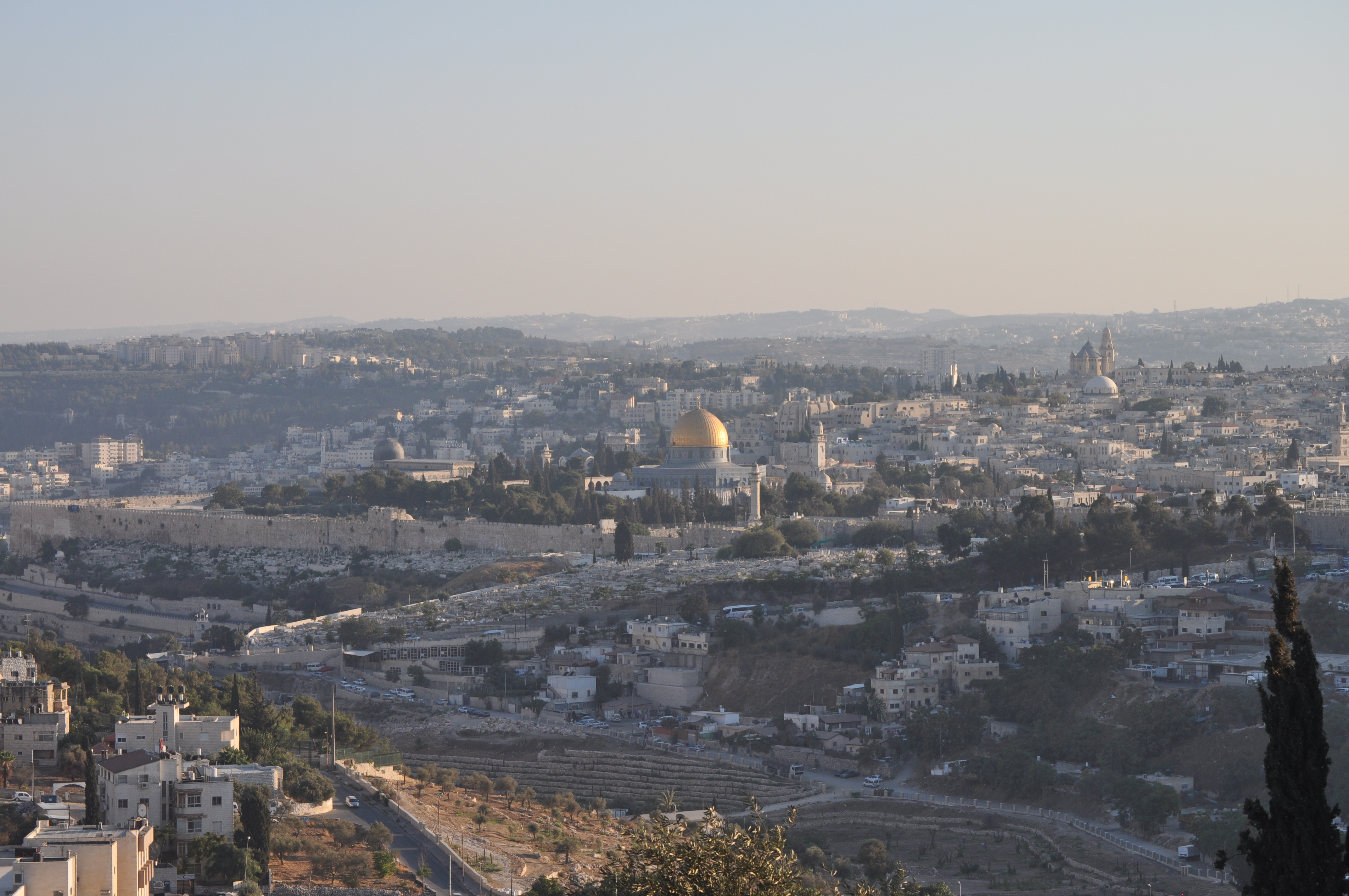
View from Hebrew University
(photo: FirstOneThrough)

LONG TERM VIABILITY

Any final agreement between the Israelis and Palestinian Arabs must not simply focus on being fair, but be sustainable.

SECURITY: No capital city sits on the border of another country. To have the seat of government sit adjacent to a foreign country risks the viability of the state. In the case of Israel, the situation is even more sensitive than for other countries:

  • The countries adjacent to Israel have repeatedly attacked it
  • Those same countries continue to challenge the basic right of Israel to even exist
  • The main political party (Hamas) of the proposed country has a charter repeatedly calling for Israel’s complete destruction
  • Jerusalem sits on hills, making it even more vulnerable if the city would be divided, but significantly safer, if all of the hills and access roads remained within Israel

Jerusalem: Advantage Israel
Bethlehem: None

HISTORY OF DIVIDED CITIES: Fewer than 1/1000th of 1% of cities and towns in the world are divided. Those handful of towns that are split between two countries are typically very small and have a natural geological separator like a river dividing the city.  None of those factors apply to Jerusalem.

Divided capitals are even more rare, and history shows that they are unsustainable.  Recent examples include: Beirut, Lebanon; Berlin, Germany; Jerusalem and Nicosia, Cyprus.

Beirut and Berlin were divided by war for a few decades, and both have been reunified in peace.  Nicosia has continued to be split along with the rest of Cyprus, and ongoing peace talks since 1974 have attempted to reunite the city – not divide it.

Advantage Israel

OFFENSIVE-DEFENSIVE PARTIES: In the San Remo Resolution of 1920, the League of Nations (precursor to the UN) recognized the right of Jews to return to their homeland in the holy land. However, the Palestinian Arabs launched major riots against the Jews, most notably in 1929 and 1936-9 which made the British start to move Jews out of their homes in certain cities (such as Hebron).

When the UN developed various proposals over the years 1937-1947 to divide the land, the Israeli Jews said yes while the Arabs consistently said no. The Arab position was to control all of the land including Jerusalem with no land for Jewish control.

As part of their efforts, the Arabs launched a war to destroy all of Israel in 1948, and then again in 1967. The Arabs lost both wars, and the incremental land Israel acquired in each of those wars were from defensive actions.

In total, Israel’s land was acquired initially from the world’s recognition of the historic rights of Jews to the holy land, together with defensive wars.

Conversely, all of the Arab land was acquired through fighting the UN mandate and launching wars.

In regard to the Holy Basin specifically, both Israel and the Jordanian and Palestinian Arabs took sections of the city during the Arab war against Israel in 1948-9, that the UN had proposed to keep under international control. As such, the UN did not recognize either country’s seizure of parts of the city. When Israel took the eastern half of Jerusalem along with Bethlehem in 1967, the UN continued to withhold recognition.

Countries around the world did not recognize Israel’s western Jerusalem in 1949 nor the capture of eastern Jerusalem in 1967, so they have never moved their embassies to the city. Their refusal to recognize Jerusalem as Israel’s capital (or Jordan’s) is from 1949, NOT because of Israel’s reunification of the city in 1967.

Advantage Neither
Slight preference for Israel due to defensive nature of acquisitions

CONCLUSION

By almost every measure, Israel should maintain control of all of Jerusalem as well as additional territory to the east to control the hills and access roads to the capital.  The Palestinians could have control of half of the Holy Basin – Bethlehem – which was handed to Palestinian Authority control in 1996 by Israeli Prime Minister Benjamin Netanyahu.

There is one last reason which underscores the complete logic of Israel maintaining complete sovereignty of all of Jerusalem: it is the heart of the home of the Jewish people.  While there are 57 Islamic countries and dozens of Arab countries, there is only one Jewish State, and it has always had one capital: Jerusalem.
 IMG_1263
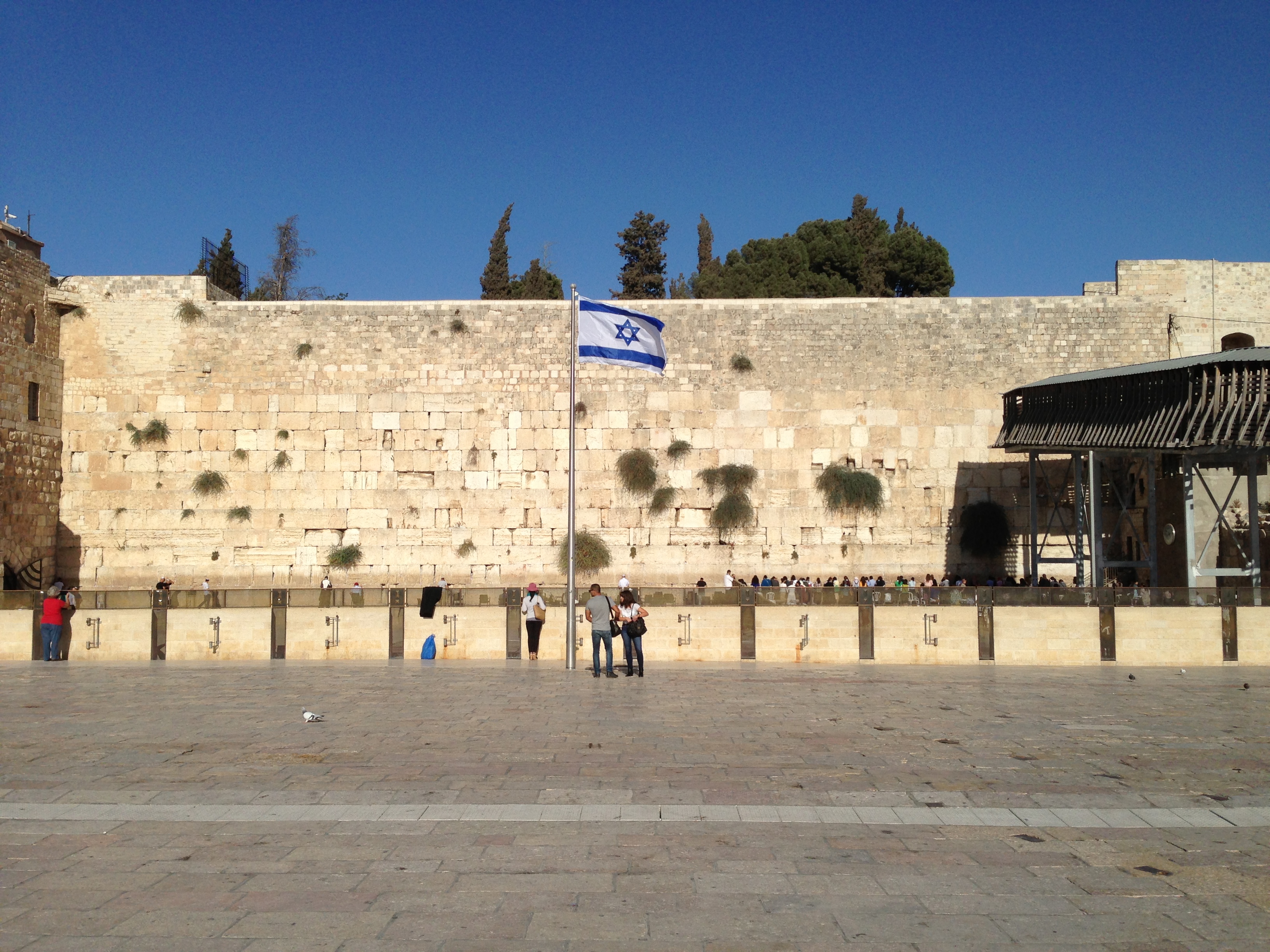
The Israeli flag at the Kotel
(photo: FirstOneThrough)

 Text from first half of Israel’s Basic Law declaring Jerusalem as it’s capital:

1. Jerusalem, complete and united, is the capital of Israel.
2. Jerusalem is the seat of the President of the State, the Knesset, the Government and the Supreme Court.
3. The Holy Places shall be protected from desecration and any other violation and from anything likely to violate the freedom of access of the members of the different religions to the places sacred to them or their feelings towards those places.

Related First One Through articles:

The United Nations and Holy Sites in the Holy Land

The Waqf and the Temple Mount

The anthem of Israel is JERUSALEM

A Review of Divided Capitals

“East Jerusalem” – the 0.5% Molehill

Israel: Security in a Small Country

A “Viable” Palestinian State

Israel, the Liberal Country of the Middle East

Selective Speech

Summary: Just because we are free to do or say something, doesn’t mean we should. And the selection of what speech to admire or admonish is not hypocrisy, but a choice on philosophy.


Many people have taken very hard positions regarding the recent killings at a “Muhammad Art Exhibit and Contest,” in Texas. In an effort to portray everything in black-and-white, they miss important distinctions.

  1. Murdering someone for being insulted is ALWAYS wrong. As discussed on these pages, “I’m Insulted; You’re Dead,” everyone should whole-heartedly condemn the killing of people because sensibilities were offended. Whether the attacks were at the Parisian offices of the magazine Charlie Hebdo, or at an event in Texas where people drew the Islamic prophet, no one should condone murder.
  2. Freedom of Speech is a CAUSE worthy of Defense. Freedom of speech and press are cornerstones of western democracies. They are basic and important causes to uphold.
  3. Specific language does NOT need to be defended. Just because someone has the right to say something, doesn’t require everyone to come to the defense of the content of any particular speech. An individual or organization that opts to distance itself from an event does not mean they are against free speech.

Civil Sensitivities

Western societies are a mix of people and ideas. Such combinations create both civil and uncivil conversations. One can choose to be part of a completely civil society where nothing unpleasant is ever said, uncivil society in which people attack people all of the time, or more likely, a blend of the two, where different ideas are shared which may upset certain individuals at certain times.

Civil society’s “safe spaces” are one’s home and organizations where people share common values.  It is hard to imagine that one can walk in public and never hear or see something disagreeable.

An inherent component of being part of the mixed society is to strike a balance of the use of free speech and society’s sensitivities.  Just because someone has the right to say something, doesn’t mean that they should, and that everyone has to support the comment. The other half of that balance is that there is no requirement in society to be polite to everyone.

Not Hypocrisy, But a Preference

When a party or organization chooses to defend some speech and not others, they show their own preferences or priorities. Consider the New York Times approach to several events that upset segments of the American population:

  • Mosque at Ground Zero (2010): The United States offers freedom of religion (as well as speech and press) and as such, Muslims are free to build a mosque at any location where they legally have rights to the land. However, many people viewed the proposed building of a mosque overlooking the site where terrorists killed thousands of people in the name of Islam, as wrong and insulting. The New York Times editorial felt differently stating that it saw “the wisdom of going ahead with the project,” in an opinion that sided with Muslims but offended many people.
  • Convent at Auschwitz (1989): Similar to the mosque at the base of the destroyed World Trade Center, the location of a Roman Catholic convent on the grounds of a notorious concentration camp where over a million Jews were killed simply because of their religion, was viewed as completely insensitive by many Jews. While the Times covered the news story in several articles, it conspicuously never offered its own opinion as to whether the convent should be moved.
  • Giuliani on the Brooklyn Museum art show (1999): The Brooklyn Museum ran a controversial series of “art works” that treated Christianity harshly, including a painting of Mary covered in dung. After New York City NYOR Rudolph Giuliani threatened to withhold funding for the museum, the NYT opted to attack the Mayor stating that “Art is the name of a perpetual human struggle with the limits of perception. The Mayor… is failing dramatically in that role in a fashion that makes him and the city look ridiculous
  • Metropolitan Opera on Klinghoffer (2014): When the streets of New York held civil protests about the Metropolitan Opera’s airing of a play that showed a sympathetic side of terrorists murdering an infirm elderly Jew, the New York Times rushed to the opera’s defense. The editorial page ran a headline that stated “The Death of Klinghoffer Must Go On”. It argued that it stood for art and free speech. Others claimed that it simply stood on the side of Palestinian terrorists.
  • Charlie Hebdo (2015): The New York Times printed a series of editorials trying to find its position on the murder of journalists by Muslim terrorists. While it clearly stood by the rights of journalists to free press, it seemed to support such right because it lampooned all religions, and not just Islam.
  • Draw Mohammed Exhibit (2015). The New York Times chose to attack the organizer of the event, Pamela Geller and stated that the event was simply “hate speech”. It condemned the contest “cannot justify blatantly Islamophobic provocations like the Garland event.

What is the summary of the observations of the New York Times?

  • It sided with Muslims at Ground Zero and the Draw Mohammed Contest; against them at Charlie Hebdo;
  • It sided against Christians at the Brooklyn Museum and offered no opinion at the Auschwitz convent;
  • It sided against Jews for the Klinghoffer opera and no opinion at the Auschwitz convent

When it came to religion, the Times record was mixed, while showing a preference for Muslim sensitivities over Christians and Jews.

Overall, the Times will claim its record is for upholding freedoms.  It obviously failed in that principle when it came to the Mohammed Exhibit, which it claimed failed the threshold for art and was merely “hate speech”.  Perhaps the Times forgot the never-ending nature of its definition of art from 1999: “Art is the name of a perpetual human struggle with the limits of perception.”


Related First.One.Through articles:

Blasphemy OR Terrorism

My Terrorism

New York Times Confusion on Free Speech

The “Unclean” Jew in the Crosshairs

Summary: Antisemites calling Jews “unclean” is their first step towards calling for purifying them from the world. How should the world respond?

There have been a number of political leaders who have called Jews “unclean”:

  • Adolf Hitler’s Mein Kampf (1925): “The moral and physical cleanliness of this race [Jews] was a point in itself. It was externally apparent that these were not water-loving people, and unfortunately one could frequently tell that even with eyes closed. Later the smell of these caftan wearers often made me ill. Added to this were their dirty clothes and their none too heroic appearance. 
  • Hamas Charter (1988):The basic structure of the Islamic Resistance Movement consists of Moslems who have given their allegiance to Allah whom they truly worship, – “I have created the jinn and humans only for the purpose of worshipping” – who know their duty towards themselves, their families and country. In all that, they fear Allah and raise the banner of Jihad in the face of the oppressors, so that they would rid the land and the people [Jews] of their uncleanliness, vileness and evils.”
  • Iran’s Supreme Leader Ayatollah Ali Khamenei (2013):Israeli regime, this sinister, unclean rabid dog of the region
  • Acting Palestinian Authority President Mahmoud Abbas (2014): “Keep the settlers and the extremists away from Al-Aqsa and our holy places. We will not allow our holy places to be contaminated.

iran-khamenei-adl-israel-rabid-dog

It did not take long for these leaders and parties to move from their initial anti-Semitic positions, to calls to eradicate the Jews:

  • Hitler’s Nazi party gradually stripped Jews of their citizenship in the early and mid-1930’s once the gained power, pushed them into ghettoes and work camps by late 1930’s and began their annihilation by the early 1940’s.
  • Hamas called for the murder of Jews and destruction of Israel in the very same 1988 charter: “rid the land and the people [Jews]“, “there is a Jew behind me, come and kill him” and “Israel, Judaism and Jews challenge Islam and the Moslem people.”  The Palestinian people voted for Hamas into 58% of the Parliament in 2006.
  • Iran’s leader was quite clear in 2014: “This barbaric, wolflike & infanticidal regime of which spares no crime has no cure but to be annihilated
  • The Fatah party of the Palestinians was led by Yasser Arafat who said: “We will not bend or fail until the blood of every last Jew from the youngest child to the oldest elder is spilt to redeem our land!”” His successor, Mahmoud Abbas declared In a final resolution, we would not see the presence of a single Israeli – civilian or soldier – on our lands.

One can call Abbas a “moderate” in comparison to those around him in that he has not openly called for killing Israelis (he prefers the indirect method of honoring and celebrating those that do kill Israelis).

President Obama commented about ISIS (2014) that “the world must never cease in seeking to defeat their evil ideology.” Such evil ideology is the open platform in the Iranian and Palestinian leadership.

As Obama is actively engaged in dialogue and negotiations with both of those parties, does he think

  • that the Iranian and Palestinian platforms are not “evil ideologies
  • that they are exceptions that do not need to be defeated, or
  • his process of negotiation and placating them is a method of “defeating” them?

Related FirstOneThrough articles:

The Palestinians War Against the Jews

Palestinian anti-Semitism surpasses Nazi Germany

Before recognizing a Palestinian State, Recognize what the Palestinians are saying

From Promised Land to Promised Home

Summary: God is the original Zionist.

Judaism is a unique religion in many respects:

  • Every other religion is based primarily on faith. Judaism is based primarily on lineage.
  • Every other religion is based on belief. Judaism is based on action.
  • Every other religion is not geographically-bound. Judaism is tied to the land of Israel.

The Old Testament has 613 commandments for Jews to observe. Many of those can only be kept inside the land of Israel. Those commandments relate to the sanctity of the land, as God promised the land to Abraham and the generations after him.

shmita
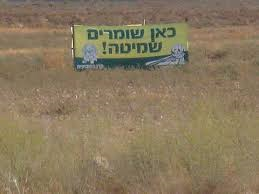
Observing “Shmita” only in Israel
(photo: FirstOneThrough)

Promised Land

The Bible has three sets of promises of the land of Israel for the Jewish people. The first set is God’s original promise to Abraham:

  • “The Lord appeared to Abram and said ‘To your descendants I will give this land’” (Genesis 12:7)

The book of Genesis repeats the promise to Abraham, Isaac and Jacob several times where the land is presented as “an everlasting possession” for the generations to come. (Genesis 17:8).

DSC_0258
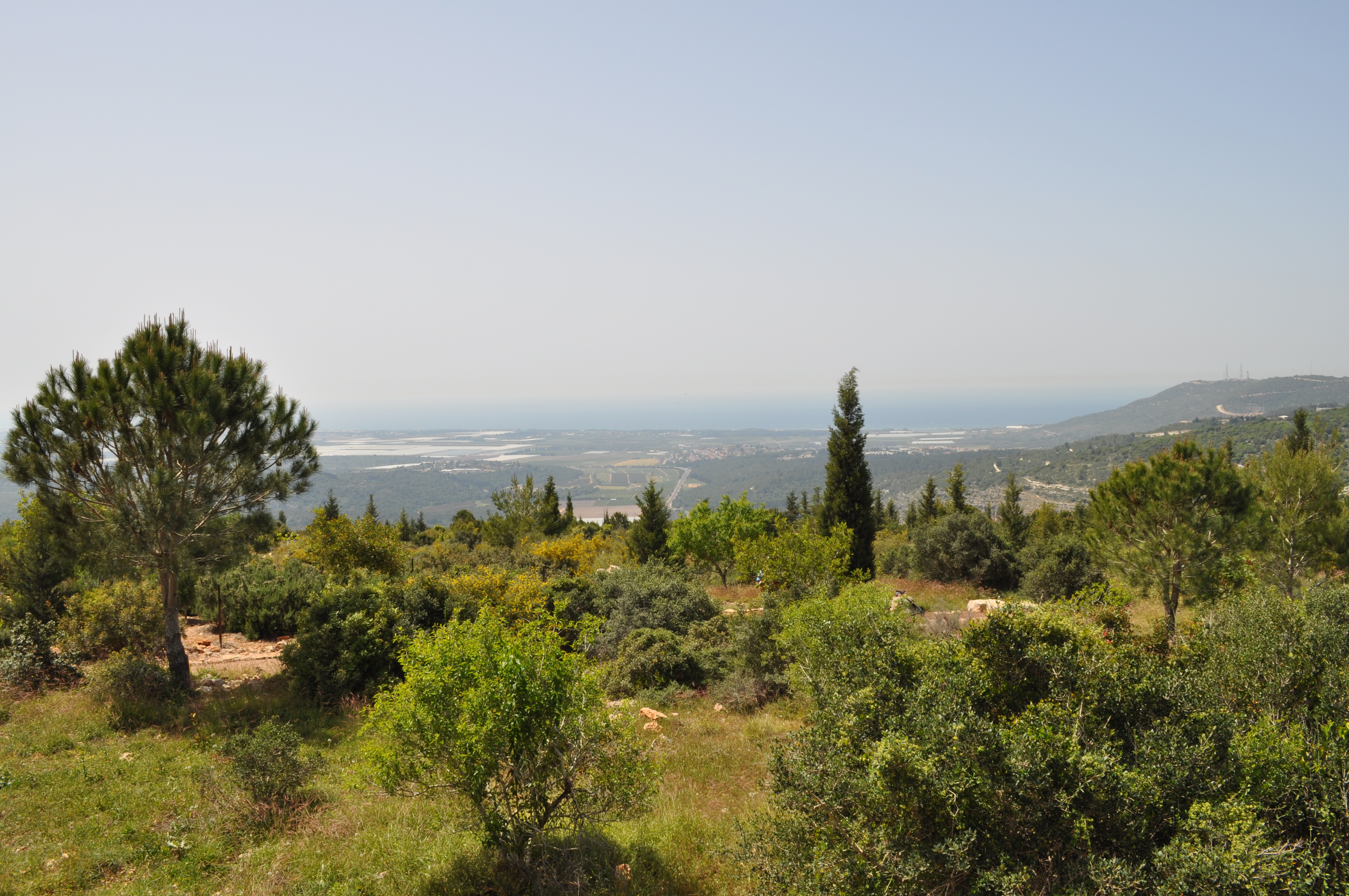
The Western Galilee
(photo: FirstOneThrough)

Promised Return to the Land

The second set of promises related to the return to Israel from slavery in Egypt. That promise is slightly different than the original promise to the Jewish forefathers:

  • The land is described as being a good land “flowing with milk and honey
  • The land is occupied by others, by the “Canaanite and the Hittite and the Amorite and the Perizzite and the Hivite and the Jebusite.” (Genesis 3:8)

Hundreds of years earlier, God just told Abraham to go “to the land that I will show you” (Genesis 12:1) without any description of the location or nature of the land.  At the point of the exodus from Egypt, God promised not only freedom from slavery, but to a land of great quality.  Presumably, the land was so good, that others had now moved there while the Jews were trapped in Egypt.  However, God promised to “drive them [the others] out” (Exodus 23:30) and that the Jews will ultimately possess it.

cows
Cows in the Golan
 
(photo: FirstOneThrough)

 Promised Home

The Old Testament ends with yet a third promise: a return from the diaspora to the land of Israel, to their home.

  • The promise includes an ingathering of exiles from “the four quarters of the Earth” (Isaiah 11:12)
  • Israel is no longer only described as simply being a good land, an inhabited land or the land of the Jewish forebears. The land is described as belonging to the people of Israel. The prophets repeatedly describe that God will “bring you home again to your own land” (Jeremiah 29:14)

Home. A place that is established and well-known. That doesn’t require a list of directions of how to get there, nor many adjectives.

It is a place where a people grows up and lives. It is a place of life events, both happy and sad. Where families celebrate, quarrel and mourn. A place with family history and history to be made.

Home is where “house rules” apply; where the house decides what is allowed and denied. It decides what is in the best interest of its inhabitants. It is the safe space where a family comes to find sanctuary from the world at large.

Home is always home, even when people have been away. But especially when they come back.

 DSC_1067
Jerusalem’s Old City
(photo: FirstOneThrough)

A music video about God’s promises of the land of Israel to the descendants of Abraham, Isaac and Jacob to become a home for the Jewish people.

The Waqf and the Temple Mount

Summary: According to Muslims, the Temple Mount is held in “trusteeship” by the Islamic Waqf, which assures its use and access as a mosque. The role of the Waqf has nothing to do with sovereignty of the land on which it resides.

The most sensitive issue of the Israel-Arab conflict is considered to be the Temple Mount in Jerusalem.

TEMPLE MOUNT

The Temple Mount is a 35 acre platform that held the second Jewish Temple from around 515CE to 70CE. Herod extended the platform on which the Temple sat southward to enable the greater flow of the thousands of Jews that came to the Temple to perform their rituals. The platform extension project ran from 19BCE to 63CE and Jews enjoyed the benefit of his work until the Romans destroyed the Temple in 70CE.

10857261_10153336968548706_7334281522188334026_o
The Old City of Jerusalem, including Jewish Quarter and Temple Mount

The area is considered sacred to Muslims as they believe Mohammed had a night journey from Saudi Arabia on a flying horse to that location before ascending to heaven. When Arabs invaded Jerusalem in 627CE, they built the al Aqsa Mosque on the southern edge of Temple Mount (completed in 705CE and rebuilt in 1033) to commemorate the importance of the location. The other structures on the Temple Mount include the Dome of the Rock, the Dome of the Chain, the Dome of the Prophet and various other structures which are NOT mosques, but shrines.

Jews had access and were able to pray on the Temple Mount until around the year 1550, when Suleiman I began a series of “improvements” to Jerusalem. He ordered the rebuilding of the city walls and moved the Jews off of the mount to an area now referred to as the “Kotel” or “Wailing Wall” or “Western Wall”, a sliver of the western retaining wall built by Herod. Since that time, prayer on the Mount has been restricted only for Muslim use.

MODERN HISTORY

Five Arab armies attacked Israel at its founding in 1948. At the end of the war in 1949, Jerusalem became divided with the western half (almost all completely established since the 1850s) under Israeli sovereignty, and the eastern half (including the Old City dating back 4000 years) under Jordanian sovereignty (which was not recognized by the United Nations). The Jordanians evicted all of the Jews and barred their reentry, even to visit their holy sites, counter to the Fourth Geneva Convention.

In 1967, the Jordanians again attacked Israel. They lost the eastern half of Jerusalem and all of Judea and Samaria, which they had annexed in 1950. Israel reunified the city and made clear that people of all religions – not just Jews – would have access and rights to their holy places.  Non-Muslims were once again allowed onto the platform, and Israel gave administrative oversight of the Temple Mount compound to the Jordanian Waqf. Israel annexed the area and the rest of eastern Jerusalem in a move not recognized globally.

In 1988, Jordan gave up all claims to lands it lost to Israel in the 1967 war, and signed a peace treaty with Israel in 1994. In that peace agreement, several key clauses were added to address Jerusalem, Article 9:

  • Each Party will provide freedom of access to places of religious and historical significance.
  • In this regard, in accordance with the Washington Declaration, Israel respects the present special role of the Hashemite Kingdom of Jordan in Muslim Holy shrines in Jerusalem. When negotiations on the permanent status will take place, Israel will give high priority to the Jordanian historic role in these shrines.
  • The Parties will act together to promote interfaith relations among the three monotheistic religions, with the aim of working towards religious understanding, moral commitment, freedom of religious worship, and tolerance and peace.

10383720_10153336970463706_7100356438545362102_o
Jews Praying at the Kotel, 2015

WAQF

Islam allows Muslims to place property (land or any object) into a “Waqf”. By doing so, the item comes under the trusteeship of the party specified in the declaration. In the case of the al Aqsa Mosque, the building is considered to be for the public use of all Muslims under the administration of the Jordanian Waqf.

When the al Aqsa mosque was taken over by Crusaders in the 12th century, the place did not lose its special status for Muslims. As stated in Issue 2697: ““If the Waqfed property is ruined, its position as Waqf is not affected, except when the Waqf is of a special nature, and that special feature ceases to exist. For example, if a person endows a garden and the garden is ruined, the Waqf becomes void and the garden reverts to the heirs of the person.”

Properties or entities like the Old City of Jerusalem or the Temple Mount itself can be subdivided according to Islam. As written in Issue 2698: “If one part of a property has been waqfed and the other part is not, and the property is undivided, the Mujtahid, or the trustee of the Waqf, or the beneficiaries can divide the property and separate the Waqf part in consultation with the experts.”

As described above, the Jordanian Waqf took control of the Temple Mount in 1949 and Israel has continued to let the Waqf administer the site. The Jordanian Waqf now employs 500 people to run the mosque. It does this, while Israel maintains all security controls and runs it as part and parcel of Israel.

It would appear that the actions of 1967, 1988 and 1994 laid the groundwork for a sharing of the Temple Mount between Jews and Muslims again. However, it has continued to be a struggle.

 POLITICS and PROPAGANDA

Over the last few years, the Waqf has become more politicized, anti-Jewish and anti-Israel, as it was decades ago. Public statements from the Waqf:

  • Deny Jewish history at the Temple Mount
  • Attempt to deny Jewish rights of access
  • Deny Jewish rights to prayer (agreed to by the Israeli government)
  • Deny sovereignty of the Jewish State and Jerusalem municipality (agreed by many countries in the United Nations)

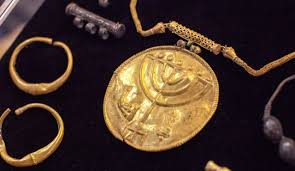
Consider a recent discovery of ancient Judaica near the Temple Mount. The Waqf issued a statement that the findings were “an attempt to support Israeli claims about Jewish rights in the holy city and to impose Israeli sovereignty on the occupied holy compound through the use of fake evidence….An immediate Arab and Muslim campaign is needed to stop the Israeli attempts to Judaise the holy city of Jerusalem,”

temple mt find
Discovery of Jewish artifacts at base of Temple Mount
dating to period before creation of Islam

It is interesting that the Waqf would make a claim of “Judaising” the city of Jerusalem which has had a Jewish majority for 150 years. It was also this same Jordanian Waqf that participated in expelling Jews from the Old City of Jerusalem and barring their entry from 1949-1967.

PEACE ON THE TEMPLE MOUNT

Israel’s perspective: Israel has sought a peaceful situation on the Temple Mount from the very beginning of reunifying Jerusalem. In 1967, Moshe Dayan announced: “To our Arab neighbors we extend, especially at this hour, the hand of peace. To members of the other religions, Christians and Muslims, I hereby promise faithfully that their full freedom and all their religious rights will be preserved. We did not come to Jerusalem to conquer the Holy Places of others.”

The declaration was followed by the establishment of the Protection of Holy Places Law which ensured the rights of all religions to pray at their holy sites.

Today, in an effort to appease the extremist views of the Waqf, radical Palestinians and the Jordanian government itself which threated to break its peace treaty with Israel, the Israeli government has continued to enforce a ban on Jewish prayer on the Mount.

Muslims’ Perspective: Suleiman pushed the Jews off of the Temple Mount in 1550 and Jordanian Arabs expelled the Jews from the entire Old City in 1949. Muslims and Arabs would clearly prefer that there be no Jews in Jerusalem.

However, according to Islam, there is no conflict with the Temple Mount being completely under Israeli sovereignty as detailed above.

According to the Peace Treaty between Israel and Jordan, the Temple Mount (outside of al Aqsa Mosque) should permit non-Mulsim prayer, despite Jordan’s recent protests.

Israel has continued to extend its full hand to share the Temple Mount.  Meanwhile, the Arab world took initial steps some decades ago to recognize Jewish history and rights which do not conflict with Islamic law.  Regrettably, recent history has witnessed a more hostile Arab approach.

Perhaps the future will witness peace on the Temple Mount with full access and rights for Jews at their holiest location.


Sources:

Waqf rules: http://www.al-islam.org/islamic-laws-ayatullah-ali-al-husayni-al-sistani/rules-regarding-waqf

Noble Sanctuary: http://www.noblesanctuary.com/AQSAMosque.html

Palestinian women fight Jews on Temple Mount: http://www.nytimes.com/2015/04/17/world/middleeast/palestinian-women-join-effort-to-keep-jews-from-contested-holy-site.html

Related First One Through articles:

Tolerance at the Temple Mount

Sharing the Temple Mount like the Cave of Patriarchs

Five holy sites in the holy land

Palestinians are “desperate”… but for what?

Palestinian Arabs control of Jerusalem for 0.5% of its history 

Divided Cities and Capitals

The Termination Shock of Survivors

Summary: As survivors of the Holocaust decline rapidly in numbers, the attacks on the veracity of the Holocaust, and on Jews and the Jewish State have begun to rapidly escalate. Survivors’ stories are not just reminders of evil actions, but serve as protection from evil ideas. Like the sun’s solar winds that beat back interstellar particles, we have approached the Termination Shock, where the sun’s influence is rapidly fading.  Will evil ideas once again proliferate when survivors cannot speak?

Holocaust denial began immediately after World War II. US General Dwight Eisenhower was keenly aware of the risk of deniers openly challenging historical facts and ordered the liberation armies to record the atrocities found at the concentration camps. Decades later, movie producer Steven Spielberg began to record the testimonies of Jews that survived the attempted extermination of the Jewish people to add personal histories of what transpired.

But the movies of the camps and recorded testimonies are a step removed. Ideally, one interacts with the survivors themselves to truly understand the evils and horrors of the Shoah.

Many Jewish schools developed programs such as Names Not Numbers and Witness Theater to connect today’s youth with Holocaust survivors.  The students interviewed survivors and helped retell their stories of life before, during and after World War II through film and theater.

namesnotnumbers1namesnotnumbers4
Names Not Numbers at SAR Academy, 2014

The programs were more than teaching moments for the children. The human interaction with the survivors became a bond with the past and a protection from potential risks in the future. Learning about world events from only history books can leave a distance from the topic.  However, engaging directly to living history cements lessons into those children for their lifetimes. Those lessons are of life and death.

THE HOLOCAUST AND ANTISEMITISM TODAY

One of the shocking things that students heard firsthand from survivors was how “normal” life was for Jews in Europe. In Germany and Austria, sophisticated societies had Jews among the elites including university professors, artists and financiers. Overall, life was decent before the Nazis came to power.

While it may have once been convenient to think of German society as primitive to harbor such evil anti-Semitic feelings, Germans were highly educated. The history of Germany shows that hatred comes in all formats: primitive and sophisticated; rich and poor; from the powerful and the meek.

Pure hatred stems from a conviction of complete superiority (Germans called Jews “Untermench“) coupled with the belief in the cause of completely controlling people.  When a society with such sentiments attains power, atrocities follow.  Education and employment are no shield, despite what the Obama administration says today.

Echoes of the Holocaust have returned loudly today. The calls of “the Nazis were right” outside synagogues in Europe; the comparison of Israel to the Nazi state and Israeli PM Netanyahu to Hitler; the sale of Nazi-themed merchandise in large department stores; UN agencies calling out NGOs defending Israel as comparable to Nazis; mainstream US papers trivializing the Holocaust by comparing it to the Palestinian Nakba have become commonplace. Further aggravating the situation was the press’s refusal to label the incidents as antisemitc. Even US President Obama refused to call the killings in a Parisian kosher supermarket an attack against Jews. Attacks have become invisible in their motivation and assume the role of the new normal.

A chorus that Jews and Israel consider themselves Ubermenchen that seek to control Palestinian Arabs, world banks and media have again gained appeal in a repeat of historic anti-Semitic trope. The inversion of victim-and-attacker gives rationale for assuming the role of attacker and attacking the victim.

THE PROTECTIVE FORCE

Right after the Holocaust, in December 1948, the United Nations developed the Universal Declaration of Human Rights, the UNDHR. Its goal was to serve as a bright red line declaring that every individual has basic rights that must be protected. Every Holocaust survivor that walked the planet was a symbol of this important declaration.

Survivors are the beacons of the UNDHR.

  • Holding a survivor’s hand is a reminder of their humanity.
  • Hearing their histories is an opportunity to reflect on society.
  • Retelling their stories is a means of incorporating the reality.

Survivors are living defensive forces against evil run amok.

TERMINATION SHOCK

Our world is not only reliant on the sun for light and warmth. Life on Earth would not exist without invisible shields of magnetic fields emanation from the Earth itself and solar winds from the sun. The solar wind deflects the interstellar ionized particles that continually bombard our solar system which would make life impossible.

But those invisible forces only go so far. As they peter out, space itself becomes choppy and dangerous as the solar winds are compressed. The Termination Shock is that point where the protective barriers begin to give way to the hostile forces of the universe.

As the number of Holocaust survivors dwindle, the important message they carry has begun to fade. The Termination Shock of Survivors is leaving their stories as lines in history books, which people can opt to read, ignore or doubt. The beacons are going dark and the universal message they carry is growing faint.

Survivors are not only protection for Jews against the world. They are a reminder for everyone: for Jews about Jews and non-Jews; and for the world about Jews and non-Jews too. But the world is already growing deaf and blind.

The calls for the eradication of people must not be allowed to stand.  But they do. Iran’s call for the destruction of the US and Israel should be grounds for expulsion from the United Nations.  Hamas’ call for the killing of Jews should be the immediate and automatic withdrawal of all UNRWA staff from the Gaza Strip. But they don’t.

It is no surprise that Hamas refuses to allow the teaching of the Holocaust in UNRWA schools or that the Iranian regime loudly denies the Holocaust. However, it is shocking that the world is getting ready to take the next backwards steps in annulling the UNDHR by empowering these very same entities.

Thousands of survivors are yet alive, but the lessons of the Holocaust and the significance of the UNDHR is becoming localized to the handful that are already receptive to the message.  Where will the world be when we pass the heliopause, and are no longer protected by the invisible power of the Survivors?


Related First One Through articles:

Jews in the Midst

Austria’s View of Kristallnacht

An Anti-Semitic “Tinge”

The Holocaust and the Nakba

Abbas’s Holocaust Denial

Chag Kasher v. Sa’meach

Summary: For many people, the “v.” is for “versus”, not for “and”. In the ongoing battle between a Chag Kasher versus Sa’meach, Kasher seems to be winning again.

I am neither a cook nor a chef.

While I love to eat, my wife prohibits me from doing any food preparation for fear -not without reason or history- that should I venture into the kitchen, her holy sanctuary, the entire room – no, the house itself! – would become un-kosher.

Over time, my place has become confined to the kitchen table. It is there that I must sit and wait for my meals, not unlike our dog (which she prefers on most days) who waits before his bowl. Remarkably, I am afforded more table scraps than him. Score one for me.

This is not to say that I cannot approach the sink. My share of the household bargain falls on cleaning up after meals. My wife considers the dishwasher and garbage pail safe terrain, as I can usually deduce whether I just consumed a dairy or meat meal.

That all ends on Passover.

When I think of my wife on Passover, I am reminded of the final scene from the movie Gallipoli where manic soldiers charge an Ottoman trench, knowing of their certain death. A fury fills her eyes as the holiday approaches and I know that no cleaning I do could ever satisfy her Kashrut Compulsive Disorder (commonly referred to by Jewish psychiatrists as KCD). This non-silent killer has taken more husbands than latkes on Hanukah.

My wife, (let’s call her “Pharaoh” to protect her identity from the teachers in school who think of her as a sweet, mild-mannered parent) despises Passover. Her venom is matched by her vigilance as she tries to square the invisible shmura matzah of Passover kashrut stringencies with her own KCD.

The Pharaohs of ancient Egypt had it easier than my modern Pharaoh. The ancient kings had teams of advisers and thousands of slaves to execute their commands. Today’s Pharaoh is left with a spouse who only gets to clean in the kitchen during most of the year because we have two dishwashers.

More warriors are clearly needed for the task.

New York has an outsourced cleaning industry which features companies with jolly names like “Molly Maids” and “PIG” which stands for “Partners in Grime”. When these companies drop the non-kosher acronyms and become armed with blowtorches, perhaps Pharaoh will “let these people come.”

Well, in truth, they do come.  They come a few times in succession to make sure that one team picked up where the first team may have been sloppy. At $400 a pop, the twelve cleaning tours of duty make a not so subtle reminder that we could have gone to a Passover program in the sunshine somewhere.

The cleaning troupes do not absolve me of cleaning (nor the sin of making Passover at home). My tasks are to lift and move large objects around the house in case a morsel of bread was carried there by a microscopic antisemitic mouse.  Dishwashers are pulled from their moorings. Refrigerators are yanked from the walls.  I am ordered to lift the island in the kitchen, until my rabbi steps in on my behalf (only because he thought I was too weak). My dog snickers at my misery.  Score one for him.

After eighteen gallons of bleach have been pored over every inch of the kitchen, and the fleas on my dog would no longer consider smelling (let alone eating) anything in the house, my next task is assigned. Foiling.

Foiling on Pesach has nothing to do with fencing.  It involves rolling out aluminum foil over counter tops as a punishment for not giving one’s wife a new kitchen. For the hardcore, the foiling of tables, chairs, cushions is also warranted.  Our family is so famous for our foiling, that we get Happy Passover cards from Alcoa.

IMG_3295
Foiling at a bar

As the first seder arrives, Pharaoh starts to resemble my former wife again. The house is indeed clean enough that even Eliyahu would be impressed.  Family and friends gather around the table to recount the timeless story… of how no one in the shtetls had more than one pot and somehow made Passover.

As has become our tradition, before I recite the Kiddush to start the seder, my wife inverts the very order of the seder. She sings out in a loud, yet exhausted, teary voice “Hashana ha’ba’a b’Yerushayim” – Next year in Jerusalem. Everyone joins in.

Jews in the Midst

Summary: Jews are vulnerable members of society. They are not on the fringe on the one hand, nor are they just a regular part of the broader community, on the other. As such, they must be actively protected by governments and citizens alike.

copenhagen jews
Jews in Copenhagen laying flowers where a Jewish man was gunned down,
February 2015 

No Canary in the Mine

Well-meaning people have referred to Jews as the “canary in the mine” when it comes to terrorism. They argue that various attacks on Jews in Europe, Israel and Asia by Islamic radicals over the past years should be seen in the context of an oncoming onslaught on the broader civilized world.

Canaries are treated as disposal life forms that coal miners bring into mines to detect poisonous gases. They assume that if the canary is alive, the air is breathable; however, should the canary die, they should evacuate immediately. The sole role of the canary is to detect danger and benefit the people in the mine.

Jews were not brought to Europe or Asia to serve as warning signs for non-Jews. They are not inferior life forms meant to live solely for the benefit of the broader society. They are proud citizens of their home countries.

 hyperkosher
Paris kosher supermarket where four Jews were killed,
January 2015

Not a Fringe Group

Jews are integrated into society in each country where the live. They have homes in the hearts of the country; they have jobs at corporations, in the government and military. They speak the language and have employment rates that are comparable to their fellow countrymen.

Jews are not a fringe group that fails to assimilate, that doesn’t speak the language or has high unemployment. They are not financial drains on society and do not have incarceration rates above the community averages.

Jews are a fabric of society. They are “everymen,” with particular beliefs and customs.

mumbai chabad
Chabad House in Mumbai where six people were murdered,
November 2008 

No “Random” Attack

While Jews are a basic part of the fabric of society, they are uniquely targeted by Islamic radicals. Terrorist attackers who assaulted major cities including Mumbai (2008), Paris (2015) and Copenhagen (2015), took time to specifically attack this small minority.

While US President Obama and his administration initially called the attack on a kosher supermarket in Paris a “random” attack, he back-tracked to corroborate the statement of the French government which clearly stated that the attack stemmed from antisemitism.

Even while embedded in society, Jews are picked out for attack for the simple reason that they are Jewish.

 bruseels museum
Attack on Jewish Museum in Brussels killed four,
May 2014

Jews in the Midst

There was a movie made in 1988 about a woman, Dian Fossey, who fought to protect gorillas in Uganda. These special creatures were a unique part of the Ugandan landscape that were singled out for slaughter. Dian fought both the government and locals to protect those “Gorillas in the Mist”.  It was a brave action on the part of an individual to take on so many to save the group from butchery.

It is the obligation of governments to protect their citizens.  The leaders in Germany and France have correctly stated that they will take action to ensure that their Jewish communities are safe.

It is time for all governments and citizens to speak loudly and act defiantly in protecting their vulnerable neighbors and countrymen, the Jews in their midst.

 scariest-riots-anti-semitism-men
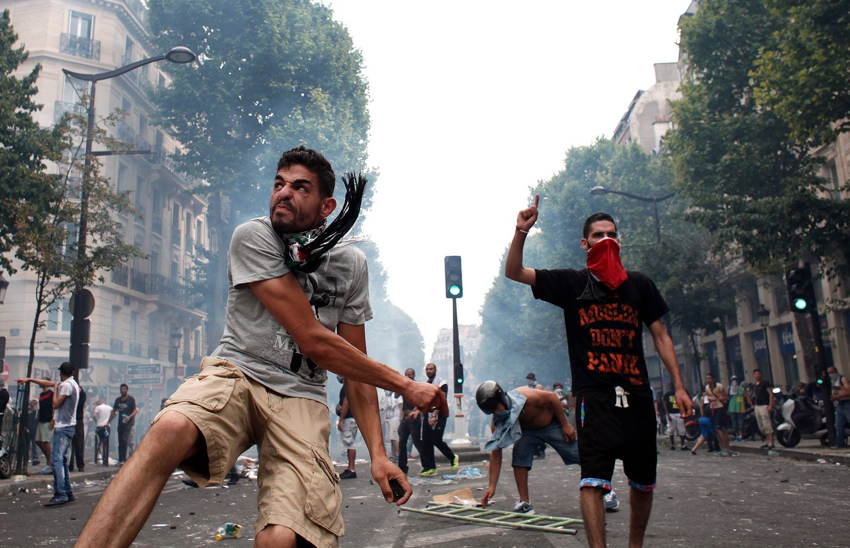
Riots against Israel and Jews in France,
July 2014

Israel in Europe

The governments of Europe must do more than just assign police officers to synagogues and Jewish centers. They must also declare that Jews everywhere – including in Israel – cannot be targets of jihad.  As part of that effort, they should confront the biases in their governments that are uniquely against the Jewish State, such as:

  • delisting Hamas as a terrorist organization despite its calls to kill Jews and eradicate Israel
  • European Union blaming Israel for the failure of the peace talks without acknowledging the various actions the Palestinians took to sabotage the talks

The list of European actions against the Jewish State over the past year was long, and to an absurd level when compared to EU actions and comments towards murderous regimes such as Iran and Syria. The people in the streets noted, and held anti-Israel rallies which became anti-Semitic riots.

It was against that backdrop of both murders by homegrown terrorists and the anti-Israel actions of the governments that made Israeli Prime Minister Benjamin Netanyahu invite the Jews of Europe to come to Israel.

The governments of Europe must declare their strong commitment to a safe and secure Israel.  Such actions should include declaring Hamas a terrorist organization and not recognizing a Palestinian state until it prohibits the promotion of antisemitism and Holocaust denial.  The governments should not pass any BDS (boycott, divestment, sanction) actions against Israel any more than they do for other disputed territories such as Kashmir and Cyprus.

The leaders of several European countries acknowledge that there is a problem of anti-Semitism spreading in the continent.  They must be aggressive in confronting it in every manner possible.

Jews in the Midst

Summary: Jews are vulnerable members of society. They are not on the fringe on the one hand, nor are they just a regular part of the broader community, on the other. As such, they must be actively protected by governments and citizens alike.


No Canary in the Mine

Well-meaning people have referred to Jews as the “canary in the mine” when it comes to terrorism. They argue that various attacks on Jews in Europe, Israel and Asia by Islamic radicals over the past years should be seen in the context of an oncoming onslaught on the broader civilized world.

Canaries are treated as disposal life forms that coal miners bring into mines to detect poisonous gases. They assume that if the canary is alive, the air is breathable; however, should the canary die, they should evacuate immediately. The sole role of the canary is to detect danger and benefit the people in the mine.

Jews were not brought to Europe or Asia to serve as warning signs for non-Jews. They are not inferior life forms meant to live solely for the benefit of the broader society. They are proud citizens of their home countries.


Not a Fringe Group

Jews are integrated into society in each country where the live. They have homes in the hearts of the country; they have jobs at corporations, in the government and military. They speak the language and have employment rates that are comparable to their fellow countrymen.

Jews are not a fringe group that fails to assimilate, that doesn’t speak the language or has high unemployment. They are not financial drains on society and do not have incarceration rates above the community averages.

Jews are a fabric of society. They are “everymen,” with particular beliefs and customs.


No “Random” Attack

While Jews are a basic part of the fabric of society, they are uniquely targeted by Islamic radicals. Terrorist attackers who assaulted major cities including Mumbai (2008), Paris (2015) and Copenhagen (2015), took time to specifically attack this small minority.

While US President Obama and his administration initially called the attack on a kosher supermarket in Paris a “random” attack, he back-tracked to corroborate the statement of the French government which clearly stated that the attack stemmed from antisemitism.

Even while embedded in society, Jews are picked out for attack for the simple reason that they are Jewish.


Jews in the Midst

There was a movie made in 1988 about a woman, Dian Fossey, who fought to protect gorillas in Uganda. These special creatures were a unique part of the Ugandan landscape that were singled out for slaughter. Dian fought both the government and locals to protect those “Gorillas in the Mist”.  It was a brave action on the part of an individual to take on so many to save the group from butchery.

It is the obligation of governments to protect their citizens.  The leaders in Germany and France have correctly stated that they will take action to ensure that their Jewish communities are safe.

It is time for all governments and citizens to speak loudly and act defiantly in protecting their vulnerable neighbors and countrymen, the Jews in their midst.


Israel in Europe

The governments of Europe must do more than just assign police officers to synagogues and Jewish centers. They must also declare that Jews everywhere – including in Israel – cannot be targets of jihad.  As part of that effort, they should confront the biases in their governments that are uniquely against the Jewish State, such as:

  • delisting Hamas as a terrorist organization despite its calls to kill Jews and eradicate Israel
  • European Union blaming Israel for the failure of the peace talks without acknowledging the various actions the Palestinians took to sabotage the talks

The list of European actions against the Jewish State over the past year was long, and to an absurd level when compared to EU actions and comments towards murderous regimes such as Iran and Syria. The people in the streets noted, and held anti-Israel rallies which became anti-Semitic riots.

It was against that backdrop of both murders by homegrown terrorists and the anti-Israel actions of the governments that made Israeli Prime Minister Benjamin Netanyahu invite the Jews of Europe to come to Israel.

The governments of Europe must declare their strong commitment to a safe and secure Israel.  Such actions should include declaring Hamas a terrorist organization and not recognizing a Palestinian state until it prohibits the promotion of antisemitism and Holocaust denial.  The governments should not pass any BDS (boycott, divestment, sanction) actions against Israel any more than they do for other disputed territories such as Kashmir and Cyprus.

The leaders of several European countries acknowledge that there is a problem of anti-Semitism spreading in the continent.  They must be aggressive in confronting it in every manner possible.

Bibi’s Paris Speech in Context

Israeli Prime Minister Benjamin (Bibi) Netanyahu came to Paris, France in January 2015 to show his support for free speech and to confront anti-Semitism in the wake of terror attacks at the Charlie Hebdo magazine and a kosher supermarket. He addressed a large Jewish audience at the Grand Synagogue where he invited the Jews to make aliyah – to move to Israel.netanyahu paris shul

“Any Jew who chooses to come to Israel will be greeted with open arms and an open heart, it is not a foreign nation, and hopefully they and you will one day come to Israel.”

Many people criticized his statement including, not surprisingly, his Israeli political opponents during an election season.  The French were also unhappy with the call to move to Israel. French Prime Minister Manuel Valls said that “if 100,000 Jews leave, France will no longer be France. The French Republic will be judged a failure.”
French President Francois Hollande made a similar statement a few days later: “French people of the Jewish faith, your place is here, in your home. France is your country.

It is right and proper that the leaders of France seek to assure the country’s Jewish citizens that France is their home and they should not flee the country from fear.  But to berate Netanyahu for his remarks does not take into account the climate in which the invitation to move to the Jewish State was made.

Consider that Netanyahu did not come to France and invite the French Jews after attacks targeting their community in 2012 or 2006. But he felt that the situation for Jews in Europe had deteriorated significantly throughout 2014 which compelled him to invite the largest Jewish population in Europe, with an estimated 500,000 people, to move to Israel:

In summary, the year before the Paris shootings was a cascade of anti-Israel and anti-Jewish activities in Europe.  The year 2014 began with Netanyahu releasing terrorists to push forward a peace initiative (of which he was very skeptical) at the urging of the USA and Europe.  It proved meaningless to the peace process and world opinion; Israel and Jews in Europe were attacked throughout the year, first by Palestinians and then by Europeans.

For Netanyahu, the prior twelve months had:

  1. Israel release prisoners, including Palestinian murderers of Israeli civilians, at the direct urging of allies
  2. Their Palestinian counter-party break peace talks by joining with Hamas and international organizations
  3. A summer in which: three teenagers were abducted and murdered; Israel located an extensive Hamas tunnel network from Gaza into Israel to launch attacks; Israel combated thousands of incoming missiles from Gaza. Yet Israel was still criticized by Europe and the global community for defensive actions
  4. European cities launch multiple riots against Jews
  5. European countries reward the Palestinians with admission to more world bodies and votes of endorsement
  6. The European Union remove Hamas from its terrorist list

For Netanyahu – and many Jews – the year in Europe echoed back 75 years to a period in which the continent nearly annihilated its Jewish citizens.  It was bad enough that Israelis contend with Palestinian Arabs that are more extreme than the Nazis of the 1930s.  But that Europeans embraced this ideaology was truly frightening, particularly as it stood in contrast to values they claimed to support.

In 1939, at the early stages of the Holocaust, Britain drafted the White Paper at the behest of Arabs in the Middle East, which limited Jewish immigration to Palestine at the outset of the Holocaust – a move which likely killed over 100,000 Jews – despite the specific mandate to facilitate the immigration of Jews to their homeland.

In 2015, the Prime Minister of Israel heard the calls to kill Jews, and made clear that a world with an established Jewish State will not allow a repeat of the European Holocaust.


Related First One Through articles:

Europe hurting the peace process: https://firstonethrough.wordpress.com/2015/01/02/failing-negotiation-102-europe/

Europe penalizing Israel even though Palestinians are the reluctant peace partner: https://firstonethrough.wordpress.com/2014/10/15/european-narrative-over-facts/

Jews continue to move out of Europe to Israel and the US music video (Diana Ross): https://firstonethrough.wordpress.com/2014/06/01/the-loss-of-jews-in-europe-continues/

Ignoring Jihad only when it comes to Israel: https://firstonethrough.wordpress.com/2015/01/26/radical-jihadists-in-europe-and-dislocated-and-alienated-palestinians-in-Israel/