Visitor Rights on the Temple Mount

The cries coming from the acting-President of the Palestinian Authority and his rival political party, the terrorist group Hamas, to “defend al-Aqsa” stem from their claim that they are concerned that Jews are coming to destroy and/or defile the al Aqsa mosque, the third holiest site in Islam. To generate such fear, one would imagine that Jews are coming to the Temple Mount (on which al Aqsa sits on the southeastern most tip) illegally, and are bringing with them weapons and shouting threats against the mosque.

All of those assumptions would be completely false.

temple mt visit

To placate the outrageous claims from the PA, Hamas and the king of Jordan, on October 7, 2015, Israeli Prime Minister Benjamin Netanyahu announced a ban on Israeli members of Knesset from visiting the Temple Mount.

Here is a review of the completely legal, internationally approved and natural rights associated with Jews visiting the Temple Mount and today’s sad reality that none of it seems to matter.

Visiting Hours

Facts: The Temple Mount has regular visiting hours for people of all faiths. As mentioned by the popular tourist guidebook, Frommers:

There is no charge to enter the Temple Mount compound. You must not, however, wear shorts or immodest dress in the compound. (If your outfit is too revealing, guards may be willing to provide you with long cotton wraps, or they may ask you to return another time with more modest clothing.) Visitors are allowed on the Temple Mount
by permission of the Islamic religious authorities, and are asked
to obey instructions given by the guards.

There is an admission fee of NIS 38 ($9.50/£4.75) to go inside the two mosques and the Islamic Museum. If the buildings are again open to foreign visitors, I highly recommend that you invest in the combined admission ticket, which may be purchased from a stone kiosk between Al Aqsa and the Dome of the Rock. If visiting hours
are lengthened, you may usually remain on the Temple Mount, but cannot enter
the Dome of the Rock or the Al Aqsa Mosque during the midday prayers.”

The World Travel Guide site lists the specific visiting hours and ways of accessing the Mount:

Only one of the 10 gates to the complex, Al-Mughradi Gate, allows entry for non-worshippers. This is located to the right of the Western Wall and is accessed from
the Western Wall Plaza.

Opening Times: Closed during all prayer times (variable); otherwise Sun-Thurs 0730-1130 and 1330-1430 (summer); Sun-Thurs 0730-1030 and 1330-1430 (winter); Sun-Thurs 0730-1030 (during Ramadan); closed to non-Muslims Fri and Muslim holidays. During periods of tension, the site may be closed.

Admission Fees: No (for Temple Mount; charge for Dome of the Rock, Al Aqsa Mosque and Islamic Museum combined ticket).

Disabled Access: No

Unesco: Yes“

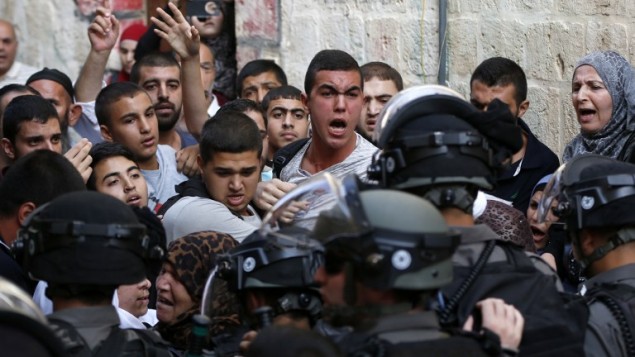
Reality today: Despite the publicized openness of the site, visiting this holy site and famous tourist location can be anything but pleasant. Hamas pays for Murabitun, Islamic extremists who shout and taunt Jewish visitors on the Temple Mount. Arabs have also hurled rocks at non-Muslim visitors.

Due to the various attacks, Israeli police escorts typically accompany non-Muslim visitors. The military has also occasionally restricted access to the Temple Mount for Muslims under 50 years old due to security concerns.

International Treaty

Facts: In 1994, Israel and Jordan signed a Peace Treaty. In that treaty was language that specifically gave special recognition of Jordan’s historic role at the Temple Mount site, while also cementing Israel’s responsibility for security.

The 1994 treaty discussed the Temple Mount, because Jordan had secured custodian rights to the site.  Jordan attacked Israel and illegally seized the entire Old City of Jerusalem (and Judea and Samaria) in 1948 and thereupon occupied the Old City. The Jordanians then expelled all of the Jews from the city and granted Jordanian citizenship to the Palestinians in the city. When Jordan attacked Israel again in 1967, it lost the Old City, but Israel allowed the Islamic Waqf controlled by Jordan to continue to administer the Temple Mount.

The Jordan-Israel treaty clearly gave rights to all people to visit holy sites in Jerusalem.  Article 9.1: Each Party will provide freedom of access to places of religious and historical significance.

And Article 9.3: “The Parties will act together to promote interfaith relations among the three monotheistic religions, with the aim of working towards religious understanding, moral commitment, freedom of religious worship, and tolerance and peace.”

Reality today: The kingdom of Jordan signed a treaty with Israel that assured the “freedom of access to places of religious and historical significance,” and to “promote interfaith relations… with the aim of working towards religious understanding.”  The words in that agreement seem empty today as the Jordanian king claims the Temple Mount only has an “Arab character,” as he threatens to destroy the relationship with Israel because Jews are visiting the Temple Mount.

Israeli Law

Facts: When Israel reunified the city of Jerusalem in 1967, the Israeli Prime Minister Levi Eshkol handed administrative control of the Temple Mount back to Jordan, the country that had just attacked his country for the second time in 20 years. He then enshrined “The Protection of Holy Places” law that all people would have access to the holy sites in Jerusalem.

” 1. The Holy Places shall be protected from desecration and any other violation and from anything likely to violate the freedom of access of the members of the different religions to the places sacred to them or their feelings with regard to those places.

  1. Whosoever desecrates or otherwise violates a Holy Place shall be liable to imprisonment for a term of seven years.

  2. Whosoever does anything likely to violate the freedom of access of the members of the different religions to the places sacred to them or their feelings with regard to those places shall be liable to imprisonment for a term of five years.”

The 1967 Israeli Law was complemented by the 1994 Jordanian-Israeli Treaty which not only promised Israeli support for universal access to the holy sites, but Jordan’s support as well.

Reality today: However, the current Prime Minister of Israel Benjamin Netanyahu is trampling on Jewish rights of access and “feelings with regard to those places” as he bans their visitation rights even though they bring no weapons and threaten no one.

United Nations on Access

Facts: The United Nations often claims that it is concerned with providing access to people of all faiths to their holy sites and that it would prefer to see a “universal” approach to sites that are holy to many religions.  For example, UNESCO on March 19, 2010 published a piece about Palestinian rights to the Cave of the Patriarchs in Hebron and the Tomb of Rachel in Bethlehem, among the holiest sites in Judaism.  UNESCO wrote:

  • that Israel was “endangering Palestinian cultural heritage and denying Palestinians their cultural patrimony, as well as denying development and access to heritage sites and historic places of worship.”
  • Israel has publicly begun to use these sacred and universal sites to provoke unnecessary religious conflict by promoting control and access on the exclusive basis of one faith while denying the rights and views of other faiths.”

By these statement, it would appear that the UN is very concerned:

  • that people of all faiths be allowed access its holy places;
  • that such holy places not be under the exclusive control of a single faith; and
  • that people should not be cut-off from their “cultural patrimony.”

A person would naturally assume from these UN comments about Hebron and Bethlehem, that the UN must strongly endorse Jewish rights of access to their holiest site in the world, and it must strongly condemn any group or country that sought to deny Jews those rights.

Reality today: But this is the United Nations that specializes in inversion when it comes to Israel. Secretary General Ban Ki-Moon described the basic Jewish desire and action of accessing its Temple Mount as a “provocation.”


Access is Not a Provocation

As detailed above, people of all faiths visiting the Temple Mount is legal by Israeli law, enshrined in an international treaty with Jordan, and follows a blueprint for co-existence as stated by the United Nations. Indeed, visiting hours exist for everyone.

For Jews, visiting their holiest spot in the world is a natural desire. They seek to do so in peace and quiet.  They do not seek to instigate a fight with anyone on the Mount.  Even Rabbi Yehuda Glick who was shot by Palestinian Arabs for advocating for Jewish prayer rights on the Temple Mount, did not seek to harm al Aqsa Mosque in any way.

No Temple = No Rights

If Jewish access to their holy sites is guaranteed and no one urged harming the site in any way, on what basis have Palestinian Arabs and Jordanians sought to deny Jews those basic rights of access?

The Palestinian Arabs have put forth a narrative that the Jewish Temple never existed on the Temple Mount. Their rationale is that if the Temple never existed there, Jews can claim no special visitation rights.

Consider that in addition to Mahmoud Abbas never mentioning Judaism in any of his speeches at the United Nations, there have been these quotes:

  • Mahmoud Abbas: “The leaders of Israel are making a grave mistake by thinking that history can move backward and that they could impose facts on the ground by dividing the Aksa Mosque in time and space, as they did with the Ibrahimi Mosque [Cave of the Patriarchs] in Hebron.
  • The Islamic Waqf on the discovery of ancient Jewish artifacts near the Temple Mount: “an attempt to support Israeli claims about Jewish rights in the holy city and to impose Israeli sovereignty on the occupied holy compound through the use of fake evidence….An immediate Arab and Muslim campaign is needed to stop the Israeli attempts to Judaise the holy city of Jerusalem,”
  • Israeli Arab MK Masoud Ganaim said the Temple never existed. “The site has always been holy to Islam, never to any other religion.”
  • Hamas’ Khaled Mashaal on the opening of the Hurva synagogue in the Old City: “It is part of a project to destroy the al-Aqsa Mosque” and replace it with Israel’s so-called “Solomon’s Temple.” It is a “falsification of history and Jerusalem’s religious and historic monuments.

Never mind that even Atheists have rights of access.

Never mind that denying a core belief of Judaism spits in the face of a treaty that sought to promote interfaith relationships.

The argument itself is nonsensical by the Arabs’ own beliefs.  The Christian story of Jesus is specifically placed at Jerusalem’s Jewish Temple. How can Abbas or Jordanian king Abdullah claim special rights over the Church of the Holy Sepulchre, if they deny the story of Jesus in Jerusalem?

The Insanity of Today

Regardless, logic and rights fall flat in the face of Islamic fundamentalism: The UN condemns Israel for managing security, for which it has responsibility. It attacks Israel for the “provocation” of enabling Jews to have access to its holy sites. And the United States urges Israel to maintain the status quo, even though Netanyahu has stated over-and-again that he has and will.

So to appeal to the crazies, Netanyahu is banning members of the Knesset from access to Judaism’s holiest site.

It would appear that the left-wing radicals and racists are slowly winning the battle against human decency.


Related FirstOne Through articles:

The Waqf and the Temple Mount

Tolerance at the Temple Mount

The United Nations and Holy Sites in the Holy Land

The UN’s Disinterest in Jewish Rights at Jewish Holy Places

Jordan’s Deceit and Hunger for Control of Jerusalem

Extremist” or “Courageous”

Subscribe YouTube channel: FirstOneThrough

Join Facebook group: FirstOne Through  Israel Analysis

Jordan’s Deceit and Hunger for Control of Jerusalem

Jordan’s King Abdullah gave a flowery speech to the United Nations General Assembly in September 2015. To the casual listener, his words sounded progressive in his call for “loving our neighbour, showing respect to those different from us,” and to “amplify the voice of moderation,” especially from a region so caught up in violent Islamic extremism.

abdullah jordan
Jordanian King Abdullah addressed the 70th session of the United Nations
General Assembly on September 28, 2015. (Photo: Richard Drew/AP)

To a listener who was more familiar with Jordan’s history in the region, some of the king’s comments appeared as a welcome change from the actions of his late father. Others could question whether Abdullah harkens to his own voice. Consider Abdullah’s call:

let us recognise deceit. When we examine the motives of these outlaws, the khawarej – and indeed, the motives of extremists on all sides – we find hunger for power and control: of people, of money, of land. They use religion as a mask. Is there a worse crime than twisting God’s word to promote your own interests?”

“nothing can be more important and can have more impact in framing this respect and coexistence than Jerusalem. The Hashemite Custodianship of Jerusalem’s Islamic and Christian Holy Sites is a sacred duty, and we join Muslims and Christians everywhere in rejecting threats to the Holy Places
and the Arab character of this Holy City.”

When it comes to “respect and coexistence in Jerusalem,” let’s remind the Jordanian king of some plain facts:

  1. Jordan attacked Israel in 1948, together with four Arab armies in an attempt to completely destroy the new Jewish State, and then Jordan illegally seized the eastern half of Jerusalem.
  2. Jordan evicted all Jews from the Old City of Jerusalem and Judea and Samaria in 1949, counter to the Fourth Geneva Convention.
  3. Jordan explicitly denied Jews citizenship when it granted Arabs in its conquered territory citizenship in 1954.
  4. Jordan barred any Jews from even visiting their holy sites when they controlled Jerusalem from 1949-1967.
  5. Jordan attacked Israel again in 1967 and lost the area it had illegally annexed.
  6. Jordan condemned the 2010 rebuilding of a prominent synagogue in Jerusalem that Jordan itself had destroyed in 1949.

Despite Jordan’s complete lack of religious tolerance for Jews and hostility towards Israel, Israel has always sought to maintain religious freedom and coexistence in the holy city:

  1. Israel granted the Jordanian Islamic Waqf custodian rights to the Temple Mount when it reunified Jerusalem in 1967.
  2. Israel enshrined the religious protections of all religions in its laws and safeguarded access to holy sites for all religions.
  3. Israel reiterated the special role that Jordan plays on the Temple Mount in the Israel-Jordan Peace Treaty in 1994.
  4. Today, Israeli Prime Minister Netanyahu repeatedly reiterates that Israel will maintain the “status quo” of the Jordanian Waqf’s anti-Semitic edict of barring Jewish prayer at the Temple Mount.

When the Jordanian king spoke of “rejecting threats to the Holy Places and the Arab character of this Holy City [Jerusalem]” in a speech that was theoretically about tolerance, did he once mention Judaism? Did he make a passing reference to the Jerusalem being the holiest city to only one religion – Judaism? Did he mention that Jerusalem has had a Jewish majority since the 1860s? A passing comment about the Jewish Temples or Western Wall? Or did he define the holy city as solely having an “Arab character”?

In his choice of the phrase “threats to the Holy Places,” was Abdullah suggesting that Jews should no longer be permitted to visit the Temple Mount, or that Israeli police should be prevented from protecting Jewish visitors from Arab harassment and stone throwers, even though the Jordanian peace treaty with Israel specifically gave Jews and Israel both of those rights?

To Abdullah’s comment of gathering “Muslims and Christians everywhere,” was he suggesting gathering 2 billion people against Israel on a trumped up non-existent threat to Islamic holy places? Was Abdullah calling for a global jihad in “twisting” facts to create a religious battle to promote a greater role for himself? Was that his idea of “amplify[ing] the voice of moderation”?

It is Abdullah that must “recognize his own deceit” and “hunger for power and control” of Judaism’s holiest spot in the capital of Israel. His opening line taken from the Jewish bible of “love thy neighbor as thyself” and “showing respect to those different” was a red herring in his call to cast himself as a loving moderate while calling for a global jihad against Israel on a non-existent cause.

The “progressive” voices attacking Jews and the Jewish State are becoming more numerous and growing louder.  Beware of the velvet tongue as much as the iron fist.


Related First One Through articles:

The Arguments over Jerusalem

The Waqf and the Temple Mount

The UN’s Disinterest in Jewish Rights at Jewish Holy Places

The United Nations “Provocation”

Nicholas Kristof’s “Arab Land”

Subscribe YouTube channel: FirstOneThrough

Join Facebook group: FirstOne Through  Israel Analysis

The UN’s Disinterest in Jewish Rights at Jewish Holy Places

On September 17, 2015, acting-President of the Palestinian Authority Mahmoud Abbas called out to Arabs who were fighting against Jews visiting the Temple Mount, the holiest place for Judaism, on Rosh Hashanah, one of the holiest days in the Jewish calendar:

We bless you, we bless the Murabitin (those who carry out religious war for land declared to be Islamic), we bless every drop of blood that has been spilled for Jerusalem, which is clean and pure blood, blood spilled for Allah.  Allah willing, every martyr will reach paradise, and everyone wounded will be rewarded by Allah.

The Al Aqsa is ours, the Church of the Holy Sepulchre is ours, and they have no right to defile them with their filthy feet.  We will not allow them to, and we will do everything in our power to protect Jerusalem.”

abbas video
Acting PA President Abbas called for Arabs to defend Jerusalem
September 17, 2015

These Arabs that Abbas was referring to, had brought stones to protest Jews visiting the Temple Mount and the ban on religious extremist who taunted and prevented Jews from visiting their holy sites.

The United Nations Response

The UN Security Council (UNSC) issued the following statement about the situation:

The members of the Security Council expressed their grave concern regarding escalating tensions in Jerusalem, especially surrounding the Haram al-Sharif compound, including recent clashes in and around the site.

The members of the Security Council called for the exercise of restraint, refraining from provocative actions and rhetoric and upholding unchanged the historic status quo at the Haram al-Sharif — in word and in practice.  The members of the Security Council called for full respect for international law, including international human rights law and international humanitarian law, as may be applicable in Jerusalem.

The members of the Security Council urged all sides to work cooperatively together to lower tensions and discourage violence at holy sites in Jerusalem.

The members of the Security Council appealed for the restoration of calm and called for full respect for the sanctity of the Haram al-Sharif, noting the importance of the special role of Jordan, as confirmed in the 1994 peace treaty between Jordan and Israel, and encouraged increased coordination between Israel and Jordan’s Awqaf department.  The members of the Security Council underscored that Muslim worshippers at the Haram al-Sharif must be allowed to worship in peace, free from violence, threats and provocations.  The members of the Security Council further underscored that visitors and worshippers must demonstrate restraint and respect for the sanctity of the area and for maintaining the historic status quo at the holy sites.  The members of the Security Council urged that the status quo of the Haram al-Sharif should be maintained and visitors should be without fear of violence or intimidation.

The members of the Security Council called for the immediate cessation of violence and for all appropriate steps to be taken to ensure that violence ceases, that provocative actions are avoided and that the situation returns to normality in a way which promotes the prospects for Middle East peace between the Israelis and the Palestinians.”

The response is outrageous and emblematic of Israel’s treatment at the United Nations:

  1. “Haram al-Sharif”, not Temple Mount.  The UNSC claims that it cares about the sanctity of the “holy sites in Jerusalem”, but it does not even mention the name of the platform, built 2000 years ago to ease access to Jews at the Temple. The platform is the “Temple Mount”- not mentioned once – while the Muslim name for the location is mentioned four times.
  2. Ignoring Arab incitement and Israel’s calls for peace. As noted above, PA’s Abbas called for Arabs to fight for Al Aqsa, while Israeli Prime Minister Benjamin Netanyahu called for maintained the status quo of banning Jewish prayer on the Mount. Yet no specific UNSC rebuke of Abbas’s rhetoric was made in their call for calm, nor appreciation for Netanyahu’s call for calm.
  3. Special role of Jordan” mentioned, but what of the role of Israel? The 1994 Peace Treaty between Israel and Jordan called for the Jordanian Waqf to be the trustee of the Temple Mount, but security remained with Israel.  Why did the UNSC deliberately omit that Israel is in control of the security of the site and was deploying troops to stop Muslim extremists from attacking visiting Jews?
  4. “Muslim worshippers”, but not Jews. In case any of the language was not clear, the UNSC is solely concerned with Muslims on the Temple Mount. The constant attack on Jewish visitors gets no mention at all, even after mentioning the Jordanian-Israel 1994 Peace Treaty which specifically states that “Each party (Jordan and Israel) will provide freedom of access to places of religious and historical significance.

The UNSC voice of concern for: only Muslims and not Jews; using the Islamic name for the holy site, not Jewish; and referring to Jordan’s role at the site and not Israel’s, was clearly and specifically meant as a rebuke and warning to Israel and Jews. The most powerful global body told Israel on the Jewish New Year: do not mess with this Islamic site. Judaism is foreign. Jews are intruders.

Jews may protest that: the Temple Mount is its holiest site; that international law and treaties state that Jews have complete access to the site; and that Israel controls security on the site. Those facts are irrelevant to the UNSC.

The inversion of history past and present; provocation and reaction; rights and absence of rights has always been rife at the United Nations when it comes to Israel.  These days, as the world watches extremist Islam rampage throughout the Middle East, the UN will seemingly further prioritize placating Iran, Syria, Saudi Arabia and other Islamic extremists over the fundamental rights of Jews in Israel.

One can expect to see much more in the coming weeks when the UN circus comes to town.


Related First One Through articles:

The United Nations “Provocation”

The United Nations and Holy Sites in the Holy Land

Names and Narrative: CNN’s Temple Mount/ Al Aqsa Complex Inversion

The Waqf and the Temple Mount

Joint Prayer: The Cave of the Patriarchs and the Temple Mount

The Arguments over Jerusalem

Subscribe YouTube channel: FirstOneThrough

Join Facebook group: FirstOne Through  Israel Analysis

The US State Department’s Selective Preference of “Status Quos”

On September 14, 2015, State Department Spokesperson John Kirby gave a daily press briefing in which he said: “The United States is deeply concerned by the recent violence and escalating tensions surrounding the Haram Al-Sharif/Temple Mount. We strongly condemn all acts of violence. It is absolutely critical that all sides exercise restraint, refrain from provocative actions and rhetoric, and preserve unchanged the historic status quo on the Haram Al-Sharif/Temple Mount in word and in practice.”

The comment came after a clash between Arab rock throwers and Israeli police on Rosh Hashanah, the Jewish New Year, as Arabs sought to prevent Jews from visiting the site.

Kirby
State Department Spokesperson John Kirby

State Department Status Quo it Favors

The “status quo” that the State Department presumably sought to maintain was the ban on Jewish prayer on the entire 35 acre Temple Mount platform, the Jews’ holiest place on earth.  That ban was put in place by Muslims in the middle of the 16th century, and Israel has allowed the Islamic Waqf to maintain the ban, even after it captured the Old City from Jordan and reunified the city in 1967.

State Department Status Quo it Seeks to Change

Later in this same briefing, Kirby responded to a question as to whether the Oslo Agreement between the Israelis and Palestinians should be scrapped since no Palestinian state was on the horizon: “Secretary Kerry is committed to pursuing a two-state solution, and I think you’re going to see him continue to do that throughout his tenure here at the department. I don’t think anybody’s – certainly not here – willing to give up on that ultimate goal.”

Kerry is “committed” to changing current reality and creating an Arab-led sovereign state in the holy land for the first time in history.

What makes one status quo worth keeping while the other is not? Does the State Department only endorse a status quo which Muslims desire (banning Jews from the Temple Mount) even though it is clearly anti-Semitic? Is it less a matter of favoring Muslim demands over American integrity and principle, but rather a function of seeking the support of 57 Arab countries versus a single Jewish State?

A more proper – and consistent – response would have been that Israel and the Jordanians and Palestinian Arabs will determine any changes to the status of Jerusalem and the holy sites as part of a final peace agreement. Those changes to the status quo will include matters of sovereignty and rights of access and prayer.


Related First One Through articles:

Joint Prayer: The Cave of the Patriarchs and the Temple Mount

The United Nations and Holy Sites in the Holy Land

The Battle for Jerusalem

A “Viable” Palestinian State

Subscribe YouTube channel: FirstOneThrough

Join Facebook group: FirstOne Through  Israel Analysis


Names and Narrative: CNN’s Temple Mount/ Al Aqsa Complex Inversion

temple mount protest
(Muslim and Israeli police confront each other at The Temple Mount,
September 13, 2015. Source: AFP Photo/Ahmad Gharabli)

On September 13, 2015, CNN reported on a confrontation between “Arab youths and Israeli police” in the Old City of Jerusalem using language that inverted the facts. The news discussed:

  • Palestinian protestors,” but of what? Jews visiting the Temple Mount which they had every legal and moral right to do? Perhaps they were protesting new Israeli laws meant to keep Muslim groups from attacking Jewish visitors to the Temple Mount. The report made it appear that the “protestors” were just seeking a right to pray.
  • The “Al Aqsa Complex” that CNN mentioned gives an Islamic name to the entire 35 acre compound, even though the Al Aqsa Mosque is located on just the southern tip of the platform. This entire platform was built for the Second Jewish Temple and is therefore historically known as the Temple Mount. Using an Islamic name as the official name and only stating that “Jews… call it the Temple Mount” divorces history, reality and Jews from the site. It is more accurate to use the default name “The Temple Mount” to the entire location and state that ‘Muslims call it the Al Aqsa Complex”.
  • “…Is one of the holiest sites in the world for Muslims” The mosque itself is the third holiest site, not the entire Temple Mount platform. The story does not clarify that Jews had no interest in visiting the mosque itself, but the other parts of the platform.
  • Stating that “the clashes ended when Muslim worshippers were allowed in the complex for prayers” makes the entire event seem like all the Arab protestors sought was a right to pray (which they had already completed doing), as oppose to stopping Jews from visiting the Temple Mount on their Jewish New Year. This was another inversion of the narrative.
  • CNN’s report that “Jordan, which is in charge of the complex” is incomplete. Jordan’s Islamic Waqf has religious oversight of the Temple Mount, but it is Israel that is in charge of security on the Mount. Article 9 of the 1994 Jordan-Israel Peace Treaty clearly states that “Each party will provide freedom of access to places of religious and historical significance.” That is why the Israeli police legally deployed personnel to prevent Arab rock-throwers from attacking visiting Jews on the Mount.

Overall, CNN failed to report that Israel was legally trying to protect Jews visiting the Temple Mount, their holiest spot on one of their holiest days of the year. Instead they painted a picture of Israeli police blocking Arab youths from praying at the Al Aqsa Complex, one of their holiest places.

DSC00357
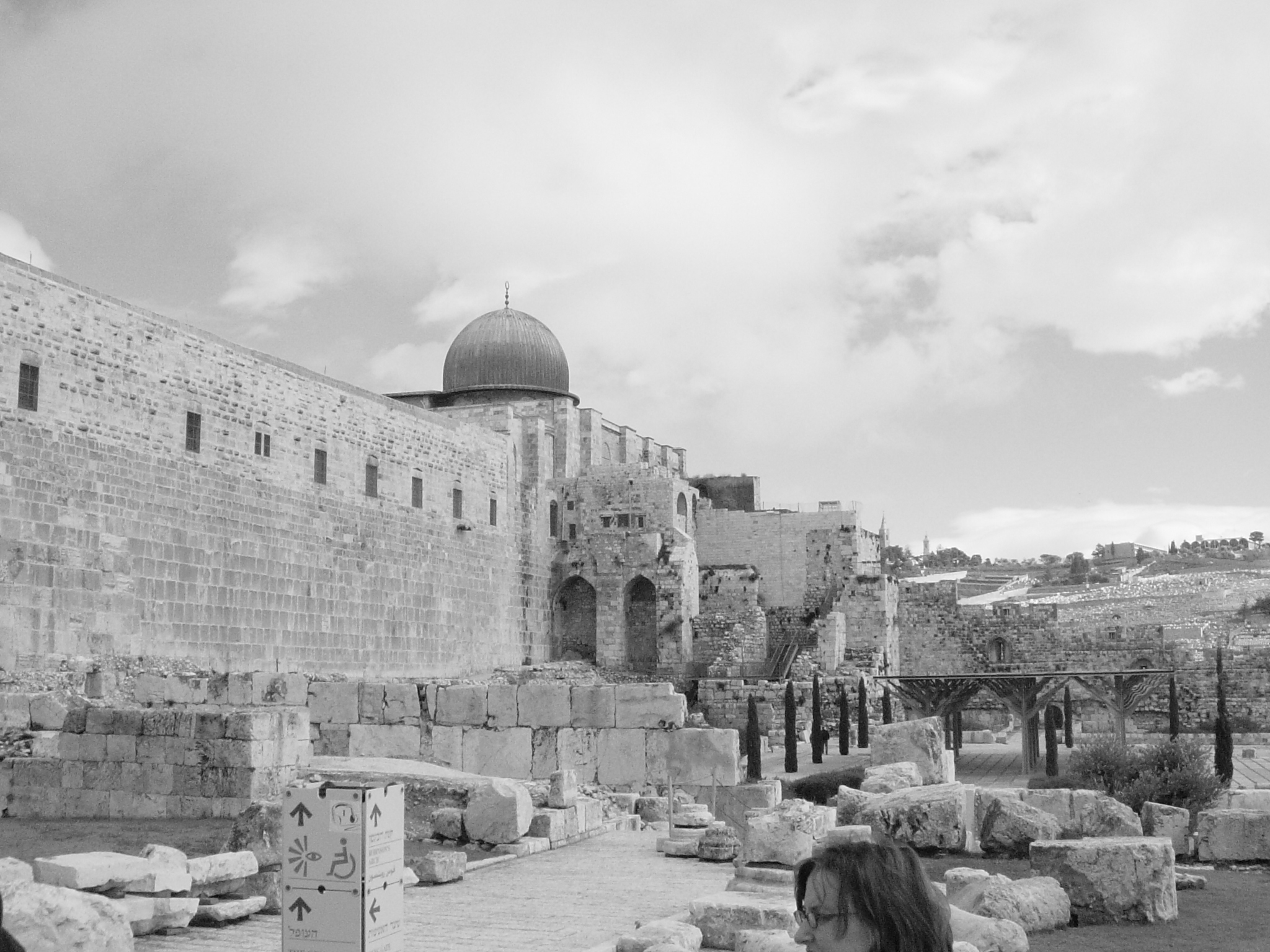
Al Aqsa Mosque at the very southern tip of the Temple Mount Platform
(Source: First One Through)


Related First One Through articles:

The Waqf and the Temple Mount

The Cave of the Patriarchs and the Temple Mount

The Arguments over Jerusalem

Tolerance at the Temple Mount

“Extremist” or “Courageous”

Names and Narrative: The West Bank / Judea and Samaria

Nicholas Kristof’s “Arab Land”

Subscribe YouTube channel: FirstOneThrough

Join Facebook group: FirstOne Through  Israel Analysis

Losing the Temples, Knowledge and Caring

In modern times, the “Western Wall” or the Kotel has become the center of Jewish prayers.  As it has done so, it has replaced the Temple and Temple Mount in the minds of many Jews, so much so, that people have forgotten and misrepresent what the Kotel actually is or have stopped caring at all.

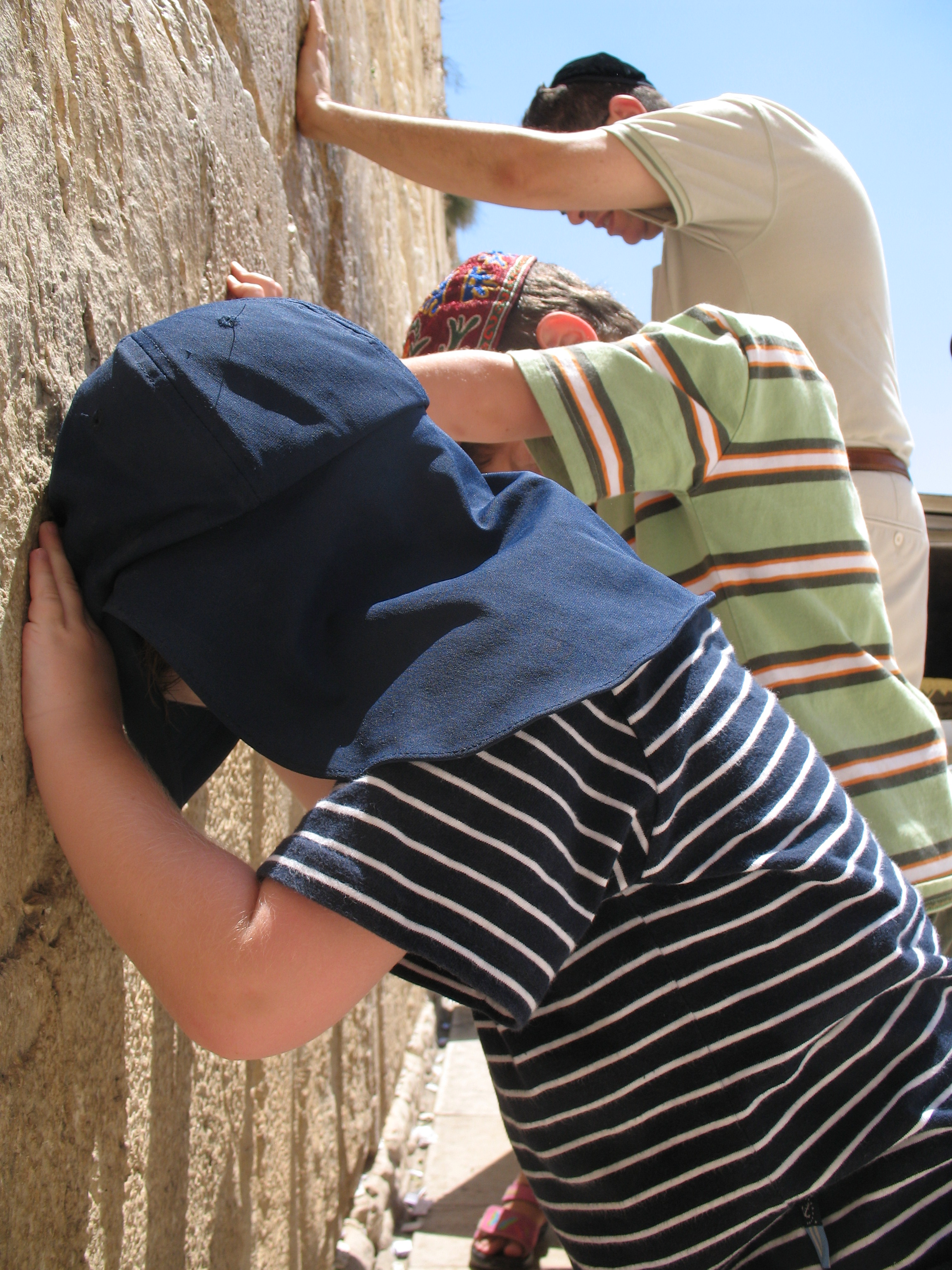
IMG_2052
Young and Old pray at the Kotel

Non-Orthodox Jews “Don’t Care”

The Jewish Week, a popular weekly newspaper for Jews in the metropolitan New York City area, published a piece called “Mourning the Temples’ Losses” on July 24, 2015. The article was written about the holiday of Tisha b’Av, the ninth day of the Hebrew month of Av, which is when tradition states that each of the two Jewish Temples were destroyed.  The article claims that the holiday has become only meaningful to Orthodox Jews, and for “secular Jews, ‘Tisha b’Av seems a vestigial organ,’ writes Don Futterman, program director in Israel for the Moriah Fund, wrote in Haaretz [a left-wing Israeli paper].” 

The secular anti-Orthodox newspaper quoted a left-wing charity in Israel which describes itself as “Promoting Civil Rights, Social Justice and Democracy in Israel and “Protecting and advancing human rights” which it feels it can achieve by funding movies questioning Israel such as “Breaking the Silence” and the anti-Israel 972 magazine.  These are indeed the views of many secular and liberal Israelis who feel that Judaism has evolved from Temple service to prayer, and from prayer to “social justice”. Together with such evolution was an abandonment of historic places and forms of worship to a modern emphasis only on people.  Those “vestigial organs” are there as part of history, but serve no function (and can and should be removed if they prove dangerous to the body as a whole).

Orthodox Jews “Don’t Know”

The Jewish Week continued that “for many Orthodox Israelis, the center of their Tisha b’Av observance is the plaza of the Western Wall, the last remnant of the Second Temple.” The statement repeats an often repeated falsehood about the nature of the Western Wall. The Temples were completely destroyed and no walls of the Temples stand today. Aish.com, which claims to be “the leading Jewish content website” posts on its website that “The Western Wall is a surviving remnant of the Temple Mount in Jerusalem,”  .

The Kotel is the western wall of the TEMPLE MOUNT, not of the Temple.  The Temple Mount was built by King Herod between 19BCE and 63CE to extend the size of the platform southward to both enable more people and traffic flow to the Second Temple. As the Temple was built atop a hill, extending the platform at the same height as the Temple required “filling in” the slopes of the hill.  The Kotel is the western wall of that supporting structure.

The Kotel gained significance in Judaism (say compared to the southern Temple Mount wall which is similarly a retaining wall), around the year 1550.  Prior to that year, many Jews visited and prayed on the Temple Mount itself including Rabbi Menachem Meiri (1249-1316) and Rabbi David ben Shlomo Ibn Zimra, (known as the Radbaz, 1479–1573), the Chief Rabbi of Jerusalem.  However, around 1550, while Ottoman leader Suleiman I made various structural improvements to the city of Jerusalem, he set aside the Western Wall area as a designated area for the Jews to pray.

After the 1967 Six Day War, Israel reunited Jerusalem including the Old City, the Temple Mount and the Kotel. After 18 years of being banned from the city by the Jordanians (1949-67), Israelis celebrated their return to the Old City.  To maintain calm after the war with the Muslim world, Israel handed administrative control of the Temple Mount to the Islamic Waqf. Israel then demolished the Mughrabi Quarter which abutted the Kotel to create the Western Wall Plaza that many know today. This plaza enables thousands of Jews to visit the Kotel at one time.

DSC_0087
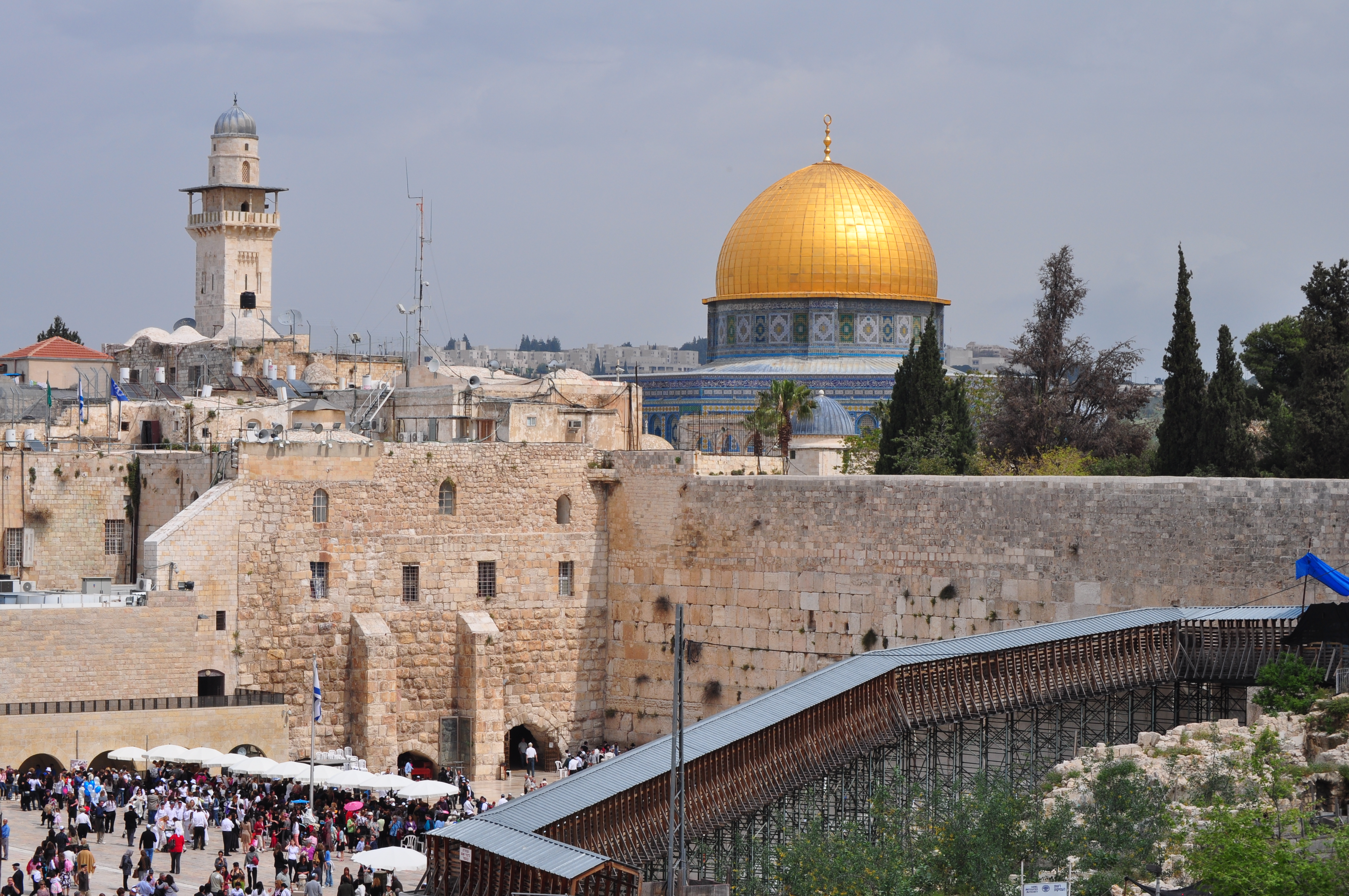
The Kotel with the Dome of the Rock,
location of the Jewish Temples

Tisha b’Av

Every year the Jews mark a day on the calendar to remember the destruction of the Temples. Over time, the Tisha b’Av holiday incorporated other tragic events such as the expulsion of 200,000 Jews from Spain in 1492.  Perhaps today Jews should also mourn a newer tragedy in their history: their apathy and ignorance.


Related First.One.Through articles:

The United Nations and Holy Sites in the Holy Land

Joint Prayer: The Cave of the Patriarchs and the Temple Mount

Tolerance at the Temple Mount

The Waqf and the Temple Mount

Subscribe YouTube channel: FirstOneThrough

Join Facebook group: FirstOne Through  Israel Analysis


The Waqf and the Temple Mount

Summary: According to Muslims, the Temple Mount is held in “trusteeship” by the Islamic Waqf, which assures its use and access as a mosque. The role of the Waqf has nothing to do with sovereignty of the land on which it resides.

The most sensitive issue of the Israel-Arab conflict is considered to be the Temple Mount in Jerusalem.

TEMPLE MOUNT

The Temple Mount is a 35 acre platform that held the second Jewish Temple from around 515CE to 70CE. Herod extended the platform on which the Temple sat southward to enable the greater flow of the thousands of Jews that came to the Temple to perform their rituals. The platform extension project ran from 19BCE to 63CE and Jews enjoyed the benefit of his work until the Romans destroyed the Temple in 70CE.

10857261_10153336968548706_7334281522188334026_o
The Old City of Jerusalem, including Jewish Quarter and Temple Mount

The area is considered sacred to Muslims as they believe Mohammed had a night journey from Saudi Arabia on a flying horse to that location before ascending to heaven. When Arabs invaded Jerusalem in 627CE, they built the al Aqsa Mosque on the southern edge of Temple Mount (completed in 705CE and rebuilt in 1033) to commemorate the importance of the location. The other structures on the Temple Mount include the Dome of the Rock, the Dome of the Chain, the Dome of the Prophet and various other structures which are NOT mosques, but shrines.

Jews had access and were able to pray on the Temple Mount until around the year 1550, when Suleiman I began a series of “improvements” to Jerusalem. He ordered the rebuilding of the city walls and moved the Jews off of the mount to an area now referred to as the “Kotel” or “Wailing Wall” or “Western Wall”, a sliver of the western retaining wall built by Herod. Since that time, prayer on the Mount has been restricted only for Muslim use.

MODERN HISTORY

Five Arab armies attacked Israel at its founding in 1948. At the end of the war in 1949, Jerusalem became divided with the western half (almost all completely established since the 1850s) under Israeli sovereignty, and the eastern half (including the Old City dating back 4000 years) under Jordanian sovereignty (which was not recognized by the United Nations). The Jordanians evicted all of the Jews and barred their reentry, even to visit their holy sites, counter to the Fourth Geneva Convention.

In 1967, the Jordanians again attacked Israel. They lost the eastern half of Jerusalem and all of Judea and Samaria, which they had annexed in 1950. Israel reunified the city and made clear that people of all religions – not just Jews – would have access and rights to their holy places.  Non-Muslims were once again allowed onto the platform, and Israel gave administrative oversight of the Temple Mount compound to the Jordanian Waqf. Israel annexed the area and the rest of eastern Jerusalem in a move not recognized globally.

In 1988, Jordan gave up all claims to lands it lost to Israel in the 1967 war, and signed a peace treaty with Israel in 1994. In that peace agreement, several key clauses were added to address Jerusalem, Article 9:

  • Each Party will provide freedom of access to places of religious and historical significance.
  • In this regard, in accordance with the Washington Declaration, Israel respects the present special role of the Hashemite Kingdom of Jordan in Muslim Holy shrines in Jerusalem. When negotiations on the permanent status will take place, Israel will give high priority to the Jordanian historic role in these shrines.
  • The Parties will act together to promote interfaith relations among the three monotheistic religions, with the aim of working towards religious understanding, moral commitment, freedom of religious worship, and tolerance and peace.

10383720_10153336970463706_7100356438545362102_o
Jews Praying at the Kotel, 2015

WAQF

Islam allows Muslims to place property (land or any object) into a “Waqf”. By doing so, the item comes under the trusteeship of the party specified in the declaration. In the case of the al Aqsa Mosque, the building is considered to be for the public use of all Muslims under the administration of the Jordanian Waqf.

When the al Aqsa mosque was taken over by Crusaders in the 12th century, the place did not lose its special status for Muslims. As stated in Issue 2697: ““If the Waqfed property is ruined, its position as Waqf is not affected, except when the Waqf is of a special nature, and that special feature ceases to exist. For example, if a person endows a garden and the garden is ruined, the Waqf becomes void and the garden reverts to the heirs of the person.”

Properties or entities like the Old City of Jerusalem or the Temple Mount itself can be subdivided according to Islam. As written in Issue 2698: “If one part of a property has been waqfed and the other part is not, and the property is undivided, the Mujtahid, or the trustee of the Waqf, or the beneficiaries can divide the property and separate the Waqf part in consultation with the experts.”

As described above, the Jordanian Waqf took control of the Temple Mount in 1949 and Israel has continued to let the Waqf administer the site. The Jordanian Waqf now employs 500 people to run the mosque. It does this, while Israel maintains all security controls and runs it as part and parcel of Israel.

It would appear that the actions of 1967, 1988 and 1994 laid the groundwork for a sharing of the Temple Mount between Jews and Muslims again. However, it has continued to be a struggle.

 POLITICS and PROPAGANDA

Over the last few years, the Waqf has become more politicized, anti-Jewish and anti-Israel, as it was decades ago. Public statements from the Waqf:

  • Deny Jewish history at the Temple Mount
  • Attempt to deny Jewish rights of access
  • Deny Jewish rights to prayer (agreed to by the Israeli government)
  • Deny sovereignty of the Jewish State and Jerusalem municipality (agreed by many countries in the United Nations)

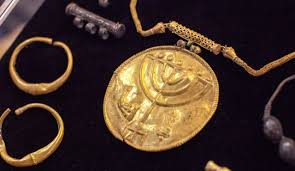
Consider a recent discovery of ancient Judaica near the Temple Mount. The Waqf issued a statement that the findings were “an attempt to support Israeli claims about Jewish rights in the holy city and to impose Israeli sovereignty on the occupied holy compound through the use of fake evidence….An immediate Arab and Muslim campaign is needed to stop the Israeli attempts to Judaise the holy city of Jerusalem,”

temple mt find
Discovery of Jewish artifacts at base of Temple Mount
dating to period before creation of Islam

It is interesting that the Waqf would make a claim of “Judaising” the city of Jerusalem which has had a Jewish majority for 150 years. It was also this same Jordanian Waqf that participated in expelling Jews from the Old City of Jerusalem and barring their entry from 1949-1967.

PEACE ON THE TEMPLE MOUNT

Israel’s perspective: Israel has sought a peaceful situation on the Temple Mount from the very beginning of reunifying Jerusalem. In 1967, Moshe Dayan announced: “To our Arab neighbors we extend, especially at this hour, the hand of peace. To members of the other religions, Christians and Muslims, I hereby promise faithfully that their full freedom and all their religious rights will be preserved. We did not come to Jerusalem to conquer the Holy Places of others.”

The declaration was followed by the establishment of the Protection of Holy Places Law which ensured the rights of all religions to pray at their holy sites.

Today, in an effort to appease the extremist views of the Waqf, radical Palestinians and the Jordanian government itself which threated to break its peace treaty with Israel, the Israeli government has continued to enforce a ban on Jewish prayer on the Mount.

Muslims’ Perspective: Suleiman pushed the Jews off of the Temple Mount in 1550 and Jordanian Arabs expelled the Jews from the entire Old City in 1949. Muslims and Arabs would clearly prefer that there be no Jews in Jerusalem.

However, according to Islam, there is no conflict with the Temple Mount being completely under Israeli sovereignty as detailed above.

According to the Peace Treaty between Israel and Jordan, the Temple Mount (outside of al Aqsa Mosque) should permit non-Mulsim prayer, despite Jordan’s recent protests.

Israel has continued to extend its full hand to share the Temple Mount.  Meanwhile, the Arab world took initial steps some decades ago to recognize Jewish history and rights which do not conflict with Islamic law.  Regrettably, recent history has witnessed a more hostile Arab approach.

Perhaps the future will witness peace on the Temple Mount with full access and rights for Jews at their holiest location.


Sources:

Waqf rules: http://www.al-islam.org/islamic-laws-ayatullah-ali-al-husayni-al-sistani/rules-regarding-waqf

Noble Sanctuary: http://www.noblesanctuary.com/AQSAMosque.html

Palestinian women fight Jews on Temple Mount: http://www.nytimes.com/2015/04/17/world/middleeast/palestinian-women-join-effort-to-keep-jews-from-contested-holy-site.html

Related First One Through articles:

Tolerance at the Temple Mount

Sharing the Temple Mount like the Cave of Patriarchs

Five holy sites in the holy land

Palestinians are “desperate”… but for what?

Palestinian Arabs control of Jerusalem for 0.5% of its history 

Divided Cities and Capitals

Names and Narrative: The West Bank / Judea and Samaria

The New York Times has taken more concerted efforts to balance the narrative between Muslims and Jews regarding the holy city and sites in Jerusalem. It has not taken such efforts elsewhere where it only uses an Arab narrative.

JERUSALEM

The holiest site in Judaism is “The Temple Mount” in Jerusalem, due to the fact that it was the location of Judaism’s two temples which existed from roughly 954BCE to 70CE. The Jewish King Herod built the Temple Mount platform specifically for Jewish use to ease access and flow to the Second Temple. To this day, it continues to be the direction of all Jewish prayer.

In Islam, that holy site is called the “Noble Sanctuary”, or “Bayt al-Maqdes” or “Al-Haram al-Sharif”. It is Islam’s third holiest site after Mecca and Medina, both located in Saudi Arabia. The Noble Sanctuary holds the Al Aqsa Mosque and the shrine known as the Dome of the Rock.

Historically, the New York Times would reference the names that both religions ascribed to the holy site, typically with the Jewish name first (the Temple Mount), and later in the article, it would use the Islamic name (Noble Sanctuary). More recently, the Times would use both names in the same sentence, and occasionally use the Islamic name first, followed by the Jewish name.

JUDEA AND SAMARIA

However, when it comes to other sites in the region with different names from the two peoples, the Times excludes the Israeli terminology: specifically, “Judea and Samaria”. For such region, the Times will only use the term “West Bank”, except if an Israeli is quoted using the name Judea and Samaria.

Interestingly, the West Bank never existed as an entity until 1949, and was never even referred to by the United Nations Security Council until 1953. In comparison, Judea and Samaria, which cover more area than just the West Bank, have existed for thousands of years.

The “West Bank” came into existence after five Arab armies attacked Israel in 1948. The armistice lines established in 1949 at the end of the war with Jordan became known as the “Green Line” as the line was drawn in green on the maps. The haphazard demarcation did not follow any historic, political or geographic contours, but was simply where the warring parties stopped fighting. The area east of the green line eventually became known as the West Bank.

In the years following the 1948 Arab attack on Israel, every United Nations Security Council (UNSC) Resolution regarding the “Palestine Question”, never mentioned Palestinians as a discrete people or the “West Bank” and Gaza as entities. Each resolution referred to the various parties in the conflict being Israel, Syria, Jordan and Egypt. The term “west bank (in lower case) of the Jordan” only showed up for the first time in 1953.

The term “West Bank” is an Arab artifice and highlights the short, violent and illegal Arab rule of the area:

  • It was achieved in an offensive war to destroy Israel
  • The duration of Arab rule only lasted for 18 years 1949-1967
  • Arab rule of the West Bank was never internationally approved (the UNSC never voted on the April 1950 Jordanian annexation of the area)
  • Was administered counter to the Fourth Geneva Convention (the Jordanians and Palestinians deported all of the Jews out of the territory)

The exclusive use of the term “West Bank” gives a false impression that the territory has a long history of Palestinian Arab rule. Further, in never using the term “Judea and Samaria” for the region, the UN, the New York Times and others, distance Jews and Israelis from lands that they lived in for thousands of years.

As the New York Times and other publications now give equal weight to “the Temple Mount” and “Noble Sanctuary”, they should do the same for “West Bank” and “Judea and Samaria”. Alternatively, it could use neutral nomenclature such as EGL- East of the Green Line.

judeasamaria


Source:

2014 NYTimes Noble Sanctuary first, then Temple Mount (11/19/14): http://www.nytimes.com/2014/11/19/opinion/horror-in-israel.html

2014 NY Times mentioning Temple Mount and Noble Sanctuary at the same time (10/31/14): http://www.nytimes.com/2014/10/31/world/middleeast/israel-palestinians-jerusalem-temple-mount-al-aksa.html

(11/7/14): http://www.nytimes.com/2014/11/07/world/middleeast/israel-jordan-jerusalem-al-aqsa-temple-mount.html

(11/23/14): http://www.nytimes.com/2014/11/23/world/middleeast/mistrust-threatens-delicate-balance-at-a-sacred-site-in-jerusalem-.html

Only calling it the “Al Aqsa compound” and not the “Temple Mount” (9/17/14): http://www.nytimes.com/2014/09/18/world/middleeast/unrest-by-palestinians-surges-in-a-jerusalem-neighborhood.html?_r=0

2013 NYTimes mentions Temple Mount and only later Noble Sanctuary (10/15/13): http://www.nytimes.com/2013/10/15/world/middleeast/ten-jewish-men-arrested-at-temple-mount.html

(9/22/13): http://www.nytimes.com/2013/09/22/world/middleeast/jews-challenge-rules-to-claim-heart-of-jerusalem.html?pagewanted=all

2009 NY Times only mentions Temple Mount (10/26/09): http://www.nytimes.com/2009/10/26/world/middleeast/26mideast.html

UN mentioning “west bank of Jordan” for the first time in 1953: http://www.un.org/en/ga/search/view_doc.asp?symbol=S/RES/101%281953%29


Related FirstOneThrough articles:

The Green Line

The EU’s Choice of Labels: “Made in West Bank” and “Anti-Semite”

Nicholas Kristof’s “Arab Land”

The United Nations and Holy Sites in the Holy Land

A Review of Five Sacred Sites

The United Nations is inconsistent regarding its position on the “character”, “access” and “rights” of holy sites in the Holy Land across the Green Line.

In 2010, UNESCO published a paper highly critical of Israel regarding its treatment of two holy places in Judea and Samaria/the West Bank: the Tomb of the Patriarchs in Hebron and the Tomb of Rachel in Bethlehem. The statements were a complete inversion of the truth:

  • “Since Israel’s occupation, the Israeli Government has attempted to highlight the Jewish character of archaeological and heritage sites in the occupied Palestinian territory, while erasing or neglecting the universal character of these heritage sites and denying access to all people of faith.
  • “As part of the illegal settlement enterprise, the Israeli authorities also exploit Palestinian heritage sites for financial and political gains. Under the Netanyahu administration, Israel has publicly begun to use these sacred and universal sites to provoke unnecessary religious conflict by promoting control and access on the exclusive basis of one faith while denying the rights and views of other faiths.”          UNESCO PARIS, 19 March 2010

TOMB OF THE PATRIARCHS (HEBRON)

As a point of reference (as detailed in the FirstOneThrough article) almost all of the Jewish forefathers and foremothers are buried at the tomb. As such, it is the second holiest site in Judaism (after the Temple Mount in Jerusalem). Biblical characters Ishmael and Esav (forefathers of the Arabs) are not attributed to this burial site.

The tomb was a destination for Jewish pilgrims since its purchase by Abraham 3700 years ago, and for the following 2900 years. Roughly 800 years ago, Muslims took over Hebron and converted the tomb into a mosque. The Muslims forbade Jews from entering the area, and even approaching beyond the seventh step of the platform. That changed when the Israelis took over the site after the Jordanians and Palestinians attacked Israel and lost the West Bank in 1967.

  • It was the Muslims that “erased and neglected the universal character” of the site
  • It was the Muslims that ”denied access to all people of faith
  • And It was the Jews that opened the Tomb for both Muslim and Jewish prayer

THE TOMB OF RACHEL (BETHLEHEM)

As the burial site of one of Judaism’s foremothers, the tomb of Rachel is considered the third holiest site in Judaism (similar to Al Aqsa Mosque in Jerusalem for Muslims).

The Crusaders built a small covering for the gravesite in the 1200s and around 1517, the Ottomans denied non-Muslim prayer when they took over control of Bethlehem. In 1615, Mohammed, Pasha of Jerusalem transferred exclusive use of the tomb to Jews, but the site fell into disrepair. In 1841, Jewish philanthropist and traveler, Sir Moses Montefiore was given the keys to the tomb and permission to build a larger structure for pilgrims.

Over the years, the area around the tomb became more densely populated. As Bethlehem was only 5 kilometers south of Jerusalem, the growth of both cities created a greater metropolitan area. The United Nations 1947 partition plan recommended that this Greater Jerusalem / Greater Bethlehem area become a single “Holy Basin” under international control, being neither Israeli nor Palestinian. While accepted by the Israelis, the Palestinians rejected the proposal.

In 1948, five Arab armies attacked Israel and Jordan illegally annexed Judea and Samaria, including Bethlehem. In 1954, the Jordanians gave Palestinian Arabs citizenship but specifically excluded citizenship for any Jews. After 333 years, the third holiest site of Judaism became off-limits to all Israelis.

Israelis took control of the area after the defeat of the Jordanians (and Palestinians) in 1967, and opened the tomb to Jewish worship once again.

In 1995, as part of the Oslo Agreements, Israel handed over control of half of the “Holy Basin” – Bethlehem – to the Palestinian Authority, under the condition that Jews be able to freely access and pray at the tomb. With that handover, the Tomb of Rachel fell under Palestinian Authority.

During the Second Intifada in 2002, with almost daily killings of Jews by Arabs, the Israeli government built a security barrier through parts of the West Bank. In 2005, a wall was built around the Tomb of Rachel to protect it from Arab assault.

  • The site is not even considered sacred to Islam, yet for almost 100 years, Muslims denied the rights of Jews to pray at the tomb
  • It was Ottomans of centuries ago who gave the Tomb of Rachel back to Jews
  • Modern Jordanians and Palestinians denied citizenship and access to the tomb for Jews
  • It was Israel that reopened access and rights for Jews at the tomb
  • It was Israel that agreed to give control of the “Holy Basin” to the U.N. in 1947
  • It was Israel that agreed to compromise and divided half of the “Holy Basin”, handing control of the city to the Palestinians in 1995

There are other examples of the United Nations condemning Israel for opening up access to holy sites, while ignoring the denial of access and destruction that Arabs caused to holy places.

JOSEPH’S TOMB (NABLUS/SHECHEM)

The Tomb of Joseph, the biblical son of Jacob and Rachel, is found in Nablus (Shechem). After the 1967 war, Israel gained access to the site once more and built a small seminary nearby in the 1980s.

Israel handed control of Nablus to the Palestinians in 1995, but retained control of Joseph’s Tomb. However, during the Intifada in October 2000, Palestinians ransacked the tomb and killed an Israeli soldier and Rabbi Hillel Lieberman who came to protect the site. His body was found in a ditch riddled with bullets.

Israel agreed to give temporary control of the tomb to the Palestinians to quiet the situation and to allow the Palestinians to repair the tomb. However, the site was set on fire and further ransacked. Later, the Associated Press reported that “the dome of the tomb was painted green and bulldozers were seen clearing the surrounding area,” as the Palestinian Arabs sought to transform the biblical Joseph’s resting place into a Moslem holy site.

Israeli president Shimon Peres remarked that the “Palestinians made a terrible mistake in Joseph’s Tomb. They pulled the rug out from under their feet regarding their demand for control of the holy places, by showing that they don’t know how to preserve and respect them.”

  • It was Arabs that vandalized a Jewish site
  • It was Palestinians that sought to change the character of Joseph’s tomb
  • It was Israel that handed temporary control of the site to Palestinians to try to quell violence

What was the United Nations response to ransacking of a Jewish holy place? Of attempting to “change the character” of the Jewish site? Silence. No comment nor condemnation.

What was the UN response to a visit to the Temple Mount by Israeli Prime Minister Ariel Sharon two weeks earlier? Condemnation.

  • Deplores the provocation carried out at Al-Haram Al-Sharif in Jerusalem on 28 September 2000”

The UN Secretary General condemned the Israeli prime minister for exercising his “right” for “accessing” Judaism’s holiest site during normal visiting hours.

THE HURVA SYNAGOGUE (JERUSALEM)

Jews began construction of a significant synagogue in the Old City of Jerusalem in 1694 called the Hurva Synagogue which was destroyed by Muslims in 1721. Groundbreaking for rebuilding the shul happened in 1855, and it was rededicated on completion in 1864.

In 1949, the Jordanian army attacked the Jews in Jerusalem and blew up the Hurva Synagogue and 57 other synagogues in the Old City. They expelled the 2000 Jewish residents and forbade them from returning.

After the Jordanians (and Palestinians) attacked Israel again in 1967, Jews retook the Old City but did not seek to rebuild the Hurva right away. In 2010, Israel finally rebuilt and reopened the synagogue before the Passover holiday. There was condemnation from around the world.

Fatah official Khatem Abd al-Khader called the reopening a “provocation” and warned that Israel “was playing with fire”. Khaled Meshaal of Hamas said the opening was a “declaration of war” and “a falsification of history and Jerusalem’s religious and historic monuments.” The Jordanian government (that intentionally blew up the synagogue) “categorically rejects the rededication of Hurva Synagogue.

These reactions were about a synagogue that had absolutely no connection to Islam.

  • Arabs destroyed the synagogue
  • The Jordanian and Palestinian Arabs denied access to the Old City and site
  • Palestinians threatened violence over rebuilding a synagogue they destroyed
  • Palestinian leadership incited a riot by falsely stating that Jews were attempting to destroy the Al Aqsa mosque

How did the United Nations respond to the reopening of the Hurva Synagogue?

  • Ban Ki Moon March 2010: “I have spoken out and have been diplomatically active whenever other provocations have taken place – including the decisions on holy sites in Hebron and Bethlehem, actions in places like Silwan and Sheikh Jarrah and tensions surrounding the Al-Aqsa Mosque.

THE TEMPLE MOUNT (JERUSALEM)

The first Jewish Temple was built by King Solomon around the year 954BCE. At that time, there was no large platform that we know of today. That Temple was destroyed around the year 586BCE. A second Temple was built around 515BCE and destroyed in 70CE.

Before the Second Temple was destroyed, King Herod did major renovations in Jerusalem, including extending and building a large platform on which the Second Temple sat (from 19BCE until 63CE). Today’s “Western Wall” or “Wailing Wall” is the western retaining wall of that platform extension. It is also the area where Muslims built the Al Aqsa mosque in 705CE. That original mosque was destroyed several times, and the silver domed mosque of Al Aqsa that sits on the southern-most edge of the Temple Mount that we see today, was completed in 1033CE.

Christian crusaders came to Jerusalem in 1099, slaughtered the Jewish and Muslim inhabitants and took over the Temple Mount. Crusaders and Muslims fought over control of Jerusalem on-and-off through the year 1260, with the Muslims ultimately prevailing.

With the Muslim victory, Jews began to move back to Jerusalem, and the first new permanent synagogue in Jerusalem was set up by Nachmanides (the Ramban) in 1267. Over the next centuries, several noted rabbis stated that it was the custom of Jews in Jerusalem to ascend the Temple Mount and pray there, including Rabbi Menachem Meiri (1249-1316) and Rabbi David ben Shlomo Ibn Zimra, (known as the Radbaz, 1479–1573), the Chief Rabbi of Jerusalem.

However, in 1550, Ottoman leader Suleiman I set aside the Western Wall area as a designated area for the Jews to pray. It would appear that from this date until 1949, non-Muslims could have access but were effectively barred from praying on the Temple Mount.

After the defeat of the Ottoman Empire in 1918, the local Arab population became very anxious about future control of the land, especially in light of the 1920 San Remo Conference and the 1922 British Mandate which specifically described ensuring a Jewish homeland in Palestine. Every “normal” action of prayer at the Western Wall was viewed by the Arabs as a change to the status quo, and as such, a “provocation” in which “Zionists” were taking over.

  • In 1925, a new prohibition against bringing chairs or benches to the Western Wall (in response to bringing chairs for the elderly and infirm)
  • In 1928, a new prohibition of erecting a screen (mechitza) between men and women for prayer (in response to putting one up on Yom Kippur) at the Western Wall

In 1929, Arabs rioted at the Western Wall, first burning prayer books and later calling for Jihad as they rampaged through the city killing dozens of Jews. They felt that Islamic authority at the Western Wall was being called into question as an initial step to the takeover of the Temple Mount.

In 1948, the Arab armies of Egypt, Lebanon, Syria, Jordan, and Iraq attacked Israel. At war’s end the following year, the city of Jerusalem became divided with the Jordanians occupying the Old City including the Temple Mount. After the Jordanians evicted all of the Jewish inhabitants, they banned any Jew from coming into the Old City and visiting the Western Wall and the Temple Mount.

During that war, in December 1948, the United Nations Resolution 194 again called for the “Holy Basin” to be under international jurisdiction and that all holy sites should be given free access, with a carve-out for historical practices of discrimination:

  • Resolves that the Holy Places – including Nazareth – religious buildings and sites in Palestine should be protected and free access to them assured, in accordance with existing rights and historical practice”
  • Resolves that, in view of its association with three world religions, the Jerusalem area, including the present municipality of Jerusalem plus the surrounding villages and towns, the most eastern of which shall be Abu Dis; the most southern, Bethlehem; the most western, Ein Karim (including also the built-up area of Motsa); and the most northern, Shu’fat, should be accorded special and separate treatment from the rest of Palestine and should be placed under effective United Nations control”

In 1967, in response to a preemptive Israeli attack on Egypt and Syria, Jordanian (and Palestinian) forces attacked Israel. The Israelis took the Old City of Jerusalem including the Temple Mount, but handed administrative control of the Mount to the Jordanian Waqf. The plaza in front of the Western Wall was expanded to enable thousands of Jews to pray at the site. Israel enshrined the protections of Holy Places in its Basic Laws in June 1967:

  • The Holy Places shall be protected from desecration and any other violation and from anything likely to violate the freedom of access of the members of the different religions to the places sacred to them or their feelings with regard to those places.”
  • “Whosoever does anything likely to violate the freedom of access of the members of the different religions to the places sacred to them or their feelings with regard to those places shall be liable to imprisonment for a term of five years.”

Israel opened up the Temple Mount for non-Muslim visitors during specified visiting hours. However, non-Muslims were still prohibited from praying on the Mount according to the wishes of the Jordanian Waqf.

Many Israelis were not happy with maintaining the discriminatory policy and lobbied the Israeli government to make changes. One such activist, Yehuda Glick, was shot repeatedly by two Palestinians for those efforts in October 2014.

In response to the shooting of Glick and the killing of the two Palestinian Arabs who shot him, the United Nations Secretary General Ban Ki Moon discussed his displeasure with Israelis on the Temple Mount:

  • As you mentioned this holy site in Jerusalem and as I also said this morning, I am deeply concerned by repeated provocations at the holy sites in Jerusalem. These only inflame tensions and must stop.”
  • On November 24, 2014: “Incitement and provocative acts related to the holy sites are fanning the flames of conflict far beyond the holy city.”

While the United Nations claims to care about keeping the universal access and rights to people of all faiths, it condemns the only party – Israel – which practices those values and even enshrines those values into the Basic Laws of the country.  Further, the U.N. ignores the actions of the Arabs which deliberately have erased the Jewish character and rights of Jews to pray at their holiest sites.

For 800 years, from the Arab conquest of Jerusalem and the introduction of Islam to the Holy Land until 1550, Islamic and Jewish prayer both occurred on the Temple Mount.

It is not only time for there to be open access and rights for Jews, but it is time for the United Nations to acknowledge the party that provides access and rights, and the parties that do not.


Sources:

UNESCO claim that Israel is Judaizing the Cave of the Patriarchs and The Tomb of Rachel (2010). http://unispal.un.org/UNISPAL.NSF/0/8F8CBDCA74D7D20385257721007157CF

FirstOneThrough article on Tomb of Patriarchs: https://firstonethrough.wordpress.com/2014/11/17/joint-prayer-the-cave-of-the-patriarchs-and-the-temple-mount/

History of Rachel’s Tomb: http://www.rachelstomb.org/capsulehistory.html

Bethlehem changing hands: http://www.jpost.com/Features/In-Thespotlight/This-Week-In-History-Bethlehem-changes-hands

Bethlehem history: http://www.zionism-israel.com/dic/Rachels_Tomb.htm

Article on Tomb of Rachel: http://www.timesofisrael.com/on-obamas-path-to-bethlehem-a-harshly-fortified-shrine/

Jordanian Nationality Law barring citizenship to Jews (Article 3): “The following shall be deemed to be Jordanian nationals:… Any person who, not being Jewish,…http://www.refworld.org/docid/3ae6b4ea13.html

Jordan (and Palestinians attack Israel in 1967):

Tomb of Joseph: http://www.jewishvirtuallibrary.org/jsource/Judaism/joetomb.html

Hillel Lieberman: http://www.shechem.org/elon-moreh/enghillel.html

Ascending to the Temple Mount: http://www.google.com/url?sa=t&rct=j&q=&esrc=s&source=web&cd=3&ved=0CC4QFjAC&url=http%3A%2F%2Fwww.hakirah.org%2FVol%252016%2520Loewenberg.pdf&ei=Ldd1VO_lIO_HsQSxxILoAg&usg=AFQjCNFI6ujLjX2fEw6kPd6QNgTqQoN57A&sig2=JhXKJuu8BPvY_Oint80UKA

1929 riots: http://www.google.com/url?sa=t&rct=j&q=&esrc=s&source=web&cd=8&ved=0CFMQFjAH&url=http%3A%2F%2Fisites.harvard.edu%2Ffs%2Fdocs%2Ficb.topic1232564.files%2FSela_1929.pdf&ei=ud11VL2XLKaMsQS34ILIBw&usg=AFQjCNFrq28tbKf1Uns0HD-GAFYPBo7vQg&sig2=aUGriieF5AxIpKxwTtbApQ

UN Resolution 194: http://unispal.un.org/UNISPAL.NSF/0/C758572B78D1CD0085256BCF0077E51A

Israel Law on Protection of Holy Places (1967): http://www.bu.edu/mzank/Jerusalem/tx/lawofholyplaces1967.htm

Yehuda Glick shooting: http://www.jpost.com/Arab-Israeli-Conflict/Report-Suspect-in-right-wing-activist-Yehuda-Glicks-shooting-killed-by-police-380238

UN Security Council Resolution 1322 condemning Sharon visit to the Temple Mount: http://unispal.un.org/UNISPAL.NSF/0/22F8A95E5C0579AF052569720007921E

UNESCO 2013: http://www.haaretz.com/blogs/diplomania/israel-thwarts-unesco-resolution-condemning-its-temple-mount-activities.premium-1.470609

Ban Ki Moon on Temple Mount: http://www.theguardian.com/world/2014/oct/13/un-general-secretary-ban-ki-moon-criticises-israel-settlement-building

http://www.un.org/apps/news/infocus/sgspeeches/statments_full.asp?statID=2444#.VHR3U_8tCUk

http://www.un.org/apps/news/infocus/sgspeeches/statments_full.asp?statID=767#.VHR4X_8tCUk
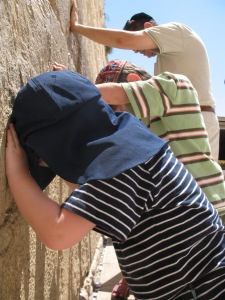
IMG_2052

Joint Prayer: The Cave of the Patriarchs and the Temple Mount

This weekend, thousands of Jews from around Israel and other parts of the world came to the Cave of the Patriarchs in the city of Hebron. The annual tradition of visiting the city on this weekend goes back many years, as it coincides with the reading in the Torah of Abraham buying land to bury his wife Sarah, the “first mother” of the Jewish people.

The Cave of the Patriarchs is considered the burial place of almost all of the “founding fathers and mothers” of Judaism 3700 years ago: Abraham; Isaac; Jacob; Sarah; Rebecca and Leah. As such, it is considered the second most holy site in Judaism (on par with Medina for Muslims).

Roughly 2,000 years ago, a monumental structure was built on top of the cave, attributed to the Jewish King Herod. Over the following centuries, many people conquered the city of Hebron. About 800 years ago, the Muslim Mamlukes took over the city and declared the Tomb of the Patriarchs to be a mosque and forbade Jews from coming beyond the seventh step of the structure.

caveofpatriarchs
The Cave of Jewish Patriarchs in Hebron

When the Ottomans ruled Hebron from 1517 to 1917, there was relative peace between the Arabs and Jews in the city (even though the Jews were forbidden from entering their holy site). However, in 1929, Arabs rioted against their Jewish neighbors after incitement from the Grand Mufti in Jerusalem. During those few days in August, 67 Jews were killed, hundreds were injured, and the British (who then controlled the mandate of Palestine) forced all of the Jews to leave their city.

In 1967, in response to the Jordanian (and Palestinian) attack on Israel, Israel captured Judea and Samaria, including the city of Hebron. When Israel took control of their holy site, it opened the shrine for prayer for both Jews and Muslims. Today, there are discreet times set aside for each religion to use the site for prayer.


In 2014, the discussion about opening the Temple Mount in Jerusalem – Judaism’s holiest site – to non-Muslim prayer has again been raised due to the shooting of Jewish activist Yehuda Glick who fought for that basic right. The acting-President of the Palestinian Authority Mahmoud Abbas was outraged at the suggestion and described such approach as amounting to a “religious war“, as the al-Aqsa Mosque, which sits on the Temple Mount, is Islam’s third holiest site. While Glick and many other activists never suggested praying at or near the mosque, but on other parts of the 35 acre platform, the Israeli Prime Minister Benjamin Netanyahu nevertheless agreed to keep the status quo ban on Jewish prayer on the mount.

On the tenth anniversary of Yaser Arafat’s (fungus be upon him) death, Abbas stated: “The leaders of Israel are making a grave mistake by thinking that history can move backward and that they could impose facts on the ground by dividing the Aksa Mosque in time and space, as they did with the Ibrahimi Mosque [Cave of the Patriarchs] in Hebron.

In Hebron, Israeli action at the Cave of the Patriarchs opened the way for both Muslims and Jews to share holy sites in the holy land. The Temple Mount could similarly become a place of tolerance and prayer.


Sources:

Pilgrimage to Hebron: http://unitedwithisrael.org/thousands-flocked-to-hebron/

Cave of Patriarchs: http://www.jewishvirtuallibrary.org/jsource/Judaism/machpelah.html

1929 Hebron massacre: http://www.jewishvirtuallibrary.org/jsource/History/hebron29.html

Jordanian and Palestinian 1967 attack on Israel (from King of Jordan’s site): http://www.kinghussein.gov.jo/his_periods3.html

Abbas claim of religious war: http://www.theguardian.com/world/2014/nov/11/abbas-israel-jerusalem-holy-site

Palestinian Authority TV on call to “purify” Jerusalem: https://www.youtube.com/watch?v=T1gIetnpxH0

Abbas against any change in allowing Jews on Temple Mount: http://www.jpost.com/Arab-Israeli-Conflict/Jailed-Barghouti-to-Palestinians-Continue-armed-resistance-against-Israel-381454

FirstOneThrough article on tolerance at the Temple: https://firstonethrough.wordpress.com/2014/11/04/tolerance-at-the-temple/