The Israeli Peace Process versus the Palestinian Divorce Proceedings

Summary: The gap in resolving the long running Israel-Palestinian Question has to do with the goals of each party: the Israelis believe they have been engaged in a peace process between peoples while the Palestinians are negotiating a divorce settlement between countries.

Politicians and the media – both well-meaning and otherwise – have blamed various parties for the failures to resolve the Israeli-Palestinian conflict. When they are not directly pointing accusing fingers, they still use language which conveys their biases. A person needn’t look past the language used in discussions about Jewish homes beyond the Green Line/ 1949 Armistice Lines – the “settlements”.

“Settlements”

“Viability”: As detailed in “A Viable Palestinian State”, various parties have described the “settlements” as a hindrance to a viable Palestinian state. The statement is meant as a direct attack on Israel, and is absurd. If a Palestinian state cannot exist with a 5% Jewish population, then surely Israel cannot exist with a 20% Muslim population. Are the people that make such a comment looking for Israel to expel a million Israeli Arabs?

Similarly, if a viable Palestine is compromised because such new country would be only 15km across at a single point, surely Israel cannot exist in its current configuration with a 15km narrow corridor for a dozen kilometers. Are these politicians and media pundits suggesting that Israel must annex the entire spine of the land?

“Complication” and “Provocation”: Another sentiment that is expressed is that settlements “complicate the peace process.” As conveyed in June 2015 by the New York Times in an article called “Israel’s work on a West Bank Site Gives Rise to New Suspicion,” even existing homes purchased by private individuals (as opposed to new communities established by the Israeli government) hurt the peace process. The article described a man who purchased an abandoned building and surrounding property: “Leftist Israeli politicians and advocacy groups have reacted with alarm, suspecting a new settlement in the occupied West Bank [a NYT term] that would further complicate the peace process.

This statement is similar to the rebuke of the Obama administration to Jews buying and moving into homes they own in Silwan, in the eastern part of Jerusalem. As detailed in the FirstOneThrough article “Obama supports Anti-Semitic Palestinian Agenda of Jew-Free State,” the Obama administration condemned Jews for legally buying homes and becoming neighbors in an Arab neighborhood east of the Green Line, referring to such basic act of living as a provocation.

And therein lies the basic gap in understanding the actions, intentions and goals of the two sides.

20150610_080707
New York Times article quoting “leftists” that claim that individual Jews owning land east of the Green Line “complicates peace”

Israeli Peace Process

The primary stated goals of the negotiations were to get to a peace based on two states:

  • The peace agreements with Egypt and Jordan are vital. But they’re not enough. We must also find a way to forge a lasting peace with the Palestinians. Two years ago, I publicly committed to a solution of two states for two peoples: A Palestinian state alongside the Jewish state. I am willing to make painful compromises to achieve this historic peace. As the leader of Israel, it is my responsibility to lead my people to peace.” Israeli Prime Minister Benjamin Netanyahu May 2011
  • Our goal is two states, Israel and Palestine, living side by side in peace and security. The process is the one of direct negotiations to end the Israeli-Palestinian conflict and to resolve all the permanent status issues and end the occupation that began in 1967 under which Palestinians have suffered so much.” Prime Minister of the Palestinian National Authority Mahmoud Abbas June 2003

As part of making peace with Palestinian Arabs, Israel has stated it will enable a new state of Palestine to be created.  For their part, the Palestinian Arabs are interested in their new state to be self-governing and to not deal with Israeli Jews. Israel has focused on peace with the people; Palestinians have focused on separation of the people. Two states living side-by-side in peace is not the same as two people living side-by-side in peace.

A peace process is best established with various personal, commercial and governmental relationships and dealings. Such interactions would enable the parties to navigate ongoing thorny issues like water rights and security.  It would enable partnerships to develop tourism and the economy.

Israel understands the importance of establishing relationships with its Arab neighbors.  As soon as the country was founded in 1948, the country granted 160,000 non-Jews citizenship and extended an offer and desire for peace with the neighboring Arab countries.  When Israel annexed Jerusalem, it offered all of the people there citizenship.  As of 2015, non-Jews account for 25% of Israel and have full rights in the most liberal country in the region, and one of the most liberal in the world. In the 2015 Israeli election, the Arab party placed third among the dozen parties seeking seats in the Knesset.

Over the decades, Israel forged peace agreements with neighboring Arab countries Egypt and Jordan.  It has stated that it is ready to so with Palestinian Arabs and the other neighboring countries as well.

Palestinian Divorce Proceedings

When Israel captured the area east of the Green Line in 1967 after it was attacked by the Jordanian and Palestinian Arabs, it rescinded the Jordanian ban on Jews living in the area (from 1949-67).  Israel allowed Jews to live and establish themselves in the region once again where they bought existing houses next to Arabs, built new houses, and created new companies.

All of which, made the Palestinian Arabs angry.

The Palestinians do not want Jewish neighbors in a new state.  Acting President Abbas made very clear his intention when he declared “we will not see the presence of a single Israeli – soldier or civilian – on our lands.”

The Palestinians do not want any Jewish businesses in a new state.  Despite the extraordinary efforts that some companies like Sodastream went through to hire Palestinian Arabs in its plant east of the Green Line (EGL) to work alongside Israeli Arabs and Jews, Palestinians put pressure on the company to abandon the area – which it did. Palestinians promote a BDS (boycott, divestment and sanctions) of all businesses established by Jews in the EGL.

Palestinians think Jews have no rights to buy or live anywhere in the land. They think the entire region – including Israel – is Arab land and that Jews have no history in the region. One can often hear Abbas and other Palestinians refer to the “Judaization” of the land, as if the holy land never had Jews.

The Palestinians reject the legitimacy of Israel itself. While the Palestinians will acknowledge the fact that Israel exists and will negotiate with it, they do not view the existence of the Jewish state as legitimate. They consider Jews colonialists and Israel a foreign colonial enterprise.  As such, they will not recognize Israel as a Jewish State.

The Palestinians are not looking for peace with Israel, nor are they seeking peace with Jews. They view the presence of both in the entire holy land as illegitimate. Their goals are to completely separate themselves from Israel and Jews in their own state, and to reestablish a majority Arab presence inside of Israel. Within their new country, the Palestinians do not want a single Israeli person or business.  Inside of Israel, they want millions of Arabs that are second and third generation removed from Arabs that once lived in the land, to specifically move to Israel because they feel that such land is also Arab land which Jews took illegally.


That is why Jewish “settlements” east of the Green Line are inaccurately called obstacles to a “peace process.” Jewish homes and businesses east of the Green Line do NOT “complicate the peace process”, they complicate the divorce proceedings that the Palestinians desire. A Jewish presence can only be called a “provocation” to a people that want to be rid of Jews.

It is not inaccurate to state that Jewish homes in EGL complicate permanent status negotiations, but it is an inversion of the truth to claim that they hurt the “peace process.”


Related First One Through articles:

Nicholas Kristof’s “Arab Land”

Delivery of the Fictional Palestinian Keys

Names and Narrative: The West Bank / Judea and Samaria


The Legal Israeli Settlements

Many people have argued that it is illegal for Israelis to live beyond the 1949 Armistice Lines (east of the Green Line, EGL/Judea and Samaria/West Bank).  The question of “legitimacy” (not legality) has been repeated often by the USA’s Obama Administration.  Those comments are more harsh towards Israel than prior American administrations that simply viewed new settlements as “unhelpful” to a peace agreement between Israel and the Arab states.  Jimmy Carter was the only US president that actually called the settlements “illegal”.  Below is a review of the international laws that apply towards the settlements.

IMG_2002
Street sign in Judea and Samaria

Fourth Geneva Convention

Article 49 of the Fourth Geneva Convention deals with the treatment of “occupied territory“.  It is unclear whether it applies to territory obtained in both offensive and defensive wars, but this review will assume that the law stands in either case.

The majority of Article 49 is about the treatment of the inhabitants of the occupied territory and not about the “Occupying Power” transferring in its own population.  The opening paragraph:

“Individual or mass forcible transfers, as well as deportations of protected persons
from occupied territory to the territory of the Occupying Power or to that of any other country, occupied or not, are prohibited, regardless of their motive.”

This paragraph does not relate to Israelis living in EGL for several reasons:

  • The language is about people from the occupied territory, not to the occupied territory.  It underscores the flagrant illegal eviction of Jews from Judea and Samaria by the Jordanians in 1949.
  • As the Arabs living in EGL were not forcibly transferred to any country, Israel did nothing counter to this law.

The next paragraphs deal with exceptions to the main directive stated above for military reasons:

“Nevertheless, the Occupying Power may undertake total or partial evacuation of a given area if the security of the population or imperative military reasons so demand. Such evacuations may not involve the displacement of protected persons outside the bounds of the occupied territory except when for material reasons it is impossible to avoid such displacement. Persons thus evacuated shall be transferred back to their homes as soon as hostilities in the area in question have ceased.”

  • The law permits operations involving security.  This clause allows the building of the security barrier inside the West Bank that Israel erected in reaction to the Second Intifada, and relocation of people impacted to construct such barrier.

 “The Occupying Power undertaking such transfers or evacuations shall ensure, to the greatest practicable extent, that proper accommodation is provided to receive the protected persons, that the removals are effected in satisfactory conditions of hygiene, health, safety and nutrition, and that members of the same family are not separated. The Protecting Power shall be informed of any transfers and evacuations
as soon as they have taken place. The Occupying Power shall not detain protected persons in an area particularly exposed to the dangers of war unless the security of the population or imperative military reasons so demand.”

  • These paragraphs seek to protect people, even in the case of a necessary evacuation.  The only Arabs that Israel moved out of the West Bank were people who were arrested and therefore not relevant to this clause.

As seen above, almost the entirety of Article 49 of the Geneva Convention has to do with the local population- in this case, a theoretical transfer of Arabs out of EGL/Judea and Samaria/West Bank.  Only the last paragraph addresses the civilians of an “Occupying Power”.

 “The Occupying Power shall not deport or transfer parts of its own
civilian population
into the territory it occupies.”

  • Israelis moving and living in EGL/J&S do so of their own free will.  The government does not “deport or transfer its own civilians” to EGL.
  • The “territory” in question, Judea and Samaria, was settled by Jews long before the Jordanians occupied the area and evicted the Jews. As such, Jews were part of the indigenous population before being illegally evicted in 1949. Returning to the region is in keeping with Article 49’s goal above stating “Persons thus evacuated shall be transferred back to their homes as soon as hostilities in the area in question have ceased.
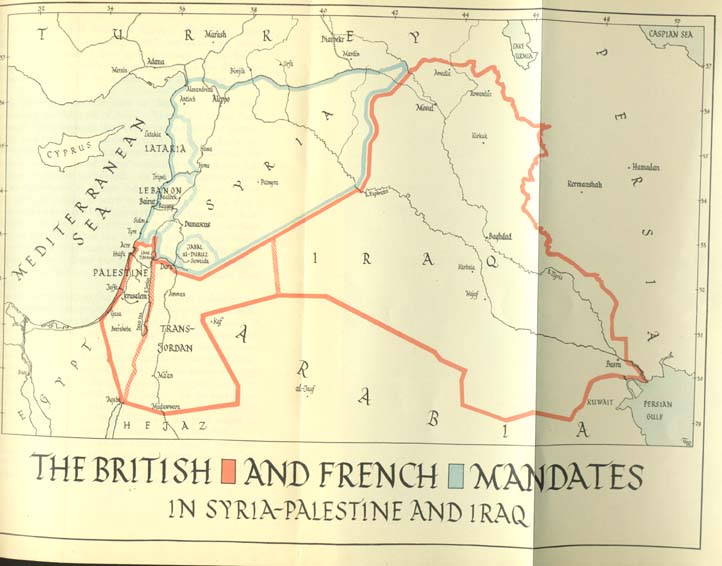
  • Additionally, this territory was never a distinct country, but part and parcel of the Mandate of Palestine which specifically called for “establishment in Palestine of a national home for the Jewish people.”  As such, Jews moving to Judea and Samaria is part of the ongoing provision established internationally in 1922.

The Hague Regulations

Another law that people contend relates to Israel’s administration of EGL/West Bank is Article 55 of the Hague Regulations:

 “Art. 55. The occupying State shall be regarded only as administrator and usufructuary of public buildings, real estate, forests, and agricultural estates belonging to the hostile State, and situated in the occupied country. It must safeguard the capital of these properties, and administer them in accordance with the rules of usufruct.”

This rule clearly affirms Israel’s role as administrator for public lands.  The Hague regulations – and this provision in particular – deal with situations that are temporary in nature, and are impractical for those that last for decades.  To wit, the Arab population in the West Bank has grown four times since 1967, in one of the largest population increases on the planet. New infrastructure was established to accommodate the growth in the region, and Israel authorized these new homes, roads and other infrastructure, thereby necessitating a change to public lands.

In terms of minimizing the changes to public lands, it is unclear whether the role of Israel is to maintain a status quo according to the laws of Jordan, which illegally seized and annexed the area, or to administer the region according to British laws which had an international mandate before the Jordanians took control.

  • The Jordanians took this area in an offensive war against Israel in 1948-9
  • The Jordanian annexation in 1950 was never recognized by the United Nations
  • The area in question was part of the internationally approved British Mandate of Palestine (from 1922-1948).

Therefore, to comply with Article 55 above, which rules were appropriate for Israel to maintain: the illegal occupying Jordanian laws of 1949-1967 or those accorded in international law in the British Mandate 1922-1948?

If the British laws regarding property were to be maintained, then those laws state that no person should be forbidden to live in any part of the entirety of the Mandate (including Gaza, Israel and the West Bank) on the basis of religion, per Article 15 of that 1922 Mandate:

“The Mandatory shall see that complete freedom of conscience and the free exercise of all forms of worship, subject only to the maintenance of public order and morals, are ensured to all. No discrimination of any kind shall be made between the inhabitants of Palestine on the ground of race, religion or language. No person shall be excluded from Palestine on the sole ground of his religious belief.”

As it relates to the use of public lands (which is the focus of Article 55 of the Hague Regulations), the British Mandate clearly states that public land is to be used for Jewish settlement:

“The Administration of Palestine, while ensuring that the rights and position of other sections of the population are not prejudiced, shall facilitate Jewish immigration under suitable conditions and shall encourage, in co-operation with the Jewish agency referred to in Article 4, close settlement by Jews on the land, including State lands and waste lands not required for public purposes.”

Administration under British law encouraged Jews to live throughout Judea and Samaria, including state lands, and it can therefore not be illegal for any Jew to live there.

The only possibility that Jews moving to and living in the West Bank could be considered illegal, was if Jordanian law was to be maintained in the area.  However, even if one were to assume that despite the Jordanian’s forcible seizure and illegal annexation of the area, that their laws should still be maintained, could any law possibly suggest that it be a requirement to maintain particular laws that were flagrant violations of the Geneva Convention such as the racist Jordanian laws that evicted and barred Jews from living in the land?

Even further, if Israeli actions of Jews moving to EGL/West Bank were somehow considered illegal (which is not the case), Article 3 of the Hague Resolution states that a “belligerent party which violates the provisions of the said Regulations shall, if the case demands, be liable to pay compensation,” so remedy would be a fine, not eviction of the Jews.

(Also note that Hague Regulation Article 40, specifically gave Israel the right to attack Jordan after Jordan broke the 1949 armistice agreement in 1967.)

United Nations Reinterpretation for Israel

Since 1967, the United Nations crafted various resolutions condemning Israel for a wide variety of perceived “sins” such as the infamous “Zionism is Racism” resolution in 1975.  Many resolutions have inverted the meaning of the Geneva Convention such as a UN Security Council Resolution in 1980 which “Deplor[es] the decision of the Government of Israel to officially support Israeli settlement in the Palestinian and other Arab territories occupied since 1967.”  It continued further:

“[A]ll measures taken by Israel to change the physical character, demographic composition, institutional structure or status of the Palestinian and other Arab territories occupied since 1967, including Jerusalem, or any part thereof, have
no legal validity and that Israel’s policy and practices of settling parts of its population and new immigrants in those territories constitute a flagrant violation of the
Fourth Geneva Convention relative to the Protection of Civilian Persons in Time of War and also constitute a serious obstruction to achieving a comprehensive,
just and lasting peace in the Middle East;”

Arguing that “new immigrants” (many of whom were actually returning residents from 1949) are a threat to the security of the existing population is xenophobia at its most extreme.  Arguing that is a “flagrant violation of the Fourth Geneva Convention” is disproved above.

Status of Jerusalem

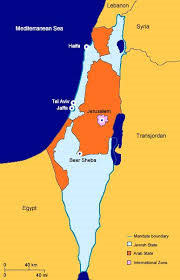
The inclusion of Jerusalem in the United Nations attacks on Israel is telling.  Greater Jerusalem and Greater Bethlehem were planned to be an international “Holy Basin” according to the UN 1947 Partition Plan – neither Arab nor Israeli.  After Jordan attacked Israel and seized the eastern half of Jerusalem and annexed it, the United Nations remained silent.  The UN issued no declaration against the Jordanian invasion and land grab for the entire period it held the territory through 1967.  However, when Israel took control of Jerusalem and later annexed it in 1980, the United Nations went on tirades about the illegal nature of Israel’s authority. The UN’s motions are absurd and duplicitous in granting tacit approval to the Jordanian Arab illegal annexation of Jerusalem and condemning Israel for its annexation. If Jordan’s offensive war to take a planned international city was viewed as permissible, how can Israel’s defensive war be viewed any less so?

The ongoing dynamic in Jerusalem is also different than the rest of EGL/West Bank since the eastern part of the city was annexed by Israel and all of the residents were offered citizenship (almost all of the Arabs declined and took residency papers instead). As such, clauses in international law about offering citizenship to people are not applicable to the eastern half of Jerusalem (while still relevant in the remainder of EGL/West Bank).

As reviewed above, Israel abides by the global rules of international law relating to Jews living in EGL.  However, the United Nations reinterpretation of law solely as it relates to Israel – whether for national movements like Zionism, or for allowing Jews to move and live freely like other peoples in lands they lived in for thousands of years – is not law, but anti-Semitism.


Source:

Fourth Geneva Convention: https://www.icrc.org/applic/ihl/ihl.nsf/c525816bde96b7fd41256739003e636a/77068f12b8857c4dc12563cd0051bdb0?OpenDocument

Hague Resolution: https://www.icrc.org/applic/ihl/ihl.nsf/WebART/195-200065?OpenDocument

Hague Resolution Article 3: https://www.icrc.org/applic/ihl/ihl.nsf/ART/195-200004?OpenDocument

Hague Resolution Article 40: “Any serious violation of the armistice by one of the parties gives the other party the right of denouncing it, and even, in cases of urgency, of recommencing hostilities immediately.

British Mandate of Palestine: http://avalon.law.yale.edu/20th_century/palmanda.asp

Israel-Jordan Armistice agreement: http://avalon.law.yale.edu/20th_century/arm03.asp

UN Security Council Resolution 465 (1980): http://unispal.un.org/UNISPAL.NSF/0/5AA254A1C8F8B1CB852560E50075D7D5

UN Security Council Resolution 476 (1980) attacking Israel on Jerusalem: http://unispal.un.org/UNISPAL.NSF/0/6DE6DA8A650B4C3B852560DF00663826

UN call that Zionism is racism (1975): http://unispal.un.org/UNISPAL.NSF/0/761C1063530766A7052566A2005B74D1

FirstOneThrough article on the Green Line: https://firstonethrough.wordpress.com/2014/12/09/the-green-line/

FirstOneThrough article on Judea and Samaria/ West Bank terminology: https://firstonethrough.wordpress.com/2014/12/08/names-and-narrative-the-green-line-west-bank-judea-and-samaria/

Summary of US administrations attitudes towards Israeli settlements: http://www.cmep.org/content/us-statements-israeli-settlements_short#Obama

Names and Narrative: The West Bank / Judea and Samaria

The New York Times has taken more concerted efforts to balance the narrative between Muslims and Jews regarding the holy city and sites in Jerusalem. It has not taken such efforts elsewhere where it only uses an Arab narrative.

JERUSALEM

The holiest site in Judaism is “The Temple Mount” in Jerusalem, due to the fact that it was the location of Judaism’s two temples which existed from roughly 954BCE to 70CE. The Jewish King Herod built the Temple Mount platform specifically for Jewish use to ease access and flow to the Second Temple. To this day, it continues to be the direction of all Jewish prayer.

In Islam, that holy site is called the “Noble Sanctuary”, or “Bayt al-Maqdes” or “Al-Haram al-Sharif”. It is Islam’s third holiest site after Mecca and Medina, both located in Saudi Arabia. The Noble Sanctuary holds the Al Aqsa Mosque and the shrine known as the Dome of the Rock.

Historically, the New York Times would reference the names that both religions ascribed to the holy site, typically with the Jewish name first (the Temple Mount), and later in the article, it would use the Islamic name (Noble Sanctuary). More recently, the Times would use both names in the same sentence, and occasionally use the Islamic name first, followed by the Jewish name.

JUDEA AND SAMARIA

However, when it comes to other sites in the region with different names from the two peoples, the Times excludes the Israeli terminology: specifically, “Judea and Samaria”. For such region, the Times will only use the term “West Bank”, except if an Israeli is quoted using the name Judea and Samaria.

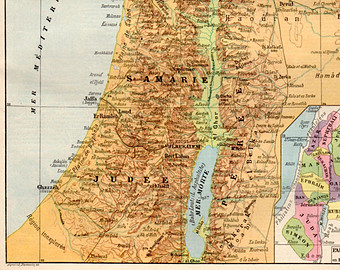
Interestingly, the West Bank never existed as an entity until 1949, and was never even referred to by the United Nations Security Council until 1953. In comparison, Judea and Samaria, which cover more area than just the West Bank, have existed for thousands of years.

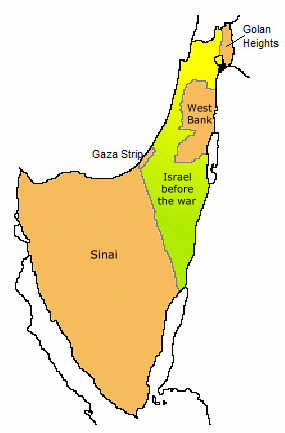
The “West Bank” came into existence after five Arab armies attacked Israel in 1948. The armistice lines established in 1949 at the end of the war with Jordan became known as the “Green Line” as the line was drawn in green on the maps. The haphazard demarcation did not follow any historic, political or geographic contours, but was simply where the warring parties stopped fighting. The area east of the green line eventually became known as the West Bank.

In the years following the 1948 Arab attack on Israel, every United Nations Security Council (UNSC) Resolution regarding the “Palestine Question”, never mentioned Palestinians as a discrete people or the “West Bank” and Gaza as entities. Each resolution referred to the various parties in the conflict being Israel, Syria, Jordan and Egypt. The term “west bank (in lower case) of the Jordan” only showed up for the first time in 1953.

The term “West Bank” is an Arab artifice and highlights the short, violent and illegal Arab rule of the area:

  • It was achieved in an offensive war to destroy Israel
  • The duration of Arab rule only lasted for 18 years 1949-1967
  • Arab rule of the West Bank was never internationally approved (the UNSC never voted on the April 1950 Jordanian annexation of the area)
  • Was administered counter to the Fourth Geneva Convention (the Jordanians and Palestinians deported all of the Jews out of the territory)

The exclusive use of the term “West Bank” gives a false impression that the territory has a long history of Palestinian Arab rule. Further, in never using the term “Judea and Samaria” for the region, the UN, the New York Times and others, distance Jews and Israelis from lands that they lived in for thousands of years.

As the New York Times and other publications now give equal weight to “the Temple Mount” and “Noble Sanctuary”, they should do the same for “West Bank” and “Judea and Samaria”. Alternatively, it could use neutral nomenclature such as EGL- East of the Green Line.

judeasamaria


Source:

2014 NYTimes Noble Sanctuary first, then Temple Mount (11/19/14): http://www.nytimes.com/2014/11/19/opinion/horror-in-israel.html

2014 NY Times mentioning Temple Mount and Noble Sanctuary at the same time (10/31/14): http://www.nytimes.com/2014/10/31/world/middleeast/israel-palestinians-jerusalem-temple-mount-al-aksa.html

(11/7/14): http://www.nytimes.com/2014/11/07/world/middleeast/israel-jordan-jerusalem-al-aqsa-temple-mount.html

(11/23/14): http://www.nytimes.com/2014/11/23/world/middleeast/mistrust-threatens-delicate-balance-at-a-sacred-site-in-jerusalem-.html

Only calling it the “Al Aqsa compound” and not the “Temple Mount” (9/17/14): http://www.nytimes.com/2014/09/18/world/middleeast/unrest-by-palestinians-surges-in-a-jerusalem-neighborhood.html?_r=0

2013 NYTimes mentions Temple Mount and only later Noble Sanctuary (10/15/13): http://www.nytimes.com/2013/10/15/world/middleeast/ten-jewish-men-arrested-at-temple-mount.html

(9/22/13): http://www.nytimes.com/2013/09/22/world/middleeast/jews-challenge-rules-to-claim-heart-of-jerusalem.html?pagewanted=all

2009 NY Times only mentions Temple Mount (10/26/09): http://www.nytimes.com/2009/10/26/world/middleeast/26mideast.html

UN mentioning “west bank of Jordan” for the first time in 1953: http://www.un.org/en/ga/search/view_doc.asp?symbol=S/RES/101%281953%29


Related FirstOneThrough articles:

The Green Line

The EU’s Choice of Labels: “Made in West Bank” and “Anti-Semite”

Nicholas Kristof’s “Arab Land”

When were Jews barred from living in Judea & Samaria?

Jews have lived in Judea and Samaria for 3000+ years, except for windows of time when they were barred by the Romans, during the Crusades, and most recently, when the Jordanians attacked Israel and illegally annexed the area.  The Ottomans had no limit on Jews living there. The British also allowed Jews to live in the area.

No one denies that Israel administers the land and approves housing for Jews and non-Jews today. How could Israel only approve housing permits for non-Jews and deny the ability of Jews to live there?  How can people not condemn Abbas for suggesting Jews should be barred from the land?