The Invisible Anti-Semitism in Obama’s 2016 State of the Union

President Barack Obama gave his final State of the Union address on January 12, 2016.  He gave an outline of a speech in four parts: economic opportunity; technology; a safe America; and politics, as he projected a future world ten-plus years out.

obama 2016 SOTU
Obama State of the Union Address
January 12, 2016 (photo:  M. Scott Mahaskey/POLITICO)

Safe America: Regarding a safe America, Obama continued to limit his global enemies to two parties: al Qaeda and ISIL/ Islamic State. Other countries that shout “Death to America! Death to Israel” like Iran were not labeled enemies that threaten the USA.  Obama mentioned Iran just a single time, when he extolled the “principled diplomacy” that “avoided another war.”  That may have been true in 2015.  But the future in ten-plus years that he facilitated, is a nuclear weapons-armed Iran.

A fanatical, anti-Semitic, America-bashing country with weapons of mass destruction is not a recipe to “keep America safe.”  Unless, of course, Obama has banked on Iran limiting its attack only against Israel, as he doubts that Iran would consider attacking the “most powerful nation on Earth.

Politics of religions: When Obama delved into politics, he not-so-subtly put Donald Trump in his crosshairs as he said “When politicians insult Muslims, when a mosque is vandalized, or a kid bullied, that doesn’t make us safer.  That’s not telling it like it is.  It’s just wrong.  It diminishes us in the eyes of the world.  It makes it harder to achieve our goals.  And it betrays who we are as a country.

Obama berated Trump for his comments about Muslims in the past. This time, he extended his comments passed the politics of Trump, to anti-Muslim actions in the United States generally.  While he repeated prior statements that anti-Muslim actions betray the values of the United States, he added the dimension that Islamophobia “diminishes us in the eyes of the world.”  The two additions are noteworthy.

As detailed in “Ramifications of Ignoring American Antisemitism” an average American Jew is over TWICE as likely to be attacked as either a Muslim or black American.  Yet anti-Semitism is never flagged by Obama.  That is actually too kind.  Anti-Semitic attacks are often whitewashed by the Obama administration, such as his denial that Jews were targeted in Paris in January 2015.

Obama’s SOTU remarks add some color to his blindness.  He is concerned that Islamophobia “diminishes us in the eyes of the world.”  Not so anti-Semitism.

Anti-Semitism has a long history in the world.  Over the past eighteen months it has reared it’s ugly head again in Europe. It is pervasive in the Middle East.  As such, flagging anti-Semitism may diminish America’s standing in the world.

There are 1.6 billion Muslims in the world and only 16 million Jews, a 100:1 ratio.  Islamophobia upsets at least 1.6 billion people and few seem to notice or care about the more prevalent anti-Semitism.  So Obama omitted discussing anti-Semitism and only highlighted the less common attacks on Muslims.


In his seventh year as president of the United States, Obama finally made his views on anti-Semitism a little more clear: Jews and Israel are small sacrifices to ensure a safer America.


Related First.One.Through articles:

“Jews as a Class”

Obama’s “Values” Red Herring

Obama’s Select Religious Compassion

Bibi’s Paris Speech in Context

The Democrats’ Slide on Israel

Failures of the Obama Doctrine and the Obama Rationale

Joe Biden Stabs a Finger at Israel

Subscribe YouTube channel: FirstOneThrough

Join Facebook group: FirstOne Through  Israel Analysis


A Flower in Terra Barbarus

Summary: The “Western World” rallies within its own borders when terrorism strikes, but ignores Jihadist radicals operating in the “Old World.” As it does so, it risks forgetting that neither values nor barbarism has borders.

Terra Incognita

The “cradle of civilization” is generally described as the location from where human beings emerged. Archeological evidence pins earliest humanoids in the region around Ethiopia, while biblical scholars point to modern day Iraq. The crescent between those regions is viewed as the birthplace of humankind.

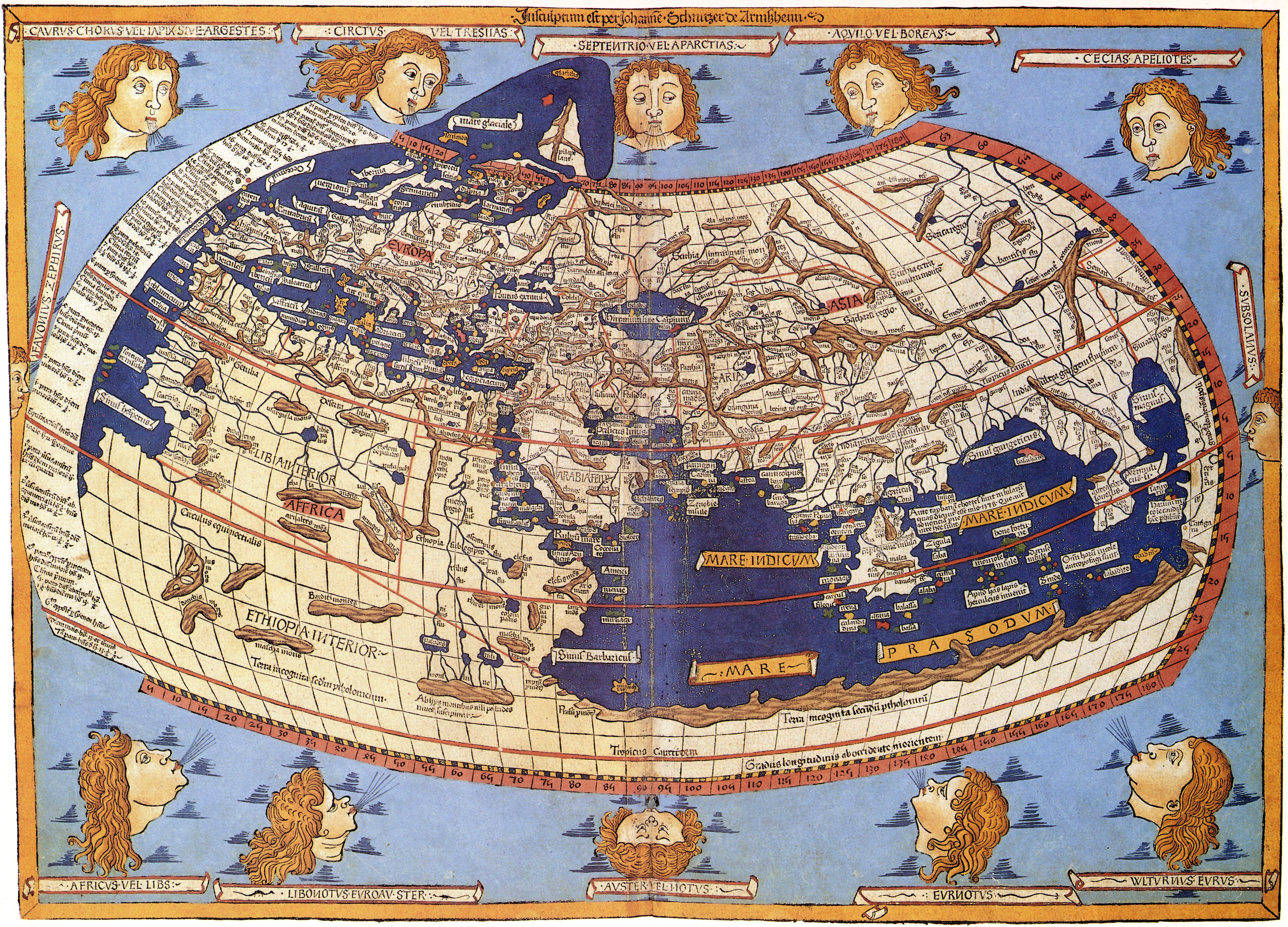
Mankind slowly spread from its cradle to populate Europe, Asia and the rest of Africa. This held true (with few exceptions) until the late 1400s. Mapmakers of the 1470s and 1480s portrayed the known world in just those few continents, kept in check by various “winds.” It was the Columbus journey of 1492 that began the next expansion of civilization into North and South Americas, and then Australia in the early 1600s.

It took many decades to map out and settle these new lands as the voyagers from Western Europe slowly charted these new territories. Maps that initially referred to uncharted areas as “Terra Incognita,” eventually established the “New World.”

Claudius_Ptolemy-_The_World
Claudius Ptolemy’s view of the World
(Johannes Schnitzer, engraver, 1482)

Western Europe’s New World

The New Worlds of North America, South America and Australia still feel closely aligned with Western Europe hundreds of years after the explorers from Spain, Portugal, France, Italy, Netherlands and Great Britain established themselves on those shores.  US President Obama stated on November 24, 2015 “Americans have recalled their own visits to Paris — visiting the Eiffel Tower, or walking along the Seine.  We know these places.  They’re part of our memories, woven into the fabric of our lives and our culture.”

And so it is with much of the New World and Western Europe.  While the Europeans established the Americas and Australia/ New Zealand centuries ago, those new lands still feel a unique warmth and connection to the European continent separated by oceans and thousands of miles.

Over the centuries, the New World took in new immigrants from around the “Old World.”  Africans were shipped against their will as slaves for the former Western European colonies, while people from Eastern Europe and Asia came on their own more recently.

The New World still prefers the close connections to their old motherlands in Western Europe.

Terra Barbarus

Western Europe was hit with several terrorist attacks after the United States was attacked on September 11, 2001.  Those attacks included: Madrid (2004); London (2005); Belgium (2014); an two attacks in France in 2015.  The reactions to attacks in Europe were noticeably different than reactions to terrorism in the MENA (Middle East and North Africa) region over this time period.

Regarding the second attack on Paris in November 2015, as well as another Islamic extremist attack in Turkey just days before, US President Obama said: “it’s an attack not just of France, not just on Turkey, but it’s an attack on the civilized world…. This is an attack not just on Paris, it’s an attack not just on the people of France, but this is an attack on all of humanity and the universal values that we share.”

There were no such broad declarations about “an attack on all of humanity… and universal values” when it came to terrorism in MENA.

The leader of the New World looked back to the Old World and saw terrorism divided into two: attacks on the “civilized world” which held “universal values that we share,” and other attacks from beyond the civilized world, in what can best be characterized by various American politicians as “Terra Barbarus.”

Politicians were not alone in this world view.

The world uniquely lit up Facebook with the flag of France after terrorist attacks.  The terrorist slaughters in Nigeria, Kenya and Israel by jihadists over the same weeks barely passed people’s minds or hurt their hearts. The New World looked back on the Old with disgust and disdain: those are uncivilized barbaric lands.  Terrorism emerges from there.  Terrorism is expected there.

So Obama, himself the son of a man from Kenya, drew borders around the civilized world.  It’s physical limit seemed to take him to Turkey, a member of NATO that sits on the edge of wars in Syria and Iraq.  The edge of “civilization” touched the cradle of civilization.

Borders or Values

There is a country that sits in that Terra Barbarus that shares western values, and calls out to be recognized as part of “civilization.”

Israeli Prime Minister Benjamin Netanyahu repeatedly stated that the various jihadist forces that continue to kill in the Middle East, whether Islamic State, Hamas or Al Qaeda, are all “branches of the same poisonous tree.”  While his country sat in a dangerous neighborhood, the values of Israeli society were the same as western values.  He sought to remind western leaders of that point right after the Paris attacks in November 2015:

“Terrorism is the deliberate and systematic targeting of civilians. It can never be justified. Terrorism must always be condemned. It must always be fought. Innocent people in Paris, like those in London, Madrid, Mumbai, Buenos Aires and Jerusalem, are the victims of militant Islamic terrorism, not its cause. As I’ve said for many years, militant Islamic terrorism attacks our societies because it wants to destroy our civilization and our values.

“All terrorism must be condemned and fought equally with unwavering determination. It’s only with this moral clarity that the forces of civilization will defeat the savagery of terrorism.

Indeed, Israel is the most liberal country in the entire Middle East and Africa.  It’s values are closely aligned with Western Values.  Yet despite Obama’s address on values, the West could not look beyond its contours of civilization.  Unwilling to reframe its own narrative, the western world has opted to ignore the Israeli liberal society, and cast it as part of that dark side of humanity.

The Future

Should the West continue to ignore the liberal society in the Middle East, it can never expect to realize a different future for the entire region.  The warring parties in Terra Barbarus will continue to battle each other, and occasionally reach out and damage the New World like a solar flare.  So far, the New World reacts by alternatively bombing and ignoring the barbarians.

To realize a future world with universal values, the world must recognize the blue-and-white flower that has re-emerged in the arid soil in the cradle of civilization.  Just as the West promises to fight barbarism that appears on its shores, it  must nurture the “humanity” that exists everywhere.

Condemning terrorism was just part of Obama’s speech. Elevating those people that share western values must be part of the battle.

DSC_0210
Flower in the hills around Jerusalem
(photo: First.One.Through)


Related First.One.Through articles:

Obama’s “Values” Red Herring

Obama’s Friendly Pass to Turkey’s Erdogan

International-Domestic Abuse: Obama and Netanyahu

Double Standards: Assassinations

Israel and Wars

Subscribe YouTube channel: FirstOneThrough

Join Facebook group: FirstOne Through  Israel Analysis

Israel was never a British Colony; Judea and Samaria are not Israeli Colonies

Many uniformed critics of Israel criticize the creation of Israel and claim that Israel was established as a colonial outpost of Great Britain. The statement is absurd and easily disproven.

International Law, Not British Law

Various international laws approved the immigration of Jews to Palestine and international bodies approved the creation of the Jewish State of Israel.

May 1949: International Approval: The United Nations voted to admit the State of Israel  as a member state, at the end of Israel’s war with Arab countries.

May 1948: International Approval: The United States, the Soviet Union and several other countries recognized Israel soon after Israel declared Independence.

May 1948: Israel Declares Independence, but not from Great Britain: Israel waited to declare its statehood until after Great Britain left the holy land and completed its mandate. The Israeli Declaration of Independence never mentioned Great Britain, as GB never viewed the land as a colony (compare that to the language in US Declaration of Independence which mentioned severing ties with GB.)

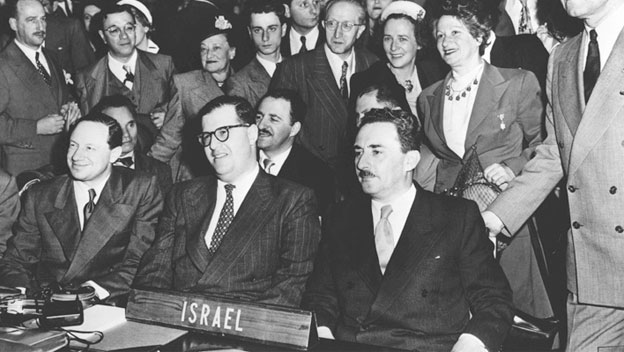
November 1947 UN Partition Vote: The United Nations voted to create a Jewish State in Palestine with 33 votes in favor, 13 against and 10 abstentions (Great Britain abstained).

July 1922 League of Nations Established Jewish Homeland: The League of Nations (precursor to the United Nations) voted to break apart the old Ottoman Empire and placed the area of Palestine under British oversight. That area of Palestine included areas of Jordan and Israel which were to include a “national home for the Jewish people.”

April 1920 San Remo Conference. The Allies of World War I (Britain, France, Japan and Italy) voted for the “establishment in Palestine of a national home for the Jewish people, it being clearly understood that nothing shall be done which may prejudice the civil and religious rights of existing non-Jewish communities in Palestine, or the rights and political status enjoyed by Jews in any other country.

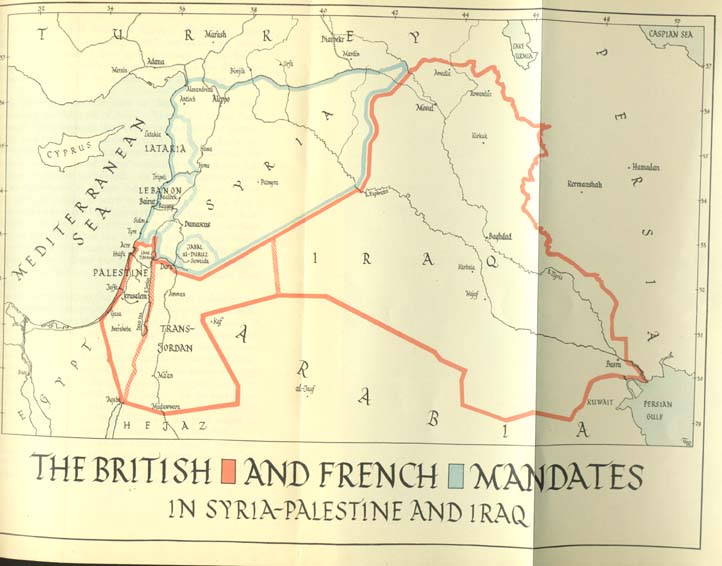
The term “British Mandate” has become confused for many people with Israel being a “British Colony.” It is simply untrue. The world powers broke apart huge sections of the Middle East with areas under both British and French administration, including countries today known as Lebanon and Syria. No one refers to any of those countries as a “colony.”

british and french mandates
British and French Mandates covering much of the Middle East

British did not favor Jews in Palestine

Despite language in the 1922 Mandate that the British should “facilitate Jewish immigration” to Palestine, the British sided with local Palestinians that sought to curtail an influx of Jews. On the eve of the Holocaust in Europe, when Jews were desperate for a place to flee, the British issued the 1939 “White Paper” which limited the number of Jews that could enter Palestine.  That edict likely cost hundreds of thousands of European Jews their lives.

The British decree created tremendous tensions between Palestinian Jews and the British. There were many battles between the groups, the most famous being the destruction of the King David Hotel in 1946.

No Transfer of British People

As described above, the British were merely administrators of Palestine for a period of time. They did not seek a permanent presence of soldiers or civilians. Virtually no British Jews (or non-Jews) relocated to Palestine on a permanent basis over the course of the Mandate period through 1948.  The Jews that came to Palestine under the Mandate period principally came from elsewhere in Europe and Russia:

  • Third Aliyah (1919-1923): 40,000 from Russia and Poland
  • Fourth Aliyah (1924-1929): 82,000 (many subsequently left) from Poland; Russia; Romania; Lithuania; Yemen and Iraq
  • Fifth Aliyah (1929-1939): 250,000 from Europe fleeing German Nazis
  • Aliyah Bet (1939-1948): 110,000, mostly illegally, smuggled from Europe fleeing Holocaust

Rights of the Indigenous Jewish People

The world powers voted to enable a national home for the Jewish people for a few reasons:

  • Jews were indigenous to Israel, as stated in the Mandate, the world recognized “the historical connection of the Jewish people with Palestine and to the grounds for reconstituting their national home in that country
  • Jews had been forcibly evicted from their national home
  • The Ottomans and others made it difficult for Jews to move back and acquire land for hundreds of years

The Jews had political kingdoms and religious Temples in the holy land for over 1000 years, but were expelled against their will. The new international laws were meant to remove the modern roadblocks that were placed before Jews from moving to Palestine and owning land.

Even though it was difficult for Jews to move to Palestine and acquire homes and land under the Ottomans, the Jews were the fastest growing religious group from 1800 to 1914. Jews have also been the largest religious group in Jerusalem since 1870.

Language

The official languages in Israel today are Hebrew and Arabic. While English is widely spoken, it is not an official language, further underscoring that the country never was established as a British colony.

ISRAEL:
RE-ESTABLISHED under International Law

In short, there is no basis whatsoever for calling Israel a British colony. The global community approved facilitating the free movement of Jews back to their holy land, where Jews already lived. The global community ultimately approved RE-ESTABLISHING a Jewish State. This was not Great Britain arbitrarily creating a colony for its own purposes.

It should also be underscored that Zionism was not only a modern idea conceived by Jews as a reaction to anti-Semitism in Europe and Russia.  Henry Dunant (1828-1910), the winner of the first Nobel Peace Prize was an ardent Christian Zionist who strongly advocated for the rights of Jews to live in Palestine in the 1860s.

Israel 1974 bote at UN
Vote for Israel at United Nations, 1947

The “West Bank” is not an Israeli Colony

As detailed above, the global community approved the rights of Jews to move to their ancient homeland in the holy land.  That right was given to the entire region, including Judea and Samaria.  While the UN voted to recognize a Jewish State within a section of Palestine, the right to move throughout the region was approved in repeated resolutions many decades ago.

While the UN does not recognize Judea and Samaria to be part of Israel, they also do not recognize it as part of Jordan that illegally annexed it in 1950 (Jordan gave up all claim to the region in 1988).  The UN would like to see that region be part of a new Arab State of Palestine through negotiations with Israel.

The desire to see a new Palestinian State does not mean that international law protecting the rights of Jews to live in the region are null and void.  The 1922 British Mandate Article 15 specifically stated that “no person shall be excluded from Palestine on the sole ground of his religious belief.”  “No person” included Jews, and “Palestine” covered the entire mandate area of 1922.

The Oslo Accords of 1993 and 1995 which were negotiated between the Palestinian Authority and Israel, specifically stated that Israel controls and administers most of the “West Bank.”  As such, Israel approves housing and roads and infrastructure for everyone.  So the Palestinians agree that Israel is in charge of housing and international law approves Jews living in the region.  Israel acts as the administrator, much in the same way that Great Britain acted as the administrator for Palestine from 1922 to 1948.

Lastly, the “settlements” are principally located next to greater metropolitan areas within Israel.  Unlike European colonies which were across oceans and thousands of miles from the country, these Jewish homes are just suburban communities of major Israeli cities like Jerusalem and Tel Aviv.  They happen to be on the other side of an invisible “green line” that was the Armistice Lines of 1949.  Those Armistice Agreements specifically stated that those lines were not to be considered borders.

Conclusion

Jews have lived throughout the holy land for thousands of years, including all over Judea and Samaria/ the “West Bank”.  International laws facilitated the ability of Jews to move back to, and throughout, their homeland.

Jews were self-governing for over a thousand years in the holy land.  International laws reconstituted the national Jewish home.

While Jordan illegally attacked Israel and expelled all of the Jews from Judea and Samaria counter to the Fourth Geneva Convention in 1949, those illegal actions cannot make it illegal for Jews to once again live in homes they legally purchase throughout the land.

When you hear acting-President of the Palestinian Authority chant “colonial occupier” or uninformed people claim that Israel is a colonialist tool, send them this article.


Related First.One.Through articles and video:

The United Nations’ Remorse for “Creating” Israel

The Legal Israeli Settlements

Recognition of Acquiring Disputed Land in a Defensive War

Palestinians agree that Israel rules all of Jerusalem, but the World Treats the City as Divided

The Arguments over Jerusalem

Video: Judea and Samaria (Foo Fighters)

Video: The “1967 Borders” (The Kinks)

Subscribe YouTube channel: FirstOneThrough

Join Facebook group: FirstOne Through  Israel Analysis

The United Nations’ Remorse for “Creating” Israel

Some political analysts have suggested that Europeans tend to be more negative in their attitudes towards Israel than Americans, due to the former’s rejection of their colonialist past. The retreating by the British, French, Dutch, Portuguese and Belgians from the colonies that they had established hundred-plus years prior in India, Algeria, Tunisia, Congo, Morocco and other countries, was part of a repositioning of the world back to local sovereignty. The colonialist era has been cast in a racist light and rejected by today’s more “pluralistic” societies.

Palestinians have taken note of the change in attitudes, and have adopted new vocabulary to instigate the Europeans against Israel whereby the charges of “colonialist” has accompanied the accusation of being racist.

From “Zionism is Racism”
to “Colonial Occupier”

In the 1970s, the head of the Palestinian Liberation Organization, Yasser Arafat, led the world on a venomous attack against “Zionism.” In 1975, Arafat succeeded in getting the United Nations to pass Resolution 3379 condemning “Zionism is Racism.” Somehow, the world became convinced that the national aspirations of Jews to be self-governing was uniquely racist compared to every other nationalistic aspirations.

It took sixteen years for the United Nations to erase the charge, but the venom remained in the UN bloodstream.

At the UN, the “Question of Palestine” ceased to be a territorial dispute, and became an ethical question for the United Nations: should the global body have created and voted for the Jewish State?  Did it do so, solely because of the guilt from the Holocaust?

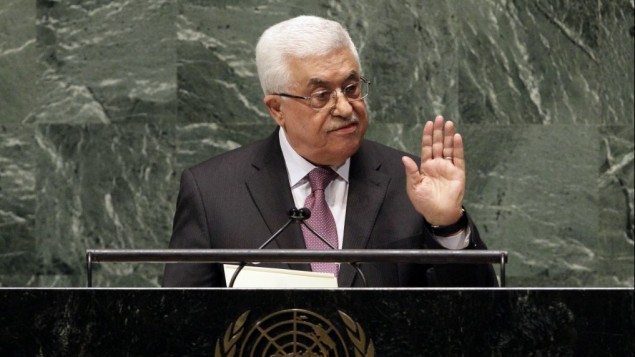
The current acting-President of the Palestinian Authority, Mahmoud Abbas, stokes that question to the mini-inferno that sits in the United Nations today. He constantly uses the term “colonial” to describe the emergence of Israeli “settlements,” and characterizes Israel as a recent foreign transplant on Arab soil. For some of his listeners, the malicious appearance of Israeli Jews began in the “West Bank” in 1967. For others, the Jewish colony overran the entirety of Palestine when the United Nations voted to partition the land into a Jewish State and Arab State in 1947.

UN-Palestinians-Statu_Horo-1-635x357
Acting President of the Palestinian Authority, Mahmoud Abbas
Addressing the United Nations, November 29, 2012
(photo: Richard Drew/AP)

As Abbas said in his address to the UN on November 29, 2012: “Israeli occupation is becoming synonymous with an apartheid system of colonial occupation, which institutionalizes the plague of racism and entrenches hatred and incitement.”

The Palestinian’s pivot was subtle but significant.  Self-determination (like Zionism) in itself was not a crime.  Indeed, the Palestinian Arabs seek the same right for themselves.  However, the Israelis’ “colonial occupation” was unique and the root cause of the problem.  It was not necessarily the Jews’ goal of self-determination, but the act of colonialization that created “racism” and “incitement.”

Somehow, the Europeans and a growing number of countries, have embraced these narratives, particularly that Israel in its entirety was a UN mistake.

International Remorse for Partitioning Palestine
November 29, not June 4

The clarity of the global adoption of these positions can be found in the annual commemoration of the day of the partition vote on November 29, 1947.

In 1977, while the “Zionism is Racism” edict was still fresh, the United Nations passed another resolution to annually commemorate the UN Partition vote, as the “International Day of Solidarity with the Palestinian People.”

The decision to partition Palestine was approved by Jews and rejected by Arabs in 1947, yet the UN specifically chose that date to stand in “solidarity with the Palestinian People.”  On its face, it would seem like a cruel decision to create a holiday for a people on the very day that those people despised.

However, taken together with the “Zionism is Racism” resolution of 1975, the picture becomes more clear: the UN believed that the decision to partition the land was a mistake.  The global body concluded that the Palestinians were correct in the assertion that the UN created a racist, anti-Arab entity in Palestine.  The Palestinians were correct to reject the partition plan in 1947.  The fault belonged to the United Nations, not the Palestinians, right at creation.

The United Nations did not choose June 4 or June 10 as the date to stand together with Palestinians.  Those dates in 1967 were the beginning and end of the Six Day War when the Jordanians (together with Palestinians who were then citizens of Jordan) launched an attack on Israel and consequently lost the “West Bank” which they had illegally annexed.  If the root cause of the plight of Palestinians was “Israeli settlements” in the West Bank, then those dates would have been more appropriate to anchor the anniversary.

But the United Nations wanted to mark its own poor decision.  While the Palestinians rejected partition in 1947 and launched wars in 1948 and again in 1967, those bad decisions and actions were not deemed relevant.  The UN chose to tell the Palestinians that it was not their fault.  Their situation stemmed from decisions that the UN itself made.

Today, while the UN may no longer outwardly state that “Zionism is Racism,” the global body has adopted Abbas’s narrative that the UN planted a colonialist flag in Palestine.  The Europeans and liberal press now echo Abbas and the Iranian Supreme Leader Ali Khamenei who claim that Israel is a foreign and dangerous entity that was unnaturally inserted into the Middle East, and that the Arabs are the sole indigenous people and the land itself is inherently “Arab.”


It is well passed time for Israel to actively combat this claim of colonialization, the way activists overturned the “Zionism is Racism” UN edict in 1991.  It is time to clearly educate the world that RE-ESTABLISHING the Jewish State and not banning where Jews can and cannot live is neither colonialist nor racist, but the essence of freedom and justice.


Related First.One.Through articles and video:

Israel was never a British Colony; Judea and Samaria are not Israeli Colonies

The United Nations Applauds Abbas’ Narrative

The Holocaust and the Nakba

The Legal Israeli Settlements

UNRWA’s Ongoing War against Israel and Jews

Nicholas Kristof’s “Arab Land”

Video: I hate Israel – Zionism

Subscribe YouTube channel: FirstOneThrough

Join Facebook group: FirstOne Through  Israel Analysis

Recognition of Acquiring Disputed Land in a Defensive War

On November 13, 2015, several resolutions were put forth at the United Nations to advance the cause of a Palestinian State.  Some of the statements made in the resolutions are self-contradictory and undermine the very foundation of the claims that Israel occupies “Palestinian territory.”

Claim of Israel’s Illegal Acquisition
of Land by War

In the Resolution Peaceful settlement of the question of Palestine (A/70/L.13), there is a claim that Israel illegally took control over Palestinian land:

“Reaffirming the principle of
the inadmissibility of the acquisition of territory by war

This statement underlies the argument that many people have against Israel’s settlements in the “West Bank”: that Israel enlarged its boundaries when it “seized” (to quote the New York Times) Palestinian land in the Six-Day War in 1967.  The claim stems from some international laws in the United Nations:

  • UN Charter (1945) Article 2: Paragraph 3: “All Members shall settle their international disputes by peaceful means in such a manner that peace and security, and justice are not endangered.”
  • UN Charter (1945) Article 2: Paragraph 4: “All Members shall refrain in their international relations from the threat or use of force against the territorial integrity or political independence of any state, or in any other manner inconsistent with the Purposes of the United Nations.”
  • Declaration on Principles of International Law concerning Friendly Relations and Co-operation among States in accordance with the Charter of the United Nations (1970) Principle 1: “Every State has the duty to refrain in its international relations from the threat or use of force against the territorial integrity or political independence of any State, or in any other manner inconsistent with the purposes of the United Nations. Such a threat or use of force constitutes a violation of international law and the Charter of the United Nations and shall never be employed as a means of settling international issues.

What is peculiar in the condemnation of Israel, is that the UN and Palestinians already acknowledge that Israel “seized Palestinian land” in 1949 and have endorsed it, as detailed below.

In the very same November 2015 UN resolution, the various countries that put forth the resolution (Afghanistan, Algeria, Bahrain, Bolivia (Plurinational State of), Comoros, Djibouti, Ecuador, Egypt, Indonesia, Iraq, Jordan, Kuwait, Lebanon, Malta, Mauritania, Morocco, Nicaragua, Oman, Qatar, Saudi Arabia, Sudan, Tunisia, United Arab Emirates, Yemen and State of Palestine), stated the following:

“Noting with concern that it has been 68 years since the adoption of its resolution 181 (II) of 29 November 1947 and 48 years since the occupation of Palestinian territory, including East Jerusalem, in 1967,” 

Note that “the occupation of Palestinian territory” is claimed to have started in 1967.  If there is a valid claim that Israel seized “Palestinian” land , the argument should extend to territory that Israel acquired in 1948-9. Yet the Palestinians curiously omit such claim not because they don’t view everything as Palestinian land, but because Israel has not sought to annex the West Bank.

Israel
November 29, 1947 to June 10, 1967

On July 24, 1922, the League of Nations (precursor to the UN) drafted a resolution that recognized “the historical connection of the Jewish people with Palestine and to the grounds for reconstituting their national home… [and] will secure the establishment of the Jewish national home… [and] shall facilitate Jewish immigration under suitable conditions and shall encourage, in co-operation with the Jewish agency referred to in Article 4, close settlement by Jews on the land, including State lands and waste lands not required for public purposes.” It was on this basis that the world joined in the Zionist dream of further encouraging Jewish aliyah to Israel to create a Jewish homeland.

After several decades of Arabs fighting the law and seeking the end of Jewish immigration to Palestine, the British who oversaw the territory turned to the United Nations to implement a compromise solution.  On November 29, 1947, the United Nations voted to partition Palestine into distinct Jewish and Arab states. UN resolution 181 (which was specifically mentioned by the parties above in the 2015 UN resolution), was passed with 33 votes affirming; 13 against; and 10 countries abstaining.

On May 14 1948, as the British left Palestine, Israel declared itself as an independent state along the borders that were approved by the United Nations.  Several countries recognized the country including the US; the Soviet Union; Poland; Ireland; Yugoslavia; and South Africa, among others.  For their part, the Palestinian Arabs did NOT announce their own country along the UN stated borders.
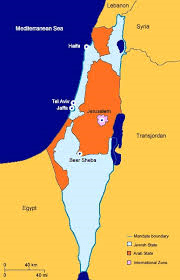
1947 partition
Borders approved in UN resolution 181
November 29, 1947

Instead, with the approval of the Palestinian Arabs, several Arab countries – principally Jordan; Egypt; Syria; and Iraq, with forces also from Lebanon, Saudi Arabia and Yemen – invaded Israel.  In doing so those countries broke several international laws passed by the United Nations listed above about the “use of force against the territorial integrity or political independence of any State.

At war’s end, Israel took additional land from the region that was originally allocated by the UN to be a Palestinian Arab state.  Armistice agreements between Israel and the various warring parties were executed in 1949 which included language that the Armistice lines were NOT to be construed as final borders.  Egypt assumed control of the Gaza Strip and Jordan took control of Judea and Samaria, later annexing it into an area referred to as the “West Bank” in a move that was never recognized by the United Nations.

israel 1949 map
Borders after 1948-9 War

The world recognized the incremental land that Israel captured in its defensive war against the Arab armies in 1949.  That incremental land was disputed, and not part of any independent country or member state of the UN.

Israel
Since June 10, 1967

Even with the Armistice agreements meant to assure peace, Egypt and Syria made many provocative statements and actions that threatened Israel in early 1967.  In response to those threats, Israel launched a preemptive attack on Egypt and Syria in June 1967.  Despite warnings to remain out of the conflict, Jordan (together with Palestinian Arabs who were granted Jordanian citizenship in 1950) launched an attack on Israel from its illegal territory in the “West Bank.”

Once again, the Arab countries broke international law as well as the Armistice agreements they had in place with Israel.  As in the 1948-9 War, Israel legally defended itself and captured additional land:

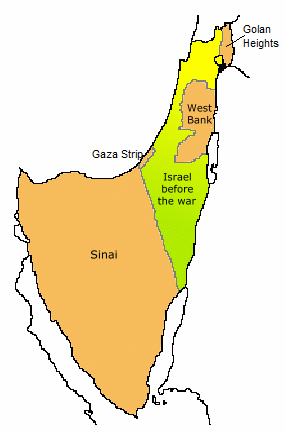
  • Gaza (held by Egypt but not legally part of any country);
  • Sinai (part of Egypt)
  • Judea and Samaria/ West Bank (annexed illegally by Jordan, but not legally part of any country);
  • the Golan Heights (from Syria)

prewar_israel
Additional land added to Israel after
1967 Six Day War

When the Palestinian Arabs today discuss “the occupation of Palestinian territory, including East Jerusalem, in 1967,”  they are referring to land that is NOT, nor has it ever been part of a Palestinian state.  They are referring to lands that have been disputed for decades, that they would LIKE to have as a future Palestinian state.

Conclusion

The world accepted the acquisition of additional land by Israel in 1949.  The lands acquired were not “seized” in an offensive war against another country, but were disputed lands taken in a defensive war.  The West Bank and Gaza were taken similarly in 1967 (note that Israel left Gaza completely on its own in 2005).  The Sinai peninsula was returned to Egypt in 1982.

The Palestinians refused to accept Resolution 181 on November 29, 1947 and never declared an independent state.  While Israel has thus far only annexed the eastern part of Jerusalem that was divided in the 1948-9 War, it has left open the possibility of dividing Judea and Samaria, even though it was acquired in exactly the same manner as lands taken in 1948-9.

It is peculiar that countries acting on the Palestinian Arab’s behalf today should call out “the inadmissibility of the acquisition of territory by war,” when several of those countries illegally warred against Israel in 1948-9, and the world gave Israel incremental disputed land at that time.  Arab countries repeated their illegal wars against Israel in 1967 and are now trying to recast history when the situation was identical to 1948-9.

The world accepted the additional land acquired by Israel in 1949 and the Palestinians admit as much when they only refer to land “occupied” since 1967.  The global community should accept Israel’s annexation of additional land when Israel chooses to annex it, and stop mischaracterizing the disputed land as “Palestinian territory,implying a history with claims that do not exist.


Related First.One.Through articles:

The Legal Israeli Settlements

The Green Line

Names and Narrative: The West Bank / Judea and Samaria

Names and Narrative: Palestinian Territories/ Israeli Territories

The Narrative that Prevents Peace in the Arab-Israeli Conflict

Palestinians agree that Israel rules all of Jerusalem, but the World Treats the City as Divided

Real and Imagined Laws of Living in Silwan

Subscribe YouTube channel: FirstOneThrough

Join Facebook group: FirstOne Through  Israel Analysis

The Nation of Israel Prevails

The weekly Torah portion of Vayishlach, describes a famous story in the life of Jacob.  It is a message that Israeli Jews continue to hold dear.

Jacob had left his parent’s home fearing for his life, as his brother Esau had threatened to kill him.  After many years away, Jacob prepared to return with his new large family, only to discover that Esau had a welcoming party for him of 400 men, an army.

Assuming a battle, Jacob prepared to meet his brother Esau by separating his family into two groups, hoping that one group could escape while the other fought Esau’s army.  Jacob did not anticipate that there would be another fight before he even encountered Esau.

Genesis 32:24-30 relays the story of Jacob being left alone after readying his family. Then Jacob was left alone, and a man wrestled with him until daybreak. When he saw that he had not prevailed against him, he touched the socket of his thigh; so the socket of Jacob’s thigh was dislocated while he wrestled with him. he said, “Let me go, for the dawn is breaking.” But he said, “I will not let you go unless you bless me.” So he said to him, “What is your name?” And he said, “Jacob.” He  said, “Your name shall no longer be Jacob, but Israel; for you have striven with God and with men and have prevailed.” Then Jacob asked him and said, “Please tell me your name.” But he said, “Why is it that you ask my name?” And he blessed him there. So Jacob named the place Peniel, for he said, “I have seen God face to face, yet my life has been preserved.”

Jacob-Struggle-With-Angel
Jacob Struggles with an Angel
Gustav Dore (1832-1883)

Sages relayed that the man with whom Jacob wrestled was an angel, both a physical man and divinely creature.  This angel was both a symbol and a messenger: Jacob had fought with men such as Esau and his father-in-law Lavan, but also in his relationship with God.  The angel let Jacob know that as he had prevailed in the past, he would again prevail when he encounters his brother.  As such, the angel renamed Jacob “Yisrael” which is a combination of Hebrew words conveying both the struggle and the success.

Yisrael Today

The Jews of today were originally called “the Sons of Israel” in the bible, not the sons of Jacob.  They carried Jacob’s new name and the knowledge that while they continued to struggle with both man and God, they would ultimately prevail.

Jewish history is full of difficult encounters with men, whether in the holy land or around the world.  Jews lost many more battles than they won which often led them to question their belief in God.  Sages debated whether that cause-and-effect was actually reversed, and considered whether Jews lost so many fights because they failed in their relationship with God.

The Holocaust is an example of the terrible struggle Jews had with man and God. The very government to which Jews remained loyal, turned on them and butchered them.  Holocaust Survivors were left to question both the morality of men as well as the role of God. Was “surviving” really prevailing? On a broader basis, was the establishment of the Jewish State of Israel after the slaughter of one-third of the global Jewish population, really “prevailing?”  Is the definition of “prevailing” staying alive, a tangible victory of a self-governing homeland, or simply maintaining faith?

Today, Jews continue to grapple with those relationships and questions.  In November 2015, an Israeli woman preparing for her wedding was informed that a Palestinian Arab terrorist killed her father and brother.  She delayed the wedding so she could bury her family members and sit shiva, seven days of mourning.  As she ended her mourning, she invited the entire country to join in the wedding celebration.  Her invitation carried a message from the prophet Micah:

אַֽל־תִּשְׂמְחִ֤י אֹיַ֙בְתִּי֙ לִ֔י כִּ֥י נָפַ֖לְתִּי קָ֑מְתִּי כִּֽי־אֵשֵׁ֣ב בַּחֹ֔שֶׁךְ יְהֹוָ֖ה א֥וֹר לִֽי

Do not rejoice over me, O my enemy. Though I fall, I will rise”

The heavenly promise of overcoming battles was matched by human determination.  The bride said precisely from the pain in the month of courage before Hanukkah we will, together with all the nation of Israel, spread a great light of joy, giving and love that the nation of Israel has inundated upon us.

Her voice was echoed by thousands of Jews who came to the wedding in Jerusalem waving Israeli flags singing “The Nation of Israel Lives!”

The children of Israel continue to wrestle with God and man, but prevail. They prevail in being alive, in the Jewish State with complete faith in God.

Am Yisrael Chai.


Related First.One.Through article and video:

From Promised Land to Promised Home

The 2011 Massacre of the Fogels in Itamar (Gorecki)

Subscribe YouTube channel: FirstOneThrough

Join Facebook group: FirstOne Through  Israel Analysis

Every Picture Tells a Story: Arab Injuries over Jewish Deaths

On November 19, 2015, a Palestinian Arab murderer shot up cars in the Gush Etzion district of Judea and Samaria. Among the three Jews that were killed in that incident, was an American citizen who was studying in Israel for the year.

Ezra Schwartz was an 18 year old from Sharon, MA. He went with some friends to bring food and candies to Israeli soldiers who were guarding an intersection where three Israeli boys were abducted and killed in July 2014. On his way back to school, he was shot and killed along with others while sitting in traffic.

The New York Times did not think much of this Jewish American teenager.

The story of the murder was placed at the very bottom of page A6. There was no accompanying picture. No caption. No one saw this American victim of Palestinian Arab barbarity.  As a matter of fact, if you wanted to know the name of this American victim, you would have to wait until the tenth paragraph of the article.

IMG_3620
NY Times November 20, 2015, page A6

This was in sharp contrast to how the New York Times covered the story of an American Arab who was beaten up while engaged in a riot in Israel.

On July 7, 2014, the New York Times placed a large color picture on the front page of an Arab youth surrounded by policemen.  The caption read “Tariq Abu Kheidar, 15, arrested in the unrest, is a cousin of the victim and was shown on a video being beaten by Israeli officers.” Tariq led the world news, on a day when over 100 people were slaughtered in various attacks.

20140707_082918
Front page of the New York Times July 7, 2014

The beating of an Arab American who participated in a riot got front page attention, while the murder of a Jewish American who was simply riding in a car got nothing.

The New York Times has a long history of ignoring Israeli deaths and highlighting Palestinian injuries as detailed in the articles below. The New York Times has extended its bias against American Jews as well.


Related First.One.Through articles:

Every Picture Tells a Story: The Invisible Murdered Israelis

Every Picture Tells A Story: Only Palestinians are Victims

Every Picture Tells a Story: Versions of Reality

The New York Times’ Buried Pictures

Every Picture Tells a Story, the Bibi Monster

Every Picture Tells a Story, Don’t It?

The New York Times Picture of the Year, 2014

Subscribe YouTube channel: FirstOneThrough

Join Facebook group: FirstOne Through  Israel Analysis

Select Support in Fighting Terrorism from the US State Department

The month from October 13 to November 13, 2015 witnessed many terrorist attacks in the MENA region and Europe. The US State Department loudly condemned the large scale attacks in Chad, Lebanon and France, but was more muted in its condemnation of the attacks in Israel. Most significantly, the State department voiced its support for the various governments to combat the terrorism, but did NOT give any support to the government of Israel.

Further, over the entire month when numerous Arab terrorist attacks felled Israelis, the US State Department did not issue any additional condemnations.

  October 13 Attack in Israel October 27 Attack in Chad November 12 Attack in Lebanon November 13 Attack in France
Words in statement 88 140 118 149
Condemnation condemns in the strongest possible terms condemns” “strongly condemns” outrage and sadness”
“Terrorism” Once Once and “horrific and indiscriminate attacks” Four times Twice and “heinous, evil, vile acts.”
Condolences “We mourn any loss of life” deepest sympathies and condolences” “deepest condolences” “Our thoughts and prayers are with all those affected”
Innocent Life Israeli or Palestinian innocent civilians” None “innocent people”
Support to battle terror None. Requests “all sides to take affirmative steps to restore calm” support the governments and people of the Lake Chad Basin region in their ongoing struggle to defeat Boko Haram fully support the Lebanese authorities as they conduct their investigation… reaffirms its commitment to Lebanon’s security, and will continue to stand shoulder to shoulder with the people of Lebanon in confronting terrorism “must do everything in our power to fight back against what can only be considered an assault on our common humanity…. we stand ready to provide whatever support the French government may require”

Israeli Prime Minister Benjamin Netanyahu called all of the terrorism in the region as a single phenomena of radical Islamic terrorism. “The time has come for the world to wake up and unite in order to defeat terrorism. The time has come for countries to condemn terrorism against us to the same degree that they condemn terrorism everywhere else in the world

Based on the various remarks by the US State Department, it clearly disagrees.

Kirby
State Department Spokesman John Kirby

October 13, 2015 about Israel:

“The United States condemns in the strongest terms today’s terrorist attacks against Israeli civilians, which resulted in the murder of three Israelis and left numerous others wounded. We mourn any loss of innocent life, Israeli or Palestinian. We continue to stress the importance of condemning violence and combating incitement. We are in regular contact with the Israeli government and the Palestinian Authority. We remain deeply concerned about escalating tensions and urge all sides to take affirmative steps to restore calm and prevent actions that would further escalate tensions.”

October 27, 2015 about Chad:

The United States condemns the horrific and indiscriminate attacks at the Jambutu Mosque in Yola, Adamawa State, the Central Mosque of Polo Ward in Maiduguri, Borno State, and other locations in Maiduguri on October 23 and 24, 2015. We offer our deepest sympathies and condolences to the families and loved ones of the many innocent civilians who were killed and injured.

The apparent use of children – particularly young girls – to commit these attacks is especially heinous, and it provides yet more examples of the horrific measures Boko Haram is willing to take to terrorize civilians in northeast Nigeria and the Lake Chad Basin region.

The United States continues to support the governments and people of the Lake Chad Basin region in their ongoing struggle to defeat Boko Haram. We will continue to assist these vital efforts in every appropriate way.”

November 12, 2015 about Lebanon:

“The United States strongly condemns today’s terrorist attack on civilians in the Burj Barajneh neighborhood of Beirut, Lebanon. We extend our deepest condolences to the Lebanese people, particularly the families of the victims, and wish a swift recovery to the wounded.

Today’s events are a troubling reminder of the tremendous challenges Lebanon still faces. Terrorism, such as today’s attacks, seeks to undermine the freedom and security that the people of Lebanon have worked so hard to achieve. We fully support the Lebanese authorities as they conduct their investigation into this act of terror. The United States reaffirms its commitment to Lebanon’s security, and will continue to stand shoulder to shoulder with the people of Lebanon in confronting terrorism.”

November 13, 2015 about France:

“I share President Obama’s outrage and sadness over the terrorist attacks tonight in Paris.

Our thoughts and prayers are with all those affected by this assault on innocent people, going about their lives. And I am deeply concerned by ongoing reports of hostages.

These are heinous, evil, vile acts. Those of us who can must do everything in our power to fight back against what can only be considered an assault on our common humanity.

Our embassy in Paris is making every effort to account for the welfare of American citizens in the city, and in the days ahead we stand ready to provide whatever support the French government may require. France is our oldest ally, a friend and a vital partner. We stand with the French people tonight, as our peoples have always stood together in our darkest hours. These terrorist attacks will only deepen our shared resolve.”


Related First.One.Through articles:

US State Department Comments on Terrorism in Israel and the Territories

The US State Department’s Selective Preference of “Status Quos”

Failures of the Obama Doctrine and the Obama Rationale

Subscribe YouTube channel: FirstOneThrough

Join Facebook group: FirstOne Through  Israel Analysis
Rick Jacobs’ Particular Reform Judaism

The Union for Reform Judaism (URJ) held its biennial in Orlando, FL in November 2015. The head of the URJ, Rabbi Rick Jacobs, gave opening remarks that laid out his personal politics and worldview as the belief system of Reform Judaism.

rickjacobs
Union for Reform Judaism President Rabbi Rick Jacobs
November 2015

Politics

Rabbi Jacobs is not a stranger to politics. In November 2014, Jacobs urged the state of Israel to not go forward with legislation to reaffirm its Jewish character. His position was that Israel needs more pluralism than Judaism; more universalism than particularism. In his opening speech to the Reform Movement one year later, he made clear that Judaism itself needed more of that approach too.

Jacobs spoke about Jewish values that are rooted in the Torah such as loving the stranger in your midst. He said that “thirty-six times the bible reminds us ‘v’ahavtem et ha’ger’ – to love the resident alien and treat the stranger as ourselves.” Indeed, such quotes are throughout the bible such as:

  • “The stranger who resides with you shall be to you as the native among you, and you shall love him as yourself, for you were aliens in the land of Egypt; I am the LORD your God.” (Leviticus 19:34)
  • You shall not wrong a stranger or oppress him, for you were strangers in the land of Egypt” (Exodus 22:21)
  • He executes justice for the orphan and the widow, and shows His love for the alien by giving him food and clothing. So show your love for the alien, for you were aliens in the land of Egypt.” (Deuteronomy 10:18-19)

However, Jacobs opted to then announce his own personal political views as being the official mantra of the Reform Movement: specifically that Jews living east of the Green Line (EGL) in Judea and Samaria is wrong and should be opposed. He stated the “Reform Movement has long opposed Israeli settlement policy in the West Bank. The occupation threatens the very Zionism that we hold dear: the living expression of a Jewish democratic state.

Ignore for a moment that the global community endorsed Jews living throughout Palestine in the British Mandate of 1922.  How does a movement that prides itself on universalism advocate that anyone should be banned from living somewhere? How does a Jewish movement call for Jews being barred from living anywhere? How can a rabbi advocate for an anti-Semitic policy that is also directly against the bible?

Jacobs wants to see peace in holy land; he has no monopoly on that desire.

But why does a policy of welcoming strangers, mean adopting their hateful agenda? While Palestinian Arabs may demand Jews be prevented from buying and living in homes east of the Green Line (EGL), why should Jews endorse the same policy? There are many paths to a two state solution – and actual peace – that would not bar Jews from living in parts of the holy land.

The vast majority of Jews living EGL/ Judea and Samaria, want to live at peace with their Arab neighbors. These are lands that Jews have lived in for thousands of years and without any prohibitions from the League of Nations nor under the Ottomans before them.

While many Reform Jews may agree with Jacobs and his J Street view, does Reform Judaism leave no room for Jews with different views? Is Reform Judaism only open to radical liberals?

A Failure to Educate and Celebrate Israel

Jacobs did passionately defend Israel and spoke clearly of his opposition to the boycott, divestment and sanctions movement (BDS).  He continued that many young people “feel that Israel has become too intolerant, not only of Arab citizens, but also of non-Orthodox Jews, Ethiopian Jews, LGBT Jews, asylum seekers and others.” He tacitly agreed to this viewpoint.

Exactly how does Jacobs believe that he defends Israel?  Just by saying that he is against BDS?

Why doesn’t he educate people and celebrate the accomplishments of Israel? Why isn’t he and the Reform Movement at the forefront of telling fellow liberal friends that Israel is the most liberal country in the entire Middle East and North Africa (MENA) region, and in much of the world?


Jacobs called for a Reform Judaism that welcomes everyone in something he called “audacious hospitality.” He advocated a universalistic approach to the world over one of particularism.

Yet the leader of the Reform movement put forth a narrow political agenda regarding Israel that only spoke to a slice of its members, and by doing so created a wedge within the community about Israel. He failed to educate the community about Israel’s values that it shares, and thereby left a gap between Reform Judaism and the Jewish State.

There is a lot to love about Israel and much to learn about the different approaches to peace in the Middle East.  It would be better – and more consistent – for Rabbi Jacobs to understand that Reform Jews have a range of opinions about Israel that are consistent with Judaism and “loving one’s neighbor as thyself”, not in priority over oneself.

It would also go a long way to healing rifts between the broader Jewish community, and between the diaspora community and Israel.


Related First.One.Through articles:

The Fault in Our Tent: The Limit of Acceptable Speech

A Disservice to Jewish Community

Nicholas Kristof’s “Arab Land”

Subscribe YouTube channel: FirstOneThrough

Join Facebook group: FirstOne Through  Israel Analysis


UN Concern is only for Violence in “Occupied Palestinian Territory,” not Israel

United Nations Secretary General Ban Ki-Moon arrived in Israel on October 19, 2015 with the claim that he hoped to stop “the dangerous escalation in violence across the occupied Palestinian Territory and Israel, especially in Jerusalem,” according to the UN official press release.

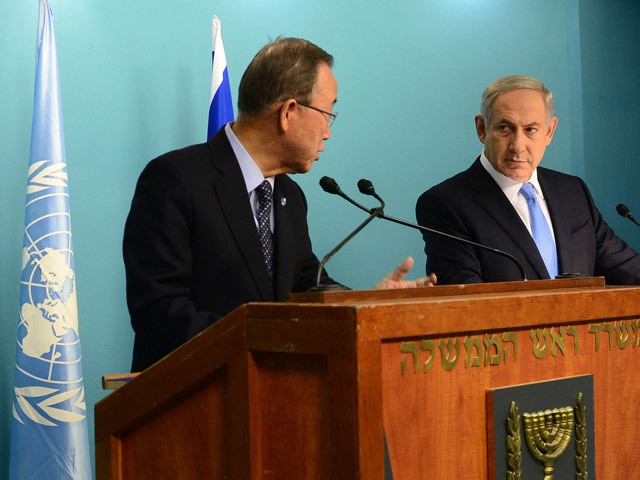
PM Netanyahu meets with UN Sec. Gen. Ban Ki-moon

PM Netanyahu meets with UN Sec. Gen. Ban Ki-moon (photo: GPO Kobi Gideon)

In discussing the situation, the United Nations opted to highlight certain cities where attacks took place: “in East Jerusalem, Ramallah, Hebron, Bethlehem, Jenin, Tulkarm and Nablus.” Note that every city that was mentioned was east of the Green Line. Seven cities, and not one west of the Green Line, where several attacks occurred including:

  • Petach Tikva (Stabbing October 7)
  • Kiryat Gat (stabbing October 7)
  • Tel Aviv (stabbing October 8)
  • Afula (stabbing October 8 & 9)
  • Jerusalem, west of the Green Line (stabbing and beating October 9 & 14)
  • Raanana (stabbing October 13)
  • Beer Sheva (shooting October 19)

Are these seven cities west of the Green Line not important? Is violence a concern to the United Nations only if it happens in “occupied Palestinian Territory?”

In case anyone thinks that mentioning seven random cities happened to coincidentally be east of the Green Line, the United Nations repeated those same seven cities the following day on October 20 in the press release mentioning:  “A series of deadly clashes between Palestinians and Israelis, including Israeli security forces, has marked much of October, with violent incidents reported in more than 50 different locations, including in East Jerusalem, Ramallah, Hebron, Bethlehem, Jenin, Tulkarm and Nablus.

When Ban Ki-Moon said that “No society should have to live in fear. No society can afford to see its youth suffer in hopelessness,” did he really only mean Palestinian Arabs?


Related First One Through articles:

The Narrative that Prevents Peace in the Arab-Israeli Conflict

Eyal Gilad Naftali Klinghoffer. The new Blood Libel.

Every Picture Tells a Story: The Invisible Murdered Israelis

Subscribe YouTube channel: FirstOneThrough

Join Facebook group: FirstOne Through  Israel Analysis