
Reparations Is Not About the Past. It Is About Power.

For years, reparations has been framed as moral accounting — a long-overdue reckoning with colonial crimes, slavery, and historical trauma. That framing no longer captures what is actually unfolding. The modern reparations movement has evolved into something far more consequential: a Global South demand on the Global North to rebalance power, wealth, and legitimacy, amplified by a coalition that blends post-colonial nationalism, socialism, and jihadist anti-Western ideology.

This is not accidental. It is strategic.

Across Africa, the Caribbean, Latin America, and parts of Asia, governments are no longer asking quietly for acknowledgment or symbolic regret. They are issuing demands. Reparations, apologies, restitution, debt relief, technology transfer, and capital flows are increasingly bundled into a single argument: the prosperity of the Global North is illegitimate and must be paid back.


From Memory to Leverage

Consider Algeria, where colonial grievance is not episodic but foundational. French violence, nuclear testing, and cultural erasure are not invoked merely to heal wounds. They are reasserted whenever diplomacy stalls or domestic legitimacy frays.
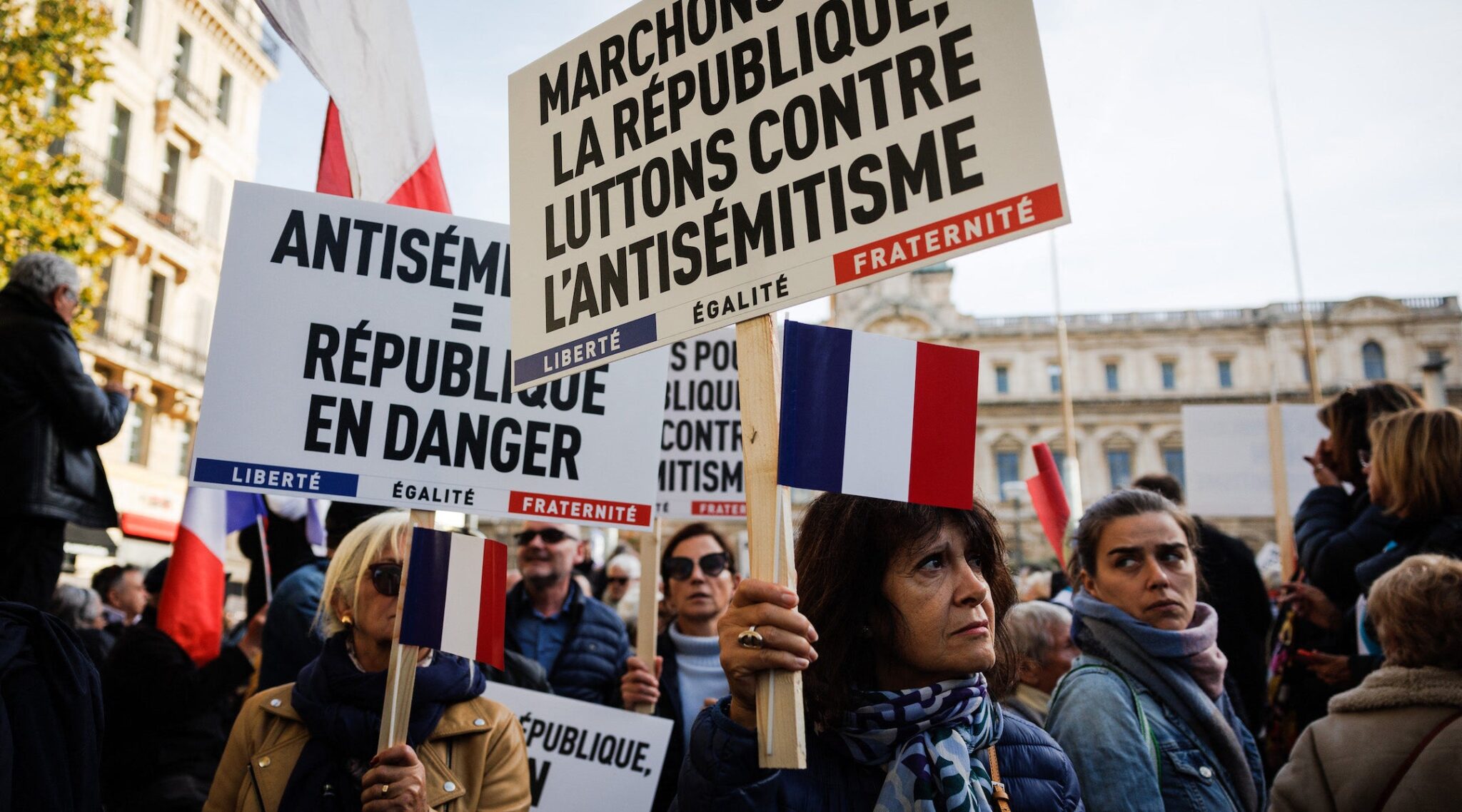
Demonstration in Marseille, France against antisemitism, much coming from Muslim immigrants from former French colonies including Algeria

Or Namibia, which rejected Germany’s €1.1 billion offer precisely because it was labeled “development aid” rather than “reparations.” Aid preserves hierarchy. Reparations invert it. Reparations place the former colonizer in the position of debtor — morally, legally, and politically.

Across the Caribbean, reparations has become collective bargaining. Jamaica, Barbados, and Haiti are not asking for apologies alone. Haiti’s claim that France repay the 1825 “independence ransom” reframes national birth itself as extortion requiring reversal.

In India, reparations rhetoric fits neatly into civilizational nationalism — extracting moral and economic concessions from Britain while rejecting Western liberal tutelage.

This is not nostalgia. It is leverage. And it is gaining momentum.


The Socialist–Jihadi Convergence

What gives this movement its new force is the coalition that amplifies it.

On one flank are socialist movements that treat capitalism itself as a colonial crime. On the other are Islamist and jihadist ideologies that frame Western dominance as a civilizational sin. Their vocabularies differ, but their conclusions align.

Both see the Global North as illegitimate, wealth accumulation as theft, liberal democracy as camouflage for domination, and historical grievance as a renewable political resource. Reparations becomes the bridge — translating resentment into claims and memory into entitlement. It offers redistribution without admitting failure, a bloodless substitute where revolution stalled.

That is why reparations rhetoric now travels alongside calls to dismantle Western institutions, forgive sovereign debt, nationalize industries, and replace a rules-based order with “multipolar justice.”


From States to Peoples

Once nations inherit grievance, groups of people inevitably follow.

In the United States, descendants of enslaved Africans argue that wealth extracted centuries ago still compounds today — in land, capital, education, and political power. The logic mirrors the international model: systematic harm, identifiable beneficiaries, ongoing effects, and a moral requirement for redistribution.

In the Middle East, Arab claims against Israel for homes and land lost in the 1948 war are framed not as consequences of war initiated, but as perpetual moral debts transferable across generations and insulated from counter-claims.

Here reparations is not merely compensation. It is recognition, reversal, and re-legitimation of identity.
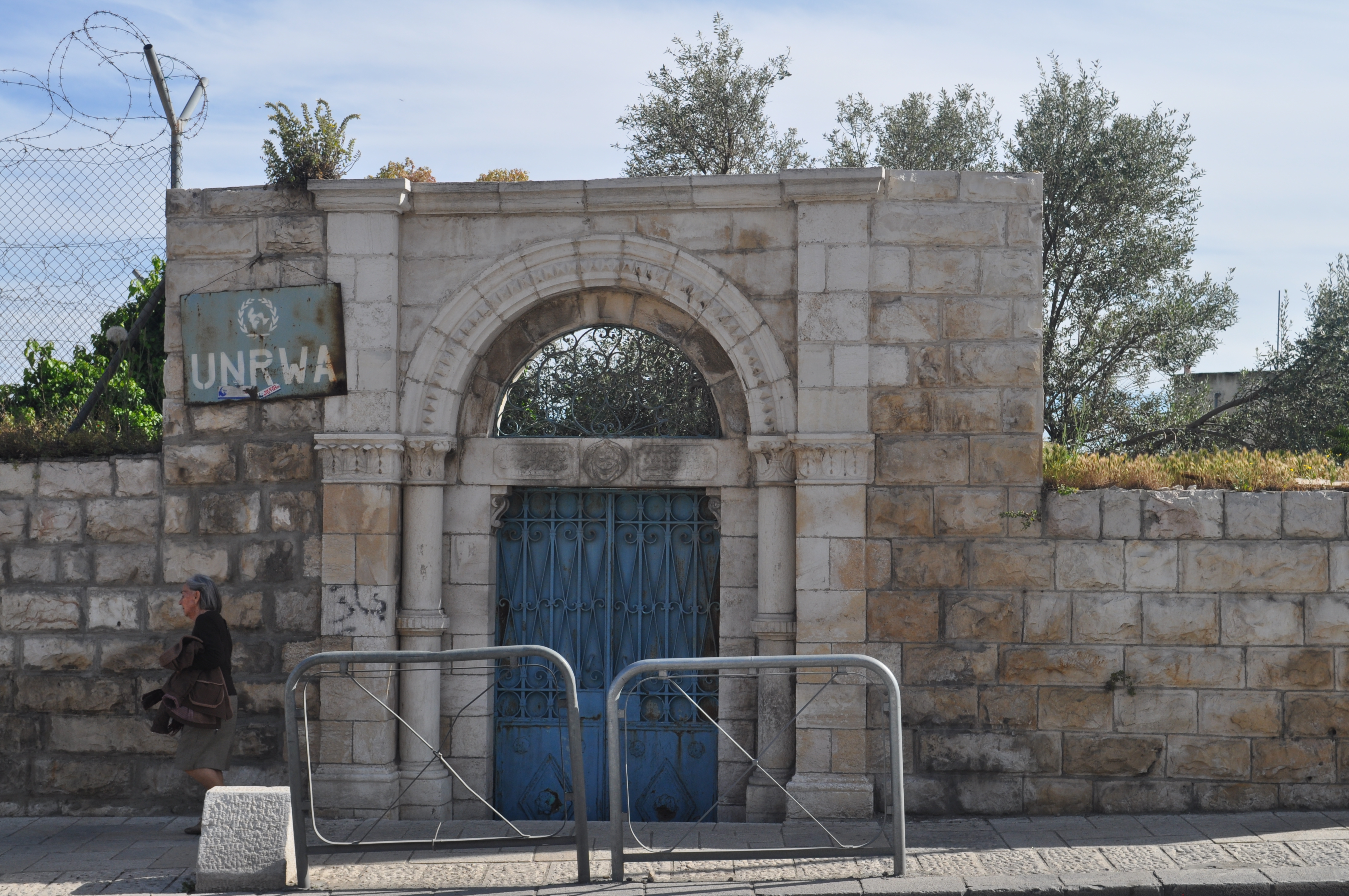
UNRWA offices in Jerusalem (photo: First One Through)

For individuals without a banner to rally around, reparations is the escape hatch, and there’s little selfish downside in crushing the Global North.


The Question No One Wants to Ask

If reparations reach back to slavery, empire, and war — how far back do they go?

Will Jews demand reparations from Saudi Arabia and other Arab states for Islamic conquest, dhimmi subjugation, and the twentieth-century expulsion of ancient Jewish communities from Iraq, Yemen, Egypt, and Morocco? If Arabs displaced in 1948 may claim restitution, Jews dispossessed from Arab lands must be able to claim the same (and why doesn’t the United Nations say as much?)

If slavery justifies restitution, does conquest?
If conquest counts, does ancient conquest count less than modern conquest?
And who decides?

These questions expose the framework’s central fault line: there is no principled stopping point.


Reparations as a Substitute for the Meritocracy Debate

Before reparations becomes the closing argument, it must be understood as something else as well: a way to bypass the hardest debate of all — meritocracy, accountability, and performance.

Reparations offers a sweeping explanatory shortcut. Systems that may be inefficient, corrupt, poorly governed, or badly executed are recast as inevitable products of historical oppression. Failure ceases to reflect choices or incentives. It becomes proof of theft.

Once inequality is framed entirely as inherited structural injustice, there are no consequences for present-day decisions. Policy failure is absolved. Cronyism becomes resistance. Capital flight becomes colonial residue. Authoritarianism becomes post-colonial trauma.

Meritocracy itself becomes suspect. Success is not earned; it is inherited privilege. Competence is irrelevant; power imbalance is decisive. Agency dissolves — and with it, responsibility.


Why This Is Gaining Power Now — and Who It Alienates

This framework has surged as the wealth gap widens and upward mobility weakens. When capital compounds faster than wages and education no longer guarantees security, reparations offers a clean explanation: inequality is not complex or contingent — it is an unpaid historical debt.

That logic now collides with social reality in the West, especially for young men. College has become exorbitantly expensive. Returns feel uncertain. Many feel pressure to earn now rather than invest years in institutions that increasingly tell them they are part of the problem. If reparations is the moral language of the moment, some will try to join it. Those who cannot — particularly young white men — are cast as beneficiaries of a corrupt system, criticized for underperforming despite “privilege,” and then asked to atone anyway.

The result is a triple bind: vilified for advantage, shamed for underperformance, and burdened with inherited guilt — despite having done nothing other than be born where and how they were. This convergence helps explain male dropout from universities, the turn toward trades and online hustle, and the simmering anger of those who feel targeted by a moral framework that offers neither dignity nor exit.


The End State

If reparations becomes the dominant moral currency of global politics, the result will not be justice. It will be permanent contestation — a world where every border is provisional, every inheritance suspect, every success morally contingent.

Reparations promises closure. In practice, it offers none.

It turns history into an endless claims process, civilization into a courtroom, and the future into a hostage of the past.

October 7: The First Pogrom from the Global South In the Modern Era

For centuries, antisemitic violence has been a grotesque feature of Jewish history—pogroms in Tsarist Russia, inquisitions in Catholic Europe, and, ultimately, the Holocaust engineered by Nazi Germany. These atrocities were largely confined to the Global North, where much of world Jewry lived and where the modern tools of mass murder were industrialized.

Global North in blue, Global South in red

But on October 7, 2023, the locus of mass antisemitic violence shifted decisively. The massacre orchestrated by Hamas, the ruling authority of Gaza, against Israeli civilians was not merely another terror attack—it was the first state-sponsored pogrom to originate from the Global South on the Global North in centuries. It marked a turning point in the nature of antisemitic violence: no longer the work of loosely organized mobs in the South or repressive imperial regimes of the North, but the deliberate, systematic assault by a democratically-elected government in the Muslim world, targeting Jews as Jews, and Jews and “colonizers.”

A Historic Shift

Historically, Jews living under Muslim rule experienced discrimination and periodic violence, but the scale of the bloodshed never approached that of Christian Europe. Pogroms in places like Fez (1912), Constantine (1934) and Baghdad (1941), were undeniably horrific, but they typically resulted in the deaths of dozens, not thousands. In most cases, these events were local eruptions of violence, not centrally planned exterminations.

That changed dramatically in the 1950s. The rise of Arab nationalism, fused with pan-Islamic identity and antisemitic European ideologies, led to the near-total ethnic cleansing of Jews from the Muslim world. From Iraq to Egypt, from Yemen to Libya, ancient Jewish communities were uprooted. Between the late 1940s and 1970s, over 850,000 Jews were forced to flee Muslim-majority countries. They resettled primarily in Israel, France, and North America. But while the Jews left, the hatred remained. For Jews, and for Western “imperialism.”

Hamas and the Theology of Erasure

Hamas is not just a terrorist organization; it is the elected governing body of Gaza, a polity not recognized by much of the Global North but very much embraced within the Global South. Its 1988 charter is steeped in genocidal antisemitism. It doesn’t distinguish between Israeli combatants and civilians. It doesn’t merely call for “resistance” against Israeli policy—it calls for the annihilation of Jews in the land, whom it labels foreign interlopers and infidels contaminating Muslim soil.

On October 7, 2023, this ideology became mass action. Roughly 1,200 Israelis were slaughtered—women, children, the elderly—tortured, raped, and mutilated in their homes and at a music festival, and 250 people were taken captive. The violence wasn’t spontaneous. It was premeditated, coordinated, and state-executed. It echoed the darkest moments of European Jewish history, but this time the origin was a Muslim-ruled territory in the developing world.

Hamas had launched many wars against Israel since it took over Gaza in 2007, most notably in 2008, 2012, 2014 and 2021. But it never did a mass coordinated invasion of Israel. It never took hundreds of hostages. It never counted on regional allies of Houthis in Yemen, Hezbollah in Lebanon and the Islamic Republic of Iran to join the jihad.

While Muslims are a minority in the Global North, they are the plurality on the Global South

A Government Pogrom

What separates October 7 from prior attacks is its nature: it was not a riot nor mob action. It was not a fringe group operating in defiance of authorities. It was the government. Hamas planned the massacre for years. It diverted foreign aid and resources meant for schools and hospitals to build tunnels, train fighters, and manufacture weapons. And then it unleashed them— on civilians.

The western world has been slow to reckon with this fact. The idea of a pogrom—an antisemitic mass killing—carried out by a government of the Global South against the Global North challenges dominant narratives in international politics, which often frame power dynamics as North exploiting South, not the other way around. But facts do not bend to ideology.

The Silence and the Hypocrisy

Western voices that once said “Never Again” have hesitated to name October 7 for what it was. Some have even rationalized it as “resistance,” blurring the line between anti-Zionism and rank Jew hatred. But no cause justifies the butchery of innocents. No political grievance legitimizes the burning of children or the beheading of elderly Holocaust survivors.

October 7 was a pogrom. Not the first in Jewish history, but the first of its kind, launched from the Global South by a sitting government, acting with genocidal intent against a Jewish population it deems foreign and expendable.

It will not be the last. Members of the Global South have been moving to the Global North post de-colonization. The numbers have ramped considerably over the past decade, as the poorly named “Arab Spring” and civil wars launched tens of thousands of people from the Middle East and North Africa (MENA) into Europe and North America.

The First Pogrom from the Global South was greeted in western city streets with chants to “Globalize the Intifada,” because this war of annihilation is infused with radical Islamism and nationalism. The first battle is against the perceived island of the Global North inside the Muslim Global South: Israel. Europe and the United States are to follow.

Antisemitism is not bound by geography or ideology; it infects the right and left around the world. But the Muslim Crusade of colonizing the Global North is very much a function of region and philosophy. It is coming for a broad redistribution of power and wealth from North to South, and indoctrination of Islamic principles from South to North. It will achieve its aims through force of arms and diplomatic cover of an altered United Nations.

“the Jewish people suffering the worst and most murderous pogrom since the Holocaust.

UK Foreign Secretary David Cameron

Thinking of October 7 in terms of the worst slaughter of Jews since the European Holocaust blinds people to the tectonic earthquake that is taking place. History is not simply repeating itself in killing Jews. A new chapter of crusades is upon us in which Jews are the first victims but will not be the last.

Related:

Global South’s Beachhead On American Universities (March 2025)

Globalize The Intifada With Socialists (May 2024)

Most Palestinians Are For Hamas. Most Israelis Are Not European Jews. (April 2022)

The New York Times Thinks that the Jews from Arab Countries Simply “Immigrated” (October 2016)

The Global South Is Coming For The UN Security Council

The United Nations has 193 countries in the General Assembly, and 134, roughly 70%, are located in what is generally called the “Global South”, a term that has emerged to replace “third world” and “developing economies.” The region accounts for about 80% of the global population, with the difference in figures mostly due to the two largest populations – India and China – being located in the region.

The UN has many committees and agencies. Of all of them, the UN Security Council is the most significant, being the sole entity that can pass international laws. It has five permanent members – China, France, Russia, the United Kingdom and the USA – and ten non-permanent members which serve two year terms. More than 50 members of the UN have never served on the UNSC, including Israel.

The current UN Secretary General, Antonio Guterres, thinks that the current UNSC needs to be refashioned for the modern world. He bemoans the fact that no African country has a permanent seat on the council, and the ability for the five permanent members to veto resolutions has allowed some wars – like in Ukraine and Gaza – to continue for too long. He also believes that capitalism as dictated by the Global North has kept the Global South in poverty by charging higher rates of interest and not forgiving debt.

US President Joe Biden favored allowing two African countries to become permanent members of the UNSC but objected to their obtaining veto powers. He thought that the current system of veto rights already made the committee unproductive and adding more members with such rights would impede it further. Others countered that it was time to remove all veto rights. Still others like India, the world’s most populous country, demanded a seat on the committee as well. Arab countries took the opportunity to demand the same.

Negotiations will play out over 2025, with a new US administration under Donald Trump who is much more weary of multilateralism and the United Nations generally. The discussions will mainly focus on Africa, where most of the global growth in population is occurring.

China has invested heavily in Africa, accounting for roughly one-third of the infrastructure projects, and now has global trade of $282 billion with the continent. Its actions helped it surpass the United States in terms of popularity (58% to 56%). The US must consider how it interacts with the African continent directly and what steps it takes at the UN as it fights its shadow war with China.

Those who spend their lives focused on the UN and global politics have been debating which two countries should join the UNSC. If the seats go to the countries with the largest economies, it would favor South Africa ($373 billion) and Egypt ($347 billion). If it is awarded based on population, it would go to Nigeria (232 million) and Ethiopia (132 million). Others consider the Democratic Republic of Congo (109 million and one of the fastest growing population at +3.3% in 2024) which has been decimated by ongoing violence. Including a country which has longed for peace might make sense at the Security Council.

For people who focus on another country which has dreamed of calm – the Jewish State of Israel – the changes to the UNSC are extremely important.

Overall, the Global South is much more anti-Israel than the Global North. All 28 countries that refuse to recognize the State of Israel are located there. Almost every country in the Global South recognizes Palestine while a minority of the Global North recognizes such entity.

Since the Iranian Proxies War on Israel, South Africa has led the charge against Israel at the International Court of Justice, claiming Israel’s defensive war was a “genocide.” Those joining South Africa were almost all from the Global South, with the exceptions of Belgium, Ireland and Spain from Europe.

The dynamic of a change at the UNSC will not only impact Israel but possibly Jews around the world as witnessed by the spike of global antisemitic attacks since the October 7 massacre. In the United States, the majority of international students at universities come from the Global South, and an empowerment of their voices at the Security Council may exacerbate Jew hatred everywhere.

While people are focused on the genocidal jihad that brought violence against Jews in Israel and the United States watching movies like October 8, attention must include the impending harm that may come to Jews everywhere with changes at the United Nations Security Council.

ACTION ITEM

Write the White House to share your concerns of changes to the United Nations Security Council

Related articles:

Global South’s Beachhead On American Universities (March 2025)

Van Hollen Is Grossly Ignorant About Zionism And The Indignity Of UNSC 2334 (January 2025)

Jews Are A Minority-Minority (November 2023)