In a sharp escalation of transatlantic tension, Donald Trump threatened to cut off trade with Spain, accusing Madrid of refusing to support operations against Iran and failing to meet its defense obligations within NATO.
Spain rejected the criticism, citing sovereignty and international law and refusing to allow U.S. forces to use Spanish bases in operations tied to the Iran conflict.
The military campaign against Iran has been led by the United States, with Israel acting alongside it. If participation in that conflict justified downgrading diplomatic relations, the same logic would apply first to Washington, yet Spain withdrew no ambassador from the United States.
Even after Trump threatened sweeping trade retaliation, Madrid left its diplomatic posture toward Washington unchanged.
Instead, the rupture fell on Israel alone.
The reason is not difficult to see. Confronting the United States carries consequences. The American economy dwarfs Spain’s, and Washington anchors the NATO security system protecting Europe. Spain benefits from that umbrella while contributing among the lowest shares of national income to defense within the alliance.
Angering Washington carries risk. Angering Israel carries almost none.
Spain frames its decision as moral protest. But if war with Iran is the offense, the United States leads it. If regional escalation is the concern, Spain still maintains diplomatic relations with Iran itself, the leading state sponsor of terrorism.
If Spain were to look in the mirror, what would it see? A principled stand against war? That is the language Madrid uses.
But the reflection suggests something else. Spain keeps its ambassador in Washington, maintains relations with Tehran, and breaks with Jerusalem — the smallest actor in the conflict.
Spain is a nation of nearly fifty million compared to Israel, a country of ten million, a small state surrounded by hundreds of millions of Muslims where hostility toward Israel goes back to the Jewish State’s reestablishment.
That asymmetry will not go unnoticed in Washington or among Israel’s allies. Spain already faces pressure to increase its NATO defense spending. If Madrid is willing to rupture relations with Israel over the Iran war while maintaining relations with Iran itself, the contradiction may soon move from rhetoric to diplomacy.
The question could become blunt: restore normal relations with Israel, end trade with Iran, and meet NATO defense commitments — or risk losing the security umbrella Spain depends on.
A nation looking honestly in the mirror might call that geopolitics. Or antisemitism.
Every year, critics ask the same question about the roughly $3 billion in American military assistance to Israel. What does the United States get for it?
This week provided a reminder.
For decades that funding has supported joint missile defense systems, intelligence sharing, aircraft integration, cyber capabilities, and deep operational coordination between the two countries. American and Israeli militaries train together, build systems together, and prepare for the same threats.
The result is something unique in the Middle East.
The United States maintains major bases across the Gulf. American ships patrol the region. American aircraft fly from Qatar, Bahrain, and Kuwait. But the United States has no bases in Israel.
It does not need them.
Israel itself functions as one of America’s most capable strategic partners in the region. Its fighters, intelligence networks, cyber units, and missile defenses are deeply integrated with American systems and strategy.
When Washington faces a threat like Iran, Israel is already positioned on the front line. Already armed. Already aligned.
That alignment was built over decades. American assistance helped develop some of the most advanced missile defense systems in the world. Israeli intelligence cooperation has repeatedly protected American lives and interests. Joint technology programs have shaped modern air defense, battlefield awareness, and cyber security.
There are many countries that receive American aid. None return value like this.
Israel is the only country in the Middle East whose military doctrine, intelligence culture, and technological infrastructure are so closely integrated with that of the United States that they can effectively act as a unit to dismantle the military capabilities of the leading state sponsor of terrorism which has sworn to destroy both countries.
It is one of the most effective strategic investments the United States has ever made.
The United States is transfixed by the ghost of Jeffrey Epstein.
Television panels speculate endlessly about “the list.” Politicians demand the release of files. Commentators hint darkly that powerful businessmen, politicians, and celebrities visited Epstein’s island. Careers tremble under suspicion. Executives resign after their names appear in documents that often contain little more than travel records or social introductions.
Whether many of those people committed any crime remains uncertain. Allegation alone is enough to ignite a media inferno.
Yet at the very same moment, a report in Rhode Island revealed something far more concrete and horrifying.
The pattern was systematic. Church leaders knew. The archdiocese moved priests from parish to parish. The abuse continued.
And the national reaction?
A shrug.
Cathedral of Saints Peter and Paul, which serves as the home church of the Roman Catholic Diocese of Providence, is seen Tuesday Feb. 24, 2026, in Providence, R.I. (AP Photo/Charles Krupa)
The report appeared in the news cycle and disappeared almost immediately. No nightly television countdown. No congressional hearings. No endless speculation panels demanding accountability from the powerful institutions involved.
Three hundred boys were abused. Seventy five priests participated. And church officials helped conceal it.
Yet the story barely registers in a culture obsessed with Epstein.
Why?
The contrast is staggering. The Epstein saga revolves largely around possible connections between elites and a predator. In Rhode Island, the perpetrators are known. The victims are documented. The institutional cover up is described in detail.
Still, outrage seems muted.
Perhaps the victims being boys rather than girls dulls the reaction. Society speaks often about protecting girls from predators. The suffering of boys receives far less attention. Their trauma rarely becomes a political cause.
Perhaps the alleged villains also matter.
Epstein’s story offers the intoxicating possibility of bringing down the rich and powerful. Gossip channels thrive on the suggestion that celebrities, billionaires, or politicians might be implicated. It carries the thrill of scandal and the promise of humiliation for elites.
The Rhode Island report offers none of that entertainment. The perpetrators are priests in small parishes. The victims were children in pews and classrooms decades ago. The institution involved is uncomfortable to confront directly.
So the response becomes a quiet “tsk tsk.”
In a functioning moral order, the consequences would be seismic.
An organization that knowingly allowed dozens of predators to operate for decades would face institutional collapse. Civil authorities would pursue accountability not just for the abusers but for the officials who enabled them. Legislators would demand sweeping reforms to protect children.
Instead, the archdiocese continues its work much as before.
The silence extends to politics as well. Members of Congress regularly hold press conferences about Epstein and demand investigations into wealthy acquaintances who might have attended a party or taken a flight.
Where are the congressional speeches about protecting boys from predatory clergy?
Where are the national commissions examining institutional abuse in religious organizations when 1,000 boys were found to have been abused by 300 priests in Pennsylvania a few years ago?
They do not exist.
The indictment therefore extends beyond the church. It reaches into the culture itself.
Our society claims to be obsessed with protecting children. Yet when hundreds of boys are abused inside “respected” institutions over generations, the outrage fades quickly.
The spectacle of scandal against powerful figures excites us, while the slow, ugly reality of abused children at the hands of clergy demands difficult moral confrontation.
So the culture chooses spectacle.
Three hundred boys in Rhode Island testify to something deeply uncomfortable: the nation is less interested in protecting children than in watching powerful people fall.
Seventy five Jeffrey Epsteins operated in plain sight and almost no one seems to care.
Gilbert and Sullivan once mocked a Major General who knew everything except how to wage war. He dazzled with recitations while sidestepping reality. The humor lived in the gap between words and consequences.
That song has inverted.
With the coordinated U.S. and Israeli strikes that killed Iran’s Supreme Leader, Ayatollah Ali Khamenei, the model shifted. Fleets were moved. Air defenses aligned. Hardened targets were hit. Decades of negotiation, sanction cycles, enrichment disputes, and proxy escalation culminated in direct consequence.
For forty years, the Islamic Republic built power through Hezbollah, Hamas, Iraqi militias, and the Houthis while advancing missile capability and nuclear enrichment. Diplomacy stretched. Deadlines slipped. Centrifuges continued spinning.
The modern major general is no longer measured by speeches about red lines but by whether adversaries recalculate. Does sponsorship of terror slow. Does enrichment reverse.
Does escalation pause.
Khamenei’s death marks a rupture. It introduces instability, succession uncertainty, and the risk of retaliation. It also forces Tehran to confront survival in ways it has avoided for decades.
The nineteenth century satire mocked leaders who substituted knowledge for action. The twenty first century test asks whether action, applied decisively, can alter the behavior of a regime that fused revolutionary ideology with missile technology.
This is not opera. There is no chorus to soften it.
The new model of a modern major general does not sing about military matters. He imposes them.
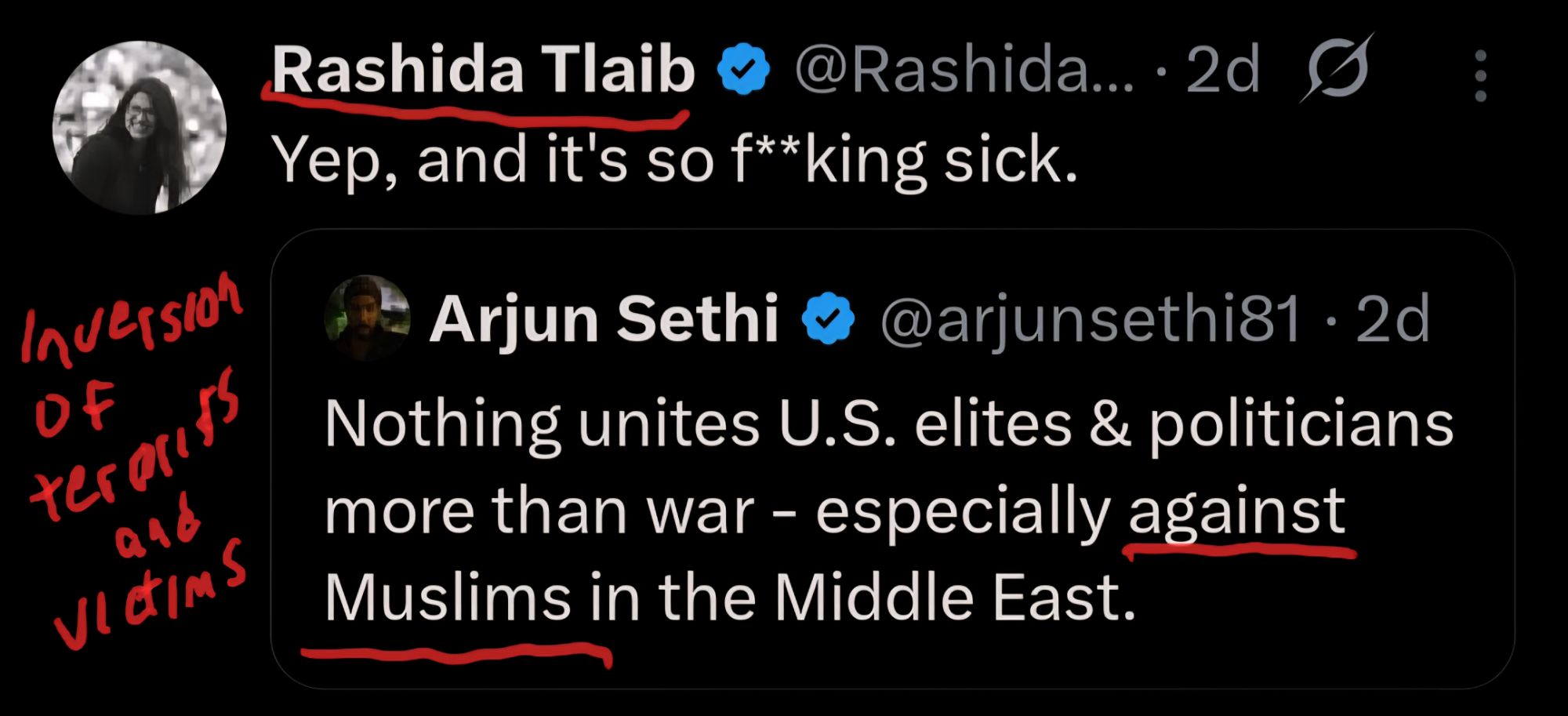
Rep. Rashida Tlaib (D-MI) tried to cast America and Israel as racist, and invert the reality of the fight against genocidal jihadists
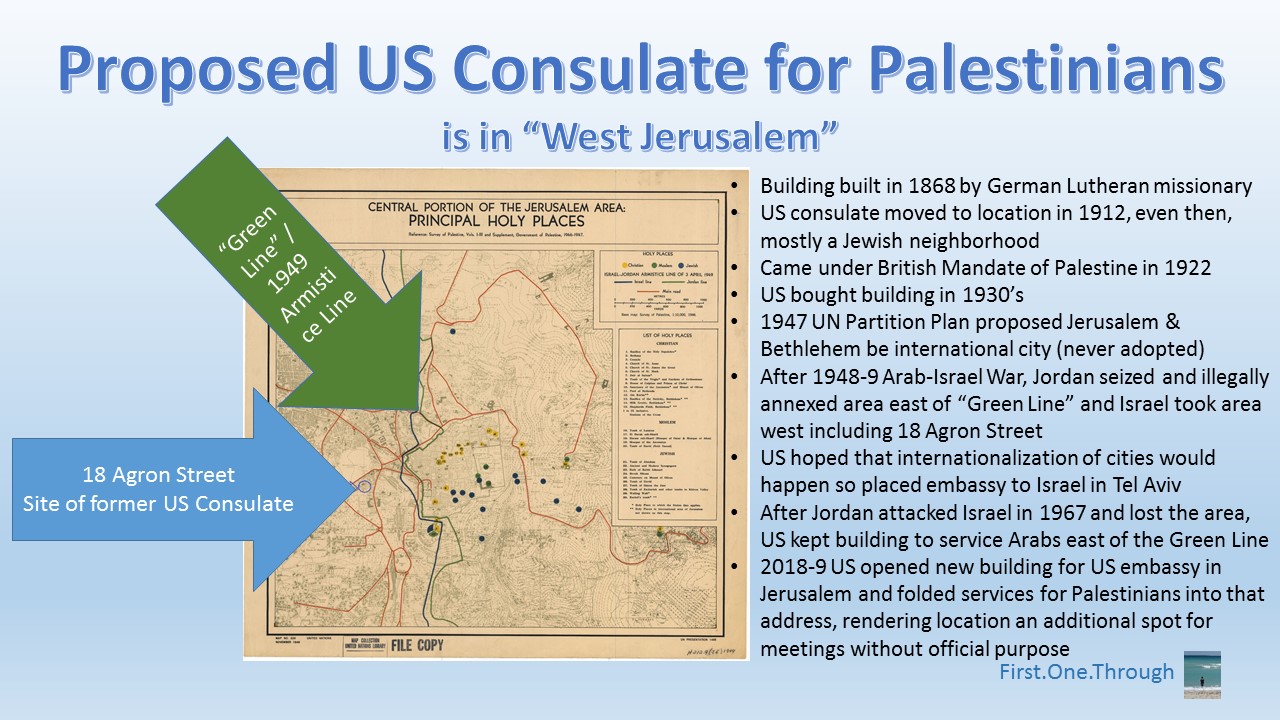
The outrage over the U.S. offering passport services in Efrat, in Area C east of the 1949 Armistice Lines (E49AL) as “normalizing annexation” is manufactured.
For many decades, the United States operated a consular office in the western part of Jerusalem on 18 Agron Street, providing passport and visa services to Palestinian Arabs. It was situated in the area that Israel assumed control of in 1949, not 1967 when the “West Bank”/E49AL came under Israeli authority in the country’s defensive war against Transjordan. Still, some countries considered western Jerusalem “disputed” and subject to future negotiations.
Yet when the U.S. ran consular services there, it was treated as routine diplomacy.
Former U.S. office for Palestinian Arabs located in “Western Jerusalem” which has been part of Israel since the end of the 1948-9 War
Now the U.S. offers passport services in Efrat and suddenly it’s a diplomatic crisis.
Why? Because the issue is not passports. It is Jews living beyond the 1967 lines.
The U.S. action is “a dangerous precedent and a blatant alignment with the enemy’s Judaization plans… a practical recognition of the legitimacy of settlements and the enemy’s control over the West Bank.” – HAMAS, a U.S. designated foreign terrorist organization regarding the passport office in Efrat
Disputed means disputed. It cannot mean “routine” when Palestinians receive services in western Jerusalem but “provocation” when Jews receive services in Area C.
Efrat sits in Area C under the Oslo Accords, territory left for final-status negotiations. It was not designated sovereign Palestinian land, and was a Jewish community before the regional Arabs launched a war to destroy Israel at its founding in 1948. In multiple Israeli peace offers, the Gush Etzion bloc – including Efrat – was to be incorporated fully into Israel through land swaps.
Passport services mean nothing about recognizing sovereignty. The hysteria reveals a double standard: Jewish civilian life in contested areas must remain politically radioactive, even when identical administrative acts for Arabs elsewhere pass without comment.
The U.S. decision is “a clear violation of international law” and “participation in the crime of silent annexation.” – Palestinian Islamic Jihad, a U.S. designated foreign terrorist organization
The controversy is not about diplomacy. It is about delegitimizing the presence of Jews.
And demanding that Jews be barred from living somewhere – anywhere, let alone in their holy land – is plainly antisemitic.
New York City Mayor Zohran Mamdani just appointed Ana Maria Archila of the Working Families Party to lead the Mayor’s Office of International Affairs. She will serve as the city’s chief liaison to the United Nations and the State Department.
She doesn’t care much for Israeli Jews.
In 2018, Archila became a national symbol of “believe survivors” during the confirmation fight over Brett Kavanaugh. She demanded that allegations of sexual violence be treated with complete moral seriousness.
Yet in June 2024, she had no issue championing Rep. Jamaal Bowman who had taken to the streets of his district after the heinous October 7, 2023 Arab massacre of Israelis to yell to a crowd that the story of Hamas raping Jewish women was a lie.
To add toxic fuel to the fire, while dozens of Jewish Israeli women remained captive in the terror tunnels of Gaza by the Palestinian leadership, Archila yelled at the Bowman rally (4:47) that “we end foreign policy that keeps Palestinian people in shambles and Palestine in shackles.” That is not an exaggeration: she came out to a rally to support a rape denier and yelled that the victims of kidnapping were actually the perpetrators.
Now Mayor Zohran Mamdani is elevating Archila into an international-facing role for New York City, the city with the largest Jewish population outside Israel.
In the alt-left political establishment in New York City today, raped Jewish women are not to be believed, their kidnapping is to be mocked, and their tormentors are to be canonized before cheering crowds.
The story of the 1936 Summer Olympics is usually told as a duel between tyranny and talent.
Adolf Hitler builds a showcase for Aryan supremacy.
Jesse Owens wins four gold medals.
The German hateful ideology collapses.
But Berlin was more complicated. The Games revealed two prejudices at once: Nazi racial doctrine and American racism and antisemitism. While very different in scale and intensity, both were present on both sides of the Atlantic.
Two Jewish-American sprinters – Marty Glickman and Sam Stoller – were expected to run the 4×100 relay. Yet hours before the race, they were removed from the lineup and replaced by Owens and Ralph Metcalfe.
The official explanation was tactical: field the fastest possible team. The United States won gold in world-record time.
Yet the context was unavoidable. Glickman and Stoller were the only two Jewish runners on the U.S. track squad. Nazi Germany had already stripped Jewish athletes of meaningful participation. Their removal ensured that no Jewish athlete would stand on the Berlin track podium.
Glickman later said:
“I’ve always believed that we were taken off the relay team because we were Jews.”
Stoller observed:
“The only two Jews on the team were replaced.”
No archival proof confirms American coordination with Nazi officials. But antisemitism did not need a written agreement to operate. In the 1930s, American universities maintained Jewish quotas. Elite institutions limited Jewish membership. Prejudice was structural, even if unofficial.
Berlin exposed it.
Owens and Segregated America
Owens’ victories shattered Nazi racial mythology in the stadium but did not dissolve racial barriers in America.
The popular tale claims Hitler snubbed Owens. Owens himself redirected the accusation:
“Hitler didn’t snub me—it was our president [Franklin D. Roosevelt] who snubbed me. The president didn’t even send me a telegram.”
Owens continued:
“I wasn’t invited to shake hands with Hitler, but I wasn’t invited to the White House to shake hands with the President either.”
And when he returned home:
“After those stories about Hitler snubbing me, I had to live under segregation.”
In Berlin, Owens stayed in the same hotel as white teammates. In parts of the United States, he entered through separate doors.
Two Systems, One Lesson
Nazi Germany codified antisemitism and racism into law and would soon escalate that hatred into genocide. While the United States did not operate extermination camps, it did operate segregated schools, restricted neighborhoods, Jewish quotas, and closed clubs.
The differences in scale and brutality were enormous. The presence of prejudice in both societies was real.
One of those hatreds remains embedded in American history, while the other has been buried.
The common narrative that Owens and Team America gave a big middle finger to Hitler’s Germany in the 1936 Olympics by showcasing Black talent is incomplete. In many ways, the real lasting insult and pain was to Jews, not Nazis.
History has a grim rhythm. The most destructive ideas rarely hatch overnight but stew in society. They are excused as rhetoric, theater, or “just politics.” Then—roughly five and a half years later—they explode.
This is not numerology. It is pattern recognition.
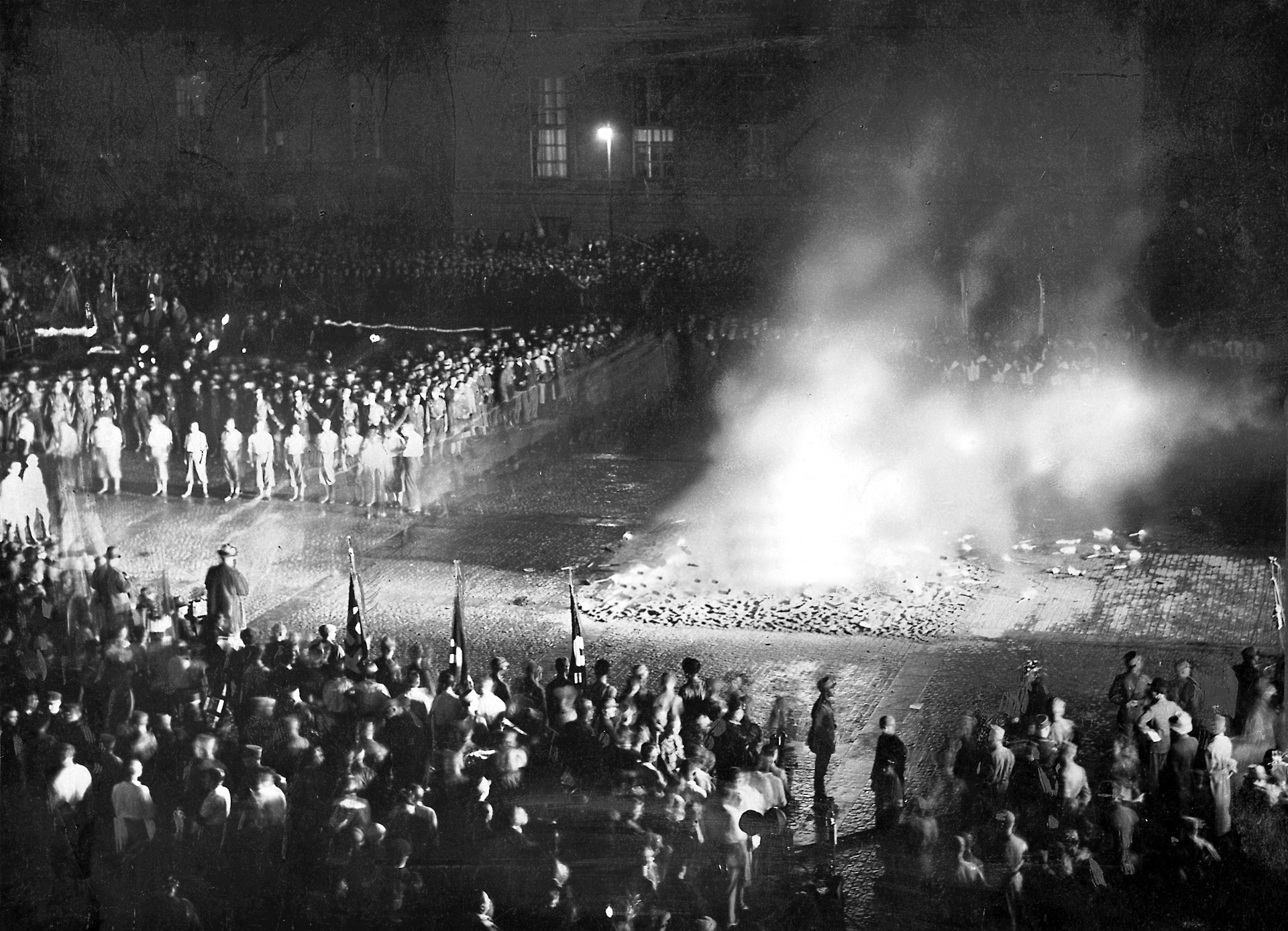
In 1933, Germans burned Jewish books in public squares. It initiated the cultural permission for the destruction of Jews. Five and a half years later, that permission hardened into the machinery of the Final Solution.
Als Höhepunkt einer von Joseph Goebbels initiierten ‘Aktion wider den undeutschen Geist’ werden auf dem Opernplatz in Berlin von Studenten und SA-Einheiten Bücher von Autoren verbrannt, die den Nationalsozialisten mißliebig waren.
In 2018, Gaza launched the so-called “Great March of Return.” It acted as a trial run to invade Israel and slaughter Jews. Five and a half years later, October 7 arrived—mass murder, rape, kidnapping—exactly as promised and practiced.
Ideas announce themselves early. The damage arrives later.
Today, in America, a new idea is being spoken aloud with disturbing ease: personal property is conditional.
Property Is the Load-Bearing Wall
Private property is not a side feature of capitalism; it is the load-bearing wall. Remove it and the structure collapses—investment freezes, contracts become jokes, and capital flees to wherever the rules still mean something.
Yet in recent years, voices across the ideological spectrum have started to say the quiet part out loud.
On the progressive left, figures like Zohran Mamdani and his partners in crime like Cea Weaver have openly argued that housing and land can be seized or overridden by the state in the name of moral urgency. Ownership becomes a social inconvenience. “Use” replaces title. Force replaces consent.
On the populist right, Donald Trump has flirted with the same heresy from a different direction—embracing sweeping government power over land, contracts, and assets when it suits political goals. The rhetoric differs. The result converges.
When the left and right agree that property rights are optional, the center cannot hold.
From Rhetoric to Ruin
Every historical catastrophe begins with intellectual laundering.
Book burning was framed as cleansing culture. The Gaza marches were framed as civil resistance. Property seizure is framed as compassion or patriotism.
Once a society accepts that ownership is contingent on political favor, every asset becomes provisional. Homes, farms, factories, patents—nothing is safe from the next emergency, the next slogan, the next election.
Capital responds rationally. It leaves. Innovation slows. Black markets thrive. Strongmen fill the vacuum. What follows is not equality but scarcity enforced by power. And there will be a scapegoat, and Jews have proven the most convenient.
July 2031 Is Not Far Away
Count forward five and a half years.
Ideas being normalized today will be policy tomorrow. Policies will become enforcement. Enforcement will become precedent. By the summer of 2031, the damage will no longer be theoretical.
This is how capitalism dies—not with tanks in the streets, but with applause for confiscation. This is how world order fractures—not through invasion, but through the voluntary abandonment of the rules that made prosperity possible.
This is how the Global North will collapse-not through open country borders, but the eradication of personal property lines.
The lesson of history is brutally clear: destruction is foretold in dangerous gestures towards property that eventually comes for the persons who own them.
Venezuela has arrived in New York City in two forms.
One arrives carrying the wreckage of a socialist system that hollowed out a country by redefining private property as moral corruption and state control as virtue. That experiment ended in scarcity, corruption, and mass flight. Its leaders now face judgment far from home, a coda to a long collapse.
The other arrival is quieter, bureaucratic, and far more consequential. It moves through City Hall.
Words That Become Policy
“Private property — especially homeownership — is a weapon of white supremacy masquerading as wealth-building public policy.”
Those words were written by Cea Weaver, who now holds authority inside New York City government over housing regulation, landlord enforcement, and real estate policy.
This is a moral judgment about ownership itself. Homeownership is framed as harm. Property is recast as a moral hazard. The implication is straightforward: what has long been treated as legitimate must be dismantled.
Knowing full well her position about private real estate and home ownership, Weaver was elevated into a role designed to shape housing outcomes by Democratic Socialist Mayor Zohran Mamdani.
Real Estate as the Lever
Because housing is where ideology becomes operational.
Weaver’s portfolio centers on real estate because real estate concentrates independence, savings, and permanence. It is immobile, heavily regulated, and politically sensitive. Those traits make housing the easiest sector in which to normalize forced redistribution through regulation rather than spectacle.
Within Democratic Socialist thought, housing functions as the primary front for structural change. The stated objective is “decommodification” — removing housing from private markets through eminent domain and insulating it permanently from profit. Achieving that objective requires stripping ownership of legitimacy and transferring control to the state or state-backed collectives.
Jacobin Makes the Case Explicit
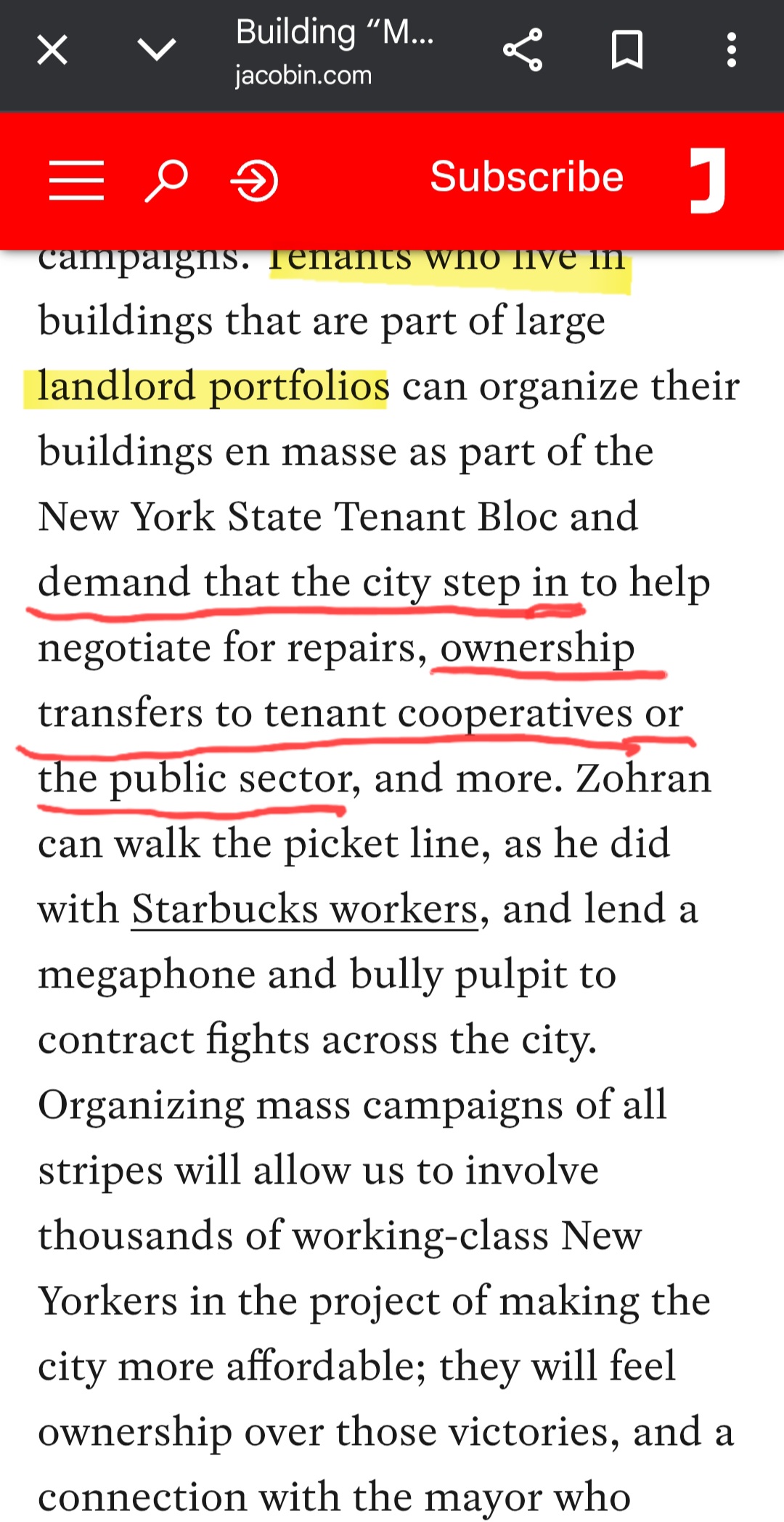
That program is reinforced repeatedly in Jacobin, the flagship publication of democratic socialism. Its housing coverage goes well beyond expanding public housing or strengthening tenant protections. It openly endorses removing homes from private ownership.
Jacobin has praised campaigns such as Berlin’s Deutsche Wohnen & Co Enteignen, which was approved by voters in 2021, calling for the expropriation of privately owned residential housing and its transfer to public control. It regularly argues that landlord property rights must yield to collective ownership if housing justice is to be achieved.
The logic is consistent: justice requires taking housing out of private hands.
Venezuela’s Sequence Is Familiar
Venezuela followed this same sequence.
Ownership was recast as exploitation. Returns were constrained. Controls expanded. Maintenance collapsed. Scarcity spread.
By the time property was openly seized, the groundwork had already been laid. Confiscation felt justified because ownership had already been condemned. Language prepared the public long before policy completed the transfer.
History records this pattern with grim consistency.
Ideological Alignment at City Hall
Zohran Mamdani placed Weaver precisely where her beliefs carry consequence.
“Impoverish the “white” middle class. Homeownership is racist/failed public policy.” – Cea Weaver
Democratic Socialists today debate pace and scope more than premise. Housing is the testing ground because it touches wealth, stability, and autonomy simultaneously. Alter the rules of ownership there, and broader economic control becomes easier to assert.
Donald Trump Begins to Align with Democratic Socialists on housing
And it seems that President Donald Trump is getting on board.
Trump just announced that he will ban institutional investors from buying single family homes. The goal is to keep the housing market acting rationally based on normal individual demand, rather than bowing to the force of massive realtors controlling rent prices.
It is not stripping individuals of their homes the way Weaver desires, but a first step in meeting the mission part way.
Naming the Mechanism
When government redefines private assets as illegitimate and reallocates them through enforcement, penalties, and regulatory attrition, the economic effect remains consistent regardless of branding.
Control shifts away from owners. Value erodes. Decision-making migrates to the state.
“As landlords exit the market, using state action to acquire properties and leverage divestment to convert thousands of homes into publicly and democratically controlled land/housing.” – Cea Weaver
“The president and his team are discussing a range of options to pursue this important foreign policy goal [of seizing Greenland], and of course, utilizing the U.S. military is always an option at the commander-in-chief’s disposal.” – Trump’s White House
Language about equity or justice does not change outcomes for families whose homes become conditional assets rather than protected property. Redistribution through regulation or seizure is theft.
People think of Donald Trump as a true Conservative; he is not. He spent years as a Democratic real estate developer in New York City. Owning, controlling and licensing property is in his bloodstream.
We are entering a dangerous moment when government leaders of the right and left are converging on the thesis that the state is the arbiter of private property, including your house.
The Question That Matters
A society either treats private property as legitimate or places it at the discretion of the state.
Once ownership depends on ideological approval, it no longer functions as a right. Capital withdraws. Investment slows. Stability erodes. Liberty disappears.
Venezuela already supplied the answer.
History rarely announces itself as collapse. It usually arrives disguised as compassion, long before the consequences become unavoidable.
Political power is built when ideology is fused to daily life. Theory alone persuades few and charity alone commands none. Durable movements embed a worldview inside services people rely on, until dependence becomes loyalty.
That was the formula in Gaza. It is the same formula now visibly rising in New York.
Hamas entered Gaza with a rigid morally corrupt worldview long before it ruled. Its clinics, schools, mosques, and charities were never neutral. They delivered aid while teaching a doctrine that explained suffering, identified enemies, and promised redemption through allegiance. Service and ideology arrived together.
The Democratic Socialists of America advances along the same dual track in American cities. Mutual aid, tenant organizing, bail funds, and rent clinics function as delivery systems for a moral framework that divides society into oppressors and oppressed, treats ownership as suspect, and elevates redistribution as justice. Assistance arrives bundled with belief.
In both cases, aid becomes initiation and gratitude becomes allegiance.
The Manifesto: How Movements Legitimize Seizure
Grassroots legitimacy does not sustain power by itself. Movements require a manifesto—a moral architecture that explains why people suffer and who is to blame.
Hamas supplied that architecture in its 1988 foundational charter. The document framed politics as a total moral struggle, casting Jews collectively as illegitimate manipulators of capital and institutions, thieves of land and destiny. Jewish presence, ownership and sovereignty were criminalized. Seizure was the cure to restoration. Compromise vanished and was vilified. The charter’s function was clear: define an enemy class, strip legitimacy, and authorize permanent struggle.
The New York analogue operates through a different medium with the same effect. In the DSA ecosystem, capitalists and landlords are portrayed as extractive and illegitimate. Profit is framed as violence with ownership recast as theft. Confiscation is moralized as justice.
Jews are often implied rather than named—refigured as landlords, financiers, “Zionists,” or beneficiaries of immoral systems. Jewish capital becomes shorthand for illegitimate capital. The logic is identical: identify a moral contaminant and justify its removal.
Every mass movement needs a villain. The manifesto supplies one.
After Victory: Asset Capture as Governance
When Hamas seized Gaza in 2007, its parallel institutions fused into rule. Aid became leverage. Employment became conditional. Permits learned loyalty.
Then came Hamas’s most consequential real-estate empire: the tunnel network. A vast underground system ran beneath homes, schools, mosques, and hospitals—an invisible city binding the population into the movement’s infrastructure. Security, storage, command, and coercion converged below ground. Benefits flowed to the loyal. Dissent was isolated.
Governance became permanent: mobilization with infrastructure.
The governing theory now circulating in New York mirrors this logic. Mass governance insists movements never demobilize after elections.
Housing is the fulcrum. Advocates call for seizing or socializing rental property, transferring control to movement-aligned entities, and moralizing ownership itself. What cannot leave becomes the lever.
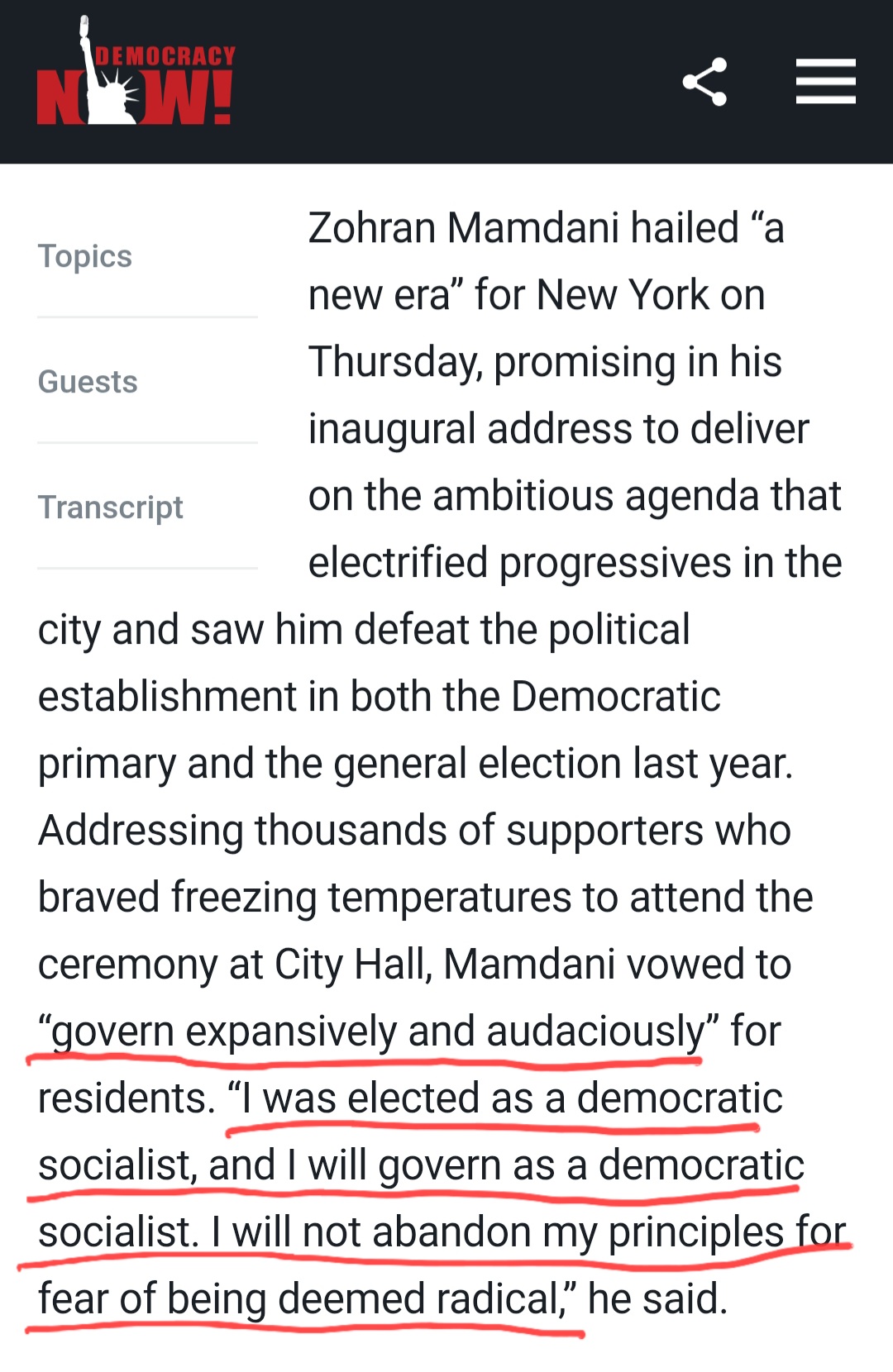
New York City Mayor Zohran Mamdani states openly that he will “govern expansively and audaciously” and not change course for being deemed too “radical.” What was once viewed as crazy is being normalized and soon to be implemented.
Redistribution Without Production
Hamas never built a productive economy in Gaza. It did not need to. External money—almost all of it routed through international “aid”—financed the broken economy. Governance ran on grievance and allocation. The system extracted and redistributed; it did not grow.
The same risk shadows New York’s mass-governance vision. There is no emphasis on productivity, investment, or growth. The emphasis is on free stuff and redistribution from outside: state transfers, federal dollars, and seizing capital from more wealthy citizens. When the mobile capital inevitably leaves, the focus will intensify on seizing what cannot leave: real estate. As jobs and taxpayers depart, redistribution turns inward. Assets are moralized, then absorbed.
The Bigger Warning: This Is Happening in New York
This is not unfolding in a peripheral city. It is unfolding in New York City—the capital of capitalism.
DSA-NYC backed Zohran Mamdani
A redistribution-first governing theology imposed here would not be contained. When growth is dismissed as immoral and allocation is elevated as virtue, capital leaves, talent migrates, and pressure turns inward.
The danger compounds because New York is also home to one of the largest Jewish populations in the world. History is unambiguous: when movements moralize capital and cast Jews—explicitly or implicitly—as its avatars, the outcome is rupture. Flight. Confrontation. Violence.
An antisemitic movement consolidating power beside Jewish life at this scale resulted in the deaths of tens of thousands in Israel and the terrorist enclave of Gaza. It is an impending disaster in New York.
Hamas showed the arc in Gaza: from grassroots mobilization plus ideology, to framing the enemy who causes despair, to asset confiscation and control, to an entrenched vicious philosophy financed by redistribution without production.
DSA-NYC is following the same arc, adapted to American law and language.
When the capital of capitalism abandons growth and sanctifies seizure, the city stops creating wealth and starts fighting over remnants.
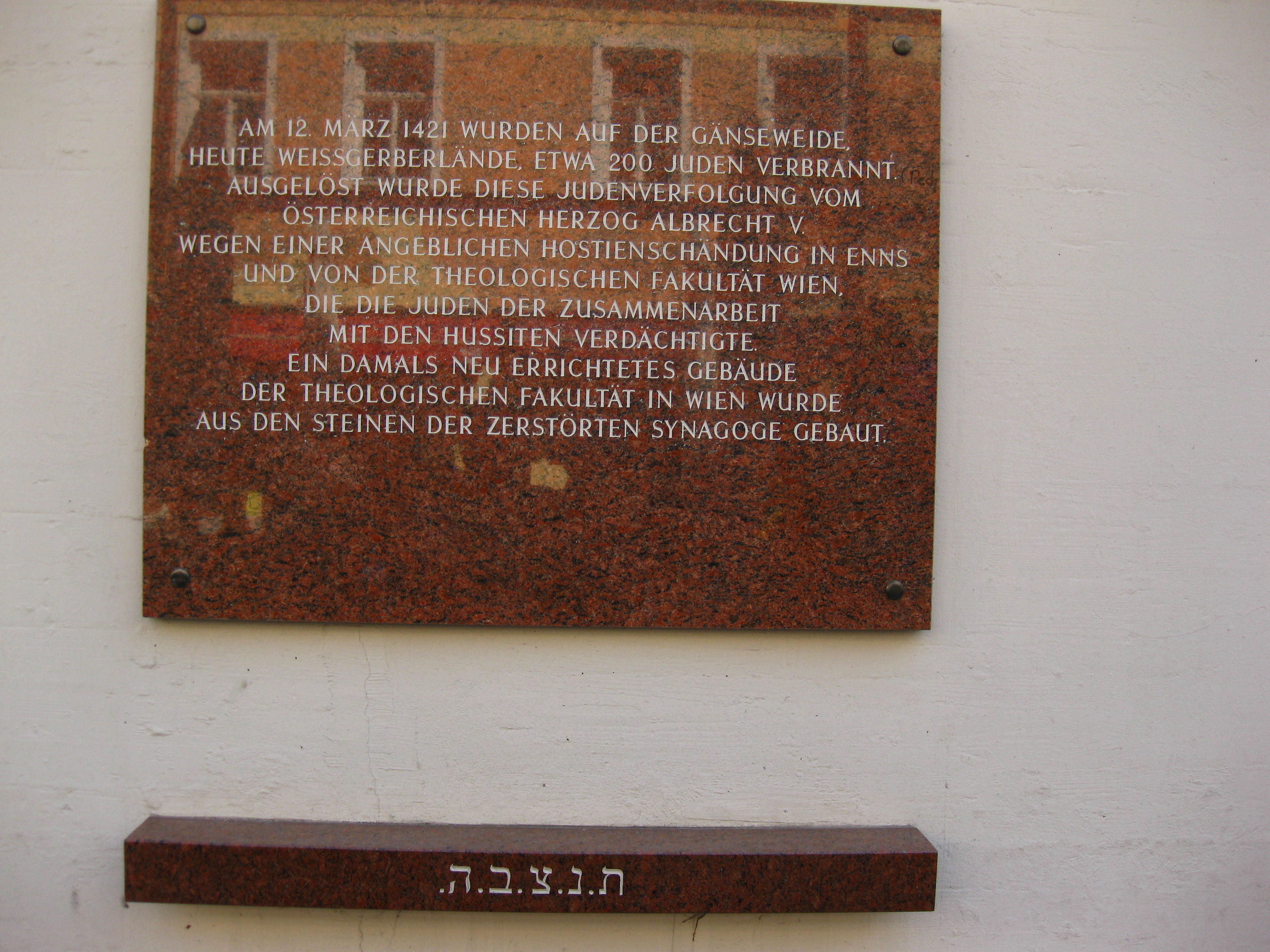
Memorial plaque in Vienna, Austria. In 1420, all Austrian Jews were arrested; 270 were burned at the stake, while the others were expelled and their property confiscated. The Vienna Gesera in 1421 brought the Jewish community in the Middle Ages to a truly bloody end. The root causes were antisemitism mixed with an economic desire to cancel debts.



















 First One Through