The “Great Myth of Return”

The Palestinian Arabs are engaged in a “protest” at the Gaza border with Israel to draw attention to their “Right of Return” to land in Israel. Pro-Palestinian organizations like Al Jazeera (Qatar) and Press TV (Iran) have produced videos related to the Arabs’ rights. The use of animation and live interviews however do nothing to educate people with actual facts, and how the claim of a Palestinian “Great March of Return” is a sham.

Global International Law

The United Nations developed a Universal Declaration of Human Rights that underscored the basic human rights that all people in the world possess. The UDHR states clearly in Article 13 that:

“1. Everyone has the right to freedom of movement and residence within the
borders of each State.
2. Everyone has the right to leave any country, including his own, and to
return to his country.”

Note that the relevant clause is that a person is entitled to leave his COUNTRY and then return to that country. For Jews, that means that the remaining survivors of the 850,000 people that were kicked out of Arab countries including Iraq, Egypt, Libya and Morocco have the basic human right to return to that country, should they so desire. However, the Stateless Arabs of Palestine (SAPs) have no such right, as Palestine was never a country but an administered region from 1924 to 1948.

The principle of returning to a house, land or town is not based on universal standards, but found in a niche resolution to address the SAPs several decades ago.

Specialized Resolution for Palestinian Arabs also Fail

On December 11, 1948, the United Nations General Assembly passed Resolution 194 in the middle of Israel’s War of Independence. Article 11 stated:

“Resolves that the refugees wishing to return to their homes and live at peace with their neighbours should be permitted to do so at the earliest practicable date, and that compensation should be paid for the property of those choosing not to return and for loss of or damage to property which, under principles of international law or in equity, should be made good by the Governments or authorities responsible;”

This is the clause that the Palestinian narrative continues to call out, but it fails in many regards:

  • There are fewer than 30,000 “refugees” from 1948 are alive today. The millions of descendants that claim a right to return have no such claim as they are not refugees;
  • The actions of the Palestinians have clearly shown that they have no desire to “live at peace with their neighbors,” as evidenced by the many wars and terrorism waged against Israel, the election of a Holocaust denier to the presidency that pays people to kill Israeli Jews, and the election of the terrorist group Hamas to a majority of the Palestinian parliament

Further consider that the same UNGA Res 194 made other statements that the Palestinian Authority rejects, such as Articles 7 and 8:

“detailed proposals for a permanent international regime for the territory of Jerusalem…”

“Resolves that, in view of its association with three world religions, the Jerusalem area, including the present municipality of Jerusalem plus the surrounding villages and towns, the most eastern of which shall be Abu Dis; the most southern, Bethlehem; the most western, Ein Karim (including also the built-up area of Motsa); and the most northern, Shu’fat, should be accorded special and separate treatment from the rest of Palestine and should be placed under effective United Nations control;”

The Palestinians are seeking to turn eastern Jerusalem into its own capital, not a permanent UN town. The PA claims that it already has control of part of this Corpus Separatum – Bethlehem – which they took over in December 1995. Are the Palestinians going to abandon Bethlehem and scheme for eastern Jerusalem, or will they just cherry-pick from UN 194 to validate an invasion of Israel?


The UN’s Corpus Separatum from UN Resolution 181

One could possibly argue that around 30,000 SAPs over 70 years old who are interested in moving to Israel and living in peace should be allowed to do so, but the Friday protests at the Gaza border are full of young people. These people have no legal rights to move to Israel and their actions at the border constitute a threat of invasion and must be addressed on such basis. And if the PA acting president Mahmoud Abbas wants to quote UN Resolution 181 (which the entire Arab world rejected in 1947) and UN Resolution 194, he should be prepared to relinquish Bethlehem and dreams of eastern Jerusalem.

Palestinian Arabs’ “Great March of Return” is nothing more than the “Great MYTH of Return.”


Related First.One.Through articles:

Corpus Separatum Ended Forever in 1995

Stabbing the Palestinian “Right of Return”

Time to Dissolve Key Principles of the “Inalienable Rights of Palestinians”

Removing the Next Issue – The Return of 20,000 Palestinian Arabs

Losing Rights

Delivery of the Fictional Palestinian Keys

Subscribe YouTube channel: FirstOneThrough

Join Facebook group: FirstOne Through  Israel Analysis

I call BS: You Never Recognized Jerusalem as Israel’s Capital

The United States officially recognized Jerusalem as Israel’s capital on December 6, 2017. Several countries have made a variety of arguments as to why they have not – and will not – similarly recognize Israel’s capital city.

Some countries note that Israel’s action on July 30, 1980 in which it declared that “Jerusalem, complete and united, is the capital of Israel,” was declared illegal by the United Nations Security Council.

Did countries recognize Jerusalem the day before on July 29, 1980? No.

Some countries say that they have not recognized Jerusalem as the capital of Israel because the “acquisition of territory by military conquest is inadmissible,” so they cannot recognize the eastern half of Jerusalem that was held by Jordan before the Six Day War of June 5 – June 10, 1967.

Did countries recognize the western portion of Jerusalem before the war on June 4, 1967? No.

How is it that so few countries EVER officially recognized Jerusalem as Israel’s capital, going back to the end of the war of independence? There was no controversy related to eastern Jerusalem during those 18 years until the Jordanians attacked Israel in June 1967, and lost the territory that they had illegally annexed.

Let’s be candid. The issue surrounding Jerusalem has always been about money, in particular, the Suez Canal in Egypt and the Arab world’s enormous oil wealth. Today, it continues to be trade, albeit it is much less important to the global economies than it was decades ago.

The excuse about the eastern half of Jerusalem which includes Muslim holy sites is a fig leaf covering the world’s lust for Arab money, from 1948 until today.


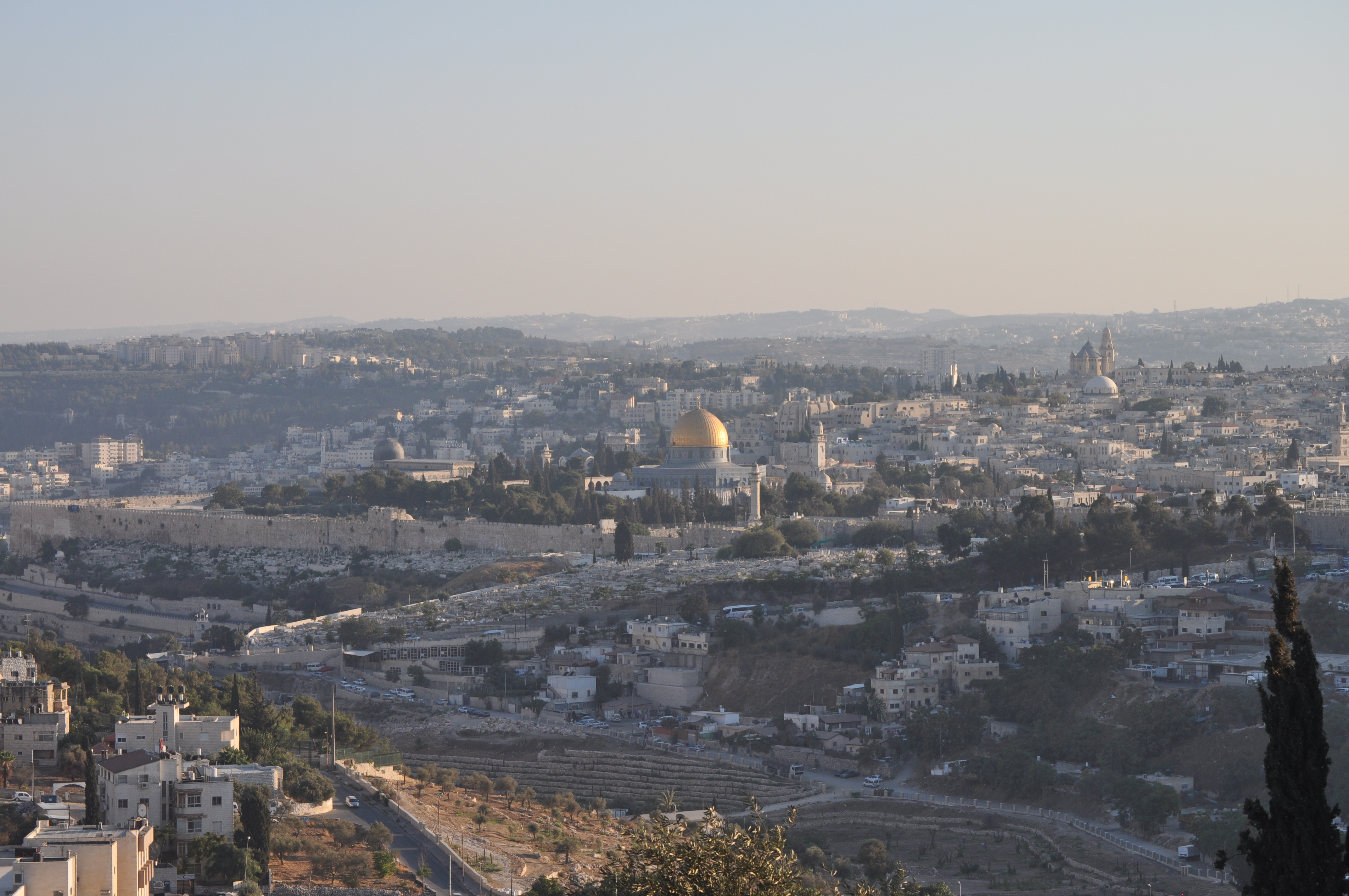
A view of the Old City of Jerusalem from Mt. Scopus
(photo: First.One.Through)

And the fig leaf is porous.

Countries already recognize the western half of Jerusalem as being an integral part of Israel. Further, many world leaders (including US Presidents Bill Clinton and George W Bush) came to Israel’s capital and addressed the parliament in Jerusalem. They recognized Jerusalem both as part of Israel and de facto as its capital.

Even German Chancellor Angela Merkel in March 2008 spoke at the Israeli Knesset. So when Merkel now states that “the status of Jerusalem is to be resolved in the framework of a two-state solution,” she unashamedly plays out the farce. Germany DOES recognize the western part of Jerusalem as part of Israel and as its functioning capital, but does not want to do it in an “official” capacity as it believes that withholding such recognition might enrich Germany through better relations and economic trading with the dozens of Arab and Muslim countries, and minimize the terrorism in Germany from Islamic extremists. As that seems a bit cold, Merkel put forward the red herring of seeking peace, as if recognizing reality somehow harms peace.

Let’s be clear: most of the world recognizes Jerusalem as Israel’s capital already. The farce of countries not “officially” recognizing Jerusalem is positioned as a prod that pushes Israel towards a peace agreement. But it is nothing of the sort. It is a calculated trade-off between the dignity of the citizens of Israel on one hand, against the commercial self-interest of trading with Arab countries on the other. It is therefore appropriate for Israel to rethink its own trading policies with countries which have no qualms in humiliating it on the global stage.


Related First.One.Through articles:

Recognition of Acquiring Disputed Land in a Defensive War

The Arguments over Jerusalem

Religious Countries Respond to Israel’s Jerusalem

Both Israel and Jerusalem are Beyond Recognition for Muslim Nations

The New York Times Inverts the History of Jerusalem

The Invisible Flag in Judo and Jerusalem

The Custodianship of a Child and Jerusalem

750 Years of Continuous Jewish Jerusalem

Today’s Inverted Chanukah: The Holiday of Rights in Jerusalem and Judea and Samaria

Palestinians agree that Israel rules all of Jerusalem, but the World Treats the City as Divided

The Battle for Jerusalem

“East Jerusalem” – the 0.5% Molehill

Jerusalem, and a review of the sad state of divided capitals in the world

The Parameters of Palestinian Dignity

Subscribe YouTube channel: FirstOneThrough

Join Facebook group: FirstOne Through Israel Analysis
 

I am a Zionist. A Deep Zionist. An Amazed Zionist. A Loud Zionist.

I am a Zionist through and through, on level after level.


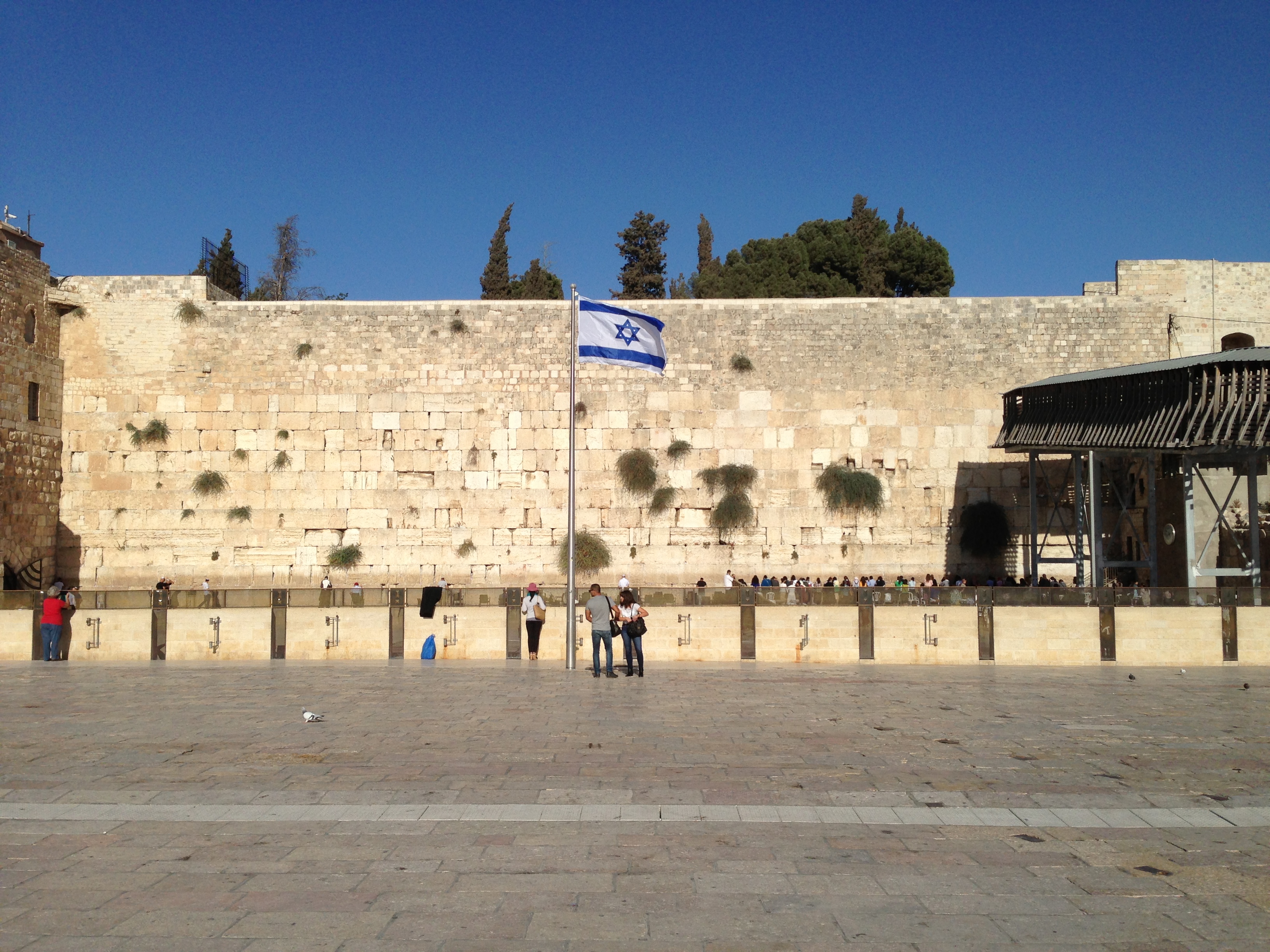
The Israeli flag at the Western Wall
(photo: First.One.Through)

I am a Zionist because I believe that the Jewish people have a right to self-determination in their homeland.

I am a deep Zionist because I know that no other religion has a connection to land like Jews. Only the Jews believe that God gave them a small parcel of land for an inheritance. The Jewish religion is the only religion that has distinct laws that can only be kept while in the Jewish holy land. The Jews invented the very notion of “holy land,” and have prayed facing Jerusalem for thousands of years.


A sign in Israel about the biblical commandment of Shmita
(photo: First.One.Through)

I am an amazed Zionist because I marvel at what the Jewish people have been able to do in just a few decades: to absorb millions of immigrants; to fend off hostile neighbors; to develop a thriving democracy; to lead the world in science and technology; and in efforts to forge a new era of peace, forgave a nation (Germany) that tried to eradicate them, and handed over their holiest location (the Jewish Temple Mount) to a hostile people that had banned Jews from even visiting the site.

I am an aggressive Zionist because I have internalized the history of Jews in their holy land. I have seen the Arab and Muslim world reject the very existence of the Jewish State and war against it repeatedly. I have read the polls that the Palestinians are the most anti-Semitic people in the world, that voted for the Hamas terrorist group to a majority of their parliament with the most vile anti-Semitic charter ever written, and that elected a Holocaust denier as a president that pays people to murder Israeli Jews and then celebrates their “accomplishments.”

I am a loud Zionist because I see how many people ignore and distort reality. How the United Nations can pass resolutions that ignore the 4000-year history of Jews in Israel, how universities and organizations apply unique and double standards for Israel and call out to boycott and strangle the only Jewish country.

I am a real world Zionist. I understand that Israel – like every country in the world – is not perfect. But I accept its imperfections and try to help it make improvements by working WITH the country, not against it.

I am an optimistic Zionist. I believe that countries and companies from around the world will be drawn to Israel’s intellectual capital, strong economy and stable currency that are built on the rule of established laws. The virtuous cycle of investment and trade will lead to stronger and stronger political relations and widespread peace.

I am an eternal Zionist. I have been one since before I was born and will remain one long after I’m gone.


Related First.One.Through articles:

The Arguments over Jerusalem

Israel: Security in a Small Country

Related First.One.Through videos:

God is a Zionist (music by Joan Osbourne)

Israel’s anthem is Hope (music by Enya)

Subscribe YouTube channel: FirstOneThrough

Join Facebook group: FirstOne Through Israel Analysis

Israel’s Soldiers Also Earn the Honors

Since Israel’s independence in 1948, Israel has won 12 Nobel Prizes, an incredible total for such a small country. When considering that over those 70 years the country had to fight numerous wars, absorb millions of immigrants and develop an economy, the total is even more remarkable.

Even when backing out Nobel Prizes awarded for peace, which is the most dubious category as it is more aspirational and political than the other categories, Israel has still won 9 prizes. That puts the country as a top five winner of Nobel Prizes per capita.

Rank Country Nobel Prizes since 1948  2017 Population (m)  Nobels per Capita Non-Peace Prizes  Nobels per Capita
1 Sweden 19                  9.90                  1.92 18                  1.82
2 Switzerland 15                  8.37                  1.79 15                  1.79
3 Norway 8                  5.23                  1.53 8                  1.53
4 United Kingdom 93                65.64                  1.42 86                  1.31
5 Israel 12                  8.55                  1.40 9                  1.05
6 Austria 9                  8.75                  1.03 8                  0.91
7 Ireland 6                  4.77                  1.26 4                  0.84
8 Hungary 8                  9.82                  0.81 8                  0.81
9 Germany 60                82.67                  0.73 58                  0.70
10 Denmark 4                  5.73                  0.70 4                  0.70

The country also proves itself to be a leader in the commercial application of science and technology. Israel ranks as number 8 regarding patent filings per capita.

Rank Country  2016 patent filings  2017 Population (m)  Filings per capita
1 Switzerland            47,000                   8.37               5,614
2 South Korea         233,786                 51.25               4,562
3 Japan         456,467               127.00               3,594
4 Sweden            23,453                   9.90               2,368
5 Netherlands            39,058                 17.02               2,295
6 Germany         177,073                 82.67               2,142
7 Denmark            11,727                   5.73               2,046
8 Israel            15,108                   8.55               1,768
9 United States         521,802               325.70               1,602
10 Austria            13,869                   8.75               1,586

Not surprisingly, there is a strong correlation to the science awards and Nobel prizes in science to the educational level of the population. Israel ranks #2 in terms of the percent of the population with a tertiary education.

Rank Country  % Population with Tertiary education
1 Canada 51%
2 Israel 46%
3 Japan 45%
4 United States 42%
5 New Zealand 41%
6 South Korea 40%
7 United Kingdom 38%
8 Finland 38%
9 Australia 38%
10 Ireland 37%

The statistics above are simple numerical facts. Various organizations use these numbers and others to provide their views of the “qualitative” nature of the country by different measures.

For example, The Heritage Foundation produced its 2018 freedom ranking of 180 countries. It used measures such as the rule of law, property rights and openness of its markets to score each country. Israel ranked #31, ahead of some of the countries listed in the statistical tables above such as Austria #32 and Hungary #55, but behind the others. The Economist had a similar ranking, placing Israel as tied for #30. This is likely due to Israel’s hostile neighbors, many of which do not recognize its right to exist and are at an official state of war, which compromises some of Israel’s freedoms. This dynamic is in contrast to the other countries on the list, that have not fought four wars and multi-year mass riots since the turn of the century.

However, it is interesting to note that several of the countries that lead in science do not just lead in education, but have a mandatory military draft like Israel, including: Denmark; South Korea; Norway and Switzerland. The book Start-up Nation, attributes much of Israel’s economic success to the training a person gets in the army. Those skills are not limited to technical training, but also leadership and a sense of communal belonging. Perhaps countries like Denmark and Switzerland have similarly benefited from military training.

But none of those other countries have faced the missiles, gunfire, bombings, the wars and riots that Israel has had to endure. Switzerland continues to reduce the size of its army and holds a vote every few years to abolish conscription. It views the army as a holdover of a different time. Yet Israelis know that enemies that seek the country’s destruction are just miles away. Today.


Israeli soldiers at Har Herzl in Jerusalem

And so it is perhaps appropriate to pause on Yom Hazikaron, the day of remembering the fallen Israeli soldiers, to recall not just their sacrifice, but to honor them with a helek, a portion of every Nobel Prize, every doctorate, every award won and every IPO completed by each Israeli since the country’s founding. Every soldier has earned a part of it too.


Related First.One.Through articles:

Israel, the Liberal Country of the Middle East

A Flower in Terra Barbarus

Israel’s Peers and Neighbors

The Color Coded Lexicon of Israel’s Bigotry: It’s not Just PinkWashing

Israel: Security in a Small Country

Subscribe YouTube channel: FirstOneThrough

Join Facebook group: FirstOne Through Israel Analysis
When Hate Returns

Yom Hashoah, the Day of Remembering the Holocaust, is often a time for people to think about antisemitism generally, and not just the massacre of Jews at the hands of the Nazis and their abettors.

Many books have been written about the history of antisemitism, one of the best being “A Convenient Hatred: The History of Antisemitism” by Phyllis Goldstein. She tracks the nature of antisemitism at different points in history and in different lands. In her diagnosis, the root causes are often unique to that particular time and place.

I would like to consider when hate returns to a particular country under a different guise, such as historic antisemitism manifesting itself as anti-Zionism today. There are many examples, but this review will focus on the United Kingdom 1290/1929 and 1713/1939.

Banning Jews from England 1290
Banning Jews from Hebron 1929

1290 England: The origin of the “blood libel,” that Jews sought and and killed Christian children, began in England in the twelfth century. It its original incarnation, the accusation was that Jews killed the Christian, much as they had killed Jesus. Over time, the claims continued that the Jews used the child’s blood on Passover to make matzah and for the four cups of wine at the seder. Whether the people’s attacks on England’s Jews led to the edict of expulsion in 1290 is a source of debate, but the fact that King Edward I forced all Jews to leave the country and quickly seized their belongings and cancelled all debts that they were owed may indicate a financial motivation as well.

1922 Jordan & 1929 Hebron: The British assumed the mandate of Palestine in 1922 and quickly separated the land east of the Jordan River for the Hashemite Kingdom to win local friends, as they tried to do in other Arab lands including Iraq. They promptly ignored key components of the Palestine Mandate which clearly spelled out that no individual could be excluded from the land because of his religion, by allowing the Arabs to ban all Jews from the region. Just a few years later, in response to Arab riots in which they slaughtered several dozen Jews in the ancient Jewish city of Hebron, the British “evacuated” the remaining Jews from the city and moved them to Jerusalem, presumably to protect the Jews from future attacks. Jordan would remain Jew-free to this day, while Hebron would only be Jew-free until 1967, after the Jordanian Arabs attacked Israel and lost the west bank of the Jordan River to Israel, including Hebron.

The British leadership followed the antisemitism of the British people to expel the Jews of England in the 13th century, and would follow the antisemitism of the Arab people to expel the Jews from various parts of the Middle East during the 20th century.

Tolerating Antisemitism in Gibraltar in 1713
Tolerating Antisemitism in Palestine in 1939

1713 Gibraltar: Beginning in 1290, England would not allow any Jews to live openly in its lands for over 360 years. It was only in 1656 under Oliver Cromwell that Jews were allowed to return (presumably under the guise of trying to convert them to Christianity). But despite this new indication of tolerance of coexistence, the British would also tolerate antisemitism.

After a series of battles between England and Spain, the English won the rock of Gibraltar from the Spanish. In the Treaty of Utrecht, as the Spanish handed the island to the British, it demanded that England continue to ban the presence of Jews and Moors (Muslims), as the Spanish were still heavily influenced by the Inquisition run by the Catholic Church. The British agreed, even though they did not enforce it aggressively. (The ban is technically still part of the law governing Gibraltar, even though 2% of the island is Jewish).

1939 Palestine: The Arabs in Palestine were in the midst of multi-year riots that had begun in 1936 to stop the flow of Jews into Palestine because of international law that the British facilitate the immigration of Jews. In 1939, as the Holocaust descended on the Jews of Europe, the British agreed with the Arabs that no more than 75,000 Jews would be admitted into Palestine over the next five years in an edict known as the White Paper. The document would seal the fate of over 100,000 European Jews who became trapped in Europe.

History echoed itself. While the British had finally begun to accept Jews in England in 1656, less than 60 years later they accepted the Spanish demands that non-Christians be barred from lands that they were taking over. Over 250 years later, the British would take on the Mandate of Palestine in 1922, and then be part of an agreement that they would block Jews to satisfy the demands of the local Arab population.


Arabs riot in Palestine 1936

Britain’s leadership had historically followed the urging of its antisemitic populace (in 1290) and the Catholic Church (in 1713) to ban Jews, and did the same in the 20th century in Palestine at the urging of the Arabs in the Middle East.

From the Middle Ages through the Inquisition, Europe believed itself to be a Christian continent and expelled the Jews and repulsed the Muslim invasion. In the 20th century, many European nations have adopted a similar narrative that the Middle East is a purely Arab land and should be left to the Muslims. The European Christians and Middle East Arabs have ignored the desires and right of Jews to their own place in their homeland.

The British are currently debating whether their political parties – the liberal Labour Party in particular – are antisemitic or merely anti-Zionist. The correct question is whether they are outwardly antisemitic or simply tolerate antisemitism.


Related First.One.Through articles:

The Long History of Dictating Where Jews Can Live Continues

No Disappearing in the Land of the Blind

Palestinian Jews and a Judenrein Palestine

The EU’s Choice of Labels: “Made in West Bank” and “Anti-Semite”

My Terrorism

Save the Children

Subscribe YouTube channel: FirstOneThrough

Join Facebook group: FirstOne Through Israel Analysis

 

Fake Definitions: Pluralism and Progressive / Liberalism

It has long been a favorite marketing ploy to brand oneself in a manner that can give the maximum level of appeal. For example, those people in favor of abortion rights call themselves “pro-choice” rather than “pro-abortion,” to move the conversation from the killing of a fetus to one about a woman’s right to choose. It is brilliant and effective.

Over the past decade, the far-left liberal wing of the Democratic party began to make strides in taking over the party in both numbers and policy. As part of their hijacking the party leftward, they opted to re-brand themselves and their policies as “progressive” and “forward-leaning,” rather than “liberal.” The marketing maneuver was meant to demonstrate a path towards the future. In doing so, the liberals weren’t merely re-branding themselves, but trying to recast “conservatives” as older and backwards-thinking “deplorables,” to quote Hillary Clinton.

The marketing continues to be retooled, post the Democrats loss in the 2016 presidential election. The Democrats are giving pause as to whether to continue its leftward shift and push the likes of socialists like Bernie Sanders, or Elizabeth Warren and Keith Ellison. Would emphasizing the perception of being a bunch of “coastal liberal latte-sipping politically-correct out-of-touch folks,” as Barack Obama said be a good strategy, or should the party pivot itself as caring about ALL people and opinions?

Enter the next new thing for liberals: “pluralism.” It suggests a very wide tent open to all people and opinions – including conservatives.

But it ain’t. It’s just more liberal policies and people advancing a new tagline to try to win an election.

To be fair, it’s not just liberal politicians trying to win an election. It’s about all liberals who are trying to come to terms with their own biases. They still hate the people who “cling to guns and religion,” as Obama described, but by self-describing themselves as in favor of “pluralism,” they feel that they have pierced their liberal echo chamber.

Of course, it’s a sham, and one that left-leaning Jewish groups are embracing wholeheartedly.

Jewish Pluralism

Consider the Jewish organization the Shalom Hartman Institute. It proudly identifies itself as cross-denominational and calls for “radical pluralism.” Does it truly invite all people and opinions? Well, the group is run by a bunch of elite Ashkenazi intellectuals. Do the Israeli or American chapters have Haredis on its leadership team – the fastest growing group in Israel? No. Does it have a large number of Mizrachi Jews on its staff, representing the majority of Jews in Israel? No. How about any of the over 100,000 black Ethiopian Jews that have come to the country over the past few decades. Nope.

There are more Muslims on staff than all three of those Jewish groups combined.

But the left-leaning organization is working with left-leaning media outlets to advance the notion that it is pluralistic.

Consider the March 16, 2018 article in a major New York Jewish paper, The Jewish Week, which ran an article called “Across the Great Divide.” It posited the question: “Can Yehuda Kurtzer’s [president of the Shalom Hartman Institute North America] doctrine of pluralism heal the divides in the Jewish community?”

The Hartman Institute is only pluralistic in the sense that it’s members come from different denominations of Judaism including Reconstructionist, Reform, Conservative and Open Orthodox, but it’s politics are liberal.

Consider one of its recent topics on “Jewish Canon and Male Privilege.” Is this really a pluralistic organization that is open to a wide range of views, or is it simply seeking to bring in more conservative people to listen to the liberal talking points? Will the SHI host a discussion about “The Bible’s Prohibition of Homosexual Relations,” or “Why are Muslims Much More anti-Semitic than Other Religions Today?” I highly doubt it.

So it goes in the world with the word “pluralism.” The word is being co-opted by liberals and being stripped of its true meaning.

And it is a shame. Because the world could really use some genuine dialogue.


Related First.One.Through articles:

American Hate: The Right Targets Foreigners, The Left Targets Americans

A Country Divided

There are Standards for Unity

Older White Men are the Most Politically Balanced Demographic By Far

The Non-Orthodox Jewish Denominations Fight Israel

The Democratic Party is Tacking to the Far Left-Wing Anti-Semitic Fringe

J Street is a Partisan Left-Wing Group, NOT an Alternative to AIPAC

The Reform Movement’s Rick Jacobs Has no Understanding of Tolerance

Subscribe YouTube channel: FirstOneThrough

Join Facebook group: FirstOne Through  Israel Analysis

The “Diplomatic Settler”

The New York Times has a Jew problem, or more specifically, a huge problem with any Jews living in parts of the “Arab Middle East.”

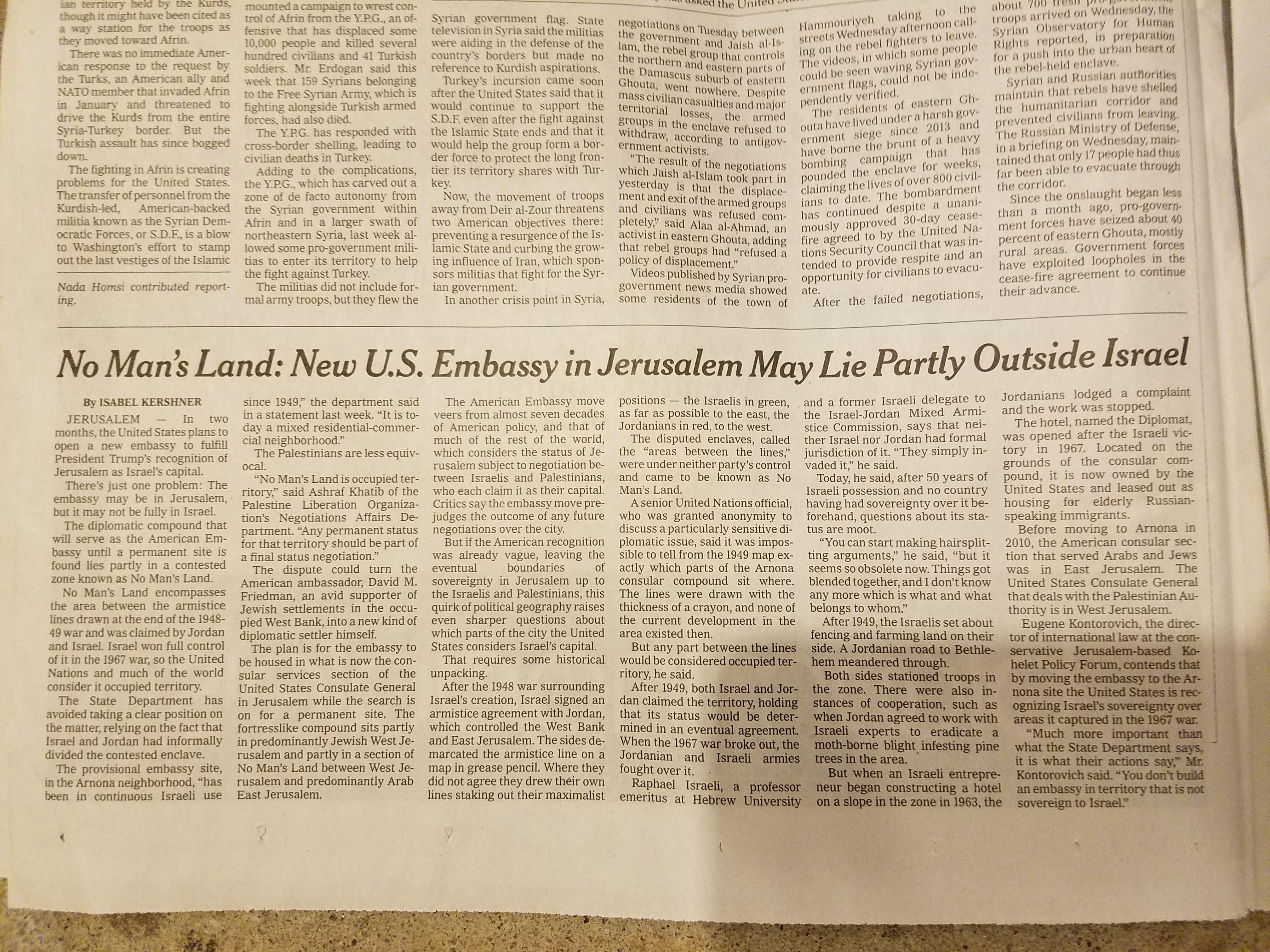
In a March 8, 2018 article called “No Man’s Land: New U.S. Embassy in Jerusalem May Lie Partly Outside Israel,” the Times came up with a new term that was both meaningless and said much about how the liberal paper thinks of Jews living east of the 1949 Armistice Lines.

In describing the planned relocation of the U.S. embassy to an area in Jerusalem that possibly partially sat in the ‘No Man’s Land’ that existed between 1949 and 1967, the paper wrote:

“The dispute could turn the American ambassador, David M. Friedman, an avid supporter of Jewish settlements in the occupied West Bank, into a new kind of diplomatic settler himself.”

That’s quite a phrase, “diplomatic settler.” It’s also completely nonsensical. U.S. ambassadors are U.S. citizens, not Israeli. How can an American be a settler? Simply by being Jewish?

There was a time that a “settler” meant any Israeli that moved into a new development over the Green Line in Judea & Samaria / the West Bank. The physical new town was known as a “settlement” and the inhabitants were known as “settlers.” The homes defined the people.

Over time, a pro-Palestinian narrative took hold in much of the world which inverted that formula. For them, the people (settlers) define the homes (settlements). Specifically, any Israeli Jew that lives over the invisible Green Line is known as a settler. (This is in sharp contrast to Israeli Muslims – like the thousands of Arabs in eastern Jerusalem that have taken Israeli citizenship – that are never considered “settlers.”) Presumably, the rationale for focusing on people is based on a very broad reading of Article 49 of the Fourth Geneva Convention that Israel’s policies enabling Jews to live in the land that it took from Jordan in 1967 is effectively a “transfer of population,” possibly runs counter to that international law.

But The New York Times moved the definition of a settler yet again, in a giant anti-Semitic leap.

For anti-Zionists like the New York Times, ANY Jew, regardless of citizenship should be considered a settler if they live east of the Green Line. Hence the U.S. ambassador to Israel would become a “diplomatic settler,” simply because he’s Jewish. If the U.S. Ambassador to Israel were Christian or Muslim or Buddhist or any other religion, presumably the diplomatic settler moniker wouldn’t stick.

This new approach could lead to all sorts of interesting titles.

  • “Tourist Settler:”  A foreign Jewish traveler visiting Bethlehem and staying overnight
  • “Businessman Settler:” Any Jewish traveler doing business in Jericho who keeps an apartment in the city
  • “Student Settler.” A foreign Jew studying in the West Bank

What would happen if the United States decided to recognize a State of Palestine along the lines agreed to thus far between the principles, in Gaza and Area A of the West Bank, and established a U.S. embassy in Bethlehem. If that U.S. ambassador to Palestine was Jewish, I guess the Times would also label him a “Diplomatic Settler.” Only a non-Jewish diplomat could avoid having such title, and not be branded a colonialist interloper.

It has long been clear that Palestinians are the most anti-Semitic people on the planet and that the leaders of the Palestinian Authority desire a new country free of any Israeli Jews. How refreshing to learn that the alt-left similarly endorses a completely Jew-free land. Even of American Jewish diplomats.


Related First.One.Through articles:

NY Times Cannot Even be Even-Handed When Describing “No Man’s Land”

The New York Times Inverts the History of Jerusalem

750 Years of Continuous Jewish Jerusalem

The Arguments over Jerusalem

Jerusalem, and a review of the sad state of divided capitals in the world

The anthem of Israel is JERUSALEM

The Battle for Jerusalem

FirstOneThrough music videos:

Judea & Samaria (music by the Foo Fighters)

The 1967 Borders (music by The Kinks)

Subscribe YouTube channel: FirstOneThrough

Join Facebook group: FirstOne Through  Israel Analysis


NY Times Cannot Even be Even-Handed When Describing “No Man’s Land”

On March 8, 2018, Isabel Kershner wrote an article for the New York Times called “No Man’s Land: New U.S. Embassy in Jerusalem May Lie Partly Outside Israel.” The article described that the location of the U.S. embassy would partially lie outside of Israel’s 1949 Armistice Lines with Jordan in an area known at the time as the “No Man’s Land.” It attempted to explain the terminology through a history lesson about the area.

But being the New York Times, the history would be incomplete and distorted.

Consider the opening of the description:

“No Man’s Land encompasses the area between the armistice lines drawn at the end of the 1948-9 war and was claimed by Jordan and Israel. Israel won full control of it in the 1967 war, so the United Nations and much of the world consider it occupied territory.”

As the NY Times does at every occasion, it describes Israel’s administration of Judea and Samaria with a statement that the world does not recognize Israel’s claim and considers the land “occupied territory.” Yet the Times will never print – even here in an article meant to clarify the nature of the land – that Jordan’s claim on the entirety of the West Bank/Judea and Samaria was never considered valid.

The omissions would continue.

Kershner wrote that she would give some clarity to the nature of the land:

“After the 1948 war surrounding Israel’s creation, Israel signed an armistice agreement with Jordan, which controlled the West Bank and East Jerusalem. The sides demarcated the armistice line on a map in grease pencil. Where they did not agree they drew their own lines staking out maximalist positions – the Israelis in green, as far as possible to the east, the Jordanians in red, to the west.

The disputed enclaves, called the ‘areas between the lines,’ were under neither party’s control and came to be known as No Man’s Land.”

Note the many problems of the first sentence. It states that no party is to blame for the 1948 war. A person would never know that the armies of five Arab countries invaded Israel at its creation by the first half of the sentence. The second half would lead a reader to conclude that the Jordanians naturally had controlled the West Bank and East Jerusalem. This is deeply flawed. The Hashemite Kingdom of Transjordan, as today’s Jordan was known back in 1948, invaded and illegally annexed Judea and Samaria and the eastern half of Jerusalem. To state that Jordan simply “controlled the West Bank and East Jerusalem,” makes that illegal seizure seem normative and historic. It was neither. It was an invasion in an offensive war to destroy Israel.

The problems in the “historical unpacking” would continue:

“After 1949, both Israel and Jordan claimed the territory, holding that its status would be determined in an eventual agreement. When the 1967 war broke out, the Jordanian and Israeli armies fought over it.”

The 1967 war didn’t simply break out. Jordan attacked Israel first (again), after Israel repeatedly told the Jordanians to not initiate a war. The point is not a subtle one, as the laws regarding the seizure of land in a war are arguably not the same in a defensive war as an offensive war. Especially when the party that initiated the hostilities (Jordan) had zero claim to the land they occupied (all of the West Bank, eastern Jerusalem and the No Man’s Land!)

The article would also not mention anywhere that Israel formally annexed the entirety of the eastern portion of Jerusalem – including No Man’s Land – in 1980. How could any background on the area omit such a detail?

Further, Jordan gave up any claim to the area in July 1988. How could the article neglect to mention that small tidbit?

In short, the article focused squarely on Israel’s claim to a part of Jerusalem counter to a Jordanian claim that the paper wrote about as a historical reality. In truth, the Jordanians NEVER had an legal claim to any of the West Bank or eastern Jerusalem, and rescinded the false claim to that land 30 years ago.

Jerusalem was divided for roughly 19 years of its 4000 year history, from 1948 to 1967. But the New York Times will continue to try to slice and divide Judaism’s holiest city at every opportunity to minimize the Jewish State’s ties to its capital.


Related First.One.Through articles:

The New York Times Inverts the History of Jerusalem

Both Israel and Jerusalem are Beyond Recognition for Muslim Nations

750 Years of Continuous Jewish Jerusalem

Arabs in Jerusalem

Jordan’s Deceit and Hunger for Control of Jerusalem

The Arguments over Jerusalem

Jerusalem, and a review of the sad state of divided capitals in the world

The anthem of Israel is JERUSALEM

The Battle for Jerusalem

Subscribe YouTube channel: FirstOneThrough

Join Facebook group: FirstOne Through  Israel Analysis

Nikki Haley Channels Robert Aumann at the UN Security Council

On February 20, 2018, US Ambassador to the United Nations Nikki Haley addressed the UN Security Council about the situation in the Middle East. Her remarks showed negotiating skills that were woefully absent during the eight years of ineptitude under the Obama administration. It was as stark as if Haley had been advised by masters of negotiation rather than community organizers. And I am not referring to President Donald Trump, author of “Art of the Deal” compared to Barack Obama. I write of Robert Aumann.


2005 Nobel Prize winner in economics, Robert J. Aumann

Aumann on the Middle East Conflict

Noted Israeli Robert J. Aumann won the Nobel Prize in economics in 2005 for his lifetime of remarkable work in “game theory,” also known as interactive decision theory. Aumann studied how people make decisions under different scenarios, such as encounters between strangers compared to negotiations between parties that will deal with each other many times in the future. According to Aumann, in a situation in which parties will only encounter each other a single time, there is pressure to make a deal and maximize gains. If the two parties know that they will be encountering each other for a long time, then the dynamics of the negotiations are completely different.

On December 8, 2005, as Aumann was accepting his Nobel prize, he said the following about war and peace (32:40):

“You must not be too eager for immediate results. The present, the now, must not be too important for you. If you want peace now, you may well never get peace. But if you have time, if you can wait, that changes the whole picture. Then, you may get peace now. If you don’t want it, you may get it. It is one of those paradoxical upside-down insights of game theory, and indeed, in much of science…. Wanting peace now may prevent peace now. Wanting peace now may prevent you from ever getting it, not now and not in the future. But if you can wait, maybe you can get it now.”

Aumann added that the dynamic in negotiations needed to be coupled with the concept of punishment; that the actions of the two participating players would be met with responses not just from the counter-party, but outside forces (like the rule of law). However, if the intensity of the punishment was too great, the parties could conceivably view a long-term situation as a one-shot deal. Balanced pressure is the key for parties to avoid taking absolute positions and make compromises.

Aumann’s comments were both general in nature and directly related to the Middle East conflict. He made that perfectly clear in an article he wrote for aish.com about The Blackmailer Paradox, which is worth reading in full. Here is an excerpt:

“The political relationship between Israel and Arab countries is also conducted according to the principles of this paradox. The Arabs present rigid and unreasonable opening positions at every negotiation. They convey confidence and assurance in their demands, and make certain to make absolutely clear to Israel that they will never give up on any of these requirements.

Absent an alternative, Israel is forced to yield to blackmail due to the perception that it will leave the negotiating room with nothing if it is inflexible. The most prominent example of this is the negotiations with the Syrians that have been conducted already for a number of years under various auspices. The Syrians made certain to clarify in advance that they will never yield even an inch of the Golan Heights.

The Israeli side, which so desperately seek a peace agreement with Syria, accept Syria’s position, and today, in the public discourse in Israel, it is clear that the starting point for future negotiations with Syria must include a full withdrawal from the Golan Heights, despite the critical strategic importance of the Golan Heights to ensure clear boundaries that protect Israel.”

Aumann goes on to argue that for peace to be achieved, Israel must make three basic changes to its position: 1) a willingness to renounce agreements; 2) a consideration of repeated games; and 3) faith in its positions. Conviction coupled with seriousness and the understanding that the parties will continue to deal with each other is the pathway to an enduring solution.

Obama on the Middle East Conflict

The United Nations has a long history of abusing the State of Israel. President Obama joined that global abuse as the US took many steps to distance itself from the Jewish State as well. But Obama took no such actions against the Palestinian Authority.

Free of any external pressure, the Palestinian Authority took the messages of Aumann to heart and held fast to the three tenants above. They were given a wide berth and global absolution for their crimes against humanity and their failures to advance the peace process. Without even subtle external pressure, the intransigence set in and the PA scuttled any peace talks.

Meanwhile, Israel collapsed under Obama on all three points. It was compelled to publicly state its support for a two state solution which may-or-may-not be the best outcome for an enduring peace. It was repeatedly pushed for “good will gestures” that showed that Israel would take immediate action and would not walk away from the table. And far-left wing organizations such as J Street and the New Israel Fund actively undermined the faith and conviction that Jews have a basic human right to live in homes that they legally purchase.

The peace process was left in shambles.

The Trump Administration on the Middle East Conflict

The Trump administration has taken a decidedly different tack on the Middle East conflict. It has removed the heavy hand pressuring Israel and has begun to apply some pressure on the Palestinian Authority, including withholding some direct and indirect funds.

At the UN Security Council, Haley also sought to set the stage for a lasting peace, by reminding the parties that this is not a one-shot deal, and that America is willing to wait for the parties to be serious about peace negotiations.

“I sit here today offering the outstretched hand of the United States to the Palestinian people in the cause of peace. We are fully prepared to look to a future of prosperity and co-existence. We welcome you as the leader of the Palestinian people here today.

But I will decline the advice I was recently given by your top negotiator, Saeb Erekat. I will not shut up. Rather, I will respectfully speak some hard truths.

The Palestinian leadership has a choice to make between two different paths. There is the path of absolutist demands, hateful rhetoric, and incitement to violence. That path has led, and will continue to lead, to nothing but hardship for the Palestinian people.

Or, there is the path of negotiation and compromise. History has shown that path to be successful for Egypt and Jordan, including the transfer of territory. That path remains open to the Palestinian leadership, if only it is courageous enough to take it…

Putting forward old talking points and entrenched and undeveloped concepts achieves nothing. That approach has been tried many times, and has always failed. After so many decades, we welcome new thinking.

As I mentioned in this meeting last month, the United States stands ready to work with the Palestinian leadership.

Our negotiators are sitting right behind me, ready to talk. But we will not chase after you. The choice, Mr. President, is yours.”


Nikki Haley with Jared Kushner and Jason Greenblatt at the United Nations
February 20, 2018

Haley understood that the pathway to an enduring peace lies with balanced pressure coupled with the ability to take a patient long-term approach, just as Robert Aumann’s lifetime of research demonstrated.

Hopefully, the new tactics will yield success.


Related First.One.Through articles:

Enduring Peace versus Peace Now

John Kerry: The Declaration and Observations of a Failure

Failures of the Obama Doctrine and the Obama Rationale

Failing Negotiation 101: The United States

Failing Negotiation 102: Europe

Subscribe YouTube channel: FirstOneThrough

Join Facebook group: FirstOne Through Israel Analysis

Hamas Thanks Israel Bashers Who Post and Blog

On January 21, 2018, a Hamas journalist wrote that it was time to take advantage of the sympathy that has been building for the “resistance” against the existence of Israel from online pro-Palestinian “activists,” by beginning to attack Israel in new ways and locations, including abroad.

‘Imad Al-‘Afana (photo: alresalah.ps)
As reported by MEMRI, Imad Al-‘Afana, a journalist and former secretary general of Hamas’s faction in the Palestinian Legislative Council (PLC), wrote that attacks from the West Bank and the Gaza border against Israel had become ineffective, and it was time to launch a new wave of attacks:

“The resistance must take advantage of the public climate that is supportive of it and of the Palestinian rights… [to head] in new directions, in addition to the non-violent demonstrations and the [soliciting of] sympathy in the virtual realm [i.e., on the Internet], and this in order to convey powerful messages that will halt the efforts of various elements in the region to [promote] normalization and recognition of Israel. We must deliver painful blows to the enemy’s vulnerable underbelly, that is, target its interests, its investments, its diaspora and its representations around the world.

Here was a member of Hamas appreciating the efforts of groups and individuals that advanced the boycott, divestment and sanctions (BDS) movement against Israel, as well as others who called on their governments to halt the normalization and recognition of Israel around the world. The terrorist argued that the softening of support for Israel would make it easier to attack Israel’s “vulnerable underbelly,… its investments, its diaspora and its representations around the world.

  • Jewish Voice for Peace and Code Pink, you will be held responsible for terrorism against Israelis in the United States.
  • The UK Labour Party and Oxfam, you will bear partial responsibility for terrorism in the United Kingdom against Israelis.
  • Norge Palestinakomitee (The Palestine Committee of Norway) and Palestinagrupperna i Sverige (PGS-Palestine Solidarity Association of Sweden), you will be held liable for terrorism against Israelis in Scandinavia

Hamas has long been labeled a terrorist group by the United States, Israel and many other countries. Its 1988 Charter is one of the most anti-Semitic political documents ever drafted, on par with Nazi Germany.

And a spokesperson for this anti-Semitic terrorist group has publicly thanked the online anti-Zionist propagandists for preparing their countries for the next wave of terrorism targeting Israelis and Jews.

The Noble Peace Prize winner Elie Wiesel noted the importance of words for both good and evil, warning and encouraging people of the world to be careful and deliberate with their voices and opinions. Terrorists have now noted and reminded us of the same.


Related First.One.Through articles:

The UN is Watering the Seeds of Anti-Jewish Hate Speech for Future Massacres

The Three Camps of Ethnic Cleansing in the BDS Movement

J Street: Going Bigger and Bolder than BDS

Extreme and Mainstream. Germany 1933; West Bank & Gaza Today

The Palestinians aren’t “Resorting to Violence”; They are Murdering and Waging War

Abbas’ European Audience for His Rantings

The War Preferred

Names and Narrative: Genocide / Intifada

Palestinians of Today and the Holocaust

What do you Recognize in the Palestinians?

Subscribe YouTube channel: FirstOneThrough

Join Facebook group: FirstOne Through Israel Analysis