J Street Saddened by Passage of Palestinian Basic Law

A satire.


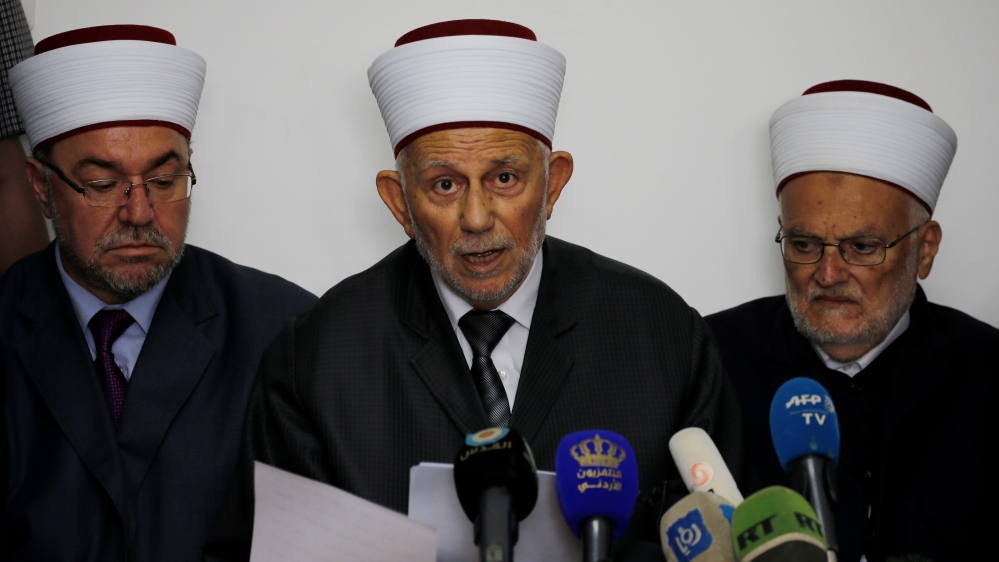
J Street’s tagline is “the political home of pro-Palestinian, pro-peace Americans.” It is not surprising that a group with such orientation would voice its strong displeasure with the Palestinian Basic Law, sayingThis is a sad day for Palestine and all who care about its democracy and its future.

J Street noted some troubling clauses in the Permanent Constitution Draft. Consider Article 2:

“Palestine is part of the Arab homeland. The state of Palestine abides by the Charter of the League of Arab States. The Palestinian people are part of the Arab and Islamic nations. Arab unity is a goal. The Palestinian people work on behalf of its realization.”

J Street was horrified to only see “Arab” written throughout the text. Where was the space for non-Arabs? Why was Palestine ascribed to be part only of the Islamic nations? How were non-Muslims going to feel about such language?

The language would get even worse as the text continued to become more specific. Consider Article 4:

“Jerusalem is the capital of the state of Palestine and seat of its public authorities.”

How could the Palestinians state that Jerusalem is its capital when the Israelis claim the city for its eternal capital? Such a declaration spits in the face of Israel and diminishes a chance for peace and reconciliation.

Article 5 added to the problems:

“Arabic is the official language and Islam is the official religion in Palestine. Christianity and all other monotheistic religions are accorded sanctity and respect. The constitution guarantees equality in rights and duties to all citizens irrespective of their religious creed.”

J Street was apoplectic about this clause. Why wasn’t Hebrew included as an official language? Why was Islam declared as the only official religion? The Basic Law mentioned that Christianity would be accorded “sanctity and respect,” but the law would not even mention the word “Judaism.” What kind of respect was the Palestinian Law truly giving when it could not even bring itself to mention Jews and Judaism?

J Street’s press release was biting:

“The Israeli minority that lives in the West Bank already face terrible job persecution and have a difficult time buying land due to Palestinian law that forbids any Arab from selling land to a Jew (subject to penalty of death). The laws laid out in the Constitution further reiterate that Israeli Palestinians are second class in their own homeland.

“This is an alarming trend of Palestine pulling back from its commitments to become a liberal democracy and moving in an increasingly theocratic, authoritarian and xenophobic direction.”

J Street commented that it was concerned about Mahmoud Abbas’s recent comments that he will continue paying the families of murderers monthly stipends. “Several left-wing NGOs receive some of that money,” J Street noted. “But not enough.

J Street’s President Jeremy al-Ami, said that “We need more outspoken opposition to the far-right policies of xenophobia shown by Abbas and his cronies. We need more voices questioning the horrible laws and declarations in the Palestinian Constitution to make a better life for Israelis and Palestinians and Israeli Palestinians and Palestinian Israelis.


Arab MK Ayman Odeh at J Street Conference was given a warm welcome.
Odeh would later refuse to meet with Jewish leaders because the meeting
was on the same floor as the Jewish Agency.


Related First.One.Through articles:

Netanyahu’s Doctoral Thesis on the Nakba

Palestinian Job Fair for Peace

Fun With Cause-and-Effect: Gaza Border Protests

Israel’s Kite Business Gets a Second Wind

Silwan Circulars, Christmas 2014

Subscribe YouTube channel: FirstOneThrough

Join Facebook group: FirstOne Through  Israel Analysis

NY Times Disgraceful Journeys

As media companies have come under financial strain due to the availability of plentiful free and immediate news sources online and the collapse of the print advertising industry, the companies have sought new methods of generating revenue.

As part of such endeavor, The New York Times got into the travel business.

The Times markets its “Journeys” as a way to not only see the world, but to gain an understanding of the “history & context” of the countries with “featured experts.” Not surprisingly, the paper’s infamous pro-Arab and anti-Israel orientation fills the Times’ brochures.

Consider the Times description of its trip to Iran (below). The main headline of “How Much Do You Understand?” seems to beg the reader into an opportunity to learn. The text for Iran is as follow:

“Iran: Tales from Persia

Persia. Iran. For 2,500 years, this powerful country has entranced, mystified and beguiled the world. Discover the ancient secrets and modern complexities of this influential land on a 13-day itinerary, visiting some of the world’s oldest archaeological sites and the family home of the religious leader who engineered Iran’s transition to an Islamic republic. Welcome to the once-forbidden land of Iran.”

The featured expert is “Gary Wintz, a writer and lecturer, has traveled to Iran regularly since the 1980s and is an expert on the cultural and political landscape there. He joins all our departures.

The trip sounds very exciting. So much intrigue and history.

There is no mention that this country is one of the most repressive in the world. This is a government that hangs gays by cranes in the street – literally. It has fomented civil wars in Yemen, Iraq and Syria. It has publicly called for the destruction of Israel. It leads the entire Middle East in executions  (more than every country in the region COMBINED). It executes minors.

No worries. The NYTimes will tell you that its mysterious and beguiling.

At least this year’s “featured expert” has been to Iran. In 2016, the featured expert was the notorious Op-Ed Israel-basher, Roger Cohen. He probably told the tour participants how terrible it was that Israel opposed Iran getting nuclear weapons.

There is only one other country in the world that executes minors: Saudi Arabia. The Times will gladly take you there too.

Saudi Arabia and the Emirates: The Past and Future of Oil

Oil transformed the Arabian Peninsula, bringing wealth into a region steeped in tradition and heightening tensions with oil-dependent Western nations. On this 10-day journey accompanied by New York Times journalists, learn more about Saudi Arabia, on the cusp of change. Explore the conservatism that still grips Saudi Arabia (women, you may need to bring a head scarf), then see the modern architectural gem that is Abu Dhabi.

Saudi Arabia, where Islam was born, remains a deeply conservative country where women are only now being allowed to drive and alcohol is not served. It’s also one of the most important allies of the United States, even though they don’t always see eye-to-eye. Journey to Jidda, Al-Ula, Riyadh and Dammam to better understand the relationship between these two nations. Hear perspectives from oil industry and government officials and learn how Saudi Arabia keeps its grip on its past even as it tries to embrace its future. Then travel to Abu Dhabi in the United Arab Emirates, and see how it has used its oil wealth to create a city of culture.”

The Times pointed out that the country is “deeply conservative” but ignored that it is rated one of the “worst of the worst” repressive countries by Freedom House. It is the only country in the world that has public beheadings. Seriously, even today.

No worries. You’ll get to see a “modern architectural gem” with the Times.

In regards to Egypt, the Times could not be bothered to mention anything “conservative” about the country.

Egypt is the land of “powerful dynasties” and “New York Times experts will help you piece together the life and times of a powerful ancient civilization and share their vision for the country’s future.”

How wonderful! Not an iota of anything controversial. Did the Times mention that Egypt is one of the worst countries to be a Christian according to Open Doors? That the Arab Spring swept out one long-time strongman, and a military coup took out his replacement? Terrorism targeting tourists? Why would it? This is the Times.

Morocco? It’s gorgeous! “A land of of legend and intrigue… delve deep into this colorful nation.” Illegal annexation of Western Sahara? Never heard of it.

For some of the worst murderous regimes in the world, involved with human rights abuses in their own countries as well as active participation in killing many tens and hundreds of thousands of people, the most the NY Times could muster about the Islamic countries was that Saudi Arabia is “deeply conservative” and “don’t always see eye-to-eye” with the United States. Remarkable.

But it gets worse.

You can perhaps try to forgive the Times that is trying to sell a vacation package to make a few more dollars. Why highlight the bad (actually evil) when marketing a trip for several thousands of dollars?

The NY Times also offers a trip of Israel. Surely the Times would highlight the miracle that is the rising star of the Middle East.

The paper which claims to be “a leader in its evenhanded coverage of Israel,” seems to think that the only democracy in the Middle East, the technological and environmental leader, the most liberal country for thousands of miles in any direction, needs some “balance” in its “Journeys” packages. Not Iran nor Saudi Arabia nor Egypt nor other Middle eastern lands. Only Israel.

This is from the Times Journey’s website on the Israel trip:

In 2018, Israel will observe its 70th anniversary as a nation. But its history goes back more than 5,000 years, and even now, its future promises many difficulties. On this nine-day itinerary, travel with experts from The New York Times, a leader in its evenhanded coverage of Israel, Palestinians and the Middle East. Enjoy extraordinary opportunities to hear from opinion makers, scholars, grassroots activists and media experts.

Travel behind the media lens to explore the broad spectrum of the Israeli-Palestinian experience on a journey through millennia of history, politics and religion. Explore one of the most fascinating destinations in the world, and seize this once-in-a-lifetime opportunity to participate in the next chapter of history. Learn about the evolution of Israeli and Palestinian identities by understanding the region’s past struggles while considering its current political reality and contemplating its future. With unparalleled access and New York Times guidance, this unforgettable trip will present this volatile region in a new light.”

How is it that a trip of Israel, a country with so many incredible things to cover in both ancient history, religion, economy, arts and technology, could get wrapped into a discussion about Palestinians (three times!)? Why is Israel uniquely described as having “difficulties” and “struggles” in a “volatile region”? More people have died in the wars that Iran and Saudi Arabia have been fighting over the past three years than the entire 70-year history of Israel.

Saudi Arabia is noted as the place “where Islam was born.” Is it too much for the Times to point out that Israel is the Jewish homeland?

In Iran, people are invited to visit “some of the world’s oldest archaeological sites.” Are there not enough ruins in Israel to highlight?

The Times puts on a unique lens for Israel. Consider the itinerary on the first full day of the trip, called “Jerusalem: Understanding the Borders and Territories.” The schedule includes: “This morning, attend a talk by Avi Issacharoff, an Israeli journalist who specializes in Palestinian affairs. Learn about his work, including the geopolitical TV thriller “Fauda” (Arabic for “Chaos.”) Then, drive north to the Qalandiya checkpoint to enter the West Bank for a guided tour led by Rami Nazzal, a Palestinian and New York Times contributor. Visit a Palestinian refugee camp, the city of Al-Bireh and homes near the Psagot Israeli settlement. After lunch at a local Palestinian restaurant, meet with a senior Palestinian official to discuss the history and current state of Israeli-Palestinian affairs. End the day with a driving tour through Ramallah, which serves as the de facto administrative capital of the Palestinian National Authority.” On the New York Times’ trip to Israel, visitors adopt the Palestinian narrative from the outset.

A visit to Israel’s parliament, the Knesset in Jerusalem? To it’s Supreme Court? No way! The trip to Israel and a tour starting in Jerusalem visits “the de facto administrative capital of the Palestinian Authority.” Heaven-forbid actually spending a trip to Israel in Israel’s capital city.

The New York Times is not remotely fair to Israel even while it tries to make a few bucks on its travel packages. Do you think there’s an iota of even-handedness in its news stories?


Related First.One.Through articles:

Murderous Governments of the Middle East

Paying to Murder Jews: From Iraq, Saudi Arabia and Iran to the Palestinian Authority

Is Israel Reforming the Muslim Middle East? Impossible According to The NY Times

The New York Times will Keep on Telling You: Jews are not Native to Israel

First.One.Through video:

Saudi Arabia’s Repressive Regime (music by The Cars)

Subscribe YouTube channel: FirstOneThrough

Join Facebook group: FirstOne Through  Israel Analysis

Every Picture Tells a Story: Fire

The summer of 2018 was a story of fire.

Fires raged through California, consuming thousands of acres. Fires raged in Greece, killing scores.

The front pages of The New York Times featured color photographs of these horrible incidents. The pictures captured the roaring flames, the burnt forests, the exhausted firefighters.

The daily front page articles showed the destruction. The captions under the pictures gave readers a sense of the unfolding efforts to contain the blaze, even as it updated the daily loss of life.

But not in Israel.

Every day for the length of the summer, Palestinian Arab arsonists sent firebombs aloft into Israel. Using kites and healium filled balloons and condoms, the terrorists sought to inflict damage to Israelis with a new approach that let the masses participate in the battle against Israel.

Yet despite the thousands of acres burned, The New York Times never posted a front page picture of the Arab arsonists. It never broadcast clearly the terrible damage of the scorched fields which Israelis had cultivated.

It never posted a caption clearly describing the terrorist and the victim.

For the New York Times, tragedy is a dish best served among friends.


Related First.One.Through articles:

Every Picture Tells a Story: Anti-Semitism

Every Picture Tells a Story: No Need for #MeToo for Palestinians

Every Picture Tells a Story- Whitewashing the World (except Israel)

Every Picture Tells a Story: The Invisible Murdered Israelis

Every Picture Tells a Story: The Invisible Killed Terrorists

Every Picture Tells a Story: Arab Injuries over Jewish Deaths

Every Picture Tells A Story: Only Palestinians are Victims

Every Picture Tells a Story: Goodbye Peres

Every Picture Tells a Story, the Bibi Monster

Every Picture Tells a Story, Don’t It?

The United Nations’ Select Concern for Arson in the Middle East

Subscribe YouTube channel: FirstOneThrough

Join Facebook group: FirstOne Through  Israel Analysis

Turkey’s Erdogan Likely Sending Military Towards Gaza

There is arguably no greater authoritarian leader today than Recep Tayyip Erdogan of Turkey. He has cemented his powers over the last dozen years, quashing the press and anyone that stands opposed to him.

That authoritarian leader is now under serious threat.

The Turkish economy has become incredibly weakened over the past several weeks due to various economic decisions by Erdogan and a series of tariffs imposed against Turkey by US President Donald Trump. The Turkish lira is in a state of serious decline and there is a real risk of the country’s economy collapsing.

It is very doubtful that the Turkish egomaniac will accede to the demands of Trump to release an American pastor that Turkey arrested. It is unlikely that Turkey will stop buying weapons from Russia. It is also unlikely that Turkey will only “look for other friends and allies” as Erdogan headlined in his op-ed on the online edition of the New York Times on August 10.

Erdogan is too crafty and mean-spirited to simply “look for friends.” He will provoke. Aggressively.

Erdogan knows that he cannot combat the United States either militarily or economically, so will only resort to some bad-mouthing, when it comes to the U.S.

However, Erdogan will enjoy provoking a war against an American ally, particularly one close to Trump: Israel.

Erdogan has long been allied with the Palestinian Arab terrorist group Hamas that controls Gaza. He has allowed his Turkish ports to be used for “flotillas” to break the Israeli blockade of the region in the past. He is likely to use his current weak economic situation to take a much more aggressive stance to gather support from the greater Arab and Muslim world.

Erdogan had an interview on Al Jazeera in 2011 where he made indirect threats against Israel in relation to Israel’s work with the government of Cyprus in extracting oil, and for the situation in Gaza. Erdogan reiterated Turkey’s claims in Cyprus (which no country in the world believes), and his concern for the people of Gaza. He stated that he would begin using his navy ships to protect Turkey’s interests in both Cyprus and Gaza.


Recep Erdogan interview on the 10th anniversary of the 9/11 attacks
against the United States

He did not send military vessels into the eastern Mediterranean Sea at that time nor to Cyprus, as Netanyahu apologized to Erdogan for killing attackers on the Mavi Marmara boat in 2010 at the urging of US President Barack Obama. But Erdogan’s situation today is much more precarious.

In his August 2018 NY Times Op-Ed, Erdogan said “Turkey has established time and again that it will take care of its own business if the United States refuses to listen.” It is not far-fetched to imagine that an authoritarian leader with his back to the wall, will now come after Israel in a real concerted way.

It will not be surprising to see Turkish military ships off the coast of Cyprus and/or Gaza in the coming months. The only question is whether this be the start of a broader war.


Related First.One.Through articles:

Turkish Hypocrisy – Erdogan’s Line of Defense

Obama’s Friendly Pass to Turkey’s Erdogan

The United Nations Absolves Turkey’s Erdogan

Names and Narrative: Genocide / Intifada

The Churlish Turkish Leadership

New York Times Talking Turkey

Related First.One.Through video:

Netanyahu apology to Erdogan (Joe Cocker)

Subscribe YouTube channel: FirstOneThrough

Join Facebook group: FirstOne Through Israel Analysis

Shut UNRWA in Gaza Immediately

The arguments to defund and shut UNRWA are plentiful, but as the established and embedded “way of living,” (to quote Queen Rania of Jordan) of Palestinian Arabs in the five regions in which it operates, the process of closing the organization may take some time to implement.

But the time is now in Gaza.

  1. There is no basis for calling anyone in Gaza a “refugee.”

While the United Nations long ago abused the definition of “refugee” as something that can be passed down through generations like an inheritance uniquely for Palestinian Arabs, the situation in Gaza is all the more ridiculous. A “refugee” is not defined as someone that left a specific house. It refers to leaving a country.

Even under UNRWA’s contorted definition of a refugee, the Palestinian Arabs in Gaza are living in the same land and country that their parents and grandparents left at the time of the Jewish State’s reestablishment in 1948, as defined by UNRWA:

“persons whose normal place of residence was Palestine during the period 1 June 1946 to 15 May 1948, and who lost both home and means of livelihood as a result of the 1948 conflict.”

“Palestine” between June 1946 and May 1948 included the areas now known as Israel, Gaza and the area commonly known as the “West Bank,” which was seized and annexed illegally by the Jordanians at the end of the 1948 conflict.

At best, the “refugees” in Gaza can be described as “internally-displaced” people.

  1. Independent

While the Arabs in the West Bank are also only descendants of internally-displaced people like those in Gaza, they have limited autonomy in much of the region. Only in Area A is the Palestinian Authority in charge of both the civilian and military life.

However, the situation is completely different in Gaza. Israel removed every Israeli civilian and soldier in 2005. For the first time in history, local Arabs in Gaza control their own territory. The Gazans held elections for president of the Palestinian Authority in 2005 and for parliament in 2006.

But UNRWA has stayed put in Gaza anyway.

  1. Taking Sides in an Armed Conflict

While the United Nations adoption of the Palestinian cause has long made the organization a biased actor in the Israeli-Palestinian Arab dispute, the situation is much more problematic in a war zone.

Hamas, the ruling government in Gaza is a designated terrorist organization according to many countries in the world including Israel, the United States, Canada and the European Union. Hamas has launched three full-blown wars against Israel since it took over the region: in 2008, 2012 and 2014. And the group has continued to incite and launch terrorist attacks against Israel during intervening “ceasefires.”

UNRWA does not sit in the middle as a neutral party in these battles. Over 99% of UNRWA employees are the local Palestinian Arabs, not European peace forces. UNRWA teachers have been active in the terrorism against a UN member state, building bombs for terrorist groups. They have allowed the schools to be used to store weapons and as missile launching sites.

And many of the students and their family members are part of the terrorist infrastructure itself, belonging to Hamas, Islamic Jihad and other groups.


Rocket launcher next to UN building in Hamas’s 2014 war against Israel
(source: UNWatch)

How can the United Nations continue to take an active – or at a minimum, abetting – role in terrorism and violence against a member state?

The world is finally waking up to the travesty that is UNRWA. The UN should take immediate action to close down all of the facilities that it operates in Gaza. #ShutUNRWA


Related First.One.Through articles:

UNRWA’s Ongoing War against Israel and Jews

Help Refugees: Shut the UNRWA, Fund the UNHCR

The Gross OVER-Staffing of UNRWA Schools

UNRWA’s Munchausen Disease

UNRWA Is Not Just Making “Refugees,” It’s Creating Palestinians

The UN Must Pay to Repair the Gaza Fence

The United Nations Can Hear the Songs of Gazans, but Cannot See Their Rockets

The UN Wants “Real Stories on REAL Refugees”

The UN Fails on its Own Measures to address the Conditions Conducive to the Spread of Terrorism

Ban Ki Moon Stands with Gaza

Delivery of the Fictional Palestinian Keys

Subscribe YouTube channel: FirstOneThrough

Join Facebook group: FirstOne Through Israel Analysis

Israel’s Nation-State Basic Law Advances a Two-State Solution

In November 1947, the United Nations General Assembly approved a plan (UNGA Resolution 181) to be implemented in the Holy Land for when the British ended their administration of Palestine. The resolution proposed that two states be established in the area west of the Jordan River: a Jewish State and an Arab State. The resolution mentioned the term “Jewish State” a full 27 times.

But the world never quite understood what a “Jewish State” meant. The modern world never had witnessed such a thing.

Conversely, an “Arab State” seemed clear. There already were many Arab countries in the world. There were also many Muslim countries. People had a pretty good understanding of what such countries looked like and how they operated. The number of both Arab and Muslim countries would grow over the following decades.

After the Oslo Accords of 1993 and 1995, the Palestinian Arabs would begin to define what their proposed Arab State would look like. In the waning days of the five year transition period that began in September 1995, Yasser Arafat (fungus be upon him), ordered a draft Palestinian Constitution be prepared. The initial draft Palestinian constitution was completed in 2001.

It made a few points abundantly clear: a State of Palestine would be Arab and be Muslim.

  • This constitution is based on the will of the Arab Palestinian people.” (Article 1)
  • The Arab Palestinian people believe in the principles of justice, liberty, equality, human dignity, and their right to practice self-determination and sovereignty over their land.” (Article 2)
  • The Palestinian people are a part of the Arab and Islamic nations.” (Article 3)
  • Arabic shall be the official language.” (Article 5)
  • Islam shall be the official religion of the state. The monotheistic religions shall be respected.” (Article 6)
  • The principles of the Islamic Shari`a are a primary source for legislation. The legislative branch shall determine personal status law under the authority of the monotheistic religions according to their denominations, in keeping with the provisions of the constitution and the preservation of unity, stability, and advancement of the Palestinian people.” (Article 7)
  • Sovereignty belongs to the Palestinian Arab people. Its prerogatives shall be exercised by the people directly, by means of elected representatives, by referendum, and through their constitutional institutions.” (Article 10)

It goes on, and the point is underscored: a new Palestinian State would be Arab and Islamic.

Even without a state, the Palestinian Authority created a framework of what it meant to be a Palestinian State. Yet, Israel, which had been a country since May 1948, never defined what it meant to be a Jewish State.

Until 2018.

Israel – like the United Kingdom and New Zealand – does not have a constitution. Instead, it issues a series of “Basic Laws.” These laws enumerate key principles of the country. Until July 2018, the government of Israel did not declare what it meant to be a Jewish State in any of the Basic Laws, even while it enumerated other key attributes such as human dignity and liberty. There were Jewish symbols and Jewish holidays used in Israel, but those could easily be replaced with any new law. The State of Israel was only de facto a Jewish State. Nothing more.


Emblem of Israel, the seven branched menorah, as depicted in the Arch of Titus in Rome, celebrating the sacking of the Jewish Temple in Jerusalem in 70 CE.

That de facto existence has been more than enough for Arabs and anti-Zionists. Thirty Arab and Muslim countries still refuse to recognize the existence of Israel. For his part, the acting-President of the Palestinian Authority Mahmoud Abbas has stated that Palestinian Arabs “will never recognize the Jewishness of the state of Israel.” The PA would make peace with the government of Israel simply as a counter-party to an agreement. However, it still objected to the basic formula laid out since 1947 of two states for two people: a Jewish State and an Arab State.

And Abbas could comfortably delude himself into that reality because Israel never proclaimed itself in its own Basic Laws that it is the nation-state of the Jewish people. The country operated like a Jewish man wearing a baseball cap instead of a kippah, acting religiously without the public declaration of being Jewish. The Jew and anti-Semite could play the farce of doing business and getting along with each other with the fig leaf of deniability.

No longer. The public declaration has been made. The Jew is out of the closet. Deal with your anti-Semitism if you want to live next to Israel, and strike treaties and do business with the Jewish State.

In 2018, the State of Israel declared itself the Nation-State of the Jewish people. For anyone that held out hope for a two state solution built on a solid foundation, there is only cause for optimism and joy.


Related First.One.Through articles:

Deciphering the 2018 Basic Law in Israel – The Nation State of the Jewish People

The Basic Law’s “Unique” Problem

Israel’s Nation-State Basic Law is Not Based on Religion

A “Viable” Palestinian State

The Palestinian State I Oppose

No Jews Allowed in Palestine

Maybe Truman Should Not Have Recognized Israel

Abbas’s Speech and the Window into Antisemitism and Anti-Zionism

Subscribe YouTube channel: FirstOneThrough

Join Facebook group: FirstOne Through Israel Analysis

Denying Entry and Citizenship

In 1950, Israel enacted the Law of Return which enabled all Jews from around the world to move to Israel and quickly obtain citizenship. In that declaration, the law gave the state room to exclude certain kinds of individuals, specifically any Jew who:

“(1) is engaged in an activity directed against the Jewish people; or

(2) is likely to endanger public health or the security of the State.”

The threshold for deciding on granting citizenship was left to the Minister of Immigration. Presumably there were many people who were denied citizenship over the decades since the law was enacted.

The government of Israel does not limit its scrutiny of Jews who arrive in Israel to make aliyah to become citizens, but also deciding who should be granted entry to the country at all.

In January 2018, the Knesset decided to bar entry to members of 20 organizations that threaten the state through calls for BDS (Boycott, Divest and Sanction) of the Jewish State. Those organizations included:

From Europe

  • AFPS (France-Palestine Solidarity Association)
  • BDS France
  • BDS Italy
  • ECCP (The European Coordination of Committees and Associations for Palestine)
  • FOA (Friends of al-Aqsa)
  • IPSC (Ireland Palestine Solidarity Campaign)
  • Norge Palestinakomitee (The Palestine Committee of Norway)
  • Palestinagrupperna i Sverige (PGS-Palestine Solidarity Association of Sweden)
  • PSC (Palestine Solidarity Campaign)
  • War on Want
  • BDS Kampagne

From the United States

  • AFSC (American Friends Service Committee)
  • AMP (American Muslims for Palestine)
  • Code Pink
  • JVP (Jewish Voice for Peace)
  • NSJP (National Students for Justice in Palestine)
  • USCPR (U.S. Campaign for Palestinian Rights)

Other groups

  • BDS Chile
  • BDS South Africa
  • BDS National Committee

In July 2018, a prominent voice for Code Pink and BDS activist, Ariel Gold, was denied entry into Israel. After being denied entry, she said that she would entertain making aliyah to the country she was lobbying against. She was perhaps not aware of the caveat in the Law of Return that would prohibit her being granted citizenship.

Ariel Gold of Code Pink at the Western Wall in Jerusalem
The Strategic Affairs and Information Minister Gilad Erdan saidThe policy I have set is clear: anyone who acts consistently to boycott us will not enter the country. The rules have changed and the State of Israel will not hold back anymore against those who try to harm us.

Another BDS promoter from Netherlands was similarly denied entry in July 2018.

In August 2018, a leftist activist was detained at the Sinai border with Israel. She belonged to a group called Gisha which advocates for Gazans, but was not on the BDS list. She was eventually allowed entry after a few hours of questioning.

The trend of denying people entry to a country because of the perception that they will foment hatred or violence is occurring in several democracies.

The United Kingdom has barred several right-wing journalists. Since 2009, the UK has prohibited the conservative talk show host Michael Savage from entering the country. In March 2018, the UK denied entry to Canadian right-wing journalist Lauren Southern, and some other YouTubers from Austria. Both Savage and Southern were denied entry because of their comments about Islam. The UK stated “Border Force has the power to refuse entry to an individual if it is considered that his or her presence in the UK is not conducive to the public good.” The UK phrase of “public good” seems to have a much lower threshold than Israel’s “harm.”

Under the Obama administration, the United States prevented journalists from entering the country with little information as to the reason. The U.S. Customs and Border Patrol denied Canadian journalist Ed Ou entry in 2016. The CBP said that it examined Ou’s files and phones because “keeping America safe and enforcing our nation’s laws in an increasingly digital world depends on our ability to lawfully examine all materials entering the U.S.” Under the Trump administration, several journalists have been denied visas to enter the country, including Afrah Nasser from Yemen, as her country was on a travel ban.

Many countries – including the U.S.A., the United Kingdom and Israel – deny both citizenship and visitation rights to people who are deemed to be not conducive to the public good / promoters of harm. Activists and journalists from both the right-wing and left-wing have been caught in these nets for decades. But one can be sure that American and British Jews have only called out Israel for such activity, while remaining silent on activities executed by their own governments.


Related First.One.Through articles:

J Street: Going Bigger and Bolder than BDS

Unity – not Uniformity – in the Pro-Israel Tent

Students for Justice in Palestine’s Dick Pics

Journalists in the Middle East

The United Nations’ Incitement to Violence

Subscribe YouTube channel: FirstOneThrough

Join Facebook group: FirstOne Through Israel Analysis

The Basic Law’s “Unique” Problem

After Israel announced its 2018 Basic Law of the Nation State of the Jewish People, many people became incensed. Some were the usual suspects who hate anything that Israel does such as the President of Turkey, Recep Erdogan. Others were parties that say they are pro-Israel while they attack the State, like the left-wing group J Street, which declared on its website that it was “a sad day for Israel and all who care about its democracy and its future.” Other left-wing groups and non-Orthodox rabbis made similar comments.

Israeli Prime Minister Benjamin Netanyahu did not care much about the complaints from these left-wing groups and non-Orthodox rabbis. It was a somewhat surprising reaction to chose to ignore them considering that one of the points in the 2018 Nation-State Law stated clearly that Israel was the nation state of all Jews, including the left-wing Jews that despise his administration.

However, Netanyahu did become upset when he learned that the Law upset the Druze minority that account for roughly 1.7% of Israeli citizens. The Druze have always been loyal Israeli patriots and are found in every aspect of Israeli society. When Netanyahu learned of the Druze protest, he announced that he would review the language of the law.


Druze protest in Tel Aviv, August 2018

Much of the Basic Law did not break new ground. For example, the national symbols of Israel have always been Jewish symbols. Jerusalem has always been the nation’s capital, and was already so noted in a Basic Law in 1980.

So why did the Druze protest? Why have so many non-Orthodox Jewish rabbis denounced the declaration?

The major reason for the controversy surrounds clause 1c, and the use of the word “unique.”

“The right to exercise national self-determination in the State of Israel is unique to the Jewish people.”

The other statements the law’s items 1a and 1b were simply factual statements for anyone that understands Israel and history. International law in 1920 (San Remo Conference Declaration) and 1922 (Mandate of Palestine) underscored that the land of Israel is the historical homeland of the Jewish people, and it is there that the Jewish people fulfill their “natural, cultural, religious and historical right to self-determination.

Item 1c went a step further, declaring that ONLY Jews had the right to national self-determination.

Those in favor of the law saw nothing exceptional about the clause. There was no threat to the nation’s democratic ideals as every citizen – Jew and non-Jew – still had an individual rights to self-determination and full protection under the country’s laws.

However, the Druze and non-Orthodox Jewish community saw things very differently.

The Druze Community

The Druze community came about in the 11th century as an offshoot to Islam. Most of the Druze view themselves as predominantly connected to other Druze, while still remaining loyal to the country in which they reside. The majority live in Syria and Lebanon, with roughly 15% living in northern Israel. Today, the Druze number roughly 1 million people in total.

Like the Kurds, the Druze never had an independent country, and the global powers did not carve out a space for them when the Ottoman Empire collapsed at the end of World War I. Unlike the Arabs in Palestine, Lebanon, Syria, Jordan, Egypt and Iraq, they did not seek to destroy the Jewish State at its founding in 1948.

The Israeli Druze view themselves as completely part of the Israel. Roughly 60% of Druze have served or are serving in the Israeli military, just slightly less than the 75% of Israeli men that have served or are serving. That compares to fewer than 1% of Israeli Arabs who serve in the Israeli army.

The Druze’s proud participation in Israeli society is drastically different than Israeli Arabs. They have no qualms in calling themselves “Israeli Druze,” in sharp contrast to many Israeli Arabs that prefer to call themselves “Palestinian citizens of Israel,” leading with their allegiance to a combatant entity that has warred against the Jewish State since its inception.

For many Druze, the Nation-State Basic Law made them question the nature of patriotism: was it a one way street? Several Druze army officers resigned in protest.

Non-Orthodox rabbis and Left-Wing Groups

For the non-Orthodox rabbis in the United States, the issue was philosophical. Their approach to Judaism and Israel is about universalism and not particularism as detailed in this article. As such, the word “unique” produced a knee-jerk protest.

Left-wing groups (which have more than a few non-Orthodox rabbis in leadership positions) claim their own version of universalism: a world in which everyone and everything is the same. That means no special rights or preferences for anyone that is in the majority or position of power, especially if they are white men. Any move to create rights and protections issued by such powerful white men on behalf of the majority must be inherently bigoted and racist.

Most fundamentally, the Basic Law calling for a “unique” right for the Jewish people in Israel undermines the far left’s two-state solution of 1.5  states for Arabs and 0.5 state for Jews, instead promoting a single state for Jews and a single state for Arabs.

Next Steps

As Netanyahu considers making alterations to the law, he might be able to satisfy both the Druze community and left-wing groups by dropping the word “unique” in statement 1c, but that would make it redundant with clause 1b.

However Netanyahu must know that the Druze have never fought for an independent state and never had one, let alone in northern Israel.

Netanyahu certainly realizes that the Druze did not protest the 1950 Law of Return which only granted Jews an expedited pathway to citizenship.

Israeli leaders can see that the Syrian Druze are loyal citizens to the Syria Arab Republic which has stated in its constitution that it opposes the very existence of Israel and is only an Islamic state. Did Druze loyalty in Syria collapse because of its warring stance and its view of religious hegemony? Not at all.

The handful of protests by Israeli Druze are sparked by the knowledge that the Jewish left and European funded-NGOs will embrace its cause and fight side-by-side in the streets. In Syria, disloyalty is addressed with expulsion and extinction. But in the Jewish State there is a left-wing army that is willing to join their protests in a manner that never existed in 1920, 1948, 1950, 1967 or 1980. The far left-wing will now combat the Israeli government in the streets of Israel, throughout the parliaments of Europe and in the halls of the United Nations.

Perhaps Netanyahu could replace clause 1c with a declaration that Judaism is the official religion of the State of Israel, just as many other democracies have official national religions. It would be interesting to see if the Basic Law opponents would be more comfortable with such declaration.


Related First.One.Through articles:

Deciphering the 2018 Basic Law in Israel – The Nation State of the Jewish People

Israel’s Nation-State Basic Law is Not Based on Religion

Israel’s Colonial Neighbors from Arabia

The United Nations and Holy Sites in the Holy Land

Oh Abdullah, Jordan is Not So Special

Subscribe YouTube channel: FirstOneThrough

Join Facebook group: FirstOne Through  Israel Analysis

Israel’s Nation-State Basic Law is Not Based on Religion

There are a few democratic countries that do not have formalized constitutions such as the United Kingdom, New Zealand and the State of Israel. These governments occasionally issue broad laws to outline the basic principles of government. Israel did just that in July 2018.

Israel’s 2018 Basic Law of the Nation-State of the Jewish People was interesting for what it omitted as much as for what it included.

The focus of the law was about the connection between the nation, the land and the people. Specifically, the law outlined the connection between the modern state of Israel, the Jewish people and the Jewish Holy Land.

But the law clearly omitted the religion of the Jews, Judaism.

The law had no preamble about the God of Judaism’s forefathers of Abraham, Isaac and Jacob, the way that Ireland begins its constitution about Jesus and the Trinity.

The law did not declare Judaism as the State of Israel’s official religion, nor did it declare that there was an official “church” or head rabbi in the country. Such laws are found in several democracies such as for Roman Catholicism in Costa Rica and for the Eastern Orthodox Church in Greece.

Israel’s Basic Law did not declare that the leader of the country needed to belong to the official government church. Such a law can be found in Denmark’s constitution regarding the Evangelical Lutheran Church.

The law did not mandate that Judaism must be taught in school, a law that is found about Catholicism in Malta.

The law did not even state that Israel’s laws are based on Jewish values and inspired by the Jewish prophets as was stated in the country’s Declaration of Independence. Such a statement about Christianity features prominently in the constitution of Norway. Panama’a constitution mentions “Christian morality,” while Peru’s constitution calls out the “Catholic Church as an important element in the historical, cultural, and moral formation” of the country.

As a matter of fact, the Basic Law seemed to go to pains to not even refer to religion.

The law refrained from using the words “God,” “Judaism,” “Holy Land,” “sacred,” or “religion” anywhere in the text. While the law declared the “Hatikvah” as the national anthem, that anthem similarly avoids using any religious language. That’s in sharp contrast to 34 democracies that use “God” or “Lord” in their anthems including Canada, Italy and Switzerland, and others that specifically refer to Christianity such as in the Netherlands and Romania .

The 2018 Basic Law simply detailed that the Jewish people were connected to the land of Israel because of history. Yet in doing so, the law opted to not also underscore the deep religious and unique connection that Jews have for all of the land of Israel, and particularly for Judaism’s holiest city of Jerusalem.


Seal of King Hezekiah found at the southern Temple Mount in Jerusalem
who reigned c.715 – 686 BCE

The emphasis of Israel’s 2018 Basic Law related to the essence of Jews are a people, not adherents to a religion. International law in 1920 recognized “the historical connexion of the Jewish people with Palestine and to the grounds for reconstituting their national home in that country.” In 2018, Israel took that same step of laying out the long and deep connection between the Jewish people to the land of Israel, realized in the modern state of Israel.


Tel Dan Stele from c.840 BCE found in southern Syria referring to the “House of David”

Jews are the modern Israelites that had kingdoms in Canaan, Israel and Judah. Israel’s 2018 Basic Law affirmed that historical connection between the people and the land, and laid out the initial markings which characterize the reincarnation of the indigenous people in the modern State of Israel.

It is remarkable that Israel chose not to define itself by religion when so many democracies do so.


Related First.One.Through articles:

A Response to Rashid Khalidi’s Distortions on the Balfour Declaration

750 Years of Continuous Jewish Jerusalem

Abbas’s Speech and the Window into Antisemitism and Anti-Zionism

From the Balfour Declaration to the San Remo Conference

In Defense of Foundation Principles

Squeezing Zionism

The UN’s Disinterest in Jewish Rights at Jewish Holy Places

Gimme that Old-Time Religion

Related First.One.Through videos:

Religious Democracies (music by Bob Marley)

God is a Zionist (music by Joan Osborne)

Subscribe YouTube channel: FirstOneThrough

Join Facebook group: FirstOne Through  Israel Analysis

When Power Talks the Truth

The expression of “talking truth to power,” has a ring of empowerment in certain circles. It portrays weak or disenfranchised people challenging powerful people and/ or interests. The activity is often described as bold and risky and deserving of widespread support and admiration.

Liberals are most frequently heard using the expression due to their desire to flatten society by both promoting the weak and pulling down the powerful. They tend to distrust all forms of authority, according to the Cato Institute. Not surprisingly, stabbing a finger into the eye of powerful groups is a celebrated event.

However, the far lefts’ desire for equality has little to do with “truth.” The goal of equality – whether gender or income or racial – is of primary importance. Truth can be bent, altered or ignored to advance the liberal agenda.

As such, listening to extreme progressives’ use the phrase “talking truth to power,” has an awful dissonance. They doctored truth long ago.

When Power Talks Truth

Truth has the greatest impact when proclaimed by the powerful, especially on a global stage. The US Ambassador to the United Nations, Nikki Haley used several opportunities during the week of July 23, 2018, to educate the world not just of certain facts, but about the importance of standing for and shedding light on important truths.

Nikki Haley told the ministerial group about the importance of religious freedom, not just for human rights, but for the basic foundation of peace. “The fact is, real peace cannot be achieved in isolation from human rights,” she told the audience, as she noted the countries of Burma, China, Iran, Iraq, and Sudan had been called out in 1999 for suppressing religious freedom. They would go on to become security threats killing thousands of their own people.

Nikki Haley called out the terrorist actions of Hamas and the destructive and hateful actions of Palestinian Arabs from Gaza destroying enormous swaths of Israel with arson attacks. She called out the Arab states for saying nothing:

“Where are the Arab countries when it comes to denouncing Hamas terrorism? Where are the Arab countries when it comes to supporting compromises that are necessary for peace?”

Haley called out the hypocrisy of the Arab world that claims to care about Palestinians, yet give zero or virtually no monies to UNRWA:

“Talk is cheap…

Last year, Iran’s contribution to UNRWA was zero. Algeria’s contribution to UNRWA was zero. Tunisia’s contribution to UNRWA was zero. Other countries did provide some funding. Pakistan gave 20,000. Egypt gave 20,000. Oman gave 668,000. Moving up the list, Turkey gave 6.7 million. Kuwait gave nine million dollars. United Arab Emirates gave 12.8 million dollars.

Again, if you judge a nation’s commitment to the Palestinian people by the words heard in this chamber, you might come to the conclusion that the United States has been less generous, simply because we stand proudly with our ally Israel here at the UN.

But once again, this conclusion would be entirely false.

Last year, while Algeria was providing nothing to UNRWA, and Turkey was providing 6.7 million dollars, the United States gave 364 million dollars. That’s ten times the combined amounts from every country I just named.

And that’s on top of what the American people give annually to the Palestinians in bilateral assistance. That is another 300 million dollars just last year, and it averages to more than a quarter of a billion dollars every year since 1993.

Since that year, the United States has provided over six billion – with a B – dollars in bilateral assistance to Palestinians. How much have the Arab countries – some of whom are wealthy countries – how much have they given to the Palestinians? It does not come anywhere close to what the United States has done.

To drive her point home, she made clear that America would not continue to play the Arab world’s farce:

The Palestinian leadership has been allowed to live a false reality for too long because Arab leaders are afraid to tell them the truth. The United States is telling the truth because we do care about the Palestinian people.

But we should all recognize that Palestinian needs are not an American problem any more than a Russian problem or a French problem. And they are certainly not more of an American problem than an Egyptian, Saudi, Emirati, or Turkish problem.

So the next time we have a meeting like this in the Security Council or in the General Assembly, and we hear speech after speech about the plight of the Palestinian people, I would ask those who are making the speeches to examine what your country is doing to help – other than speechmaking.

It is time for the regional states in particular to step up and really help the Palestinian people, instead of just making speeches thousands of miles away.”

That’s talking some real truth at the UN Security Council.


US Ambassador to the UN  Nikki Haley addressing the UN Security Council
on July 24, 2018

But Haley had more truths.

Haley spoke for 30 minutes at the 2018 CUFI conference and called out many facts about Israel and the state of the world:

  • “We live in a world in which anti-Semitism is on the rise.”
  • “We live in a world in which terrorist groups and even some countries openly call for Israel’s destruction.”
  • “On many college campuses, the anti-Semitic BDS movement has become a trendy cause for students and professors who should know better.”
  • “Last September, when Prime Minister Netanyahu spoke at the UN, he said that for too long, the “epicenter of global anti-Semitism was the UN itself.” That’s an amazing statement. But unfortunately, it’s true.”
  • “Jerusalem is the capital of Israel. That’s a fact. And President Trump had the courage to recognize that fact when others would not.”
  • “Many of the protesters in Gaza are anything but peaceful. If they were peaceful, there would be no burning tires, there would be no Molotov cocktails, there would be no flaming swastika kites flying into Israel burning thousands of acres of land.”
  • “When I heard country after country in the UN Security Council hypocritically standing in judgment of Israel, I spoke out. What I said shocked the people at the UN; but I’ll say it again, because it’s the truth: Israel has acted with more restraint than just about any other country would under those same conditions. It’s true.”
  • ” in the history of the UN General Assembly there has been over 600 resolutions on the Israel-Palestinian issue alone – and not one of them has ever mentioned Hamas. Not one in 600.”
  • “It’s very important to me that we represent truths and reality at the UN, even if it makes other countries uncomfortable.”
  • “UNESCO has the outrageous distinction of attempting to change ancient history. UNESCO declared one of Judaism’s holiest sites, The Tomb of the Patriarchs, as a Palestinian Heritage Site, in need of protection from Israel. That was enough. Ten months into this administration, the United States withdrew from UNESCO.”
  • “we don’t even need to talk about Israel to conclude that the Human Rights Council is a sham. But we should talk about Israel, because Israel is a special case that proves the moral bankruptcy of the organization.”
  • “The United States has no moral duty to be neutral between right and wrong. On the contrary, we have a moral duty to take sides, even when that means standing alone.”
  • “We demand that Israel not be treated like some sort of temporary provisional entity or pariah.”
  • “It cannot be the case that only one country in the world doesn’t get to choose its capital city.”
  • “It cannot be the case that the Human Rights Council has a standing agenda item for only one country.”
  • “It cannot be the case that only one set of refugees throughout the world is counted in a way that causes the number to grow literally forever.”
  • “It cannot be the case that in an organization with 193 countries, the United Nations spends half of its time attacking only one country.”
  • “Our demand for fairness for Israel is actually a demand for peace. The UN’s bias against Israel has long undermined peace, by encouraging an illusion that Israel will go away.”
  • Fantasies encourage absolutist demands. When realities are accepted, then compromise becomes possible. When the reality of Israel’s existence is accepted, both sides will become freed to achieve a durable peace.”

A truly incredible dissertation about the importance of truth.

Past US administrations were both too concerned with angering the 50+ oil-rich Muslim and Arab nations, and with upsetting the impoverished (morally and financially) Palestinian Authority. No longer.


The world has been caught up with #FakeNews and #AlternativeFacts over the past few years. Extreme Liberals have added to the tempest with alternate realities of “my truths” as they attempt to enforce their worldview on the public. Reality was discarded as everyone fought for the mantle of the underdog.

Fortunately, truth has returned with a powerful champion. And her name is Nikki Haley.


Related First.One.Through articles:

When Only Republicans Trust the Police

In The Margins

Fake Definitions: Pluralism and Progressive / Liberalism

The UN’s #Alternative Facts about the 1967 Six Day War

Journalists Killed in 2016 #AlternativeFacts

From Eyes Wide Shut (11/13/16):

Today, the world has declared that truth can be ignored, openly and honestly. Fixed facts fold before the fantasy of personal belief. People shout their gestating gospels as the thoughts enter their minds and are blessed in their echo chambers on social media and in the streets.

Opinions no longer need an anchor in fact. People need not see nor hear a matter to declare it untrue or irrelevant. The world has become unhinged as the mind emerges as the sole arbiter of the firmament. Society has quickly moved beyond goggles of virtual reality to worship in the chapel of blind delusions.

In a world where facts are extraneous, we are only left with a clash of emotions.

Will we pass judgment solely on which party seems the most sympathetic because they feel the most injured? Does that foretell a future of balms for the pain, rather than solutions for the problems?

We are carrying our emotions across the threshold to deflower our intelligence. That is a marriage that will end poorly for civilization.”

Subscribe YouTube channel: FirstOneThrough

Join Facebook group: FirstOne Through  Israel Analysis