The Shadow Of Trump’s Ukraine On The Middle East

The two major wars grabbing world attention for the past couple of years has been Russia-Ukraine and Iranian Proxies led by Gaza-Israel. While Russia invaded Ukraine and the two have largely faced off with Russia maintaining about 20% of Ukraine, Gazans invaded Israel and got decimated.

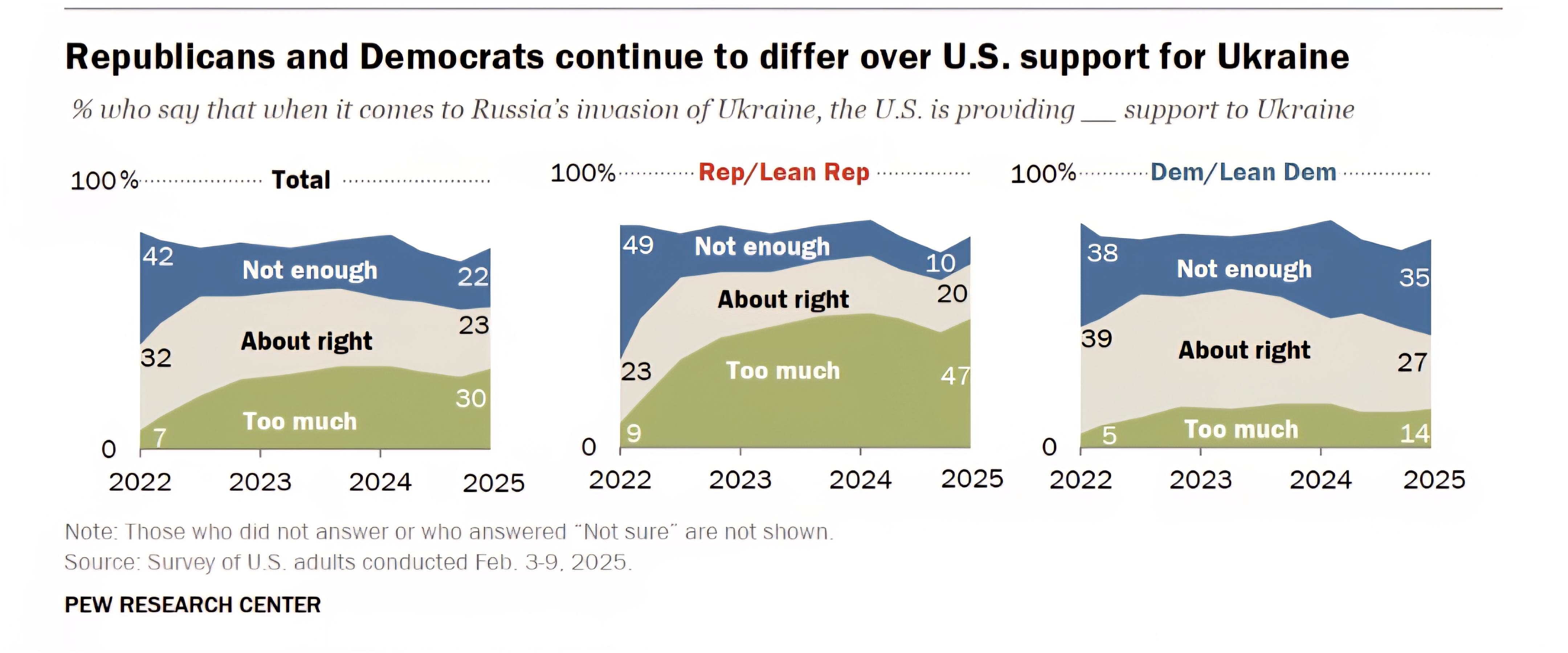
President Trump’s recent interaction with Ukrainian President Zelenskyy this week has made some in the pro-Israel community nervous. If Trump will side with the aggressor (Russia), will he also back Gazans and Iran against Israel?

Devolution of exchange starts at 40:00, when Zelenskyy challenges ability to have diplomacy with Russia which does not abide by agreements

I believe that it is a misreading of Trump’s policy of America First.

Trump likes winners. Winners have the strength and position to negotiate deals, whereas losers ask for handouts. If Russia is declared the winner in the midst of the war and able to annex large chunks of Ukraine, the United States will negotiate important mineral deals with Russia rather than with Ukraine.

Gaza has nothing to offer America other than real estate. The region is in shambles and will require billions of dollars to redevelop. The political-terrorist group Hamas still rules the strip and Gazans have proven themselves morally bankrupt in supporting the massacre of innocent people in Israel. Why would Trump want to engage with the initiators of a war which they completely lost? His inclination would be to side with the Israeli victors who have a thriving liberal society and economy with leading technology to trade with the United States.

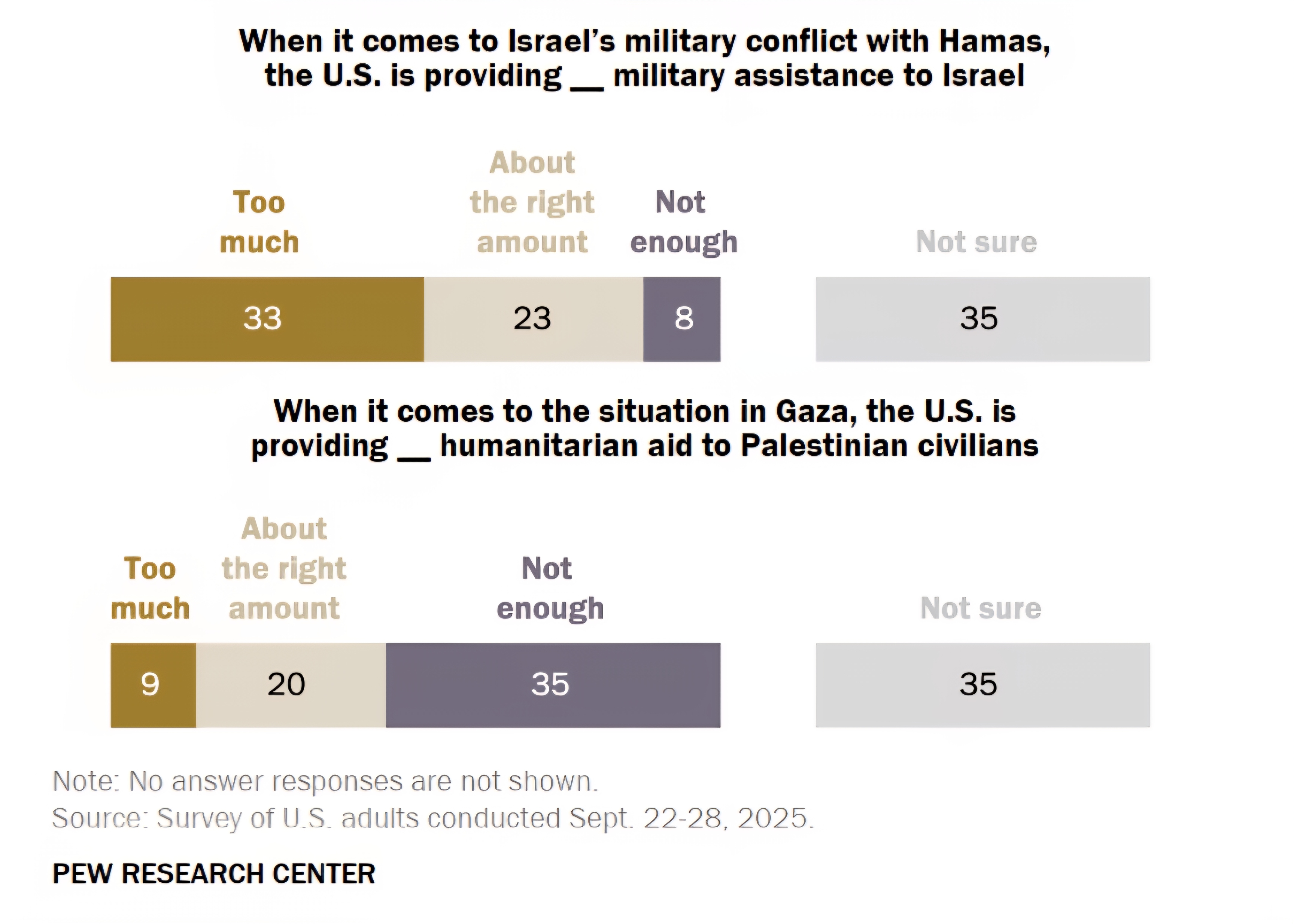
President Trump just approved nearly $3 billion in arms sales to Israel to help replenish its arsenal over the multi-front war with Iran, Lebanon, Syria, Yemen, Gaza and the West Bank. Those arms should help neuter various terrorist groups and position the United States to negotiate an end to Iran’s nuclear weapons program.

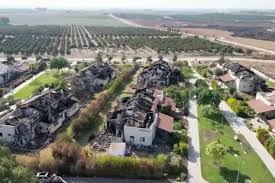
Kibbutz Be’eri burned by Gazan invaders during massacre on October 7, 2023

People think such action is based on short-term thinking but it is about long-term planning. If the parties in conflict have assets and relationships which the U.S. covets, it will engage with those in charge who can deliver. If they are the more moral and ethical as is the case for Israel, so much the better.

Jason Greenblatt, who worked for Donald Trump for decades in his real estate office before working in the first Trump administration developing a new roadmap to peace between Israel and its neighbors made clear that Zelenskyy butchered a chance to help Ukrainians by not understanding how Trump operates, tweeting “Whoever prepared President @ZelenskyyUa for the Oval Office meeting with @POTUS & @VP did an absolutely terrible job! Zelenskyy did not pay attention to the messaging that was coming out of @WhiteHouse for a while now. President Trump is interested in protecting interests 1st & foremost. That’s his job, no matter how people feel about Ukraine. He also wants to end the death & destruction in Ukraine if a logical deal can be made. Hard to believe how Zelenskyy let this devolve instead of taking the cues. What a shame for Ukraine.”

In 2017, during Trump’s first term, Palestinian Authority President Mahmoud Abbas failed to understand and capitalize on Trump’s efforts for Palestinian Arabs and let the relationship completely devolve. Abbas is trying to play catch up now by trying to arrest terrorists east of the 1949 Armistice Lines (E49AL / “West Bank”). It is unclear if that will be enough to impress the administration that has watched Israel be a strong partner.

Trump’s “America First” policy may sometimes run against the wronged party, as in Ukraine. In the Middle East, Americans will have comfort that Trump has an ally which is strong, moral, has much intellectual property to benefit Americans and deeply appreciates the relationship with the U.S.

Related articles:

First Time In History, People Under ‘Genocide’ Reject Ceasefire. Repeatedly. (December 2024)

Naked Trades in the Middle East (September 2020)

Israel, the Liberal Country of the Middle East (March 2015)

Lessons for Israel From Russia’s Invasion Of Ukraine

The pictures and stories coming out of Ukraine are horrible. The suffering of the people of Ukraine and the hands of Russian forces is hard to fathom – or is it?

Neighboring countries go to war all of the time. Before the invention of the airplane, it was basically the only way to wage war. Iran-Iraq was the typical format, not U.S.-Afghanistan. When Russia and the United States engaged in the “Cold War,” they mostly used adjacent proxy states.

Today, vulnerable countries at the edge of war are watching the Russian invasion in horror for the suffering of Ukrainian civilians, as well as for important lessons to be gleaned about their own situations.

Ethno-nationalism surpasses borders. Vladimir Putin of Russia claimed that Ukraine is not a valid country, as its people are actually Russian by identity, language and culture. Palestinian Arabs believe the same, as outlined in the opening of the Palestinian National Charter, “Palestine is the homeland of the Arab Palestinian people; it is an indivisible part of the Arab homeland, and the Palestinian people are an integral part of the Arab nation.” Russia does not believe it is invading a distinct foreign entity but bringing its own people back into the fold, much as the Arab countries surrounding Israel thought (and think) nothing of invading the sovereign State of Israel. Everyone should only use the term ‘Israeli Arabs’ and not ‘Palestinian Citizens of Israel’, as the latter serves the aim of invasion.

The pretext of preventing ‘genocide’ convinces hordes of morons to back warfare. Putin claimed that Russian-speakers in Ukraine were being slaughtered in a “genocide” and was therefore coming to their aid. Arabs – and increasingly “human rights organizations”, the liberal media and the United Nations – are falsely alleging that Israel is committing a “genocide” of Palestinian Arabs and engaging in “ethnic cleansing,” despite the plain facts that the number of Arabs in Israel has grown at a faster pace than Israeli Jews and Arabs in surrounding countries. The Russian propaganda to rally its people against Ukraine is much the same as the insidious jihad of anti-Zionists who are preparing to wage economic, psychological and military warfare against the Jewish State. The vile libel must be fought aggressively.

Concession of a small amount of land is an invitation for more. When Russia invaded Crimea and took over part of Ukraine, the world barely uttered a protest, pleased that the bloodshed was minimal. The larger problem was that a dangerous lesson had been taught that even Ukraine did not believe in the sanctity of its borders and Russia could claim more on the same grounds. While Israel handed over lands in the West Bank to the Palestinian Authority during the late 1990’s and then Gaza in 2005, as opposed to losing them in battle, the Palestinian Authority believes much like Russia that it should have more – whether the entirety of the West Bank or all of Israel.

A country cannot overly rely on security agreements and guarantees. In 1994, Ukraine signed the Budapest Moratorium – also executed by Russia, Britain, and the U.S. – in which Ukraine gave up its nuclear weapons in exchange for assurances of its territorial integrity. Not only did Russia not abide by the agreement in its invasion of Crimea, the U.S. and Britain did not come to the aid of Ukraine. Today, Israel may appreciate the statements from the United States that its commitments to the Jewish State’s security is “enduring and ironclad“, but Israel must fully plan and operate under the assumption it must be able to defend itself by itself.

Don’t have a capital city on the border. The Russian forces quickly penetrated deep into Ukrainian land early in the war. As the capital city of Kyiv is far from the border with Russia, the country has managed to survive the initial onslaught and continues to defend itself. Israel, a very small country surrounded by Arab Muslim countries, cannot allow its capital city of Jerusalem to sit on a border as well. Not only should the city never be divided again as it was for eighteen years 1949 to 1967, but Israel must secure many miles around the city as well.

Beware the Alter of Large Players. Russia’s size and clout are enabling it to get away with murder. As an enormous military and economic force, many countries are refusing to hold Russia to account. Israel is similarly surrounded by the vast Muslim Arab world, with much of it refusing to recognize its existence and some openly demanding Israel’s destruction. In that backdrop, Israel’s primary sponsor, the United States, is working with the Islamic Republic of Iran to maintain a semblance of a nuclear weapons program, even as Iran has threatened to destroy Israel. The situation threatens Israel existentially on one side and economically and psychologically on the other.

Democracies are vulnerable to war when abutting dictatorships. For many years, the western world convinced itself that wars were only for authoritarian regimes. Wars in Africa and the Middle East were considered alien matters between tribal warlords. Intellectuals convinced themselves that a free people with a functioning democracy would simply vote out corrupt or ineffectual leaders and would embrace peace as has existed in Europe since World War II. Lost in that arithmetic is when a democracy abuts a dictatorship, as is the case with Ukraine and Russia. As it is for Israel and all of its neighbors.

There are unfortunately many similarities between the Ukrainians suffering at the hands of its Russian neighbor since 1994 on the one hand, and Israel’s treatment by its Muslim and Arabs neighbors since the reestablishment of the Jewish State, on the other.

Related articles:

Israel and Wars

Netanyahu’s View of Obama: Trust and Consequences

Israel’s Peers and Neighbors

The Countries that Acknowledge the Jewish Temple May Surprise You

The United Nations has been a hotbed of anti-Israel sentiment for decades. Whether the issue was war, terrorism, blockades, the security barrier, peace talks, settlements, refugees, etc., the vast majority of countries have been very vocal and very critical of Israel.

The UN also has a long history of ignoring Jewish rights to their sacred sites, as described in “The United Nations and Holy Sites in the Holy Land.” The various countries in the UN had a chance to add their own voices to that history.

In the fall of 2015, Palestinian Arabs claimed that Jews were going to overrun the Al Aqsa mosque on the Temple Mount in Jerusalem, and proceeded to kill and attempted to kill dozens of Israelis. Those events made the countries at the UN focus on discussing the Temple Mount itself. Their comments  on October 22, 2015 were interesting.

DSC_0087
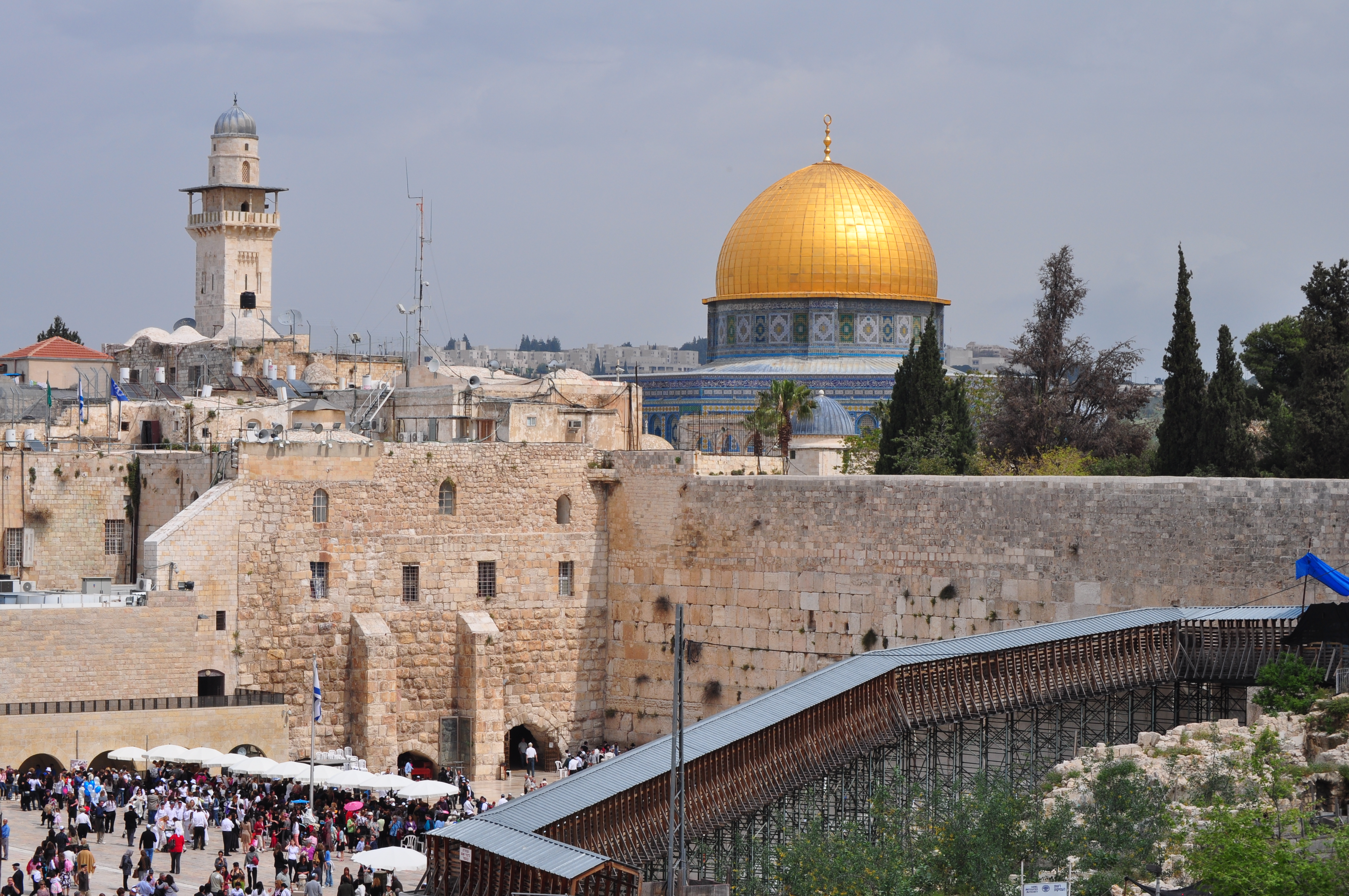
The Dome of the Rock on the Temple Mount above the Kotel,
location of the First and Second Jewish Temples

(photo: FirstOneThrough)

A Muslim Holy Site

Not surprisingly, the Muslim countries referred to the Temple Mount as an exclusively Islamic holy spot.

  • State of Palestine” called the location the “Haram al Sharif,” the Muslim name for the Temple Mount.
  • Angola discussed the “Al Aqsa Mosque,” which is Islam’s third holiest spot, located on the southern tip of the Temple Mount
  • Qatar mentioned the “Holy Shrine

Some countries went further, and stressed that the Temple Mount compound was important only to Muslims.

  • Maldives stated Haram al-Sharif must be restored.  Israel must stop altering the Islamic and Arabic character of the city
  • Egypt noted that the “Holy Shrine was extremely important to more than one billion Muslims worldwide,” and said nothing about Jews
  • Iran called the site “Haram Al-Sharif, and called for respect for the rights of Muslim worshippers to pray at that site in peace.

Others were more extreme in their calls against Israel:

  • Saudi Arabia said that “Israel had failed to protect Islamic holy sites, demolished the gates of Haram al-Sharif and turned it into a prayer place for Jews.  Israeli extremists had set fire to the Cave of the Patriarchs in Hebron
  • Kuwait described “attacks on Al-Aqsa mosque were an unprecedented assault against the inalienable religious rights of Muslims all over the world.   The OIC reiterated the historic and present Hashemite custodianship of the Islamic and Christian holy sites in Jerusalem, including Haram Al-Sharif/Al-Aqsa Mosque.”
  • Morocco was alarmed at the situation of “Islamic holy sites. Jerusalem was the very essence of the Palestinian question and there could be no peace without clarifying the status of Al-Quds as capital of a Palestinian State.  Any harm brought against the Al-Aqsa mosque would heighten tensions.”

The surprise in the singular call of the Islamic character of the site, was that a single western country also only mentioned the Arabic and Muslim name for the site: the United Kingdom.

Just Holy Sites

Some countries avoided the controversy, like Spain, Chad, Nigeria, Norway, Korea and France, just referring to generic “holy sites.” Such language was impartial and neutral. That was perhaps logical in a tense and violent environment.

The Holy See mentioned that the location was sacred to “Judaism, Christianity and Islam.” An ACTIVELY balanced approach, which pulled all of the monotheistic religions to Jerusalem.

Turkey’s approach was a mix. Like the Holy See, it noted that “Jerusalem, a city sacred to Islam, Judaism and Christianity, should be treated with the utmost respect.” But then went on to attack Israel’s practices at the site saying that Israel was “targeting holy sites and all other provocative activities undermining the status and sanctity of Haram al-Sharif must immediately stop.  The Jordanian role as custodian of the holy sites in Jerusalem was crucial for the preservation of Haram al-Sharif as an Islamic sanctuary.”  It would appear that Turkey was willing to acknowledge the centrality of Jerusalem to Jews, just not the Temple Mount.

Most countries like: New Zealand; Venezuela; China; Chile; the United States; Russia; Sweden; Lebanon; Malaysia; Guatemala; Brazil; Japan; India; Bangladesh; Costa Rica; Kazakhstan; Iceland; Botswana; Sri Lanka; Bahrain; Cuba; and Pakistan did not mention the holy site itself.

Yes, that many countries weighed in about the situation in Israel.

Three Countries Recognize Judaism at the Temple Mount

In the long list of world condemnation, there was a silver lining, and it came from the unlikeliest of countries. Three countries besides Israel, referred to the platform as the Temple Mount, recognizing the history of Jews at the location and the sanctity of the spot in Judaism.

  • Lithuania, a country not known for being a strong Israeli ally, said that the “Haram al-Sharif/Temple Mount was a sacred place for both Muslims and Jews.”
  • Ukraine mentioned the Al Aqsa mosque, but then also said “It was important for both parties to find the courage to respect holy places in accordance with the principles specified in the fundamental international documents, particularly those of the United Nations Educational, Scientific and Cultural Organization (UNESCO), and the agreements that regulated the status of the Temple Mount complex.”
  • Zimbabwe also said that “Access to the Temple Mount and other holy sites must be preserved under the status quo arrangements.”

These are not remarkable statements by these three countries on their face. But to consider that dozens of countries – including Israel’s allies – would not recognize the centrality of the Temple Mount to Judaism, does make their statements noteworthy.

Ukraine has a long history of anti-Semitism, but it was among the few countries that referred to the site by its historic Jewish name.  The three countries did go on to chastise Israel for actions on the Temple Mount, but at least they had the decency to not ignore Jews and Judaism also.

Six months later, in April 2016 in Paris, UNESCO itself weighed in that there was no Jewish connection to the Temple Mount when it drafted 40 points of rebuke against Israel, that only referred to the Jerusalem site by Islamic and Arabic names 19 times.  This was very deliberate, as seen when UNESCO went through the courtesy of referring to the common names of other Jewish holy sites in discussing “The two Palestinian sites of Al-Ḥaram Al Ibrāhīmī/Tomb of the Patriarchs in AlKhalīl/Hebron and the Bilāl Ibn Rabāḥ Mosque/Rachel’s Tomb in Bethlehem.”


Decades ago, several countries would not acknowledge the Jewish State, and many Arab countries to this day still refer to Israel as the “Zionist Entity.”  Much of the world is still so backwards, that it cannot even recognize the history of the Jewish people and the holiest spot for Judaism.

Send a note to the governments of Lithuania (misija.jt@urm.lt), Ukraine (uno_us@mfa.gov.ua) and Zimbabwe (zimbabwe@un.int) and let them know that their statements, while seemingly insignificant, meant a lot to a small nation with a little country in the middle of a hostile neighborhood and United Nations.

Consider sending a note to your home country and the UK (fax 212 745 9316)  as well, relaying your disappointment.  You are welcome to attach this article.


Related First.One.Through articles:

Tolerance at the Temple Mount

Names and Narrative: CNN’s Temple Mount/ Al Aqsa Complex Inversion

Active and Reactive Provocations: Charlie Hebdo and the Temple Mount

Visitor Rights on the Temple Mount

The Arguments over Jerusalem

Subscribe YouTube channel: https://www.youtube.com/user/FirstOneThrough

Join Facebook group: Israel Analysis