The Abraham Accords struck between Israel and several Arab Muslim countries including the United Arab Emirates (U.A.E.), Bahrain, Sudan and Morocco in 2020, have continued to advance the cause of peaceful coexistence.
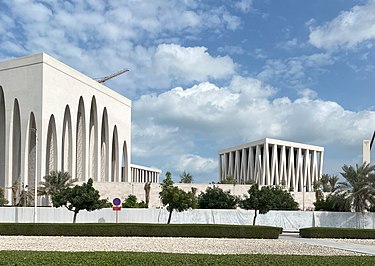
On February 20, 2023, the U.A.E. invited many Jewish guests to be part of the opening ceremony of the first new synagogue in a Muslim country in generations. The Moses Ben Maimon Synagogue is part of the multi-faith Abrahamic Family House complex in Abu Dhabi which also includes a mosque and a church. The three places of worship sit beside one another in an effort to show harmony between the different faiths.
Beyond the proximity of each house of worship, the architects took care in designing each building: the mosque faces the Islamic holy city of Mecca, the church faces east towards the rising sun, and the synagogue faces Jerusalem, Judaism’s holist city.
Abrahamic Family Complex in Abu Dhabi, UAE
On that same February day, the United Nations took the polar opposite approach towards religious coexistence as the U.N. Security Council issued a statement condemning Jews and Judaism.
The official statement was a litany of complaints on the presence of Jews in their holy land. It expressed “strong opposition” to Jews building homes east of the 1949 Armistice Lines (E49AL). It condemned Israel’s killing Islamic terrorists planning attacks on Jewish civilians. It demanded that Jews continue to be forbidden from praying at the holiest site on the Jewish Temple Mount. And it urged that Jews and Christians take a backseat to Muslims when the holidays of Ramadan, Easter and Passover overlap this year, prioritizing Muslim access to Jerusalem over believers of the other faiths.
Remarkably, the “most right-wing government in Israeli history” as portrayed in the media, acquiesced to the anti-Semitic proposals. The Israeli government said that it would keep the “status quo” of banning Jewish prayer on the Temple Mount and would ban Jews from the site during the last ten days of Ramdan. Israeli Prime Minister Benjamin Netanyahu also reportedly told the United States that it won’t authorize new Jewish towns in E49AL for the next few months and will limit incursions into Palestinian Authority towns to arrest terrorists.
While the United Arab Emirates works for religious coexistence, the United Nations works to foment religious animosity and segregation. If there’s a future for peace and coexistence in the region, it will run through the U.A.E. and not the U.N..
The United Nations has summarized its thoughts about Jews in Jerusalem, and it’s appalling.
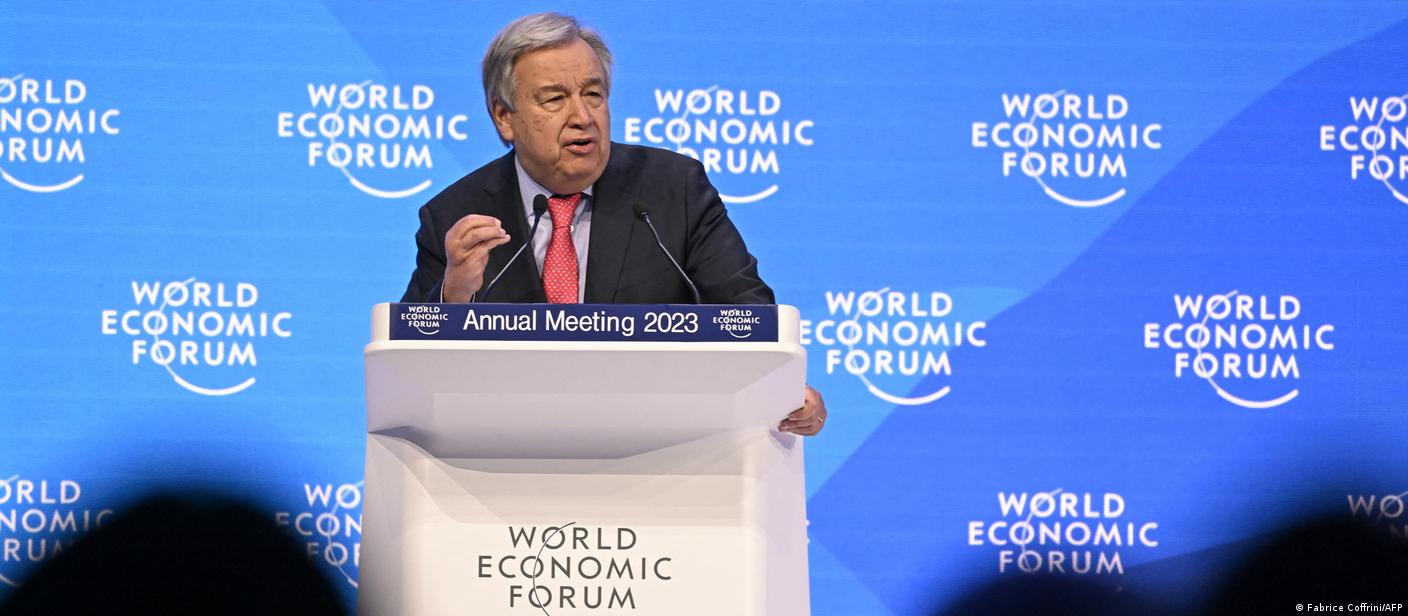
On February 12, 2023, UN Secretary General Antonio Guterres sent a message to a conference held in Cairo, Egypt called “Supporting the City of Jerusalem and its Population.” By the term “its Population,” the leader of the UN made clear he only supports the Arab Muslim population, not the Jewish one. He admitted as much in his opening statement about the “challenges faced by the Palestinian population in Jerusalem.” Presumably, the term Palestinian population refers to those Arabs who have not opted to take Israeli citizenship which has been offered to all law-abiding Arabs in the city.
It clearly didn’t mean Jews.
Guterres continued:
“Jerusalem — Al-Quds is not only a treasured home for so many — it also holds a unique place in the hearts of millions of Muslims, Jews and Christians the world over.“
Jerusalem is ONLY the holiest city for Jews. Minimizing the Jewish connection to the city after an opening comment showing unique concern for the challenges of non-Jews, reveals the jaundiced mindset of the global leader.
“As we have seen time and again, what happens in Jerusalem reverberates globally — and tensions, incitement and violence often spill into wider instability.“
Jews have been a majority in Jerusalem since the 1860s. However, the Jordanian Army ethnically cleansed the Jews out of the eastern portion of Jerusalem including the entirety of the the Old City, and forbade Jews from even visiting their holy sites from 1949 to 1967. The world remained completely silent about the abuse to Jewish human rights, even in the shadow of the European genocide of Jews.
Now, Jews once again control the eastern portion of Jerusalem after Israel defended itself from the attacking Jordanian army in 1967. The current Jewish presence sickens the anti-Semitic Arab Muslims who shout that “al Aqsa is in danger.” Outrageously, the United Nations echoes their sentiments, further inflaming the region.
“It is therefore imperative that all parties exercise restraint and refrain from provocations, inflammatory actions and rhetoric. I am very concerned by the unilateral initiatives that we have seen in recent weeks.“
Refraining “from provocations, inflammatory actions and rhetoric” makes perfect sense. Unfortunately, the head of the U.N. has a perverse idea of what that constitutes, as can be seen in his next comment.
“The position of the United Nations is clear: The status of Jerusalem cannot be altered by unilateral actions, including settlement activities in occupied East Jerusalem; it can only be resolved through negotiations between the parties.“
Perhaps the U.N. does not accept Israel’s annexation of the eastern portion of Jerusalem, as the global body had sought that Greater Jerusalem and Greater Bethlehem be held under an international regime in the 1947 Partition Plan. But the Jordanians drastically altered the character of the city when it expelled every Jew, destroyed every synagogue, banned Jews from entering the city, illegally annexed it and granted any non-Jew citizenship. Reversing the anti-Semitic Jordanian actions is not altering the city with “unilateral actions, including settlement activities”, but reestablishing the Jewish presence in the Jewish holy city that had been unilaterally destroyed by the anti-Semitic Jordanian regime.
While Israel tries to establish a final resolution to the Arab-Israel conflict, it is absurd to demand that the city be frozen in time – only as it relates to Jews and to that period when Jews were ethnically cleansed. It is the capital city of Israel with an enormous demand for housing. How can the U.N. advocate for Arab housing in the city but not for Jewish homes?
“Jerusalem’s demographic and historical character must be preserved — and the status quo at the Holy Sites must be upheld, in line with the special role of the Hashemite Kingdom of Jordan.“
If Jerusalem has been 75% Jewish in 2020, 2000, 1980, 1960 or 1940, is that the fixed percentage of the demographic character of the city that must be preserved? No city in the world has a fixed demographic character. To suggest that the demographic and historical character should relate to the eighteen years that Jordan banned the presence of Jews would be an endorsement of ethnic cleansing.
Which is what Guterres seems to have done, in calling for the anti-Semitic Jordanians to have a special role “at the Holy Sites.” The Jordanian Waqf ONLY has a special role in regards to Muslim holy sites such as the al Aqsa Mosque. It has no special role on the overall Temple Mount which is a Jewish holy site. In falsely giving the Waqf a greater role than was agreed upon in the 1994 Peace Agreement between Israel and Jordan, the U.N. chief is inflaming the situation and going directly against his own words: ignoring an agreement reached between the parties.
“The United Nations remains committed to help Israelis and Palestinians chart a credible path forward: Towards an end of the occupation; towards two States living side by side with Jerusalem as the capital of both; towards lasting security, peace and dignity for all. Thank you. Shukran.“
All of Guterres’ comments show a disregard for Jewish Israelis, so the call out of helping Israelis is a polite lie thinly spread on a mountain of scorn.
There is no “occupation” in Jerusalem. It was never Palestinian nor was it ever intended to be part of an Arab state, but part of an international “corpus separatum.”
If the parties are to negotiate a solution between themselves, then declaring the outcome of Jerusalem being a shared capital undermines the very principle of negotiation. The parties themselves will determine what they find acceptable.
Note that Israel has already advanced the sharing of Corpus Separatum, when it handed Bethlehem to the Palestinian Authority in 1996. The sharing of the holy basin has already been accomplished.
If the U.N. cared about Jewish dignity, it would INSIST upon Jewish prayer rights on the Jewish Temple Mount, not calling for banning Jews.
The head of the United Nations called for banning Jews from the Old City of Jerusalem and denying them basic human rights and dignity to pray at their holiest location. He has sadly become an ugly tool of radical jihadists, and an enemy of Jews.
The U.N.’s desire to impose sharia law in Jerusalem offers no justice nor dignity for Jews. The agency has broken its social contract with the Jewish State, and its heartless shell is but a conduit for overt anti-Semitism.
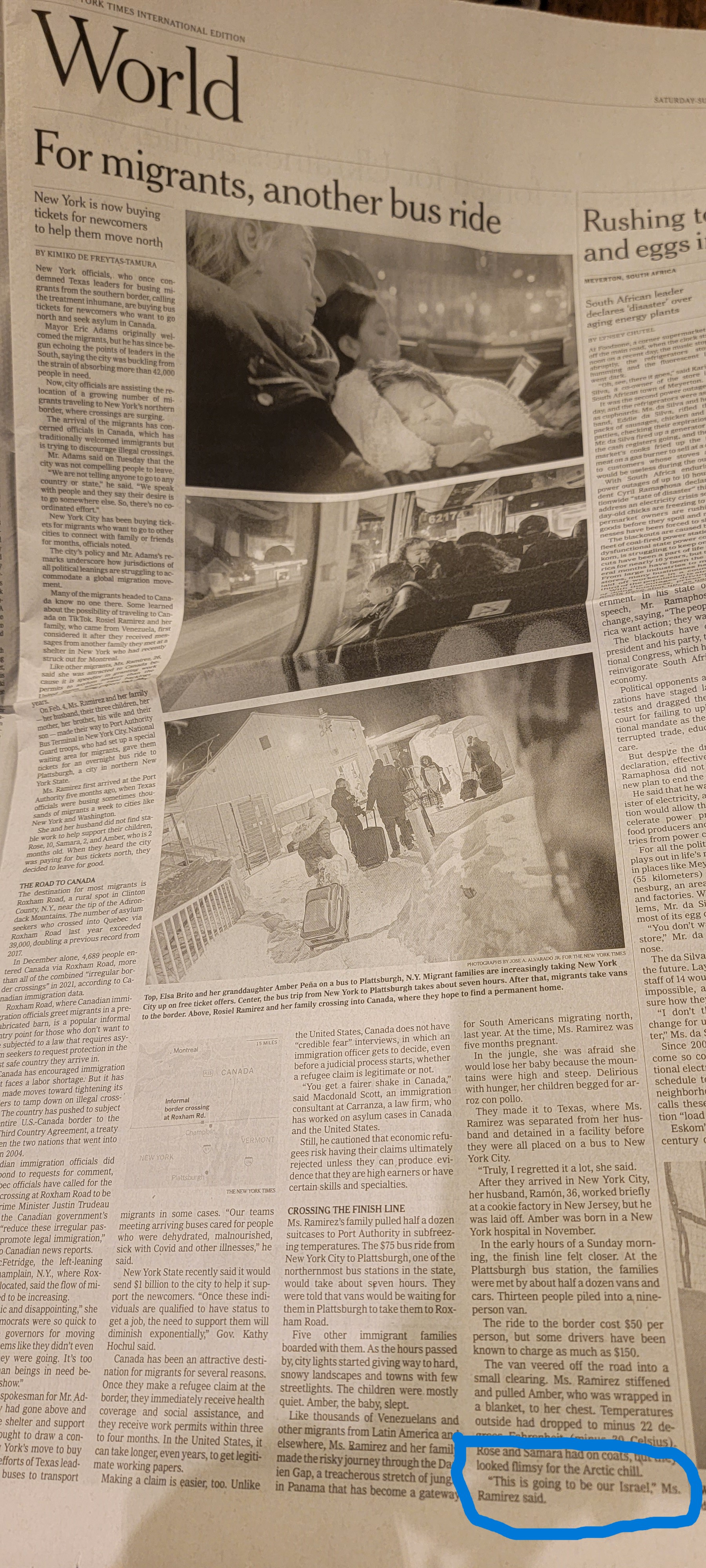
The New York Times wrote an article about the massive number of migrants from Latin America coming first into Texas, then New York, and ultimately bused to Canada. It relayed the scary journey in search of a better life.
The harrowing trip concluded with a quote from a woman who traversed the many miles upon arriving in Canada, “‘This is going to be our Israel,’ Mrs. Ramirez said.” I’m sure she meant it in a positive way: that she had finally arrived in a safe haven, away from the tumult that had been her life. She considered herself like the Jews who had escaped the war in Europe, and arrived in the land of Israel.
Her universalizing the Jews and making her trek to her own “Promised Land” was not sinister but her trivialization calls for her education, and a re-education of the world regarding three important differentiators between refugees and migrants generally, and the unique story of the Jews.
Jews Were a Targeted Minority
Tens of millions of people from Latin America are seeking a better life, away from gang violence, broken economies, poverty and political corruption. Almost every citizen from the region is seeking peace and security that their native countries do not provide.
That is in sharp contrast to Jews.
The Jews who came to Israel from Europe around the Holocaust were specifically targeted for annihilation. They were not simply war refugees like millions of others who fled battle grounds but a persecuted minority ear-marked for ethnic cleansing.
The Jews from Arab Muslim lands were persecuted from the 1950s through 1980s, with governmental decrees and street pogroms. The general public did not flee their home countries in search of something better; they sought something better by driving Jews from their midst.
So it was in Russia, Ukraine and elsewhere. Jews were singled out for persecution and had a particular need for salvation.
Israel is The Jewish Homeland
Venezuelans arriving in Canada have no roots in the land. They could have unpacked their bags as easily in Texas or Toronto.
But Jews are indigenous to the land of Israel. They have thousands of years of well-known history, including kings and judges who ruled in the land.
Further, Judaism is a unique religion which is tied to a specific piece of land. It is a particular religion for a specific people with commandments which can only be kept in their holy land.
The Need for Sovereignty
The migrants from around Latin America will be happy to settle in Seattle or Saskatchewan. They have no aspirations to remake their new countries, and will be happy to become Americans or Canadians. They just want rights and self-determination, and have no vision of transforming their new governments.
Not so for Jews in Israel.
Because of the persistence of anti-Semitism around the globe for centuries, modern Zionism concluded that Jews need more than a safe haven. Jews must be able to determine their future under a Jewish flag. History has shown that self determination without sovereignty would only yield a temporary respite from anti-Semitism.
Zionism is not a rally of charged nationalism but the reality born from relentless persecution.
Zionism is not a rally of charged nationalism but the reality born from relentless persecution.
First One Through
The story of the Jewish people and their Promised Land is captured in the most widely read book, replayed globally over the last two millennia. While migrants and refugees echoing those verses for personal reflection might therefore feel natural, remembering the uniqueness of the Jewish journey to the re-established Jewish State might curb the anti-Semitism and anti-Zionism roaring around the world once more.
Hussein Khaled Qaraqe, a 31 year old Palestinian Arab, rammed his car into a crowd of Israeli Jews on the eve of the Jewish Sabbath in the Jews’ holiest city of Jerusalem on February 10, 2023. He killed a six year old and a 20 year old man who had just gotten married, and injured several others.
While the world was outraged and strongly condemned the attack, including the United States which issued a statement that the “deliberate targeting of innocent civilians is repugnant and unconscionable,” Palestinians celebrated and defended the killings of Jewish civilians.
Hamas, the popular political-terrorist group which governs Gaza and holds a majority of Palestinian parliament, issued a statement under the banner “Hamas mourns Palestinian killed by Israeli occupation troops in occupied Jerusalem.” The article wrote “The Palestinian Islamic Resistance Movement Hamas mourns Palestinian resistance fighter Hussein Qaraqe’, 31, who was killed by the Israeli occupation forces near the colonial settlement of ‘Ramat’ in occupied Jerusalem on Friday. Hamas reiterates that the Palestinian people will continue to resist the Israeli occupation forces and colonial settlers’ crimes against the defenseless citizens of the occupied West Bank and the racist policy of home demolition.”
>> Recall that Rep. Ilhan Omar (D-MN) compared Israel and the United States to this repugnant and racist genocidal regime, and every Democrat – including Jews – in the House of Representatives sought to protect her from being ousted from the Foreign Affairs Committee.
Wafa, the official website of the Palestinian Authority under the leadership of Fatah, ran a story inverting the facts with the headline “Israeli settlers kill a Palestinian driver in occupied Jerusalem.” The article wrote “A Palestinian young man was shot dead today by Israeli settlers at Nabi Samuel junction in occupied Jerusalem, according to local sources. The family of Hussein Khaled Qaraqe, 30, said Israeli settlers opened gunfire at their son while he was driving his vehicle at the junction, critically injuring him. The young man was pronounced dead a few of minutes later.”
Ground News captured the overall Palestinian sentiment of the attack “Palestinians Celebrate Murder of Israelis in Terrorist Attack, Media Headlines Call Victims ‘Settlers’“
Palestinian sites featured pictures of the killer but not the Jewish victims
Outside of the Palestinians, several Muslim sites sought to inflame the situation.
Palm Strategic Initiatives wrote “Two Israeli settlers were reported killed and five others injured during a ramming attack in occupied Jerusalem. Israeli media reported that Palestinian youth Hussein Qaraqe’, 31, carried out a run-over attack in Ramout Israeli settlement in occupied Jerusalem.” Neither the six year Jewish victim nor the 20-year old was described in any fashion, while the 31-year old terrorist was described as a “youth.”
Al Mayadeen wrote that “Israeli media claim two illegal Israeli settlers were killed and five others were injured in a ramming operation into a bus stop in Al-Quds,” making Jewish civilians walking on the street the actual perpetrator of doing something “illegal.”
Hezbollah’s Al Manar wrote “Car Ramming Attack in Al-Quds City Kills Two Zionist Settlers, Critically Injures Seven Others.” The article led “A car ramming attack, carried out by a Palestinian who descends from Al-Issawiya town, left two Zionist settlers dead and critically injured seven others in Al-Quds City. Hussein Karaka, 31, rammed into a bus stop at the entrance to the Ramot neighborhood and hit 11 settlers, according to media reports.”
The left-wing Israeli media headed by Haaretz tried to explain away the terrorism. It ran a headline “Jerusalem Attacker Was Released From Psychiatric Ward Day Before Car Ramming, Family Says.” It pushed the narrative that the Palestinian terrorist was not really a perpetrator of violence as much as a victim of mental illness.
What has happened to the world?
It is illegal under international law to incite violence which the Palestinian leadership does openly. It is also illegal to finance terrorism, which the global community does in providing funds to the PA and Hamas.
It should perhaps not be shocking in this environment that a member of Congress normalized a genocidal jihadist regime, but shouldn’t we be appalled that Jews are defending this Congresswoman?
The killing of civilians is absolutely “repugnant and unconscionable,” and it is past time to hold the defenders of such atrocities to account.
Everyone understands that politics is a messy business. One has to pretend that the actors in the dance are more powerful, honest and deserving of respect, especially when being hosted. But that doesn’t make the theater attractive, nor does it bring about peace.
U.S. Secretary of State Antony Blinken visited the President-for-Life Mahmoud Abbas of the Palestinian Authority in Ramallah, Area A, on January 31, 2023, just days after a series of attacks left many Israeli civilians and Palestinian terrorists dead. After a single sentence of welcome, Abbas launched a venomous rant against Israel with accusations of “changing the identity of Jerusalem and violating historical status quo, and the violation of sanctity of Al Aqsa Mosque.” He added that “our people will not accept the continuation of the occupation forever, and the regional security will not be strengthened by violating the sanctity of the holy sites.”
Blinken then responded.
After acknowledging the host and expressing condolences for Palestinian CIVILIANS who have been killed, he offered: “Palestinians and Israelis alike are experiencing growing insecurity, growing fear in their homes, in their communities, in their places of worship.”
Seven Jews had just been slaughtered outside of their synagogue the week before by a Palestinian gunman. The following day, a Palestinian youth shot a Jewish father and son walking to services on the Sabbath.
Jews fear for their physical well-being and safety as they pray amidst Arabs who want to ban them from their holiest city, and are killing Jews to drive them out of Jerusalem.
Among Palestinians, the “fear” is having Jews live in Jerusalem, visit their holiest site on the Temple Mount and pray there openly.
How are these two things remotely equivalent? How did the United States make such an outrageous smear, and endorse the Palestinian Arab narrative that Jews should be banned from praying at their holiest site with opposing “disruptions to the historic status quo of the holy sites”?
Secretary of State Antony J. Blinken visited the president of the Palestinian Authority, Mahmoud Abbas (photo: Majdi Mohammed, New York Times)
Blinken said that the United States will “work toward the goal of Palestinians and Israelis enjoying equal measures of democracy, of opportunity, of dignity in their lives.” But there is no dignity for Jews without achieving the basic human right to pray at their holiest location. There is no equal measure of democracy when Palestinians demand a country free of any Jews.
Jews are scared for their lives when they go to pray, while Arabs are outraged by the physical presence of Jews. That’s not an equivalence of a “growing fear in their places of worship,” but the basic feature of jihadi anti-Semitic dementia. The U.S. State Department excusing and endorsing such Palestinian racist worldview will not resolve the tension in the region.
The United Nations Secretary General Antonio Guterres issued two rebukes about the slaughter of Jewish and Muslim worshipers at the end of January. While some words about the shooting of Jews outside a synagogue in Jerusalem and a bombing of a mosque in Pakistan were common, some stood in sharp contrast.
“particularly abhorrent that the attack occurred at a place of worship… there is never any excuse for acts of terrorism.”
“particularly abhorrent that the attack occurred at a place of worship. Freedom of religion or belief, including the ability to worship in peace and security, is a universal human right.”
Solidarity
NONE
“reiterates solidarity of the United Nations with the Government and people of Pakistan…”
Address Terrorism
“deeply worried about the current escalation of violence in Israel and the Occupied Palestinian Territory. This is the moment to exercise the utmost restraint.”
“… in their efforts to address terrorism and violent extremism.”
Comments of the UN Secretary General in January 2023
Gutteres had enough brains to strongly condemn both heinous attacks and offer his condolences to the victims. But after that, his brain fell out.
The head of the U.N. understands that freedom of religion and ability to worship in peace is a fundamental human right… except for Jews for some reason. Guterres seemingly omitted saying it for Jews because he supports radical jihadists who demand that Jews be forbidden from praying at their holiest location on the Jewish Temple Mount in Jerusalem.
He didn’t offer solidarity with the government and people of Israel as he did for Pakistan because he somehow has a misguided view that condemning Palestinian terrorism would be taking sides in the conflict, instead of taking a strong stand against terrorism. Offering meek words that “there is no excuse for terrorism” to Palestinians is outrageous. It suggests that the world is actually reading their genocidal manifesto and considering its validity, something never considered for any other terrorist.
And significantly, telling Pakistan (and the whole world) – OTHER THAN ISRAEL – that the U.N. stands with them in their effort to combat “terrorism and violent extremism,” empowers the anti-Semitic Palestinians who flatly reject coexistence with the Jewish State, to continue their extremist genocidal ways.
The U.N. must finally support Jews like any other people- with freedom to worship in peace, and to address the terrorism and violent extremism of their anti-Semitic violent neighbors.
The Arab-Israeli conflict gets so much ink and analysis because the region is always in flux.
Yet some things remain constant.
The Israelis and Palestinian Arabs poll themselves frequently about sentiments on a variety of topics. Occasionally, they conduct joint polls as occurred on January 24, 2023. The Palestinian Center of Policy and Survey Research (PCPSR) and Tel Aviv University’s International MA Program in Conflict Resolution and Mediation (Israeli Pulse) issued their report as Palestinians and Israelis engaged in a series of attacks. The joint poll is another tool to assess how Israeli Jews, Israeli Arabs and Palestinian Arabs (there are no Palestinian Jews anymore, as Palestinians exclude Jews from the definition) consider different aspects of living together, and how trends in such attitudes change.
In many ways, the groups agree on much: only about one-third of Israelis and Palestinians supports a two-state solution, a percentage that has continued to decline since 2016. About 85% of both Israelis and Arabs do not trust each other, and 84% of each considers themselves the victim in the conflict. About 60% of each group fears for their safety, roughly 93% of each group believes that they are the rightful owners to all of the land, and about 70% of each thinks the conflict is a zero-sum relationship, in that what’s good for one side is bad for the other.
The areas with some gap in sentiments includes engaging in an all-out war, with an estimated 40% of Palestinians and 26% of Israelis in favor, and roughly one-third of Israeli Jews willing to share the land with Palestinians but only 7% of Palestinians willing to share any land with Jews.
That last figure – only about one in fourteen Palestinians Arabs are in favor of sharing any of the land between the Jordan River and the Mediterranean Sea – is frightening and should be read in the context of another question in the joint poll.
“When did the conflict begin?”
To read the news and consider the ideas floated to bring peace to the region, one would imagine that the respondents would answer “the 1967 Six Day War,” to the question when the conflict originated, as that is when “occupation” began and those are the contours proposed in the Saudi Peace Plan. Yet only 8% of Palestinian Arabs and 5% of Israeli Jews believe that is the beginning of the conflict.
A majority of both Palestinians and Israeli Jews (60% and 52%, respectively) believe that the conflict began with the Balfour Declaration in 1917 and the Zionist immigration wave. It is the increased presence of Jews in the region – with international support – that is the core of the conflict, and why only 7% of Palestinians would consider sharing any of the land with the Jewish “colonialists.”
Only Israeli Arabs don’t hold this position, as they believe the conflict began with Israel’s declaration of independence, which makes sense as that is when their reality began. Similarly, they are the group most likely to promote good relations between Jews and Arabs (70%), followed by Israeli Jews (56%). Almost no Palestinians want to promote good relations (22%), as it has been blacklisted under the banner of “normalization.”
Palestinians do not believe that the Arab-Israeli conflict is about land or religion. They believe it is about the physical presence of Jews in the land they view as singularly theirs. Until the world focuses on changing this jaundiced Palestinian viewpoint, there is no hope for a peaceful resolution.
U.S. Secretary of State Anthony Blinken is flying to the Middle East on a scheduled trip, that is coming days after a series of deadly attacks in the holy land. His responses thus far have been clear, unambiguous and morally correct.
After a Palestinian Arab gunned down seven Jews walking out of synagogue on Sabbath, Blinken issued a statement strongly condemning the attack:
“The United States condemns in the strongest terms the horrific terrorist attack that occurred today outside of a synagogue in Jerusalem. We mourn those killed in the attack, and our thoughts are with the injured, including children. The notion of people being targeted as they leave a house of worship is abhorrent. It is particularly tragic that this attack occurred on International Holocaust Remembrance Day.
“On behalf of the United States, I express our deepest condolences to the families of the deceased and wish those injured a full recovery. We are in close contact with our Israeli partners and reaffirm our unwavering commitment to Israel’s security.“
Earlier in the day, Ned Price, spokesman for Blinken offered the following in response to the Israeli raid into Jenin to root out Palestinian terrorists planning attacks, which left nine Palestinians dead:
“Today in Jenin, at least nine Palestinians, including militants and at least one civilian, were killed and over twenty injured during an Israeli Defense Forces counterterrorism operation against a Palestinian Islamic Jihad cell. We recognize the very real security challenges facing Israel and the Palestinian Authority, and condemn terrorist groups planning and carrying out attacks against civilians. We mourn the loss of innocent lives as well as injuries to civilians, and are deeply concerned by the cycle of violence in the West Bank. We underscore the urgent need for all parties to de-escalate, prevent further loss of civilian life, and work together to improve the security situation in the West Bank. Palestinians and Israelis equally deserve to live safely and securely.“
This is in sharp contrast to the liberal media which attempted to portray Israel as gratuitously killing Palestinians, while Jews just happen to die in land that Arabists believe should be Jew-free. It’s a welcome show of moral clarity which should be welcomed and appreciated.
Secretary of State Antony Blinken arrives to meet with Israeli President Isaac Herzog, not pictured, in Washington, D.C., on Oct. 25, 2022. Photo by Stefani Reynolds/Pool via REUTERS
The “cycle of violence” is continuing in the holy land, in a phrase that inappropriately conveys similarity.
Last week, the Israel Defense Forces went after a terrorist cell in Jenin which was planning attacks against Israelis. The gun battle resulted in nine dead Palestinians, seven of them terrorists.
Hours later, a Palestinian Arab shot and killed seven innocent Jews coming out of synagogue on the Jewish Sabbath. The terrorist was killed. The following day a 13-year old Palestinian shot and injured a father and son walking on the streets of Jerusalem on the Sabbath. The perpetrator was taken into custody.
There is no moral equivalence between the actions of Palestinians attacking innocent Jews and Israel defending its citizens. There is no equivalence of intent which is lost in the phrase “cycle of violence.”
While Israel has created a multi-ethnic democracy which has tried to live in peace with its neighbors, Palestinians continue to demand a purely Arab and Islamic region, ethnically cleansed of Jews.
Both the United States and Israel conducted raids on wanted terrorists in January 2023. Both countries killed about ten terrorists and escaped the raids without losing any soldiers. The Israeli raid also was reported by local Arab sources to have two civilian casualties, while no civilians deaths were reported by the U.S. military.
The New York Times covered the stories very differently.
The story of the U.S. raid was found at the bottom of the page. It had no pictures. The title read “U.S. Copter Raid Kills an ISIS Leader in Somalia,” which made the U.S. raid sound mechanical – as if done by a drone. The attack clearly took out a bad person, the leader of ISIS.
The article itself would only quote from the U.S. military. The reporters did not run around Somalia to talk to local people about whether the American claims were true and that no civilians were injured.
That is all in sharp contrast to the Israeli raid on the same day.
The Israeli story was featured at the top of the page with two large pictures, one of a funeral and another of “an elderly Palestinian mourner as the funeral procession began.” The article ran under the header “Israeli Troops Kill Several Palestinians in West Bank Raid.” In this case, there was no distancing of soldiers in the field as there was in the U.S. story. More significantly, the headline made the Palestinians appear as innocent civilians, rather than active terrorists.
The Times article was written by two Arab women, and featured many quotes from local Arabs who used inflammatory language about the raid to stop terrorist activity.
The New York Times is creating a fictional narrative that Israelis are wantonly killing Palestinian civilians to turn American support from the Jewish State. It is an example of the insidious anti-Zionism which has permeated liberal media and is instigating anti-Semitism on American streets.
Six Arab men stomp and pepper spray Orthodox Jew in Manhattan on way to pro-Israel rally in May 2021, calling him a “dirty Jew,” “F–k Israel,” and “Hamas is going to kill all of you.” Attacker sentenced to only six months in January 2023
If this sounds exaggerated, consider the Times headline the following day when a Palestinian Arab murdered seven Jews coming out of a synagogue on Sabbath.
For the anti-Zionist media, Israelis kill Palestinians but some “people” are dead from anonymous shots. Of course, this is a complete inversion of facts, as the Arab intentionally shot and killed innocent Jews, while Israel went to Jenin to capture terrorists.
The Times is maliciously lying to its readers and falsifying the Israeli-Arab Conflict.