Is Israel Reforming the Muslim Middle East? Impossible According to The NY Times

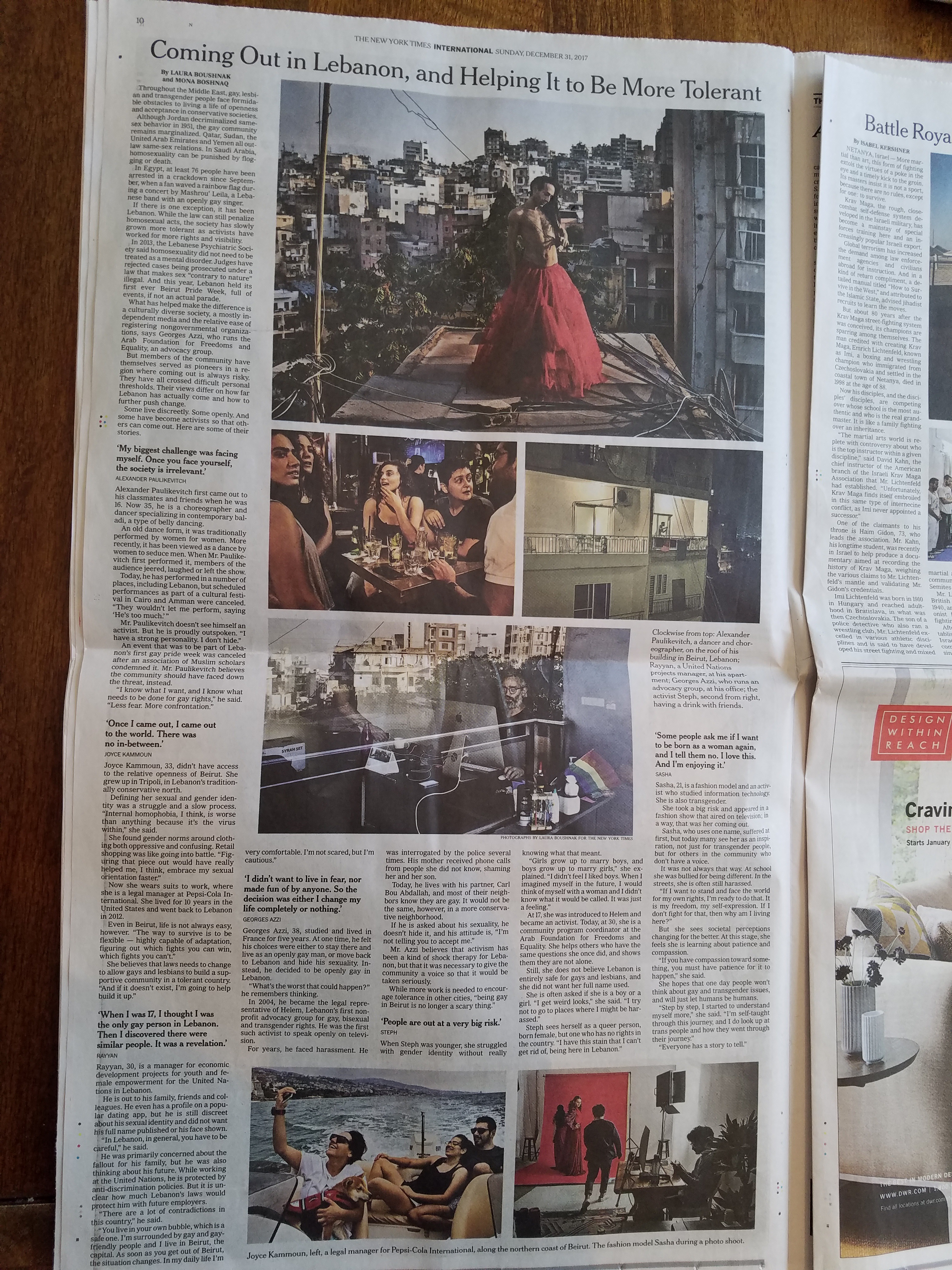
The New York Times has been advancing the notion that liberal values are popping up in the Middle East. Despite the actual murder and mayhem brought by the “Arab Spring,” the Times published articles about the advancement of women’s rights in Iran and Saudi Arabia, as well as the acceptance of the gay and lesbian communities in Lebanon.

These recent phenomena may be true, but it is interesting that Israel is never mentioned in the articles – the one country that has equality for women and the LGBT community.

LGBT Rights

Consider the December 31, 2017 article “Coming Out in Lebanon, and Helping it to be More Tolerant.” The article detailed that most of the countries in the Middle East have laws punishing homosexual activity, naming several Arab countries before highlighting the unique position of Lebanon:

Throughout the Middle East, gay, lesbian and transgender people face formidable obstacles to living a life of openness and acceptance in conservative societies.

Although Jordan decriminalized same-sex behavior in 1951, the gay community remains marginalized. Qatar, Sudan, the United Arab Emirates and Yemen all outlaw same-sex relations. In Saudi Arabia, homosexuality can be punished by flogging or death.

In Egypt, at least 76 people have been arrested in a crackdown since September, when a fan waved a rainbow flag during a concert by Masrou’ Leila, a Lebanese band with an openly gay singer.

If there is one exception, it has been Lebanon. While the law can still penalize homosexual acts, the society has slowly grown more tolerant as activists have worked for more rights and visibility.”

This is preposterous. The “one exception” of tolerance “throughout the Middle East” is Israel, not Lebanon.

The International Lesbian, Gay, Bisexual, Trans and Intersex Association (ILGA) produced detailed reports about the countries of the world that  protect or criminalize LGBT relationships. In every year, Israel stands out as an island of acceptance for the LGBT community for thousands of miles.

From Morocco to Taiwan and from South Africa to Russia, there is a single country that has laws protecting the LGBT community. And it is not Lebanon, but Israel.


The New York Times December 31, 2017 article on page 10 claiming that Lebanon is the only country in the Middle East with gay rights.

Women’s Rights

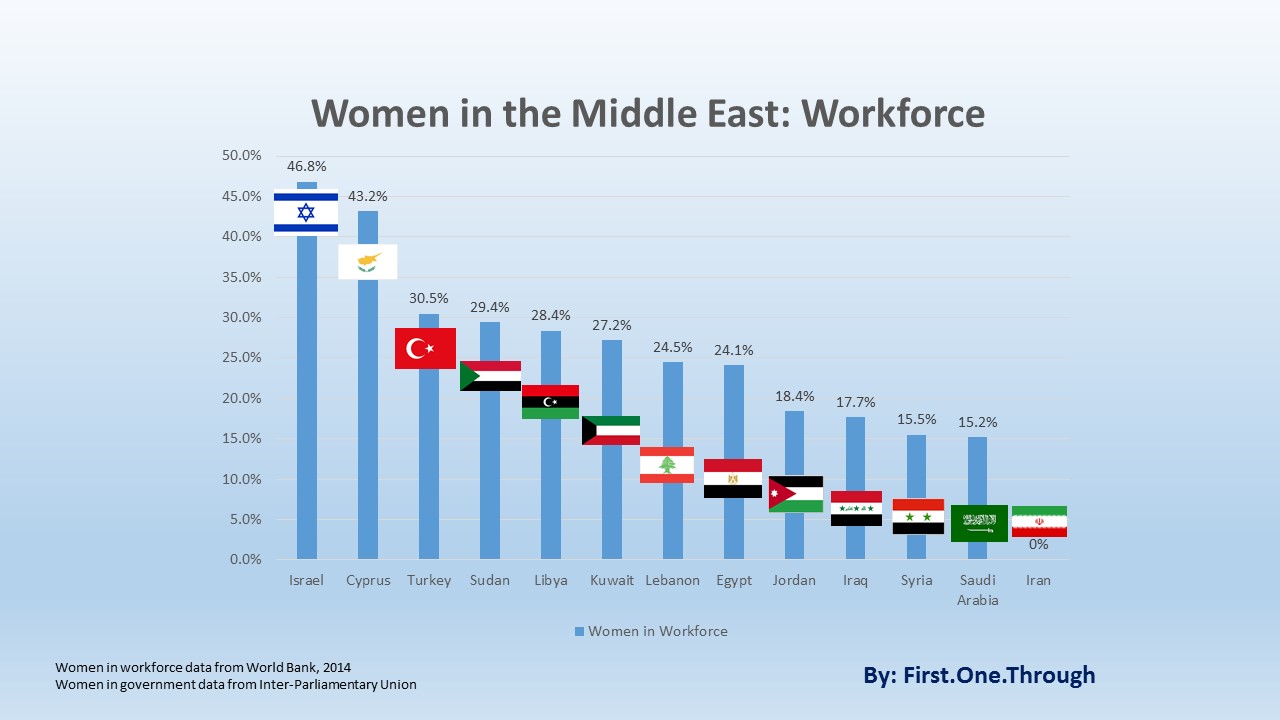
On December 29, 2017, the New York Times published an article on its cover page called “Unlikely Iranian-Saudi Race: Easing Restrictions on Women.” The article advanced the notion that Iran and Saudi Arabia are both slowly easing restrictions on women in their countries in a competitive environment of liberalization. Saudi Arabia changed laws allowing women to drive, so Iran eased the law regarding women wearing a hijab.

The article quoted “Suad Abu-Dayyeh, a Palestinian who is the Middle East and North Africa (MENA) consultant for Equality Now, a global women’s advocacy group.” The article noted that “she was cautious about concluding that the changes in Iran were related to the Saudi relaxation,” but she did state that “any advancement in any country will really affect the situation in the neighboring countries.

And still, the New York Times did not mention Israel which leads the MENA region in women’s rights.

If the Times really believed in the concept that it opted to cite, that the activity in one country could influence the actions in neighboring countries, why not mention the country that leads the entire region in human rights, especially for women and the LGBT communities? Is it too remarkable to assume that the countries in the region are trying to catch up with Israel, whether in technology, the economy or human rights? Saudi Arabia announced its Vision 2030 plans just a few months ago, as noted by the NY Times on October 25, 2017, that the country needed to move beyond oil into technology. Are all of these events regarding the economy and human rights simply coincidences with no relationship to the marvel of Israel next door?

In the closing days of 2017, the Times sought to educate its readership that the Muslim and Arab countries are in the process of liberal reformation – on their own. The paper did so while deliberately excluding the factual presence of Israel in the Middle East and its possible positive influence of reforming the Muslim nations in the region.

The New York Times has moved beyond the “pinkwashing” of Israel into new levels of #AlternativeFacts.


Related First.One.Through articles:

Gay Rights in the Middle East

The Color Coded Lexicon of Israel’s Bigotry: It’s not Just PinkWashing

I’m Offended, You’re Dead

Politicians React to Vile and Vulgar Palestinian Hatred

Honor Killings in Gaza

Subscribe YouTube channel: FirstOneThrough

Join Facebook group: FirstOne Through  Israel Analysis


Losing Rights

There are some rights that are considered immutable, granted to human beings everywhere, while other rights are granted by a country’s laws or local society. But individuals and countries can lose those rights if they are deemed threats to society.

Individual Rights in the United States

Consider the right to vote in the United States.

While it was given to adult white men at the birth of the country, it took the passage of the 15th Amendment of the US Constitution in 1870 for black men to get the right to vote. Women got the right to vote in 1919 when the 19th Amendment passed. To this day, citizens under 18 years old are still denied the right to vote.

The right to vote in elections is NOT immutable, as it is conditioned on a level of decent behavior. Many states rescind the right to vote for people who are convicted of a felony. Some states suspend the right while the person is in prison; other states ban the right to vote permanently.

The right to own a gun in the USA is also subject to limitations.

While the 2nd Amendment gave citizens the right “to keep and bear arms,federal law also rescinds such right for people in certain categories, such as convicted felons, domestic abusers and people with certain kinds of mental health issues. The government has opted to remove certain rights of the individual because of their threat to the well-being of society.

That principle relates to countries as well.

Iranian Quest for Nuclear Power

There are nine countries with nuclear weapons and 31 with nuclear power. Despite its prevalence, the world was alarmed when Iran wanted to pursue its own nuclear ambitions. Why did so many countries enforce severe sanctions on Iran, when it was just pursuing a nuclear program similar to many other countries?

As many people stated when the Iranian deal was being formulated and Israeli MK Michael Oren wrote on October 2, 2017 “The Iran Nuclear Deal Isn’t Worth Saving,” the problem lies with Iran itself. The country is a leading state sponsor of global terrorism. It is a dangerous destabilizing force, backing corrupt regimes and terrorist organizations throughout the Middle East. Many countries correctly concluded that Iran is a bad actor that must be restricted from having weapons of mass destruction. It follows the logic of keeping guns out of the hands of felons by a factor of 7 billion.

The current Islamic Republic of Iran is unfit to handle nuclear weapons or even possess nuclear power. It must be satisfied with a conventional arsenal to protect itself and conventional sources of electricity until it can demonstate that it can be trusted with greater power.

Palestinian Arabs’ Quest for an Independent State

In 1975, the United Nations passed General Assembly Resolution 3376 which created the Committee on the Exercise of the Inalienable Rights of the Palestinian People (CEIRPP). Since 1977, the UN has celebrated on every November 29 the International Day of Solidarity with the Palestinian People, which echoed the CEIRPP call for “the right to self-determination without external interference, the right to national independence and sovereignty, and the right to return to their homes and property from which they had been displaced.

But the Palestinian Arabs have themselves undermined these “inalienable rights” based on their actions to date.

No “right to return to their homes and property from which they had been displaced.” UN Resolution 194 specifically stated that “refugees wishing to return to their homes and live at peace with their neighbours should be permitted to do so.” However, the millions of Palestinians who want “to return to their homes” are not refugees, but descendants of internally displaced people. Further, the various wars, intifadas and stabbing and car ramming attacks prove that the Palestinian Arabs have no intention of living in peace with Jews in the region.

No “right to national independence and sovereignty.” While people can appreciate the desire of people to self-determination and being citizens of a country, that does not equate to people having a distinct country of their own. Many Arabs are now citizens of Israel, accounting for 20% of the country. Millions of Arabs have Jordanian citizenship, many having moved to Jordan from the West Bank. Millions of Arabs east of the Green Line (EGL)/ Judea and Samaria/ West Bank had Jordanian citizenship from 1954 to 1988, from when the Jordanians granted all non-Jews in the region citizenship until the Jordanian government rescinded it and any claim to EGL. The Arabs in Gaza were under Egyptian rule from 1948 to 1967.

The Palestinian Arabs have shown themselves unfit to have a country of their own based on a long list of actions.

  • Electing a Holocaust denier as President
  • Electing a terrorist group (Hamas) to the majority (58%) of parliament
  • Established laws calling for capital punishment for any Arab selling land to a Jew
  • Calling for a new country to be Jew-free
  • Denying the 3700 year history of Jews in the holy land
  • Almost a completely anti-Semitic populace (93% according to an ADL poll)
  • Using language such as “genocide” and “ethnic cleansing” against the Jewish people who just suffered that fate at the hands of Germany and Arab countries around the Middle East
  • Wars and intifadas, and the incitement to murder Jews from 1920 until today

l
logo of the Popular Front for the Liberation of Palestine,
showing the entire Arab world invading Israel

[the Al Aqsa Martyr’s Brigade is part of the “moderate” Fatah party and features a logo with guns over the Dome of the Rock on Jerusalem’s Temple Mount. New rules by WordPress prevent it being inserted here.]

Like Iran’s pursuit of nuclear power and a convicted felon’s desire to purchase a gun, granting Palestinian Arabs a sovereign country would be a dangerous and alarming action. That countries would even consider pursuing such course while the Palestinian Authority works to bring Hamas into a unity government, would be akin to handing an automatic weapon to a serial domestic abuser who bought the apartment next door to his ex-wife.

The Palestinian Arabs can achieve their “inalienable right” to become citizens of either Israel, Jordan or Egypt. They are still a very long way of earning the right to sovereignty.


Related First.One.Through articles:

The Gap between Fairness and Safety: WMDs in Iraq and Iran

Half Standards: Gun Control and the Iranian Nuclear Weapons Deal

Is the Iran Deal a Domestic Matter (NY Times) or an International Matter (Wall Street Journal)

What do you Recognize in the Palestinians?

Extreme and Mainstream. Germany 1933; West Bank & Gaza Today

Palestinian Jews and a Judenrein Palestine

The Palestinians aren’t “Resorting to Violence”; They are Murdering and Waging War

Subscribe YouTube channel: FirstOneThrough

Join Facebook group: FirstOne Through  Israel Analysis

Grading Evil and Evil Doers

On December 14, 2015, US President Obama told Americans that “the United States and our Armed Forces continue to lead the global coalition in our mission to destroy the terrorist group ISIL (the Islamic State).”  He laid out the ongoing efforts to “destroy” the group in its various facets, including “their fighting positions, bunkers and staging areas; their heavy weapons, bomb-making factories, compounds and training camps.

He used the word “destroy” five times in the speech.

That address stood in sharp contrast to his detailed comments on fighting “violent extremism.”

On February 18, 2015, Obama penned a piece in the Los Angeles Times called “Our Fight Against Violent Extremism.” He mentioned terrorism and terrorist threats from a range of countries, including: Yemen; Libya; Syria; Iraq; US; Canada; Australia; France; Denmark; Pakistan; Somalia and Nigeria.  His plan to deal with the global threat involved several initiatives: “We know that military force alone cannot solve this problem. Nor can we simply take out terrorists who kill innocent civilians. We also have to confront the violent extremists — the propagandists, recruiters and enablers — who may not directly engage in terrorist acts themselves, but who radicalize, recruit and incite others to do so…. Our focus will be on empowering local communities.”

Obama’s plan to fight global violent extremism was broad.  Below is a review of Obama’s approach for confronting evil and evil-doers.

Evil to Destroy

President Obama referred to an “evil ideology” when he commented on the murder of American photojournalist Luke Somers.  For Obama, the evil of AQAP (Al Qaeda in the Arabian Peninsula) was a “disregard for life” that threated to “harm our [American] citizens.”

Regarding ISIL/ the Islamic State, the evil was described in a similar manner.  In November 2015, after attacks in France and Turkey, Obama said ISIL is the face of evil. Our goal, as I’ve said many times, is to degrade and ultimately destroy this barbaric terrorist organization.”  He echoed comments he made with French President Hollande just a few days before when he saidthis barbaric terrorist group — ISIL, or Daesh — and its murderous ideology pose a serious threat to all of us.  It cannot be tolerated.  It must be destroyed.”

Evil had certain traits: barbarity and murder.  According to Obama, the root of the evil ideology was to “promote a twisted interpretation of religion that is rejected by the overwhelming majority of the world’s Muslims.

Particular evil that needed to be destroyed, was evil that threated America, and in some cases, its allies.  Other evil could be addressed using other methods.

Consider Obama’s comments over his presidency about his desire to destroy evil.  It is limited to two terrorist groups who attacked Americans: al Qaeda and ISIL/ Islamic State.

  • December 1, 2009: “America, our allies and the world were acting as one to destroy al Qaeda’s terrorist network and to protect our common security.
  • March 28, 2010: “Our broad mission is clear:  We are going to disrupt and dismantle, defeat and destroy al Qaeda and its extremist allies.  That is our mission [in Afghanistan].”
  • October 29, 2010: “we will continue to strengthen our cooperation with the Yemeni government to disrupt plotting by al Qaeda in the Arabian Peninsula and to destroy this al Qaeda affiliate.
  • September 10, 2014: “Our objective is clear: We will degrade, and ultimately destroy, ISIL through a comprehensive and sustained counter-terrorism strategy.”
  • February 11, 2015: “America’s armed forces are working with some 60 nations to degrade and destroy ISIL, a terrorist group that has committed countless barbaric atrocities and poses a grave threat to the people and territorial integrity of Iraq and Syria, regional stability, and the national security interests of the United States and its allies and partners.”
  • July 6, 2015: “ISIL is a terrorist organization, pure and simple… Our main objective is to degrade and destroy this group through a comprehensive and sustained counterterrorism strategy.

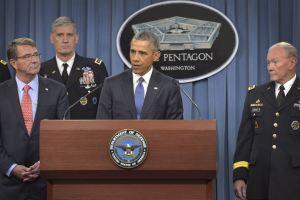
Obama with military leaders
Obama discussing anti-Islamic State plan, surrounded by military leaders including
Defense Secretary Ash Carter and Army Gen. Martin E. Dempsey, chairman of the joint Chiefs of Staff on July 6, 2015 (photo: DoD/ Glenn Fawcett)

ISIL/ Islamic State and al Qaeda remain the only groups targeted for destruction by Obama.

Condemned Evil

There are other groups – and countries –  that are barbaric murderous entities which are not in Obama’s crosshairs.  They receive Obama’s condemnation and disapproval, but not concerted military attention.

Boko Haram is a barbaric, murderous terrorist group operating in Nigeria.  Like the Islamic State, it seeks to install an Islamic country in the place of the Nigerian secular government through a murderous campaign.

Obama has condemned the group’s actions, but remained measured in his call for action:

  • May 7, 2014 (an offer to help find abducted teenaged girls): “Boko Haram, this terrorist organization that’s been operating in Nigeria, has been killing people and innocent civilians for a very long time. We’ve always identified them as one of the worst local or regional terrorist organizations there is out there…So what we’ve done is we have offered — and it’s been accepted — help from our military and law enforcement officials. We’re going to do everything we can to provide assistance to them. In the short term, our goal obviously is to help the international community and the Nigerian government as a team to do everything we can to recover these young ladies. But we’re also going to have to deal with the broader problem of organizations like this that can cause such havoc in people’s day-to-day lives.” Obama did not offer to help destroy Boko Haram.
  • March 23, 2015: “Boko Haram, a brutal terrorist group that kills innocent men, women and children must be stopped…. by casting your ballot you can help secure your nation’s progress.”  Obama gave no support to destroy the group; he just suggested that Nigerians vote peacefully in elections and the Boko Haram threat would disappear.
  • July 10, 2015: “[The president of Nigeria is] very concerned about the spread of Boko Haram and the violence that’s taken place there, and the atrocities that they’ve carried out, and has a very clear agenda in defeating Boko Haram and extremists of all sorts inside of his country.” Obama noted the President of Nigeria’s concern, but did not mention his own.

While the evil of Boko Haram and other groups operating in Africa was the same, the Obama Administration would not target the groups for destruction as Americans were not targeted.  Obama would only condemn the evil and offer American support:

  • In Chad: “support the governments and people of the Lake Chad Basin region in their ongoing struggle to defeat Boko Haram
  • In Lebanon: “fully support the Lebanese authorities as they conduct their investigation… reaffirms its commitment to Lebanon’s security, and will continue to stand shoulder to shoulder with the people of Lebanon in confronting terrorism

The same evil ideology is held by other groups such as al-Shabaab in Somalia which has killed hundreds.  In Ethiopia, after a brutal attack in the country’s capital, Obama saidWe don’t need to send our own marines in to do the fighting: The Ethiopians are tough fighters and the Kenyans and Ugandans have been serious about what they’re doing.”  The comment suggested that Obama’s modus operandi is that America will only engage militarily to destroy evil, if the local government is ill-equipped to do so.

Tolerated Evil

The evil ideology of barbarism and murder is not confined to a few terrorist groups that “promote a twisted interpretation of religion.”  Several countries also engage in barbarity of its own citizens.  Consider Saudi Arabia, Iran and Syria.  These countries commit barbarity including:

  • killing gays by hanging them from cranes in the streets and throwing them off buildings;
  • stoning people to death for adultery;
  • beheading people in the middle of the streets;
  • executing minors;
  • capital punishment for activities that do not hurt anyone such as apostasy (converting from Islam)

The Syrian government used chemical weapons against its own people, crossing an Obama “red line.”  However, in the end, it did not matter.  Obama would not attack the Syrian government, and opted to negotiate with them to remove chemical weapons.

Regarding Iran, Obama stated that while they may be anti-Semitic, the country’s leaders were not so consumed by evil that they would do something that would harm their own interests.  Obama would not attack the country, but chose to negotiate to slow the pace of its nuclear program, even as the Iranian leaders chanted “Death to America.”

And the Kingdom of Saudi Arabia, which publicly beheads “witches” and apostates, remains an American ally.  It receives billions of dollars of military hardware from the US.

ObamaAbdullah
Obama and the Saudi King

In short, evil perpetuated by countries is tolerated by the Obama administration.  The one country where Obama decided to launch an attack to remove its leader was Libya, a much less evil regime than in Syria, Iran or Saudi Arabia.  It just happened to be easier to remove Muammar Gaddafi, than the leaders of other countries.

Ignored Evil

The last category of Obama’s treatment of evil is “Ignored Evil”.  It is basically the same as “Tolerated Evil” except it is used for a group rather than for a country.

Palestinian Arabs have many groups that are labelled terrorist organizations by the US State Department including: Abu Nidal; Hamas; Palestine Liberation Front; Palestinian Islamic Jihad; Popular front for the Liberation of Palestine; PFLP- General Command; and al-Aqsa Martyrs Brigade, among others.  These groups have stated their intention to destroy Israel, a US ally; to target Jews for murder; and install an Islamic state in Israel. The groups also torture fellow Arabs if there is suspicion of collaboration with Israel, and drag their bodies through the streets.

Obama has not called for these groups to be destroyed.  He does not tolerate their evil, as he doesn’t negotiate with them.  He simply ignores their barbarity, as he pushes Israel to tolerate and negotiate with them.

While Obama may state that he has “no sympathy for Hamas, he pushed Israel to release terrorists in exchange for… nothing.  When Hamas and Fatah announced a unity government in June 2014, the Obama administration said “we intend to work with this government.

There are Palestinian groups that are not labelled by the US as terrorists, that also incite violence against Israelis.  Acting-President of the Palestinian Authority Mahmoud Abbas called for jihad several times against Israel without rebuke from the Obama administration.

Conclusion

Obama has refused to label the evil that touches much of the world as “violent Islamic terrorism”.  By doing so, he compartmentalized the evil ideology: between those that threaten America and those that don’t; between established governments and terrorist groups seeking to replace countries.

As described above, each category received a particular treatment by the USA.  Only in Israel, did Obama opt to break his formula by ignoring the radical Palestinian jihadists, as acknowledging their evil, would likely undermine any chance for a two-state solution with Israel.

While some liberals think the nature of the evil ideology is different in particular places, most people understand the contours of jihadist terrorism and remain angered by Obama’s refusal to call out the religious barbarity in various corners of the world by its proper name.  Israel supporters are particularly enraged by Obama’s unique treatment of Palestinian Arab jihadist violence.

Liberals remain convinced that not all evil is the same, and that the barbarity has nothing to do with Islam.  Conservatives believe that all violent jihadist violence is very much the same, and should be dealt with in a singular fashion.

However, for Obama, remaining obtuse about the nature of the evil ideology enables flexibility in engaging particular evil-doers, while avoiding a broader conflict with the Muslim world.


Related First.One.Through articles:

Pick Your Jihad; Choose Your Infidel

The Banners of Jihad

I’m Offended, You’re Dead

Murderous Governments of the Middle East

My Terrorism

Subscribe YouTube channel: FirstOneThrough

Join Facebook group: FirstOne Through  Israel Analysis


Failures of the Obama Doctrine and the Obama Rationale

Historians have begun to debate the “Obama Doctrine” and its impact on global stability. The Doctrine itself is not so novel or controversial.  It is the “Obama Rationale,” his underlying worldview, and how he applies the doctrine’s principles, that are causing the destabilization of global security.

Obama Doctrine
President Obama defining his “Obama Doctrine” with Thomas Freidman
April 2015 (photo: New York Times)

The Obama Doctrine
We will engage, but we preserve all our capabilities”

In April 2015, New York Times Op-Ed columnist Thomas Freidman penned a piece called “Iran and the Obama Doctrine.” In a long interview with US President Barack Obama, Freidman came to conclusions about Obama’s approach to foreign affairs. In short:

  • Engagement over Sanctions, Isolation and War. Obama stated a problem ignored is not a problem solved.  However, dialogue opened a possibility to change people’s hearts and minds. Diplomacy should always be the first option, both with allies and foes.
  • A Single Foreign Policy. The Executive Branch of the United States government must be the sole representative of US foreign policy. Senators and congresspeople should not engage with world leaders with messages that contradict those decided by the president.

Liberals and Conservatives may agree or disagree with this formula for engaging the world. Presumably, many would agree with these approaches in general.

Then why the terrible polls for Obama’s foreign policy?

Failed Implementation

There is a significant percentage of Americans who strongly disagree with Obama’s handling of foreign policy. Those reasons may have less to do with the Obama Doctrine itself, but how it is applied.

  • Negotiations with Foes. Engaging with friend or foe should yield results to one’s liking. Many Americans criticized the Obama team in that it did not extract enough concessions from negotiations.
    • Cuba was opened up with nothing to show for it.
    • Syria was given a pass for using chemical weapons even though Obama threatened the country with military force.
    • Iran was left with an enormous nuclear infrastructure, even though sanctions had pushed the country to the brink.
    • Russia actively established itself on the world stage including annexing part of Ukraine, as it knew that Obama would not take military action.
    • Engagement is okay, if it achieved the desired outcome, but Obama showed a pattern of coming away with only modest achievements at great costs. He resorted to touting the engagement itself as the victory, rather than tangible goals.
  • Engagement with Allies. Foreign policy is equally about managing relationships with allies. Yet Obama has shown an inability to keep allies close, work for American interests and make reforms, as necessary.
    • Egyptian President Hosni Mubarak was a longtime ally of the United States, and Obama made a point of visiting Cairo in his first international trip. Yet Obama quickly turned on this one-time ally and blessed his overthrow.
    • Israel has rarely had such a cold treatment form any US administration. The lack of trust has not produced an environment conducive to peace negotiations.
    • Saudi Arabia is an oppressive regime that is nevertheless a US ally. The kingdom has never been so unsure of America’s leadership, nor has it beheaded as many of its own citizens.
    • Turkey’s leader Erdogan has been described by Obama as being one of his closest allies.  Yet Turkey has dragged its feet in allowing the US to use its territory to fight ISIS and prefers using its Turkish troops to bomb Kurds than ISIS.
    • Despite an established agreement with Ukraine, Obama let the country fall to Russia.
  • Terrorism. More than almost any issue since 9/11/2001, has the world been focused on terrorism. Obama has been unsure how to utilize his “Doctrine” when the counter-party is not an official government, but a terrorist organization.
    • Islamic State/ ISIS has been targeted for destruction by Obama in words, but he has engaged in militarily confronting the group only sporadically. Meanwhile, the group continues to expand its attacks in Lebanon, Egypt (against a Russian airliner) and France.
    • Boko Haram; Al-Shabaab, Hamas and other Islamic terrorist groups do not get any engagement from Obama at all. Obama considers them local problems for local governments to handle and does not consider the global aspirations of the affiliates groups.  Never mind that these group like Ansar al-Sharia in Libya have attacked and killed Americans, including Ambassador Stevens.

The Obama Doctrine by itself is not that controversial to many Americans, however, it’s implementation is roundly criticized.  Further, the underlying Obama worldview which governs his approach to engagement is considered a disaster.

The Obama Rationale

President Obama has spent seven years outlining his thoughts as to why people use terrorism. The rationale leads directly to his proposed solutions, so appreciating those views is key to understanding his tactics.

In February 2015, not long after the terrorist attacks in Paris in January 2015, several world leaders met to discuss ways of combatting terror. President Obama addressed the American people and outlined his thoughts about the root causes of terrorism and his associated game plan:

  • Frustration with Injustice and Corruption. Obama stated that “anger that festers when people feel that injustice and corruption leave them with no chance of improving their lives.
  • No Outlet other than Through Violence. He added that the frustration was exacerbated by “[g]overnments that deny human rights play into the hands of extremists who claim that violence is the only way to achieve change
  • Misguided Belief that West is at War with Islam. Obama stated that some clerics and groups have a “twisted interpretation of religion” and that “al Qaeda and ISIL peddling the lie that the United States is at war with Islam

The Obama rationale for terrorism is that there is a very small number of people who have twisted religion and then prey upon people’s “legitimate grievances” (his words).  His approach to addressing this terrorist threat is an extension of his Obama Doctrine.

The Obama Solution to Terrorism

  • Broadcast the Voices of Muslim Moderates. “The world must continue to lift up the voices of Muslim clerics and scholars who teach the true peaceful nature of Islam”  Americans should show “support of their family, friends, teachers and faith leaders.”
  • Export Democracy.  While Obama has shown a reluctance to nation-build, he nevertheless thinks that advancing democracy would help stop terrorism: “Efforts to counter violent extremism will only succeed if citizens can address legitimate grievances through the democratic process and express themselves through strong civil societies.
  • Community Development.  Showing his roots as a community organizer, Obama advocates for local job creation, whereby “economic, educational and entrepreneurial development so people have hope for a life of dignity.” That’s why spokespeople like Marie Hart from the State Department continue to push the notion that a jobs program is the key to stop terrorism.
  • Repeat that the US is NOT at war with Islam. Obama consistently repeats over and again that America is not at war with Islam and that Islam is a religion of peace.  Such efforts, he believes, keep the terrorism from spreading to America’s shores and allies.

These approaches to terrorism are very much like the Obama Doctrine: engage and assist people in reaching democratic aspirations.  The small number of terrorists with hateful ideology would be eliminated (using “all capabilities”), while the masses should be “engaged”.  As Obama said:

Our campaign to prevent people around the world from being radicalized to violence
is ultimately a battle for hearts and minds.”

However, this approach has not slowed the advance of terrorism which continues to kill in France; Egypt; Israel; Lebanon; Nigeria; Kenya and elsewhere.

Critics of Obama say the battle is not “FOR the hearts and minds” but “OF the hearts and minds” of a broad number of Muslims.  They point out the murderous governments throughout the Muslim world, and the gross intolerance of their societies, that are not just offended by what people say or do, but who they are.

Many of these critics believe that the terrible state of global security is solely because of Obama’s worldview.  They argue that there is no administration failure to execute; the team is executing the Obama Doctrine according to the Obama Rationale: Give the various regimes money, jobs, trading, asylum and the like.  Remove American troops from the MENA region, engage economically, and peace will prevail (or if it doesn’t, it will be a local problem).

Obama’s critics dismiss this approach and believe the “clash of civilizations” goes beyond a handful of terrorists.  The world is too flat and integrated to believe such a naïve approach will keep America and its allies safe.


As Americans consider their next president, it will be important to not just consider whether they agree with the Obama Doctrine, but with the Obama worldview. If terrorism continues to occur over the election season, the Obama Rationale will take center stage in the debates.

Subscribe YouTube channel: FirstOneThrough

Join Facebook group: FirstOne Through  Israel Analysis

Half Standards: Gun Control and the Iranian Nuclear Weapons Deal

“Double standards” is defined as a set of principles that applies differently and usually more rigorously to one group of people or circumstances than to another.” Double Standards are typically viewed as unjust, and some countries (like the government of Israel) complain when they are held to more rigorous standards of behavior than its neighbors by political bodies like the United Nations. Curiously, in 2015, some US Democratic candidates for president have introduced a new concept of “Half Standards,” in which they actively and happily pursue policies for other countries which are much less rigorous than they expect for Americans.

Democrats on Gun Control for Americans

After the killing of two journalists on air in August 2015, Democratic presidential hopeful Senator Bernie Sanders stated that he would introduce “constructive gun control legislation which most significantly gets guns out of the hands of people who should not have them.” Similarly, former Secretary of State Hillary Clinton commented that she is in favor of “reform that keeps weapons out of the hands that should not have them.

Such calls for gun control is not without controversy, as most Americans view the right to bear arms as a fundamental right laid out in the Second Amendment of the Bill of Rights that “shall not be infringed.” How can the government decide that there are parties that “should not have them [guns]?” Will the government take steps to block certain individuals from this right the way that it blocks felons from voting?

Who “should not have them“? Clinton called out “domestic abusers, the violently unstable” as targets who would lose the right to bear arms. Will the US courts create a system of defining such individuals?

What exactly will these “bad” people be prevented from owning?  In their call for new gun legislation, how far will the ownership limitations go? Will a domestic abuser be restricted from purchasing a new gun or will they also need to forfeit guns they currently own? What about ammunition? If a person has factories that make guns and ammo, would they be forced to sell it? If they ran a mine that sourced all of the raw materials to make guns or ammunition, would they be forced to shut it down? In short, would a “violently unstable” person be allowed to own and run an entire gun manufacturing infrastructure and warehouse even if they promised to give up having a gun in their home?

Contrast these Democrats’ positions about barring certain Americans from owning guns, with their positions on Iran’s nuclear aspirations.

Democrats Supporting the Iranian JCPOA

Clinton gave a strong defense of the nuclear agreement with Iran on September 9, 2015, even while she noted the many short-comings of the JCPOA.

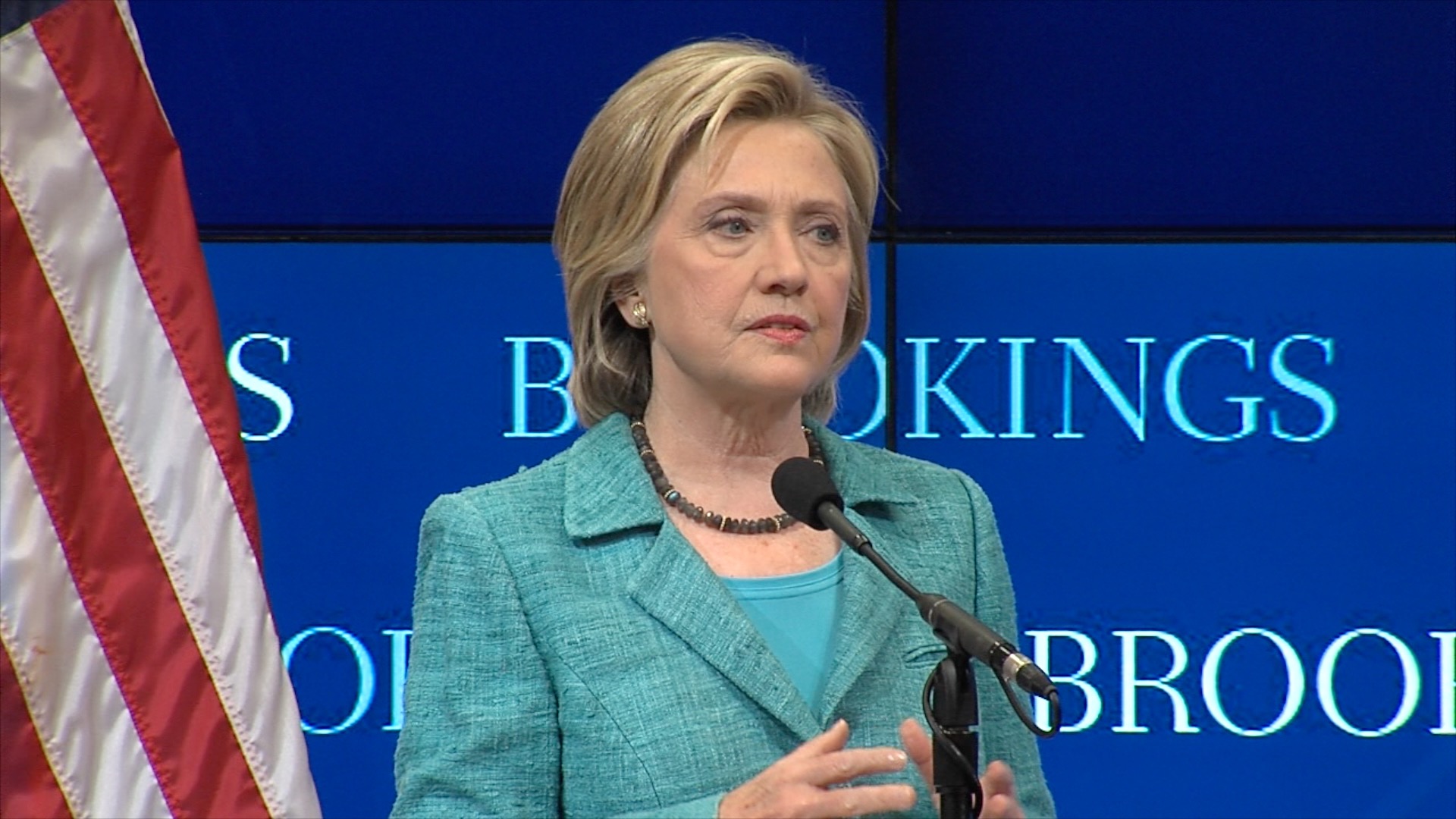
Hillary Brookings
Hillary Clinton at the Brookings Institute discussing her support of the JCPOA
September 9, 2015

Iran is a “violently unstable” player: The US State Department has long considered the Islamic Republic of Iran to be a supporter of terrorism, one of only three countries with such designation. The Iranian government has been hostile to America since 1979 and continues to call for the “Death of America”.

…and will remain a “violently unstable” player: Obama and Secretary of State John Kerry made clear in several interviews, that “this deal is not contingent on Iran changing its behavior. While Israeli Prime Minister Benjamin Netanyahu argued that a change in the behavior of the Iranian regime should be an integral part of a timetable of sanctions relief to the Iranians, the Obama administration made clear that such notion would not be part of any Plan Of Action.

Iran “should not have them (WMDs)”: US President Barack Obama repeatedly stated that the Iranian regime should never be armed with weapons of mass destruction. He has tried to convince Americans that the JCPOA will keep Iran from actually being in possession of such nuclear weapons, and Clinton and Sanders agree that the JCPOA would accomplish such task.

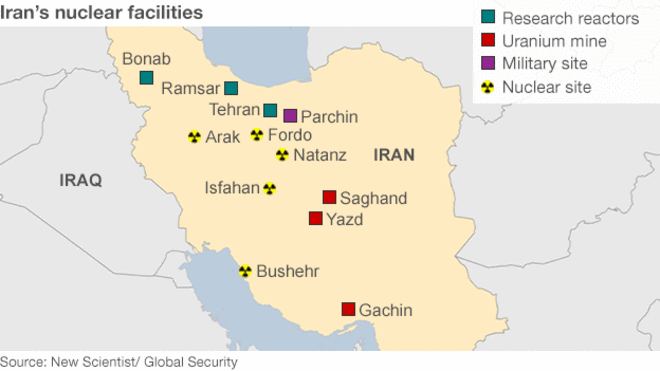
…but will maintain the entire food chain of processing WMDs: While Iran would technically not have a nuclear bomb IF it adheres to everything in the JCPOA, it will continue to have everything required to manufacture and deliver such weapons:

  • Uranium mines left untouched
  • It maintains a stockpile of uranium
  • Thousands of centrifuges (6,104 by the White House count) for enrichment left intact
  • Heavy-water nuclear plant Arak is “redesigned” but not dismantled
  • Enrichment facilities of Natanz and Fordow will both remain operational
  • Obtain new short- and long-range ballistic missiles (available in 5 to 8 years)

iran_nuclear_624
Iranian Nuclear Infrastructure
(from BBC website)

Would Clinton and Sanders enable “violently unstable” Americans that have a constitutional right to bear arms, keep an entire weapons making assembly line? Why do they promote a “half standard” for a “violently unstable” country to maintain a vast nuclear weapons infrastructure?


Related First One Through articles:

Some Ugly Supporters of the P5+1 Iran Deal

The Gap between Fairness and Safety: WMDs in Iraq and Iran

Is the Iran Deal a Domestic Matter (NY Times) or an International Matter (Wall Street Journal)

The New Endorsed Parameters of Peaceful Nuclear Power

Subscribe YouTube channel: FirstOneThrough

Join Facebook group: FirstOne Through  Israel Analysis
Snack-Pack Inspections

A Satire

Scene: A conference room with dozens of politicians, including the senior members of the P5+1 team and Iran, negotiating terms to the comprehensive nuclear agreement. The hour is late and people are agitated and sleepy. Each country team is mostly talking amongst themselves.

P5+1
(photo: Getty Images)

Sensing the moment is right to bring up a new deal point, US Secretary of State John Kerry attempts to catch everyone’s attention.

US Secretary John Kerry (in a loud clear voice): “We have gone through the various points of this agreement and concluded that we cannot approve it without additional security precautions. As such, we insist on automatic ‘snapback sanctions’ if there is a material breach of the terms of the agreement.”

Chinese Foreign Minister Wang Yi: “What are ‘snack-pack sanctions’?”

Russian Foreign Minister Sergei Lavrov: “’’Snack-pack inspections’. It is another excuse for the Americans to snoop around.”

Iranian Foreign Minister Mohammad Javad Zarif: “I won’t agree to it. That is outrageous. Why must you Americans continue to compromise on our dignity?!”

Germany’s Foreign Minister Guido Westerwelle: “Mohammad, please. It is not that big a condition. Use the American request to push forward some of your own ideas.”

Zarif: “Why are Iranian snacks anyone’s concern? You have pushed too far!”

French Foreign Minister Laurent Fabius: “The Americans are big snackers, they cannot help themselves! Eating all of that fast food and potato chips!”

Aide to Kerry blurts out: “Potato chips are just cold French fries!”

Fabius: “Your ‘French Fries’ are not from France, you idiot!”

Westerwelle (laughing while patting his stomach): “The Americans don’t just snack- they snack BIG. They turn warehouses into giant snack stores.  That’s why they have snacks in packs. Can you imagine!”

Kerry: “People! I said ‘snapback sanctions’ not ‘snack-pack inspections’. We need some teeth in this agreement.”

Fabius: “You Americans are real gluttons, sinking you teeth into everything. Why do you have to always focus on consuming so much garbage?”

Zarif: “I cannot agree!”

Lavrov (in a loud, condescending voice): “Hey, Mr. Ketchup, let’s say we agree with snack-pack inspections. But you would have to agree to import some of our snacks too. For example, some Beluga caviar. It would be a nice improvement for your abused tongues.”

Zarif: “We get to export our caviar to the Americans again? This would be excellent!”

Lavrov (in a hushed voice to Zarif): “You and I will discuss later where the caviar will actually come from.”

British Foreign Secretary William Hague: “Does that satisfy your appetite, John?”

Yi: “Be careful Mohammad. Your country is about to be flooded with McDonalds!”

Zarif: “I’ll tell you, I will take up to 20 McDonalds, but America must agree to take our pistachios as well.”

Lavrov (out loud, but absent-mindedly): “But Russia doesn’t export pistachios.”

Hague: “Well, maybe Iran could also start to import our ‘Smarties’ now.”

Kerry: “People! This is not about exporting chocolate to Iran!”

Lavrov: “Hey Mr. Heinz! Did you marry a Hershey too? Keep quiet and we’ll handle the details of your new request.”

The conference room breaks down into lots of side conversations. After a minute, Kerry pushes away from the table disgusted, and leaves the room with some aides.


Scene: Outside the conference room, Secretary Kerry walks the halls with two assistants with a phone clutched in his hand.

Kerry (agitated): “Yes, Mr. President…. Yes, I brought it up…. How did it go?.. Well, let me sum it up this way. The other members of the P5+1 team are now renaming the streets in front of the American embassies in their cities ‘Hershey Highway’.”


Related First One Through article:

The Joys of Iranian Pistachios and Caviar

Congress should Vote on the Deal, not on the Disappointment nor on the President

The long saga of global bodies negotiating over Iran’s nuclear program ended a significant phase on July 14, 2015, when the parties concluded a Joint Comprehensive Plan of Action (JCPOA) in Vienna, Austria. The negotiation has now entered the “approval” phase by various bodies including the US Congress. The initial reviews and comments of the JCPOA have been heated and ugly.

The Disappointment

On August 7, 2015, David Brooks of the New York Times wrote an op-ed piece entitled “3 U.S. Defeats: Vietnam, Iraq and Now Iran”. Brooks enumerated the various points that make many Americans angry about the terms of the JCPOA, specifically, the failure to realize the stated goals set out by the Obama administration:

  • Prevent Iran from becoming a nuclear power
  • Dismantle the nuclear infrastructure
  • Remove their ability to enrich uranium
  • Close the Fordow Heavy water reactor enrichment facility
  • Force Iran to disclose all past nuclear activities
  • Anywhere, anytime inspections
  • No sanctions relief until all of the above have been accomplished

Brooks concluded that none of Obama’s stated objectives were realized. He referred to the agreement as a “partial surrender” to Iran that came about because of the poor tactics of team Obama.

However, that is not the question before Congress. If Congress were to vote on whether the JCPOA produced a disappointing result, the vote would be nearly unanimous (with the exception of a few Obama puppets).  But Congress is not being asked to opine if this was the best deal that could have been achieved, but whether the deal is good enough.

The President

On August 10, 2015, former New York City Mayor Michael Bloomberg spoke out against the president’s tactics in aggressively trying to sell the JCPOA. In “White House Should Leave Politics Out of Iran Deal,” Bloomberg admonished Obama for name-calling opponents of the deal war-mongers and for threatening payback against any politician who dared to vote against the deal. For his part, Bloomberg concluded that the JCPOA was extremely marginal at best, and that Obama’s forceful defense of the deal was “grossly overstating” his case.

The “especially disappointing” behavior by the White House was politics at its worst, particularly when so much is on the line, according to Bloomberg. Politicians should not vote on this significant agreement based on politics or party loyalty; they must vote based on the deal’s merits.

The Deal

On August 7, 2015, New York Senator Charles Schumer detailed his rationale for not supporting the JCPOA. He analyzed the deal based on three criteria:

  • Preventing Iran from obtaining nuclear weapons over the next ten years
  • The position of Iran’s nuclear capabilities at the sunset of the deal
  • The cost of the agreement in terms of giving Iran sanctions relief

In terms of the negotiating team’s primary mission of preventing Iran from getting nuclear weapons, Schumer stated that there “are serious weaknesses in the agreement,” including the lack of anytime-anywhere inspections and that the US would need approval of a majority of China, Russia and the Europeans to enforce inspections. Overall, he thought the deal’s terms were not compelling.

On the second point, Schumer was even more negative and stated “we will be worse off with this agreement than without it.

Regarding the non-nuclear components of the deal, Schumer was extremely clear in opposing the enablement of a state-sponsor of terrorism to obtain billions in funds and access to ballistic missiles: “When it comes to the non-nuclear aspects of the deal, I think there is a strong case that we are better off without an agreement than with one.”

Senator Schumer analyzed and articulated his assessment of the deal. He avoided voting based on the deal’s disappointment, and based on his president’s rhetoric.

Schumer
NY Senator Charles Schumer
(photo: Getty images)

Vote Ramifications

President Obama has stated that the only alternative to this deal is war. Secretary of State John Kerry stated that there is no “better deal” out there nor is there an opportunity to renegotiate this one.

Yet, those claims are far from clear. Based on behavior of both Obama and Kerry, it would be easy to conclude that these are just their opinions dressed as facts as they attempt to forcefully push through the JCPOA.

There is no clear answer as to the impact of the US voting down the JCPOA.  While procedurally, it is understood that Obama outmaneuvered Congress in only needing one-third instead of a two-thirds vote to secure his deal, what happens if Congress does manage to have the votes?  Obama claims that Iran gets the best of all worlds and gets sanctions relief from the rest of the world while it moves forward with a nuclear program.  That is hard to imagine. That inherently implies that the rest of the world doesn’t care if Iran has nuclear weapons and it is only the USA that is applying the pressure.  If Obama really believes that, then a negative US vote is an opportunity to renegotiate.

Conclusions

Disappointment: The JCPOA is clearly a disappointing result, especially considering the many years that tough sanctions were imposed on Iran as well as the severely depressed recent price of oil applied intense pressure on the regime that will be hard to ever replicate. Together with significant American troops next door in Afghanistan, the P5+1 had tremendous leverage to force complete capitulation by Iran.

The President: Obama is overselling his weak deal as a “strong deal” (in his words) and is bullying his fellow Democrats into submission. If the deal is as strong as he claims, it should be able to stand on its own merits.

The Deal: The deal by itself seems borderline at best. Perhaps it is better than nothing- but only if it costs nothing. The significant sanctions relief and various deal terms make the marginal deal appear unacceptable.

Ramifications: Congress must vote on the deal based on its merits and not based on the disappointing terms nor Obama’s threats. But it must also better understand the ramifications of rejecting the deal.  Kerry’s losing face is not a reason to alter one’s vote on something so important.

Congress and the American people must understand the actual ramifications of turning down the JCPOA without the aggressive salesmanship of the White House.


Related FirstOneThrough articles:

The Obama Administration Lays Foundation of Blame at Israel for a Potential War with Iran

Obama’s White Lie on his Red Line

The Gap between Fairness and Safety: WMDs in Iraq and Iran

The New Nuclear Normal

Some Global Supporters of the P5+1 Iran Deal

Obama’s bright white lie on his red line.

US President Obama gave a speech about the broad support the Iranian deal enjoys: “because this is such a strong deal, every nation in the world that has commented publicly, with the exception of the Israeli government, has expressed support. The United Nations Security Council has unanimously supported it. The majority of arms control and nonproliferation experts support it. Over 100 former ambassadors who served under Republican and Democratic presidents support it.

There are others that strongly support the deal too that Obama failed to highlight:

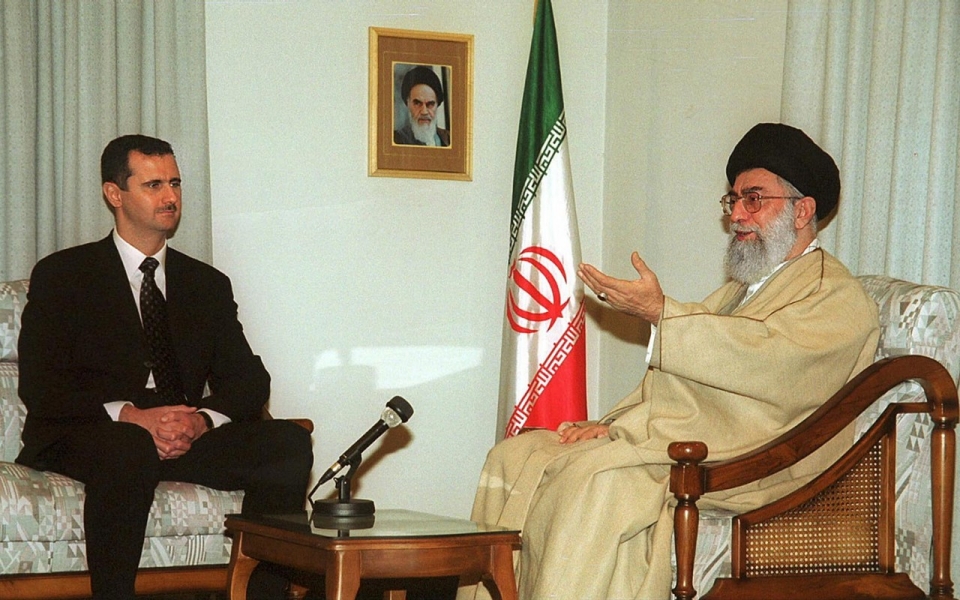
  • Syria’s president Basher al-Assad, the man who has waged a war with this own people that has killed over 220,000 people thus far told the Iranian leader: “In the name of the Syrian people, I congratulate you and the people of Iran on this historic achievement.
  • Hezbollah, the terrorist group in Lebanon was impressed that Iran now had “global recognition as a member of the nuclear club.
  • David Duke, the former member of Congress and head of the KKK was happy that the Iranian deal would likely keep Israel from attacking Iran

assad_iran_083013_1385159834190

Iran’s supreme leader Ayatollah Ali Khamenei meets Syrian President Bashar al-Assad in Tehran 25 January 2001.(photo: Atta Kenare/AFP/Getty Images)


As part of this agreement, Iran will get funds in the range between Obama’s estimate of $56 billion to as much as $150 billion.  Not surprisingly. this makes the various terrorist entities that are financed by Iran quite happy including (parenthetical is the year when placed on the US State Department list of foreign terrorist organizations):

These Iranian-backed terrorist groups are responsible for the deaths of thousands of civilians and continue to destabilize the Middle East and beyond..

In Obama’s attempt to sell the Iranian deal, he cited many allies that endorsed the deal while specifically avoiding mention of America’s enemies that also support it.  How does one account for the fact that both US allies and foes celebrate the deal? Is the deal actually beneficial to all of the parties, or do some countries simply not understand the deal’s details?

  • The Western world gets to curtail Iran’s nuclear program and avoids a war in the near-term
  • Iran gets to avoid a war, keep its nuclear infrastructure intact, global legitimacy, does not have to change its behavior regarding backing terrorism, and gets tens of billions of dollars in cash
  • Iran’s allies get access to funds and arms from Iran in the near and medium-term, and potentially a nuclear-armed Iranian-sponsor in the not-too-distant future

Obama deliberately does not discuss the many enemies of the United States that support the P5+1 deal and their long list of reasons for doing so. Instead, he makes comments that it is only the Iranian hardliners (and Republicans and Israel) who oppose the agreement. By doing so, he attempts to conceal the enormous benefits granted to Iran (and its proxies) in the agreement. It is pure marketing and a bright white lie over his old red lines.

do not enter
A bright White Lie over a Red Line
(Do Not Enter)


The party Obama highlighted as not being happy with the deal is Israel. A few reasons:

  • Iran will be allowed to continue to call for Israel’s annihilation
  • Iran will have billions of dollars that will not be constrained in any manner from funding terrorist groups that target Israel
  • Iran will get access to a range of ballistic missiles in as little of five years
  • Within 10-15 years, Iran will be a threshold nuclear state
  • The structure of the deal provides Iran opportunity to break the terms and develop nuclear weapons within ten years

In other words, there is a little something (or a lot) for everyone in the deal, with the exception of Israel.


Related FirstOneThrough articles:

The Obama Administration Lays Foundation of Blame at Israel for a Potential War with Iran

The Gap between Fairness and Safety: WMDs in Iraq and Iran

O’bama, Where Art Thou?

Netanyahu’s View of Obama: Trust and Consequences

For Obama, Israeli security is not so time-sensitive

Missing Netanyahu’s Speech: Those not Listening and Those Not Speaking

The Obama Administration Lays Foundation of Blame at Israel for a Potential War with Iran

President Obama has not only begun to lobby aggressively to win support for the P5+1 deal on the Iranian nuclear program, he has begun to lay the foundation of blame for a potential war squarely on Israel.

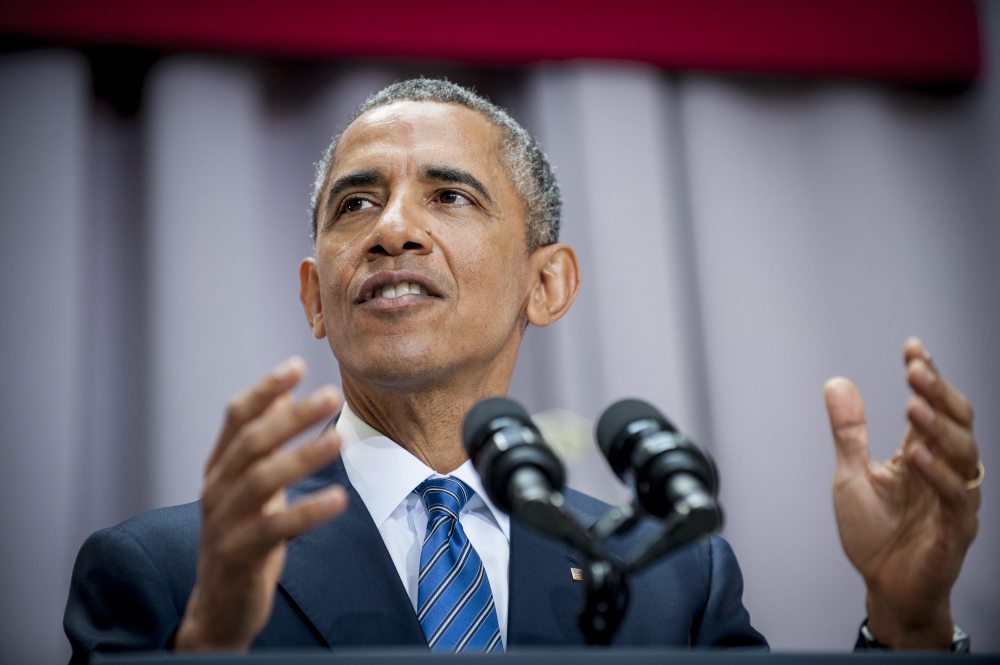
epa04873202 US President Barack Obama delivers a speech on the nuclear deal with Iran, at American University's School of International Service, in Washington DC, USA, 05 August 2015. Obama urged Americans to accept a controversial nuclear deal with Iran in spite of criticism from Republican lawmakers. The speech evoked late US President John F. Kennedy's 1963 USSR speech at American University during the height of the Cold War.  EPA/PETE MAROVICH / POOL ORG XMIT: MHR02

US President Barack Obama delivers a speech on the nuclear deal with Iran, at American University’s School of International Service, in Washington DC, USA, 05 August 2015. (photo: EPA/PETE MAROVICH / POOL ORG XMIT: MHR02)

Diplomacy or War?

  • US President Barack Obama: “Let’s not mince words: The choice we face is ultimately between diplomacy and some sort of war — maybe not tomorrow, maybe not three months from now, but soon… How can we in good conscience justify war before we’ve tested a diplomatic agreement that achieves our objectives?August 5, 2015

What does the world want?

  • US President Barack Obama: this deal is not just the best choice among alternatives, this is the strongest nonproliferation agreement ever negotiated, and because this is such a strong deal, every nation in the world that has commented publicly, with the exception of the Israeli government, has expressed support.” August 5, 2015

If war happened, who is to blame?

  • US Secretary of State John Kerry: “I fear that what could happen is if Congress were to overturn it, our friends in Israel could actually wind up being more isolated and more blamed, and we would lose Europe and China and Russia with respect to whatever military action we might have to take because we will have turned our backs on a very legitimate program that allows us to put their program to the test over these next years.” July 24, 2015

Is there anyone in the United States – including the Obama administration – that believes this is a great deal? Does anyone deny that Iran’s nuclear infrastructure will remain largely intact with this signing? Honest people can arrive at different conclusions about whether to endorse or reject this agreement. So why state that a negative outcome of the vote would be the fault of Israel, “money” and “lobbyists“?

Obama has framed his opponents in a familiar anti-Semitic canard that Jews are responsible for wars around the world.  Here is a section of Article 22 from the anti-Semitic terrorist group Hamas in its foundation Hamas Charter:

“The enemies have been scheming for a long time, and they have consolidated their schemes, in order to achieve what they have achieved. They took advantage of key elements in unfolding events, and accumulated a huge and influential material wealth which they put to the service of implementing their dream. This wealth [permitted them to] take over control of the world media such as news agencies, the press, publication houses, broadcasting and the like. [They also used this] wealth to stir revolutions in various parts of the globe in order to fulfill their interests and pick the fruits. They stood behind the French and the Communist Revolutions and behind most of the revolutions we hear about here and there. They also used the money to establish clandestine organizations which are spreading around the world, in order to destroy societies and carry out Zionist interests. Such organizations are: the Freemasons, Rotary Clubs, Lions Clubs, B’nai B’rith and the like. All of them are destructive spying organizations. They also used the money to take over control of the Imperialist states and made them colonize many countries in order to exploit the wealth of those countries and spread their corruption therein. As regards local and world wars, it has come to pass and no one objects, that they stood behind World War I, so as to wipe out the Islamic Caliphate. They collected material gains and took control of many sources of wealth. They obtained the Balfour Declaration and established the League of Nations in order to rule the world by means of that organization. They also stood behind World War II, where they collected immense benefits from trading with war materials and prepared for the establishment of their state. They inspired the establishment of the United Nations and the Security Council to replace the League of Nations, in order to rule the world by their intermediary. There was no war that broke out anywhere without their fingerprints on it

Obama and Kerry have dismissed anyone who disagrees with the agreement they helped craft.  They have announced that members of Congress must fall into one of two camps: agree with Obama OR be a pawn in the Israeli scheme of lobbyists.

Now, if the US goes to war, any casualties and ramifications would be the fault of Israel and its lobbyists. Not Iran. Not the poorly negotiated deal. But Israel.

There is a long history of anti-Semites blaming Israel for wars in the world. It is shocking to see the administration of the Unites States – which purports to be a strong ally of Israel – use a blood libel to lay blame for another Middle East war on Israel.


Related FirstOneThrough article:

Israel and Wars

Has the “Left-Wing” Joined the UN in Protecting Iran and the Palestinians from a “Right-Wing” Israel?

The New Blood Libel

John Kerry’s Hypocrisy: “Can You Deliver?”

Listening to US Secretary of State John Kerry try to explain and defend the P5+1 Iranian nuclear deal to various audiences is a spectacle to behold, regardless of one’s position on the best course of action.  One of the people who might want to watch the sessions and learn something from John Kerry is John Kerry.

Kerry CFR
John Kerry speaking at the Council of Foreign Relations
July 2015

Secretary Kerry argued at the Council for Foreign Relations (CFR) that Congress must support the deal or it would undermine his ability to negotiate any treaty with any government in the future. At 29:55 of the CFR talk, Kerry said: “Other people in the world are going to sit there and say ‘hey, let’s negotiate with the United States, they have 535 Secretaries of State. I mean, please! I would be embarrassed to try to go out… I mean, what am I going to say to people after this as Secretary of State? ‘Come negotiate with us?’ ‘Can you deliver?’ Please!

Kerry made the point that when two parties sit down to negotiate, it is critical for the sides to know that the negotiating parties are both authorized to negotiate and have the ability to fulfill their sides of the deal. If no such authority or ability exists, the discussions are an irrelevant waste of time.

Despite Kerry being quite clear about his logic, he has nevertheless insisted that Israeli Prime Minister Benjamin Netanyahu sit down and negotiate with Acting-President of the Palestinian Authority Mahmoud Abbas, even though it is clearly understood that Abbas can deliver nothing.

  • No Mandate: Abbas’s four-year term as president ran out in 2009. No presidential elections have been held since then.
  • No Authority: Abbas’s Fatah party lost legislative elections in 2006, winning only 33% of the parliament. No legislative elections have been held since then.
  • No Support: Abbas lags in every Palestinian poll held since 2006.
  • No Control: Abbas has no control of Gaza since his Fatah party was kicked out in 2007.
  • No Track Record: Abbas has shown zero credibility in being able to strike compromises to govern his own people, let alone deliver compromises with Israel.

Despite the glaringly obvious impotence of Abbas, the Obama administration continued to pressure Israel to negotiate with this straw man.

The Obama administration publicly acknowledged that the Palestinian Authority has absolutely no ability to deliver peace a few years ago. During the Gaza war on Israel in 2012, then US Secretary of State Hillary Clinton tried to broker a cease-fire. She made a dozen calls to various world leaders to halt the war- but not ONCE called the Abbas and the Palestinian Authority.

Compounding the inherent flaws in Abbas and the Palestinian Authority is Abbas’s insistence on bringing terms of any deal with Israel to a referendum. Abbas stated that he cannot decide on the “Right of Return” for all Palestinians, but that each of the 5 million Palestinian Arab “refugees” must make a decision for themselves. Hey Kerry- 535 “second-guessers” looks pretty good compared to 5 million! In terms of the rest of the components of a final agreement, Abbas stated that he “would go to a referendum everywhere because the agreement represents Palestinians everywhere.”  That’s impressive – he seeks the approval of 11 million “Palestinian” Arabs from all around the world!


Kerry’s comments regarding Iran are both on- and off-the-mark.  Iran and all of the parties in the negotiations know that the United States is a democracy and the political process must run its course.  Once the American people’s representatives in Congress make a decision, the government will deliver on its commitments.

However, Abbas – a complete straw man if ever there was one – with no authority or control whatsoever, openly states that millions of individuals will ultimately not only decide the fate of an Israeli-PA deal overall, but even on certain components on an individual basis.


Kerry fully appreciates that before negotiators start a process that they want to know the answer to the fundamental question: “Can you deliver“? However, he doesn’t care when he forces Israel to do exactly that with Abbas and the Palestinian Authority.


Related FirstOneThrough video and articles:

Abbas demands R-E-S-P-E-C-T

The Disappointing 4+6 Abbas Anniversary

Palestinian “Refugees” or “SAPs”?

Subscribe YouTube channel: FirstOneThrough

Join Facebook group: FirstOne Through  Israel Analysis