Every year, critics ask the same question about the roughly $3 billion in American military assistance to Israel. What does the United States get for it?
This week provided a reminder.
For decades that funding has supported joint missile defense systems, intelligence sharing, aircraft integration, cyber capabilities, and deep operational coordination between the two countries. American and Israeli militaries train together, build systems together, and prepare for the same threats.
The result is something unique in the Middle East.
The United States maintains major bases across the Gulf. American ships patrol the region. American aircraft fly from Qatar, Bahrain, and Kuwait. But the United States has no bases in Israel.
It does not need them.
Israel itself functions as one of America’s most capable strategic partners in the region. Its fighters, intelligence networks, cyber units, and missile defenses are deeply integrated with American systems and strategy.
When Washington faces a threat like Iran, Israel is already positioned on the front line. Already armed. Already aligned.
That alignment was built over decades. American assistance helped develop some of the most advanced missile defense systems in the world. Israeli intelligence cooperation has repeatedly protected American lives and interests. Joint technology programs have shaped modern air defense, battlefield awareness, and cyber security.
There are many countries that receive American aid. None return value like this.
Israel is the only country in the Middle East whose military doctrine, intelligence culture, and technological infrastructure are so closely integrated with that of the United States that they can effectively act as a unit to dismantle the military capabilities of the leading state sponsor of terrorism which has sworn to destroy both countries.
It is one of the most effective strategic investments the United States has ever made.
At Mobile World Congress in Barcelona, the dominant sound is usually ambition. Deals over espresso. AI demos on loop. Spectrum, towers, IoT, eSIM. The future negotiated in glass rooms.
This year there was noise at the gates.
Protesters in keffiyehs waved Palestinian flags and tried to slow the river of attendees entering Fira Gran Via. They demanded the conference bar “genocide supporters.” They blocked traffic briefly. They filmed themselves and shouted.
The doors stayed open. The show went on.
Inside, the tone was very different.
Because of the escalating confrontation between the United States and Israel, and the Islamic State of Iran, many executives from the Middle East never made it to Barcelona due to flight cancelations. The Israeli Pavilion, usually one of the most kinetic and crowded zones on the floor, felt restrained. A few local Jews stood behind booths helping scan QR codes and explain products for companies whose teams were grounded thousands of miles away.
There was no dramatic security ring. No spectacle. Just visible absence.
Attendees still came by. Investors still asked questions and carriers still wanted meetings. The international community, in practice, wants to do business with Israel. It wants the cybersecurity, the silicon, the network optimization, the AI driven infrastructure. The appetite for innovation did not vanish because activists shouted outside.
As in past years, there was no Iranian Pavilion, because there was no demand for that country’s technology despite the billions of dollars poured into nuclear weapons programs and ballistic missiles. There were also no street protests outside the hall condemning Tehran, even as reports attribute tens of thousands of civilian murders at the hands of Iranian police.
Barcelona offered no blockades over ballistic missile programs nor chants about enrichment levels.
The inversion was hard to miss. Accusations of genocide delivered by activists wrapped in the imagery of the very movements whose leaders openly call for the destruction of a state. Silence about a regime long designated by the United States as the leading state sponsor of terrorism.
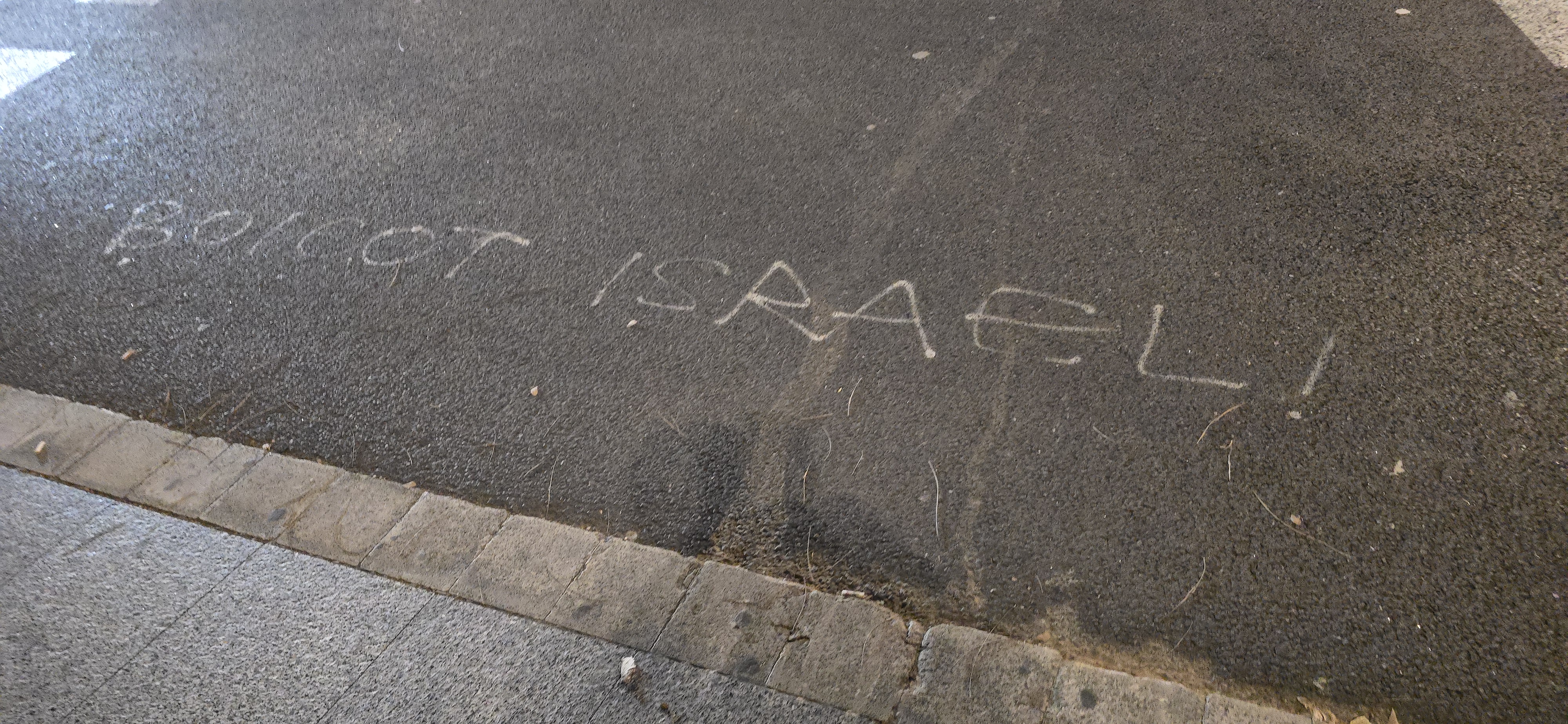
Anti-Israel graffiti on Barcelona streets, March 2026 (photo: First One Through)
The true backdrop to this year’s MWC was not the shouting. It was the distant hum of war shaping travel and corporate decision making. It thinned a pavilion and changed calendars.
The protesters created friction. The war created gravity.
And Barcelona, for all its global brand and history of hosting the world’s premier telecom gathering, showed something troubling. Instead of projecting confidence as a neutral convening ground for global commerce, it allowed a small group of activists to frame the city’s welcome with hostility toward one delegation in particular, as more of the city streets became unsafe for visitors.
Neighborhoods in Barcelona have become havens for dozens of Muslim men, looking for pickpocketing opportunities
The international industry kept meeting. Deals kept forming. Business cards were still exchanged as the angry chants didn’t cross the convention hall doors.
But the hum of geopolitics settled inside, and the world, watching closely, saw which noise mattered and which one merely embarrassed the host.
Gilbert and Sullivan once mocked a Major General who knew everything except how to wage war. He dazzled with recitations while sidestepping reality. The humor lived in the gap between words and consequences.
That song has inverted.
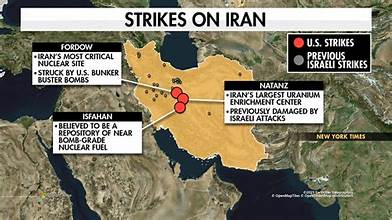
With the coordinated U.S. and Israeli strikes that killed Iran’s Supreme Leader, Ayatollah Ali Khamenei, the model shifted. Fleets were moved. Air defenses aligned. Hardened targets were hit. Decades of negotiation, sanction cycles, enrichment disputes, and proxy escalation culminated in direct consequence.
For forty years, the Islamic Republic built power through Hezbollah, Hamas, Iraqi militias, and the Houthis while advancing missile capability and nuclear enrichment. Diplomacy stretched. Deadlines slipped. Centrifuges continued spinning.
The modern major general is no longer measured by speeches about red lines but by whether adversaries recalculate. Does sponsorship of terror slow. Does enrichment reverse.
Does escalation pause.
Khamenei’s death marks a rupture. It introduces instability, succession uncertainty, and the risk of retaliation. It also forces Tehran to confront survival in ways it has avoided for decades.
The nineteenth century satire mocked leaders who substituted knowledge for action. The twenty first century test asks whether action, applied decisively, can alter the behavior of a regime that fused revolutionary ideology with missile technology.
This is not opera. There is no chorus to soften it.
The new model of a modern major general does not sing about military matters. He imposes them.
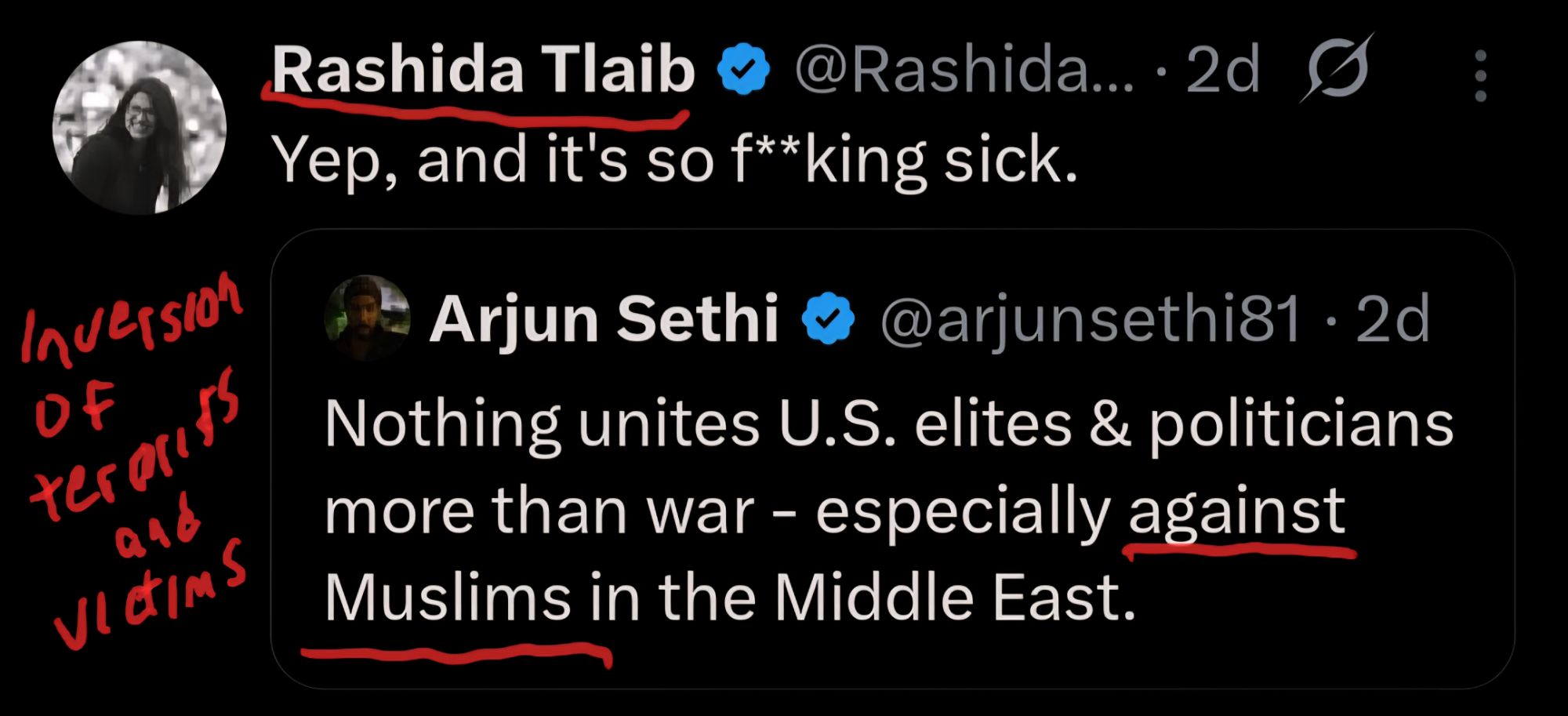
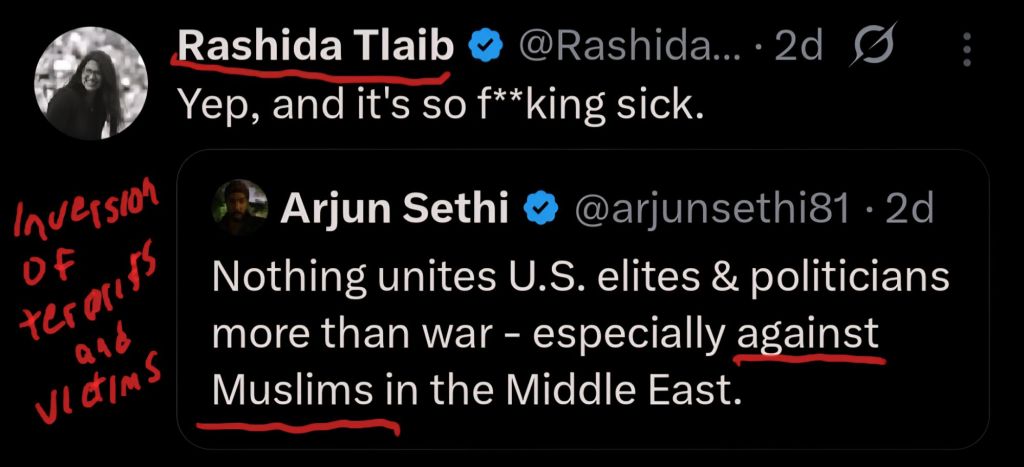
Rep. Rashida Tlaib (D-MI) tried to cast America and Israel as racist, and invert the reality of the fight against genocidal jihadists
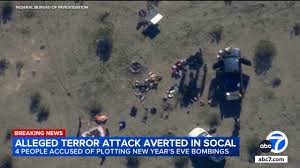
Federal authorities charged members of a group calling itself the Turtle Island Liberation Front with planning coordinated bomb attacks in Southern California. Investigators described discussions of explosives, targets, and timing. The plan was operational, deliberate, and aimed at creating fear and mass harm.
The group’s own words revealed how its members understood their actions. Posters and social media tied to the suspects declared “death to America,” hostility toward federal institutions, and solidarity with “Palestine” framed as “liberation.” The suspects did not describe their plans as criminal. They viewed them as morally required.
That distinction is critical. It explains why violence felt justified rather than transgressive. And why young people can cheer the assassinations of healthcare executives and the massacres by Hamas terrorists, rather than ponder the moral swamp that has taken over their minds.
A World Reduced to Moral Absolutes
At the core of this twisted ideology is a belief that America, Israel, and capitalism are systems of permanent oppression. They are described as forces that keep a foot on the throat of the common man—extracting labor, denying dignity, enforcing hierarchy through violence.
Within this framework, reform loses meaning. Coexistence is treated as betrayal. Opposition becomes a duty. Violence becomes resistance.
Once that moral threshold is crossed, escalation is no longer radical. It is faithful.
How Far-Left Activism Removed the Guardrails
This worldview is not confined to clandestine cells. Its language has circulated for years inside far-left activist spaces, including factions associated with the Democratic Socialists of America.
DSA-linked rallies, resolutions, and affiliated campus groups have repeatedly adopted language that frames politics as existential struggle rather than democratic contest. Israel is described as a settler-colonial project that must be dismantled. Zionism is labeled racism. Capitalism is defined as violence. America is cast as an imperial force whose institutions lack legitimacy.
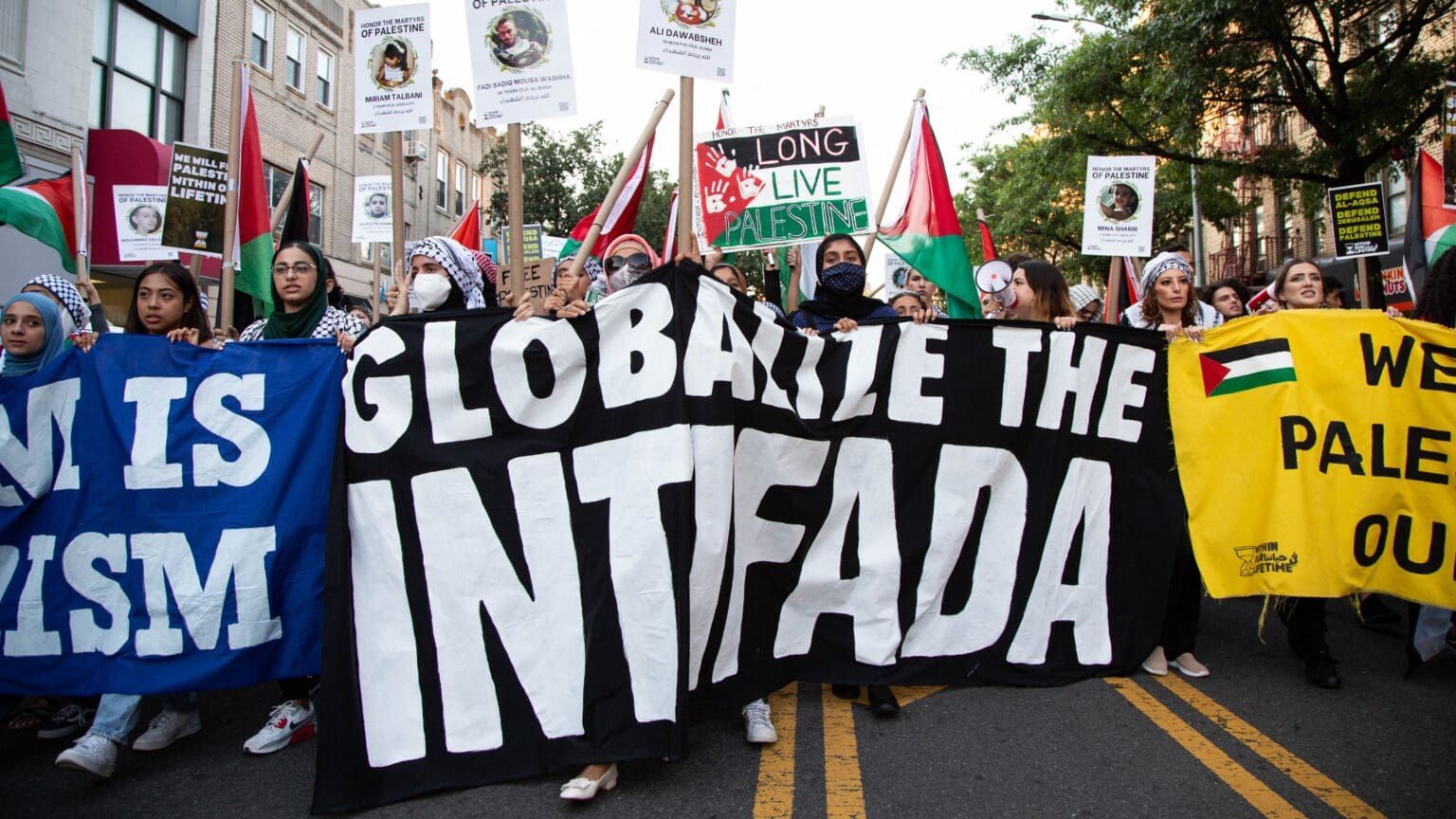
The phrasing matters. Calls for “by any means necessary,” “intifada revolution,” and declarations that there can be “no peace on stolen land” are not metaphors. They are moral instructions. They announce that outcomes justify methods and that limits no longer apply.
The rhetoric has infiltrated American schools, both K-12 and universities. Young people are being taught that they have a moral duty to dismantle systems of oppression and that the oppressors are capitalism, the American government, and powerful Jews. Stealing from stores is no longer a crime but means of reparations. Shooting up a kosher store is a form of “restorative justice.”
And the DSA rhetoric and candidates have infiltrated the Democratic Party. It began in 2017 and has accelerated. Rashida Tlaib is the most noxious example, but incoming mayor of New York City, Zohran Mamdani may become the most visible, leading the largest American city, the center of American capitalism, and the city with the largest number of Jews outside of Israel.
Movements are shaped by the permissions they grant. When activists normalize the idea that destruction is justice, someone eventually decides to carry it out literally.
Why Israel and Jews Become the Inevitable Focus
Israel occupies a singular place in this ideological ecosystem. It represents sovereignty, national identity, military power, economic success, and Jewish self-determination. For movements defined by opposition to perceived power, Israel becomes the ultimate symbol.
Criticism shifts from policy to existence. Zionism is no longer debated; it is pathologized. Jewish presence becomes suspect. Exclusion is reframed as moral clarity.
And this is not just aired on TikTok but taught at leading American schools, often funded by Islamic regimes.
This pattern is familiar. When a people are defined as embodying the system itself, harm against them begins to feel righteous. Antisemitism thrives wherever absolutist ideologies divide humanity into victims and irredeemable oppressors.
Iran’s Revolutionary Language, Recycled
The structure of this worldview is not new.
Iran’s Islamic Revolution articulated it decades ago. America was cast as the Great Satan. Israel as the Little Satan. Zionism as a cancer that must be removed. These were not rhetorical excesses. They were moral justifications for perpetual violence.
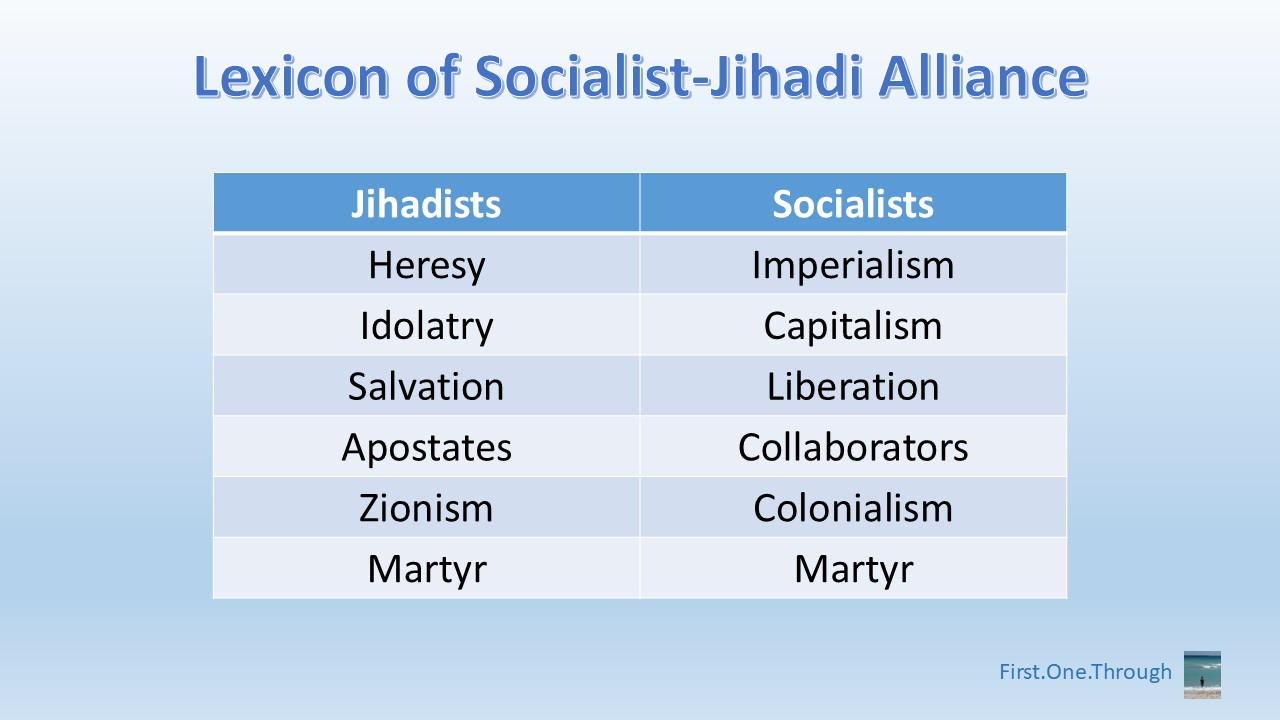
Over time, the religious vocabulary faded, but the framework endured. Imperialism replaced heresy. Capitalism replaced idolatry. “Liberation” replaced salvation. The certainty remained intact in a secularized lexicon. It was internalized as faith for the common man.
What once animated clerical revolution now circulates through Western classrooms and social media feeds, stripped of theology but retaining its absolutism.
A Warning, Not a Theory
The Turtle Island arrests are not an anomaly. They, the election of DSA candidate Zohran Mamdani, and the Luigi Magione fandom are an American signal flare that has been brewing for years for the Jewish community. They mark the moment when revolutionary language stops being symbolic and becomes operational against Americans on a mass scale.
Harvard students rally to Hamas in the aftermath of the brutal slaughter of 1,200 people in Israel
Societies do not collapse because extremists speak. They collapse when eliminationist ideas are normalized, when calls for destruction are treated as moral expression, and when institutions charged with defending pluralism hesitate to draw lines.
Once a culture accepts the premise that entire nations, peoples, or systems deserve to be erased, violence is no longer a question of if. It is a question of when.
For decades, Arab and Muslim leaders have fed their people a poisonous myth — that Israel dreams of ruling the Middle East, that it seeks to drive out Arabs and Muslims, that its goal is a genocidal “Greater Israel.” They have said it from Cairo pulpits and Riyadh conferences, shouted it at the United Nations, and woven it into the political DNA of generations.
Yet reality told a different story — 230 straight days of restraint.
From October 26, 2024, when Israel obliterated Iran’s air-defense network, until June 13, 2025, when it finally struck Iran’s nuclear weapons sites, Israel had total air supremacy over the Islamic Republic. For more than seven months, Israel could have flattened Tehran, crippled the oil fields of Khuzestan, or plunged the country into darkness by bombing power plants and airports. Instead, it waited.
The Iranian regime — the self-declared spearhead of the “Axis of Resistance” — had launched a multi-front war: Hezbollah in the north, the Houthis from the south, militias in Iraq, drones from Syria. Yet Israel responded surgically, destroying Iran’s air defenses and exposing the regime’s weakness. Then it stopped. No mass civilian targets, no vengeance against cities — only vigilance.
When Israel finally acted again, its aim was limited and precise: the nuclear enrichment facilities that Tehran had openly threatened to use to annihilate the Jewish state. The operation was not about conquest; it was about survival.
Had the situation been reversed — had Iran dismantled Israel’s air defenses — the results would have been catastrophic. Iran’s own rhetoric, and its record of missile and drone attacks on Israeli cities, show exactly what it would have done: unleashed devastation on civilian population centers. Annihilating the “Zionist regime” as an excuse for eliminating the the threat of a “Greater Israel.”
For 230 days, Israel had the power to destroy Iran and chose not to, just as it could have obliterated Gaza from the first day of the war. Those months are the clearest refutation of the propaganda long sold across the Muslim world about “Greater Israel” and “genocide.” Israel does not seek domination or extermination — it seeks to live.
Two hundred thirty days of restraint. Two hundred thirty days of truth.
When President Donald Trump tore up the 2015 Iran nuclear deal (JCPOA) during his first term and launched a maximum pressure campaign against Tehran, critics on the far-left, alt-right and in the media howled that this was a break from his self-proclaimed “America First” isolationist stance. They called it the “Israel Exception” — the idea that Trump’s supposed non-interventionist worldview had one glaring carve-out: protecting Israel. They repeat that claim today after Trump bombed Iran’s nuclear installations.
But this narrative ignores the obvious. The real story is not an “Israel Exception” but the “Iran Exception.” The Islamic Republic is the single most destabilizing force in the Middle East and the world’s leading state sponsor of terrorism. Trump’s decision to confront Iran wasn’t about changing ideology; it was about confronting the reality of a regime that posed a unique and escalating threat.
A Nuclear Red Line
In his first year in office, Trump pursued diplomacy with one of America’s long-standing nuclear antagonists: North Korea. He met Kim Jong-un in a historic summit, issued warm statements, and flirted with détente. Critics scoffed, but Trump’s logic was simple — North Korea already had nuclear weapons. Any confrontation risked an immediate global catastrophe.
Iran, by contrast, was racing toward the bomb but wasn’t there yet. Trump saw a closing window and chose to act, not only to prevent Tehran from crossing the nuclear threshold but to counter years of American accommodation that had only emboldened the regime. It wasn’t about pleasing Israel — it was about containing an implacable enemy of the West.
Iran’s Unique Threat
Unlike any other adversary, Iran is a transnational menace. It does not merely govern a repressive theocracy at home. It exports its revolution abroad through a network of terror proxies, militias, and insurgents:
Hezbollah in Lebanon
Hamas and Palestinian Islamic Jihad in Gaza
Shiite militias in Iraq
The Houthis in Yemen
Assad’s brutal regime in Syria
These groups have not only targeted Israel but have attacked American forces, embassies, and interests in the region. The drone and missile attacks by Iranian-backed groups on U.S. bases in Iraq and Syria are only the latest proof that Tehran’s tentacles reach far beyond its borders.
Iran is not France. If Israel went to war with an American ally — the United States would not enter the conflict. It is Iran that makes this different.
Iran has plotted terror attacks on U.S. soil, such as the 2011 plot to assassinate the Saudi ambassador in Washington, D.C. Its Quds Force and IRGC have been sanctioned for targeting American soldiers and orchestrating killings throughout the region. Trump’s authorized strike on Qassem Soleimani in 2020 was not done at Israel’s urging — it was in response to direct threats to American personnel and the storming of the U.S. embassy in Baghdad.
“If the United States and Iran are engaged in international armed conflict, then there is no requirement for the threat of an imminent attack, and the use of force is not limited to self-defense.”
What Trump inherited from the Obama administration was a nuclear deal that put Iran on a glide path to the bomb, enriched the regime with sanctions relief, and gave international legitimacy to a regime that chants “Death to America” and funds global terror. Obama had essentially outsourced regional stabilization to Iran and hoped the Islamic Republic would become a responsible stakeholder.
Instead, Iran took the cash and accelerated its malign activities against the region and American interests.
Trump reversed course. Far from being an anomaly in an “America First” framework, his stance on Iran was the clearest extension of that doctrine: protect American lives, punish America’s enemies, and stop subsidizing the world’s worst actors under the false banner of diplomacy.
Rep. Rashida Tlaib (D-MI) tried to cast America and Israel as racist, and invert the reality of the fight against genocidal jihadists
The Double Standard
The claim that Trump’s Iran policy was driven by Israel’s interests alone is a cynical deflection — a smear that erases Iran’s long record of bloodshed and global subversion. Even the European Union, which tried to salvage the JCPOA, has acknowledged Iran’s role in terror plots on European soil.
Far left anti-Israel group Justice Democrats attempts to use noxious blood libels that Jews are puppetmasters controlling the U.S. government
Iran’s ideology is expansionist, messianic, and apocalyptic. It seeks not just regional dominance but the destruction of its enemies — America, the “Great Satan,” chief among them.
Conclusion
The Iran Exception is not a flaw in U.S. foreign policy logic — it’s a recognition of Iran’s unique place at the epicenter of global jihadist terrorism and nuclear blackmail. Trump didn’t go after Iran because of Israel. He went after Iran because of Iran. Those calling an “Israel Exception” are hawking dangerous antisemitic smears meant to strip Israel of earned appreciation for taking on the global menace and stoke a modern blood libel.
ACTION ITEM
Donate to JewBelong to place billboards like these around the United States.
In 2014, as Iran’s nuclear ambitions were racing ahead and its terror proxies were destabilizing the region, the Obama administration was more focused on insulting allies than confronting adversaries. A senior official in the White House dismissed Israeli Prime Minister Benjamin Netanyahu as a “chickenshit,” claiming he lacked the guts to take military action against Iran. At the time, President Obama and Secretary of State John Kerry were furiously trying to finalize a nuclear deal with the Islamic Republic—one they claimed would block Iran’s path to a bomb.
They couldn’t have been more wrong.
The 2015 Joint Comprehensive Plan of Action (JCPOA) did not dismantle Iran’s nuclear infrastructure. It left the centrifuges spinning, allowed weapons research to continue under the radar, and set an expiration date that kicked the can just long enough to get Obama through his second term. Worse, the deal pumped billions into Iran’s economy, fueling the world’s leading state sponsor of terrorism—from Hezbollah in Lebanon to militias in Yemen and Syria, and of course Hamas in Gaza.
Today, a decade later, Iran is sitting on enough enriched uranium for multiple nuclear weapons and is acquiring advanced missile technology from China. The nuclear threshold Obama promised to prevent has not only been crossed—it’s being fortified.
At the same time in 2014-5, Kerry was floundering with the Palestinians. He insisted in 2016 that “there will be no separate peace between Israel and the Arab world.” That statement aged poorly. Under President Trump, the Abraham Accords blew apart that diplomatic orthodoxy, normalizing relations between Israel and multiple Arab nations—without Palestinian involvement. It turns out peace was possible, just not with failed ideas and appeasement-driven diplomacy.
Netanyahu, meanwhile, never wavered in identifying Iran as the central threat. In a 2021 interview, he reflected on the Jewish people’s tragic history of failing to recognize danger in time. He saw what others refused to acknowledge—and acted.
The legacy of Obama and Kerry is one of missed opportunities, emboldened enemies, and childish fantasies. The consequences are now unavoidable—and the man they mocked is the one who understood the moment all along.
Orthodox Jews grabbed their phones after Shabbat ended to see what happened in Israel over the prior day. There was mixed news which had already been absorbed by the rest of the planet.
Europe and the United States held firm that the Global North cannot allow Iran to get nuclear weapons.
At the United Nations Security Council – and on X – western nations affirmed that Iran, the leading state sponsor of terrorism, cannot be allowed to obtain nuclear weapons. The UK, France, Denmark, Slovenia and Greece stated that Iran’s level of uranium enrichment is inconsistent with a peaceful civilian program, and that Israel has a right to defend itself from a regime which has stoked a war to eradicate the only Jewish State.
This support for Israel was far from given, considering the strident tones taken by some of these governments about Israel’s prosecution of the war from Gaza.
2. The Global South – including China, Algeria and Pakistan – rallied to Iran and called Israel the aggressor.
Russia went so far as to claim that Israel coordinated with the UK on the attack and used bases in Cyprus to support the Jewish State, seemingly trying to widen the aperture of the war. The UK strongly denied the allegation and condemned Russia for “spreading disinformation”.
3. Palestinians stayed bizarrely mum on the conflict.
Wafa, the Palestinian Authority news agency, said virtually nothing about the latest escalation between Israel and Iran. While it normally cheered attacks by Houthis and Hezbollah over the past 600+ days, it would appear that the PA is focused on separating itself from the Iranian axis of evil which includes Hamas, to position itself as a credible government for the day after the Hamas War.
4. Iranian nuclear capabilities remain intact.
From initial reports, it appears that only surface facilities were destroyed and that much of the hardened below ground nuclear infrastructure is still functional. It means that the war effort is unlikely to end soon, and Israel may turn to the United States to either supply the weapons to destroy the underground infrastructure or to compel Iran to dismantle it.
5. Iranian missiles kill Israeli civilians.
While Israel targeted Iranian military commanders and infrastructure, Iran fired over 100 missiles and drones at Israel, hitting apartment buildings and killing several people. The country remains locked down as the battle with Iran continues.
6. U.S. politicians gunned down.
In an ongoing disgraceful trend of targeted attacks, local politicians in Minnesota were shot and killed by a man who seems to have had a targeted list of people who supported abortion. On both the right and left, people with opposing views have come to view the other side as existential threats for which they are willing to kill and be killed.
7. Affable Democratic Socialist extremist closes on winning New York City Democratic primary.
Zohran Mamdani, a smiling radical backed by the antisemitic fringe group Democratic Socialist of America, is rallying far-left progressives as early voting commenced in NYC. His appeal to make busing and childcare free and freezing rent on rent-controlled apartments is too enticing for many to even consider the destruction he will do to the city.
DSA arguing that all Israeli Jews are fair game for annihilation, backed Mamdani for mayor of NYC
New York Jews are forced to consider multiple layers of threats. The furthest away and most violent is the antisemitic Islamic Republic of Iran which still has the means to kill millions in Israel, Europe and the North America. A step closer, around the U.S., left-wing and right-wing radicals are using guns and Molotov cocktails to kill people with whom they disagree, and Jews are often the favored target. In the immediate backyard, the city with the greatest number of Jews is set to have a mayor backed by modern day non-White Nazis, just as lethal to Jews as the White Nazis of Europe in the 1930s and 1940s.
Disgraced former Congressman Jamaal Bowman hugs his DSA comrade, Zohran Mamdani, as he tries to rally New Yorkers to vote for the fellow extremist
American Jews are buying guns. They are demanding that the government provide funds to harden Jewish centers and combat domestic terrorism. They are urging fellow Americans to prioritize law enforcement and peace over unsustainable giveaways.
And they are being forced to consider their own priorities: sending monies to organizations in Israel which are exhausted in fighting a multifront war, or to focus efforts here on electing centrist politicians, fighting toxic ideologies being instilled in schools, and preparing their community for a life lived in fear.
The violence is getting closer and Jewish trifocals are attempting to simultaneously assess the levels of threat and proximity. Two thousand years of collective trauma have often proven insufficient for the challenge.
The signing of a ceasefire agreement in January 2025 must have been welcomed news for the Islamic Republic of Iran. Over the past fifteen months, it has watched its various proxies in the region get decimated.
Hamas’s leadership was killed and a majority of its fighters killed, injured, or captured, while Gaza has been largely destroyed.
Hezbollah’s military was soundly defeated, its leader killed, and a new non-Hezbollah aligned Lebanese president was elected.
Syria’s Iranian-backed government was routed, and the country’s armaments were destroyed.
And Iran’s defensive capabilities were eliminated by Israeli attacks, after Iran launched hundreds of missiles at Israel which caused little damage.
Over the course of the Iranian Proxies – Israel War which started on October 7, 2023, Iran went from being a regional power to an impotent joke. The ceasefire was really a call for the “mercy rule” in which one party was so decisively decimating the counterparty that third parties jumped in to save the stubborn vanquished from complete annihilation.
And yet.
The delusion of unique heavenly blessings have deeply intoxicated and blinded radical Islamic jihadi rulers. The chief cleric of Iran, Ayatollah Sayyed Ali Khamenei praised the resistance of the Palestinian people” and defeat of the “Zionist regime” upon the announcement of the ceasefire. He fashions himself “leader of the Islamic Revolution,” not just in Iran but around the world, to defeat infidels everywhere.
Much like Monty Python’s delusional defeated Black Knight in the film Holy Grail, the deranged leader cannot admit his utter defeat, and yells as the world passes by.
The lunatic had company.
The Iranian Revolutionary Guards said “The end of the war and the imposition of a ceasefire… is a clear victory and a great victory for Palestine and a bigger defeat for the monstrous Zionist regime.”
Hamas’s Khalil al-Hayya said “The ceasefire agreement is the result of the legendary steadfastness of our great Palestinian people and our valiant resistance in the Gaza Strip over the course of more than 15 month. The agreement to halt the aggression on Gaza is an achievement for our people, our resistance, our nation, and the free people of the world. It marks a pivotal stage in the ongoing struggle against the enemy, paving the way toward achieving our people’s goals of liberation and return.”
The Palestine Chronicle tried to rewrite history that there were “Global celebrations” for the “Victory of the Resistance.”
In the United States, Nerdeen Kiswani, the leader of Within Our Lifetime wrote on X that “Gaza has won, Palestine has won, resistance has won. Imperialism and Zionism has lost,” and then threatened the United States.
There is no negotiation possible with such lunacy. It is probable that the Iranian nuclear program must be destroyed with impunity rather than dismantled with discussions in the global community.
The sad truth is that radical jihadists who despise Jews are in the majority of the Middle East, as shown in repeated ADL polls. Coexistence will only be a reality under the “wings of democracy,” with jihadi groups and countries stripped of weaponry and capabilities to destroy religious pluralism.
There is probably no greater example of a failed state in the world today than Syria.
A bloody civil war killed an estimated 600,000 people and displaced many millions internally and around the world. Headed by a ruthless leader who gassed his own people, backed by a leading state sponsor of terror in Iran, the Syrian government fell quickly to a US-designated terrorist organization, Hay’at Tahrir al-Sham (HTS). In its wake (and before), many actors took over swaths of Syria.
The United Nations Security Council met to address the failed Syrian state on January 8, 2025, to consider how to stabilize the situation.
Geir O. Pedersen, Special Envoy of the U.N. Secretary-General for Syria, spoke to the committee about the various parties who are operating in Syria beyond HTS including: the Syrian Democratic Forces and YPG, a US-backed Kurdish militant group, who operate in the northeast; the government of Turkey which has taken over much of northeast Syria along the border of Turkey; a U.S.-led coalition which is fighting ISIL in the northwest; and Israel which has been taking out military sites and chemical weapons in the south.
During his review of the situation, Pedersen only cast Israel as a bad actor, both in “violating the 1974 disengagement agreement,” (with a government that no longer exists), and in “using live ammunition against civilians,” echoing a theme of the U.N. that Israel is seeking a genocide of Arabs in the region.
Tom Fletcher, Under Secretary General for Humanitarian Affairs and Emergency Relief Coordinator also addressed the council. He similarly spoke of challenges in Syria and only highlighted Israel as a rogue actor harming civilians.
Tom Fletcher report to UNSC highlighted Israel impacting “civilians, including children”
Other countries weighed in, including Syria, Iran and Russia, which took aim at Israel and the United States. No one mentioned Turkey’s seizing land and killing Kurds in Syria.
Syria at the UNSC points finger at the US and Israel only
Turkey addressed the Council even though it is not a member and leveled attacks against Israel, the Kurdish army and ISIS.
Israel did not address the council.
In a failed state with a terrorist group in charge, many terrorist groups operating openly, and several foreign governments with military personnel fighting in Syria, Israel was the spotlight at the U.N. for harming civilians and children.
In the 1970s, the United Nations was seized with the notion that Zionism is racism. Today it is awash in the belief that Israel is a genocidal state. It will most certainly distract the global body from addressing root causes of instability and death in Syria and beyond.