The OIC’s Deathly Hypocrisy

The Organisation of Islamic Cooperation (OIC) recently issued yet another condemnation of Israel — this time for considering the death penalty for terrorists who murder Israelis. The outrage was immediate and performative. For one, it claimed that the proposed law was “racist” and being solely for “Palestinian detainees,” as opposed to people who murder. It further argued that Arabs who slaughter Jews should simply be treated as “Prisoners of War,” erasing any and all lines between soldiers and civilians and thereby condemning coexistence.
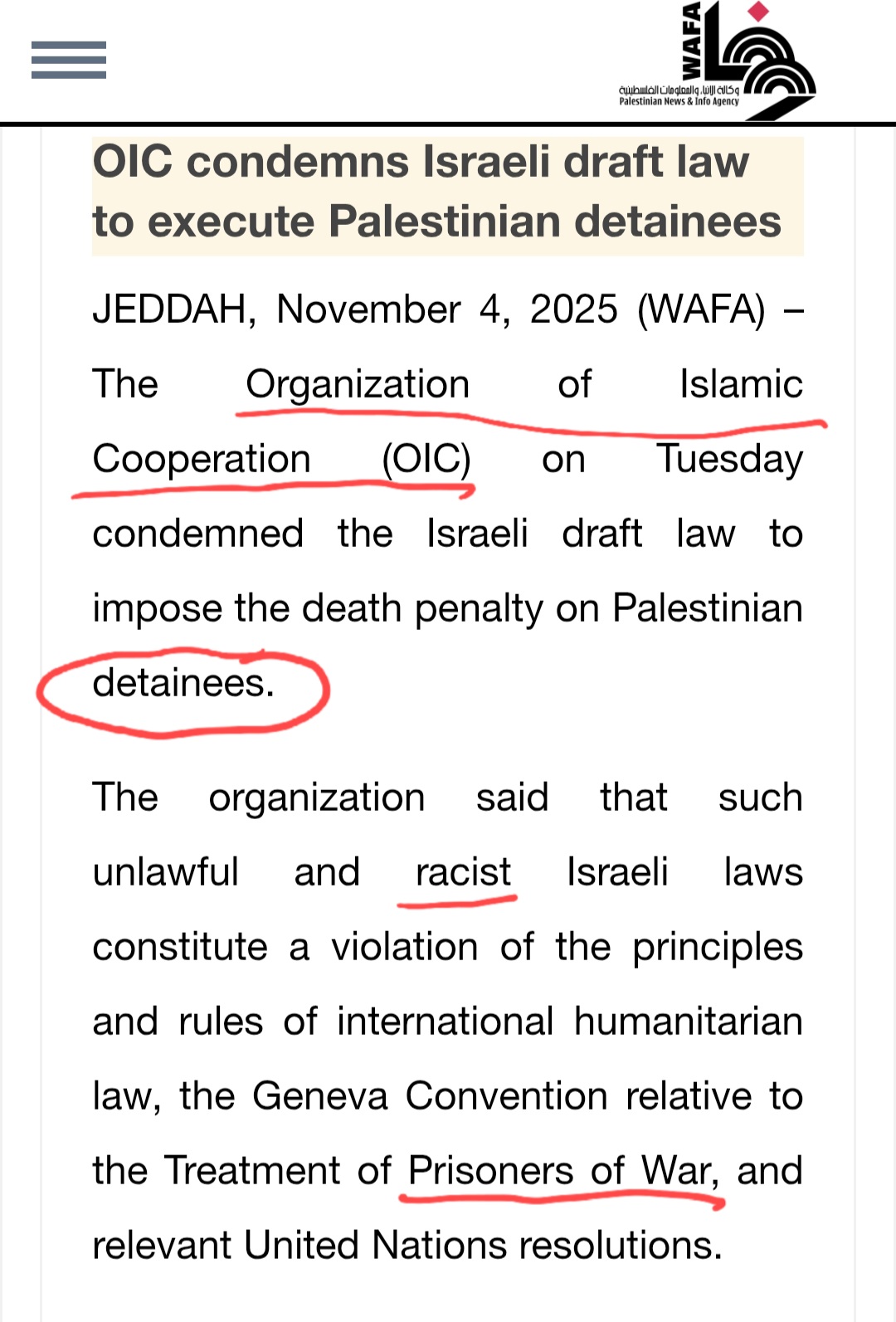
Wafa report on OIC condemning Israel for considering death penalty for Palestinian “detainees”

Here’s another uncomfortable truth: more than half of the OIC’s 57 member states have the death penalty — and not just for murder.

In Saudi Arabia, people are executed for drug trafficking, sorcery, and “crimes against God.” In Iran, the gallows await not only murderers, but those guilty of “corruption on earth” — a charge so elastic it includes political dissent, homosexuality, and apostasy. In Pakistan, blasphemy can mean death. In Mauritania and Sudan, apostasy itself is a capital crime. In Nigeria, men have been sentenced to death under Sharia courts for same-sex relations.

Yet these same governments now gather in moral indignation because Israel — a democracy under relentless terrorist attack — dares to debate capital punishment for those who slit the throats of families in their beds.

The hypocrisy is staggering.

The OIC has nothing to say when Hamas executes Palestinians in Gaza’s public squares for “collaboration.” It looks away when Iran hangs protesters from cranes, or when Afghanistan’s Taliban conduct public stonings. But when Jews, after burying their children, consider the ultimate penalty for their killers, suddenly the OIC finds its moral voice.

If morality were truly the concern, the OIC would start at home. It would demand an end to hangings for prayer and firing squads for love. But this is theater. Raw antisemitism redressed in sanctimony.

Israel’s debate over the death penalty is about justice for the innocent. The OIC’s silence over its members’ executions is about control of the obedient.

And that’s the dividing line between civilizations: one values life enough to punish those who destroy it; the other kills in the name of piety and calls it peace.

Iranian Axis Also Hates Baha’is

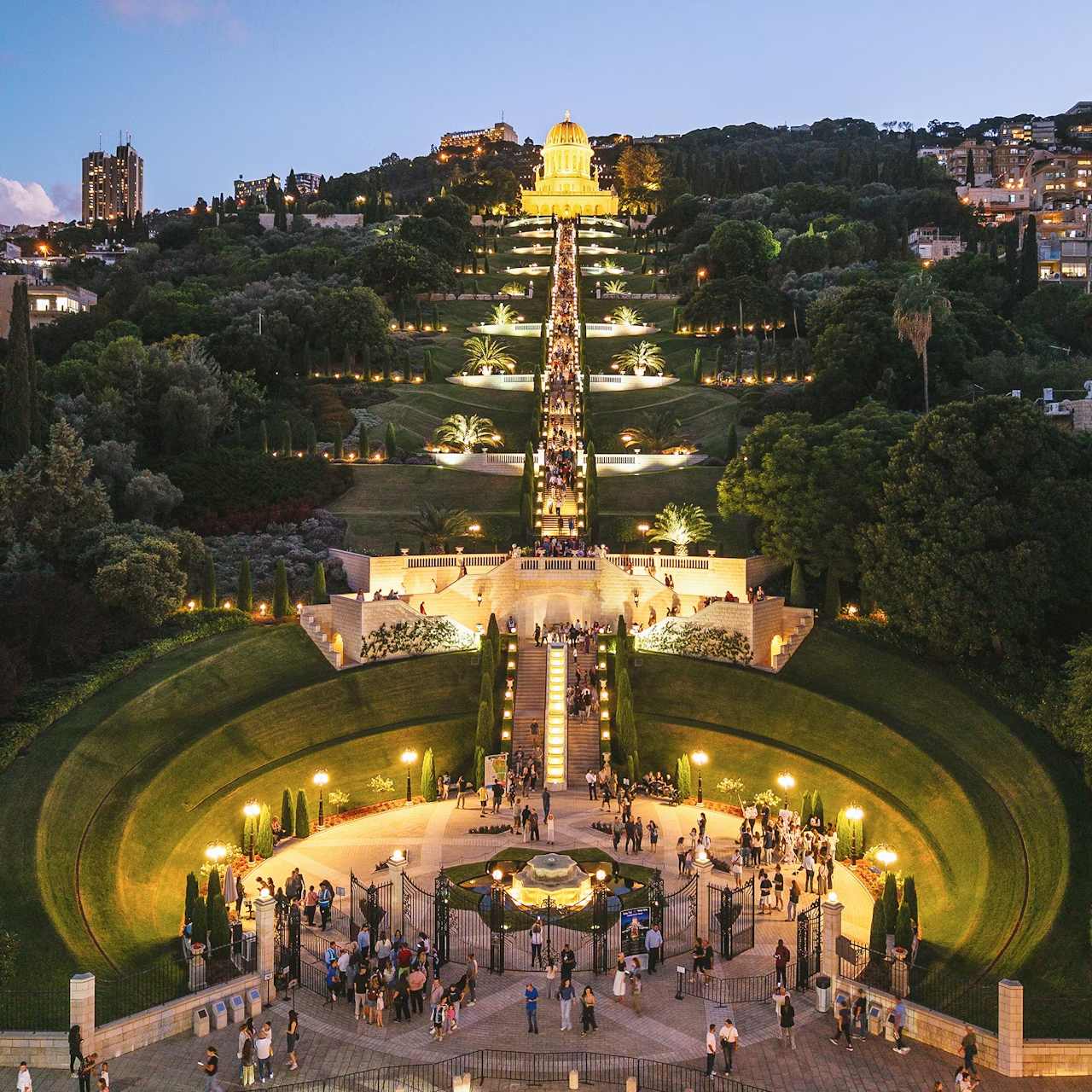
In October 2025, the Baháʼí Gardens in Haifa Israel shimmered under evening lights as thousands strolled the terraces surrounding the golden Shrine of the Báb. The event, “Terraces by Night,” invited everyone — Israelis, tourists, diplomats, Muslims, Christians, Jews — to share in quiet wonder. It was a celebration of beauty and peace, the essence of a faith that teaches the unity of mankind.

“The Bahá’í Gardens and the Shrine located in them are a religious and cultural asset of the highest order for Haifa and the State of Israel, and their spectacular beauty is an extraordinary global phenomenon. The connection between the city of Haifa and the Bahá’í Faith and the gardens is a unique bond of brotherhood and connection, because Haifa is a symbol of shared life.”

– Haifa Mayor Yona Yahav


That same faith is banned or persecuted across much of the Middle East. In Iran, where the Baháʼí Faith began, believers are barred from universities, their cemeteries desecrated, their homes seized. In Yemen, the Houthi regime has deported Baháʼís and outlawed their assemblies. In Qatar, a country that funds global propaganda about human rights, Baháʼís have been detained and denied employment. The list goes on: Christians face church burnings in Iraq and Egypt; Yazidis were enslaved by ISIS; Jews are long gone from the Arab world that once housed thriving communities.

The pattern is unmistakable — a region where religion is invoked constantly, yet religious freedom barely exists. Theocratic and authoritarian regimes claim divine legitimacy while erasing those who believe differently. Hatred of Jews may be the most visible strain, but the intolerance runs deeper: a rejection of pluralism itself.

Against that backdrop, Israel stands as an anomaly. The Baháʼí World Centre — the faith’s spiritual heart — sits on Mount Carmel, Haifa, Israel by choice, not exile. Baháʼís are forbidden by their own laws to proselytize in Israel, yet they flourish there. Muslims pray in mosques, Christians ring church bells, Druze maintain their shrines. It is imperfect coexistence, but coexistence nonetheless — a rare reality in a region where diversity elsewhere draws death sentences. Israel is the only country in the world where the religious majority does not make up the majority of annual tourists (Christians make up more than 50% of tourists to Israel each year).

Various pilgrims file in through the Jaffa Gate in the Old City of Jerusalem in April 2017 (photo: First One Through)

Even the United Nations, which rarely misses a chance to criticize Israel, cannot ignore this hypocrisy. In December 2024, it condemned Iran stating the “dramatic rise in persecution against Baha’i women is an alarming escalation.” Yet it has remained silent on Qatar, whose wealth buys global silence — from universities, media, and even diplomats who recite the language of tolerance while pocketing the proceeds of repression.

The Baháʼí Faith preaches that humanity is one family. In Haifa, that message is literal — thousands of visitors walking through open gates, cared for by volunteers of every background. It’s a vision of what the Middle East could be if faith were not used as a weapon.

The Baháʼís open their gardens in Israel while their co-religionists suffer in silence around the Muslim Middle East. They celebrate while others cower. And they do it in the one nation in the region where the doors of worship remain open for those willing to coexist peacefully.

Over 13,000 people experienced the illuminated terraces leading to the Shrine of the Báb, in October 2025’s “Terraces by Night” in Haifa, Israel

Related:

Christians Love the Jewish State (March 2021)

The Other Part of the Balfour Declaration Detested by Antisemites

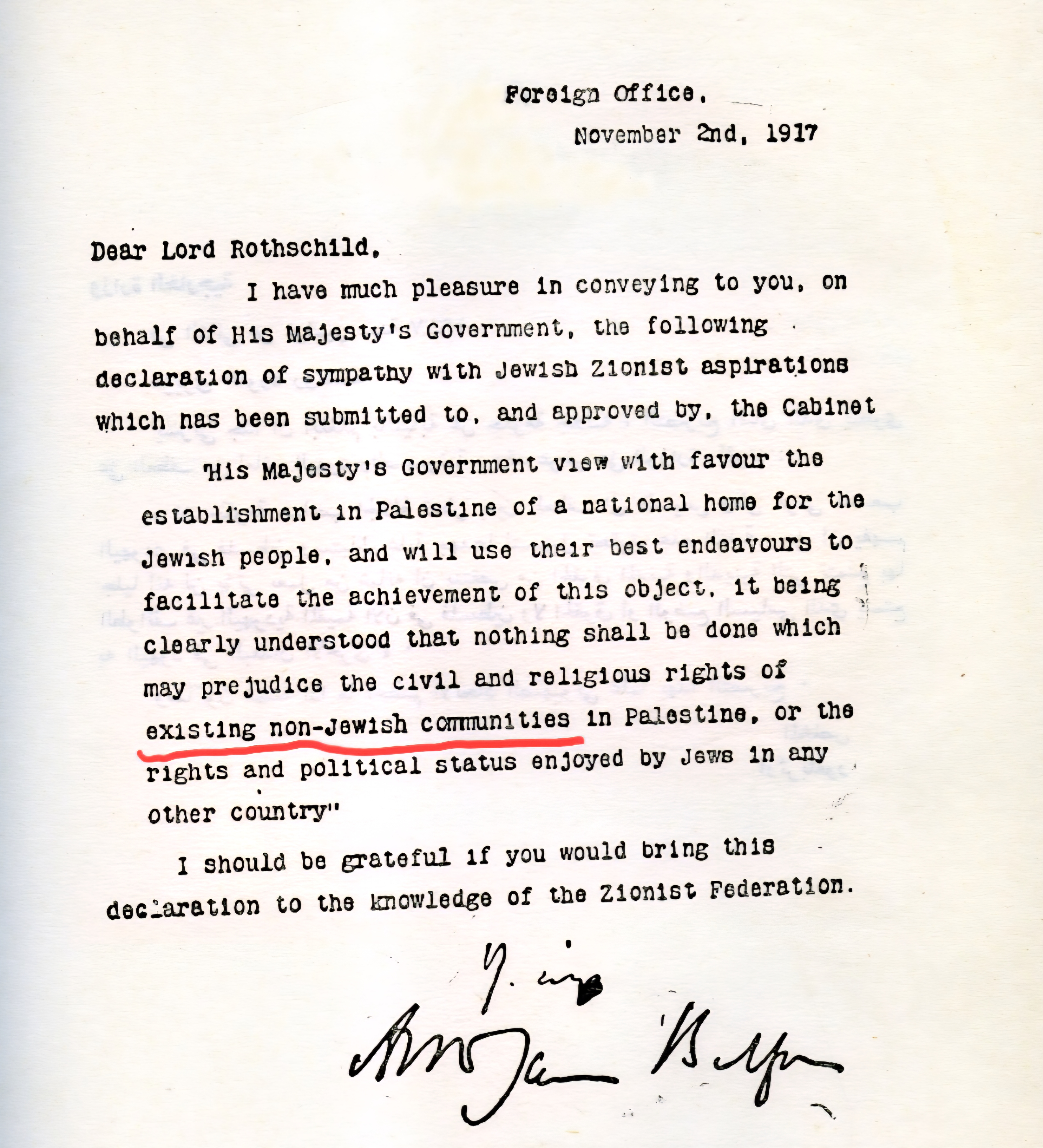
Much of the attention on the Balfour Declaration—issued on November 2, 1917—focuses on the United Kingdom’s pledge to “facilitate” “the establishment in Palestine of a national home for the Jewish people.” Israel-haters rage at this clause, claiming that Jews had no historical connection to their ancestral homeland and that Britain had no right to “hand over” immigration rights from local Arabs to Jews.

Balfour Declaration

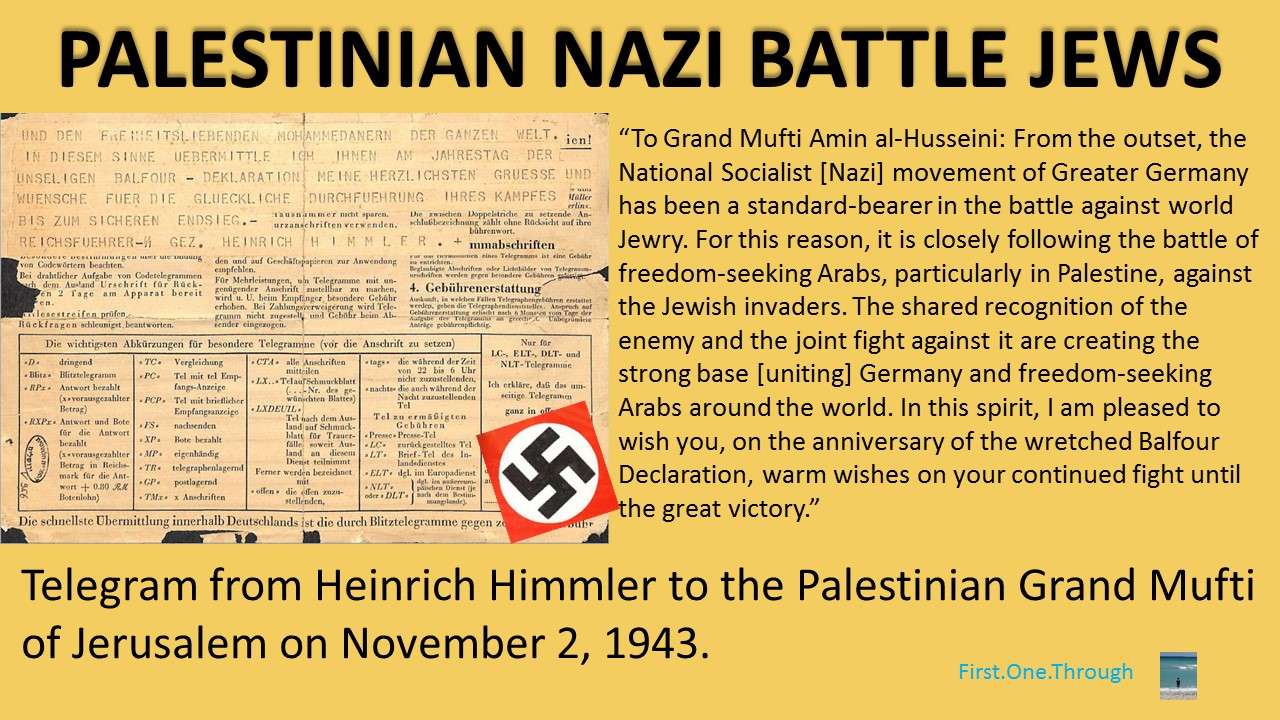
On the anniversary of the Declaration in 1943, Heinrich Himmler of Nazi Germany sent a telegram to the “Grand Mufti” of Jerusalem that Nazis and Arabs had the same enemies – Jewish invaders. In 2016, the President of the Palestinian Authority, Mahmoud Abbas demanded an apology and reparations from Britain for issuing the Balfour Declaration, having repeatedly failed to destroy the Jewish State.

Telegram from Heinrich Himmler to Amin al-Husseini on November 2, 1943

But there’s another part of that same document that antisemites also detest. The closing line reads:

“…nothing shall be done which may prejudice the civil and religious rights of existing non-Jewish communities in Palestine, or the rights and political status enjoyed by Jews in any other country.”

That final clause—protecting Jews’ rights around the world—is precisely what modern antisemitic movements are trying to undermine. Groups like Within Our Lifetime, CAIR, and the Democratic Socialists of America openly campaign to dismantle what they deride as “Jewish power” in America.

They smear Jews as self-serving “capitalists,” accuse them of exploiting “Black and Brown bodies” for profit (as Rep. Rashida Tlaib has said), and seek to push Jews to the margins of public life—all because Jews affirm that the land of Israel is their homeland.

A century after the Balfour Declaration, its promise remains under attack—not only in the Jewish homeland but wherever Jews dare to live proud and free.

From Latte Sippers to Street Revolutionaries

Obama’s warning has become the Democratic nightmare in New York City

When Barack Obama commented in 2016 that Democrats were seen as “coastal, liberal, latte-sipping, politically correct, out-of-touch folks,” it was a wink to the party’s reputation — cultured, ironic, and comfortably detached. He meant it as a warning. But nine years later, the call about paying attention to Middle America has become prophecy about the edges. The latte-sippers have soured and radicalized on the coasts.

In New York City, the same college-educated progressives who once debated justice over cold brew now chant “Globalize the Intifada.” State Assemblyman Zohran Mamdani, a proud member of the Democratic Socialists of America, leads the charge. What began as a movement which could generously be described as advocating inclusion and equity has evolved into a campaign to dismantle the American order itself. Mamdani and his allies call for the end of “empire” — by which they mean capitalism, policing, private property, and even the current structure of education and governance.

Obama’s gentle caricature of the latte class — earnest but insulated — has given way to something angrier and openly revolutionary. The Democratic Socialists’ worldview is not about reforming the system; it’s about replacing it. They seek a complete redistribution of wealth and power — not by persuasion, but by restructuring society’s foundations. Police are rebranded as “colonial enforcers.” Public schools become “sites of decolonization.” Private ownership itself is treated as moral corruption. It demands a “new economic order,” “new international solidarity,” “new moral vision,” “new global governance,” “new global organizations,” and a “new political era.”

This is not the politics of compassion, but of confrontation. The privileged class that once signaled virtue with hashtags and slogans now preaches a theology of resentment. They speak of liberation but demand obedience; they denounce power while pursuing it ruthlessly through intimidation and ideology. In the name of justice, they aim to burn down the very structures that made justice possible.

Nowhere is this more visible than in the 2025 New York City mayoral race, where Mamdani and the DSA have moved from campus protests to the ballot box. Their platform is sweeping: defund and “reimagine” the police, end merit-based education, socialize housing, and impose vast new public ownership schemes. It is a manifesto for the redistribution not just of wealth, but of control — from elected institutions to activist networks.

The symbolism is staggering. The city that once embodied liberal ambition — the energy of Wall Street, the art of Broadway, the immigrant striving that defined America — now flirts with an ideology that condemns its own success. From Columbia’s lecture halls to Brooklyn’s activist collectives, the heirs of Obama’s “latte-sipping liberals” now view the American dream as a capitalist fraud.

If Mamdani’s movement captures City Hall, it won’t just transform New York’s politics; it will mark the moment when the Democratic Party’s indulgence of its radical wing becomes surrender. The centrism of Obama and Clinton — built on pragmatism and incremental reform — is being replaced by the revolutionary certainties of those who see compromise as corruption.

Obama once teased his party for sipping lattes on the coasts, detached from ordinary life. Today, those same hands are clenched into fists. The mugs are gone, replaced by megaphones and manifestos. The “latte-sippers” have become the street revolutionaries — no longer content to mock the system, but determined to overthrow it.

As New York teeters between order and upheaval, the rest of the country would do well to take heed — and look right.

ACTION ITEMS

  1. Register as a Democrat – regardless of your politics – in deeply blue cities and towns
  2. Vote – and get out the vote – in the Democratic primaries for moderate candidates. Do not let the DSA take over your town
  3. Vote Republican in the general November election. Keep your city and town from one party rule
  4. Enlist popular moderate politicians to run who will keep the race between two individuals – extremists win in elections with numerous candidates
  5. Local grassroots organization is key. It starts now, not weeks before elections