John Kerry: The Declaration and Observations of a Failure

Over the past decades, the literary world has seen the introduction of a new specialized category of books enter the mainstream and become very popular: do-it-yourself books, or DIY for short.  Books like the “…For Dummies” have been written on a wide range of topics, ranging from auto repair, to football, to computer programming. People believed that they could understand – or at least become proficient at a subject – by reading a book by someone they never heard of or knew.

Yet people purchased the books without knowledge of the author for a few reasons: 1) they obviously wanted to learn the material, and wanted an easy to understand tutorial;  2) they knew the brand covered lot of topics and was widely popular; and 3) they may have heard good reviews from a friend. One would imagine that  if the people heard bad reviews or knew that the author was a failure, no one would touch the books.

Is this formulation true in politics? If people want to learn something from a former politician, would they care if the person was a failure? If no one they respect likes the politician’s opinion would they listen? Or would the brand of their position (their title) hold enough clout that they would pay any attention to what that person had to say?

kerry

US Secretary of State John Kerry traveled the world for the last four years with a fantastic brand: the global diplomat for the most powerful country in the world and a leading democracy. His credentials opened doors in every part of the globe, as countries sought to trade with US, or to obtain US protection and aid.

But Kerry’s impact on the Middle East was terrible.  The eight years of the Obama administration watched the region spiral into killing fields and a race for nuclear weapons. One of the results for the failures in word and deed has been the worst refugee crisis in generations, with millions of Muslims and Arabs fleeing into the western world.

Americans noted the failed foreign policy (and domestic too), and voted out any continuation of Obama’s policies.

So as he was leaving office, Obama doubled down on his failure. He gave tacit approval to a UN Security Council resolution condemening Israelis living across an invisible line as “illegal,” and then his Secretary of Defense John Kerry condemned Israel in a long speech.  Presumably the speech was for Israelis and Palestinian Arab consumption, as well as their leadership. It was likely intended for in the incoming Trump administration as well.

The issue for all of these consumers is that the authors are confirmed failures.  The Obama administration could not get the Palestinian Authoity to even engage seriously with Israel. Instead, the PA sought unilateral action at the United Nations to become a state. It was rewarded by the Obama administration with another UN victory, but no movement towards peace.

With such a tarnished image, and a step from retirement, why would Israelis or their leadership pay heed to the actions and comments of Obama and Kerry?  Have any of their supporters “bought the book” and think there are pearls of wisdom to be found?

The Pro Israel Community Reaction

Virtually the entire pro-Israel community condemned Kerry’s remarks. AIPAC, the Zionist Organization of America, Bnai Brith, the Simon Weisenthal Center and the Anti Defamation League were all highly critical of Kerry’s thoughts about Israel.

Only the left-wing fringe group, J Street, that has long pushed the Obama administration to condemn Israel at the United Nations, applauded the UN resolution and Kerry’s speech. In language that masked the far flung liberal mindset of the group, it stated that such a move was “bipartisan” in the hope of swinging would-be “pro-Israel, pro-peace” consumers to ingest the bile.


John Kerry spoke to the world about the centrality of Israel’s security to any peace agreement, even after a history of the State Department giving only scant lip service to Israel’s need to fight terrorism, while the US enabled Iran to keep its entire nuclear weapons infrastructure. Kerry said that “friendships require mutual repect.” Is that why Obama snubbed Israel by turning down an invitation to speak to the Knesset and opted to address Israeli students – long before Netanyahu came to address Congress in 2015?

Neither the Israeli people nor Israeli leadership was listening to Kerry. The Trump administration made clear that they think the Obama/ Kerry policies were total failures. The major pro-Israel groups came out against the UN vote and Kerry’s speech, and went on to educate the broader pro-Israel community that the remarks were disgraceful, and the approach unacceptable.

Which leaves a person to wonder who Kerry was actually addressing.

The reality was that the speech was not meant as a call to action for Israel or the incoming Trump administration to move the region towards peace.  Kerry was addressing the Arab world and telling them they were right all along. Kerry followed a long list of Democrats seeking a lavish life in retirement, like Jimmy Carter, the Clinton Foundation and Al Gore.

Kerry used the western world as a vehicle to show his devotion to the Palestinian cause. He treated the Israelis as mere tools so that he can enjoy the splendors of the Arab world.

For those that seek actual peace in the Middle East, the declaration and observations of a failure should be treated in the manner it deserves.


Related First.One.Through articles:

The US State Department’s Selective Preference of “Status Quos”

The United States Joins the Silent Chorus

Select Support in Fighting Terrorism from the US State Department

US State Department Comments on Terrorism in Israel and the Territories

Subscribe YouTube channel: FirstOneThrough

Join Facebook group: FirstOne Through  Israel Analysis


The Left-Wing’s Two State Solution: 1.5 States for Arabs, 0.5 for Jews

The two state-solution for the “Question of Palestine” has been bandied about for decades. At the 1993 Oslo Accords, the Israelis and Palestinian Arabs seemingly came to a conclusion that there would be a division of the land, one for Arabs and one for Jews. However, when the negotiations reached a critical juncture in September 2000, the head of the Palestinian Authority Yasser Arafat (fungus be upon him), opted to terminate the peace process and launched another war of terrorism against the Jewish State.

Fifteen-plus years and several thousands of dead and injured later, the concept of a two state solution still lingers. While in principle the concept harkens back to the 1947 United Nations Partition plan of two states for two peoples, the radical left has pushed aggressively for a different configuration of two states to the liking of Palestinian Arabs: one and one-half states for Arabs, and one-half of a state for Jews.

The 1.5 Arab States

The 100% Arab State of Palestine. Palestinian Arabs are seeking a new country which will be devoid of any Jews. Acting President of the Palestinian Authority made his demand clear in July 2013. His declaration is consistent with every action taken by Palestinian Arabs over the years:

  • Palestinian laws which make it a crime for any Arab to sell land to a Jew (consistent with Jordanian law);
  • Jordanian law specifically excluded Jews from the “West Bank”/ east of the Green Line (EGL) being granted citizenship;
  • Demand that any and all Jews be removed from EGL (including Jews who live in existing homes that have been around for decades);
  • No Jewish visitor on Palestinian college campuses (Bir Zeit);
  • No Jewish businesses may operate in the disputed territories

These demands are blessed by several radical left-wing Jewish groups. Groups like Jewish Voice for Peace, Independent Jewish Voices (Canada), and European Jews for a Just Peace, advocate for BDS (boycott, divestment and sanctions) for any business that operates east of the Green Line (EGL) and in Israel itself. Individuals like Rabbi Ellen Lippmann on the board of J Street, also see no problems with BDS for Jews living in EGL.

Non-Jewish left-wing radicals take note of the Jewish positions.  US President Obama has not just called new Israeli towns in EGL “illegitimate,” but argued that no Jews should be permitted to live in EGL, even in homes they legally purchase such as in SIlwan, in eastern Jerusalem.  Author Tuvia Tenenbom noted that Europeans and others need not be openly anti-Semitic anymore; they can just fund the rabidly anti-Zionist Jewish groups that bless a Judefrei Palestine.

Silwan YemeniteDSC_1020
Top picture: Silwan, in eastern Jerusalem, founded by Yemenite Jews
(photo: late 19th Century)
Bottom picture: mostly Arab Silwan in 2013
(photo: First.One.Through)

The 50% Arab State of Israel. Other left-wing groups like Adalah (supported by the New Israel Fund), seek to dismantle the Jewish State and replace it with a bi-cultural state. They advocate for the removal of anything associated with Judaism such as the Jewish symbols on the flag, in front of the Knesset and in the national anthem.

The left-wing groups are also against any Jewish preferences in Israel, such as the Law of Return which enables Jews from around the world to become citizens of Israel on an expedited basis.  The revised neutral state of Israel would have Jews living as a minority, as the Palestinian Arab Right of Return would bring millions of Arabs into this bi-cultural state.

In the end, the Holy Land would have a completely Arab, Jew-free state called “Palestine,” and a second democratic, bi-cultural state where Arabs would be a majority, but where Jews would be allowed to live.

150% of the “Holy Basin” for Arabs.
The non-holy 50% for Jews

The 1.5 Arab states in the holy land would also have 150% of the “Holy Basin,” and all of the region’s holy sites.

When the United Nations first drafted a partition plan in 1947, it considered the two holy cities – Jerusalem and Bethlehem – to be a “Holy Basin” which would be part of neither state. As the left-wing now pushes for the 150% Arab plan, they are advancing a radical plan for the Holy Basin.

1947plan jerusalem
UN 1947 Partition Plan for the “Holy Basin”
of Greater Jerusalem and Greater Bethlehem

100% of Bethlehem. As part of the Oslo Accords, Israel handed over control of the City of Bethlehem to the Palestinian Authority at the end of 1995. Israel only maintains a small presence at Judaism’s third holiest site, the Tomb of Rachel. After Arafat’s Second Intifada, the Israelis were forced to create a wall around the small tomb to protect Jewish visitors.  In general, the city is now virtually devoid of Jews and Christians since coming under the Palestinian Authority.

The Holy 50% of Jerusalem. The Palestinian Authority demands that the entirety of the Old City of Jerusalem, which contains Judaism’s holiest sites, Islam’s third holiest site, and many Christian holy sites, all be part of the Palestinian capital. It is content to let the newer part of the city to the west, which has no holy sites, to be the capital of Israel.

The radical left endorses the Palestinian Arab plan.

The fact that only Israel has allowed freedoms of access and religion in Jerusalem does not sway people who claim to seek “justice.”  Groups which claim to advance “human rights,” advocate for an anti-Semitic Jew-free agenda in Palestine.  Further, using the maxim that the best defense is a good offense, these groups consider anyone that points out the bias of their plan and impracticality of diving a capital city to be right-wing racists.

The joys of being a radical liberal is that you can feel 150% morally superior while waving banners of “justice” and “human rights”, even while trampling on those very principles.


Related First.One.Through articles:

The Israeli Peace Process versus the Palestinian Divorce Proceedings

The Arguments over Jerusalem

Squeezing Zionism

“Peace” According to Palestinian “Moderates”

Liberals’ Biggest Enemies of 2015

Israel, the Liberal Country of the Middle East

Today’s Inverted Chanukah: The Holiday of Rights in Jerusalem and Judea and Samaria

Subscribe YouTube channel: FirstOneThrough

Join Facebook group: FirstOne Through  Israel Analysis

An Inconvenient Truth: Palestinian Polls

There were a growing number of violent attacks by Palestinians against Israelis in October 2015.  Various politicians such as the US Secretary of State John Kerry blamed the root cause as Palestinian frustration about ongoing Jewish “settlements” east of the Green Line.  Acting President of the Palestinian Authority Mahmoud Abbas pointed the finger at defending Al Aqsa Mosque in Jerusalem from Israelis changing the status quo.  United Nations Secretary-General Ban Ki-Moon considered that it was due to Palestinians frustration about the failed peace talks and lack of progress towards creating a Palestinian state.

Why all of the guessing for identifying the root cause when the Palestinians poll themselves every three months?

The Palestinian Center for Policy and Survey Research conducts a poll every quarter on a range of issues.  It breaks the analysis between Palestinian Arabs living in the West Bank/ east of the Green Line and the Gaza Strip.  A review of the poll numbers gives a much better sense of Palestinian Arabs sentiments about their situation than biased and bogus statements from Kerry, Abbas and Ban Ki-Moon.

A Growing Majority of Palestinians Support Attacking Israeli Civilians

The poll figures do show a growing support of attacking innocent Israeli civilians.  In December 2013, the percentage of Arabs supporting unprovoked attacks was 34% and 58% in the West Bank and Gaza, respectively.  Those figures jumped to 48% and 68% for WB and Gaza in September 2014 and then to 50% and 70% in September 2015.  Overall, a clear majority of 57.2% of Palestinians were in favor of terrorism as of September 2015, up from 42.9% in December 2013.

Terrifying numbers about terrorism in both the absolute percentage and in the terrible trendline of support.

No heightened Palestinian fear regarding Annexing the West Bank and Changing the Status Quo on the Temple Mount. Palestinians are ALWAYS afraid.

Despite Kerry’s assertion that Palestinians are increasingly fearful of Israelis living east of the Green Line and Abbas’s statement about Israel changing the status quo on the Temple Mount, the statements are untrue.

kerry harvard
John Kerry at Harvard attacking Israeli settlements
(photo: Brian Snyder/Reuters)

Settlements: Palestinians have always been afraid of Israeli intentions regarding annexing land. In December 2013, 85.3% and 80.5% of Arabs in the West Bank and Gaza, respectively, believed that Israel would annex the entire region.  Those figures dropped after the 2014 Gaza War to 81.2% and 75.3% in September 2014, before rising again to 88.5% and 78% one year later.

In every quarter over the past two years, between 80% and 90% Palestinian Arabs in the West Bank thought Israel was intending to annex both the West Bank and Gaza.  The range was 70% to 82.5% for Palestinians living in Gaza.  Presumably the Arabs in Gaza did not have as great a fear as the Arabs in the West Bank since they clearly saw that Israel left Gaza in 2005.  The question remained why the fear factor numbers remain so consistently high, even in Gaza.  In any event, there was no correlation between the increased Arab desire to kill Jews and their fear of Israelis annexing territory.

Al Aqsa: The poll numbers show similar results for the Temple Mount/ Al Aqsa.  In March 2014, the PCPSR asked whether people were concerned that Israel would change the status quo on the Temple Mount.  Almost everyone – 93% – believed Israel intended to make changes to access and prayer rights.

In December 2014, 66.2% of West Bank Arabs, and 38.8% of Gazans thought that Israel intended to completely destroy the Al Aqsa mosque.  In the most recent September 2015 poll, those figures dropped to 60% and 33.4% for the West Bank and Gaza, respectively.  Again, there was no correlation between the uptick in violence due to Palestinian fears, despite the October 2015 protestations of John Kerry and Mahmoud Abbas.

The UN Fantasy of Palestinian Support for a Two State Solution
and Negotiated Process

Despite the United Nations repeated comments that the key to peace lies in a two state solution, it has never been a particularly popular dream of the Palestinians. In March 2014, a slim majority of 51.2% of Palestinians supported the idea. In the last poll of September 2015, 47.9% of Palestinians were in favor of two states.

Further, throughout 2015 a majority of Palestinians favored an armed struggle with Israel more than negotiations.  In December 2014, Arabs broke down as 41.9%, 25.6% and 28.3% in favor of using either violence, negotiations and non-violent protests, respectively. In September 2015, the polls showed little movement, with a breakdown of 41.6%, 29.2% and 24.2%.

The Palestinian polls show that the two state solution has never been a very popular idea, and those that favor it believe it can best be accomplished through violence. The recent uptick in actual violence actually accompanied a move from a preference for negotiations, counter to expectations.

Safety and Social Media

The poll numbers do show some trends that correlate to the spike in what Wall Street Journal’s Brett Stephens referred to as a Palestinian “blood lust.”

Safety: In December 2013, a majority of Arabs east of the Green Line (54.4%) and in Gaza (61.7%) felt safe.  That changed dramatically after the 2014 Gaza war.  Between June 2014 and December 2014 the sense of safety in the West Bank dropped from 51% to 38.3%, and in Gaza from 63.9% to 46.1%.  The numbers continued to stay low over 2015, with a perceived safety growing from 38.3% to 48.7% in September 2015 in the West Bank, and dropping further in Gaza from 46.1% to 39.5%.  Those are very dramatic declines from two years earlier.

Social Media: Palestinians, particularly those in the West Bank, have been getting their news from social media in much greater numbers.  In the West Bank, Arabs that use Facebook and Twitter jumped from 14.7% (June 2014) to 19% (December 2014) to 26.4% (September 2015). The numbers in Gaza over that time period went from 21.3% to 21.6% to 24.1%.  These are significant changes, particularly in the West Bank.

The survey does not cover what kind of items people are watching and sharing on social media.  According to some news reports, videos of Israeli forces shooting Palestinians and “how to” videos showing ways to stab Jews, have gone viral.

The Palestinian Authority

The Palestinian Authority has always been viewed as corrupt by Palestinians according to polls.  Anywhere from 78% to 84% of West Bank Arabs that live under the PA consider the government corrupt according to every poll.  In Gaza, the percentage is lower, from 72% to 82%, but the overall sentiment is the same.

However, what has not stayed the same is the confidence in Abbas.  While coming in dead last in a theoretical three-person presidential election each quarter, his support has plummeted in the West Bank, while it has grown in Gaza.  In the WB: 32.1% (12/13); 28.5% (6/14); 26.7% (12/14); 21.5% (9/15). In Gaza: 17.2% (12/13); 27.1% (6/14); 20.8% (12/14); and 27.4% (9/15).  By September 2015, 62.9% of West Bank Arabs and 67.4% of Gazans wanted Abbas to resign.

Conclusion

Principal players in the Israeli-Palestinian conflict are using stale and incorrect information to describe the current violence, and as such, are focused on irrelevant solutions.  The settlements and the Temple Mount are not reasons for violent attacks.  A negotiated two state solution was never popular, despite the many efforts of those who strongly advocate for it.  Like the corruption of the Palestinian Authority, these things are constant white noise that don’t suddenly motivate people to murder.

Today’s violence is erupting due to concerns over safety, and fueled by the credibility and incitement of Palestinians on new media.

Abbas announced the beginning of his retreat from the Oslo Accords and managing security in the West Bank. The West Bank Arabs now feel more threatened and communicate directly with each other over social media about attacks and injuries.  The raw videos of families and friends being injured make them feel more unsafe and angry.  They, in turn, make videos for their friends to attack Israelis and reject Palestinian leadership, which fuels the security fears on all sides.

World and regional leaders are rehashing old misconceptions about a pathway towards peace and security in the region.  They should look at what Palestinians are actually saying: they are ambivalent about of a negotiated two state solution. They do not believe or trust their own leadership any more than the intentions of the Israelis.

With such understanding, it is time to rethink always propping up Abbas, ignoring Hamas and condemning the Israelis. It is time to stop obsessing about the settlements and Temple Mount and focus on security and communications.

The inconvenient truth is that Palestinians don’t like and don’t trust any of today’s leaders, and those same leaders refuse to listen to what the Palestinians are telling them.  It is hard to imagine peace and security emerging from such a dynamic.

Subscribe YouTube channel: FirstOneThrough

Join Facebook group: FirstOne Through  Israel Analysis
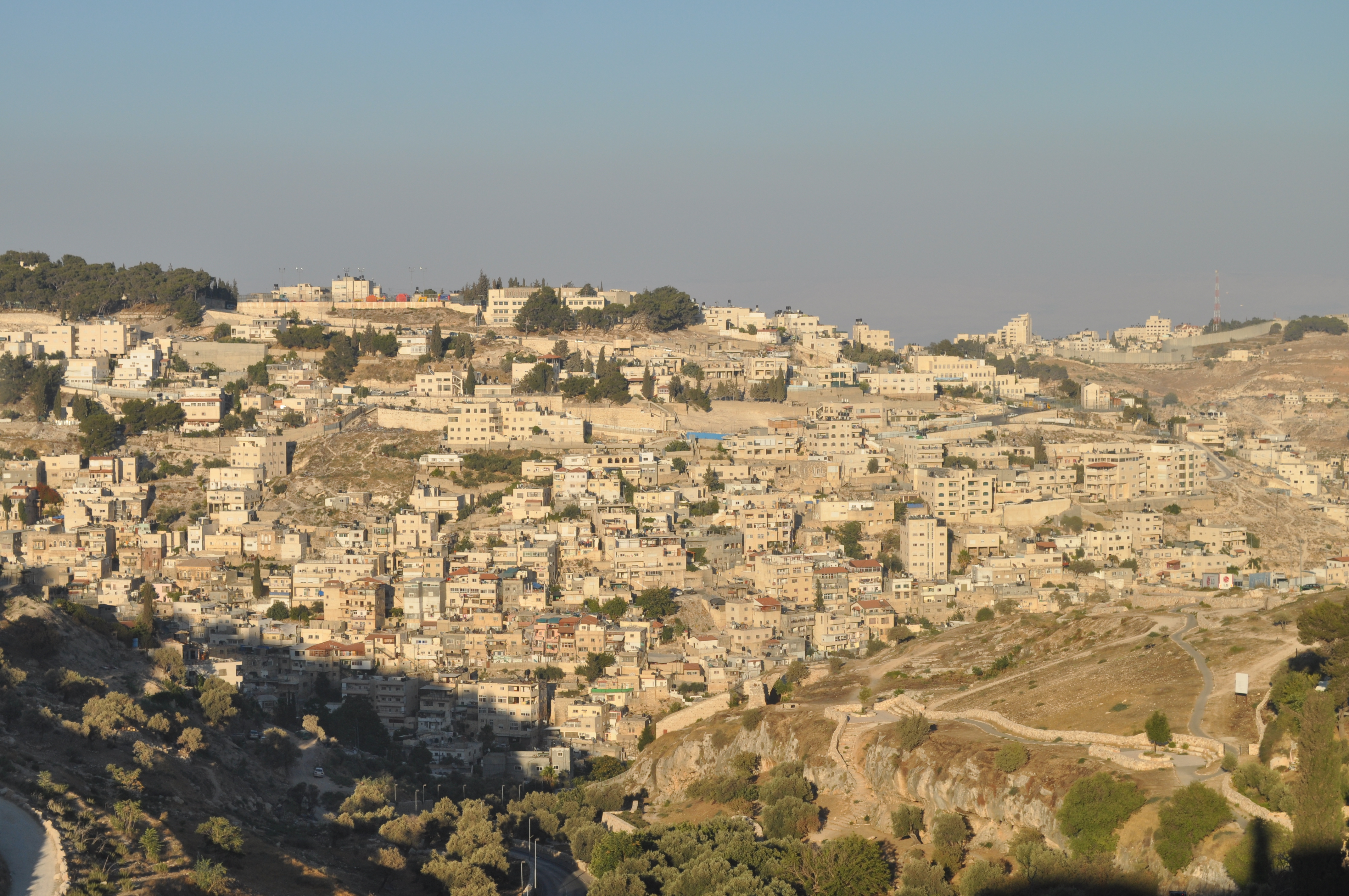
The Battle for Jerusalem

The Battle for Jerusalem was been waged for many years.

In October 2014, the acting Palestinian Authority President Abbas took umbrage at Jews moving into homes they purchased in Silwan- an area that was originally settled by Jews.  Abbas called for hard labor and life imprisonment (or death) for any Arab that sold land to a Jew. There was no reaction from the world to Abbas’s racist edict.

The October comments from Abbas continued with a call to prohibit any Jew from praying on the Temple Mount. He then insisted that no Jews should be allowed to live anywhere east of the 1949 Armistice lines, including in heavily populated Jewish neighborhoods of Jerusalem.

The stated rationale for the comments to try to mask the anti-Semitism was that such moves “threaten a two state solution”. That is absurd.

A two state solution can exist very easily- it just would not have a new Palestine with everything that Abbas would like.  Specifically, Jerusalem.

The Israelis have already split the “Holy Basin” proposed in the 1947 UN Partition Plan by giving the Palestinians Bethlehem.  The other half of the basin, Jerusalem, would remain Israeli.  Keeping Jerusalem as the united capital of Israel in no way threatens the viability of a new Palestinian State.

Here is the music video (The Who) that reviews the tired and flawed arguments Palestinian supporters used in fighting the development of E1, east of Jerusalem. https://www.youtube.com/watch?v=PIXimxfeuS8


Sources:

Laws of Silwan: https://firstonethrough.wordpress.com/2014/10/20/real-and-imagined-laws-of-living-in-silwan/

Abbas call for “hard labor” if sell land to Jews: http://www.jpost.com/Arab-Israeli-Conflict/Abbas-adds-hard-labor-to-punishment-for-Palestinians-who-sell-land-to-hostile-countries-379350

Abbas, the racist, calling Israel racist: https://firstonethrough.wordpress.com/2014/10/27/abbas-knows-racism/

Abbas call for banning Jews on Temple Mount: http://www.ynetnews.com/articles/0,7340,L-4581262,00.html

Abbas against Jews in eastern Jerusalem: http://www.timesofisrael.com/abbas-calls-for-emergency-un-security-council-meeting-on-jerusalem/

Short Palestinian control of Jerusalem: https://firstonethrough.wordpress.com/2014/07/07/east-jerusalem-the-0-5-molehill/

Obama complicit in agreeing to Abbas racism: https://firstonethrough.wordpress.com/2014/10/02/obama-supports-anti-semitic-palestinian-agenda-of-jew-free-state/