Palestinians Utterly Fail Two Tests: Oslo Accords And Gaza Disengagement

Palestinians have violently opposed Jews living in Israel for a century. The occasional massacres of the 1920s gave way to multi-year pogroms in the late 1930s. When the British announced their intention to leave the region and terminate their mandate, the local Arabs rejected the 1947 United Nations Partition Plan and enlisted neighboring Arab countries to destroy the Jewish State.

The loss of part of the land to Israel was balanced by the capture of Gaza by Egypt and much of Judea and Samaria by Transjordan. The Arab armies assembled to destroy Israel again in 1967 and in 1973 on Judaism’s holiest Day, losing their wars again. On their own, the Stateless Arabs from Palestine (SAPs) continued the mayhem, killing Jewish Olympians, blowing up synagogues and hijacking planes in their persistent effort to eradicate the presence of Jews in the Jewish holy land.

The SAPs seemingly were willing to turn a new page in favor of coexistence with Jews in 1991 with the Madrid Conference which eventually developed into the 1993 Oslo I and 1995 Oslo II Accords. Despite ongoing Arab violence, Israel facilitated the creation of Palestinian governmental institutions and handed over significant sections of the area east of the 1949 Armistice Lines (E49) to Palestinian control. The goal was to finalize all matters by September 2000, at the five year anniversary of the Oslo II signing.

The SAPs chose to return to their violent ways instead of concluding an agreement.

In September 2000, under the command of Yasser Arafat, Arabs committed waves of terrorist attacks, blowing up men, women and children in pizza stores, parks, on buses and in synagogues. The Arab brutality was seemingly without end, and was only curtailed in 2004 when Israel erected a security barrier to stem the flow of Arab killers and the death of Arafat.

In an effort to reengage, Israel handed Gaza to the Palestinians in 2005, with assurances from the United States that it would support Israel’s positions on retaining some land in E49 and that all Palestinian refugees would be settled in a new Palestinian State.

The SAPs would fail to capitalize on this second chance at peace as well.

First, the Palestinians elected the terrorist group Hamas to 58% of the Palestinian parliament in 2006, and then had the political-terrorist group take over all of Gaza in 2007. The Palestinians used Gaza as a launching ground for missiles in the air and tunnels below ground to attack Israelis. Full blown battles from Gaza erupted in 2008, 2012 and 2014.

Rather than Gaza proving a model for coexistence of two states living side-by-side in peace, it showed that Palestinians will never accept the presence of Jews nor existence of a Jewish State.

There is an old adage “fool me once, shame on you; fool me twice, shame on me” meant to convey that it’s not nice of the perpetrator to take advantage of someone one time, but by the second time, the fault lies with the victim who should have known better than to reengage.

There is no line for “fool me three times”, as no rational actor acting on free will would ever consider such preposterous notion.

Which is precisely why the anti-Israel community is calling for BDS resolutions against Israel and electing anti-Israel candidates like Rep. Rashida Tlaib (D-MI), Rep. Ilhan Omar (D-MN) and Rep. Jamaal Bowman (D-NY), to force Israel to reengage yet again with Palestinians who have repeatedly shown they have no interest in coexistence.

Alt-Left anti-Israel members of Congress, Rashida Tlaib, Ilhan Omar and Jamaal Bowman

“Fool me once or twice is a matter between parties; fool me thrice is a hostage situation” in which the victim is compelled to undermine their own well-being. Such is the situation today among those pressuring Israel to advance a DOA peace process.

Coercion is the polar opposite of freedom, and it is gaining strength while oblivious Israelis ponder how much power to leave in judiciary’s hands. Israel’s internal debate about democracy is shrouding the potential loss of freedom from external actors.

Related articles:

Rashida Tlaib’s Modern ‘Mein Kampf’

The Shrapnel of Intent

The Toxicity of The Latest “Nakba” Resolution

No One Mentions Actual Palestinians’ Sentiments

Anti-Israel Lobbyists Dwarf Pro-Israel Lobbyists

Anti-Israel and Jew-Ambivalent in Congress

Letter To Rep. Bowman About Palestinians’ Lack of Support For Two States

Mother’s Day And Ahlam Al-Tamimi

Terrifying Trifecta Of Anti-Zionism

The poorly named “Second Intifada” from September 2000 until 2004, was a period of Palestinian jihadi pogroms against Jews in Israel. Hundreds of Arab attackers bombed buses and ice cream stores, stabbed and ran over women and children in the street, and stoned cars carrying families. Well over 1,000 Jews were killed in their war on innocents.

The Palestinian community was very supportive of the murders. A December 2001 PCPSR poll of Palestinians found that 22.7% and 57.4% of West Bank Arabs “strongly supported” and “supported” armed attacks against Israelis, respectively, with 61.4% believing violence against Israeli civilians inside of Israel could achieve “Palestinian rights” more than negotiations. As such, the Palestinian slaughter of Jewish civilians continued.

The “Second Intifada” / Two Percent War came to a close when Israel built a security barrier which limited the entry of Palestinian Arabs into Israel. When Israel handed Gaza to the Palestinians in 2005 after assurances from the United States that it would support Israel’s annexation of parts of the West Bank, the center of Palestinian attacks mostly came from Gaza, not the West Bank.

That has now changed.

While the majority of Gazans have consistently favored killing Israeli civilians, the period before March 2021 had only about 25% of West Bank Arabs supporting murdering Jews inside of Israel. (To say “only” to one-out-of-four Palestinians in favor of killing innocent Jews is a relatively good figure is appalling, and goes to the jihadi mindset prevalent in the region). The figure jumped to about one-out-of-three after May 2021, when Israel made attempts to evict Palestinian squatters in Shiekh Jarrah in Jerusalem, and Hamas launched rockets into Israel in protest. According to the PCPSR poll in June 2021, Palestinians concluded that Hamas won the battle as Israel halted the eviction, meaning, violence pays off.

Between June 2021 and September 2022, the six PCPSR polls had West Bank Arab support for killing innocent Israeli Jews between 26% and 35%. Then the December 2022 poll showed a step up to 46% support and March 2023 jumped further to 57% support for murdering Jews inside of Israel. There were a few reasons for the jumps.

In the three months before the December 2022 poll, several events happened:

  • all Palestinian factions met in Algiers and voted to reconcile and hold new elections
  • Israel elected Benjamin Netanyahu to be Prime Minister again with a coalition of ultra-Orthodox Jews and those backing Jewish rights east of the 1949 Armistice Lines (E49AL)
  • The newest terrorist groups in the West Bank, the “Lions’ Den” and Jenin Battalion became known in widespread media coverage

The pollsters also believed that the World Cup in Qatar was a factor, noting that it helped “restore Palestinian public trust in the Arab World after years of disappointment.” Further, it added that “in light of the escalating armed clashes in the West Bank and the near formation of a right wing and extreme government in Israel, the Palestinian public becomes more hardline while indicating a greater confidence in the efficacy of armed struggle.” (Note that Arabs use the phrase “armed struggle” to defend the reality of the open slaughter of innocents.)

The three months before the March 2023 poll were not as eventful, but did see the point blank shooting of two Israeli brothers who drove into the Arab town of Huwara, and the subsequent revenge attack by Israelis on the town. The pollsters concluded that “In light of the recent events in Huwara and the northern West Bank, Palestinian public attitudes become more militant as support for armed struggle rises,… and for the first time since the creation of the PA, a majority says that its dissolution or collapse serves the interest of the Palestinian people.

The more moderate West Bank Arabs have now joined the jihadists in the terrorist enclave of Gaza to conclude that the Oslo Accords and the creation of the Palestinian Authority does not serve their interests. They have decided that the best way to secure their “rights” is via “armed struggle”, now with more arms, and the belief that more people will support their cause than during the scorched earth pogroms of 2000-2004.

They have reasons to believe in their latest jihad.

Not only has Israel still not evicted the Palestinian Arab squatters in homes in Sheikh Jarrah, for the first time ever, Democrats in the United States have more sympathy for Palestinian Arabs than Israelis, according to a March 2023 Gallup poll. Left-wing politicians are leaning into the poll, such as Senator Chris Murphy (D-CT) and Representative Jamaal Bowman (D-NY16), now pushing to condition military aid to Israel.

That will likely encourage Palestinian Arabs to continue their violent attacks against Jews in Israel and the West Bank, and anti-Semites/ anti-Zionists to attack Jews around the world.

It’s a terrifying trifecta: for the first time since the Second Intifada, the majority of Palestinians favor killing Jews; for the first time ever, a majority of Palestinians favor dissolving the Palestinian Authority; and also for the first time ever, more Democrats favor Palestinians over Israelis.

The movement to “Globalize the Intifada” began to gather steam right after the May 2021 skirmish as Palestinians concluded that violence pays off. It is now reaching the boiling point as people conclude that governmental-led society is broken and should be abandoned.

It is called anarchy, and is coming for the Jews first.

Marchers in Brooklyn, New York in July 2021

Related articles:

The Global Intifada

The Current Intifada against Everyone

The Anti-Semitism In Anti-Zionism

Radical Muslim Groups Celebrate Bombings And Murder of Jewish Teenager In Jerusalem

The Insidious Jihad in America

The Banners of Jihad

Pick Your Jihad; Choose Your Infidel

This Day in Palestinians Resorting To Violence History: December 1 (Pedestrian Mall)

On December 1, 2001, two frustrated Palestinian Arabs from Abu Dis, just east of Jerusalem, could not stand seeing so many Jews walking around on a Saturday night in a popular Jerusalem pedestrian mall. Osama Bahar, age 25, and Nabil Abu Habaliya, age 24, took explosives which were supplied by the terrorist group Hamas and blew themselves up amongst the young Israelis strolling on Ben Yehuda Street. A short time later, another terrorist blew up a car nearby.

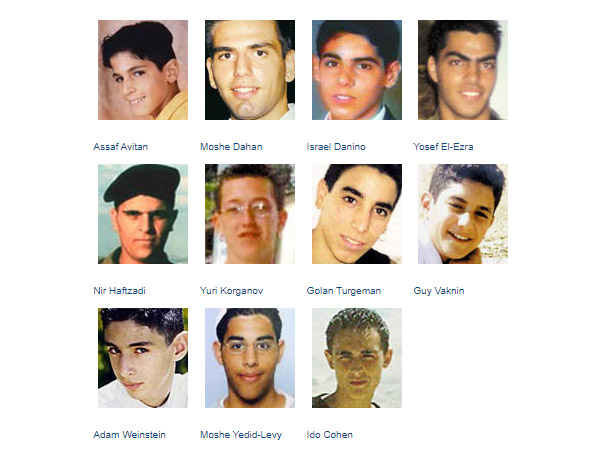
The eleven dead included: Assaf Avitan, 15, of Jerusalem; Michael Moshe Dahan, 21, of Jerusalem; Israel Ya’akov Danino, 17, of Jerusalem; Yosef El-Ezra, 18, of Jerusalem; Sgt. Nir Haftzadi, 19, of Jerusalem; Yuri (Yoni) Korganov, 20, of Ma’alei Adumim; Golan Turgeman, 15, of Jerusalem; Guy Vaknin, 19, of Jerusalem; Adam Weinstein, 14, of Givon Hahadasha; Moshe Yedid-Levy, 19, of Jerusalem; and Ido Cohen, 17, of Jerusalem. Roughly 180 others were injured, 17 seriously.

Israeli victims of Palestinian terrorism at a popular pedestrian mall on Saturday night December 1, 2001

The Martyr Izz ad-Deen al-Qassam Brigades – Information office described how angry the Arabs were with the Jews, stating:

As part of our retaliation to [Israeli Prime Minister Ariel] Sharon’s madness and with the success granted by Allah and His protection, the two fighting martyr brothers, Osama Bahar and Nabil Abu Habaliya, have carried out on Saturday evening, 12/1/2001, the night of Ramadan 17, their bold and painful attack in one of the enemy’s dens in occupied west
Jerusalem
as a revenge for the blood of our martyrs and a punishment to all the reckless leaders in the enemy’s army and ministry.

We do not only do this in self-protection or in retaliation of a future killing, but we also do this as part of our absolute right to react towards the continual aggression and usurpation of our country for more than 50 years. We also wish to emphasize our right of resistance and our right to die as martyrs [istishhad], which is the pinnacle of resistance – that is to say, to sacrifice one’s self, spirit and blood is an absolute right, despite the aggressive attack by the enemy and some liars, meant to rob us of this right.

Saudi Arabia funded the families of these terrorists in cooperation with the Arab Bank as part of the Saudi Committee for the Support of the Intifada al Quds. As the support for terrorism was too blatant (or to keep the funds flowing after the end of the intifada), the committee changed its name in 2004 to the Saudi Committee for the Relief of the Palestinian People. The Saudis also cannot stand Jews enjoying a Saturday night in Jerusalem.

Saudi Arab Bank convicted of funneling money to Hamas and to terrorists in US courts

Two frustrated Palestinian Arabs had to contend with Jews walking the streets of Jerusalem for their whole lives. The Saudis well understood their frustration and supported their “right of resistance to die as martyrs.” All had internalized that the Muslim world can have no dignity as long as Jews walk the streets of Jerusalem with impunity.

Related articles:

This Day in Palestinians Resorting to Violence History: December 27 (Tourists)

This Day in Palestinians Resorting to Violence History: December 27 (Kitchen Staff)

The Palestinians aren’t “Resorting to Violence”; They are Murdering and Waging War

The Parameters of Palestinian Dignity

Trump Secures Lowest Tally of Israeli Deaths From Palestinian Terrorism

Israel has a long history battling armies and terrorists since the Jewish State declared its independence in 1948. Since September 2000, a total of 1,383 people have been killed by terrorists and many times that number have been wounded.

Yasser Arafat launched the Second Intifada in September 2000 after he was disappointed with only getting 98% of his stated desires from the peace process with Israel. Terrorist attacks became daily occurrences and the death toll and carnage was horrific. In just the last few months of 2000, some 43 people were killed in Palestinian attacks. The toll increased in the following years with 208, 464, 210 and 143 murdered during the years 2001 through 2004, respectively. The reduced number of deaths in the latter years was a direct result of Israel constructing a security barrier to stem the flow of Palestinian killers from areas which Israel had handed to Palestinian Authority rule between 1995 and 2000. The barrier proved critical in saving Israeli lives in the following years.

Palestinian terrorists kill 15 civilians including 7 children and a pregnant woman at a Sbarro pizza store in Jerusalem on August 9, 2001

From 2005 through 2008, a total of 134 people were killed in terrorist attacks, a four year total which was less than 2004 alone. The numbers would continue to improve during the two Obama terms, with 55 fatalities in the 2009 to 2013 period, but escalating to 79 deaths in the second term, with a spike from the stabbing and car ramming intifadas after the peace process under U.S. Secretary of State John Kerry completely failed.

The last four years have been the safest ever.

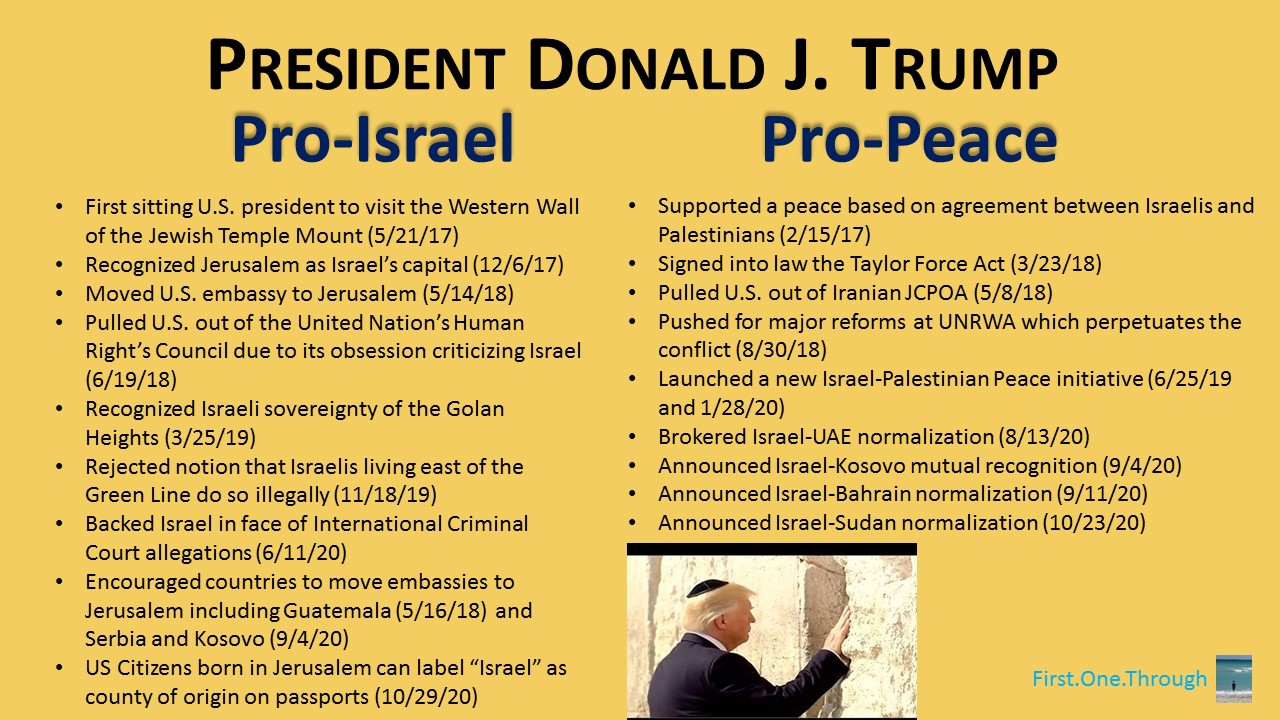
U.S. President Donald Trump’s strong support for Israel translated into the lowest Israeli death toll from Palestinian terrorism (47 murdered), despite the various dire warnings of the region going up in flames because of the U.S.’s recognition of Jerusalem as Israel’s capital, the move of its embassy to the city and various other pro-Israel initiatives. Year-to-date, two people have been killed by Palestinian terrorists, the lowest one year total ever. The two-year and three-year totals (14 and 28, 2019-2020 and 2018-2020, respectively) are also records for the fewest Israeli deaths from terrorism.

Four-Year PeriodFatalities from Terrorism
2001-20041,025 (Second Intifada)
2005-2008134 (Security Wall built)
2009-201255 (Palestinians hopeful in Obama’s squeeze of Israel)
2013-201679 (Failure of Obama peace initiative; Stabbing Intifada)
2017-202047 (Trump Administration’s pro-Israel agenda)
Trump administration yields most peaceful period for Israel in decades

President Trump helped make Israel strong which helped make Israel safe. It is a formula worthy of repeating.


Related First One Through articles:

The Real “Symbol of the Conflict” is Neta Sorek

The Recognition Catch Up

Trump Reverses the Carter and Obama Anti-Israel UN Resolutions

Trump’s Take on Obama’s “Evil Ideology”

The Peace Proposal Monologues

President Herod

Subscribe YouTube channel: FirstOneThrough

Join Facebook group: Israel Analysis and FirstOneThrough

The NY Times Will Not Write About the Preferred Violence of Palestinians

The New York Times sets the gold standard for a pro-Palestinian Arab narrative in the United States mainstream media. It never stops trying to make the point that Palestinians are non-violent resistance fighters against the horrible Israeli-occupation machine. Here’s a link from FirstOneThrough to appreciate the breadth and depth of the Times bias.

In the latest example, on July 9, 2019, the Times wrote an article on page A4 with two pictures and a map called “As Weary Protesters Turn to Pocketbook Issues, West Bank Quiets.” The online version had three more pictures of Palestinian Arabs “protesting before Israeli soldiers.”

The 1,200-word article used the word “protest” 8 times, not including the title. It used the word “resistance” 6 times. “Violence” appeared only twice.

Pretty remarkable for the people who launched a stabbing and car ramming intifada throughout 2015 on the heels of an all-out war from their cousins in Gaza in 2014, who continue to stone people and cars, and who have a leadership which continues to use its scant resources to pay terrorists who maim and murder Israelis.

A particularly choice paragraph captures the NYT’s #AlternativeFacts portrayal of the Palestinians as despondent about their peaceful strategy and anger at the United States:

“An opinion poll by the Ramallah-based Palestinian Center for Policy and Survey Research in June found that only 23 percent of Palestinians saw nonviolent resistance as the most effective way of achieving statehood, while three-quarters said the Palestinian leadership should reject the American peace plan.”

Fewer than one in four Palestinian Arabs believe there is any effectiveness of “nonviolent resistance.” The majority of Palestinians believe prefer other actions. According to the actual opinion poll:

“The public is divided over the role of negotiations and armed struggle in the establishment of a Palestinian state next to the state of Israel: 38% think armed struggle is the most effective means; 35% think that negotiation is the most effective means; and 23% believe that non-violent resistance is the most effective.”

But the Times wrote a huge article about the Palestinians’ LEAST PREFERRED method of establishing a new Palestinian state, well behind violence and negotiations.

Which begs the question, why not write a 1,200-word article about Palestinians preference for violence? Their attitude has been consistent in EVERY Palestinian poll, taken over the last several years. (Well, in actuality, they are Palestinian polls, so the words “violence” and “terrorism” are only used in connection with Israelis, whereas Palestinians engage in an “armed intifada” or “armed struggle“).

Further, the Palestinians oppose a two-state solution, with 47% in favor and 50% against as of June 2019. It is also a point that the NY Times never mentions.

The Times presents a fake narrative to its readership that the Palestinians are in favor of a two-state solution and are valiantly engaged in nonviolent protest to achieve their aims, despite every Palestinian poll which shows the opposite. But facts do not matter for the Times; the editors have chosen the good people and the bad people in every story. And in case you’ve been buried under a Palestinian rock and missed it, the Chosen People are the very bad people.


Related First.One.Through articles:

The New York Times Excuses Palestinian “Localized Expressions of Impatience.” I Mean Rockets.

The Palestinians aren’t “Resorting to Violence”; They are Murdering and Waging War

For The NY Times, Antisemitism Exists Because the Alt-Right is Racist and Israel is Racist

The New York Times Whitewashes Motivation of Palestinian Assassin of Robert Kennedy

The Real “Symbol of the Conflict” is Neta Sorek

The New York Times Knows It’s Israeli Right from It’s Palestinian Moderates

Subscribe YouTube channel: FirstOneThrough

Join Facebook group: FirstOne Through Israel Analysis and FirstOneThrough


The Shrapnel of Intent

“The diameter of the bomb was thirty centimeters
and the diameter of its effective range about seven meters,
with four dead and eleven wounded.
And around these, in a larger circle
of pain and time, two hospitals are scattered
and one graveyard. But the young woman
who was buried in the city she came from,
at a distance of more than a hundred kilometers,
enlarges the circle considerably,
and the solitary man mourning her death
at the distant shores of a country far across the sea
includes the entire world in the circle.
And I won’t even mention the howl of orphans
that reaches up to the throne of God and
beyond, making
a circle with no end and no God.”

“The Diameter of a Bomb”
Yehuda Amichai (1924 – 2000)


Yehuda Amichai moved to Palestine from Germany in 1936, as the Nazi war against the Jews was emerging in Europe, and the Arab war against the Zionists was gathering steam in Palestine. He would fight together with the British army in World War II and with the Jewish Defense Forces in Israel’s War of Independence in 1948-9. He would later become one of Israel’s most treasured poets, winning the Israel Prize for poetry in 1982 for his collection of works he penned in Hebrew. He died at the age of 76, at the start of the Second Intifada in September 2000.

Like all living things, Amichai’s life had a beginning and end. However, his works touched upon deeper truths which surpassed both time and geography. In a life framed by antisemitism and rejection, his words brought the Jewish people a mixture of bitterness, longing, anger and comfort about the hatred and violence they all endured.

The poem above is such an example regarding how the diameter of a bomb doesn’t begin to explain the sphere of its impact. While the scars are physical, the trauma is mental; the explosion may be ephemeral, but the shock is eternal.

Amichai’s words resonated deeply for the small global Jewish community which suffered from constant attacks both in Israel and in the diaspora. In Europe and Russia during the 20th century, millions of Jews were slaughtered while the Jews in Arab countries were expelled. The physical pain experienced by one Jew touched their cousins around the world. The grief was shared.

But the pain experienced by the Jews in Israel from multiple Arab wars and countless terrorist attacks carried an extra burden for world Jewry. While the emotional trauma of fellow Jews slaughtered and maimed reinforced the constant haunting echo of antisemitism, the attacks on the Jews in Zion also compromised the Promised Land. A place of holiness became a house of mourning. The collective Jewish inheritance bestowed by God was being ravaged in an unholy assault.

Since the beginning of the rebirth of the Jewish State in the early 1900’s, Jews and pro-Israel people around the world have been emotionally connected to the terrorism and wars inflicted upon Israeli Jews. Amichai’s poem noted that local Israeli tragedies encircled the world in grief. The bombs severed limbs and cut lives short, yet they connected everyone.

But something changed drastically over the past dozen years. The tragedies befalling Israeli Jews are now perceived through different lenses for both Israeli Jews and the Zionist community around the world.

The Changed Israeli Perspective: The Bombers

The beginning of the altered Israeli perspective began as the Second Intifada was born at the failure of the Oslo Accords.

The September 1995 Oslo II Accords were scheduled to reach a conclusive peace agreement in five years, in September 2000. However, when the Palestinian Arab leadership under Yasser Arafat was not able to secure 100% of his desired goals, he launched waves of attacks against Jewish civilians, killing hundreds of people over several years.

The ramification of the Second Intifada was not only the hundreds of murdered Israelis, but the penetrating shock waves that rippled through Israeli society which left permanent scars. Israelis internalized that the conflict was not about land as they had hoped, or about Palestinian “refugees” as they had been told. Israelis concluded that people who would intentionally slaughter children because they did not get a 100% of their demands, would never allow the Jewish State to exist on even 1% of the land. The Second Intifada scorched the psyche of Israelis that the Palestinians rejected the basic presence of Jews and the existence of the Jewish State. No enduring peace could ever be achieved with such Arab sentiment.

The shrapnel of intent of the bombers of the Second Intifada entered the minds of Israelis altering their views of the Palestinian Arabs, while the heat of the blasts incinerated the Israeli doves. The dream of peace with such murderers was reckoned a fantasy too dangerous to pursue and impossible to achieve.

In light of their new perspectives, the Israelis altered direction in dealing with the Palestinian Arabs. They erected a security barrier between the Arabs in the West Bank and Israel, and have elected a series of right-of-center governments. All to the chagrin of the liberals in the diaspora.

The Changed Diaspora Perspective: Untouched

Yossi Klein Halevi, an American-Israeli author who works at the left-of-center Shalom Hartman Institute recently wrote a book called  “Letters to My Palestinian Neighbor,” which captures some of the divide between the American left-wing and Israelis. In describing the book, he talked about the anguish of his dream of peace with Palestinian Arabs being destroyed by the Second Intifada.

“The Second Intifada brought the right back to power and nearly destroyed the Israeli left, something the international community still hasn’t internalized.”

For Israelis, the Second Intifada was different than the wars and terrorism before 2000. The Israelis felt that they had stretched far to achieve peace and were rewarded with the massacre of innocents. Even after the Second Intifada, when the Palestinians got to hold open elections for their parliament for the first time in 2006, they elected the terrorist group Hamas to a 58% majority. When Israel left Gaza in 2005, it was rewarded with wars in 2008, 2012 and 2014. And regarding people living and working side-by-side, the coexistence was paid for with stabbings and car rammings – literally funded by the Palestinian Authority.

Unlike Yehuda Amichai’s poem, liberals outside of Israel were not deeply touched by the Second Intifada. The Jewish diaspora didn’t see the pizza store and bus bombings of the 2000’s as markedly different than Palestinians shooting up schools or hijacking planes in the 1970’s: the Palestinian Arabs were still seeking 100% of their demands and the Israelis were not compromising nearly enough. The Israelis concluded that the counter-party was forever false, while the international community was occupied counting refugees and square kilometers of land.

While Israelis became convinced that the Palestinians rejected any enduring peace with the Jewish State, the left-wing diaspora was certain that the Israelis were never going to give the Arabs everything they demanded without external pressure. The viewpoints were different; the near term objectives were different; and one party was going to force the other to adhere to its terms.


Amichai’s poem concluded with a bond of empathy that surpassed boundaries: deeper truths surpass raw figures. While Israelis gained clarity of their relationship with the Palestinians in witnessing their pathological reaction to minuscule gaps in an agreement, the international community and liberal diaspora Jews were tracing the invisible 1949 Armistice Lines.

The difference in reactions opened a wide divide in the relationship.

Since the Second Intifada, the diameter of Palestinian bombs no longer encircles and binds Israeli Jews and liberal diaspora Jews. Until the shrapnel of intent penetrates the minds of the international community, the chasm in the relationship is only likely to widen.


Related First.One.Through articles:

Pray for a Lack of “Proportionately” in Numbers. There will never be an Equivalence of Intent.

The Cancer in the Arab-Israeli Conflict

The Non-Orthodox Jewish Denominations Fight Israel

Israel’s Peers and Neighbors

The Proud Fathers of Palestinian Terrorists

For Liberals, It’s Israelis, Palestinians, and Indifference

The Impossible Liberal Standard

Related First.One.Through videos:

The 2011 Massacre of the Fogels in Itamar (Music by Gorecki)

Subscribe YouTube channel: FirstOneThrough

Join Facebook group: FirstOne Through Israel Analysis and FirstOneThrough