UN Summit for Refugees and Migrants September 2016

The United Nations is gathering this week for a summit in New York to discuss ways of helping refugees and migrants.  The various roundtables will review the difficult situation facing millions of people due to a number of wars, principally in the MENA region (Middle East and North Africa) as well as in Afghanistan.

The UN will then ask for countries of the world – principally the United States and Canada – to contribute money and homes to settle these refugees.

There are three principle flaws with the UN approach:

  1. There are billions of dollars already allocated to refugees at the UN, but not used for them, due to bias at the global body
  2. Key related parties are not taking their share of refugees
  3. The response of stopping the flow of refugees at the source is not properly addressed
un
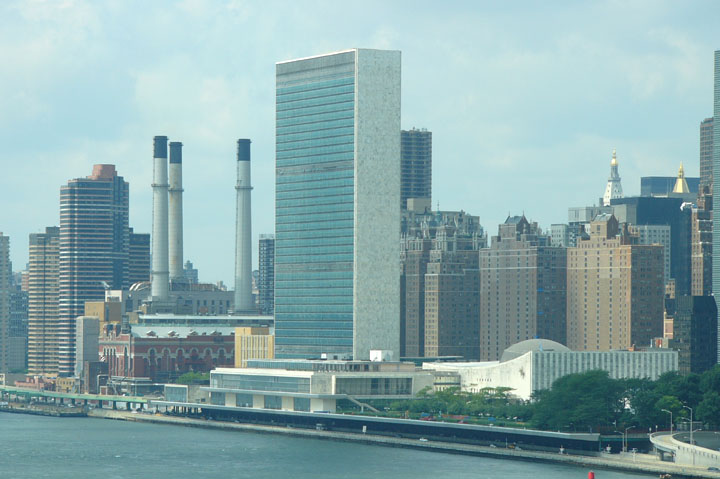
The United Nations headquarters in New York City


The UN Wastes the World’s Money on Non-Refugees

The United Nations currently spends billions of dollars that are earmarked for refugees, to people that are NOT refugees.

As described in “Help Refugees: Shut the UNRWA and Fund the UNHCR,” the United Nations created the UN High Commissioner for Refugees (UNHCR) and tasked it with helping millions of people from around the globe who are fleeing conflict.  The UNHCR helps these refugees find safety in new countries and establishes some infrastructure (temporary homes, hospitals and schools), far from their homes, where they have little support.

However, the UN also created a distinct agency, the United Nations Relief and Works Agency for Palestine Refugees (UNRWA) just for a single group of people – Palestinian Arabs. These Arabs are NOT refugees, but descendants of people who fled their homes and settled a few miles away in the exact same region. Refugee status does not pass down through the generations, and has absolutely nothing to do with people leaving a certain house to a location nearby.

Despite this, the UN has a larger staff and spends significantly more money on these non-refugees.

As the world is facing a true refugee problem, with actual refugees fleeing harm to find protection in lands where they know no one and have no infrastructure at all, it is well past time to shut down the farce of UNRWA which exists solely to perpetuate the Arab-Israeli Conflict, and devote those resources to actual refugees.

Muslim World Must Take in Refugees

The European Union is pushing the US and Canada to accept more refugees, particularly those fleeing the civil war in Syria. The EU argues that it has already accepted the lion’s share of the refugees, and many Europeans have become uneasy with the large influx of foreigners.

But where is the push for Muslim countries to accept more of these Muslim refugees? Aside from Turkey and Jordan, most Muslim countries have not taken any refugees. These refugees fleeing Arab countries like Sudan, Yemen and Libya, and Muslim countries like Pakistan and Afghanistan, could more easily adapt to countries where they share language, culture and religion.  The very wealthy Gulf states could easily take in these refugees.

But the 57 Islamic states will vote at the UN to make the non-Islamic countries take in the refugees, to an unfamiliar environment. Why are so many Muslim countries only making refugees and not helping them? Why does the world enable the situation?

Stop the Flow of Refugees

The biggest causes of the refugee crisis is the civil war in Syria and the growth of ISIS in Iraq. Trailing these are the wars in Afghanistan and Libya, the civil war in Yemen, and the failed state of South Sudan.  These are problems that erupted and spread under the hands-off approach of the Obama administration in the Middle East, and its active involvement in Afghanistan.

The ramifications have spread to the entire world.

Obama did little to nothing when Syria’s President Assad dropped barrel bombs and chemical weapons on his own people. Obama vacated Iraq to allow a vacuum to be filled by ISIS.  After Secretary of State Hillary Clinton toppled the regime in Libya, the US left the country in shambles.  Those decisions allowed terrorists to penetrate Europe.

obama-red-line

It is time to reverse that inaction.

A no-fly zone must be established in Syria to give a safe haven to refugees within their own borders. A real ceasefire must be established to allow the millions of refugees to return to their country.

ISIS must be defeated and the US must remain in Iraq to help the country stabilize.   Active involvement in Libya must happen immediately, before Libya becomes another Iraq.

The only country that has become more powerful under Obama is the state sponsor of terrorism, Iran.

The implementation of Obama’s poor decisions must stop, and refugees should be encouraged to return to their countries as soon as practical.

The United Nations Farce

Over September 19 and 20, the world will witness the dictatorships and human rights abusing-countries dictate to the western world that the West must take responsibility for the failed Islamic states.  The perpetrators will claim victim status, and insist that Europe and North America must both pay for the MENA refugees and shelter them, while the Muslim world itself does nothing.

Well, in fairness, the Muslim world won’t do nothing; it will dictate its demands.

One of the speakers at the summit will be the Palestinian Authority Prime Minister Rami Hamdallah.  Hamdallah is well known to viewers of Palwatch and MEMRI for calling on the Islamic world to attack Israel for chasing the Muslim agitators who curse and throw stones at non-Muslims visitors to the Jewish Temple Mount.  He often asserts that Israel is “Judaizing” their holy city of Jerusalem.  Most significantly, he actively promotes the families of terrorists killed while attacking Jews, ensuring that they receive monies from global agencies.

Yes, that’s illegal, but Hamdallah gets diplomatic immunity while visiting NY.  What a great choice for a speaker!

Another speaker is Pierre Krähenbühl, the Commissioner General of UNRWA, the agency that has waged a multi-decade war against the only democracy in the Middle East. Krähenbühl ignores the role that UNRWA played in storing weapons for Hamas, the terrorist group that runs Gaza.  He focuses on asking the world for yet more money for the non-refugees that live in a land that they already control in Gaza!
dsc_0108
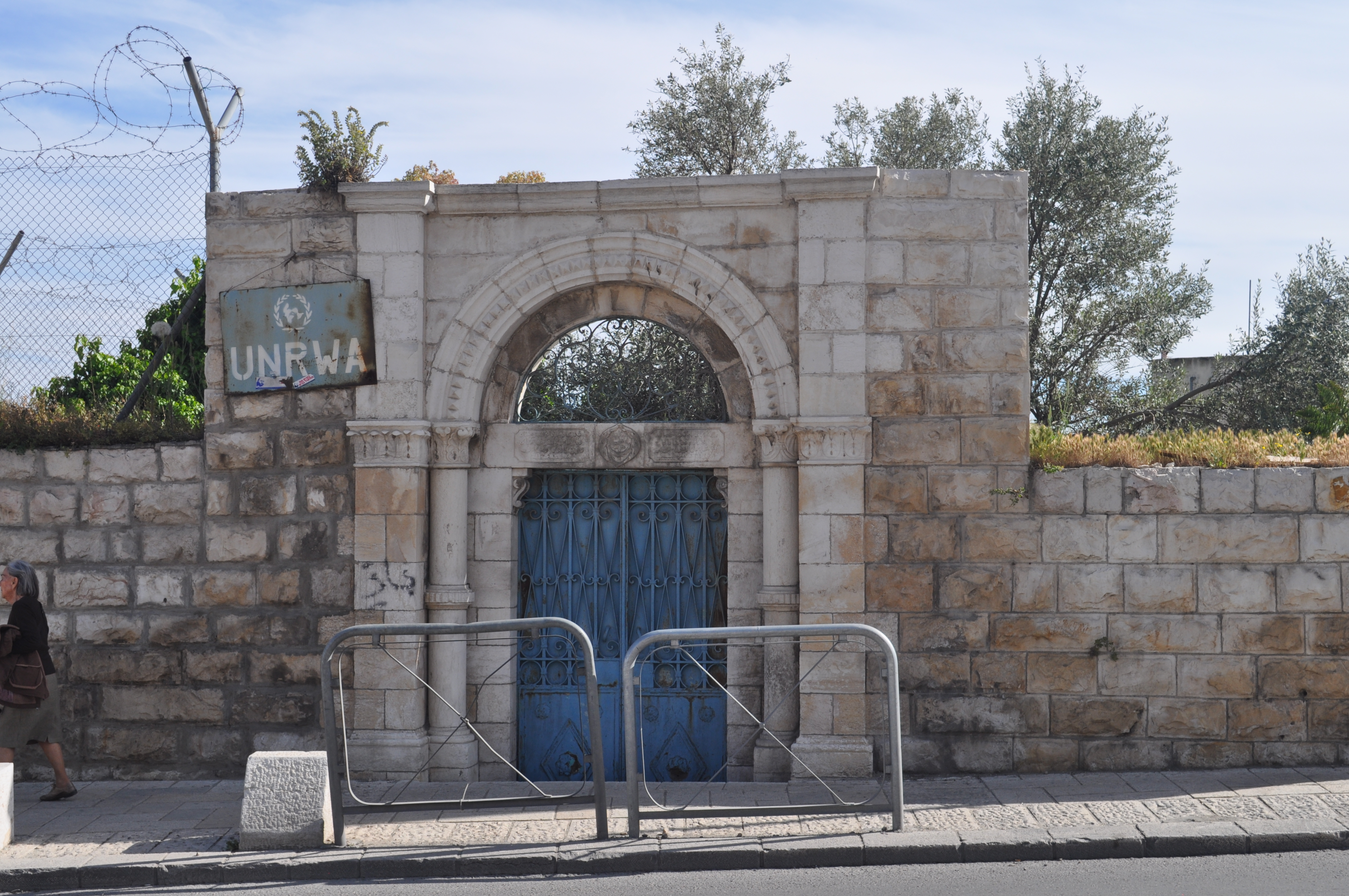
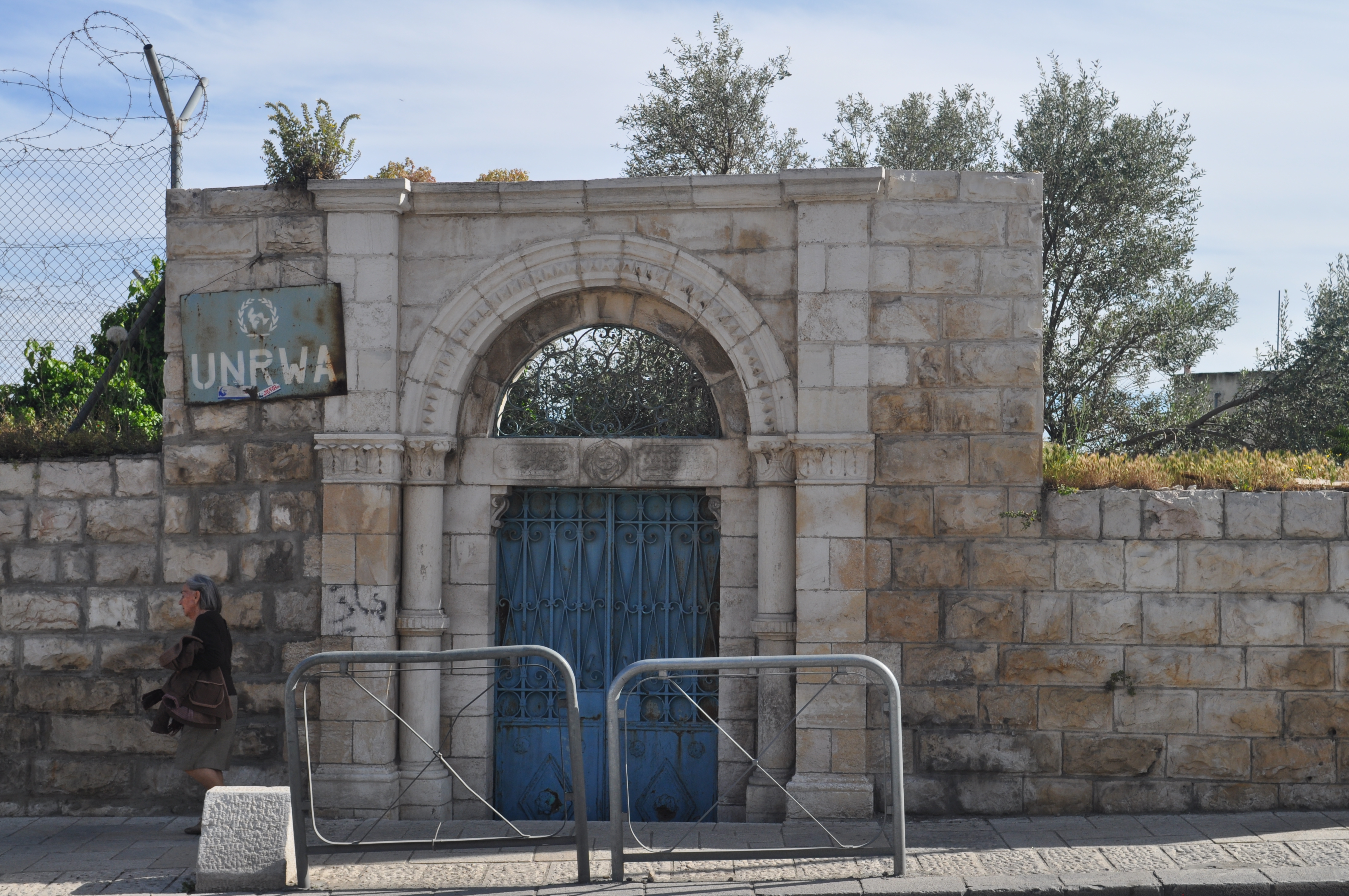
UNRWA office in Jerusalem
(photo: First.One.Through)

While listening to the sad state of refugees, sympathize with their plight, but don’t be fooled by the UN’s recommended courses of action.  Stop the UN farce of perpetuating conflicts and wasting the world’s money, while never demanding accountability from the Islamic countries and entities.


Related First.One.Through articles:

UNRWA’s Ongoing War against Israel and Jews

The Parameters of Palestinian Dignity

The UN Fails on its Own Measures to address the Conditions Conducive to the Spread of Terrorism

A Logical Approach to Immigration from Personal History

The UN is Watering the Seeds of Anti-Jewish Hate Speech for Future Massacres

Cause and Effect: Making Gaza

Palestinian “Refugees” or “SAPs”?

UN’s Confusion on the Legality of Israel’s Blockade of Gaza

A “Viable” Palestinian State

The Parameters of Palestinian Dignity

Subscribe YouTube channel: https://www.youtube.com/user/FirstOneThrough

Join Facebook group: Israel Analysis

The Arab Middle East Makes Refugees, They Don’t Help Them

The Middle East is producing refugees in great numbers, as the civil wars in Syria and Sudan drag on, ISIS takes over large swathes of Iraq, and Libya and Yemen deteriorate into failed states.

The refugees are being welcomed into various western countries including Germany, Sweden and Canada. Just recently, Canada changed its laws under its new Prime Minister Justin Trudeau, to facilitate refugees becoming citizens.

In the Arab Middle East, only Jordan has opened its doors to fellow Muslim Arabs. The Islamic country of Turkey is not Arab, and prefers to act as a way station to refugees in transit to Europe.  The vast Kingdom of Saudi Arabia has not opened its doors. The rich states of Oman, Qatar and Kuwait have done nothing.

syrain refugees jordan
Syrian refugees in Jordan

There is a long history of the Muslim Arab Middle East creating refugees, but not welcoming them.

  • In 1991, after the Palestinians supported Iraq’s Saddam Hussein in his takeover of Kuwait, the Kuwaitis expelled over 300,000 Palestinians. Goodbye.
  • In 1967, after the Egyptians and Syrians threatened to destroy Israel, but ended up losing the war, the countries did not welcome any Arabs from the region into their countries as new citizens.
  • In 1948-9, when the Arab countries surrounding Israel launched an attack to destroy the Jewish State, but failed to do so and consequently helped create 711,000 Arab refugees, they let the people suffer.  While the Syrian government allowed the United Nations to establish refugee camps for the Palestinian Arab refugees inside Syria, it never allowed those refugees or their descendants to obtain work permits to get professional jobs.

And so it continues to this day. While the Islamic State dreams of building a unified caliphate to unite the Muslims of the Middle East, the established monarchies continue to do their utmost to cement divisions.

The Muslim Middle East today is divided between the genocidal jihadists of ISIS who seek Muslim unity by killing anyone not like themselves, and the corrupt, racist monarchies that do nothing to promote unity.

Will the Muslims that flee the insanity of the region adopt western values of tolerance, or will they bring one of these brands of barbarism to the western world?


Related First.One.Through articles:

Help Refugees: Shut the UNRWA, Fund the UNHCR

Palestinian “Refugees” or “SAPs”?

Considering a Failed Palestinian State

The United States Joins the Silent Chorus

A Flower in Terra Barbarus

Subscribe YouTube channel: https://www.youtube.com/user/FirstOneThrough

Join Facebook group: Israel Analysis

Assimilation and Hot Chocolate

Hot Chocolate

This morning, I woke to a sore throat, a broken boiler, and an outside temperature of negative two degrees Fahrenheit. Of course, I immediately went for the Advil, but hot chocolate has the benefit of making my whole body feel better, not just my throat. I slithered to the kitchen.

I do not have a consistent favorite type of hot chocolate. Oftentimes, I use a base of Hershey’s powdered mix to which I add some Valrhona or perhaps some Trader Joe’s Peppermint. This morning? Sick equals peppermint, right?

With my dairy sink pipes frozen, I was still able to use the boiling water from the Sabbath hot water pot left over from the day before. Thank God.

I used a small spoon to mix the steaming hot water with the various mixes. The hot water did a good job of breaking down the powder, but I had a hard time with some small peppermint balls that floated on top. I spun the spoon clockwise. Counter-clockwise. I pushed the stubborn balls down towards the bottom of the mug. Yet still a few minty clumps remained.

Determined, I took the bottom side of my spoon and mashed the remaining puffs onto the side of the mug. They spread there like a bug on a speedy windshield. I scraped the sides into the rest of my drink.

Fortunately, the water had not yet gone cold in my minute battle, and I was able to enjoy my warm cocoa. However, as it was not quite so hot anymore, I downed the mug rather quickly. It was delicious.

As I finished, I looked at the bottom of the mug to find peppermint sediment peppered on the surface. They survived my early onslaught. I grabbed the spoon to scoop them up, and enjoyed the burst of peppermint to cap my morning drink.

hot chocolate

Assimilation

The western world is deeply engaged in discussions about immigrants and refugees. Part of those conversations are about security, but another is related to society’s ability to absorb the thousands of new arrivals. Will they fit in? Will they blend in? What does their arrival mean for the nature of society going forward?

There are some people that are purists and believe that a culture stays fixed forever. They would prefer that their country, say Hungary, remains the same year-in and year-out. The only foreign languages they would hear would be tourists who come for a few days, spend some money, and then leave. No signs would ever be in a language other than Hungarian.  The people will all “look” Hungarian and “act” Hungarian.

The approach in France may be different. There, people may welcome immigrants with different backgrounds, but on the proposition that all of these foreigners will melt into French society. It is permissible to be Algerian upon arrival, but the expectation is to become French over time.

The United States has yet a different approach. It very much supports the idea of a melting pot, and has created an educational system that requires that different parts of society must interact with all others. Yet the country is also fine with the patchwork of distinct cultural identities. Chinatowns and Little Italy’s dot America, even while most Chinese and Italians blend into society at large.


I understand that some people want to have the exact same chocolate without any variety every single day. I think it’s a bit boring, but I’m not mixing your mug.

I also appreciate that some people are happy to incorporate a few flavors into their routines. They diligently try to make sure that everything is mixed so completely that all that is left is a singular blended society. No outliers. As I chase the foreign floaties in my hot chocolate, I sometimes think of myself as one of those people.

But there are times when I am reminded about those stubborn clumps that refuse to blend in. It may not have been part of the initial overall plan, but I am happy that some have remained distinct, as they were, when they folded into the mix.

A famous dim-witted philosopher once said that “life is like a box of chocolates; you never know what you’re going to get.”  Maybe the corollary is that societies are like cups of hot chocolate; some are more blended than others.

I’m happy with mine.


Related First.One.Through Article:

The End of Together

A Native American, An African American and a Hispanic American walk into Israel…

Crises at the Borders

Subscribe YouTube channel: FirstOneThrough

Join Facebook group: FirstOne Through  Israel Analysis

Stabbing the Palestinian “Right of Return”

The “Stabbing Intifada” in which Palestinian Arabs attack Israeli civilians has effectively ended the issue of the Palestinian “Right of Return.”

A Palestinian demonstrator raises a knife, during clashes with Israeli police, in Shuafat refugee camp in Jerusalem, Friday, Oct. 9, 2015. Recent days have seen a string of attacks by young Palestinians with no known links to armed groups who have targeted Israeli soldiers and civilians at random, complicating Israeli efforts to contain the violence, which has been linked to tensions over a sensitive Jerusalem holy site. (AP Photo/Mahmoud Illean)

A Palestinian raises a knife during clashes with Israeli police, in Shuafat refugee camp in Jerusalem, Friday, Oct. 9, 2015. (AP Photo/Mahmoud Illean)

Palestinian Arabs have been arguing for a return to Israel for several decades. They claim that 5 million Palestinian Arabs are have a legal right to move to Israel as declared by the United Nations. The claim has always been flawed:

Refugees: As detailed in “Palestinian Refugees or SAPs,” the definition of a refugee is someone who leaves a country, not a land. Under the most generous definition of “refugee,” there are only 30,000 Arab refugees alive who left Israel after the country was created in 1948-9. The 5 million descendants of various refugees who left Israel before the country was created are provided services by the United Nations, but are not refugees entitled to a “right of return.”

Live in Peace: The basis of the Palestinian Arab claim for the right of return under international law stems from UN General Assembly Resolution 194 which stated “refugees wishing to return to their homes and live at peace with their neighbours should be permitted to do so at the earliest practicable date, and that compensation should be paid for the property of those choosing not to return and for loss of or damage to property which, under principles of international law or equity, should be made good by the Governments or authorities responsible.”

The phrase “live at peace” is the core of being able to move to Israel. No one will be entitled to any compensation or consideration without the clear intent of living in peace with Israelis in the Jewish State.

According to an Anti Defamaition League poll in May 2014, almost every Palestinian (93%) was considered an anti-Semite. Not a good place to start for moving to the Jewish State and living in peace.

In December 2015, Palestinians conducted their own poll of Arabs in Gaza and the West Bank about the “stabbing intifada” against Jews. It concluded that “two-thirds support an armed intifada and the current wave of stabbings.

Based on the estimate of 30,000 Arab refugees alive today, the poll would imply that only one-third, or 10,000 would potentially be interested in living in peace with Israelis (if not killing someone would be used as the barometer of “living at peace”).


The number of Arab refugees from Israel is now declining rapidly as they enter old age.  It appears that the stabbing intifada will not only delay any chance for peace between Israelis and Palestinian Arabs, it will also guarantee that one of the points for negotiation will no longer be relevant.


Related First.One.Through articles:

An Inconvenient Truth: Palestinian Polls

“Peace” According to Palestinian “Moderates”

Palestinians are “Desperate” for…

UNRWA’s Ongoing War against Israel and Jews

Help Refugees: Shut the UNRWA, Fund the UNHCR

The Israeli Peace Process versus the Palestinian Divorce Proceedings

Subscribe YouTube channel: FirstOneThrough

Join Facebook group: FirstOne Through  Israel Analysis

A Logical Approach to Immigration from Personal History

President Barack Obama and various religious groups stated their strong support for bringing fleeing Syrian refugees into the United States in the fall of 2015. In their effort to convince other Americans of the justice of bringing in those fleeing wars in the Middle East, they drew an analogy to the Holocaust and the ship the MS St. Louis which was turned away from Cuba, the United States and Canada and sent back to Europe, where the Jewish passengers perished in concentration camps.

For their part, various Republicans stated their opposition to admitting so many refugees at this time due to security concerns. They dismissed the analogy to the Holocaust for multiple reasons including the principal facts that in the past there was no terrorism going on in the United States, and the Jews in Europe were ordinary civilians not bearing any arms or involved in any fights.

europe-migrants-greece
Syrian refugees arrive on the Greek island of Kos
August 2015 (photo: Yannis Behrakis/Reuters)

There is room for an honest conversation and approach. Here, I lay out my family’s path to America and lessons that could be applied to refugees today.

Coming Alone

My paternal great-grandfather came to the USA from Russia in 1904.  He fled the various pogroms that were going on in Russia over many years, including the significant Kishinev Pogrom in 1903.  He set out for America alone via Great Britain.  Once he established himself in New York City, he sent for his wife and two children to join him in their new home nine months later.

Many other Jews were leaving Russia during those years for the United States.  The USA was also admitting many Irish, British, Scandinavians, Italians, Hungarians, Germans and Austrians at the same time.  Each group spoke a different language and they all needed to adopt to the common language and culture of America.

And they did.

Fleeing en Masse

My maternal grandmother fled Austria with her immediate family after Kristallnacht in December 1938.  They were part of an enormous wave of Jews fleeing Europe in those months before the start of World War II.

The whole family fled at one time.  Before coming to the US, they were sent to Cuba where they were vetted and processed.  My grandmother and her two children were allowed to travel to New York three months after their arrival, however, her husband was not permitted to join them right away.  My grandfather waited in Cuba for over a year while the US vetted his background, and protected the jobs and security of Americans by slowly introducing thousands of men.

He waited in Cuba with hundreds of other men in the same predicament.

Lessons for Today

When my paternal great-grandfather came to America in 1904, he was part of a wave of immigrants coming to the US for a variety of reasons from a variety of countries.  Over five decades (1880-1930), the US more than doubled its population (from 50 million to 123 million), while the percent of foreign-born people in the country grew to a high of 15 percent.

The situation today is different:

  • Many foreign-born Americans today. Today, the United States is already at a 15% foreign-born population, the highest level in 200 years. Will such a huge and growing percentage hurt the US economy as they migrate into the workforce? Consider that 100 years ago the country was expanding and there were many jobs for manual labor; today the job market requires more skills and technical expertise.
  • Concentration of New Immigrants’ Culture. The immigrants that are coming today do not speak dozens of different languages (Hungarian; Russian; Italian; Swedish; English; German; etc.), but predominantly, just one: Spanish.  Such a large concentration has hurt Spanish integration into American society where many communities remain Spanish-speaking only or bilingual, at best.  The US instituted affirmative action programs uniquely for these Spanish-speakers, while no other immigrant group is afforded such assistance.  Will a large concentration of new Arabic speakers create another permanent sub-group in the US?
  • Current Battlefield.  The United States has been targeted by various radical Islamic groups.  When the MS St. Louis was turned away in 1939, America was not attacked and not at war.  The battlefield is now here.  Therefore, it is more time-sensitive and important to sort those fleeing harm in the Middle East, from those that intend to harm the United States.

The US should indeed consider the history of Jews fleeing Europe before WWII, but appreciate the differences when it is now considering the admittance of refugees from Syria, Afghanistan and Iraq.

The current refugees are using the methodology of my paternal great-grandfather and sending men before the rest of the families.  According to the UNHCR, 62% of current immigrants in the Mediterranean area are men. They are fleeing into Turkey and then quickly spreading throughout Europe.  That is a bad and potentially dangerous situation and the US should pivot to a more logical approach:

  • Processing: When refugees come en masse, it is important to have a place to process the people. Displaced Person camps are not a new phenomenon. The various Islamic countries which are allies with the US such as Saudi Arabia and the other Gulf states should not only permanently settle many of their fellow Arabs and Muslims, but should establish DP camps so there is time for other countries to appropriately vet those fleeing harm, while keeping the refugees out of harm’s way.
  • Woman and children first. While not all men are terrorists, the vast majority of terrorists are men. As in the 1930s, women and children should be admitted first while extra vetting is done on the men.  Canada has taken such approach.  In addition to giving time for more extensive background checks, it allows the country to more gradually introduce a large number of adult men into society.

Most men are not terrorists and most Muslims are not terrorists.  But the majority of people attacking the US and its allies are Muslim men.  Proper time and attention is needed to protect people.

Jews from Europe in the 1930s went through a long process of coming to America.  The lesson of WWII is not simply to not turn back refugees to the place where they are fleeing like America did with the MS St. Louis. It is also to use a system to effectively admit refugees.

All governments must take appropriate steps to ensure the safety of its citizens as it welcomes new immigrants.  It is shameful that there is finger-pointing and name-calling from both Democratic and Republican parties as the country attempts to welcome those fleeing war and prosecute those seeking war.

We should incorporate the best suggestions of both parties to help the refugees while placing priority on protecting Americans.


Related First.One.Through articles

The Explosion of Immigrants in the United States

Crises at the Borders

Help Refugees: Shut the UNRWA, Fund the UNHCR

Subscribe YouTube channel: FirstOneThrough

Join Facebook group: FirstOne Through  Israel Analysis

Abraham’s Hospitality: Lessons for Jews and Arabs

The biblical portion of Vayera showcases stories of the patriarch Abraham welcoming strangers. The stories of Abraham’s hospitality became incorporated into the ways that the children of Abraham think of themselves today. However, the nature of the hospitality of Arabs (descendants of Abraham’s son Ishmael) and Jews (descendants of Abraham’s son Isaac) diverge in many ways.

Giovanni_Andrea_de_Ferrari_-_Abraham_and_the_Three_Angels
Abraham and the Three Angels
by Giovanni Andrea de Ferrari (1598-1669)

Man and God

Jewish perspective: Judaism prides itself in being a religion of actions, not faith. God gave the Jewish people 613 commandments to follow, some of which are active (make the Sabbath holy) and others that are passive (don’t kill). A division could also be made of laws between people (like murder) and those between man and God (like the Sabbath).

A casual observer of religions would imagine that laws about God would take precedence to laws about people.  The Jewish organization Limmud, posted an article about Vayera, which argued the opposite.

During the story of Vayera there was an encounter between Abraham and God. In the middle of the conversation, Abraham asked God to wait so he could welcome three strangers that were passing his tent. The author of the Limmud article, Jeremy Rosen argued that Abraham’s action taught Jews a lesson for today, “that however primary God is, there are certain types of human crises or obligations that are so important that one can actually tell God to wait. In the end religion must enhance our relationship with other humans.

Islamic perspective: The website “OnIslam” is dedicated to educating Muslims on a variety of subjects. An article on hospitality and the “joy of honoring others” made a clear effort to differentiate between the kind of hospitality that Muslims extend, and those of non-Muslims. The true concept of hospitality is not something that is widely practiced in most non-Muslim countries. For many non-Muslims, the entertainment of guests is of primary importance in many cases for worldly reasons only, not rooted in real hospitality for the sake of God. In Islam, however, hospitality is a great virtue that holds a significant purpose. Being hospitable to neighbors and guests can increase societal ties as well as unite an entire community. Most importantly, God commands Muslims to be hospitable to neighbors and guests. There is a great reward in doing so. Hospitality in Islam is multi-faceted and covers many different areas in addition to the hospitality that we show guests who visit our homes.”

In Islam, hospitality is performed because it is commanded by God. The act of hospitality may have benefits of creating communal harmony, but it is a derivative of the second degree. The primary obligation is to follow God’s command, and He commands all Muslims to be hospitable. God’s command leads man to action, and such action may, in turn, lead to friendship and social cohesion.

The difference in the approach of the religions is both subtle and significant. Judaism has a value system of helping others. Welcoming a stranger takes precedence to a direct conversation with God. In contrast, Islam focuses on obedience to God’s commands. Hospitality happens to be one of those commands and is therefore performed – within the bounds of religion.

Hospitality Today on a National Level

It is interesting to look at the nature of hospitality on a national level and how the one Jewish State handles hospitality compared to various Muslim countries (note that there are many Muslim countries, like Turkey, Malaysia and Indonesia, that are NOT Arab and descendants of Abraham).

Welcoming Refugees
Israel: Israel has an incredible record when it comes to welcoming Jews from around the world. Whether in bringing Jews that were persecuted in the Arab world in the 1950s, or Russian and Ethiopian Jews in the 1990s, Israel took in so many Jews from around the world, that they dwarf the number of European Jews who came to the country due to persecution in Europe during the 1930s and 1940s.

Those Moroccan, Yemenite, Ethiopian and Russian refugees received Israeli citizenship immediately. They got housing and job training. They had teachers to teach them a new language (Hebrew) and lessons about incorporating into a society that was completely foreign to their old way of living.

Arab/ Muslim Countries: The Middle East has witnessed a large number of wars and corresponding waves of refugees fleeing the battles. Many Arab countries did not welcome their fellow Arabs.

  • When Arabs left the British Mandate of Palestine to Lebanon and Syria in 1948-9, they were forced to live in refugee camps. They were not offered citizenship nor given an opportunity to have white color jobs. Those conditions continue for their children and grandchildren almost 70 years later.
  • When the PLO sided with Iraq when Iraq invaded Kuwait in 1991, Kuwait expelled roughly 360,000 Palestinians that were living there.  Fellow Arabs that were neighbors for 75 years were evicted en masse because of the actions of people hundreds of miles away.
  • Most recently, the millions of Arabs fleeing the civil war in Syria, and ISIS in Iraq have been shut out of the wealthy countries of Saudi Arabia; Qatar; Bahrain; United Arab Emirates and Kuwait.  Westerners may wonder how these oil rich countries are not embarrassed to refuse to welcome fellow Arabs, especially as Europe and America open its doors.  Only Lebanon, Jordan and Turkey (Muslim, but not Arab) have shown these refugees Islamic hospitality.

Welcoming “Others”
Israel: The phrase in the bible “love thy neighbor as thyself” (Leviticus 19:18) has been interpreted by various scholars as both a model for treating fellow Jews and for interactions with all of mankind.

  • When Israel declared independence in 1948, it granted 160,000 non-Jews citizenship.  When Israel reunited Jerusalem after Jordanian and Palestinian Arabs attacked it in 1967, it offered citizenship to all non-Jews.
  • When Menahem Begin became prime minister of Israel in 1977, he brought in and gave citizenship to roughly 300 Vietnamese people fleeing their country.
  • Today the country is grappling with how to deal with Eritrean and Sudanese asylum seekers as many Israeli Jews believe in the principal of hospitality, even while the government considers issues of safety.

Arab/ Muslim Countries: The Arab countries do very poorly in regards to their hospitality with non-Muslims.

  • When Jordan seized Judea and Samaria in 1949, it expelled all of the Jews in the area and forbade them from even visiting their holy sites in Jerusalem.
  • Today, Mahmoud Abbas has laws preventing the sale of any land by Arabs to Jews and has demanded a new country to be established devoid of Jews.
  • After Israel was founded, the Arab countries forced over 850,000 Jews to flee their homes where they had lived for generations.

Helping Others
Israel: Israel has a reputation of rushing to assist countries around the world suffering from natural disasters.  Whether from earthquakes in Turkey or Haiti or tsunamis in the Pacific Ocean, Israel is on the scene with disproportionate numbers with life-saving assistance.

Arab/ Muslim Countries: The Arab world typically does not send much assistance to countries in need.  That fact is surprising since it is a core tenant of Islam.  OnIslam states: “In Islam, hospitality extends well beyond the walls of the home. Being hospitable also means having good manners and treating others with dignity and respect. Hospitality can be applied to the greater community and Muslims must strive to help out whenever there is a time of need. Natural disasters, for example, often result in community turmoil as residents grapple with the aftermath. This provides Muslims with an excellent opportunity to pitch in, whether delivering hot meals to those affected or donating gently used items to someone who has lost everything.”

However, the Charities Aid Foundation did rank some Islamic nations among the most generous in the world, including: Malaysia; Indonesia; and Iran in the top 20.  However, none of those three countries is Arab.  Israel, the Jewish State, ranked number 32.


Abraham taught Jews and Arabs about the importance of hospitality.  Each group interpreted his acts of kindness through their respective prophets and teachers over the centuries, with Jews extracting a primary value of the kinship of men, while Muslims placed hospitality as just one of God’s commands to be observed.  Jews learned a life-lesson from Abraham; Arabs stifled that more human example and took the message of hospitality from the Quran.

The children of Abraham – the Jewish State and the Arab states – should all be mindful of the importance of hospitality in their dealings today.


Related First.One.Through artices:

The End of Together

Joint Prayer: The Cave of the Patriarchs and the Temple Mount

Subscribe YouTube channel: FirstOneThrough

Join Facebook group: FirstOne Through  Israel Analysis

Delivery of the Fictional Palestinian Keys

Summary: Imagine perceiving the future when you cannot see the present nor recognize the past.

One of the most famous paintings in the Sistine Chapel in the Vatican is by Pietro Perugino, entitled “Christ Handing the Keys of the Kingdom to St. Peter.” The painting itself is notable for several important contributions to the world of art such as displaying three dimensions using linear perspective and a vanishing point. The subject matter is also an interesting metaphor for the Israeli-Palestinian conflict today.

keys

The Painting

The subject of the painting reflects the establishment of the role of the pope in Catholicism. Jesus’s handing of the “keys of heaven” to his disciple Peter was considered establishing a connection between earth and the heavenly realm.

The center of the painting focuses on the actual handing of the keys: one key is held by Jesus, while a second key remains dangling in the foreground. The viewer does not really notice two keys, but the single dangling key. From that key, eyes are drawn up towards the open doors of the Temple of Solomon, displayed as an interpretation of the eight-sided Dome of the Rock. This is a metaphor of the connection between the divine to the physical and up again to the divine: the keys connecting Jesus and Peter, and then the dangling key from Peter to the Temple.

In the painting, the Temple of Solomon is sitting on a plaza surrounded by people and triumphal arches of Constantine. It was the emperor Constantine that welcomed Christianity to the Roman Empire in 325CE. While the Temple of Solomon sat in Jerusalem, these arches were in Rome, near the Vatican.  By integrating these themes, Perugino brought Jerusalem to Rome and had Christianity flanking the holy Temple.

 The Metaphor of Keys

Keys are often used as metaphors in art and poetry. Keys are not only tools for gaining access, but connote ownership. The holder of the key is considered both the rightful owner of whatever is locked, and is the sole person who has the means of gaining access to whatever the lock has sealed. In the case of this famous painting, Jesus holds the heavenly key in gold, which is paired with a darker key for Peter. The twining is a partnership bridging heaven and earth, with Peter as the rightful owner of the earthly key. The key itself opens the Temple in Jerusalem, the physical gateway back to heaven.

The brilliance of the painting lies in the suspension of the dark key. Set against a plain background in the center of the painting, a viewer has no choice but to be drawn to it. The key anchors the focus, and the story is built around it.

The Israeli-Palestinian Conflict

The Middle East has a long history of using keys, both physical and metaphorical. In 1917, the Mayor of Jerusalem handed over “keys of Jerusalem” to British General Allenby as a sign of surrender, and in 1841, the Ottomans handed the keys to Rachel’s Tomb in Bethlehem to Jews as a symbol of their control of the holy site. Even today, the Church of the Holy Sepulchre has a key that is held by a Muslim family as was the tradition dating back to 1246, even though the church has no religious significance to Islam.

Many Palestinians carry their own physical keys with symbolic messages today: that they are the rightful owners to homes in Israel and are waiting to move there.

keyboy

The skeleton keys are not the actual keys to homes that grandparents abandoned in 1948 while they waited for Arab armies to destroy the nascent Jewish State.  These Palestinian keys are representational of their quest to a “right of return” to homes in Israel. It has become a physical manifestation of their view of themselves as refugees. However, both the keys and status are manufactured.

As detailed in “Palestinian “Refugees” or “SAPs”?” there are only about 30,000 refugees (or more accurately, Internally Displaced Persons) alive from 1948, as refugee status cannot be handed down like an inheritance. Further, a refugee is someone who left a country, not a house. International law covers refugees return to a country, not an abandoned building (and Palestine was never a country).

Regardless, the acting President of the Palestinian Authority, Mahmoud Abbas, continues to put the “refugees” as a key issue in negotiations with Israelis. He does this with the blessings of the United Nations which is complicit in misleading the Palestinians.

The United Nations not only created a unique agency for Palestinian refugees (UNRWA) separate from the organization that handles all other refugees in the world (UNHCR), but uniquely enables the descendants of Palestinian refugees to get services from the UN.  As elaborated in “Help Refugees: Shut the UNRWA, fund the UNHCR” the staffing of the UNRWA now exceeds the total number of Palestinian refugees.

The larger issue with UNRWA is not their giving extended services to millions of Palestinians who are not refugees, but the UN agency’s active encouragement of Palestinians to seek to move to, and delegitimize Israel.

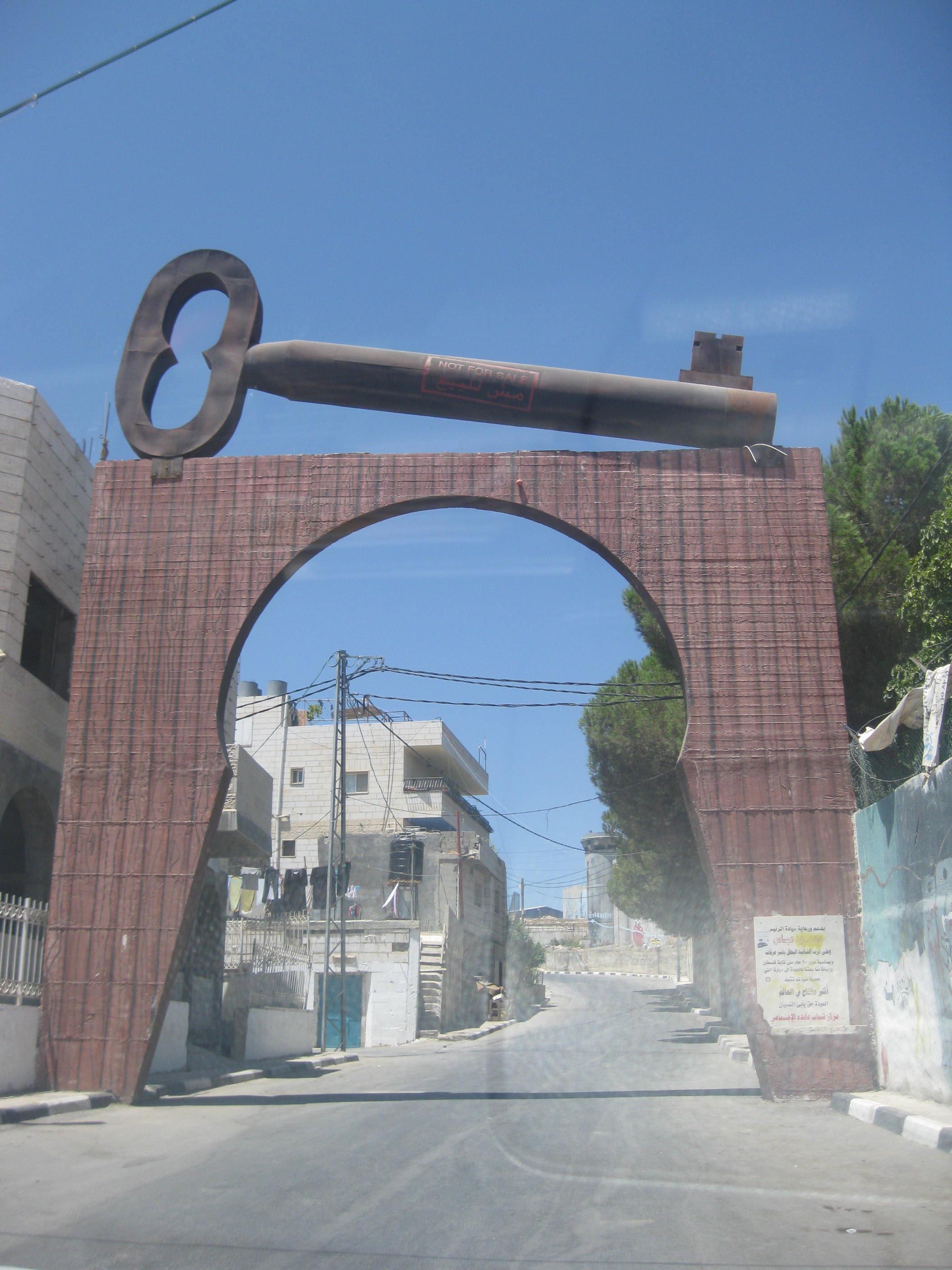
key doorway
Entryway to UNRWA camp in Bethlehem with a large key atop

Both the United Nations and Palestinians have manufactured a particular narrative:

  • Palestine was an Arab country in 1948
  • Palestinian Arabs were the only indigenous people who had lived there for centuries
  • Jews ethnically cleansed Palestine of its Arab inhabitants
  • Per the points above, Israel is not a legitimate state as the Jews are interlopers who stole the native Arab land

Such story stands in stark contrast to basic facts:

  • Palestine was never an independent country
  • The region and Mandate of Palestine had a mixture of Jews and Arabs, with Jews accounting for over 30% of the population in 1948
  • More Arabs than Jews moved to Palestine under the British Mandate 1922-1948
  • Many Palestinian Arabs were not land owners but tenants in the land
  • Most Arabs fled from their homes in 1948, while they hoped and waited for Arab armies from Jordan, Lebanon, Syria, Iraq and Egypt to destroy Israel
  • Israel welcomed non-Jews, giving 160,000 non-Jews citizenship in 1948, in sharp contrast to the Jordanian and Palestinian Arabs who expelled all Jews from Judea and Samaria

As in the painting “Delivery of the Keys,” UNRWA has  handed Palestinians a narrative and claim to Israel: the Arabs are the rightful owners of Israel. The United Nations paints these “refugees” against a bleak background (like the key in the painting) to emphasize their stateless position. The key above the portal at the UNRWA camp is a potent symbol to all Palestinians, that it is through the United Nations that millions of Arabs will migrate to Israel. UNRWA and the Palestinians have established a pairing of keys like Jesus and Peter in the painting above: Palestinian Arabs are the owners of Israel, and the gateway to getting that land is through the United Nations.

The Vanishing Point

The vanishing point is where eyes are drawn to in the horizon.  It is a place where parallel lines converge giving depth to a two dimensional painting.  It is also the point where things become increasingly smaller and faint, disappearing altogether.

In the Perugino painting, the vanishing point is the open door to the Temple of Solomon. It is this worldly portal to the heavens, where man’s prayers ascend to ethereal songs.  The viewer of the painting is pulled to the very spot where the material world melts – indeed, the vanishing point.

Today, a person could look at the artwork with another perspective.

The Temple of Solomon, the most holy place on earth for Jews, is replaced with an Islamic shrine.  The Temple, and Jewish presence has seemingly disappeared.  In this Christian piece of art, the flanking of Constantian arches and Jesus and Peter in the foreground are meant to underscore that the pope and Christianity are the proper pathways to God. Judaism has faded to Islam, and both are replaced by Jesus’s emissary.

Over Jerusalem Day 2015, the vanishing point added an additional dimension.

The current pope, Pope Francis, canonized two nuns who were born in the holy land in the 1840s, while it was part of the Ottoman Empire. One nun was born in Jerusalem and another was born in the Galilee.  Yet the pope decided to refer to these nuns as “Palestinians,” not Ottomans and not Israeli (while the status of Jerusalem is under debate, the only people that consider the Galilee part of Palestine are Hamas-supporters who seek the destruction of Israel).  If one chooses to be generous and argue that the region was called Palestine in the 1840s, does the pope refer to people from regions like the Sahara (Saharans?), the Rockies (Rockies?) or Patagonia (Patagonians?), or does he call them Libyans, Americans and Chileans?

Is the pope seeking a new replacement theology, where not only has the Vatican replaced Jerusalem as the center of divine revelation, but history itself can be updated? Is Israel being supplanted today the way the painting at the Vatican shows Judaism being replaced?

The news media has certainly rallied to such vision.  The New York Times decided to cover the celebrations of Jerusalem Day on May 17, 2015 from a purely Arab point of view.  The day in which Israelis celebrate the reunification of their holiest city from which they were expelled and barred from reentry was characterized as a moment of protest. The atrocities committed by Jordanian and Palestinian Arabs during 1949-1967 vanished and this year’s celebration was mocked.

The Times questioned the very essence of Israeli rights to Jerusalem as it quoted a Palestinian man ““How would you feel if somebody marched through your living room, without your permission?””  Whose house is this anyway?


A Vanishing Point has interesting features: our eyes are drawn there; but the subject matter blurs and disappears.

The world’s attention is focused on the Middle East and the Arab-Israeli conflict. Jews and Palestinian Arabs are focused on Jerusalem and the Temple Mount.  As they do, Palestinians grab hold of the dangling key and Israelis don’t see the golden key in their hand. Everyone wonders what the future will bring and ventures predictions as they gaze into the distance.

And as they do so, all reality disappears.


Related First One Through articles:

In Israel, Everybody’s New

The Holocaust and the Nakba

The Arguments over Jerusalem

“Arab” Land

Help Refugees: Shut the UNRWA, Fund the UNHCR

The Fleeing Refugees

There is a mass migration occurring in the MENA region (Middle East and North Africa). People are fleeing their home countries due to turmoil and are crossing land and sea to escape to more stable societies.

  • Fleeing Syria: Over 3 million people have poured into Lebanon, Jordan, Turkey and Egypt;
  • Fleeing Libya: 100,000 have crossed the Mediterranean towards Italy and southern Europe;
  • Fleeing Iraq: Iraq is now hosting people fleeing Syria, while simultaneously, watching thousands of its own citizens flee from ISIS

The new host countries are attempting to find solutions for the flood of new people, many which do not speak the language and lack professional skills. The United Nations is working to assist these countries handle the millions of new people who need shelter, food, clothing and education for an indeterminate amount of time.

The UNHCR, the United Nations High Commissioner for Refugees, is currently staffed with 8600 people handling 34 million refugees from 125 countries. The number of refugees continues to swell each day and hundreds of others die before they even reach safety. In 2014 alone, an estimated 2900 refugees died in transit. In 2014, UNHCR estimates that it will assist over 41 million people. Its biennial budget is $5.3 billion.

The Swell and Permanence of UNRWA

Meanwhile, the UNRWA, the United Nations Relief and Works Agency, has continued to stretch its “temporary” existence for 66 years. This distinct refugee agency for Palestinians manages virtually no refugees anymore, but instead handles services for 5.4 million children, grandchildren and great grandchildren of people who left Palestine in 1948.

The UNRWA staff stands at 30,000, or 3.5 times the staff that the rest of the world gets for actual refugees. It services only 13% of the people that UNHCR assists.

Unlike the refugees serviced by UNHCR, the Palestinians speak the language and have skills. The UNRWA infrastructure and systems have been established for decades. Yet, the UNRWA biennial budget is over $2 billion, or $370 per person serviced compared to $130 for each UNHCR refugee who needs real and immediate services and infrastructure such as shelters, medical facilities and schools.

Almost every UNRWA worker is a Palestinian. The few Europeans that occupy the senior positions and act as the face of the organization mask the reality that the organization is simply an employment agency for Palestinians that runs schools and medical facilities in Gaza, West Bank, Lebanon, Syria and Jordan. As UNRWA writesStaff costs constitute the bulk of UNRWA’s budget. This is because the day to day direct delivery of services requires a large number of staff (some 29,000). Efforts to maintain parity with host authorities’ public sector salaries render the Agency’s financial sustainability susceptible to economic volatility”. (In other words, when Jordan gives its public sector unions a 5% raise, the entire world gives the Palestinian UNRWA workers a raise too.)

UNRWA continues to extend its life and grow its mission. Per the UNRWA documents, the agency “has evolved over time in response to developments in the operational context, extends at present to providing education; health; relief and social services; microfinance and emergency assistance to refugees; infrastructure and camp improvement within refugee camps; and protection.”

The mission of the agency, in short, is no longer to have temporary workers in temporary hospitals assist a defined number of people for a temporary period of time. It has become a conduit for the global community to pay generations of Palestinians to care for themselves.  As Queen Rania of Jordan put it elegantly “UNRWA is a way of living.

DSC_0109
UNRWA Office just south of the Temple Mount

The Abuse of UNRWA

UNRWA’s evolving mission has distanced itself from core relief operations (as offered by the UNHCR) and the tone and tenor of the organization has come to mimic Palestinian society at large.  For example, UNRWA has come under repeated fire for its actions related to Jews and Israel.

During Operation Protective Edge, UNRWA schools extended the meaning of their new mission of “protection”.

  • UNRWA housed Hamas missiles in its schools;
  • It handed those missiles to Hamas while it was in active combat;
  • It watched as Hamas fired rockets into Israeli civilian areas from its courtyards.

Long ago, UNRWA stopped being an independent relief agency, but has morphed into a Palestinian agency with its own agenda, courtesy of funding by the global community.

Ending UNRWA

The Palestinians and the global community have been co-conspirators in a permanent welfare situation for over six decades. Meanwhile, there is a true humanitarian crisis around the MENA region which is underfunded and understaffed. It is time to transition to a new paradigm for each area in which UNRWA operates.

Lebanon and Jordan: Each country has been over-run with actual refugees from Syria and Iraq. These refugees sit in squalor and receive a fraction of the aid that the Palestinian permanent residents receive. It is unfair and outrageous. The UNRWA should hand over all of its operations to the host countries of Lebanon and Jordan. The incremental cost of carrying these facilities should be carried by each country, with a UN contribution made at the country-level which declines over time. At the same time, additional monies should go towards infrastructure for the new actual refugees.

Syria: As the country is still engaged in a civil war, the UN should still maintain operations until hostilities end.

West Bank and Gaza: If the UN truly considers Palestine a country, by definition there can be no Palestinian refugees or SAPs (Stateless Arabs from Palestine) in Palestine. And whether it is or isn’t, all UNRWA facilities should be handed over to the government. The UN will likely give monies to the government as part of establishing and stabilizing the country, which would help cover the cost of the former UNRWA facilities.


The world’s focus on the descendants of Palestinians who left their homes 66 years ago has hurt millions of refugees from around the world. In today’s particularly violent and unstable situation in dozens of countries, the United Nations must transition from spending billions of dollars in welfare checks to capable young SAPs, and direct funds to the millions who are fleeing their home countries due to war and violence.


Sources:

Dying in transit: http://news.nationalpost.com/2014/09/17/how-smugglers-bring-desperate-migrants-across-the-mediterranean-only-for-thousands-to-die-at-sea/

Syria refugee count: http://data.unhcr.org/syrianrefugees/regional.php

Libya refugees: http://www.voanews.com/content/thousands-of-refugees-coming-on-boats-from-libya-italian-navy/1960126.html

UNHCR staffing: http://www.unhcr.org/pages/49c3646c2.html

UNHCR budget: http://www.unhcr.org/523ab6bd9.html

UNRWA: http://www.unrwa.org/resources

UNRWA budget and mission: http://www.unhcr.org/523ab6bd9.html

Queen Rania on UNRWA: https://www.youtube.com/watch?v=7N1mfw4PKg4

Missiles in UNRWA schools: http://www.timesofisrael.com/rockets-found-in-unrwa-school-for-third-time/


Related First One Through articles:

Palestinian “Refugees” or “SAPs”

Delivery of the Fictional Palestinian Keys

“Please Sir, May I have Some More?”


Palestinian “Refugees” or “SAPs”?

Wards of the World The well-know secret (but not discussed, as honesty is considered impolite in politics) in the halls of governments around the world is that there are currently only 30,000 Palestinian refugees as defined by the United Nations. That definition states:

Palestine refugees are defined as “persons whose normal place of residence was Palestine during the period 1 June 1946 to 15 May 1948, and who lost both home and means of livelihood as a result of the 1948 conflict.

This generous definition of “refugee” ignores some basic points:

  • There were hundreds of thousands of “Palestinians” who moved to the region of Palestine from around the Arab world during the British Mandate prior to June 1946. They were newcomers, not indigenous people;
  • A “refugee” is defined as someone who is forced to flee a country, not a house or town. Palestine was not a country, but an administered region under the British Mandate;
  • Many of these “refugees” did not flee at all, but left on their own free will;
  • Many of the “refugees” were renters, not land-owners

Today, the United Nations refers to 5 million Palestinian “refugees”. These are not refugees, but descendants who voluntarily registered to receive aid from the “temporary” United Nations agency. UNRWA, the United Nations Relief and Works Agency, made these services available on a longer term basis when it appeared that the Israeli-Arab conflict would continue for many years:

UNRWA services are available to all those living in its area of operations [Lebanon, Syria, Jordan, West Bank and Gaza] who meet this definition, who are registered with the Agency and who need assistance. The descendants of Palestine refugee males, including adopted children, are also eligible for registration.”

UNRWA enabled people to register for services, not to register as a “refugee”. A person can no more register to be a refugee than to register to be a different gender or race. A person is either a refugee or is not- but cannot volunteer to sign up as one. Today, there are roughly 11 million Arabs who claim to have Palestinian heritage. The majority (55%) of them are citizens in new countries such as Chile, the United States and Israel. They have productive lives like many families from around the world. They call themselves Arab Chileans, Arab-Americans or Israeli Arabs. There are roughly 5 million Arabs who live in Lebanon, Syria, Jordan, West Bank and Gaza who have opted to take aid from UNRWA. Unlike relatives that made new lives and became citizens around the world, they decided to become SAPs, Stateless Arabs from Palestine. They accepted a beggar’s bargain which left them without a country in exchange for becoming wards of the world. In 2014, of the 11 million Palestinians:

  • 0.3% are Palestinian refugees who can make a claim of actually being displaced 66 years ago;
  • 55% have taken citizenship around the world;
  • 45% have elected to be SAPs, to live on the world’s charity and complain about their lack of dignity. 2.16 million people in Gaza and the West Bank currently receive aid from UNRWA, and another 3.1 million in Lebanon, Syria and Jordan

Source: http://www.unrwa.org/palestine-refugees Refugee definition, http://www.merriam-webster.com/dictionary/refugee

  • someone who has been forced to leave a country because of war or for religious or political reasons” (not a descendant)

US Senate defining 30,000 Palestinian refugees http://www.clarionproject.org/analysis/30000-or-5-million-real-number-palestinian-refugees

UNRWA statistics: http://www.unrwa.org/userfiles/2013042435340.pdf


Related First One Through article:

800,000 Arabs moved to Palestine between 1920 and 1947

UNRWA tries to hand key to Israel to Palestinians

Help Refugees: Shut the UNRWA, Fund the UNHCR

In Israel, Who’s New? Everybody.

Many items in the Middle East are subject to positioning and posturing.   People point to paragraphs in the papers and argue whether the piece has an Israeli or Palestinian perspective. Rarely does the news provide analysis or education for its readers. Instead, it rehashes the political leanings of its editorial board and applies it to the story of the day. How often does a reader put down a paper and say: “Who knew?”

Here is a review of “Who’s New” and the misrepresentation of the facts in the media. Note that statistics, while often easily distorted, can still say a lot. In an area like the Middle East, it is amazing that they are rarely discussed.

A common narrative (which has merit) is that Jews came to Israel en masse after the English took control of the entire region of Palestine (which includes today’s Jordan). That statement, however, is incomplete.

  1. Jews have always lived in Palestine
  2. Jews moved to Palestine in great numbers under the Ottomans
  3. Muslims did not move to Palestine under the Ottomans

In 1800, there were approximately 7,000 Jews in the region of Palestine. It is not a big number, and they accounted for about 3% of the population at that time.

Between 1800 and 1890, the population of Jews jumped to 57,000, then accounting for 8% of the population. Their numbers continued to grow under the Ottomans, with an estimated 94,000 Jews in 1914, or 14% of the population.

The population of Muslims and Christians during these time intervals barely moved. The Muslim population grew 113% over those 114 years, or a compounded annual growth rate (CAGR) of 0.7%. That is roughly the rate of natural growth (births minus deaths) which suggests that NO Muslims moved to Palestine for 114 years of Ottoman rule.

The Christian population grew at twice the rate of Muslims – 218% (vs. 113% for Muslims). To say that all of those Christians were Arabs would be surprising as one would expect the growth rate of both groups of Arabs to be roughly the same.

The Jewish growth in the region over the last 114 years of Ottoman rule was 1,243% – many multiples of Muslims and Christians. It clearly did not take the Balfour declaration in 1917 to get Jews to move to Palestine. They were historically (pre-1914) the only group who did move there.

4.  Arabs moved to Palestine in greater numbers than Jews during the British Mandate

Say that again?

While the common Arab narrative is that Jews came to Palestine under the British to do a “land grab”, and all of the Arabs were living in Palestine for centuries, the statistics do not support the claim.

For Jews, the Third Aliyah (1919-1923) brought about 40,000 Jews and the Fourth Aliyah (1924-1928) another 80,000 Jews to Palestine. About 15,000 Jews left Palestine due to the economic hardship at that time, meaning a total of about 105,000 Jews immigrated over the decade. The Fifth Aliyah was the most dramatic (1929-1939), bringing about 250,000 Jews. The Arab riots of 1936-9 basically shut down Jewish immigration to 75,000 people, so in total there were about 420,000 Jews who moved to Israel under the British.

The Arab narrative completely ignores the mass immigration of Arabs that happened under the British. From 1914 to 1949 (after the Israel War of Independence), the Muslim population grew to 1.18 million. That means that after over a century of 0.7% growth (and even lower 0.6% annual growth in 1890-1914), the Muslim population jumped to 2.3% annual growth. Put another way, the Muslim population was 540,000 people larger in 1949 than one would have assumed using all historical norms. So while the Arabs may point to the roughly 420,000 Jews who migrated from Europe, Russia and Yemen, they deliberately ignore the half of a million Muslims who moved from Egypt, Iraq and around the Middle East to Palestine under the British.

So who was new to Israel/Palestine? Who moved there under the British Mandate? Everybody. About 540,000 Muslims, 60,000 Christians and 420,000 Jews.

Which is all fine and good. But it is a lie to state that all Palestinian Arabs lived in their homes for centuries and Jews were “colonialists” brought by the British. There were more Muslims that moved to Palestine between 1914 and 1949 than Jews.

Consider further that the figures above net out over 300,000 Arabs that left Israel during the 1948 War to Lebanon, Syria and Jordan, which would suggest that Muslim immigration was twice that of Jewish immigration under the British.


Who knew?