
One of the most important political developments in America is happening long before Election Day.
Across the country, congressional districts have become so politically lopsided that the general election is often a foregone conclusion. The real contest takes place in party primaries, where turnout is lower, activists are more influential, and crowded fields can allow candidates to prevail with only a fraction of the vote.
New Jersey’s 12th Congressional District offers a striking example.
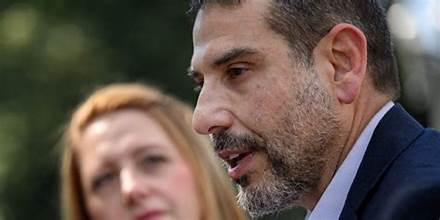
The district is one of the safest Democratic seats in the state. Thirteen Democrats entered the race to succeed Representative Bonnie Watson Coleman. When the votes were counted, Adam Hamawy emerged victorious with roughly a quarter of the vote. In most elections, winning 25 percent would mean defeat. In a heavily gerrymandered district where the Democratic primary effectively determines the winner, it may be enough to send someone to Congress.
That reality changes the type of candidates who can reach Washington.
Candidates who would struggle to build broad support across an entire electorate can succeed by assembling a passionate faction within a low-turnout primary. Once nominated in a safe district, they often face little risk in November.
Hamawy’s victory illustrates the dynamic.
Critics pointed to Hamawy’s testimony as a defense witness for jihadist Sheikh Omar Abdel-Rahman, the “Blind Sheikh” convicted for his role in terrorist plots linked to the 1993 World Trade Center bombing. They highlighted his volunteer work in Bosnia with the Benevolence International Foundation, an organization later shut down after investigators linked it to Al Qaeda. They questioned statements he made during the Blind Sheikh trial and raised concerns about past associations with individuals and organizations connected to radical Islamist movements.
Controversies like these that would likely receive intense scrutiny in a competitive district carried relatively little political cost in a race where winning roughly one quarter of a divided primary electorate may be sufficient to secure a seat in Congress.
The problem is not unique to Democrats. Deep-red districts have produced candidates whose views would struggle in a competitive statewide race. Deep-blue districts increasingly do the same. The common factor is not ideology. It is political geography.
Competitive districts reward coalition builders. Safe districts reward faction leaders.
Every society contains fringe movements. The question is whether political institutions force those movements to persuade a broader public before gaining power.
When candidates must compete for swing voters, controversial ideas are subjected to wider scrutiny. When victory depends on energizing a narrow slice of primary voters, the incentives change. Candidates can thrive by appealing to activists rather than assembling broad coalitions.
This feels much like social media. Inside echo chambers, radical ideas become normalized. As algorithms reward engagement, more extreme ideas ultimately push out the normalized-radical in the quest for eyeballs. Moderation is lost, and dissent is met with expulsion.
Ideological social media communities are the online equivalent of heavily gerrymandered deeply blue or red districts.
That dynamic helps explain a puzzle in modern American politics.
Polls consistently show that overt antisemitism remains a minority view in the United States. Yet some of the most visible antisemitic and anti-Israel voices in American politics emerge from districts where the decisive election is the primary rather than the general election.
Most Americans do not spend their time vilifying Jews, questioning Jewish belonging, or treating the world’s only Jewish state as uniquely illegitimate. Yet politicians can gain prominence by appealing to activist networks – online around the nation and local physically – where those themes carry political currency.
That does not mean those views represent America. It means they do not need to represent America; only enough primary voters in enough safe districts.
The same political system that elevated Adam Hamawy in New Jersey has elevated figures such as Rashida Tlaib and, on the Republican side, Marjorie Taylor Greene. Their ideologies differ dramatically, but the electoral formula is remarkably similar. A candidate builds an intense following within a safe district, wins a primary, and arrives in Congress with little need to appeal beyond that niche radical base.

The result is a Congress increasingly populated by politicians whose views are more representative of the most motivated primary voters than of the broader American public.
The problem is bigger than any one candidate. It is a system in which winning 25 percent of a primary electorate can matter more than winning the confidence of the country.
ACTION ITEM
Demand a change to primaries.
- Any election in which the winning candidate fails to receive 40% of the vote automatically requires a run-off between the two highest vote getters
- Stop radical gerrymandering and mid-decade gerrymandering
- Enable open primaries in which everyone can vote, regardless of party afiliation
- Institute ranked-choice voting, especially in races with more than four people running
- Ban entities that negotiate with municipalities (like teacher unions) from endorsing or donating to candidates


