While the Bible is one of the oldest texts in history, it contains important lessons about memory and history within its own stories.
One of the great episodes in the book of Genesis was about Joseph interpreting dreams for a baker and cup-bearer while they all sat in prison. Joseph correctly interpreted the dreams of both people, with the baker ultimately being killed while the cup-bearer was returned to his position in court. In exchange for his services, Joseph only asked that the cup-bearer remember him so that he could also gain his freedom: “Only remember me, when it is well with you, and please do me the kindness to mention me to Pharaoh, and so get me out of this house.” (Genesis 40:14)
But the cup-bearer did not do as Joseph asked: “Yet the chief cupbearer did not remember Joseph, but forgot him.” (Genesis 40:23)
The text above is seemingly redundant. Why state that the cupbearer both “did not remember” Joseph and then again “forgot him”?
Was this dynamic a precursor for the story of Joseph played out years later, when Joseph was forgotten again after he died? “Now there arose a new king over Egypt, who did not know Joseph.” (Exodus 1:8)
Not Remembering versus Forgetting
Not remembering someone is seemingly not a malicious act. A person could not be remembered because of other activities which gathered more attention or because the person was simply not present.
As opposed to not remembering which is a passive act, forgetting is an active verb. It suggests a willful desire to not recall a person or action.
In the world of social media, not remembering could be akin to not thinking of someone because they didn’t post anything for some time. Forgetting someone would be closer to unfriending the person. The former is a momentary occasion that comes from a lack of stimuli, whereas the latter comes from deliberate dismissal.
In the Bible story, the cupbearer may have not remembered Joseph because he was busy attending to Pharaoh. However, the forgetting of Joseph may have been a deliberate disregard for Joseph because he had nothing to offer anymore. Only when the cupbearer heard of Pharaoh’s dreams and had a chance to gain his master’s good graces, was Joseph actively recalled. Forgetting was tied to self-absorption and selfishness.
Not Knowing
One could perhaps forgive the new king of Egypt for not knowing Joseph as relayed in the beginning of Exodus. If two people never met – perhaps because they lived in different generations – there was obviously no ill will, just circumstances.
But the introduction of Exodus tells us not to be so casual in the reading of the new king not knowing Joseph.
Exodus 1:1 “These are the names of the sons of Israel who went to Egypt with Jacob, each with his family.” The bible had just ended Genesis with a full accounting of the children of Jacob; why list them here?
Rashi states that it was because the children of Jacob were dear to God and therefore worth remembering, even when deceased. Other commentators say that the extra word “names” in the sentence conveys that their reputations continued to live on.
If that is so, how could it be that Joseph – more famous than any of Jacob’s sons – who had saved Egypt and the entire Middle East from famine a generation earlier, could not have been remembered by the new Egyptian king? Did the prior generation passively not remember and actively forget the efforts of Joseph just like the cupbearer? It seems unfathomable that such events and good deeds could have been easily forgotten. The “not knowing” seemingly was connected to active disinformation to disassociate Joseph from Egypt’s success through the famine. Perhaps the new Egyptian king sought to elevate the reputation of himself and his family by rewriting history.
The Bible tells us right after the new king’s unfamiliarity with Joseph, that the Israelites were viewed with suspicion and then enslaved. Historic allies became enemies. People who had lived together side-by-side were suddenly in a hierarchical ecosystem.
When the cupbearer forgot Joseph, a single person forgot a single person’s actions, and the repercussion was that Joseph remained in prison. However, when the actions of Joseph saving all of Egypt were wiped from memory, the entirety of the Jewish people became enslaved.
The situation of denying history with horrible consequences continues today.
Jews in Israel Today
The history of Jews in Israel is not only being forgotten, it is being rewritten.
Over the past few decades, the Arab and Muslim world have been very active in denying and recasting Jewish history.
- Holocaust denial. The leaders of Iran and the Palestinian Authority have taken a variety of approaches in denying the deliberate slaughter of 6 million Jews in Europe, ranging from denying that the event happened to arguing that Zionists plotted with the Nazis to enable the creation of a Jewish State in Palestine (yes, that was the essence of Mahmoud Abbas’ doctoral thesis).
- The Jewish State was founded in reaction to the Holocaust. In a curious bit of mind-bending, the same people that deny the Holocaust existed, argue that the world gave Palestine to the Jews out of guilt. The 3,500 years of Jewish history is ignored as are the modern international laws of 1920 and 1922 (which predate the Holocaust), explicitly laying out the history of Jews in Palestine and reestablishing their homeland.
- No Jews lived in Israel. The Arab and Muslim world deny that Jews have any history in Israel. They have gone to such lengths as to hold up the United Nations from putting on a display showcasing Jews’ 3,500 year history in Israel.
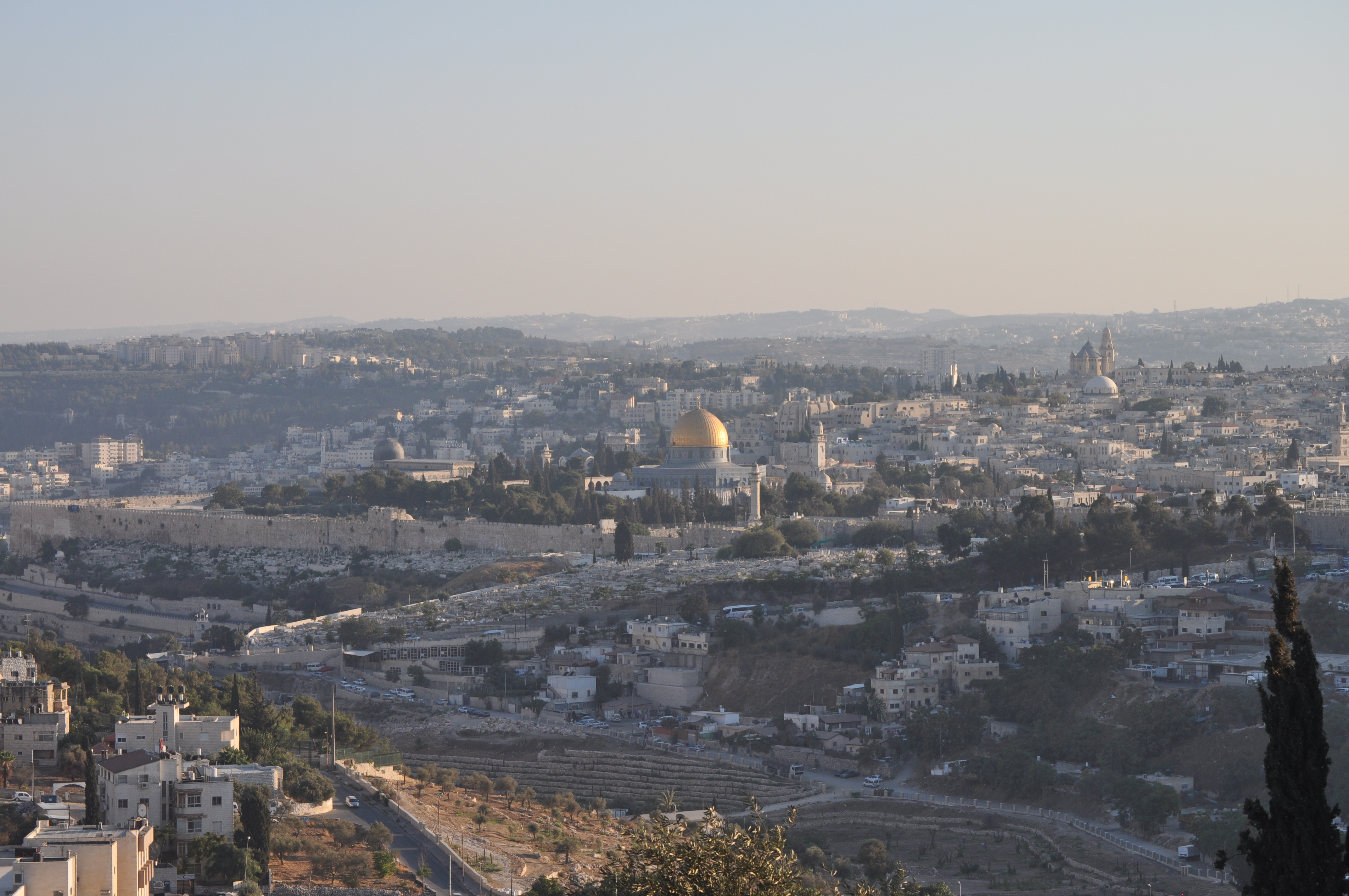
- There was Never a Temple in Jerusalem. Yasser Arafat and various members of the Arab and Muslim world have denied the existence of the two Jewish Temples on the Temple Mount in Jerusalem.
- Jerusalem is a Muslim city. The city of Jerusalem (both eastern and western) has had a Jewish majority since the 1860s. You’d have a hard time knowing that from the consistent lies that Jerusalem is losing its “Arab character.”
- Palestinians are Canaanites. Beyond denying Jewish history, Palestinian leaders have tried to rewrite their own history, stating that Palestinians are descendants of Canaanites who predate Abraham’s arrival in Israel, even though Arabs only arrived en masse to Israel in the 7th century (the descendants of ancient Canaanites are actually Lebanese). More “Palestinian” Arabs arrived during the British Mandate 1922-1948, than Jews, from countries including Iraq and Egypt.
These are not examples of “not remembering” or forgetting, but much more aggressive deliberate denials of history. And the aim of the Jew-haters is clear: cement the position that Jews are interlopers and foreign colonialists in Arab land. That is the revised history which they want people to know.
The Arab and Muslim countries use their vast numbers – over 1.6 billion people and over 50 countries – to change Jewish history at the United Nations and in school textbooks where they are in power.
- UN resolutions refer to the Jewish Temple Mount by an Arabic name
- UN agency resolutions claim that Israel is changing the Arab character of Jerusalem
- UN resolutions condemn Israel for changing the Muslim character of Jewish sites such as the Cave of the Jewish Patriarchs in Hebron and the Tomb of Rachel in Bethlehem
As the eradication of Jewish heritage and history takes root, the next generation of millennials have begun to look at Jews in Israel with disgust. Why are all of these Jews in Arab land? Like Pharaoh in ancient times, they do not know the long and deep history of Jews in the holy land. For the millennials and progressives, those “facts” are stories of fantasy only believed by Evangelical Christians and far-right Orthodox Jews. The only history they know and accept is presented by AJ+ and those backed by Arab and Muslim money funneled into their universities.
Corrective Course
For those who care about history – and remembering actual history – there are a number of actions to take:
- Insert the word “Jewish” into the Sites. Whether it’s on road signs or maps, whether it’s the Cave of the JEWISH Patriarchs or the JEWISH Temple Mount, reinforce history, be clear that these have always been Jewish sites.
- Mark HISTORIC dates of Israel’s cities, not just modern ones. It is wonderful to celebrate Jerusalem Day in June on the anniversary of Jerusalem being reunited. But why not celebrate the day that King David took the city 3,000 years ago; mark Hebron Day when Abraham bought the Cave of Machpelah to bury his wife Sarah.; Jericho Day, for when Joshua conquered the first city when the Jews came back to their Promised Land; etc.
- Teach Tanakh in schools. Jewish Day Schools barely teach the stories of the prophets. Only 18 of the 54 parshas in the Torah have a haftorah which includes a section from the historical accounts described in Joshua, Judges, Samuel I & II and Kings I & II. And these short sections are often ignored by people when read on Sabbath. Young and old Jews need to better understand their own history and should read the stories together with maps laying out where the events took place.
- Endow Israel Studies programs at universities. Iran and Saudi Arabia are funding universities throughout the United States. It is no surprise that the schools getting multi-million dollar gifts for Persian studies like UC Berkeley and Princeton, also have many anti-Israel professors. It is time to have more than three American universities with strong Israel studies programs.
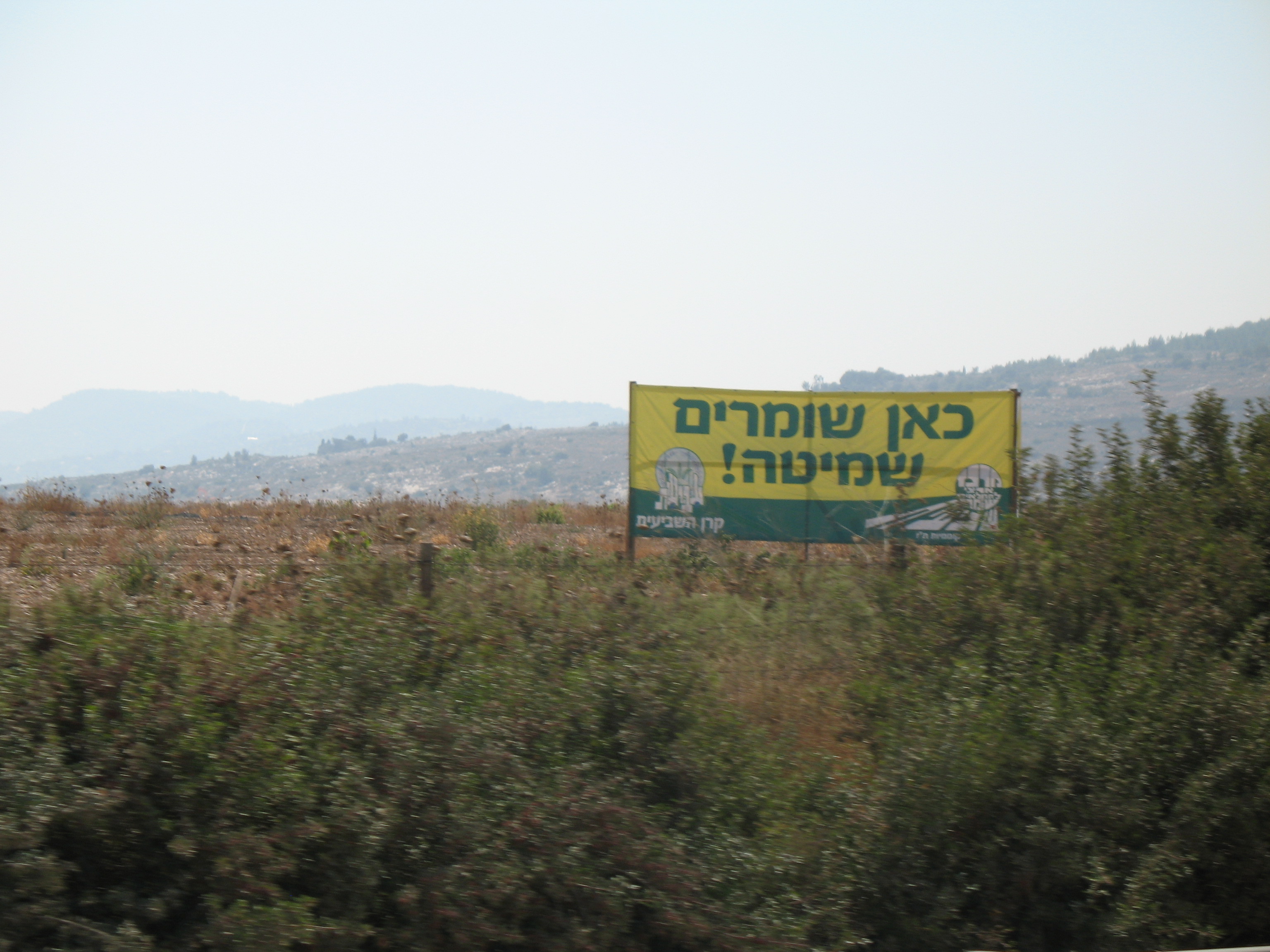
- Observe Judaism in Israel. The Bible commands Jews – at a minimum a Jewish king – to write a sefer Torah, so have a permanent sofer, a Torah scribe, at the Kotel or at the City of David just south of the Jewish Temple Mount where Kings David and Solomon had their palaces. Replace the siren that marks the entry of Sabbath and Jewish holidays with the sound of a shofar from the same loudspeakers. Mark every field that observes shmita with a large sign, including the verses from the bible declaring such law. etc.
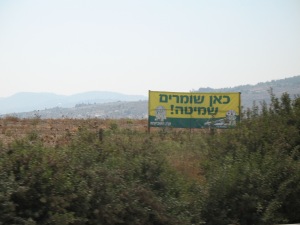
The United States and other countries can also take actions:
Reject any UN Resolution out of hand that does not:
- mention the “Jewish Temple Mount” when referencing the “Al Aqsa Compound”
- note that Jerusalem has had a Jewish majority since the 1860s whenever it discusses the “Arab character of Jerusalem”
- Refer to the region as “Judea and Samaria” whenever it refers to the “West Bank”
- Comment that the Jordanians and Palestinians ethnically cleansed Judea and Samaria and the eastern part of Jerusalem in 1949, in any resolution which accuses Israel of committing “ethnic cleansing”
Arab and Muslim nations have waged an assault on Jewish history, and the alt-left have become willing disciples. People who care about truth, Jews and Zionism must counter this affront with a comparable campaign to remember and not forget the long and remarkable history of Jews in the Jewish holy land.
Related First.One.Through articles:
The Cave of the Jewish Matriarch and Arab Cultural Appropriation
The Countries that Acknowledge the Jewish Temple May Surprise You
Squeezing Zionism
Iran’s New Favorite Jewish Scholars
The UN’s Disinterest in Jewish Rights at Jewish Holy Places
The New York Times Inverts the History of Jerusalem
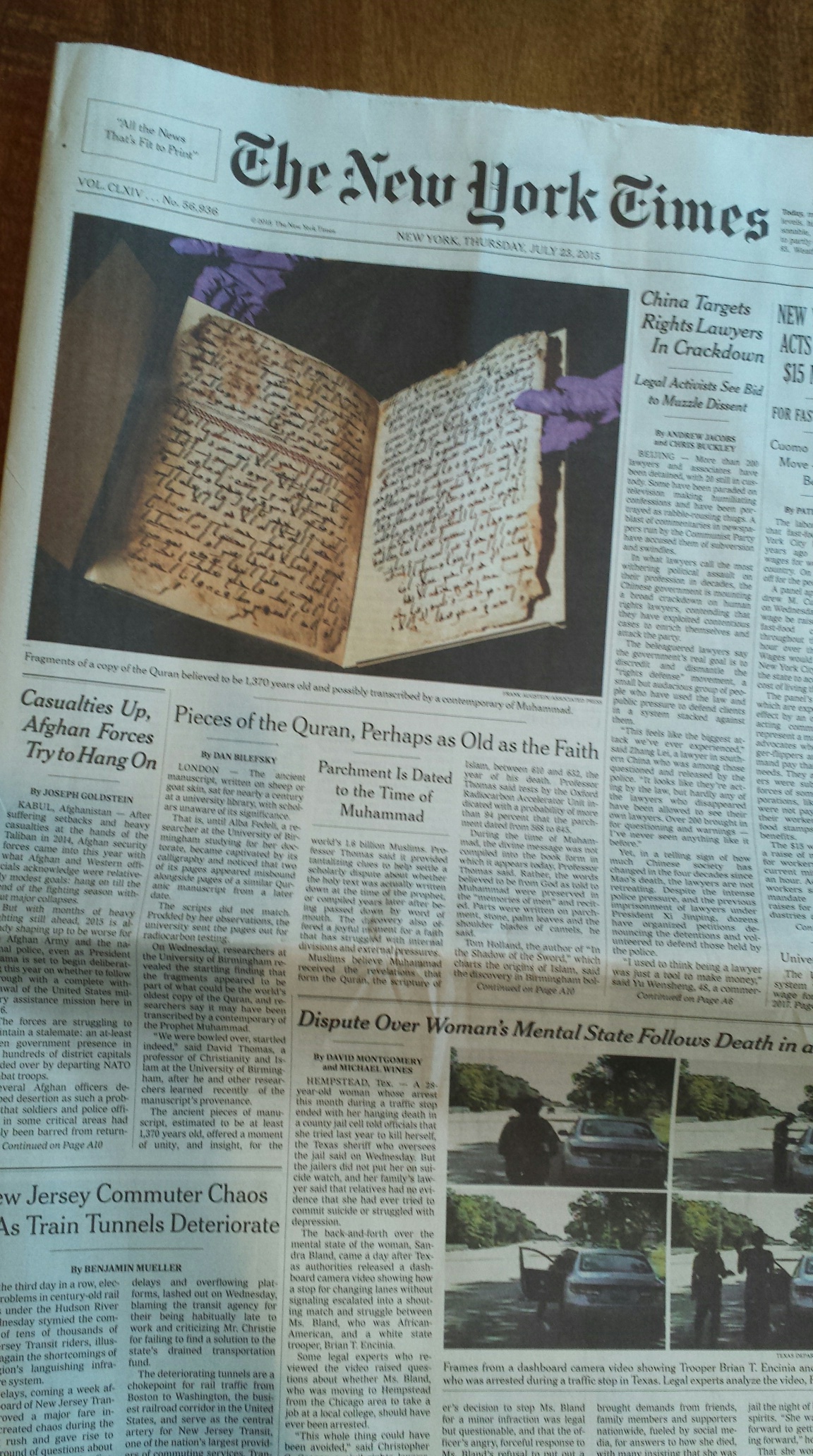
The New York Times will Keep on Telling You: Jews are not Native to Israel
Losing the Temples, Knowledge and Caring
In Defense of Foundation Principles
Related First.One.Through video:
Judea and Samaria (Music by the Foo Fighters)
10 Ignored Facts about Jews and Muslim Populations in Israel (Music by Seal)
Who are the Palestinians (Music by The Who)
Subscribe YouTube channel: FirstOneThrough
Join Facebook group: FirstOne Through Israel Analysis














 First One Through
