Oxfam and Gaza

Oxfam seems like such a nice charity.  It’s slogan is “The power of people against poverty.” What can be controversial about that?

Much of the organization’s work is focused on providing aid and services to poor communities around the world.  Work includes bringing clean water, food and basic services to people in need.

However, the organization also goes beyond a core mission of charity to other rights-based work including human rights and women’s rights.  The charity claims that “when people have the power to claim their basic human rights, they can escape poverty – permanently” and “the right to gender justice underpins all of our work.” Such activity leads Oxfam to get involved in politics and to advocate for particular actions by governments.

Oxfam produces reports and details its assessments of certain regions and their treatment of people.  Consider the report which warns about a potential slide in the treatment of women in Afghanistan.  Oxfam clearly “called on world leaders to ensure that any peace deal includes benchmarks to guarantee women’s rights” and highlighted the terrible crimes of “honor killings” in which wives and daughters are killed by family members if they engaged in something considered impure, like dressing inappropriately or turning down a male suitor.

Oxfam also puts feet on the ground to encourage peace in places such as South Sudan where “Oxfam has been working closely with communities and their leaders in Rumbek to establish peace committees that are now avenues for different clans to meet on a regular basis to discuss issues, mediate conflicts and encourage peaceful co-existence.” Such activity is obviously well beyond delivering humanitarian aid.

Consider Oxfam’s approach to Gaza.

Gaza

Oxfam has repeatedly called for “world leaders to press the Israeli government to lift the blockade on Gaza“ which Israel put in place in June 2007 to prevent arms smuggling after the terrorist group Hamas took over Gaza.  Hamas has used its weapons to fire over 10,000 rockets into Israel since then.

Legality: Oxfam called the blockade “illegal,” even though the United Nations Palmer Report of 2011 clearly stated “that Israel’s naval blockade was legal… Israel faces a real threat to its security from militant groups in Gaza.  The naval blockade was imposed as a legitimate security measure in order to prevent weapons from entering Gaza by sea and its implementation complied with the requirements of international law.”

Ignoring the ruling authority of the terrorist group, Hamas: Oxfam stated that “The government of Israel holds the primary responsibility to lift the blockade, although agencies signing on to the campaign also recognize that reconstruction is hindered by the failure of Palestinian political parties to reconcile and prioritize reconstruction, and by Egypt’s closure of its border with Gaza.”

An amazing gloss over the facts.  Not only does Israel have “primary responsibility” for the situation, but the failure to alleviate the plight of ordinary people in Gaza according to Oxfam is also “the failure of Palestinian political parties to reconcile.” Hamas is a terrorist organization sworn to destroy Israel that repeatedly attacks Israelis. Until it relinquishes control of Gaza, the blockade will stay in place. It is not a matter that there is an internal division between Palestinian leaderships, as Oxfam states.

Collective Punishment:  Oxfam continued: “The government of Israel justifies the restrictions on security grounds. However, the United Nations and the International Committee of the Red Cross have repeatedly asserted that the blockade is a violation of international law. Indeed, there can never be justification for collective punishment of an entire population and leaving tens of thousands of families homeless and hundreds of thousands of children without a school or health centers.”

Not only did the UN report specifically state that the blockade is legal as noted above, it also disputed the nature of “collective punishment” when it concluded that “although a blockade by definition imposes a restriction on all maritime traffic, given the relatively small size of the blockade zone and the practical difficulties associated with other methods of monitoring vessels (such as by search and visit), the Panel is not persuaded that the naval blockade was a disproportionate measure for Israel to have taken in response to the threat it faced.“

Blame: Further, the phrasing of the Oxfam article put the blame for homeless families and “children without a school or health centers” on Israel, instead of the terrorist group Hamas that continues its war to destroy Israel.

Women’s Rights and Co-Existence:  Interestingly, for an organization that claims that “gender justice underpins all of our work,” it never once mentions in any of its numerous articles about Gaza, that Gaza now leads the world in the number of “honor killings” of women per capita.  It also doesn’t seem as keen to promote co-existence between Israelis and Palestinian Arabs as it does in South Sudan.


Oxfam is not simply a charitable organization, but a political one as well. It goes beyond important work of helping the poor, to a mission-based action group influencing governments.

When it comes to Gaza, it has turned a blind eye to an anti-Semitic terrorist government and focuses instead on demonizing a democracy that is protecting its citizens. It has produced articles with misinformation and circulated petitions to open Israel to attacks.

Consider that when you see an Oxfam volunteer walk up to you on the street.

oxfam


Related First.One.Through articles:

UN’s Confusion on the Legality of Israel’s Blockade of Gaza

Cause and Effect: Making Gaza

Honor Killings in Gaza

Gaza Blockade versus Cuban Blockade

Save the Children

Subscribe YouTube channel: FirstOneThrough

Join Facebook group: FirstOne Through  Israel Analysis

The Current Intifada against Everyone

The shootings, stabbings and car attacks in Israel in the fall of 2015 have led several media pundits and politicians to wonder whether the beginning of the Third Intifada has begun. This Palestinian intifada is against their own leaders as much as it is against Israel, and to miss that point is to miss the core issues and solutions before the parties.

Har Nof
Murder in Synagogue in Har Nof neighborhood of Jerusalem
November 2014 (photo: Israel Government Press Office)

First Intifada against Israel (1987-1993)

The First Intifada, which began in 1987, was launched by Palestinian Arabs who were angry about the lack of movement towards a creating a Palestinian state. The multi-year attacks killed thousands of people, and not just in Palestinians-versus-Israelis attacks. An estimated 1,000 Arabs who were suspected of collaborating with Israel were also killed by fellow Palestinian Arabs.

The First Intifada continued until the Oslo Accords of 1993 which started a timetable for a negotiated agreement between the parties. It was the first time that the Government of Israel and the Palestinian Liberation Organization (PLO) formally recognized each other. Counter to popular belief, the agreement did NOT call for the creation of a Palestinian state, but was crafted to transition Palestinians to self-rule (for example, a solution like American Indian reservations would have met the stipulations in the Oslo Accords) to commence within five years.

Transition (1993-2000).  Between 1993 and 2000, the leadership of Israel and Palestinian Arabs attempted to arrive at a peace treaty and settle all key issues including matters of boundaries, security and the status of the “right of return” of Palestinian refugees and their descendants. During this time there were still hundreds of attacks against Israelis with almost 100 Israelis killed. While the world may have considered the First Intifada to have concluded with Oslo, for Israelis, the murder and mayhem never stopped.

Second Intifada (September 2000-September 2014)
“No Compromise Intifada”

The Second Intifada broke out in September 2000 when it became clear that the Palestinians were not going to get everything that they demanded: a new country based on land that was controlled by Egypt and Jordan which was taken by Israel in 1967; the eastern half of Jerusalem as their capital; and a right of return to Israel for all Palestinian Arab refugees and their descendants.

Intifada 2A: Arafat’s War (2000-2005). Angry at the terms that he negotiated with Israeli Prime Minister Ehud Barak with the assistance of US President Bill Clinton, Yasser Arafat (1929-2004) launched a multi-year war against Israelis. Bombs blew up buses and pizza parlors. Arabs shot at cars and schools. Thousands of Israelis – most of them civilians – were murdered by Palestinians, and thousands of Palestinian Arabs were killed in efforts to put down the intifada.

Transition (November 2004-2008). The first wave of the Second Intifada ended when several notable things occurred:

  • Yasser Arafat (fungus be upon him) died in November 2004.
  • Israel largely completed a security barrier to stop Palestinian Arab attackers from entering Israel from the west bank of the Jordan River.
  • Israel withdrew from the Gaza Strip (2005).
  • Palestinian Arabs held presidential elections, voting for Fatah’s Mahmoud Abbas in 2005.
  • In 2006, Palestinians held Parliamentary elections and voted for Hamas, a more radical party that called for Israel’s destruction that is considered a terrorist organization by many countries including the US and Israel.
  • In 2007, Fatah and Hamas fought bitter battles against each other and Hamas evicted Fatah from Gaza and seized authority there.
  • With the Hamas takeover over Gaza, Israel put in place a naval blockade (and later a land blockade) to stop weapons from flowing to Hamas.

Intifada 2B: The Divided Intifada (2008-2014). By 2007, the Palestinian Arabs were deeply divided with Hamas controlling Gaza, and Fatah ruling in the West Bank. Each party had different stated goals and approaches to their conflict with Israel.

Hamas’s Violent War of Destruction: Hamas did not want a two-state solution and sought the complete destruction of Israel through armed conflict. Fighting from a defined region in Gaza and using missiles (as opposed to street attacks) the Hamas fight appeared more akin to a war. Indeed, the press referred to the 2008, 2012 and 2014 battles as distinct wars between Gaza/ Hamas (not Palestinians generally) and Israel. Israel referred to its defensive operations as Operation Cast Lead; Operation Pillar of Defense, and Operation Protective Edge, respectively. These three “wars” were a continuation of Hamas’s fight to destroy Israel, described clearly in its 1988 Hamas Charter.

Abbas’s Political War of Demands: In the West Bank, Mahmoud Abbas and the world courted each other. Abbas kept the Palestinian Arab masses out of Hamas’s massive attacks against Israelis and thereby portrayed himself as a moderate. In turn, many countries assured Abbas that he would achieve all of his demands that fell short in the 2000 peace talks, through diplomatic means. US President Obama made Abbas comfortable that Israel’s biggest ally (the US) would pressure Israel into conceding to all Palestinian demands: Obama pushed for a settlement freeze in 2009; in 2011 he said that borders would “be based on the 1967 lines with mutually agreed swaps,”; he stripped all Israel-leaning positions from the 2012 Democratic platform, including that there would not be a “right of return” of Palestinian refugees to Israel; he even said that Jews moving into existing homes they legally purchased in the eastern part of Jerusalem was a “provocation” in 2014.

The world similarly gave Abbas encouragement. They admitted Palestine to UNESCO in 2011, and many countries began to recognize Palestine as a country, even though it had yet to negotiate borders and security with Israel. Abbas’s moves in the political sphere to secure all of his demands were seemingly gaining traction.

Palestinians Intifada against Everyone
(October 2014- )

The “Third Intifada” began at the end of Operation Protective Edge with a few events. It resembled prior intifadas because the attacks were between Palestinian Arabs and Israeli Jews in the streets, but the nature of the intifada was quite different than the ones in the past. Whereas the first intifada was Palestinians-versus-Israel and the second intifada was Palestinian leadership-versus-Israel, the third intifada is Palestinians-against-everyone.

The start of the Intifada against Everyone: Acting-President of the Palestinian Authority Mahmoud Abbas kept the West Bank Arabs out of the Gaza/ Hamas War of Destruction based on the promise that the Palestinians would be able to achieve their goals that they failed to achieve in 2000 through diplomacy. However, the Palestinians had only won empty victories of recognition at UNESCO and were no further along in achieving a state. In the fall of 2014, several matters came to boil:

  • Anger at the destruction in Gaza. Over 2000 Palestinians were killed in the summer of 2014 and the attacks against Israel yielded nothing.
  • Anger at not being part of the Fight. The West Bank mainly stayed out of the fight, even though many people supported Hamas’s war against Israel.
  • Anger at Jewish advocacy on the Temple Mount. In October 2014, Rabbi Yehuda Glick continued to advocate for the right of Jews to pray at their holiest location. Radical Islamists shot Glick several times, though he survived the attack. The assailants were killed and Abbas praised them as “martyrs.”
  • Anger at being banned from the Temple Mount. In response to the attempted assassination of Glick, Israel closed the Temple Mount to all visitors. This further enraged Arabs both at being banned from their third holiest site, and the stark realization that Israel had control of the Temple Mount.
  • Anger at not moving forward on Statehood. For all of Abbas’s promises that the world would force Israel to accede to all Palestinian demands, the year 2014 which was hailed as the “International Year of Solidarity with the Palestinian People” was going to end with nothing. Abbas could not even get Netanyahu to release all of the prisoners that they had expected to be released.
  • Anger at Palestinian leadership. Both Fatah and Hamas failed to deliver positive results for Palestinians. They were viewed as corrupt by the vast majority of Palestinians, and the two parties could not even reconcile to coordinate a cohesive single ruling authority. Both Palestinian leaderships were failures by every measure, but no new elections were on the horizon even though the Palestinian Arabs hadn’t voted since 2006.
  • Anger at Arab States. Egypt changed leadership to General Abdel Fattah el-Sisi in 2013, but it was in 2014 that Egypt began to shut down the border between Gaza and Egypt, crippling the Gaza economy (and arms flow). Foreign supporters like Qatar which pledged money to rebuild Gaza were unable to do so because of legal hurdles.
  • Anger at the United States. While US President Obama and Secretary of State were effective in pushing Israel, the limits became apparent when they could not get Israel to release the fourth batch of prisoners in 2014. How could the US then force Israel to move forward with all of its greater demands?
  • Anger at themselves. The world took to the streets during the summer of 2014, largely condemning Israel for the war from Gaza. Yet the EGL Arabs (Arabs living east of the Green Line) were relatively quiet. They watched global protests while they didn’t protest. They witnessed fellow Palestinian Arabs fighting and dying in Gaza while they didn’t fight.
  • Anger at the world. For all of the waiting and promises from the US and the world to pressure Israel to deliver Palestinian demands, it became clear that such a path would not yield everything the Palestinians sought. Palestinians realized that the world would not impose their demands on Israel.

The Start of Attacks: While Hamas was behind the abduction and murder of three Israeli teens in Judea in June 2014, the “lone wolf” EGL Palestinians began to attack Israeli civilians in the streets and synagogues in October.

  • Car attacks rammed people in Jerusalem (October 2014)
  • Mahmoud Abbas called for Palestinians to defend Al Aqsa (October)
  • An attempted assassination of Yehuda Glick (October)
  • Car attacks and stabbings in Gush Etzion (November)
  • Arabs hacked Jewish worshippers to death in a synagogue in the Jerusalem neighborhood of Har Nof (November)
  • Various other attacks and calls for a “car intifada”

The Anger-at-Everyone Intifada was underway.

Yet to understand the spike in the current wave of attacks in the fall of 2015, requires an appreciation that the end of the Palestinian Authority is at hand.

The 2015 Collapse of the Palestinian Authority and Oslo.  As described above, Abbas has remained unpopular since 2006.  He remains a puppet in the eleventh year of a four-year term.  He is old – 80 as of March.  And the old, ineffective, unpopular Abbas is only part of the story.  The Palestinian Authority is collapsing.

1.Impending PA Bankruptcy.  The PA was never particularly well-funded.  The PA suffered from several serious flaws even before the current crisis: large scale corruption and theft by PA leadership, and a reliance on Israel to collect and submit taxes on the PA’s behalf. In 2015, new problems emerged:

  • In February 2015, the PA lost a court case in the United States filed by Shurat HaDin on behalf of Americans killed in the Second Intifada.  The court awarded the victims of terrorism $655.5 million.  The verdict would likely have spelled the end of the PA so US Secretary of State John Kerry came to the PA rescue in August and had the PA post only a $10 million bond while the case is appealed.  The case will be heard March 2016, and the PA will likely lose and declare bankruptcy.
  • In June 2014, in the wake of a possible reconciliation government between Fatah and Hamas, the US Congress threatened to withhold funding of the PA since Hamas is a designated terrorist organization.  Obama voted to overrule Congress. The 2014 Gaza War started soon thereafter so the Palestinian reconciliation government has been slow to take form. But the impact of the US cutting funding lingers of the PA.

2. Hamas Funding. While the PA sits on the brink of bankruptcy and Hamas sits without funds or infrastructure, a game-changing event happened in July 2015.  The world powers agreed to allow Iran to run a curtailed nuclear program in exchange for releasing up to $150 billion.  There were no constraints to how Iran could use the money and it has made no secret of its desire to erase Israel from the map.  Iran has had a long-term relationship with Hizbullah in Lebanon, and the release of these funds could provide a huge windfall for Hamas, particularly if the world softens the Israeli blockade on Gaza.

3. Goodbye Obama. Good night Ban Ki-Moon.  The best chance Abbas had for imposing the 2000 Palestinian demands on Israel were through the United Nations and the United States.  Both US President Barack Obama and United Nations Secretary-General Ban Ki-Moon were strong advocates for the Palestinian cause.  Each one consistently berated Israel and tried to force it to accept Palestinian terms.  However, while their rhetoric was powerful, the heavy-handed approach to Israel did not yield the Palestinians promise.  Ban Ki-Moon’s term at the UN expires December 2016 and Barack Obama’s term expires January 2017.  It is hard to imagine that a new US president or SG of the UN will be as anti-Israel as the parties Abbas had working for him.

So Abbas took the podium at the United Nations in September 2015 and essentially announced that the Oslo Accords were dead.  He knew that he was done and the Palestinians were done with him.  He could not imagine that a PA facing bankruptcy while Hamas gained Iranian funds would keep his straw-man position propped up any longer. He left open the possibility that the lame ducks Obama and Ki-Moon might save him, but he knew his game was basically over.

The Rise of Intifada-against-Everyone. The Palestinians celebrate the end of the PA.  In addition to its corruption, they viewed the Authority as a tool of the Israeli government to suppress violence.  The EGL Arabs sat out the Divided Intifada because of the PA, and there was no honor in that. With the closing of the PA, it could pick up its part of the Divided Intifada, and perhaps do it with money and weapons from Iran.

In time, it may even have a nuclear-powered sponsor to enforce its demands.

For now, the Palestinians arm themselves with encouragement on social media like Facebook and Twitter.  They share videos of how to stab and attack Israelis and selections from videos of Israelis attacking Arabs. They come to the streets armed with knives, rocks and Molotov cocktails all around Israel and Judea and Samaria, looking for Jews to attack.

While the anger is at everyone, for now the attacks are limited to Jews.  As the Palestinian Authority truly collapses and the Iran deal either collapses or is implemented, the attacks will likely expand to other groups in other locations.

The Solution


The Temple Mount / Al Aqsa. World focus is now on security at the Temple Mount.  Indeed the rights of Jews on the Mount was seen by many as the excuse for starting the second intifada so parties are eager to calm the situation there. A narrow focus on Jewish rights and access is a small part of the bigger picture.

Ending Incitement. World leaders have urged parties to refrain from incitement, even while they barely berate Mahmoud Abbas’s calls for jihad.  While such calls for calm are appropriate, they also confuse the source of the anger. Palestinians have doubled their use of daily social media over the past 18 months according to polls. They do not wait for Abbas or Ma’an to tell them what is news or how to kill.

Compromise. The core issue can only be addressed when the global community states very clearly that the Palestinians must compromise.  They will not get everything they hope for nor will they even get everything within each core issue that they seek.

Obama thought that the old ways of supporting Israeli positions did not yield peace so he threw out that method and ran his presidency on being a bully to Israel.  But an Israel that feels threatened and insecure – despite Obama’s security cooperation – will not be in a position to conclude a deal with Palestinian Arabs.

The even bigger obstacle than the Obama administration has been the United Nations which has taken to every Palestinian position and encouraged them to believe that there is no need to compromise on their aspirations. That is a fatal flaw.

The UN must state clearly that the path to two states does not rely on negotiations but on compromise. A new Palestinian state will not come to being on “1967 borders.” All of East Jerusalem will not be the capital of such state. A total of 5 million refugees and their descendants will not move to Israel. The UN must stop encouraging these fantasies.

The first and easiest step to move towards a final resolution between the parties is to unravel the refugee mess that the United Nations promotes. The UN should make clear:

  • While the UN will continue to provide services to 5 million refugees and their descendants in the near-term, the only people that could be entitled to go to Israel under a “right of return” as defined in UN Resolution 194 are actual refugees. It will be up to Israel to allow any additional people enter the country.
  • Any refugee re-entering Israel must abide by the language of Resolution 194 which states that that they are willing to “live at peace“, and follow Israel’s guidelines for affirming such which may include acknowledging that Israel is a Jewish State.

If the UN and US really care about avoiding a third intifada and resolving the Israel-Palestinian Arab conflict, it must move past the smaller issues of focusing on incitement to the bigger picture of publicly stating that Arabs must compromise on their stated demands to resolve the conflict.  To date, Obama and Ki-Moon have encouraged the same unrealistic Palestinian expectations, and with it, the anger of the Palestinians for not delivering on an unrealistic goal.

The second intifada was against Israel for not meeting Palestinians demands, and the third intifada against everyone is about the world’s failure to enforce those demands. It is time for an honest conversation – publicly – about those very demands, to avoid more bloodshed and to end the conflict.


Related First.One.Through articles:

A “Viable” Palestinian State

Failing Negotiation 102: Europe

Subscribe YouTube channel: FirstOneThrough

Join Facebook group: FirstOne Through  Israel Analysis

 

Abraham’s Hospitality: Lessons for Jews and Arabs

The biblical portion of Vayera showcases stories of the patriarch Abraham welcoming strangers. The stories of Abraham’s hospitality became incorporated into the ways that the children of Abraham think of themselves today. However, the nature of the hospitality of Arabs (descendants of Abraham’s son Ishmael) and Jews (descendants of Abraham’s son Isaac) diverge in many ways.

Giovanni_Andrea_de_Ferrari_-_Abraham_and_the_Three_Angels
Abraham and the Three Angels
by Giovanni Andrea de Ferrari (1598-1669)

Man and God

Jewish perspective: Judaism prides itself in being a religion of actions, not faith. God gave the Jewish people 613 commandments to follow, some of which are active (make the Sabbath holy) and others that are passive (don’t kill). A division could also be made of laws between people (like murder) and those between man and God (like the Sabbath).

A casual observer of religions would imagine that laws about God would take precedence to laws about people.  The Jewish organization Limmud, posted an article about Vayera, which argued the opposite.

During the story of Vayera there was an encounter between Abraham and God. In the middle of the conversation, Abraham asked God to wait so he could welcome three strangers that were passing his tent. The author of the Limmud article, Jeremy Rosen argued that Abraham’s action taught Jews a lesson for today, “that however primary God is, there are certain types of human crises or obligations that are so important that one can actually tell God to wait. In the end religion must enhance our relationship with other humans.”

Islamic perspective: The website “OnIslam” is dedicated to educating Muslims on a variety of subjects. An article on hospitality and the “joy of honoring others” made a clear effort to differentiate between the kind of hospitality that Muslims extend, and those of non-Muslims. “The true concept of hospitality is not something that is widely practiced in most non-Muslim countries. For many non-Muslims, the entertainment of guests is of primary importance in many cases for worldly reasons only, not rooted in real hospitality for the sake of God. In Islam, however, hospitality is a great virtue that holds a significant purpose. Being hospitable to neighbors and guests can increase societal ties as well as unite an entire community. Most importantly, God commands Muslims to be hospitable to neighbors and guests. There is a great reward in doing so. Hospitality in Islam is multi-faceted and covers many different areas in addition to the hospitality that we show guests who visit our homes.”

In Islam, hospitality is performed because it is commanded by God. The act of hospitality may have benefits of creating communal harmony, but it is a derivative of the second degree. The primary obligation is to follow God’s command, and He commands all Muslims to be hospitable. God’s command leads man to action, and such action may, in turn, lead to friendship and social cohesion.

The difference in the approach of the religions is both subtle and significant. Judaism has a value system of helping others. Welcoming a stranger takes precedence to a direct conversation with God. In contrast, Islam focuses on obedience to God’s commands. Hospitality happens to be one of those commands and is therefore performed – within the bounds of religion.

Hospitality Today on a National Level

It is interesting to look at the nature of hospitality on a national level and how the one Jewish State handles hospitality compared to various Muslim countries (note that there are many Muslim countries, like Turkey, Malaysia and Indonesia, that are NOT Arab and descendants of Abraham).

Welcoming Refugees
Israel: Israel has an incredible record when it comes to welcoming Jews from around the world. Whether in bringing Jews that were persecuted in the Arab world in the 1950s, or Russian and Ethiopian Jews in the 1990s, Israel took in so many Jews from around the world, that they dwarf the number of European Jews who came to the country due to persecution in Europe during the 1930s and 1940s.

Those Moroccan, Yemenite, Ethiopian and Russian refugees received Israeli citizenship immediately. They got housing and job training. They had teachers to teach them a new language (Hebrew) and lessons about incorporating into a society that was completely foreign to their old way of living.

Arab/ Muslim Countries: The Middle East has witnessed a large number of wars and corresponding waves of refugees fleeing the battles. Many Arab countries did not welcome their fellow Arabs.

  • When Arabs left the British Mandate of Palestine to Lebanon and Syria in 1948-9, they were forced to live in refugee camps. They were not offered citizenship nor given an opportunity to have white color jobs. Those conditions continue for their children and grandchildren almost 70 years later.
  • When the PLO sided with Iraq when Iraq invaded Kuwait in 1991, Kuwait expelled roughly 360,000 Palestinians that were living there.  Fellow Arabs that were neighbors for 75 years were evicted en masse because of the actions of people hundreds of miles away.
  • Most recently, the millions of Arabs fleeing the civil war in Syria, and ISIS in Iraq have been shut out of the wealthy countries of Saudi Arabia; Qatar; Bahrain; United Arab Emirates and Kuwait.  Westerners may wonder how these oil rich countries are not embarrassed to refuse to welcome fellow Arabs, especially as Europe and America open its doors.  Only Lebanon, Jordan and Turkey (Muslim, but not Arab) have shown these refugees Islamic hospitality.

Welcoming “Others”
Israel: The phrase in the bible “love thy neighbor as thyself” (Leviticus 19:18) has been interpreted by various scholars as both a model for treating fellow Jews and for interactions with all of mankind.

  • When Israel declared independence in 1948, it granted 160,000 non-Jews citizenship.  When Israel reunited Jerusalem after Jordanian and Palestinian Arabs attacked it in 1967, it offered citizenship to all non-Jews.
  • When Menahem Begin became prime minister of Israel in 1977, he brought in and gave citizenship to roughly 300 Vietnamese people fleeing their country.
  • Today the country is grappling with how to deal with Eritrean and Sudanese asylum seekers as many Israeli Jews believe in the principal of hospitality, even while the government considers issues of safety.

Arab/ Muslim Countries: The Arab countries do very poorly in regards to their hospitality with non-Muslims.

  • When Jordan seized Judea and Samaria in 1949, it expelled all of the Jews in the area and forbade them from even visiting their holy sites in Jerusalem.
  • Today, Mahmoud Abbas has laws preventing the sale of any land by Arabs to Jews and has demanded a new country to be established devoid of Jews.
  • After Israel was founded, the Arab countries forced over 850,000 Jews to flee their homes where they had lived for generations.

Helping Others
Israel: Israel has a reputation of rushing to assist countries around the world suffering from natural disasters.  Whether from earthquakes in Turkey or Haiti or tsunamis in the Pacific Ocean, Israel is on the scene with disproportionate numbers with life-saving assistance.

Arab/ Muslim Countries: The Arab world typically does not send much assistance to countries in need.  That fact is surprising since it is a core tenant of Islam.  OnIslam states: “In Islam, hospitality extends well beyond the walls of the home. Being hospitable also means having good manners and treating others with dignity and respect. Hospitality can be applied to the greater community and Muslims must strive to help out whenever there is a time of need. Natural disasters, for example, often result in community turmoil as residents grapple with the aftermath. This provides Muslims with an excellent opportunity to pitch in, whether delivering hot meals to those affected or donating gently used items to someone who has lost everything.”

However, the Charities Aid Foundation did rank some Islamic nations among the most generous in the world, including: Malaysia; Indonesia; and Iran in the top 20.  However, none of those three countries is Arab.  Israel, the Jewish State, ranked number 32.


Abraham taught Jews and Arabs about the importance of hospitality.  Each group interpreted his acts of kindness through their respective prophets and teachers over the centuries, with Jews extracting a primary value of the kinship of men, while Muslims placed hospitality as just one of God’s commands to be observed.  Jews learned a life-lesson from Abraham; Arabs stifled that more human example and took the message of hospitality from the Quran.

The children of Abraham – the Jewish State and the Arab states – should all be mindful of the importance of hospitality in their dealings today.


Related First.One.Through artices:

The End of Together

Joint Prayer: The Cave of the Patriarchs and the Temple Mount

Subscribe YouTube channel: FirstOneThrough

Join Facebook group: FirstOne Through  Israel Analysis

An Inconvenient Truth: Palestinian Polls

There were a growing number of violent attacks by Palestinians against Israelis in October 2015.  Various politicians such as the US Secretary of State John Kerry blamed the root cause as Palestinian frustration about ongoing Jewish “settlements” east of the Green Line.  Acting President of the Palestinian Authority Mahmoud Abbas pointed the finger at defending Al Aqsa Mosque in Jerusalem from Israelis changing the status quo.  United Nations Secretary-General Ban Ki-Moon considered that it was due to Palestinians frustration about the failed peace talks and lack of progress towards creating a Palestinian state.

Why all of the guessing for identifying the root cause when the Palestinians poll themselves every three months?

The Palestinian Center for Policy and Survey Research conducts a poll every quarter on a range of issues.  It breaks the analysis between Palestinian Arabs living in the West Bank/ east of the Green Line and the Gaza Strip.  A review of the poll numbers gives a much better sense of Palestinian Arabs sentiments about their situation than biased and bogus statements from Kerry, Abbas and Ban Ki-Moon.

A Growing Majority of Palestinians Support Attacking Israeli Civilians

The poll figures do show a growing support of attacking innocent Israeli civilians.  In December 2013, the percentage of Arabs supporting unprovoked attacks was 34% and 58% in the West Bank and Gaza, respectively.  Those figures jumped to 48% and 68% for WB and Gaza in September 2014 and then to 50% and 70% in September 2015.  Overall, a clear majority of 57.2% of Palestinians were in favor of terrorism as of September 2015, up from 42.9% in December 2013.

Terrifying numbers about terrorism in both the absolute percentage and in the terrible trendline of support.

No heightened Palestinian fear regarding Annexing the West Bank and Changing the Status Quo on the Temple Mount. Palestinians are ALWAYS afraid.

Despite Kerry’s assertion that Palestinians are increasingly fearful of Israelis living east of the Green Line and Abbas’s statement about Israel changing the status quo on the Temple Mount, the statements are untrue.

kerry harvard
John Kerry at Harvard attacking Israeli settlements
(photo: Brian Snyder/Reuters)

Settlements: Palestinians have always been afraid of Israeli intentions regarding annexing land. In December 2013, 85.3% and 80.5% of Arabs in the West Bank and Gaza, respectively, believed that Israel would annex the entire region.  Those figures dropped after the 2014 Gaza War to 81.2% and 75.3% in September 2014, before rising again to 88.5% and 78% one year later.

In every quarter over the past two years, between 80% and 90% Palestinian Arabs in the West Bank thought Israel was intending to annex both the West Bank and Gaza.  The range was 70% to 82.5% for Palestinians living in Gaza.  Presumably the Arabs in Gaza did not have as great a fear as the Arabs in the West Bank since they clearly saw that Israel left Gaza in 2005.  The question remained why the fear factor numbers remain so consistently high, even in Gaza.  In any event, there was no correlation between the increased Arab desire to kill Jews and their fear of Israelis annexing territory.

Al Aqsa: The poll numbers show similar results for the Temple Mount/ Al Aqsa.  In March 2014, the PCPSR asked whether people were concerned that Israel would change the status quo on the Temple Mount.  Almost everyone – 93% – believed Israel intended to make changes to access and prayer rights.

In December 2014, 66.2% of West Bank Arabs, and 38.8% of Gazans thought that Israel intended to completely destroy the Al Aqsa mosque.  In the most recent September 2015 poll, those figures dropped to 60% and 33.4% for the West Bank and Gaza, respectively.  Again, there was no correlation between the uptick in violence due to Palestinian fears, despite the October 2015 protestations of John Kerry and Mahmoud Abbas.

The UN Fantasy of Palestinian Support for a Two State Solution
and Negotiated Process

Despite the United Nations repeated comments that the key to peace lies in a two state solution, it has never been a particularly popular dream of the Palestinians. In March 2014, a slim majority of 51.2% of Palestinians supported the idea. In the last poll of September 2015, 47.9% of Palestinians were in favor of two states.

Further, throughout 2015 a majority of Palestinians favored an armed struggle with Israel more than negotiations.  In December 2014, Arabs broke down as 41.9%, 25.6% and 28.3% in favor of using either violence, negotiations and non-violent protests, respectively. In September 2015, the polls showed little movement, with a breakdown of 41.6%, 29.2% and 24.2%.

The Palestinian polls show that the two state solution has never been a very popular idea, and those that favor it believe it can best be accomplished through violence. The recent uptick in actual violence actually accompanied a move from a preference for negotiations, counter to expectations.

Safety and Social Media

The poll numbers do show some trends that correlate to the spike in what Wall Street Journal’s Brett Stephens referred to as a Palestinian “blood lust.”

Safety: In December 2013, a majority of Arabs east of the Green Line (54.4%) and in Gaza (61.7%) felt safe.  That changed dramatically after the 2014 Gaza war.  Between June 2014 and December 2014 the sense of safety in the West Bank dropped from 51% to 38.3%, and in Gaza from 63.9% to 46.1%.  The numbers continued to stay low over 2015, with a perceived safety growing from 38.3% to 48.7% in September 2015 in the West Bank, and dropping further in Gaza from 46.1% to 39.5%.  Those are very dramatic declines from two years earlier.

Social Media: Palestinians, particularly those in the West Bank, have been getting their news from social media in much greater numbers.  In the West Bank, Arabs that use Facebook and Twitter jumped from 14.7% (June 2014) to 19% (December 2014) to 26.4% (September 2015). The numbers in Gaza over that time period went from 21.3% to 21.6% to 24.1%.  These are significant changes, particularly in the West Bank.

The survey does not cover what kind of items people are watching and sharing on social media.  According to some news reports, videos of Israeli forces shooting Palestinians and “how to” videos showing ways to stab Jews, have gone viral.

The Palestinian Authority

The Palestinian Authority has always been viewed as corrupt by Palestinians according to polls.  Anywhere from 78% to 84% of West Bank Arabs that live under the PA consider the government corrupt according to every poll.  In Gaza, the percentage is lower, from 72% to 82%, but the overall sentiment is the same.

However, what has not stayed the same is the confidence in Abbas.  While coming in dead last in a theoretical three-person presidential election each quarter, his support has plummeted in the West Bank, while it has grown in Gaza.  In the WB: 32.1% (12/13); 28.5% (6/14); 26.7% (12/14); 21.5% (9/15). In Gaza: 17.2% (12/13); 27.1% (6/14); 20.8% (12/14); and 27.4% (9/15).  By September 2015, 62.9% of West Bank Arabs and 67.4% of Gazans wanted Abbas to resign.

Conclusion

Principal players in the Israeli-Palestinian conflict are using stale and incorrect information to describe the current violence, and as such, are focused on irrelevant solutions.  The settlements and the Temple Mount are not reasons for violent attacks.  A negotiated two state solution was never popular, despite the many efforts of those who strongly advocate for it.  Like the corruption of the Palestinian Authority, these things are constant white noise that don’t suddenly motivate people to murder.

Today’s violence is erupting due to concerns over safety, and fueled by the credibility and incitement of Palestinians on new media.

Abbas announced the beginning of his retreat from the Oslo Accords and managing security in the West Bank. The West Bank Arabs now feel more threatened and communicate directly with each other over social media about attacks and injuries.  The raw videos of families and friends being injured make them feel more unsafe and angry.  They, in turn, make videos for their friends to attack Israelis and reject Palestinian leadership, which fuels the security fears on all sides.

World and regional leaders are rehashing old misconceptions about a pathway towards peace and security in the region.  They should look at what Palestinians are actually saying: they are ambivalent about of a negotiated two state solution. They do not believe or trust their own leadership any more than the intentions of the Israelis.

With such understanding, it is time to rethink always propping up Abbas, ignoring Hamas and condemning the Israelis. It is time to stop obsessing about the settlements and Temple Mount and focus on security and communications.

The inconvenient truth is that Palestinians don’t like and don’t trust any of today’s leaders, and those same leaders refuse to listen to what the Palestinians are telling them.  It is hard to imagine peace and security emerging from such a dynamic.

Subscribe YouTube channel: FirstOneThrough

Join Facebook group: FirstOne Through  Israel Analysis

Active and Reactive Provocations: Charlie Hebdo and the Temple Mount

Leaders of the Western World came to the defense of the French satirical magazine Charlie Hebdo in early 2015, after radical Islamists gunned down the staff in their offices. Those leaders stood in solidarity with the French in the name of freedom of speech. Yet those same leaders have not rallied to the side of Israel while Islamic radicals murder and attempt to murder Israelis for an even more basic principle.

empty-street-in-Jerusalem-during-Yom-Kippur
Empty Street in Jerusalem

Active Provocation

An act of active provocation is one in which the action itself is specifically designed to provoke and upset an individual or group. The person taking the action does not have any benefit from the activity, other than the enjoyment of upsetting someone.

For example, when Pamela Geller held a “Draw Mohammed” contest in Texas in May 2015, the event was designed to upset Muslims. The action of portraying the Islamic prophet in physical form is considered highly insulting to many Muslims, and several people came to the event with the goal of killing participants for the sacrilegious act.

While people came out in defense of Geller for exercising her right of free speech, few would argue that Geller had any personal benefit from her actions other than getting satisfaction in hurting the feelings of Muslims.

Reactive Provocation

Reactive provocation is significantly different from active provocation. Such activity has personal benefit and there is no intention of malice. For example, a person may eat a turkey sandwich which they truly enjoy, even though another person may be a vegetarian and find the action upsetting.

Everyone has sensitivities. How far could a society extend itself to ban certain “normal” activities because some people may be offended by the actions?

Would a government ban gay people from holding hands in public if it upsets the values of some religious people? Would it ban all meat because it upsets vegetarians?  It would be impossible to navigate such a world in which anyone could object and block any action.

America was founded on the principle of the “pursuit of happiness” and has defended such right in cases of active provocation such as Pamela Geller in the US and Charlie Hebdo abroad. How could it do less for situations of reactive provocations?

Western Values versus Personal Interest

Various western societies offer a wide spectrum of freedoms including, speech, assembly and religion meant to cover elements of “life, liberty and the pursuit of happiness.” Western culture is designed to offer space for different people to live and interact, even if various belief systems are in conflict. The expectation is for tolerance of different and possibly offending views.

The raison d’etre of Charlie Hebdo is to offend. It’s cartoons are examples of active provocation whereby people deliberately upset others. While the comedic value of some of the pieces could be debated, the principle of freedom of speech is core to western society and fiercely protected. While writing a magazine is not a common activity, free speech is a daily activity of everyone, so the leaders of western countries stood together to defend active provocation and all forms of free speech.

hebdo march
World Leaders come out in solidarity with France
January 2015

In Israel, people also attempt to live with ordinary freedoms.  Like other democracies, they include freedom of speech, press, religion and assembly. But such freedoms sometimes offend radical Muslims.

The Temple Mount has maintained established visiting hours for Jews and non-Jews alike for any decades.  People of all faiths visit the site.  They do so as a natural act of visiting an incredible tourist site or because of religious conviction.  They do not visit as a pretext of causing offense to anyone.  If there are some Islamic extremists who are upset that Jews visit, that is a reaction based on that person’s anti-Semitic biases, an example of reactive provocation.

Muslims have become more worried about Jewish visitation to the Temple Mount which they consider holy as well.  The number of Jews visiting the Temple Mount doubled over the past five years to about 11,000 in 2014.  It is still a paltry sum compared to the estimated 4 million Muslims who come to the site each year. However, fears of the growing Jewish presence has made Muslims begin to attack Jews throughout Israel.

So why is the western world so cavalier about the carnage in Israel from Islamic radicals, while shaken to its core for the Hebdo killings? Is freedom of religion and access a lesser democratic value than speech?  Is France considered more western than Israel? Perhaps some believe that to be true.

It is also a fact that Europe and America do not have shrines holy to Islam, so the situation of the al Aqsa mosque is really a narrow problem for Israel to handle.  Western ambivalence may not be so much a function of values as it is proximity.

How embarrassing that the narrow scope of the champions of democracy shows that they are less interested with values than personal interests.  The world should loudly condemn Islamic terrorism and support freedoms which are enshrined in Israeli law and democratic ideals.


Related First One Through articles:

My Terrorism

I’m Offended, You’re Dead

Selective Speech

Visitor Rights on the Temple Mount

Subscribe YouTube channel: FirstOneThrough

Join Facebook group: FirstOne Through  Israel Analysis

Congress should Vote on the Deal, not on the Disappointment nor on the President

The long saga of global bodies negotiating over Iran’s nuclear program ended a significant phase on July 14, 2015, when the parties concluded a Joint Comprehensive Plan of Action (JCPOA) in Vienna, Austria. The negotiation has now entered the “approval” phase by various bodies including the US Congress. The initial reviews and comments of the JCPOA have been heated and ugly.

The Disappointment

On August 7, 2015, David Brooks of the New York Times wrote an op-ed piece entitled “3 U.S. Defeats: Vietnam, Iraq and Now Iran”. Brooks enumerated the various points that make many Americans angry about the terms of the JCPOA, specifically, the failure to realize the stated goals set out by the Obama administration:

  • Prevent Iran from becoming a nuclear power
  • Dismantle the nuclear infrastructure
  • Remove their ability to enrich uranium
  • Close the Fordow Heavy water reactor enrichment facility
  • Force Iran to disclose all past nuclear activities
  • Anywhere, anytime inspections
  • No sanctions relief until all of the above have been accomplished

Brooks concluded that none of Obama’s stated objectives were realized. He referred to the agreement as a “partial surrender” to Iran that came about because of the poor tactics of team Obama.

However, that is not the question before Congress. If Congress were to vote on whether the JCPOA produced a disappointing result, the vote would be nearly unanimous (with the exception of a few Obama puppets).  But Congress is not being asked to opine if this was the best deal that could have been achieved, but whether the deal is good enough.

The President

On August 10, 2015, former New York City Mayor Michael Bloomberg spoke out against the president’s tactics in aggressively trying to sell the JCPOA. In “White House Should Leave Politics Out of Iran Deal,” Bloomberg admonished Obama for name-calling opponents of the deal war-mongers and for threatening payback against any politician who dared to vote against the deal. For his part, Bloomberg concluded that the JCPOA was extremely marginal at best, and that Obama’s forceful defense of the deal was “grossly overstating” his case.

The “especially disappointing” behavior by the White House was politics at its worst, particularly when so much is on the line, according to Bloomberg. Politicians should not vote on this significant agreement based on politics or party loyalty; they must vote based on the deal’s merits.

The Deal

On August 7, 2015, New York Senator Charles Schumer detailed his rationale for not supporting the JCPOA. He analyzed the deal based on three criteria:

  • Preventing Iran from obtaining nuclear weapons over the next ten years
  • The position of Iran’s nuclear capabilities at the sunset of the deal
  • The cost of the agreement in terms of giving Iran sanctions relief

In terms of the negotiating team’s primary mission of preventing Iran from getting nuclear weapons, Schumer stated that there “are serious weaknesses in the agreement,” including the lack of anytime-anywhere inspections and that the US would need approval of a majority of China, Russia and the Europeans to enforce inspections. Overall, he thought the deal’s terms were not compelling.

On the second point, Schumer was even more negative and stated “we will be worse off with this agreement than without it.”

Regarding the non-nuclear components of the deal, Schumer was extremely clear in opposing the enablement of a state-sponsor of terrorism to obtain billions in funds and access to ballistic missiles: “When it comes to the non-nuclear aspects of the deal, I think there is a strong case that we are better off without an agreement than with one.”

Senator Schumer analyzed and articulated his assessment of the deal. He avoided voting based on the deal’s disappointment, and based on his president’s rhetoric.

Schumer
NY Senator Charles Schumer
(photo: Getty images)

Vote Ramifications

President Obama has stated that the only alternative to this deal is war. Secretary of State John Kerry stated that there is no “better deal” out there nor is there an opportunity to renegotiate this one.

Yet, those claims are far from clear. Based on behavior of both Obama and Kerry, it would be easy to conclude that these are just their opinions dressed as facts as they attempt to forcefully push through the JCPOA.

There is no clear answer as to the impact of the US voting down the JCPOA.  While procedurally, it is understood that Obama outmaneuvered Congress in only needing one-third instead of a two-thirds vote to secure his deal, what happens if Congress does manage to have the votes?  Obama claims that Iran gets the best of all worlds and gets sanctions relief from the rest of the world while it moves forward with a nuclear program.  That is hard to imagine. That inherently implies that the rest of the world doesn’t care if Iran has nuclear weapons and it is only the USA that is applying the pressure.  If Obama really believes that, then a negative US vote is an opportunity to renegotiate.

Conclusions

Disappointment: The JCPOA is clearly a disappointing result, especially considering the many years that tough sanctions were imposed on Iran as well as the severely depressed recent price of oil applied intense pressure on the regime that will be hard to ever replicate. Together with significant American troops next door in Afghanistan, the P5+1 had tremendous leverage to force complete capitulation by Iran.

The President: Obama is overselling his weak deal as a “strong deal” (in his words) and is bullying his fellow Democrats into submission. If the deal is as strong as he claims, it should be able to stand on its own merits.

The Deal: The deal by itself seems borderline at best. Perhaps it is better than nothing- but only if it costs nothing. The significant sanctions relief and various deal terms make the marginal deal appear unacceptable.

Ramifications: Congress must vote on the deal based on its merits and not based on the disappointing terms nor Obama’s threats. But it must also better understand the ramifications of rejecting the deal.  Kerry’s losing face is not a reason to alter one’s vote on something so important.

Congress and the American people must understand the actual ramifications of turning down the JCPOA without the aggressive salesmanship of the White House.


Related FirstOneThrough articles:

The Obama Administration Lays Foundation of Blame at Israel for a Potential War with Iran

Obama’s White Lie on his Red Line

The Gap between Fairness and Safety: WMDs in Iraq and Iran

The New Nuclear Normal

Some Global Supporters of the P5+1 Iran Deal

Obama’s bright white lie on his red line.

US President Obama gave a speech about the broad support the Iranian deal enjoys: “because this is such a strong deal, every nation in the world that has commented publicly, with the exception of the Israeli government, has expressed support. The United Nations Security Council has unanimously supported it. The majority of arms control and nonproliferation experts support it. Over 100 former ambassadors who served under Republican and Democratic presidents support it.”

There are others that strongly support the deal too that Obama failed to highlight:

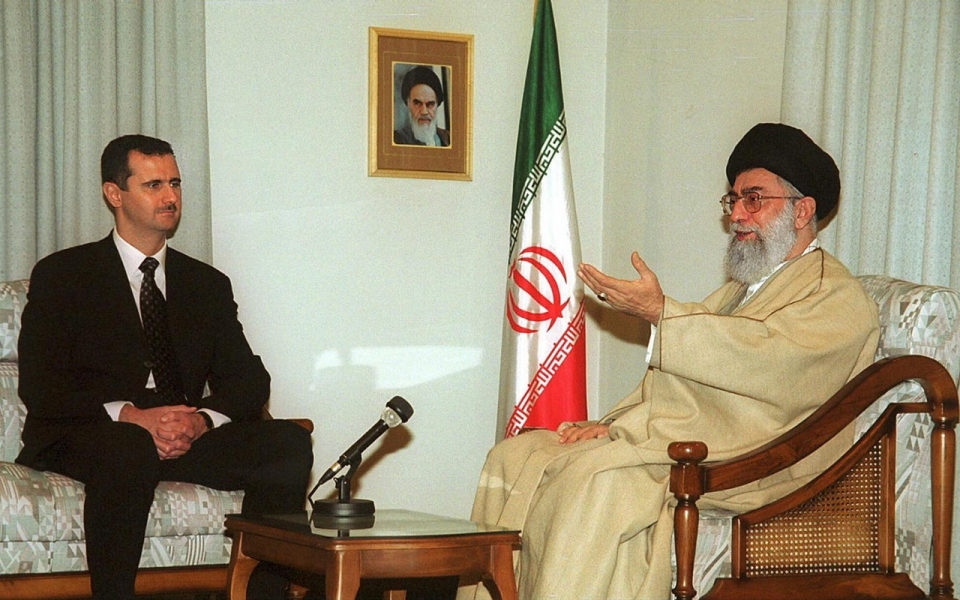
  • Syria’s president Basher al-Assad, the man who has waged a war with this own people that has killed over 220,000 people thus far told the Iranian leader: “In the name of the Syrian people, I congratulate you and the people of Iran on this historic achievement.”
  • Hezbollah, the terrorist group in Lebanon was impressed that Iran now had “global recognition as a member of the nuclear club.”
  • David Duke, the former member of Congress and head of the KKK was happy that the Iranian deal would likely keep Israel from attacking Iran

assad_iran_083013_1385159834190

Iran’s supreme leader Ayatollah Ali Khamenei meets Syrian President Bashar al-Assad in Tehran 25 January 2001.(photo: Atta Kenare/AFP/Getty Images)


As part of this agreement, Iran will get funds in the range between Obama’s estimate of $56 billion to as much as $150 billion.  Not surprisingly. this makes the various terrorist entities that are financed by Iran quite happy including (parenthetical is the year when placed on the US State Department list of foreign terrorist organizations):

These Iranian-backed terrorist groups are responsible for the deaths of thousands of civilians and continue to destabilize the Middle East and beyond..

In Obama’s attempt to sell the Iranian deal, he cited many allies that endorsed the deal while specifically avoiding mention of America’s enemies that also support it.  How does one account for the fact that both US allies and foes celebrate the deal? Is the deal actually beneficial to all of the parties, or do some countries simply not understand the deal’s details?

  • The Western world gets to curtail Iran’s nuclear program and avoids a war in the near-term
  • Iran gets to avoid a war, keep its nuclear infrastructure intact, global legitimacy, does not have to change its behavior regarding backing terrorism, and gets tens of billions of dollars in cash
  • Iran’s allies get access to funds and arms from Iran in the near and medium-term, and potentially a nuclear-armed Iranian-sponsor in the not-too-distant future

Obama deliberately does not discuss the many enemies of the United States that support the P5+1 deal and their long list of reasons for doing so. Instead, he makes comments that it is only the Iranian hardliners (and Republicans and Israel) who oppose the agreement. By doing so, he attempts to conceal the enormous benefits granted to Iran (and its proxies) in the agreement. It is pure marketing and a bright white lie over his old red lines.

do not enter
A bright White Lie over a Red Line
(Do Not Enter)


The party Obama highlighted as not being happy with the deal is Israel. A few reasons:

  • Iran will be allowed to continue to call for Israel’s annihilation
  • Iran will have billions of dollars that will not be constrained in any manner from funding terrorist groups that target Israel
  • Iran will get access to a range of ballistic missiles in as little of five years
  • Within 10-15 years, Iran will be a threshold nuclear state
  • The structure of the deal provides Iran opportunity to break the terms and develop nuclear weapons within ten years

In other words, there is a little something (or a lot) for everyone in the deal, with the exception of Israel.


Related FirstOneThrough articles:

The Obama Administration Lays Foundation of Blame at Israel for a Potential War with Iran

The Gap between Fairness and Safety: WMDs in Iraq and Iran

O’bama, Where Art Thou?

Netanyahu’s View of Obama: Trust and Consequences

For Obama, Israeli security is not so time-sensitive

Missing Netanyahu’s Speech: Those not Listening and Those Not Speaking

UN Comments on the Murder of Innocents: Itamar and Duma

The Middle East is unfortunately no stranger to attacks on innocent people. In July 2015, an arson attack on the home of Palestinian Arabs in the town of Duma killed an 18-month old baby. Just 15 miles away, in the town of Itamar, two Palestinian Arabs stabbed to death five members of a Jewish family in their beds in March 2011.

The taking of innocent lives is a terrible thing. It is also sad to watch completely different reactions from world bodies to the two events. Here is the UN news release of the 2011 deliberate murders of five Israeli Jews and the news release of July 2015 on the arson attack that claimed one Palestinian Arab. A short comparison:

Deliberate Murder of 5 Israeli Jews Arson Attack which Claimed Life of 1 Palestinian Arab
Words in article 220 422
Attack called “terrorism” None Three times
Blame placed Not placed on Arabs or Muslims Placed on “Jewish extremists”
Other Attacks Mentioned No mention of repeated attacks by Palestinians on Israelis Discussed “repeated acts of settler violence”
Comment on leadership “Welcomes the strong condemnation… by President Abbas” No welcome of condemnation by Netanyahu. Blamed Netanyahu for variety of items including demolishing Palestinian homes and settlement policy.
Cause for Attack Not discussed Blamed on “Israel’s illegal settlement policy”

#JewishLivesMatter

The continued disproportionate attacks by the United Nations on only one party in the Israeli-Palestinian conflict will marginalize the UN as a factor in arriving at a long-term solution in the region.

Ban Ki Moon
UN Secretary-General Ban Ki-Moon
(photo: AP/Gary Cameron)


Sources:

Text of UN March 2011: “12 March 2011 – Secretary-General Ban Ki-moon and the United Nations diplomatic partners in the search for peace in the Middle East today condemned the shocking murder of an Israeli family of five, including three children, in a West Bank settlement overnight and called for the prosecution of the perpetrators of the crime.

Mr. Ban also urged all concerned to act with restraint.

The diplomatic Quartet of the UN, European Union, Russia and United States, which seeks a two-State solution to the Israeli-Palestinian conflict, condemned the killings “in the strongest possible terms.”

“The Quartet offers their condolences to the loved ones of the victims and to the Israeli people. Attacks on any civilians are completely unacceptable in any circumstance,” the Quartet said in a statement.

“The Quartet calls on those responsible to be brought to justice and welcomes the strong condemnation of this attack by [Palestinian] President [Mahmoud] Abbas and the Palestinian leadership.”

It stressed the need to expedite efforts to achieve Israeli-Palestinian and comprehensive Arab-Israeli peace.

Media reports said the killings occurred in the settlement of Itamar, near the city of near Nablus. The victims were reportedly stabbed to death by an intruder who broke into their home.

The Israeli army radio said the killer had spared two other children, and that the murder was discovered by another one when she came home.”

Text of UN July 2015: “31 July 2015 – United Nations Secretary-General Ban Ki-moon and the UN special envoy on the Middle East have strongly condemned today’s arson attack in the West Bank that killed a Palestinian child and left the child’s parents severely injured.

“The Secretary-General strongly condemns today’s murder of a Palestinian child in the West Bank and calls for the perpetrators of this terrorist act to be promptly brought to justice,” reads a statement issued by his spokesperson in New York.

Continued failures to effectively address impunity for repeated acts of settler violence have led to another horrific incident involving the death of an innocent life, adds the statement. “This must end.”

The absence of a political process and Israel’s illegal settlement policy, as well as the harsh and unnecessary practice of demolishing Palestinian houses, have given rise to violent extremism on both sides, the statement continues.

“This [situation] presents a further threat to the legitimate aspirations of the Palestinian people for statehood, as well as to the security of the people of Israel. The Secretary-General urges both sides to take bold steps to return to the path of peace.”

Mr. Ban reiterates his call on all parties to ensure that tensions do not escalate further, leading to more loss of life, the statement concludes.

Earlier today, the United Nations special envoy on the Middle East today expressed his outrage over what he called a “heinous murder” and a “terrorist crime.”

“I am outraged by today’s vicious arson attack by suspected Jewish extremists in the Occupied West Bank village of Duma, near Nablus, which killed Palestinian toddler Ali, critically injured his mother and father, and injured his four-year old sibling,” the Special Coordinator for the Middle East Peace Process, Nickolay Mladenov, said.

Joining in the “strong condemnations” issued by Israeli and Palestinian Governments and political leaders, the Special Coordinator also called for a “full and prompt investigation” to bring the perpetrators to justice.

“This heinous murder was carried out for a political objective. We must not permit such acts to allow hate and violence to bring more personal tragedies and to bury any prospect of peace. This reinforces the need for an immediate resolution of the conflict and an end to the occupation.”

Later today, the Security Council issued a statement to the press, condemning “in the strongest terms” the “vicious terrorist attack,” and underlining the need to bring the perpetrators of this “deplorable act” to justice.

Council members encouraged all sides to work to lower tension, reject violence, avoid all provocations, and seek a path toward peace.”


Related FirstOneThrough articles:

The United Nations Audit of Israel

Double Standards: Assassinations

Every Picture Tells a Story: The Invisible Murdered Israelis

The Legal Israeli Settlements

The Death of Civilians; the Three Shades of Sorrow

Eyal Gilad Naftali Klinghoffer. The new Blood Libel.

Cause and Effect: Making Gaza

Subscribe YouTube channel: FirstOneThrough

Join Facebook group: FirstOne Through  Israel Analysis

John Kerry’s Hypocrisy: “Can You Deliver?”

Listening to US Secretary of State John Kerry try to explain and defend the P5+1 Iranian nuclear deal to various audiences is a spectacle to behold, regardless of one’s position on the best course of action.  One of the people who might want to watch the sessions and learn something from John Kerry is John Kerry.

Kerry CFR
John Kerry speaking at the Council of Foreign Relations
July 2015

Secretary Kerry argued at the Council for Foreign Relations (CFR) that Congress must support the deal or it would undermine his ability to negotiate any treaty with any government in the future. At 29:55 of the CFR talk, Kerry said: “Other people in the world are going to sit there and say ‘hey, let’s negotiate with the United States, they have 535 Secretaries of State. I mean, please! I would be embarrassed to try to go out… I mean, what am I going to say to people after this as Secretary of State? ‘Come negotiate with us?’ ‘Can you deliver?’ Please!“

Kerry made the point that when two parties sit down to negotiate, it is critical for the sides to know that the negotiating parties are both authorized to negotiate and have the ability to fulfill their sides of the deal. If no such authority or ability exists, the discussions are an irrelevant waste of time.

Despite Kerry being quite clear about his logic, he has nevertheless insisted that Israeli Prime Minister Benjamin Netanyahu sit down and negotiate with Acting-President of the Palestinian Authority Mahmoud Abbas, even though it is clearly understood that Abbas can deliver nothing.

  • No Mandate: Abbas’s four-year term as president ran out in 2009. No presidential elections have been held since then.
  • No Authority: Abbas’s Fatah party lost legislative elections in 2006, winning only 33% of the parliament. No legislative elections have been held since then.
  • No Support: Abbas lags in every Palestinian poll held since 2006.
  • No Control: Abbas has no control of Gaza since his Fatah party was kicked out in 2007.
  • No Track Record: Abbas has shown zero credibility in being able to strike compromises to govern his own people, let alone deliver compromises with Israel.

Despite the glaringly obvious impotence of Abbas, the Obama administration continued to pressure Israel to negotiate with this straw man.

The Obama administration publicly acknowledged that the Palestinian Authority has absolutely no ability to deliver peace a few years ago. During the Gaza war on Israel in 2012, then US Secretary of State Hillary Clinton tried to broker a cease-fire. She made a dozen calls to various world leaders to halt the war- but not ONCE called the Abbas and the Palestinian Authority.

Compounding the inherent flaws in Abbas and the Palestinian Authority is Abbas’s insistence on bringing terms of any deal with Israel to a referendum. Abbas stated that he cannot decide on the “Right of Return” for all Palestinians, but that each of the 5 million Palestinian Arab “refugees” must make a decision for themselves. Hey Kerry- 535 “second-guessers” looks pretty good compared to 5 million! In terms of the rest of the components of a final agreement, Abbas stated that he “would go to a referendum everywhere because the agreement represents Palestinians everywhere.”  That’s impressive – he seeks the approval of 11 million “Palestinian” Arabs from all around the world!


Kerry’s comments regarding Iran are both on- and off-the-mark.  Iran and all of the parties in the negotiations know that the United States is a democracy and the political process must run its course.  Once the American people’s representatives in Congress make a decision, the government will deliver on its commitments.

However, Abbas – a complete straw man if ever there was one – with no authority or control whatsoever, openly states that millions of individuals will ultimately not only decide the fate of an Israeli-PA deal overall, but even on certain components on an individual basis.


Kerry fully appreciates that before negotiators start a process that they want to know the answer to the fundamental question: “Can you deliver“? However, he doesn’t care when he forces Israel to do exactly that with Abbas and the Palestinian Authority.


Related FirstOneThrough video and articles:

Abbas demands R-E-S-P-E-C-T

The Disappointing 4+6 Abbas Anniversary

Palestinian “Refugees” or “SAPs”?

Subscribe YouTube channel: FirstOneThrough

Join Facebook group: FirstOne Through  Israel Analysis

The Fault in Our Tent: The Limit of Acceptable Speech

 Some passionate and eloquent liberals have bemoaned the state of inclusiveness among Jews today. Leon Wieseltier, editor of the New Republic, penned an angry piece “J Street’s Rejection Is a Scandal” about the exclusion in 2014 of J Street from the Conference of Presidents of Major American Jewish Organizations. Angry voices are again being heard about J Street due to their position in favor of the Iranian nuclear deal promoted by the Obama administration. Is Wieseltier correct in that we only seek to hear our own voices and that “the orthodoxies and the bubbles and the closed loops and the echo chambers are everywhere?” Is there a “red line” that J Street and others have crossed and therefore deserve to be excluded from the broad tent of acceptable conversation?

Individual Hate Speech

Many countries have laws that ban hate speech. Sometimes the exact language is clearly spelled out about what cannot be said publicly and sometimes it is more general in nature.

For example, several European countries, including Germany, have laws that prohibit Holocaust denial. Those countries took such steps not simply because such expressions offend Jews, but because of the continent’s failure to step in and protect Jews which led to their slaughter. Silence became complicity which must never be allowed to happen again.

For its part, the United Nations Human Rights Council adopted Resolution 16/18 whose goal is “Combating Intolerance, Negative Stereotyping and Stigmatization of, and Discrimination, Incitement to Violence and Violence Against, Persons Based on Religion or Belief.” The resolution was drafted principally at the behest of Islamic countries who were worried about the spread of “Islamophobia.”

The various laws against hate speech all seek to curtail an incitement to violence and harm. The banned speech relates to a specific group of people (ie. Muslims) and not a concept (for example, a religion like Islam).  While a person can legally say disparaging remarks about a concept (“Communism is evil”), one risks breaking the law by attacking a group of people (“All Communists should be beaten up”).

Banned Groups

Hate Speech laws are typically drafted against individuals. However, laws are also drafted against groups that incite violence.  Israel banned two political parties, Kach and Kahane Chai in 1994 as they were defined as terrorist organizations.  The groups’ ideology was based on the teachings of Rabbi Meir Kahane who called for expelling Arabs from Israel, thereby running afoul of the premise of calling for negative actions against people.  Israel has also banned some Arab parties from running in elections which supported terrorism.

BDS, Hamas and Iran

Liberals and J Street supporters feel that BDS (Boycott, Divestment and Sanctions), Hamas and the Iranian nuclear deal should be rightly within civil discourse.  However, do these topics and groups support violence against people, or are they just broad discussions about policies and ideas?

BDS: Reasonable people can arrive at different conclusions about Jewish settlements in Judea and Samaria. Some feel that all the settlements are completely legal as called for in international law in 1922, while others feel that Jews living east of the Green Line is against international law as recently stated by the UN Secretary General. Those competing viewpoints would fall within legal and acceptable conversation, both in public society and in an open-minded pro-Israel community.

However, inciting hatred against settlers is inciting violence.  Calling on the economic strangulation of Jews who legally purchased homes and businesses is akin to hate speech.  As such, new laws are being passed which specifically outlaw supporting BDS.

Hamas: Hamas is a rabidly anti-Semitic organization that calls for the complete destruction of Israel. It has fired well over 10,000 rockets into Israel, killed thousands of people in hundreds of attacks. Since completely taking over Gaza in 2007, Hamas has engaged in three wars against Israel.

Supporting Hamas in any way is supporting terror.  It should be banned completely in public society and in the pro-Israel tent.

Iranian nuclear deal: The Iranian nuclear agreement took various turns over the past several years. As Iran openly calls for the destruction of Israel, any group supporting Iran or helping Iran obtain weaponry would be supporting violence against Israel.

While the Iranian deal may arguably slow down Iran’s pathway to nuclear weapons, it certainly gives Iran tremendous financing and weaponry.  As such, 78% of Israelis oppose the Iran deal in its current format.

J Street Views

J Street has taken provocative stances on these three issues.

  • On BDS, the group technically states that it opposes the BDS movement, while it supports efforts that do call for BDS, particularly of communities east of the Green Line.
  • On Hamas, the group’s own website states that “Hamas is a political movement with an important and significant base of support within Palestinian society… and we support efforts by third parties to achieve reconciliation [between Fatah and Hamas which Israel opposes] and a unity government.”  One could similarly say that the Nazi party was a political party.
  • On Iran, the group launched a major campaign to support the deal, in direct opposition to pro-Israel groups such as AIPAC and the government of Israel itself. J Street was even against Iranian sanctions in 2009.

20150724_072448
 Full page J Street Advertisement supporting Iran Deal
New York Times July 25, 2015

On these issues which directly harm Israelis and the state of Israel, J Street has sided against the stated desires of the government of Israel.  Each time, they have taken stances which closely align with Israel’s enemies which seek to harm the country and its citizens.

Further, and most alarmingly, J Street has urged the Obama administration to vote against Israel at the United Nations Security Council, which is the sole voice of support in many instances. That action was so reprehensible, that even devout liberal politician Gary Ackerman (D-NY) said “I’ve come to the conclusion that J-Street is not an organization with which I wish to be associated….America really does need a smart, credible, politically active organization that is as aggressively pro-peace as it is pro-Israel. Unfortunately, J-Street ain’t it.”

Erekat
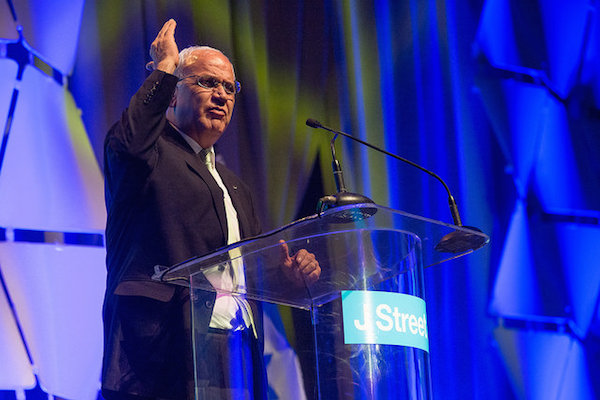
PLO negotiator Saeb Erekat at J Street Conference
March 2015 (photo: J Street)

A Related View from Tisha b’Av

The Talmud relates a story about the reason the Second Temple in Jerusalem was destroyed:

In Gittin 56ab the Talmud tells the story of zealots who wanted to fight the Romans as they got ready to attack Jerusalem. These zealots burned decades worth of food that had been stored in Jerusalem in order to force the residents of the city to confront the Romans.

These zealots undoubtedly considered themselves pro-Jewish. They thought that by destroying all safeguards and alternative options, they could force the rest of the Jewish people to adopt their position in the battle against Rome.

J Street, like the zealots 2000 years ago, view themselves as pro-Israel. While some parts of the Arab and Muslim world (f/k/a Romans) may seek to attack and destroy Israel, J Street views their approach to the conflict as the only logical course of action.  As such, they have engaged in co-opting the US government to take positions against those sought by the government of Israel.  Like the zealots who burned all of Jerusalem’s food supplies (now known as US support), they feel that Israel stripped of all of the territories won in 1967, without a Gaza blockade, and with a nuclear pact in place with Iran will secure Israel’s future. J Street is pursuing global and US pressure to make that happen, rather than seeking to convince the Israeli government.

JStreet-Map
Bookmark designed for J Street Conference
(Photo: Lisa Goldman)

 In the minds of many, the J Street positions have made them the a modern-looking version of Neturei Karta, the anti-Zionist Chasidic sect, similar to the clean-shaven Jewish outreach people who market a more modern version of Chabad outreach.


Debating the merits of different approaches for how Israel deals with hostile neighbors is within constructive debate.  Consistently arguing in favor of Israel’s enemies that seek to destroy the country and kill its people is akin to inciting violence.

Review the statements and positions of J Street here and consider whether such voices deserve to be heard in your community.


Related First One Through articles:

New York Times Confusion on Free Speech

Selective Speech

A Disservice to Jewish Community

Subscribe YouTube channel: FirstOneThrough

Join Facebook group: FirstOne Through  Israel Analysis