Israel, the Liberal Country of the Middle East

Summary: Israel is by far the most liberal country of the entire Middle East and North Africa region (MENA). It is also probably the most liberal country from Western Europe to Australia and down to South Africa.

Diversity of population. Israel has a diverse population. The majority, 75%, are Jewish, about 20% Arab Muslims, and the balance of 5% a mix of Christians, Baha’i, Druze and others. Almost all of the MENA region is 90%+ Muslim, with a large number being almost completely Arab Muslim (Morocco; Tunisia; Iran; Yemen; Iraq; Jordan; Turkey; Algeria; Gaza and EGL; Saudi Arabia; Libya; Egypt; Syria). Lebanon is the only other country in the region with some diversity.

Equal Justice. Israel administers its legal system to all levels of society.  Consider that both a former Prime Minister and President were sentenced to jail for general crimes such as bribery and sexual assault (as opposed to a method to remove a dictator). They were afforded no special privileges compared to ordinary citizens.

Salim_Joubran
Salim Joubran, Israeli Arab Supreme Court Judge

Women’s Rights. Women in Israel have full rights of equality including the ability to vote, inheritance, walk in public alone, drive, etc. These are rights that are not found in much of the MENA region. Saudi Arabia has virtually no rights for women.  The new 20th Knesset will have 29 women– 24% of the parliament, significantly higher than the 16% of women in the US congress.

shaked
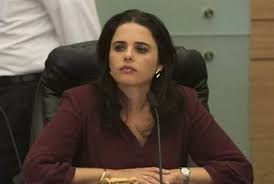
Ayelet Shaked, Member of Knesset

Free Speech, Assembly and Press. Israel permits freedom of expression. Freedom House ranked Israel as the only country in MENA with a free press for several years, and just added Tunisia. The MENA region continues to be the most repressive in terms of freedoms in the entire world, such as Turkey which leads the world in jailing the most journalists.

african protest
Thousands of illegal African immigrants protest in front of parliament

Freedom of Religion. Israel allows people of all faiths the freedom to practice their religion. This compares to much of the MENA region which has criminal laws against apostasy– changing one’s religion from Islam to something else- even though such right is guaranteed by the Universal Declaration of Human Rights. A growing number of countries in Europe have begun to restrict freedom of religion including bans on minarets at mosques, head coverings in public and permitting kosher and halal foods.

mormon
Mormon church in Jerusalem built with assistance of Israeli government

Gay Rights. According to a gay rights group, ILGA, Israel was the only country to get a perfect score on gay rights in the region between Western Europe, South Africa and Australia. For example, Israel permits gay couples to adopt children and serve openly in the army , something which many western countries do not permit. In some MENA countries such as Iran, Yemen, Saudi Arabia and Mauritania, gays are actually publicly executed by the government.

gays in israel
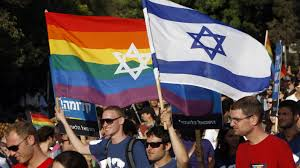
Gays in Israel

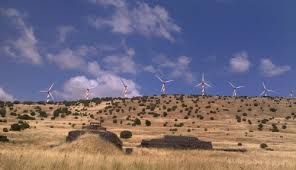
Environmental Matters. Israel is a “green” country. It leads the world in recycling plastic, having surpassed Europe in 2012. It created the first commercial wind farm in MENA and the first permanent bike sharing program. It leads the word in drip irrigation technology. It was one of only two countries in the world to have more trees entering the 21st century than it had in the 20th due to forestation efforts.

windfarm
Wind Farm in the Golan

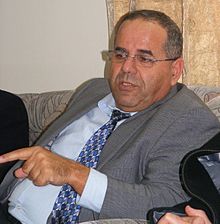
Open Public Office. People of all backgrounds and faiths are allowed to serve in the Israeli government, to become Prime Minister, serve in every branch of the military and Supreme Court. The new 20th Knesset will have 17 Arabs – 14% of the parliament. This compares to 8% black representation in the US Congress. Many countries, like Syria, restrict the participation of people who are not Muslims from participating in public office.

Ayoub_Kara
Ayoub Kara, Druze MK from Likud Party

Death Penalty. Israel only has a single reason for sentencing someone to death – crimes against humanity – which it has carried out only once: fifty years ago for Adolf Eichmann for his role in the Holocaust. Much of the MENA region uses capital punishment for a range of offenses including: apostasy; adultery; drug trafficking; being gay; murder; witchcraft; and prostitution.

Abortion. Abortion is legal in Israel for a variety of circumstances. It is illegal in almost the entire rest of the MENA region, with the exception of Tunisia.

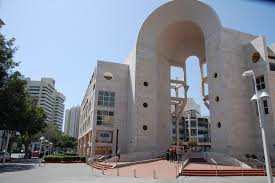
The Arts. Israel is the only country in the MENA region to have both an opera house and a ballet company.  Opera exists in Israel, Oman and Syria and ballet companies are in Israel, Tunisia, Egypt, UAE and Iran.

opera
Tel Aviv Performing Arts Center

Animal Rights. Israel became only the third country/ entity (after the European Union and Norway) to ban the sale of cosmetics that were tested on animals.

Human Body Rights. Israel permits full control of a person’s body including tattoos, body piercings and prostitution. More neighboring countries are enforcing bans on tattoos and piercings such as Turkey. Lebanon and Israel are the only countries in MENA that permit and regulate prostitution.

tattoo

Protecting Women. Israel passed a law that bans the use of underweight models to prevent women from becoming anorexic.

barrefaeli
Israeli model Bar Refaeli

Universal Healthcare.  Many countries in the Middle East provide universal healthcare including: Israel; Kuwait; Bahrain; and UAE.


Israel. An open society in the middle of the Middle East.


Related First One Through article

Israel: Security in a small country

In Israel, the winner is…Democracy

The Noose and the Nipple

I am confused about society’s and social media’s decisions on censorship. In particular, why do forums like Facebook and YouTube permit showing brutal murders while they block nudity?

On Facebook today, I had a video pop up of a mob killing a woman in Afghanistan because she supposedly burned a Quran. Over the past weeks, YouTube has shown videos of the Islamic State beheading people and setting others on fire. Boko Haram is shown executing people and throwing them off bridges.

Yet a nipple is considered nasty.

According to Facebook: ““We restrict the display of nudity because some audiences within our global community may be sensitive to this type of content – particularly because of their cultural background or age.” Excuse me? At what age is viewing a beheading OK?

Facebook continues on its community standards page: “We also restrict some images of female breasts if they include the nipple, but we always allow photos of women actively engaged in breastfeeding or showing breasts with post-mastectomy scarring.” Oh, Thank goodness Facebook- I guess breastfeeding is somehow more natural than an unaccompanied breast. And I’m sure youngsters will be less traumatized seeing a breast with post-mastectomy scarring than pre-mastectomy.

Our laws prohibit a woman in Utah from showing her tatas, but permit enormous billboards with guns and violence for all to see.

What censorship calculation shows a gay man hanging in a noose in Tehran, but won’t show a woman’s nipple in Times Square?

Netanyahu’s View of Obama: Trust and Consequences

Summary: Obama has asked Netanyahu to trust him on an issue (Iranian nuclear power) that is an existential threat to his country, even though Obama hasn’t earned that trust on more basic issues. Obama then compounds Netanyahu’s fear by stating Obama will act completely alone in controlling the outcome. Netanyahu’s nightmare is not just becoming “1938 Czechoslovakia”, but “2014 Ukraine”.
 obama netanyahu2
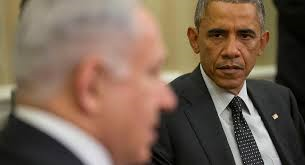
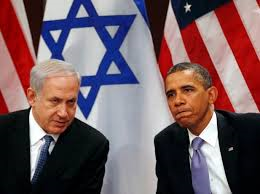
Netanyahu and Obama

TRUST

Trust is the bedrock of a functional relationship. It enables one party to rely on the other. A trust that includes both intention and capability permits a sharing of responsibility and workload.

The relationship between US President Obama and Israeli Prime Minister Netanyahu started off badly and further deteriorated over the years. Personalities aside, the lack of a shared vision about the path to peace and security in the violent Middle East damaged relations.  However, it was a series of bad decisions which destroyed the trust between the two leaders.

Negotiation with Palestinians. Obama’s actions early in his presidency, hurt his credibility with Netanyahu. Obama insisted on an Israeli settlement freeze as a pre-condition to negotiations with the Palestinians- a pre-condition that was never introduced before, even by the Palestinians. Despite Netanyahu’s serious reservations, he instituted a ten-month freeze on building new homes in the west bank of the Jordan River. In exchange, Obama could not get acting-Palestinian President Abbas to even show up to talk for the first nine months, and when he did, all Abbas offered was extending the freeze even longer.

When US Secretary of State John Kerry tried another round of negotiations with Abbas in the fall of 2013, the US again asked Israel to give up something to start talks while it made no demand of the Palestinians. Israel released dozens of terrorists that were convicted of murder from its prisons. In exchange, Kerry could not even get Abbas to recognize Israel as a Jewish State, let alone any compromises for a Palestinian state. The negotiations failed again.

In both situations the US pressured Israel to give up something just to initiate negotiations and asked nothing of the Palestinians. In the end, the Palestinians continued to give exactly the same: nothing.

Giving it away upfront. The Obama administration has used the tactic of giving away bargaining points upfront in the hope of gaining something in the negotiations down the road. In Cuba, Obama has pulled back sanctions, in the hope that the country reforms. In Iran, the US eased sanctions to get Iran to consider allowing monitors to watch it build nuclear power.

Netanyahu does not believe in such negotiating tactics and it has not worked out well for Israel.

Giving up on Allies. The disagreement on negotiating style is only part of Netanyahu’s issue.  Israel and the Middle East watched the Obama administration turn its back on its allies. Egyptian President Mubarak was once a close ally of the United States. One day, the Obama administration decided it would no longer stand by its ally and called for Mubarak’s ouster. He was rushed off to jail.

The US’s Middle Eastern allies were dumb-founded by Obama’s action. A senior Arab government official stated “[The Saudis] are at odds with the U.S. position, publicly pushing Mubarak out. And frankly so are we—this isn’t how you handle issues in region.”

Failure to Understand Regional Dynamics. Obama’s turn on Egypt’s Mubarak was followed by an embrace of the democratically-elected Muslim Brotherhood. Obama’s infatuation with the “Turkish model” of democratic Islam made him welcome the new Egyptian ruler Mohammed Morsi. Morsi reopened Egypt’s ties with Hamas (the Muslim Brotherhood in Gaza) , much to the chagrin of Israel’s Netanyahu. Those actions also undermined the more moderate (on a relative basis) acting PA President Abbas.

Obama back-tracked from his support of democracy in Egypt by not objecting to the replacement of Morsi via a takeover by Abdul Fattah el-Sisi. El-Sisi clamped down on Hamas and the Muslim Brotherhood which won praise in Israel. From Israel’s perspective, a mistake was rectified to some degree, but the damage done by Obama of not standing by an ally and not appreciating the regional dynamics was etched in memory.

Obama not standing by Treaties or Comments. In addition to not standing by allied leaders, Obama has not stood by his own word or by US treaties with governments. For example, Obama’s declared “red line” on Syria’s use of chemical weapons came and went without ramifications for Syrian President Assad. While Obama claimed credit for negotiating a solution to get rid of Syria’s known chemical weapons, there was no personal penalty for Assad. Assad continues to remain in power and murder his countrymen.

Saudi Arabia was incredulous and stated“We’ve seen several red lines put forward by the president, which went along and became pinkish as time grew, and eventually ended up completely white…When that kind of assurance comes from a leader of a country like the United States, we expect him to stand by it.”
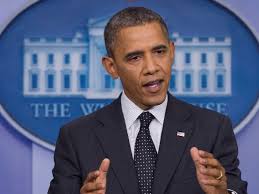
obama syrian red line
Obama asserting a “red line” on Syrian chemical weapons

The Ukrainian situation is even more telling. In 1994, Ukraine signed onto the Budapest Memorandum which was to guarantee its territorial integrity in exchange for giving up its nuclear weapons. While it adhered to its upfront part of the bargain by giving up its weapons, the Obama administration refused to enforce its end of the agreement by coming to the aid of Ukraine when Russia invaded and annexed Crimea in 2014. Russian leader Putin correctly assessed the temperament of Obama that he would fail to honor his obligation, just as he failed to take action in Syria. Putin has continued to move past Crimea to other parts of Ukraine while the US not only fails to come to the defense of Ukraine, but drags its feet in sending weapons to defend itself.

The situation is not lost on Netanyahu (while it is on the knee-jerk liberal New York Times which stated in its lead editorial on March 12, 2015 that “Republicans are perfectly willing to diminish America’s standing as a global power capable of crafting international commitments and adhering to them.”  As detailed above, Obama has made very clear that HE has diminished America’s commitments, not the Republicans).

Obfuscation. The last loose thread in the unraveling fabric of trust is the lack of transparency.

While Obama touted his goal of transparency when he ran for office, his administration has been one of the least transparent. Witness Obamacare, where House Speaker Nancy Pelosi famously said “We have to pass the bill to that you can find out what is in it.” Secretary of State Hillary Clinton ran her own email server outside of the State Department and deleted emails at her own whim. Now, Obama refuses to provide details of the Iranian negotiations with Israel.

The trust between Obama and Netanyahu is broken.

ACTING ALONE

Compounding the Israeli frustration with the lack of trust in the Obama administration’s dealing with Iran, is the unilateral course that Obama has taken. Obama has effectively barred Israel from attacking Iran and is attempting to seal negotiations without legislative approval.

Blocking an Israeli attack. As soon as Obama began to negotiate with Iran, it became impossible for Israel to attack Iran. How could Israel attack the facilities while the US was pursuing a diplomatic initiative? The start of Obama’s talks signaled the end of Israel’s ability to destroy their nuclear program.

Skipping Congress. Obama repeatedly stated that he does not believe that he needs congressional approval to sign a deal with Iran. As such, he has asserted that he has complete authority to negotiate and finalize a deal.  The Republicans, which now have majority control of both the House and Senate, strongly disagree and have taken steps to make their position known to both the Obama administration and Iran itself.

COMPETENCIES and CONSEQUENCES

Israel’s Netanyahu is left in a precarious situation.  As his country is under threat of annihilation by Iran, its close ally has put itself in the lead seat in negotiations.  However, Netanyahu is looking at the current US president as:

  • Lacking an understanding of regional dynamics;
  • Incapable of negotiating;
  • Refusing to be transparent about the negotiations;
  • Unwilling to stand by statements and treaties in support of allies;
  • Determined to act alone without the legislative branch of government

The Trust in Competencies and Fear of Consequences leaves Israel in a vulnerable and lonely spot.  While Israel fears it will be sacrificed at the alter of larger players like Czechoslovakia in 1938, it sees how the lead negotiator will not enforce any security agreements that may be struck, as in the embattled Ukraine today.


Related First.One.Through articles:

Arab states agree with Netanyahu in speech to Congress: https://firstonethrough.wordpress.com/2015/03/08/missing-netanyahus-speech-those-not-listening-and-those-not-speaking/

Conservative focus on safety: https://firstonethrough.wordpress.com/2015/03/01/the-gap-between-fairness-and-ramifications-wmds-in-iraq-and-iran/

Obama’s Iranian red line: https://firstonethrough.wordpress.com/2014/11/24/obamas-iranian-red-line/

The need for a global public reaction to Iran’s nuclear aspiration: https://firstonethrough.wordpress.com/2015/03/03/hidden-reactor-silent-reaction/

Missing Netanyahu’s Speech: Those not Listening and Those Not Speaking

Summary: The media highlighted the Democrats that snubbed the Israeli Prime Minister’s address to Congress. They failed to mention the coalition of countries that Bibi represented. Will the world’s safety rest with those that party-with-their-party or those that bomb-the-bomb?

US President Obama made a deliberate attempt to marginalize Israeli Prime Minister Benjamin Netanyahu and his address to Congress in March 2015. Obama aired a number of complaints about the nature of the invitation and later said that Netanyahu didn’t offer any new ideas in dealing with Iran. His efforts to turn public attention away from the incredibly important topic to a sideshow of partisanship was sad on many levels.

Obama no
Obama and Biden skipped Netanyahu’s Address to Congress,
March 2015

There were many people who were not at Congress on March 3rd: Democrats that didn’t listen, and Arab States that echoed Netanyahu’s message.

Those not Listening: Democrats Partying with their Party

The Obama administration managed to convince 58 members of Congress to skip Netanyahu’s speech. All were his fellow Democrats. They were:

SENATE – 8 members

  • Sen. Al Franken (Minn.)
  • Sen. Martin Heinrich (N.M.)
  • Sen. Tim Kaine (Va.)
  • Sen. Patrick Leahy (Vt.)
  • Sen. Bernie Sanders (I-Vt.)
  • Sen. Brian Schatz (Hawaii)
  • Sen. Elizabeth Warren (Mass.)
  • Sen. Sheldon Whitehouse (R.I.)

HOUSE – 50 members

  • Rep. Karen Bass (Calif.)
  • Rep. Earl Blumenauer (Ore.)
  • Rep. Corrine Brown (Fla.)
  • Rep. G.K. Butterfield (N.C.)
  • Rep. Lois Capps (Calif.)
  • Rep. Andre Carson (Ind.)
  • Rep. Joaquin Castro (Texas)
  • Rep. Katherine Clark (Mass.)
  • Rep. William Lacy Clay (Mo.)
  • Rep. James Clyburn (S.C.)
  • Rep. Emanuel Cleaver (Mo.)
  • Rep. Steve Cohen (Tenn.)
  • Rep. Bonnie Watson Coleman (N.J.)
  • Rep. John Conyers (Mich.)
  • Rep. Elijah Cummings (Md.)
  • Rep. Danny Davis (Ill.)
  • Rep. Peter DeFazio (Ore.)
  • Rep. Diana DeGette (Colo.)
  • Rep. Lloyd Doggett (Texas)
  • Rep. Rosa DeLauro (Conn.)
  • Rep. Donna Edwards (Md.)
  • Rep. Chaka Fattah (Pa.)
  • Rep. Keith Ellison (Minn.)
  • Rep. Marcia Fudge (Ohio)
  • Rep. Raúl Grijalva (Ariz.)
  • Rep. Luis Gutiérrez (Ill.)
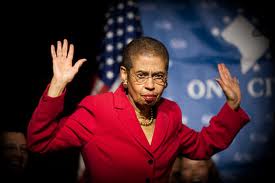
  • Del. Eleanor Holmes Norton (D.C.)
  • Rep. Eddie Bernice Johnson (Texas)
  • Rep. Marcy Kaptur (Ohio)
  • Rep. Rick Larsen (Wash.)
  • Rep. Barbara Lee (Calif.)
  • Rep. John Lewis (Ga.)
  • Rep. Dave Loebsack (Iowa)
  • Rep. Zoe Lofgren (Calif.)
  • Rep. Betty McCollum (Minn.)
  • Rep. Jim McDermott (Wash.)
  • Rep. Jim McGovern (Mass.)
  • Rep. Jerry McNerney (Calif.)
  • Rep. Gregory Meeks (N.Y.)
  • Rep. Gwen Moore (Wis.)
  • Rep. Beto O’Rourke (Texas)
  • Rep. Donald Payne (N.J.)
  • Rep. Chellie Pingree (Maine)
  • Rep. David Price (N.C.)
  • Rep. Cedric Richmond (La.)
  • Rep. Jan Schakowsky (Ill.)
  • Rep. Adam Smith (Wash.)
  • Rep. Bennie Thompson (Miss.)
  • Rep. Mike Thompson (Calif.)
  • Rep. John Yarmuth (Ky.)

 Holmes
Eleanor Holmes Norton (D, DC)

It is wrong to say that these Democratic Congressmen are anti-Semites for skipping Netanyahu’s speech. They are just small-minded, petty, partisan politicians.

Those who were seen not Speaking: Arab States agree with Netanyahu

While Israel is in the crosshairs of the Iranian regime which has singled out the country for annihilation, several Arab countries are also very against Iran obtaining nuclear weapons.  They supported Netanyahu’s position and address.

el sisi
Egyptian President Fatah El-Sisi calling to reform Islam,
January 2015

The difference between the absent deaf audience (Democrats) and the silent approving chorus (Arab states) is a contrast between politics and policy. The difference between Obama and Netanyahu regarding Iran is between hope and action.

Those Talking and Hoping: Obama and Kerry

Obama has essentially articulated that US intelligence is flawed, so the best solution for managing the Iranian nuclear program would be to rely on the Iranians’ openness. His negotiation tack will conclude with faith that the Iranians:

  • will disclose the entirety of their nuclear program;
  • will provide full access to all of the facilities; and
  • will not covertly move towards nuclear weapons.

It can best be called a policy of “hope”.

Kerry Iran
US Secretary of State John Kerry negotiating with Iran,
March 2015

Those Acting: Israel Bombing the Bomb

If Israel is convinced that the Iranians are good on their word, than they have reason to be concerned as Iran has threatened to destroy Israel.

Israel has long taken the approach that hope is not a policy.  It sits in too volatile a region to believe in the good faith of its neighbors that have declared war on the country. Peace is something that is fought for and defended.

Decisive action has led to extended windows of peace for Israel. In 1981, Israel destroyed the Iraqi nuclear reactor that was due to go live.  In 2007, Israel bombed the Syrian nuclear reactor that was being constructed with the help of North Korea. In 1967, Israel acted preemptively to thwart the attacks of Egypt and Syria which enabled a very quick victory.  When Israel decided to remain passive, such as the Yom Kippur War of 1973, the country was almost overrun.

Netanyahu has pleaded for very tough sanctions against Iran. It has used malware and cyber-attacks against Iran. Israel has reportedly assassinated Iranian nuclear scientists (to the chagrin of the United States). It has advocated for putting all options on the table, including military force as it used against the facilities in Syria and Iraq.


The way forward with Iran has two very different paths:

  • Obama has advocated a policy of hope and has enlisted a quorum of party loyalists who will not listen to alternatives.
  • Israel has deployed policies of actions and has an eclectic group of Arab neighbors that support its position.

Will the future safety of the world belong to those that party-with-their-party or those willing to bomb-the-bomb?


Related First.One.Through articles:

Fairness versus Safety: https://firstonethrough.wordpress.com/2015/03/01/the-gap-between-fairness-and-ramifications-wmds-in-iraq-and-iran/
Obama’s Iranian Red Line: https://firstonethrough.wordpress.com/2014/11/24/obamas-iranian-red-line/

Red Herrings on the Red Line

Summary: Obama’s anger at Israel’s Netanyahu was about Netanyahu’s anger at White House policy on Iran. All of the other excuses that Obama threw out proved inaccurate. However, Obama’s actions have introduced a partisan split over Israel into DC politics.

 obama netanyahu
Netanyahu and Obama

US President Obama took umbrage with Republican House Speaker John Boehner’s invitation to Israeli Prime Minister Benjamin Netanyahu to speak to a joint session of Congress. Obama aired a number of reasons, which all proved to be red herrings:

  1. Break in Protocol: Obama initially criticized the break in protocol of Israeli Prime Minister Benjamin Netanyahu accepting an invitation without consulting the White House. A report later came out that the White House was informed about the invitation before Netanyahu accepted. The White House anger should have been directed at Boehner, not Netanyahu, even if this reason held any truth.
  2. Israeli elections: Obama offered another excuse to skip Netanyahu’s address: Obama said that it was US policy to not invite a foreign leader to address Congress in an election season as it would be seen as influencing the elections of another country. In fact, US President Bill Clinton invited then Israeli Prime Minister Shimon Peres to speak to Congress one month before the Israeli election. Further, the timing was a function of Secretary of State John Kerry’s announced Iranian deal deadline on March 24, not the timing of Israeli elections.
  3. Bi-partisan Support: The Obama administration then offered another reason why he and members of his cabinet would leave town during Netanyahu’s visit to D.C.: that Netanyahu was playing partisan politics. The reality is detailed below.

clinton peres
President Clinton and Israeli PM Shimon Peres,
Before Israeli elections in 1996

Israel and the United States have been strong allies regardless of the party in the White House. Israel’s relationship with Bill Clinton (D) was much better than with George HW Bush (R); and better with George W Bush (R) than with Barack Obama (D). There is no benefit or desire for an Israeli leader to choose one party over the other as Netanyahu reiterated in his remarks in the US in March 2015. The dynamics of particular leadership personalities play a role in the tone, but not the substance of the overall relationship between all of the elected US parties in government and the Jewish State.  Netanyahu and Obama have dealt with each other for six years where at times they’ve agreed or disagreed on a variety of issues; in each case, the parties in Congress maintained their support of Israel.

At this moment, Netanyahu strongly disagrees with Obama’s position in the Iranian nuclear negotiations.  It happens to be that Republican leadership also disagrees with the Obama administration. It was solely on that topic that Netanyahu spoke to a joint session of Congress – a major “existential” issue of direct significant impact on Israel.

The difference in opinion about a particular policy does not mean that Netanyahu or Israel now prefer Republicans to Democrats, nor should it mean that elected Democrats or Republicans should treat Netanyahu or Israel any differently. However, the Obama administration made the claim that this was partisan politics, and kept members of the administration from meeting with Netanyahu and asked Democratic party members to stay away from the address, thereby creating a partisan issue.

That may very well have been the goal of Boehner. But the Democrats seemed all too willing to take the bait and insult Israel and Netanyahu by snubbing him. Democrats decided that a distorted idea of party loyalty was more important than hearing the concerns of an ally that has been threatened with annihilation by the very country with which the administration is creating a pathway for nuclear weapons.

Bibi Boehner
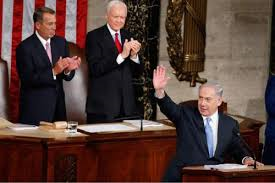
Netanyahu addressing Congress about Iranian nuclear weapons,
March 2015

The gulf in the support of Israel between the right and left of the American public is not new. Republicans support Israel by almost a 2-to-1 ratio compared to liberals around the country. Liberals support opening warmer relations with Muslim countries by over a 2-to-1 ratio over conservatives. But those statistics are in the general population of the United States. Obama has now brought that partisanship into the legislative branch of government in D.C. itself. At the administration’s urging, 58 Democrats boycotted Netanyahu’s speech to Congress. No Republicans missed the address.

Perhaps Obama used Netanyahu’s speech to pivot the party into a closer position with his loyal base of liberal Americans. If so, the implications for Israel will be very negative.

The only silver lining to the shattered red lines of Iran’s nuclear program will likely be that the Palestinian Arabs might return for peace talks with Israel as they will never have such an advocate in the White House as President Obama. What price will Obama make Israel pay? How much will it matter in the coming nuclear tinderbox of the Middle East?


Related First.One.Through articles:

On accepting invitations: https://firstonethrough.wordpress.com/2015/02/09/on-accepting-invitations/

Liberal preference for fairness and conservatives preference for safety: https://firstonethrough.wordpress.com/2015/03/01/the-gap-between-fairness-and-ramifications-wmds-in-iraq-and-iran/

Obama’s Iranian red line: https://firstonethrough.wordpress.com/2014/11/24/obamas-iranian-red-line/

Hidden Reactor, Silent Reaction

Summary: As the world negotiates with Iran about their nuclear program, it is worth remembering lessons from Syria’s nuclear plant in 2007.

In September 2007, something significant happened in the Middle East. While the details were very murky as the news reports were cryptic, it was clear that a major event came-and-went. Over the following months and years, more information emerged about Syria’s nascent nuclear program and Israel’s attack that destroyed it.

syria reactor
Syrian nuclear reactor, 2007

Failure to Detect

Syria began to investigate the feasibility of a nuclear program in the 1990s and by the mid-2000s it was building a nuclear facility with the help of North Korea. The facility was being constructed roughly 100 miles from the Iraqi border. During its construction, hundreds of thousands of American troops were busy a few miles from the construction site during the Iraq War.  Many reconnaissance missions repeatedly flew over the Syrian site, but US intelligence failed to detect that Syria had embarked on plans to build a weapon of mass destruction. For years.

The New York Times stated that “the Americans were somewhat blindsided…. By their own account, they…only identified the plant at Al Kibar, named for the nearest town, after they received photos of the interior of the plant last spring from Israel… But even this victory [of destroying the plant], some experts note, raises questions about the [CIA]’s focus. The reactor was built within 100 miles of the Iraqi border yet never identified even though the administration was searching for any form of such arms programs in Iraq…. Graham Allison, a Harvard professor and author of “Nuclear Terrorism,” who was in Washington on Thursday to testify about Iran’s nuclear program [said] ‘if you can build a reactor in Syria without being detected for eight years, how hard can it be to sell a little plutonium to Osama bin Laden?’”

al kabir map
Location of Syria’s nuclear plant

The Power of Pride

The incident of the secret nuclear facility remained quiet considering the enormity of both its construction and destruction. Not surprisingly, the Syrians wanted to keep the plant hidden as they saw what Israel did to Iraq’s nuclear reactor in 1981. Israel’s silence on its actions against Syria was a calculated move on the part of Israeli Prime Minister Ehud Olmert.

Israel refused to broadcast its strike out of fear that doing so would provoke Syrian President Assad to respond with an attack on Israel. By maintaining silence, Olmert hoped he could allow Assad an escape from reacting to his bruised pride from the crushing setback of Israel’s destroying his plan to become the first Arab nuclear power.

Indeed, the news reports that emerged from Syria about the event were inconsistent. Some reports stated that Israeli planes entered Syrian airspace and were forced to flee due to Syrian fire. Later, the Syrian government said that Israeli planes did enter its airspace, but the warplanes only hit an empty military building.  As such, there was no need for an immediate large-scale confrontation with Israel.  War averted.

Lessons for the Iranian Nuclear Program

DETECTION: The United States administration is actively negotiating with Iran about the extent to which Iran could build nuclear power. Early reports on the negotiations indicate that the terms would necessitate an examination of the Iranian facilities to make sure that they would not migrate an energy program towards nuclear weapons. However, as the Syrian reactor incident makes clear, inspections are flawed. The US’s track record about bad intelligence of Iraq developing a nuclear weapon must also be considered.

Further, consider that the Iranian facilities (that are known) are spread all over the country.  This agreement may enable Iran to operate those current facilities freely.  If the US failed to identify the building of large facilities over many years, can the world really be sure it can make a thorough accounting of the thousands of centrifuges and the fissile materials warehoused inside many buildings spread around the country? The Obama Administration essentially has conceded that it cannot, so it will rely on Iran to show them what they have: “Without an agreement we don’t have any of this insight into Iran’s nuclear program.

In other words, the current working agreement is to let the fox guard the chicken coop.

iran nukes
Iranian nuclear research facility

PRIDE: The second lesson from Operation Orchid, as the Israeli bombing mission was known, was the significance of Arab pride. Israel understood that Syrian pride would have demanded a large response to the Israeli attack. By its keeping its role and the target silent, Israel avoided a large scale war.

The secrecy surrounding Israel’s own nuclear program is for the same purpose.  If Israel’s Arab neighbors would publicly acknowledge the existence of their enemy having nuclear weapons, they would demand WMDs as well. By maintaining an undeclared nuclear program, the arms race in the Middle East never occurred.

That will now change.

Iran’s development of nuclear power, and the world’s tacit approval of it will force other players in the region such as Saudi Arabia to seek nuclear weapons.  The very public nature of these discussions do not permit the Saudi Kingdom to swallow their pride.  People will assume that a quiet side deal was made to allow Iran to get nuclear weapons, or Iran will obtain them against the terms of the agreement.  Regardless, approving a nuclear program for Iran will commence an arms race in the most volatile region in the world.


  • Iraq’s sole nuclear plant was known and Israel’s attack was public.
  • Syria’s nuclear facility was hidden and Israel’s attack was kept silent.
  • Iran’s program is large and public and will demand a large and public response to halt the program from the global community.

Related First.One.Through articles:

The gap between fairness and safety: https://firstonethrough.wordpress.com/2015/03/01/the-gap-between-fairness-and-ramifications-wmds-in-iraq-and-iran/

Obama’s Iranian red line: https://firstonethrough.wordpress.com/2014/11/24/obamas-iranian-red-line/

Murderous governments of the Middle East: https://firstonethrough.wordpress.com/2014/08/01/murderous-governments-of-the-middle-east/

Obama dancing with the Asteroids: https://firstonethrough.wordpress.com/2014/11/14/dancing-with-the-asteroids/

The Gap between Fairness and Safety: WMDs in Iraq and Iran

Summary: There can be a large gap between perceived fairness and ultimate safety. Liberals seem to prefer the moral value of the former, while conservatives value the comfort in the latter.

Liberals on Iraq

Many liberals in the United States love to attack former President George W. Bush for his decision to go to war in Iraq. The president acted on bad information that Iraq was involved in the attacks on the US on 9/11/01, and then doubled-down on flawed intelligence which claimed that Iraq was building weapons of mass destruction (WMDs). America engaged in a very costly war in terms of lives, cost and credibility based on that bad information.

As a presidential candidate, Barack Obama campaigned to pull American troops out of Iraq because he thought the war was wrong, and when he became president, he fulfilled that pledge. Not long after the last US troops left Iraqi soil, the terrorist group Islamic State/ISIS filled the vacuum left by America’s absence. In the wake of several thousands of murdered people, Obama is now weighing how deeply to reengage in Iraq to combat the demons his actions helped create.

Liberals on Iran

In a related policy, the liberal-minded Obama is in the process of enabling the Islamic State of Iran to become a threshold nuclear power. In Obama’s worldview, it is difficult to validate why the US, Pakistan and seven other countries should have nuclear weapons and Iran shouldn’t.

Obama obsesses over “inequality” and fairness in society and also believes that all countries consider themselves to be exceptional.  In a “fair” world of complete equality, the liberal position of equal entitlement prevents Obama from negotiating forcefully against the Iranian regime that desires to enter the pantheon of nuclear states.

obama iran negotiations
Obama on Iran Negotiations

As such, Obama concluded that he will allow Iran to develop nuclear weapons and use the negotiations as an opportunity repair ties with Iran that have been combative since the 1979 Iranian revolution.

Conservatives on Ramifications

While most conservatives will agree that the war in Iraq was a mistake, they argue that the decision to completely high-tail out of Iraq was a more tragic mistake. Abandoning the country left a power-vacuum which was filled by the Islamic State. Iraq became lawless and is now a foundation state for jihadists. Obama’s decision further destabilized the country, which has produced terrible security outcomes in the Middle East, the US and the world.

mccain iraq
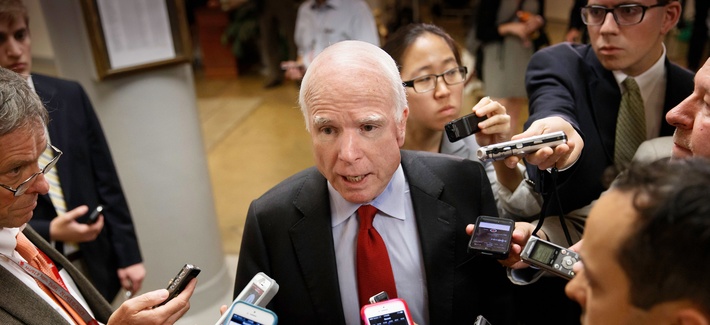
Senator McCain speaking against Iraq pullout

Conservatives believe that Obama’s “soft” negotiations with Iran will similarly have terrible ramifications for global security.

The ramifications of enabling Iran to get nuclear weapons will likely either lead to Israel attacking Iran, or initiating an arms race in the volatile Middle East. So much for Obama’s desire to have a world with fewer nuclear weapons. The only party to have fewer nukes will be the US while human rights-abusing countries such as Iran and Saudi Arabia would be on their way to being able to cause global destruction as one considers a world of nuclear terrorism.

Conservatives are less worried about the double-standards of who gets nuclear power today if it leads to greater stability tomorrow. Liberals, on the other hand, focus on being fair today and are less fixated on the ramifications tomorrow.

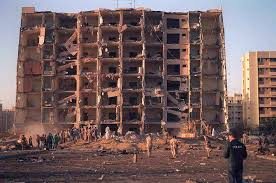
khobar towers
Iranian bombing of Khobar Towers killing 19 Americans,
June 1996

Lessons in Safety from Experience

It would be worthwhile for Obama to consider “unfair” laws in the US. Many laws and policies are deliberately biased to counter-balance experience related to safety.

These laws and accepted biased corporate policies are in place because of experience. People under 25 get in more car accidents than older people, so the car rental companies charge them a bundle because of the perceived risks, even if the renter is a great driver. Similarly insurance companies charge all drivers of Mercedes convertibles more, which has led to police charging those drivers four times as many traffic tickets.

Seat belt laws and helmet laws are in place because they save lives. Many studies have shown the drop-off in fatalities due to these laws, which (literally) restrict a person’s freedom.  State laws prevent under-age (sometimes 20 or 19) people from consuming alcohol because it helps save lives.

These are just a few examples of where society assesses risks based on historic outcomes.  They exist everywhere including health insurance companies charging more to smokers than non-smokers.  While a particular smoker may live much longer than a non-smoker, society draws certain conclusions based on past behavior and history.

History serves as the basis for making policies that improve safety.

Iran is not just another country

There are Islamic countries such as Pakistan that have nuclear weapons.  There are repressive regimes such as China with nuclear weapons.  However, the world has not seen a state sponsor of terrorism (such as Qatar) obtain a weapon of mass destruction.

The history of Iran and current statements from the government make it a dangerous player on the world stage.  Endorsing Iran’s building the most powerful weapons in the world puts the entire planet at risk..


There were no WMDs in Iraq and America should not have gone to war. But Obama’s abandoning Iraq to reverse a bad decision ignored the reality of the existing paradigm. His decision to be fair had terrible ramifications for regional peace.

Enabling Iran to get WMDs ignores the actions of that government. Obama’s deep belief in equality cannot be allowed to jeopardize global safety.


Related First.One.Through articles:

Obama’s Iranian Red Line: https://firstonethrough.wordpress.com/2014/11/24/obamas-iranian-red-line/

Obama’s foreign policy: https://firstonethrough.wordpress.com/2015/01/27/obamas-foreign-policy/

Obama dancing with the asteroids: https://firstonethrough.wordpress.com/2014/11/14/dancing-with-the-asteroids/

I’m Offended, You’re Dead

The US President and the media have portrayed “radical extremists” as angry about cartoons of the Muslim prophet by western media. Such a view focuses very narrowly on the recent attacks in Paris and Copenhagen. This is because democracies consider freedom of speech a fundamental right in their societies and object strongly to such rights coming under fire. Should the media and democracies look more broadly, they would note the broader attacks on basic human rights that Islam imposes where it is in control.

The “hateful ideology” (as US President Obama calls it) is not simply an “ideology” by a few “extremists”. The basic laws of several Islamic countries trample on many fundamental human rights. Islamic laws do not only challenge what you can say, but often attack the essence of who you are, and enforce double standards regarding what you can do. To aggravate the Islamic illiberal attitudes further, the laws impose severe punishments to the offenses, often the death sentence.

 muslim protest
Muslim Protest in England

What you said

Blasphemy is clearly part of the objection of the Muslim killers. Whether Charlie Hebdo (2015), Copenhagen (2005; 2015) or Theo Van Gogh in the Netherlands (2004), the drawings of the Islamic prophet Mohammed were considered offenses deserving of murder. Those attacks made news and drew world attention because they happened in Western Europe. In the Islamic world, blasphemy is considered a crime in over a dozen countries. Pakistan recently sentenced a blasphemer to death, but the laws and actions do not often attract the world’s attention.

Asa Bibi
Asa Bibi sentenced to death in Pakistan for blasphemy,
November 2014

Who you are

Islamic countries impose the death sentence on people for simply being who they are.  Innocent civilians are viewed as criminals even though they harm no one.

  • Apostasy is the act of changing religion. In several Islamic countries, the act of converting from Islam to another religion is punishable by death. Those countries include: Afghanistan; Brunei; Mauritania; Qatar; Saudi Arabia; Sudan; United Arab Emirates; and Yemen. Many other countries also consider it a crime, punishable by a year or more in prison.
  • Being Gay is considered a crime in 76 countries in 2015. There are several Islamic countries that sentence gays to death including: Iran; Iraq; Mauritania; Nigeria; Qatar; Saudi Arabia and Yemen.
  • Islamic terrorists targeted Jews in recent attacks in Jerusalem; Paris and Copenhagen. Many Muslims feel that non-believers are doomed and should be killed according to Islamic teachings. While many Islamic countries do not sentence non-Muslims to death, they subject the non-Muslims to secondary “dhimmi” status and make them pay special taxes. There are “radical” Islamic groups like Boko Haram and ISIS that are actively killing non-Muslims throughout NigeriaIraq, and Libya.

gay hang iran
An estimated 4,000 gays have been killed in Iran since 1979

What you do

Some Islamic countries have laws that prevent persecuted segments of society from doing what other members of society (Muslims, men) can do freely.  The double standards and misogyny are simply part of the culture that the world ignores.

  • In Saudi Arabia, there are laws that prevent women from driving cars; only men can drive.
  • In Pakistan, girls are prevented from going to school to get an education; only boys can go to school.
  • In many Southeast Asian countries like Pakistan, Bangladesh and India, a girl who reject a boy’s marriage proposal may be disfigured either by having her nose and ears cut off, or acid poured on her face. Boys do not deal with such issues.
  • In Israel, the Jordanian Muslim Waqf prevents Jews from praying on the Jewish Temple Mount; only Muslims are allowed to pray on the entire 35 acre site.
  • In Gaza and Islamic countries like Pakistan and Afghanistan, people kill female family members in “honor killings” if they dress inappropriately or date unapproved men. Men do not face honor killings.

KSA women drive
Woman arrested for driving in Saudi Arabia,
December 2014

How they Respond

The punishment for many of these basic activities that people in the western world take for granted, is death.  The death sentence is often brutal and public.

“Minor” infractions also can yield a death sentence:

  • Adulterers are stoned to death in Iran; Qatar; Saudi Arabia; Somalia; Sudan; UAE; Yemen
  • Drug traffickers are killed in: Egypt; Indonesia; Iran; Iraq; Kuwait; Oman; Saudi Arabia; South Sudan; Syria and UAE
  • Prostitutes are killed in Sudan

The Danger

The view that a few “extremists” have hijacked Islam and are attacking the freedom of press is both myopic in terms of history and geography, and hazy in terms of numbers and scope. In reviewing the laws and actions of several Islamic countries, one can better understand the gross intolerance and extremism in their societies. Many Muslims are offended by a great many things, and will kill the offender.

If the West limits its review to freedom of speech in the world of social media, the conversation becomes limited as well.  Hate speech versus freedom of speech, and attitudes towards censorship of social media (such as in Turkey) are worthwhile discussions, but far too narrow.  The value of jobs and economic development for a handful of radicals is brought up by the Obama administration because he misses the larger point. Obama argues for “reasonableness and restraint” from countries because he views the attacks on them as limited to a handful of radicals.

That flawed worldview led Obama to abandon Iraq without helping secure the vacuum.  It will lead an Obama administration to enable Iran to get a nuclear weapon.

Perhaps it is time for Obama to visit Cairo again as he did on his first international trip in 2009.  This time he will meet a new leader in al-Sisi who has called for a “revamping” in Islam. Maybe al-Sisi should be on Obama’s Iran negotiating team.


Related First.One.Through articles:

Murderous governments

Blasphemy

My Terrorism

US Hypocrisy – “Reasonableness and Restraint”

Subscribe YouTube channel: FirstOneThrough

Join Facebook group: FirstOne Through  Israel Analysis

On Accepting Invitations

Summary: While Obama can pretend to be insulted by Netanyahu’s failure to follow protocol in accepting an invitation to speak to a joint session of Congress, Obama did much worse to Netanyahu in 2013. It shows that if you are a friend, you forgive, and if you want to be angry, you can always find a cause to validate your anger.

bibi congress
Israeli PM Netanyahu addressing US Congress May 2011

There is a brouhaha over Israeli Prime Minister Netanyahu accepting an invitation from US Speaker of the House John Boehner to address a joint session of Congress in March 2015 about Iran’s march towards nuclear weapons. The complaint, according to the White House, is about a failure to follow protocol – one would imagine, a forgivable error. However, the comments from an unnamed senior source at the White House fumes that accepting the invitation was a direct insult to the president, and that Netanyahu “spat in our face publicly and that’s no way to behave. Netanyahu ought to remember that President Obama has a year and a half left to his presidency, and that there will be a price.

Netanyahu’s acceptance of an invitation specifically addressed to him, to discuss a topic that he considers an existential threat to his country, to speak to an incredible audience that also cares deeply about the subject of Iran doesn’t seem to be a snub to Obama at face value. However, if one considers that the audience does not agree with the president’s current course of action, and that Netanyahu’s opinion does not fit squarely with the president’s approach, well, that’s a different story- that could theoretically have been a snub and attempt to bypass the president that is…what’s the word? Familiar.

Obama Declined Invitation to Speak to the Israeli Knesset

In March 2013, Israel invited US President Barack Obama to visit Israel and speak to the Knesset, the Israeli parliament. Both of the two previous US presidents, Bill Clinton (1994) and George W Bush (2008) addressed the Knesset while they were in office. Obama declined the invitation.

clinton knesset
Present Bill Clinton Addressing Israeli Knesset 1994

This US administration wanted to bypass the Israeli government and address the Israeli citizens directly, saying that Obama had a speech for “the Israeli public and that really was our priority.” The White House arranged to have an audience of students from Israeli universities (except he did not allow students from schools on the West Bank of the Jordan) to hear his remarks.

  • Was declining an invitation to speak to the Knesset a nice thing to do? It is not something Israel extends to most world leaders.
  • Was it appropriate to use that same time slot to speak to “the Israeli public” instead? Did Obama not realize that Israel is the democracy and the politicians are elected by the people and represent the people? (As opposed to his “New Beginnings” address to the Egyptian government in 2009.
  • Obama cherry-picked his “Israeli public” to be those young people who may have been more receptive to his remarks than an audience that truly represented the broad opinions of the citizens of the country and the Knesset.

How did Netanyahu react to these insulting actions of the White House? Did he take umbrage? Did he refuse to see Obama and did Bibi direct members of his political party to ignore Obama on his visit? Not at all. He acted like a perfect host.

Note that these various 2013 actions of Obama were not a single failure to coordinate as it was for the 2015 Netanyahu invitation. Obama carefully scripted the entire Knesset-snub, direct-to-some of-the-people message.

In Obama’s opening remarks to the student body he said: “any drama between me and my friend, Bibi over the years was just a plot to create material for Eretz Nehederet (an Israeli comedy show)”. I wonder how Obama will react if Bibi opts to make a similar joke about his buddy “Barack” in his address to Congress in March.

obama israelUS President Obama speaking to Israeli STUDENTS 2013

And what was the crux of Obama’s speech in March 2013? Why did he feel the need to give a cold-shoulder to the Knesset and Netanyahu?

On the Iranian nuclear threat, Obama argued that a “strong and principled diplomacy is the best way to ensure that the Iranian government forsakes nuclear weapons….But Iran must know this time is not unlimited.  And I’ve made the position of the United States of America clear:  Iran must not get a nuclear weapon.“ Words that sounded nice to a generation that believed “hope” was a policy.

Obama knew that the Israeli Knesset and Prime Minister Netanyahu were very skeptical about Obama’s push to curtail sanctions on Iran. Obama therefore opted to bypass them and speak to a select audience that would applaud his vision.

Netanyahu Accepts Invitation to Speak to US Congress

Now, two years have passed and Iran is closer to nuclear weapons. Obama scaled back Iranian sanctions and has continued to delay the timetable he laid out to stop their nuclear program. The majority of Congress doesn’t like the situation and they don’t agree with Obama’s process.

As such, the House Speaker asked a close ally which is in the crosshairs of the Iranian regime to call out the president for the failed process. Netanyahu’s response: “As Prime Minister of Israel, I am obligated to make every effort in order to prevent Iran from achieving nuclear weapons that would be aimed at the State of Israel. This effort is worldwide and I will go anywhere I am invited in order to enunciate the State of Israel’s position and in order to defend its future and its existence.”

Does Obama really lack complete sensitivity to Israel’s fears about a nuclear Iran that he would inflate a matter of protocol over an invitation to such a degree?  Or is it just a ploy for Obama to influence Israel’s elections by trying to put downhis friend Bibi”?


 Emily Post Five Points on Accepting an Invitation

There are a good number of people who have suggested that Netanyahu should cancel his March speech. Of course, they include his political opponents in Israel, but they also include some Democrats in the US Congress and leaders of Jewish organizations.

Emily Post, the expert of etiquette, suggests five key steps to responding to an invitation:

  • “RSVP: reply promptly”: done
  • “Reply in the Manner Indicated”: done, but partially outside of normal protocol
  • “Is that Your Final Answer?” SEE BELOW
  • “May I bring…?”: not relevant
  • Say “Thank you”: done

According to invitation etiquette, there are very few instances to change a response:

  • Changing a ‘yes’ to a ‘no’ is only acceptable on account of: illness or injury, a death in the family or an unavoidable professional or business conflict. Call your hosts immediately.” Vice President Joe Biden and some Democrats seem to be manufacturing this excuse for not attending now.
  • Canceling because you have a “better” offer is a sure fire way to get dropped from ALL the guest lists.
  • Being a “no show” is unacceptable.
  • Changing a ‘no’ to a ‘yes’ is OK only if it will not upset the hosts’ arrangements.”

In short, it is inappropriate for Netanyahu to turn down the invitation at this time. It would be up to Speaker Boehner to consider changing the date of the invitation, should he choose to smooth this inflated side-issue to get everyone focused on the main issue.

Apostasy

In response to the mass and gross atrocities committed by Nazi Germany in World War II, the world sought to enshrine a list of basic human rights which were due to every person on the planet. In December 1948,  the United Nations passed those laws as the Universal Declaration of Human Rights, UDHR.

Today, many members of the United Nations continue to routinely trample on those rights.

For example, Article 18 of the UDHR provides for the freedom of religion and worship:

  • “Everyone has the right to freedom of thought, conscience and religion; this right includes freedom to change his religion or belief, and freedom, either alone or in community with others and in public or private, to manifest his religion or belief in teaching, practice, worship and observance.”

The action of changing one’s religion is called “apostasy”. Not only is it considered a crime in many countries, several Islamic countries consider it a capital offense according to their established law:

  • Afghanistan
  • Brunei
  • Mauritania
  • Qatar
  • Saudi Arabia
  • Sudan
  • United Arab Emirates
  • Yemen

Mariam Yahia Ibrahim Ishag
Mariam Yahia Ibrahim Ishag sentenced to death by hanging in Sudan for apostasy,
May 2014

Not all Islamic countries call for killing apostates, but many still criminalize the act of leaving Islam by punishing the apostate with civil penalties including negating the person’s inheritance and nullifying their marriage.

In some countries, specifically: Mauritania; Saudi Arabia; Jordan; and Yemen, individuals can be charged with apostasy for simple matters of writing something negative or controversial about Islam, even a post on social media.

Here is a summary of some countries laws regarding apostasy.

  • Afghanistan: Apostasy is considered a serious offense and persons so charged may “possibly face death by stoning, deprivation of all property and possessions, and/or the invalidation of their marriages.
  • Brunei: A Muslim who declares himself non-Muslim is punishable with death, or with imprisonment for a term not exceeding thirty years and corporal punishment, depending on the type of evidence.
  • Egypt: There have been cases where people have been placed in jail or marriages nullified due to apostasy.
  • Iran: While Iranian law does not provide for the death penalty for apostasy, the courts can hand down that punishment, and have done so in previous years, based on their interpretation of Sharia’a law and fatwas.
  • Jordan: While there is no express statutory prohibition on apostasy, conversion trials are heard by Islamic courts and may be instituted by any member of the community. According to Islamic law, there are consequences when Muslims adopt religions other than Islam.  For instance, if someone is convicted of apostasy, the Islamic courts adjudicating matters of personal status have the power to void the person’s marriage and deny his/her right to inherit from a spouse and from Muslim relatives.
  • Kuwait: According to Law 51 of 1984 on Personal Status, which is based on Islamic Sharia law, Under Article 18, the marriage of a non-Muslim man to a Muslim woman is considered annulled. Article 145 of the aforementioned law applies such legal and religious principle to Muslim husbands that might adopt other religions than Islam during the marital relationship. Moreover, under article 294 of this law, an apostate is not able to inherent from his Muslim relatives or marital spouse.
  • Mauritania: Apostasy is punished under article 306 of the Mauritanian Criminal Code.  This article provides that “any Muslim guilty of the crime of apostasy” is to be given the opportunity to repent within three days.  If the accused does not repent within that period, he/she is to be sentenced to death, and all of his/her property shall be confiscated by the government.

Mohamed Cheikh Ould Mohamed
Mohamed Cheikh Ould Mohamed sentenced to death for article about Islam,
December 2014

  • Morocco: In April 2013, the Supreme Council of Religious Scholars issued a religious decree (fatwa) that Moroccan Muslims who leave Islam must be sentenced to death.
  • Pakistan: There is no specific statutory law that criminalizes apostasy in Pakistan.  In 2007, a bill to impose the death penalty for apostasy for males and life imprisonment for females was proposed in Parliament but failed to pass.
  • Qatar: While apostasy is one of the offenses subject to the death penalty, Qatar has not imposed any penalty for this offense since its independence in 1971.
  • Saudi Arabia:  Islamic law imposes the death penalty on apostates based on statements attributed to the Prophet Mohammed.
  • Sudan: Article 126 of the Sudanese Penal Code, on apostasy, provides that any Muslim who declares publicly that he/she has adopted any religion other than Islam commits the crime of apostasy and is punishable with the death penalty.
  • Tunisia: Has begun to institute new laws to protect people from Sharia law regarding apostasy. Article 6 of the Tunisian Constitution of 2014 protects its citizens by preventing any attacks against them based on accusations of apostasy.
  • UAE: Article 66 states that among the “original punishments” under the law are the punishments of hudud crimes, including by imposing the death penalty.  However, there have been no known prosecutions or legal punishments for apostasy in court.
  • Yemen: The crime of apostasy may be subject to the death penalty by virtue of Article 12 of the Yemen Penal Code of 1994, as amended by Law 24 of 2006, which identifies crimes, including apostasy, that are punished according to the provisions of Islamic Sharia.  Furthermore, Article 259 provides that individuals committing the act of apostasy may be punished with the death penalty.

KSA apostasy
Man in Saudi Arabia to be beheaded for ripping up Quran,
February 2015

These laws are often not considered radical by the country’s citizens.  Many Muslims in the world specifically support the death penalty for apostasy.  The countries with the highest percentage calling for the murder of converts:

  • Egypt 88%
  • Jordan 82%
  • Afghanistan 79%
  • Palestinians 66%
  • Pakistan 62%
  • Malaysia 62%

Have you ever seen a censure in the United Nations against any of these countries for trampling a basic human right?


Sources:

Country apostasy review: http://www.loc.gov/law/help/apostasy/index.php

Pregnant Sudanese woman gets death sentence for apostasy: http://www.aljazeera.com/news/middleeast/2014/05/sudan-woman-given-death-penalty-apostasy-20145159264775754.html

Vast majority of Muslims support death penalty for apostasy: http://www.washingtonpost.com/blogs/worldviews/wp/2013/05/01/64-percent-of-muslims-in-egypt-and-pakistan-support-the-death-penalty-for-leaving-islam/

Related First One Through article:

Blasphemy: https://firstonethrough.wordpress.com/2015/01/12/blasphemy-or-terrorism/

US Working with Countries with terrible human rights records: https://firstonethrough.wordpress.com/2014/11/14/dancing-with-the-asteroids/