Magnifying the Margins, and the Rise of the Independents

If people really had such compelling arguments, why do they need to always use extreme examples to make their case?

Magnifying the Margins

Both liberal and conservatives often try to argue their points of view by highlighting extreme examples that have little to do with day-to-day reality. Could it be that the basic lines of their arguments are tenuous? Consider some examples:

President Obama took to the airwaves after a terrible mass killing in October 2015, to argue for gun control. The reality is that the number of murders from mass killings is a very small percentage of gun-related deaths. The vast majority of gun deaths – over 60% every year – are in suicides. The over 700 deaths from guns in accidental shootings, is lower than the number of drownings in pools.  Gang and drug-related crimes make up another large segment of gun deaths. Of the over 32,000 gun-related deaths in the United States in 2015, 475 – 1 percent – were in mass shootings.  If Obama really cared about gun deaths, he should take to the airwaves after suicides and gang violence, not from random mass shootings.

Obama tear
Obama sheds a tear during remarks on gun violence, October 2015
(photo: Chip Somodevilla, Getty Images)

Liberal and pro-abortion activists highlight the need for abortion, and vilify pro-life people that are against abortions in cases of rape and incest. Rape and incest account for just 1% of abortions according to the Guttmacher Institute. Almost all abortions are done for financial or relationship reasons. Why bring up such marginal cases to make a point? If the law states that abortions are legal before the baby is viable outside of the mother, at about 22 weeks (a law driven by time), then the reasons for having the abortion should have no part in the conversation.

Republicans and foreign policy hawks are equally at fault for magnifying the margins. Conservatives continue to pound the table about the threat of Islamic terrorism in the United States. In fact, the number of deaths from Islamic terrorism in the 14 years since September 11, 2001, is less than the number of people who died in lightening strikes.

Denying the Obvious

The convoluted arguments noted above become further estranged from the truth when people also deliberately deny the obvious.

Consider Obama’s refusal to state that there even is something called “radical Islamic terrorism,” which presidential candidate Republican Senator Ted Cruz repeats often.  While Obama may be correct that there many, many Muslims who are not terrorists, that has nothing to do with the scourge of terrorism in the world that is almost exclusively conducted by Islamic radicals.

Trump muslims
Donald Trump calls for banning all Muslims from the US
until the vetting process is improved, December 2015

It is similarly absurd for pro-choice advocates to claim that abortion is 100% about a women’s privacy, as if the issue was akin to a tattoo or body piercing. Such a position inherently argues that a fetus has zero rights until it is actually born. That line of reasoning is as extreme as people who argue that life begins at the very instant of conception. The US Supreme Court and most thoughtful Americans believe a fetus deserves rights at some point between those two extreme moments in time.

The Beautiful Gray Truth

Reality is often a bit too complicated to fit on a bumper sticker. “Pro Choice” fits neater than “Roe v. Wade is about the stage of development of the fetus, and modern science now enables pre-mature births to survive at 22 weeks as opposed to 24 weeks when the law was passed 50 years ago, so I am in favor of moving the timeframe to the new earlier date as the limit for having a legal abortion.” Definitely too wordy.

The truth is that radical Islam is the source of most of the terrorism in the world and the destabilizing force from the middle east and north Africa through Europe. And it is also true that most Muslims are not terrorists.

But political discourse is now only had at the edges.  Politicians and mainstream media magnify marginal situations, denying the middle any air.  That middle ground is where 99% of the truth lies.

Rise of the Independents and Libertarians

If there is a silver lining to the extreme positions taken by the Democratic and Republican presidential candidates, it is that Americans are leaving them both.  The number of people who consider themselves political Independents jumped to 43% in 2014, according to a Gallup poll, the highest level ever.  That figure compares to 30% for Democrats and 26% for Republicans.

Perhaps Americans realize the foolish spin they are given every day.  Maybe Americans are not really being driven to extremes – its just the two party system that has begun to champion marginal rhetoric, and most Americans are still in the middle.  Americans may only be fed up with Washington D.C., because they hate the two parties that occupy it.

Maybe.

Hopefully.


Related First.One.Through articles:

Political Pinatas: Populist Greed Meets Populist Anger

Absolute and Relative Ideological Terrorism in the United States

The Invisible Anti-Semitism in Obama’s 2016 State of the Union

Subscribe YouTube channel: FirstOneThrough

Join Facebook group: FirstOne Through  Israel Analysis


The United States Joins the Silent Chorus

Nations of the World Are Silent

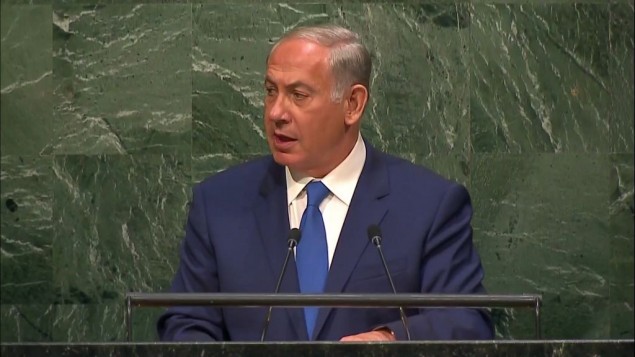
On October 1, 2015, Israeli Prime Minister Benjamin Netanyahu addressed the United Nations General Assembly in New York. He rebuked the governments in the room for their indifference to Iran’s call for destruction of the Jewish State. He said that “Iran’s rulers promised to destroy my country, murder my people, and the response from this body, the response from nearly every one of the governments represented here has been absolutely nothing. Utter silence. Deafening silence.”  He then paused for 45 uncomfortable seconds, so that the people in the room could better understand how Israel is outraged by the lack of condemnation from governments around the world, against the outrageous comments from Iran.

Netanyahu at UN 2015
Israeli Prime Minister Benjamin Netanyahu at the United Nations
October 2015

The United Nations is Silent

Time and again, the United Nations itself chose to remain silent when Israeli Jews were deliberately attacked. The UN Media Centre wiped the murder of Jews from its records. The global body refused to call the crimes “terrorism.”  The UN ignored deaths within Israel. Overall, the United Nations was silent when Israeli Jews were targeted.  Was it because the UN considered Israel itself to be a terrorist state so any deaths were actually Israel’s fault?  Perhaps the UN was upset that it voted to create a Jewish State in the first place.  Whatever the motivation, the UN remained silent.

The United States is Silent

The United States is home to over 5 million Jews, the largest number of Jews after the State of Israel.  For much of Israel’s existence, the United States has been the country’s main ally.

However, under the leadership of President Barack Obama, the United States has softened its support for Israel, such as removing pro-Israel positions in the Democratic platform (the US will never deal with Hamas; future borders of Israel will NOT follow the 1949 Armistice Lines; Palestinian “refugees” would NOT settle in Israel; Jerusalem is the capital of Israel).  Still, the US government supported Israel’s right to defend itself, even while the US distanced itself from Israel, by not actively supporting Israel in combatting Palestinian terror.

In January 2016, the US – once again – had the opportunity to address the incessant nihilistic death chants from Palestinian Arabs.  Not just the incitement from the acting President of the Palestinian Authority Mahmoud Abbas and others in the PA government, but in established PA laws.  The decades-old PA law calls for the death penalty for any Arab that sells land to a Jew.  While the New York Times refused to print such basic facts for years, the arrest of radical left-wing “activist” Ezra Nawi put the law in plain public sight for everyone to see: the PA not only demands a Jew-free state (an anti-Semitic demand which Obama supports), but will kill to make sure that such anti-Semitic demands are met.

How did the US respond?

Dan Shapiro INSS
US Ambassador to Israel Dan Shapiro
January 2016

Dan Shapiro, the US Ambassador to Israel spoke at an Israeli conference while Israelis buried a young mother who was stabbed and killed by a Palestinian Arab in an unprovoked attack.  During his comments Shapiro attacked the Israeli government’s position of allowing Jews to build and buy homes east of the Green Line (EGL), and stated that that Israel was too lax in prosecuting crimes that Israelis commit against Palestinian Arabs.

Shapiro did not comment on the Palestinian law that calls for the death penalty for Arabs that sell land to Jews.  He said nothing about Israel’s arrest of Ezra Nawi who helped the PA catch Palestinian Arabs who sold homes to Jews, for the PA to torture.

When John Kirby of the State Department was asked to comment about Shapiro’s statements, Kirby defended Shapiro as repeating the US’s position on Israeli settlements.  He remained mum on Palestinian law that called for the death penalty on those that sell land to Jews.


The United States added a silent echo to the ugly mute chorus.  No condemnation for those who call for the destruction of Israel.  For the killing of Jews.  For the killing of those that work with Jews.

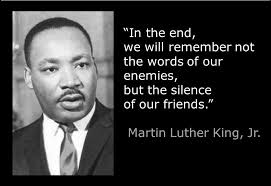
MLK

As Simon and Garfunkel sang in 1964 “Silence, like a cancer grows.


Related First.One.Through articles:

The Invisible Anti-Semitism in Obama’s 2016 State of the Union

Obama’s Select Religious Compassion

The United Nations and Holy Sites in the Holy Land

Obama’s “Values” Red Herring

International-Domestic Abuse: Obama and Netanyahu

Subscribe YouTube channel: FirstOneThrough

Join Facebook group: FirstOne Through  Israel Analysis
The Explosion of Immigrants in the United States

Immigration has become a significant topic in the United States and Europe due to comments made by US presidential hopefuls about illegal immigrants and the flight of people from the Middle East due to turmoil in that region. Here is a review of some statistics from past decades and the recent unusual dramatic increase in immigrants while the general population has slowed down.

United States 1880-1930s

The population of the United States grew dramatically over a 50 year-period from 1880 to about 1924 (a period of mass migration, “MM”), at which time the US passed the Immigration Act capping the number of people from any country. From 1880 until 1930, the population of the country grew from 50 million to over 123 million. In each decade over that time, the population grew between 15% and 26%.

Immigrants accounted for a large percentage of the growth. Over that MM time period, foreign born-residents accounted for anywhere from 12% to 15% of the US population. Almost all of these immigrants came from Europe (over 83% in each decade) and a smaller portion from Latin America (from 1 to 6%) and Asia (1 to 2%). While the 1880s had immigrants principally from Germany, United Kingdom, Scandinavia and Ireland, the following decades had immigrants principally from Italy, Russia and the Austria-Hungarian Empire.

Security: The 1880s and the 1900-1909 decade witnessed particularly large number of immigrants. In those decades, immigrants accounted for 20% of the growth in the country’s population (with natural growth accounting for 80%). However, with the outbreak of World War I and enactment of the Immigration Act, the number of immigrants was curtailed, with only 3% and 2% of the population growth stemming from immigrants in the 1910s and 1920s, respectively. Interestingly, while the war raged in Europe, the percentage of immigrants from Europe declined over this period by 4% while the percentage from Latin America grew by 4%.

One would imagine that the number of people trying to emigrate from Europe to the US would have increased during WWI, and the percentage of immigrants would have spiked above the historic 87% European figure. Instead, there was a drop-off. Were Americans concerned about the safety and security of the US? Was it fearful of importing a conflict to its shores? The severe drop-off in immigration and coinciding change of place of origin suggest that may be a factor. Another was the economy.

Economy: The decades of the 1910s and 1920s saw relatively weak average GDP per capita growth rates compared to prior decades: 1.28% and 1.27% for 1910s and 1920s, respectively. These anemic figures compared to prior decades of 1.65%, 2.04% and 2.13% in the 1880s, 1890s and 1900s, respectively. The subsequent stock market crash of 1929 and depression of the 1930s severely hurt the economy. This was probably the principle factor in the US population only growing at 7% compared to prior decades of 15% to 26% growth. Fewer jobs and a weaker economy led to fewer births and a stricter immigration policy set in place in 1924.

Decade Total Population Growth Immigrants % of Growth % Foreign-Born Americans
1880s 26% 20% 15%
1890s 21 8 14
1900s 21 20 15
1910s 15 3 13
1920s 16 2 12
1930s 7%


 United States 1960 – 2010

The 50 years from 1960 to 2010 saw an inversion of some of the immigration and population trends from the 1880-1930 period.

With the exception of the 1950s, every decade had a population growth that was less than from the MM period (10%-14% growth versus 15-26% in MM). Foreign-born people in the US became a rarity from the 1950s through the 1970s when they accounted for only 5-6% of the population (compared to 12-15% during the MM period).

The Immigration and Naturalization Act of 1965 removed the former quota system that capped immigration from each country.  As such the 1970s and 1980s started to see a dramatic change in the make-up of the US population. While very few immigrants came to the US in the 1960s, the 1970s and 1980s had 17% and 26% of the total population growth come from immigrants, respectively.  The 1965 Act also resulted in a dramatic change in the ethnic origins of new immigrants: they were no longer coming from Europe, but from Latin America and Asia.

Source of US Immigrants (from US Census Bureau)

Decade Europe Asia Latin America
1950s 75% 5% 9%
1960s 62 9 19
1970s 39 19 33
1980s 23 26 44

Economy: The economy in the 1960s and 1980s were the best in US history. The average per capita GDP grew 2.88% and 2.26% each year, on average, during the 1960s and 1980s, respectively. As such, the growth in the immigrant population and the changing origin of those people did not generate considerable debate or concern from Americans or politicians.

That situation changed dramatically in the 2000-2009 decade.

Security and Economy: The US population growth in the 2000-2009 decade was the slowest in American history, growing by only 6% (even lower than the 1930s). That decade witnessed the attacks of September 11, 2001, stock market internet bubble collapse of 2000, and a large scale economic meltdown and financial crisis in 2008.

Decade Total Population Growth Immigrants % of Growth % Foreign-Born Americans
1950s 19% 5%
1960s 13 5
1970s 11 17% 6
1980s 10 26 8
1990s 13 37 11
2000s 6 41 13


Yet, against this backdrop, the foreign-born population in the United States in 2010 grew to 13% – the same percentage as existed during the peaceful growth mode of the mass migration.  This percentage is over twice the level that existed in the country just 30 years earlier, in 1980. Astonishingly, almost half of the growth in the US is now from immigrants – a rate not realized since the founding of the country hundreds of years ago.

Consider further, that most of the new immigrants are coming from Latin America that principally speaks a single language (Spanish) in comparison to immigration from Europe or Asia that brought a diverse number of languages. Such an enormous influx of a single language could create a bilingual country.

Conclusion

In the 50 years of the mass migration 1880-1930, the country took steps to curtail immigration as the economy slowed and from World War I. Today, the US has an aggressive immigration policy during a weak economy and has significant security concerns.

It is natural for a country that focuses on its quality-of-life and feels insecure about its safety and economy to see the population have fewer children and urge for curtailing immigration.

While the US economy improved from the 2008 financial meltdown to 2015, consumer sentiment remained weak, as many Americans remained unemployed and under-employed. In addition to the weak economy, Americans watched the collapse of the Middle East through videos of the horror on their smartphones. The fear of terror coming back to the US is real.

One could argue that America had the “benefit” of slowing GDP growth in the 1910s and 1920s which pushed the country to accept many fewer immigrants. By the time the depression of the 1930s hit, there was already a 1924 immigration law in place and the reality of a slowdown in accepting new “foreigners” for a couple of decades. However, in the US today, the number of foreigners are growing at an accelerated rate for the last few decades, just as the country experienced incredible turmoil.


When a person sees the plight of refugees in the Middle East, the human and moral reaction is to extend a hand. Indeed, President Obama decided to increase the quota of Syrian immigrants from that region to 10,000 in 2016. On top of humanitarian concerns, the Democratic president scored big with Hispanics (71% to 27% in the 2012 presidential election). These facts make Obama look very in favor of accelerating immigration.

However, it is unfair to paint all people who argue for a limit on refugees and immigrants at this time as xenophobic and racist. There is a natural ebb-and-flow to immigration, which often follows the status of the economy and perceived safety concerns. Considering the current double-impact of the economy and security, and the dramatic increase in immigration over the past three decades, a review of immigration policy would appear warranted.