“Now the days were the days of the first ripe grapes” (Numbers 13:20).
At first glance, the verse appears to be little more than a calendar note. The spies entered Canaan during harvest season. Naturally they found grapes.
But the Torah rarely includes details without purpose.
The Israelites had spent generations hearing about a land flowing with milk and honey. They stood at the threshold of that promise. The spies were being sent to verify it. They entered the land at the very moment when its abundance would be on full display. The nation was waiting for proof.
And the spies returned carrying exactly that proof: an enormous cluster of grapes from the Valley of Eshkol.
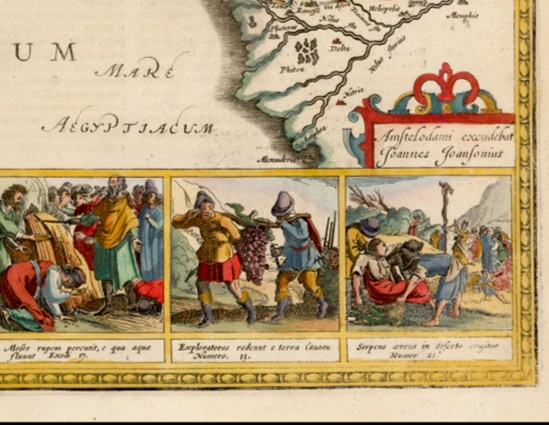
Yet the sages make a curious observation. According to Sotah 34a, the ten spies who delivered the negative report carried the produce. Joshua and Caleb carried nothing.
Why not?
The question becomes even more intriguing when we remember that this is not the first time representatives of the tribes returned carrying evidence.
Centuries earlier, Joseph’s brothers returned to Jacob with Joseph’s coat dipped in blood. They never explicitly claimed Joseph was dead. They simply presented the evidence and allowed Jacob to reach the conclusion they intended.
Perhaps the spies were doing something similar.
We often read the giant cluster of grapes as proof of the goodness of the land. But what if that was not how the spies intended it to be understood?
The Torah’s report moves almost seamlessly from the fruit to the inhabitants:
“Indeed it flows with milk and honey, and this is its fruit. Nevertheless, the people who dwell in the land are strong…” (Numbers 13:27-28)
Look at these grapes, the spies may have been saying. Ordinary men do not live in a place that produces fruit like this. The same land that yields giant grapes yields giant warriors.
Seen this way, the grapes were not simply a sample of the harvest. They were evidence enlisted in support of a conclusion they sought to impart: fear.
This possibility sheds new light on the teaching in Sotah. If the fruit was being used to support the spies’ narrative, Joshua and Caleb’s refusal to carry it becomes understandable. They were not rejecting the grapes. They were rejecting the interpretation attached to them.
The parallel to Joseph’s coat becomes even deeper when we consider who these men were.
Joshua descended from Joseph through Ephraim. Caleb descended from Judah. The descendants of Joseph and Judah became the two spies who stood apart from the majority.
Joseph’s brothers brought a coat. The spies brought grapes. Neither group needed to invent evidence. The objects were real. What mattered was the narrative attached to them.
The brothers used a coat to tell a story about Joseph. The spies used grapes to tell a story about the Land. In both cases, the evidence itself did not contain the conclusion. The conclusion came from those presenting it.
Perhaps that is the deeper lesson connecting these two stories. Facts matter, but facts rarely arrive without interpretation. The same coat could become evidence of tragedy or merely separation. The same cluster of grapes could become evidence of giants or evidence of God’s promise.
The challenge is not simply to examine the evidence before us. It is to recognize the narrative that accompanies it and to ask whether the story being told is the only one the evidence supports.


