Two Things To Do Now To Prevent October 7 From the West Bank

For twenty years, Israel relied on a security barrier to prevent the suicide bombings and shootings of the Second Intifada. It worked. While ninety percent of that barrier was not a concrete wall, but a high-tech fence—cameras, sensors, patrol roads, and layered detection system – it still reduced terror attacks from the West Bank by over 90 percent. Israelis and the Stateless Arabs from Palestine (SAPs) rebuilt their lives believing that a fence, not a fortress, was enough.

Then came October 7.
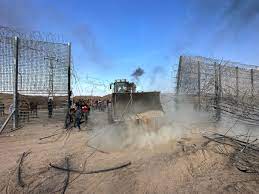
SAPs crashing through the fence between Gaza and Israel on October 7, 2023

Hamas gunmen bulldozed, exploded, and burned their way through what was—on paper—one of the most advanced border fences in the world. They murdered, raped, tortured, and kidnapped civilians in a genocidal assault that shattered the central premise of Israel’s security doctrine: that a fence and technology could stop an army of terrorists long enough for the IDF to respond.

That assumption is gone.

If a similar surprise assault were launched from the West Bank near the country’s major population centers—Tel Aviv, Jerusalem, the coastal cities—the casualties could be catastrophic. Israel is nine miles wide at its narrowest point. One breach is not a tactical event. It is an existential one.

The Barrier Must Change Because the Threat Has Changed

A fence can be cut, rammed, or climbed. A reinforced, multi-layered wall—physical, electronic, aerial, and subterranean—is a different proposition. The lesson of Gaza is not to abandon the idea of separation, but to upgrade it to match the enemy’s capabilities and intentions.

Israel does not have the luxury of guessing whether future attackers will try to slaughter dozens or thousands. The security architecture must assume the worst case—because the worst case already happened.
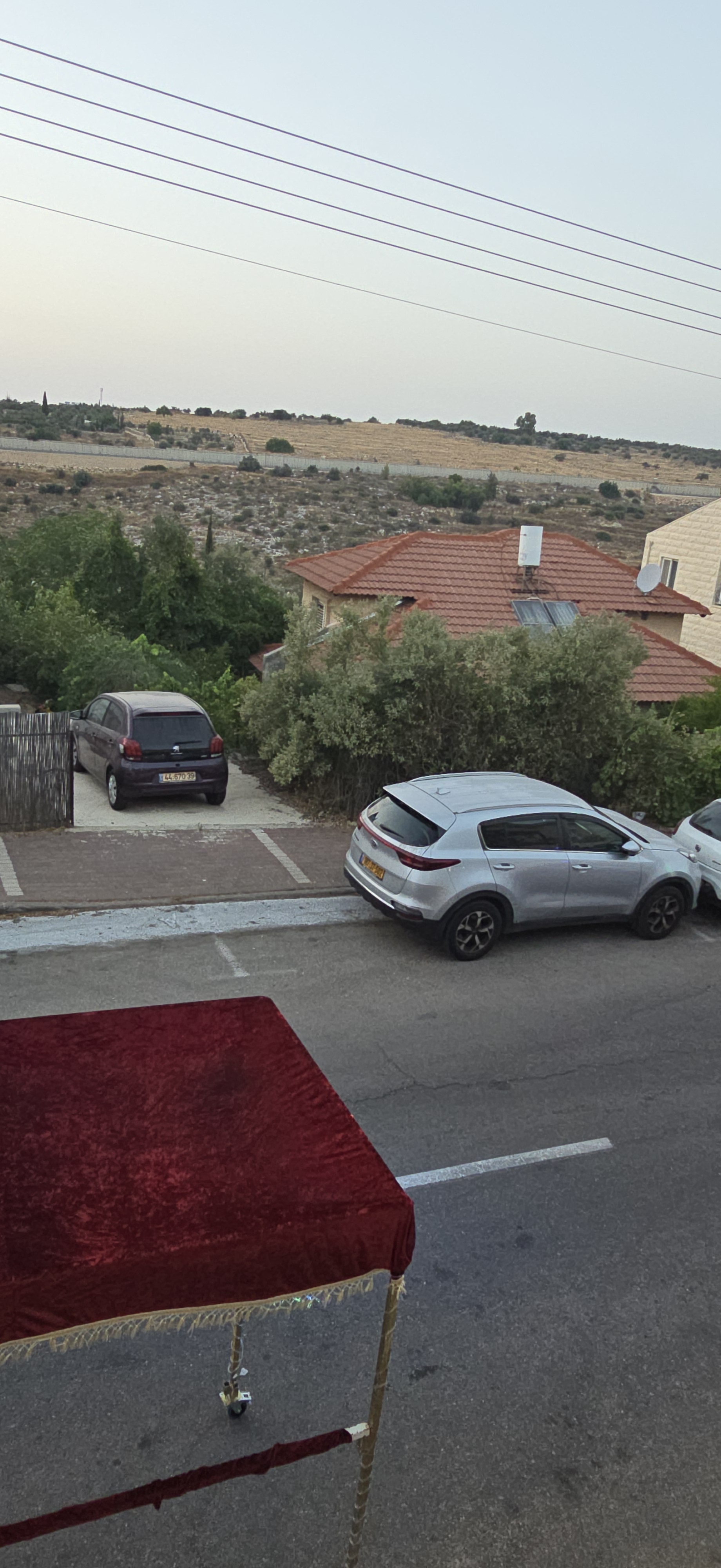
In Hashmonaim, Israeli backyards are a stone’s through away from the Security Barrier (photo: First One Through)

Disarming Militias Is Not Just for Gaza

The world is focused on disarming Hamas in Gaza. It must also confront a parallel obligation: militant groups in the West Bank cannot remain armed if there is to be any political horizon, for Palestinian Arabs or Israelis.

If Gaza is demilitarized but the West Bank is not, the threat simply shifts geography. The barrier is not a substitute for disarmament. It is a second line of defense, not the first.

Lasting security requires:

1️⃣ Complete disarmament of organized militant groups seeking Israel’s destruction.
2️⃣ Security control capable of preventing re-armament.
3️⃣ A barrier strong enough to make a surprise attack militarily unachievable.

Without those three components, diplomatic talk of a “future Palestinian state” is not a peace process—it is a gamble with tens of thousands of civilian lives.

A wall is not a symbol of failure. It is the price of survival when the alternative is the erasure of towns near the 1949 Armistice Lines with Jordan.

A move towards coexistence between Israelis and Palestinian Arabs cannot be limited to the threat from Gazans but from West Bank Arabs as well. Disarmament of West Bank Arabs and an upgrade of the security fence must happen now as well.

Peace requires trust. Trust requires time. Time requires security that cannot be breached in seven minutes by men with bulldozers and grenades and genocidal jihadi rage.

Until a day comes when coexistence is real—not chanted, not theorized, not negotiated—Israel must ensure that no armed faction can cross its border. The time to implement that plan is now.

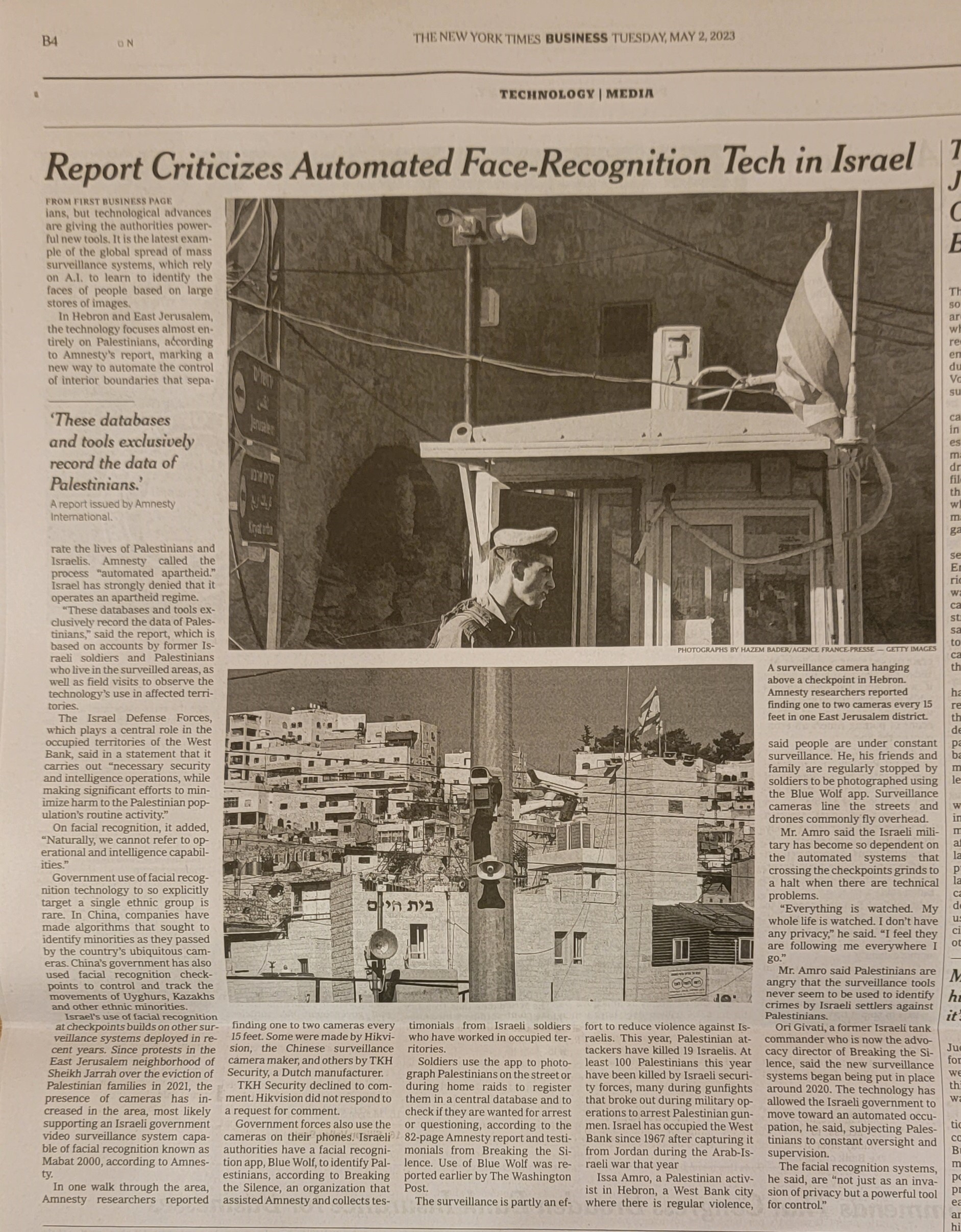
No Israeli Good Deed Goes Unpunished For Amnesty International and NY Times

In May 2016, after the deadly wave of Palestinian Arab stabbing attacks and deliberate vehicular manslaughter of Jewish civilians began to subside, the Israeli government sought to make life easier for Palestinians, hoping that good will gestures would allow for peaceful coexistence.

In response to complaints that it took hours for Palestinians to get processed through checkpoints, Yoav Mordechai, the Israeli Coordinator of Government Activities in the Territories (COGAT) posted a note in Arabic that “It has been decided to renew and improve checkpoints in the West Bank, [to] increase the number of Palestinian workers allowed to pass through to their workplaces in Israel, improve waiting conditions and adopt advanced technology at all checkpoints.” He included an image of Palestinians crammed in line, waiting to enter Israel.

Palestinian Arabs waiting at a checkpoint to enter Israel

Israel estimated the improvements would cost 300 million shekels ($78 million), and would increase the amount of goods that pass through Israeli checkpoints by 30% and reduce wait times by 30% to 50%. The announcement was made right before Ramadan, the Muslim holy month, in an effort to lower tensions when thousands of Palestinian Muslims come to Jerusalem from the West Bank.

The Washington Post shared a video in 2019 about the new high tech facial recognition security cameras and turnstiles. It interviewed several Palestinians who were thankful that the crossings which used to take hours now only took minutes or seconds.

Israel uses almost the identical system at its airport for all passengers that enter the country, speeding up entry and reducing unnecessary manpower. People who use Global Entry to enter the United States use a similar system.

You wouldn’t know any of this by reading The New York Times or Amnesty International.

In an inflammatory piece of click bait called “Israel Tech Automates Apartheid, Critic Say,” the paper quoted a new absurd anti-Israel Amnesty International report. The jaundiced document said that Israel uses “technology against Palestinians” in “both Hebron and occupied East Jerusalem” as “part of a deliberate attempt by Israeli authorities to create a hostile and coercive environment for Palestinians.”

An absurd inversion of facts.

First, Palestinian Arabs created the hostile environment during their multi-year guerilla war against Israeli civilians from 2000 to 2004, which necessitated Israel building a security barrier.

Second, Israel put in place the high technology checkpoints to address the concerns of Palestinians that hated the long lines to enter Israel. Israel doesn’t have security cameras dotting Areas A or B in the West Bank to track Palestinians in their daily lives; it is focused on those areas near the security barrier.

Third, the technology focuses on everyone that goes before the cameras, not as portrayed by Amnesty or the Times which said “in Hebron and East Jerusalem, the technology focuses almost entirely on Palestinians.” For sinister measure, the anti-Zionist paper added “Government use of facial recognition technology to so explicitly target a single ethnic group is rare.”

But Israel doesn’t do that. It captures the images of everyone before the cameras, just as it captures the faces of everyone at the airport.

Israel was forced to spend $1.5 billion to build a security barrier to protect itself from Palestinian terrorists, and then opted to spend another $100 million to address Palestinian complaints regarding long wait times at checkpoints. No matter. Both the defensive action and the noble effort are varieties of a fictional “apartheid” for the anti-Zionist Amnesty International and New York Times.

Related articles:

New York Times Pushes the Lie of Israeli Apartheid

Palestinians Seek Mercy For Being a Menace

The New York Times Excuses Palestinian “Localized Expressions of Impatience.” I Mean Rockets.

Apartheid In Palestinian Authority, Not Israel

Will The New York Times Write About Terrorism From Israelis’ Point Of View?

New York Times Recharacterizes Hamas as a Right-Wing Terrorist Group

For The New York Times, “From the River to the Sea” Is The Chant of Jewish and Christian Zealots

Ending Apartheid in Jerusalem