Jacob’s Many Angels and Vayetze Jews

The weekly parshas read from the Torah normally begin at the start of a chapter and conclude at the end of another chapter. It is extremely rare for any parsha to both start and end in the middle of chapters, which happens for the weekly reading of Vayetze (Genesis 28:10 – 32:3).

The reason for doing so has very much to do with the story told in Vayetze, as well as the stories which the rabbis wanted to separate at the start of Genesis chapter 28:1-9 in Parshat Toldot, and the story told afterward in Parshat Vayishlach, chapter 32:4-33.

Vayetze relays the story of Jacob leaving the land of Canaan to find a wife at Lavan, his mother’s brother’s house. When embarking, Jacob dreamt of a ladder going to the heavens with angels going up and coming down. God informed Jacob that he will be blessed with many children and that God would protect Jacob on his journey and bring him safely back to his land. At the end of the parsha, Jacob headed back to the land of Canaan with wives and eleven children, and met angels once again (Genesis 32:2-3). Angels are bookends of Vayetze, telling the story of Jacob marrying, and having many children and accumulating much cattle in his uncle’s house.

If one were to read Genesis straight through the chapters instead of with the breaks of the weekly portions, that story is less clear.

At the beginning of Genesis chapter 28 (1-5), Isaac instructed Jacob to not marry a local woman from Canaan and to visit his uncle’s house, seemingly consistent with the overall theme of Vayetze. However, 28:6-9 describes Esav’s overhearing Isaac’s command who subsequently embarked to marry his father’s brother’s daughter. Esav’s actions interrupted the focus on Jacob.

At the end of the parsha, the narrative also breaks around Esav. While Vayetze’s Genesis 32:2-3 has Jacob encountering angels and naming the location due to the holiness of the event as he did after his ladder dream, Vayishlach’s Genesis 32:4-7 has Jacob sending the angels off as mere messengers to scout out Esav’s intentions as he journeyed to return to Canaan. In one sentence, from 32:3 to 32:4, Jacob treated the malachim as holy people and then errand boys, which does not happen with the weekly parsha pause separating the sentences.

The neat angel bookends of Vayetze act as separators from Esav. While Jacob got married and returned with eleven children and a large flock, the difficult years were none-the-less realized as blessings. However, the stress of the world he left and to which he returned made the blessings harder to recognize, and maybe even finite.

Esav married Ishmael’s daughter and came to meet Jacob with an army of 400 men (32:7). While Jacob had been promised by God that his progeny would be numerous as he left Canaan, his brother Esav seemed to become even greater over that same time.

Upon learning of the large gap in power with his brother, Jacob became very frightened and prayed to God (32:8-13) seemingly thinking that his heavenly protection had ended. When Jacob next sends out messengers to meet Esav, they are no longer described as malachim, angels, but avadim, servants (32:17).

Jacob lost the ability to recognize angels as he approached his brother. When Jacob was next alone at night, he didn’t dream of angels on a ladder but wrestled with an ish, a man who is described by biblical commentators as an angel who renamed Jacob ‘Israel’ for prevailing in his fight with man and God. While Jacob should not have been scared of Esav as he had angels with him, he could no longer recognize them and fought them.

Jews today see their homes like Jacob as Vayetze Jews. Even in the face of family difficulties, a home is nevertheless a sanctuary in which we count our blessings and feel protected. It is when we compare ourselves to others and see their wealth and fear what they might do to us that we forget those blessings. We no longer see the angels and blessings they provide. So we demand that they serve our needs, and fight them thinking that they are strangers meant to do us harm.

And then we question the blessings we once enjoyed. Esav had no angels and yet prospered even more than Jacob. An unblessed life seemingly yielded greater rewards if one focuses purely on numbers.

Jacob produced a family which became a holy nation while Esav’s actions netted a massive army. During peace, it is easy to understand why Jacob’s descendants reach heights of thought and purity but in times of conflict, Esav’s army appears ready to conquer those achievements.

In a pre-October 7 world, Vayetze Jews imagined themselves blessed and protected in their home of homes, in their houses in Israel. The neat angel bookends of the parsha were the protective layer of building a home and family, and Vayetze Jews felt God’s blessings.

In the aftermath of the October 7 slaughter in which Arabs killed Jews in their homes in Israel, the Vayetze Jews were vanquished. We became Vayishlach Jews ready to fight man and God for the inhumanity inflicted on us.
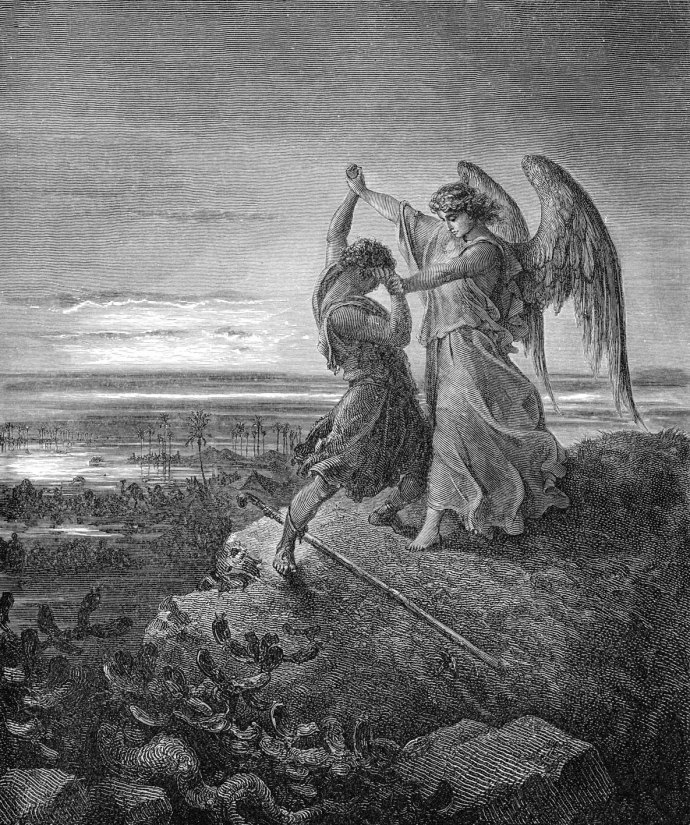
Gustave DoréJacob Wrestling with the Angel (1855)

Is that our fate? Can the Jewish community become more?

Jews must internalize the text in the chapters and not just the parshas.

Esav DOES interfere with the story-telling of Jacob finding a wife. Esav does continue to build a family and army outside of Jacob’s Vayetze bubble. Jacob and the Vayetze Jew fail to internalize the outside world as they were self-absorbed which led to complacency. Jacob only saw angels’ blessings as partners for his activities in his home but did not use the gift for the fight to come outside.

We are both the Children of Jacob (Vayetze Jews) and the Children of Israel (Vayishlach Jews), and need to live lives focused internally and externally. Partnering with angels must extend beyond the bounds of angelic bookends and touch activities in everything we do. That is the pathway to true blessing and success inside and outside of our home and communities.

Related articles:

The Nation of Israel Prevails

The First Dreamer Foreshadowed The Life Of Joseph

3 1 4, Hebrew Pi

The Karma of the Children of Israel

The Descendants of Noah

The Place and People for the Bible

The Shrinking Modern Jewish Homeland

The Past, Present and Future in Elul

Each month, as I turn a new page of the calendar, I consider what needs to
be done over the coming weeks. I plan my meetings, insert calls into my Outlook
calendar and worry about my schedule.

When it comes to New Years Day, I have a different approach. I map what I
want to accomplish in the coming year. I jot a big wish list and hope that my
macro goals will be achieved over the course of the coming months.

Conversely, on my birthday I look backwards rather than forward.
While I mark a new year of life I reflect upon my past year and where I am. I
incorporate decisions that I made and whether those need to be reaffirmed or
corrected in the year ahead.

Of course, I try to celebrate each milestone. The birthday, the new year,
and yes, even the new month. Each is a cause for celebration in its own way.

The Hebrew month of Elul brings these thoughts together like no other. While
it’s not yet the Jewish New Year, the countdown clock commences with its arrival.
These days affords us the time to plan for the holidays and to reflect upon our
actions as we ready ourselves to celebrate the upcoming month of holy days in
Tishrei.

Elul binds the personal and spiritual. It is a month when we truly
internalize that the success of our man-made plans and goals will be decided by
Gd. We prepare for a month of intense prayers and celebration with mindful contemplation.

Jews normally wish people a “meaningful fast” during solemn fast days but
it seems appropriate to wish people “a meaningful month” as we forge
our past, present and future together – the very meaning of prayer to Gd.


Related articles:

The Touch of the Sound of the Shofar

Anniversaries of Thanksgiving

Kohelet, An Ode to Abel

Ruth, The Completed Jew

The Hidden Side of the Moon

Judaism’s Particularism Protects Al Aqsa

There can be only one.

Highlander (1986)

In the 1986 film “Highlander”, immortal demi-gods roam Earth, interacting with people but caring mostly about other immortals. They live knowing that they must confront others like themselves and battle to the death, because in the end, only a single one can exist.

Monotheistic faiths often behave similarly.

Adherents of Christianity, Islam and Judaism have fought each other for supremacy. Many wars demanded death or conversion. As it related to places, the victor often took over holy sites and either demolished them or changed them to the winner’s religion, demonstrating superiority of their God.

Consider the Hagia Sophia in today’s Istanbul, Turkey. The building was originally built as a church around 537CE. When Ottoman Muslims conquered the city in 1453, they converted the church into a mosque. It remained so until the defeat of the Ottoman Empire in World War I, when shortly thereafter, the secular Turkish leader Mustafa Kemal Ataturk turned it into a museum. In the summer of 2020, Islamist Turkish leader Recep Tayyip Erdogan converted it back to a mosque, angering much of the western world.

Christianity and Islam battled for superiority in Europe and in the holy land for centuries. From 1095 to 1291 the church waged several crusades. The demand for armed pilgrimage to Jerusalem set the region on fire, with the paltry number of Jews in Europe and holy land left as victims on both sides.

When Christians ultimately failed to take Jerusalem, they turned to purge the Jews and Muslims of Europe. Various edicts preceded and followed the expulsion of the Jews of Spain in 1492 and in Portugal in 1497. Thereafter, Muslims were effectively routed from the peninsula, virtually completely by early in the 17th century.

Polytheists fought with monotheists as well. When Alexander the Great came to the Jewish holy land, he Hellenized the region. When the Romans came a few hundred years later, they destroyed the Second Jewish Temple and installed pagan gods. They renamed Jerusalem and the region in an attempt to vanquish the monotheist Jews.

Jews however, have uniquely not waged religious wars. While Christians and Muslims have long histories of invading lands and forcing people of different faiths to convert, Jews have no such imperative.

The reason is quite simple and completely misunderstood by non-Jews. While most religions contend that their belief system is supreme and that adherents to other faiths are either an affront to their god(s) and/or are doomed to damnation, Judaism is a particular faith, not a universalistic one. It does not demand that people of other faiths convert or that they are damned. It was always designed to be a local religion in the land of Israel for a specific tribe – the descendants of Abraham, Isaac and Jacob. Other faiths are free to worship as they desire.

The notion seems conceited to many and has sometimes led to anti-Semitism.

How can a supreme God produce a bible just for one community? If that were true and others want such relationship with God, they need to become the new Jews. This replacement theology placed Christians as the successors to Jews through Jesus. Islam held much the same, replacing Christians via their prophet Mohammed.

The Jews contend that they didn’t supplant any faith nor have they been supplanted. However, they do object to their religious places of worship being destroyed.

While Christians and Muslims may seek to place the Dome of the Rock and al Aqsa Mosque on top of the Jewish Temple Mount to show that their faith is supreme and replaced the old, Jews have no such dogma. There is no desire to “supplant”; just to have their own place of worship once again.

The Old City of Jerusalem including the Jewish Temple Mount/ Al Aqsa Compound. The Dome of the Rock has the gold dome in center right. Slightly below it is the al Aqsa Mosque with a gray dome.

Today, Islamic fanatics shout that “al Aqsa is in danger” to foment a jihad against the Jews. It is based on tenets not found in Judaism but in their monotheistic faith. Jews simply want to pray on the Temple Mount and rebuild their temple, but not to confront or show superiority to Islam.

The sentiment is captured in the Jewish Bible in a section read on the eighth day of Passover, in the book of Isaiah. While Isaiah 11:6 is famous, reading through to ninth sentence captures the fuller message:

The wolf will live with the lamb, the leopard will lie down with the goat, the calf and the lion and the yearling together; and a little child will lead them.

The cow will feed with the bear, their young will lie down together, and the lion will eat straw like the ox.

The infant will play near the cobra’s den, and the young child will put its hand into the viper’s nest.

They will neither harm nor destroy on all my holy mountain, for the earth will be filled with the knowledge of the LORD as the waters cover the sea.

That “holy mountain” is the Jewish Temple Mount. It can house the monotheistic faiths that believe in peace and coexistence. “The wolf will live with the lamb” will occur when the world’s great religions internalize their common bonds and stop fighting each other for dominance. Together, “they will neither harm nor destroy on all my holy mountain,” enabling the Third Jewish Temple to exist beside the al Aqsa Mosque.

The Islamic false perception that al Aqsa is in danger is rooted in its own conception of religious superiority and how it is manifest. When Muslim leaders internalize that Judaism has no such ethos, hopefully it will welcome the building of the Third Jewish Temple and help realize the vision of the prophet Isaiah.

Related articles:

Pros And Cons Of Muslims Considering Jewish Holy Sites As Sacred Also

Al Jazeera’s Lies Call for Jihad Against the Jewish State

The United Nations’ Incitement to Violence

Active and Reactive Provocations: Charlie Hebdo and the Temple Mount

The UN’s Disinterest in Jewish Rights at Jewish Holy Places

Tolerance at the Temple Mount

The Jewish Israeli Rosa Parks

The Karma of the Children of Israel

The second book of the Pentateuch is called “Exodus” in English but called “Names” in Hebrew due to the opening lines. In reviewing the first ten sentences of the book, there is seemingly a deeper message about the names themselves.

וְאֵ֗לֶּה שְׁמוֹת֙ בְּנֵ֣י יִשְׂרָאֵ֔ל הַבָּאִ֖ים מִצְרָ֑יְמָה אֵ֣ת יַעֲקֹ֔ב אִ֥ישׁ וּבֵית֖וֹ בָּֽאוּ׃

These are the names of the sons of Israel who came to Egypt with Jacob, each coming with his household:

רְאוּבֵ֣ן שִׁמְע֔וֹן לֵוִ֖י וִיהוּדָֽה׃

Reuben, Simeon, Levi, and Judah;

יִשָּׂשכָ֥ר זְבוּלֻ֖ן וּבְנְיָמִֽן׃

Issachar, Zebulun, and Benjamin;

דָּ֥ן וְנַפְתָּלִ֖י גָּ֥ד וְאָשֵֽׁר׃

Dan and Naphtali, Gad and Asher.

וַֽיְהִ֗י כָּל־נֶ֛פֶשׁ יֹצְאֵ֥י יֶֽרֶךְ־יַעֲקֹ֖ב שִׁבְעִ֣ים נָ֑פֶשׁ וְיוֹסֵ֖ף הָיָ֥ה בְמִצְרָֽיִם׃

The total number of persons that were of Jacob’s issue came to seventy, Joseph being already in Egypt.

וַיָּ֤מָת יוֹסֵף֙ וְכָל־אֶחָ֔יו וְכֹ֖ל הַדּ֥וֹר הַהֽוּא׃

Joseph died, and all his brothers, and all that generation.

וּבְנֵ֣י יִשְׂרָאֵ֗ל פָּר֧וּ וַֽיִּשְׁרְצ֛וּ וַיִּרְבּ֥וּ וַיַּֽעַצְמ֖וּ בִּמְאֹ֣ד מְאֹ֑ד וַתִּמָּלֵ֥א הָאָ֖רֶץ אֹתָֽם׃ (פ)

But the sons of Israel were fertile and prolific; they multiplied and increased very greatly, so that the land was filled with them.

וַיָּ֥קָם מֶֽלֶךְ־חָדָ֖שׁ עַל־מִצְרָ֑יִם אֲשֶׁ֥ר לֹֽא־יָדַ֖ע אֶת־יוֹסֵֽף׃

A new king arose over Egypt who did not know Joseph.

וַיֹּ֖אמֶר אֶל־עַמּ֑וֹ הִנֵּ֗ה עַ֚ם בְּנֵ֣י יִשְׂרָאֵ֔ל רַ֥ב וְעָצ֖וּם מִמֶּֽנּוּ׃

And he said to his people, “Look, the nation of the sons of Israel is too numerous for us.

הָ֥בָה נִֽתְחַכְּמָ֖ה ל֑וֹ פֶּן־יִרְבֶּ֗ה וְהָיָ֞ה כִּֽי־תִקְרֶ֤אנָה מִלְחָמָה֙ וְנוֹסַ֤ף גַּם־הוּא֙ עַל־שֹׂ֣נְאֵ֔ינוּ וְנִלְחַם־בָּ֖נוּ וְעָלָ֥ה מִן־הָאָֽרֶץ׃

Let us deal shrewdly with them, so that they may not increase; otherwise in the event of war they may join our enemies in fighting against us and rise from the ground.”

Genesis 1:1-10

The first sentence opens with calling Jacob by his changed name “Israel” before switching to his birth name “Jacob.” The text then lists all of the names of Jacob’s sons and subsequently pivots back to “Israel” after Joseph and his brothers died. At the end of the section, not only does the text pivot to using “sons of Israel” to include women and later generations but the new king in Egypt goes further in calling them a “nation of the sons of Israel.”

There is clearly more to appreciate in the names employed.

Birth Names of Human-Tension

The names given to the Jewish forefathers are explained inside the text in Genesis with some rationale given of how the parents felt at the time of the baby’s birth. Often, the names portend events in the future.

Consider how Sarah laughed when she heard she was going to have a child (Genesis 18:12) and then later Abraham named him Isaac (Genesis 21:3) after the Hebrew name for laughter. Sarah seemingly approved of the name (Genesis 21:6) only to soon witness Isaac’s half-brother Ishmael making fun of him (Genesis 21:8). Isaac’s name was an omen of things to come or perhaps served as the catalyst for how people perceived him. Maybe both.

One can see the impact of names when reading about Jacob’s eldest son, Reuben. Born to an unloved wife, Leah, Genesis 29:32 describes one of the saddest baby-namings in the Bible: “Leah conceived and bore a son, and named him Reuben; for she declared, “It means: ‘The LORD has seen my affliction’; it also means: ‘Now my husband will love me.’” How that name must have weighed on Reuben! To carry a name that shows his mother was unloved! With Leah’s sister as another wife and two handmaids also producing half-brothers, the family dynamic was extremely difficult. When his mother’s sister Rachel died years later and Jacob opted to still not enter Leah’s tent but that of Bilhah, Rachel’s handmaid, Reuben was apoplectic and raped Bilhah (Genesis 35:22).

The bible is deliberately silent on Jacob’s reaction to the event, stopping the story mid-sentence and starting a new paragraph with “Now the sons of Jacob were twelve in number.” Seemingly, Reuben is not punished by his horrific act and remained part of the collective twelve sons. Perhaps Jacob acknowledged that it was Reuben’s obligation to fight for the honor of his spurned mother, maybe even uniquely among Leah’s six sons, as he bore the name of desperate love.

Jacob himself was named by his mother Rebecca for the contentious relationship he would have with his brother Esau. In Genesis 25:23, God told Rebecca that two nations were struggling inside her womb and she named Jacob in Genesis 25:26 because he was clutching the heel (ekev in Hebrew) of Esau. This highly fraught relationship continued for years until an angel renamed Jacob in a night struggle, seemingly redoing the struggle in Rebecca’s womb. This time, Jacob came out on top but instead of clutching the heel of the winner, he incurred a permanent limp. As the victor, he was renamed Israel (Genesis 32:29) “for you have striven with beings divine and human, and have prevailed.” It was only at this point, stripped of a name that carried the significance of brotherly-confrontation, that Jacob met with Esau who had come to meet him with a 400-person army. Peace prevailed.

Karma of the Nation of Israel

After reviewing the nature of how parent-given names influenced the lives of the biblical forefathers, we can take a fresh look at the opening sentences of Exodus in a different manner.

From the middle of the first sentence through the sixth, the Bible names Jacob and his sons by their parent-given names with Joseph separated from everyone – twice. First, he is described as already living in Egypt and then specifying his death while not listing any other deaths in the family. Seemingly this fits the narrative to come, that a new Egyptian king did not know Joseph. A casual reader would infer that the new king did not know how Joseph saved the entire region from starvation and made Egypt into a rich and powerful nation.

But such a linear reading could have been accomplished without starting and closing the section with the name “bnai Yisrael,” at first being the sons of Jacob, then the extended family and ultimately entire nation of Israel.

The birth-named middle section is a family set upon itself. As sons of Jacob, they were dysfunctional to an extreme: Joseph’s brothers sold him into slavery after throwing him into a pit; the sons lied to their father that Joseph was dead; Reuben raped his half-brothers’ mother. The list goes on. This family of Jacob was a quarrelsome bunch, quite distinct from Joseph whose position was established in Egypt. The Egyptians tolerated the sons of Jacob only because of – and under the control of – Joseph.

Joseph Lowered Into The Well By His Brothers, by Peeter Sion (1620-1695)

When Joseph died and a new king arose, it was not so much that the new king no longer appreciated what Joseph did for Egypt as much as he no longer saw a small fragmented family under the control of an Egyptian prince. Instead, the “sons of Israel” had become generations and ultimately a “nation of the sons of Israel,” large and no longer under the control of a reliable Egyptian. As alarming, this rag tag group had a blessed name, meaning that it will prevail in dealing with “beings divine and human.” This unnerved the new king.

She’mot, the Book of Names, is not only a story of how a family became a nation, but how such family matured beyond individual names of personal conflict to realize the full-potential of its divine name.


Related First One Through articles

The Nation of Israel Prevails

The Jewish Holy Land

Abraham’s Hospitality: Lessons for Jews and Arabs

Subscribe YouTube channel: FirstOneThrough

Join Facebook group: Israel Analysis and FirstOneThrough

Rabbis as Political Leaders

The first part of the Hebrew bible showcases leaders who exhibit a full range of leadership qualities and attributes. The first monotheist, Abraham, was a religious leader who spoke with God, a military leader who fought battles, and a skilled negotiator who struck treaties with foreign kings. In later books of Old Testament, as the Jews took kings in Israel, the word of God was often imparted by a prophet who kept the ruler in line with God’s desires in a division of labor.

As Jews lost their holy land, the spiritual leaders assumed greater responsibilities to lead the community. Acting as administrators, the rabbis often made poor decisions, such as Rabbi Akiva who backed the Bar Kochba revolt against the Romans in 132CE which almost led to the complete destruction of the Jewish people. Thousands of years later, many prominent rabbis in Europe did not lead their communities to flee to either the holy land or the United States and they perished in the Holocaust. Even today, many brilliant rabbis are not enforcing health protocols amid the pandemic, leading to hundreds of deaths.

It is therefore important to take note and appreciate a rabbi who was able to lead on a local, national and international level both on a spiritual and political basis. Such was Lord Jonathan Sachs who passed away on November 7, 2020.

Lord Sachs was not only the rabbi of the largest synagogue in England, but served as the Chief Rabbi of England who had a seat in the House of Lords. He wrote 25 books, was a professor at several universities and spoke around the world. He stood before English Parliament to clearly denounce anti-Semitism in a speech heard around the world. His message for compassion, love of every Jew, contributing to society, love of God, love of learning, commitment to Israel and building interfaith bonds made him a favorite among Jews and non-Jews around the world.

Lord Jonathan Sachs

God created the word through division, separating light and darkness, water and land, and man and woman. Over history, humanity saw similar benefits and instituted mechanisms to separate powers such as military, political, judicial and religious. So it is a rare situation for a leader to earn the respect of so many beyond an anointed title. Such was Lord Jonathan Sachs, an Orthodox rabbi who not only led the spiritual lives of the Jews of England but inspired people of all faiths around the world. May his memory be a blessing.


Related First One Through articles:

Kohelet, An Ode to Abel

The Hidden Side of the Moon

The Jewish Holy Land

Chanukah and Fighting on Sabbath

The Nation of Israel Prevails

Subscribe YouTube channel: FirstOneThrough

Join Facebook group: FirstOne Through  Israel Analysis

Jews, Judaism and Israel

There are many debates being waged around the world about whether anti-Zionism is anti-Semitism, how it is possible that some Jews may be against Israel, and why some Jews who do not believe in either God or religion are still considered Jews. This article will not tackle all of those issues but will seek to define, segment and size the nature of Jews, Judaism and Israel to better frame discussions on those topics.

Judaism

Judaism is a religion that takes the source of its teachings from the Five Books of Moses. Biblical scholars over thousands of years have interpreted the various events and commandments found in the Old Testament to frame how a Jewish person should act and live. The approaches changed over the millenia, with some sects like Sadducees, Essens and Karaites fading away while the Pharisees survived with the publication of the Talmud.

Over the last few hundred years, newer religious denominations came about including Conservative, Reform and Reconstructionist Judaism. Each adopted different approaches as to whether the Bible was written by God or was simply divinely-inspired, and how to translate the ancient stories into relevant lessons for today.

Jews

Jews are most often defined by their lineage. Abraham, the father of monotheism, is considered the first Jew in Judaism. His grandchild Jacob became known as Israel and Jacob’s sons were the basis for the twelve tribes and the nation of Israel. Jews consider themselves direct descendants of these biblical characters.

According to the Orthodox and Conservative streams of Judaism, a person’s religion is decided by matrilineal descent (the religion of the mother), while the Reform and Reconstructionist groups have a broader allowance, in that they include patrilineal descent as well. Converts are also welcomed as Jews (although they are not encouraged) and tradition maintains that the new Jews do not only take upon themselves the religion, but the ancestry of Jews as well. A convert’s new Hebrew name will be “______ son of Abraham” or “_____ daughter of Sarah” to show that they are now included as part of the heritage of Jewish peoplehood.

Israel

Judaism is a unique religion in that it has ties to a specific piece of land. The Bible clearly relays to Abraham, Isaac, Jacob and the descendants afterwards that the land of Canaan is their inheritance. The Bible describes specific commandments that can only be kept in Israel, and to this day, every Jew around the world prays facing the Temple Mount in Jerusalem, Israel.

Jews have always lived in the LAND of Israel. Indeed, they were the only religious group to move to the holy land throughout the 19th century and Jews have been a majority in the city of Jerusalem since the 1860’s, BEFORE the push for Jewish sovereignty and advent of Modern Zionism.

Jews, Judaism and Israel

Despite the intersection of Jews, Judaism and Israel, not every Jew follows the religion nor lives in Israel.

Religion and Zionism In Israel

There are roughly 14.2 million Jews alive in the world today. Of that total, roughly 6.7 million live in the Jewish State of Israel. There are another 2.3 million non-Jews that live in Israel, with a population that now exceed 9 million.

  • Religious Jews 3.4 million
  • Secular Jews 3.3 million
  • Non-Jews 2.3 million
    • Total 9.0 million people in Israel

The Pew Forum estimates that Haredi and Orthodox Jews account for 10% and 12% of Israeli Jews, respectively, with Conservatives and Secular Jews accounting for 28% and 49% of the Israeli Jewish population, respectively. Using a Venn diagram, one can plot the 3.3 million Secular Israelis as being Jews connected to the land of Israel (People + Land) but not to the Religion.

Among the religiously-affiliated Israeli Jews, the Haredi Jews are the least Zionistic, while most of the other streams are very passionate about Israel having Jewish sovereignty. The black hat/ Haredi community is less enamored with the Modern Jewish State as it is not based on Orthodox religious law and many believe that such a state should only come into being with the arrival of the Messiah.

Denomination Population% Total Zionist% Total
Haredi 10% 0.7 10%            0.1
Orthodox 12% 0.8 100%            0.8
Conservative 28% 1.9 95%            1.8
Secular 49% 3.3 90%            3.0
Total in millions 6.7 5.7

If one were to assume that only 10% of the Haredi population are Zionists and almost all of the other denominations are Zionists, roughly 1 million Jews in Israel today would not be considered ardent Zionists.

This is not an oxymoron, and goes to the nature of the confusion of different people’s opinions about Zionism. Many Jews living in Israel are against the GOVERNMENT, not the idea of Jews living in the land. Haredi Jews consider themselves anti-Zionist because they think a secular Jewish state has no legitimacy in the Jewish holy land. However, they believe very strongly that the land is the Jewish holy land and they have the right to live Israel. This is in sharp contrast to Muslim anti-Zionism around the world which believes both that the Israeli government should be destroyed and that Jews should be expelled from the land.

Diaspora Jewry on Israel and Judaism

A little more than half of world Jewry lives outside of Israel, roughly 7.5 million people. The vast majority of diaspora Jews live in the United States (over 5 million) with France, Canada and the United Kingdom accounting for over 1 million more.

The United States is a bit of an anomaly compared to Jews around the world, with strong Conservative and Reform movements. In much of the rest of the world, Jews are either Orthodox or secular. In considering the breakdown of Jews in the Venn diagram, assumptions are made for the 5.3 million Jews in the U.S. and then for the rest of the world.

America Population% Total Zionist %  Total 
Orthodox 10% 0.5 50%            0.3
Conservative 18% 1.0 70%            0.7
Reform 35% 1.9 40%            0.7
Unaffiliated 37% 2.0 20%            0.4
Total in millions 5.3 2.1

The Pew Forum estimated the breakdown of Jewish denominations in the United States and the percentages for people who consider themselves Zionists are educated guesses. The Conservative denomination is assumed to be the most pro-Israel, as the Orthodox group includes Anti-Zionist Haredi factions. Using these figures would suggest less than 40% of American Jewry is pro-Israel.

Different percentages are used in making estimates in the rest of the world, below:

ROW Population% Total Zionist %  Total 
Orthodox 25% 0.6 60%            0.3
Conservative 10% 0.2 70%            0.2
Reform 30% 0.7 40%            0.3
Unaffiliated 35% 0.8 40%            0.3
Total in millions 2.2 1.1

The figures for the 2.2 million Jews in the rest of the world are broad estimates. In some countries like France, 60% of the population is Sephardic which almost always considers itself Orthodox, even when not actively practicing Judaism. In general, the unaffiliated/ Reform account for a majority of the population.

Among the diaspora Jews outside of the U.S., Israel holds a more significant role as they suffer more discrimination and are much more likely to emigrate to the Jewish State. Using these figures – which are arguably low – approximately half of the Jews in the rest of the world would be considered active Zionists, 10% more than American Jewry.

Laying out these figures in the Venn diagram above shows that there are about 5.6 million affiliated Jews, of which roughly three-quarters are pro-Israel. This compares to approximately 8.5 million unaffiliated Jews of which only 45% are pro-Israel.

**This breakdown might be viewed by many as unfair. For example, according to Pew, 87% of American Reform Jews consider themselves only Jews through Peoplehood and not religion, while 50% of Unaffiliated Jews felt the same way. This would suggest 4.0 million Affiliated American Jews (both People and Religion) as opposed to the 1.5 million used in the chart above.**

However, the concept remains the same. There are Jews who consider themselves only Jews in the notion of peoplehood, those who consider themselves both Jews by peoplehood and religion, and further, those within each camp who consider themselves tied to Israel (whether they live there or not) and those who do not. The warring factions within the Jewish people of Zionist/anti-Zionist and Jewish anti-Semites often breakdown among these categories.


Jews, Judaism and Israel are all deeply connected yet are distinct at the same time. Before delving into the nuances related to antisemitism and anti-Zionism, it is important to understand the important interrelationship of land-government, people and religion while also acknowledging the varied preferences among Jews in how they define themselves and convey their passions.


Related First.One.Through articles:

For Liberals, It’s Israelis, Palestinians, and Indifference

Heritage, Property and Sovereignty in the Holy Land

The Non-Orthodox Jewish Denominations Fight Israel

Not Remembering, Forgetting and Never Knowing

From Promised Land to Promised Home

In Defense of Foundation Principles

An Orthodox Rabbi at the Capitol

Iran’s New Favorite Jewish Scholars

First.One.Through videos:

God is a Zionist (music by Joan Osborne)

The Green Line (music by The Kinks)

Judea and Samaria (music by Foo Fighters)

The Anthem of Israel is JERUSALEM

Subscribe YouTube channel: FirstOneThrough

Join Facebook group: FirstOne Through Israel Analysis

Israel’s Nation-State Basic Law is Not Based on Religion

There are a few democratic countries that do not have formalized constitutions such as the United Kingdom, New Zealand and the State of Israel. These governments occasionally issue broad laws to outline the basic principles of government. Israel did just that in July 2018.

Israel’s 2018 Basic Law of the Nation-State of the Jewish People was interesting for what it omitted as much as for what it included.

The focus of the law was about the connection between the nation, the land and the people. Specifically, the law outlined the connection between the modern state of Israel, the Jewish people and the Jewish Holy Land.

But the law clearly omitted the religion of the Jews, Judaism.

The law had no preamble about the God of Judaism’s forefathers of Abraham, Isaac and Jacob, the way that Ireland begins its constitution about Jesus and the Trinity.

The law did not declare Judaism as the State of Israel’s official religion, nor did it declare that there was an official “church” or head rabbi in the country. Such laws are found in several democracies such as for Roman Catholicism in Costa Rica and for the Eastern Orthodox Church in Greece.

Israel’s Basic Law did not declare that the leader of the country needed to belong to the official government church. Such a law can be found in Denmark’s constitution regarding the Evangelical Lutheran Church.

The law did not mandate that Judaism must be taught in school, a law that is found about Catholicism in Malta.

The law did not even state that Israel’s laws are based on Jewish values and inspired by the Jewish prophets as was stated in the country’s Declaration of Independence. Such a statement about Christianity features prominently in the constitution of Norway. Panama’a constitution mentions “Christian morality,” while Peru’s constitution calls out the “Catholic Church as an important element in the historical, cultural, and moral formation” of the country.

As a matter of fact, the Basic Law seemed to go to pains to not even refer to religion.

The law refrained from using the words “God,” “Judaism,” “Holy Land,” “sacred,” or “religion” anywhere in the text. While the law declared the “Hatikvah” as the national anthem, that anthem similarly avoids using any religious language. That’s in sharp contrast to 34 democracies that use “God” or “Lord” in their anthems including Canada, Italy and Switzerland, and others that specifically refer to Christianity such as in the Netherlands and Romania .

The 2018 Basic Law simply detailed that the Jewish people were connected to the land of Israel because of history. Yet in doing so, the law opted to not also underscore the deep religious and unique connection that Jews have for all of the land of Israel, and particularly for Judaism’s holiest city of Jerusalem.


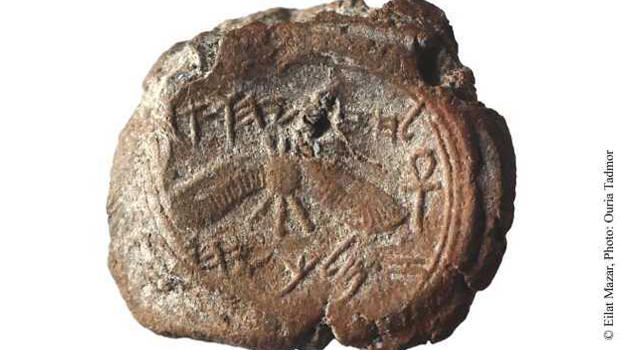
Seal of King Hezekiah found at the southern Temple Mount in Jerusalem
who reigned c.715 – 686 BCE

The emphasis of Israel’s 2018 Basic Law related to the essence of Jews are a people, not adherents to a religion. International law in 1920 recognized “the historical connexion of the Jewish people with Palestine and to the grounds for reconstituting their national home in that country.” In 2018, Israel took that same step of laying out the long and deep connection between the Jewish people to the land of Israel, realized in the modern state of Israel.


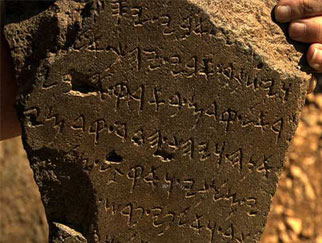
Tel Dan Stele from c.840 BCE found in southern Syria referring to the “House of David”

Jews are the modern Israelites that had kingdoms in Canaan, Israel and Judah. Israel’s 2018 Basic Law affirmed that historical connection between the people and the land, and laid out the initial markings which characterize the reincarnation of the indigenous people in the modern State of Israel.

It is remarkable that Israel chose not to define itself by religion when so many democracies do so.


Related First.One.Through articles:

A Response to Rashid Khalidi’s Distortions on the Balfour Declaration

750 Years of Continuous Jewish Jerusalem

Abbas’s Speech and the Window into Antisemitism and Anti-Zionism

From the Balfour Declaration to the San Remo Conference

In Defense of Foundation Principles

Squeezing Zionism

The UN’s Disinterest in Jewish Rights at Jewish Holy Places

Gimme that Old-Time Religion

Related First.One.Through videos:

Religious Democracies (music by Bob Marley)

God is a Zionist (music by Joan Osborne)

Subscribe YouTube channel: FirstOneThrough

Join Facebook group: FirstOne Through  Israel Analysis

Wearing Our Beliefs

There are a number of English expressions in which people describe their inner feelings by describing their external appearances.

For example, “Being comfortable in one’s skin” means exuding confidence and being content with one’s appearance.  The expression “wearing one’s heart on one’s sleeve” dates back hundreds of years. It is meant to convey the openness of one’s emotions for the world to see. The inner feelings are plain and visible for review, scrutiny, appreciation and/ or scorn.

What an individual decides to show to the outside world oftentimes says a lot about their personal beliefs and emotions.

The way a society dresses people, also says much about such society’s beliefs.

Nazi Germany Enforced Dress Code

During the Holocaust, the Germans made certain undesirable people wear badges on their outer-garments so the people could be easily identified. Jews were forced to wear yellow stars. Gays wore pink triangles. Jehovah’s Witnesses had purple ones. These symbols were not chosen by the individual as an outward expression of their faith, but by an evil society that chose to mark people for abuse, imprisonment, torture and death.

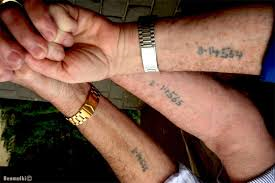
In the Auschwitz concentration camp complex, prisoners were tattooed by the Nazis beginning in autumn 1941. The numbering system etched into the arms of men, women and children, was used almost exclusively on Jews. The system allowed the Nazis to track and process hundreds of thousands of people who were not killed immediately. The ink relayed the cold reality that these prisoners were not in charge of their bodies anymore. Society no longer recognized their names nor humanity.

The evil of Nazi Germany was not simply that they viewed the “Aryan race” as superior – they viewed others as less than human.  The Nazis marked the clothing and bodies of those Untermensch to relay the Aryan perception of these sub-humans.

auschwitz tattoo

Jews Wearing Tefillin

Jewish tradition is an important component of the Jewish religion. While there are specific laws in Judaism, such as wearing phylacteries/ tefillin, the manner in which some Judaic laws are carried out changes according to custom.  Some people wrap the tefillin around the arm in an outward motion, while others wrap them going towards the body.  Some traditions have the entire name of God appearing on the hand while others only write a portion of the three letter name of God.

When a person wraps the tefillin straps around the fingers, he recites a quote from Hosea 2:19-20: “V’erastich li l’olam; v’erastich li b’tzedek u-v’mishpat u-v’chesed u-v’rachamim; v’erastich li b’emunah; v’yadat et adonai.
And I will betroth you to myself forever; and I will betroth you to myself in righteousness and in justice, in kindness and in mercy; and I will betroth you to myself in faithfulness, and you will know God.”

teffilin
Grandfather, father and two sons wearing tefillin
(photo: First.One.Through)

Just one generation ago, the dominant force in Europe labeled Jews and stole their humanity.  Today, when Jews put on tefillin, they assert themselves and declare their connection to both God and family tradition.


Related First.One.Through

The Touch of the Sound of the Shofar

The Termination Shock of Survivors

The EU’s Choice of Labels: “Made in West Bank” and “Anti-Semite”

Subscribe YouTube channel: FirstOneThrough

Join Facebook group: FirstOne Through  Israel Analysis

Abraham’s Hospitality: Lessons for Jews and Arabs

The biblical portion of Vayera showcases stories of the patriarch Abraham welcoming strangers. The stories of Abraham’s hospitality became incorporated into the ways that the children of Abraham think of themselves today. However, the nature of the hospitality of Arabs (descendants of Abraham’s son Ishmael) and Jews (descendants of Abraham’s son Isaac) diverge in many ways.

Giovanni_Andrea_de_Ferrari_-_Abraham_and_the_Three_Angels
Abraham and the Three Angels
by Giovanni Andrea de Ferrari (1598-1669)

Man and God

Jewish perspective: Judaism prides itself in being a religion of actions, not faith. God gave the Jewish people 613 commandments to follow, some of which are active (make the Sabbath holy) and others that are passive (don’t kill). A division could also be made of laws between people (like murder) and those between man and God (like the Sabbath).

A casual observer of religions would imagine that laws about God would take precedence to laws about people.  The Jewish organization Limmud, posted an article about Vayera, which argued the opposite.

During the story of Vayera there was an encounter between Abraham and God. In the middle of the conversation, Abraham asked God to wait so he could welcome three strangers that were passing his tent. The author of the Limmud article, Jeremy Rosen argued that Abraham’s action taught Jews a lesson for today, “that however primary God is, there are certain types of human crises or obligations that are so important that one can actually tell God to wait. In the end religion must enhance our relationship with other humans.

Islamic perspective: The website “OnIslam” is dedicated to educating Muslims on a variety of subjects. An article on hospitality and the “joy of honoring others” made a clear effort to differentiate between the kind of hospitality that Muslims extend, and those of non-Muslims. The true concept of hospitality is not something that is widely practiced in most non-Muslim countries. For many non-Muslims, the entertainment of guests is of primary importance in many cases for worldly reasons only, not rooted in real hospitality for the sake of God. In Islam, however, hospitality is a great virtue that holds a significant purpose. Being hospitable to neighbors and guests can increase societal ties as well as unite an entire community. Most importantly, God commands Muslims to be hospitable to neighbors and guests. There is a great reward in doing so. Hospitality in Islam is multi-faceted and covers many different areas in addition to the hospitality that we show guests who visit our homes.”

In Islam, hospitality is performed because it is commanded by God. The act of hospitality may have benefits of creating communal harmony, but it is a derivative of the second degree. The primary obligation is to follow God’s command, and He commands all Muslims to be hospitable. God’s command leads man to action, and such action may, in turn, lead to friendship and social cohesion.

The difference in the approach of the religions is both subtle and significant. Judaism has a value system of helping others. Welcoming a stranger takes precedence to a direct conversation with God. In contrast, Islam focuses on obedience to God’s commands. Hospitality happens to be one of those commands and is therefore performed – within the bounds of religion.

Hospitality Today on a National Level

It is interesting to look at the nature of hospitality on a national level and how the one Jewish State handles hospitality compared to various Muslim countries (note that there are many Muslim countries, like Turkey, Malaysia and Indonesia, that are NOT Arab and descendants of Abraham).

Welcoming Refugees
Israel: Israel has an incredible record when it comes to welcoming Jews from around the world. Whether in bringing Jews that were persecuted in the Arab world in the 1950s, or Russian and Ethiopian Jews in the 1990s, Israel took in so many Jews from around the world, that they dwarf the number of European Jews who came to the country due to persecution in Europe during the 1930s and 1940s.

Those Moroccan, Yemenite, Ethiopian and Russian refugees received Israeli citizenship immediately. They got housing and job training. They had teachers to teach them a new language (Hebrew) and lessons about incorporating into a society that was completely foreign to their old way of living.

Arab/ Muslim Countries: The Middle East has witnessed a large number of wars and corresponding waves of refugees fleeing the battles. Many Arab countries did not welcome their fellow Arabs.

  • When Arabs left the British Mandate of Palestine to Lebanon and Syria in 1948-9, they were forced to live in refugee camps. They were not offered citizenship nor given an opportunity to have white color jobs. Those conditions continue for their children and grandchildren almost 70 years later.
  • When the PLO sided with Iraq when Iraq invaded Kuwait in 1991, Kuwait expelled roughly 360,000 Palestinians that were living there.  Fellow Arabs that were neighbors for 75 years were evicted en masse because of the actions of people hundreds of miles away.
  • Most recently, the millions of Arabs fleeing the civil war in Syria, and ISIS in Iraq have been shut out of the wealthy countries of Saudi Arabia; Qatar; Bahrain; United Arab Emirates and Kuwait.  Westerners may wonder how these oil rich countries are not embarrassed to refuse to welcome fellow Arabs, especially as Europe and America open its doors.  Only Lebanon, Jordan and Turkey (Muslim, but not Arab) have shown these refugees Islamic hospitality.

Welcoming “Others”
Israel: The phrase in the bible “love thy neighbor as thyself” (Leviticus 19:18) has been interpreted by various scholars as both a model for treating fellow Jews and for interactions with all of mankind.

  • When Israel declared independence in 1948, it granted 160,000 non-Jews citizenship.  When Israel reunited Jerusalem after Jordanian and Palestinian Arabs attacked it in 1967, it offered citizenship to all non-Jews.
  • When Menahem Begin became prime minister of Israel in 1977, he brought in and gave citizenship to roughly 300 Vietnamese people fleeing their country.
  • Today the country is grappling with how to deal with Eritrean and Sudanese asylum seekers as many Israeli Jews believe in the principal of hospitality, even while the government considers issues of safety.

Arab/ Muslim Countries: The Arab countries do very poorly in regards to their hospitality with non-Muslims.

  • When Jordan seized Judea and Samaria in 1949, it expelled all of the Jews in the area and forbade them from even visiting their holy sites in Jerusalem.
  • Today, Mahmoud Abbas has laws preventing the sale of any land by Arabs to Jews and has demanded a new country to be established devoid of Jews.
  • After Israel was founded, the Arab countries forced over 850,000 Jews to flee their homes where they had lived for generations.

Helping Others
Israel: Israel has a reputation of rushing to assist countries around the world suffering from natural disasters.  Whether from earthquakes in Turkey or Haiti or tsunamis in the Pacific Ocean, Israel is on the scene with disproportionate numbers with life-saving assistance.

Arab/ Muslim Countries: The Arab world typically does not send much assistance to countries in need.  That fact is surprising since it is a core tenant of Islam.  OnIslam states: “In Islam, hospitality extends well beyond the walls of the home. Being hospitable also means having good manners and treating others with dignity and respect. Hospitality can be applied to the greater community and Muslims must strive to help out whenever there is a time of need. Natural disasters, for example, often result in community turmoil as residents grapple with the aftermath. This provides Muslims with an excellent opportunity to pitch in, whether delivering hot meals to those affected or donating gently used items to someone who has lost everything.”

However, the Charities Aid Foundation did rank some Islamic nations among the most generous in the world, including: Malaysia; Indonesia; and Iran in the top 20.  However, none of those three countries is Arab.  Israel, the Jewish State, ranked number 32.


Abraham taught Jews and Arabs about the importance of hospitality.  Each group interpreted his acts of kindness through their respective prophets and teachers over the centuries, with Jews extracting a primary value of the kinship of men, while Muslims placed hospitality as just one of God’s commands to be observed.  Jews learned a life-lesson from Abraham; Arabs stifled that more human example and took the message of hospitality from the Quran.

The children of Abraham – the Jewish State and the Arab states – should all be mindful of the importance of hospitality in their dealings today.


Related First.One.Through artices:

The End of Together

Joint Prayer: The Cave of the Patriarchs and the Temple Mount

Subscribe YouTube channel: FirstOneThrough

Join Facebook group: FirstOne Through  Israel Analysis

“Cast thy bread upon the waters”

שַׁלַּח לַחְמְךָ, עַל-פְּנֵי הַמָּיִם

On the holiday of Sukkot, Jews are reminded of the fragile nature of life. They live in temporary huts for a week and read Ecclesiastes, a philosophical book from the Old Testament. The book reviews the concept of a delicate life, and underscores the need to extend beyond one’s physical boundaries: to establish a good name that survives past death; and to learn about God who is not confined to the physical world.

King Solomon, the author of the book, mostly expounds upon the frivolousness of daily physical activities through the opening chapters. Towards the end of the book in chapter 11, he explores the nature of uncertainty in the world:

  • Ecclesiastes 11:1 begins with “casting bread upon the waters.”
  • To verse 5 “thou knowest not what is the way of the wind
  • and verse 6 “for thou knowest not which shall prosper, whether this or that, or whether they both shall be alike good

We do not know what will happen in life. We do not know which piece of bread will catch a fish, what kind of fish it will be, or whether it will be worthwhile to eat. As such, one could conclude that we should use our best efforts to put several pieces out there in the right environment and hope that a “favorable wind” will yield an amazing catch.

With that idea in mind, “First One Through” began.

Knowledge surpasses the physical world, and in a digital world, is easy to “cast many pieces of bread upon the waters.”

The articles and posts of FirstOneThrough were made to educate and entertain people about Israel and Judaism. The posts have been shared directly with family and friends of Israel, who in turn, passed them along. Due to Facebook, Twitter, email and other sources, the posts circled the globe to 110 countries and have been read 25,000 times since the launch six months ago in May 2014:

  • The main readers have been the US (55%) and Israel (15%)
  • Significant readers come from: Australia; UK; and Canada, which together account for 16% of views
  • Modest readership came from: South Africa; Netherlands; Germany; Brazil; France; Denmark and Sweden which totaled 6%
  • 98 other countries accounted for 8% of views

The Arab and Muslim countries read the posts as well, including: Turkey; UAE; Malaysia; Indonesia; Pakistan; Egypt; Saudi Arabia; Morocco and Lebanon. There were a handful of readers from: Kuwait; Iraq; Tunisia; West Bank; Jordan; Qatar; and Yemen.


Ecclesiastes does not end with the discussion on uncertainty in chapter 11. The book concludes that anything in the physical word – even spreading knowledge – is subject to uncertainties and frailties due to the physical limits of people. However, reason and intent are the “hidden thing” behind “every work“.  Hopefully sharing the posts on the merits of Israel and Judaism covers the good intent of the sender, and enables the recipient to gain knowledge, and have the good judgment to pass it along as well.

“The end of the matter, all having been heard: fear God, and keep His commandments; for this is the whole man. For God shall bring every work into the judgment concerning every hidden thing, whether it be good or whether it be evil.”

סוֹף דָּבָר, הַכֹּל נִשְׁמָע:  אֶת-הָאֱלֹהִים יְרָא וְאֶת-מִצְו‍ֹתָיו שְׁמוֹר, כִּי-זֶה כָּל-הָאָדָם