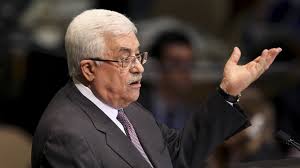
The International Criminal Court for Palestinians and Israelis

The International Criminal Court defines itself as “an independent, permanent court that tries persons accused of the most serious crimes of international concern, namely genocide, crimes against humanity and war crimes. The ICC is based on a treaty, joined by 122 countries.”

The ICC uses the following definition for genocide: “According to the Rome Statute, “genocide” means any of the following acts committed with the intent to destroy, in whole or in part, a national, ethnical, racial or religious group:

  • killing members of the group;
  • causing serious bodily or mental harm to members of the group;
  • deliberately inflicting on the group conditions of life calculated to bring about its physical destruction in whole or in part;
  • imposing measures intended to prevent births within the group;
  • forcibly transferring children of the group to another group.”

Regarding “Crimes Against Humanity” the ICC uses the following categories:

  • murder;
  • extermination;
  • enslavement;
  • deportation or forcible transfer of population;
  • imprisonment;
  • torture;
  • rape, sexual slavery, enforced prostitution, forced pregnancy, enforced sterilization, or any other form of sexual violence of comparable gravity;
  • persecution against an identifiable group on political, racial, national, ethnic, cultural, religious or gender grounds;
  • enforced disappearance of persons;
  • the crime of apartheid;
  • other inhumane acts of a similar character intentionally causing great suffering or serious bodily or mental injury.

Lastly, for “war crimes”, the ICC states that it “include grave breaches of the Geneva Conventions and other serious violations of the laws and customs applicable in international armed conflict and in conflicts “not of an international character” listed in the Rome Statute, when they are committed as part of a plan or policy or on a large scale. These prohibited acts include:

  • murder;
  • mutilation, cruel treatment and torture;
  • taking of hostages;
  • intentionally directing attacks against the civilian population;
  • intentionally directing attacks against buildings dedicated to religion, education, art, science or charitable purposes, historical monuments or hospitals;
  • pillaging;
  • rape, sexual slavery, forced pregnancy or any other form of sexual violence;
  • conscripting or enlisting children under the age of 15 years into armed forces or groups or using them to participate actively in hostilities.

Many of these definitions cover the actions of many countries in modern times. The ICC has taken on a handful of cases thus far including in: Uganda; Congo; Sudan; Central African Republic and Kenya. Crimes committed by Syria, Boko Haram, the Taliban, Iran and Islamic State have not been prosecuted at this time.

Palestinians at the ICC

Genocide: As the Palestinian Authority takes moves to join the ICC, it will place itself in the crosshairs of many of the actions of the court. Within the definition of genocide, the Hamas charter and its leadership call for the killing of Jews and the destruction of Israel clearly put in in violation.

Crimes Against Humanity: Within the definition of crimes against humanity, Hamas murders and kidnaps Israelis. The kidnapped people do not get proper treatment (such as visitation) according to the Geneva Convention. Hamas tortures people suspected of collaborating with Israel and cause mental injury to Palestinians by public executions and torture and dragging bodies through the streets. Acting Palestinian Authority president Abbas actively practices apartheid: he has called for a Jew-free state; Palestinian law bans the sale of any land to Jews (punishable by death); the universities prohibit Jews from stepping foot on campuses. Abbas and Hamas both cause mental injury towards Jews continuously: naming squares and tournaments after murderers of Jewish civilians; airing television programs which call for the murder of all Jews.

War Crimes: Regarding war crimes, Hamas openly attacks civilians and civilian targets. It enlists children to fight Israel and takes hostages.

Israel at the ICC

Genocide: Regarding genocide, the population growth of the Palestinians in Gaza and the West Bank exceed almost every country in the world. The regions have the highest birth rates and lowest death rates. The blockade around Gaza has been deemed legal by the United Nations. No case could be advanced against Israel for such charges.

Crimes Against Humanity: Israel does imprison Arabs in its territories and its practice could come under scrutiny. However, the arrests are likely not viewed as widespread and are often done while investigating crimes. Trying to apply the charge of apartheid would be a stretch as Israel’s practice of using military law for the West Bank which has different criteria for those residents with Israeli citizenship and those that do not. Israel’s treatment of non-Jewish citizens would likely further counter any argument that Israel’s actions in the territories are based on ethnicity.

War Crimes: The Palestinians will likely try to get the most leverage out of the charge of war crimes. It will use the latest Operation Protective Edge over the summer of 2014 to try to blame Israel for intentionally attacking the civilian population and mosques and schools. While Israel may concede that some of their firepower was intentional, it will argue that the targets were legitimate as they were sources of fire. The debate about proportionality of the use of Israel’s firepower and resulting collateral damage versus the firepower aimed at Israeli civilians may be too nuanced for the court to take on.

Palestinian attempts to use the ICC to pursue actions against Israel related to settlement activity in the West Bank would be a stretch. Firstly, it does not fit neatly into the categories which are the focus areas for the ICC. Secondly, international laws like the Geneva Convention and Hague Regulation do not actually consider Jews living in the West Bank to be illegal (see the First One Through article below). Further, “grave violations of the Geneva Conventions” would be a stretch as only one clause (Article 49) deals with treatment of occupied territory, and 95% of that article deals with the treatment of the local population, while only 5% addresses new residents moving into the land.

The international calls that the settlements are illegal are posted by various United Nations and governmental bodies and do not constitute international law from which the ICC would rule. If it were, the ICC could consider the “Zionism is racism” edict by the UN and convict Israel for crimes on that basis. (Note that Turkish Prime Minister Erdogan called Zionism a “crime against humanity” in September 2013.  World opinion on the topic is angry and absurd, but it should not have any bearing on legality).


The Palestinians clearly are much more vulnerable to charges of the ICC. Does Palestinian Authority acting –President Mahmoud Abbas feel that Hamas would bear the brunt of any fallout which would just strengthen his personal position and that of Fatah? Does he think that because his term for president expired six years ago, he can claim no responsibility for Palestinian war crimes?


Sources:

http://www.icc-cpi.int/en_menus/icc/about%20the%20court/frequently%20asked%20questions/Pages/12.aspx

Related FirstOneThrough articles:

The Palestinian call for genocide of the Jews: https://firstonethrough.wordpress.com/2014/11/19/the-palestinians-arent-resorting-to-violence-they-are-murdering-and-waging-war/

Abbas Actively Practices Racism: https://firstonethrough.wordpress.com/2014/10/27/abbas-knows-racism/

The Legal Israeli Settlements: https://firstonethrough.wordpress.com/2014/12/11/the-legal-israeli-settlements/

Quality of life of Arabs in West Bank and Gaza: https://firstonethrough.wordpress.com/2015/01/04/mad-world-of-palestinian-quality-of-life-statistics/

Abbas’s presidential term expired long ago: https://firstonethrough.wordpress.com/2014/09/30/the-disappointing-46-anniversary/


abbas UN

Mad World of Palestinian Quality of Life Statistics

The United Nations had another productive year in 2014, condemning Israel 20 times compared to the rest of the world 4 times in total. This was on the heels of 2013 when it condemned Israel 21 times and the rest of the world only four times in total.

One would imagine that the quality of life of Arabs in Gaza and the West Bank was the worst on the planet by a far margin. Not only does the UN censure Israel multiples of the rest of the world, but it has put into place permanent structures to protect the Palestinians:

  • The only people to get a designated committee in the General Assembly, Committee on the Exercise of the Inalienable Rights of the Palestinian People
  • The only people with a special Ad Hoc committee, Ad Hoc Committee of the General Assembly for the Announcement of Voluntary Contributions to the United Nations Relief and Works Agency for Palestine Refugees in the Near East.
  • The only people with a designated Special Committee, Special Committee to Investigate Israeli Practices Affecting the Human Rights of the Palestinian People and Other Arabs of the Occupied Territories.

These unique committees and agencies further managed to create new definitions to advance the Palestinian cause such as a redefinition of “refugee” only for Arabs pre-1948, to mean people who left a land instead of a country.  They compound the absurdity by enabling these “refugees” and their children, grandchildren and additional generations to obtain benefits courtesy of the world.

With all of the unique concerns of the world for the Arabs from the West Bank and Gaza, it is amazing how well these Arabs are doing compared to the other countries in the world by various measures. Here are some rankings and statistics from the CIA World Fact book comparing 229 countries and territories:

  • Population Growth rate: Gaza (#13) and the West Bank (52) have among the highest population growth rates in the world. Compare them to Jordan (#4), Yemen (20), Turkey (108) and Tunisia (126)
  • Birth rate: Gaza (#35) and West Bank (67) are much higher than many Arab and Muslim countries: Yemen (#39), Jordan (53), Tunisia (112) and Turkey (114)
  • Death rate: Palestinians have the lowest death rates in the world Gaza (#220) and West Bank (#215). Jordan ranks 212, Tunisia 167, Turkey 162 and Yemen 153.
  • Net Migration: Compared to the world and the volatile Middle East, West Bank (#84) and Gaza (#108) are fairly stable, compared to Jordan (5), Yemen (37), Turkey (71) and Tunisia (161).
  • Life expectancy at birth: West Bank (#91) and Gaza (#109) have higher life expectancies than Jordan (#117), Turkey (124) and Yemen (175) and about the same as Tunisia (92).
  • Infant Mortality: Palestinian Arabs have much lower infant mortality rates with Gaza (#105) and West Bank (#117) much lower than Yemen (38), Tunisia (78), Turkey (84) and Jordan (104).
  • Unemployment: the Arabs in West Bank (#169) and Gaza (170) have high unemployment for people aged 15-24, as it has one of the highest percentages of its population under 20 years old, like Yemen. Turkey ranks #101, Jordan 133, Tunisia 151 and Yemen ranks 188.
  • Literacy rate: Gaza (96.4%) and the West Bank (95.6%) compare very favorably to other countries including Jordan (93.4%), Tunisia (88.3%) and Yemen (63.9%), while lower than Turkey (98.8%).

How do the 100+ countries who fair much worse than Gaza and West Bank feel about the unique attention that the Palestinians get? Countries like Tunisia and Yemen probably don’t mind, if the attention comes at the expense of Israel.


The First One Through political music video with music by Tears for Fears:

https://www.youtube.com/watch?v=I943cOvrvm4


Sources:

CIA Fact Book: https://www.cia.gov/library/publications/the-world-factbook/rankorder/2002rank.html

Literacy rates: http://en.wikipedia.org/wiki/List_of_countries_by_literacy_rate

UN condemns Israel 20 times in 2014: http://blog.unwatch.org/index.php/2014/12/17/2014-at-the-un-20-resolutions-against-israel-3-on-rest-of-the-world/

United Nations committees: http://www.un.org/en/ga/about/subsidiary/committees.shtml

Failing Negotiation 102: Europe

“Or What?”

While the United States clearly failed in Negotiation 101 by advancing a peace process that had no chance of success, it is Europe that is failing Negotiation 102.

A basic question in any negotiation is “or what?” If talks break down, where does one stand? Can a party achieve more by having negotiations fail? If so, there would be no motivation to negotiate earnestly.

Those are the questions that acting Palestinian Authority President Mahmoud Abbas is weighing now. Can he get more from the world than he can from negotiating directly with Israel? Based on his assessment of the United Nations and countries willing to prematurely recognize a Palestinian State, he believes that he will achieve greater concessions through a globally mandated solution.

Abbas has been developing this backup (primary?) campaign for several years. The two principal components are recognition (of Palestine) and marginalization (of Israel).   The recognition of Palestine as a state started with UNESCO in 2011. Abbas has continued to work other United Nations agencies and countries around the world to recognize the PA as a sovereign state. In the fall of 2014, Sweden and other European countries began to give Abbas what he desired.

The tool that Abbas hopes will be used to pressure Israel into accepting a globally imposed solution is the BDS (boycott, divest and sanction) movement. If Abbas can convince the world to cease doing business and trade with Israel, he feels that the world can dictate a solution upon Israel which is very reliant on exports for its economy.

As/if European countries move forward with recognizing a state of Palestine and penalizing Israel economically, they effectively will halt any chance for direct peace negotiations. Abbas will not return to the negotiating table while he believes that the world will award him a country with greater borders and controls than he could win in negotiations with Israel.

Even if Abbas doesn’t secure everything he desires from world bodies over the near-term, he would still continue down the unilateral course, as he believes it would position him better in negotiations with Israel at a future point in time, securing whatever advantages he can now. He would further bolsters his credibility with Palestinian Arabs by not giving any concessions while winning Israeli concessions from the world.

And what does Israel gain in a failed peace process? What is its “or what?”

The only “advantage” Israel gains in stalled talks is continuing to permit Jews to move to Judea and Samaria, which may solidify territories under Israeli control in a final settlement. But it loses significantly at the same time from the lack of peace. For eight years it has had Palestinians attacking its citizens from Gaza. It watches Hezbollah in Lebanon gather more weaponry and ready for war. Iran moves forward towards nuclear weapons while calling for Israel’s destruction. As such, the failure of reaching a peace agreement continues to threaten the country. What other country in the world has bomb shelters in every house and every hotel? What other country over the past twenty years has needed to distribute gas masks to its citizens? What other country in the world has countries that refuse to acknowledge its existence? To threaten the country with extermination?


Currently, European and the United Nations’ actions are actively encouraging the Palestinians to avoid direct negotiations with Israel. How far will they continue to move in this direction?


Sources:

UNESCO recognizes Palestine: http://world.time.com/2011/10/31/palestinian-statehood-gets-recognized-unesco-whats-next/

Sweden recognizing Palestine: http://www.theguardian.com/world/2014/oct/03/sweden-recognise-state-palestine

Saeb Erekat calling for BDS: http://www.jpost.com/Diplomacy-and-Politics/Erekat-Israel-preparing-major-settlement-expansion-annexation-355397

Related FirstOneThrough article:

Failing Negotiations 101: the United States https://firstonethrough.wordpress.com/2015/01/01/failing-negotiation-101-the-united-states/


abbas UN


Failing Negotiation 101: The United States

One Party that can deliver

US Secretary of State John Kerry invested heavily in Israel-Palestinian Authority peace talks from July 2013 to March 2014. In the wake of the failure, many people looked to blame one of the two parties for the talks’ failure. A recent New York Times article quoted Israeli left-wing politician Tzipi Livni as blaming the Palestinians for the collapsed negotiations (a surprising statement, as in Israeli election season she only criticizes her political opponent Benjamin Netanyahu.)

In reality, it was the US that was to blame.

The US did not fail for lack of effort. It did not fail in trying to find creative solutions. It failed because the entire basis of having negotiations in the current format was a fool’s errand.

The process was doomed from the outset because Secretary Kerry deliberately ignored Negotiation Rule 101: negotiations between parties that can deliver. A negotiation between parties without authority is meaningless. A person without authority or control could theoretically promise anything – but deliver nothing. That was precisely what Secretary Kerry insisted upon when he pushed Israeli Prime Minister Benjamin Netanyahu to negotiate with a straw man named Mahmoud Abbas.

Abbas has no mandate. Mahmoud Abbas was elected to a four year term as president of the Palestinian Authority in January 2005. After his term expired in January 2009, no new elections were held. He no longer has a mandate.

Abbas has no backing. The reason that no new elections for the PA have been held is that everyone knows that Abbas and his Fatah party would lose. One year after Abbas won the presidency, his Fatah party was trounced in legislative elections. Hamas won 58% of the parliament. Every poll taken since then has shown that Abbas would lose in a presidential election.

Abbas has no control. Gaza, with its population of 1.7 million people, is under complete control of Hamas. Hamas routed all PA forces in 2007 and Abbas has no ability to control any activities from the region. Hamas controls thousands of missiles which it fires at Israeli population centers with or without Abbas approval. Therefore, what “peace” can Abbas deliver?

Despite these enormous glaring flaws, the US pushed forward a peace process that was doomed from the start because of the very essence of one of the negotiating parties. Netanyahu was forced to sit across from a counter-party who could not deliver any compromise that he may have offered. As Netanyahu’s authority was clear, any negotiating point that he made was secure; Abbas could “bank” every concession. However, any compromise that Abbas would theoretically offer, could be negated by the Palestinians. Just as the Palestinians complained that they were never asked about the British Mandate in 1922, they could once again complain that the public was never consulted about the peace process, as a mothballed politician without backing negotiated the agreement.

Further, Abbas’ lack of control meant that he had no means of enforcing the agreement. Israel would be left (at best) with making peace with those parties that accepted the peace agreement, but still be at war with those that rejected the agreement. With Abbas unable to enforce the compromises and the peace, it would continue to fall on Israel to confront those Palestinians that were still at war with the country. Noting how the world reacted to Israel’s defensive operation against Gaza in 2014, could Israel have any sense of security that it could effectively counter-act Palestinian aggression post a mock peace deal?

Secretary Kerry compounded the mistake of the bogus negotiation by building up expectations. His earnest and persistent involvement aggravated the talk’s failure. By investing so heavily in the process, Kerry made the failure that much more pronounced. While there was no direct line linking the talk’s collapse to the July-August battles with Hamas, the environment was poisoned.


Abbas gets no R-E-S-P-E-C-T music video (music by Aretha Franklin): https://www.youtube.com/watch?v=LipAKFsUNq8


Sources:

NY Times on Tzipi Livni impression on talks failure: http://www.nytimes.com/2014/12/24/opinion/roger-cohen-why-israeli-palestinian-peace-failed.html?_r=0

Related First One Through articles:

Abbas 10-year anniversary for a 4 year term: https://firstonethrough.wordpress.com/2014/09/30/the-disappointing-46-anniversary/