
Modern conflict is collapsing into a single, repeatable failure mode: when armed power replaces legitimacy, civilian life becomes expendable—and the international system normalizes the outcome rather than correcting it.
From Syria to Yemen, from the Gaza Strip to Somalia and Sudan, different wars follow the same script. Flags and slogans change; outcomes do not. Cities empty, economies collapse, millions flee, and societies become permanent humanitarian wards while armed elites persist.
The mechanics of collapse
Across all five regions, the structure repeats with grim consistency. Power flows from weapons rather than consent, with ideology serving as authority instead of constraining it. Civilians become leverage—through hunger, displacement, and terror—while the outside world manages suffering rather than ending the conditions that cause it.
These dynamics differ in context and scale. They converge in result.
Different conflicts, identical results
Syria survives by sacrificing its cities and people.
Yemen turns famine into strategy in a proxy war.
Gaza shows armed rule embedded among civilians, shifting the cost of war onto the population.
Somalia normalizes permanent instability under jihadist entrenchment.
Sudan mirrors the same logic through rival armed elites hollowing out cities and driving mass displacement.
The human outcome is uniform.
A shared demographic reality
Each of these societies is overwhelmingly Muslim-majority— above 90 percent. This matters for clarity. These disasters do not arise from religious diversity or minority rule. They unfold in largely homogeneous societies where armed authority crowds out the chance for peaceful legitimate governance. Shared faith does not restrain violence. Only accountable institutions do—and they are absent across all five.
Two warnings for 2026
First: recognition divorced from reality.
The push to recognize Palestine as a sovereign state reflects a dangerous inversion. Recognition is meant to affirm effective governance, restraint of armed actors, and protection of civilians. Gaza demonstrates the opposite. Armed rule persists, civilians absorb the cost, and failure deepens. Recognition under these conditions elevates symbolism over survival and legitimizes collapse.
Second: repression without war.
In Iran, an ideological regime in power since 1979 faces economic decline and eroding legitimacy. The response has been internal violence—security forces firing on civilians, mass arrests, repression replacing consent. Iran shows the same pattern without a battlefield: when legitimacy collapses, violence becomes governance.
The United Nations: institutionalizing failure
The United Nations was founded to prevent this exact depravity. Eighty years on, it increasingly fosters it.
The UN grants equal procedural authority—votes, committee chairs, agenda control—to entities regardless of whether they govern responsibly or sacrifice their populations. Collapse carries no institutional penalty. In January 2026, the UN Security Council, the highest body at the UN, handed the gavel to Somalia, a state unable to protect its citizens or control its territory. Committee chairs shape agendas, manage debate, and mute scrutiny. The signal was unmistakable: mass failure has no consequence.
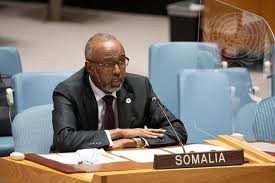
This structure protects actors who weaponize civilians, including groups like Hamas, while rewarding states that export instability. Humanitarian agencies attempt to save lives on the ground, but UN governance shields the forces that endanger them. Through regional rotation, states implicated in mass civilian harm routinely gain seats, votes, and leadership roles across UN committees—including those charged with protecting human rights—without meeting any threshold of civilian protection.
Entities that systematically sacrifice civilians should lose voting rights and committee authority until they demonstrate basic standards of governance and restraint. Without consequences, international law becomes theater and failure becomes permanent.
The verdict
Syria, Yemen, Gaza, Somalia, Sudan—and the trajectory now visible in Iran—show what follows when sovereignty outweighs civilian life and armed power is indulged as politics. By preserving authority for collapsing entities, the United Nations has become part of the problem it was created to solve.
Civilian survival and protection must be the minimum requirement for legitimacy. If the UN cannot reform to enforce that standard INTERNALLY, then eighty years after its founding, it stands as a faint shadow of its founding principles at best, and an enabler of mass atrocities at worst.

 First One Through